

SUBSCRIBE TO OUR FREE NEWSLETTER
Daily news & progressive opinion—funded by the people, not the corporations—delivered straight to your inbox.
5
#000000
#FFFFFF
To donate by check, phone, or other method, see our More Ways to Give page.


Daily news & progressive opinion—funded by the people, not the corporations—delivered straight to your inbox.
When confronted with popular rebuke, an oligarchic ruler faces a stark binary choice: Either come down with an iron fist or back off and go back to running their businesses. In choosing Miller to be his alter-ego and essentially run the executive branch, Trump’s clearly chosen the iron fist strategy.
Then-Senator John F. Kennedy gave a speech in 1959 in which he said:
“When written in Chinese, the word ‘crisis’ is composed of two characters—one represents danger and one represents opportunity.”
While Kennedy’s generalization about Chinese calligraphy was slightly off, his description of “crisis” perfectly represents where we are right now:
[Trump] is extremely attracted to them without understanding their ramifications: for him, they are just bigger bombs. However, there is no scenario in which the use of nuclear weapons would not lead to a catastrophic end to life as we know it. Unless he is contained, he could be driven to use them now, rageful as he is about his defeat against Iran, and desperate as he will be to salvage his image from being a "loser".
She added:
We have a truly narrow window between his defenses being low and his "recovering" himself to attack even more vehemently.
She said that just before Trump had appointed Stephen Miller to be his chief of staff, the guy who essentially runs the presidency, indicating that Trump is now in the “recovery” mode of moving toward full-on tyranny.
I’m familiar with Dr. Lee’s “window”—when Louise and I started and ran a community and school for severely abused children in the late 1970s, we worked with numerous abusive families. The most deadly moment in the relationship is when the abused spouse (typically the wife) finally decides to leave; that’s when most spousal and even whole-family murders happen, and is why shelters go to such lengths to remain anonymous.
Perhaps most ominously, this weekend Trump posted on his Nazi-infested social media site that Democratic members of Congress “are extortionists and they should be imprisoned” and ordered the Department of Justice (DOJ) to investigate them. When CNN’s Dana Bash asked Attorney General Todd Blanche flat out if he’d go after members of Congress, he said, “It depends on what’s said, so yes, there could be [pursuit of criminal investigations].”
When Bash asked him about Trump and him throwing Democratic members of Congress in prison, he replied, “It depends on what the crime is and what they’ve done.”
The “crimes” they were discussing were Sen. Elissa Slotkin (D-Mich.) telling college students they might want to think twice before going to work for this regime, and Congressman Robert Garcia (D-Calif.) telling Trump’s people to “lawyer up.”
That’s it. Our acting attorney general is saying—like with former FBI Director James Comey’s picture of seashells spelling out 8647—that speech that offends the president is now a potential felony that can lead to years in brutal federal prisons or, at the least, “investigations” that can break an average person financially and destroy their retirement savings in legal fees.
I wrote about this moment at length in The Hidden History of American Oligarchy, noting that oligarchy—when the morbidly rich take control of government and turn its power toward enriching themselves and their buddies—is always a transitional form of governance that typically lasts less than a generation.
The reason why is simple, and we’re seeing it played out in this past election and the No Kings marches. When people realize that the government has been taken over by criminals and grifters, they rebel and demand a return to honesty and transparency.
At that point the ruler faces a stark binary choice: Either come down with an iron fist, as the Chinese did at Tienanmen Square and Russian President Vladimir Putin did in the early 2000s, or back off and go back to running their businesses and let the people have their government back, as happened here in the US after FDR came to power and called out the “economic royalists” who “hate me, and I welcome their hatred.”
Trump initially, Tuesday night, told Fox “News” that he’d work with Democrats, but since then he’s brought in Stephen Miller and started talking about imprisoning the Democrats who’ll be investigating his family’s criminal syndicate and his and Miller’s violent abuses of our Constitution and law.
In choosing Miller to be his alter-ego and essentially run the executive branch, Trump’s clearly chosen the iron fist strategy.
As The New York Times reported Saturday, Miller:
Miller called Alex Pretti, an ICU nurse at the local VA hospital, a “domestic terrorist” and “would-be assassin”: Pretti had been holding a phone.
If Trump decides to go full Putin, the machinery for such a crackdown was put into place late last year with his National Security Presidential Memorandum 7 (NSPM-7), which directs the FBI, Treasury, and Internal Revenue Service to treat “anti-capitalism,” “anti-Christianity,” and “extremism on migration, race, and gender” as “indicators of domestic terrorism.”
It’s already been used; in June eight people who supported a 4th of July demonstration outside the Prarieland ICE facility in Texas were sentenced to a combined 450 years in federal prison.
The one guy who shot and wounded a police officer got 100 years in prison, but under the terrorism conspiracy rubric the other seven got 30 to 70 years in prison each; Daniel Estrada, who wasn’t even at the protest, got 30 years in prison for moving a box of zines.
This is Putin’s “iron fist” now carved into American law and already executed at least once, probably as a test case; Trump and Miller appear ready to push it as far as they can, meaning anybody who opposes this regime is at risk. Miller was reportedly pushing this weekend for journalists to be thrown in jail, just like in Russia.
The New Republic recently reported that Trump is pressing for the still-Republican-controlled House and Senate to jam through an appropriation of $166.1 million for 328 new positions, including 130 special agents, to more fully implement NSPM-7 through a new Joint Mission Center drawing in 10 federal agencies.
And Attorney General and Trump’s former personal criminal defense lawyer Blanche said that Trump himself has a “right” and a “duty” to order federal investigations—including into politicians and writers who oppose him—and boasted on NewsNation that he’s installing “roadblocks” inside the DOJ so Trump himself can never be prosecuted after he leaves office.
That’s the “danger” aspect of Kennedy’s quote. The “opportunity” side is the power that House and Senate Democrats will have in another two months. A handful of Republicans may join them, as several called Miller’s appointment a “horrible decision” and one called him a “megalomaniac” on the record.
The margins in this election bring to mind the vote in April in Hungary, where Trump’s closest European ally and fellow Putin-suck-up Viktor Orbán lost so badly that he had no choice but to step down and allow a democratic transition in that nation. As Ruth Ben-Ghiat notes, the strongman’s playbook has no chapter on how to lose.
So, here we are, presented with both great danger—Trump could do just about anything, including provoking a world war and declaring a national emergency to prevent Democrats from being seated in January—and great opportunity for a cleansing and democratic renewal like we last saw in the 1932-1981 New Deal era.
“Eternal vigilance is the price of liberty” is a probably apocryphal quote attributed to Thomas Jefferson, but it perfectly describes this moment and the next two years. And that vigilance is our job.
Stay updated, reach out to your elected officials (202-224-3121),and let them know you support accountability and the rule of law, and help keep friends and family awake. Share this message and others that promote the ideals of our democracy rather than Trump’s and Miller’s thuggish worldview.
Tag, we’re it.
Lula’s victory interrupts the consolidation of US-aligned political power in the region, demonstrating that its rightward trajectory can be reversed.
Just over a month ago, a MAGA-aligned right-wing juggernaut appeared to be on a roll in Latin America.
The far-right had captured every presidential election since Venezuela’s Nicolás Maduro was reelected in July 2024. In addition, recent parliamentary elections have landed the Bahamas, Belize, Trinidad and Tobago, Guyana, and Jamaica in MAGA-aligned alliances such as the Shield of the Americas.
Among the remaining leftist countries in the region, the US had kidnapped Venezuela’s Maduro and imposed a “negotiated sovereignty” on that nation. An ever-intensifying blockade continued to asphyxiate Cuba. And a renewed offensive was mounted against Nicaragua. Brazil and Mexico anchored the left-leaning camp, with Uruguay on the center-left.
More broadly, curbing US imperialism remains key to a revival of the Latin American left.
Compared with the heyday of the Pink Tide, when Latin America was the international epicenter of independence from Washington, the region was increasingly looking like a casualty of the Donroe Doctrine. Yet this apparent rightward consolidation concealed vulnerabilities that would soon become evident.
Besides its signature sycophantic worship of the US, Latin America’s new populist right shares an ideological antipathy to “wokism,” a fixation on mano dura solutions to crime, an alignment with the US imperialist-Zionist project, and subservience to international capital. Its role model is the neofascist, self-proclaimed “coolest dictator” in the world, President Nayib Bukele of El Salvador.
Donald Trump recently told an assemblage of obsequious right-wing Latin American leaders that they “know very well” that they owe him. Specifically, he boasted of nine “great election victories” because of his endorsements.
The Carnegie Endowment for International Peace describes Trump as a would-be “kingmaker.” Presumably, Trump’s assists included Argentina’s 2025 legislative elections; the 2025 presidential elections in Bolivia, Ecuador, Chile, and Honduras; and the 2026 presidential elections in Costa Rica, Colombia, and Peru. The tally is only eight, but under Trump’s creative accounting, Argentina counted “twice.”
In fact, Trump explicitly endorsed candidates in only Honduras, Argentina, and Colombia. The other five winners were ideologically aligned with Trump but received no explicit endorsement. But that doesn’t suggest that US covert operations failed to interfere in those elections. If there is a silver lining to the MAGA cloud, it is that Trump reveals the intrigues of Yankee imperialism that previous US leaders preferred to obscure.
Progressive prospects looked dim in Brazil, especially when far-right Flávio Bolsonaro beat leftist Luiz Inácio Lula da Silva—with help from Washington—by 47.03% to 45.16% in the first-round election on October 4. Minor-party candidates who had collectively received 5.38% of the first-round vote endorsed Bolsonaro. Compounding the overwhelmingly unfavorable odds for Lula, no candidate trailing in the first round had ever won the runoff.
Lula, a founder of BRICS, has been one of the world's most prominent Global South leaders, championing multipolarity, national sovereignty, and greater representation for developing countries. Much was at stake for Brazil, Latin America, and the world.
Bolivia’s Rodrigo Paz, Chile’s José Antonio Kast, Peru’s Keiko Fujimori, and even Argentina’s Javier Milei suffer from disapproval ratings comparable to those of their mentor in the White House—and for much the same reason: failure to deliver.
Brazil has the largest population and economy in Latin America. Globally, it ranks second in rare earth reserves and seventh in population, and is approaching eighth in economic size. Brazil encompasses 60% of the Amazon rainforest. Deforestation had declined by approximately 71% since Lula returned to office in 2023; Bolsonaro advocated deregulation.
In three short weeks, Lula’s Workers’ Party coalition launched an aggressive social media campaign (“Lula’s Army”) and mobilized voters, especially the youth and the elderly. Some 1.7 million older voters who sat out the first round, participated in the runoff, helping Lula win the election by about 4.5 million votes on October 25.
Beyond Lula’s upset victory, other weaknesses of the Latin American right are evident. Its electoral successes—to the extent that they were legitimate—do not necessarily correspond to popular mandates, often reflecting a “punishment vote” against incumbents.
In first-round contests, José Antonio Kast received only 23.9% of the vote in Chile’s December 2025 election. Rodrigo Paz received only 32.1% of the vote in Bolivia. Neither commanded broad first-round support; both won their runoffs after other right-wing parties rallied behind them.
Incumbent Daniel Noboa was in a dead heat with his progressive opponent Luisa González in Ecuador’s 2025 presidential election. Only 0.17 percentage points separated them in the first round. Even sources unfriendly to the left—the European Union and the Organization of American States—reported that Noboa abused the powers of the presidency to gain electoral advantage.
In Peru’s presidential election last June, right-wing Keiko Fujimori defeated leftist Roberto Sánchez by a mere 0.27 percentage points. The razor-thin margin of victory came from highly disputed overseas ballots, making the leftist the undisputed choice of Peruvians living in Peru.
In Honduras’s November 2025 election, Nasry Asfura won by a meager 0.74 percentage points after a disputed count. Abelardo de la Espriella won Colombia’s June 2026 election by less than a point. Washington’s interference in Colombia and Honduras arguably contributed to those far-right victories, for which Trump claimed credit.
The fragility and corruption of the right are further illustrated by Paraguay, where President Santiago Peña was elected in 2023 with only 42.93% of the vote. On November 6, he was impeached and removed amid a banking scandal and subsequently placed under house arrest.
Nor have electoral victories necessarily translated into durable popular support for the right. Bolivia’s Rodrigo Paz, Chile’s José Antonio Kast, Peru’s Keiko Fujimori, and even Argentina’s Javier Milei suffer from disapproval ratings comparable to those of their mentor in the White House—and for much the same reason: failure to deliver.
With the exception of Bukele, none of the new right leaders have significantly positive popularity ratings, and almost all are facing strong popular opposition. They are now expected to solve the problems that propelled them into office, particularly rising crime rates.
Respondents in every Latin American and Caribbean country surveyed except the Dominican Republic identified the US as the world's greatest threat in the 2026 Democracy Perception Index.
Washington’s standing in the region has likewise declined, with public trust tumbling from 62% in 2012 to only 40% today. This fallout reflects popular dissatisfaction with politically motivated tariffs, killing people in small boats in the eastern Pacific and Caribbean, racist targeting of Latino migrants, and interference in the internal political affairs of otherwise sovereign states.
Respondents in every Latin American and Caribbean country surveyed except the Dominican Republic identified the US as the world's greatest threat in the 2026 Democracy Perception Index. Of the 17 Latin American countries surveyed, 15 viewed China's influence more positively than that of the US, according to a 2026 Latinobarómetro poll.
Lula’s victory interrupts the consolidation of US-aligned political power in Latin America, demonstrating that its rightward trajectory can be reversed. As a New York Times op-ed observes: “The region’s rightward shift reflects less of an ideological transformation than a widespread frustration with governments that have overpromised and underperformed for decades.”
Yet the weaknesses of the right do not necessarily translate into strength on the left. Despite Flávio Bolsonaro’s flight to the US following his defeat, Lula still faces an antagonistic legislature, powerful agribusiness and financial interests, hostile media, a sizable right-leaning evangelical movement, and an unfriendly military and police establishment.
Perhaps Lula’s biggest “stress test” will come from the hegemon to the north, which has yet to recognize his win. More broadly, curbing US imperialism remains key to a revival of the Latin American left. In that effort, progressives can draw lessons from Lula’s remarkable mobilization of the Brazilian electorate.
Lessons must be learned from this election—and it appears the establishment consultants on both sides don’t appear to understand.
There were surprises and non-surprises in this year’s midterm elections.
Democrats were expected to win and they did. All of the indicators normally considered in a midterm election pointed in that direction. And when reviewing state-by-state polling in key contests featuring vulnerable Republican senators, Democrats had the edge in everyone—Maine, Ohio, North Carolina, and Texas. What wasn’t expected was that Democrats would also beat Republicans in Iowa, Kansas, and South Carolina.
In the weeks before the elections, warnings were raised that the polls were inflating the Democrats’ chances in several states. This cautionary note proved to be unfounded. The polling averages suggested that overall Democrats would likely beat Republicans by 11 points. They ended up besting Republicans by 13 points.
Democrats mustn’t assume that this year’s victories will automatically repeat in 2028. The consultants who are telling Democrats that the GOP is dead and it’s time to move to the center, are wrong on both counts.
Maybe the biggest miscalculation of this election was made by President Donald Trump who assumed that he would be an asset to vulnerable Republicans by holding rallies in their states. As it turned out, his events proved to be more about him and his need to be center stage. In some, he spoke for almost two hours, mostly about himself—his grievances; wild claims about how great the country is doing (thereby dismissing the economic concerns of many voters); and engaging in vulgar, bigoted, and demeaning attacks on immigrant groups and Democratic opponents in other states—often overshadowing and ignoring the candidates he was supposed to be helping.
His constant refrain in these speeches was, “Vote as if I were on the ballot.” In the end, as one reporter observed, voters did just that. And since Mr. Trump has a 32% favorable rating, the outcome wasn’t a good one for Republicans.
There was a real concern that the White House might attempt to stymie the vote in some districts. Others worried there might be a “October Surprise”—renewed bombing of Iran, sending armed immigration enforcement officials to select polling places to intimidate voters, or ordering the FBI to seize ballot boxes. None of this happened, and so Election Day and its immediate aftermath proved uneventful.
Because Democratic candidates were raising more money than Republicans, the GOP turned to what are called super PACs, corporate PACs, and other non-reportable independent expenditure entities to give them an advantage. As a result, this was the most expensive election in history. While the numbers are still being tallied, it appears that more than $14 billion was spent by both parties.
The New York Times published an early list of 20 billionaire donors to campaigns who collectively spent more than $2 billion in this election. While there were some Democrats in the group, most were Republicans. Elon Musk, for example, invested over $450 million to support Republicans (half in Texas) while entities related to the Soros family put $100 million into Democratic campaigns. If anything, this election has brought to the center of our political debate the role of unregulated and unreported money in politics.
As expected, the issues that dominated this election were the cost of living, immigration, corruption, and foreign wars. Most of these broke in favor of Democrats, which left Republicans trying to blame high prices on the Biden administration or to shift the discussion to the threat posed by immigrants. Such tactics may have worked in the 2024 election, but the impact of the president’s tariffs on many consumer goods and the ever-increasing costs of gasoline, diesel fuel, and home heating took their toll on the GOP
The issues of US military aid to Israel and the role played by the pro-Israel lobby (AIPAC) in intimidating and silencing politicians played a less significant role in the November election than it had in the Democratic primaries where support for Israel proved to be the undoing of several incumbents. In the Senate races, a number of Democrats who won this year were clear in their opposition to aid to Israel and their refusal to accept the support of AIPAC, but because they weren’t challenged by their Republican opponents, the issue didn’t become a central theme in the November election.
The major exception was the Senate contest in Michigan between Democrat Abdul El-Sayed and his Republican opponent, Mike Rogers. But it wasn’t Rogers who made El-Sayed’s criticism of Israel the issue. Instead, following the lead of President Trump, Rogers focused on charges that El-Sayed is a socialist or Islamic extremist who couldn’t be trusted to be loyal to America. The attacks against El-Sayed’s criticism of Israel were left to the woman he’d defeated in the Democratic primary, who continued to demand that he adopt her positions on Israel. When El-Sayed refused to do so, she endorsed Mike Rogers, an act of political suicide which ended up benefiting El-Sayed’s campaign.
Policy matters aside, one “meta-issue” helped shape this year’s contests. Voters on both sides of the partisan debate are fed up with politicians—especially the blow-dried, consultant-shaped characters who’ve long dominated the stage. Voters want authenticity: candidates who speak hard truths, whom they feel can be trusted to address their needs. One might argue that this was Donald Trump’s appeal in 2016 and Joe Biden’s in 2020. And it’s the edge that Mr. Trump has lost—with his expensive vanity remodeling projects, shady business dealings, and demonstrated insensitivity to the economic hardships of many voters. If anything, this year was a classic “throw the bums out” election—leading to many establishment Democratic politicians being beaten in the primaries and the GOP’s establishment crowd being shown the door in the general
Lessons must be learned from this election—and it appears the establishment consultants on both sides don’t appear to understand. Democrats mustn’t assume that this year’s victories will automatically repeat in 2028. The consultants who are telling Democrats that the GOP is dead and it’s time to move to the center, are wrong on both counts. Voters chose Democrats willing to fight for a change in economic priorities—where healthcare is seen as a right and affordable for all; where resources are allocated away from war and weapons toward meeting domestic priorities; and where money from corporations and billionaires don’t dominate our politics. If Democrats, now in charge, don’t address these issues that brought them victory, they may pay a price in 2028.
The American People registered their disapproval of Trumpism at the ballot box. Will they now go further and demand that the powers that made him so dangerous be stripped from the presidency, or will they just hand them to someone else?
Last Tuesday's election was a stunning defeat for President Donald Trump. Democrats won both houses of Congress, including Senate races in states they haven't won in generations. Americans went to the polls angry about rising prices, government corruption, rising authoritarianism, and a war with Iran they never wanted. Those frustrations are deeply connected. But this moment can, and should, be an opportunity to do more than move beyond President Trump and his movement. It's an opportunity for people across the country to question how we got here, and what needs to change about American power.
Already, the administration responsible for the war are trying to distance themselves from it. Vice President JD Vance is blaming the Iran war for the Republican defeat. On Election Day President Trump himself went on Fox News to declare he's planning to end military aid to Israel, though he openly admitted that his motivation for making the announcement was to deny his opponents a "bad talking point." Republicans seem to be coalescing around a scapegoat in Secretary of War Pete Hegseth, in a move reminiscent to George W. Bush's firing of Donald Rumsfeld after the midterm disaster of 2006. A vote for Hegseth's impeachment may come as early as next week, if he isn't forced out sooner.
This kind of double-talk is nothing new from this administration. Trump ran against disastrous wars of choice. Then he started a new one. It's no surprise that now he's talking about peace again. But this is about much more than Donald Trump's hypocrisy.
War makes the government more powerful while it makes ordinary people less secure. The question is whether the disease of American militarism is terminal, or whether we're finally ready to do something about it.
If Trump disappeared tomorrow, the Office of the Presidency would still have the dangerous power to start wars without any legal authority to do so. American military power would still be deployed around the world, threatening other nations. Paramilitary forces like Immigration and Customs Enforcement (ICE) and Customs and Border Patrol would still be terrorizing American cities in violation of US law. The American People registered their disapproval of Trumpism at the ballot box. Will they now go further and demand that the powers be stripped from the presidency, or will they just hand them to someone else?
Nearly 60 years ago, Dr. Martin Luther King Jr. asked Americans a similar question in his speech at Riverside Church in New York City, "Beyond Vietnam." King didn't just want to end that war. He wanted the American People to confront the racism, extreme materialism, and militarism that made it possible.
King had seen hope in President Lyndon Johnson's War on Poverty. As Vietnam escalated, he watched the effort to help poor Americans get pushed aside. The war consumed the money, attention, and political will that those programs needed to succeed. King came to see Vietnam as an enemy of poor people here at home, not only of the people being killed overseas.
President Trump returned to the White House promising to bring prices down. Instead, his war with Iran has made everything more expensive. The price of gasoline, diesel fuel, groceries, everything from fertilizer to electronics, has skyrocketed. Mortgage rates and other borrowing costs are higher than they were before the war. Businesses struggling to predict energy prices and interest rates have a harder time deciding whether to expand or hire. They put off opening a new location, buying equipment, or taking a chance on another employee. Those decisions affect real jobs and make planning a future harder for families, too.
And Americans know it. They were promised economic relief. Now they're paying for a war they did not ask for.
Now the same administration that brought us the war in Iran is asking to spend even more tax dollars on the military. The United States spent about $954 billion on its military in 2025. Now Trump is proposing $1.5 trillion in defense funding for 2027, while seeking cuts to domestic programs. After seeing what this administration has done with a near trillion dollar war budget, why would anyone believe that giving it $500 billion more will make life better for Americans?
This isn't a problem Trump invented. The United States helped overthrow Iran's prime minister in 1953. It fought in Vietnam, invaded Iraq and Afghanistan, and supplied the weapons Israel used to destroy of Gaza. It's undermined democracy in Latin America, Africa, and Asia, repeatedly backing dictatorships and interfering with other countries' governments. Republicans and Democrats have both taken part.
For generations America has operated as if it has a special right to decide the future of other countries. US leaders condemn invasions and violations of sovereignty when someone else commits them, and make exceptions when the United States does the same. It's not imperialism, it's spreading democracy, even when the people on the receiving end haven't asked for our help.
Racism has always helped make this possible, and it's more apparent than ever. Trump's talk about "shithole countries" and his bans on immigration from Muslim countries are blatant and vulgar, but they're not entirely new. For US policy, some people's lives and rights have always counted for less than the lives and rights of "others." That attitude doesn't stay overseas. We see it when ICE and Border Patrol agents terrorize immigrant neighborhoods, when police treat protesters as enemies, and when troops are sent into American cities. The government decides certain communities, ethnicities, or ideologies are dangerous, then it uses that fear to justify using extraordinary violence against them. This has been the case for a long time. The Trump administration just glorifies the cruelty instead of hiding it.
All of this becomes more frightening when we consider how much power is concentrated in the presidency. People worry about Trump having his finger on the nuclear button, and should. But why should anyone have that power? A president can authorize the use of nuclear weapons without asking anyone's permission. Author Elaine Scarry calls this a "Thermonuclear Monarchy." Changing the president doesn't change that fact.
Nuclear weapons are just the clearest example. The federal government funds research at universities, healthcare for millions, and humanitarian work around the world. Those programs can do real good. But we've seen the Trump administration use those funds to threaten universities' research funding unless they capitulate to political demands. It threatens nonprofits for exercising protected speech. If one administration can threaten the survival of institutions by withholding money, people naturally start worrying about whether they can afford to speak up.
The damage spreads. University leaders watch what they say. Businesses look for favors and lavish praise on the leader. Members of Congress avoid challenging their own president. Organizations that need federal money learn to keep quiet. Power can corrupt the people who hold it, but it can also corrupt everyone who needs something from them.
James Madison warned that no nation could preserve its freedom in the midst of continual warfare. He knew war increases executive power and creates opportunities for corruption. If, to borrow a phrase from anti-war writer Randolph Bourne, "War is the health of the State," then America is a sick nation.
Dr. King warned in "Beyond Vietnam" that "a nation that continues year after year to spend more money on military defense than on programs of social uplift is approaching spiritual death." Nearly 60 years later, we're still making those choices. War makes the government more powerful while it makes ordinary people less secure. The question is whether the disease of American militarism is terminal, or whether we're finally ready to do something about it.
Tuesday's election gives the next Congress a chance to act. It can challenge the Iran war, take back its constitutional authority over war and spending, put limits on presidential nuclear power, and protect public institutions from political punishment. It can ask why so much public money keeps going toward weapons while Americans struggle with everyday expenses.
But the election also gives us a chance to change the argument itself. If people concerned about war, corruption, freedom, and affordability don't recognize how those issues fit together, politicians who started or supported this war will keep claiming to be the ones who can deliver peace. We need more than a different set of promises from the people in charge.
King understood that ending Vietnam wouldn't be enough if America just went back to doing the same thing somewhere else. Defeating Trump won't be enough either. We've spent generations expanding our military reach and handing presidents powers that no one person should have, all while convincing ourselves that America can be trusted to use them responsibly.
We shouldn't have to wait for the next Donald Trump to recognize how dangerous that is.
Voters did not reject Republican extremism just to see Democratic leaders continue pouring billions into wars and corporate interests while families struggle to afford housing, healthcare, and basic necessities.
Now that Democrats have swept the House, a key question is: Who should lead it?
Hakeem Jeffries is in line to become the first Black Speaker of the House, which would be a historic milestone. But members of Congress must examine Jeffries' record, his priorities, and the kind of leadership he would bring to this moment.
Here are ten reasons why Jeffries should not be Speaker.
At a time when millions of Americans struggle with unaffordable health insurance, medical debt, and the threat of financial ruin from illness, Jeffries has distanced himself from one of the most important progressive reforms: Medicare for All.
Jeffries co-sponsored Medicare for All legislation from 2013 through 2021. But in an August 2026 interview on NBC's Meet the Press, he said it is no longer legislation he supports or cosponsors. Ironically, he made that statement on the same day a CBS poll found that 90 percent of Democratic voters back the idea.
This reversal puts him at odds with party voters, but also with a majority of Democratic representatives in the House. As of late October, Rep. Pramila Jayapal's Medicare for All Act had 118 Democratic cosponsors. A “leader” who won’t back what his own caucus and voters want is not a leader.
Perhaps nowhere is Jeffries more out of step with the progressive base than on Israel.
For decades, Jeffries has been a staunch defender of the U.S.-Israel alliance. At a pro-Israel rally in 2014, during Israel's military assault on Gaza, Jeffries proclaimed, “Israel today, Israel tomorrow, Israel forever!.” In 2020 he told an AIPAC conference that New Yorkers consider Jerusalem their “sixth borough,” totally disregarding the plight of Palestinians living under Israeli occupation.
Even as Israel's genocide in Gaza sparked worldwide outrage, Jeffries continued to resist calls to end U.S. military support.
In July 2026, 103 House Democrats voted to cut $3.3 billion in military aid to Israel, including the party's second-ranking House leader, Katherine Clark. But Jeffries joined 97 other Democrats and nearly every Republican in voting to preserve the funding.
In a May 2024 60 Minutes interview, when asked whether Israel's bombing of Gaza had been indiscriminate, Jeffries said no. By then, nearly 35,000 Palestinians had been killed. When the interviewer pressed him, saying, "You seem reluctant to criticize Israel at all," Jeffries responded, "I'm dealing with the facts on the ground."
Jeffries has also refused to cosponsor the Block the Bombs Act, which would restrict transfers of some of the deadliest offensive weapons to Israel, including 2,000-pound bombs, bunker busters, precision-guidance kits, and tank and artillery rounds. As of November 2026, the bill has 82 Democratic cosponsors and the endorsement of the Congressional Progressive Caucus. Caucus Chair Greg Casar has pledged to push for a floor vote if Democrats regain the majority. Yet Jeffries has not signed on, and as Speaker, he would have enormous power to determine whether the bill ever receives a vote.
While Jeffries has acknowledged that U.S. policy toward Israel needs to change, he continues to support Israel's military superiority and joint missile-defense programs. He has also refused to condemn Section 219 of the NDAA, which would further integrate U.S. and Israeli military research, technology, and production.
Ironically, both Donald Trump and Benjamin Netanyahu have recently suggested that the U.S. should stop giving Israel nearly $4 billion a year because “Israel doesn't need it.” Whether or not we believe them, it is striking that we have yet to hear a similar call from Hakeem Jeffries.
At a time when Americans are struggling to afford basic necessities, Trump is demanding a staggering $1.5 trillion military budget—an increase of nearly $600 billion, or 66 percent, over the previous year's base funding. Yet Jeffries has not made substantially reducing Pentagon spending a central priority of Democratic leadership.
Yes, he has opposed funding for Trump's war in Iran but he is a staunch advocate of continued U.S. military aid to Ukraine and has sharply criticized Trump for failing to provide sufficient support. He said “America is stronger when Russia is weaker.” In September 2026, he pledged that Democrats would continue backing Ukraine “until victory is won,” signaling his commitment to greater U.S. involvement and military assistance instead of a commitment to a diplomatic solution that would end that terrible war.
Jeffries is also an enthusiastic defender of the aggressive alliance NATO, which should have dissolved when the Soviet Union fell apart in 1991. He has called NATO “the most successful military and diplomatic alliance in the history of the world.” NATO, at Trump’s insistence, has called for all members to dramatically increase their military budgets to 5 percent of their GDP (the US is presently at 3.1 percent).
Jeffries’ ties to the military-industrial complex are particularly troubling. During the 2026 election cycle alone, Jeffries' campaign reportedly received approximately $212,000 from military PACs.
Democrats cannot simply promise better healthcare, affordable housing, quality education and climate action while supporting a massive military budget. Real change requires shifting resources from weapons and war to the needs of ordinary people. The next Democratic Speaker must be prepared to challenge the military-industrial complex.
Jeffries's position on Israel cannot be separated from his longstanding political relationship with the AIPAC lobby.
At a time when AIPAC funding has become toxic and so many Democratic candidates rejected AIPAC money, Jeffries has maintained his ties to the organization.
According to Track AIPAC, Hakeem Jeffries has received more than $1.5 million in campaign contributions from AIPAC and other pro-Israel lobby groups over his congressional career. During the 2026 election cycle alone, his campaign received nearly $300,000 in contributions from pro-Israel PACs.He has also taken five AIPAC-sponsored trips to Israel since arriving in Congress.
Following the November elections, AIPAC publicly celebrated Jeffries as one of the candidates it supported.
How can congressional Democrats be led by someone so closely tied to AIPAC, a lobby increasingly toxic to their own voters?
At a time when Americans are demanding investigations into the Trump family's financial dealings, Hakeem Jeffries chose to sit down privately with Jared Kushner, Trump's son-in-law and influential adviser.
In August 2026, reports revealed that Jeffries had met with Kushner to discuss possible cooperation on housing, immigration and affordability. Yet Kushner, who holds no official government position, continues to wield influence over U.S. foreign policy while maintaining lucrative financial relationships with Gulf governments through his investment firm.
House Judiciary Committee Democrat Jamie Raskin has already launched an investigation into Kushner's foreign financial entanglements, demanding documents and communications about his dealings with foreign governments. So why was Jeffries meeting with him behind closed doors?
With Democrats taking control of the House in January, they need a speaker committed to untangling the dirty web of corruption committed by Trump and his inner circle.
You can tell a political leader's priorities by whom they put in power. And Jeffries's choices speak volumes.
In August 2026, Democratic leaders elevated Rep. Jared Moskowitz, one of the House's most outspoken pro-Israel hawks, to the top Democratic position on the powerful House Foreign Affairs Subcommittee on the Middle East and North Africa. Moskowitz has been an unwavering defender of Israel’s genocide in Gaza, continued U.S. weapons shipments, and Israel’s brutal military operations in Lebanon. He has also openly supported both Israeli attacks on Iran and Trump's 2025 bombing of Iranian nuclear facilities, and initially opposed congressional efforts to prevent the 2026 war before later backing War Powers restrictions.
With Democrats in control of the House, Moskowitz will be positioned to chair the Middle East and North Africa Subcommittee, wielding significant influence over congressional oversight and policy toward Israel, Palestine, Iran, and the entire region.
Debbie Wasserman Schultz and Wesley Bell, two other staunch defenders of Israel, were added to the Foreign Affairs Committee. Bell had defeated progressive Rep. Cori Bush in 2024 after massive spending by AIPAC's super PAC. Progressives are still steaming over the role of Wasserman Schultz in undermining Bernie Sanders during the 2016 Democratic presidential primary.
The backlash to these appointments was immediate. Rep. Ro Khanna warned, "Don't put Israel hawks out of touch with our voters in charge of our Middle East policy." The Council on American-Islamic Relations condemned the appointments as an insult to voters and an attempt to shield Israel from accountability for its actions in Gaza.
The Democratic Party claims to fight for working people, but Jeffries remains deeply connected to the wealthy corporate interests that dominate Washington.
His campaign has benefited from millions of dollars in contributions associated with Wall Street, pharmaceutical and insurance companies, real estate interests, Big Tech and military contractors.
These financial relationships raise a fundamental question: How aggressively will Democrats challenge corporate greed, Wall Street speculation, soaring healthcare costs and the military-industrial complex when their leader maintains such close ties to these powerful interests?
Progressive Democrats have demonstrated that grassroots organizing and small-dollar fundraising offer an alternative to corporate PAC money.
The Democratic Party cannot credibly promise to take on corporate power without confronting the influence of big money within its own leadership.
Jeffries has a long history of protecting entrenched Democratic incumbents against progressive challengers.
In 2020, he backed longtime pro-Israel congressman Eliot Engel against Jamaal Bowman, who defeated Engel in a stunning primary upset. In 2022, Jeffries traveled to Chicago to campaign for veteran Congressman Danny Davis against young progressive organizer Kina Collins, who came within seven percentage points of victory.
And in 2026, Jeffries backed Dan Goldman, Adriano Espaillat and Shri Thanedar against progressive challengers Brad Lander, Darializa Avila Chevalier and Donavan McKinney. All three incumbents lost their primaries, and all three challengers went on to win in November.
This pattern is no coincidence. In 2021, Jeffries joined forces with centrist Democrats Josh Gottheimer and Terri Sewell to establish Team Blue PAC, designed to protect Democratic incumbents against primary challengers.
While voters are demanding a new direction, Jeffries has repeatedly sided with the establishment candidates they rejected.
As ICE agents terrorize immigrant communities, separate families and carry out violent raids, the question of how to dismantle Trump's cruel mass-deportation machinery has become increasingly urgent.
Jeffries has condemned ICE's brutality and demanded greater accountability. But he has stopped short of calling for the abolition of ICE or the dismantling of the Department of Homeland Security, insisting instead that these agencies can be reformed.
Contrast that with Rep. Delia Ramirez's groundbreaking Reimagining Safety Act, which would abolish ICE, dismantle DHS and establish a new Department of Community Safety, redirecting resources toward housing, healthcare and community well-being. Her legislation challenges the very definition of national security, arguing that real safety comes from meeting people's needs, not militarizing their communities.
This is the kind of bold, visionary leadership that offers a fundamental alternative to simply “reforming” an out-of-control immigration enforcement system that is terrorizing immigrant communities.
As devastating wildfires consume entire communities, record-breaking heat waves threaten lives, and floods and droughts wreak havoc across the country, the climate crisis demands bold, urgent leadership—not business as usual.
Yet Jeffries has refused to endorse the Green New Deal or champion demands to halt the expansion of fossil fuel infrastructure and eliminate taxpayer subsidies to the oil and gas industry. In 2022, when more than 70 House Democrats publicly opposed legislation to fast-track fossil fuel projects, Jeffries declined to join them.
More recently, he has distanced himself from calls for a moratorium on new AI data centers, even as a powerful grassroots movement is sweeping the country, with communities organizing against these energy-guzzling facilities that drain water supplies, drive up electricity bills, strain power grids and threaten the environment.
Jeffries supported the Inflation Reduction Act's clean-energy investments, but he has not embraced the more ambitious climate agenda advocated by progressive lawmakers and community groups.
At a time when climate disasters are destroying homes, livelihoods and entire communities, the Democratic Party needs leadership with the urgency and ambition to confront the climate crisis.
More than any single vote, contribution, or appointment, the problem with Hakeem Jeffries is the establishment politics he represents—politics that protect the powerful, accommodate corporate interests, and offer timid reforms when the country is crying out for transformative change.
Voters did not reject Republican extremism just to see Democratic leaders continue pouring billions into wars and corporate interests while families struggle to afford housing, healthcare, and basic necessities.
And the grassroots are making their voices heard. In just a few days, more than one million people have signed a petition demanding new leadership. Congressional offices are being inundated with calls, and several incoming Democrats—including Melat Kiros, Claire Valdez, Chris Rabb, and Adam Hamawy—are withholding support for Jeffries.
The Speaker of the House holds enormous power. That power can be used to confront the military-industrial complex, challenge corporate money and AIPAC, stand up for immigrants, and put human needs ahead of endless wars. Or it can be used to protect the very system that has brought us to this crisis.
That’s why we need a new generation of leadership willing to fight for real change.
Sign the petition demanding new leadership. Call your member of Congress at 202-224-3121.
If our next leaders can’t deliver as promised, the politics of scapegoating will come roaring back. It won’t be easy, but the voters are watching.
For years, Americans have been viciously divided according to race, religion, immigration status, and gender identity by politicians dead set on making us fight each other rather than them. In a year where real people’s struggles were impossible to ignore, that effort fell short.
It’s hard to overstate the scale of Democratic victories in this year’s midterm elections.
Voters broke for Democratic candidates by margins scarcely anticipated by even the party’s rosiest polls—often in deep red states and congressional districts that few seriously thought were competitive. Democrats will now control a commanding House majority and hold a significant edge in the Senate as well.
In the two years Trump has left, Democrats will need to be held accountable to claw back the enormous funds Trump and the GOP have set aside for ICE and Pentagon and put them back into programs to make sure struggling Americans have food and healthcare.
This was a decisive rejection of Trumpism—and it happened on a significantly tilted playing field.
Before the election, Trump-aligned justices on the Supreme Court gutted what remained of the Voting Rights Act, only the latest in a series of rulings limiting fair access to voting and representation. At President Donald Trump’s urging, Republican-led statehouses unleashed an unprecedented flurry of mid-decade gerrymanders designed to maximize their partisan advantage and disenfranchise their critics. Billionaires poured vast sums into races—and trillionaire Elon Musk spent over $400 million alone, more than George Soros has spent on elections his entire life.
And that’s not even getting into the concerns, often stoked by leading Republicans themselves, that the administration would try to cancel results, deploy National Guard or Immigration and Customs Enforcement (ICE) agents to cities, or otherwise meddle in the election.
None of it was enough for voters who’ve spent years now watching events in their lives spin out of control.
Trump’s tariffs made life miserable for farmers, manufacturers, and consumers while his allies slashed safety net programs to fund tax breaks for billionaires. The war in Iran, which Trump launched shortly after promising no new wars, sent the price of fuel skyrocketing.
Lawless ICE agents terrorized immigrants and citizens alike and shocked the conscience of people across the political spectrum. And a data center boom spiked power bills and disrupted communities across the country, all to power a technology CEOs vowed to use for replacing people’s jobs and surveilling their day to day life.
In the races that mattered most, populist candidates spoke to these concerns directly.
Candidates who backed data center restrictions and moratoria flipped red governorships and Senate seats in Ohio, Texas, Georgia, South Carolina, and beyond—while voters directly passed their own local moratoria in dozens of communities.
In Michigan, Abdul El-Sayed defeated a shockingly Islamophobic opposition by focusing relentlessly on taking US foreign and domestic policy alike back from billionaires. In Maine, Troy Jackson toppled longtime US Senator Susan Collins by embracing his working class identity and supporting Medicare for All. And in a state that became emblematic of ICE’s abuse, Peggy Flanagan ran away with a victory in Minnesota calling to “rip ICE apart.”
But to sustain these gains, these winners—and the leaders of their party—will need to follow through on the promises voters entrusted them with.
In the two years Trump has left, Democrats will need to be held accountable to claw back the enormous funds Trump and the GOP have set aside for ICE and Pentagon and put them back into programs to make sure struggling Americans have food and healthcare—areas which are only set to see further cuts as more provisions of the “Big Beautiful Bill” take effect.
They should embrace their powers of investigation not only to crack down on the administration’s unprecedented corruption, but also to make tech CEOs answer for foisting AI and data centers on Americans and to hold corporate price gougers accountable for raising the cost of groceries, healthcare, and rent. And they’ll need to rapidly repair our civic infrastructure to get money out of politics and put ordinary people back in it.
If our next leaders can’t deliver as promised, the politics of scapegoating will come roaring back. It won’t be easy, but the voters are watching. And this November they spoke loud and clear.
When candidates take our concerns seriously and when they're backed by an organization like the UAW willing to do the work of reaching young voters where they live and work, young people turn out.
Every cycle like clockwork, young voters are written off as too disillusioned or too distracted to show up in a midterm. On Tuesday, that outdated notion was laid to rest. Nationally and across California, young people showed up. And they showed up in numbers that made the difference in power-shifting races for LA Mayor-elect Nithya Raman, California Democratic Rep.-elects Randy Villegas and Marni von Wilpert, and others.
I know because I watched it happen.
I'm the president of UAW 4811, the union of more than 60,000 graduate workers, postdocs, researchers, and staff at the University of California, part of the more than 100,000 UAW members in California. Most of us are young. Too many of us spend the majority of our paychecks on rent and work second jobs just to stay in the cities where we teach and do research. We are exactly the voters campaigns have written off for decades as too hard to reach and too unreliable to count on.
Our members didn't knock on 57,244 doors to celebrate for one night. We did it because we intend to build a future in California, one where you can finish your degree, do work that matters, and still afford to live in the city you call home.
So this year, we stopped waiting for someone else to reach us. We reached out to each other.
Over the course of this campaign, UAW members in California contacted hundreds of thousands of voters. We knocked on 57,224 doors and made 170,748 phone calls. In the final stretch, we worked 4,389 get-out-the-vote shifts and had 41,360 personal conversations with voters.
Those numbers didn't come from mass texts or robocalls—they came from teaching assistants knocking doors on weekends, researchers phonebanking after their experiments wrapped up, and university staff standing on campus asking students whether they had a plan to vote. Peer-to-peer contact is the most effective way to turn out a young voter, and nobody is better positioned to talk to young people on a college campus than the young workers who keep those campuses running.
It worked. The day before the election, students and workers packed Bruin Plaza at UCLA to rally with Nithya Raman and promise to bring their roommates and labmates to the polls. The next day, lines at polling places stretched across California campuses from Davis to San Diego. And across the state, races were won by candidates who believed young voters were worth fighting for.
In Los Angeles last May, UAW was the first major union to endorse Nithya Raman for mayor. We did it because she has delivered for the people being priced out of this city. She led passage of some of the strongest renter protections in the country, capped rent increases, cut the red tape that keeps housing from getting built, and wrote the ordinance that protects our immigrant neighbors from Immigration and Customs Enforcement. A city that can't hold on to its young people doesn't have a future. Raman understood that, and young Angelenos rewarded her for it.
In the Central Valley, Randy Villegas ran on what working families there live with every day: the cost of healthcare, the need for good jobs, and communities that have been taken for granted for too long. UAW members canvassed in Bakersfield alongside him, reaching young voters in a region where youth turnout has historically lagged far behind the rest of the state.
In San Diego County, Marni von Wilpert ran a campaign rooted in standing up for working people, including the researchers and scientists whose work drives the region's economy at a moment when federal attacks on research have put thousands of livelihoods at risk. UAW members at UC San Diego and across the county made sure their neighbors knew what was at stake.
There's a lesson here for every party, every campaign, and every pundit: Young people aren't apathetic. We're exhausted by politicians who ignore us until they need us and never seem to deliver once they win. When candidates take our concerns seriously (rent, wages, research funding, immigrant rights, climate), and when they're backed by an organization willing to do the work of reaching young voters where they live and work, young people turn out.
What comes next matters just as much. We will hold these leaders to the commitments they made, and we will keep organizing. Our members didn't knock on 57,244 doors to celebrate for one night. We did it because we intend to build a future in California, one where you can finish your degree, do work that matters, and still afford to live in the city you call home.
Tuesday proved that young workers can move elections. Now we're going to move policy.
The historic repudiation of Trump and his anti-environmental policies gives incoming lawmakers a chance to protect our oceans and waterways as the climate warms.
The historic impact of the November 3 "Blue Wave" election that swept Democrats into power in both chambers of Congress, statehouses, and elsewhere is widely understood to be a vast rejection of the Trump regime and will be felt across the land and also on our public seas.
The Senate Commerce, Science, and Transportation Committee that oversees the Coast Guard, National Oceanic and Atmospheric Administration (NOAA), weather, and climate will, come January, likely be chaired by Maria Cantwell (D-Wash.) who’s chaired it in the past, after Ted Cruz (R-Texas) hands over the gavel. Cantwell has been a strong opponent of offshore drilling along the West Coast proposed by President Donald Trump and played a major role in blocking the administration’s attempt to shut down a $386 million Ocean Observation System and other federal science projects. She is likely to also work to restore full—pre-Trump—funding for NOAA (the Coast Guard has already gotten a major boost in funding under Trump).
On the House side the change will be even more dramatic with Jared Huffman (D-Calif.) expected to take the gavel of the House Committee on Natural Resources for the first time. A longtime climate advocate within Congress and one-time environmental attorney for the Natural Resources Defense Council, he’s seen some of the worst marine impacts of climate change including the collapse of some 300 miles of kelp forest habitat in his large district that includes all of coastal California north of the Golden Gate. He’s introduced marine protection legislation in the past, including a Help Our Kelp act in 2025, and is likely to highlight the ocean-climate connection from his position as Chair.
For marine conservation groups there will be new opportunities starting now to work with both Congress and with newly elected state officials.
The challenge for the new Congress will be to reverse some of the impacts already felt during the first two years of Trump’s second non-consecutive term. At NOAA they’ll not be able to reverse the loss of both senior managers and new employees who were fired under Elon Musk's Department of Government Efficiency if they’d worked for the agency less than two years.
Nonetheless the new Congress will likely seek ways to restore autonomy and scientific integrity to NOAA, the National Science Foundation, US Fish and Wildlife, and other agencies that were set up to be non-political, but have become corporate and military tools under Trump’s appointees, promoting—along with the elimination of polluter penalties onshore—offshore oil drilling, deep-sea mining, commercial fishing in protected marine monuments, and extrajudicial killings of small boat operators (suspected drug runners), while also attacking and undermining the offshore wind industry to the tune of $4 billion in taxpayer money to date.
Despite efforts by Democratic leaders such as Sen. Chuck Schumer (D-NY) and Rep. Hakeem Jeffries (D-NY) to downplay climate change during the hot smokey summer campaign (and stay focused on "affordability") elected activists working within the new congressional majorities such as Sen. Sheldon Whitehouse (D RI) and Huffman will likely start connecting extreme weather events costing citizens their lives and livelihoods to fossil fuel-fired climate change. They will certainly focus on (and maybe investigate) the oil companies making obscene profits off of the extreme weather events they contribute to as well as from the war in Iran.
At the same time Whitehouse and Huffman differ on a lame duck congressional bill that would allow fast-track permitting for infrastructure plans including offshore wind farms but also onshore gas lines, mines, and data centers.
Ongoing climate disasters have been “non-issues" under Trump’s compliant Congress, including global marine heatwaves that have devastated commercial fisheries, marine mammals, and key habitats such as coral and kelp while spreading diseases linked to harmful algal blooms. Those impacts will be magnified by this year’s historic El Niño.
For marine conservation groups there will be new opportunities starting now to work with both Congress and with newly elected state officials in places such as Kansas and Iowa to address issues including polluted runoff from agriculture that impacts both local drinking water quality and—following gravity down rivers—generates coastal dead zones along with harmful algal blooms.
There will also be opportunities to develop effective coalitions and legislation around plastic marine pollution (holding the manufacturers responsible), illegal fishing operations and seafood traceability, establishing sustainability standards for seafood aquaculture and for coastal development, along with many other creative approaches to living well with our coasts and ocean.
And while much of this legislation may be vetoed by a lame-duck president, it, along with model legislation for more popular ideas such as increasing the minimum wage and universal healthcare, will at the least set the stage and create the platform for the next elections in 2028.
The job of marine conservation groups will be to highlight the opportunities, educate the public around less familiar issues such as kelp and climate or coastal adaptation, engage with policymakers, and hold them accountable while training and collaborating with the next generation of youth activists. As Sen. Jeff Merkeley (D-Ore.) told a group promoting an Ocean Climate Action Plan: “Let’s bring all the best ideas forward and craft legislation. We need an outside force and an inside force to make anything happen in Congress, so let’s forge that together and help save our ocean and our world.”
Against the backdrop of increasingly frequent and extreme weather events, water stress, and food insecurity, this COP must prioritize critical mandates on equitable fossil fuel transitions, post-2020 climate finance, and global urban resilience.
The 31st Conference of the Parties to the United Nations Framework Convention on Climate Change, or COP31, marks a critical juncture in the global effort to translate diplomatic pledges into tangible climate action.
This year's negotiations will operate under an unprecedented shared-leadership framework. Türkiye will host the event, and Murat Kurum, the Turkish minister of environment, urbanization, and climate change, will serve as the president-designate. Meanwhile, Chris Bowen, the Australian minister for climate change and energy, has been designated president of the negotiations.
In the run-up to the event, two major findings have been released:
These shocking insights prompted 146 scientists to urge the United Nations to declare climate change an official "global health emergency" and finally force nations to act.
Against the backdrop of increasingly frequent and extreme weather events, water stress, and food insecurity, this COP must prioritize critical mandates on equitable fossil fuel transitions, post-2020 climate finance, and global urban resilience.
This COP must ensure that the newly submitted nationally determined contributions are put into practice while also demanding the urgent submission of outstanding NDCs from parties that delayed their updates.
It will also enact the Climate Implementation Bridge, an initiative to help developing countries translate their high-level NDC commitments into concrete, investable portfolios that can secure international financing.
Murat Kurum has positioned this COP as a vital transition phase in global climate policy. He describes the 1.5°C goal as "a matter of survival. The survival of cultures, history, memories, your homeland, your homes."
The following areas have been flagged as urgent priorities:
Both Türkiye (proposing Antalya) and Australia (proposing Adelaide, in partnership with Pacific Island nations) submitted bids to host COP31 back in 2022. Without consensus on who would host, the process stalled as both nations refused to withdraw their bids.
At COP30, the two countries agreed to split responsibilities and divide leadership. Theoretically, this reduces the risk of negotiation gridlock, brings two very different perspectives into the mix, and allows both sides to hyperfocus on their responsibilities.
It also comes with its fair share of concerns, if the two presidents misalign on major priorities such as the urgency of fossil fuel phaseouts or the mechanisms of debt-free climate finance, it could lead to bureaucratic fragmentation, diluting accountability, and stalling consensus.
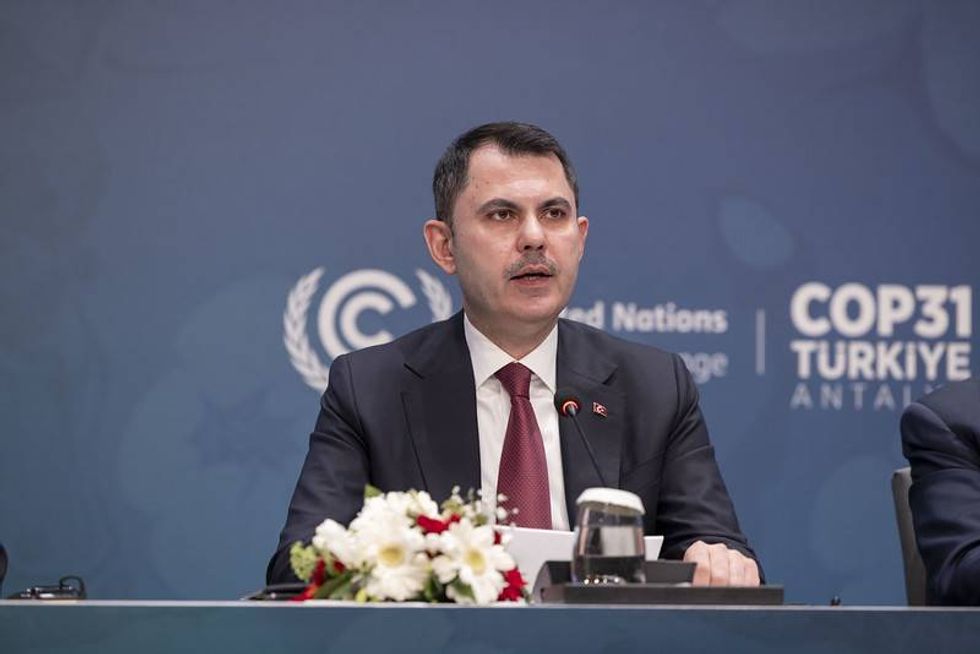
President Recep Tayyip Erdoğan sought the COP31 hosting rights to elevate Türkiye's global profile and position the country as a major bridge and mediator between developed and developing nations.
The focus was on making COP31 a "COP of implementation," not on bringing in more pledges.
Türkiye's bid complements its own national initiatives like its 2053 net-zero target, new national climate laws, plans for an emissions trading system, and commitments to increase renewable energy investments.
When Türkiye voluntarily stepped aside in 2021 to let the United Kingdom host COP26 in Glasgow, it felt it had a strong claim and was unwilling to back down.
Türkiye will steer the summit's overall direction and manage event logistics, infrastructure, and the massive green trade fair in Antalya (Growtech), with the Leaders' Summit planned across Antalya and Istanbul.
It is also responsible for the non-negotiated Action Agenda, pushing for strong, measurable implementation and important side deals.
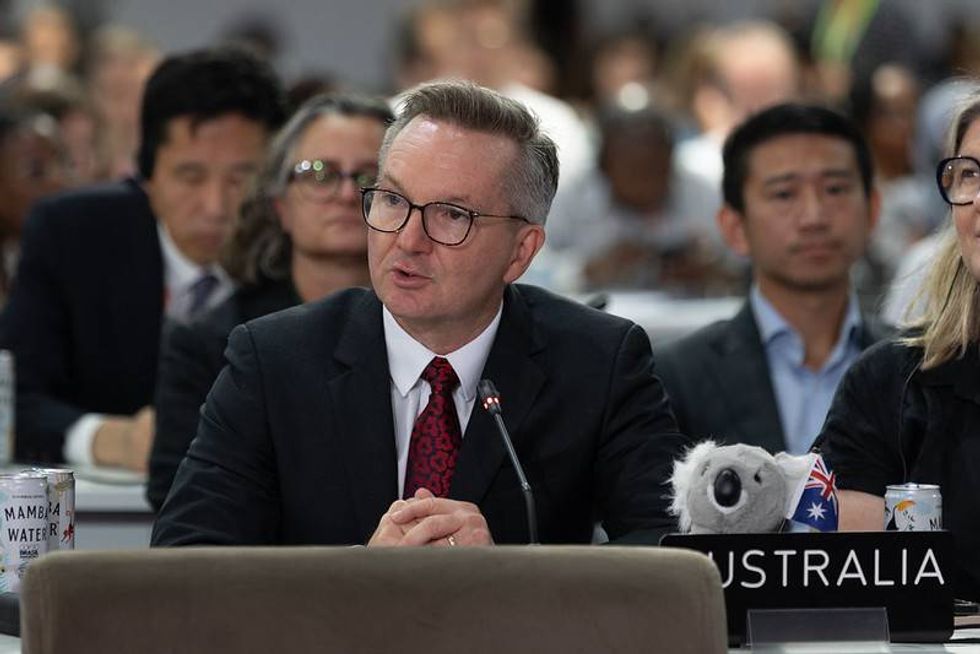
Australia’s bid for COP31 was a chance to reposition itself as a clean energy superpower, build regional goodwill, and counter rising geopolitical competition from China.
It proposed an unprecedented co-hosting arrangement with Pacific Island nations to amplify the voices of the world's most climate-vulnerable communities, acting as a heavyweight champion for its neighbors.
Their priorities are to address the existential concerns of Small Island Developing States (SIDS), including loss-and-damage funding and rapid divestment from fossil fuels.
"It is like taking a glass of water to a burning house if we do not urgently act to address the root cause of the existential threat facing Tuvalu, Fiji, and all Pacific countries: fossil fuel expansion," said Bowen.
Australia is a shining example of the energy transition in action. By the end of 2025, renewable energy has provided well over half of Australia's electricity needs. Today, 1 in 3 Australian homes generate their own power from rooftop solar panels.
As President of Negotiations, Australia will work with countries to build consensus, draft texts, and lead formal policy negotiations. Australia is also working with the past presidencies to deliver on key initiatives like the Belém Mission to 1.5°C and the Global Implementation Accelerator.
Australia's approach will integrate First Nations knowledge and leadership, and it has selected Sally Higgins as the COP31 presidency youth climate champion.
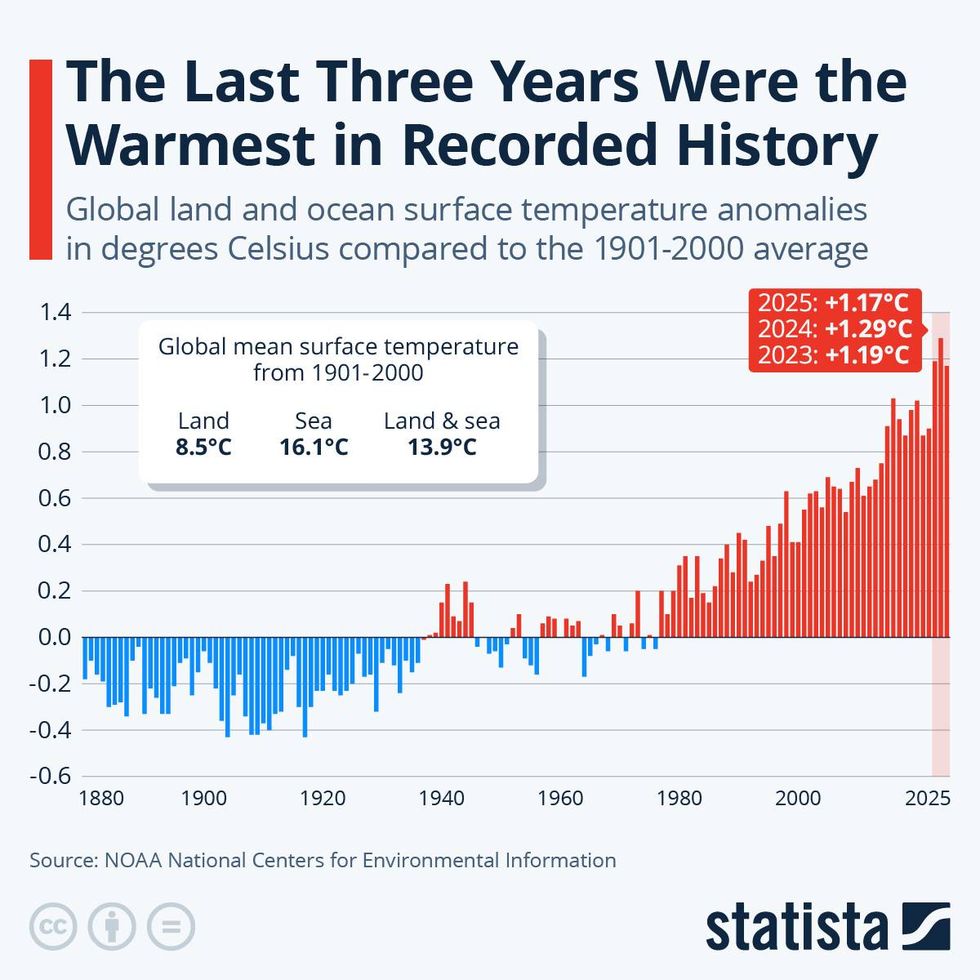
Nearly 50 parties have still not filed their updated NDCs. Major nations such as India, Argentina, Egypt, Iran, and Vietnam missed the standard deadlines, signalling an alarming lack of political will to pursue ambitious action under the Paris Agreement.
COP29 in Baku was billed as the "Finance COP," yet developed nations fell far short of what was needed to meet mitigation targets. COP30 in Belém finished without securing binding, high-level pathways to funnel capital to the Global South.
The UN framework has repeatedly and frustratingly failed to mandate an outright phaseout of fossil fuels. Recent host nations with strong economic ties to oil and gas have successfully diluted negotiation language.
In light of this, the climate crisis continues to accelerate:
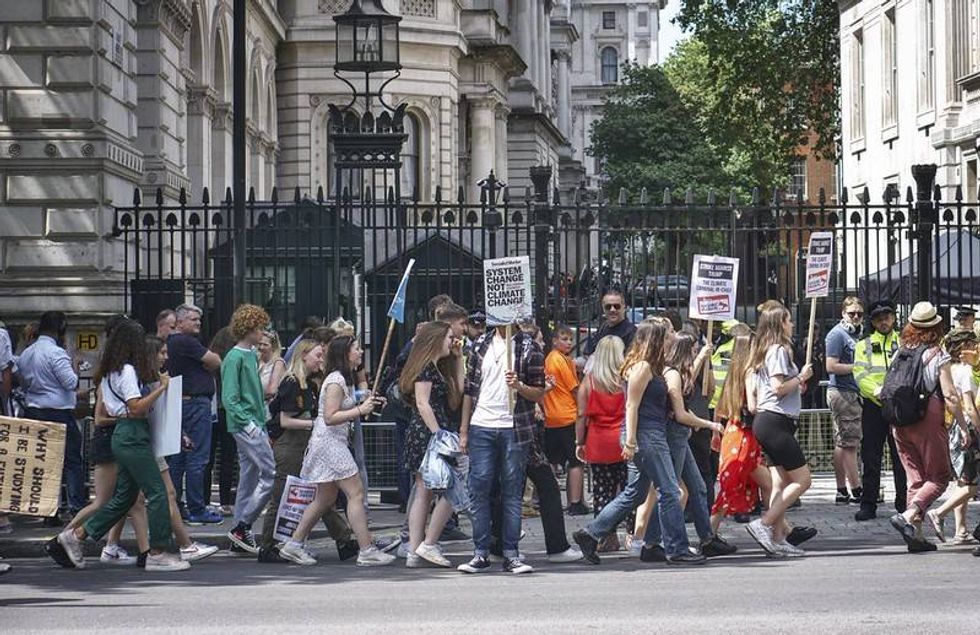
Children and young people are disproportionately affected by climate change; therefore, their voices are particularly important at major climate and biodiversity conferences.
Today's decisions have long-term consequences for their health, education, well-being, and future opportunities. Intergenerational justice looks at how present generations affect past and future people.
On July 23, 2025, the International Court of Justice issued the advisory opinion, which was unanimously adopted by all 15 judges: "Nations have a legal duty to combat the planetary crisis."
This COP31 recognizes children and young people as important stakeholders and constituencies. Official mechanisms have been established to support youth participation:
Major youth organisations and umbrella networks driving the youth climate agenda at COP31 include the European Youth Forum, Generation Climate Europe, Youth Environment Europe (YEE), Regional Conference of Youth (RCOY) Networks, World Food Forum Youth Network, and UNICEF Climate Youth Tracks.
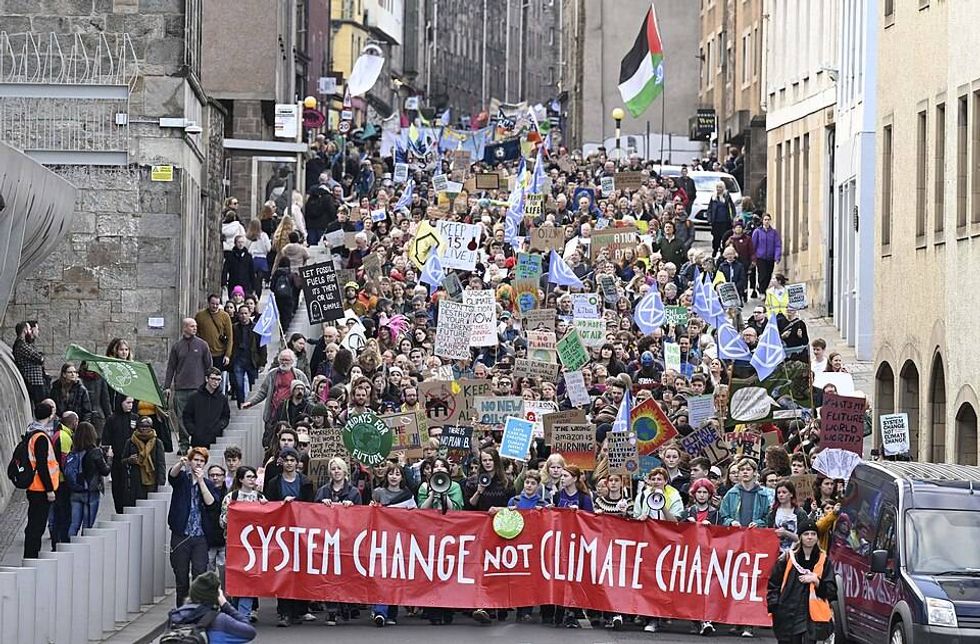
For years, global frustration has grown with these climate conferences; observers, climate scientists, and world leaders point to a persistent pattern of failure in climate finance, the fossil fuel transition, and consensus deadlocks.
COP28 and COP29 saw record-breaking attendance from thousands of fossil fuel lobbyists, diluting the voices of civil society and marginalized youth delegates. It is no wonder they were labelled a farce.
Whether the COP31 unprecedented co-hosting arrangement will help or hinder progress remains to be seen.
Both countries are already drawing criticism for expanding their coal and gas supply chains and omitting any mention of a global fossil fuel phaseout from their official pre-summit communications.
Since 2022, Australia has approved a major Hunter Valley coal mine expansion and 37 new fossil fuel projects.
Türkiye has plans to actively expand its domestic coal and gas capacity by 30% by 2035.
Pacific nations have also expressed their concerns about the joint presidency and the weakening of Australian regional solidarity. They worry the spotlight will shift away from sea-level rise and the vulnerability of small island nations.
On a positive note, the new voluntary "Electrification" pledge, which should help counter the stalemate on phasing out fossil fuels, gives us cause for hope. Another encouraging sign is that record funding for the global energy transition and renewable investment in 2025 reached $2.3 trillion.
It is also hoped that new transparency and funding disclosure rules introduced for delegates will limit the number of fossil fuel lobbyists delaying progress.
Drawing attention to the alarming global rise of militarism, COP31 President-Designate Murat Kurum publicly argued that wealthy countries need to spend much more on climate action than the 5% of GDP NATO members target for defense, warning that climate change is the ultimate security threat.
Without definitive progress at COP31, climate pledges, and indeed the COP conferences themselves, risk collapsing into broken promises and losing public trust. Influential figures such as Greta Thunberg, Chris Packham, Ban Ki-moon, and Mary Robinson have already declared the summits unfit for purpose.
Quite simply, time has run out for more empty words.
The US media system has given more coverage to the most prominent allegations of corruption under Biden than to those under Trump.
Particularly since the Citizens United ruling, US politics has been awash in corporate and billionaire money, with both parties taking gobs of cash from corporations that have direct interests in government policies. But President Donald Trump has taken corruption to new and breathtakingly bold levels.
“I have never seen such open corruption in any modern government anywhere,” said Harvard professor of government Steven Levitsky (Guardian, 6/17/25).
So, it’s probably not surprising to hear CNN (10/21/26) report that voters are increasingly “concerned about corruption,” ranking it only after the economy and the cost of living as a top concern. In a Gallup poll (9/2/26), a record-high 89% of respondents said they believe corruption is “widespread throughout the government in this country.”
But what might be surprising is that, according to a recent NBC poll (10/18/26), a majority (56%) say corruption “is equally a problem among elected officials in both parties.” (Among those who find it worse in one party or the other, 25% point to Republicans and 17% point to Democrats.)
Why would a majority of the public believe that Republicans and Democrats are equally corrupt? A FAIR study suggests that media play no small role: The US media system has given more coverage to the most prominent allegations of corruption under Biden than to those under Trump.
During his first term, Trump refused to divest from his business interests, raking in millions through them from foreign governments and people with interests before his administration. His solicitation of Ukrainian intervention in the 2020 presidential campaign led to his first impeachment trial.
After the GOP-controlled Senate (with Mitt Romney as the sole Republican exception) voted to acquit him—and after the Supreme Court ruling granting the president impunity for virtually anything done in office—Trump unsurprisingly entered his second term with far greater boldness. He essentially operated a pay-to-play administration that engages in regular shakedowns of major corporations and offers pardons to those with political or financial ties to him.
There have been repeated accusations of insider trading under his administration. Trump made $1.4 billion from the cryptocurrency industry in 2025 alone, including $635 million from his $TRUMP memecoin, which was gobbled up by not only true believers but also those seeking political favors. (While Trump profited from fees on trade activity, investors have lost a total of $3.8 billion because of the memecoin’s unsurprising collapse.) In perhaps the most brazen incident of corruption, Trump accepted a Boeing luxury jet worth an estimated $400 million from the Qatari government to use—after spending hundreds of millions of taxpayer dollars on security upgrades—as his presidential plane.
Craig Holman of Public Citizen told FAIR:
The second Trump administration is far more corrupt than Trump’s first administration, and stands out as the most corrupt administration in history. Trump has made no qualms about the fact that he is going to exploit his position as president for self-enrichment. In fact, he has said that he was a fool in his first term for overlooking the opportunities for self-enrichment, given the president’s exemption from the conflict of interest law (18 USC 208).
The corruption is led by Trump, but it’s been enabled by his party since their first impeachment acquittal. In Trump’s second term, the Republican-controlled Congress has refused to investigate any of the corruption scandals, implement stronger ethical standards, or include safeguards in cryptocurrency regulation to prevent Trump (and other political officials) from profiting off it.
During Joe Biden’s election campaigns and presidency, the GOP attempted to paint the former vice president as the pinnacle of corruption. When they took control in 2023, House Republicans launched an oversight committee investigation into the Biden family’s foreign business dealings during his vice presidency. They found that relatives and associates took in a total of $10 million from foreign companies during his tenure, but despite months of investigation, involving interviews and thousands of documents, the committee provided no evidence of Biden’s knowledge or influence. (It did lead to an unsuccessful impeachment inquiry.)
As perhaps the most memorable story in the right’s campaign to make the Biden family known as the “Biden Crime Family,” readers will be familiar with Hunter Biden’s famous laptop, which purportedly contained evidence of corruption on the part of his father. First published by the New York Post (10/14/20) just weeks before the 2020 election, the laptop story was pushed by the right for years and even continues to this day, despite its failure to show any actual evidence of corruption.
So on the one hand we have unsubstantiated stories of Biden family corruption, totaling $10 million in alleged graft, and on the other, we have stories of Trump corruption that total in the billions, some of which will be hard to legally prove Trump’s direct involvement (insider trading) and others in which Trump isn’t even trying to hide his self-enrichment (most of the rest, including the Qatari jet).
If the US had a media ecosystem in which those stories received attention relative to their importance, it wouldn’t even be close: Trump corruption coverage would overwhelm that of Biden.
In the distorted media ecosystem we are subjected to, reality is reversed. FAIR searched Media Cloud’s US–National dataset, which indexes 246 online outlets including all major corporate outlets, as well as right-wing sources like Daily Caller and left-wing sources like the Intercept, to compare attention to the two prominent Biden stories and two of the most prominent Trump stories.
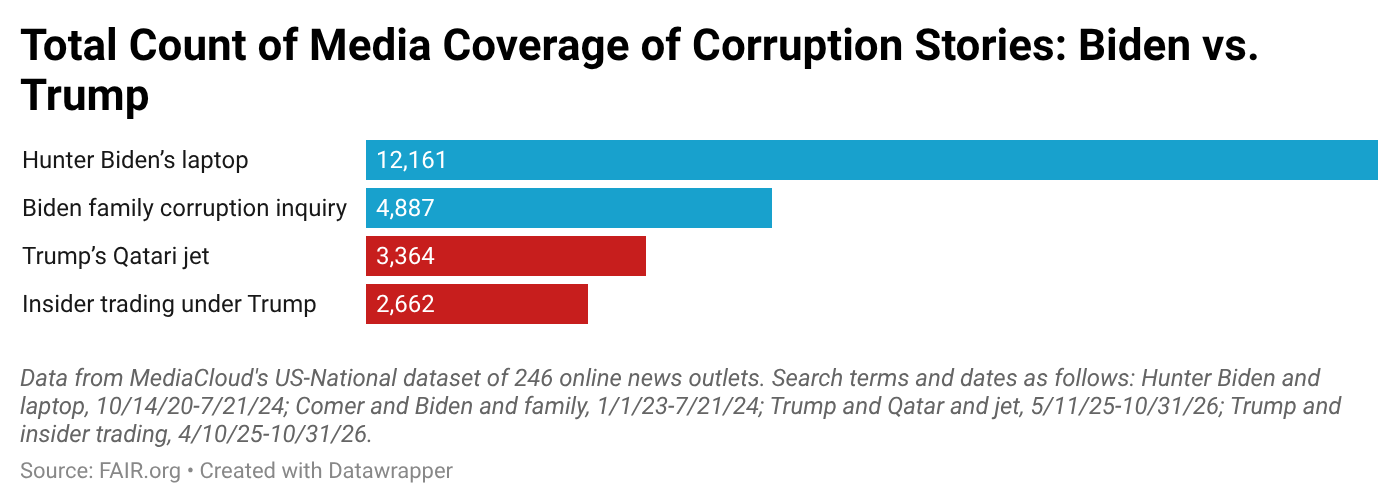
When the New York Post (10/14/20) “broke” the Hunter Biden laptop story, it prompted a huge spike of attention that has never fully gone away. Coverage increased in spring of 2022, when outlets like the New York Times (3/16/22) and Washington Post (3/30/22) published pieces that helped revive it; coverage became particularly intense the next year, which saw the GOP inquiry and the Justice Department criminal investigation.
FAIR’s search found a total of 12,161 stories that mentioned “Hunter Biden” and “laptop” from the Post story’s publication through Biden’s withdrawal from the 2024 race (10/14/20-7/21/24). Right-wing outlets led the way, but MediaCloud showed even centrist outlets like the New York Times, Washington Post, USA Today and Newsweek in the top 20 outlets in terms of volume of coverage.
Coverage of the GOP investigation into Biden’s alleged “crime family,” which began in January 2023 and was led by House Oversight Committee chair James Comer (R–Ky.), drew similarly high averages and peaks of coverage, and also largely petered out after Biden’s withdrawal from the presidential race (1/1/23–7/21/24). In that year and a half, MediaCloud recorded 4,887 stories mentioning “Comer” and “Biden” and “family.”
Not all of these stories necessarily accused Biden of corruption; some centrist reports did work to debunk the false right-wing claims. But those big centrist outlets published enough prominent stories with murky headlines like “Biden Faces Conflict of Interest Questions That Are Being Promoted by Trump and Allies” (New York Times, 5/1/19), or explaining that the Hunter Biden case throws a “new wrench” in “the 2024 election” because “Democrats will have a harder time highlighting Trump’s indictments,” to muddy the narrative and legitimize the GOP accusations (see, e.g., CJR, 10/29/19; Press Watch, 8/14/23).
Compare the quantity of these Biden corruption stories to coverage of the Qatari jet, a story that broke on May 11, 2025, and continued as Trump poured taxpayer dollars into its security upgrades. In the nearly year and a half from the story launch through the end of October 2026, the media produced 3,364 stories on the jet. That means that in approximately the same amount of time, media covered the investigation into Biden family corruption almost 1.5 times more than the Qatari jet. (Note that like the Biden stories, FAIR did not filter out jet stories that did not accuse Trump of corruption.)
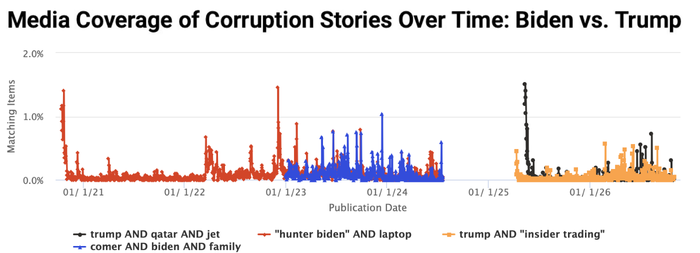
Accusations of insider trading in Trump’s second term began in April 2025, when large call options were placed on the market shortly before Trump announced a 90-day pause on tariffs, sending the market soaring. They continued as more such suspicious and lucrative trades happened just before major Trump announcements on Venezuela and Iran, including within Trump’s personal holdings.
Coverage of Trump and insider trading from the first accusations (4/10/25) until the end of October 2026—a month longer than the Qatari jet coverage—has totaled 2,614 stories. The Biden family inquiry, at 4,887, got 1.9 times that amount.
Hunter Biden’s laptop, which dominated news headlines for longer, overwhelmed the Trump stories by far more. It got 4.7 times the coverage of insider trading under Trump and 3.6 times the coverage of Trump’s Qatari jet.
Even measuring them in terms of percentage of all news stories during their respective time periods, the Biden stories got far more coverage, with the family corruption story and the laptop story each averaging .10% of all content, while the Qatar jet averaged .06% and insider trading averaged .04%.
This isn’t to say there’s no coverage of Trump’s corruption that attempts to put it into proper perspective. The New York Times editorial board (1/20/26) ran a lengthy editorial in January that tried to put a dollar amount to Trump’s self-enrichment just in the first year of his second term: $1,408,500,000.
The New Yorker (8/11/25), looking a bit more broadly and including his first term, came up with a conservative total of $4 billion.
Times columnist Jamelle Bouie (4/22/26) wrote:
To say that President Trump is corrupt is to somehow understate the size, scope and magnitude of his corruption.
It is as if you were to describe a modern thermonuclear device as a “bomb.” That is true enough, but it is not quite the truth. It does not capture the nature of the thing in full.
So it goes for Trump’s corruption, which is so vast as to be a new phenomenon in American politics.
Yet, just as media factchecking falters under the sheer number of Trump’s lies, these isolated efforts at contextualization fall increasingly short as Trump’s corruption balloons to nearly unimaginable proportions. That’s especially true as most right-wing media outlets’ interest in corruption would appear to apply only to Democrats.
One of the most important jobs of any media outlet in a democracy is to hold those in power accountable. Democracy doesn’t work if the public doesn’t know or understand what’s happening in their government. As polling shows, people clearly care a great deal about government corruption, but if they have little sense of its mechanics, scale or worst perpetrators, they can’t easily address it. With the midterm elections suggesting a mandate for rooting it out, there’s no more critical time for journalists to step up and shine the line—brightly and consistently—on what our elected and unelected officials are doing to us.
We need an outright rejection of nuclear weapons by all parties, including the US and Iranian regimes and a meeting of Trump, Putin, and Xi to build an off-ramp from the path of war and nuclear war.
The 1984 British movie Threads opens with ordinary scenes in Sheffield, England, where a young couple learns they are expecting a baby. Their personal story intertwines with news of a growing conflict between the United States and the Soviet Union, centered on Iran. We next learn that a nuclear weapon is used in an attack, followed by another. Before long, Sheffield itself is the site of hydrogen bomb detonations, with our protagonists either perishing in the explosions or subsisting under devastating conditions of starvation, civil unrest, radiation-induced and infectious diseases, and freezing temperatures over the coming days, weeks, months, and years. The film ends with the 13-year-old daughter of the young couple from the start of the film giving birth to a deformed clump of flesh months after being raped in a lawless and collapsed society.
Forty-two years after this brilliant movie first gave people in the UK and beyond a glimpse of the unfathomable consequences of nuclear war, the opening scenes feel even grimmer than they did in the intervening decades, given how eerily similar they seem to our current moment. With the US and Israel continuing to wage war on Iran, and their respective leaders having been repudiated in public polls and elections, the prospect of nuclear weapon use and a wider nuclear war is seemingly more real than ever before. But unlike in the 1980s, when the general public was well aware of what was at stake, having been frightened by Ronald Reagan’s saber-rattling and educated about the dangers of nuclear weapons throughout the Cold War, including through cultural interventions like popular films, today, when President Donald Trump repeatedly threatens to annihilate Iran, the media and the general public seem to shrug and move on to other news of the day, checking perhaps on what Kim Kardashian had for breakfast.
The seriousness of Trump’s threats cannot be overstated. The two of us have been warning in Al Jazeera and other outlets that, sick and desperate as they may be, it behooves the world to take them seriously and make sure a nuclear attack on Iran, or anywhere else for that matter, never happens. Recently, popular media figure Tucker Carlson and other commentators have joined us. The internet is abuzz with such warnings.
Ask yourself what Russia and China will think if the US and Israel use a nuclear weapon in Iran. Will they think that they are next?
The logic is simple. Trump and Israeli Prime Minister Benjamin Netanyahu are both desperate to salvage what little credibility they may have with their publics by demonstrating that this war with Iran was not a total failure. If the purpose of the war had been to prevent Iran from acquiring a nuclear weapon or weapons, then having Iran acquire a nuclear weapon or weapons would be the ultimate repudiation of their efforts and proof of their folly.
Both US and Israeli intelligence agencies report that Iran has shifted the locus of its nuclear enrichment from Fordow and Natanz to the Kuh-e Kolang underground complex widely known as Pickaxe Mountain. The complex is buried under 300 feet of granite, which makes it impenetrable for US or Israeli conventional weapons, including the Mother of All Bombs (MOAB), which Trump has threatened to use. Tucker Carlson shared that he had an “informed source” who told him, “Bibi calls Trump about it [a nuclear strike] every day.” Fortunately, Trump has not yet given the go-ahead.
The background to all this is that Iran has made clear that it will neither export its enriched uranium nor cease its enrichment activities, both of which it had done before Trump stupidly blew up former President Barack Obama’s Iran nuclear deal or JCPOA. With the deal in place, Iran had also mothballed most of its centrifuges and, according to the United Nations’ International Atomic Energy Agency inspectors, was only enriching to 3.67%—well below weapons grade. Ayatollah Khamenei had issued a fatwa against building an Iranian nuclear weapon, which remained in effect until he and other Iranian leaders were killed in a joint US-Israeli strike back in February. Now numerous Iranian leaders have publicly insisted that Iran needs a nuclear weapon as a deterrent against another US or Israeli attack. Evidence suggests some Islamic Revolutionary Guard Corps leaders have also adopted this view, even as official Iranian government policy continues to reject such actions.
And then, there is Israel. Despite an official policy of “nuclear ambiguity” and refusal to acknowledge possessing a nuclear arsenal of between 90 and 250 nuclear weapons, Israel has long made known that there will be no constraints upon its actions if it faces what it considers an existential threat. Netanyahu and other Israeli leaders have stated unambiguously that Iran’s possession of a nuclear weapon would constitute such a threat. In an April exchange on Israeli television, Israeli journalist Shimon Rivkin declared, “Why aren’t we using what’s called a neutron bomb?” The host then turned to National Security Minister Itamar Ben-Gvir who smiled and said, “Let him speak.” While Netanyahu has denied contemplating such an action, in late October he posted an AI-generated image of a nuclear weapon exploding over Tel Aviv, which he called a “second Holocaust.” He quoted right-wing commentator Yuval Blumberg, who wrote: “The state of Israel is in real and tangible existential danger. If the Iranians acquire nuclear weapons, nothing will ever be the same again.” Other Israelis have also bandied this idea about.
Trump has made clear that he is contemplating striking Iran after today’s midterms. Before having a stroke, Democratic Senator Chris Murphy from Connecticut said he had been briefed on Pentagon attack plans, and they are “insane.” Carlson also said Vice President JD Vance was urging restraint because a negotiated deal is still possible, but Vance himself earlier claimed the US has “tools in our toolkit that we so far haven’t decided to use.” We’ve also heard from others with strong White House connections that they're contemplating such steps. In recent months, Elbridge Colby, Pentagon policy chief, has been calling for the US to amend its nuclear policies to facilitate the use of tactical nuclear weapons should fighting break out in the Pacific.
No one can be certain how the use of a nuclear weapon or weapons against Iran would play out. A single strike on Pickaxe Mountain could in itself bring a huge humanitarian catastrophe to the city of Natanz and the broader region. Even if Tehran, some 220 kilometers away, did not fall in the path of the fallout, a large portion of Iran and the broader region could end up covered in radioactive particles that would remain in the environment for days, weeks, months, years, and even thousands of years. The details would depend on how powerful the weapon is and on wind and weather patterns immediately after the explosion.
But beyond the specifics of what one nuclear weapon could do to Iran and the region, it is important to remember that this is not 1945; the explosion of a single nuclear weapon is widely expected to lead to a wider nuclear war. It may not be a matter of if, but when. Regardless of whether there is initial restraint, as world leaders are sobered up by the breaking of the nuclear taboo, or not, we can expect bombs to start flying everywhere soon enough. There are 12,200 of them, after all, in possession of nine nuclear-armed states. Ask yourself what Russia and China will think if the US and Israel use a nuclear weapon in Iran. Will they think that they are next?
And just like in Threads, human civilization will collapse, not just in the Sheffields of the world, but everywhere. As the American scientist Carl Sagan once said: “Our planet is a lonely speck in the great enveloping cosmic dark. In our obscurity, in all this vastness, there is no hint that help will come from elsewhere to save us from ourselves.”
We need an outright rejection of nuclear weapons by all parties, including the US and Iranian regimes; a meeting of Trump, Russian President Vladimir Putin, and Chinese President Xi Jinping to build an off-ramp from the path of war and nuclear war; and engagement of figures like Pope Leo XIV in matters of peace and existential risks to humanity, as we called for in our recent appeal to the good pope. We can save ourselves from ourselves.
This piece was first published in Arabic in Al Jazeera.