

SUBSCRIBE TO OUR FREE NEWSLETTER
Daily news & progressive opinion—funded by the people, not the corporations—delivered straight to your inbox.
5
#000000
#FFFFFF
To donate by check, phone, or other method, see our More Ways to Give page.
Daily news & progressive opinion—funded by the people, not the corporations—delivered straight to your inbox.

"As the world watched a genocide unfold in Gaza while AIPAC and Trump cheered it on, it has officially lost the PR battle."
The most powerful pro-Israel lobby group in the US has "lost the PR battle," said one progressive campaigner Tuesday as new polling in Michigan—where the American Israel Public Affairs Committee poured roughly $30 million into a failed attempt to defeat Abdul El-Sayed in the Democratic Senate primary this year—found that a majority of voters there disapprove of the organization.
Progress Michigan and Public Policy Polling found that with more than half of Michiganders expressing an unfavorable opinion of AIPAC and just 1-in-5 supporting the group, AIPAC is even less popular than President Donald Trump and the National Rifle Association (NRA) in the crucial swing state.
Forty-seven percent of respondents to the Michigan poll said they have an unfavorable view of the NRA, which has come to be seen as increasingly "politically toxic" as it's opposed broadly supported gun control measures and has come to be associated with an epidemic of gun violence, including mass shootings, in the US in recent decades.
“For years, pundits and political analysts have warned AIPAC to avoid receiving a similar fate to the NRA after Parkland and other avoidable tragedies from gun violence,” said Levi Teitel, communications director of Progress Michigan. “But as the world watched a genocide unfold in Gaza while AIPAC and Trump cheered it on, it has officially lost the PR battle."
While the NRA "is under legal investigations, AIPAC continues to have bipartisan influence in Michigan politics," said Teitel, as Progress Michigan suggested that its power over voters appears to be significantly waning two years into Israel's US-backed assault on Gaza, as well as attacks on free expression regarding Israel and Palestine in the US.
"AIPAC is simply out of touch with the majority of Michiganders, and this polling confirms that.”
Fifty-three percent of Michiganders said they have a "very unfavorable" view of Trump, and another 5% said their opinion of him is somewhat unfavorable, in a midterm election year in which Democratic candidates and campaigners are tying Republicans' to the president's anti-immigrant agenda, his war on Iran, and his commitment to boosting corporate profits for tech and fossil fuel companies.
AIPAC, said Teitel, "promotes an agenda that is indistinguishable" from that of Trump and Israeli Prime Minister Benjamin Netanyahu.
"Michiganders are deeply frustrated by endless wars in the Middle East that the two governments are facilitating," he added. "AIPAC is simply out of touch with the majority of Michiganders, and this polling confirms that.”
It's not the first time candidates and lawmakers who continue to align with AIPAC have received a clear warning that the group is not aligned with a majority of voters.
Nearly a year ago, the Democratic polling firm Upswing Strategies found that almost half of voters in swing districts in Michigan, Illinois, Pennsylvania, and Minnesota said they would "never" support a candidate who received funding from the group.
A clear majority of voters also told Quinnipiac University pollsters last year that they opposed the US continuing to send weapons to Israel.
One writer told Common Dreams it was "a really terrifying example of the power of concentrated wealth to censor speech."
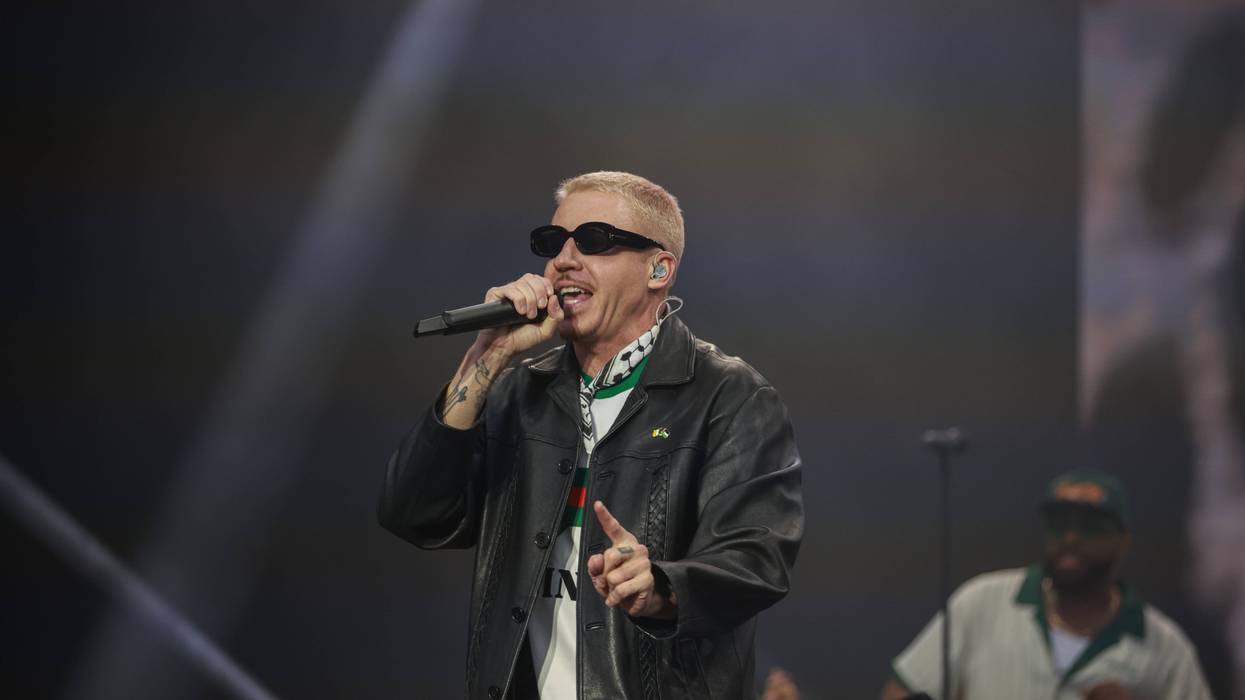
The rapper Macklemore said he was kicked off a tour with Ed Sheeran on Monday after pressure from NFL owners angered by his harsh criticism of Israel.
Macklemore, who has been an outspoken supporter of Palestinian rights, especially since October 2023, made headlines earlier this month when he said "Free Palestine" onstage during a show at MetLife Stadium in New Jersey, and said he wanted the people of Gaza and the occupied West Bank to know “we have not forgotten about them."
The rapper also performed his 2024 song "Hind's Hall," which debuted amid a wave of campus protests against US support for Israel's military campaign in Gaza. The Israeli assault has killed over 73,000 Palestinians, according to official counts, which major human rights organizations have denounced as a genocide.
The title of the song references pro-Palestinian demonstrators at Columbia University, who occupied a building during the protest wave and named it after Hind Rajab, a 5-year-old girl who was killed by Israeli forces in Gaza after spending hours trapped in a car with the bodies of her relatives and pleading for rescuers to save her.
The performance faced pressure from groups, including the Israeli American Council, which launched a petition calling for Sheeran to boot Macklemore from the tour. The performance was also met with criticism from the singer Pink, who said Macklemore's performance may have left Jewish audience members feeling "scared or targeted," though she said she did not want any artist to be "silenced."
Macklemore emphasized during a subsequent show that Jewish spectators were not the targets of his performance. "To all of my Jewish brothers and sisters: criticism of Israel, criticism of apartheid, being against genocide in no way is a criticism of you," he said. "My message is for peace; love for all human beings to be treated with dignity, respect, and equality.”
On Monday, the group promoting Sheeran's Loop Tour announced that Macklemore would not be performing at the remaining shows on the US leg, telling Rolling Stone that it had been "notified by venues on the upcoming US tour dates that they will not allow a concert to take place with Macklemore on the lineup, which would result in the cancellation of the tour and impact hundreds of thousands of fans."
In an Instagram post on Monday following the announcement, Macklemore gave more details on what he said prompted his exile from the tour.
"Last Monday, in the middle of all the media attention surrounding Pink and what I said at MetLife, Ed [Sheeran] told me that Robert Kraft called him," Macklemore explained. "We were scheduled to play Gillette Stadium later this month, which is owned by the Kraft Group. Ed told me that Kraft said I would not be allowed to perform in his stadium. Ed also told me that Kraft had rallied some of the other stadium owners, and collectively they gave him an ultimatum: 'If Macklemore stays on the tour, you will not be allowed to play in our venues.'"
According to Rolling Stone, other venues where decision-makers allegedly objected to Macklemore's appearance included Lincoln Financial Field in Philadelphia; Mercedes-Benz Stadium in Atlanta; Lucas Oil Stadium in Indianapolis; Bank of America Stadium in Charlotte, North Carolina; AT&T Stadium in Arlington, Texas; and Raymond James Stadium in Tampa, Florida.
Kraft, the multibillionaire owner of the New England Patriots, is one of the nation's most prominent donors to pro-Israel causes and is a close personal friend of Israeli Prime Minister Benjamin Netanyahu, who is wanted by the International Criminal Court for alleged crimes against humanity and war crimes in Gaza.
In 2019, Kraft received a $1 million award, presented by Netanyahu, to support his efforts to combat the Boycott, Divestment, and Sanctions (BDS) movement in the US, which aims to use economic means to pressure Israel to end the occupation of Palestinian territory, which is considered illegal under international law.
Since 2022, Kraft has also donated $3 million to the United Democracy Project, the super political action committee affiliated with the American Israel Public Affairs Committee (AIPAC), according to federal campaign finance records.
As public support for Israel has cratered, particularly among Democratic voters, AIPAC's political fundraising arms have been spending at a record pace, deploying over $100 million to back pro-Israel candidates during the 2026 election cycle.
Macklemore said he did not begrudge Sheeran, whom he described as a "friend" and "brother," for cutting him from the tour in the face of this pressure.
"Ed was in a fucked up position. He knew it. His typical apolitical stance was being challenged in a way it never had been before. He told me that the words 'Free Palestine' and the image of the Palestinian flag were hurtful to a lot of people he spoke with," Macklemore said. "I told him that if those words were more offensive than tens of thousands of Palestinian children being killed by Israel, then there was a fundamental disconnect between where those people stood and where I stood."
Macklemore said he understood why Sheeran and other artists choose to avoid controversial political topics.
"Taking a side can cost you. Money, brand deals, sponsorships, festivals, private shows, relationships, and access. I've lost all of those things," Macklemore said. "But there is no neutral position between the oppressor and the oppressed. When one side has the bombs and bottomless financial and military support from America, refusing to take a side doesn't leave you in the middle."
He emphasized that neither he nor Sheeran was a "victim" in this saga. "The victims," he said, "are the Palestinian people. The men, women, and children who have been killed, starved, displaced, and forced to live through unimaginable violence."
Macklemore noted that he has been making similar statements to those he made at MetLife "for almost three years." But now that he's saying it on bigger stages with bigger artists, he said, "it becomes too much of a risk."
"If I kept doing the shows, saying Free Palestine, with Ed implicitly supporting it, the crowd getting loud and showing undeniable support for Palestinian liberation, what artist might speak out next?" he said. "The stage becomes resistance. Maybe that's why this time it became so important to silence me."
"One of the most effective ways to enforce that silence has been to weaponize the accusation of antisemitism," he continued. "Antisemitism is real. And that is exactly why the word matters too much to be used as a shield against criticism of the Israeli state. When criticizing Israel, opposing Zionism, or saying 'Free Palestine' gets conflated with hatred of Jewish people, it doesn't protect Jewish people. It protects Israel from accountability."
Alex Skopic, an associate editor at Current Affairs magazine and author of a 2023 essay, "A Brief Cultural History of the White Rapper," which discusses Macklemore and his history of political activism extensively, said the rapper's removal from the tour was "a really terrifying example of the power of concentrated wealth to censor speech."
"It's one thing for a stadium owner to cancel a particular artist, but apparently Robert Kraft was able to make a few phone calls and get Macklemore banned from the entire tour," Skopic said in an email to Common Dreams. "It's incredibly dangerous to civil society when one guy has that kind of power to dictate what music can and can't be heard."
He added that it was also "notable who gets canceled and who doesn't," pointing out that in his home city of New Orleans, Ye (formerly Kanye West) recently performed before a packed Superdome, even "after he spent two years spouting Nazi rhetoric," including publicly praising Adolf Hitler on numerous occasions.
"Apparently, our elites consider the words 'Free Palestine' more threatening," Skopic said.
He added that Sheeran "has behaved like an absolute coward."
"When you think about it, Sheeran is one of maybe 30 artists on the planet who's big enough, in terms of money and influence, to say no to nonsense like this from stadium owners," Skopic said. "He chose the money over his integrity. It's bad enough that his music for the last decade has been painfully mediocre, but that shows a real lack of spine."
Given the long history of rappers taking controversial stances, Skopic added that "it's also kind of absurd that Macklemore is one of the foremost people in rap who's speaking out against an ongoing genocide."
"There's a lot of cop-outs to go around," he said. "DJ Khaled, famously, is Palestinian himself and won't say a word. Where's Kendrick Lamar, with his massive platform? Where are any of them?"
"How much damage will Democratic leaders cause to their own brand and party for AIPAC money?" asked one critic.
Progressive and pro-Palestine critics on Tuesday accused House Democratic leaders of ignoring the majority of party voters who oppose US military aid to Israel by appointing one of the most pro-Israel members of Congress as the top Democrat on a key Mideast subcommittee.
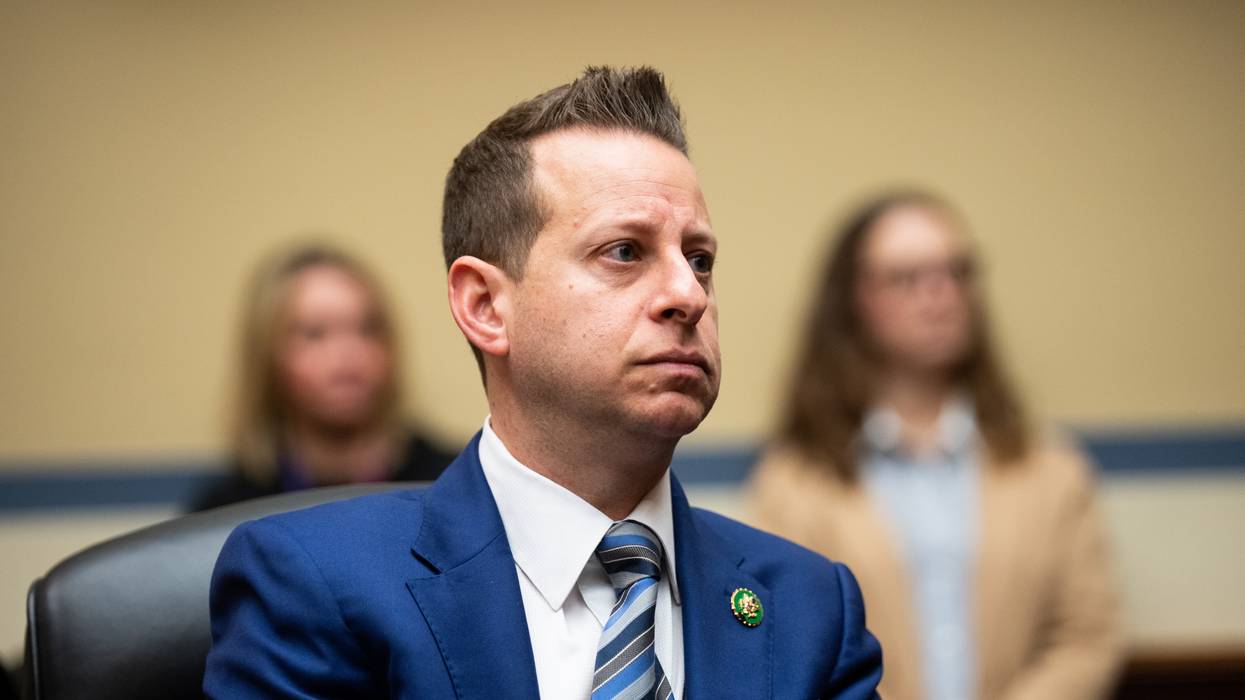
Rep. Gregory Meeks (D-NY), the leading Democrat on the House Foreign Affairs Committee, announced the appointment of Rep. Jared Moskowitz (D-Fla.) as ranking member of the Middle East and North Africa Subcommittee. Rep. Debbie Wasserman Schultz (D-Fla.) was assigned to the Oversight and Intelligence Subcommittee, Mark Pocan (D-Wis.) joined the Africa Subcommittee, and Wesley Bell (D-Mo.) was named to the Western Hemisphere Subcommittee.
Moskowitz thanked Meeks and House Minority Leader Hakeem Jeffries (D-NY) on social media "for this important responsibility" and, in a separate post, vowed to "work to strengthen America’s relationships with Israel and our Gulf allies, expand regional peace, advance American diplomacy, and ensure our foreign policy is grounded in strength, security, and reality."
During his two terms in Congress, Moskowitz—who last week survived a primary challenge by pro-Palestine progressive Oliver Larkin—has repeatedly argued against conditioning armed aid to apartheid Israel on compliance with international law or protection of Palestinian civilians amid the ongoing genocide in Gaza and Israel's illegal occupation, colonization, and ethnic cleansing in the West Bank.
Moskowitz was one of only 12 Democrats who voted for a 2023 Republican aid package to Israel—which receives billions of dollars in annual US funding—as the Israeli military killed thousands of Palestinian civilians in Gaza following the October 7, 2023 Hamas-led attack.
Critics argued that placing one of Congress’ most outspoken supporters of Israel in a key Middle East policy position shows that Democratic leadership remains badly out of step with its own voters, a majority of whom concur with a United Nations commission of inquiry, human rights groups, scholars, and around 20 national governments who say Israel is committing genocide in Gaza.
Moskowitz denies the Gaza genocide, has conflated criticism of Israeli crimes with hatred of Jews, and was denounced by House progressives including Rep. Rashida Tlaib (D-Mich.), the only Palestinian American in Congress, for authoring an amendment to ban US officials from using State Department funds to cite official Gaza casualty figures—which now include more than 250,000 Palestinians killed, wounded, or missing during Israel's onslaught.
Meeks' appointments come at a time when 3 in 4 Democratic voters oppose US aid to Israel—up from just 45% three years ago—and after the issue was a factor in former Vice President Kamala Harris' defeat by President Donald Trump in the 2024 presidential election.
In response to Moskowitz's appointment, the progressive organizing group Demand Progress issued a statement noting that the congressman "has consistently opposed placing conditions on military aid to Israel, repeatedly voted against the majority of House Democrats to sanction International Criminal Court officials, and earlier this year said he would oppose an Iran war powers resolution."
Demand Progress senior policy adviser Cavan Kharrazian said:
By making a hard-line Israel supporter their point person on Middle East policy, House Democratic leaders are doubling down on a failed approach to Israel that shows contempt for the clear and growing majority of Democratic voters who want to stop cutting blank checks for the Israeli government. Donald Trump’s ongoing wars in the Middle East and his commitment to keeping the US joined at the hip to Israel are wildly unpopular and have been a disaster for the nation. Elevating someone who consistently sides with Trump in support of Israel, and who has a long record as an Iran hawk, represents clear political malpractice on behalf of House Democratic leaders.
Palestine defenders and Democrats concerned about the possible fallout of elevating an Israel hawk to a top subcommittee post as the party seeks to win back control of Congress in November's midterm elections bdenounced the appointment of Moskowitz.
ReThinking Foreign Policy president Mitchell Plitnick called Meeks' move "very bad news."
"Moskowitz is a completely inappropriate choice, given how wildly out of step he is with Democratic voters on Mideast issues," he said on X. "It's yet another indication of why it is so desperately important that Democratic 'leaders' like Hakeem Jeffries and Gregory Meeks be replaced as soon as possible."
Erik Sperling, executive director at Just Foreign Policy, called the decision to appoint Moskowitz "shocking."
"Meeks and Jeffries are apparently intending to signal that the anti-war and pro-Palestinian movements are unwelcome in the [Democratic] Party?"
Writer Wajahat Ali asked on X, "How much damage will Democratic leaders cause to their own brand and party for AIPAC money?"
Ali was referring to the American Israel Public Affairs Committee, whose campaign contributions have been a deciding factor in electing pro-Israel candidates to Congress and defeating those who advocate for Palestinian rights. So far, AIPAC has poured more than $100 million into the 2026 midterm elections—including around $30 million against Michigan Democratic US Senate nominee Abdul El-Sayed.
According to the watchdog group Track AIPAC, Moskowitz has received $833,288 in campaign contributions from the Israel lobby over the course of his career, Wasserman Schultz has taken $1,542,327, and Bell—who ousted former Rep. Cori Bush (D-Mo.)—a staggering $18,126,578. Pocan, a pro-Palestine progressive, rejects AIPAC funding.
As for Jeffries and Meeks, Track AIPAC reports the former has taken $1,495,709 and the latter $986,946 in campaign contributions from the Israel lobby.
The local grassroots group NY Dumps AIPAC lamented Meeks' appointment of what it called "one of the most Islamophobic genocide cheerleaders in Congress to be the top House Dem overseeing Middle Eastern foreign policy."
"In doing so, Meeks is compromising world peace for the sake of AIPAC," the group said.
Some observers, including Zeteo News reporter Prem Thakker, noted that Tuesday's moves followed Jeffries' recent secret meeting with Jared Kushner, Trump's son-in-law and special envoy for peace missions.
Responding to Moskowitz's promotion, Matt Duss, executive vice president at the Center for International Policy and a former foreign policy adviser to US Sen. Bernie Sanders (I-Vt.), highlighted polling published Monday by the Institute for Middle East Understanding Policy Project showing that "Democrats in the first six states to vote in the 2028 presidential primary overwhelmingly demand sanctions and a total weapons embargo against Israel."
"At what point," asked Duss, "can Democratic voters finally have foreign policy committee leadership that actually represents the party’s anti-war majority instead of its small and thankfully dwindling hawkish minority?"
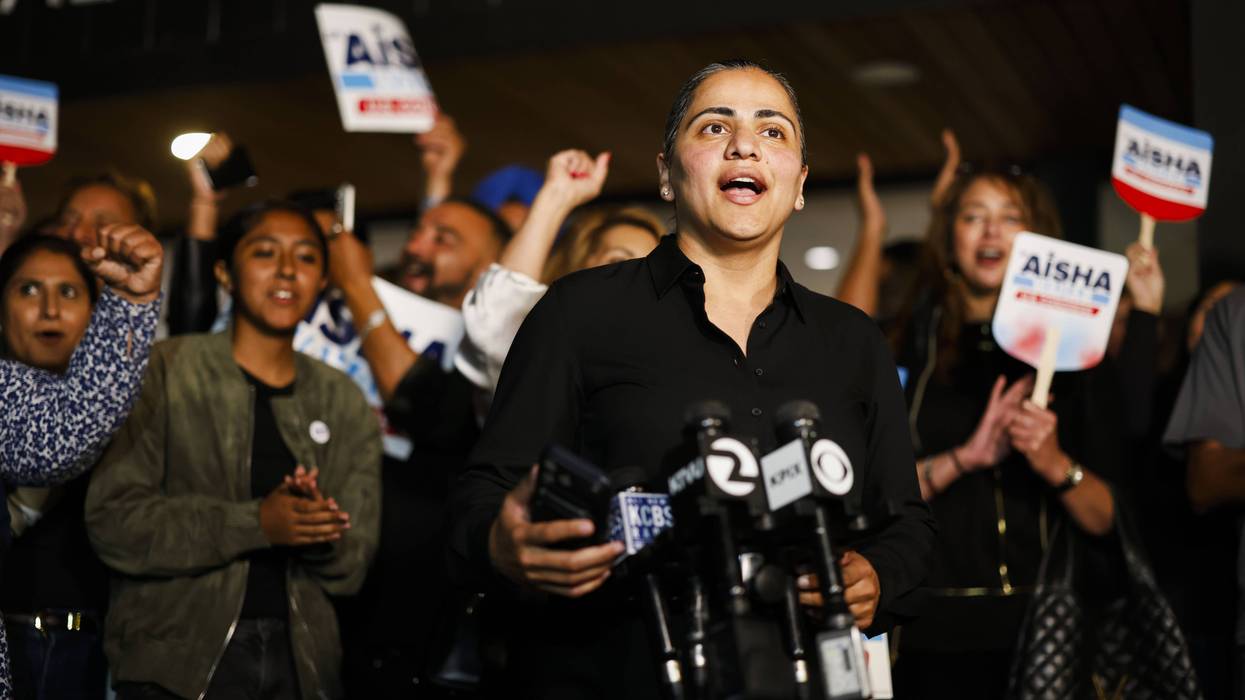
"This victory belongs to the voters who made clear that our district cannot be bought," said Wahab, who will serve out the remainder of former Rep. Eric Swalwell's term.
Progressive California state Sen. Aisha Wahab has won a special election to serve the remainder of disgraced former Rep. Eric Swalwell's term in the US Congress, defeating a centrist Democrat backed by millions of dollars in AIPAC spending.
“This victory belongs to the voters who made clear that our district cannot be bought,” Wahab said in response to news of her victory, which came some 48 hours after election day. "Through one of the ugliest, most expensive elections we’ve ever seen, we never took the bait or went negative. We stayed focused on the people, and I will fight for this district that raised me.”
Wahab, who ran on slashing prescription drug costs and ending forever wars, will represent California's 14th Congressional District until at least January. In November, Wahab will face Bay Area Rapid Transit board member Melissa Hernandez again in a race for a full two-year term in the US House. Tuesday's special election was significantly closer than earlier primary contests, signaling a highly competitive race later this year.
Our Revolution, a progressive advocacy organization that backed Wahab, called her win "a national model for how progressives can defeat big-money outside groups and build a Democratic Party rooted in working people." The United Democracy Project, AIPAC's super PAC, spent $2.5 million on the contest in an effort to boost Hernandez.
BOLD America, a separate super PAC that has received funding from AIPAC, also threw millions of dollars behind Hernandez. By contrast, The American Prospect reported that Wahab’s outside support came "from the state’s leading labor organization, from the leadership PAC of Rep. Pramila Jayapal (D-Wash.), and from the PAC for the Congressional Progressive Caucus."
“Aisha Wahab’s victory should be studied by every progressive running for office in America,” Joseph Geevarghese, executive director of Our Revolution, said in a statement late Thursday. “They had millions of dollars. We had organized people. And organized people won.”
“The lesson from CA-14 is simple: Democrats do not have to surrender to the biggest checkbook in the race,” said Geevarghese. “Big money can buy television ads, mailboxes and endless attacks. It cannot buy the trust built through thousands of conversations between neighbors. That is the model: unite the movement, organize everywhere, and make billionaire money fight us on our terrain.”
His win proved that a pro-Palestinian progressive could triumph over AIPAC, dark money, and the Democratic establishment.
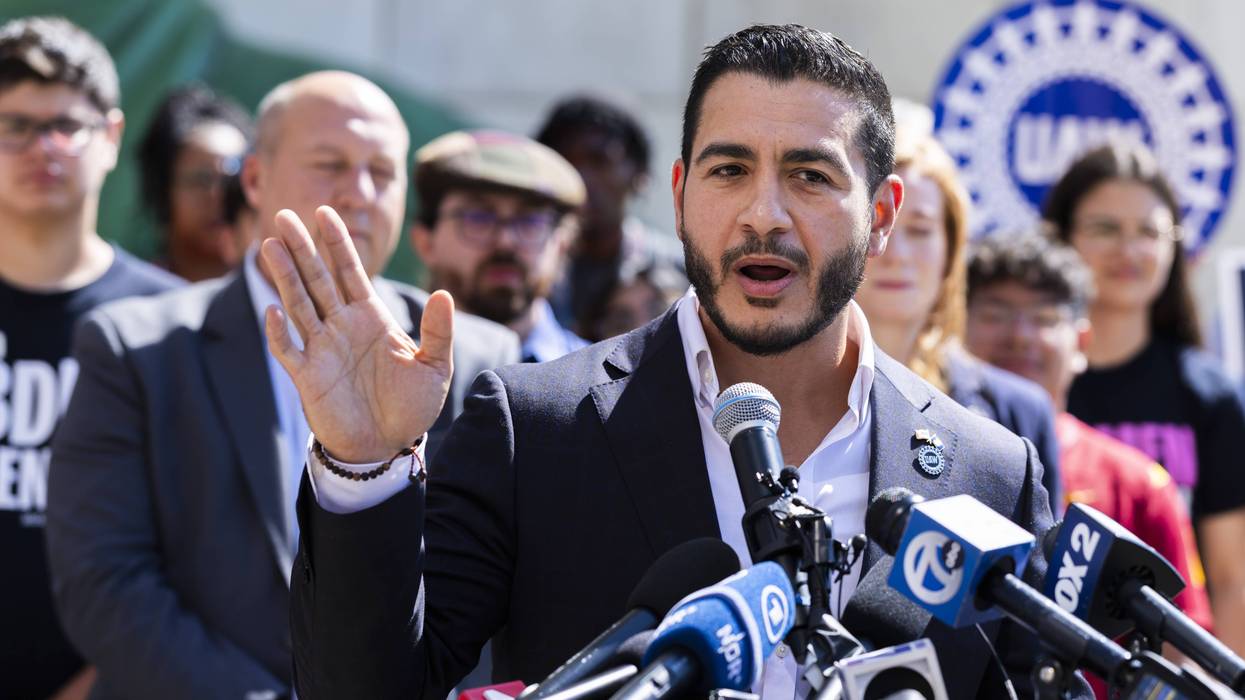
In what, I believe, will be seen as this year’s most significant election; Dr Abdul El-Sayed won a victory in Michigan’s Democratic Senate primary. It was a close contest—a nail-biter, as we say—but it was an important win that marks a watershed moment in US politics.
It was the first time that Israel’s genocidal war in Gaza and massive US military support to Israel became central themes that were actively debated across the state. This issue has come up in a few other races. But this Senate race was different. There were daily discussions about the fact that the US has been subsidizing Israeli policies that have taken such a huge toll on Palestinians and Lebanese. From the results it is clear: Israel and the candidate that supported Israel, four term congresswoman, Rep. Haley Stevens, both lost.
Another major issue actively debated in this contest was the role of “dark money” and other independent expenditures. We’ve seen dark money dominate campaigns in the past. But never at this level. At last count, Stevens had received upwards of $70 million, with the bulk of these funds coming directly from pro-Israel groups, led by the Israel lobby, American Israel Public Affairs Committee (AIPAC). In contrast, El-Sayed’s campaign was fueled largely by small donors. Overall, Stevens and AIPAC outspent El-Sayed by a margin of over 11 to one! In the end, dark money and AIPAC were resoundingly defeated, proving that money can prop up a candidate but can’t automatically win an election.
The El-Sayed-Stevens contest also became a national face-off between the progressive wing of the Democratic Party and the party’s establishment, with leading Democrats from both wings endorsing and campaigning in the state. El-Sayed’s win in this bellwether Midwestern battleground state represents a major win for progressives. It demonstrated that the “establishment” itself has become toxic to many Democratic voters.
I am hard pressed to find an election that was more consequential and broke ground in more areas than this Michigan primary contest.
This election also marks a huge victory for Michigan’s Arab Americans. Four decades ago, the leading candidate for mayor of Dearborn made “What to do about the Arab problem?” a central issue in his campaign. Since then, that community has continued to organize, register voters, and win elections. Much maligned after registering their discontent with the Biden administration’s support for Israel, they came roaring back by helping to elect an Arab American as the Democratic Senate nominee. Not only that, but in the contest in the Dearborn area for the nomination to represent Democrats in the November election for Michigan State Senate, Abbas Alawieh won a decisive victory. Abbas was the leader of the 2024 “Uncommitted” movement.
I am hard pressed to find an election that was more consequential and broke ground in more areas than this Michigan primary contest. Now it’s on to November.

Pro-Israel PACs finance Republicans, import Republican donor money into Democratic primaries, punish dissenting Democrats, divide the Democratic coalition, and bind Democratic leaders to policies that damage the party’s moral credibility and electoral prospects.
There are plenty of principled, humanitarian reasons for opposing US support for Israel’s current government. Multiple human right groups, United Nations bodies, international courts, Israeli politicians, and genocide organizations have accused Israel of engaging in war crimes, including genocide, in Gaza and the West Bank. The invasions of Lebanon and Iran are likewise criminal humanitarian disasters.
There are also practical foreign policy reasons for opposing the influence of Israel and the Israel lobby. Jeffrey Sachs and Sybil Fares argue convincingly, in "Stop Netanyahu Before He Gets Us All Killed," that Israel encouraged most of the US foreign policy disasters in the Middle East and Africa:
In 1996, [Israeli Prime Minister Benjamin] Netanyahu and his American advisors devised a “Clean Break” strategy. They advocated that Israel would not withdraw from the Palestinian lands captured in the 1967 war in exchange for regional peace. Instead, Israel would reshape the Middle East to its liking. Crucially, the strategy envisioned the US as the main force to achieve these aims—waging wars in the region to dismantle governments opposed to Israel’s dominance over Palestine. The US was called upon to fight wars on Israel’s behalf.
The Clean Break strategy was effectively carried out by the US and Israel after 9/11. As NATO Supreme Commander General Wesley Clark revealed, soon after 9/11, the US planned to “attack and destroy the governments in seven countries in five years—starting with Iraq, then Syria, Lebanon, Libya, Somalia, Sudan, and Iran.”
The US followed through with military actions against all those countries, which now lie in ruins, except for Iran, which Israel and the US are in the process of destroying. As Sachs and Fares wrote, “Netanyahu was a cheerleader of these wars of choice–either in public or behind the scenes–together with his neocon allies in the US.”
Israel has corrupted US foreign policy, causing the country to fight unnecessary wars and create unnecessary enemies.
Aside from the humanitarian and foreign policy reasons for opposing the influence of Israel and the Israel lobby on American politics, there are also political reasons. Foremost among them is that Israel and the Israel lobby have repeatedly lent their substantial financial and political influence toward helping elect Republicans, including President Donald Trump, and toward electing Democrats disliked by many Democratic voters.
Multiple US presidents, including Presidents Harry S. Truman, Gerald Ford and Jimmy Carter, made efforts to break away from staunchly pro-Israel policies but eventually succumbed to pressure from pro-Israel lobbyists threatening them with electoral opposition.
During the Republican primary debates in 2016, Trump criticized the invasion of Iraq and said that US policy in the Middle East needed more balance: more support for Palestinian rights. But during the general election campaign, Trump had a meeting with Sharon and Miriam Adelson, who promised to help fund his campaign (source). From that point on, Trump has been staunchly pro-Israel.
Sheldon and Miriam Adelson donated approximately $100 million to pro-Trump super PACs during the 2020 election cycle.
You could call this a representation deficit: Democratic politicians become more responsive to a donor network than to Democratic voters.
The New York Times reported in 2021 that the Adelsons’ contributions to GOP campaigns and organizations had totaled around half a billion dollars since 2010.
In 2024 Miriam Adelson donated $100 million to help elect Trump and spent a further $500 million on other Republican causes. According to OpenSecrets, from 2023 to 2024, pro-Israel PACs gave $5.4 million to candidates, almost evenly split between Democrats and Republicans. The Republican Jewish Coalition spent over $14 million supporting Trump since 2020. The New Republic says that the American Israel Public Affairs Committee (AIPAC) spent $45 million in the 2024 elections.
In 2024, Trump ran as the peace candidate, promising to stop the war in Gaza. Kamala Harris’ support for Israel was a significant cause of her election loss (source, source).
Polls (this and this) have shown that among Democratic voters, support for Israel has plummeted. In April 2026, Pew found that 80% of Democrats and Democratic-leaning independents viewed Israel unfavorably, up from 69% in 2025 and 53% in 2022. Gallup found in July 2025 that only 8% of Democrats approved of Israel’s military action in Gaza. A Reuters/Ipsos poll released August 4, 2026 found that only 16% of Democrats supported continuing military and economic aid to Israel, while more than 80% of liberal Democrats considered reducing aid important or essential.
The victories of socialist and pro-Palestinian candidates (e.g., Abdul El-Sayed in the Michigan Senate primary) during the 2026 primaries—despite tens of millions of dollars spent by the Israel lobby to defeat them—further illustrate the fact that the Democratic base is rejecting mainstream Democrats who support Israel.
Of course, AIPAC does not represent the views of all American Jews. Roughly 7 in 10 Jewish respondents in a March 2026 survey identified as Democrats, and younger Jewish voters have become significantly more critical of unconditional aid.
The Democratic Party’s congressional leadership has continued defending a position overwhelmingly rejected by its own voters. That creates several electoral injuries:
You could call this a representation deficit: Democratic politicians become more responsive to a donor network than to Democratic voters.
In 2024, the Israel lobby helped unseat Reps. Cori Bush (D-Mo.) and Jamaal Bowman (D-NY). Republican-aligned billionaires should not be able to determine which candidates Democrats are permitted to nominate. In 2026 the Israel lobby helped unseat Rep. Thomas Massie (Ky.), one of Trump’s biggest Republican critics.
Though the Israel lobby gives to Democratic candidates too, its political strategy is not simply bipartisan support for Israel. Its effect is asymmetrical: It helps Republicans win national power while policing the Democratic Party from within. It supports Republicans directly, then spends heavily in Democratic primaries to defeat candidates who challenge Republican-backed Israeli policies. Democrats therefore bear the electoral cost of unpopular policies while Republican candidates receive both financial support and an issue with which to divide the Democratic coalition.
In short, powerful pro-Israel organizations are harming the Democratic Party. This is not because support for Israel is inherently Republican, and not because Jewish voters are disloyal Democrats—many Democrats strongly oppose Israel’s policies—but because these organizations increasingly enforce a Republican-aligned foreign policy inside a Democratic electorate that rejects it. They finance Republicans, import Republican donor money into Democratic primaries, punish dissenting Democrats, divide the Democratic coalition, and bind Democratic leaders to policies that damage the party’s moral credibility and electoral prospects.
Democratic Party leaders and activists should stop allowing a pro-Republican, pro-war lobby to distort its policies and chooseits candidates.
The Israel lobby, for its own sake, should think hard about whether it wants to support a quasi-fascist movement. For more on this, see "Supporters of Israel Will Eventually Regret That They Allied With Fascist Trump."
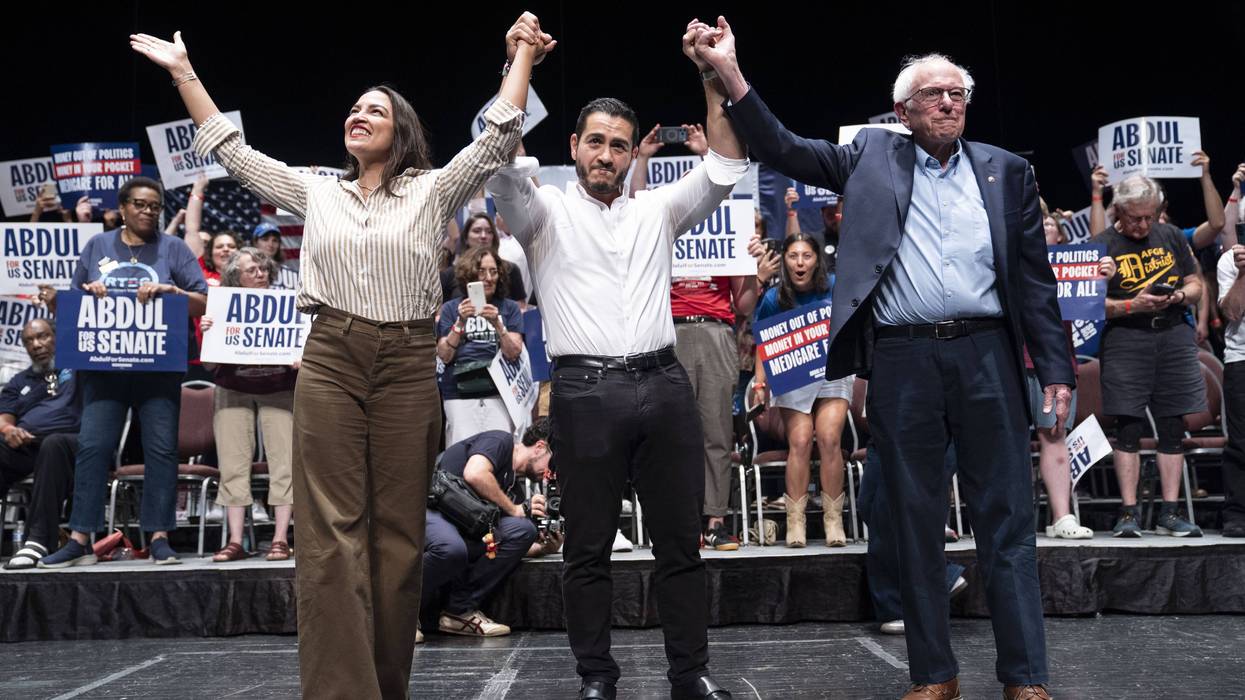
"I’m happy to burn your money for you, and then we can get on to the business of governing," Abdul El-Sayed said in a message to the American Israel Public Affairs Committee.
After setting over $30 million on fire in Michigan's Democratic US Senate primary, the American Israel Public Affairs Committee is reportedly plotting round two against progressive epidemiologist Abdul El-Sayed—this time seeking to boost his Republican general election opponent, Mike Rogers.
The New York Times reported Wednesday that the pro-Israel lobbying organization, known as AIPAC, "has told allies that it is considering a major financial campaign to support the Republican Senate nominee in the Michigan general election this fall." AIPAC said publicly following El-Sayed's victory over Rep. Haley Stevens (D-Mich.) in Tuesday's primary that "our members remain determined to ensure that voters reject Dr. El-Sayed and his radical anti-Israel agenda in November."
Rep. Alexandria Ocasio-Cortez (D-NY), who endorsed and campaigned for El-Sayed, wrote in response to AIPAC's post-election statement that she appreciates the group "proving it doesn't belong in the Dem Party and especially in our primaries."
"From endorsing Jan. 6th members to ensuring Congress remains in the hands of a 34-count felon, AIPAC is an org committed to undermining democracy at home and abroad," Ocasio-Cortez wrote on social media. "See you in November."
Rep. Chris Deluzio (D-Pa.) noted that "a big majority of Americans want the US government to stop sending American dollars to Israel's reckless regime and to end the war in Iran."
"Yet AIPAC is threatening to spend to deliver the Republicans a critical Senate seat in Michigan, helping a Trump stooge like Mike Rogers who will keep funding Netanyahu's wars and do nothing to stop Trump's Iran war," said Deluzio. "This is exactly why so many Democrats like me have rejected AIPAC."
AIPAC cash accounted for around half of all outside spending in the contest between El-Sayed and Stevens—the most expensive Democratic primary in American history.
But the organization and its affiliated groups appear to have plenty more resources to devote to the general election, the results of which could decide control of the US Senate next year.
The United Democracy Project (UDP), AIPAC's super PAC, had over $80 million in cash in hand at the end of June, according to federal filings.
AIPAC is UDP's primary funder, but the group has also received cash from right-wing billionaires such as hedge fund manager Paul Singer and businessman Haim Saban.
During a virtual town hall days before Tuesday's election, El-Sayed—a vocal opponent of US support for Israel's genocidal assault on Gaza—dared AIPAC to keep pouring its financial resources into Michigan's Senate race.
“AIPAC, if you’re listening, burn your money. Come back and burn it again in the general,” said El-Sayed. “I’m happy to burn your money for you, and then we can get on to the business of governing and asking whether or not our foreign policy ought to be dictated to us by the interests of a foreign government.”

"We all knew they were going to spend their money," said Abdul El-Sayed. "We didn't know that they were going to outspend us $11 to $1. And yet we're still standing."
Abdul El-Sayed was on track Wednesday to narrowly win the Democratic nomination for US Senate in Michigan, overcoming tens of millions of dollars in outside spending by AIPAC and other special interests that sought to smear the progressive epidemiologist and boost his opponent, US Rep. Haley Stevens.
NBC declared El-Sayed the winner, but The Associated Press said the race was too close to call with over 90% of ballots counted. As of early Wednesday morning, El-Sayed was leading Stevens by roughly 21,000 votes—or just over one percentage point.
In his election night speech, El-Sayed stopped short of declaring victory but celebrated the "movement that we were able to inspire."
"Across that movement that we built, there was an inspiration in the idea that we could take our government back. Government of the people, by the people, and for the people instead of government of the corporations, by the special interests, and for the billionaires," El-Sayed told supporters. "And because you had the audacity to believe in that, you know that the billionaires, the corporations, and the special interests, they weren't going to give up lightly. We all knew they were going to spend their money. We didn't know they were going to spend $70 million of their money. We didn't know that they were going to outspend us $11 to $1. And yet we're still standing."
An El-Sayed victory would be a brutal defeat for AIPAC, the pro-Israel lobbying organization that shelled out over $30 million to defeat him. AIPAC cash accounted for nearly half of all the outside spending in the race, which was the most expensive Democratic primary in US history.
"AIPAC spent over $30 million to stop Dr. Abdul El-Sayed in this race, and that record-high sum wasn’t enough because Democratic voters have had it with the fringe and extremist view that our tax dollars should pay for Israel’s bombs, wars, and genocidal ambitions," said Margaret DeReus, executive director of the IMEU Policy Project. "With Michigan now playing a decisive role in selecting the next Democratic president, potential 2028 contenders should take notes."
The winner of the Senate contest will face Republican Mike Rogers in November.
Progressives also appeared poised to win other closely watched races in Michigan. The Associated Press projected that grassroots organizer and climate activist William Lawrence has won the Democratic primary in Michigan's 7th Congressional District, while progressive state Rep. Donavan McKinney led establishment-backed US Rep. Shri Thanedar—who received AIPAC support—in the 13th District, with more than 70% of the vote counted.
"AIPAC fell on its face in Michigan," the progressive advocacy group RootsAction said in response to the primary results. "Voters showed that they want what progressives have been clamoring for, including Medicare for All, a stop to endless wars, and true economic security."

AIPAC has spent at least $104.3 million during the 2026 election cycle—a figure that's "likely to swell before the midterms are through," notes a new analysis.
The American Israel Public Affairs Committee, the powerful pro-Israel lobbying organization widely known as AIPAC, has poured more than $100 million into the 2026 midterm elections, with around $30 million dedicated to defeating progressive epidemiologist Abdul El-Sayed in Tuesday's Democratic US Senate primary in Michigan.
The $30.6 million that AIPAC's political action committee and super PAC, the United Democracy Project (UDP), have spent on the Michigan contest is the most money the organization has ever devoted to a single race, according to an analysis published Monday by Sludge. El-Sayed and his supporters have repeatedly called out his opponent, US Rep. Haley Stevens (D-Mich.), for benefiting heavily from AIPAC cash.
"The Michigan Senate primary is a fight as to whether billionaires and their super PACs will continue to control American politics, or whether we can have a government that represents working families," US Sen. Bernie Sanders (I-Vt.), who is supporting El-Sayed, wrote in a social media post on Monday. "Let’s elect Abdul El-Sayed."
More broadly, AIPAC has spent at least $104.3 million during the 2026 election cycle—a figure that's "likely to swell before the midterms are through," Sludge noted. The investigative outlet observed that AIPAC's super PAC—whose ads often include no mention of Israel—had $80 million of cash on hand as of the end of June.
The $104.3 million total does not include spending by super PACs quietly bankrolled by AIPAC. The American Prospect reported earlier this summer that AIPAC has been "routing campaign cash through anodyne-sounding pop-up shell PACs like 'Elect Chicago Women' or 'Affordable Chicago Now,' which received $5.3 million from United Democracy Project back in February for four races in Illinois, which resulted in two wins and two losses."
In addition to spending big to defeat El-Sayed in Michigan, AIPAC is backing incumbent US Rep. Wesley Bell against progressive challenger Cori Bush in Tuesday's Democratic primary race for Missouri's 1st Congressional District. Bell unseated Bush in the district's 2024 Democratic primary with the help of millions of dollars in AIPAC spending.
AIPAC's super PAC pumped more than $3 million into the Missouri primary last month, The Intercept's Akela Lacy reported over the weekend.
"One thing Bell does not have is Bush’s grassroots army," Lacy added. "Though he’s far outraised Bush and has outside spending in his corner, Bush is buoyed by organizers with the St. Louis chapter of Democratic Socialists of America... After being saturated with negative ads and mail from AIPAC and other groups that spent on the 2024 primary, St. Louis residents are slightly more prepared this time around, said organizers backing Bush’s campaign."
US Rep. Shri Thanedar (D-Mich.), who is facing progressive challenger Donavan McKinney on Tuesday, has also received significant campaign funding from AIPAC.

"It can't be overstated how flippant and arrogant Stevens comes off when questioned about $60 million in super PAC spending for her in this race," said one observer.
With just days to go until the Michigan US Senate primary election, Rep. Haley Stevens, the preferred candidate of several Democratic establishment figures, suggested this week that campaign finance—a top issue in her race against former public health official Abdul El-Sayed—is a niche interest held by "educated" people and not working families, and appeared eager for voters and the press to stop asking her about the roughly $60 million outside groups have poured into the race on her behalf.
"It seems like we got the campaign finance zoomies," the Michigan Democrat told reporters at an event with business leaders in Lansing on Wednesday, appearing mystified at the suggestion that ordinary voters would be interested to know her position on super political action committees, which can raise unlimited money from corporations and other groups and individuals to support a candidate's run, and her significant backing from a super PAC affiliated with the increasingly unpopular American Israel Public Affairs Committee (AIPAC).
"My opponent has done a great job talking about campaign finance. It’s an educated issue,” Stevens said, according to a report from Michigan Advance Thursday. “I even had someone who’s got a law degree asking me about some of the campaign finance stuff today. That’s totally fine, but you know what else? These families on paid leave? They need affordable daycare. They need good public schools to go.”
Journalist David Sirota of The Lever said that in what amounts to Steven's "final argument" ahead of the election, the candidate suggested that pro-Israel and other groups' attempt to "buy her a Senate seat—is merely an esoteric 'educated issue' that has nothing to do with corrupt lawmakers creating corrupt policies fueling the affordability crisis."
As Mother Jones reported Friday, about half of the super PAC spending on Stevens' behalf has come from United Democracy Project, which is affiliated with AIPAC, while a large chunk comes from the super PACs A Stronger Michigan and Center Forward.
Those groups have received millions of dollars from PhRHMA, a trade group representing pharmaceutical firms, and UnitedHealth Group—both key players in the for-profit healthcare industry that's raised household costs for families across the country in recent years, with UnitedHealth slashing care expenses for nursing home patients and unlawfully using an artificial intelligence algorithm to deny coverage to people with Medicare Advantage. El-Sayed has notably made Medicare for All a key priority of his campaign.
"The outside spending picture for El-Sayed looks much different," reported Mother Jones. "The biggest individual donor to Fighting for Michigan—El-Sayed’s main outside backer—is the candidate’s father-in-law, a nephrologist at a Detroit hospital who had given $300,000 as of July 15. Overall, the super PAC has expended about $2.8 million—less than one-tenth of what has been spent against El-Sayed by the United Democracy Project alone."
Stevens attempted to shift the focus to her opponent's support from his father-in-law at her meeting with the Lansing Regional Chamber on Wednesday, after she was asked about the record-breaking outside spending in the race by a business leader in the very first question of the event.
But another attendee brought up the issue again later, noting she had not specifically addressed concerns about the groups whose spending her campaign is benefiting from and asking whether she would back a bill proposed by Sen. Bernie Sanders (I-Vt.), an El-Sayed supporter, to abolish super PACs.
Stevens was noncommittal once again, suggesting concerns about super PACs are part of "campaign platform" favored by Sanders.
"He’s in the independent party," she added. "I haven’t talked to him about it. I’m not trying to do any division.”
Stevens did allow that she "would love a constitutional amendment to get rid of money in politics and maybe make our elections shorter" and said she had spoken to Republicans about such a proposal.
But one observer said Stevens' overall message that the financing of her campaign is an issue only voters with "a law degree" are interested in was "flippant and arrogant."
Stevens has benefited from millions in AIPAC-backed super PAC spending as public approval has plummeted regarding the powerful pro-Israel lobby and the United States' funding of Israel's military, after nearly three years of the Israel Defense Forces' assault on Gaza and Prime Minister Benjamin Netanyahu's push for the US to join in attacking Iran—a conflict that has also had a direct impact on working families' household budgets as gas prices have soared.
On Thursday, Stevens took direct aim at El-Sayed, a Muslim, for his focus on AIPAC during the campaign, addressing him in a lengthy post on X in which she said, "Everyone in America understands you want to blame all of your problems on Jewish Americans."
The remark was widely condemned as "race-baiting," and interpreted as one that conflated Jewish Americans with the pro-Israel lobby.
"When someone points out AIPAC is spending $50 million, it’s presented as 'blaming Jewish Americans,'" said podcast host Adam Johnson. "I hate this shit so much, it’s gross, it’s bad faith, it’s sleazy, and it’s more manipulative, crybully smarm."