

SUBSCRIBE TO OUR FREE NEWSLETTER
Daily news & progressive opinion—funded by the people, not the corporations—delivered straight to your inbox.
5
#000000
#FFFFFF
To donate by check, phone, or other method, see our More Ways to Give page.
Daily news & progressive opinion—funded by the people, not the corporations—delivered straight to your inbox.
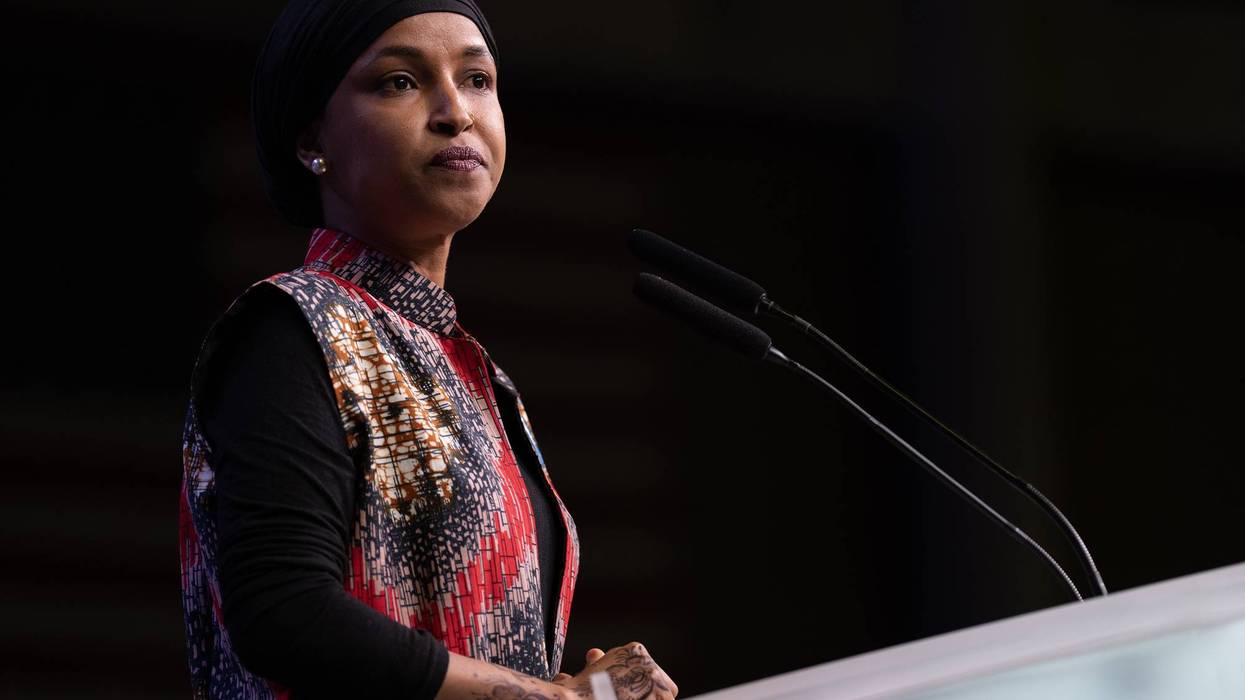
"Stripping the citizenship of opposition elected officials is really, really far down the road to fascism."
"I have rarely wanted to be wrong more," said one journalist Wednesday night after The Wall Street Journal confirmed what many supporters of US Rep. Ilhan Omar had suspected: that the Department of Homeland Security's raid on her home this week was part of an investigation that is ultimately aimed at deporting her.
The Journal reported that US officials confirmed the Trump administration aims to revoke Omar's (D-Minn.) citizenship, which she obtained in 2000, five years after she arrived in the US with her family from a refugee camp in Kenya. Omar is originally from Somalia, and President Donald Trump has made Somali Americans a key target of his mass deportation agenda and his racist attacks on immigrant communities.
Agents with Homeland Security Investigations (HSI), part of US Immigration and Customs Enforcement (ICE), seized Omar's passport, cellphone, personal computers, and notebooks, according to the WSJ, when they searched her home in Washington, DC.
Authorities have also issued more than a dozen subpoenas and are seeking testimony from people including Omar's family members before a grand jury.
A Justice Department official told the WSJ that the agency plans to build its case on allegations that Omar lied about her age when she became a citizen.
Federal investigators have been examining whether Omar's father, who died in 2020, altered her age to say she was 17 instead of 18 on immigration paperwork when he applied for citizenship. Doing so would have allowed Omar to acquire citizenship through her father.
The congresswoman, who is currently running for a fifth term, has previously denied committing immigration fraud, which Vice President JD Vance has openly accused her of. Other Republican elected officials have explicitly attacked Omar for her criticism of Israel and for being a Muslim, with Rep. Randy Fine (R-Fla.) calling her a "terrorist."
Trump has suggested the progressive lawmaker should be deported for “always complaining” and has called to "denaturalize migrants who undermine domestic tranquility.”
Journalist Peter Sterne said Wednesday evening that "many on the left suspected" the administration was attempting to deport Omar, "but it’s still wild to see the WSJ confirm it."
Dylan Williams of the Center for International Policy emphasized that the raid and investigation—carried out just weeks before the midterm elections and as Americans are already voting, though the Justice Department typically does not take actions against candidates just before an election—are "an attempt by the Trump administration to stir up its flagging base ahead of elections that are going to be brutal for them."
"Nonetheless, we need to fight this fascist, un-American abuse of power, hold those responsible accountable, and stand with Ilhan Omar," said Williams.
Aaron Reichlin-Melnick, a senior fellow at the American Immigration Council, noted that "a case of this magnitude would take years to wend its way through the courts," and said DHS would have to initiate deportation proceedings after Omar was denaturalized.
Still, a number of observers wondered why many prominent Democrats—like Senate Minority Leader Chuck Schumer (D-NY) and vocal Trump critic Sen. Cory Booker (D-NJ) have stayed quiet about the raid on Omar's house.
"Democrats, nice time to do a press conference united in defense of Ilhan Omar and condemning the Islamophobia against Muslim candidates," said commentator Wajahat Ali.
New York state Assembly Member Diana Moreno (D-36) said of the WSJ's reporting, "This is either the breaking point of our democracy or the moment we start fighting like hell to win back this country from the authoritarian demons in the White House. I stand with Ilhan Omar."
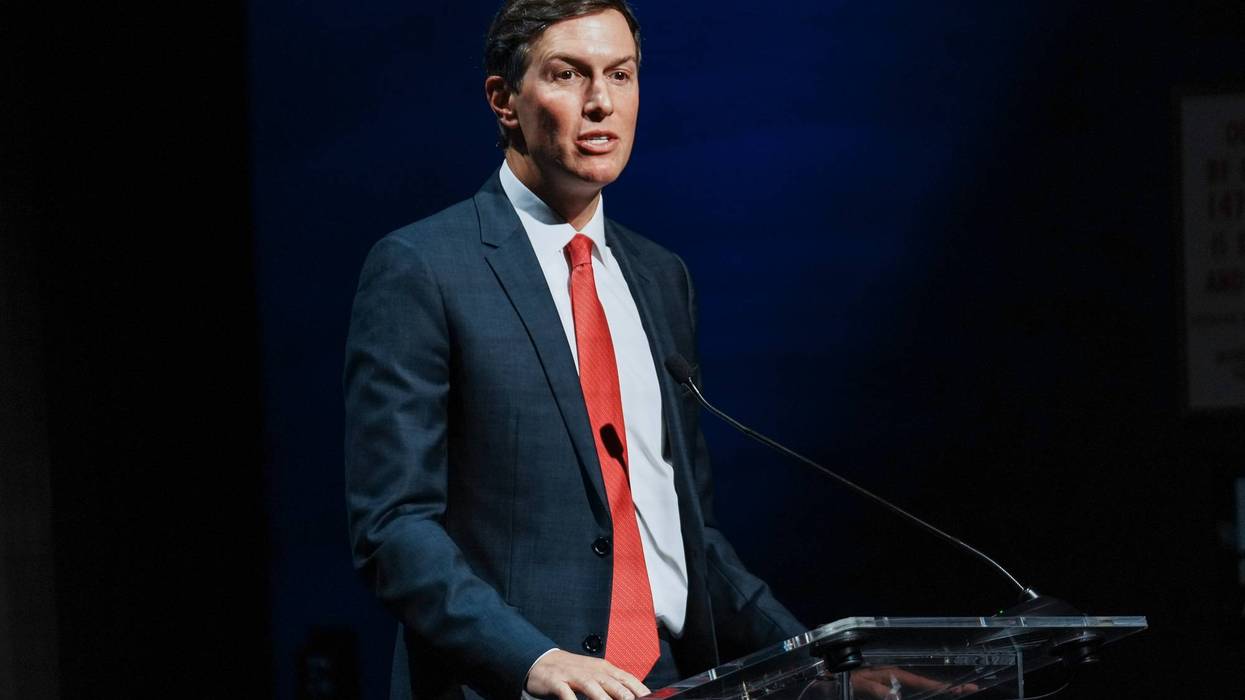
"Senate confirmation processes and financial disclosures exist to ensure that qualified individuals are appointed and carry out their official duties with integrity. Kushner is not an exception."
A government watchdog on Wednesday filed a lawsuit aimed at blocking Jared Kushner from serving as a top American foreign policy official while lacking confirmation from the US Senate.
In a complaint filed with the US District Court for the District of Columbia, Citizens for Responsibility and Ethics in Washington (CREW) alleged that Kushner, who is President Donald Trump's son-in-law, is engaged in "unlawful exercise of government power."
Even though Kushner has been given the role of an informal "envoy," the lawsuit contends that he has been tasked with major responsibilities, such as negotiating an end to Russia's war against Ukraine, that under the Constitution should require Senate confirmation.
"Kushner is one of President Trump’s go-to foreign policy negotiators," the complaint explains. "He represents the United States in the highest profile global conflicts... He negotiates directly with foreign leaders. He fills a crucial and continuing role in shaping and implementing the country’s foreign policy during President Trump’s second term."
Even as Kushner oversees such highly consequential diplomatic efforts, the lawsuit continues, he is still working as a private businessman operating an investment firm that has received billions of dollars in investments from the sovereign wealth funds of Saudi Arabia, Qatar, and the United Arab Emirates.
"The interplay and overlap between his government role and private business interests present a heightened risk of financial conflicts of interest," the complaint says. "Nonetheless, Kushner continues to exercise significant government power while circumventing the very protections put in place to guard against such conflicts."
Kushner has also been appointed in a manner that has helped him completely evade "transparency and conflict-of-interest obligations, including the filing of public financial disclosures during the appointment process," the lawsuit says.
The complaint urges the court to order Kushner to file financial disclosures and, if it finds him in violation of the US Constitution's appointments clause, bar him from continued government service.
CREW president Donald K. Sherman said the lawsuit is necessary to ensure that Kushner is not using US foreign policy as a vehicle for self-enrichment.
"Senate confirmation processes and financial disclosures exist to ensure that qualified individuals are appointed and carry out their official duties with integrity," Sherman explained. "Kushner is not an exception. He cannot simply opt out and expect the public to simply take him at his word.”

"In California, calling yourself a lawyer without a license isn’t puffery; it’s a crime."
A nonpartisan watchdog on Wednesday filed a complaint with the State Bar of California over new White House press secretary Katie Zacharia's claims of being an attorney.
The Campaign for Accountability (CfA) has formally asked the California Bar to investigate whether Zacharia, whose stumbling first press briefing on Tuesday was panned by critics, broke state law by falsely identifying herself as a lawyer.
The group's complaint notes that while Zacharia received a Juris Doctor in 2011 from the Pepperdine University School of Law, there is no record of her being admitted to practice law in any US jurisdiction.
"A law degree, standing alone, does not entitle its holder to practice law," the complaint states. "When the White House was asked whether Ms. Zacharia had ever been admitted to a bar, its press office responded only by referring the reporter to President Trump’s social media post announcing her appointment, which described her as 'an attorney.'"
When asked by a reporter on Tuesday about where she passed the bar exam, Zacharia replied that she became an attorney "when I moved to China."
However, the complaint notes that "published reporting indicates... that China does not permit foreign nationals to sit for its national bar exam or to practice Chinese law."
And even if China had allowed her to practice law, the complaint says that this would still not allow her to represent herself as an attorney in the US.
The complaint concludes that Zacharia "appears to have violated" Section 6126(a) of the California Business and Professions Code, which states anyone who makes false claims about being licensed to practice law is guilty of a misdemeanor offense "punishable by up to one year in a county jail or by a fine of up to $1,000, or by both that fine and imprisonment."
Michelle Kuppersmith, executive director of CfA, pointed to Zacharia's repeated statements during television appearances about being a lawyer as a way to "buttress her reputation and credibility as a television legal commentator and now as the White House spokesperson."
"Yet it seems it was all a lie," Kuppersmith added. "In California, calling yourself a lawyer without a license isn’t puffery; it’s a crime. The State Bar should investigate whether Ms. Zacharia has misled the public about her credentials and hold her accountable if she has."

"Social Security’s future is on the ballot this November," said one advocate, "and that includes the size of annual COLA adjustments.“
The rising cost of healthcare and other essentials means that the modest cost-of-living adjustment for about 76 million Social Security beneficiaries, announced Wednesday by Social Security Administrator Frank Bisignano, is likely to make only a small difference for senior citizens struggling to afford gasoline and groceries, said economic justice advocates.
Bisignano said the COLA for 2027, effective in January for most beneficiaries, will be 3.6%, amounting to an average of about $75 more per month.
Along with senior citizens, 40% of whom rely on Social Security for at least half their income, about 7.3 million people with disabilities who receive Supplemental Security Income will also receive the COLA increase starting December 31.
The COLA is higher than last year's, when the SSA adjusted monthly earned benefits by 2.8%.
But Richard Fiesta, executive director of the Alliance for Retired Americans, said the new increase "is just not enough to keep up with the cost of food, gas, utilities, and prescription drugs."
"A good chunk" of increased Social Security payments "will be wiped out" by higher premiums for Medicare Part B, which covers medically necessary and preventive healthcare services, said Fiesta. Those premiums are projected to rise to $209.50 per month in January, up from $202.90 per month this year.
Medicare Part D prescription drug plans are also expected to see increased premiums next year, while Social Security beneficiaries, like other Americans, will likely be impacted by continued inflation driven by President Donald Trump's illegal war on Iran and his tariff policy.
Social Security recipients are aware of the limits of the COLA, a poll released Monday by the AARP showed. Seventy-six percent of respondents said a 3.5% COLA would not keep up with rising prices they are facing at the grocery store, gas station, and pharmacy.
Fiesta called on billionaires and the wealthiest 1% of Americans to "pay their fair share" to make it possible to "boost benefits for everyone, implement a COLA that reflects the cost of things older Americans spend money on, and guarantee the program’s solvency for future generations."
While most American workers pay into Social Security year-round, millionaires in the US stop paying into the program just two months into the year because the payroll tax does not apply to income over a certain level. Some of the richest Americans, like Tesla CEO Elon Musk, pay very little into the crucial anti-poverty program by earning most of their money through investments rather than income.
"In just three weeks, older Americans will have an opportunity to elect members of Congress who will make strengthening Social Security a priority. The future of our earned benefits is on the ballot.”
“Strengthening and expanding Social Security must be a national priority," said Fiesta. "It’s time for clear and decisive action. In just three weeks, older Americans will have an opportunity to elect members of Congress who will make strengthening Social Security a priority. The future of our earned benefits is on the ballot.”
At Social Security Works (SSW), which advocates for strengthening the program and regularly debunks myths from the Republican Party claiming that Social Security is unaffordable for the country, Nancy Altman said the COLA increase "will help" some seniors, "but it doesn’t fully account for the costs that Social Security beneficiaries face."
"The Trump administration’s war of choice with Iran and tariff chaos have driven gasoline prices up nearly 40 percent, and caused grocery costs to skyrocket," said Altman, president of SSW.
Part of the problem, said Altman, is the SSA's use of the Consumer Price Index for Urban Wage Earners and Clerical Workers (CPI-W), which measures price changes for goods purchased by working families, to determine the annual COLA.
SSW has called for the use of the Consumer Price Index for the Elderly (CPI-E) to better reflect how Social Security recipients spend their money.
Meanwhile, Altman said, Republicans including House Speaker Mike Johnson (R-La.) have proposed calculating the COLA using the chained Consumer Price Index (CPI), which would “substantially lower benefits over time," according to an AARP analysis.
“That’s a cut to the American people’s hard-earned benefits," said Altman. "Over time, switching to the chained CPI, as the Republicans have proposed, would shrink yearly benefits by hundreds and even thousands of dollars. Switching to the CPI-E, as the Democrats propose, would increase benefits. This would particularly impact women and Hispanics, who have longer average life expectancies."
She noted that US senators elected in November will have a say in whether Social Security remains fully funded through their six-year terms—and urged Americans to vote accordingly.
In 2032, said Altman, "Social Security is projected to face a funding shortfall. The vast majority of Republicans refuse to support a single penny in revenue increases, even from the ultra-wealthy, to address the shortfall. That leaves benefit cuts, including less generous COLAs, as their only option."
"The bottom line: Social Security’s future is on the ballot this November," she said, "and that includes the size of annual COLA adjustments.“
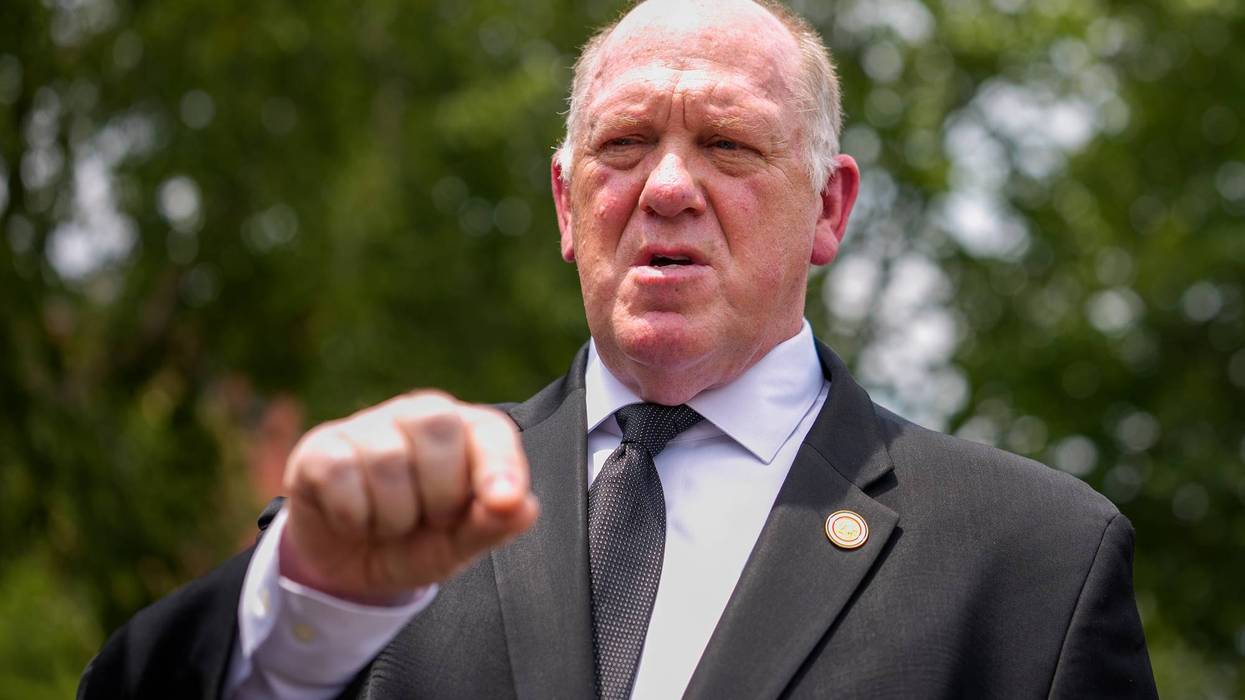
"If the administration wants to investigate anyone, maybe they should look at themselves first."
Progressive US Rep. Pramila Jayapal this week not only joined a growing chorus outraged by President Donald Trump's "rogue" Department of Homeland Security agents raiding Congresswoman Ilhan Omar's home, the Washington Democrat took it a step further.
After putting out a nearly three-minute video decrying Trump's repeated attacks on her Democratic colleague from Minnesota, Jayapal reminded social media users of the president's "border czar," Tom Homan, allegedly accepting a bribe in the form of a paper bag stuffed with $50,000 in cash.
As part of a probe launched under the Biden administration, Homan was the target of a Federal Bureau of Investigation sting operation. In September 2024, he was recorded taking the bag of cash from undercover FBI agents posing as businessmen interested in securing government contracts if Trump returned to the White House.
"If the administration wants to investigate anyone, maybe they should look at themselves first. Anyone remember this?" Jayapal wrote alongside a photo of media coverage that notes Trump's Department of Justice (DOJ) closed the probe into Homan last year.
Before former US Attorney General Pam Bondi was fired by Trump this past April, she insisted last year that "the investigation into Mr. Homan was subjected to a full review by the FBI, agents, and DOJ prosecutors," who "found no credible evidence of any wrongdoing."
However, congressional Democrats as well as the groups Democracy Defenders Fund and Democracy Forward have fought for access to records, including the recording of Homan and the undercover agents.
Homan is far from the only member of Trump's second administration to face credible allegations of corruption. In fact, according to polling results released Tuesday, 59% of Americans believe the president himself has done illegal or unethical things to cash in on his return to power.
Jayapal also isn't the only critic of the Omar raid to point a finger at Trump's border czar this week. Rep. Don Beyer (D-Va.) similarly wrote on social media that "Tom Homan, the man leading Trump’s authoritarian 'investigation' of Rep. Ilhan Omar right before the midterm, was caught by the FBI accepting a bribe of $50,000 in cash in a paper bag."
"But Trump's Justice Department simply dropped the case and covered it up," Beyer stressed. "The most corrupt presidential administration in history."
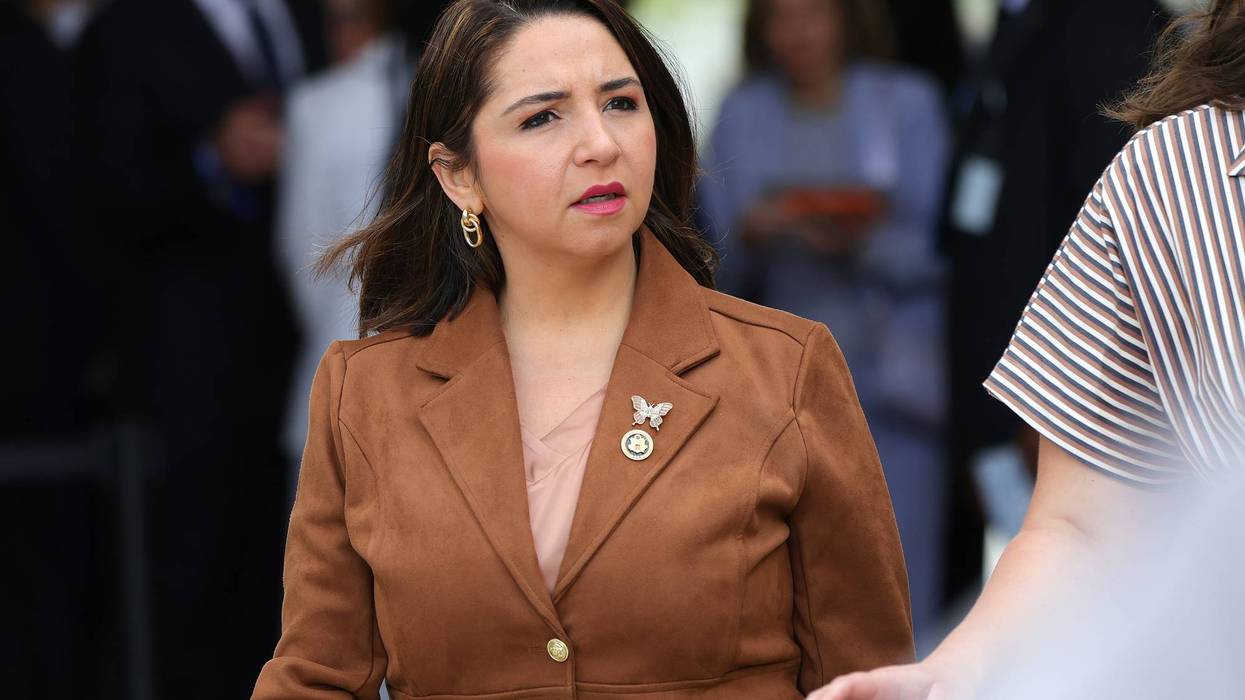
"For 23 years, since its inception, DHS has been utilized by the government to target and persecute those they consider the public enemy," Ramirez said.
In response to the agency's rampant abuses during President Donald Trump's second term, many elected Democrats have warmed to the idea of abolishing US Immigration and Customs Enforcement. But one progressive lawmaker is pushing to go a step further: abolishing the entire Department of Homeland Security.
Rep. Delia Ramirez (D-Ill.) introduced legislation on Tuesday that would repeal all “duplicative and overreaching terrorism laws,” including getting rid of DHS, which was created in 2003 following the September 11 terrorist attacks.
The bill, titled the Reimagining Safety Act, would not only eliminate ICE and Customs and Border Protection (CBP). It seeks to eliminate immigration detention altogether and begin the process of replacing it with a civil court-based immigration system run through the US Department of Justice (DOJ).
In a dramatic departure from current immigration procedures, all deportations would need to be approved by Congress before they could proceed.
The bill comes just one day after agents with the DHS Investigations unit raided the home of Ramirez's colleague, Rep. Ilhan Omar (D-Minn.), as part of a federal criminal investigation related to her citizenship documents.
The investigation---which follows years of attacks by President Donald Trump and other Republicans against Omar's Somali background and Muslim faith, and comes just weeks before an election---has been described by critics as intimidation against a political opponent.
"For almost a decade, Trump and Republicans have lied about Congresswoman Omar to silence her dissent," Ramirez said on Monday. "My sister [Ilhan] has not backed down, so now they are using DHS and the federal government to target and persecute her."
"We must strip them of their weapons," she said. "We must dismantle DHS."
Under Ramirez's legislation, a new agency called the Department of Community Safety would assume DHS's duties. This would include running the Federal Emergency Management Agency (FEMA), which handles the federal response to natural disasters and other emergencies.
The new agency would use DHS's massive pot of federal funding for programs that aim to stop gun violence and other crime; provide support to asylum seekers at the border; redirect federal resources toward community needs like healthcare, housing, education, and emergency preparedness; and support community-based safety programs that do not adopt the militarized law enforcement of DHS.
Other functions of DHS would be scattered across different agencies: Immigration enforcement would belong to the DOJ, the Department of Transportation would take over the Transportation Security Administration and Coast Guard, and the Treasury Department would conduct customs enforcement.
Some of the expansive powers introduced during the War on Terror would also be rolled back: Those without criminal convictions or warrants would no longer be able to be put on "no-fly" lists, which civil liberties advocates have long criticized for stripping people of their right to travel on arbitrary, often racist, grounds.
The legislation would also eliminate the authority of the secretary of state to declare "foreign terrorist" organizations, a power that has been wielded to criminalize protest.
Ramirez told The Intercept that the need to abolish the agency was also underscored by an ICE agent's shooting of 28-year-old Oscar Belgal in the neck last week in New York. Belgal was shot through the window of his car while his 5-year-old child was in the back seat. In the past year, ICE agents have shot at least 25 people, and six of those shootings have been fatal.
Since Trump's return to office in January 2025, at least 58 people have died in immigration custody, according to the ACLU—a dramatic spike from previous administrations.
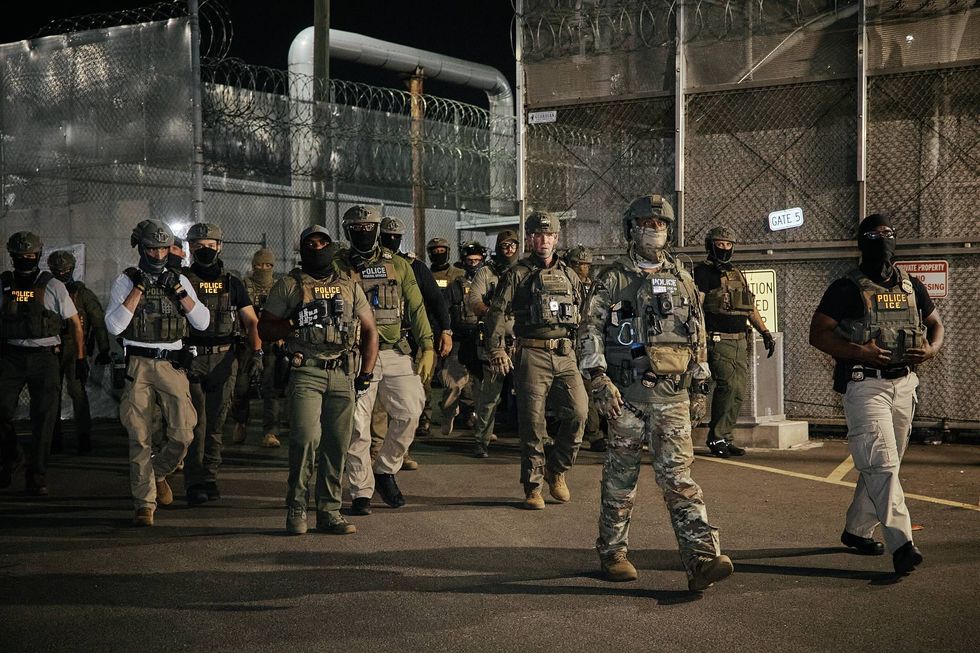 ICE agents arrive to clear protesters from a gate outside the Delaney Hall detention facility during a demonstration protesting the transfer of detainees and conditions inside the facility on June 11, 2026, in Newark, New Jersey. (Photo by Andres Kudacki/Getty Images)
The rising death toll comes as the Trump administration and Republican Congress have dramatically expanded DHS and its budget to create a massive network of new detention camps, where immigrants (and some US citizens)—most of whom have not been convicted of crimes—have been disappeared, often arbitrarily, denied access to legal representation, and subjected to severe physical mistreatment.
Some noncitizens have been targeted explicitly over their political speech, including the hundreds of students who suddenly found their legal status stripped over their participation in pro-Palestine protests, many of whom were summarily arrested and faced with the threat of deportation.
Ramirez told The Intercept all of these were examples of how DHS is "not rogue," but working as designed.
"For 23 years, since its inception, DHS has been utilized by the government to target and persecute those they consider the public enemy," she said, "whether it is Muslim Americans, Haitians escaping violence, Latinos yearning for a better life, or dissenting voices demanding an end to the genocide in Palestine and the kidnapping of our neighbors.”
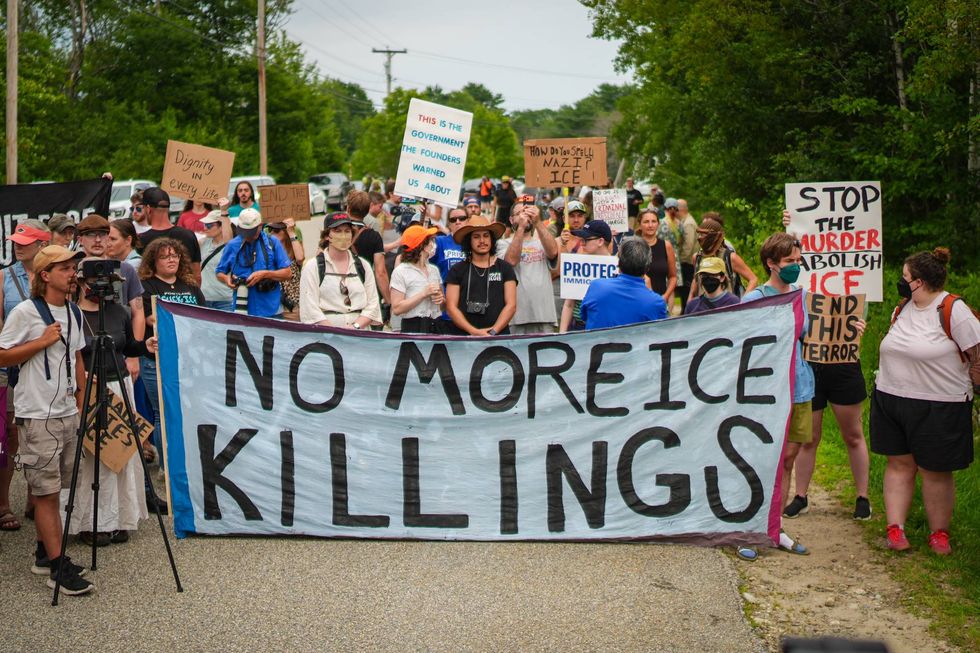 People protest outside a federal immigration office after a man was fatally shot by ICE agents on July 14, 2026, in Scarborough, Maine. (Photo by Ryan Murphy/Getty Images)
During the second Trump administration, public opinion has dramatically shifted against ICE, to the point where a plurality of voters, 48%, said they wanted the agency abolished in a July YouGov poll. In a February poll by the Public Religion Institute, 60% said they opposed increasing ICE's budget, compared with just 36% who favored it.
“In the past, the type of policy we are fighting for would have been written off as outlandish, too ‘extreme,’ or simply put, impossible," said Viviana Baraja, a Chicago-based immigrants' rights advocate who has helped to launch Ramirez's proposal.
"I have seen this administration make the most impossible nightmares possible," Baraja said. "And in the most distorted way, it has strengthened my resolve that if the worst can be possible, we can also dare to dream and to believe that the best can be possible too."

"She needs to get much better, fast, otherwise she'll break Scaramucci's record," said one unnamed White House official.
New White House Press Secretary Katie Zacharia gave her debut press conference on Tuesday and was quickly panned by critics, including some anonymous Trump administration officials.
Zacharia's first briefing, which lasted less than 15 minutes, was marked by halting speech and apparent difficulty in reading her prepared remarks.
The Trump press secretary took just three questions from right-wing outlets—Fox News, The Daily Mail, and Breitbart—before abruptly ending the briefing.
😬 Katie Zacharia's first press briefing was brutally bad 😬Trump managed to find a press secretary who can barely read, but she does have the number one qualification -- looking like IvankaHere's a supercut from Zacharia's first briefing, which made Karoline Leavitt seem like Ronald Reagan
— Aaron Rupar (@atrupar) October 13, 2026
An anonymous Trump administration official told MS NOW White House correspondent Jake Traylor that Zacharia might already be on thin ice after such a poor first performance.
The official compared her to former White House Press Secretary Anthony Scaramucci, who was infamously fired from his job after only 11 days.
"Getting behind the podium is tough, but she got off on the wrong foot," the official said. "She needs to get much better, fast, otherwise she'll break Scaramucci's record."
Scaramucci himself predicted that Trump wouldn't long tolerate Zacharia's bumbling performance, writing in Tuesday social media post that "the clock is running" on her tenure.
Other White House officials told CNN's Kaitlan Collins that they were similarly unsure how long Zacharia would last on the job, with one official describing her performance as "unusual" and another calling it "brutal."
MS NOW's Pete Alexander said he spoke with "a former high-level Trump aide" who said of Zacharia, "I think she is going to be a train wreck."
Journalist Aaron Rupar described Zacharia's debut as "an SNL cold open come to life," adding that "she can barely read."
Mother Jones' Inae Oh observed that Zacharia "appeared physically strained as she struggled to deliver prepared remarks" during her first day on the job, "as if the task of reading was too much to endure."
"By turns halting and anxious," Oh wrote, "it made [former White House Press Secretary] Karoline Leavitt, who resigned in September, seem like a rhetorical genius."
Democratic political strategist Adam Parkhomenko sarcastically praised Zacharia as doing "a great job for someone who was clearly pissing herself."
New Yorker theater critic Emily Nussbaum described Zacharia as "a shining role model for women crippled by imposter syndrome."
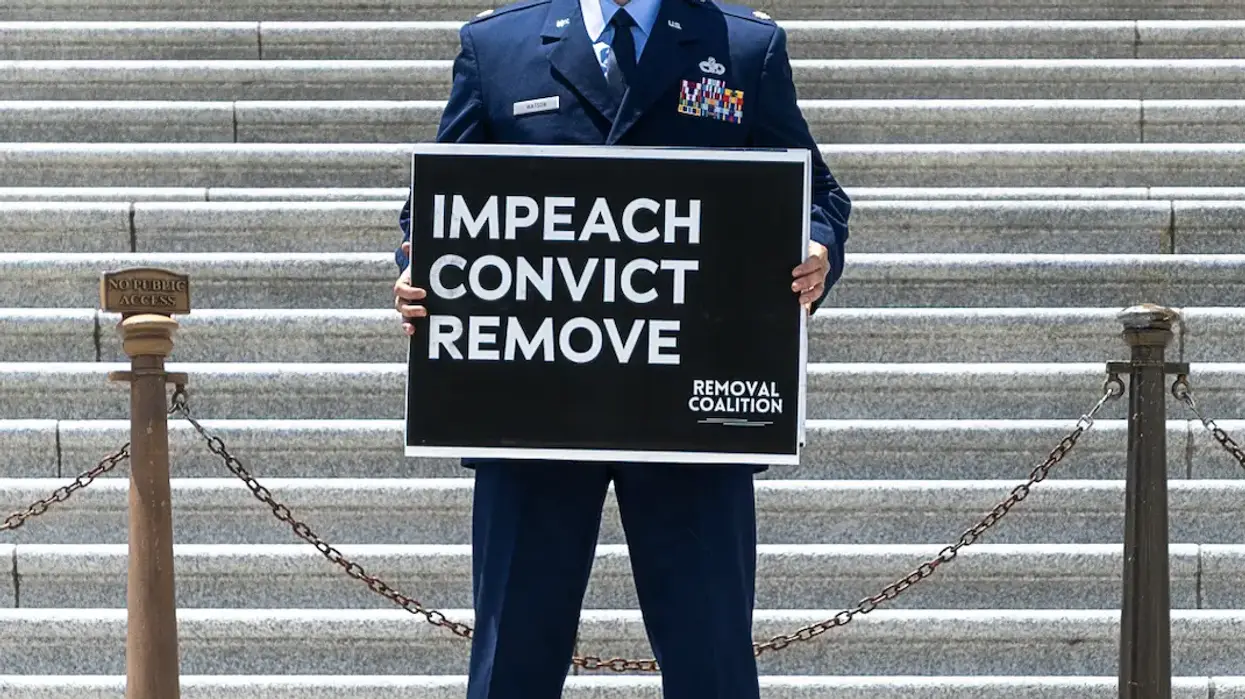
One law professor told Common Dreams the detention of Maj. Jason Watson was a "blatant case of illegal pretrial punishment."
Air Force Maj. Jason Watson was arrested July 1 on the steps of the US Capitol after calling for the impeachment of President Donald Trump. According to his lawyer, he's now being held in solitary confinement 24 hours a day in what some legal experts say could amount to illegal pretrial punishment.
The Uniform Code of Military Justice (UCMJ) contains provisions barring officers from engaging in public political activities that are typically protected for civilians, including criticizing the president and other elected officials.
Prosecutors have charged Watson with violating them when he participated in a news conference calling for Trump to be removed from office over his launching of military actions against Iran, Cuba, and Venezuela without congressional authorization.
After the speech, Watson stood on the Capitol steps holding a sign that read “Impeach, Convict, Remove" and was arrested after he refused to move.
Before he was charged, Watson gave a CNN interview on August 17 in which he continued to criticize Trump, accusing him of "flagrantly violating the Constitution" and "breaking the law."
He acknowledged that he could face severe consequences as a result of his speech: "We just have to be willing to accept that we can change what is happening in our country if we are just willing to pay a price for it," he said.
One day later, he was arrested while on duty and taken into pretrial confinement. He now faces a general court-martial, the military's most severe trial, which is capable of imposing lengthy prison sentences.
On Friday, Watson's lawyer, Christopher Mutimer, told CNN that after nearly two months, Watson is "still in solitary confinement 24 hours a day," which he said amounted to "cruel and unusual" punishment.
"Even if he gets an hour to eat or to exercise, he is alone," Mutimer said. "He is literally by himself, with his thoughts, in a room where the light never turns off all day."
In an essay published Sunday by writer Monte Mader, Watson himself acknowledged spending his days in isolation, revealing that his Bible had only recently been returned to him and that he had little access to news.
Watson described the conditions of his confinement as the reality one must accept when choosing to engage in nonviolent resistance.
“Walking this path," he said, "means exposing oneself to violence while refusing to retaliate against it.”
After his July 1 protest, Watson had been restricted to Joint Base Anacostia-Bolling in Washington. Though the base reportedly has a confinement facility, following his detention, he was instead moved to a county jail in Maryland.
During Watson's September 18 preliminary hearing, Maj. Joshua Wendell, the hearing officer, said Watson could not be confined with civilians and was therefore kept in solitary confinement.
"He was placed in confinement because of the law, which puts him in solitary confinement," Wendell said, according to Stars and Stripes.
Article 13 of the UCMJ "forbids punishing a service member before trial and forbids pretrial restraint more rigorous than the circumstances require."
Mutimer has pointed out that solitary confinement is "usually reserved for individuals who are disobeying or are violent, and injuring other people," and usually only for "a day or two, or a week." Watson, he said, has "been in there for months now."
Rachel VanLandingham, a former Air Force judge advocate and professor of law at Southwestern Law School, told Common Dreams that this "seems to be a blatant case of illegal pretrial punishment given that the nature of his pretrial restraint does not seem necessary to either ensure his presence at trial or to prevent foreseeable serious criminal misconduct."
“Solitary confinement is rare, and must be justified,” she said. “What, is the administration so afraid of this major’s words that he cannot talk to anyone?”
Military defense attorney Cody Harnish, who attended Watson's preliminary hearing, has raised concerns that his detention could be unlawful and that his especially harsh treatment was political in nature.
"I represent people at court-martial in the military, who are accused of doing some very bad things," he said during an interview this weekend with Meidas Defense. "They are not in pretrial confinement."
Harnish noted other abnormal aspects of Watson’s preliminary hearing: He was denied the ability to wear his uniform and instead arrived handcuffed, unshaven, and wearing an undershirt, which pointed to the possibility that he was facing degrading treatment.
He also pointed out that Watson had submitted a request to resign his commission in exchange for avoiding a court-martial, but that the request was denied in 24 hours.
"Nothing gets processed in the military that fast," he said, suggesting that this could indicate influence from senior Pentagon officials.
During his second term, Trump has used members of the military for political purposes in ways that have challenged longstanding norms of political neutrality. This has included hosting overtly political rallies before uniformed troops, screening them for ideology, and purging senior military officers deemed disloyal.
Harnish suggested that the Trump administration was seeking to make an example out of Watson for speaking out against the president.
"When someone speaks out against this administration in the military," he said, "they're going to crush him to silence anyone else in the ranks from ever thinking about it."
The Department of Justice admitted that the Trump administration kept running the ads after a federal judge issued a temporary restraining order, blaming the error on a missed email.
The US Department of Justice apologized Monday after the Trump administration continued airing taxpayer-funded political advertisements despite a court order requiring them to stop, blaming an internal email delay for the violation.
US District Judge Jennifer L. Rochon—an appointee of former President Joe Biden—issued a temporary restraining order Sunday in Common Cause et al. v. Department of Homeland Security et al., blocking the administration from airing the commercials and requiring officials to cancel previously scheduled runs.
However, The Washington Post and Democracy Docket reported Monday that two of the ads ran nearly 400 times after the order took effect. Plaintiffs in the case—the advocacy group Common Cause, Service Employees International Union Local 32BJ, Empire State 32BJ SEIU PAC, and Democratic Alabama state Legislature candidate Robert Hunter—filed a notice with the court informing it of the violations.
Citing the filing, Democracy Docket noted:
According to AdImpact data... the government’s ads aired in nearly 400 television spots on programs that began at 7 pm Eastern—after Rochon’s order was already in force. One of the ads aired in 193 spots during CBS’ "60 Minutes," while another aired in 198 spots during ABC’s "America’s Funniest Home Videos."
The ads continued airing Monday. As of 2:45 pm plaintiffs said an ad titled “Maduro” had aired another 20 times, one titled “Final Battle” 11 times, and another titled “The Country He Loves” once.
Rather than seeking contempt sanctions at this time, the plaintiffs are asking Rochon for a status conference to determine whether the Trump administration has complied with her order.
The Department of Justice admitted the error in a separate filing Monday, claiming that its lawyers "did not become aware of" the Rochon's emailed order "until this morning." The DOJ apologized to plaintiffs and the court, assuring Rochon that "the government is in compliance" with the temporary restraining order.
The White House said separately that the Department of Homeland Security (DHS) had not received notice in time to cancel the advertising purchases. The administration subsequently instructed its outside vendor to stop airing the commercials, froze future payments, and placed the $20 million funding allocation on hold.
The dispute stems from a $20 million advertising campaign financed via Office of Management and Budget (OMB) funds that were redirected to a Customs and Border Protection account designated for “commemorative events.”
The commercials featured President Donald Trump touting his political agenda, including one repurposed from his 2024 presidential campaign and another featuring Trump and Defense Secretary Pete Hegseth hyping the US war against Iran.
Critics have called the ads illegal under laws including the Administrative Procedure Act and the Hatch Act, and even grounds for impeaching Trump, who has already been impeached an unprecedented two times—but never convicted by the Senate—yet again.
The Democratic National Committee last week sued Trump, the White House, OMB, and DHS over the ads, alleging that the president "personally directed this illegal activity."
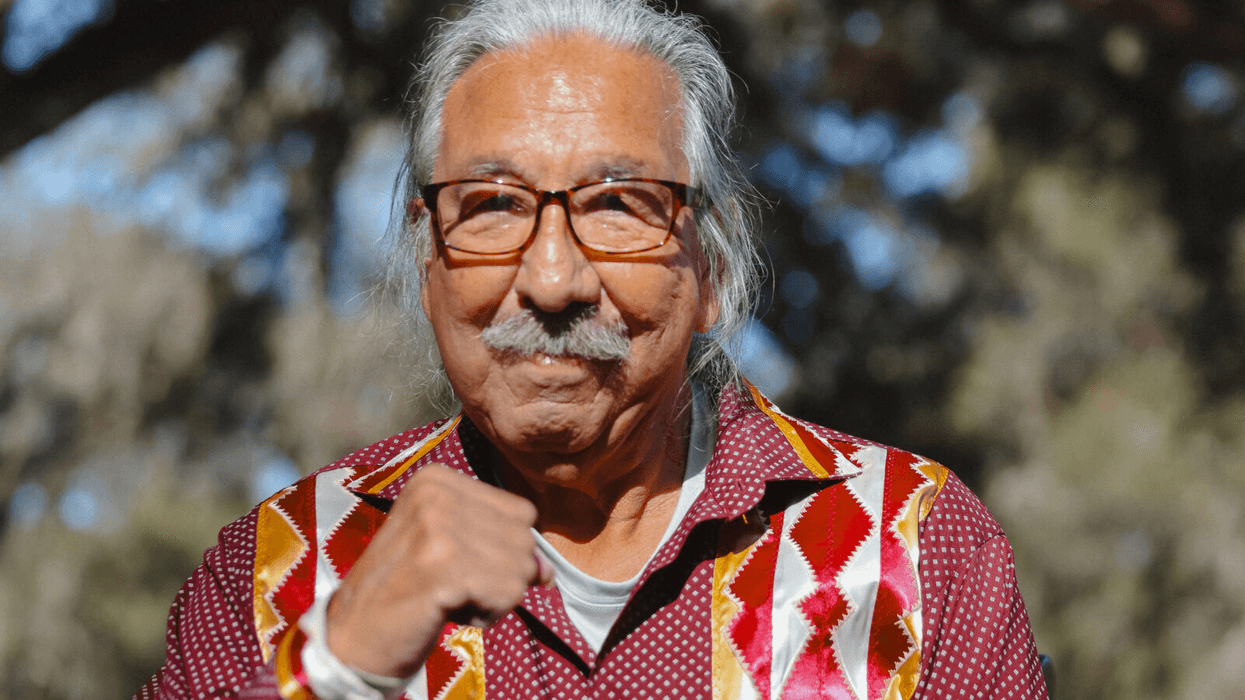
"We just want to be left alone," the former longtime political prisoner said. "We don’t want to be part of a government that’s killing women, children, babies, and bombing every damn thing that they can."
Leonard Peltier, the Indigenous activist who spent nearly half a century in prison for murders he says he did not commit before outgoing President Joe Biden commuted his sentence last year, vowed Monday that Native Americans would resist the Trump administration's attacks on Indian rights and tribal sovereignty.
“We’re not free yet. We are in danger,” Peltier, 82, told Democracy Now! in an interview released Monday to mark Indigenous Peoples’ Day. “Trump and these organizations, they’re talking about doing away with our reservations and our treaties and everything else.”
Peltier—whose freedom struggle is the subject of a new documentary, Free Leonard Peltier, directed by David France and Jesse Short Bull—said: "Some people became greedy and selfish and murderous, and they tried to exterminate us because they wanted it all for themselves. Well, 500 years later, we’re still here, and I’m still talking, and I’m going to talk 'til I die."
"We just want to be left alone," Peltier said of Indigenous peoples. "Let us live our own lives. Let us have our own society we’ve had for thousands of years. What the hell? I mean, we don’t want to be part of a government that’s killing women, children, babies, and bombing every damn thing that they can, and talking about annihilating a race of people."
Peltier's remarks came as Indigenous communities across the United States face numerous federal policies and actions affecting their lands, cultures, civil rights, and access to critical services.
In Arizona, the Trump administration is moving ahead with a border wall opposed by the Tohono O’odham Nation, whose ancestral homeland straddles the US-Mexico border. A recent Arizona Luminaria investigation revealed that federal authorities used drones, surveillance equipment, and masked agents to monitor Tohono O’odham members and a prayer camp as the Trump administration moved forward with border wall construction through their ancestral lands.
The Arizona border wall and a similar barrier project in Texas' Big Bend region are among the numerous conflicts over Native lands and treaty rights under attack by the government. According to the National Indian Law Library’s 2026 roundup of Indigenous land disputes, tribes are fighting to protect sacred sites, recover ancestral territory, and oppose mining and development projects.
The Trump administration has also moved to shrink the Bears Ears and Grand Staircase-Escalante national monuments in Utah, drawing tribal leaders' condemnation of the loss of protections for culturally significant landscapes.
Education is also under attack, as Trump seeks to dramatically slash federal funding for tribal colleges and universities.
Meanwhile, the administration’s proposed changes to the 2030 census could make Native Americans less visible in federal data by removing questions about race and ethnicity from the decennial questionnaire, raising concerns about the consequences for federal funding, voting rights, and civil rights enforcement.
Peltier—who supporters long said was framed for the murder of two federal agents during a 1975 shootout at the Oglala Sioux Reservation in South Dakota—sounded a note of defiant perseverance during his Democracy Now! interview.
“We’re going to stay here,” he said of Indigenous peoples. “You’re not going to get rid of us.”