SUBSCRIBE TO OUR FREE NEWSLETTER
Daily news & progressive opinion—funded by the people, not the corporations—delivered straight to your inbox.
5
#000000
#FFFFFF
To donate by check, phone, or other method, see our More Ways to Give page.


Daily news & progressive opinion—funded by the people, not the corporations—delivered straight to your inbox.
Trump won the 2024 election because a majority of voters had suffered severe economic hardship. These voters ignored Trump’s faults.
It’s been more than two weeks since the disastrous U.S. presidential election. It’s time to consider what happened, why Vice President Kamala Harris lost to Donald Trump. Obviously, Democrats had problems, and we need to understand what they were so we can fix them before the 2026 midterm elections.
1. Although the overall 2024 vote was down, voters showed up where it mattered. There were about 4.5 million fewer voters in 2024 than there were in 2020 (2.8%). In California there were 1.7 million fewer voters than there were in 2020 (9.7%).
It would be easy to attribute Harris’ loss (2.5 million votes) to this drop-off in overall vote were it not for the fact that total vote in the seven swing states was up. In Arizona, Georgia, Michigan, Nevada, North Carolina, Pennsylvania, and Wisconsin the vote increased by almost 900,000. In each swing state the 2024 vote exceeded 2020.
Voters saw Trump as the stronger leader who would fix the economy. In 2024 Trump was the change candidate.
In many swing states, Harris did better than Biden had in 2024. But in all the swing states, Trump improved.
2. Who voted for Trump? In politics, sometimes answers are simpler than we expect. The CNN 2024 exit polls contain the question: “[What was your] 2020 presidential vote?” Ninety-three percent of 2024 Harris voters voted for President Joe Biden in 2020; however, 6% shifted to Trump in 2024. Allowing for the 4% of 2020 Trump voters that shifted to Harris, the net shift to Trump was 2%, or 3 million voters. Harris lost by 2.5 million votes.
One answer to the confounding 2024 results is that Biden voters shifted to Trump.
This shouldn’t come as a surprise. Before the election, the No. 1 voter issue was “the inflation and the economy” (YouGov). In the CNN 2024 exit polls, there’s a sharp distinction between Harris and Trump voters on this question: “In the past year, inflation has caused your family____.” For those answering, “severe hardship,” 74% voted for Trump; (77% of Harris voters responded, “no hardship.”)
We could stop here with a terse summary: Harris lost because of the economy. Because of inflation, too many 2020 Biden voters favored Trump on the economy.
3. Why did Trump voters choose this terrible person? While voting solely because of the economy makes sense, there’s still the fact that 76.7 million voters chose Trump, a person who does not believe in the rule of law.
The Harris campaign knew they had a huge problem with the state of the economy. Their campaign assumed they could accomplish three things to overcome this problem: (1) convince voters that Harris was better able to handle the economy than Trump; (2) argue that there were other important issues where Harris was clearly superior to Trump; and (3) make the case that Trump was unfit to be President—because of January 6 and his numerous peccadilloes.
Harris never succeeded on (1). The CNN exit polls showed that 52% of voters trusted Trump to “handle the economy”; (46% said Harris.)
Regarding (2), Harris seems to have succeeded. The CNN exit polls asked voters “the most important issue:” 34% said democracy, and 80% felt Harris would be best on this issue.
Regarding (3), The most polarized CNN exit poll question was: “[Who do you have a] favorable opinion of?” Forty-four percent had a favorable opinion only of Harris, and 43% had a favorable opinion only of Trump.
Writing for Time magazine, Jill Filipovic explained the mentality of Trump voters: “…it’s hard to imagine that a critical mass of people who cast their ballots for Trump don’t, like everyone else, see Trump’s vanity and venality and strongman aims. The dark truth is that a lot of voters seem to want a strongman in charge.”
Trump won the 2024 election because a majority of voters had suffered severe economic hardship. These voters ignored Trump’s faults.
4.The Campaign themes are telling: Trump made the economy the center of his campaign. He asked, “Are you better off than you were four years ago?” His closing ad focused on the economy: “Kamala broke it, Trump will fix it.”
Kamala Harris focused on a more general theme, “A new generation of leadership.” (“We’re not going back.”) She closed with “A Brighter Future.” “I will be a president for all Americans.”
The CNN Exit poll asked, “What candidate quality mattered most?” The No. 1 choice was “Has ability to lead” at 30%. Trump prevailed 2 to 1. The No. 2 choice was “Can bring needed change” at 28%. Trump prevailed 3 to 1.
Voters saw Trump as the stronger leader who would fix the economy. In 2024 Trump was the change candidate.
5. What was the role of disinformation? This was a presidential campaign where disinformation played an enormous role. This disinformation was disseminated to an unprecedented level on social media: X, Facebook, YouTube, Instagram, TikTok, podcasts,, etc.
There were two forms of disinformation: (1) Slamming Kamala Harris. (2) Distorting the candidate’s positions on issues.
Regarding (1), the Trump campaign spent more than $200 million on an ad attacking Harris’ position on transgender rights: “Kamala is for they/them, Trump is for you.” Trump implied that Democrats supported gender-affirming surgery for children without parental consent.
Transgender status is a hot button for Trump supporters. Recent polls suggest that MAGA voters vastly exaggerate the number of transgender individuals in the United States; they believe the number to be around 30% where in reality it is less than 1% (0.6).
The Harris campaign did not circulate false information about Trump, but they did run adds linking him to January 6, Project 2025, and other anti-democratic positions.
The net effect of this disinformation was to make both candidates unpopular. To repeat, the most polarized CNN exit poll question was: “[Who do you have a] favorable opinion of?” Forty-four percent had a favorable opinion only of Harris, and 43% had a favorable opinion only of Trump. (Eight percent had a favorable opinion of neither candidate.)
Harris hoped to emerge as a positive alternative to Trump but, because of disinformation, she didn’t. Thus, for Trump voters, the 2024 election can be summarized: “I don’t like Trump, and I know he has done bad things, but I believe he is a strong leader who can change the economy.”
6. Was the election stolen? Because, for many Democrats, the presidential election results were surprising, there’s a lingering belief that MAGA stole votes in swing states. I have seen no hard evidence to suggest that happened.
There are three situations that suggest chicanery. One was that the election polls suggested that Harris had a slight lead. However, there were always several percentage points of “undeclared voters.” In 2024 they broke for Trump. (In my opinion, these were the “shy” Trump voters pollsters also saw in 2016—voters who are hesitant to declare they would vote for Trump.)
The second reason was that Democrats assumed they had a superior ground game to MAGA and, therefore, there would be a late-breaking surge for Harris. This didn’t happen. Trump had a much better ground game than expected.
The third reason that Democrats suspect voter fraud was because in many states there were situations where Harris lost the presidential vote, but a liberal Democrat won the Senate vote. That’s because, sad to say, Harris didn’t have a winning message but, in many cases, the down-ballot Democratic candidate did.
Trump’s core message had two components: “Americans were better off in 2020 than they are in 2024. Biden/Harris scuttled my great economy by opening the border and letting millions of illegal immigrants into the county. They are driving up prices.”
Robert Reich writes that the Democratic response should have been: “[B]ig corporations and the wealthy have shafted average working Americans, whose wages and jobs have gone nowhere for decades and who are understandably frustrated and angry at what they see as a rigged system.” But Kamala Harris didn’t say that. Voters perceived that Trump had an explanation about what had happened to the economy between 2020 and 2024, and Harris did not.
The fact that Harris didn’t have a coherent economic message explains many “split-ticket” situations. For example, “Rep. Alexandria Ocasio-Cortez more or less held her voter share in her district even as it swung sharply toward Trump. As Ocasio-Cortez’s own voters told her, the reason her constituents split the ticket between her and Trump wasn’t because they were drawn to Trump’s right-wing policies or his ugly rhetoric. It was because they wanted change, because they viewed both Trump and her as fighting for the working-class.”
7. What about sexism and racism? Many Harris supporters believe that she lost because of her gender and race. Perhaps it’s true that voters wanted a strong man.
There’s no statistical evidence for this. And some contrary poll results. In two swing states, Michigan and Wisconsin, Democrats ran female candidates for Senate; both beat their male opponents. In Michigan Elise Slotkin got fewer votes than Harris. In Wisconsin, Tammy Baldwin got about the same number of votes as Harris.
8. What’s Next? Trump promised to fix the economy. It’s the reason he won on 11/5.
Trump won’t be able to fix the economy because (1) he, personally, has no idea what to do. And (2) the Republican Party’s economic philosophy does not provide the answer. Republicans believe in ”trickle-down” economics; they believe that if they give tax cuts to billionaires then “a rising tide will lift all boats.” Trickle-down economics won’t fix the current economic malaise.
The only thing that’s predictable about the next few months is chaos. Trump and his surrogates are guaranteed to promote outrage and division. When this happens, Democrats should say: “What’s this got to do with fixing the economy?”
What voters opposed to the war on the people of Gaza want most is what U.S. law already requires: an arms embargo on the Israeli government that forces an end to the slaughter and starvation.
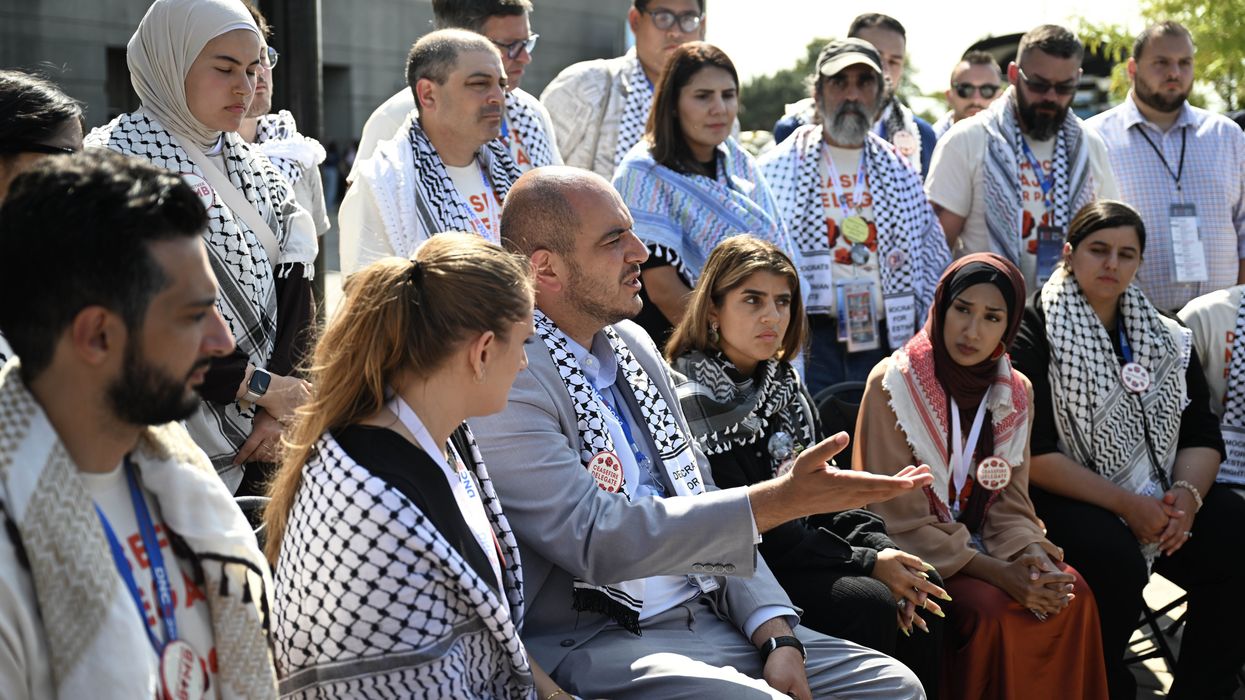
Before sparking outrage by refusing to let any Palestinian Americans speak at the Democratic National Convention last month, U.S. Vice President Kamala Harris was on her way to winning back at least some of the voters who had rejected President Joe Biden's candidacy over the war on Gaza.
The vice president had spent weeks taking several small but positive steps that gave hope to young people as well as American Muslims, Arabs, Palestinians, and other voters opposed to U.S. support for the war on Gaza.
She first refused to preside over Israeli Prime Minister Benjamin Netanyahu's predictably dishonest and dangerous speech to Congress. She also gave him a cold reception when they met one-on-one: She avoided smiling or shaking his hand during the standard post-meeting photo op and spoke alone to the press afterward.
Kamala Harris still has a very narrow opening to win over some of the voters who abandoned Biden but do not want to see Trump return to the White House.
During her remarks that day and in multiple campaign speeches, she has explicitly called for a cease-fire as part of a hostage deal and acknowledged Palestinian suffering in an empathetic way that President Biden rarely used.
She appointed a well-known and respected American Muslim attorney to serve as her liaison to Arab and Muslim voters and then stood by that official when she faced predictable attacks from pro-Israel groups.
She met with some Palestinian-American and Muslim community members on the sidelines of campaign events and gave the clear impression that she was far more sympathetic to the plight of Palestinians than her public remarks would indicate.
She initially deflected questions about whether she would support an arms embargo on the Israeli government, which was itself actually a positive sign given that any Democratic presidential candidate in years past would have responded to that question by simply saying, "No, I do not and never will support conditioning or limiting arms to Israel."
When leaders of the Uncommitted Movement later revealed that Harris had privately expressed a willingness to discuss an arms embargo, her national security adviser's cleanup statement said that she "does not support" an arms embargo in the present tense without making any pronouncements about the future.
She picked Minnesota Gov. Tim Walz as vice president instead of Pennsylvania Gov. Josh Shapiro, who had repeatedly gone out of his way to demonize college student protesters, Ben & Jerry's, and other advocates for Palestinian human rights in ways that no other VP candidate had.
Most recently, Harris approved a first-ever panel at the DNC focused on Palestinian human rights, allowing mainstream Arab and Palestinian leaders to speak freely to a packed audience about the genocide in Gaza.
Of course, none of these steps were enough. What voters opposed to the war on the people of Gaza want most is what U.S. law already requires: an arms embargo on the Israeli government that forces an end to the slaughter and starvation.
Although Vice President Harris had not been willing to break with President Biden or spark a backlash from her pro-Israel supporters by supporting an arms embargo, she had sent signals that she would at least be more open to discussing the various demands of anti-genocide voters than Biden—or Trump, for that matter.
Until, that is, the Democratic National Convention.
First, the party platform regurgitated most of the same pro-Israel talking points that AIPAC and Democratic Majority for Israel demand of candidates in their position papers, including dishonest attacks on the South Africa-inspired Boycott, Divest, and Sanctions movement; saber-rattling against Iran; and clear commitments to billions in promised funding for the Israeli government.
Second, the DNC gave a prime-time speaking slot to Israeli-American parents of hostages held captive in Gaza but then refused to give any speaking slot at all to any Palestinian Americans while making plenty of room for Republican politicians.
Even when prominent members of Congress, activists, and major unions called for the DNC and the Harris campaign to reconsider their decision, they refused. This decision insulted and infuriated Palestinian Americans and their supporters.
It also raised a very real policy concern: If supporters of Palestinian human rights could not even convince the Harris campaign to give one measly three-minute speaking spot to a Palestinian-American Democrat who would have endorsed Harris, how can we expect a Harris White House to listen when we lobby for changes in government policy?
In the weeks since the DNC speaker fiasco, the campaign has not expressed any regret for what happened. In a CNN interview, Harris also seemed to explicitly rule out supporting an embargo on even "some" arms to the Israeli government. This is remarkable given that even President Biden belatedly suspended shipments of 2,000-pound bombs.
Long story short, the Harris campaign has squandered much of the goodwill it initially built up with voters concerned about Gaza. For example, a new poll of American Muslim registered voters conducted from August 25 to 27 showed Harris winning only 29% of the vote. Jill Stein received identical support while 17% were undecided.
Despite these bleak numbers, all is not lost for Harris—yet.
Donald Trump is going out of his way to antagonize Americans who support Palestinian human rights: using Palestinian as a racist slur, promising to let Netanyahu finish the job in Gaza, speculating about ways to make Israel even larger and pledging to weaponize the federal government against college students and others who stand up for Palestine. Trump even implied that he might attack Gaza himself if the American hostages have not been released by the time he takes office.
That means Kamala Harris still has a very narrow opening to win over some of the voters who abandoned Biden but do not want to see Trump return to the White House.
What, if anything, can her campaign do now?
First, apologize for not including a Palestinian-American speaker at the convention and feature Palestinian-American speakers at a prominent campaign event.
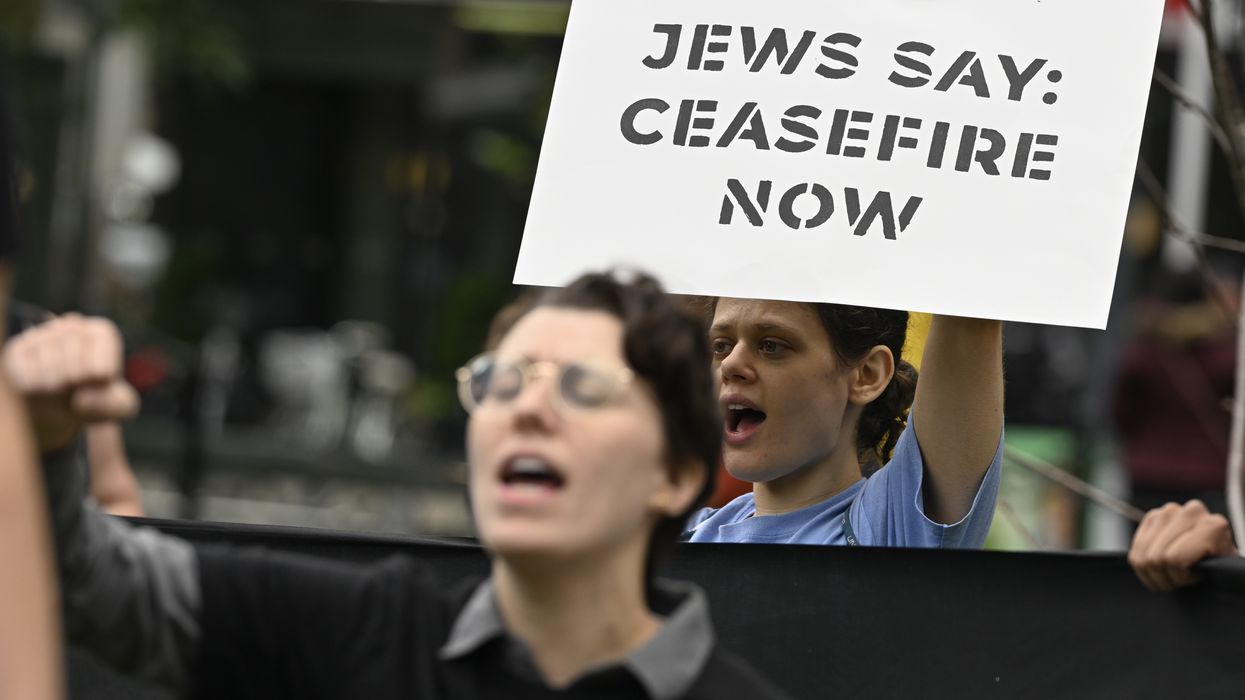
Second, sit down with and listen to representatives of the Muslim, Palestinian, Arab, Jewish, Black, and other organizations that oppose the genocide in Gaza and use the upcoming presidential debate as an opportunity to clearly reject anti-Palestinian racism and Islamophobia here at home.
Third, pledge to enforce U.S. laws that already forbid arms sales and transfers to any foreign human rights violators, including the Israeli government.
Perhaps most importantly, Vice President Harris must convince President Biden to force Netanyahu to agree to the cease-fire deal that he keeps sabotaging. Harris says that she and President Biden are working around the clock to secure a cease-fire deal, but the truth is that the main barrier to a deal is Netanyahu's opposition to a permanent cease-fire and his insistence on partially occupying Gaza.
With nothing left to lose politically, Biden should leverage U.S. military aid to force Netanyahu to accept a permanent cease-fire deal that frees all hostages and political prisoners.
Taking these steps might allow the Harris-Walz campaign to win back some of the disillusioned voters in Michigan, Pennsylvania, Georgia, and other swing states where every vote counts.
Time is running out, the path is narrow, and the missteps of recent weeks have made her journey all the more difficult. If Vice President Harris is going to do the right thing, the time to act is now.
"For the sake of the lives of all people in the region, and the safety and futures of all of us in the United States, we urge you to make good on your own promise to cease sending offensive munitions to Israel."
A leading American Jewish group that historically has not engaged with the Israel-Palestine conflict sent a letter to U.S. President Joe Biden on Tuesday warning his continued support for Israel's assault on Gaza is endangering countless lives and threatening democracy at home.
The letter, penned by Bend the Arc: Jewish Action CEO Jamie Beran, urges Biden to immediately "stop providing offensive weapons to the Israeli military" as the nation's far-right leaders make clear their opposition to a permanent cease-fire deal and barrel ahead with a devastating offensive in Rafah.
"Time and time again, despite your calls to end this violence, you have not followed through with material action," the letter reads. "With over 1 million Palestinian refugees now being forced to flee Rafah, their last guaranteed refuge, thousands of lives lost, and families of captives being fined in Israel for demanding a cease-fire, it is long past time to end U.S. support for these attacks."
Bend the Arc typically focuses on domestic issues, but Beran wrote in the new letter to Biden that since the Hamas-led attack on Israel in October, "the violence in Israel-Palestine has permeated our borders to the point where it jeopardizes our collective safety."
"It impacts Jewish life in the U.S. and the safety of Jewish and Arab Americans. And, under the threat of an emboldened authoritarian movement at our doorstep, it threatens our shared ability to defend and build what will protect all of us—a vibrant, multifaith, multiracial democracy," Beran continued. "U.S. support for continued violence in Gaza is putting American safety and U.S. democracy in danger."
"For the sake of the lives of all people in the region, and the safety and futures of all of us in the United States," she added, "we urge you to make good on your own promise to cease sending offensive munitions to Israel."
Dear President @JoeBiden,
Continued U.S. Support for the Siege of Gaza is a Threat to Millions Abroad and Democracy at Home.https://t.co/GUUKT0TNgH
— Bend the Arc: Jewish Action (@jewishaction) June 4, 2024
The letter comes a week after the Israeli military used U.S.-made bombs in a deadly attack on a camp for displaced people in Rafah. The attack killed at least 45 people and wounded more than 240.
The strike was just the latest example of Israel's army massacring Gaza civilians with American weaponry, which has flowed to Israel with virtually no restrictions since October 7. Shortly after the Hamas-led attack, Israel used U.S.-made Joint Direct Attack Munitions in a pair of strikes that killed 43 civilians in Gaza, including 19 children.
Beran noted in her letter that a majority of Jewish Democratic voters and Democratic voters overall "have called for an end to this," supporting a cease-fire and an arms embargo on Israel until it stops its attacks on the Gaza Strip, which has been utterly decimated by the eight-month Israeli assault. Growing public opposition to Israel's war on Gaza comes despite a coordinated Israeli propaganda effort aimed at swaying Americans' views and bolstering U.S. military aid for Israel.
Biden's support for the Israeli military's atrocities, Beran warned Tuesday, "will continue to increase the heart-wrenching death toll, increase the number of calls for a cease-fire, and decrease your poll numbers—straight through the election."
"Your victory this November is the single most powerful tool we have to obstruct an irreversible timeline towards the end of U.S. democracy and our continuing work to build a society that serves everybody—from protecting voting rights, to enshrining the right to abortion, to creating just pathways for immigration," she argued. "Your success as a candidate is tied inextricably to the people's faith in your ability to keep us safe. As the violence overseas continues to intertwine itself across all of our domestic work, it too is now tied to your success and all of our safety."
"Not acting on your own red lines, combined with the Israeli government's promise to continue to violate them, will further erode your viability as a candidate in a race where every vote will matter," Beran added.
The figure comes as part of a new set of polls that show former President Donald Trump narrowly leading Biden in 5 out of 6 crucial battleground states.
Approximately 13% of poll respondents in six swing states who voted for U.S. President Joe Biden in 2020 but would not vote for him again said that his foreign policy or Israel's war on Gaza were the most important issues determining their vote.
The figure comes as part of a new set of polls released Monday from The New York Times, Siena College, and The Philadelphia Inquirer that show former President Donald Trump narrowly leading Biden in 5 out of 6 crucial battleground states.
"We have warned that this would happen for months, and the Democratic Party didn't give a damn," author and organizer Daniel Denvir wrote on social media in response to the news.
The polls showed Trump leading Biden with registered voters by three percentage points in Pennsylvania, seven in Arizona and Michigan, 10 in Georgia, and a full 12 in Nevada. Only in Wisconsin did Biden edge ahead by two points. Biden won all of these states in 2020, but he could still win in 2024 if he secures Wisconsin, Michigan, and Pennsylvania and does not lose any other states he previously won. The results were slightly different for likely voters, with Trump narrowly leading in every state except for Michigan.
One voter the pollsters spoke to was 30-year-old Gerard Willingham, a Georgia web administrator who voted for Biden in 2020 but said he would vote for a third party candidate in 2024 because of Biden's response to Israel's war on Gaza.
"I think it's made quite a bit of difference in that it made me more heavily than in the past push toward voting for a third party, even if I feel that the candidates almost 100% won't win," Willingham said. "It's starting to reach into my moral conscience, I guess."
"Biden seems to get the blame for the war in Gaza. For the high cost of living, too."
The polling comes after Biden has spent the last seven months providing military, financial, and moral support for the government of Israeli Prime Minister Benjamin Netanyahu as it wages a ground and air assault on Gaza that the International Court of Justice ruled could plausibly be a genocide. Only last week did Biden threaten to withhold certain weapons from Israel if it launches a full ground assault on Rafah, but several observers pointed out that Israel's incursions into Rafah so far should already qualify. Further, the poll was conducted from April 28 to May 9, so many respondents would have given their answers before Biden's May 8 remarks.
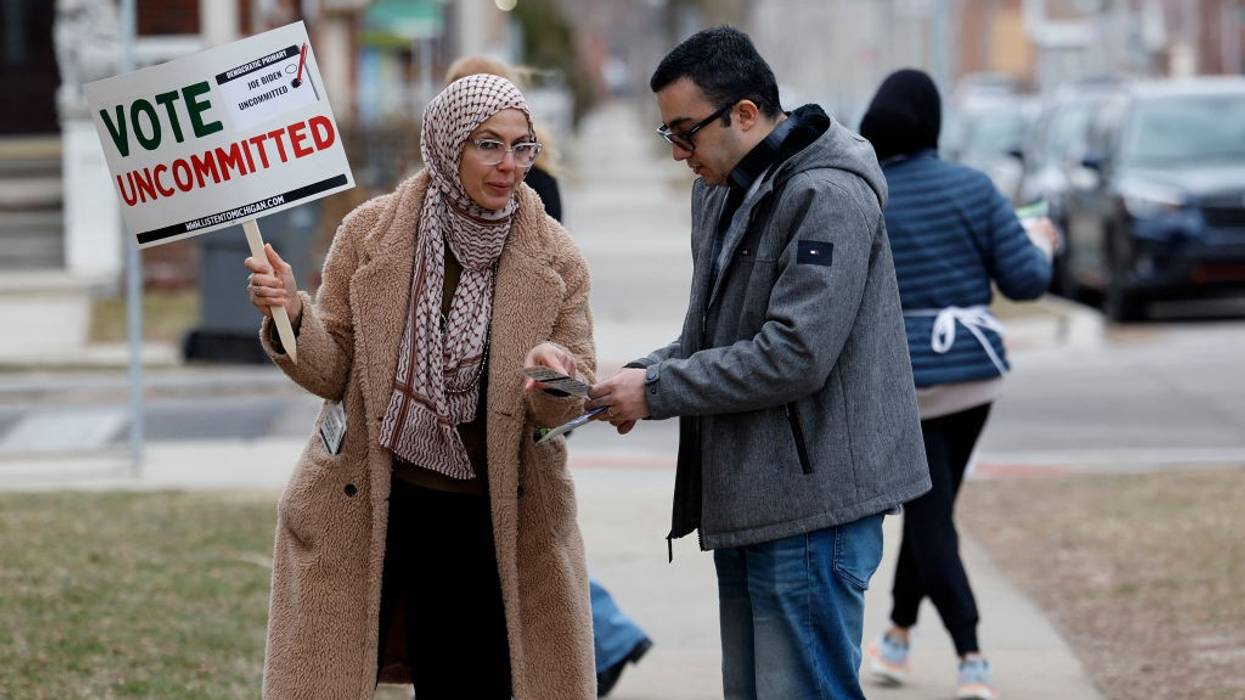
Palestinian rights and progressive activists have spent the primary season trying to persuade Biden to switch course on Gaza, launching "uncommitted" campaigns that won two delegates to the Democratic National Convention in the key swing state of Michigan. The poll provides further evidence that Biden's support for Israel's war is a real electoral liability.
"There is a cottage industry of political columnists who have said for months that these voters don't exist, only live in Brooklyn and Berkeley and on Twitter, TikTok, etc.," said Hamid Bendaas, communications director of the Institute for Middle East Understanding Policy Project. "To the extent that Biden and his advisers are buying into it, they are costing him the election."
Gaza isn't the only—or even the primary—issue threatening Biden's reflection bid. A quarter of voters consider the economy and cost of living as their most important issues, and more than half of all voters rated the economy as "poor." Further, Biden actually lost more support overall from conservative and moderate Democrats.
Responding to the poll results, journalist Frank Bruni said that Biden needed to "wake up."
While Democratic Party insiders seem to believe that there is no way voters could ultimately prefer Trump's anti-abortion stance and authoritarian leanings, Bruni warned against "complacency."
He pointed out that Democratic senators in Arizona, Wisconsin, Pennsylvania, and Nevada did continue to poll ahead of their Republican opponents, suggesting that the problem is less with the Democratic Party overall than with Biden himself.
"Biden seems to get the blame for the war in Gaza. For the high cost of living, too," Bruni wrote.
"Regarding the economy, he has a story to tell—infrastructure investment, the CHIPS Act, low unemployment—and must tell it better, with an eye not on his liberal base, but on the minorities and young people who are drifting away from him," he advised. "That's the moral of the latest numbers: Take no voter for granted. And there's not a second to waste."
Just as O.J. became symbolic of the false promise of a color-blind America, so has Trump masqueraded as the champion of Americans underserved by democracy.
It was the jokes about former President Donald Trump’s rumored flatulence in the courtroom that pushed me toward despair. And don’t think it was disgust with the subject matter either. After all, I’ve lived with teenagers and I wasn’t all that surprised by yet another Trump-inspired trivialization of a critical civic institution. What appalled me was the possibility that—let’s be clear here—such stories would somehow humanize the monster, that his alleged farting and possible use of adult diapers would win him sympathy. I even wondered whether such rumors could be part of a scheme to win him votes.
So, yes, Trump can make you that crazy.
Or maybe it’s something about important trials, about the slow unspooling of evidence and our hunger for resolution that makes us simultaneously twitchy and increasingly catatonic. I experienced this once before on a national level, just a little less than 30 years ago, when lawyers for another adored psycho tested the American justice system with what could only be called a sleazy brilliance. They put racism on trial. This time around, democracy may be at stake and it’s possible the defense lawyers may win again (as they just did with another monster, Harvey Weinstein).
Last month, for instance, the Los Angeles Times mistakenly inserted Trump for O.J. in an obituary of the former football star, claiming that the former president had served the former football player’s sentence in prison.
Since the first day of Trump’s trial, I’ve been remembering bits of the O.J. Simpson extravaganza, especially the moment when he was declared not guilty of killing his wife, Nicole Brown Simpson, and her friend Ronald Goldman, outside her condominium in Los Angeles. I recall that moment vividly. I was eating lunch in a Boston sports bar on Tuesday, October 3, 1995, when the verdict was suddenly trumpeted on what seemed like a dozen giant TV sets. The diners, predominantly white, froze in shock. As we sat there, silent, we slowly became aware of a presence surrounding us and then raucous sounds filled the dining room. The kitchen and wait staff, mostly Black, were on the perimeters of that room, clapping and shouting. I was stunned. I had never before witnessed, close up, such irreconcilable factions.
There certainly have been other examples of the cleaving of America. The Revolution and the Civil War come to mind, not to speak of the half-century-old Boston school-busing controversy and, of course, the insurrection of January 6, 2021. Still, the division over the O.J. decision was so simple, focused, and emotional that it remains for me a dangerous symbol of intransigence. O.J. may have been more representational than real as a national influence, but he was enough of a force to make me wonder what his story presaged and what a verdict in the current trial might provoke in this far shakier time of ours, especially from former president and MAGA goon Donald Trump, a man eager to intimidate those trying him as well as everyone else.
Looking for parallels between Orenthal J. Simpson and Donald J. Trump may produce shaky outcomes, but it could also help sharpen our sense of their symbolic meanings. They were born 13 months apart in the post-World War II boom years. Although Trump was a white, rich New Yorker and O.J. a poor, Black Californian, they were both driven throughout their lives by a desperation to be admired. Both of them were also large men, gabby and good-looking. Their social cunning, however, wore distinctly different masks. Trump is crude in an entitled frat boy way, while O.J. was smooth and ingratiating, particularly with white men (though distinctly rough with women).
In my years as a sports reporter for The New York Times, I dealt with both of them. In one-on-one situations, I always felt I was being played but never threatened. With O.J., it was hard not to be overwhelmed by his neediness to be liked, but I must admit that I was flattered by the attention. With Trump, I knew I was being manipulated by his unctuousness, but he was good copy, too. Early on, it was easy to write Trump off as a buffoon and assume O.J. was a harmless, sweet-natured guy (although the broadcaster Howard Cosell dubbed him “the lost boy”). That either of them might go beyond being an entertainer seemed a silly notion at the time.
The division over the O.J. decision was so simple, focused, and emotional that it remains for me a dangerous symbol of intransigence.
In some ways neither did. For all Trump’s power to energize crowds, it’s never been thanks to an overwhelming idea, an inspiring example, or even an alluring promise. He merely gives his followers permission and justification to enjoy the short-term energy of hate. Eventually, it will undoubtedly turn against him, but not soon enough for the rest of us.
O.J., in contrast, made us feel good, reveling in his phenomenal skill on the football field—he was a beautiful player there and anything but a brute—while taking pleasure in his comedic skills. He was genuinely funny and willing to mock himself. With his 11-year Hall of Fame football career behind him, he began carefully crafting a Hollywood career, avoiding quick-buck blaxpolitation movies for lovable supporting roles. As sportswriter Ralph Wiley put it, white people came to consider Simpson a “unifying symbol of all races.”
O.J. was easy to like, a charming, charismatic, talented athlete and actor who conveniently served to offset much of the growing African-American activism in the world of sports.
The 1968 Olympic demonstrations of John Carlos and Tommie Smith, the hard anger of pro football superstar Jim Brown, the political rants of Muhammad Ali, among others, frightened the owners, broadcasters, and corporate executives who had just gotten a handle on making big money out of sports. O.J. was a welcome counterrevolutionary. And unlike most other Black stars, he was sociable and accessible. It was fun to play golf with him and cavort under his testosterone shower.
When O.J. died last month of prostate cancer at 76, the first image that came to my mind was of that divided Boston sports bar, but it was replaced fairly quickly by images of O.J. himself, iconic ones that shaped our notions of him and of America then, most of them offering a false promise of a color-blind country. Even more memorable than O.J. dancing with the football through whatever defensive line opposed him was O.J. clowning adorably on the movie screen or charging through an airport in a Hertz commercial.
His delusion like Trump’s (until the first of his court cases began recently) was nourished by being treated as if he and he alone could get away with anything.
As for me, I’ll never forget him sitting across a table one night in 1969, the self-defined essence of a figure somehow beyond race in this divided country of ours. That night in Joe Namath’s trendy midtown Manhattan bar, Bachelors III, left me with my basic sense of who that delightful and delusional man was. He was then a 22-year-old former college superstar holding out for more money in his rookie pro-football contract. I was a New York Times sports columnist who had been asked to introduce him to Namath, the recently famous New York Jets Super Bowl quarterback. The introductions had originally been Cosell’s night mission, but as the evening stretched on (and on), it simply got too late for him, and the task fell to me. (I’d been tagging along to cover the first meeting of those two football heroes.)
Well after midnight in that crowded bar, it became clear that Namath was taking his sweet time in some ritual of celebrity one-upmanship. Before he left, Cosell had offered to drag Namath over, but O.J., ever cool, shook his head. “You don’t rush the great ones,” he said. He started telling me stories to pass the time, ever gracious and clearly fearing I might get bored and leave.
One he told me that night I never forgot—and subsequently retold in the Oscar-winning ESPN documentary “O.J.: Made in America,” directed by Ezra Edelman. It took place at a teammate’s wedding. O.J. overheard a white woman at an adjoining table say, “Look, there’s O.J. Simpson and some [N-words].”
I was appalled. O.J. was amused by my reaction. He said, “No, it was great. Don’t you understand? She knew that I wasn’t Black. She saw me as O.J.”
Now, here’s the quantum O.J. leap: Why do so many people think the 2016 election of Donald Trump was an appropriate response to social and economically wounding decisions imposed by “the elites”?
Other stories followed, though I don’t remember them. All I could think about was how clueless poor O.J. was. He didn’t understand that he was traveling under the protection of an honorary white pass, revocable at any moment. While he could delude himself, I thought, maybe even carry others along in his fantasy, there would undoubtedly be a reckoning someday. Soon enough, Joe Namath did indeed arrive and I was able to slip away, pondering what had already become a disturbing memory, even as O.J. got that rookie football money he demanded and later became a successful movie actor.
His delusion like Trump’s (until the first of his court cases began recently) was nourished by being treated as if he and he alone could get away with anything. (No better example of such a belief was Trump’s 2016 comment that “I could stand in the middle of 5th Avenue and shoot somebody and I wouldn’t lose voters.”) Since his time at the University of Southern California, where he won the Heisman Trophy, college football’s highest award, the police, responding to the domestic violence complaints of his various girlfriends, would rarely stay longer than to collect an autograph. His second wife, Nicole Brown, called for help many times during and after their marriage, sometimes bruised and bleeding. O.J. was arrested once, in 1989, convicted of spousal abuse, and let off with a fine.
If any good came from any of this, including her death, it was the attention that domestic violence finally got.
As to her murder, it’s hard to believe that anyone who paid attention to the evidence brought out in the trial could actually have believed O.J. innocent (though, of course, the jury did exactly that). However, it’s easy to believe someone could think that the not-guilty verdict from a mostly Black jury was payback for all the racist police decisions that had killed so many Black men without any justice in sight. Both Americas expressed in that Boston sports bar could understand that—the only difference being that the exulting kitchen staff might think the payback appropriate, a rare win, while the stunned diners found it morally reprehensible and an implicit threat.
Both Americas might, however, agree on this: the verdict proved that the justice system worked—for anyone with the will and the money to take it all the way.
Now, here’s the quantum O.J. leap: Why do so many people think the 2016 election of Donald Trump was an appropriate response to social and economically wounding decisions imposed by “the elites”? Just as O.J. became symbolic of the false promise of a color-blind America, so has Trump masqueraded as the champion of Americans underserved by democracy, left behind by the exclusionary progress of technology, and likely to be replaced (so he claims) by immigrants of color.
And here’s the big question: What impact will that role of his have on the current Trump jury and, in effect, the 2024 election?
Is there any possibility that the Donald Trump chapter in American history is finally ending amid a chorus of farts, done in by a paper-chasing trial that couldn’t be more banal in its particulars? Should it be considered the latest form of ironic payback? After all, O.J. was finally brought down not by beating or even possibly murdering his wife, but by an almost comical armed robbery caper in which he tried to steal back some of his own memorabilia. For that, he would end up serving nine years in prison.
The possibility of a future Trump in prison, the very thought that no one is above the law could in any way apply to him, is, of course, the primary draw of this latest trial of a delusional psycho. Admittedly, it has yet to capture our attention as thoroughly as O.J.’s murder trial did, but it’s still early days in a courtroom where, without live camera and audio coverage, we can’t satisfy our digital-age need for that streaming TV experience. Maybe the fart jokes or some higher level of Trumpian comedy will engage our interest, or perhaps one of his future trials (if they ever take place) will do the trick. It’s hard, of course, for a parade of misdemeanors, including a presidential theft of national security documents, to compete with the memory of a violent murder.
Or maybe, as with so much else in American history, everything will simply start to run together. Last month, for instance, the Los Angeles Times mistakenly inserted Trump for O.J. in an obituary of the former football star, claiming that the former president had served the former football player’s sentence in prison. Republican lawyer and gadfly George Conway commented, “Understandable mistake. It can be hard to keep all these clearly guilty sociopaths straight.”
How true. And now, as we await the first of four possible juries on the former president, hold your nose. Odor in the court.
If this year is a litmus test for democracy around the world, a pre-indicator will be how the media are treated.
In just the first week of this year, at least 18 journalists were assaulted or harassed while covering alleged election irregularities and violence in Bangladesh. Then, in early February, journalists in Pakistan were hindered from covering elections by a wave of violence, widespread internet blackouts, and mobile-network suspensions. In March, journalists in Turkey had been shot at and banned from observing local elections, despite their legal right to do so.
It was a worrying, but not especially surprising, start to this “super election year.” With half the world’s population casting ballots, independent reporting on the candidates and the issues is essential. Yet attacks on the media are rising, even in more mature democracies. In the United States, Donald Trump’s return as a candidate has brought back fresh memories of January 6, 2021, when his supporters stormed the Capitol, lunged at journalists and destroyed their cameras, and scribbled “Murder the media” on the doors.
Such examples are illustrative of a broader problem. From the U.S. to India, hard-won freedoms and rights are being eroded. In 2023, the V-Dem Institute, which monitors democracy around the world, published a report warning that the progress made toward democratization since 1989 is being reversed. The authors identify increased attacks on journalists as a leading indicator of autocratization: “Aspects of freedom of expression and the media are the ones ‘wannabe dictators’ attack the most and often first.”
Independent, professional journalism—both local and national—is even more important now that misinformation and disinformation are flooding into the public domain.
There is no doubt that threats to journalists are on the rise, and not just in countries where independent media is always a target. Over the past three years, the Committee to Protect Journalists has documented near-record numbers of journalists (and even top media executives) behind bars, including in supposed democracies such as Guatemala, and in places that once enjoyed relatively high levels of personal and political freedom, such as Hong Kong.
Journalist killings are at their highest levels in almost a decade. In 2022, the American investigative journalist Jeff German was stabbed outside his home in Las Vegas, and a politician whom German had reported on is now awaiting trial for the murder. From Washington and Westminster to Buenos Aires and Budapest, journalists who cover politics receive death threats daily and are increasingly vulnerable to being targeted at political rallies and protests.
According to a 2021 UNESCO report, three-quarters of women journalists surveyed had experienced online hate, harassment, or threats of violence. Among the most likely triggers for such abuse was reporting on “politics and elections.” Women and those from marginalized communities bear the brunt of this anti-media harassment online, and the vitriol frequently spills over into real-world violence.
The consequences of this disturbing trend are not limited to the media. Attacks on journalists harm us all. Journalists perform the public’s due diligence on candidates, probing their professional records, the veracity of their claims, and the credibility of their promises. By reporting on policy achievements and failures, they help corroborate—or contradict—a candidate’s official narrative, exposing lies and smear campaigns for what they are. They also provide practical information about voting processes, and monitor for electoral irregularities and campaign-finance violations. Without such information, there can be no democracy, but rather what V-Dem calls “electoral autocracy,” where elections are empty rituals.
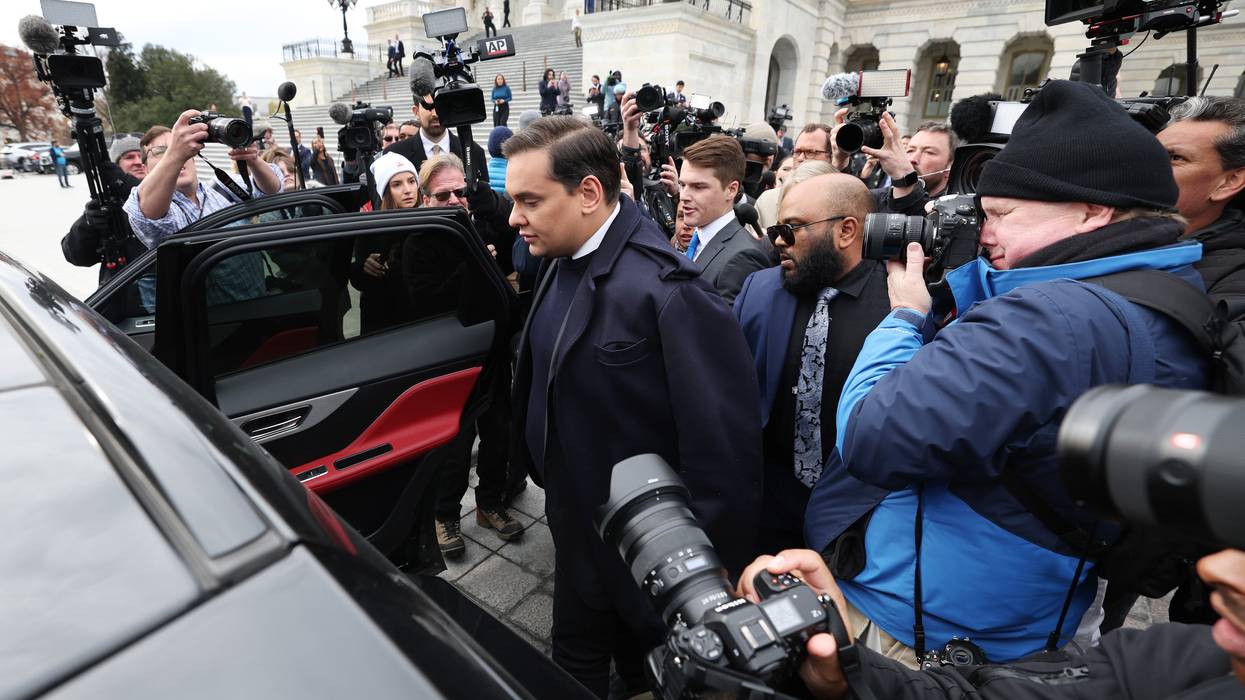
Independent reporting is also crucial for holding accountable those already in power. It was old-fashioned, pound-the-pavement reporting that exposed New York Republican congressman George Santos’ falsified biography, ultimately leading to his ejection from Congress (not to mention criminal charges). It was the news media that aired recordings of Peru’s secret-police chief, Vladimiro Montesinos Torres, bribing judges and politicians—revelations that would lead to the downfall of President Alberto Fujimori. And it was independent reporting on “Partygate” that ultimately forced Boris Johnson out as prime minister of the United Kingdom.
Independent, professional journalism—both local and national—is even more important now that misinformation and disinformation are flooding into the public domain. A recent report by The Associated Press finds that artificial intelligence is “supercharging” the spread of election lies through deepfake images and audio that is impossible to distinguish from authentic recordings. Similarly, a study released in March by the Africa Center for Strategic Studies found that disinformation had increased fourfold (compared to 2022) ahead of recent elections across the continent.
Independent news media are essential to counter this technology-driven trend. Consider Taiwan’s election earlier this year. Although lies flooded online channels throughout the campaign, studies suggest that much of the disinformation was defused by the combined efforts of local media, election authorities, and fact checkers, all of whom deliberately focused on building trust and furnishing voters with what they needed to make an informed, meaningful choice.
We now need to heed these lessons and watch carefully for warning signs. If this year is a litmus test for democracy around the world, a pre-indicator will be how the media are treated. We will have to remain vigilant in defending a free and independent press, and in championing a vibrant and curious local media. If we don’t, you can be certain that the erosion of freedoms will not stop with us.
With those two old men, one of whom is also bizarre beyond compare, wrestling each other for the presidency, this country is threatening in its own odd fashion, like the USSR in 1991, to come apart at the seams.
Let one old man deal with two others.
I turn 80 in July, which makes me just over a year-and-a-half younger than President Joe Biden and almost two years older than former President Donald Trump. And, honestly, I know my limits. Yes, I still walk—no small thing—six miles a day. And I work constantly. But I’m also aware that, on my second walk of the day and then as night approaches, I feel significantly more tired than I once did. I’m also aware that my brain, still active indeed, does forget more than it once did. And all of this is painfully normal. Nothing to be ashamed of, nothing whatsoever.
I also know from older friends that we humans can still be distinctly functional, thoughtful, and capable at age 82 (when Donald Trump would leave his second term in office) or even 86 (when Joe Biden would do the same). But honestly, what are the odds? I’ll tell you one thing that couldn’t be more obvious—not as good as for someone who’s, say, 55 or 60 years old, that’s for sure. Yes, there’s also the reputed wisdom of old age—and it might indeed make Joe Biden a more thoughtful president, were he to get a second term; Donald Trump, of course, would be Donald Trump, at 60 or 82.
And I have little doubt that, whatever age you are, you’ve been thinking somewhat similar thoughts. I mean, doesn’t the very possibility of watching a televised debate between the two of them make you anxious? After all, the oldest president to previously leave office was Ronald Reagan at 77 (and by then he may have had dementia). Before him, the oldest was Dwight D. Eisenhower who ended his second term in 1961 at 70 years old, having had a heart attack while in office. Third comes William Henry Harrison, who entered the White House in 1841 at age 68 and died, possibly of pneumonia, 32 days later. Now, it’s also a fact that we Americans are generally lasting longer than once upon a time. But is that really where you want to put your political money? I doubt it.
As one old man to two others, if only you could stand down, we could face the world we’re actually in before it becomes too late.
Still, all of the above is too obvious to belabor, so here’s a question: Are there any other implications we can draw from the upcoming battle between those two old men that’s going to grab our attention and steal the headlines for all too many months to come? The answer, I suspect, is yes. Sometimes in our world, the symbolic is all too subtle, but every now and then it impolitely smacks you in the face. And at least as far as I’m concerned, the second Biden-Trump election campaign should more than qualify in that regard.
I mean, the country that still passes for the greatest power on Planet Earth is going to set a limping age record for president, no matter who wins, leaving China’s Xi Jinping, now 70, and Russia’s Vladmir Putin, now 71, as relative youths in an all-American world of absolute ancientness. And that should certainly tell you something about the state of our country and this planet, too.
To be a little clearer about just what, let me add one more factor to the equation. Joe Biden and Donald Trump are preparing a fight to the wire to lead an America that, not so many decades ago, in the wake of the collapse of the Soviet Union in 1991, was considered the “sole superpower” on planet Earth. Doesn’t that tell you something?
I think it does. I think, quite bluntly (though I’ve seen no one discussing this amid the endless media headlines and chatter about Trump and Biden), that those two old codgers offer a stunning image of the all-too-literal decline and fall of—yes!—the United States. They should make us consider where the country that still likes to think of itself as the singularly most powerful and influential one on this planet is really heading.
As you might imagine, there’s a prehistory to all of this. George H. W. Bush, president at the moment when the Soviet Union went down in 1991, had that very year ordered the U.S. military to launch Operation Desert Storm, which drove Iraqi autocrat Saddam Hussein’s troops out of Kuwait. In its own fashion, it also launched what would, in the century that followed, become a set of American military operations around the globe. At the same time, with Russia in tatters and China still a modestly rising power—with, that is, no true great-power enemies left on Planet Earth—that sole superpower would do something rather surprising. It would continue to pour ever more taxpayer dollars into the U.S. military-industrial complex. Yes, there was talk then about a “peace dividend” for this country and its people, but none ever arrived.
Thirty-two years later, the Pentagon budget has almost hit the trillion-dollar mark annually, while the overall national “security” (yes, it’s still called that!) budget long ago soared well above the trillion-dollar mark. Meanwhile, in this century, George H. W. Bush’s son, elected president in November 2000, would the following September respond to the 9/11 attacks, planned and carried out by Osama bin Laden and his small terror group, al Qaeda, by launching what quickly came to be known as “the Global War on Terror.” And all too global it would be with the invasion of Afghanistan in 2001 and Iraq in 2003. It would also prove a disaster of the first order for the last superpower, whose military would leave literally millions dead across the planet, destroy countries, decimate economies, and create tens of millions of refugees, while costing this country a staggering $8 trillion and counting as, over more than 20 years, the U.S. military lost wars, while terrorism as a phenomenon only grew.
Yes, in May 2011, Osama bin Laden would be killed in Pakistan by a team of U.S. Navy Seals. Still, were he alive today, I suspect he would be pleased indeed. With next to nothing other than his personal wealth, a small crew of followers, and some hijacked airplanes, he managed to outmaneuver and outplay what was then the greatest power on Planet Earth. Thanks to the slaughter of several thousand Americans in New York and Washington, he also managed to draw this country into an endless war against “terrorism” and, in the process, turn it into an increasingly terrorized country, whose inhabitants are now, however symbolically (and, in the future, possibly far more literally), at each other’s throats.
The once-lone superpower, and now perhaps the loneliest power of all, could even be heading for previously unimaginable autocratic waters or who knows what else?
In some eerie fashion, both former President Trump and President Biden might be considered creations of al Qaeda. And so might the country itself today. I mean, could an American of 1991 ever have imagined that, in 2024, polls would show the urge for violence against fellow Americans reaching eerie highs here? Meanwhile, approximately 1 in 20 of us is now armed with a military-style AR-15 semi-automatic rifle. Even young people can now possess a JR-15 (for “junior”) child’s version of such weaponry that’s all too deadly.
Perhaps not surprisingly, AR-15s have proven the weapon of choice in the worst of the mass killings that have become commonplace in this country and, in recent years, have been distinctly on the rise. They could indeed be considered “terrorist” activities, involving as they do the repeated deaths of startling numbers of us. And all of this is happening without an American-style al Qaeda yet truly in sight. Mind you, there are now an estimated almost 400 million weapons of various kinds in the possession of American civilians, a stunning arsenal for any country, no less one increasingly divided against itself. Meanwhile, according to a recent NPR/News Hour/Marist poll, 3 in 10 Republicans (or 20 million of us) claim that “Americans may have to resort to violence to set things straight” in this country, while, on the right, militarized terror-style groups are ever more the order of the day.
Consider that a brief summary of the increasingly divided and divisive American society over which those two old men are now fighting, a domestic world that could, in the end, rip apart whatever fantasies our leaders may still have about American power on this planet.
As was true of the Soviet Union until almost the moment it collapsed in a heap, the U.S. still appears to be an imperial power of the first order. It has perhaps 750 military bases scattered around the globe and continues to act like a power of one on a planet that itself seems distinctly in crisis. It also continues to organize for a new Cold (verging on Hot) War with China in the Pacific. That explains President Biden’s recent highly publicized “summit” in Washington with the prime minister of Japan and the president of the Philippines, just as it explains the way U.S. special operations forces have only recently been “permanently” assigned to an island only a few kilometers off China’s coast. Yes, as that recent meeting with the Japanese and Filipino leaders and those commandos suggest, the Biden administration is still dealing with China in particular as if this were indeed a Cold War moment, and the sort of “containment” of a communist country the president grew up with was still the order of the day for the globe’s greatest power.
Unfortunately, that’s truly an old man’s version of the world we now live in. I’m thinking about the planet which, each month, sets a new heat record and where, despite much talk about cutting fossil fuels, the U.S. in 2023 produced more oil (13.5 million barrels a day) than at any time in its history, while China’s coal-power capacity grew more rapidly than ever. And that’s just to start down a list of fossil-fuelized bad news. On a planet that itself looks as if it might be going to hell, amid record heat, fires, storms, and the like, the urge to put such effort into organizing alliances of nations in the Pacific (led by Washington, of course) to “contain” China in an ever more warlike fashion represents, it seems to me, folly of the first order.
This presidential campaign could turn out to be about the decline and fall of it all—and, of course, if Donald Trump (“drill, drill, drill”) ends up back in the White House that decline and fall could happen in a fashion almost beyond imagining.
It’s increasingly an illusion (or do I mean delusion?) that this country has any sort of genuine control over the rest of the planet (no less itself). And today—with those two old men, one of whom is also bizarre beyond compare, wrestling each other for the presidency—this country is threatening in its own odd fashion, like the USSR in 1991, to come apart at the seams.
It’s strange to think about just how distant the America I grew up in—the one that emerged from World War II as the global powerhouse—now seems. If you had told anyone then that more than three-quarters of a century later, there would be well-armed private militias forming in a country armed to the teeth with military-style weaponry or that one presidential candidate would already be hinting at calling out the military to subdue his opponents if he ends up back in the White House, who would have believed you? It wouldn’t have even seemed like convincing science fiction.
And yet today, the greatest country on Earth (or so its leaders still like to believe), the one that continues to pour taxpayer dollars into a military funded like no other, or even combination of others, the one that has been unable to win any war of significance since 1945, seems to be threatening to come apart at the seams. Yes, this presidential campaign could turn out to be about the decline and fall of it all—and, of course, if Donald Trump (“drill, drill, drill”) ends up back in the White House that decline and fall could happen in a fashion almost beyond imagining.
The once-lone superpower, and now perhaps the loneliest power of all, could even be heading for previously unimaginable autocratic waters or who knows what else? If only it were otherwise, but unfortunately, in the months to come, we’ll be watching as an all-American world possibly spins slowly out of control, while the leftovers of the American Century fight it out in a country where all too many of us seem focused on anything but what matters.
As one old man to two others, if only you could stand down, we could face the world we’re actually in before it becomes too late.
What’s happening in Haiti today could prefigure the future of the United States, too, if Donald Trump wins in November and continues to undermine the rule of law.
Haiti has descended into chaos. It’s had no president or parliament—and no elections either—for eight long years. Its unelected prime minister Ariel Henry resigned recently when gang violence at the airport in Port-au-Prince made it impossible for him to return to the country after a trip to Guyana.
Haiti is the poorest country in the region, its riches leached out by colonial overlords, American occupying forces, corporate predators, and home-grown autocrats. As if that weren’t enough, it’s also suffered an almost biblical succession of plagues in recent years. A coup deposed its first democratically elected leader, Jean-Bertrand Aristide, not once but twice—in 1991 and again in 2004. An earthquake in 2010 killed hundreds of thousands, leaving 1.5 million Haitians homeless, out of a population of less than 10 million. In the wake of that earthquake, nearly a million people contracted cholera, the worst outbreak in history, courtesy of a contingent of United Nations peacekeepers. To round out the catastrophes, in 2016, Hurricane Matthew made landfall, pushing Haiti back even further.
And now the country has been overrun by gangs that emerged as practically the only groups capable of providing services, however meager, to Haiti’s long-suffering population. People have become the country’s largest export. Anyone who has money, connections, or sufficient courage has fled, even if those who somehow made it to the United States were all too often deported back into the maelstrom. Haiti doesn’t have the three things that might prevent the sort of vacuum into which gangs so eagerly rush: robust democratic governance, a strong civil society, and a sufficiently uncorrupt constabulary. As a result, it’s returned to what political theorist Thomas Hobbes once called a “war of all against all” in which violence and the urge for power prevail, as fist takes precedence over gavel—the perfect environment for gangs to flourish.
In place of the biblical succession of plagues that swept through Haiti, the U.S. might only need the tinder of climate change and the flint of Donald Trump to go up in similar flames.
Political scientists often label places like Haiti “failed states.” With the breakdown of order, everything from political institutions to border controls disintegrates. In a comparable fashion, clans contested for power in Somalia in the 1990s and paramilitaries battled each other in the Democratic Republic of Congo during its repeated wars, while rebels and jihadis targeted the Syrian government beginning in 2011. In the end, such diverse groups seem to boil down to one thing: guys with guns.
In Haiti, the gangocracy is organized along the classic lines of criminal enterprises like the gangs that ruled New York City in the mid-19th century (immortalized in the film The Gangs of New York) or the Chinese tongs that warred over San Franciscan turf in the years after the Civil War (featured in the current Netflix series Warrior). The two major Haitian gangs in the capital city Port-au-Prince, GPep and the G9 Family, have similarly hierarchical structures, roots in particular neighborhoods, and flamboyant leaders like the former police officer and current G9 head Jimmy “Barbecue” Chérizier.
But gangs aren’t simply criminal syndicates. The Haitian gangs have close connections to political parties and align themselves with business interests (or run businesses of their own). Sometimes such gangs even begin as anti-gangs, neighborhood self-defense groups meant to help locals survive in an era of lawlessness.
Their mischaracterization resembles the overly narrow understanding of “terrorists.” Hamas, for instance, is on the U.S. terrorism list, but it’s not just a bunch of guys with guns and a predilection for violence. It’s also been a political party, a government, and a service organization that provided food, healthcare, and other necessities to underserved communities in Gaza.
Don’t make the mistake of associating gangs like Haiti’s with a “primitive” stage of political development or only with countries on the geopolitical margins. What’s happening there today could prefigure the future of the United States, too. In place of the biblical succession of plagues that swept through Haiti, the U.S. might only need the tinder of climate change and the flint of Donald Trump to go up in similar flames.
Today, Americans associate “gangs” with the Crips and Bloods, who developed a murderous rivalry in the Los Angeles area in the 1970s or, more recently, Mara Salvatrucha, better known as MS-13, a gang of young Salvadoran transplants to Los Angeles initially focused on protecting its members from other gangs.
But shouldn’t we be more catholic in our definitions? After all, what are right-wing paramilitary forces, from the Three Percenters to the Proud Boys, if not gangs? They have their rituals, worldviews, indifference to the rule of law, even their own “Barbecues.” The gangs associated with far-right ideology and white supremacy today could claim a lineage stretching back to the European settlers of this continent who routinely engaged in the extrajudicial murder of Indigenous peoples while expanding westward, or the vigilante mobs that administered “rough justice” to “disobedient” slaves before the Civil War, or even the Ku Klux Klan. As for real-world impact, the Crips or MS-13 never had the audacity to force their way into the U.S. Capitol and trash the place, as Donald Trump’s informal gang did on January 6, 2021.
But why stop there? The Pinkerton detective agency once functioned like a gang in its attacks on the labor movement. The Central Intelligence Agency developed distinctly gang-like behavior overseas with its assassinations, coups, and outright criminal activities. And what about all the deaths associated with corporate gangs like Philip Morris and ExxonMobil? These institutions of “normal” society have had a much higher kill count and a more debilitating effect on the rule of law than the institutions of organized crime.
When it comes to starting fires in the American system, Trump is distinctly the Barbecue type.
When it comes to gang-like activities, much depends on geopolitics. The emergence of the “Washington consensus” and the birth of neoliberalism in the 1970s was an inflection point when it came to encouraging gang-like behavior. Previously, at least in advanced industrial countries, the state had been gradually assuming ever greater economic responsibility through the New Deal and its successors in the U.S. and the development of Europe’s market socialism. Neoliberalism, led by Prime Minister Margaret Thatcher in England and President Ronald Reagan in the United States, sought to roll back the power of the state through the defunding, deregulation, and privatization of government services.
That sustained attack on state functions ensured an increase in poverty and painful budget crises for institutions like school systems and hospitals, while corporate misconduct proliferated. In poorer countries, where states were already more fragile, the impact was far more devastating.
In Haiti, after the state borrowed money in the 1970s and 1980s to feed corruption and sustain autocracy, the International Monetary Fund (IMF) pushed subsequent democratic governments to privilege the free market, while opening ever more quickly to the global economy. Sensing opportunity, non-governmental organizations streamed into Haiti to provide food, housing, and healthcare, everything a cash-strapped government couldn’t do. The succession of catastrophes—coups, an earthquake, cholera, hurricanes—only strengthened the humanitarian sector but at the expense of effective government. In this century, the situation had become so dire that all too many parents were giving their children up to orphanages run by foreign charities. In other words, the road to Haiti’s hell was, in part, paved by good intentions.
Or take the case of Jamaica where, from the late 1970s on, similar IMF programs translated into disaster, especially in the capital, Kingston. Here, too, the state lost power as gang leaders, known as “dons,” expanded their territories. As Michelle Munroe and Damion Blake put it in Third World Quarterly: “Neoliberal policies not only paralyzed the state’s capacity to control and contain violence in the streets of Kingston, these changes also made dons and the gangs they command more lethal and powerful.”
Dons and the gangs they command: that language could soon seem all too eerily appropriate for the United States.
America’s ultimate Don is all too clear about what he expects come November, should he lose. “If I don’t get elected, it’s going to be a bloodbath,” he told one of his rallies. According to that scenario, the crew that owes allegiance to Donald Trump—the right-wing militias, diehard conspiracy theorists, open-carry gun enthusiasts—will rise up in gang-like fashion in the face of another “stolen election.”
That, however, is an example of Trump’s magical thinking. The January 6 “insurrection” revealed the limits of his influence. What happened in Washington that day never came close to a coup d’état, thanks to the actions of the police and the National Guard, nor was it repeated, even in the reddest of states.
The real bloodbath would take place if Trump won the election. After all, he’s already promised violence as an organizing principle for his second term. As David Remnick has written in The New Yorker, Trump
makes no effort to conceal his bigotries, his lawlessness, his will to authoritarian power; to the contrary, he advertises it, and, most disturbing of all, this deepens his appeal. What’s more, there is no question that Trump has so normalized calls to violence as an instrument of politics that it has inflamed countless people to perverse action.
Trump has also promised a thorough purge of his enemies in the government and beyond, as well as the weaponization of the Justice Department to wage war on all MAGA opponents. As in his first term, he would destroy as many federal agencies as possible. Meanwhile, he would promote drilling über alles and roll back every Biden administration effort to create an industrial policy to guide the United States away from fossil fuels.
What Trump proposes is fundamentally different from the now shopworn Republican strategy of reducing the federal government to the size of something that can be “drowned in the bathtub” (as anti-tax activist Grover Norquist once so memorably put it) in favor of “states’ rights.” Trump has nothing but contempt for the politics that advance such a perspective. Like the gang leader he is, he’d rather concentrate federal power in his own hands as an instrument of personal vengeance emphasizing loyalty above all. Instead of the empowerment of state legislatures, Trump prefers chaos, for in fraught times people look to autocratic leaders.
When it comes to starting fires in the American system, Trump is distinctly the Barbecue type. He admires leaders who slaughter people indiscriminately (Rodrigo Duterte of the Philippines), change the constitution multiple times to bypass legislative and judicial opposition (Viktor Orbán of Hungary), or kill their political opponents wherever they might live (Vladimir Putin of Russia). He likes the bad boys who have transformed their parties into gangs and their countries into fiefdoms. In short, he’s the ultimate gang leader.
In the MAGA echo chamber, complaints about witch-hunts targeting Trump should be considered just a preface, should he win this November, to a genuine witch-hunt that could make the Red Scare of the 1950s look like a garden party.
Of course, he won’t do it alone. There are plenty of true believers and opportunists to staff his administration and implement his whims, but that’s not enough. As his first term revealed, the guardrails of democracy—opposition politicians, bureaucrats, even certain Republicans who continue to have qualms—can still prevent the country from tumbling over a cliff.
This time around, Trump and those backing him hope to disable enough of the political infrastructure to create the space for non-state actors to do his work for him. In The Donald’s first term, the “deconstruction of the administrative state,” as Trumpophile Steve Bannon so infamously put it, was a strategy meant to empower actors like corporations and religious institutions to grab power for themselves. Next time around, he’s likely to surround himself with advisers pulled from the think-tank crowd that produced the nightmarish Project 2025 blueprint in order to “free” all MAGA-oriented non-state and (often) anti-state actors to do their damnedest.
But even ruthless think tanks, corporations, and apocalyptic preachers aren’t likely to go far enough for Donald Trump, since they also remain the bedrock of America’s more traditional right wing, the coalition that put Ronald Reagan and George W. Bush into the White House. Trump needs genuine mayhem-makers. By removing restrictions on firearms, he aims to deputize every American citizen in his camp to MAGAfy the United States.
Trump’s repeated exhortations to violence—“lock her up,” “punch him in the face,” “be there, will be wild”—may well take a more specific form in a second term. Like McCarthyites at the height of the Cold War, Trumpists have imagined “Marxists” under every bed, even in the Pentagon. It’s not far-fetched to think that the reelected president might issue a coded call to his supporters to round them all up and dispatch them in some grim fashion.
Trump often accuses his opponents of exactly the sins—attempting to steal elections, having distinctly senior moments—of which he is supremely guilty. In the MAGA echo chamber, complaints about witch-hunts targeting Trump should be considered just a preface, should he win this November, to a genuine witch-hunt that could make the Red Scare of the 1950s look like a garden party.
Haiti has no government, much less a strong-armed autocrat like Donald Trump. So, it might seem ludicrous to compare the crisis there with the prospective “bloodbath” Trump promises here. But remember: Haiti suffered under two ruthless dictators from 1957 to 1986: Papa Doc Duvalier and his son, Baby Doc. Between them, they ensured that Haiti would never easily establish democratic institutions.
Donald Trump is nearly 78 years old. He doesn’t have a long political future. Yes, were he to win in November, he would surely do what he could to destroy democracy. Still, the true nightmare scenario is likely to come later, as climate change sends yet more migrants surging toward U.S. borders, generates more fires that sweep across the land, and heats politics to the boiling point. That’s when future versions of the gangs Trump has encouraged to “stand back and stand by,” the insurrectionists he’s promised to amnesty, and the loyalists who have shared images of Joe Biden tied up in the back of a pickup truck could assault the citadels of power in an attempt to destroy once and for all the rule of law that Trump has spent his life undermining.
Cue the ominous music: From sea to shining sea, the war of all against all may be just around the corner.
It comes down to Democratic framing, a truth-telling media, and the independent judiciary to convince the electorate that Trump is actually the biggest threat ever to the story of America.
April 19, 2025. WASHINGTON (AP)—At the direction of Donald Trump, 47th president of the United States, Attorney General Ken Paxton yesterday sent teams of FBI agents to the residences of General Mark Milley, Eric Holder, and Hillary Clinton.
Knocking on their doors at precisely 9:00 am, the lead agents identically told each of their targets, “We’ve come to confiscate your electronic devices pursuant to a lawful warrant. You are not now under arrest.” Clinton appeared the most resigned. “What might the charges be?” “Sorry, ma’am,” said the female agent with a small ponytail and large vest emblazoned with the familiar oversized yellow lettering of the FBI. “We’re not now allowed to say.”
Paxton late morning explained the administration’s reasoning. “May we remind critics that the American people have spoken?” an apparent reference to Trump’s electoral vote victory of 270 to 268, despite former President Joe Biden’s popular vote margin of 10 million votes over Trump—or 48% to 40%. (The remainder went to four minor party candidates.) The electoral college, however, for the third time in the last seven presidential elections, turned a popular vote victory into a narrow loss.
Secretary of Homeland Security Stephen Miller made additional news on immigration in a Newsmax interview. “Today, we’re beginning construction of 50,000 modular homes in Waco, Texas, to launch ‘Operation Relocation’ to deport three million Americans who came here illegally. Promise made. Promise kept.”
The Pentagon also yesterday sent in federal troops under the 1871 KKK Insurrection Act to a dozen cities holding long-planned “Democracy, Not Dictatorship” protests—organized by MoveOn, Brady United, and the American Civil Liberties Union. Tens of thousands of peaceful marchers in each location were shocked to encounter M1 Abrams tanks rolling down city streets to block their paths with tear gas, flash grenades, and rubber bullets. Thirteen students were killed in Atlanta alone when they stood in front of tanks that wouldn’t stop.
Reporters caught up with President Trump early afternoon in between rounds of golf at his Bedminster Club in New Jersey.. “Well, didn’t Biden do the same thing to me and Rudy? Sad about the deaths in Atlanta but, excuse me, what were those protesters doing in front of our tanks? Anyway, I’d like to remind all Americans that today is the 250th anniversary of the battles of Lexington and Concord that began our journey as an exceptional model of freedom and democracy.”
* * *
Growing up politically as a progressive Democrat, I never called conservative Republicans “fascist,” a) because they weren’t and b) because it sounded alarmist if not naive, the prevailing view being “only Hitler was Hitler.” That was and still is literally true… yet hopelessly dated since ignoring Donald Trump’s chesty Caesarism is now what’s truly naive.
Which raises three separate though related questions: What’s the evidence that he’s an American Fascist? Should the mainstream media finally concede that should be a newsworthy part of the 2024 contest? And will branding him as one repel a small but decisive number of independent voters to conclude, “Enough!”?
There are of course avalanches of solo articles detailing Trump’s astonishing rhetoric, scandals, and prosecutions. But in each instance, he belligerently “doubles down”—which by definition means there’s no depth he won’t descend to—and quickly offers up dog-ate-my-homework excuses: “It was a joke… Hillary and Joe are worse… What about Hunter?… That’s taken out of context… I never read Mein Kampf… Black prosecutors are racists!… that was AI, not me… Trump Derangement Syndrome!… Witch Hunt!“ His calculation is apparently to isolate and disparage all criticism and indictments so they appear at worst to be aberrations and obscure how his whole is-worse-than-the-sum-of-his-parts, as if a pointillist were judged by only a few dabs of color rather than the entirely of the work. Which in Trump’s case would reveal a portrait far closer to Orban than Obama.
America has never before witnessed a politician who so compulsively and flagrantly lies about everything that his lawyers will not allow him to testify in court.
It’s tempting to respond to his rotating evasions with John McEnroe-worthy contempt: “You. Cannot. Be. Serious!” But in the current context of close polls and monumental stakes, mere indignation might allow him to keep escaping accountability through a combination of scandal fatigue, Trump judges, his base of delirious ideologues and credulous abettors, and GOP leaders paying tribute to Trump by shrugging off his predations. Add to that Team Trump’s expectation that the Fourth Estate will just keep bothsides-ing every controversy due, in Molly Jong-Fast’s insight, to its “normalcy bias.”
With his rants dominating coverage and polls barely budging after a year of startling news cycles, Democrats need more passionate language and memorable story lines to move the needle. Brian Klaas, in his best-selling Fluke, urges advocates to use “schemas… psychological tools to distill vast amounts of information into easily maintained categories.” Former President Abraham Lincoln embraced his “rail splitter” moniker; Lenin took over Russia at the end of World War I with the penetrating slogan, “Land. Bread. Peace”; recent Republicans get it too, from Nixon’s “Silent Majority” to Reagan’s “Welfare Queen” to “Make America Great Again” and recently the rage over “Age.”
What new schema could help keep Democrats on offense and the GOP on the ropes? One would be to portray Trump as a “fascist,” despite or perhaps because of how much of the media dismiss that truth as taboo.
He did, after all, name his movement “America First” after Charles Lindbergh’s appeasement toward Germany in the 30s. Now he openly lauds, quotes, and yearns to imitate Putin, Xi, Kim and Orban—indeed acting as “Putin’s puppet” by implying that Russia should attack NATO (which is odd since the country he seeks to again lead is a member state). If that’s the company he keeps, Trump should be pressed to explain why he too isn’t a fascist, and down-ballot Republicans why they aren’t mute accomplices.
Many Americans may not now understand what that really means since America has never before encountered one… but intense national campaigns can be teachable events. A synthesis of recent books on modern definitions describe a governing system that sounds eerily familiar—viz., one-man rule (“unitary government” in the GOP euphemism) based on big lies, nationalist fervor, xenophobia, hatred of marginal groups, displays of militarism, incitement to violence, media manipulation, and persistent lawlessness.
Let’s apply those criteria to the 2024 election to see whether a democracy birthed after defeating a distant monarch might actually elect one 248 years later.
Lies. Most politicians will at times lie or fib—Mark Twain charitably called them “stretchers”—or, worse, they’ll weaponize Big Lies to justify depravity. The Confederacy maintained that slaves were “property,” Hitler blamed Jews for stabbing Germany in the back in WWI, Joe McCarthy waved around his shifting list of supposed Communists. Those falsehoods attracted immense, eager audiences… until, eventually, they didn’t.
America, however, has never before witnessed a politician who so compulsively and flagrantly lies about everything that his lawyers will not allow him to testify in court. It’s not merely Trump’s astounding 22 lies or falsehoods on average per day in his one term in office, according to The Washington Post’s fact-checking team, but also several ridiculous ones that have mesmerized his Cult-45: e.g., Obama was a Muslim born abroad; Biden stole the 2020 election; scores of different prosecutors, judges, and juries around the country are somehow in cahoots; vaccines are about personal liberty not public health; and serious crime is rampant with immigrants largely to blame (except, fyi, migrants commit fewer crimes per capita than non-migrants). Last month he even declared that Jewish Democrats “hate their religion and Israel” (which was news to this writer).
The problem is not any particular falsehood but rather how their critical mass has gravitationally pulled millions of aggrieved Americans into his black hole so they wind up not trusting anyone… except The Great Leader.
Then there are the thousands of times that Trump has deployed a classic tactic of Nazi propagandist Joseph Goebbels—keep accusing enemies of your own misconduct in order to blur the truth. Hence, the ex-president declares, “It’s Biden who hates democracy and wants to overturn an election.” Why lie so blatantly, Trump friend Billy Bush once asked him? “Look, you just tell them and they’ll believe it. That’s it. They just do.”
Amplifying laughable lies are MAGAphones like House GOP chairs and Fox anchors. Republican chairmen have become innuendo-machines that disparage the “Biden Crime Family” based on “very credible” witnesses… who, mirable dictu, disappeared or are now in jail for spreading Russian disinformation. The performative outrage of Messrs. Jordan and Comer overlooks Biden’s zero criminal charges over his 50 years of public service compared to Trump’s 88 felony indictments in the past year (not counting adverse defamation, disbarments, and civil judgments).
At the same time, Fox seems to exist as mini-me’s repeating his gaslighting de jour—the latest being Hannity’s nightly attempts to earnestly announce that things were better four years ago, when 1.1 million American were dying from Covid-19 and Trump became the first president since Hoover to end his term with fewer jobs than at the start.
The problem is not any particular falsehood but rather how their critical mass has gravitationally pulled millions of aggrieved Americans into his black hole so they wind up not trusting anyone… except The Great Leader. Again, sound familiar?
Violence. Fascist rulers throughout history have won or maintained power via violence and intimidation: Lenin, Mussolini, Franco, and Gaddafi in violent takeovers; rogue militias such as Italian Blackshirts and German Brownshirts in the 1920s; Stalin’s Great Purge; and Hitler’s Kristallnacht in 1938 as a prequel to far worse later.
The ex-president of course has not been as savage, but it was interesting that—not exactly being a student of history—he kept a book of Hitler’s speeches in a cabinet by his bed, some of which were echoed later in his own propaganda. He repeatedly warns of a “blood bath” if he loses in 2024, promises that “when the looting starts, the shooting starts,” and, recently, endangers jurists and their families by attacking them by name. Nor was it cool when he dined with, and then praised, neo-Nazi Nick Fuentes at Mar-a-Lago.
He routinely practices “stochastic terrorism” by deploying incendiary rhetoric that he knows—or hopes—will trigger subsequent violence. Like the hammer-wielding home invader looking for Nancy but settling for Paul Pelosi; the mass killers at the Pittsburgh Tree of Life Synagogue, Walmart in El Paso, and the Buffalo supermarket quoting MAGAisms in their manifestos; and his near-physical inability to condemn the Proud Boys and Charlottesville protesters—can these private militias be fairly called his “Redshirts”?
Has America faced such a climate of “mobocracy”—a phrase of Lincoln’s—since the 1850s?
This campaign of menace has produced anticipatory genuflection by frightened Republicans whose in-boxes are clogged with death threats at any perceived disloyalty. It gets worse: FBI data demonstrate that a significant majority of domestic terrorism is now committed by white reactionaries; some senators privately admit they didn’t vote to convict him at his impeachment trial fearing for the safety of family members; ex-Pentagon Secretary Mark Esper disclosed that Trump suggested that “soldiers shoot civilians” during the George Floyd marches… as growing predictions of a new Civil War emanated from only one of our two major parties, even before the major film Civil War hits screens this month.
“In America, the hallmark of budding fascists was not intellectuals discussing how to take power,” concludes scholar Heather Cox Richardson recently in Democracy Awakening. “It was populist violence.”
No doubt that the leading example was the shouts of “hang Mike Pence” during a Trump-inspired riot that took seven lives. And no surprise that a Navigator poll in March showed the “fear of political violence” had jumped a stunning 29-45% among independents in only the past three months. Has America faced such a climate of “mobocracy”—a phrase of Lincoln’s—since the 1850s?
For the founders never anticipated a leader who would say, “We don’t debate our opponents, we destroy them!”… Oh, that was Benito Mussolini in 1936, but notice how easy it was to conflate two strongmen for whom violence was not a bug but a feature of their governance. Trump himself explained to Bob Woodward that his core belief was that “real power is, I don’t even want to use the word, fear.”
Democracy and Freedom. “Welcome to the end of Democracy,” said the smug opening speaker at this year’s CPAC conference, who at least gets props for candor.
Of course, dictatorships shun democracy by a) rigging free and fair elections and b) limiting independent thought since that threatens their all-powerful and all-knowing image. In the U.S. that shows up in proposed Republican bans on books, abortions, and marriage equality. Trump admitted to wanting to be “a dictator for a day” (as if he’d then voluntarily relinquish that power) and suggested yanking the broadcast license of NBC because of how SNL makes fun of him (networks, by the way, don’t have licenses, only stations do). A joke? Not when he previously declared that “I alone can fix it,” that “Article III [of the Constitution] allows me to do whatever I want,” and that future presidents should “have absolute immunity” for any crimes committed while in office.
Here’s only part of the GOP game plan to repress freedom by rewriting our laws and history:
Two of the leading Democracy indexes ( The Economist and Freedom House) rate the U.S. a “flawed democracy,” and declining. Trump redux might put us into Belarus territory.
The Rule of Law seems likely to invert into a version of mob rule if the Heritage Foundation’s dystopian Project 2025 were to be enacted. And what else could Trump have meant by admitting that he would “terminate the Constitution” in an emergency and—understanding the allure of the “anti-hero”—by repeatedly lauding Al Capone’s “tough guy” aura? Al Capone! It’s unlikely that any other American politician has ever said or even thought that.
Even as Team Trump excoriates the mild-mannered Merrick Garland for “weaponizing justice” (despite his record number of Republican Special Counsel), the ex-president unironically tells rallies that “if I see someone doing well and beating me… I’ll say indict them.” An ex-president who used his pardon power to release imprisoned political allies now promises to pardon 1400 people duly convicted of crimes in the January 6 insurrection. And no matter how delayed his multiple criminal trials may be, there’s already voluminous evidence under oath that his corrupt character puts him on a scale with Benedict Arnold and 100 Nixons. As his NSC advisor John Bolton put it, “For him, obstruction of justice is a way of life.”
If you taped over the name Donald John Trump on top of a list of all the times he’s lost in court, a neutral observer would conclude we were dealing with a career criminal.
Other-ism. History’s worst dictators have conjured up sinister-sounding enemies to boost nationalist fervor and justify violence. Whether it was Jews in Germany (Hitler famously looked admiringly on Confederate laws and later Jim Crow to help model his approach), socialists in Italy, the intellectual elites in Mao’s China, or gays now in Russia, it’s been an irresistible itch that they scratch. They may not have social programs but readily understand political pogroms (actual or polemical) to fuel their fundamental “US vs THEM” dynamic.
Trump has a proven history of bigotry. It includes unlawfully barring Black people in the 1970s from his father’s apartment buildings; questioning the birth of America’s first Black president; asserting that The Squad should “go back” to where they came from; calling African countries “shitholes”; attempting to bar Muslims from entering the U. S.; and now pledging to deport millions of undocumented immigrants. At the same time, fellow-travelers Tucker Carlson, Steve Bannon, Stephen Miller, and Fox hosts promote the white nationalist “Great Replacement Theory” and blame DEI (“Diversity, Equity, Inclusion” in hiring) for causing airline crashes and the collapse of the Francis Scott Key Bridge.
While avoiding the “N” word, the unmistakable GOP message is that everything will be all-white.
Wealth. Putin is reportedly the world’s richest person and keeps his oligarchs in line by controlling their wealth. Trump’s core DNA is obviously money. Consider: his obsession with ranking high on the Forbes 400; near sole policy goal of $2 trillion in more tax cuts for the already rich; transformation of the RNC into his personal piggy bank; and of course the emolumental $2 billion that Crown Prince MBS gifted son-in-law Jared Kushner. To MAGA, steep wealth and income inequality is not a problem but a promise.
Ruth Ben-Ghiat, in her brilliant 2020 book Strongmen: Mussolini to the Present, summarizes the “contract” between the authoritarian ruler and his collaborators: “The offer of power and economic gain in exchange for supporting his violent actions and suppression of civil rights.”
* * *
It’s critical that we appreciate the ambition of Trump’s extremism. He is attempting to pull off one of the biggest propaganda campaigns in political history and is getting dangerously close to succeeding. Slowing, stopping, defeating, and then reversing everything itemized above is no simple task.
Totalling all these similarities with history’s authoritarians, there must be a word that describes a corrupt megalomaniac who is running a campaign based, in his own words, on “revenge and retribution.” But that word isn’t “conservative” as Eisenhower, Reagan, or the Bushes would have understood it. If Trumpism, The Sequel were a streaming video, it would require a casting call for actors to play dolts like those in the cult movie Idiocracy, which was supposed to be a satire on reverse Darwinism, not a reality TV series.
The right word is Fascist. According to the most cited scholarship on such matters, “If it looks like a duck, swims like a duck and quacks like a duck, then…” But can that word and frame in 2024 become as salient as the high-decibel GOP campaign of smear and fear?
We’ll never know whether the fascist moniker is effective if most of the Fourth Estate sticks to its standard “horse-race” template, and continues to assume that today’s GOP is anything like country-club Republicans of decades past.
There are still clusters of influential people who appear scared to utter it: commentators who are stuck on Hitler as the litmus test; politicians who don’t want to risk offending some conservative constituents; an entire party in a two-party system too fearful to criticize him; editors at major publications reluctant to turn off any of their audience, as libertarian oligarchs like Elon Musk, Rupert Murdoch, and John Malone show no interest in encouraging debates about the GOP’s dangerous extremism. The mainstream media regularly quote Republicans calling all Democrats “socialists,” yet reach for their smelling salts at the prospect of discussing whether the Trump clique is “fascist,” even though the former is false and the latter true.
Calling out hard-core MAGAs, to be sure, won’t change their minds since they emotionally bond with a leader who shamelessly hates whom they hate and are loathe to abandon their tribe. “You can’t reason people out of an opinion,” wrote Jonathan Swift, “that they didn’t reason themselves into.” Still, that public conversation would likely spur a larger Democratic turnout (especially as compared to 2016 when so many lazy voters thought Hillary couldn’t lose) and also repulse some slice of undecided voters otherwise immune to mere high-minded appeals to democracy and freedom.
How real is the threat that an Americanized fascism can defeat “the world’s oldest democracy” this fall? My best answer—very real yet still very unlikely. There are obviously several big unknowns to come beyond the scope of this article, like the result of Trump’s upcoming criminal trial(s), the Extreme Court’s ruling on “president immunity,” third-party candidates getting on ballots, and a possible October surprise in either of two major wars.
But Biden has a clear edge (as of now) for three big reasons: first, the ascendancy of abortion as the likely No. 1 voter variable due to the Dobbs decision and the absurd Arizona decision this month that upheld a total ban based on an 1864 statute… and as voters have clearly shown in the 2022 midterms and all subsequent state abortion referenda; second, a steadily rising economy that undermines the GOP falsehood that things are going to hell; and third, Trump is in fact a dangerous extremist, although no one narrative has yet stuck to him. Fascist can because it’s true and odious.
Sticky monikers have done that before. The Johnson campaign was able to label Goldwater a war-monger, which helped produce a record majority. And in a non-political context, “If the glove doesn’t fit, you must acquit“ successfully focused O.J.’s jury. Similarly, in 2024, “Dad, how can you vote for an open Fascist who threatens judges’ families and wants an abortion ban that could send your daughter to jail?” is not an easy question for a parent to answer. But we’ll never know whether the fascist moniker is effective if most of the Fourth Estate sticks to its standard “horse-race” template, and continues to assume that today’s GOP is anything like country-club Republicans of decades past.
While the campaign’s exact language and framing is evolving, the stakes are way bigger than even a timorous media. It’s a contest not merely between two presidents but especially between two traditions that have competed throughout U. S. history. One assumes that we are a nation founded on Democracy, the Rule-of-Law, and Equality; the other, to the contrary, on States Rights, Corporatism, and Free Markets. One flows from Thomas Jefferson’s Declaration, a “we-the-people” Constitution, Lincoln’s Proclamation, FDR’s New Deal, and the 60’s Civil Rights laws. The other stems from the Articles of Confederation, the Confederacy, Reagan’s Cowboy Capitalism, Mike Johnson’s theocracy, and Trump’s dictatorial dreams.
Progress for all or privilege for some. The Rule of Law or the Law of Rule. Human rights or Property rights. Democracy or Fascism.
In this homestretch of our 60th national election, it comes down to Democratic framing, a truth-telling media, and the independent judiciary to convince the electorate that Trump is actually the biggest threat ever to the story of America. If these three entities can crystalize the tyranny in Trump’s personality and program, America will again validate Tom Paine’s optimism that “there is too much common sense and independence in America to be long the dupe of any fiction, foreign or domestic.”
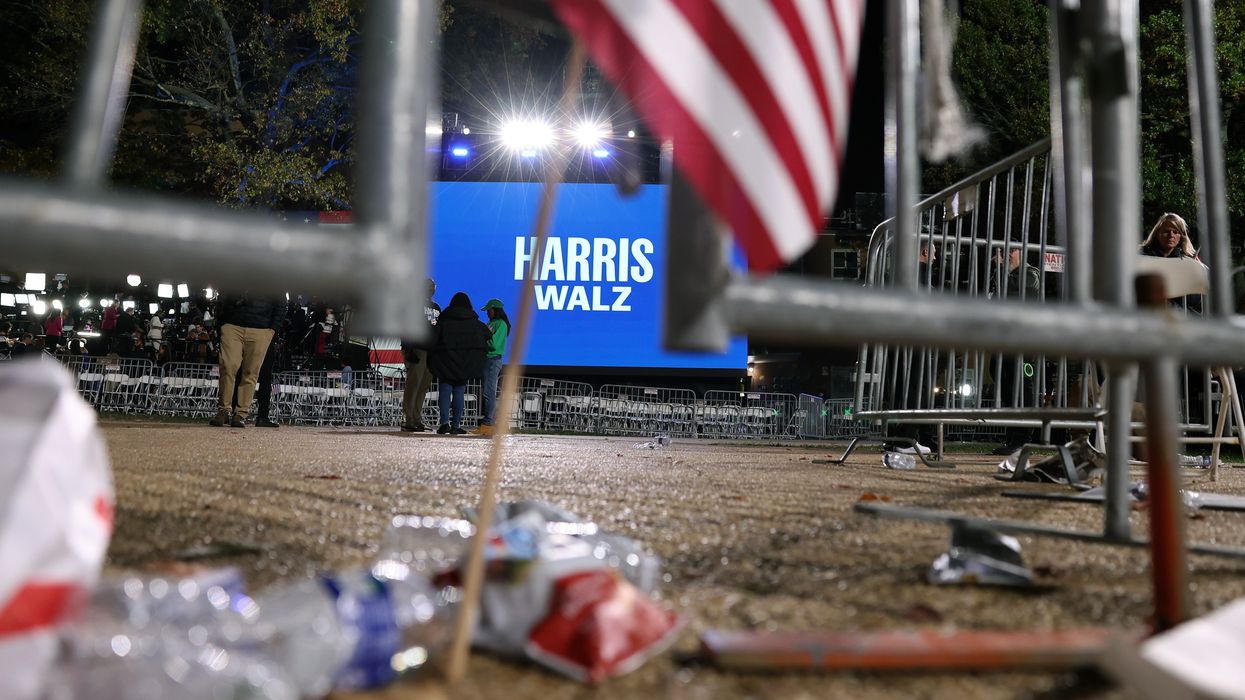
New polling from the National Women’s Law Center and MomsRising found that nearly 80% of respondents supported increasing investments in the caregiving agenda by raising taxes on the wealthiest and big corporations.
Women and families shouldn’t have to struggle to meet caregiving needs while billionaires buy their third yacht and mega corporations see record profits. This Tax Day, while most of us are stressing about filing our tax returns correctly, many billionaires will laugh all the way to the bank as they pay
a lower tax rate than their secretaries.
New polling from the National Women’s Law Center and MomsRising shows us that respondents are sick of this status quo, and that they overwhelmingly support raising taxes on the richest to invest in care priorities.
For years, lawmakers on both sides of the aisle have insisted that if we give tax cuts to those at the top, everyone will feel the benefits. Fifty years of research has decidedly disproven this theory.
Imagine instead a tax system where the richest pay their fair share, which allows us to invest in our shared priorities.
Tax giveaways for the wealthiest and biggest corporations don’t create jobs or raise salaries; instead, they help pad bonuses for top executives and boost payouts for wealthy shareholders. And in some cases, profitable companies can avoid paying federal taxes entirely.
Meanwhile, families are struggling to hold it together.
Childcare prices h+ave continued to surge as childcare programs grapple with waning resources after the expiration of federal childcare funding in September.
Women, and predominantly women in low-paid work, are forced to choose between caring for a loved one or keeping their job.
And a lack of robust public investment has decimated our ability to provide good quality home and community-based care for aging and disabled people.
Furthermore, the people who work in these care roles and who are—you guessed it—predominantly women, are driven into poverty or out of the workforce by unsustainable wages and poor working conditions.
Yet, instead of collecting more tax revenue from those at the top so that we can invest in our chronically underfunded care systems, Republicans have decided to double down on the disastrous course of more tax cuts for the wealthiest.
All of us will need to care for ourselves or a family member at some point in our lives, and many of us provide care for a living. If the wealthiest individuals and corporations simply paid their fair share in taxes, there would be more than enough to invest in childcare, paid leave, and aging and disability care, which would help our families and our economy thrive.
President Joe Biden knows this. Just last month, he stood before Congress and declared: “If you want to make—or can make—a million or millions of bucks, that’s great. Just pay your fair share in taxes.”
He proposed a minimum tax of 25% on billionaires, which would raise $500 billion in 10 years, and called for investing that revenue in paid leave, home care, and childcare.
It’s no surprise that line prompted thunderous applause. The president knows that connecting taxes to the investments that would make a difference in the lives of women and families is a winning message. New polling from the National Women’s Law Center and MomsRising found that nearly 80% of respondents were supportive of increasing investments in the caregiving agenda by raising taxes on the wealthiest and big corporations.
Women are disproportionately burdened by our lack of equitable caregiving investments, and this polling reaffirms that focusing on how taxes can support gender justice priorities could sway voters to Biden’s side. For instance, two key voting demographics, Black women and Gen Z women, consistently and strongly support the care agenda that President Biden is pushing according to this poll.
In stark contrast, the Republican candidate, former President Donald Trump, has been privately talking about cutting the corporate tax rate even further, similar to what he did in his 2017 Republican-passed tax bill, the Tax Cuts and Jobs Act. This is not only a terrible idea for our country and our economy, but also for his campaign.
The new survey results showed that two-thirds of voters across party lines agreed that we need to get rid of the disastrous 2017 tax cuts for the wealthiest, a sentiment that is consistent with poll after poll over the past five years.
Since this bill was signed into law, billionaire wealth has increased by more than $2 trillion (a 77% increase) at a time when the child poverty rate has more than doubled. What’s more, since 2017, this tax law exploded the national debt and decimated federal tax revenue.
Imagine instead a tax system where the richest pay their fair share, which allows us to invest in our shared priorities. That’s the future tax code that President Biden wants to create. And our polling shows that voters overwhelmingly want to increase investments in the care priorities that families need by raising taxes on the wealthiest.
Tax Day may be in April, but voters will be thinking about taxes until November.