

SUBSCRIBE TO OUR FREE NEWSLETTER
Daily news & progressive opinion—funded by the people, not the corporations—delivered straight to your inbox.
5
#000000
#FFFFFF
To donate by check, phone, or other method, see our More Ways to Give page.
Daily news & progressive opinion—funded by the people, not the corporations—delivered straight to your inbox.
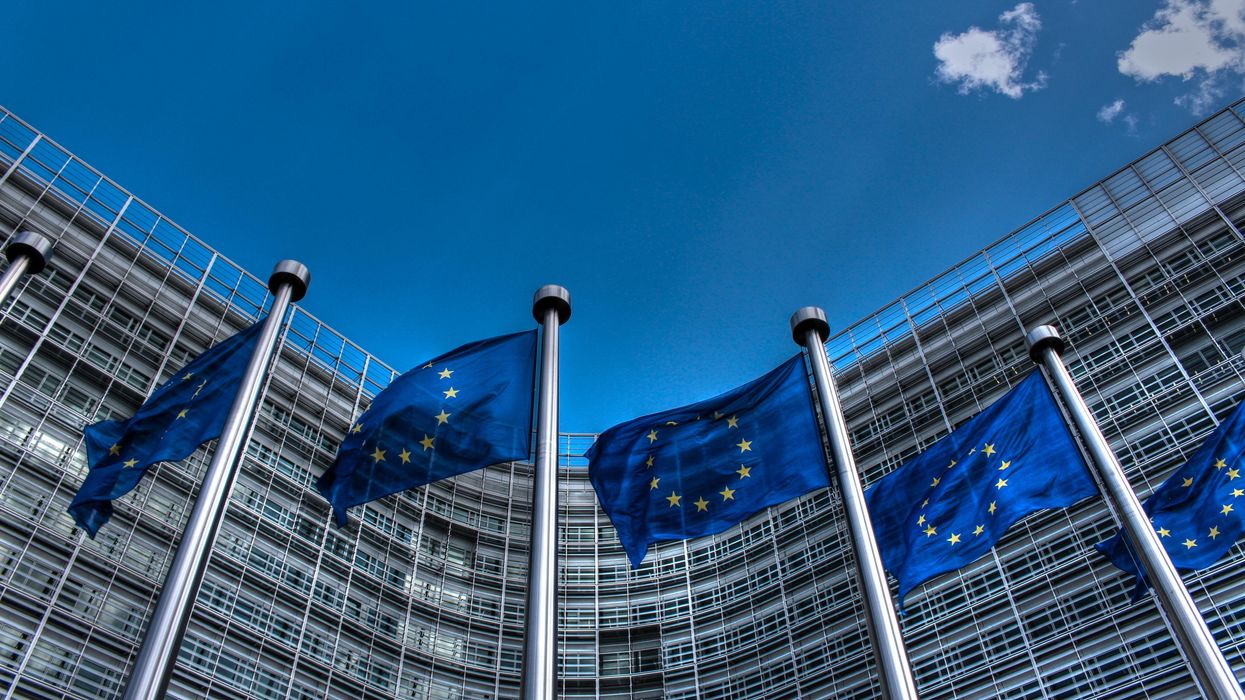
The anti-poverty charity Oxfam on Tuesday denounced the European Union's updated list of tax havens, which one expert at the group called a "whitewash" for removing one of the world's most infamous offshore safe harbors while exempting offenders in Europe.
"The current list makes the E.U. a hypocrite as major tax havens in Europe like Malta and Luxembourg escape."
The E.U. list of "noncooperative jurisdictions for tax purposes"--first published in 2017 in an effort to address rampant tax evasion--now includes Anguilla, the Bahamas and Turks and Caicos.
American Samoa, Fiji, Guam, Palau, Panama, Samoa, Trinidad and Tobago, the U.S. Virgin Islands, and Vanuatu remain on the list, while Bermuda was removed.
"How can anyone give this list any credibility? Bermuda is one of the world's worst tax havens with its zero corporate tax rate. Yet, the E.U. took it off the list after it made a few woolly promises to reform," said Oxfam E.U. tax expert Chiara Putaturo said in a statement.
"To add insult to injury, major European tax havens like Luxembourg are not on the list because all E.U. countries receive an automatic free pass," she added. "This is not a blacklist, it is a whitewash."
As the Panama Papers, Pandora Papers, OpenLux, and other investigative reports revealed how capitalist enterprises and the global superrich use offshore havens to avoid taxation--often through the use of shell companies--the European Commission last year launched an initiative "to fight against the misuse of shell entities for improper tax purposes."
However, Oxfam and others denounced the initiative--which excluded financial service firms--as inadequate while E.U. proposals to crack down on evasion and fraud have faced formidable obstacles, including from European countries like Luxembourg, Malta, and Ireland that have been called tax havens.
"Nothing has changed," said Putaturo, who argued that the E.U. "should automatically blacklist zero- and low-tax rate countries and hold European countries up to the same level of scrutiny as non-European countries."
Related Content

Noting the "free pass" given to members of the 27-nation bloc, Putaturo said that "the current list makes the E.U. a hypocrite as major tax havens in Europe like Malta and Luxembourg escape the list while countries outside Europe like Eswatini and Botswana risk being blacklisted."
"Stronger criteria could stop the industrial levels of tax dodging by the world's richest and corporates," she added. "Governments and ordinary people are facing the cost-of-living crisis. Ending tax havens could provide the much-needed hundreds of billions in revenue as the world's superrich would have to pay their fair share."
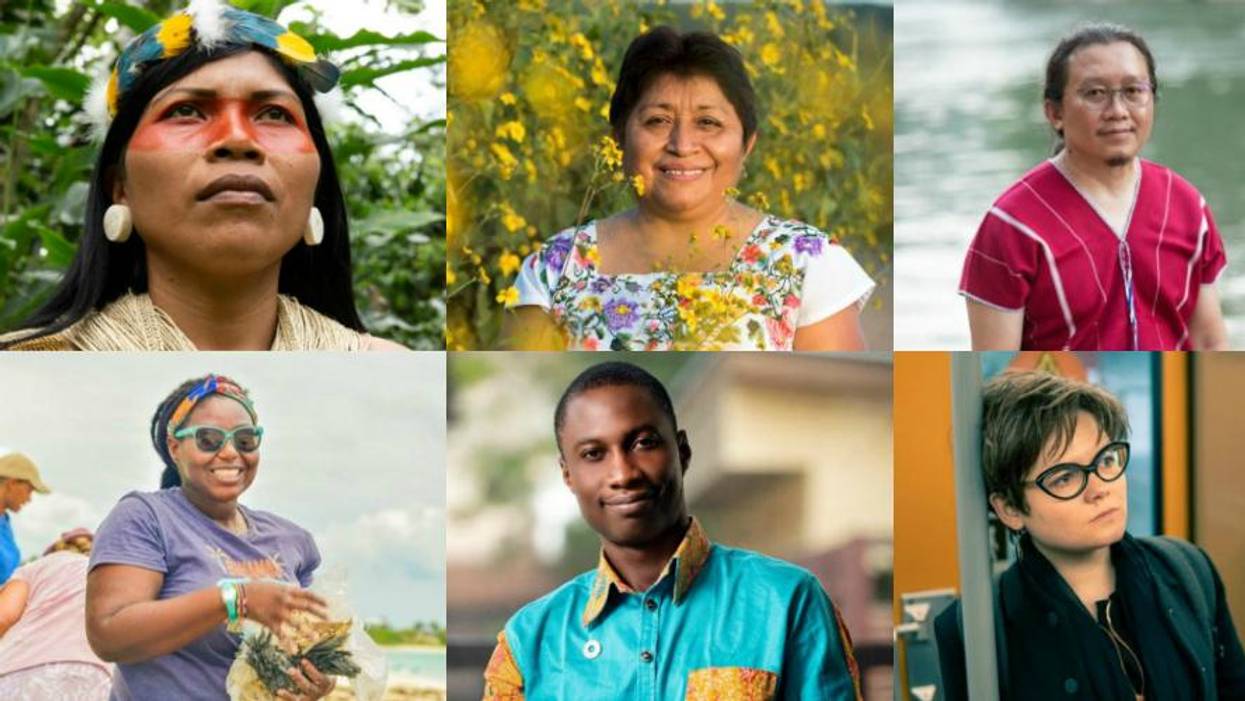
After a long year of environmental disasters across the globe and in the midst of a public health crisis that has killed well over a million people, six "environmental heroes" were announced on Monday as winners of the 2020 Goldman Environmental Prize, an annual honor that recognizes grassroots activists from each of the world's inhabited continental regions.
"These six environmental champions reflect the powerful impact that one person can have on many," John Goldman, president of the Goldman Environmental Foundation, said in a statement. "In today's world, we witness the effects of an imbalance with nature: a global pandemic, climate change, wildfires, environmental injustices affecting those most at risk, and constant threats to a sustainable existence."
"Even in the face of the unending onslaught and destruction upon our natural world, there are countless individuals and communities fighting every day to protect our planet," Goldman continued. "These are six of those environmental heroes, and they deserve the honor and recognition the prize offers them--for taking a stand, risking their lives and livelihoods, and inspiring us with real, lasting environmental progress."
This year's winners are Kristal Ambrose of the Bahamas, Nemonte Nenquimo of Ecuador, Lucie Pinson of France, Chibeze Ezekiel of Ghana, Leydy Pech of Mexico, and Paul Sein Twa of Myanmar. Although the foundation typically holds a ceremony for the recipients at the San Francisco Opera House in April, the prize is being awarded virtually on Monday, at 4:00 pm PST, due to the coronavirus pandemic.
Ahead of the livestreamed award ceremony, the foundation released videos and online biographies of the 2020 recipients, who join 200 activists from 90 nations who have been honored with the prize in the past.
Ambrose is being recognized for helping convince the government of the Bahamas to impose a nationwide ban on single-use plastic bags, plastic cutlery, straws, and Styrofoam containers and cups, which took effect this year. The foundation says that "operating outside of the traditional power structures in the Bahamas, Ambrose used science, strategic advocacy, and youth empowerment to get her country focused on plastics."
She explained the significance of her government's recent plastics ban in an interview with The Guardian. "In the Bahamas, it's a really big deal because we receive the world's waste as well as producing our own," Ambrose said. "This is paradise, until you look closely. Then you see the plastic pollution that washes in with the Sargasso Sea."
The founder of the Bahamas Plastic Movement, she is currently studying marine waste in Sweden and, according to the newspaper, "aims to use the results of her research to build stronger organizations and awareness in the Bahamas."
Also named one of the 100 most influential people of 2020 by TIME magazine, Nenquimo led an Indigenous campaign and lawsuit that blocked Ecuador's government from selling 500,000 acres of Waorani territory in the Amazon rainforest for oil extraction--which, as Mongabay noted, "set an important legal precedent for other Indigenous communities in the rainforest, and put in motion a movement to redefine national community consent laws."
Nenquimo told to Mongabay in September: "We are not waiting for the government to respect us. We are demanding that they respect our life, our home, our culture, and our territory. That's the most important thing now."
Following that legal victory in April 2019, the foundation says, "Nenquimo continues to fight for self-determination, rights, cultural, and territorial preservation for the Waorani and other Indigenous communities."
The foundation calls Pinson "a climate soldier," pointing out that her activism not only "successfully pressured France's three largest banks to eliminate financing for new coal projects and coal companies" but also "compelled French insurance companies to follow suit."
"As a result of her work with French institutions, 22 global banks and 17 insurers now cease to support coal development," the foundation says. "Pinson's activism has already resulted in the adoption of new coal policies by investors managing more than $7 billion in assets. She vows not to stop until financial institutions cease all new investment in coal."
After working as a campaigner for Friends of the Earth France from 2013 to 2017, Pinson founded Reclaim Finance this year. The vision of the group is "to create a financial system that supports the transition to sustainable societies that preserve ecosystems and satisfy people's basic needs."
Ezekiel led a four-year grassroots campaign that compelled the Ghanaian government to cancel what would have been the country's first coal-fired power plant. In 2017, the year after that 700-megawatt project was defeated, Ghana's president announced that all new energy projects would be renewable.
The activist is founder of the Strategic Youth Network for Development, which "harnesses the power of youth to make environmental and social change in Ghana," as well as the national coordinator of 350 Ghana Reducing Our Carbon (350 GROC), an affiliate of the global environmental group 350.org, whose executive director May Boeve and Africa team leader Landry Ninteretse celebrated the prize announcement in a statement.
Calling Ezekiel "a strong voice of the youth and grassroots groups," Ninteretse said that "the recognition of his and other allies' work shows that collective efforts through community organizing and campaigning can empower ordinary people to demand their rights and overcome social injustices and achieve inspiring wins for thousands of grassroots activists, frontline communities, and local groups of Africa and beyond working for real climate justice."
An Indigenous Mayan beekeeper born and raised in Hopelchen, Pech spearheaded a coalition that took on American agrochemical giant Monsanto and secured a 2015 Mexican Supreme Court ruling that suspended the planting of genetically modified soybeans in Campeche and Yucatan, two states in Southern Mexico.
"In September 2017, thanks to Pech's organizing, Mexico's Food and Agricultural Service revoked Monsanto's permit to grow genetically modified soybeans in seven states, including Campeche and Yucatan," the foundation notes. "This decision marks the first time that the Mexican government has taken official action to protect communities and the environment from GM crops."
The foundation adds that "an unassuming but powerful guardian of Mayan land and traditions, Pech experienced frequent discrimination and was widely underestimated: upon seeing her in person following her court victory, a lawyer for Monsanto remarked that he couldn't believe that this little woman beat them."
Sein Twa, a member of the Karen Indigenous group in Myanmar, helped lead his people to establish 1.35-million-acre peace park in the Salween River basin, a major biodiversity zone home to Karen communities as well as Asiatic black bears, clouded leopards, gibbons, sun bears, Sunda pangolins, tigers, and teak forests.
Officially created in late 2018, the Salween Peace Park includes 27 forests and three wildlife sanctuaries. The foundation notes that Sein Twa "has ably combined grassroots environmental activism and Indigenous self-determination to create the peace park in a conflict zone--a singular and unprecedented achievement."
As co-founder of the Karen Environmental and Social Action Network (KESAN), Sein Twa and his organization "are moving forward in assisting communities to develop land management plans, documenting biodiversity gains, and using the park as a bulwark against destructive megaprojects," according to the foundation.

Reports late Wednesday that the Trump administration will not offer Temporary Protected Status to Bahamians displaced by Hurricane Dorian drew outrage from lawmakers and rights advocates, who condemned the decision as an inhumane denial of secure refuge to victims of one of the most powerful and devastating storms in recorded history.
"Let's be clear: This decision is racist and cruel," tweeted Sen. Elizabeth Warren (D-Mass.), a 2020 Democratic presidential candidate. "We should grant Temporary Protected Status to Bahamians fleeing Hurricane Dorian."
"To deny temporary protected status to a nation so close to our shores, that has experienced such devastation, is morally bankrupt and a black mark on America."
--Sen. Jeff Merkley
Granting TPS, which the Trump administration has attempted to end for other disaster victims, would allow Bahamians to live and work in the United States until it is safe for them to return home.
Experts told the Washington Post that while TPS would typically be granted to victims of a storm like Hurricane Dorian--which destroyed tens of thousands of homes--the White House's stance is not entirely surprising given President Donald Trump's anti-immigrant, anti-refugee policy agenda.
Sen. Jeff Merkley (D-Ore.) forcefully condemned the Trump administration's reported refusal to offer TPS to Bahamians, a decision that comes just days after Trump smeared Bahamian hurricane victims as "gang members" and "drug dealers."
"After Hurricane Dorian struck the Bahamas, Donald Trump said we'd be there to help. Then he does this," said Merkley. "To deny temporary protected status to a nation so close to our shores, that has experienced such devastation, is morally bankrupt and a black mark on America."
Reports of the Trump administration's decision came as rights groups rallied outside the Washington, D.C. headquarters of Customs and Border Protection Wednesday night to demand that the U.S. welcome Bahamian refugees.
The rally was announced after hundreds of Bahamians were ordered off a ferry headed for Ft. Lauderdale, Florida because they did not have U.S. visas.
"Shame on Donald Trump for his racist words and policies," said Evan Weber of the youth-led Sunrise Movement, which helped organize the demonstration.

The biggest joke on the planet may be the phrase "national security."
It almost always justifies something brutal, whether outright murder (a.k.a. war) or climate apartheid--the rejection and condemnation of refugees who are fleeing terrible conditions in their homeland, often created or intensified by climate change.
Thus Mark Morgan, acting director of U.S. Customs and Border Protection, addressing the extent to which the United States would open its arms to Bahaman refugees in the wake of Hurricane Dorian, discussed the necessity "to balance the humanitarian need and assistance of those that need it versus the safety of this country," by which he meant . . .
Well, the president (of course!) made matters perfectly clear, unplugging all political correctness regarding refugees and U.S. security: "I don't want to allow people that weren't supposed to be in the Bahamas to come into the United States, including some very bad people and some very bad gang members and some very, very bad drug dealers."
The government could care less about our safety in the course of actions it either pursues or avoids.
One result of the national reticence of Trump America to unconditionally welcome refugees from the Bahamas--where 185 mph winds pummeled the islands for several days, rendering 70,000 people homeless -- was that 119 people were told to leave a ferry that was transporting refugees from Grand Bahama Island to Florida because they lacked visas to enter the U.S. A CBP spokesperson later denied the agency had anything to do with the incident, but the ferry company said it acted after it had been advised by CBP that refugees would be denied entrance without proper documentation.
Even if it was merely border confusion, rather than intentional cruelty, that resulted in the refugees' forced exit from the ferry (and who knows what has happened to them since?), the bureaucratic pseudo-paranoia over the safety of American citizens -- yours and mine! -- that has supposedly reared its head regarding another possible "invasion" of desperate non-white refugees, is a lie so blatant it's virtually invisible.
In point of fact, the government could care less about our safety in the course of actions it either pursues or avoids. Hence, while it's quick to go to war (regardless of the consequences, both internationally and domestically), maintain a nuclear weapons stockpile and devote a trillion dollars to developing the next generation of nukes, it refuses to confront such issues as gun violence, medical debt, the right to clean water and, oh gosh, global warming . . . just to name a few. But it's obsessive in its determination to keep bad non-Americans from slipping into our country and proceeding to harm an American citizen or (even worse) get on the Welfare rolls.
Pretending to keep bad people--excuse me, I mean "very bad people" --out of America is a low-watt public relations ploy that feeds only one thing: us-vs. them thinking and fear of the enemy du jour, the subhuman "other." Stirring up this fear among a segment of the population makes governing so much easier, creating an instant unity often referred to as patriotism.
But beyond the obvious racism of the Trump-era obsession over border "security," there's an even more blatant, unaddressed stupidity about this policy: There is no such thing as national security independent of global security.
Beyond the obvious racism of the Trump-era obsession over border "security," there's an even more blatant, unaddressed stupidity about this policy: There is no such thing as national security independent of global security.
Another term here is wholeness: All things--all people--are connected. Unfortunately, we have managed to divide the planet into a bunch of nation-states that, with a very few exceptions, maintain standing armies to protect themselves from other nation-states and view national sovereignty as their highest, and perhaps only, political value. This seems to leave the planet as a whole unable to unify around deep and serious issues such as climate change, which transcend national borders.
The intellectual defense of national sovereignty is that it's a far better alternative than an autocratic, one-world government. Such a monstrous entity--Hitler writ large--is very easy to imagine, considering that governments on a smaller scale have authoritarian tendencies even if they purport to be democracies, and, of course, absolute power corrupts absolutely. No one wants to imagine a Putin or a Trump dictating directives to the planet at large. Nevertheless, leaving the planet in the hands of 190 or so potential autocrats or corporate errand boys is hardly a better alternative.
Those who are without power--the poor, the indigenous, the uprooted--are at the mercy of heartless authority, no matter that the authority has global limits. One recent such example: Jair Bolsonaro, president of Brazil, infamous for his willingness to turn the Amazon rainforest, ravaged by human-set fires, over to mining, farming and logging interests, told reporters the Amazon is "too much land for so few Indians."
The planet is also at the mercy of the same authority, a phenomenon that journalist George Monbiot described with shocking precision during a recent TED Talk. Noting that "human beings have got this massive capacity for altruism"--indeed, that our remarkable ability to cooperate with one another is what has allowed us to survive as a species--he adds:
"Our good nature has been thwarted by several forces, but I think the most powerful of them is the dominant political narrative of our times, which tells us that we should live in extreme individualism and competition with each other. It pushes us to fight each other, to fear and mistrust each other. It atomizes society. It weakens the social bonds that make our lives worth living.
"And into that vacuum grow these violent, intolerant forces. We are a society of altruists, but we are governed by psychopaths."
All of which brings me back to Trump America and helping the refugees of Hurricane Dorian vs. "keeping the country safe." I am writing these words on the eighteenth anniversary of 9/11, which compels me to point something out to the president: We responded--the whole world responded--to that disaster with unadulterated compassion for the victims. No one worried, let us say, that maybe some delivery boy fleeing the tower and seeking our help had a criminal record . . .
If we want to survive, by which I mean transcend, the global crises we face today, we must grasp the planet, and each other, with compassion--the altruism in our DNA--rather than bureaucratic caution and cold concern for the ruling interests.

The climate crisis and the Trump administration's anti-immigration agenda intersected this week when immigration officials barred some Hurricane Dorian evacuees from the U.S., prompting the Sunrise Movement, United We Dream, and other groups to organize a rally in Washington, D.C. Wednesday night and demand that Bahamians be allowed into the country.
As the groups were preparing for the rally, multiple sources Wednesday afternoon reported that Bahamians would not be granted Temporary Protected Status (TPS), which would allow them to live and work in the U.S. until it is safe to return home.
The groups plan to rally at 6:30 pm ET at Customs and Border Protection (CBP) headquarters and demand the agency reverse its policy of requiring Bahamians to have a travel visa if they're arriving in the U.S. after fleeing Hurricane Dorian's destruction.
The rule, reflected on the Department of Homeland Security website, which was updated on Monday, goes against general protocol for Bahamian travelers, who have normally been allowed into the U.S. with only a passport and clean police record.
"This is disgraceful and goes against everything we are supposed to stand for as a nation," Sunrise Movement co-founder Varshini Prakash said in a statement. "These are people whose homes and livelihoods have been totally destroyed, who have lost family members. But instead of welcoming them with open arms and offering support, we're sending them back to an island with little shelter, no food, and no access to basic necessities."
CBP provoked outrage on Sunday when more than 100 Bahamians were forced off a ferry headed from Freeport to Ft. Lauderdale, Florida, because they didn't have visas.
The agency claimed the decision had been made by the ferry operator, but that claim was contradicted by DHS's updated rules on its website and President Donald Trump's comments on Bahamians on Monday night.
"We have to be very careful," Trump told reporters Monday, claiming that "very bad gang members" and "drug dealers" may be among the refugees fleeing the Bahamas.
Buzzfeed News interviewed Bahamians about the president's comments on Tuesday.
"He's an idiot," hotel manager Vida Hepburn said after watching a video of Trump while taking a break from delivering water and food to badly damaged neighborhoods in Grand Bahama. "But we just went through a Cat-5, he can't bother me."
"On Wednesday, we'll rally with partners outside the Customs and Border Patrol offices in Washington D.C. to demand they stop turning away people fleeing destruction," said Prakash. "The survivors of Hurricane Dorian are climate change refugees fleeing disaster, and they deserve compassion and support, not isolation and exclusion."
Emergency crews are still assessing Dorian's damage after the storm's landfall in the Bahamas on September 1. The official death toll currently stands at 50, and 2,500 are still missing after some communities were completely destroyed. Nearly the entire populations of Grand Bahama and Abaco islands--nearly 70,000 people--were displaced by the storm, and more than 60,000 people need food and water assistance.
Trump's views on people fleeing the post-Dorian conditions, the groups warned, are a sign of how he and leaders like him could respond to other groups of climate refugees.
Last year, the World Bank said that 143 million people may be forced into climate migration by 2050, from Latin America, sub-Saharan Africa, and Southeast Asia.
"We have a choice about who we want to be as a country," said Prakash ahead of the rally. "As the climate crisis makes storms like Dorian stronger and deadlier, will we build bigger walls and keep polluting and making the crisis worse, or will we give the most vulnerable a safe haven in their time of most dire need and commit ourselves to tackling this crisis?"

Hundreds of Bahamian refugees were ordered off a ferry headed for Ft. Lauderdale, Florida from Freeport in the Bahamas days after Hurricane Dorian pummeled the islands, leaving at least 44 people dead and tens of thousands without homes.
After the refugees boarded the boat, operated by Balearia Caribbean, a crew member announced over the loudspeaker that anyone without a visa would be turned away by Customs and Border Protection (CBP) and must disembark immediately.
"Please, all passengers that don't have a U.S. visa, please proceed to disembark," the crew member said.
Brian Entin, a reporter for WSVN 7 News in Miami, was reporting from the boat and posted a video on social media of the shocked refugees leaving the ferry.
As Entin wrote, under CBP protocol Bahamians are regularly permitted to enter the U.S. with just a passport and a clean criminal record. On Saturday, about 1,500 evacuees arrived in Florida from the islands on a cruise ship called Grand Celebration, and none were required to show visas when they disembarked in Florida.
Entin posted a video of the boat pulling away from Freeport after leaving dozens of families in the decimated Caribbean country.
"I think this is terrible. I think they should allow everyone to come into the U.S.," a woman who had been permitted to stay on the boat told the reporter. "They said 130 people had to come off. And now we're leaving them."
Climate scientists have warned for years that the extreme weather events caused by a rapidly warming planet are already creating climate refugees around the world and will force many more people from their homes.
The videos drew outrage on social media, with University of Pennsylvania sociology professor Daniel Aldana Cohen calling the removal of the refugees "eco-apartheid."
CBP told WSVN that the ferry operator made the decision to force the refugees off the boat, but according to the ferry crew, the agency informed Balearia Caribbean that people without visas would not be allowed into the United States.
"Even if this rule change were acceptable, how would any Bahamian apply for a visa right now?" tweeted Marissa Jackson Sow, deputy commissioner of the New York City Coalition on Human Rights. "This is beyond cruel."

Even as Hurricane Dorian tore through the Bahamas and crept up the southeastern U.S. seaboard, broadcast news networks were loathe to connect the powerful storm's strength to the climate crisis in spite of the science linking warmer sea surface temperatures to increased frequency of strong hurricanes.
According to a study by watchdog Media Matters For America, only CBS aired a segment tying climate change to hurricane activity like Dorian's. NBC and ABC aired no such programs.
Dorian has consumed the newscycle since the storm formed in the mid Atlantic between Africa and the Caribbean in late August. The storm delivered a catastrophic near 48 hour sustained hit on the Bahamas on Sunday and Monday and made landfall on Thursday in North Carolina's Outer Banks region.
The number of segments on the storm compared with the sole climate crisis report, as the Media Matters study showed, were staggering:
Broadcast TV news shows aired 216 segments on Dorian from August 28 through September 5. CBS led with 84, followed by ABC with 73, and NBC with 59. The only segment that discussed climate in the context of the storm aired on the September 4 episode of "CBS This Morning." ABC and NBC did not air a single segment that linked Dorian to climate change.
It gets worse, though--CBS aired another single climate-related segment during that time, on a topic that was also covered by ABC:
ABC's only mention of climate change at all during this period was in a segment about Prince Harry's travel sustainability project, which continues the network's trend of prioritizing coverage of the British royal family over the climate crisis. CBS also aired a segment about Prince Harry that mentioned climate. This means that broadcast TV news aired more climate segments about Prince Harry's travel initiative than the hurricane that ravaged the Bahamas for nearly two full days.
The analysis follows a report from advocacy group Public Citizen which, as Common Dreams reported on Wednesday, found that "major U.S. media outlets are failing to connect the climate crisis to the strongest Atlantic storm ever to hit land."
At press time, Dorian was creeping closer to Novia Scotia. Hitting the maritime province would make Canada the third country in which Dorian would make landfall after the Bahamas and the U.S.

Hurricane Dorian lashed the Carolinas with wind, flooding and tornadoes Thursday, as the storm's death toll in the Bahamas rose to 30, The Washington Post reported.
The storm, downgraded to a Category 1 hurricane Friday morning, was located 25 miles east of Cape Lookout, North Carolina at 5 a.m., according to the National Hurricane Center. Its eye could touch the Outer Banks of North Carolina Friday morning. But while Dorian knocked out power for nearly 200,000 people in South Carolina, as well as 9,000 in North Carolina and 7,000 in Georgia, as The New York Times reported, overall its impacts on the Eastern U.S. have not been as devastating as feared.
"This is not going to be one of those storms that goes down in our history or in our record books," Thomas Bell, the spokesman for the emergency management agency in Horry County, South Carolina, told The Washington Post. "This was not a disaster or a catastrophe -- especially compared to some of the storms we've seen recently, like Florence last year."
The same could not be said for the Bahamas, where officials and residents are still taking stock of the devastation. Officials ordered more body bags, morticians and coolers to the impacted islands as hundreds to thousands of people remain missing.
"The public needs to prepare for unimaginable information about the death toll and the human suffering," Health Minister Dr. Duane Sands said, as CNN reported.
The hurricane may have damaged or destroyed 45 percent of homes on Grand Bahama and the Abaco Islands, BBC News reported. Thirty-five inches of rain caused widespread flooding, and Grand Bahama's only international airport was severely damaged.
Great Abaco is "virtually uninhabitable," BBC News said. There is no water, power or food on the island. Over all, the UN estimates that around 70,000 people in the Bahamas will need some form of disaster aid, The Guardian reported.
"I have nothing left. Absolutely nothing. Only the clothes that I have on my body right now," Great Abaco resident Kathlyn Russell, who was evacuated to Nassau Wednesday, told The Guardian.
Dorian's passage up the Carolina Coast was far less damaging, but still dramatic. Two tornadoes touched down in North Myrtle Beach and Little River, South Carolina and several in North Carolina, The New York Times reported. One, in Carolina Shores, North Carolina, caused property damage, but no injuries.
The storm also flooded streets in Charleston, South Carolina and Wilmington, North Carolina. Wilmington International Airport recorded 8.93 inches of rain Thursday. Messages on an electronic street sign in one Wilmington neighborhood alternated between "Be safe!" and "Not even your mom loves you, Dorian!"
Dorian hit the Bahamas as a Category 5 hurricane, the strongest storm to ever impact the island chain. Hurricanes are becoming more extreme and destructive because of the climate crisis. BBC Weather's Tomasz Schafernaker explained. Schafernaker gave two reasons:
An increase in sea surface temperatures strengthens the wind speeds within storms and also raises the amount of precipitation a hurricane will dump
Sea levels are expected to increase by one to four feet over the next century, bringing the potential of far worse damage from sea surges and coastal flooding during storms

While Hurricane Dorian marched up the U.S. Southeastern coast Wednesday after devastating the Northern Bahamas, advocates for ambitious climate action reiterated the global emergency's connection to extreme weather--even as an analysis showed that major corporate news outlets are failing to report on it.
After making landfall as a Category 5 hurricane Sunday, Dorian crawled across the Bahamas Monday and Tuesday--leaving a trail of utter destruction in its wake.
The Union of Concerned Scientists explained earlier this year how experts believe the human-caused climate crisis is causing more intense hurricanes:
While hurricanes are a natural part of our climate system, recent research suggests that there has been an increase in intense hurricane activity in the North Atlantic since the 1970s. In the future, there may not necessarily be more hurricanes, but there will likely be more intense hurricanes that carry higher wind speeds and more precipitation as a result of global warming. The impacts of this trend are likely to be exacerbated by sea level rise and a growing population along coastlines.
"Although Hurricane Dorian exemplifies what climate scientists have warned about, major U.S. media outlets are failing to connect the climate crisis to the strongest Atlantic storm ever to hit land," Public Citizen declared in an analysis Tuesday.
The consumer advocacy group found that "between Friday and Monday, climate or global warming was mentioned in just 7.2 percent of the 167 pieces on ABC, CBS, NBC, CNN, MSNBC, and Fox. The top 49 newspapers by circulation didn't do much better. Of them, 32 covered Dorian in their print editions, but only eight papers connected Dorian to climate. Of 363 articles about Dorian in those papers' print editions, just nine (2.5 percent) mentioned climate change."
Public Citizen highlighted the findings on Dorian coverage in a pair of tweets Tuesday. "For the last damn time: Climate change makes hurricanes worse," and "the media's cowardice makes climate change worse," the group wrote.
"It is mind-boggling that major media outlets can report about a storm of epic proportions that is exactly what climate scientists have warned about yet fail to mention two key words: 'climate change," said Allison Fisher, outreach director for Public Citizen's Energy Program. "We can't address the looming climate catastrophe if we aren't talking about it."
Public Citizen was far from alone in that observation. As New York Times columnist David Leonhardt wrote Tuesday, "much of the conversation about Hurricane Dorian--including most media coverage--ignores climate change." According to him, "That's a mistake. It's akin to talking about lung cancer and being afraid to mention smoking, or talking about traffic deaths and being afraid to talk about drunken driving."
"The media needs to do more," Justice Democrats wrote in an email to supporters Wednesday. "These natural disasters are escalating because of climate change, but too few reporters and pundits are willing to make that connection clear to the public. It doesn't matter if the climate crisis is a politicized issue--we can't afford to protect the feelings of conservatives and climate deniers in an era where we're seeing record high temperatures, massive ice melts, and deadly natural disasters."
While much of the corporate media failed to make the climate connection in Dorian coverage, Rep. Alexandria Ocasio-Cortez (D-N.Y.) acknowledged it on Twitter Tuesday evening. Sharing a video taken from a helicopter over the Bahamas, she tweeted, "This is what climate change looks like: it hits vulnerable communities first."
Ocasio-Cortez, the House's lead sponsor of the historic Green New Deal resolution unveiled in February, added that the global community has a clear choice: either decarbonize and dramatically reduce planet-heating emissions--or don't, and "let people die."
Aerial footage of the Bahamas post-Dorian was also shared on social media by Greta Thunberg, the 16-year-old whose protests outside the Swedish Parliament last year helped spur the global climate strike movement. The teen activist tweeted Wednesday, "How many more nations in ruins do we need to see?"
The indepedent news program Democracy Now! is among the outlets that have acknowledged how the climate crisis relates to Dorian, including with a Wednesday morning report entitled, "'This Is a Climate Emergency': Islands Devastated by Dorian Are on the Frontlines of a Dying Planet."
Watch:
"While the science has yet to come in on the specifics of just how much worse climate change made Dorian, we already know enough to say that warming worsened the damage," Michael Mann, a professor at Pennsylvania State University, and Andrew Dessler, a professor at Texas A&M University, wrote in an op-ed published by The Guardian Wednesday.
After outlining what scientists do know about planetary heating and hurricanes--including the evolving theory that climate change may cause storms to stall, leading to extra flooding and damage--the pair concluded that Dorian is "a preview of the climate crisis to come. The only question is whether we have the foresight to address it."
Emergency response and humanitarian crews continued assessing the damage in the Bahamas and providing relief to residents of the islands Wednesday while Dorian moved parallel along the Florida coast as a Category 2 hurricane with maximum sustained winds of 105 mph. According to the National Hurricane Center, as of mid-afternoon Wednesday, there are various hurricane, tropical storm, and storm surge watches and warnings in effect between Florida and Virginia.

As the National Hurricane Center announced Tuesday that Hurricane Dorian's core was "finally moving away from Grand Bahama Island," toward the Southeastern U.S. coast, footage of the storm's devastation flooded the internet alongside calls for governments and the news media to recognize the here-and-now destruction of the climate emergency.
Through Tuesday evening, the center warned, "dangerous winds and life-threatening storm surge" from Dorian would continue to ravage Grand Bahama--over which the storm stalled Monday after making landfall as a Category 5 hurricane on the Bahamas' Abaco Islands Sunday.
Watch:
"There's still hurricane-force winds and rain coming down on us, and yet these people are going out and pulling people from their houses, from on top of their houses, and saving their lives," reported CNN's Patrick Oppmann, who is on the ground in the Bahamas.
Climate advocacy groups emphasized the importance of not only aiding those affected by this storm but also of pursuing bolder action to limit rising temperatures that scientists say are making hurricanes more devastating.
In the Bahamas, as many as 13,000 homes--or nearly half of all houses on the impacted islands--may have been severely damaged or destroyed by Dorian, according to the International Federation of Red Cross and Red Crescent Societies. Flooding on Abaco "is believed to have contaminated wells with saltwater," so some 62,000 people will need access to clean drinking water.
About 45,700 people in Grand Bahama and 14,500 in the Abacos may need food, a spokesman for the U.N. World Food Program told The Associated Press, which reported Tuesday on the region's emerging humanitarian crisis.
Bahamas Health Minister Duane Sands tells The Associated Press that Hurricane Dorian devastated the health infrastructure in Grand Bahama island and massive flooding has rendered the main hospital unusable.
He said Tuesday that the storm caused less severe damage in the neighboring Abaco Islands and he hopes to send an advanced medical team there soon.
Sands said the main hospital in Marsh Harbor is intact and sheltering 400 people but needs food, water, medicine, and surgical supplies. He also said crews are trying to airlift between five and seven end-stage kidney failure patients from Abaco who haven't received dialysis since Friday.
Dorian--which is now a Category 2 hurricane hurtling toward Florida--already has killed at least five people in the Bahamas, but given the widespread devastation that has hindered search and rescue operations, the death toll is expected to rise.
"How many more people have to die before political leaders treat climate change like the global catastrophe it is?" Kate Aronoff asked Tuesday in an op-ed for The Guardian.
Aronoff noted the impact of rising temperatures on extreme weather events and that those who have contributed minimally to the global emergency are "among the first and worst hit." Looking toward a future of more devastating storms, Aronoff wrote:
It'll be tempting, as Dorian drifts toward Florida, for observers in the U.S. to forget the death and destruction it has left behind elsewhere. That would be a mistake. Jeff Bezos's escape plans notwithstanding, we're all stuck on this warming planet together. Whether human civilization stays intact amid all this worsening weather depends on recognizing our shared humanity--and designing policy accordingly. Platitudes for the planet won't cut it.
In the op-ed, Aronoff highlighted a couple specific policies that aim to take some responsibility for the outsized role that major developed countries have played in creating the crisis, including the recently released Green New Deal plan from Democratic presidential primary candidate Sen. Bernie Sanders (I-Vt.) as well as a blueprint of a Green New Deal for Europe.
May Boeve, executive director of the advocacy group 350.org, echoed Aronoff Tuesday in a statement about Dorian and the climate emergency.
The question we are asking is: what will it take to pursue systems-change on the scale that is required in order to defend communities from the reality of climate-fueled disasters? Countries like the Bahamas, where there's never a moment of respite from climate impacts, deserve more than shocked thoughts and prayers.
Boeve warned that "as stronger climate impacts hit coastal regions, we see the most vulnerable communities facing devastating inequities and lacking in resources to evacuate from these storm when necessary."
Highlighting the mass mobilization that climate activists worldwide are planning for Sept. 20, she added that "with each disaster, it becomes ever clearer that we need transformative, bold climate action at scale with the crisis."
"Communities deserve a Green New Deal that invests in resilience and adaptation to climate change, provides funding for disaster relief and grassroots recovery, and creates a just transition to 100 percent renewable economy that creates millions of jobs for workers," said Boeve. "Instead of people, it's fossil fuel billionaires who should pay for the level of damage caused by Hurricane Dorian."