

SUBSCRIBE TO OUR FREE NEWSLETTER
Daily news & progressive opinion—funded by the people, not the corporations—delivered straight to your inbox.
5
#000000
#FFFFFF
To donate by check, phone, or other method, see our More Ways to Give page.
Daily news & progressive opinion—funded by the people, not the corporations—delivered straight to your inbox.
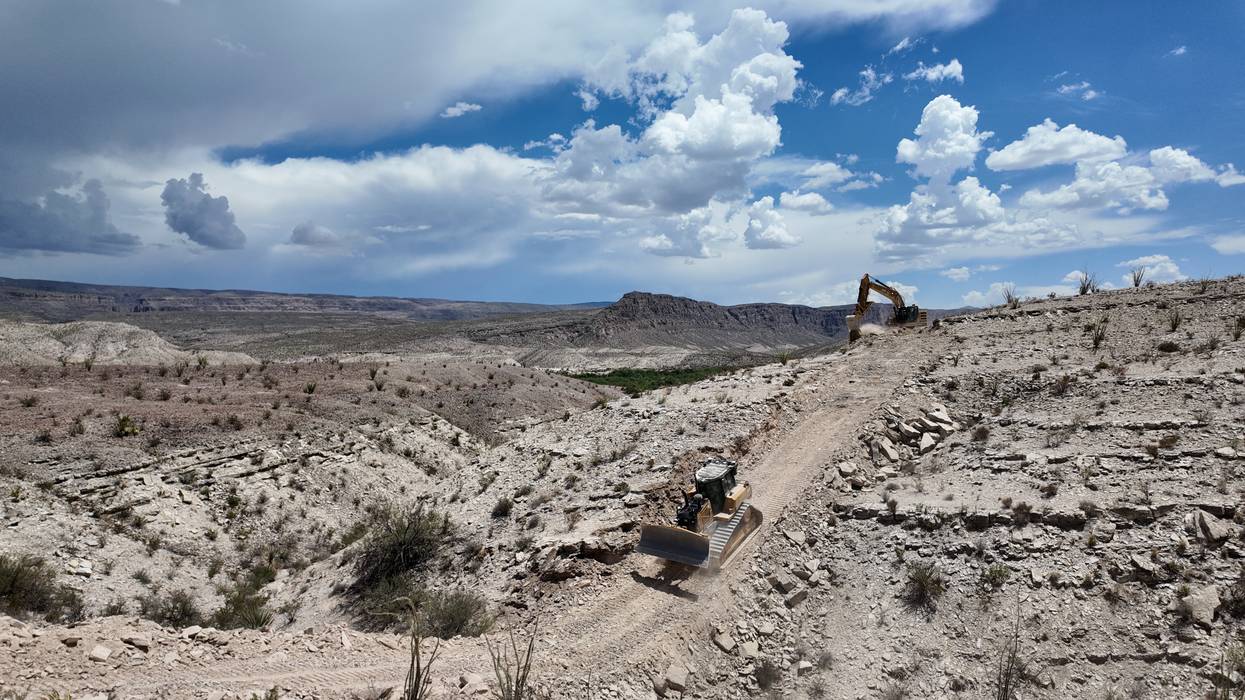
"We won't let them destroy the wildest place in Texas without a fight," the Center for Biological Diversity vowed.
The Trump administration on Wednesday allowed a temporary pause on border construction in and around Big Bend National Park in Texas to expire, prompting renewed vows from conservationists and other opponents to fight the contentious project in court.
Laiken Jordahl, the national public lands advocate at the Center for Biological Diversity (CBD), posted a court document stating that US Customs and Border Protection (CBP)k "will lift the pause on ground-disturbing activities" related to the Department of Homeland Security's (DHS) plan to build border barriers and other destructive infrastructure across one of the most remote and environmentally sensitive stretches of the US-Mexico border.
The government said Tuesday in a court filing that CBP is “actively considering adjustments” to the project “that would reduce its scope and avoid or minimize potential impacts, based on input received from the National Park Service and other stakeholders."
However, those possible changes did not assuage opponents of the project, who span the political spectrum.
“We are disappointed, and urge the Department of Homeland Security to extend this pause,” Emily Thompson, executive director of the Coalition to Protect America’s National Parks, said Wednesday. “Continuing with construction of border barriers, roads, and associated infrastructure inside Big Bend National Park will do unprecedented damage to the park.”
Thompson continued:
Big Bend National Park stands out for its unique desert landscape. With more nesting bird species than any other national park, towering canyon walls, and the largest international dark sky reserve in the entire world, Big Bend is an integral addition to our nation’s natural heritage. The Trump administration's plan to build a border wall through the park threatens all of this, heightening flood risk, inundating the skies with lights, and cutting off migration patterns for wildlife. Building in Big Bend would be mutilating an extraordinary landscape at a massive cost to the taxpayer—with little ultimate benefit.
Bob Krumenaker, chair of Keep Big Bend Wild and a former Big Bend National Park superintendent, asserted that “border security already works" in the park "without the need for intrusive construction."
"The Border Patrol, the National Park Service, and local sheriffs already operate an effective surveillance system with ground and aerial patrols and unobtrusive, wireless sensors," he noted. "The rugged terrain, huge distances, and harsh desert weather in the national park and in Mexico across the Rio Grande make this the least active section of the entire southern border for illegal crossings."
CBD and other plaintiffs are already seeking a preliminary injunction in federal court. US District Judge Kathleen Cardone—an appointee of former President George W. Bush—is scheduled to hear testimony and evidence Friday in El Paso on the request to halt construction while the groups' lawsuit proceeds. The plaintiffs argue that the Trump administration unlawfully waived dozens of federal laws to accelerate construction.
Indigenous peoples and their advocates have criticized DHS for waiving laws, including the Native American Graves Protection and Repatriation Act and the Archaeological and Historic Preservation Act, to enable the project's construction.
In a statement issued Wednesday, CBD described some of the damage already done by construction in service of Trump's deadly immigration crackdown:
Bulldozers started tearing into Big Bend National Park near the iconic Santa Elena Canyon in early August and were documented plowing new routes for vehicle barriers into both the east and west sides of Mariscal Mountain. Contractors have stockpiled heavy equipment across the Big Bend region, where staging yards have been cleared, worker camps built, and water wells drilled.
"We'll be in court... in El Paso demanding a permanent halt to the destruction," CBD said. "We won't let them destroy the wildest place in Texas without a fight.
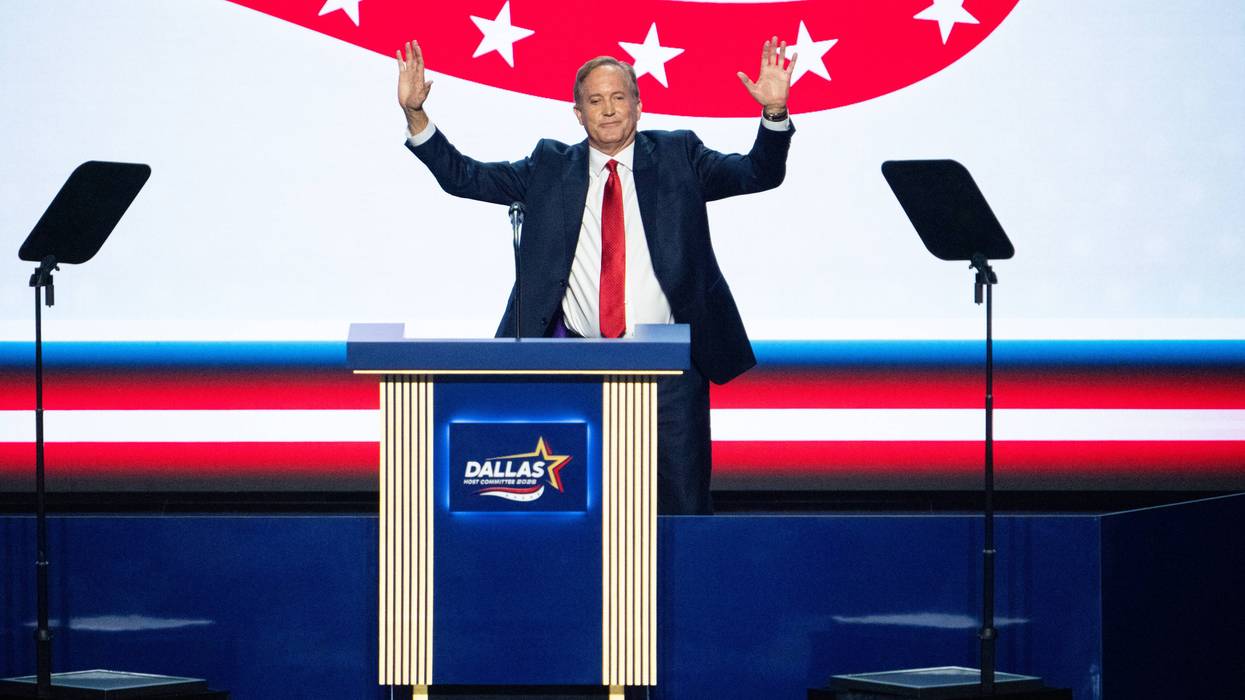
"If there’s one big no-no with Donald Trump, it’s insulting a big ostentatious event that he puts on," said one observer.
Texas Republican US Senate nominee Ken Paxton privately conceded that President Donald Trump's big "Trumpapalooza" midterm convention in the state backfired politically.
The New York Times on Wednesday published a leaked recording of Paxton telling right-wing donors and lobbyists last week that Trump's convention, held earlier this month in Dallas, was a net negative for his campaign.
"The numbers—when we did that convention—it dropped our numbers," Paxton said at one point. "Everybody’s numbers dropped. Right now, yeah, not good."
Delicious 🤣🍿 pic.twitter.com/iE3mT6gGEF https://t.co/63G5gBO1wl
— Wu Tang is for the Children (@WUTangKids) September 30, 2026
The Times report noted that Paxton not only attended the Dallas convention, but featured prominently in it, occupying a "prime seat" in the arena.
Paxton, who will face Democratic nominee James Talarico in November, is also receiving significant help from Trump's MAGA Inc. super political action committee, which is spending $20 million to boost his candidacy.
Jake Sherman, founder of Punchbowl News, remarked in a social media post that the leaked audio is "not good for Paxton," as the Texas Republican is not only "trashing Trump in a fundraiser," but "also trying to shift blame for his bad numbers."
Zenith Polls founder Adam Carlson similarly predicted that Paxton's remarks would get him into hot water with Trump.
"If there’s one big no-no with Donald Trump, it’s insulting a big ostentatious event that he puts on," Carlson explained. "Whether or not this draws his direct public ire, Paxton needs Trump, Trump-aligned super PAC money, and die-hard Trump voters to pull off the win. This could jeopardize all of that."
The social media account of the Texas Democratic Party jumped on the story, arguing that "Paxton has a history of defrauding and betraying Texans," and thus "it was only a matter of time before he betrayed Trump."
Democratic National Committee Chair Ken Martin took the opportunity to ridicule Republicans for basing their 2026 midterm campaign around the president, whom polls show has a job approval rating under 40%.
"They put Trump on full display and now they’re shocked voters noticed," Martin wrote. "We told you the guy was an anchor. Thanks for insisting on tying him around the neck of every Republican on the ballot."
Sen. Adam Schiff (D-Calif.) also took a dig at the president, writing that the leaked Paxton audio shows "the Emperor has no coattails."
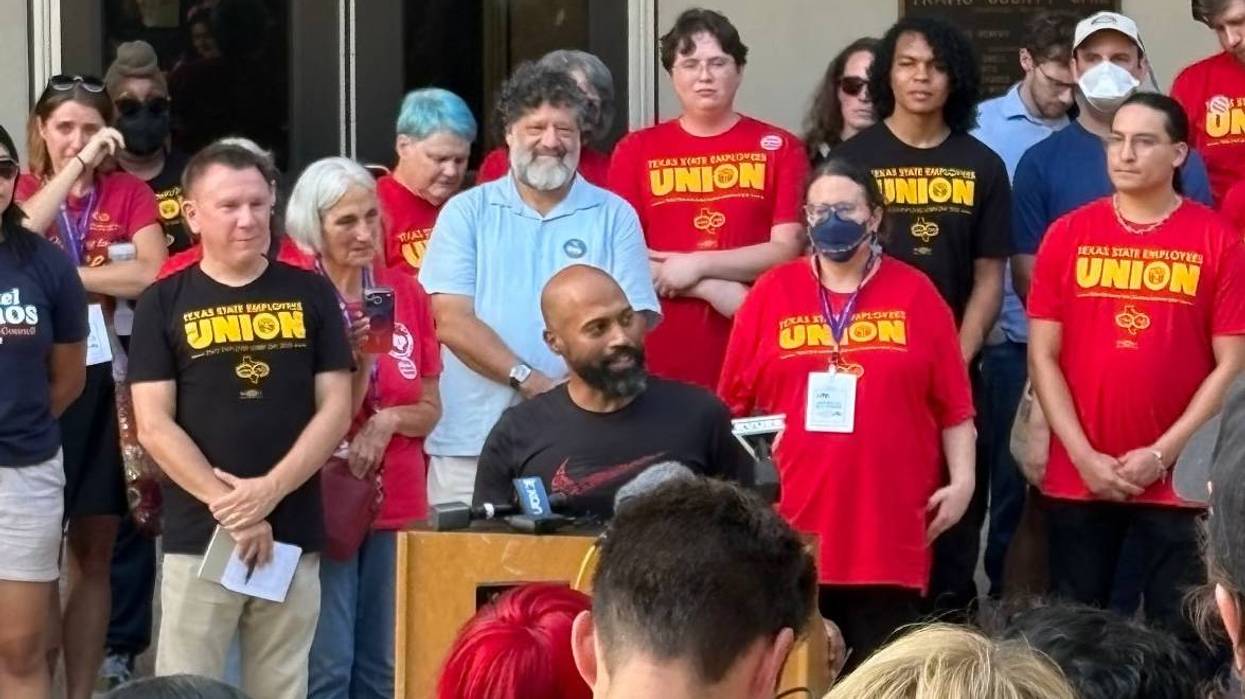
"We must end the terror in our communities created by the fascist administration in Washington and here in Texas—I will never stop standing up and speaking out for our community."
Misael Ramos, a democratic socialist running for City Council in Austin, was arrested by Texas troopers on Saturday morning for protesting US Immigration and Customs Enforcement after an ICE agent shot Wilber Rafael Garcés Pérez in the state's capital.
"At approximately 8:50 am this morning, two neighbors witnessed several state troopers, including many in unmarked vehicles, approach Misael while he was walking his dog and proceed to detain him," his campaign said on social media. "They never showed him a warrant for his arrest, but proceeded to arrest him anyway."
The Travis County Sheriff's Office website shows that the 40-year-old candidate for District 1 was booked at the county jail shortly after that and charged with a Class B misdemeanor for "riot participation." His campaign said the charge appears to be "related to his participation in the protest last Sunday at the site of Wilber's shooting by ICE."
The Austin American-Statesman reported that the Texas Department of Public Safety (DPS) could not be reached for comment.
"That these officers felt emboldened to do this to me, as a candidate on the ballot, speaks volumes to the level of impunity they feel to do this to our neighbors, who are living in fear of these kinds of abductions every day," Ramos said in a statement from jail. "We must end the terror in our communities created by the fascist administration in Washington and here in Texas—I will never stop standing up and speaking out for our community."
ABC affiliate KVUE reported that "at least four people were arrested by DPS and the Austin Police Department during Sunday's demonstration, including for charges of rioting, obstructing a highway, resisting arrest, and assault on a peace officer. Ramos' campaign said additional arrests have been made on DPS warrants throughout the week."
Ramos' campaign held a Saturday afternoon press conference outside the jail with representatives from various organizations, including the Austin chapter of the Democratic Socialists of America (DSA)—which has endorsed him—as well as the Austin Lawyers Guild and Texas State Employees Union.
"People have a constitutional right to gather, speak, protest, and criticize the government," George Lobb, an attorney and spokesperson for the Austin Lawyers Guild, said in a statement ahead of that event. "Arresting someone does not establish that they committed a crime, and pretrial conditions must comply with the Constitution."
Ramos was released from jail during the press conference, eliciting cheers from the crowd gathered outside. He made his way to the podium, hugging audience members, and began by thanking everyone who "spoke up" and "spoke out" on Saturday, including a neighbor who recorded his arrest and notified people he asked her to contact.
"This should not be happening on our streets," but "this is why I fight," the candidate declared, reiterating that he was approached while walking his dog—which one officer threatened to shoot—and never shown a warrant. "Thank you again, and let's keep fighting."
The crowd broke out into chants of "this is what solidarity looks like," and "Fuck ICE, ICE OUT."
Protests have been held in Texas since an ICE agent shot Garcés Pérez during a traffic stop last Sunday while he was making DoorDash deliveries. A federal judge has temporarily barred the President Donald Trump's administration from deporting the 28-year-old Venezuelan, who remains in ICE custody, despite having a bullet lodged in his back, near his spine.
Congressional Progressive Caucus Chair Greg Casar (D-Texas), whose district includes Austin, visited Garcés Pérez at a detention center in Pearsall on Wednesday. Afterward, according to The New York Times, the congressman told reporters that a doctor has advised the immigrant to have surgery to remove the bullet.
"If Wilber and his wife decide that he needs to go through his surgery, then ICE needs to expedite his care," said Casar. "I am making it very clear to every part of the federal government that ICE needs to take the medical care of Wilber Garcés extremely seriously."
Since returning to office last year, Trump has deployed ICE in cities across the United States as part of his mass detention and deportation campaign. Members of the agency and Customs and Border Protection have shot immigrants and US citizens alike—some fatally—and violated the rights of numerous others. Additionally, over 50 people have died in ICE custody.
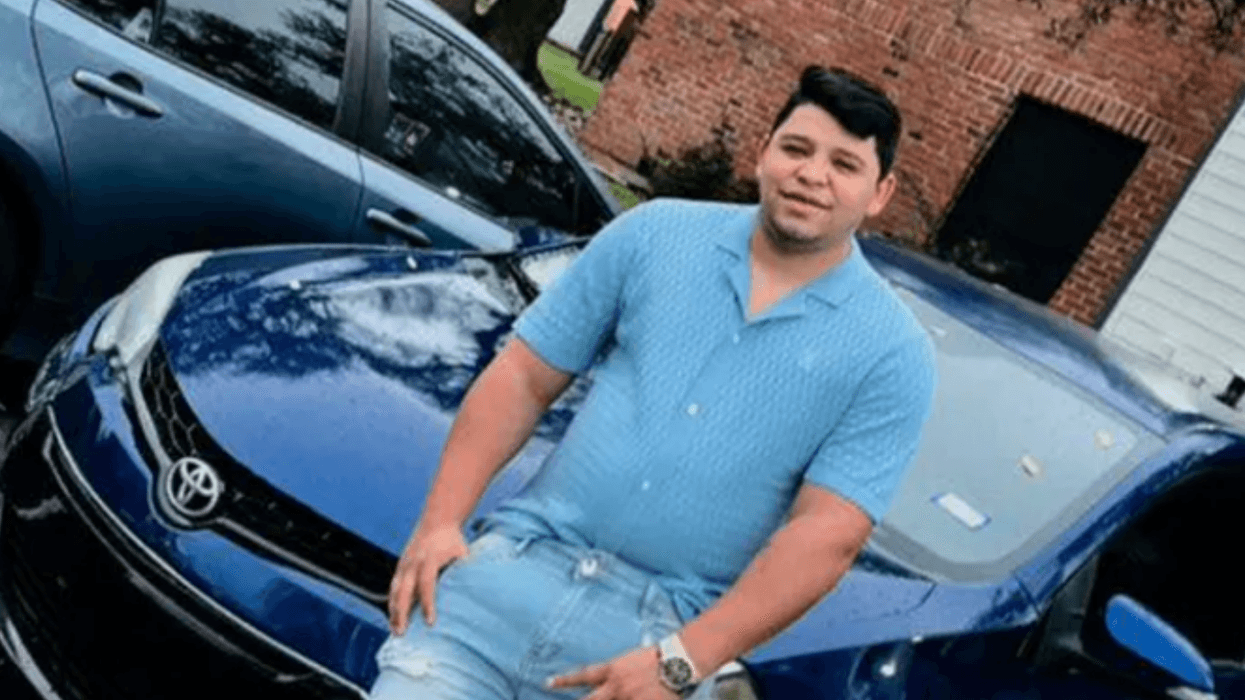
"DHS must not obstruct or otherwise interfere with this investigation by removing Mr. Garces Perez from the country," said lawmakers.
The attorney representing Wilber Rafael Garces Perez said Tuesday that a federal judge had granted her emergency request to block the Trump administration from deporting the 28-year-old delivery driver, who was shot by an immigration agent Sunday and has since been transferred multiple times between hospitals and a detention center—all while the officer's bullet reportedly remains lodged in his back.
"We have filed a federal lawsuit, and the judge has ordered that he be present at the first hearing, which is scheduled for Wednesday, September 30," said Kate Lincoln-Goldfinch. "And that means he won't be deported in the meantime."
Lincoln-Goldfinch applauded the rare piece of "good news" that has come out of Garces Perez's case since he was shot by an Immigration and Customs Enforcement (ICE) agent while making DoorDash deliveries in his car Sunday afternoon.
As Common Dreams reported, Garces Perez was transferred from an ICE detention center in Pearsall, Texas to a hospital late Monday after reporting that he had lost feeling in the left side of his body, likely as a result of the bullet that remained close to his spine.
But Lincoln-Goldfinch and Rep. Joaquin Castro (D-Texas) said Tuesday that Garces Perez had again been taken back to the detention center.
Castro said he and Rep. Greg Casar (D-Texas) plan to visit Garces Perez at South Texas ICE Processing Center on Wednesday, to "check on his condition and demand his release."
"It is nothing more than a prison," said Castro. "Wilber came to the United States legally. He had work permits and was an asylum seeker. None of this should have ever happened."
Garces Perez arrived in the US in 2024 from Venezuela, using a government program for asylum seekers and the CBP One app that was introduced by the Biden administration to make an appointment for approval from immigration agents. He received a work permit and applied for asylum.
He mistakenly missed an immigration hearing after a notice was sent to an old address, The New York Times reported, which led to his deportation order. He has no criminal history.
Lincoln-Goldfinch had been planning to visit her client in the hospital Tuesday, where he was taken after he called in to a press conference the lawyer was holding Monday and said that he had not received medical treatment for his gunshot wound.
After speaking to Garces Perez via a video call Tuesday morning, Lincoln-Goldfinch reported on social media:
Wilber tells me that after he spoke publicly, guards at the Pearsall detention center forcibly took the tablet from his hands, revoked his communication privileges, and moved him out of the infirmary into an isolated room with a flat bed that cannot be adjusted like a medical bed.
[...]
At the hospital, Wilber says doctors finally spoke directly to him about his care and gave him IV morphine for his pain. We now understand that the gunshot fractured his clavicle and that he has significant swelling and is wearing a sling. We still do not have clarity about the cause or extent of the loss of movement he experienced.
He was discharged back to Pearsall around midnight. Today, he tells me he is receiving only Tylenol and ibuprofen for pain. He remains in isolation, on a flat bed, and without the tablet he previously used to communicate. We are asking for his communication privileges to be immediately restored and for him to be provided an appropriate medical bed and adequate medical care. Most importantly, we are continuing to advocate for Wilber’s IMMEDIATE release.
Also on Tuesday, it was revealed that the ICE agent who shot Garces Perez was not wearing a body camera at the time of the shooting—similar to the case of Johan Sebastián Durán Guerrero, who was fatally shot by an ICE agent in Maine in July.
"Before we hear anything from ICE about, 'We pulled him over, or he was fleeing, or he was aggressive,' our response to any statements like that is, 'We won't believe you until you show us,'" said Goldfinch-Lincoln. "Show us your body cam footage, show us your dash cam footage."
On Tuesday, more than 100 members of Congress signed a letter to Homeland Security Secretary Markwayne Mullin and acting ICE Director David Venturella, spearheaded by Casar, calling on ICE to release Garces Perez and "abandon efforts to swiftly deport him or remove him from Texas."
"ICE has provided no justification for this shooting, and there is no indication Mr. Garces Perez posed a threat to officers," reads the letter, noting that the Department of Homeland Security (DHS) "has a history of withholding information and attempting to obstruct active investigations into wrongdoing by its agency."
"DHS must not obstruct or otherwise interfere with this investigation," said the lawmakers, "by removing Mr. Garces Perez from the country or interfering with the release of footage, data, or other information by Texas state or local agencies involved in the operation."
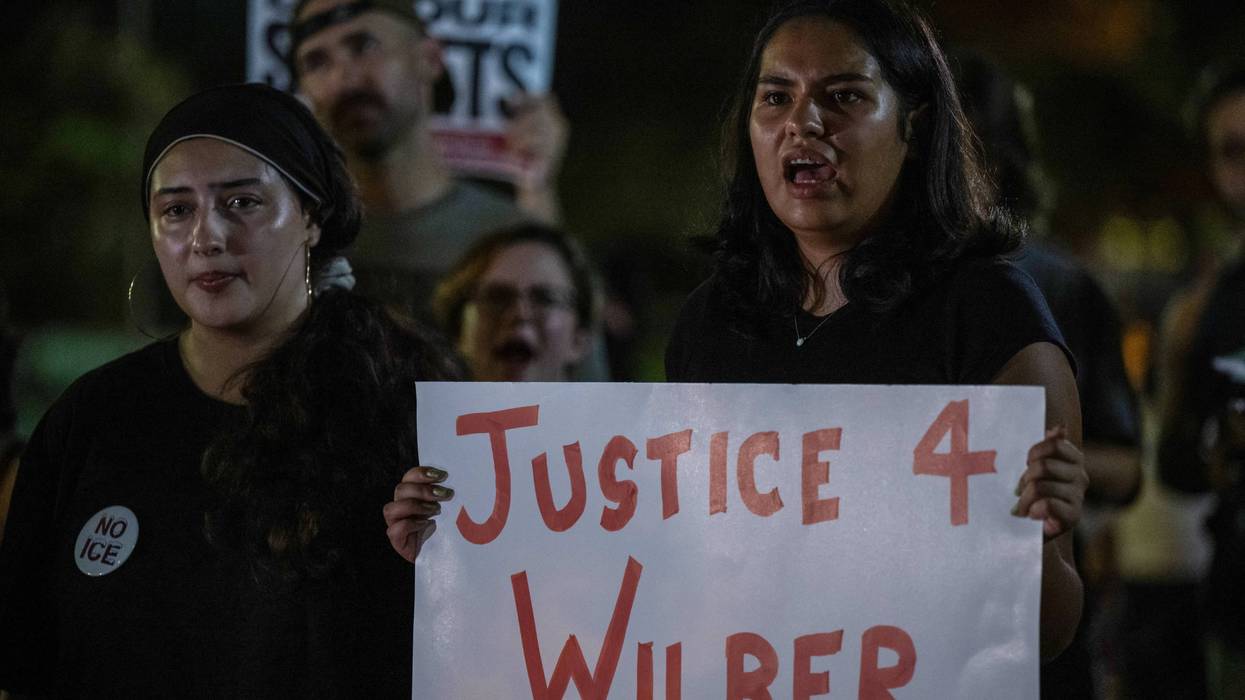
"This isn't law enforcement," said US Senate candidate James Talarico. "It's lawlessness."
Democrats in Congress on Monday evening were demanding a full, independent investigation into US Immigration and Customs Enforcement's shooting on Sunday of Wilber Rafael Garces Perez, as it was reported that he had been held in an ICE detention center with a bullet still lodged in his back—close to his spine—and that he was finally being taken to a hospital only after he lost feeling in the left side of his body.
In a video posted on social media, US Rep. Joaquin Castro (D-Texas) recounted how Perez was initially hospitalized after ICE agents in an unmarked SUV sideswiped his car as he was making DoorDash deliveries in Austin, Texas, and then shot him through his windshield as he was trying to pull over.
But "only a few hours after being shot, he was forced out of the hospital," said Castro, "and sent over to what is known as STIPC, in Pearsall, Texas, along I-35, the South Texas ICE Processing Center."
Castro and Rep. Greg Casar (D-Texas) spent Monday attempting to gain permission to visit with Perez and raising alarm over the fact that ICE's bullet had not been removed from his back before he was taken to STIPC, where he was reportedly forced to sleep on a floor.
"He reported that he's in incredible pain, that he'd not been given any medication," said Castro. "It's basically abuse that you would take somebody who has been shot and move them from a hospital to a prison, that kind of prison, within a matter of hours, and then also, it looks like, start the process to deport them immediately."
Update on the condition of Wilber Rafael Garcés Pérez at the South Texas Ice Processing Center. He’s being taken to the hospital. He is in tremendous pain and tells us that the bullet is still inside his left side. He can’t move the left side of his body. pic.twitter.com/SWquC2AOrj
— Joaquin Castro (@JoaquinCastrotx) September 21, 2026
Perez entered the country two years agoafter using the CBP One application to set up an appointment with immigration agents. The app was introduced by the Biden administration, but President Donald Trump abruptly terminated it immediately after he took office last year. Perez was permitted to enter the country, applied for asylum, and received a work permit.
As Common Dreams reported Monday, Perez's lawyer, Kate Goldfinch-Lincoln, and his wife were unable to make contact with him when he was first taken from the hospital on Sunday.
After Perez briefly called in from the detention center to a press conference held by Goldfinch-Lincoln on Monday, she said she received a call from another detainee who told her "that officers came in and handled Wilber roughly."
"According to this detainee, Wilber then lost feeling on the left side of his body, including his arm and leg," she said. "Wilber has a bullet lodged near his spine. I was told that he was handcuffed, shackled at the feet, placed in a waist chain, and taken to a hospital. I am waiting to find out how he is doing and what his current condition is. We need answers. We need to know that Wilber is safe and receiving appropriate medical care. So far, he has not."
In response to the update on Perez's condition, Democratic US Senate candidate James Talarico said: "This isn't law enforcement. It's lawlessness."
Casar called Perez's transfer back to the hospital "a positive first step," and credited immigrant rights advocates and community members for "speaking up."
"Now, we have to make sure he fully recovers, is reunited with his family, and gets to tell law enforcement the full story of how he was shot in the back by ICE," said Casar.
Reps. Rashida Tlaib (D-Mich.), Ro Khanna (D-Calif.), and Maxwell Frost (D-Fla.) were among the lawmakers calling for a full investigation into the shooting and ICE's treatment of Perez.
"This is absolutely horrific," said Frost. "ICE must be stopped. Their regime of cruelty will continue until they are held accountable."
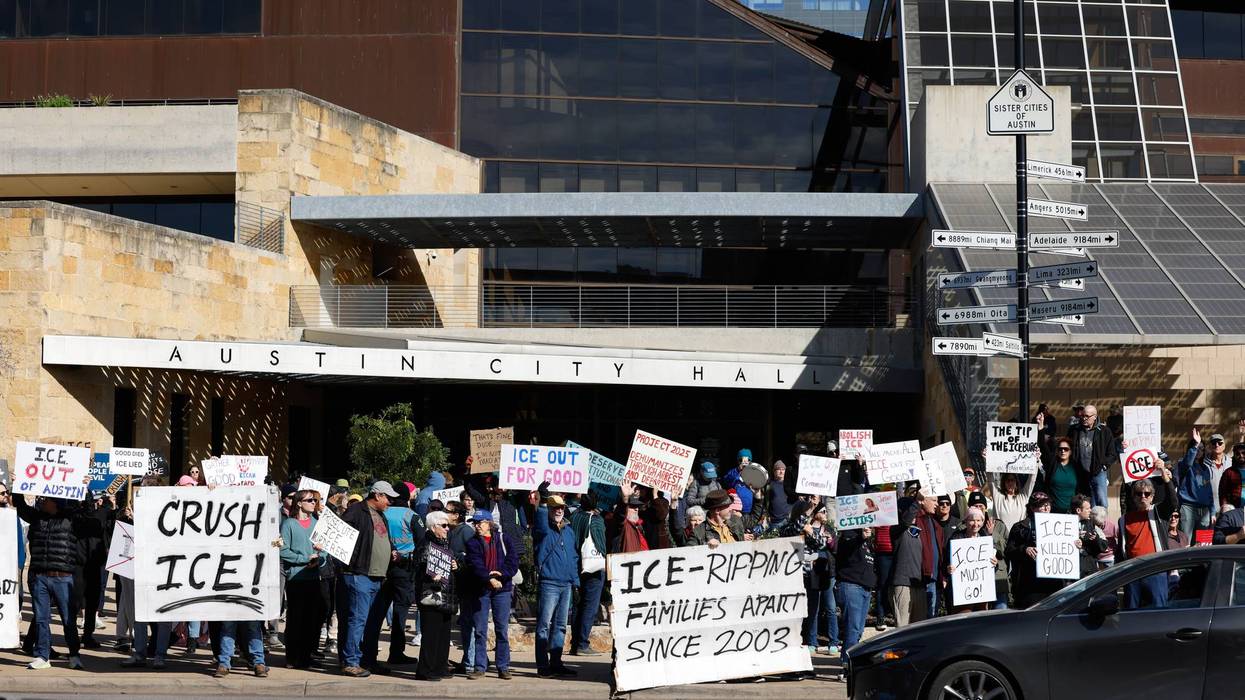
"ICE has been terrorizing our country for far too long," said Congressional Progressive Caucus Chair Greg Casar, who represents the district where the shooting occurred.
An Immigration and Customs Enforcement agent shot and wounded a man in Austin, Texas on Sunday, prompting demands for an independent investigation and renewed calls from progressive lawmakers and activists to abolish ICE amid the Trump administration's deadly immigration crackdown.
Local ABC affiliate KVUE reported that the shooting occurred in the 7000 block of West Anderson Lane, near the intersection of Research Boulevard and Anderson Square. An unidentified man was taken to a hospital. His condition was initially unclear; the Austin American-Statesman later reported that he was alert and talking.
The circumstances leading to the shooting are under investigation.
Independent journalist Emiliano Tahui Gómez spoke with two witnesses.
"Nedevia Bolaños and her husband, Carlos, own a business just off the intersection where the shooting happened," Gómez reported on social media. "Shortly before 1 pm they say they heard what sounded like two gunshots. Carlos ran out first. A blue Toyota sedan and a black Escalade were stopped under the highway."
Carlos said he saw a man who looked like he was in his 30s "leaning backwards against his seat. A masked agent was standing outside the car. The agent refused to answer questions. Within a few minutes, as many as 10 other ICE agents arrived."
Gómez continued:
Carlos asked the victim if he was ok. “Yes,” the man said in Spanish, but he looked exhausted. Carlos asked why they had shot him. “Because I didn’t stop.”
Bolaños ran up next. She said she continuously asked the ICE agents about why they’d shot him and if they were going to render aid. They didn’t answer her. It was an [Austin Police Department] officer who later arrived and cut open the young man's shirt, revealing a deep hole between his shoulder blades.
The ambulance arrived about 10 minutes after and carried him off.
“I’ve never seen all this. Thank God I’m a citizen,” Bolaños said in Spanish. “Or I’d be living like this. In a dream of terror.”
CBS Austin reporter Vinny Martorano said on social media that Austin City Councilman Mike Siegel told him that "an ICE agent, who is well-known in the city’s Latino community, sideswiped the man’s car. Then the officer got out and shot the driver five times through the windshield."
Congressional Progressive Caucus Chair Greg Casar (D-Texas)—who represents the district where the shooting occurred—said on social media that "the horror has come to our city: ICE has shot a person in Austin this morning."
"As the facts emerge, I am demanding a full, independent investigation, immediate release of the body camera footage, and accountability for any ICE officer who broke the law," he continued. "Over and over, ICE has shot people and then lied about what happened. We can see the lies with our own eyes. We will demand truth, transparency, and accountability."
"Just like Americans have from Minneapolis to Houston, Austinites will speak out peacefully against this deadly mass deportation machine," Casar added. "ICE has been terrorizing our country for far too long. We will not be silent."
Breaking: ICE shot and injured a man in Austin, Texas, earlier today. Trump has allowed ICE to flood our streets and put our communities in harms way again and again and Governor Abbott is complicit every time.I am demanding the body camera footage and full accountability.
[image or embed]
— Joaquin Castro (@joaquincastrotx.bsky.social) September 20, 2026 at 1:39 PM
Austin Mayor Kirk Watson, a Democrat, said at a press conference: "I'm very angry about this. I'm extremely unhappy. A person being shot on the streets of Austin by someone purporting to be law enforcement, particularly when it's ICE, is something that causes me to be unhappy and angry about it."
"And while I'm unhappy and I'm angry about it, I'm not surprised at all," he added. "It's happened in other cities with the nature of ICE and the way ICE is doing its business these days and the chaos that we see it performing and fomenting. There's no reason for us to be surprised by it."
Texas state Rep. Vikki Goodwin (D-47), who is running for lieutenant governor, said that "this violence cannot continue."
Congresswoman Delia Ramirez (D-Ill.) contended that the US Department of Homeland Security (DHS) "remains the biggest threat to our collective safety."
"This weekend, after abusing and hurting peaceful protesters in Illinois, they have just shot another person in Austin, Texas," she added. "The pattern is clear. The agency can't be reformed. I’ve heard the community: I am ready to melt ICE and dismantle DHS! My colleagues in Congress should be too."
Sunday's shooting came 10 weeks after an ICE agent fatally shot Lorenzo Salgado Araujo, a 52-year-old Mexican man, in Houston. Salgado's death followed a series of shootings involving federal immigration agents, including the January killing of US citizens Renée Good and Alex Pretti in Minneapolis.
A letter sent in July by Democratic lawmakers to DHS officials noted that agents had shot at least 22 people since President Donald Trump's return to office, with six of those shootings fatal. The lawmakers said that in multiple cases, federal authorities had made allegations against shooting victims that were later contradicted by evidence.
More than 50 people have died in ICE custody during Trump's second term.
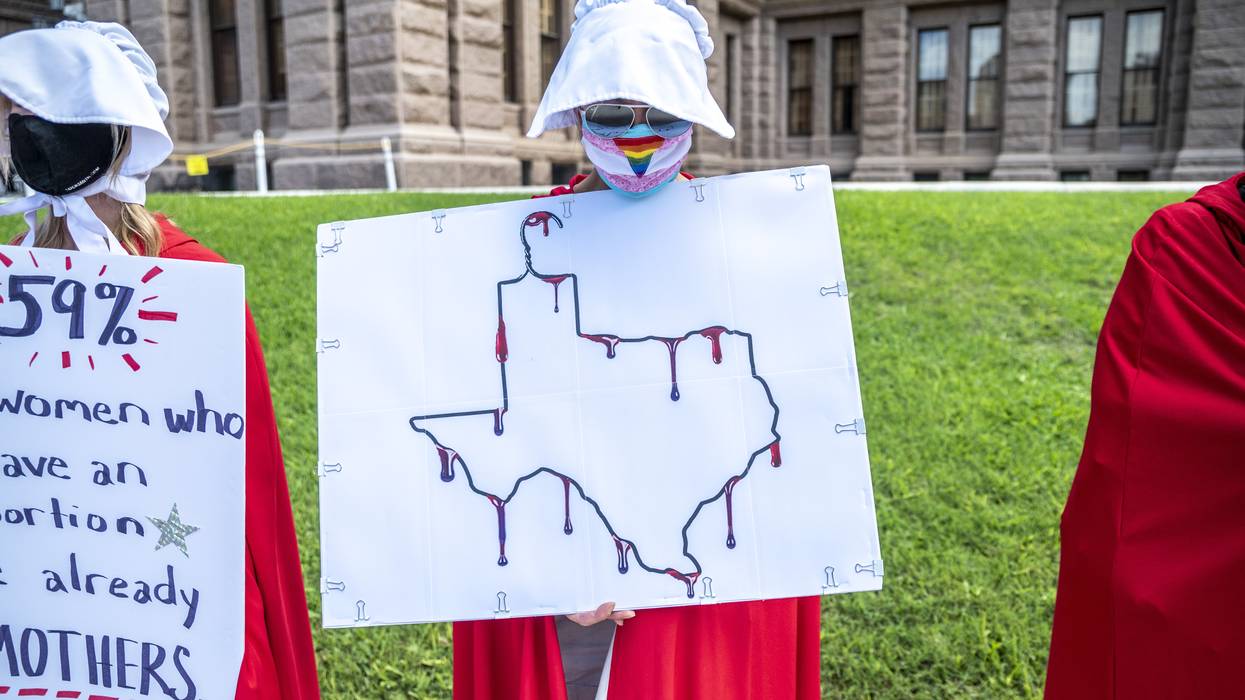
State officials "have imposed a merciless blanket prohibition on abortion that intimidates doctors into inaction," says the lawsuit. "Too many pregnant Texans have already died preventable deaths."
"Tierra Walker is dead, and those responsible must be held accountable."
That's the opening line of a lawsuit filed by Walker's family in Bexar County, Texas this week against the state's Republican attorney general, Ken Paxton, and various others over the death of the 37-year-old pregnant San Antonio woman.
On December 30, 2024, Walker's son "found her in bed, not breathing," the complaint notes. "It was his 15th birthday."
The teenager, as well as Walker's husband, mother, and aunt, who is responsible for her estate, are all involved in the wrongful death suit—the first of its kind, linking a "preventable death" to an abortion ban, according to The 19th.
In addition to Paxton, who is running for US Senate with support from President Donald Trump, the family is suing Bexar County District Attorney Joe Gonzales, Texas Medical Board Executive Director Stephen Brint Carlton, the University of Texas Health Science Center at San Antonio, and three doctors who treated Walker before she died.
"During the four months of her pregnancy, as she suffered through seizures, blood clots, and one hypertensive crisis after another, Ms. Walker repeatedly asked for an abortion to save her life," explains the filing. "Defendants associated with University Health responded only 'your baby is fine,' disregarding Ms. Walker's deteriorating health and constitutionally protected right to life."
The document argues that "their deliberate indifference, discrimination, and medical mistreatment ultimately caused her horrific and tragic death. Now, Ms. Walker's husband is a widower. Her disabled mother has lost her daughter and caregiver. And her teenaged son has no mother."
"Meanwhile, from the moment Texas' first abortion ban went into effect in 2021, through the overturning of Roe v. Wade, through the present day, defendants Ken Paxton and Stephen Brint Carlton have imposed a merciless blanket prohibition on abortion that intimidates doctors into inaction and breeds extreme fear among Texas' medical establishment," the filing notes. "As a result, too many pregnant Texans have already died preventable deaths. Yet no one has held them accountable."
The suit—filed by the principal attorney at the Marynell Maloney Law Firm and Amplify Legal, the litigation arm of the nonprofit Abortion in America—is designed to do just that.
"Tierra had a treatable medical condition, the problem was that the treatment she needed was an abortion," said attorney Michelle Maloney in a statement. "She died a preventable death. Medical and political negligence killed Tierra Walker."
Defendants in the case have declined to comment or, in some cases, even respond to media outlets, including The Texas Tribune. As the newspaper detailed Wednesday:
Months after Walker died, the Texas Legislature passed Senate Bill 31 aimed at ensuring that pregnant women receive lifesaving care under the state’s near-total abortion ban. It says that a patient doesn’t have to be in "imminent" medical crisis for doctors to intervene and that a doctor can only be charged if the state can prove "no reasonable doctor" would have made the same call. It also requires the Texas Medical Board to create training for doctors, which was finalized in early 2026.
But Molly Duane, one of the lawyers representing the Walker family, said during a news conference on Wednesday that SB 31 would not have prevented Walker's death.
"I would love if the Texas Legislature would actually take their responsibility here seriously and get rid of the laws that are causing so many deaths. I just don't have any confidence that that is something that they can do in this environment, but ultimately, that's a political question," Duane said.
ProPublica first reported that Walker "died after she couldn't get an abortion in Texas" last November. The investigative outlet has exposed similar deaths in the state—those of Nevaeh Crain and Porsha Ngumezi—as well as the first known case of a fatal abortion care denial in the wake of the Roe reversal: Amber Nicole Thurman in Georgia.
"No one else should have to experience what my family has gone through. Tierra was the glue that held our family together, and now she's gone," said Walker's aunt, LaTanya Walker. "Doctors all turned a blind eye as Tierra was dying, and refused to give her the abortion she needed to save her life. She deserves justice."
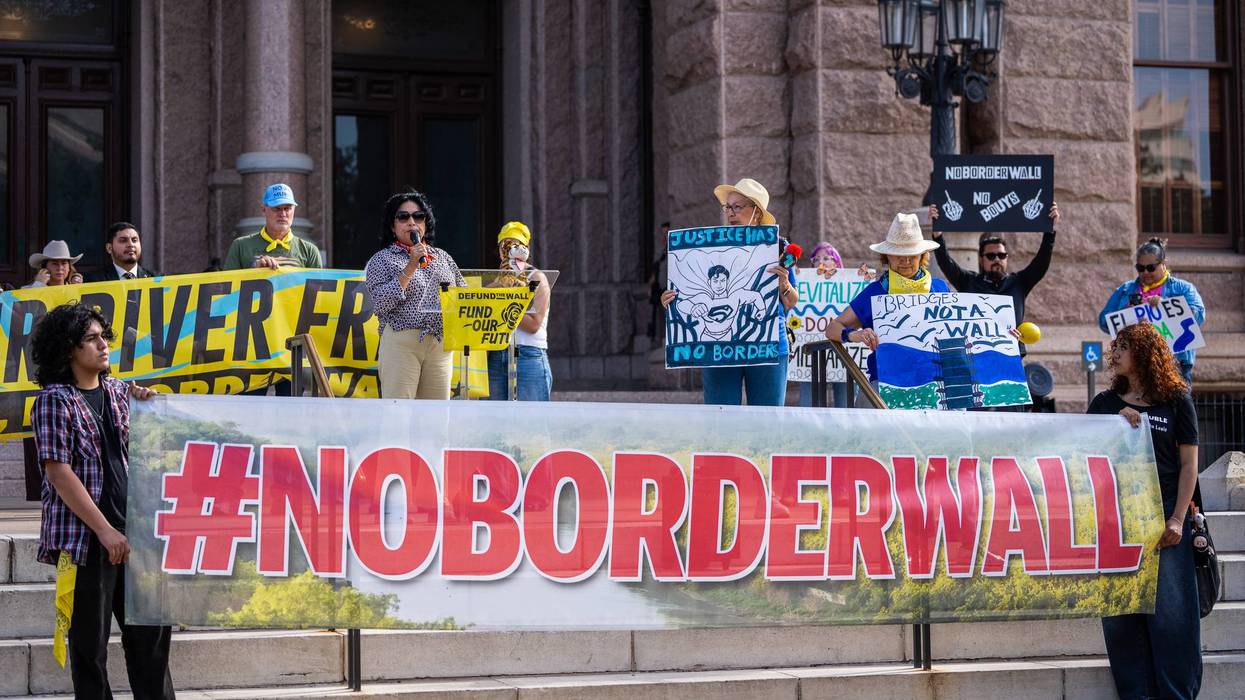
"We have brought this extraordinary challenge because, for us, the Big Bend is not an empty place on a map. It is our home."
A coalition of Texas ranchers, landowners, business owners, and conservationists in the Big Bend region on Monday sued the Trump administration over plans to build border barriers and other destructive infrastructure across one of the most remote and environmentally sensitive stretches of the US-Mexico border.
The lawsuit—filed in the US District Court for the District of Columbia by Conserve Big Bend and six landowners with the backing of many others—challenges the administration’s determination that the region is an area of “high illegal entry" under Section 102 of the Illegal Immigration Reform and Immigrant Responsibility Act (IIRIRA) of 1996, a finding the plaintiffs say is contradicted by the government’s own statistics.
"That high illegal entry determination is the legal predicate for defendants’ invocation of extraordinary power to immediately construct a 30-foot-high border wall while bypassing all federal, state, and local procedural protections," the complaint states. "That determination is legally and factually unsound and unsupported."
"A host of government statistics and other public reporting [show] that the opposite is true," the lawsuit notes. "The Big Bend sector is the area of the lowest illegal entry along the southwest border... The Big Bend sector has recorded the fewest yearly apprehensions of any Southwest sector for the last 53 years, with last year’s numbers being the lowest yearly apprehension total recorded by any sector in the region since 1967."
The suit comes as the Trump administration presses forward with a $46 billion border security construction program authorized by Congress, including 30-foot steel bollard walls, vehicle barriers, roads, lighting, cameras, and other surveillance infrastructure.
The plaintiffs argue that the administration is abusing the extraordinary authority granted to the Department of Homeland Security (DHS) under the IIRIRA, to sidestep laws protecting wildlife, water, Indigenous rights, historic resources, and private property.
“Thank you, President Trump. You’ve secured the border. But now let it go. It’s time," Laura Allen said at a Monday press conference in Marfa announcing the lawsuit. A former Val Verde County judge and two-time Trump voter, Allen's family owns a ranch that would be divided by the proposed border barrier.
David Keller, an archaeologist and historian who lives in the region, spoke at the press conference. He accused officials supporting the administration's proposal of being "woefully unprepared for the hornet’s nest they stirred up because they had no idea how much we love this place."
“For us, the Big Bend is not an empty place on the map,” Keller stressed. “It is our home.”
Earlier this year, the Trump administration waived dozens of environmental laws—including the National Park Service Organic Act, Endangered Species Act, and National Wild and Scenic Rivers Act—to expedite the construction of border roads and barriers through Big Bend National Park.
This isn't the first court challenge to the administration's Big Bend border barrier plans. Last month, the Presidio Municipal Development District sued to stop construction, citing alleged violations of the Rivers and Harbors Act. But after DHS added that law to its waiver, US District Judge Reggie Walton—an appointee of former President George W. Bush—ruled that the plaintiffs could not prevail on the merits and declined to block construction plans, declaring that the administration was legally allowed to bypass the legislation.
“Under federal statute, the secretary of homeland security is granted extraordinary, expedited powers to construct border barriers and sweep aside dozens of federal protections, environmental laws, and ordinary due process,” Clara Bensen, a board member with Conserve Big Bend and head of communications for the No Big Bend Wall initiative, said in a statement Monday. “But Congress explicitly set a strict legal prerequisite for that extraordinary power: it can only be invoked in designated areas of ‘high illegal entry.’”
"The government’s own official statistics tell the real story," Bensen added. "You cannot legally bypass the laws of this country by fabricating an emergency that does not exist. Declaring over 500 miles of steep cliff faces and perilously rugged desert an area of ‘high illegal entry’ is not just detached from reality, under federal law, it is arbitrary, capricious, and unlawful.”
Also last month, People of La Junta for Preservation—a Native American advocacy group focused on protecting Indigenous historical and cultural sites in the Big Bend region—sued the administration, arguing that construction threatens sacred sites of the Lipan Apache people. The complaint also challenges DHS' authority to conduct work inside Big Bend National Park.
Amid intense opposition spanning the political spectrum, US Customs and Border Protection Commissioner Rodney Scott last month announced a temporary pause on construction in Big Bend National Park pending an “on-the-ground evaluation."
Some conservatives who oppose the administration's plans have cited the inviolability of private property rights, which Lico Miller, whose land is in the path of the border barrier, called "the bedrock of Texas sovereignty" during Monday's press conference.
“The moment we allow any government—state or federal—to come in and seize private land and tell us what is good for us and what constitutes an emergency, we set a precedent that will come back and bite every single Texan,” he argued. “If they can take our land along the river today, they can come for yours tomorrow.”
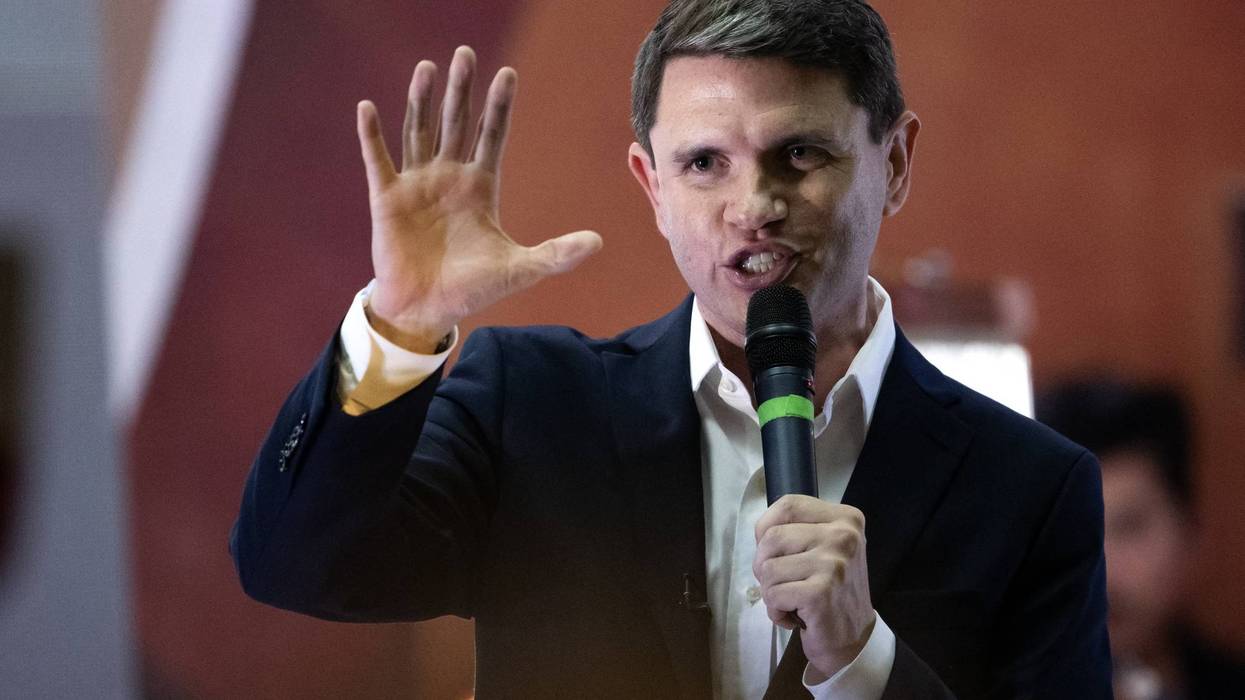
“The most powerful people in this county, the most powerful people in this country, don’t want us to be able to vote easily."
Texas Democratic Senate nominee James Talarico is pushing for one of Texas' most important swing counties to drop plans to close nearly a third of its polling places before November's midterms.
Amid public outcry, the Commissioners Court for Tarrant County—which contains Fort Worth and borders Dallas—plans to hold a vote on Tuesday on whether to shutter 92 of the polling places used in the 2022 election, many of which serve the city's poorer and minority populations.
If Democrats flip the Senate this November, the road to that outcome will almost certainly run through Texas. A Democrat has not won a statewide election there since 1994, but Talarico may be in a position to break the trend—leading Republican Attorney General Ken Paxton in most polls.
Tarrant County narrowly supported then-Rep. Collin Allred, the Democratic challenger to Sen. Ted Cruz (R-Texas) in 2024. Talarico said the closure of polling places was meant to suppress turnout and help Republicans cling to their advantage in the state.
“The most powerful people in this county, the most powerful people in this country, don’t want us to be able to vote easily,” Talarico said at a press event Sunday, during which he argued that the closures would result in longer travel for voters and lower turnout, especially in heavily Black and Latino communities.
"We're here fighting for the rights of everybody," Talarico added. "The problem is when we let voting rights become a partisan issue. That's when we walk down a very dangerous path in this country."
Proponents of the closures have described them as a way for the county to save money, rather than a political tactic.
“We’re clearly not trying to suppress the vote,” state Rep. Matt Shaheen (R-66), the chairman of the Texas House Elections Committee, told the Associated Press. “That’s a silly accusation.”
But Republican officials in Tarrant County have, in the past, explicitly tied closures of certain voting locations to partisan aims. In 2024, Republican County Judge Tim O'Hare attempted, unsuccessfully, to remove several early voting sites on college campuses, a move that the county's GOP chairman said would have been "a serious win for Republicans in Tarrant County."
In 2025's off-year elections, Republicans voted 3-2 to reduce the number of polling locations by more than a third and cut funding for free bus rides to the polls for low-income residents. The previous year, they introduced new rules blocking what they derided as "left-wing" groups from registering voters inside county buildings.
At the state level, meanwhile, Texas has carried out unprecedented mid-decade redistricting to hand more US House seats to Republicans at the behest of President Donald Trump. And following Trump's false assertions that his loss in the 2020 election was marred by fraud, Texas introduced several new restrictions on mail-in voting that were found to have significantly reduced turnout.
Tuesday's scheduled vote in Tarrant County comes after commissioners opted to table an earlier proposal that would have shuttered nearly half the county's polling places.
An analysis of that plan showed that the lowest-income third of ZIP codes would lose nearly 58% of their Election Day polling sites, while the highest-income third would lose just under 22%. Majority-minority ZIP codes would have lost nearly 52% of their polling places, while majority-white ones would have lost just a third of theirs.
A similar analysis has not yet been conducted for the new proposal. But civil rights groups still argue that the proposal will disenfranchise many voters.
"Cutting the number of poll sites, especially at such a large scale, will harm Tarrant County voters and their right to participate in the democratic process—and cause particular harm to Black, Latino, and [Asian American and Pacific Islander] voters who already face significant barriers to exercising that fundamental right," wrote groups including the ACLU, the Legal Defense Fund, and the Texas Civil Rights Project, in a letter to the Commissioners' Court on Friday.
They emphasized that the polling places slated to close under the new proposal were clustered in areas such as south and southeast Fort Worth and central and eastern Arlington, which have predominantly nonwhite populations.
Tarrant County Commissioner Alisa Simmons, a Democrat who is running to unseat O'Hare as county judge and spoke alongside Talarico on Sunday, argued that while it was an improvement on the earlier proposal, "dropping 92 Election Day polling places is crazy."
"We should not compare this proposal to the worst proposal," she said. "We should compare it to the access that Tarrant County voters actually had in 2022."
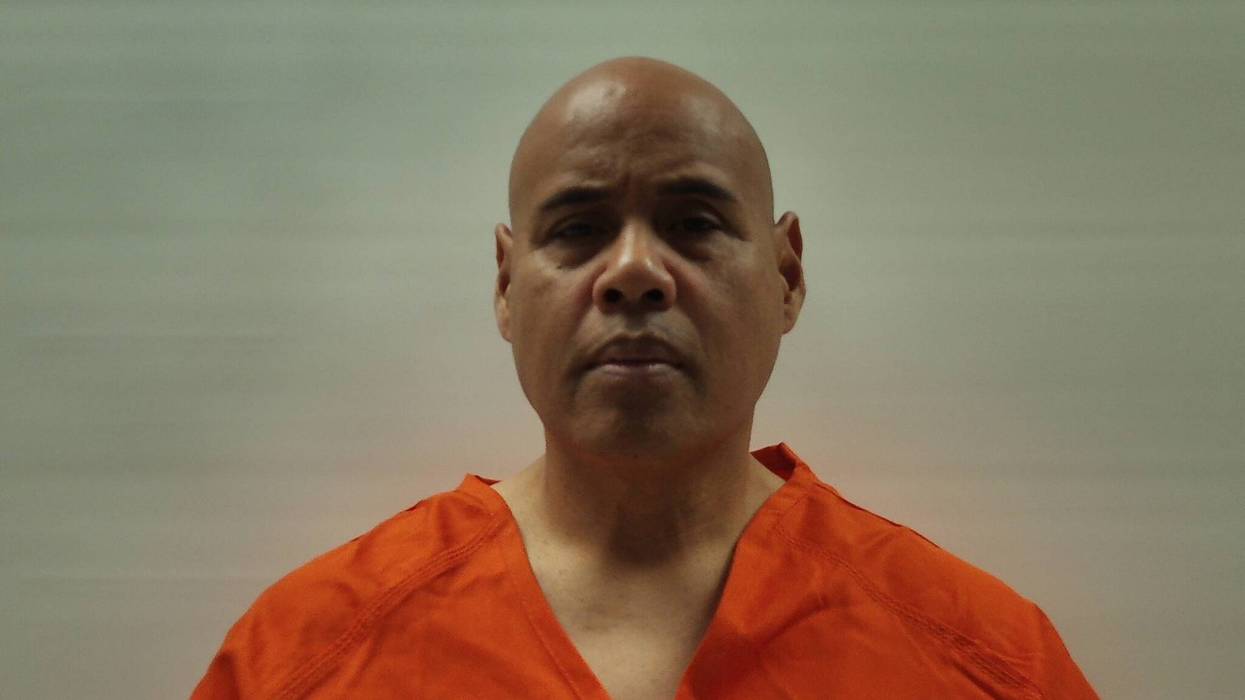
"By refusing to extradite Castro, Greg Abbott is turning Texas into a sanctuary state for violent criminals," said Minnesota Attorney General Keith Ellison.
A US Immigration and Customs Enforcement officer accused of shooting an unarmed man in Minneapolis and then lying about the incident walked free from a jail in Texas on Thursday as Gov. Greg Abbott refuses to honor Minnesota's extradition request.
Christian Castro, 52, was released from the Cameron County jail shortly after dawn, roughly three months after his May 29 arrest on a Minnesota warrant. Castro faces four felony counts of second-degree assault and one misdemeanor count of falsely reporting a crime.
Hennepin County, Minnesota prosecutors allege that Castro fired through the front door of a Minneapolis home, striking 24-year-old Venezuelan immigrant Julio César Sosa-Celis in the leg on January 14 during the Operation Metro Surge enforcement blitz in the Twin Cities Area, part of the Trump administration's deadly mass deportation effort.
Castro claimed afterward that Sosa-Celis and another man had attacked an ICE officer with a broom and snow shovel—an account investigators say was contradicted by surveillance footage, witness statements, and physical evidence. Criminal charges initially filed against Sosa-Celis were later dismissed.
On Wednesday, US District Judge Fernando Rodriguez Jr. of the Southern District of Texas—an appointee of President Donald Trump—denied Minnesota's request for a temporary restraining order that would have prevented Castro's release and declined to compel Abbott to sign the extradition warrant. The Republican governor has so far not yet formally responded Minnesota's extradition request.
Abbott has argued that Castro did not flee Minnesota to escape prosecution but was instead ordered back to Texas by federal authorities. And while Rodriguez acknowledged the possibility that Castro could flee to Mexico, the judge concluded that the court lacked any authority to force Abbott to act before he makes his decision on extradition.
The Texas governor has also attempted to condition resolution of the extradition request upon Minnesota officials' acknowledgment of the alleged fraud Trump used as a pretext for Operation Metro Surge.
Minnesota Attorney General Keith Ellison, a Democrat, denounced Castro's release in a social media post asserting that "Greg Abbott has a black-letter legal and constitutional duty to sign the rendition warrant to return fugitive Christian Castro to Minnesota—full stop."
"By refusing to extradite Castro, Greg Abbott is turning Texas into a sanctuary state for violent criminals," Ellison added. "Regardless of today’s ruling, I will keep fighting so that Agent Castro will face justice in Minnesota."
Abbott retorted: "You guys are such bad lawyers. You showed up unprepared, uninformed, and unpersuasive. You don't know the law, and it showed."
Minnesota "is the literal definition of a sanctuary state because you refuse to assist in enforcing immigration laws," the Texas governor said. Minnesota does not have a statewide sanctuary law.
"I'll put Minneapolis at the top of the list for future bus drop-offs if we ever have a president like Joe Biden again," Abbott added, referring to his deadly campaign of busing migrants to Democrat-led sanctuary cities and even the home of former Vice President Kamala Harris at a cost to Texas taxpayers of over $221 million.
Anders Folk, a former federal prosecutor now running for Hennepin County attorney, agreed with Ellison, writing on X that "Gov. Abbott is playing political games."
"Christian Castro should be extradited to Minnesota to stand trial," he added. "Accountability requires nothing less. This ruling essentially makes Texas a sanctuary state for ICE agents accused of violating state law."