

SUBSCRIBE TO OUR FREE NEWSLETTER
Daily news & progressive opinion—funded by the people, not the corporations—delivered straight to your inbox.
5
#000000
#FFFFFF
To donate by check, phone, or other method, see our More Ways to Give page.
Daily news & progressive opinion—funded by the people, not the corporations—delivered straight to your inbox.
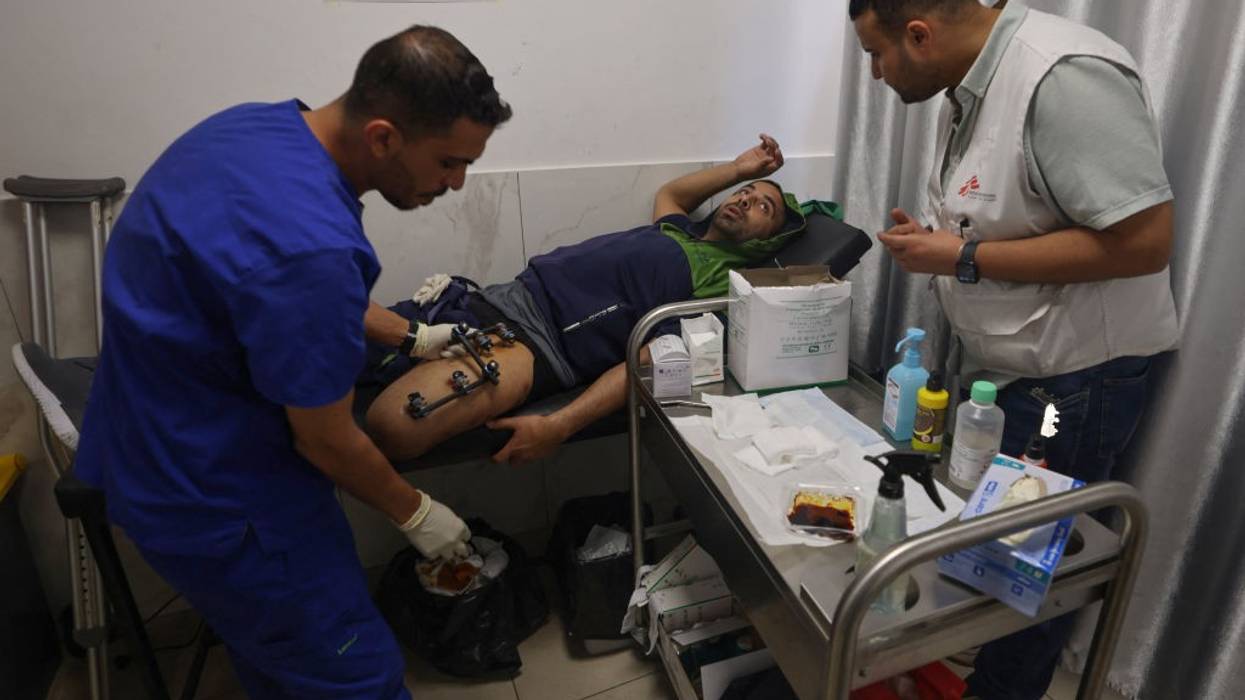
"Support for Israel requires you to be against everything good in this world, like an organization which sends doctors to conflict areas to save human lives," said one observer.
Doctors Without Borders on Saturday condemned allegations made by a British pro-Israel lobby group, which called on Home Secretary Shabana Mahmood to investigate and potentially proscribe the group, whose medical providers and other humanitarian workers provide lifesaving aid in 70 countries and have worked in Palestine during Israel's assault there.
As The Telegraph reported, UK Lawyers for Israel (UKFLI) wrote to Mahmood as well as the Charity Commission and Fundraising Regulator, calling on the Labour government to investigate Doctors Without Borders, also known by its French name, Médecins Sans Frontières (MSF).
The group claimed at least two of MSF's workers who were killed by Israeli forces, physiologist Fadi Al Wadiya and driver Nasser Hamdi Abdelatif Al Shalfouh, had connections to terrorist groups in Gaza.
Palestine Islamic Jihad published a poster earlier this year naming Wadiya as a "martyr commander," and UKFLI claimed Al Shalfouh was a sniper for a Hamas battalion.
MSF acknowledged the poster regarding Wadiya in February and said the medical group "had no indication that Fadi Al Wadiya might have been involved in military activity of any kind prior to his killing by the Israeli Forces."
“If the Israeli authorities had any reliable information about Fadi’s involvement in military activity, they never shared it with MSF either prior to his killing or when we reached out immediately after he was killed to ask for clarifications around the circumstances of his death," the group added. “We would never knowingly employ people engaging in military activity. Any employee who engages in military activity would pose a danger to our staff and patients.”
UKFLI sent its report on MSF to Mahmood asking her to ban the group, as the Labour government proscribed the protest group Palestine Action last year, labeling it a terrorist group under the Terrorism Act. The government took that action after members of the group vandalized planes at a military base.
The designation put Palestine Action on the same legal footing as Al Qaeda in the UK and made membership of the group—or even expressions of support for it—punishable by up to 14 years in prison.
The demand for the same designation for MSF, said former British Army general Charlie Herbert, was "absolutely grotesque."
MSF doctors and healthcare workers have treated thousands of Palestinians in Gaza since Israel began its onslaught there in October 2023 in retaliation for a Hamas-led attack. At least 15 people working with the organization have been killed by Israeli forces. The group is also currently providing humanitarian and medical aid in Sudan as the civil war there has displaced millions of people and collapsed the healthcare system; in Yemen as the conflict between the Houthis and Saudi-backed government troops has escalated; and in the Democratic Republic of Congo, which is facing an Ebola outbreak as well as humanitarian crises exacerbated by years of conflict.
"I work in aid, and when people ask who to support I always say MSF," said researcher and activist Philip Proudfoot. "MSF, wherever I’ve been, are right there on the front, in dangerous conditions, in isolated outposts, providing life-saving support. They’re heroes. UK lawyers for Israel are not fit to wash their scrubs."
US-based researcher Shaiel Ben-Ephraim said the report by UKLFI demonstrates that "support for Israel requires you to be against everything good in this world, like an organization which sends doctors to conflict areas to save human lives."

The directors of the film—which premiered at the Venice Film Festival—said they "felt the responsibility" to expose insider testimony about Israel's systematic mass killing of Palestinians.
A documentary film that premiered Thursday at the Venice Film Festival offers a rare inside account of Israel’s US-backed genocide in Gaza, with former members of a secret Israeli intelligence unit describing how they helped transform the mass killing of Palestinian civilians into a routine, bureaucratized affair.
NAZA, directed by Israeli filmmakers Yuval Abraham and Rachel Szor, is based on interviews with 24 Israeli military and intelligence insiders, several of whom served in a secret unit that reported directly to the office of Israeli Prime Minister Benjamin Netanyahu.
"We really are looking at... a system of killing, which is mass killing [and] relies on mass surveillance," Abraham told reporters in Venice on Thursday. "We felt the responsibility as Israelis to use our position... to bring insider testimony into how the system looks like from the inside... And this is the film that we made."
Szor said that "a lot of these things are also, it's important to say... known because they've been documented by journalists, Palestinian journalists, in Gaza. It's footage that has been out there."
"But I think that we felt that there is still some sort of an importance to take those testimonies and put it in a film in a way that, of course, first of all, it's different to hear," she added. "The people who designed and operated those systems talk about it in front of a camera."
According to the film, one former member bluntly said that the unit's mission was to “thwart peace.”
However, Abraham and Szor said their purpose was not to expose a handful of rogue soldiers, but to examine the machinery and policies behind the violence.
The documentary’s title refers to an Israeli military acronym used to quantify the civilians expected to be killed in an attack—a chilling bureaucratic shorthand for people often referred to as collateral damage, or, in the so-called "War on Terror" still being waged by the United States 25 years after the September 11, 2001 attacks, "bugsplat."
The film’s sources describe artificial intelligence-assisted targeting, mass surveillance, and the hacking of mobile phones to identify alleged Hamas operatives, sometimes despite the known presence of family members and other civilians.
Israeli forces have operated under loosened rules of engagement that effectively permit the killing of an unlimited number of civilians when targeting even a single low-ranking Hamas member. The Israel Defense Forces utilizes cutting-edge AI technology to select targets at a far faster rate than humans alone could, and destroys them with weapons including 1,000- and 2,000-pound bombs—many supplied by the US.
The result has been the killing and wounding of more than 250,000 Palestinians since the Hamas-led attack of October 7, 2023. Most of the victims have been civilians, including more than 21,500 children killed and tens of thousands more disabled or wounded.
Netanyahu and former Israeli Defense Minister Yoav Gallant are wanted by the International Criminal Court in The Hague for alleged crimes against humanity and war crimes in Gaza, including murder and forced starvation. Israel is facing an ongoing genocide case filed by South Africa at the International Court of Justice—also in The Hague—and formally supported by nearly 20 nations.
Abraham and Szor are best known internationally for co-directing with two others the film No Other Land, which chronicled ethnic cleansing of Palestinians from the illegally occupied West Bank by Israeli settlers and soldiers. The film won the 2025 Academy Award for best documentary feature. No Other Land co-director, co-writer, and producer Hamdan Ballal, who is Palestinian, was brutally attacked by Israeli settlers and violently detained by IDF troops in March 2025, as Common Dreams reported at the time.
NAZA—which reportedly received a 25-minute standing ovation at its Venice premiere—is the sole documentary among the films competing for the festival's famed Golden Lion. It joins a growing body of recent films about the Gaza genocide.
American Doctor, directed by Poh Si Teng, follows US physicians working inside Gaza hospitals amid Israel's deliberate destruction of the strip's medical and healthcare systems.
Last year's The Voice of Hind Rajab offered a harrowing mix of acted scenes and the actual 70-minute audio recording of a 5-year-old Palestinian girl's desperate final phone call to Palestine Red Crescent Society personnel amid an Israeli massacre of her family as they were trapped in a car under tank fire.
"This is not merely a matter of semantics. This is a matter of international law."
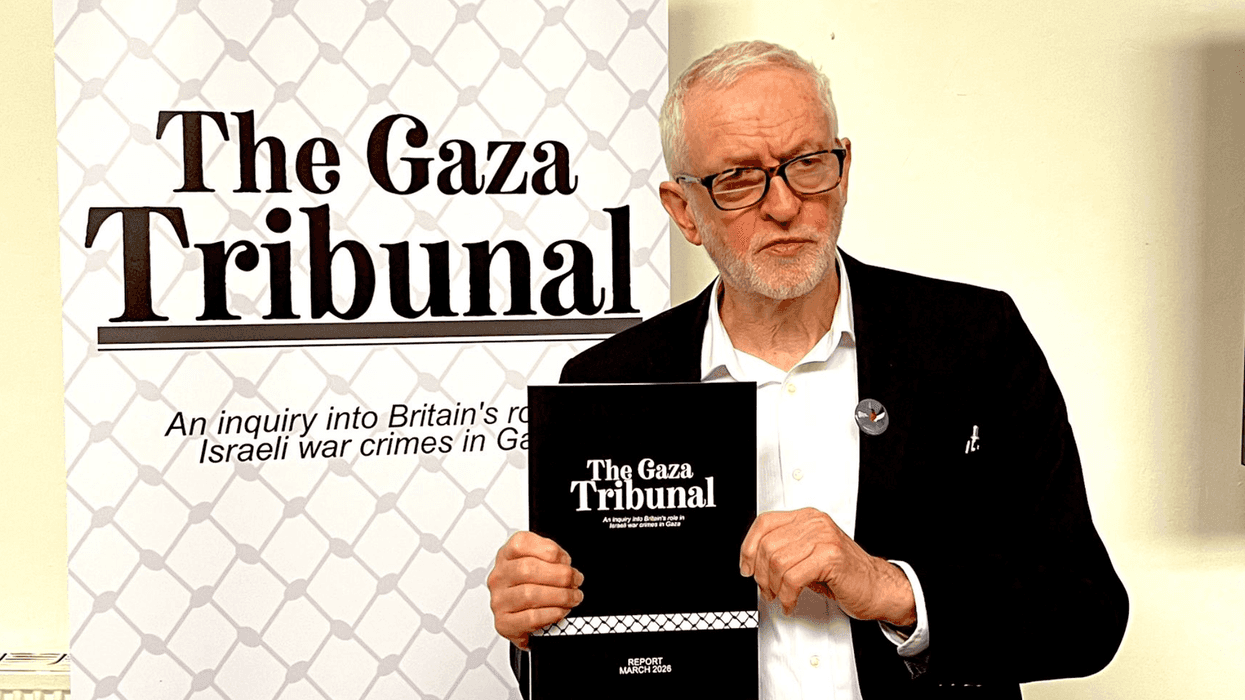
Amid Israeli settlers and soldiers' unprecedented violence against Palestinians in the occupied West Bank, Member of Parliament Jeremy Corbyn was among those arguing on Tuesday that the United Kingdom's new "sanctions on illegal settlements are welcome, but not enough," and calling on Prime Minister Andy Burnham to condemn Israel's war on the Gaza Strip as genocide.
On behalf of the UK's ruling Labour Party, Foreign Secretary Ed Miliband announced a ban on trade with illegal Israeli settlements in the West Bank. He was joined by leaders from Canada, Denmark, Finland, France, Iceland, Ireland, Norway, Poland, Portugal, Spain, and Sweden, who confirmed "their intention to introduce national and/or support European restrictions" on trading with Israeli West Bank settlements.
Corbyn, a former Labour leader from Islington North who has since co-founded Your Party, declared that "Britain must end all arms sales, all military cooperation, and all forms of support that sustain Israel’s system of apartheid, occupation, and genocide."
In addition to speaking in Parliament on Tuesday, Corbyn wrote to Burnham that "for three years, we have witnessed the abominable destruction of human life in Gaza," where "Israel has killed at least 73,000 people, excluding an untold number of people lost under the rubble."
While welcoming Burnham's recent admission that Labour "got it wrong" and its "initial response to the treatment of Gaza caused huge hurt," Corbyn said that "it is extremely disappointing that these words have not translated into meaningful action."
"It has not gone unnoticed that, 50 days into your premiership, you have declined to call 'the treatment of Gaza' what it really is: a genocide," the MP stressed, noting that the term has long been used by scholars and human rights advocates globally. "This is not merely a matter of semantics. This is a matter of international law."
"Far from preventing genocide, the British government has facilitated genocide through ongoing military, economic, and political cooperation," Corbyn charged, pointing to his call for an independent public inquiry into the UK's complicity. "The question is not whether Labour got it wrong. The question is what your government will do now."
Corbyn asked Burnham to confirm if he will establish an inquiry, end all military cooperation with Israel, impose widespread sanctions, overturn the ban on the advocacy group Palestine Action, and support the work of the International Criminal Court and the International Court of Justice—the ICC issued arrest warrants for Israeli Prime Minister Benjamin Netanyahu and his former defense minister, and the ICJ has taken up South Africa's genocide case on the Israel Defense Forces' (IDF) conduct in Gaza.
As Corbyn pushed UK leaders to go further than the new trade ban—which is largely symbolic—the Israeli government responded to the sanctions by taking aim at a dozen people, including Corbyn and his Your Party co-founder, MP Zarah Sultana, barring them from entering Israel.
Israel also banned four Labour MPs—Diane Abbot, Richard Burgon, John McDonnell, and Naz Shah, as well as five members of the Green Party: Siân Berry, Ellie Chowns, Carla Denyer, Adrian Ramsay, and Hannah Spencer. The final person barred from Israel is Fahad Ansari, a lawyer who has represented Hamas' political wing in court in the UK, according to The Times of Israel.
Ansari replied on social media Tuesday that "I am neither British nor an MP but do take this as a badge of honor (although pretty sure I'm already a persona non grata in the apartheid state)."
Meanwhile, others in the United Kingdom and around the world joined Corbyn in framing the Labour government's sanctions as progress, while also emphasizing that, as the Corbyn-founded Peace & Justice Project put it, "they should only mark the start of the process in bringing about real peace and social justice for the Palestinian people, who have been subjected to decades of unimaginable subjugation, ethnic cleansing, and genocide."
"The UK government must commit to a full arms embargo on Israel, ending all forms of military cooperation with the IDF, and supporting the ICC arrest warrants against Benjamin Netanyahu and members of his Cabinet," the project declared, calling for the full implementation of recommendations from the Gaza Tribunal report from last year.
Describing the UK's "concrete action" and recognition of "Israel's unlawful occupation and ethnic cleansing" as "hugely welcome," Kerry Moscogiuri, Amnesty International UK's chief executive, noted that Miliband "promised a 'comprehensive reset' and today could be the sea change that is needed."
“Amid ethnic cleansing, genocide, and apartheid against Palestinians, today's measures are a genuine step towards accountability for Israel's repeated and flagrant violations of international law," she said. "The commitment to ban trade in settlement goods and some services, prohibit financing of settlements, refuse arms that contribute to the occupation, and support the genocide case before the International Court of Justice represents a significant change of course."
"For years, Amnesty has worked with members, partners and parliamentarians from across the political spectrum to press for meaningful change, and today shows that campaigning for human rights works," she added. "But today is not the end of the road. The test now is whether these commitments are properly implemented and enforced, and followed by the wider action needed to hold Israel accountable for its crimes and meet the UK's obligations under international law."

Israeli Prime Minister Benjamin Netanyahu's "apologists have to explain why killing kids happens so regularly and effortlessly," said one congressman who noted growing support for blocking US weapons to Israel.
A series of Israeli strikes across southern Lebanon since Friday night have killed and wounded dozens of people, including women, children, and paramedics, despite a US-brokered ceasefire.
On Monday, Israeli strikes in Kfar Rumman killed 12 people: a paramedic and 11 people in a targeted residential building, including at least four women and two children, according to Lebanon's Ministry of Public Health.
Al Jazeera reported that the attack on the targeted home killed three generations of one family, including a 2-month-old baby.
Another 11 people were killed in Lebanon on Sunday, and four others before that, bringing the death toll to 27, with at least 69 civilians wounded, according to the ministry. Women, children, medics, and journalists were among those harmed.
Those casualties followed Israeli Defense Minister Israel Katz claiming Friday that the IDF had taken control of Lebanon's Ali al-Taher ridge, about six miles from the border, and vowing that his country's military "will not withdraw from the security zone in Lebanon until Hezbollah is disarmed."
Since Hamas led the October 7, 2023 attack on Israel, resulting in the Israel Defense Forces' genocidal war on the Gaza Strip, the Lebanese political and militant group Hezbollah has sided with Palestinians in the besieged exclave, and the IDF has been attacking southern Lebanon.
Hezbollah has also backed Iran since the US and Israel began bombing the country in February, leading to renewed Israeli violence in Lebanon. In addition to slaughtering at least 73,658 Palestinians in Gaza since October 2023, the IDF has killed more than 8,900 Lebanese and injured over 30,6000, according to the ministry.
That bloodshed over the past few years has fueled calls for cutting off the billions of dollars in military aid that the United States gives Israel annually. US Congressman Mark Pocan (D-Wis.) issued one such call after the attacks on Monday, stressing on social media that "Israel strikes Lebanon and kills kids. They continue to strike Gaza and kill kids."
Israeli Prime Minister Benjamin Netanyahu's "apologists have to explain why killing kids happens so regularly and effortlessly," Pocan continued. "More and more members of Congress are saying it's time to #BlocktheBombs."
Although a June ceasefire brought some relief to the people of Lebanon, hundreds of thousands remain displaced by Israeli occupation and attacks. Agence France-Presse reported Monday that after the June ceasefire deal was reached, villagers returned home to Kfar Rumman.
Following the attack after midnight Monday, "an AFP photographer saw the building that was hit in Kfar Rumman had been destroyed, with school books and remnants of furniture strewn across the rubble," the agency detailed. It continued:
"Since we returned here, we've lived in fear," Fouad Chakaron told AFP.
He insisted the targeted building was inhabited by "peaceful people with no connection to anyone."
Neighbors fled after the strike, which also damaged nearby buildings, AFP's photographer said.
Multiple outlets noted that the IDF didn't issue an evacuation warning before the strikes on Kfar Rumman. Reuters pointed out that the IDF claimed steps had been taken to mitigate harm "to uninvolved individuals, including the use of precise munitions and aerial surveillance," and it is now reviewing the reported casualties.
The IDF said on social media Monday that it hit "several Hezbollah terrorist infrastructure sites across southern Lebanon, including a weapons storage facility. Additionally, the IDF struck terrorists who were identified transferring weapons in the area of Kfar Rumman, in order to remove the threat they posed. The strikes were in response to Hezbollah’s launch of two explosive drones toward IDF troops in the security zone."
The deadly strikes on Monday came after Lebanon's Ministry of Public Health announced Sunday that "the Israeli raids launched by the occupation forces this morning led to the complete destruction of the Ghandour Hospital in Nabatieh, which constitutes an additional serious violation of international humanitarian law that provides for the protection of health facilities."
Lebanese President Joseph Aoun condemned the destruction of the hospital, which was reportedly emptied of patients and staff, and highlighted that attacks in the area also "resulted in the fall of innocent victims and caused severe damage to the building of the Ministry of Finance there."
Israel's assault on the Nabatieh region is "a dangerous escalation," the president said, and "reveals a persistent pattern of attacks that goes beyond the alleged military targets to purely civilian administrations and health centers, reflecting a clear intent to strike the continuity of Lebanese institutions' operations and disrupt people's daily interests."
While Aoun said he holds "the Israeli side fully responsible for this ongoing escalation," he is also "calling on the United States of America and the international community to take urgent action to stop these violations and hold their perpetrators accountable, affirming that Lebanon, despite all these attacks, is committed to upholding its sovereignty, the stability of its south, and the safety of its citizens."

"The American people do not want American military integration with a country responsible for war crimes, international law violations, and mass killings amounting to genocide."
A coalition of over 50 rights groups on Thursday wrote to leaders in Congress to "strongly urge" them to reject not only specific proposals in each chamber's version of the next Pentagon budget, but also "any legislation seeking to intertwine US and Israeli defense or intelligence capabilities."
The provision in the House-approved National Defense Authorization Act for Fiscal Year 2027 (HR 8800) is Section 219—previously titled Section 224—and the related but slightly different proposal in the pending Senate bill (S. 4784) is Section 1217. Congressional leadership is expected to negotiate a version of the full NDAA that can pass both GOP-controlled chambers.
"The provisions would establish a new US Israel Defense Technology Cooperation Initiative aimed at accelerating joint research, development, and integration of Israeli-origin and jointly developed defense technologies into US military systems and programs of record," says the new letter to the chairs and ranking members of both Armed Services committees: Sens. Roger Wicker (R-Miss.) and Jack Reed (D-RI) and Reps. Mike Rogers (R-Mich.) and Adam Smith (D-Wash.).
"This would expand US-Israeli military integration across some of the most sensitive domains of emerging technology, including quantum computing, AI and autonomous systems, cyber and electronic warfare, directed energy, and defense industrial base co-production, while expediting pathways from R&D into procurement," notes the letter, first reported by Reuters.
Congressional consideration of the provision comes nearly three years into US-armed Israeli forces' campaign in the Gaza Strip—decried as genocide by many activists, experts, and governments around the world—in response to the Hamas-led October 2023 attack on Israel. The violence has claimed over 73,000 Palestinian lives and continues, despite a nearly year-old ceasefire.
"Israel's grievous violations of US and international law and its other human rights violations include the use of US-supplied weapons in killing Palestinian civilians, extrajudicial killings by Israeli soldiers, the systemic use of torture and sexual abuse by Israeli security forces, and policies such as the withholding of humanitarian assistance, other forms of collective punishment, ethnic cleansing, apartheid, and genocide," the coalition highlighted in its letter to lawmakers.
"These facts alone should prevent even the discussion of deepening military ties, especially given the complete inability of the United States to apply existing laws, such as the Foreign Assistance Act or the Arms Export Control Act, that would require the suspension of US military aid and arms transfers to Israel," the groups argued. "The American people do not want American military integration with a country responsible for war crimes, international law violations, and mass killings amounting to genocide."
Pointing to polling that has shown growing opposition to US military aid to Israel "across the political spectrum," the coalition wrote that "Section 219/1217 works to hide continuing US military support to Israel from public scrutiny and congressional oversight and involvement. Far from working to shift the US-Israel relationship in line with American public opinion, this section encourages the direct use of Israeli-manufactured technology into the US' systems, which may render the United States dependent on Israel’s provision of such technologies, and make disentangling the relationship in the future ever more difficult."
"At a time in which American interests are increasingly diverging from those of Israel, and American public opinion is turning increasingly against unconditional support to Israel, creating new points of influence for Israel in the U.S. defense-technology ecosystem is exceptionally dangerous," stresses the letter.
It also sounds the alarm about Section 622 of the 2027 Intelligence Authorization Act, which was introduced in May by Sen. Tom Cotton (R-Ark.) and "would limit the president's ability to restrict America's intelligence-sharing and military collaboration with Israel by requiring the president to identify and document a specific national security concern that necessitates any changes, and expand intelligence sharing and cooperation with countries that have normalized relations with Israel under the Abraham Accords."
"Governments have an obligation to ensure the protection of human rights and fundamental freedoms when advancing their national security interests, including countering threats to their populations' right to privacy or other freedoms," the letter declares. "Intertwining US and Israeli information-gathering and defense raises significant concerns given the recent evidence of Israeli espionage against people in the US, including government officials."
Signatories include A New Policy, Amnesty International USA, Demand Progress, IfNotNow Movement, Jewish Voice for Peace, Just Foreign Policy, National Lawyers Guild, National Nurses United, Peace Action, Quincy Institute for Responsible Statecraft, RootsAction, Win Without War, and dozens of other organizations.
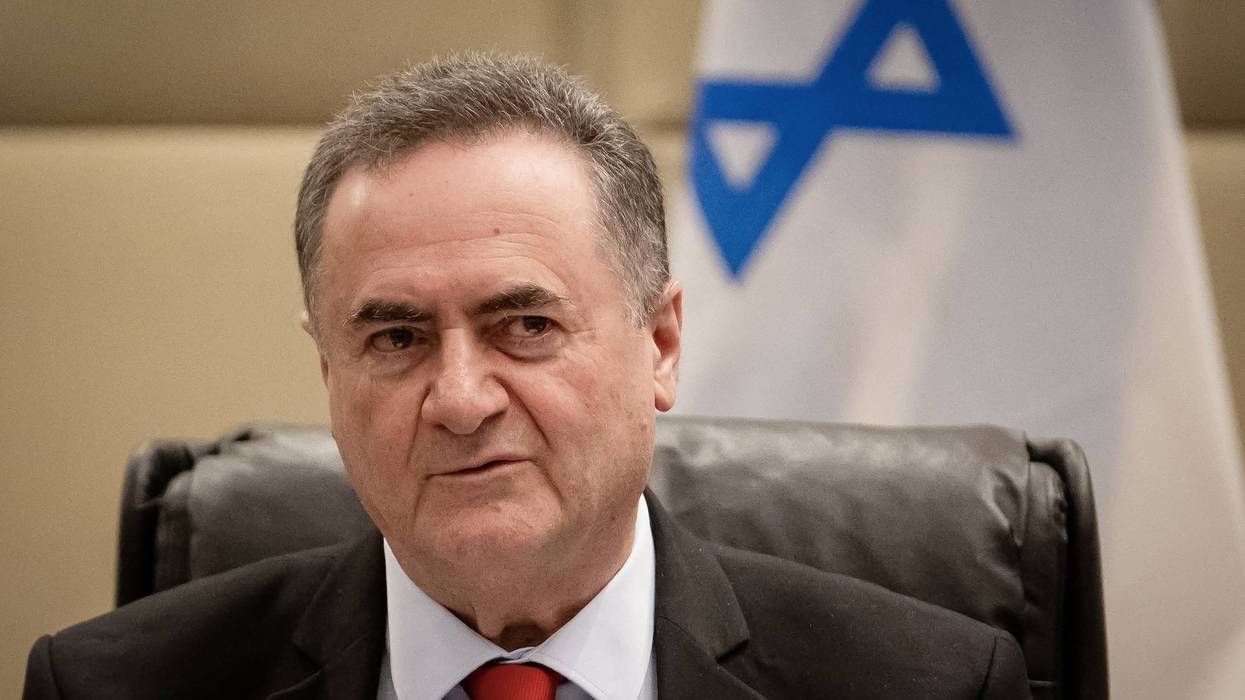
Defense Minister Israel Katz said Israel was “fully prepared” to begin permanently removing Palestinians from Gaza and was just waiting on President Donald Trump to give the OK.
Israel has plans drawn up to carry out US President Donald Trump's proposal to remove most of the Palestinian population from the Gaza Strip, according to its defense minister, Israel Katz.
Katz has been a fervent cheerleader for the proposal made by Trump last February to force roughly 2 million Palestinians to leave Gaza and be permanently relocated to other nations with no right to return home, before bulldozing what is left of Gaza after more than two years of relentless destruction by Israel, which has left the vast majority of the population displaced.
While Trump and his Israeli allies used the euphemism "voluntary migration" to describe the plan, United Nations officials, foreign governments, and human rights organizations have said it amounted to a plot for an illegal "ethnic cleansing."
Shortly after the plan was announced, Katz said he’d directed the Israeli military to begin devising a mechanism for the Palestinians' departure. However, forced displacement was ultimately not included in Trump’s 20-point “peace plan” agreed to last October.
During an interview on Wednesday with the Israeli news site Ynet and the newspaper Yedioth Ahronoth, Katz said that Israel was ready to begin removing Palestinians from the territory as soon as Trump gives the order.
"There is no real solution for Gaza in the end without this migration," Katz said.
He claimed that "80% [of Palestinians in Gaza] want to migrate; it’s checked constantly in surveys."
Katz did not cite which "surveys" he was referring to. But one May 2026 survey by Israel's Coordinator of Government Activities in the Territories, the Israeli body that administers civilian affairs in the occupied Palestinian territories, showed that nearly 80% of residents said they wanted additional information about mechanisms for relocating to a third country through Rafah or Kerem Shalom. The reported question did not establish that they wanted to leave permanently.
Other surveys of Gaza's residents conducted by independent pollsters have found that around half, or a majority of the population, want to stay in the territory despite the destruction and deprivation they face.
Katz said the Israeli government was "fully prepared to move [Palestinians] out if it becomes possible—by sea, by air, by every way possible."
"What’s delaying it is that the accepting countries want US support," Katz said. "Every country that is willing wants American backing. Currently, President Trump didn’t cancel this; he froze it. All the Arab countries came to him due to their pressure on this matter."
Katz said "the moment will come" when "it becomes clear that Hamas is not meeting its commitment" to the Phase 2 disarmament-and-withdrawal roadmap agreed to by the Palestinian militant group in July, building on the October 2025 ceasefire agreement reached between Hamas and Israel.
Israel has claimed that the deal required Hamas to totally disarm before Israel withdrew any troops it had advanced past last October's ceasefire line in violation of the agreement. The roadmap Hamas agreed to explicitly stated that Israel's withdrawal would occur at the same time as disarmament.
Then, Katz said, Israel "will get a green light to move forward militarily, territorially, and in other areas, and this thing will gain momentum."
Other figures in the government of Prime Minister Benjamin Netanyahu have spoken openly about the desire to force Palestinians out of Gaza and replace them with Jewish Israeli settlers. But Katz's statements on Wednesday were among the most concrete yet to indicate that a solid plan is in the works to carry out this goal.
“This is the Israeli defense minister admitting, completely and brazenly, that the official policy of the Israeli state is ethnic cleansing in Gaza,” said H.A. Hellyer, a senior associate fellow at the Royal United Services Institute in the United Kingdom. “But somehow we are expected to take seriously those who say it is not.”
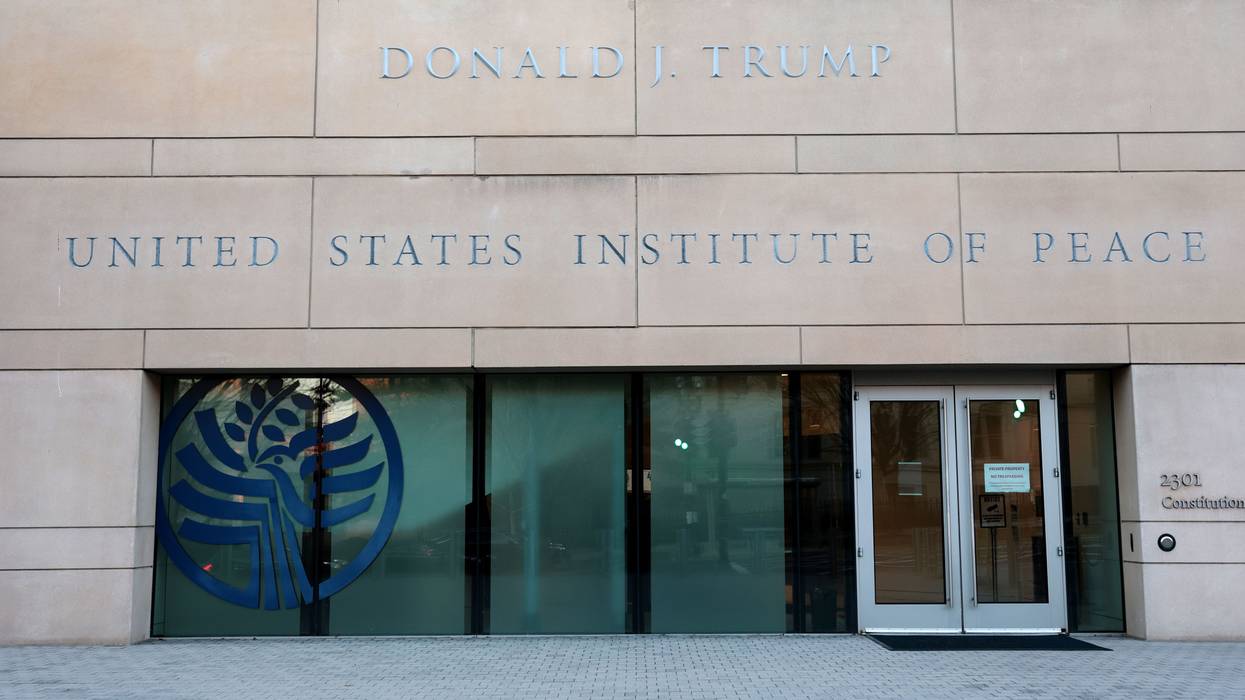
A year ago, the Trump administration abruptly terminated 40 years of conflict resolution work by the US Institute of Peace and confiscated its building. Renamed the “Donald J. Trump Institute of Peace,” it became the home for his nascent Board of Peace, which appears to be floundering in its attempts to bring peace to Gaza.
Established by Congress in 1984, with legislation signed by Ronald Reagan and funded annually by Congress, the United States Institute of Peace, or USIP, was a well-respected, authoritative, independent, officially nonpartisan, nonprofit organization, until it was eviscerated by President Donald Trump early last year.
Its purpose was to promote conflict prevention and resolution worldwide and to provide analysis, research, and training in diplomacy, mediation, and peace-related activities. In 2011, the Association of Professional Schools of International Affairs wrote that USIP “helped to build the conflict management and resolution field, both as an area of study and as an applied science.”
The institute had a staff of 300 professionals; a budget of $55 million; published numerous research reports on peace issues around the world; and trained 65,000 professionals. Although the institute’s extremely useful database was wantonly destroyed, one can see the breadth and depth of its important work by sampling some of its publications here.
Construction of an impressive $153 million building near the State Department was completed in 2011 but confiscated by the Trump administration in March 2025 with the help of the institute’s former security vendor, the FBI, and the DC Metropolitan Police. A few months later, it was renamed the “Donald J. Trump Institute of Peace” and has since become the home for his “Board of Peace.” An account of the events leading to this outcome explains the shameful way in which this was carried out:
The lesson from these two tragedies—the demise of the US Institute of Peace and the likely failure of the Board of Peace—is that voters must, in the future, avoid electing someone to a position of great power who doesn’t know what he doesn’t know.
One month after assuming office for the second time, on February 19, Trump signed an executive order calling for the elimination of USIP. The next day, USIP was contacted by a representative from the newly established “Department of Government Efficiency” (DOGE), set up by Trump under Elon Musk—allegedly to reduce government expenditure, but actually to eliminate institutions that Trump and the Heritage Foundation’s Project 2025 didn’t like. In a virtual meeting a few days later, USIP’s president-CEO and lawyer explained to three DOGE representatives that the institute was an “independent, nonprofit corporation outside the executive branch.”
When, on March 8, USIP’s president learned that DOGE had inquired about the status of the organization’s security arrangements, its lawyer contacted DOGE to explain that unauthorized personnel would only be admitted to the building with a valid court-issued warrant.
On March 14, all Biden-appointed members of USIP’s Board of Directors were fired by Trump. Three ex-officio members—Marco Rubio; Pete Hegseth; and Peter Garvin, president of the National Defense University—remained on the board.
The same day, a representative of DOGE and a State Department official arrived at USIP and requested entry, but were denied. That evening, two DOGE members arrived with FBI agents and a directive signed by Rubio, Hegseth, and Garvin to remove the president, naming a new acting president. They were again denied entry, with the USIP lawyer declaring the directive illegal.
The next day, the lawyer learned that two FBI agents had visited the home of USIP’s security vendor to discover how to gain physical entry to its headquarters; it was later reported that they threatened the vendor by warning that, if he didn’t comply, he would lose all government contracts. The lawyer contacted the FBI agents to inform them that all inquiries about USIP should be directed to him. Subsequently, the FBI also contacted USIP’s chief security officer to discuss the institute’s security procedures and threatened that he was the subject of investigation by the Department of Justice into denied entry.
Later that day, the US attorney for the District of Colombia Criminal Division Chief called the USIP lawyer, requesting access to the headquarters by Rubio and Hegseth to inspect records and books. The lawyer said he would provide access with a written request. The US attorney informed him that there was suspicion that USIP was engaging in criminal behavior. He also said that representatives would be sent to USIP headquarters the next day and that they would criminally investigate anyone who obstructed access.
USIP then suspended its security vendor’s contract, and its chief security officer deactivated the vendor’s staff badges and retrieved all physical keys except a master. But the next day, four security vendor employees arrived at USIP HQ and attempted to enter the building. They were ultimately admitted, but informed by the lawyer that they were trespassing. The chief security officer called 911 and reported them as intruders.
Armed Metropolitan Police officers then arrived at the USIP HQ and escorted the chief security officer, the USIP lawyer, and other staff from the building and turned the building over to DOGE.
Although members of the former Board of Directors contested the takeover in court, citing the agency’s independent status—and a first court ruling ruled in the institute’s favor—a federal court of appeals stayed the lower court’s ruling and, after a short reprieve, the building was returned to DOGE, which then took down USIP’s website, containing years of work.
It was later reported that DOGE’s physical occupation of the building led to thousands of dollars in damage, leaving the facility in disarray and littered with drugs and cockroaches.
The building and USIP’s assets were transferred to the General Services Administration and Office of Management and Budget Director, Russell Vought (who was involved in Project 2025) signed off on the transfer. On December 3, 2025, the State Department had “The Donald J. Trump Institute of Peace” inscribed on the outside of the building.
The Board of Peace (BOP) was established to implement Trump’s “Comprehensive Plan to End the Gaza Conflict,” a 20-point plan drawn up by Jared Kushner and Steve Witkoff and subsequently negotiated with Israel and Hamas with input from a number of Arab and Muslim countries. The agreement was signed on October 9, 2025 and came into force the next day. It was endorsed by United Nations Security Council Resolution 2803 on November 17, with 13 members of the council in favor and Russia and China abstaining.
The first phase of the plan began before the BOP was formed and involved the initial withdrawal of Israeli troops to agreed-upon deployment lines (although this did not hold and almost daily ceasefire violations ensued). It also involved the return to Israel by Hamas of all living hostages, as well as the remains of those deceased. This was followed by the release by Israel of a large number of Palestinian prisoners, including remains of those deceased. Humanitarian aid was gradually reintroduced by UN agencies and their partners, although needs continue to be extensive and restoration of basic services is far from complete. The Rafah border crossing was also reopened, although sporadically closed again.
On January 15, 2026, Trump announced the formation of a Board of Peace whose charter (drawn up by his administration) named Trump as its chairman for life and gave him extensive unilateral powers over the board. In his usual self-congratulatory style, he wrote on Truth Social, “I can say with certainty that it is the Greatest and Most Prestigious Board ever assembled at any time, any place.” He added that it “would be the most consequential international body in History.”
In the future, the pursuit of international peace and security must be left to the United Nations, which represents the entire world; is backed by the force of international law; and has extensive experience.
Trump invited some 60 countries to join his BOP, including Israel, although no sub-Saharan African country was invited. Israeli Prime Minister Benjamin Netanyahu initially refused because invitations had not been coordinated with him and he disapproved of invitations to Türkiye and Qatar. After further discussion with Trump, Israel agreed to join—along with 27 other countries. More than half of those invited, however, declined, concerned that its new charter was an attempt to establish a “Trump-dominated alternative to the United Nations” and could undermine the role of the UN and other multilateral organizations. Countries that agreed were appointed for a three-year term with those wanting lifetime membership required to contribute $1 billion.
It was also announced that Bulgarian Nikolay Mladenov, the former UN special coordinator for the Middle East Peace Process, would become director-general of the board and high representative for Gaza. As well, General Jasper Jeffers, was appointed commander of the planned International Stabilization Force.
A nine-member Executive Board was formed with seven who have close ties to Trump. The eighth member is Indian-born Ajay Banga, also a US citizen, who is president of the World Bank Group. Tony Blair is the only non-American.
Amid much fanfare, the BOP was officially launched on January 22, 2026 at the 56th World Economic Forum in Davos with Trump signing its charter in the presence of 19 new members.
After the signing, Jared Kushner made a presentation of plans for a “New Gaza,” using AI-generated slides, showing gleaming skyscrapers, deluxe hotels, and luxury villas lining Gaza’s Mediterranean shoreline, “reserved for coastal tourism.” Entirely new cities with multistory apartment buildings for Palestinians were also shown, as well as schools and hospitals, with sports facilities and parks breaking up industrial complexes, data centers, and advanced manufacturing facilities, as well as a new airport and port.
Kushner’s presentation was in stark contrast to the current reality of Gaza, where 2 million Palestinians live in tents and bombed-out buildings, amid 90,000 tons of rubble, with vastly insufficient food, water, electricity, fuel, healthcare, and medicine. The plans, which seemed more suited for wealthy tourists than for poor Palestinians, apparently had no Palestinian input and were coordinated with an Israeli real estate billionaire (later invited by Kushner to be on the BOP’s Gaza Executive Committee). They also seemed totally out-of-touch with the current or past crowded demographic situation in Gaza and appeared designed to enrich opportunistic developers.
The first and only meeting of the BOP was held on February 19 at the newly named Donald J. Trump Institute of Peace, designated as the seat of the board. There have been no further meetings—presumably, because Trump has been consumed by his war with Iran which he initiated nine days later.
At this meeting, nine members (Kazakhstan, Azerbaijan, the UAE, Morocco, Bahrain, Qatar, Saudi Arabia, Uzbekistan, and Kuwait) pledged $7 billion for the reconstruction of Gaza, and Trump announced a $10 billion pledge, although without consulting Congress. FIFA, which also attended, pledged $50 million for football facilities. It is estimated that $70 billion is required to rebuild the territory.
Five members (Indonesia, Morocco, Kazakhstan, Kosovo, and Albania) agreed to provide troops for the temporary International Stabilization Force (ISF), which the Security Council had authorized the BOP to create. It is intended to work with a newly trained and vetted Palestinian police force to oversee the ceasefire; monitor the security environment and borders; decommission weapons; destroy terrorist infrastructure (e.g., tunnels); and protect civilians and humanitarian operations.
Also at this meeting, Egypt and Jordan committed to training the police force. The plan is to deploy 20,000 ISF troops and 12,000 police. However, to date, neither the ISF nor the police force has deployed.
A National Committee for the Administration of Gaza (NCAG) was also formed of Palestinian technocrats under BOP supervision, led by Dr. Ali Shaath, a civil engineer from Gaza who held senior roles in the Ramallah-based Palestinian Authority. But the NCAG has not been able to enter Gaza, because the ISF meant to disarm Hamas and secure parts of Gaza has not materialized—so it remains in Cairo, unable to exercise any authority in Gaza.
More recently, on July 30, a 15-point “Roadmap for Completing the Implementation of President Trump’s Comprehensive Peace Plan in Gaza” was published. Hamas agreed to the road map and announced that it would dissolve its government in Gaza and disarm, appealing to the international community to push Israel to allow the NCAG to enter Gaza and take over.
Until now, Israel has refused to agree to the road map, arguing, in contradiction to the road map’s prescription for a phased Israel Defense Forces withdrawal from the parts of Gaza where Hamas disarmament has been completed and verified, that it won’t withdraw its troops at all until Hamas has totally disarmed everywhere.
There is, of course, always the possibility that things will change, if Trump can persuade Netanyahu to comply, or if the upcoming Israeli elections change the situation. But for the moment, things appear deadlocked.
There are also questions about BOP finances. When Marco Rubio recently requested that Congress transfer $50 million to the BOP from the State Department budget for international organizations (from which it has not yet paid its 2026 UN dues), Rep. Jamie Raskin (D-Md), ranking member of the House Committee on the Judiciary, and Rep. Gregory Meeks (D-NY), ranking member of the House Committee on Foreign Affairs, called for Rubio to “answer basic questions about the board’s structure, funding, and oversight, nine months after its creation.” In a confronting letter that can be read here, they write:
We thus have a profusion of questions about this mysterious operation: What is the Board of Peace? Is it a public or private entity? International or domestic? Is it registered as a corporation in the United States or abroad? What kind of corporation is it—for-profit or not-for-profit? Who controls the funds in its J.P. Morgan bank account? In what countries are those accounts located? Who will audit those funds and conduct oversight of the Board? What does President Trump intend to do with this vast slush fund while he is in office—or after he leaves? Can anyone assure Congress that billions of dollars from US taxpayers and foreign governments will not be flowing into the pockets of President Trump, members of his family, corrupt or incompetent contractors or business partners, or political allies and foot soldiers of the President?
The bottom line is that realizing the aspirations of the Comprehensive Plan with BOP oversight is an exceedingly tall order, given the utter devastation of Gaza, its infrastructure, and its people—and the extremely fraught political difficulties of getting Israel and Hamas to adhere to what they have agreed. Implementation of this process has been incremental, slow, and is at a virtual standstill. Although members of the NCAG have begun work in Egypt, they have not been able to deploy to Gaza. Although some funds have been pledged, most have not materialized. The same is true for pledges of ISF troops.
It will be exceedingly difficult for a new organization without full-fledged international support and clout, and without sufficiently experienced staff to know what approaches are most effective in peace building, creating new governance structures, and carrying out disarmament. At the moment, the whole endeavor looks more like a slow-motion train wreck than the effective implementation of a viable peace process.
As Mladenov warned at an August 26 meeting of the Security Council, called to discuss the obstacles—if the ceasefire is allowed to collapse, “There will be no road map to return to, there will be no administration to deploy, and there will be nothing left on the ground to rebuild... It would be a point of no return for everyone.”
The lesson from these two tragedies—the demise of the US Institute of Peace and the likely failure of the Board of Peace—is that voters must, in the future, avoid electing someone to a position of great power who doesn’t know what he doesn’t know and who has the hubris to create his own half-baked, cobbled-together international Board of Peace to try to resolve one of the world’s most intractable conflicts, allegedly in the hope of being awarded a Nobel Peace Prize—just like Barrack Obama.
Trump has even implied that somehow the BOP could replace the UN, saying, “Well, it might.” But what he doesn’t understand is that the legal foundations of the two are totally different. “The Security Council derives its authority from the UN Charter, a treaty ratified by UN Member States that explicitly assigned it primary responsibility for the maintenance of international peace and security. That mandate was conferred collectively by the international community and cannot be replicated.” Also, there is the question of binding authority: “UN Member States are obliged to carry out decisions of the Security Council. The Board of Peace has no comparable mechanism.”
Thus, in the future, the pursuit of international peace and security must be left to the United Nations, which represents the entire world; is backed by the force of international law; and has extensive experience in preventive diplomacy, peacemaking, peacekeeping, and post-conflict peace building.
In the case of Israel, however, the UN has been effectively sidelined, since the Israeli administration, and even much of the Israeli public, harbor a deep antipathy for the UN because of its past condemnation of Israeli behavior, which is nearly always vetoed by the US in the UN Security Council.
This means that the Comprehensive Plan and the BOP are “the only game in town.” Given that winter is on its way and 2 million Palestinians who are already in grave danger will once again be exposed to its ravages, it leaves one hoping against hope, in spite of major concerns about the BOP, that there is some way to salvage the Comprehensive Plan, so that the tremendous suffering by the people of Gaza can finally be lessened.
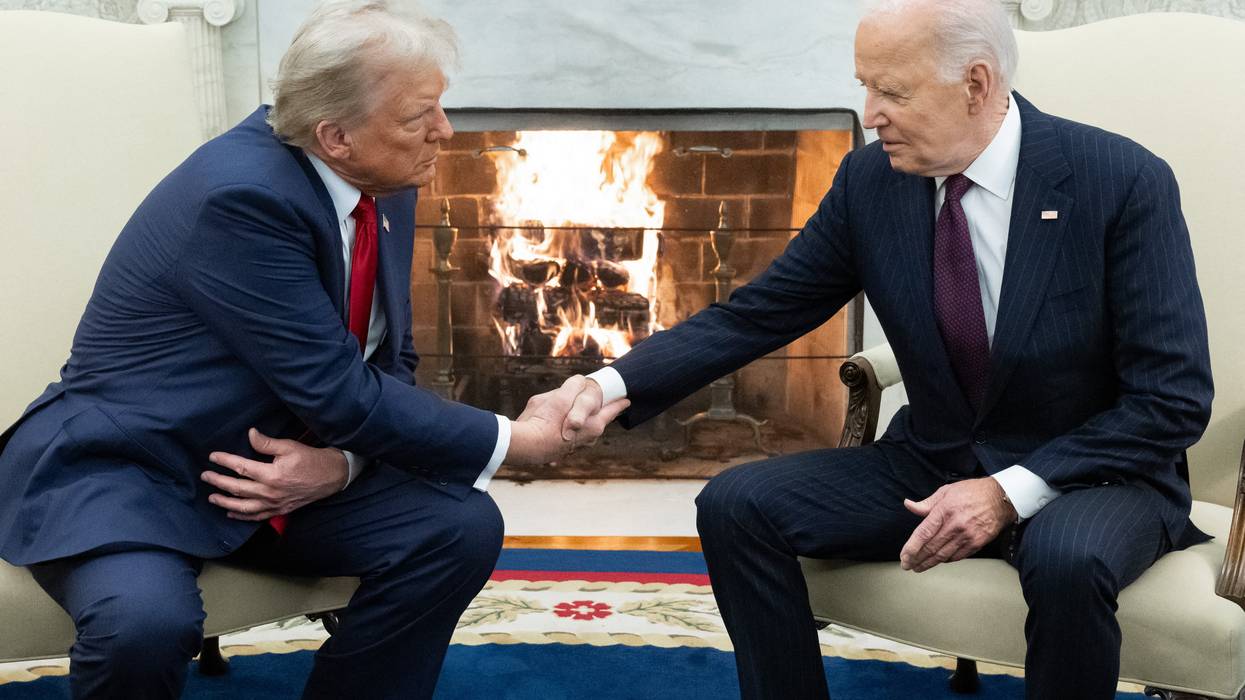
Acknowledging the problems is only the first step. A demonstrated and sustained commitment to implement a changed approach to the multiple crises we have helped to create or exacerbate across the Middle East—and the globe—must follow.
While the US has a long history of signing treaties, making commitments, and then walking away from them (ask Native American tribes about this), this century’s record of American policy in the Middle East is something quite extraordinary. Dramatic policy shifts, broken treaties, promises made and forgotten, foolish wars fought without attention paid to the mess left for others, and the shattering of international law and conventions—all of these have done substantial damage to the region and to the trust that others have in the US.
It’s convenient for Republicans and Democrats to point the finger at the “other side” for America’s loss of standing and support in the world. In reality, there’s plenty of blame to be shared by all of this century’s administrations. President George W. Bush started the disastrous wars and occupations of Afghanistan and Iraq, but Presidents Barack Obama and Joseph Biden ended both badly, compounding the damage that had been done. And while Bush may have flaunted international law and conventions with the use of torture, rendition, and extrajudicial targeted killings, Obama further undermined the US’s commitment to the rule of law by refusing to call for accountability for these crimes.
Biden waxed eloquent in his defense of what he called the “international rules-based order.” But he undercut himself when it became clear that his commitment was selective since it only applied to Russia’s invasion of Ukraine and not to Israel’s genocidal policies in Palestine.
And speaking of Palestine, during the first quarter of this century, no administration has taken the firm measures needed to curb Israeli behaviors in the occupied Palestinian territories or in Lebanon and now Syria. The impact has been clear: Israel acts with impunity, Palestinians have lost hope, and the people of the region have lost even a shred of belief that the US can play a constructive role in peacemaking.
Upon this dismal record of this century’s first four administrations, President Donald Trump, since reentering the White House in 2025, has pounded the final nail in the coffin of trust for American leadership in the Middle East.
While on one occasion Biden went to UN Security Council and secured passage of a ceasefire for Gaza—telling the council that Israel approved it, knowing full well that Israel had not agreed to its terms—Trump has taken this practice of dissembling even further. With great fanfare he assembled leaders to an event celebrating his 20-point peace plan to end the Gaza conflict. The problem, of course, was that none of the combatant parties—neither Hamas nor especially Israel—had agreed to its terms. And Trump’s boastful handling of his war with Iran has reached new levels of absurdity. On at least 42 occasions he has announced that the war was over, he had won, or that Iran was begging to negotiate on his terms, only to pivot a day or two later threatening, in violent or vulgar language, to obliterate Iran if they didn’t, as he put it, “wave the white flag” of surrender.
Added to this mess are the thousands of Lebanese who’ve been killed and the scores of villages laid waste by Israel since the Trump-backed ceasefire, the displacement and frightening violence that Israeli settlers and soldiers are wreaking in the West Bank, the continuing genocide unfolding in Gaza, and the insecurity in the Arab Gulf States housing US bases which are being recklessly attacked by Iranian missiles and drones. It is no wonder that Arabs have lost faith not only in the US’s commitment to regional peace and security, but also to the trustworthiness of the US as an ally.
A problem so big can’t be fixed by one US election. After decades of a dizzying roller coaster ride of wars based on lies, violations of international laws and conventions, promises made and then broken, and now an administration that acts impulsively and makes contradictory pronouncements as if words have no meaning—trust has been lost.
After the disasters resulting from the Bush administration’s Iraq war, its anti-Arab, anti-Muslim domestic policies, and its ill-conceived “democracy agenda,” President Obama traveled to Cairo to deliver a speech designed to open a new chapter in US relations with the region. After seven years without decisive follow-through on the promises he’d made in his Cairo address, Obama gave a long interview to The Atlantic Magazine in which he blamed the Arabs for not doing enough. When I spoke with him about the speech and that interview, he told me that the expectations of the Arabs had been too high. I responded that he was the one who set the high expectations and made the promises that he would “change Washington, change America, and change the world.” “Don’t blame them,” I said, “for believing you.”
What’s evident now is that the Arab world isn’t believing US promises or even our words. They are beginning to find their way in a post-US world order by creating new alliances, finding new partners, and putting their own interests first. If the US is to even have a place in this new order, we will need more than a just a new president with promises of change. What will be required is a thoughtful examination of our decades of shortcomings and betrayals leading to new policies toward justice for Palestinians and regional partnerships and security. But acknowledging the problems is only the first step. A demonstrated and sustained commitment to implement a changed approach to the multiple crises we have helped to create or exacerbate across the region must follow. Since it took us a generation to dig deep holes for ourselves in the Arab World, getting out won’t be quick or easy. Restoring trust will take time and hard work.
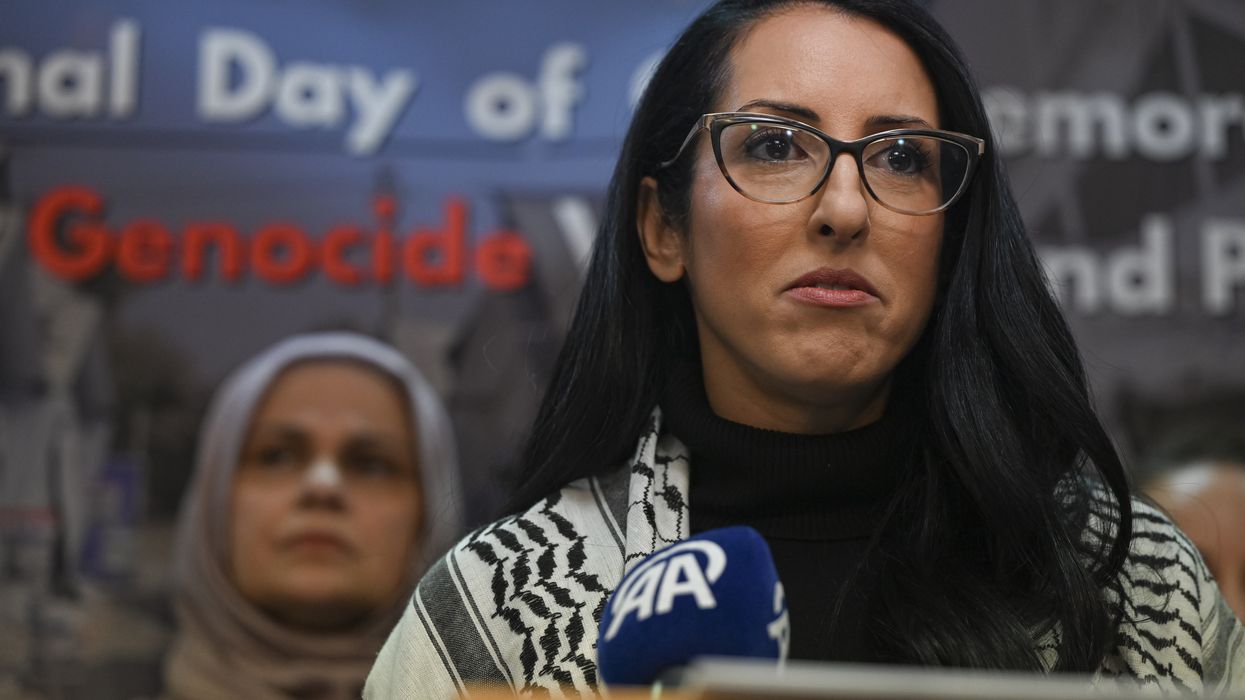
"They actually had the power to stop unconditional arms assistance to Israel," said Hala Rharrit. "They enabled it 100%."
Recent expressions of regret by top Biden administration officials who vehemently defended the United States' billions of dollars in military aid to Israel as it was bombarding Gaza have not gone far with former diplomat Hala Rharrit, who was retaliated against for speaking out about the US policy before she ultimately resigned, and who condemned her former colleagues recent "PR game" this week.
In an interview with Middle East Eye, Rharrit said the former officials who have mused that they would now support withholding weapons from Israel, or that they should have backed such a move while serving under President Joe Biden, are "just so despicable."
"They're so disgusting," Rharrit said. "Those individuals, particularly [National Security Adviser] Jake Sullivan and a handful of others, actually had the power to save human lives. They actually had the power to stop unconditional arms assistance to Israel, right? The Israelis were not killing the Palestinians by themselves. The Israelis were killing the Palestinians with American bombs, with American jets, with American everything. We enabled it 100%. They enabled it 100%."
"They’re so disgusting."
Former US diplomat Hala Rharrit, who resigned in 2024 over Gaza, responds to the Biden officials who’ve recently claimed they should have done more on Gaza.
Watch early by joining MEE's YouTube membership ➡ https://t.co/kSRg1sVXCo pic.twitter.com/szijxYjczk
— Middle East Eye (@MiddleEastEye) August 27, 2026
Rharrit, who resigned as the Arabic language spokesperson for the US State Department in April 2024, six months into Israel's US-backed assault—which has been called a genocide by leading human rights organizations and Holocaust experts—spoke to MEE months after former Secretary of State Antony Blinken said the US should have called for a ceasefire earlier than it did, "such that the suffering the people endured, the loss of the children, so many others, could have been averted.”
Sullivan last year said—weeks before a ceasefire was finally agreed to—that he'd had a change of heart regarding providing Israel with weapons, and that he would no longer support the policy.
In November, Sullivan added in an interview with The Dartmouth that "it’s fair to say that there were a lot of objections from a lot of parts of the international community about the US continuing to support Israel over the course of last year—2024—and over the course of this year in 2025. I think a lot about what we could have done differently."
Rharrit told MEE that "it's despicable that now they're trying to make themselves look like, 'Oh we should have done better and we're so sorry.'"
The former diplomat emphasized that the apology tour has taken place as it's become increasingly clear that "America has changed" in terms of its views on Israel, Palestine, and the United States' decadeslong, unconditional support for the Israeli military—despite US statutes like the Foreign Assistance Act of 1961 and Leahy Laws, which bar the government from providing military aid to countries that block humanitarian assistance and that are accused of human rights abuses.
A poll released this week showed that large majorities of Democratic voters in the first six states that will vote in the 2028 presidential primaries support cutting off weapons aid to Israel, and another survey by Hart Research Associates and Public Opinion Strategies in March found that just 32% of Americans viewed Israel positively, compared with 47% in 2023.
"America is forever changed," said Rharrit. "Americans no longer support these forever wars, they no longer support unconditional arms assistance to Israel. They no longer agree with US policy in the Middle East. And so now... they're doing a PR game. This is just pure PR."
Rharrit and other officials who resigned over the US policy on Israel and Gaza "were vindicated," she said. "Of course we were right the whole time, because it's international law. It's US law. I abided by my oath to the Constitution... That is exactly what I did. That is exactly why I resigned."
Francesca Albanese, the United Nations special rapporteur on the occupied Palestinian territories, said Rharrit is one of "a rare breed" of diplomats.
"During this genocide I've met courageous diplomats and officials who denounced it at real personal cost," said Albanese, whom the Trump administration targeted with sanctions earlier this year. "Imagine foreign policy built by more of them. Because the problem is never one unfit minister/head of state: It's whole spineless cohorts around them."
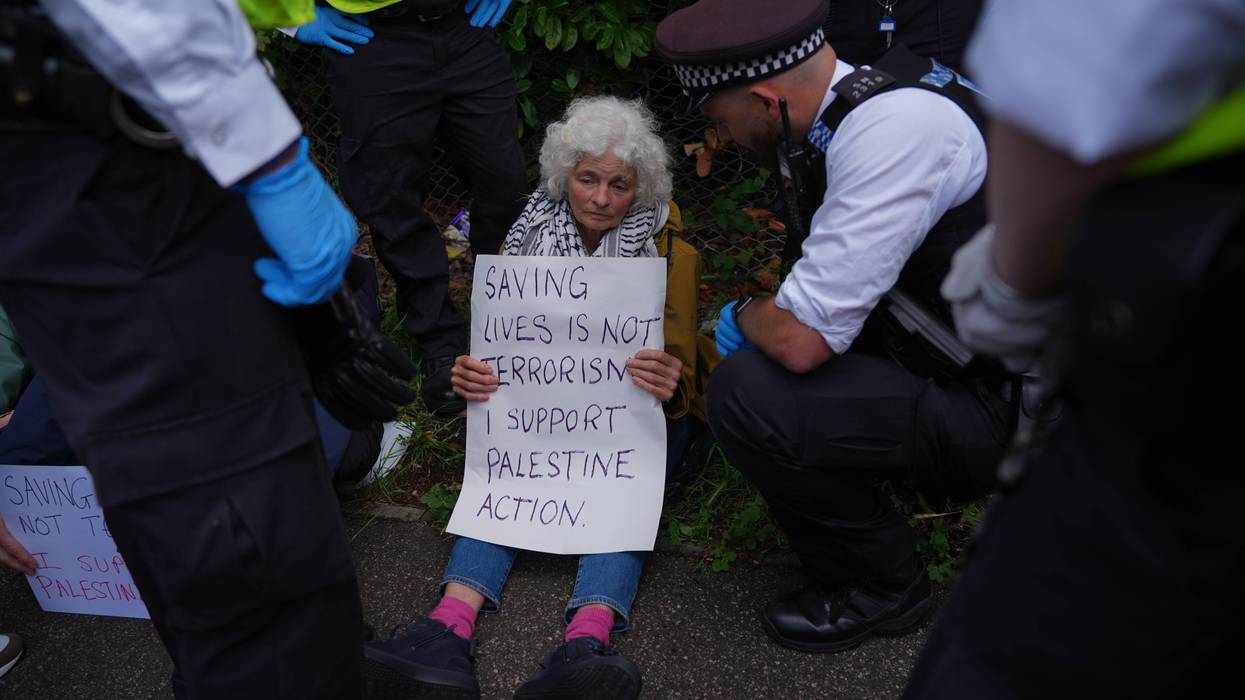
One free speech proponent called the designation "retaliation against the sanctioned for holding political views the Trump administration dislikes."
A top First Amendment advocacy group on Wednesday warned of the "broad speech implications" of the Trump administration's sanctions on the British anti-genocide group Palestine Action, which it designated an international terrorist organization for leading direct actions in opposition to the Israeli government.
Under the designation, Americans will be blocked from doing business with Palestine Action, and providing the group with funds, goods, or services will be prohibited.
British citizens who continue to donate to the group or take part in protests supporting it—which thousands of people have been arrested for doing since the UK government proscribed Palestine Action last year—could face sanctions and visa bans in the US, according to The Telegraph, which first reported the news Wednesday that the US designation was expected.
The group's co-founders, Richard Barnard and Huda Ammori, will face lifetime bans from entering the US due to the sanctions.
Chip Gibbons, policy director for Defending Rights and Dissent, said his group was "especially disturbed that Palestine Action, a nonviolent, direct action organization, has been sanctioned under a [President George W.] Bush-era executive order issued in response to the September 11th attacks, essentially putting civil disobedience for Palestinian rights on equal footing with al-Qaeda."
Treasury Secretary Scott Bessent announced the sanctions of Palestine Action, along with sanctions targeting the Italy-based group Autistici Inventati—which supplies digital services to left-wing groups—and Masar Badil, a Palestinian organization.
The Treasury Department's Office of Foreign Assets Control (OFAC) was imposing the sanctions under Executive Order 13224, which prohibits transactions between people in the US and groups that commit or support terrorism.
“Far-left extremists, their fronts, and their enablers should be on notice: We will bring the full weight of our economic tools to bear,” said Bessent. “Political terrorism has no place in our society, and we will continue to cut the financial lifelines of these groups until they are eliminated.”
The curtailing of Palestine Action's ability to participate in the global financial system and its new US label as a "Specially Designated Global Terrorist" group, said Gibbons, were not only "retaliation against the sanctioned for holding political views the Trump administration dislikes, but they severely curtail and criminalize US citizens' ability to engage in otherwise lawful associations with these groups.”
A US official told The Telegraph before the sanctions were officially announced that Palestine Action had "supported numerous acts of terrorism since July 2020, including acts that have physically injured UK law enforcement personnel, as well as acts intended to intimidate lawful commercial enterprise and coerce the British government."
The designation comes just over a year after UK lawmakers voted to proscribe Palestine Action after some of its members vandalized two aircraft at a Royal Air Force base.
In August 2024, activists with the group also raided a facility of Elbit Systems, an Israeli-owned weapons manufacturer, and attacked a police officer.
Organizers maintain that Palestine Action's overarching goal is to demonstrate against and disrupt "the Israeli war machine, which is committing a genocide in Gaza with the support of the US government," as Ammori told Al Jazeera Wednesday.
They organized the recent actions to protest Israel's bombardment of Gaza, which has killed more than 73,000 Palestinians since 2023 and is continuing to decimate the exclave despite a ceasefire reached last October.
Ammori added that President Donald Trump "has been at the center of the mass murder of Palestinians, enabling the Zionist regime at every turn.”
Many of the people arrested for supporting Palestine Action in the UK have been detained simply for holding signs that express opposition to genocide and solidarity with the group.
The new designation comes a month after US Secretary of State Marco Rubio hosted representatives from more than 60 countries at the Ministerial on the Resurgence of Political Terrorism, where he warned that "for far too long... our counterterrorism doctrine has had a blind spot when it comes to extremist violence from the political left," and called for a global crackdown.
Rubio and top White House adviser Stephen Miller warned in July that numerous arrests and prosecutions of people and groups deemed by the administration to be left-wing extremists would be coming, under the guidance put forward by National Security Presidential Memorandum 7, which called for a national strategy to crack down on left-wing organizing.
In the UK, five Palestine Action organizers won a legal victory after a judge ruled that they would not be sentenced as terrorists, and three UK Supreme Court judges granted Ammori the right to challenge the government's ban on the organization.
More than 250 academics and legal experts on Wednesday wrote to British Prime Minister Andy Burnham, calling on him to both end UK military support for Israel and to terminate the proscription of Palestine Action.