

SUBSCRIBE TO OUR FREE NEWSLETTER
Daily news & progressive opinion—funded by the people, not the corporations—delivered straight to your inbox.
5
#000000
#FFFFFF
To donate by check, phone, or other method, see our More Ways to Give page.
Daily news & progressive opinion—funded by the people, not the corporations—delivered straight to your inbox.

One Brazilian lawmaker said Teresa Regina de Ávila e Silva's death occurred "against a backdrop of extreme distress for the family, with the unjustifiable detention of Thiago in Israel."
The mother of detained Brazilian Gaza flotilla activist Thiago Ávila died Tuesday while her son is allegedly being abused in Israeli custody after being seized off the coast of Greece last week.
Brazilian media reported that Teresa Regina de Ávila e Silva, 63, died after a decadeslong affliction with Amyotrophic Lateral Sclerosis (ALS), also known as Lou Gehrig's Disease, a progressive neurodegenerative disorder.
The Civil Police Union of the Federal District in Brasília—where Luana de Ávila, Ávila e Silva's daughter, is vice president—said in a statement that "Teresa Regina is remembered as a woman of admirable joy and strength, whose life was marked by her ability to face life with lightness, dignity, and love."
"Throughout her journey, she built strong bonds with everyone around her, leaving behind a legacy of affection, presence, and care for her family," the statement continued. "Later in her life, she faced a delicate condition, which she confronted with courage and serenity, always supported by the unconditional dedication of her children, grandchildren, nephews, and all her family and friends."
Erika Kokay, a member of Brazil's ruling Workers' Party representing Brasília in the Federal Chamber of Deputies, said on X that "Teresa will be remembered as a woman of strength and joy, who faced life's challenges with dignity and left a legacy of love for her family."
"My solidarity is even deeper when considering that this grief is unfolding against a backdrop of extreme distress for the family, with the unjustifiable detention of Thiago in Israel," Kokay added. "He was arrested while on a humanitarian mission headed to the Gaza Strip, enduring violations of his rights."
Thiago Ávila and at least 175 other Global Sumud Flotilla members were intercepted and abducted by Israeli forces on April 30 approximately 45 nautical miles from the Greek coast and more than 600 nautical miles from Gaza while trying to deliver humanitarian aid to the Palestinian territory in dozens of boats.
After allegedly enduring abuse and brutal attacks that left over 30 flotilla activists with injuries including concussions and broken ribs and noses, all but two of the convoy's members were released.
Ávila and another member of the Global Sumud Flotilla steering committee, Spanish-Swedish national Saif Abu Keshek, were taken to Israel, which claims without evidence that the pair have links to Hamas, the militant Palestinian resistance group that led the October 7, 2023 attack on Israel.
Israeli authorities have twice extended the pair's detention. According to the Global Sumud Flotilla, Ávila and Abu Keshek “are being subjected to systemic psychological torture and explicit threats to the lives of their families.”
Adalah Legal Center, which represents the pair, said Ávila is being "subjected to repeated interrogations lasting up to eight hours," and “interrogators have explicitly threatened him, stating he would either be ‘killed’ or ‘spend 100 years in jail.’”
“Both activists remain in total isolation, subjected to 24/7 high-intensity lighting in their cells, and kept blindfolded whenever they are moved, including during medical examinations,” the group added.
Brazilian President Luiz Inácio Lula da Silva, Spanish Prime Minister Pedro Sánchez, and their respective governments have condemned the activists' detention and demanded their release.
On Wednesday, the United Nations Office of the High Commissioner for Human Rights joined calls for the pair's release, asserting that "it is not a crime to show solidarity and attempt to bring humanitarian aid to the Palestinian population in Gaza, who are in dire need of it."
Gazans are suffering from 31 months of what UN experts say is a genocidal war and siege perpetrated by Israel, whose leader, Prime Minister Benjamin Netanyahu, is a fugitive from the International Criminal Court. The Hague-based tribunal accuses Netanyahu and former Israeli Defense Minister Yoav Gallant of war crimes and crimes against humanity in Gaza, including murder and forced starvation.
Since October 2023, more than 250,000 Palestinians have been killed or wounded—including thousands of bodies still buried beneath rubble—and most of the Gaza Strip's more than 2 million people have suffered forced displacement, starvation, or illness caused by Israel's onslaught.
Ávila isn't the first high-profile person to lose his mother while jailed by Israel. Samiha Abu Safiya died of a heart attack attributed to “severe sadness” after her son, Kamal Adwan Hospital director Dr. Hussam Abu Safiya, was imprisoned by Israeli forces, including in the notorious Sde Teiman prison. Abu Safiya—who has allegedly been subjected to torture including electric shock and has suffered broken ribs—is still being held by Israel.
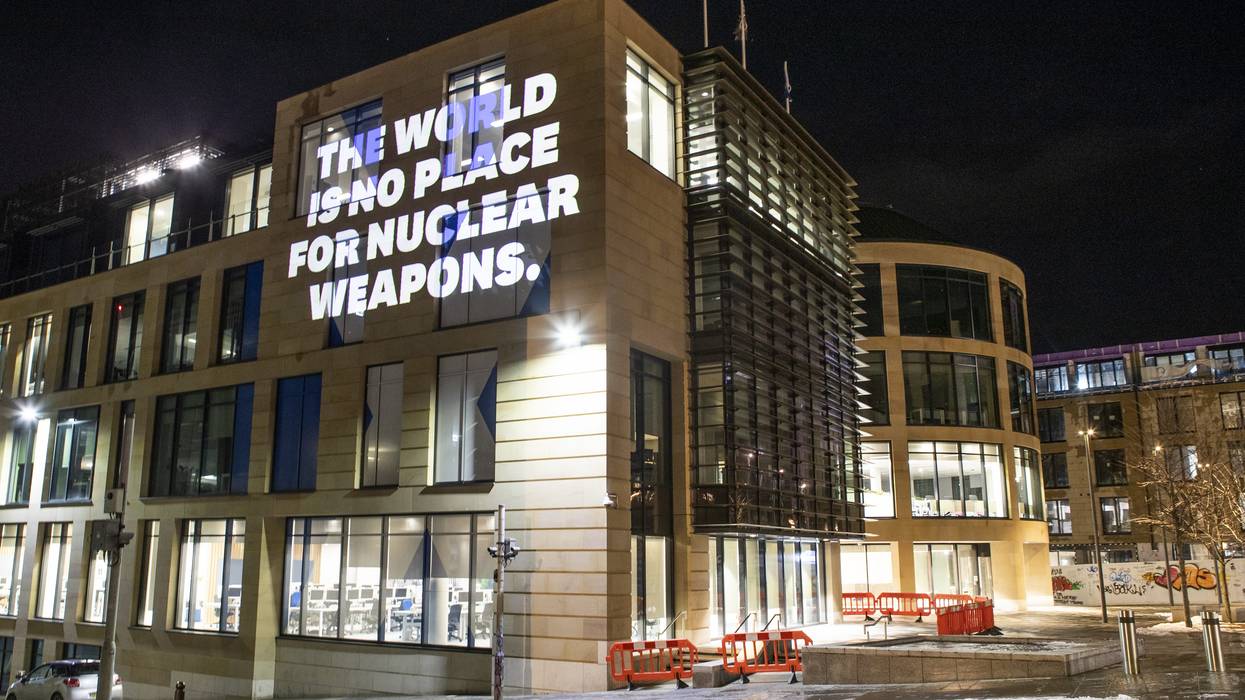
Humanity faces a choice, whether consciously or not, to continue down a path of conflict that leads toward ultimate destruction or to renounce its old ways and center peace at the heart of all its efforts.
This speech was delivered to the 11th Review Conference of the Treaty on the Non-Proliferation of Nuclear Weapons on May 1, 2026.
Honorable President, Distinguished Delegates, Colleagues, and Friends,
We are living in a decisive moment. Humanity faces a choice, whether consciously or not, to continue down a path of conflict that leads toward ultimate destruction or to renounce its old ways and center peace at the heart of all its efforts.
International law, built painstakingly over decades and even centuries to prevent such an unfathomable catastrophe, is under brazen and relentless attack today. At the heart of this divergence lies a fundamental question: whether states may claim a right to wage war without restraint, and whether use and even possession of weapons with potential to end human civilization can ever be justified. These are precisely the issues at the core of the Treaty on the Non-Proliferation of Nuclear Weapons (NPT)—whose future we have gathered to discuss at this Review Conference.
Nuclear disarmament and nuclear non-proliferation are not separate tracks toward a safer world—they are intertwined and inseparable paths.
Our world is a time-ticking bomb. There are more than 12,000 nuclear warheads in existence—each capable of killing hundreds of thousands, some even millions of people, and any one of which could trigger a chain reaction leading to full-scale nuclear war in less time than this session will last.
More than 40 years ago, Presidents Ronald Reagan and Mikhail Gorbachev reminded us that “a nuclear war cannot be won and must never be fought.” And yet today, we hear renewed calls to use nuclear weapons in the name of “saving lives,” alongside threats that contemplate the destruction of entire societies.
The five nuclear-weapon states recognized under the NPT, the United States, the Russian Federation, the United Kingdom, France, and China, possess over 95% of the world’s nuclear arsenal. With that power comes not only a moral responsibility, but a clear legal obligation under Article VI of this Treaty: to pursue negotiations in good faith to achieve not only nuclear disarmament, but also total and complete general disarmament.
Nuclear disarmament and nuclear non-proliferation are not separate tracks toward a safer world—they are intertwined and inseparable paths. As Joseph Rotblat warned in his 1995 Nobel Peace Prize acceptance speech: “If the militarily most powerful and least threatened states need nuclear weapons for their security, how can one deny such security to countries that are truly insecure? The present nuclear policy is a recipe for proliferation. It is a policy for disaster.”
We join the voices of hibakusha and countless others who have come before us in urging all NPT States Parties to take immediate and meaningful action:
This call is not just an abstract moral appeal; it is a prerequisite for human survival. The credibility of the NPT and the future of humanity depend on the actions we take over the next three weeks.
In the words of Joseph Rotblat: “The quest for a war-free world has a basic purpose: survival. But if in the process we learn how to achieve it by love rather than by fear, by kindness rather than by compulsion; if in the process we learn to combine the essential with the enjoyable, the expedient with the benevolent, the practical with the beautiful, that will be an extra incentive to embark on this great task.”
Thank you, Honorable President.
"Alongside robust adaptation and risk reduction strategies," the report says, "the only durable solution to the escalating threat of extreme heat lies in ambitious, multilateral climate change mitigation."
Just a month after a sweeping World Meteorological Organization report led United Nations Secretary-General António Guterres to declare that "every key climate indicator is flashing red," WMO and another UN agency marked Earth Day on Wednesday by releasing an analysis focused on "how extreme heat is reshaping food production and food security."
Simply titled "Extreme Heat and Agriculture," the WMO and Food and Agriculture Organization (FAO) report lays out how extreme heat "is influenced by multiple interlinked drivers," including the trends and inertia of human-induced climate change, natural climate variability, and meteorological phenomena such as droughts and atmospheric and marine heatwaves. Then, it gets into what that means for agriculture.
"Extreme heat is increasingly defining the conditions under which agrifood systems operate," WMO Secretary-General Celeste Saulo and FAO Director-General Qu Dongyu stressed in the foreword of the report. "Rising temperatures and heatwaves, occurring with greater frequency, duration, and intensity, are often accompanied by prolonged drought and other climate extremes."
"Higher temperatures parch soils, reduce harvests, strain livestock, disrupt fisheries, and increase wildfire risk. When combined with water scarcity, the consequences intensify, cutting production, lowering incomes, and tightening food supplies," the pair wrote. "These impacts extend far beyond the farm gate. They represent a systemic risk to global food security and to the livelihoods of more than 1.23 billion people who rely on agriculture."
For example, yields of staple crops such as maize and wheat have already declined by 7.5% and 6%, respectively, with 1ºC of global temperature rise beyond preindustrial levels. The publication points out that yields "are projected to decline by up to an additional 10% for every 1ºC of warming in the future."
It also notes that "under high-emission scenarios, nearly half the world's cattle could be exposed to dangerous heat by 2100," resulting in annual losses nearing $40 billion. Under a low-emission scenario, the report adds, "impacts from livestock exposure to extreme heat are reduced by nearly two-thirds."
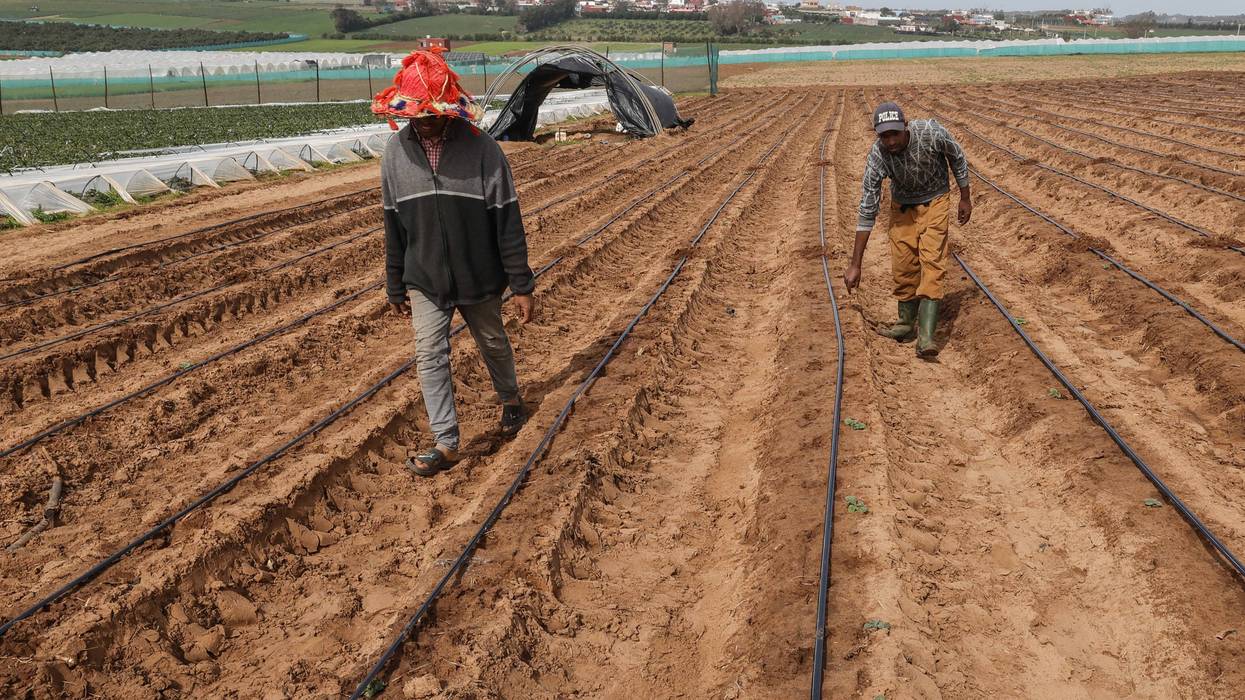
The report details vulnerabilities, observed impacts, and projections for not only crops and livestock but also fisheries and aquaculture; forests, plantations, and orchards; and agricultural workers.
Saulo and Qu highlighted that "agricultural workers are already experiencing effects on their health, productivity, and income. As climate variability intensifies, hard-won progress in reducing hunger and poverty comes under strain, with shocks rippling through economies and households and disproportionately affecting the most vulnerable."
The report outlines the existing "range of technical agricultural adaptation options and other broader nontechnical risk management strategies" for responding to extreme heat, as well as barriers to implementing them. It also offers a case study: the extreme heat event that hit Brazil in 2023-24.
That period in the South American country "serves as a stark example of the breadth and severity of compound impacts that can be triggered by a primary extreme heat event," the report states. "On top of a warmer baseline shaped by climate change and amplified by El Niño, the heatwave simultaneously impacted crops, livestock, forests, fisheries, and human health."
"The interconnected failures highlight the profound vulnerability of the entire agricultural sector and the grave implications such events have for the livelihoods and food security of the millions who depend on it," the report continues, emphasizing that "building systemic resilience through adaptation and dedicated risk reduction is imperative."
"While this report outlines a path toward enhanced resilience, solutions and opportunities are not infinite," the publication adds. "Alongside robust adaptation and risk reduction strategies, the only durable solution to the escalating threat of extreme heat lies in ambitious, multilateral climate change mitigation."
🌡️ Extreme heat is already affecting crops, livestock, forests, fisheries & the people who produce our food.New @fao.org-@wmo-global.bsky.social report on #ExtremeHeat & Agriculture shows the impacts & #ClimateAction needed to respond to this growing threat.🔗 https://bit.ly/4cXmmOe#EarthDay
[image or embed]
— Food and Agriculture Organization of the United Nations (@fao.org) April 22, 2026 at 4:15 AM
After the most recent UN Climate Change Conference, COP30, concluded in Brazil late last year, critics called it "another failed climate summit." The United States is the world's largest historical climate polluter, yet President Donald Trump didn't even attend, and has spent his second term not only repealing climate policies but also serving the planet-wrecking fossil fuel industry whose campaign cash helped him return to power.
Trump has also started a new illegal war in the Middle East, partnering with Israel to target Iran. That assault has underscored how armed conflict negatively impacts agriculture and food systems around the world. The Iranian government has restricted traffic through the Strait of Hormuz—a key trade route, including for fertilizer and fossil fuels—which has prompted mounting alarm about a global food crisis.
Earlier this month, ahead of the current fragile ceasefire, the FAO's chief economist, Máximo Torero, warned that farmers would soon "have to choose: Farm the same with fewer inputs, plant less, or switch to less intensive fertilizer crops."
Jorge Moreira da Silva, executive director of the UN Office for Project Services, said Tuesday that "the planting season has already started, and in most countries in Africa it will end in May. So, if we don't get some solution immediately, the crisis will be very significant and severe, particularly for the poorest countries and for the poorest citizens."