

SUBSCRIBE TO OUR FREE NEWSLETTER
Daily news & progressive opinion—funded by the people, not the corporations—delivered straight to your inbox.
5
#000000
#FFFFFF
To donate by check, phone, or other method, see our More Ways to Give page.
Daily news & progressive opinion—funded by the people, not the corporations—delivered straight to your inbox.

One anti-arms trade advocate said it showed the UK's new policy toward Israel was "nothing more than a soundbite designed to appease voters, whilst failing to deliver meaningful policy change."
Earlier this month, the UK government announced plans to cut off trade with Israel's illegal settlements in the West Bank—including weapons shipments.
But according to new disclosures made to Parliament, reported Thursday by Declassified UK, the sanctions regime has not actually led to any weapons licenses being suspended or revoked, validating warnings by some critics that the new Labour government's effort to cut ties with Israel's occupation was only skin-deep.
Back in 2024, as Israel's genocidal assault on Gaza was raging, then-Prime Minister Keir Starmer had suspended 30 out of approximately 350 arms export licenses to the country.
According to the UK-based Campaign Against Arms Trade (CAAT), the UK has still approved at least £178 million ($235 million) worth of fixed-value military export licenses to Israel since October 2023—a figure that excludes exports authorized under open licenses, including much of Britain's contribution to the F-35 program.
UK Foreign Secretary Ed Miliband described the new restriction on arms export licenses as a “double lock against arms sales” to Israel under which the government would continue its existing suspensions and refuse applications for arms that "materially contribute to the occupation” of Palestine.
However, CAAT warned the following day that the policy, while welcome, "does not go far enough," and included several loopholes—including one that allowed the UK to continue supplying F-35 fighter jet parts to an international pool used by the Israeli military and another allowing Israel to potentially use military equipment exported there for use by third countries.
Several prominent leftists in Parliament, including Your Party co-founders Jeremy Corbyn and Zarah Sultana, as well as Green Party leader Zack Polanski, said that the trade bans should ultimately be just a first step on the way to a full arms embargo.
On September 16, the UK's trade department acknowledged, following a question from MP Iqbal Mohamed, that "no additional licenses have been revoked or suspended since September 8," according to Declassified.
The department explained that this was "largely because licenses for items that might materially contribute to the occupation have already been suspended because of Israel’s conduct in the Gaza conflict."
Declassified called this into doubt, however:
The government insists that many of the extant licenses for Israel cover items that are for re-export to a third country or military-grade goods for civilian use such as body armor.
Yet fighter jet components are still being exported to global spares pools used by Israel, and UK-made trainer aircraft parts, which help to sustain the F-35 program, continue to flow directly to Tel Aviv.
When asked about trainer aircraft, the trade department told Parliament that such components “are not used in Gaza and… do not materially contribute to Israel’s illegal occupation.”
This is despite the Foreign Office previously acknowledging that Israel’s M-346 trainer aircraft are “used to train [Israeli Air Force] fast-jet pilots” and “facilitate the development of an offensive capacity.”
Dearbhla Minogue, a lawyer from Global Legal Action Network, which took the UK to court over arms exports to Israel in 2024, told the outlet that these revelations appear to indicate that there will be "no concrete consequences for Israel after this government recognized the likelihood of war crimes, ethnic cleansing, and what it terms Israeli terrorism."
"Successive governments have done everything in their power to continue aiding and abetting genocide and war crimes with deadly and devastating consequences," said Sam Perlo-Freeman, CAAT’s research coordinator. "The new so-called ‘double-lock’ on arms exports to Israel exemplifies this."
He added that it is "nothing more than a soundbite designed to appease voters, whilst failing to deliver meaningful policy change, and continuing to allow arms dealers to profit from Israel’s genocide in Gaza."
This news comes days after Prime Minister Andy Burnham also affirmed that the UK would provide military support—specifically “defensive” air-to-air refueling—to Saudi Arabia as it launches new strikes on Yemen’s Houthis.
A new CAAT report says the UK approved £464.8 million in military exports to Saudi Arabia in just the first quarter of 2026, with most of the value consisting of air-to-surface weapons.
The Saudi-led war against Yemen that lasted from 2015-22 killed an estimated 377,000 people from direct and indirect causes. During that time, CAAT found that the UK approved £7.1 billion ($9.4 billion) worth of military goods to Saudi Arabia.
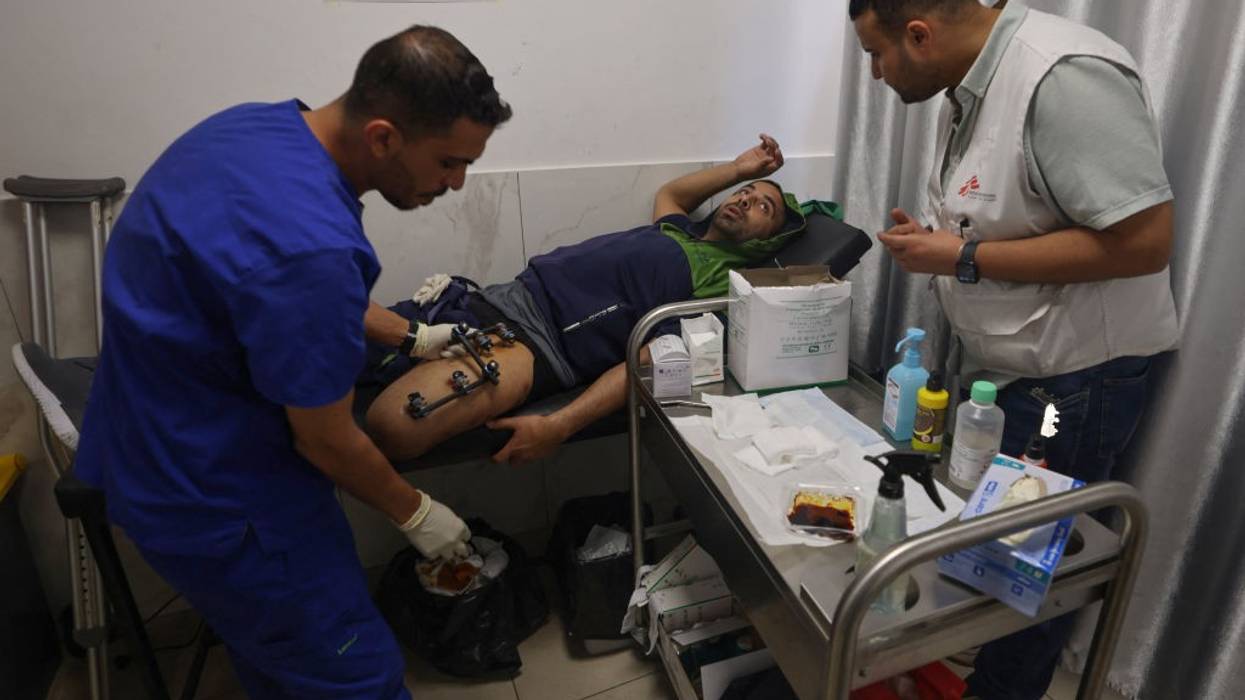
"Support for Israel requires you to be against everything good in this world, like an organization which sends doctors to conflict areas to save human lives," said one observer.
Doctors Without Borders on Saturday condemned allegations made by a British pro-Israel lobby group, which called on Home Secretary Shabana Mahmood to investigate and potentially proscribe the group, whose medical providers and other humanitarian workers provide lifesaving aid in 70 countries and have worked in Palestine during Israel's assault there.
As The Telegraph reported, UK Lawyers for Israel (UKFLI) wrote to Mahmood as well as the Charity Commission and Fundraising Regulator, calling on the Labour government to investigate Doctors Without Borders, also known by its French name, Médecins Sans Frontières (MSF).
The group claimed at least two of MSF's workers who were killed by Israeli forces, physiologist Fadi Al Wadiya and driver Nasser Hamdi Abdelatif Al Shalfouh, had connections to terrorist groups in Gaza.
Palestine Islamic Jihad published a poster earlier this year naming Wadiya as a "martyr commander," and UKFLI claimed Al Shalfouh was a sniper for a Hamas battalion.
MSF acknowledged the poster regarding Wadiya in February and said the medical group "had no indication that Fadi Al Wadiya might have been involved in military activity of any kind prior to his killing by the Israeli Forces."
“If the Israeli authorities had any reliable information about Fadi’s involvement in military activity, they never shared it with MSF either prior to his killing or when we reached out immediately after he was killed to ask for clarifications around the circumstances of his death," the group added. “We would never knowingly employ people engaging in military activity. Any employee who engages in military activity would pose a danger to our staff and patients.”
UKFLI sent its report on MSF to Mahmood asking her to ban the group, as the Labour government proscribed the protest group Palestine Action last year, labeling it a terrorist group under the Terrorism Act. The government took that action after members of the group vandalized planes at a military base.
The designation put Palestine Action on the same legal footing as Al Qaeda in the UK and made membership of the group—or even expressions of support for it—punishable by up to 14 years in prison.
The demand for the same designation for MSF, said former British Army general Charlie Herbert, was "absolutely grotesque."
MSF doctors and healthcare workers have treated thousands of Palestinians in Gaza since Israel began its onslaught there in October 2023 in retaliation for a Hamas-led attack. At least 15 people working with the organization have been killed by Israeli forces. The group is also currently providing humanitarian and medical aid in Sudan as the civil war there has displaced millions of people and collapsed the healthcare system; in Yemen as the conflict between the Houthis and Saudi-backed government troops has escalated; and in the Democratic Republic of Congo, which is facing an Ebola outbreak as well as humanitarian crises exacerbated by years of conflict.
"I work in aid, and when people ask who to support I always say MSF," said researcher and activist Philip Proudfoot. "MSF, wherever I’ve been, are right there on the front, in dangerous conditions, in isolated outposts, providing life-saving support. They’re heroes. UK lawyers for Israel are not fit to wash their scrubs."
US-based researcher Shaiel Ben-Ephraim said the report by UKLFI demonstrates that "support for Israel requires you to be against everything good in this world, like an organization which sends doctors to conflict areas to save human lives."
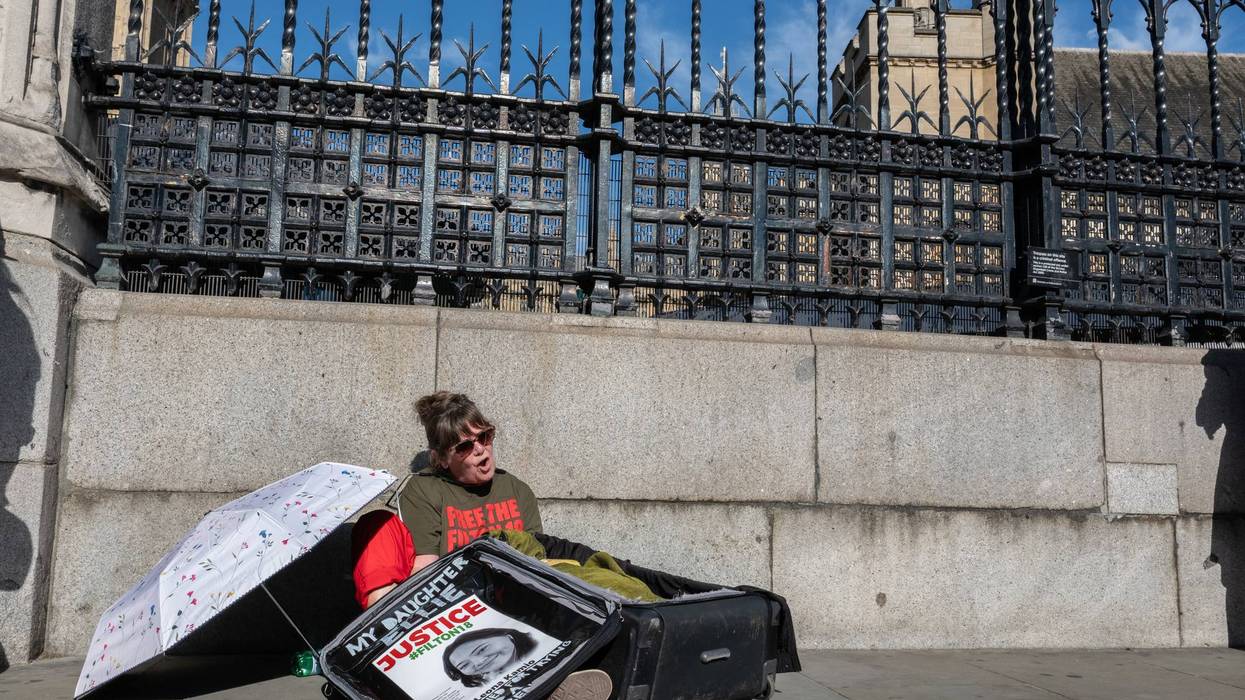
Emma Kamio's daughter, Ellie, was also "debanked" by Lloyds Bank before she was criminally convicted for her sabotage of Israeli military equipment.
One of the UK's largest financial institutions, Lloyds Bank, reportedly targeted a jailed Palestine Action protester and her family for financial punishment before she was ever convicted of a crime, according to a report out Wednesday from Novara Media.
The outlet reported that activist Leona "Ellie" Kamio had her account shuttered by Lloyds, a process known as "debanking," while she was being held on remand for her role in destroying Israeli military equipment at a factory owned by the technology firm Elbit Systems.
Ellie and four other activists were convicted of criminal damage earlier this year. But although a jury never convicted them of terrorism, they were sentenced as terrorists after a judge made an unprecedented ruling that their actions had a “terrorist connection," due to their political motivation. She and other members of the so-called "Filton Four" have appealed their sentences.
Ellie was held in prison on "remand" for more than 18 months before her first trial concluded in February 2026 although she was never charged with terrorism.
In February 2025, a year before her trial for criminal damage, Novara reports that Kamio was sent a letter by Lloyds informing her that it was closing her bank account because it was “unable to maintain a banking relationship." It did not give an explanation for the decision.
In June 2026, after Ellie had been convicted of criminal damage but before she was slapped with a terrorism sentence, her mother, Emma Kamio, learned that Lloyds had denied her request for a new mortgage on the commercial properties for her small business.
Lloyds made it clear that it was because of her daughter's case.
"We’ve now assessed the deal and consulted with our credit sanction team," a business development manager for the bank told Emma's mortgage broker. "Unfortunately, due to the adverse media, it’s not something they’re comfortable supporting at this time.”
When the broker offered an alternative plan to transfer the properties into her sister's ownership, Lloyds also rejected it.
Emma told Novara that she lost her properties as a result of Lloyds' decision. Her businesses, she said, "had to slip down the list of priorities as for the past two years, she's "spent every waking moment dealing with the trauma of my wrongful arrest or fighting for my daughter’s campaign and her release."
Emma was herself arrested in July 2025 after she locked herself to a suitcase outside Parliament to protest as members voted to enact the ban on Palestine Action. She was acquitted in April 2026.
"Thankfully, my drive for justice is more important to me than money," Emma said.
In the UK, banks are not allowed to cancel customers' accounts based on religion or belief. But they can be closed if the bank suspects a user is engaged in money laundering, terrorism financing, fraud, or other criminal activities that could pose a risk to the financial institution.
Emma contends that Lloyds "debanked my daughter Ellie with no reason at all, and while she was on remand and therefore innocent until proven guilty."
A spokesperson for Lloyds told Novara that the bank does not "close customer accounts or make lending decisions based on political or personal beliefs."
"Our decisions are based on relevant laws, regulations, account conditions, or lending requirements," the spokesperson said. "We’re unable to comment on individual cases.”
Anas Mustapha, the head of public advocacy at CAGE International, a UK-based organization focused on state abuses under terrorism laws, described the actions committed against Emma as “collective punishment."
"Emma Kamio has nothing to appeal against—just a bank’s discriminatory risk assessment, applied because her daughter took action to stop the supply chain of deadly weapons used in a genocide," Mustapha told Novara.
The highly controversial sentencing of Ellie and the rest of the "Filton Four" as terrorists was widely condemned by civil liberties and human rights activists, who described it as a dramatic escalation of the British government's effort to punish pro-Palestinian speech.
Last July, the Labour government of then-Prime Minister Keir Starmer used the Terrorism Act to ban Palestine Action, which has engaged in "direct action," including property destruction against entities activists believe are complicit in Israel's genocide in Gaza.
Not only is membership in the group now considered a terrorist offense, but nonviolent expressions of support for the group have also been criminalized.
Since the ban came into effect, 3,500 arrests of peaceful protesters have taken place across the country, according to Amnesty International, including more than 1,200 who've been charged with terrorism-related offenses.
Separately, official Home Office figures show that as of March, 92% of terrorism-related arrests in the UK over the previous year were linked to suspected support for Palestine Action.
Ellie and the other members of the Filton Four have defended their acts of sabotage against Israeli military equipment—including dozens of drones—as a justifiable response to Israel's destructive military campaign in Gaza.
That campaign, which many human rights organizations have described as a "genocide," has killed more than 73,000 Palestinians, including over 20,000 children, according to official tallies from the Gaza Ministry of Health, while independent analysts have argued the true death toll since October 2023 is much higher.
Elbit is one of the companies that provides much of Israel's drone fleet, which has been involved in attacks that have killed Palestinian civilians.
"Ellie was sentenced as a terrorist after she was convicted of criminal damage for destroying 40 Israeli weapons, including quadcopter drones," said Huda Ammori, one of the co-founders of Palestine Action, in a post on X. "For saving lives, she was deemed a terrorist, and her family is also being targeted."
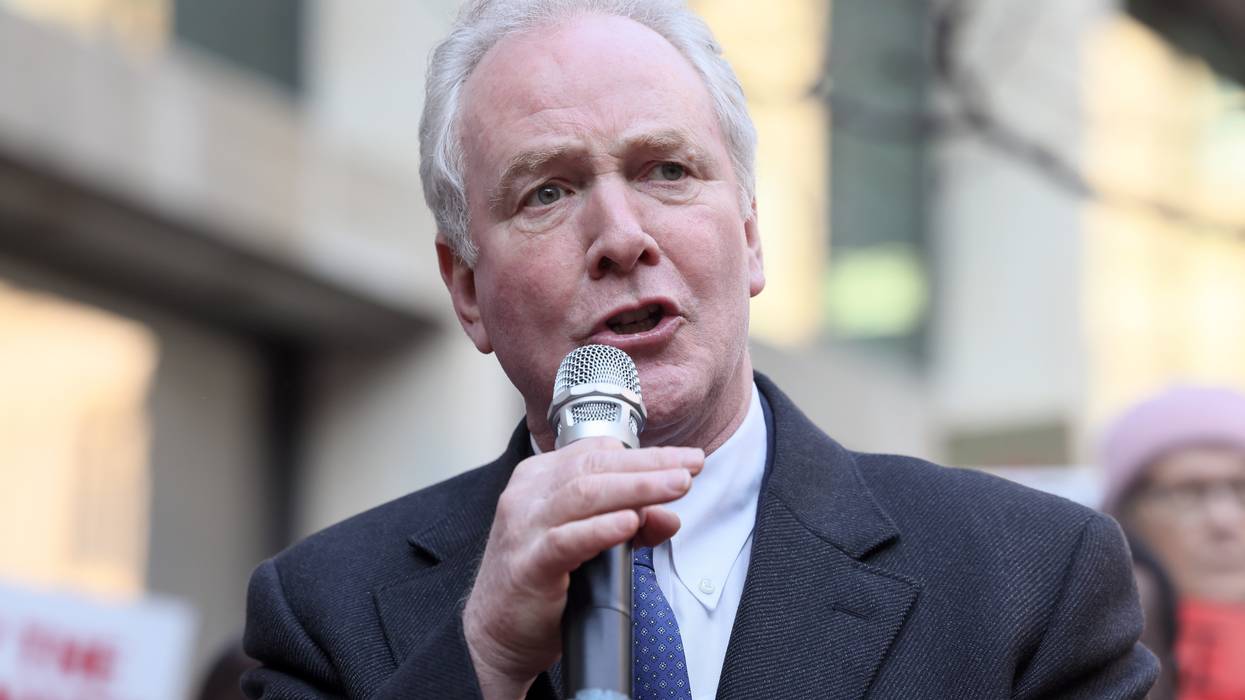
"While the Trump admin attacks the move, Congress can and must act," said Sen. Chris Van Hollen.
As the UK, Canada, and France enact bans on goods from illegal Israeli settlements, some progressive Democrats are calling for the US to join the effort to sanction the escalating wave of state-backed settler terrorism against Palestinians in the West Bank.
"Finally, some European countries are going beyond the ritual denouncing of expanding illegal Israeli settlements and are taking action to uphold international law. It is a modest but important step," said Sen. Chris Van Hollen (D-Md.) in an X post on Tuesday. "While the Trump admin attacks the move, Congress can and must act."
He was joined by Rep. Greg Casar (D-Texas), the chair of the Congressional Progressive Caucus, who said the trade ban was a "step in the right direction and toward ending the occupation," and added that "the US must do the same."
The Trump administration, which has often moved in lockstep with Israel, had a muted response to news of the trade ban. Trump himself has not commented on the sanction effort, and according to Axios, he did not push back when briefed on the plan by UK Prime Minister Andy Burnham.
But while US Secretary of State Marco Rubio says "stability" in the West Bank is a top priority, including halting the "uptick in violence," he made clear the administration opposed the actions taken by nations cutting off trade with the settlements.
"Obviously, we're not going to do what the UK did," Rubio told reporters on Tuesday.
Rep. Joaquin Castro (D-Texas) called the expansion of Israeli settlements "an ugly land grab carried out through violence and terrorism," and added that "any American president serious about achieving peace" should be willing to cut off trade with the settlements.
But Rep. Ro Khanna (D-Calif.), a possible 2028 presidential candidate who was detained by a group of armed settlers during a trip to the West Bank in July, acknowledged that such a ban was unlikely to be enacted under Trump. He said that "the next American president" should ban trade with the settlements "and recognize a Palestinian state."
Rep. Jonathan Jackson (D-Ill.), a member of the House Committee on Foreign Affairs, said he "wholeheartedly" welcomed the trade ban enacted by the UK, adding that "international law must mean something, and accountability must apply to all." However, he stopped short of saying the US should join the ban itself.
Conversely, fellow Illinoisan Rep. Jesús "Chuy" García (D) said the US "must take this long overdue step, and do much more to end its support for Israeli occupation and genocide."
Any effort to compel the US to restrict products from Israeli settlements would likely need to come through Congress.
In June, amid the recent historic uptick of settler attacks, Van Hollen and Castro led dozens of lawmakers in a call for the State Department to comply with an existing law that requires US loan guarantees available to Israel to decrease in accordance with its expenditure on illegal settlements in the occupied Palestinian territories.
Last year, Van Hollen was joined by Sen. Peter Welch (D-Vt.) and three other senators in the Democratic caucus proposing legislation that would codify Biden-era sanctions on individual violent Israeli settlers, which were revoked by Trump.
However, no legislation has yet been introduced aimed at restricting trade with the settlements.
Meanwhile, Democratic Party leaders in Congress, namely House Minority Leader Hakeem Jeffries (D-NY) and Senate Minority Leader Chuck Schumer (D-NY), have not issued public statements on the international sanctions initiative.
That puts them at odds even with some pro-Israel groups, like the liberal lobbying organization J Street, which endorsed the international ban on trading with the settlements on Tuesday.
“We welcome the UK, France, and Canada’s decision to ban the import of goods produced in settlements, as well as the UK’s intention to sanction those who finance, facilitate, or construct new settlements," said the group's president, Jeremy Ben-Ami. "Support for Israeli security and strong opposition to the settlement project are not in contradiction; they go hand in hand. Israel’s closest allies are making clear that the status quo is no longer acceptable."
"We call on the US government and the European Union to pursue similar action," Ben-Ami said. "The international community must make clear that efforts to foreclose Palestinian self-determination have consequences."
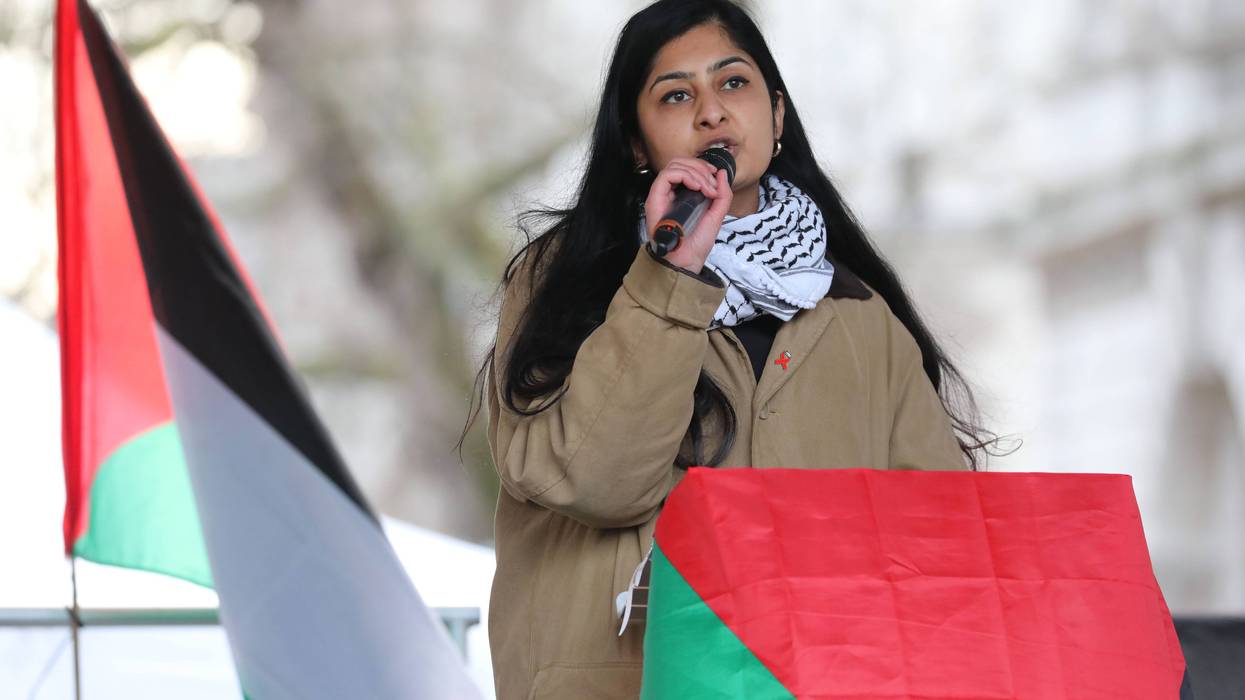
"I will not be intimidated into silence," said MP Zarah Sultana. "If anything, this ban only strengthens my resolve to keep speaking out."
Zarah Sultana, a member of the UK Parliament, said she won't stop speaking about the rights of Palestinians after Israel banned her from entering the country on Tuesday.
"Given that this is a fascist government presiding over genocide, apartheid and an illegal occupation, I’ll wear it as a badge of honor," she said in a post to X. "I will not be intimidated into silence. I will continue to speak out against Israel’s genocide and against the UK’s complicity. If anything, this ban only strengthens my resolve to keep speaking out."
Sultana, who represents Coventry South and is a co-founder of the left-wing Your Party, was one of 11 members of Parliament whom Israel announced it was blocking from entry in retaliation after the UK joined Canada, France, and other nations to announce an import ban on goods from Israeli settlements in the West Bank, which are considered illegal under international law.
Following a year of record violence against Palestinians in the territory, UK Foreign Secretary Ed Miliband said the import ban was in response to the "ethnic cleansing of Palestinians in areas of the West Bank—perpetrated by settler terrorists."
Israel has reacted with fury at the move, closing the British consulate in East Jerusalem, which handles relations with Palestinians in East Jerusalem, the West Bank, and Gaza.
Also banned from the country are UK Labour MPs Diane Abbott, Richard Burgon, John McDonnell, and Naz Shah; Green MPs Siân Berry, Ellie Chowns, Carla Denyer, Adrian Ramsay, and Hannah Spencer; as well as Jeremy Corbyn, who led the Labour Party from 2015-20 before co-founding Your Party with Sultana in 2025.
Remarking on his and his colleagues' ban from the country, Corbyn said Israel's treatment of Palestinians was "the real scandal."
"I have visited all parts of Palestine on several occasions, where I have witnessed the horrors of occupation, as well as the resilience and humanity of the Palestinian people," Corbyn wrote on X. "They are the ones who suffer from Israel's apartheid. It is their freedom which is egregiously curtailed, alongside thousands of Palestinian refugees who are denied the right of return."
He added: "As the world wakes up to the genocide in Gaza, it is shocking that Israel continues to deny entry to UN investigators and international journalists. Israel doesn't want the world to see what it is doing—but we can never give up in our attempts to expose the truth."
Israel also banned Fahad Ansari, a lawyer who has represented Hamas’ political wing in court in the UK and—like Sultana—said on X, “I am neither British nor an MP but do take this as a badge of honor (although pretty sure I’m already a persona non grata in the apartheid state).”
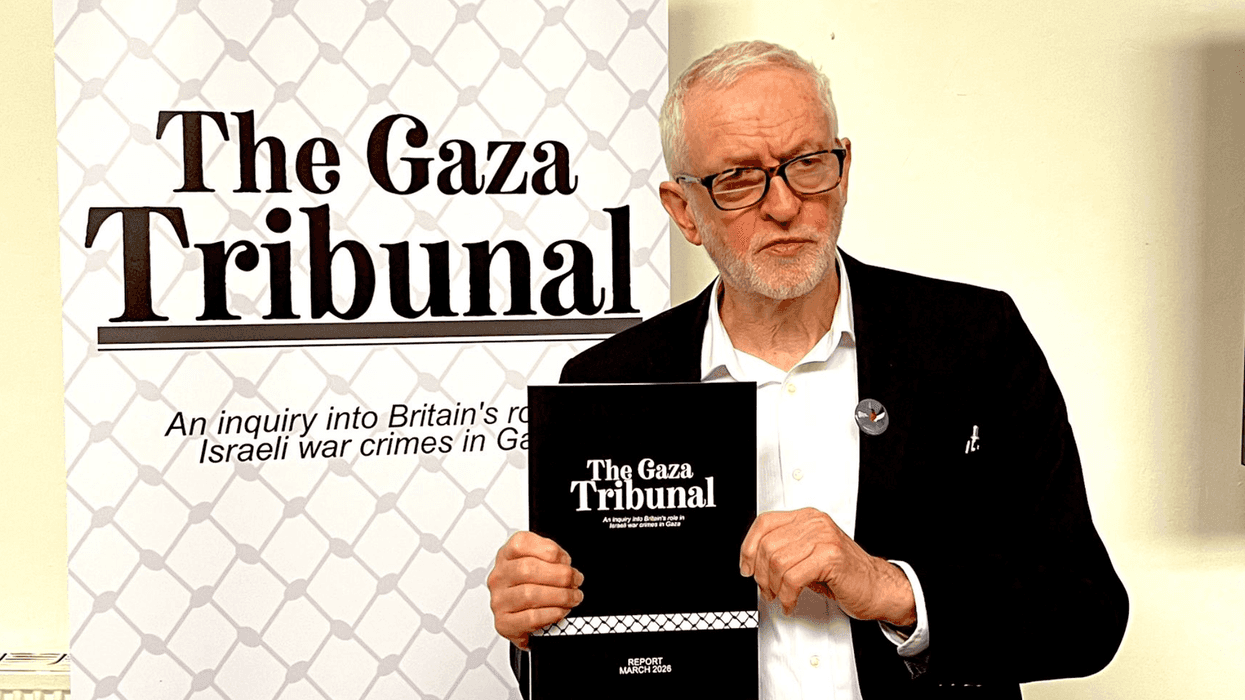
"This is not merely a matter of semantics. This is a matter of international law."
Amid Israeli settlers and soldiers' unprecedented violence against Palestinians in the occupied West Bank, Member of Parliament Jeremy Corbyn was among those arguing on Tuesday that the United Kingdom's new "sanctions on illegal settlements are welcome, but not enough," and calling on Prime Minister Andy Burnham to condemn Israel's war on the Gaza Strip as genocide.
On behalf of the UK's ruling Labour Party, Foreign Secretary Ed Miliband announced a ban on trade with illegal Israeli settlements in the West Bank. He was joined by leaders from Canada, Denmark, Finland, France, Iceland, Ireland, Norway, Poland, Portugal, Spain, and Sweden, who confirmed "their intention to introduce national and/or support European restrictions" on trading with Israeli West Bank settlements.
Corbyn, a former Labour leader from Islington North who has since co-founded Your Party, declared that "Britain must end all arms sales, all military cooperation, and all forms of support that sustain Israel’s system of apartheid, occupation, and genocide."
In addition to speaking in Parliament on Tuesday, Corbyn wrote to Burnham that "for three years, we have witnessed the abominable destruction of human life in Gaza," where "Israel has killed at least 73,000 people, excluding an untold number of people lost under the rubble."
While welcoming Burnham's recent admission that Labour "got it wrong" and its "initial response to the treatment of Gaza caused huge hurt," Corbyn said that "it is extremely disappointing that these words have not translated into meaningful action."
"It has not gone unnoticed that, 50 days into your premiership, you have declined to call 'the treatment of Gaza' what it really is: a genocide," the MP stressed, noting that the term has long been used by scholars and human rights advocates globally. "This is not merely a matter of semantics. This is a matter of international law."
"Far from preventing genocide, the British government has facilitated genocide through ongoing military, economic, and political cooperation," Corbyn charged, pointing to his call for an independent public inquiry into the UK's complicity. "The question is not whether Labour got it wrong. The question is what your government will do now."
Corbyn asked Burnham to confirm if he will establish an inquiry, end all military cooperation with Israel, impose widespread sanctions, overturn the ban on the advocacy group Palestine Action, and support the work of the International Criminal Court and the International Court of Justice—the ICC issued arrest warrants for Israeli Prime Minister Benjamin Netanyahu and his former defense minister, and the ICJ has taken up South Africa's genocide case on the Israel Defense Forces' (IDF) conduct in Gaza.
As Corbyn pushed UK leaders to go further than the new trade ban—which is largely symbolic—the Israeli government responded to the sanctions by taking aim at a dozen people, including Corbyn and his Your Party co-founder, MP Zarah Sultana, barring them from entering Israel.
Israel also banned four Labour MPs—Diane Abbot, Richard Burgon, John McDonnell, and Naz Shah, as well as five members of the Green Party: Siân Berry, Ellie Chowns, Carla Denyer, Adrian Ramsay, and Hannah Spencer. The final person barred from Israel is Fahad Ansari, a lawyer who has represented Hamas' political wing in court in the UK, according to The Times of Israel.
Ansari replied on social media Tuesday that "I am neither British nor an MP but do take this as a badge of honor (although pretty sure I'm already a persona non grata in the apartheid state)."
Meanwhile, others in the United Kingdom and around the world joined Corbyn in framing the Labour government's sanctions as progress, while also emphasizing that, as the Corbyn-founded Peace & Justice Project put it, "they should only mark the start of the process in bringing about real peace and social justice for the Palestinian people, who have been subjected to decades of unimaginable subjugation, ethnic cleansing, and genocide."
"The UK government must commit to a full arms embargo on Israel, ending all forms of military cooperation with the IDF, and supporting the ICC arrest warrants against Benjamin Netanyahu and members of his Cabinet," the project declared, calling for the full implementation of recommendations from the Gaza Tribunal report from last year.
Describing the UK's "concrete action" and recognition of "Israel's unlawful occupation and ethnic cleansing" as "hugely welcome," Kerry Moscogiuri, Amnesty International UK's chief executive, noted that Miliband "promised a 'comprehensive reset' and today could be the sea change that is needed."
“Amid ethnic cleansing, genocide, and apartheid against Palestinians, today's measures are a genuine step towards accountability for Israel's repeated and flagrant violations of international law," she said. "The commitment to ban trade in settlement goods and some services, prohibit financing of settlements, refuse arms that contribute to the occupation, and support the genocide case before the International Court of Justice represents a significant change of course."
"For years, Amnesty has worked with members, partners and parliamentarians from across the political spectrum to press for meaningful change, and today shows that campaigning for human rights works," she added. "But today is not the end of the road. The test now is whether these commitments are properly implemented and enforced, and followed by the wider action needed to hold Israel accountable for its crimes and meet the UK's obligations under international law."
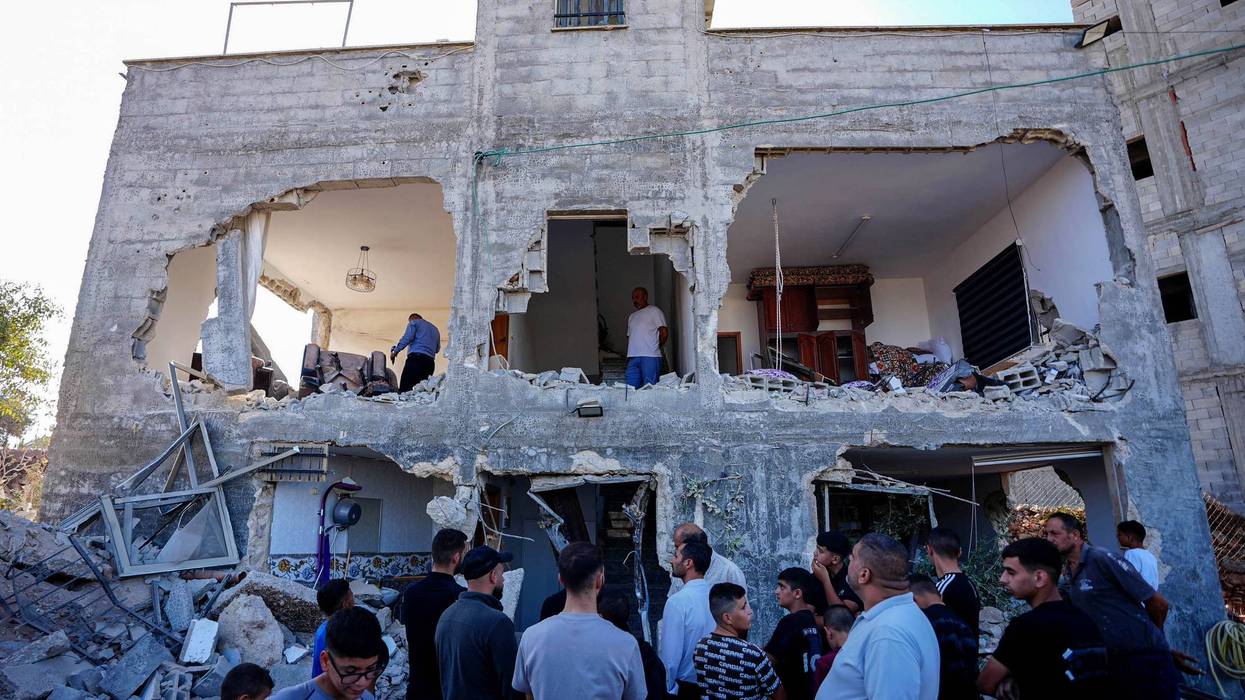
"Today, we refuse to be bystanders to further suffering and to the destruction of the two-state solution," said UK Foreign Secretary Ed Miliband.
The United Kingdom, France, and Canada joined forces on Tuesday to ban imports of goods and some services from illegal Israeli settlements in the occupied West Bank, where settlers and soldiers are assailing, displacing, and killing Palestinians at an unprecedented rate with the backing of Prime Minister Benjamin Netanyahu's government.
"Today, we refuse to be bystanders to further suffering and to the destruction of the two-state solution," Ed Miliband, the UK's foreign secretary, said in a speech to the House of Commons. Miliband pointed to the Israeli government's recent approval of construction projects that would evict Palestinian communities and "place settlements directly between East Jerusalem and the West Bank, cutting through the heart of Palestine."
"Let’s be clear what this means: the creation of a set of facts on the ground to make the two-state solution unviable," said Miliband, in what was described as the UK government's most forceful condemnation of Israeli conduct in the West Bank to date. "The British government agrees that there is ethnic cleansing of Palestinians in areas of the West Bank—perpetrated by settler terrorists. And all too often the Israeli government has turned a blind eye to this and worse, members of it have made statements and taken actions to support the forced displacement of Palestinians."
Miliband said the UK government would "take action against specific companies and individuals who provide services such as construction, infrastructure, financing, or real estate for settlement expansion" and penalize "those who finance or facilitate illegal settlements." He said the sanctions would be in place within six to nine months.
Miliband emphasized that in banning imports from Israel's West Bank settlements, the UK was not acting alone. The British foreign secretary noted that France and Canada will also "ban the import of goods from illegal settlements," joining "the Netherlands, Ireland, Belgium, Spain and Norway—which have either banned goods or are in the process of doing so."
Jean-Noël Barrot, France's foreign affairs minister, wrote on social media that France is cutting off imports from illegal Israeli settlements "because the West Bank is on the brink of explosion: unchecked expansion of colonization in violation of international law, surge in violence perpetrated by extremist settlers against Palestinians, acts of terror denounced by the Israeli authorities themselves."
"France cannot, through its trade, support a situation that threatens the security of Israelis and Palestinians alike, as well as peace and stability in the region," Barrot wrote. "Europe must uphold the same imperative."
In a joint statement on Tuesday, the foreign ministers of 12 nations—the UK, France, Canada, Denmark, Finland, Iceland, Ireland, Norway, Poland, Portugal, Spain, and Sweden—said that the situation in the West Bank is "rapidly deteriorating amid unprecedented levels of settler violence and settlement expansion, including the unacceptable decision to publish tenders for the E1 settlement project."
The foreign ministers confirmed their "intention to introduce national and/or support European restrictions on trade in goods with settlements which are illegal under international law, or that they are actively considering these and other measures, in accordance with their national procedures."
"In this regard, the UK, France, and Canada welcome the important action already taken by Ireland, Spain, the Netherlands, Norway, and Belgium, and will bring forward national measures to ban trade in settlement goods," the statement continued. "The government of Israel must immediately halt the expansion of settlements and civilian administrative powers, ensure accountability for settler violence, and investigate allegations against Israeli forces."
Advocates largely welcomed the governments' announcements while stressing that they should be the starting point for more sweeping action to confront the Israeli government's illegal annexation efforts in the West Bank and crimes against humanity across the Palestinian territories, including the decimated Gaza Strip.
"Today’s announcement is the result of many years of work by campaigners and Palestinians themselves fighting to end severe injustice," said Nick Dearden, director of the UK-based advocacy group Global Justice Now. "We know this move will be very popular in Britain. But it must be just the beginning. How can we cooperate with a military guilty of the most serious abuses of international law? How can we trade with a country that stands accused of genocide at the world’s highest court?"
Omar Barghouti, co-founder of the Boycott, Divestment, Sanctions (BDS) movement, dismissed the UK government's sanctions announcement as "largely performative," but said they also "reflect the impact of relentless public pressure on the current government."
"The UK is legally obliged to take serious measures to end its complicity with the State of Israel, not merely with the settlements, per the [International Court of Justice]," said Barghouti. "While Miliband says, 'We will not acquiesce in the destruction of the two-state solution,' he has not said how the UK will stop its active contribution to the Israeli-US led destruction of the international legal system and the drive towards a might-makes-right order."
US and Israeli officials responded furiously to the UK's sanctions announcement. Itamar Ben-Gvir, Israel's extremist national security minister, called for the closure of the British consulate in East Jerusalem, while Israel's finance minister demanded the expulsion of the British ambassador.
Mike Huckabee, the US ambassador to Israel, characterized the UK's trade ban as "discrimination against the Jewish people" and suggested that individual American states such as Florida could retaliate against the British government.
US Rep. Randy Fine (R-Fla.), a rabidly pro-Israel lawmaker and anti-Muslim bigot, wrote on social media that "Florida is one of Britain’s largest trading partners" and signaled that the state could move to boycott UK goods.
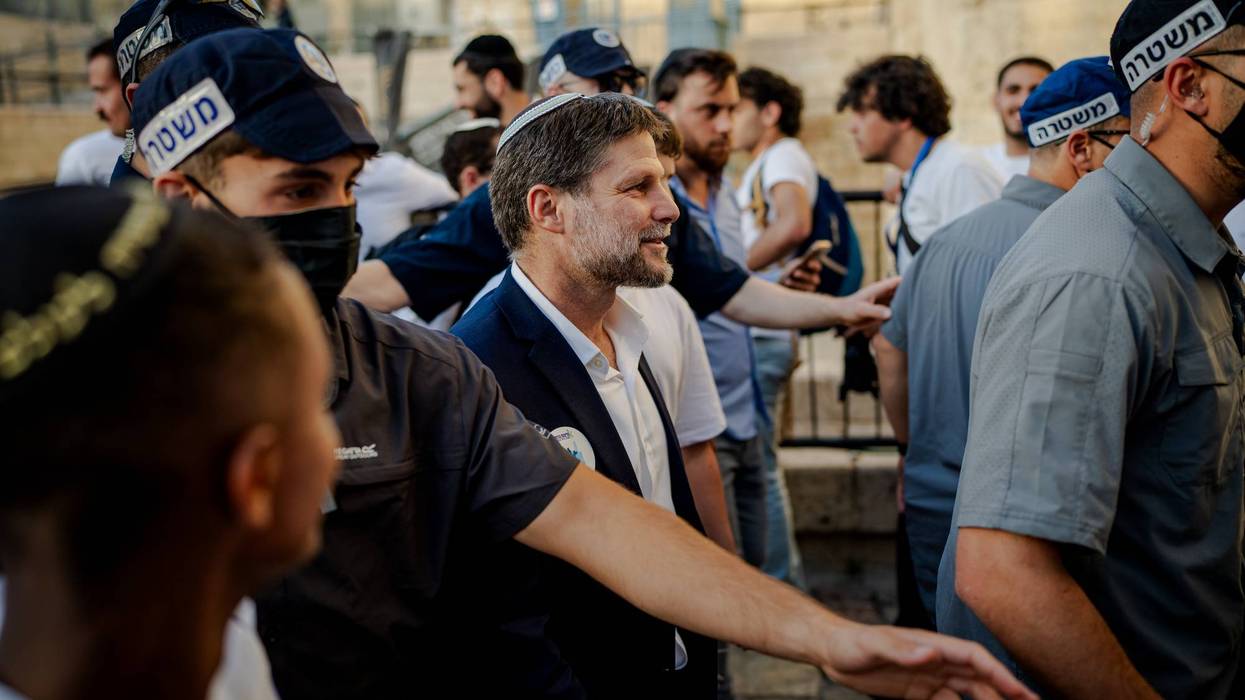
The United Kingdom's Labour government is set to announce a ban on trade with illegal Israeli settlements in the West Bank.
The United Kingdom on Tuesday is expected to announce a ban on trade with illegal Israeli settlements in the West Bank, a plan that prompted a furious response from far-right Israeli and American officials even as British diplomats privately acknowledged that the new sanctions package would be mostly symbolic.
"Expel the British ambassador tonight!" Israeli Finance Minister Bezalel Smotrich wrote in a social media post ahead of the official announcement. "We will not be a doormat trampled by an antisemitic government, in a country conquered by radical Islam, trying to save itself from economic and social decline by attacking Jews and the State of Israel."
UK Foreign Secretary Ed Miliband, who is Jewish, is set to unveil the trade ban as the Israeli government aggressively accelerates its unlawful land grabs and expulsion of Palestinians in the West Bank, where violent rampages by Israeli settlers have reached unprecedented levels. The trade ban was developed after the Israeli government advanced a plan to build more than 1,200 new settlement homes in the West Bank.
The Guardian reported Monday that "in his statement to MPs, Miliband is expected to use firmer language than his recent predecessors in calling out the humanitarian injustices suffered by Palestinians in Gaza."
"The steps he lays out are likely to fall short of the full set of demands made by Palestinian advocacy groups," the outlet added, "but they will still be seen as a sign that the UK is moving beyond traditional rhetorical support for a two-state solution towards active steps to forestall the expansion of illegal settlements in the West Bank—widely seen as intended to destroy the prospect of a Palestinian state."
New UK Prime Minister Andy Burnham reportedly spoke with US President Donald Trump on Monday about the impending trade ban, which drew condemnation from the US ambassador to Israel, Mike Huckabee.
Behind the scenes, according to Bloomberg, UK diplomats "privately told the US that the sanctions are largely symbolic and will have no material impact on the UK’s wider relationship with Israel on trade or security, in a bid to soothe the Trump administration’s response."
Francesca Albanese, the United Nations special rapporteur on the occupied Palestinian territories, told The Guardian that a ban on trade with Israeli settlements would be an "absolutely important" change in UK government policy.
Nick Dearden, director of the UK-based advocacy group Global Justice Now, wrote on social media that "a settlement ban is welcome but we must go further."
"Hope the government will include services and will announce new bans of weapons sales and military coordination tomorrow," Dearden added. "The comms is an improvement but we need action."
Reuters reported that the impact of the policy move on bilateral trade with Israel is "likely to be minimal, with details unclear of how the UK will differentiate between goods originating in West Bank settlements [and] products made in Israel."
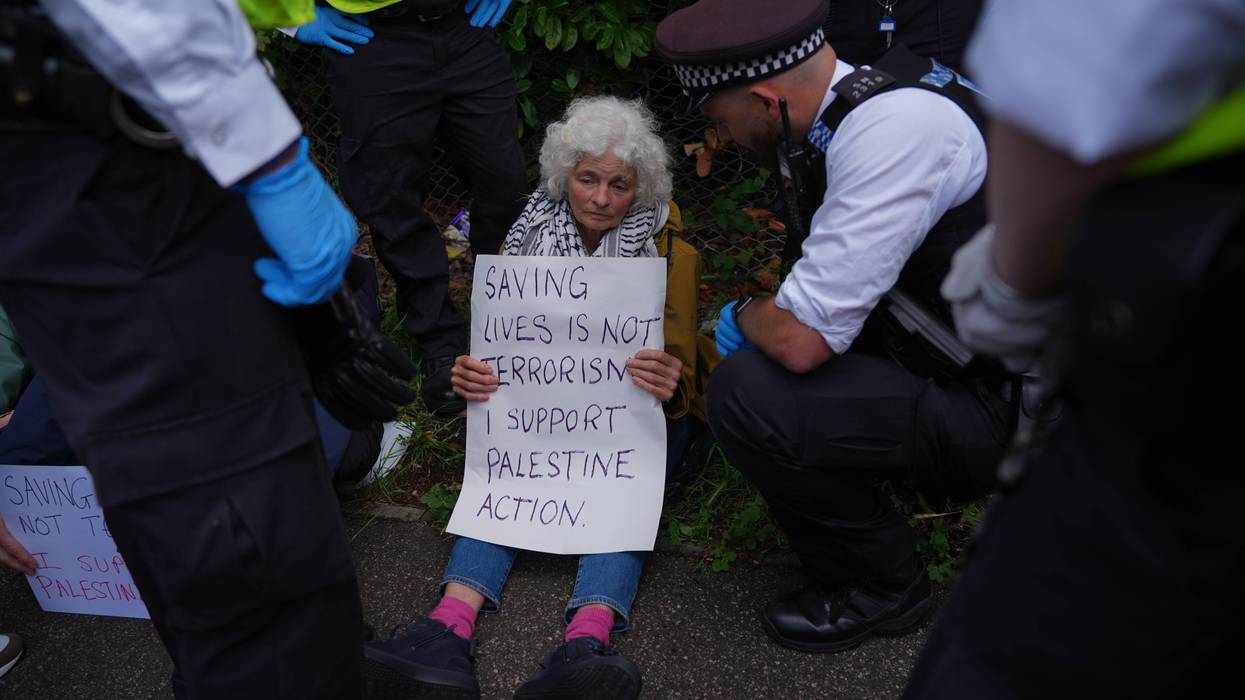
One free speech proponent called the designation "retaliation against the sanctioned for holding political views the Trump administration dislikes."
A top First Amendment advocacy group on Wednesday warned of the "broad speech implications" of the Trump administration's sanctions on the British anti-genocide group Palestine Action, which it designated an international terrorist organization for leading direct actions in opposition to the Israeli government.
Under the designation, Americans will be blocked from doing business with Palestine Action, and providing the group with funds, goods, or services will be prohibited.
British citizens who continue to donate to the group or take part in protests supporting it—which thousands of people have been arrested for doing since the UK government proscribed Palestine Action last year—could face sanctions and visa bans in the US, according to The Telegraph, which first reported the news Wednesday that the US designation was expected.
The group's co-founders, Richard Barnard and Huda Ammori, will face lifetime bans from entering the US due to the sanctions.
Chip Gibbons, policy director for Defending Rights and Dissent, said his group was "especially disturbed that Palestine Action, a nonviolent, direct action organization, has been sanctioned under a [President George W.] Bush-era executive order issued in response to the September 11th attacks, essentially putting civil disobedience for Palestinian rights on equal footing with al-Qaeda."
Treasury Secretary Scott Bessent announced the sanctions of Palestine Action, along with sanctions targeting the Italy-based group Autistici Inventati—which supplies digital services to left-wing groups—and Masar Badil, a Palestinian organization.
The Treasury Department's Office of Foreign Assets Control (OFAC) was imposing the sanctions under Executive Order 13224, which prohibits transactions between people in the US and groups that commit or support terrorism.
“Far-left extremists, their fronts, and their enablers should be on notice: We will bring the full weight of our economic tools to bear,” said Bessent. “Political terrorism has no place in our society, and we will continue to cut the financial lifelines of these groups until they are eliminated.”
The curtailing of Palestine Action's ability to participate in the global financial system and its new US label as a "Specially Designated Global Terrorist" group, said Gibbons, were not only "retaliation against the sanctioned for holding political views the Trump administration dislikes, but they severely curtail and criminalize US citizens' ability to engage in otherwise lawful associations with these groups.”
A US official told The Telegraph before the sanctions were officially announced that Palestine Action had "supported numerous acts of terrorism since July 2020, including acts that have physically injured UK law enforcement personnel, as well as acts intended to intimidate lawful commercial enterprise and coerce the British government."
The designation comes just over a year after UK lawmakers voted to proscribe Palestine Action after some of its members vandalized two aircraft at a Royal Air Force base.
In August 2024, activists with the group also raided a facility of Elbit Systems, an Israeli-owned weapons manufacturer, and attacked a police officer.
Organizers maintain that Palestine Action's overarching goal is to demonstrate against and disrupt "the Israeli war machine, which is committing a genocide in Gaza with the support of the US government," as Ammori told Al Jazeera Wednesday.
They organized the recent actions to protest Israel's bombardment of Gaza, which has killed more than 73,000 Palestinians since 2023 and is continuing to decimate the exclave despite a ceasefire reached last October.
Ammori added that President Donald Trump "has been at the center of the mass murder of Palestinians, enabling the Zionist regime at every turn.”
Many of the people arrested for supporting Palestine Action in the UK have been detained simply for holding signs that express opposition to genocide and solidarity with the group.
The new designation comes a month after US Secretary of State Marco Rubio hosted representatives from more than 60 countries at the Ministerial on the Resurgence of Political Terrorism, where he warned that "for far too long... our counterterrorism doctrine has had a blind spot when it comes to extremist violence from the political left," and called for a global crackdown.
Rubio and top White House adviser Stephen Miller warned in July that numerous arrests and prosecutions of people and groups deemed by the administration to be left-wing extremists would be coming, under the guidance put forward by National Security Presidential Memorandum 7, which called for a national strategy to crack down on left-wing organizing.
In the UK, five Palestine Action organizers won a legal victory after a judge ruled that they would not be sentenced as terrorists, and three UK Supreme Court judges granted Ammori the right to challenge the government's ban on the organization.
More than 250 academics and legal experts on Wednesday wrote to British Prime Minister Andy Burnham, calling on him to both end UK military support for Israel and to terminate the proscription of Palestine Action.
"It’s a victory for us, it’s a victory for Palestine, it’s a victory for protesting," said the mother of one Palestine Action activist.
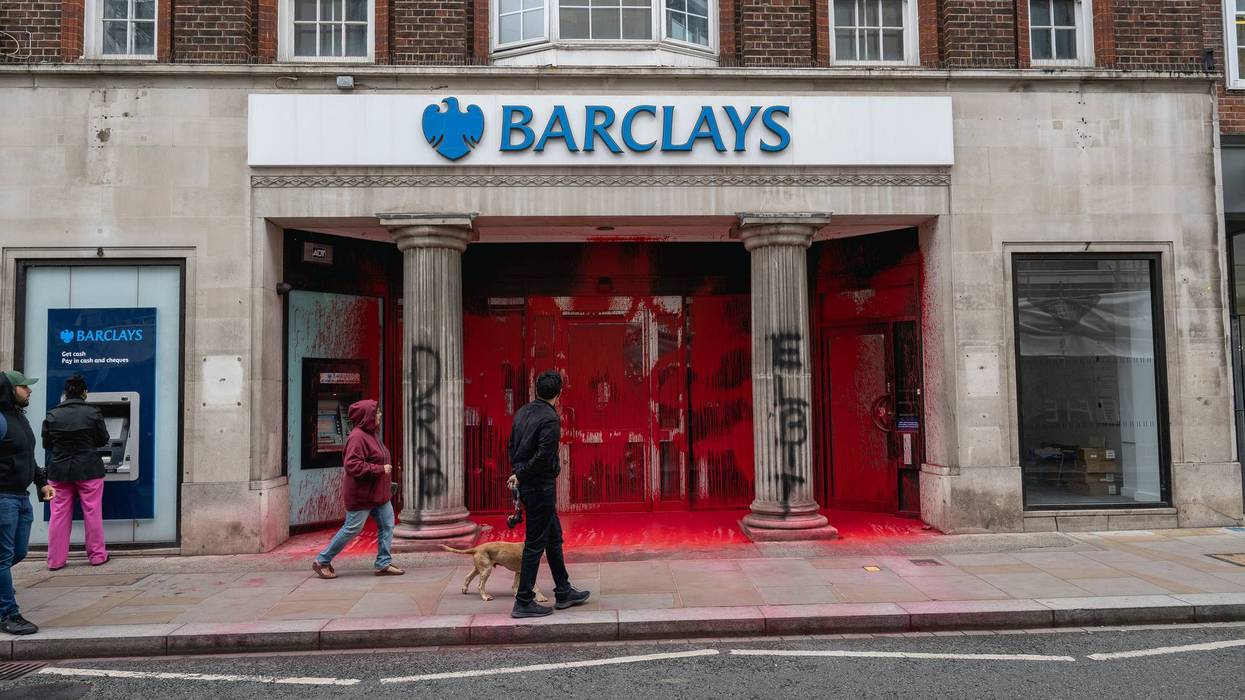
Five Palestine Action activists who were convicted in June of vandalizing a Barclays bank in the UK will not be sentenced as terrorists.
As reported by Al Jazeera on Friday, Judge Robert Altham determined that the five defendants—Brendon O’Hagan, 28; Amanda Kelly, 31; Hmeera Atiqnisar, 31; Mohammed Malik, 28; and Alma Yaniv, 70—did not commit crimes that rose to the level of terrorism.
Instead, the judge said, they will be sentenced in September for criminal damage to the bank, which will carry significantly shorter prison sentences compared to a terrorism sentencing.
According to The Guardian, attorneys representing the defendants argued that their clients' Palestine Action membership should not influence a decision to sentence them on terrorism because the group wasn't proscribed as a terrorist organization until long after the vandalism took place.
The five activists were found guilty two months ago of causing damage exceeding £200,000 to the Barclays bank in Burnley, Lancashire in August 2024. Palestine Action activists across the UK targeted Barclays branches due to its investments in Elbit Systems, and Israeli defense technology firm.
The activists issued a joint statement after the ruling saying they were "extremely relieved" by the outcome, while emphasizing that a terrorism sentence should never have been under consideration.
"This should never have been an option,” they said. "We were on trial for charges of criminal damage, for damaging some windows and spraying red paint on a Barclays branch. At no point during the trial were we, or the jury, informed that, if convicted, we could face being sentenced as terrorists."
Supporters of the activists erupted in cheers outside the court after hearing the news. Dove Malik, mother of defendant Mohammed Malik, expressed relief in an interview with Al Jazeera.
"It’s a victory for us," said Malik, "it’s a victory for Palestine, it’s a victory for protesting."