SUBSCRIBE TO OUR FREE NEWSLETTER
Daily news & progressive opinion—funded by the people, not the corporations—delivered straight to your inbox.
5
#000000
#FFFFFF
To donate by check, phone, or other method, see our More Ways to Give page.
Daily news & progressive opinion—funded by the people, not the corporations—delivered straight to your inbox.
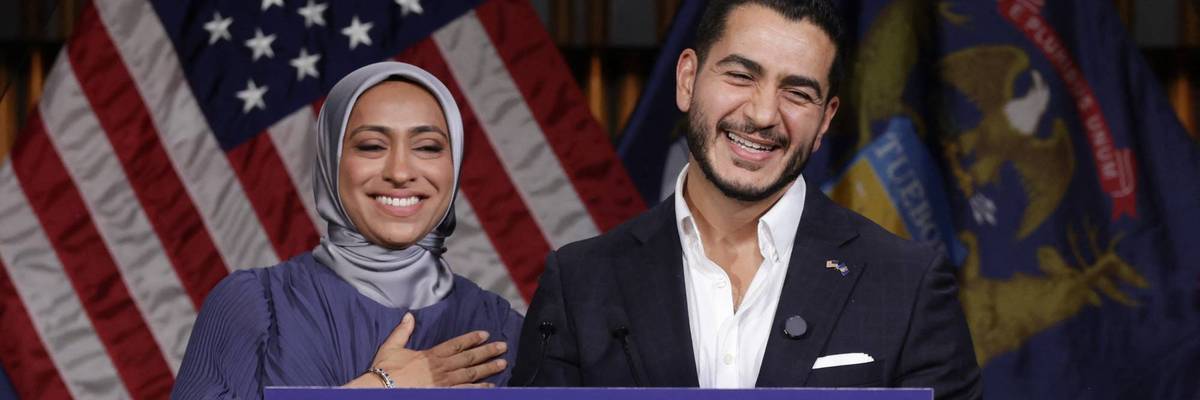
Democratic US Senate candidate Abdul El-Sayed and his wife, Dr. Sarah Jukaku, take the stage after he declares victory during a midterm election night party at The Department at Hudson's in Detroit, Michigan, early on November 4, 2026.
Lessons must be learned from this election—and it appears the establishment consultants on both sides don’t appear to understand.
There were surprises and non-surprises in this year’s midterm elections.
Democrats were expected to win and they did. All of the indicators normally considered in a midterm election pointed in that direction. And when reviewing state-by-state polling in key contests featuring vulnerable Republican senators, Democrats had the edge in everyone—Maine, Ohio, North Carolina, and Texas. What wasn’t expected was that Democrats would also beat Republicans in Iowa, Kansas, and South Carolina.
In the weeks before the elections, warnings were raised that the polls were inflating the Democrats’ chances in several states. This cautionary note proved to be unfounded. The polling averages suggested that overall Democrats would likely beat Republicans by 11 points. They ended up besting Republicans by 13 points.
Democrats mustn’t assume that this year’s victories will automatically repeat in 2028. The consultants who are telling Democrats that the GOP is dead and it’s time to move to the center, are wrong on both counts.
Maybe the biggest miscalculation of this election was made by President Donald Trump who assumed that he would be an asset to vulnerable Republicans by holding rallies in their states. As it turned out, his events proved to be more about him and his need to be center stage. In some, he spoke for almost two hours, mostly about himself—his grievances; wild claims about how great the country is doing (thereby dismissing the economic concerns of many voters); and engaging in vulgar, bigoted, and demeaning attacks on immigrant groups and Democratic opponents in other states—often overshadowing and ignoring the candidates he was supposed to be helping.
His constant refrain in these speeches was, “Vote as if I were on the ballot.” In the end, as one reporter observed, voters did just that. And since Mr. Trump has a 32% favorable rating, the outcome wasn’t a good one for Republicans.
There was a real concern that the White House might attempt to stymie the vote in some districts. Others worried there might be a “October Surprise”—renewed bombing of Iran, sending armed immigration enforcement officials to select polling places to intimidate voters, or ordering the FBI to seize ballot boxes. None of this happened, and so Election Day and its immediate aftermath proved uneventful.
Because Democratic candidates were raising more money than Republicans, the GOP turned to what are called super PACs, corporate PACs, and other non-reportable independent expenditure entities to give them an advantage. As a result, this was the most expensive election in history. While the numbers are still being tallied, it appears that more than $14 billion was spent by both parties.
The New York Times published an early list of 20 billionaire donors to campaigns who collectively spent more than $2 billion in this election. While there were some Democrats in the group, most were Republicans. Elon Musk, for example, invested over $450 million to support Republicans (half in Texas) while entities related to the Soros family put $100 million into Democratic campaigns. If anything, this election has brought to the center of our political debate the role of unregulated and unreported money in politics.
As expected, the issues that dominated this election were the cost of living, immigration, corruption, and foreign wars. Most of these broke in favor of Democrats, which left Republicans trying to blame high prices on the Biden administration or to shift the discussion to the threat posed by immigrants. Such tactics may have worked in the 2024 election, but the impact of the president’s tariffs on many consumer goods and the ever-increasing costs of gasoline, diesel fuel, and home heating took their toll on the GOP
The issues of US military aid to Israel and the role played by the pro-Israel lobby (AIPAC) in intimidating and silencing politicians played a less significant role in the November election than it had in the Democratic primaries where support for Israel proved to be the undoing of several incumbents. In the Senate races, a number of Democrats who won this year were clear in their opposition to aid to Israel and their refusal to accept the support of AIPAC, but because they weren’t challenged by their Republican opponents, the issue didn’t become a central theme in the November election.
The major exception was the Senate contest in Michigan between Democrat Abdul El-Sayed and his Republican opponent, Mike Rogers. But it wasn’t Rogers who made El-Sayed’s criticism of Israel the issue. Instead, following the lead of President Trump, Rogers focused on charges that El-Sayed is a socialist or Islamic extremist who couldn’t be trusted to be loyal to America. The attacks against El-Sayed’s criticism of Israel were left to the woman he’d defeated in the Democratic primary, who continued to demand that he adopt her positions on Israel. When El-Sayed refused to do so, she endorsed Mike Rogers, an act of political suicide which ended up benefiting El-Sayed’s campaign.
Policy matters aside, one “meta-issue” helped shape this year’s contests. Voters on both sides of the partisan debate are fed up with politicians—especially the blow-dried, consultant-shaped characters who’ve long dominated the stage. Voters want authenticity: candidates who speak hard truths, whom they feel can be trusted to address their needs. One might argue that this was Donald Trump’s appeal in 2016 and Joe Biden’s in 2020. And it’s the edge that Mr. Trump has lost—with his expensive vanity remodeling projects, shady business dealings, and demonstrated insensitivity to the economic hardships of many voters. If anything, this year was a classic “throw the bums out” election—leading to many establishment Democratic politicians being beaten in the primaries and the GOP’s establishment crowd being shown the door in the general
Lessons must be learned from this election—and it appears the establishment consultants on both sides don’t appear to understand. Democrats mustn’t assume that this year’s victories will automatically repeat in 2028. The consultants who are telling Democrats that the GOP is dead and it’s time to move to the center, are wrong on both counts. Voters chose Democrats willing to fight for a change in economic priorities—where healthcare is seen as a right and affordable for all; where resources are allocated away from war and weapons toward meeting domestic priorities; and where money from corporations and billionaires don’t dominate our politics. If Democrats, now in charge, don’t address these issues that brought them victory, they may pay a price in 2028.
This country and this world are at a monumental crossroads. US voters have an opportunity to beat back the forces of fascism and confront the billionaires who are rigging the economy, our media system, and our democracy, making it increasingly impossible for ordinary people to get by. We’re not just talking about the election. We’re talking about what must be done once these fascist elements are vanquished from power. We need a bolder set of solutions than what either major party has so far been willing to offer and a working-class movement ready to fight like hell for it. Trump didn't emerge from nowhere. The conditions that fueled MAGA authoritarianism were created by decades of radical neoliberal economic policies and a corrupt political system dominated by corporate interests. They slashed taxes on the super-rich, promising that the benefits would trickle down. They said giveaways to the corporate titans would make life more affordable for the rest of us. It was all bullshit. And when a bitter, betrayed populace searches for someone to blame, right-wing demagogues have little trouble finding scapegoats. People know when they're being lied to, but you won't hear any of this from the corporate media. Only independent journalism—powered and funded by people who believe in building a better world—can deliver truly trustworthy daily news. If you share our vision, please contribute whatever you can to sustain our work. |
There were surprises and non-surprises in this year’s midterm elections.
Democrats were expected to win and they did. All of the indicators normally considered in a midterm election pointed in that direction. And when reviewing state-by-state polling in key contests featuring vulnerable Republican senators, Democrats had the edge in everyone—Maine, Ohio, North Carolina, and Texas. What wasn’t expected was that Democrats would also beat Republicans in Iowa, Kansas, and South Carolina.
In the weeks before the elections, warnings were raised that the polls were inflating the Democrats’ chances in several states. This cautionary note proved to be unfounded. The polling averages suggested that overall Democrats would likely beat Republicans by 11 points. They ended up besting Republicans by 13 points.
Democrats mustn’t assume that this year’s victories will automatically repeat in 2028. The consultants who are telling Democrats that the GOP is dead and it’s time to move to the center, are wrong on both counts.
Maybe the biggest miscalculation of this election was made by President Donald Trump who assumed that he would be an asset to vulnerable Republicans by holding rallies in their states. As it turned out, his events proved to be more about him and his need to be center stage. In some, he spoke for almost two hours, mostly about himself—his grievances; wild claims about how great the country is doing (thereby dismissing the economic concerns of many voters); and engaging in vulgar, bigoted, and demeaning attacks on immigrant groups and Democratic opponents in other states—often overshadowing and ignoring the candidates he was supposed to be helping.
His constant refrain in these speeches was, “Vote as if I were on the ballot.” In the end, as one reporter observed, voters did just that. And since Mr. Trump has a 32% favorable rating, the outcome wasn’t a good one for Republicans.
There was a real concern that the White House might attempt to stymie the vote in some districts. Others worried there might be a “October Surprise”—renewed bombing of Iran, sending armed immigration enforcement officials to select polling places to intimidate voters, or ordering the FBI to seize ballot boxes. None of this happened, and so Election Day and its immediate aftermath proved uneventful.
Because Democratic candidates were raising more money than Republicans, the GOP turned to what are called super PACs, corporate PACs, and other non-reportable independent expenditure entities to give them an advantage. As a result, this was the most expensive election in history. While the numbers are still being tallied, it appears that more than $14 billion was spent by both parties.
The New York Times published an early list of 20 billionaire donors to campaigns who collectively spent more than $2 billion in this election. While there were some Democrats in the group, most were Republicans. Elon Musk, for example, invested over $450 million to support Republicans (half in Texas) while entities related to the Soros family put $100 million into Democratic campaigns. If anything, this election has brought to the center of our political debate the role of unregulated and unreported money in politics.
As expected, the issues that dominated this election were the cost of living, immigration, corruption, and foreign wars. Most of these broke in favor of Democrats, which left Republicans trying to blame high prices on the Biden administration or to shift the discussion to the threat posed by immigrants. Such tactics may have worked in the 2024 election, but the impact of the president’s tariffs on many consumer goods and the ever-increasing costs of gasoline, diesel fuel, and home heating took their toll on the GOP
The issues of US military aid to Israel and the role played by the pro-Israel lobby (AIPAC) in intimidating and silencing politicians played a less significant role in the November election than it had in the Democratic primaries where support for Israel proved to be the undoing of several incumbents. In the Senate races, a number of Democrats who won this year were clear in their opposition to aid to Israel and their refusal to accept the support of AIPAC, but because they weren’t challenged by their Republican opponents, the issue didn’t become a central theme in the November election.
The major exception was the Senate contest in Michigan between Democrat Abdul El-Sayed and his Republican opponent, Mike Rogers. But it wasn’t Rogers who made El-Sayed’s criticism of Israel the issue. Instead, following the lead of President Trump, Rogers focused on charges that El-Sayed is a socialist or Islamic extremist who couldn’t be trusted to be loyal to America. The attacks against El-Sayed’s criticism of Israel were left to the woman he’d defeated in the Democratic primary, who continued to demand that he adopt her positions on Israel. When El-Sayed refused to do so, she endorsed Mike Rogers, an act of political suicide which ended up benefiting El-Sayed’s campaign.
Policy matters aside, one “meta-issue” helped shape this year’s contests. Voters on both sides of the partisan debate are fed up with politicians—especially the blow-dried, consultant-shaped characters who’ve long dominated the stage. Voters want authenticity: candidates who speak hard truths, whom they feel can be trusted to address their needs. One might argue that this was Donald Trump’s appeal in 2016 and Joe Biden’s in 2020. And it’s the edge that Mr. Trump has lost—with his expensive vanity remodeling projects, shady business dealings, and demonstrated insensitivity to the economic hardships of many voters. If anything, this year was a classic “throw the bums out” election—leading to many establishment Democratic politicians being beaten in the primaries and the GOP’s establishment crowd being shown the door in the general
Lessons must be learned from this election—and it appears the establishment consultants on both sides don’t appear to understand. Democrats mustn’t assume that this year’s victories will automatically repeat in 2028. The consultants who are telling Democrats that the GOP is dead and it’s time to move to the center, are wrong on both counts. Voters chose Democrats willing to fight for a change in economic priorities—where healthcare is seen as a right and affordable for all; where resources are allocated away from war and weapons toward meeting domestic priorities; and where money from corporations and billionaires don’t dominate our politics. If Democrats, now in charge, don’t address these issues that brought them victory, they may pay a price in 2028.