SUBSCRIBE TO OUR FREE NEWSLETTER
Daily news & progressive opinion—funded by the people, not the corporations—delivered straight to your inbox.
5
#000000
#FFFFFF
To donate by check, phone, or other method, see our More Ways to Give page.
Daily news & progressive opinion—funded by the people, not the corporations—delivered straight to your inbox.
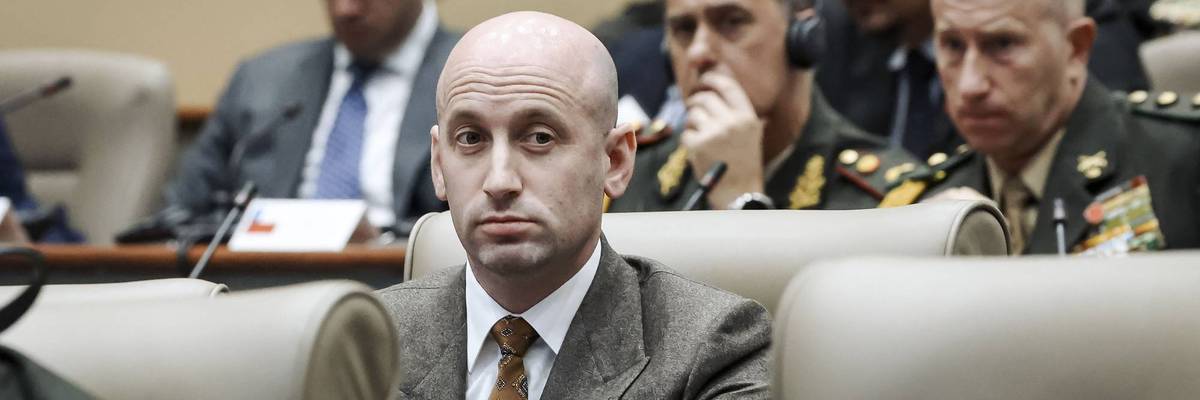
White House Deputy Chief of Staff for Policy Stephen Miller looks on at the US Southern Command (SOUTHCOM) headquarters in Doral, Florida, on March 5, 2026.
Reporting in The New York Times reveals Vance wanted to use the military "to crush the unrest in Minnesota."
A Monday report in The New York Times revealed what it described as the "alarm" felt by some White House lawyers at proposals made earlier this year by Vice President JD Vance and Trump adviser Stephen Miller as the administration was forced to contend with widespread anger over its anti-immigration agenda.
Among other things, the Times reported that Vance pushed for President Donald Trump to invoke the Insurrection Act, which would allow for the US military to be deployed on American streets, in an effort to shut down mass protests in Minnesota against federal immigration enforcement operations in the state.
A few days after US Immigration and Customs Enforcement (ICE) officers fatally shot demonstrator Alex Pretti in the streets of Minneapolis, the Times reported that Vance—who had also elevated a baseless claim by Miller that Pretti had been a "would-be assassin"—said invoking the Insurrection Act was necessary "to crush the unrest in Minnesota."
Vance also believed invoking the law would send a “message” that “paid agitators could not get away with disrupting ICE operations”—even though, as the Times noted, there is no evidence that Pretti; demonstrator Renee Good, who was also killed by federal agents; or any other organizers in Minnesota or elsewhere received any money in exchange for protesting.
However, right-wing attorney Will Scharf quickly shot down Vance's suggestion, noting that the Insurrection Act is an instrument aimed at putting down armed rebellions rather than groups of citizens blowing whistles at ICE officers.
Former White House Deputy Chief of Staff James Blair then made the political case against invoking the Insurrection Act.
"The scenes of federal agents in Minnesota already looked chaotic, he said, and the public was recoiling," reported the Times. "He put three questions to the room: What does the Insurrection Act give us that we don’t already have? What changes on the ground would be worth the heat? What else could they win that would justify the public relations cost?"
"The room was quiet," the Times added. "Nobody had a good answer."
The Times report also revealed that Trump adviser Stephen Miller, Trump's homeland security adviser and deputy chief of staff, repeatedly pushed the president to suspend the writ of habeas corpus for undocumented immigrants, which would give the administration the power to carry out mass deportations without being subjected to judicial oversight.
As in the case of Vance's proposal, Scharf pushed back against Miller's suggestion, noting that courts have long held that habeas corpus cannot be suspended unilaterally by the president and must be done by an act of Congress.
"Even where Congress has explicitly suspended habeas corpus rights," Scharf wrote in a legal memo obtained by the Times, "the Supreme Court has held that some alternative process must be provided to defendants, with procedural safeguards akin to a habeas corpus action."
Aaron Reichlin-Melnick, senior fellow at the American Immigration Council, said the Times' reporting showed Miller "would happily shred the Constitution into little pieces if he could," before hopefully noting that "even he wasn’t powerful enough to do it" in this instance.
University of Michigan Law School Professor Leah Litman argued that the Times report showed some in the administration were at least still somewhat conscious of public opinion when making decisions.
"In the story about the administration weighing suspending habeas corpus and invoking the Insurrection Act, what moved the needle against the Insurrection Act was concern about 'public relations,'" Litman wrote. "Public pushback, agitation, and outcry can work. Even now. Keep it up."
Dear Common Dreams reader, It’s been nearly 30 years since I co-founded Common Dreams with my late wife, Lina Newhouser. We had the radical notion that journalism should serve the public good, not corporate profits. It was clear to us from the outset what it would take to build such a project. No paid advertisements. No corporate sponsors. No millionaire publisher telling us what to think or do. Many people said we wouldn't last a year, but we proved those doubters wrong. Together with a tremendous team of journalists and dedicated staff, we built an independent media outlet free from the constraints of profits and corporate control. Our mission has always been simple: To inform. To inspire. To ignite change for the common good. Building Common Dreams was not easy. Our survival was never guaranteed. When you take on the most powerful forces—Wall Street greed, fossil fuel industry destruction, Big Tech lobbyists, and uber-rich oligarchs who have spent billions upon billions rigging the economy and democracy in their favor—the only bulwark you have is supporters who believe in your work. But here’s the urgent message from me today. It's never been this bad out there. And it's never been this hard to keep us going. At the very moment Common Dreams is most needed, the threats we face are intensifying. We need your support now more than ever. We don't accept corporate advertising and never will. We don't have a paywall because we don't think people should be blocked from critical news based on their ability to pay. Everything we do is funded by the donations of readers like you. When everyone does the little they can afford, we are strong. But if that support retreats or dries up, so do we. Will you donate now to make sure Common Dreams not only survives but thrives? —Craig Brown, Co-founder |
A Monday report in The New York Times revealed what it described as the "alarm" felt by some White House lawyers at proposals made earlier this year by Vice President JD Vance and Trump adviser Stephen Miller as the administration was forced to contend with widespread anger over its anti-immigration agenda.
Among other things, the Times reported that Vance pushed for President Donald Trump to invoke the Insurrection Act, which would allow for the US military to be deployed on American streets, in an effort to shut down mass protests in Minnesota against federal immigration enforcement operations in the state.
A few days after US Immigration and Customs Enforcement (ICE) officers fatally shot demonstrator Alex Pretti in the streets of Minneapolis, the Times reported that Vance—who had also elevated a baseless claim by Miller that Pretti had been a "would-be assassin"—said invoking the Insurrection Act was necessary "to crush the unrest in Minnesota."
Vance also believed invoking the law would send a “message” that “paid agitators could not get away with disrupting ICE operations”—even though, as the Times noted, there is no evidence that Pretti; demonstrator Renee Good, who was also killed by federal agents; or any other organizers in Minnesota or elsewhere received any money in exchange for protesting.
However, right-wing attorney Will Scharf quickly shot down Vance's suggestion, noting that the Insurrection Act is an instrument aimed at putting down armed rebellions rather than groups of citizens blowing whistles at ICE officers.
Former White House Deputy Chief of Staff James Blair then made the political case against invoking the Insurrection Act.
"The scenes of federal agents in Minnesota already looked chaotic, he said, and the public was recoiling," reported the Times. "He put three questions to the room: What does the Insurrection Act give us that we don’t already have? What changes on the ground would be worth the heat? What else could they win that would justify the public relations cost?"
"The room was quiet," the Times added. "Nobody had a good answer."
The Times report also revealed that Trump adviser Stephen Miller, Trump's homeland security adviser and deputy chief of staff, repeatedly pushed the president to suspend the writ of habeas corpus for undocumented immigrants, which would give the administration the power to carry out mass deportations without being subjected to judicial oversight.
As in the case of Vance's proposal, Scharf pushed back against Miller's suggestion, noting that courts have long held that habeas corpus cannot be suspended unilaterally by the president and must be done by an act of Congress.
"Even where Congress has explicitly suspended habeas corpus rights," Scharf wrote in a legal memo obtained by the Times, "the Supreme Court has held that some alternative process must be provided to defendants, with procedural safeguards akin to a habeas corpus action."
Aaron Reichlin-Melnick, senior fellow at the American Immigration Council, said the Times' reporting showed Miller "would happily shred the Constitution into little pieces if he could," before hopefully noting that "even he wasn’t powerful enough to do it" in this instance.
University of Michigan Law School Professor Leah Litman argued that the Times report showed some in the administration were at least still somewhat conscious of public opinion when making decisions.
"In the story about the administration weighing suspending habeas corpus and invoking the Insurrection Act, what moved the needle against the Insurrection Act was concern about 'public relations,'" Litman wrote. "Public pushback, agitation, and outcry can work. Even now. Keep it up."
A Monday report in The New York Times revealed what it described as the "alarm" felt by some White House lawyers at proposals made earlier this year by Vice President JD Vance and Trump adviser Stephen Miller as the administration was forced to contend with widespread anger over its anti-immigration agenda.
Among other things, the Times reported that Vance pushed for President Donald Trump to invoke the Insurrection Act, which would allow for the US military to be deployed on American streets, in an effort to shut down mass protests in Minnesota against federal immigration enforcement operations in the state.
A few days after US Immigration and Customs Enforcement (ICE) officers fatally shot demonstrator Alex Pretti in the streets of Minneapolis, the Times reported that Vance—who had also elevated a baseless claim by Miller that Pretti had been a "would-be assassin"—said invoking the Insurrection Act was necessary "to crush the unrest in Minnesota."
Vance also believed invoking the law would send a “message” that “paid agitators could not get away with disrupting ICE operations”—even though, as the Times noted, there is no evidence that Pretti; demonstrator Renee Good, who was also killed by federal agents; or any other organizers in Minnesota or elsewhere received any money in exchange for protesting.
However, right-wing attorney Will Scharf quickly shot down Vance's suggestion, noting that the Insurrection Act is an instrument aimed at putting down armed rebellions rather than groups of citizens blowing whistles at ICE officers.
Former White House Deputy Chief of Staff James Blair then made the political case against invoking the Insurrection Act.
"The scenes of federal agents in Minnesota already looked chaotic, he said, and the public was recoiling," reported the Times. "He put three questions to the room: What does the Insurrection Act give us that we don’t already have? What changes on the ground would be worth the heat? What else could they win that would justify the public relations cost?"
"The room was quiet," the Times added. "Nobody had a good answer."
The Times report also revealed that Trump adviser Stephen Miller, Trump's homeland security adviser and deputy chief of staff, repeatedly pushed the president to suspend the writ of habeas corpus for undocumented immigrants, which would give the administration the power to carry out mass deportations without being subjected to judicial oversight.
As in the case of Vance's proposal, Scharf pushed back against Miller's suggestion, noting that courts have long held that habeas corpus cannot be suspended unilaterally by the president and must be done by an act of Congress.
"Even where Congress has explicitly suspended habeas corpus rights," Scharf wrote in a legal memo obtained by the Times, "the Supreme Court has held that some alternative process must be provided to defendants, with procedural safeguards akin to a habeas corpus action."
Aaron Reichlin-Melnick, senior fellow at the American Immigration Council, said the Times' reporting showed Miller "would happily shred the Constitution into little pieces if he could," before hopefully noting that "even he wasn’t powerful enough to do it" in this instance.
University of Michigan Law School Professor Leah Litman argued that the Times report showed some in the administration were at least still somewhat conscious of public opinion when making decisions.
"In the story about the administration weighing suspending habeas corpus and invoking the Insurrection Act, what moved the needle against the Insurrection Act was concern about 'public relations,'" Litman wrote. "Public pushback, agitation, and outcry can work. Even now. Keep it up."