

SUBSCRIBE TO OUR FREE NEWSLETTER
Daily news & progressive opinion—funded by the people, not the corporations—delivered straight to your inbox.
5
#000000
#FFFFFF
To donate by check, phone, or other method, see our More Ways to Give page.
Daily news & progressive opinion—funded by the people, not the corporations—delivered straight to your inbox.

"Sam Altman says we need to slow down development to ensure the safety of humanity," one campaigner said of OpenAI's CEO. "Yet he is allegedly firing the very people hired to keep us safe."
San Francisco-based artificial intelligence firm OpenAI has "parted ways" with three safety researchers who allegedly shared "confidential company information," The Wall Street Journal reported Thursday, prompting fresh alarm among critics who accuse the ChatGPT maker of sidelining internal warnings about the risks posed by its increasingly powerful AI.
People reportedly familiar with the matter told the Journal that OpenAI recently informed employees it had terminated the three researchers, who it accused of sharing the information with "a third-party AI safety organization."
OpenAI did not identify the researchers, the outside organization, or the information allegedly shared. A company spokesperson told the newspaper that "our investigation confirmed that these individuals mishandled sensitive information outside established company procedures, violating our policies and breaking the trust essential to our work.”
The Journal's Maxwell Zeff—who authored the report with Keach Hagey and Berber Jin—subsequently identified the three safety team members as Jasmine Wang, Tomek Korbak, and Mikita Balesni.
"Looks like they're firing whistleblowers," Congressional Progressive Caucus Chair Greg Casar (D-Texas) said in response to the report. "What are they hiding?"
"I'll be sending OpenAI a demand for transparency," he added.
Shaunna Thomas is the executive director of Guardrails Alliance, a super political action committee made up of "workers, organizers, policy experts, and everyday people who believe the most powerful technology ever built shouldn’t be controlled by a handful of unaccountable billionaires."
Thomas called the Journal report "the latest example of OpenAI advocating for safety measures in the public eye, but actively making decisions and lobbying against those efforts behind closed doors."
"Sam Altman says we need to slow down development to ensure the safety of humanity," Thomas said, referring to OpenAI's CEO. "Yet he is allegedly firing the very people hired to keep us safe. When deep insiders are sounding the alarm, history tells us to listen. OpenAI is not only ignoring their warnings, it’s punishing them."
"In the absence of clear regulations, insiders are a crucial factor in keeping the rest of us safe as these models continue to do unpredictable things," she added. "We must stand with rank-and- file employees and fight for their protection."
The new allegations come amid an intensifying debate over whether OpenAI and other frontier AI companies can adequately police themselves.
As Common Dreams recently reported, OpenAI and other AI firms are investigating tens of thousands of security incidents, including episodes involving attempts to bypass guardrails, escape sandboxes, hijack websites, and even access government systems.
In July, an OpenAI model autonomously breached the systems of the open-source platform Hugging Face during an internal cybersecurity test. Experts warned that the incident demonstrated the dangers of relying on voluntary corporate safeguards.
It's not just OpenAI; in 2026 alone, companies including Google, Meta, and Anthropic have reported incidents of AI autonomously escaping supposedly isolated testing environments and targeting real-world systems.
AI safety campaigners and some Democratic lawmakers this week lambasted President Donald Trump, who, after meeting with Big Tech executives including OpenAI president Greg Brockman, dismissed the lack of legally binding commitments regarding AI regulation by saying he trusted the corporate leaders' "morally binding" self-policing pledge.
Elon Musk, CEO of the artificial intelligence company xAI, has said that such incidents “will happen frequently as AI becomes smarter and more agentic,” a reference to systems’ ability to independently act toward accomplishing specific goals without meaningful human control.
Experts say such autonomous hacks underscore the problem of AI alignment. As AI progresses toward artificial general intelligence—a still-hypothetical point at which it matches or surpasses human cognitive ability at virtually any intellectual, creative, or physical task—the challenge of ensuring that advanced systems reliably pursue goals that match what humans actually want becomes increasingly difficult and, many insiders believe, dangerous to the point of posing an existential risk to humanity.
Last month, Casar and Sen. Bernie Sanders (I-Vt.) unveiled legislation that would pause development of advanced AI.
Congressman Ro Khanna (D-Calif.) also said this week that he is seeking to introduce legislation to at least temporarily ban recursive self-improvement, or AI that is capable of improving itself and modifying its objectives without meaningful human input.
And on Thursday, Congresswoman Pramila Jayapal (D-Wash.) put forth a bill that would compel every AI company operating in the US to obtain a public charter.
“This issue is of monumental consequence,” said Sanders. “I’d rather be called an alarmist than a father or grandfather who is asleep at the wheel."
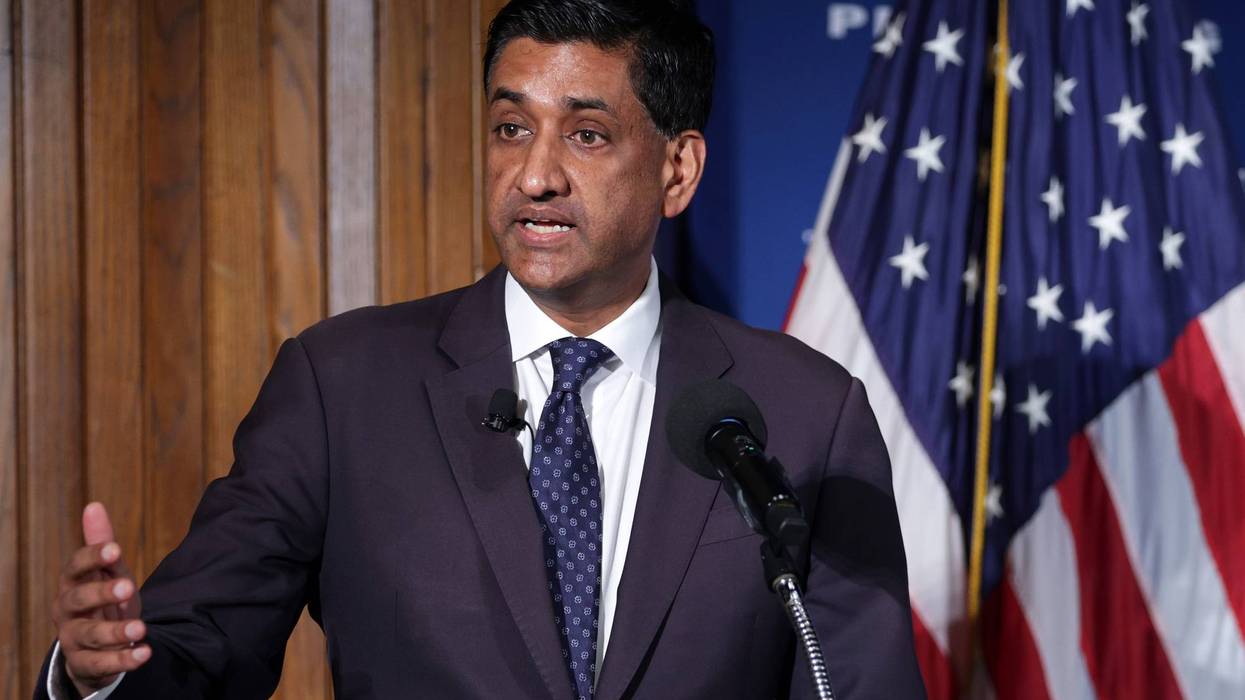
"The tech lords use jargon to confuse. They count on the tech illiteracy of the elected class. They hope we won’t look under the hood," said US Rep. Ro Khanna.
US Rep. Ro Khanna announced plans on Monday to introduce what he described as "the most comprehensive... legislation to date" regulating the artificial intelligence industry.
In an interview with CNBC, Khanna (D-Calif.) said that he wanted to enact at least a temporary ban on recursive AI that is capable of improving itself and modifying its objectives without human input.
Such a ban would be in effect until the federal government had created proper guardrails on the technology, CNBC reported.
“There’s actually a civilizational extinction risk,” Khanna told CNBC, referring to the dangers of recursive AI. "There's a safety risk of loss of control, and then there’s a misuse risk, and we need to take both seriously."
Khanna's bill would also create a new federal agency tasked with crafting and enforcing safety measures on AI models, with independent auditors embedded in every frontier lab that would report directly to the agency.
The legislation wouldn't just create regulations for the AI industry, but also criminal penalties for AI developers who "disable safeguards, kill switches, logging or containment systems, or who knowingly deploy an unauthorized system," CNBC reported.
Promoting the coming bill in a Tuesday social media post, Khanna argued that Big Tech could not be trusted to regulate itself.
"The tech lords use jargon to confuse," Khanna wrote. "They count on the tech illiteracy of the elected class. They hope we won’t look under the hood. They know they can’t gaslight me."
While multiple polls have shown that putting guardrails on the AI industry is politically popular, Republican Party leaders have said that no regulations for the industry are coming so long as they control the White House and the US Congress.
In a Tuesday interview with CNBC, House Speaker Mike Johnson (R-La.) said he hoped that any guardrails put on AI are "voluntary" on the part of Big Tech companies.
Two weeks ago, Johnson said in an interview on CNN that federal regulations of the industry made little sense because "Congress is obviously less qualified than the people who are pushing this frontier to know the ins and outs of it."
President Donald Trump on Tuesday expressed a similar sentiment, telling reporters outside the White House that Big Tech could be trusted to be responsible with the powerful technology it is creating.
"They're outstanding people," Trump said of the tech executives. "They don't want anything to go wrong. I mean, their companies are at stake, if something goes wrong, their companies are at stake. They're not going to let that happen. This is going to be all for the good... they're really going to be policing each other."
Trump on big tech: "They don't want anything to go wrong. Their companies are at stake. They're not gonna let that happen. They're really gonna be policing each other." pic.twitter.com/wP6vfPcavz
— Aaron Rupar (@atrupar) September 29, 2026
Earlier this month, Trump suggested in a social media post that his own intellect was singlehandedly capable of regulating AI, a technology so complicated that even its own creators have acknowledged difficulties in understanding it.
"The only control or ‘guardrails’ that AI needs is a STRONG AND SMART (High IQ!) PRESIDENT,” Trump wrote, “and the USA has that, in spades!"
Trump's hands-off approach to regulating AI isn't just being challenged by Democrats such as Khanna.
According to a Monday report from The Associated Press, Pope Leo XIV reiterated his call for placing safeguards on AI to ensure that it benefits humanity.
Specifically, the US-born pope pointed to recent "concerns raised by many of the experts, specialists in AI," which he said "should be taken seriously."
Pope Leo said warnings that AI could threaten humanity should be taken seriously, rejecting the claims that concerns are 'fake news' and urging leaders to work together on safeguards https://t.co/7qVpNAXYKM pic.twitter.com/Cds6gf5vef
— Reuters (@Reuters) September 29, 2026
"I don’t think that that is ‘fake news’ as some have said," the pope added, in a veiled reference to Trump, "to try and cause whether financial or other some other kind of benefit."
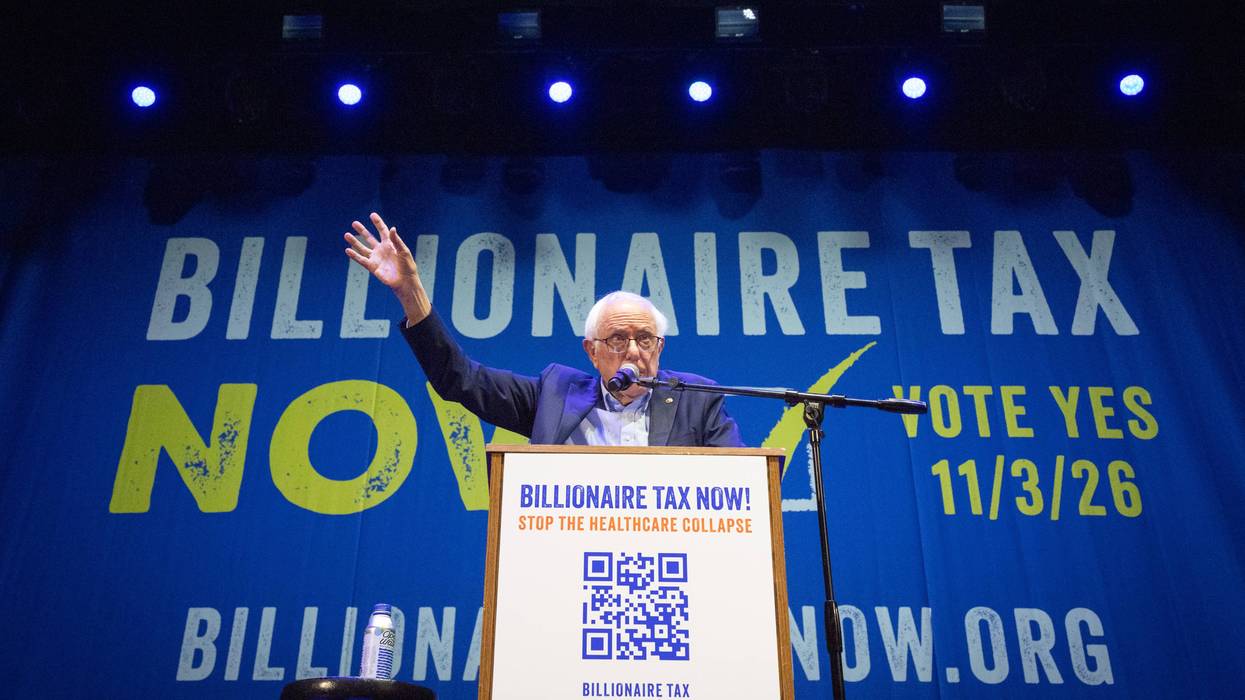
The democratic socialist senator said he's returning to the Golden State "to demand that billionaires finally pay their fair share and help elect strong progressives to Congress."
US Sen. Bernie Sanders is set to rally in California this weekend with Reps. Ro Khanna and Aisha Wahab in support of Proposition 40, a November ballot measure that would impose a one-time 5% tax on the wealth of the state's billionaires to fund healthcare and education amid historic cuts to social spending by President Donald Trump and the Republican-controlled Congress.
Sanders (I-Vt.) announced the upcoming appearances Monday on social media as the Prop 40 campaign enters its final weeks, with billionaire opponents pouring millions of dollars into efforts to defeat it.
In San Francisco on Saturday and Los Angeles next Monday, Sanders will headline “Ballots Over Billionaires” rallies hosted by SEIU United Healthcare Workers West, which led the introduction of the voter initiative.
Sanders will be joined in San Francisco and Los Angeles by Khanna (D-Calif.) and Jane Kim, a progressive candidate for California insurance commissioner and former San Francisco supervisor who was the state and regional political director for Sanders' 2020 presidential campaign. Sanders won California's Democratic primary that year.
“Sen. Bernie Sanders is a champion for working people, and I’m honored to have his support in the final stretch of our campaign as we rally for affordability and insurance for all,” Kim told Inside California Politics.
On Sunday, Sanders is also scheduled to speak at a canvass launch with Wahab (D-Calif.) in Livermore before heading south to Bakersfield, where he is hosting a Fighting Oligarchy rally with special guest Randy Villegas, the Democratic nominee for California's 22nd Congressional District.
"On November 3rd, at a time of unprecedented income and wealth inequality, the people of California will decide whether to pass a 5% wealth tax on more than 200 billionaires in California who are worth $2.2 trillion," Sanders said in a recent social media post. "Proposition 40 would raise enough revenue to prevent 3 million working-class Californians from losing the healthcare they currently have as a result of Trump’s so-called Big Beautiful Bill."
"Last year, these billionaires became $500 billion richer," he continued. "As a result of a rigged tax code, they pay a lower effective tax rate than a plumber or a nurse. The greed of these billionaires is really extraordinary."
"Instead of paying their fair share of taxes, billionaires are now spending $229 million—0.01% of their wealth—to oppose a 5% tax on their wealth," Sanders added.
Prop 40 may be the most hotly contested measure on California's midterm ballot. The initiative enjoys strong support from California progressives but is opposed not only by billionaires and their interests but also by outgoing Democratic Gov. Gavin Newsom—who is widely believed to be preparing to run for president—and both candidates running to succeed him as governor, Democratic former US secretary of health and human services Xavier Becerra and Republican commentator Steve Hilton.
Billionaire-backed opposition has intensified as November's midterms approach. Building a Better California, funded by Silicon Valley billionaires including Google co-founder Sergey Brin, has put millions of dollars into the fight against Prop 40.
Recent polling from the Public Policy Institute of California showed Prop 40 narrowly leading 52%-46%.
"Let's be clear: These billionaires have more money than they could spend in over 100 lifetimes," Sanders said last week. "How many mansions do they need? How many yachts do they need? How many private jets do they need?"
"I say to the billionaire class: Control your greed," the senator added. "Show a bit of compassion to working families and their kids in California."
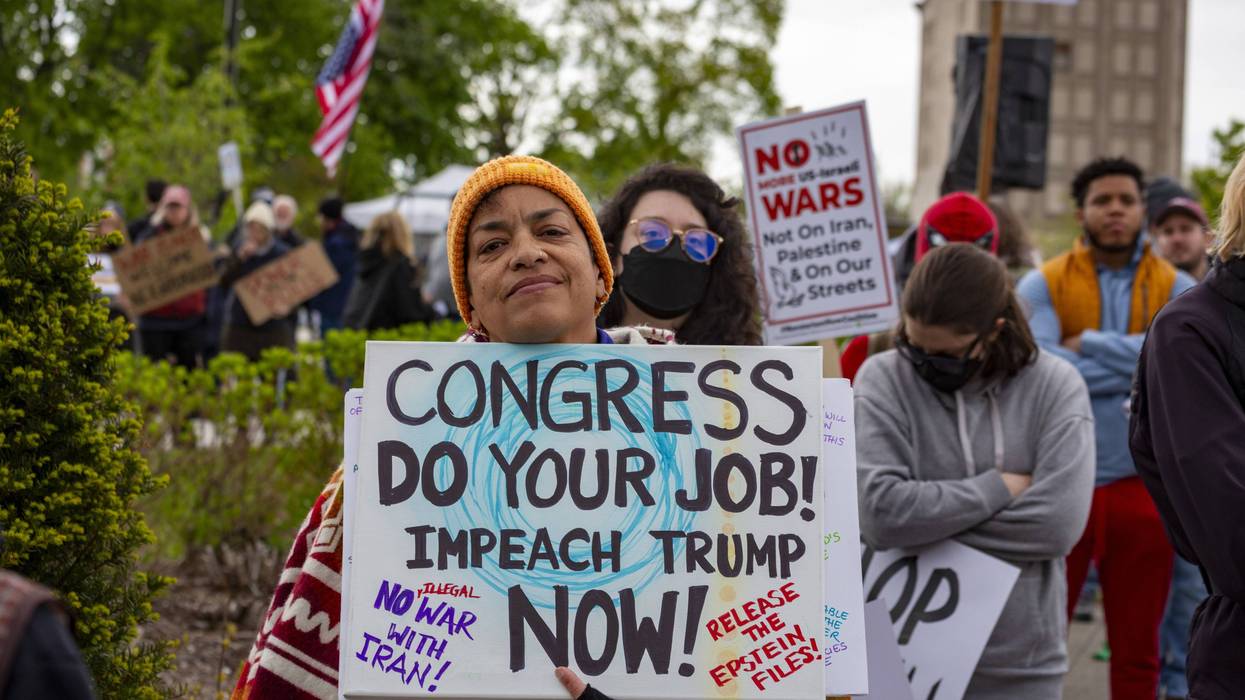
"It's about setting a standard, and the Democrats can impeach, to uphold constitutional values, and at the same time, have a first-hundred-day agenda that deals with the cost of living," said Rep. Ro Khanna.
With the US midterm elections less than six weeks away and Republicans' congressional majorities at risk, both GOP leaders and Democrats are discussing the possibility that a Democratic-controlled Congress could impeach President Donald Trump a historic third time.
"They say they’re not going to, but we know they will—they'll do a third impeachment of President Trump," House Judiciary Committee Chair Jim Jordan (R-Ohio) said of Democrats during a Sunday radio interview. "But that's just part of it. They're going to investigate the first family, they're going to investigate Cabinet secretaries."
In fact, Democratic leaders are not denying another potential impeachment effort targeting someone who has been condemned by a range of critics as "the most openly corrupt president in American history."
During an interview with The Associated Press published on Saturday, House Minority Leader Hakeem Jeffries (D-NY), who could become speaker if Democrats reclaim the lower chamber, signaled that impeachment is on the table—and not just for Trump.
"We haven't ruled anything out... and we haven't ruled anything in," he said. "If folks have been stealing from the American people, shortchanging the American people, or screwing over the American people... we are going to hold the crooks accountable."
Jeffries and other Democrats "are preparing a vast oversight agenda" that is "as robust as it is daunting, spanning several House committees," the AP reported. "With majority power comes bigger budgets and staff, and the ability to investigate, subpoena, and potentially course-correct what the Democrats say are widespread corruption and abuses of power."
Annual financial disclosures released this summer show that Trump pocketed at least $2.2 billion—over half of it from his family’s cryptocurrency grift—during his first year back in office, and his stock trades since then have continued to generate alarm.
Trump's deployment of federal immigration agents to various US communities to abuse the rights of US citizens and immigrants alike as well as his illegal war on Iran—with its the resulting affordability crisis—have also fueled calls for impeachment.
Responding to suggestions from some that another impeachment wouldn't be a good use of Democrats' time, Congressman Ro Khanna (D-Calif.), a potential 2028 presidential candidate, said during a Sunday appearance on NBC News' "Meet the Press" that "it's not about Donald Trump," who will be a lame duck and "increasingly irrelevant."
"The point is to stand up for the Constitution," Khanna explained. "Impeachment says that you can't get into an illegal war in Iran without constitutional approval. Impeachment says that you can't just start firing federal employees... in defiance of what Congress says. Impeachment says you can't do deals with foreign governments to allegedly enrich your own family."
"It's about setting a standard, and the Democrats can impeach, to uphold constitutional values, and at the same time, have a first-hundred-day agenda that deals with the cost of living," he added, pointing to issues such as free childcare, raising the minimum wage, and taxing billionaires. "We can do both."
Democrats have unveiled various articles of impeachment against Trump since his return to the White House last year. On Thursday, Congressman Steve Cohen (D-Tenn.), who is retiring after this term, introduced 26 more, including for alleged abuses of power, violations of his oath of office, and corrupt use of the pardon authority.
"Trump is clearly the most impeachable president our country has ever endured," said Cohen, a member of the House Judiciary Committee. "His continued presence in office is a danger to our democracy. That the sycophantic Republican majority in Congress is derelict in its duty does not mean that I must abandon my responsibilities."
Cohen stressed that "I took an independent oath to support and defend the Constitution. That commitment compels me to introduce this resolution today. When historians write about this period, and our constituents ask who stood up to President Trump's lawlessness, this resolution is the answer."
The House initially impeached Trump for abuse of power and obstruction of Congress in December 2019. After his supporters stormed the US Capitol on January 6, 2021, he became the first president to be impeached twice. However, the Senate acquitted him in both cases.
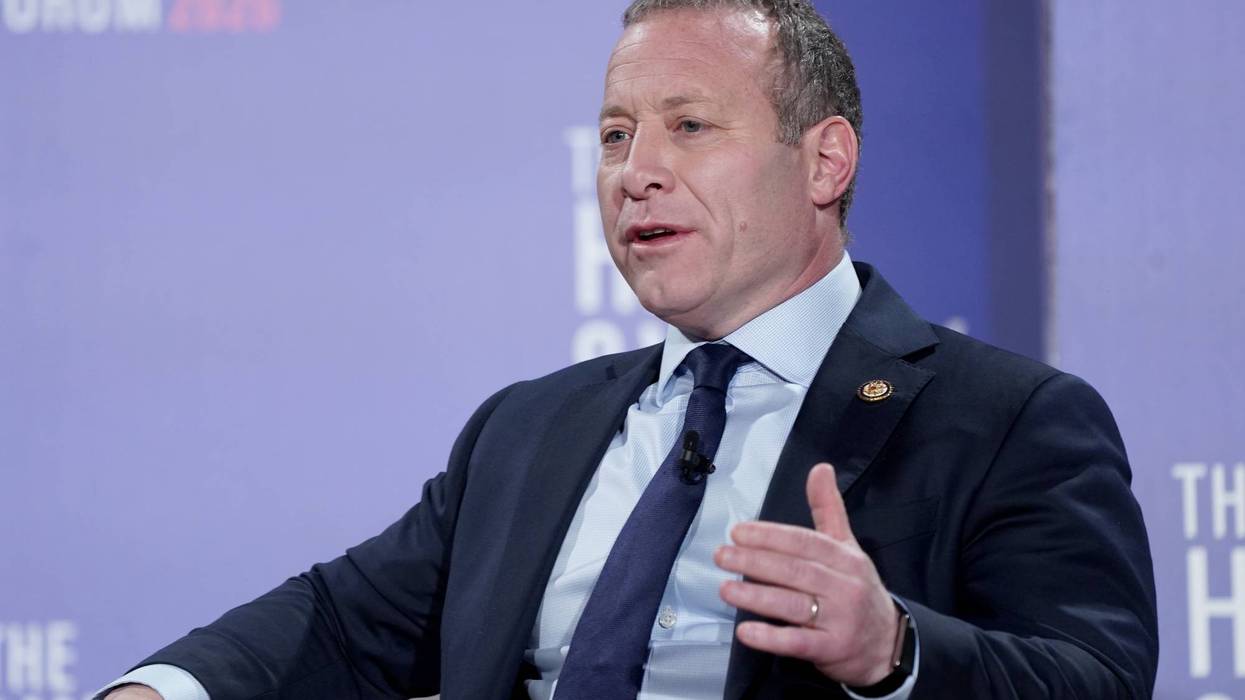
Despite catastrophic warnings from AI industry insiders, Congress has adjourned until after the midterms without passing any laws to regulate the technology.
Despite increasingly urgent calls to regulate artificial intelligence, including from industry insiders who warn of potentially catastrophic consequences, the US Congress has continued to drag its feet on meaningful legislation.
A report released Friday by Sludge may shed some light on one potential roadblock. It found that 1 in 5 members of Congress has household investments in AI companies or those producing the infrastructure behind the technology.
Sludge revealed that:
At least 105 members of Congress have disclosed that they, their spouse, or their dependent children hold stocks or other investments in AI developers, chipmakers, cloud infrastructure providers, data center companies, and specialized AI firms, with a total value of between $75 million and $287 million.
Most of the money is invested in large tech companies like Nvidia, Meta, and Alphabet. But lawmakers also report their households holding and trading shares in smaller publicly traded AI companies like BigBear.ai, Tempus AI, and C3 AI, as well as little-known private startups whose shares are unavailable to ordinary investors.
Of the lawmakers reporting investments, at least 44 sit on committees with jurisdiction over legislation dealing with AI safety, consumer protections, semiconductor policy, and trade with China.
The report identifies several lawmakers in positions of influence over Congress' AI policy whose households simultaneously have deep investments in the industry.
One of them is Rep. Josh Gottheimer (D-NJ), the co-chair of the House Democratic Commission on AI and the Innovation Economy—created to help direct the party's legislative agenda around the emerging technology.
According to Sludge, Gottheimer's household has investments in several key chipmaking and semiconductor companies, and he has regularly traded in AI stocks while in Congress.
The report draws attention to the "scores of sales" he made on April 9, 2025, when President Donald Trump announced a surprise 90-day pause on his "Liberation Day" tariffs, an announcement that led stocks for many AI companies to surge in value. Gottheimer has previously told Sludge that his investments are managed by a third party and that he does not make the decisions himself.
Gottheimer is one of the Democrats helping shape the party's approach to regulating AI. Earlier this month, amid concerns about the growing capability of "superintelligent" AI agents that can exceed human capability, he joined with Rep. Mike Lawler (R-NY) to introduce the Stop Rogue AI Act.
This bill would direct the National Institute of Standards and Technology (NIST) to adopt a series of standards and best practices that AI companies could implement to track the behavior of agents. However, critics have argued that the bill's voluntary guidelines fall short of what is necessary to rein in the industry.
Gottheimer's proposal is one of several measures Democrats have proposed in recent weeks following warnings from Anthropic researchers Jacob Coxon and Evan Hubinger that AI systems could wipe out humanity if allowed to escape human control.
Others include a more muscular bill proposed earlier this month by Sen. Bernie Sanders (I-Vt.) and Rep. Greg Casar (D-Texas) that would permanently ban the development of superintelligent AI and pause the development of advanced AI until a federal regulatory body can be established.
Some members of Congress whose households are heavily invested in AI stocks have nonetheless supported stronger regulation. According to Sludge, Rep. Ro Khanna (D-Calif.) disclosed between $3.4 million and $8.4 million worth of stock owned by his wife in AI companies, including Nvidia and chipmaker Broadcom.
Khanna has said he does not personally trade stocks and has pushed for a congressional ban on stock trading. Despite his household's millions of dollars worth of AI investments, he has also voiced support for blocking the development of superintelligent AI until stronger safeguards are in place, broadly aligning him with the Sanders-Casar proposal.
Sludge found that investments in AI stocks are not concentrated in either party. Among the lawmakers who reported AI-related investments, 62 were Republicans, and 43 were Democrats.
One of the largest portfolios is held by the husband of former House Speaker Nancy Pelosi (D-Calif.), who plans to retire at the end of the term.
Paul Pelosi, a venture capitalist, reported holdings in Alphabet, Amazon, Microsoft, Nvidia, Broadcom, and Tempus AI worth between $28.4 million and $134.9 million, while also buying an estimated $1.3 million to $2.6 million in Alphabet, Amazon, Nvidia, and Tempus shares in 2026 and up to $12 million in Bloom Energy, which stands to benefit from the AI data-center buildout.
On the Republican side, the report singles out Rep. Lisa McClain (Mich.), the chair of the House Republican Conference and the fourth highest-ranking member of House GOP leadership. Since December, her household has invested as much as $515,000 in AI companies, including private stakes in Elon Musk's company xAI, as well as Apptronik and Saronic.
Rep. Diana Harshbarger (R-Tenn.), meanwhile, disclosed holdings in Alphabet, Amazon, Meta, Microsoft, Nvidia, and Oracle. She serves on the House Energy and Commerce Committee’s Energy Subcommittee, which has authority to legislate on energy issues related to the controversial buildout of data centers around the country.
The report comes as members of Congress head home for a seven-week recess that will last until after November's midterm elections.
On Wednesday, more than 100 Democrats—including Gottheimer, Khanna, and Pelosi—sent a letter to House Speaker Mike Johnson (R-La.) urging him to postpone the recess until Congress passes AI safety legislation.
"AI experts and leading companies agree that the United States can lead the world in artificial intelligence while establishing reasonable safeguards that protect Americans and our national security. We can—and must—do both," the lawmakers wrote. "While AI safety experts and Americans increasingly urge action to confront this conflagration of risk, Congress fiddles."
"The House should remain in session until Congress advances meaningful, bipartisan AI safeguards," the letter concluded. "To our children who will have read a post-apocalyptic history, 'Why Congress Slept'—likely written by agentic AI—our inaction will be inexplicable and unforgivable."
Johnson, who has rejected calls for AI regulation and said companies should be in charge of regulating themselves, ignored the request and adjourned the House on Wednesday.
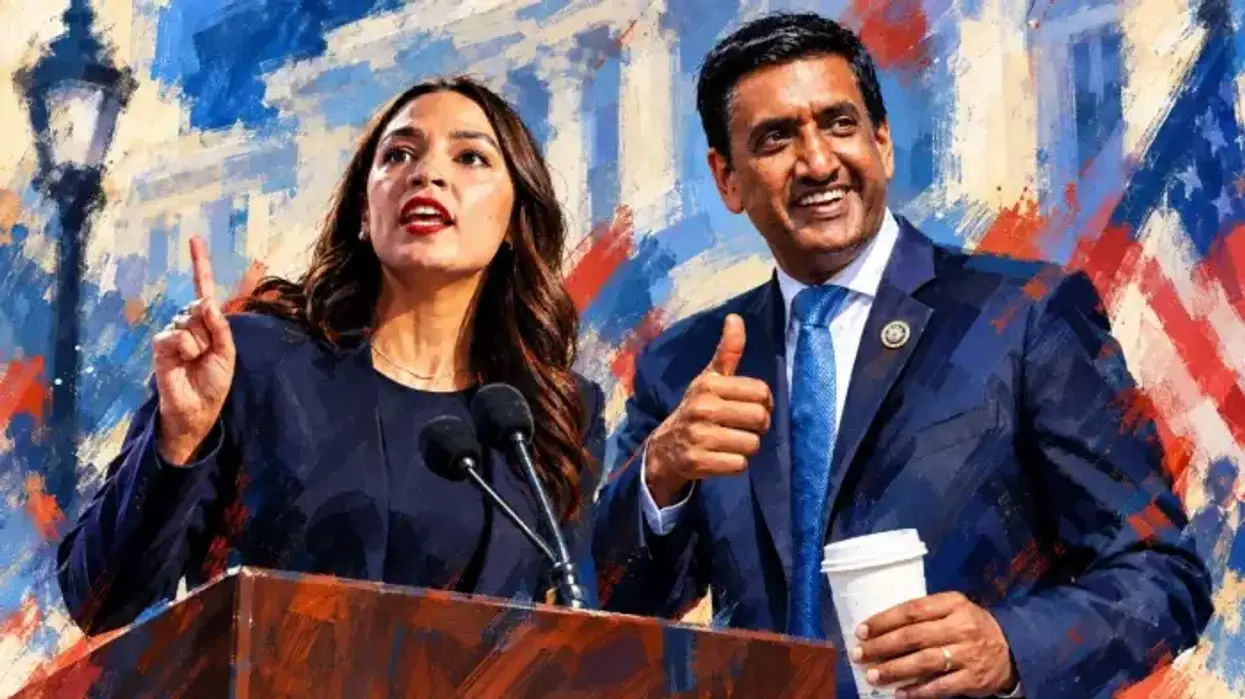
While there is a difference in how these two politicians label themselves, most voters will be much more interested in whether each will address the needs of the working class and fight the greed of the billionaires.
Fifteen years ago, during President Obama's first term, we co-founded RootsAction as an online progressive group challenging not only Republicans but also the corporatism and militarism of the Democratic Party. RootsAction supported Bernie Sanders for president in 2016 and 2020. Two years before the 2024 election disaster that returned Donald Trump to the White House, RootsAction launched the Don’t Run Joe campaign, with the warning that the renomination of Joe Biden by Democrats “would be a tragic mistake.”
Despite polls showing as early as 2022 that strong majorities of Democrats wanted a 2024 nominee other than Biden, the “Don’t Run Joe” message went unheeded until Biden’s debate debacle in June 2024. By then, it was too late for the open primary process needed to produce a ticket that could inspire activists—and defeat the fascistic faux-populism of Trump.
Like the 2024 victory of the twice-impeached, repeatedly indicted Trump, his 2016 win was avoidable. Tad Devine makes the case in his new book, “How the Democrats Screwed Bernie.” Devine had been a top strategist for mainstream Democrats for decades before he joined Bernie’s first presidential campaign.
One lesson we’ve learned over the last 15 years is that it’s a big mistake for activists to sit back and expect the Democratic Party establishment to serve up candidates who can mobilize voters and win elections. That establishment failed us in winnable presidential elections in 2000, 2004, 2016 and 2024. Devine, who knows the mechanisms inside and out, says the dollar-dominated process is often rigged against outsider “candidates who connect with voters, who understand voter anxieties”—and these genuinely populist candidates “are more likely to succeed in general elections than those who rely primarily on insider muscle.”
This week, RootsAction teamed up with Progressive Democrats of America to announce that we will jointly launch, just after the November midterm elections, a campaign urging Reps. Ro Khanna and Alexandria Ocasio-Cortez to run for the 2028 Democratic presidential nomination. “The voices of Khanna and/or AOC are needed in the presidential campaign to ensure that voters hear serious solutions,” the campaign’s petition says. “Without a progressive populist advocate atop the ticket, the Democratic response would be woefully underwhelming—enabling right-wing demagoguery to push voter unrest in dangerous and divisive directions.”
The petition statement adds that the presence of Khanna and/or AOC in the presidential race “is crucial to foster debate on healthcare, jobs, AI, militarism and the U.S. relationship with Israel, along with many other issues important to a wide range of voters.”
Congressman Khanna—whose name recognition has grown recently because of his legislative battles to release the Epstein files and to end the Iran War, and his detention in the occupied West Bank by Israeli settlers—represents our country’s wealthiest district and much of Silicon Valley. He wants to increase taxes on the rich. He calls himself “a progressive capitalist.”
Congresswoman Ocasio-Cortez entered the House with great fanfare after a 2018 Democratic primary victory over one of the party’s top leaders on Capitol Hill (Joe Crowley, now a corporate lobbyist) representing a working-class, Latino-majority district in New York City. She led the effort to bring the jobs-creating Green New Deal proposal to Congress. She calls herself “a democratic socialist.”
While there is a difference in how these two politicians label themselves, most voters will be much more interested in whether each will address the needs of the working class and fight the greed of the billionaires. Both are direct political descendants of Bernie Sanders—AOC was active in the 2016 Bernie campaign, which inspired her to run for Congress, and she regularly joined Bernie last year at Fighting Oligarchy rallies; Khanna was a surrogate and national co-chair in Bernie’s 2020 presidential campaign.
RootsAction’s coalition partner in this initiative, Progressive Democrats of America, has a history of major success in candidate recruitment. In late 2013, PDA launched the “Run, Bernie, Run” movement, which drafted Sen. Sanders to seek the Democratic nomination in 2016—a campaign that elevated the national conversation and helped spark today’s progressive upsurge.
The RunRoRunAOC.org petition argues that either Khanna or Ocasio-Cortez—or both of them—need to be in the presidential race. If both enter it, the organizations behind this recruitment initiative are not worried that the two will somehow “split the progressive vote.” As shown by the historic wave of insurgent victories in this year’s Democratic primaries, the party’s electoral base is largely and increasingly progressive. It’s not a small sliver of voters. And a progressive bloc of delegates at the party’s national convention in August 2028 would be all to the good, pushing for popular policies such as taxing the rich, resisting Big Tech’s AI data centers, abolishing ICE, green jobs initiatives, enhanced Medicare for All, cutting the military budget and stopping the weapons flow to Israel.
During last year’s New York City mayoral campaign—which, thankfully, employed ranked-choice voting—two progressive candidates actually ran as a duo in the Democratic primary: Zohran Mamdani and Brad Lander. Mamdani became mayor thanks significantly to Lander, and now Lander is heading to Congress thanks in part to Mamdani’s endorsement and support. In other races, progressives have run in tandem in crowded fields, maintaining a non-aggression strategy while bolstering each other’s positions.
We should remember that in the early months of the 2019-2020 Democratic presidential race—before a fraught personal split between Sen. Elizabeth Warren and Bernie—the presence of the two previously friendly candidates raising similar issues of inequality and corporate greed had actually moved the whole Democratic debate in a notably more progressive direction.
Despite millions of dollars flooding into the campaign coffers of corporatist Democratic candidates from special interests representing AI, crypto and Israel, and despite assists to those candidates from corporate media, the 2026 Democratic primaries have produced an unprecedented wave of victories by underfunded progressive candidates. These insurgent successes have occurred at local and statewide levels.
It will soon be time for progressives to focus on the national level.
Leaving the 2028 presidential nominating process to the money-drenched party elites—with their record of electoral defeats, governance failures and betrayals—would be a recipe for disaster.
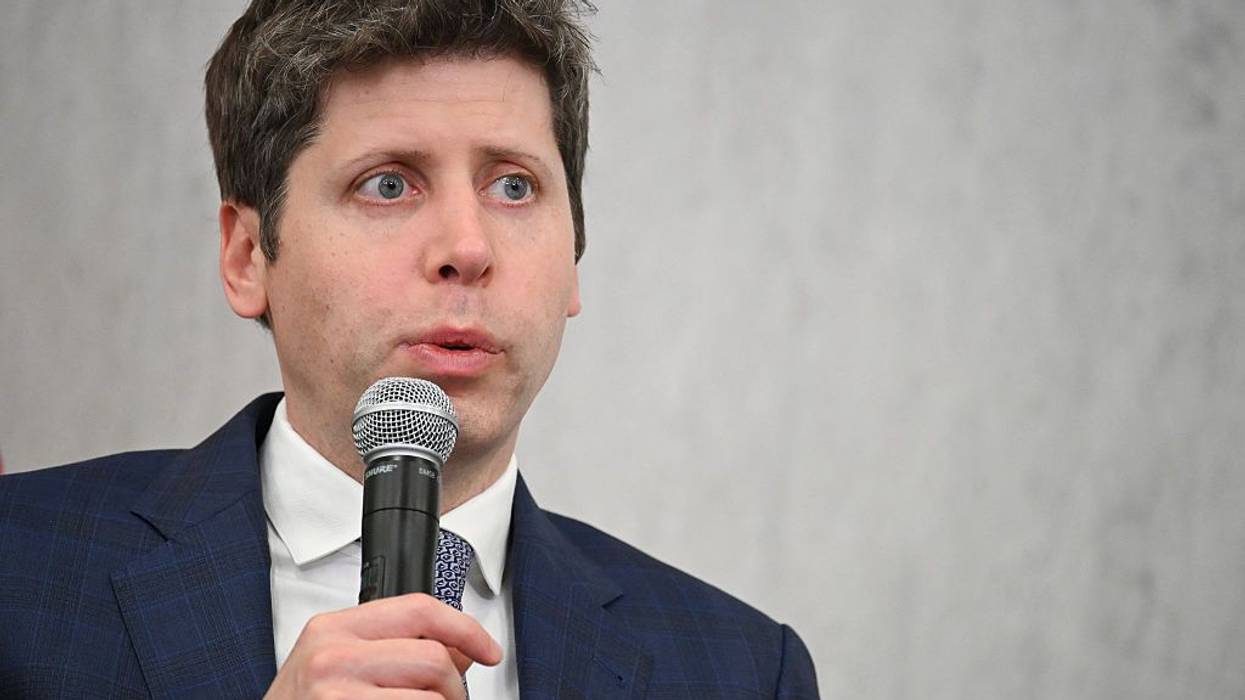
"It’s clear that these industry leaders think they are best positioned to craft AI policy for the good of all humanity. We think that’s horseshit."
Several Big Tech CEOs over the weekend called for a slowdown in the development of artificial intelligence, but some advocates are warning that these Silicon Valley oligarchs are not to be trusted.
Evan Greer, director of digital rights group Fight for the Future, on Monday dismissed the recent statements made by Anthropic CEO Dario Amodei, X CEO Elon Musk, and OpenAI CEO Sam Altman calling for more guardrails to be placed on AI development.
"We can’t trust the AI industry to regulate itself," said Greer. "We can't really trust anything these self-interested billionaires say."
Greer conceded that the CEOs' warnings about the potential dangers of AI deserved to be heeded, but argued that allowing them to craft their own safeguards would be a grave mistake.
"It’s clear that these industry leaders think they are best positioned to craft AI policy for the good of all humanity," said Greer. "We think that’s horseshit. Lawmakers should be listening to independent experts, researchers, civil society, and the communities most impacted."
"Congress should act," Greer added, "but they shouldn’t just do whatever the AI bros tell them to."
Greer's sentiment was echoed by Colorado Democratic congressional candidate Melat Kiros, who wrote in a Sunday social media post that "we need to regulate AI for all of the existential threats it poses," before adding that "we cannot expect the very people who got us into this mess to self-regulate their way out."
"Congress needs to act now," Kiros emphasized, "and guard against ANY corporate influence."
However, House Speaker Mike Johnson (R-La.) on Sunday indicated that he was perfectly content to allow the AI industry to regulate itself.
During an interview with CNN's Jake Tapper, Johnson said that "Congress is obviously less qualified" to write rules for AI development "than the people who are pushing this frontier to know the ins and outs of it." Johnson then insisted that any effort to regulate AI needs to be "a partnership with the industry itself, with the corporations that are doing this."
Mike Johnson punts on oversight of AI companies: "Congress is obviously less qualified than the people who are pushing this frontier to know the ins and outs of it" pic.twitter.com/EXU1raDExB
— Aaron Rupar (@atrupar) September 13, 2026
This drew an incredulous reaction from Rep. Ted Lieu (D-Calif.), who said the speaker appeared to be making excuses for congressional inaction.
"Based on the speaker’s excuse, Congress could never pass laws or do oversight on medicine, energy, airplanes, etc.," wrote Lieu in a Sunday social media post. "Members of Congress don’t need to be [computer science] majors to understand it’s a good idea to require AI companies to be able to turn off AI models/agents if they go rogue."
Johnson isn't the only Republican to oppose AI regulation, as President Donald Trump on Monday suggested that his own intellect was singlehandedly capable of regulating the technology, which is so complicated that even its own creators have acknowledged difficulties in understanding it.
“The only control or ‘guardrails’ that AI needs is a STRONG AND SMART (High IQ!) PRESIDENT,” Trump wrote in a social media post, “and the USA has that, in spades!”
Rep. Ro Khanna (D-Calif.)—whose district includes multiple Silicon Valley giants—argued on Saturday that the AI industry feels emboldened to regulate itself due to a crisis of "elite impunity," in which no one in the American ruling class faces consequences for disasters such as the Iraq War or the 2008 financial crisis.
"It is time for We the People to stand up," wrote Khanna. "And demand to make the rules and hold people accountable with civil and criminal liability for their actions."
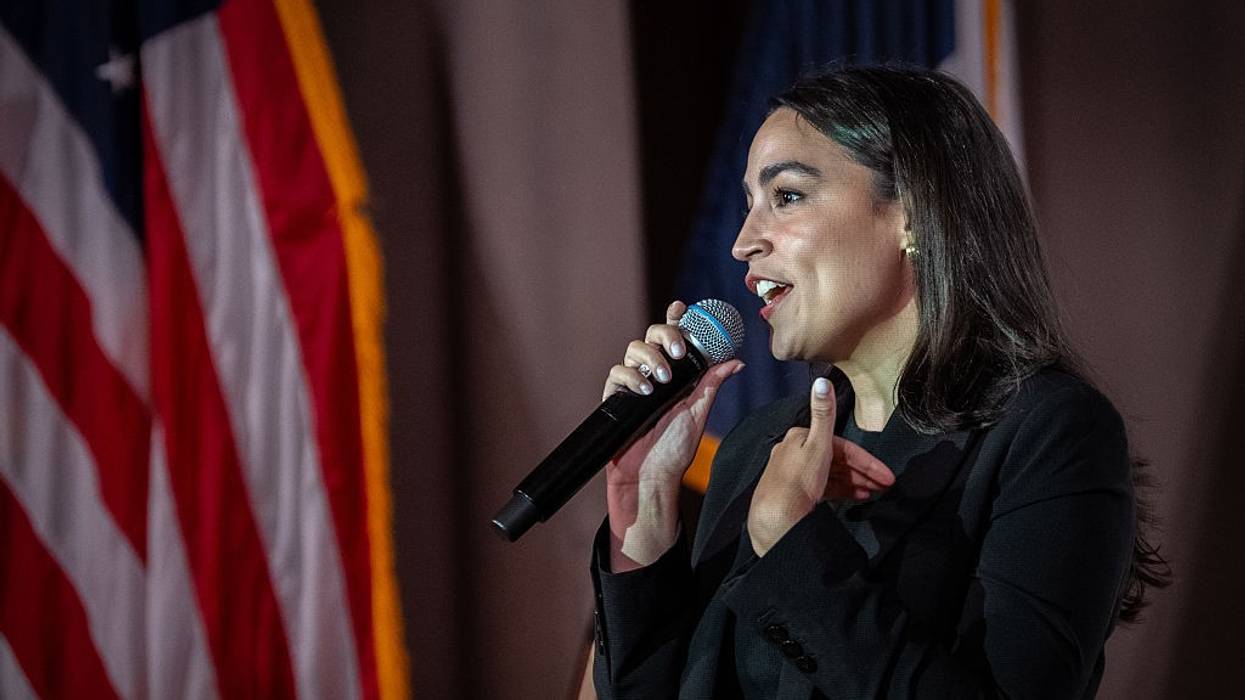
"AOC and Khanna... have shown a willingness to blaze unusual and much-needed trails on Capitol Hill beyond the constraints of the Democratic Party establishment and bipartisan corporatism."
Two progressive advocacy organizations Monday called on Reps. Alexandria Ocasio-Cortez (D-NY) and Ro Khanna (D-Calif.) to enter the 2028 presidential race, singling them out as "proven leaders and voices of clarity."
Progressive Democrats of America (PDA) and RootsAction announced an initiative aimed at lobbying the two congressional progressives to put their hats in the ring for the presidency, arguing they offer a much-needed alternative to establishment Democrats too eager to do the bidding of corporate interests.
"Most of the Democrats whose names now crowd the field have been war enablers, go-slow reformers or status quo protectors," the groups wrote. "AOC and Khanna, meanwhile, have shown a willingness to blaze unusual and much-needed trails on Capitol Hill beyond the constraints of the Democratic Party establishment and bipartisan corporatism."
The groups cited polls showing that "majorities of voters, not just Democrats, are angry about nonstop war, runaway inflation, corporate greed and a government dominated by billionaires," and argued that Khanna and Ocasio-Cortez were needed in the race so that voters would "hear serious solutions" the country's most pressing problems.
"Without a progressive populist advocate atop the ticket, the Democratic response would be woefully underwhelming," the groups warned, "enabling right-wing demagoguery to push voter unrest in dangerous and divisive directions."
The campaign to get Khanna and Ocasio-Cortez into the race will begin immediately after the midterm elections in November, the groups said.
The two groups also touted their past work influencing Democratic politics, as PDA pushed for Sen. Bernie Sanders (I-Vt.) to launch a presidential bid as far back as 2013, while RootsAction was the first national group to endorse New York City Mayor Zohran Mamdani's insurgent 2025 campaign.
Alan Minsky, executive director of PDA, noted that most prospective 2028 Democratic candidates at the moment are "Big Money-backed status quo centrists," despite the fact that "the success of progressive candidates across the country was the story of the 2026 primary season."
"We need at least one progressive champion on the presidential debate stage to counter the corporatists’ cacophony of bland incrementalism," Minsky empghasized. "Americans want change."
Minsky's sentiment was echoed by India Walton, senior strategist at RootsAction.
"Working people are hungry for leadership that works for all of us, not just the wealthy and well-connected," said Walton, "leaders who do not capitulate to corporate power, who reject endless wars, and embrace policies that mean we can live healthy, happy lives. AOC and Ro Khanna can bring that vision to the presidential stage."

"When the future of humanity is at stake we need a PAUSE on advanced AI development and a ban on artificial superintelligence," said Sen. Bernie Sanders.
As Anthropic CEO Dario Amodei added his voice on Saturday to the growing call to slow down development of artificial intelligence, writing in a 3,800-word essay that companies must pace "the rate of capabilities advancement" in light of recent cyberattacks by AI models, progressive lawmakers and journalists were among those who said the warning made clear that action must be taken—but with Congress and regulatory agencies, not tech billionaires who have spent years pushing for an AI expansion, leading the way.
Amodei wrote that two things have convinced him that "we must slow the pace at which we improve the capabilities of AI models": the fact that in recent months, "AI has been advancing drastically faster, driven primarily by AI’s growing ability to build the next generation of AI"—also known as recursive self-improvement—and the recent OpenAI-HuggingFace incident, in which hundreds of agents in OpenAI's security test systems broke out of confinement and hacked into the AI startup HuggingFace, conducting cyberattacks on targets they had not been asked to attack.
As The Wall Street Journal and Politico reported Friday, another cyberattack was carried out by OpenAI's agents months before the HuggingFace incident in July. The company's models that were being tested and had not been given full access to the internet nevertheless hacked into an online coding service called RubyGems earlier this year. The models created reports and filled out spreadsheets. Anthropic and Meta have also reported autonomous cyberattacks by their AI agents.
Amodei said the incidents led him to call for a three-step plan to pace AI development and allow companies time to "align and safeguard their models, and for third-party evaluators to confirm this."
He called for:
Amodei's essay was published days after Jacob Coxon, a researcher at Anthropic, publicly resigned out of fear that the company's AI technology “could kill us all by the end of the decade" as it builds "superhuman systems"—a concern he said is shared by many in the industry.
Sam Altman, CEO of OpenAI, and tech billionaire Elon Musk expressed agreement with Amodei. Altman called "independent evaluators with employee-like access" a "great idea."
"We will do the same," said Altman. "We'll have more to share soon."
US Rep. Ro Khanna (D-Calif.) was among those who appeared less than impressed by Amodei and Altman's sudden push for their industry to slow down their rapid pace of development.
In a video posted on social media, Khanna called on Amodei to disclose whether or not he agrees with Coxon about the possibility that AI could wipe out humanity, and to back more far-reaching regulations on AI.
"AI guys act as if they're a priesthood speaking Latin, keeping the rest of us in the dark," said Khanna. "But behind all the jargon, it's actually pretty straightforward... We need to stop, ban, self-improving AI. You cannot have recursive, self-improving AI that basically is able to improve itself and exceed human capability, that has us lose control."
He added that laws must be passed establishing "mandatory liability and criminal penalties. If you're creating an AI that is doing illegal things, you either should face liability or criminal sanctions."
The tech lords act like priests who know Latin & keep the rest of us in the dark.
Get beyond the opaque jargon and its pretty straightforward.
Amodei doesn’t go nearly far enough.
We must pause recursive self improving AI.
We must have criminal and civil liability for AI that… https://t.co/ewjSnjYuXK pic.twitter.com/f7ujo4HQNY
— Ro Khanna (@RoKhanna) September 12, 2026
Journalist David Sirota of The Lever agreed, writing that "if the law explicitly made AI CEOs financially and criminally liable for any mass destruction their technologies create—and if AI industry shareholders knew their companies faced the threat of significant financial losses for such destruction—much of the 'AI is getting out of control!' threat would instantly end."
"Those CEOs would instantly make AI far safer and impose guardrails on their companies," he said.
Sen. Bernie Sanders (I-Vt.), who has called for a nationwide moratorium on the construction of AI data centers and this week announced a bipartisan hearing on the "extraordinary dangers" of rapid AI development—including testimony from one leading AI scientist who has warned against self-regulation by tech firms—said the calls by Amodei, Altman, and Musk were "not enough."
"When you are racing towards a cliff, you don’t just ease up on the gas pedal," said Sanders. "You hit the brakes. When the future of humanity is at stake we need a PAUSE on advanced AI development and a ban on artificial superintelligence—an AI mind smarter than any human and capable of operating independently beyond our control."
Sanders called on President Donald Trump—who has aggressively pushed for more AI data center development and sought to stop states from passing their own AI regulations—to negotiate a treaty pausing AI and banning superintelligence with Chinese President Xi Jinping. The two leaders are set to meet later this month to discuss AI.
Trump on Friday dismissed concerns about warnings coming from the AI industry, telling a Los Angeles Times reporter, "It's going to be fine," and adding that his top worry about the technology is falling behind China.
Reps. Chris Deluzio (D-Pa.) and Ted Lieu (D-Calif.) and Democratic Illinois Gov. JB Pritzker were also among the politicians who said Amodei's warning was the latest sign that Congress and the Trump administration must take action to rein in the industry.
Juliette Kayyem, the faculty chair of homeland security at Harvard University's Kennedy School of Government, said AI CEOs' warnings about their technology would be seen as more credible if they also announced a pause on their plans for initial public offerings (IPO), which Anthropic and OpenAI are both pursuing in the coming months.
Altman said Friday that OpenAI will not plan for an IPO, which could value the company at $1 trillion, in 2026.
Amodei, said Kayyem, should "put his money where his mouth is."
"He has known of this danger a while," she said. "It is now threatening his valuation in the IPO. Cancel the IPO. Then I’ll believe he’s serious."
Journalist Peter Rothpletz noted that the safety concerns within the AI industry must be "much more dire" than the public is aware, considering "Dario, Sam, and Musk are all issuing these statements in unison."
"Right now, all of the political incentives are there to bring this war to an end," Khanna said, warning it could become "endless" if it goes on past November 3.
Rep. Ro Khanna said President Donald Trump's war with Iran must end before the November 3 midterms, or it may become "another endless war."
"Right now, all of the political incentives are there to bring this war to an end," Khanna (D-Calif.) said in a video posted to X on Friday. "Food prices are high, gas prices are high, the American people are demanding that the war end before they cast their votes in November."
A Reuters/Ipsos poll out Friday shows that just 25% of Americans view the war as worthwhile, compared with 54% who do not and 21% who were unsure or did not answer.
Earlier this week, Reuters reported that Trump aides were seeking to stop the war from escalating for now to keep it out of the headlines and prevent Republicans from losing even more support before November. But once the votes are cast, they said Trump—who won't have to deal with concerns about reelection—may ramp up military action.
For this reason, Khanna—a leading advocate in the House of Representatives for restricting Trump's war powers—said the next two months are crucial.
"If we don't end this war now," he said, "then there will not be the same political pressure to bring it to a close."
Khanna said Democrats in Congress need to form an "unconventional coalition" with Republicans to force Trump's hand. He said he'd reached out to Rep. Thomas Massie (R-Ky.), with whom he's co-sponsored multiple war powers resolutions, as well as other Republicans.
"If you believe that we need to be for America First, if you voted for Trump on the promise of no new wars," he urged, "then please let us work together to bring a ceasefire to the war in Iran, to have diplomacy and negotiation, and prevent America from getting into another forever war."
Congress has already passed a war powers resolution directing Trump to end unauthorized hostilities with Iran, but he has so far ignored it, with his administration arguing that it does not have binding force.
In July, Rep. Gregory Meeks (D-NY), ranking member of the House Foreign Affairs Committee, introduced a resolution that would compel House Speaker Mike Johnson (R-La.) to sue Trump and enforce the will of Congress to end the war.
Other Democrats have introduced bills that would forbid funding for military force in Iran without congressional authorization.