

SUBSCRIBE TO OUR FREE NEWSLETTER
Daily news & progressive opinion—funded by the people, not the corporations—delivered straight to your inbox.
5
#000000
#FFFFFF
To donate by check, phone, or other method, see our More Ways to Give page.
Daily news & progressive opinion—funded by the people, not the corporations—delivered straight to your inbox.

Comparing the religious rhetoric and call to civic virtue of Martin Luther King, Jr. to the vile language and deeds of morally corrupt individuals as Donald Trump, JD Vance, and Pete Hegseth.
Today is the 63rd anniversary of Martin Luther King, Jr.’s release from the Birmingham, Alabama jail in which he penned his famous “Letter from Birmingham Jail.”
The “Letter,” a response to eight White moderate clergyman who publicly called on King’s Southern Christian Leadership Conference to stop its desegregation campaign in the name of “law and order and common sense,” is one of the most widely discussed texts in US history. Most of the discussion has focused, rightly, on the way King carefully and respectfully outlines a justification and strategy of non-violent civil disobedience, to be undertaken when attempts to redress grievances are repeatedly ignored; after careful preparation; and in the name of a higher law. While scholars continue to discuss and debate the nuances of King’s text, the force of his arguments, and their general applicability, there can be no doubt that both the “Letter” and the Birmingham campaign that the “Letter” explains and justifies have informed subsequent generations of protest in the US and the world at large.
At a time when the Trump administration is making war on “domestic enemies” and continuing a campaign of terror against undocumented immigrants and anyone suspected of being “an illegal,” and when citizens have resisted these efforts in the streets of major American cities--most notably in Minneapolis this past January—both King’s example, and his “Letter,” justifiably loom large in public discussion. And while the citizens of Minneapolis surely did not literally follow King’s the letter of King’s “Letter,” their extraordinary and successful campaign of resistance to ICE was surely in the spirit of King’s text and his example.
To read King’s “Letter from Birmingham Jail” is to be reminded of just how low our public life has fallen in the age of Trump...
As I reflect today on the “Letter,” however, I want to focus on a different dimension of the “Letter”: the way King--a holder of a doctorate in theology, a Black Baptist Minister, and the leader of the Southern Christian Leadership Conference—carefully braided together religious and secular rhetoric to make the case for a more inclusive democracy, invoking a range of exemplary religious figures and texts while deliberately using language that was itself manifestly inclusive. Many scholars have written about this. At the same time, I think it bears special emphasis given the way that the Trump administration, in ways large and small, hidden and public, is now promoting, with a vengeance, what can only be described as a form of militant Christian nationalism.
The New York Times reports that “Trump’s Planning of America’s 250th Suggests a Religious Focus.” Columnist Ja'han Jones, writing for MS Now, goes further, observing that “Trump is planning a Christian ‘revival’ for America’s 250th anniversary,” continuing: “Let there be no doubt. The president is using the milestone celebration to promote far-right evangelism and Trump-centric Christianity.”
In the same vein, Politico reports on the administration’s Easter enthusiasm:
several key Cabinet departments [were] heralding Christ’s resurrection on their official social media accounts. “He is risen,” declared the Department of Homeland Security and the State Department. The Defense Department shared a post on X from Defense Secretary Pete Hegseth: “The tomb is empty. The promise is fulfilled. Through His sacrifice, we are redeemed. We stand firm in faith, courage, and truth.” The Justice Department also chimed in on X:“Today, as millions of Christians gather in their churches across the nation to celebrate the resurrection of Christ, this Department—is proud to defend religious liberty.”
Most disturbing has been the way the Trump administration has very publicly treated its war on Iran as a Christian holy war. Trump did this indirectly when he declared, on Good Friday, that:
As we rejoice in this Easter season, we are reminded that the life of Jesus Christ and the truths of the Gospel have inspired our way of life and our national identity for 250 years. From the Christian patriots who won and secured our liberty on the battlefield and every generation since, the love of Christ has unfailingly guided our Nation through calm waters and dark storms. . . . We acknowledge that, through Christ’s redeeming sacrifice, in the words of Holy Scripture, “Death is swallowed up in victory.” Above all, we echo with tremendous joy those sacred words that have given life, hope, and purpose to Christians for thousands of years: He is risen.
Hegseth has been more emphatically bellicose, especially in this much discussed, bone-chilling prayer offered at a recent Pentagon worship service:
Let every round find its mark against the enemies of righteousness and our great nation. Give them wisdom in every decision, endurance for the trial ahead, unbreakable unity, and overwhelming violence of action against those who deserve no mercy.
The administration has been so resolutely Manichean and indeed bloodthirsty in its war rhetoric—with Trump going as far as to threaten the literal annihilation of not simply Iran but Iranian civilization itself—that Pope Leo XIV has felt obliged to publicly weigh in to call it to account. As Trump and his supine protégé JD Vance have responded with a combination of vituperation and arrogance, Leo has become more sharply critical even as he has continued to speak with great nuance. Trump’s Social Truth post representing himself as Jesus Christ, and the widespread charges of “blasphemy” that have followed, are simply surface expressions of the much deeper and more dangerous fact that the Trump administration is acting with utter contempt for any moral or political limits, and doing so by presenting itself as the veritable agent of a Christian holy war against the forces of the anti-Christ.
At a moment when such morally corrupt individuals as Trump, Vance, and Hegseth present themselves as agents of both religious virtue and “American Greatness,” King’s “Letter” exemplifies the way that serious moral and religious commitment can elevate democratic politics.
Beginning his “Letter” by immediately addressing the claim of his religious critics that he is an “outsider,” King makes no bones about his own religious connections and convictions. He points out that as President of the Southern Christian Leadership Conference, he has come to Birmingham at the invitation of the Alabama Christian Movement for Human Rights. He then goes further, situating himself openly in a long tradition of Christian dissent:
I am in Birmingham because injustice is here. Just as the prophets of the eighth century b.c. left their villages and carried their “thus saith the Lord” far beyond the boundaries of their home towns, and just as the Apostle Paul left his village of Tarsus and carried the gospel of Jesus Christ to the far corners of the Greco-Roman world, so am I compelled to carry the gospel of freedom beyond my own home town. Like Paul, I must constantly respond to the Macedonian call for aid.
But he then quickly shifts to the third and more general reason for his presence, articulating what are the most famous sentences of the “Letter”:
I am cognizant of the interrelatedness of all communities and states. I cannot sit idly by in Atlanta and not be concerned about what happens in Birmingham. Injustice anywhere is a threat to justice everywhere. We are caught in an inescapable network of mutuality, tied in a single garment of destiny. Whatever affects one directly, affects all indirectly. Never again can we afford to live with the narrow, provincial “outside agitator” idea. Anyone who lives inside the United States can never be considered an outsider anywhere within its bounds.
From the start, then, King articulates a pluralistic sense of his own identity, as the leader of a specific Christian movement, as a Christian, and as a citizen of the US and indeed of the world.
The entire “Letter” draws its force from King’s consistent and persistent performance of a rhetorical and political pluralism. When rebutting the charge that he is an “extremist,” he begins, famously, by asking “was not Jesus an extremist for love”—and it is relevant that he speaks here of “Jesus” the man, and not “Christ,” not because he abjures the language of “Christ,” but because he wishes to strike an ecumenical tone, and to call attention to a kind of courage to which any good man can aspire. King then continues, in the same paragraph and in the same vein, to list the others with whom he identifies: Amos, Paul, Martin Luther, Paul Bunyan, Lincoln, Jefferson, three of whom are quite obviously not “Christian” at all.
When explaining his distinction between a just and an unjust law, he writes that “a just law is a man-made code that squares with the moral law or the law of God. An unjust law is a code that is out of harmony with the moral law,” and then explains by citing Augustine and Thomas Aquinas, Paul Tillich, “the Jewish philosopher Martin Buber,” and the language of the Brown v. Board decision itself.
When recalling heroic dissidents of the past, he names Shadrach, Meshach and Abednego from the Hebrew Bible’s Book of Daniel, the early Christians, Socrates, and the rebels behind the Boston Tea Party.
Every move King makes in the first half of the “Letter” is deliberately ecumenical, drawing on a plurality of religious sources, Biblical and theological, and a variety of secular sources, from Socrates to the American revolutionaries to Lincoln.
When King then shifts into a more direct critique of the church, he explicitly includes “white ministers, priests, and rabbis.” And when he makes clear his own deep personal Christian faith, charity, and love, he immediately shifts into a more general tone:
In deep disappointment I have wept over the laxity of the church. But be assured that my tears have been tears of love. There can be no deep disappointment where there is not deep love. Yes, I love the church. How could I do otherwise? I am in the rather unique position of being the son, the grandson and the great-grandson of preachers. Yes, I see the church as the body of Christ. But, oh! How we have blemished and scarred that body through social neglect and through fear of being nonconformists.
What then follows is a long critique of the church for its forgetfulness of a “God intoxication” that demands a concern for justice, concluding that “the judgment of God is upon the church as never before.” But even here, King refuses the rhetoric of jeremiad, opting instead for the words of hopeful persuasion with which he concludes:
I hope this letter finds you strong in the faith. I also hope that circumstances will soon make it possible for me to meet each of you, not as an integrationist or a civil-rights leader but as a fellow clergyman and a Christian brother. Let us all hope that the dark clouds of racial prejudice will soon pass away and the deep fog of misunderstanding will be lifted from our fear-drenched communities, and in some not too distant tomorrow the radiant stars of love and brotherhood will shine over our great nation with all their scintillating beauty.
In his “Letter” King performs a sincere and serious religious commitment—a Christian, Baptist religious commitment, which he completely owns—while simultaneously performing a commitment to religious pluralism, democratic citizenship, and human rights. He ends with the hope of one day meeting his interlocutors “as a fellow clergyman and a Christian brother” because he is a clergyman and a Christian, who is directly engaging other religious leaders, each of whom leads a different community in a distinct way, and each of whom can be regarded as a kind of “brother.” He does not limit this hope to only Christians. He makes no reference here to Christ or the crucifixion or the resurrection or the end of days or God’s harsh judgment. King speaks not in the language of Holy War or Crusade. He speaks in the language of brotherhood, fraternity, commonality, and citizenship.
And indeed, while speaking in the language of universalism and ecumenicism, King also very deliberately, and emphatically, invokes a distinctly American political tradition of freedom, articulating this political vision:
One day the South will know that when these disinherited children of God sat down at lunch counters, they were in reality standing up for what is best in the American dream and for the most sacred values in our Judaeo-Christian heritage, thereby bringing our nation back to those great wells of democracy which were dug deep by the founding fathers in their formulation of the Constitution and the Declaration of Independence.
Unlike Trump and Hegseth, who wrap their unaccountable rhetorical and deadly violence in a cloak of evangelical Christian righteousness, Martin Luther King, Jr. wrote these, his most famous words, from a jail cell, while placing his life on the line in the name of a real commitment to freedom and justice. It is impossible to separate out King’s exemplary political courage from his profound Christian convictions, which he shared with his SCLC colleagues, even as he marched and collaborated with many who did not share these convictions. King makes his Christian faith clear. But he makes equally clear that in a democratic society, or at least a society professing democratic values, it is both possible and necessary for people of good will from a variety of religious, cultural, and moral places to reach toward an overlapping and common commitment to equal dignity, justice, and citizenship.
To read King’s “Letter From Birmingham Jail” is to be reminded of just how low our public life has fallen in the age of Trump, and how corrupt, venal, and dangerous is the rhetoric of religious fundamentalism when deployed by cynical autocrats intent on targeting and destroying “enemies.” But it is also to be reminded that words can elevate as well as denigrate, and that true moral conviction, whatever its cultural or religious grounding, can make a real difference in promoting a better, more just and more democratic world.
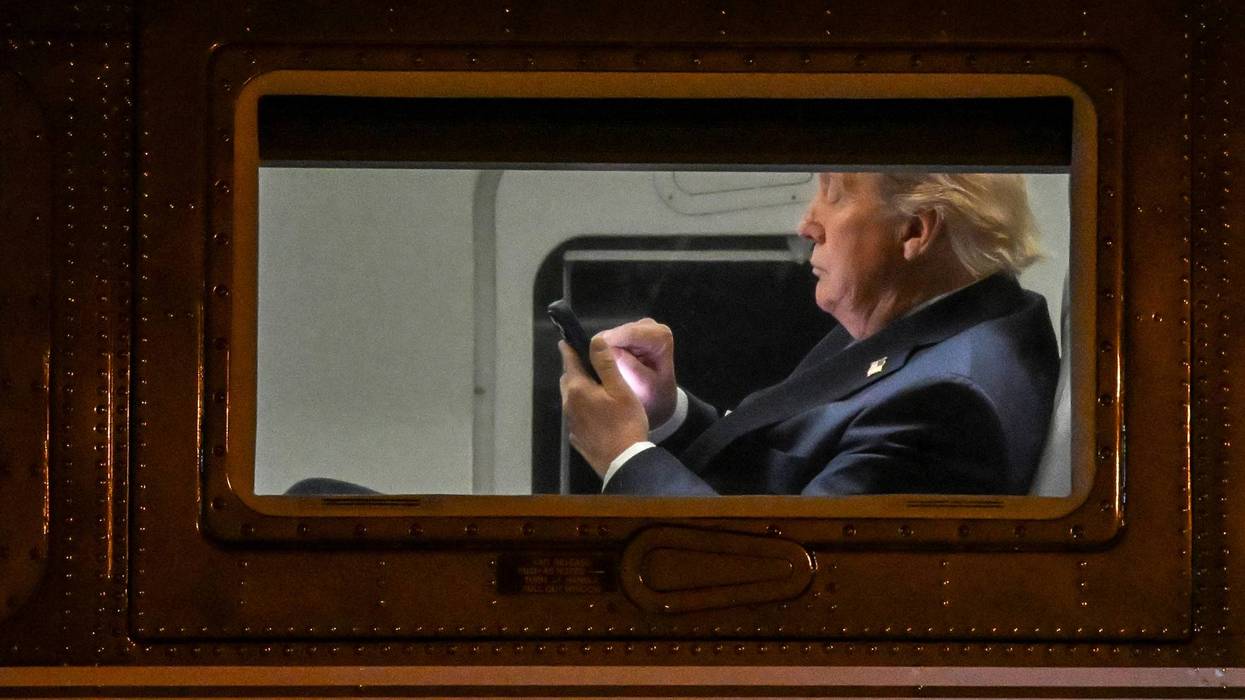
The racist imagery that briefly appeared on the official feed is not a rogue error. It is consistent with an administration that has repeatedly deflected harm while avoiding responsibility.
On a February morning in 2026, the opening days of Black History Month, something unthinkable appeared on the official social media platform of the president of the United States: a video inserting the faces of Barack and Michelle Obama onto cartoon apes, set to "The Lion Sleeps Tonight." It flashed at the end of a broader montage promoting 2020 election conspiracies and remained online for roughly 12 hours before deletion.
This was not a careless post. It tapped directly into a long, cruel lineage of racist caricature used to demean and dehumanize Black people. That this imagery came from the nation’s highest office demanded more than embarrassment, it demanded accountability. But what followed was predictable: dismissive deflection, minimization, and no consequences. The White House initially labeled criticism “fake outrage,” claimed it was “just a meme,” and then said it was “erroneously posted by a staffer.” No staffer has been named, and the president publicly declared no one would face repercussions. When pressed on an apology, he said he “didn’t make a mistake” because he had not seen the offensive portion.
Rhetoric cannot erase history. This episode, jarring as it was, is most meaningful as a mirror: It reflects a longstanding pattern of denial, obfuscation, and racialized harm that extends far beyond any single meme or social post.
Long before this video ever appeared, Donald Trump’s public life was intertwined with racial controversy. In 2011, he propelled himself into national headlines by demanding Barack Obama release his birth certificate, questioning whether the first Black president was even born in the United States. He called Obama a “foreign-born fraud,” despite clear evidence to the contrary. This birther campaign wasn’t a slip of judgment; it was a deliberate, sustained effort to delegitimize and diminish the first Black occupant of the White House—a strategy that inflamed racial distrust and energized nativist resentments across the country.
Trump’s repeated insistence that he is “not a racist” functions as a rhetorical shield. It resonates rhetorically but cannot wipe away decades of documented behavior, public statements, and the lived experiences of those harmed by policy and symbolism.
That pattern continued. In 2018, Trump reportedly referred to Haiti, El Salvador, and several African nations as “shithole countries,” expressing preference for immigrants from Norway. Such language dehumanizes entire nations and the predominantly non-white populations within them, shaping global perception and domestic attitudes alike.
The harm extends into domestic policy and public memory. In the late 1980s, during the Central Park Five case, Trump took out full‑page newspaper ads calling for the death penalty for five Black and Latino teenagers later exonerated by DNA evidence. Even after their innocence was proven, he publicly insisted on their guilt, reinforcing false narratives that fanned racial fear and distrust.
Long before he was in politics, his real estate company was sued by the US Department of Justice for discriminating against Black tenants, steering them away from apartments while offering vacancies to white applicants. The case was settled under a consent decree—but the episode underscores a pattern of exclusion that predates his political career.
Through all of this, denial has been central to the strategy. Trump routinely insists personal friendships with Black Americans prove he cannot be racist. But anecdotes do not outweigh outcomes. Leadership is not measured by denials or self‑serving narratives; it is measured by decisions, actions, and real consequences for communities.
Viewed in this light, the racist imagery that briefly appeared on the official feed is not a rogue error. It is consistent with an administration that has repeatedly deflected harm while avoiding responsibility. When damaging content appears and the response is to blame an unnamed staffer, with no transparency, no accountability, no corrective action, it signals at best a tolerance for racial insensitivity and at worst tacit acceptance of damaging narratives from the nation’s official channels.
Beyond symbolic offenses, the lived realities of millions reflect deeper injury. Immigration enforcement under the administration has subjected families from Latin America, Africa, and Asia to detention, deportation, and family separation, deterring entire communities—disproportionately people of color—from seeking healthcare, education, and legal protections. Threats to Medicare jeopardize access to care for Black, Latino, and Indigenous seniors already navigating health disparities, compounding generational inequities. Efforts to slash support for public education disproportionately affect students in underfunded schools—disproportionately Black, Latino, and Indigenous—by stripping Title I funding, free lunch programs, after‑school initiatives, and protections against discriminatory practices. Proposals to restrict the Supplemental Nutrition Assistance Program (SNAP) leave hundreds of thousands, again disproportionately people of color, struggling with food insecurity and impossible choices between rent, medicine, and nourishment.
These threads are not separate. Families impacted by immigration enforcement often rely on SNAP or local schools, all parts of a social fabric that, when weakened, frays most quickly at its most vulnerable edges.
Representation at the top matters, too. In the second Trump administration, only a handful of Black officials hold top leadership roles, including Scott Turner as Housing and Urban Development secretary and Lynne Patton in White House outreach. Most high‑level offices remain overwhelmingly white, signaling whose voices shape policy and whose perspectives are absent from critical debates.
Language and civic rituals shape how a nation understands justice, belonging, and whose histories are honored. Martin Luther King Jr. Day is more than ceremony; it is a moral touchstone. Yet this year, the administration failed to recognize the holiday officially and removed it from the federal list of free pass days in national parks, a symbolic demotion that strips public access and diminishes public commemoration. Such action may seem bureaucratic, but it is telling: When national institutions downgrade the public recognition of a civil rights icon while championing narratives that demean Black leadership, the message is clear.
Trump’s repeated insistence that he is “not a racist” functions as a rhetorical shield. It resonates rhetorically but cannot wipe away decades of documented behavior, public statements, and the lived experiences of those harmed by policy and symbolism. True leadership is not measured by denials but by accountability and moral clarity.
The Obama video, the birther attacks, the attempts to delegitimize Black leadership, the Central Park Five advertisements, the housing discrimination lawsuit, and the “shithole country” comments are not isolated incidents. They form a pattern in which racialized harm is consistently dismissed, deflected, or minimized, even as policies continue to disproportionately affect communities of color.
Moral leadership demands more than words. It demands recognition of harm, centering those most affected in decision‑making, and ensuring that power and opportunity are equitably shared. On these measures, the administration’s pattern of deflection, denial, and exclusion is a failure, one that cannot be concealed behind memes, conspiracy theories, or personal relationships. For a nation still wrestling with the legacy of race, the cost of inaction is lived, generational, and real.
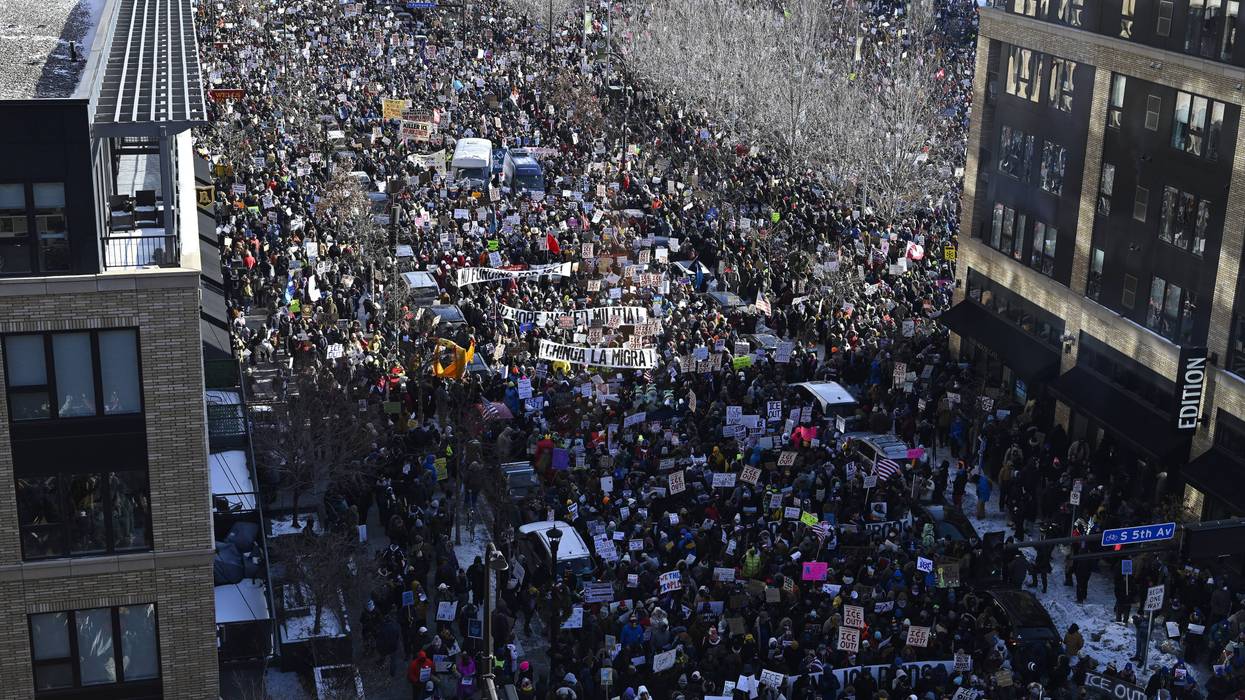
What we choose to love fully and unconditionally is Planet Earth itself—a planet without borders—and all who live within it.
And here I am, an American, staring at the border again... and slowly coming to realize the paradox of it. Borders don’t actually exist. They’re invisible lies. They’re also virtually everywhere.
Consider the border Alex Pretti crossed on January 24, on a street in Minneapolis, as he stepped between some US Border Patrol agents and the woman they had just pushed down. He crossed the border that separates ordinary people from the federal Proud Boys (or whoever they are), the masked invaders who were occupying the city to enforce The Law. Pretti interfered with them! He dared to try to protect the fallen woman, who herself had just crossed the same border. In so doing, they both went from being ordinary citizens to “domestic terrorists.”
“Yet our greatest threat isn’t the outsiders among us, but those among us who never look within.”
The words are those of poet Amanda Gorman, who wrote a poem honoring Alex Pretti after the agents shot him, almost 10 times. Another killing! Oh my God! Another cut to the American soul—a cut, by the way, that comes with complete immunity, according to Team Trump. They’re waging civil war against those who cross the border that separates right from wrong. “Fear not those without papers,” Borman’s poem continues, “but those without conscience.”
Oh, let us evolve toward a trans-border world! This is the core of the American civil war that is now, seemingly, getting underway.
You know what? As terrifying as the idea of a new civil war sounds, I prefer it to something worse: a great national shrug and acquiescence to the Trump agenda. Immigration and Customs Enforcement (ICE), as so many people have pointed out, is acting like the Trump Gestapo, as his administration rids sacred (white) America of the brown-skinned other, who may or may not be immigrants. What matters is that they’re different from “real” Americans. Right?
Regarding the whole concept of the border: It seems so real and viable until you start questioning it, which includes looking into its history.
As Elisa Wong and Raymond Wei write:
The way we think of borders today, as firm boundaries that are violently enforced, is a relatively new thing, and we would argue it doesn’t serve humanity’s best interests. While ‘strong borders’ are often argued as a necessity for our security, we think they limit humanity’s potential as a global community.
In ancient times, rivers, oceans, and mountains marked the boundaries of territory... As humans began building kingdoms and empires, more walls began to form, thus more firmly delineating borders.
And in Medieval times, from around 1000 to 1700 AD, European kingdoms started engaging with each other in a state of unending warfare, violently squabbling over the limits of their territory. And plunk! Global borders were created, and whole contents started getting divided almost randomly into European territorial possessions.
“At the Berlin Conference in 1884,” Wong and Wei write, “European leaders met to carve up Africa for themselves, which split local tribes across arbitrary lines and laid the groundwork for ethnic conflicts that still rage today’”
Oh, let us evolve toward a trans-border world! This is the core of the American civil war that is now, seemingly, getting underway. This is why protesters are flooding the streets in Minneapolis and across the country. This is why they’re enduring pepper spray and tear gas and flash bang grenades. This is why some people are being killed. But the rational—effective—response to violent aggression is not counterviolence.
“Anger and hatred are natural in response to such atrocities,” David Cortright writes, “but it is essential to avoid causing physical harm, to maintain a nonviolent intention and commitment despite increasing government provocation. A major outburst of protester violence would be disastrous, diverting attention from the message of support for victimized communities. That’s exactly what the White House is hoping for—to cover up ICE abuses, reinforce their lies about violent protesters, and justify additional domestic militarization.”
And he quotes—who else?—Martin Luther King: “Hatred multiples hate. Darkness cannot drive out darkness; only light can do that. Hate cannot drive out hate; only love can do that. Violence multiplies violence.”
Yeah, that’s the world as we know it: endless war. But America’s new civil war must not—will not—go that way. “Loving ICE” doesn’t mean accepting their actions or their purpose, but rather, challenging it head on, courageously and nonviolently. What we choose to love fully and unconditionally is Planet Earth itself—a planet without borders—and all who live within it. Yes, that includes ICE agents. It includes Donald Trump. But loving them also means standing up to them—and handing them their conscience.
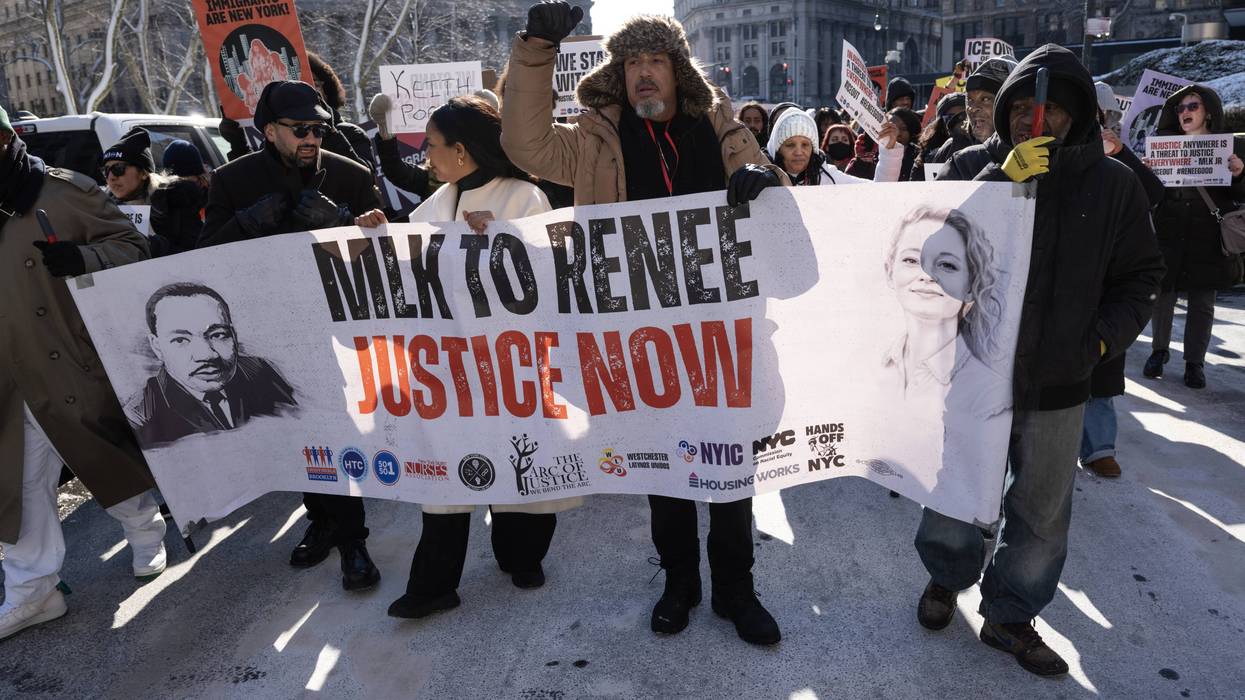
Persisting—not surrendering to despair—is part of the struggle. Victory over fascism may not be inevitable, but neither is defeat.
In the mid-1960s, I joined the freedom movement in the South as a member of the Student Nonviolent Coordinating Committee in Georgia, Mississippi, and Arkansas. Those were heady years, and I am proud of my small role in the great achievements of that time.
Our movement breathed new life into American democracy, inspiring and teaching people who led many of the other liberation movements of the 1960s and ‘70s. It opened up schools, education, jobs, public accommodations, voting power, electoral office, and judgeships to people of color in the South and throughout the country.
But there is also a fight for history. Those who rule our society have a miserly notion of democracy, and they have re-told the story of our movement, to try to make it fit into the way they want most people to act—as passive observers of government and society, who do nothing other than vote every few years.
The distorted history they tell of the civil rights movement fits into that stingy vision. Their version of our history says that the movement was about a handful of great leaders, like Dr. Martin Luther King, and their followers.
Dr. King would have recognized the urgency of this moment, as the Trump regime seeks to reverse the gains of the past and to eviscerate American constitutional democracy. And he would have been proud of those who stand up.
Dr. King was an extraordinary leader—a moral giant, a radical thinker, a gifted tactician, a great teacher of the power of nonviolence, and one of the most eloquent and inspiring speakers in American history. His memory and his teachings remain a threat to those who seek to empower white supremacy and debase our democracy, which is why MAGA denigrates Dr. King and tries to obscure his teachings.
But a giant part of King’s leadership was inspiring others to be leaders. The freedom movement was about thousands upon thousands of leaders, all across America, sometimes acting in planned ways, sometimes acting spontaneously.
The movement was about millions of people who took to the streets, courthouses, and schools, who were jailed and beaten, fired, and abused for standing up for themselves. People who nonetheless protested, organized, went to meetings, voted, and demanded justice—demanded freedom.
Each of them was a leader, too, leading other Americans to understand the flaws of our nation—and the urgency of curing them.
 Mitchell Zimmerman is shown as a SNCC volunteer in Arkansas in 1966. (Photo by Brian Rybolt, a fellow member of Arkansas SNCC. Used with permission.)
One other important lesson to understand about the movement was that, with hindsight, its victories appeared inevitable. But they did not seem inevitable at the time. People had to persist in struggle over years and decades, understanding that to grow discouraged would be a kind of surrender—that defeats might not be permanent, nor would victories, and that it might take a long time to finally smash the Jim Crow system.
Those lessons apply to today’s struggle against fascist authoritarianism in the United States. I keep hearing people ask, “What can we do?” and “Can anything we do make any difference?”
Persisting—not surrendering to despair—is part of the struggle. Victory over fascism may not be inevitable, but neither is defeat. We must keep demonstrating on the streets—peacefully, no matter what violence Immigration and Customs Enforcement wreaks—monitoring ICE activities, recording their abuses and exposing them, disrupting when we can at acceptable risk, writing to our representatives and to newspapers, voting, canvassing, contributing money and time, joining with others, and above all reaching out.
We must all become leaders in small or large ways, attempting to persuade and remind others of the dangers and of the injustices that we are fighting against, and urging them to act.
Dr. King would have recognized the urgency of this moment, as the Trump regime seeks to reverse the gains of the past and to eviscerate American constitutional democracy. And he would have been proud of those who stand up—peacefully, insistently, loudly—and say, "No, we’re not going to go backward."

So what does moral clarity look like in Minnesota this MLK Day? It looks like refusing to confuse quiet with peace, and refusing to treat fear as normal.
To Dr. King and my fellow Minnesotans,
A holiday is supposed to slow a nation down long enough to remember its standards. This year, MLK Day arrives with masked federal agents fanning out across the Twin Cities and beyond, with unmarked vehicles and street-level operations reshaping daily life, and with a growing chill that has many immigrants and other people of color, and many white residents too, thinking twice before leaving home, going to school or stepping into public spaces.
Dr. King, we are not living in your era, but we are facing a familiar question: Is “order” being used to protect the public, or to protect power from accountability?
I keep thinking about how people often meet you only through the safest doorway — a dream, a monument, a quote polished down until it can sit on a poster without asking anything of the reader. But your most demanding work was written in the middle of conflict, not after it. You wrote as someone being told to wait, to soften the message, to respect “proper channels,” even while the people you loved were living under improper conditions.
And I keep returning to one of the most basic ideas you insisted on in Birmingham. You were there because injustice was there. Not because it was convenient, not because it guaranteed applause. Because moral emergencies do not respect city limits, and because distance is one of the oldest excuses in American life.
That is the first reason this moment in Minnesota matters on MLK Day 2026. We are being encouraged to treat what is happening here as a local disturbance. A Minneapolis problem. A Minnesota problem. A protest problem. Something to be managed.
But what is happening here is not simply “tension.” It is an argument about the character of public power.
When a president threatens a state with “reckoning and retribution,” he is not using the language of neutral law. He is using the language of punishment. A government can enforce laws without promising vengeance. When it promises vengeance, it tells you what it believes the law is for.
And when the institutions that are supposed to steady the public start to fracture, the message becomes louder than any speech at a rally.
The news Minnesotans woke up to last week was not a minor internal shuffle. The Minnesota Star Tribune described a mass resignation from the U.S. Attorney’s Office in Minnesota, including senior prosecutors, stemming from directives after the killing of Renee Good by an ICE agent. The reporting described an internal directive that prosecutors “say nothing” about the federal investigation, and it noted that state investigators were cut out of the probe and that federal officials sought to investigate Good’s widow for possible federal charges.
Whatever your politics, you can feel the difference between a justice system that invites public trust and a justice system that treats public concern as something to be contained.
I am an attorney. I believe in rules and procedures, in evidence and due process, in institutions that protect people from impulsive power. That is exactly why this moment feels so dangerous. A justice system does not earn legitimacy by demanding quiet. It earns legitimacy by being worthy of witness.
You understood that power does not only suppress through force. It also suppresses through framing. It trains the public to treat discomfort as disorder, and disorder as the real threat. It persuades decent people that their primary civic duty is to keep things calm, even if calm is purchased with someone else’s fear.
When people ask today about Minnesota, “Why are there demonstrations?” I hear the question you confronted directly: Why are we focusing on surface behavior while refusing to confront what produced it?
In Birmingham, you challenged critics who deplored the demonstrations but did not show the same concern for the conditions that created them. You warned against analysis that fixates on effects and refuses to grapple with causes.
Minnesota is drowning in effects-talk. We are being pulled into arguments about tone, about disruption, about whether grief is being expressed in the “right” way. You can hear it in the complaints about protesters blowing whistles when masked agents roll through neighborhoods in unmarked vehicles. You can see it in the backlash to residents who follow and film ICE agents to document arrests, as if witnessing and recording the exercise of power is itself an offense. And you can feel it in the way some keep pushing public debate toward a discussion on manners, rather than grappling with what it means to live in a state where daily life is being deliberately reshaped by fear.
But the cause is what keeps demanding attention. The loss of life. The integrity of an investigation the public must be able to trust. The fear many communities feel when stepping outside can feel like a test of your skin, your accent, your name, and when citizens and lawful residents begin to move through public life as if visibility itself is risk.
If we do not grapple with causes, we will spend MLK Day doing what this country does too well. We will commemorate, and then we will return to the habits that made commemoration necessary.
Here is another thing you wrote that Minnesota needs right now, and it has nothing to do with nostalgia. You insisted on the interrelatedness of communities, and you rejected the narrow “outside agitator” idea. You insisted that no one in this country should be treated as an outsider anywhere within it.
That is the second reason this moment matters on MLK Day. Minnesota is being spoken about as if it is separable from the rest of the country, as if what happens here can be punished here, contained here. But this is not a Minnesota-only problem. It is a national test with a Minnesota address.
If a president can promise retribution against a state for its politics, that is not just rhetoric. It is a message to every other state. If federal institutions can be pressured into secrecy or political targeting, and the public is told to accept silence as strategy, that is not just an internal dispute. It is an instruction about what accountability will look like from here forward.
We will hear the dream recited this weekend. But a dream can become a lullaby. Repeated without its demands, it can become a way to pretend we have already arrived.
If the new dream is a nightmare, it is not because people are speaking out. It is because the public is being trained to accept intimidation as governance, and to accept silence as legitimacy.
So what does moral clarity look like in Minnesota this MLK Day?
It looks like refusing to confuse quiet with peace, and refusing to treat fear as normal.
It looks like insisting that investigations be credible, independent and transparent enough to earn public trust, not simply declared trustworthy by authority.
It looks like leaders who speak with discipline and courage, and citizens who do not outsource their conscience.
That is what your letter offered. Not comfort. A standard.
My dear fellow Minnesotans, if we are going to honor Dr. King this year, let’s do it without sedation. Let’s treat MLK Day as an audit, not a performance. Let’s be brave enough to focus on causes, not just effects.
And let’s remember the moral claim at the center of the holiday, the claim that makes it worth keeping on the calendar: Nobody is an outsider to justice. Not here. Not anywhere in this country.
If injustice is here, then responsibility is here, too.
Instead of eradicating structures of inequality, our current leadership is implementing policies that destroy government jobs and dismantle agencies responsible for preventing predatory economic practices.
Dr. Martin Luther King, Jr.’s words from his “Beyond Vietnam” speech still ring true.
“When machines and computers, profit motives, and property rights are considered more important than people,” he warned, “the giant triplets of racism, extreme materialism, and militarism are incapable of being conquered.”
Those words, delivered in 1967, still summarize today’s political moment. Instead of putting the lives of working Americans first, our leaders in Congress and the White House have prioritized advancing corporate profits and wealth concentration, slashing government programs meant to advance upward mobility, and deploying military forces across the country, increasing distrust and tension.
This historic regression corresponds with a recessionary environment for Black America in particular. That’s what my organization, the Joint Center, found in our report, State of the Dream 2026: From Regression to Signs of a Black Recession.
Unless we act deliberately, economic and racial inequalities will become entrenched, resulting in generational loss.
The economic landscape for Black Americans in 2026 is troubling, with unemployment rates signaling a potential recession. By December 2025, Black unemployment had reached 7.5%—a stark contrast to the national rate of 4.4%. This disparity highlights the persistent economic inequalities faced by Black communities, which have only been exacerbated by policy shifts that have weakened the labor market. The volatility in Black youth unemployment, which fluctuated dramatically in the latter months of 2025, underscores the precariousness of the situation.
The Trump administration’s executive orders have systematically dismantled structures aimed at promoting racial equality. By targeting programs such as Lyndon Johnson’s 1965 Equal Employment Opportunity executive order and defunding agencies like the Minority Business Development Agency, the administration has shifted federal support away from disadvantaged businesses.
As a result, Black-owned firms risk losing contracts and resources tied to federal programs, potentially resulting in job losses and reduced economic growth. These changes threaten billions in federal revenue for Black-owned firms and undermine efforts to move beyond racial inequality in the workforce.
The GOP’s so-called “Big Beautiful Bill,” passed in 2025, further entrenches inequality by providing tax cuts that disproportionately benefit high-income households and corporations—while simultaneously slashing investments in programs like Medicaid and SNAP, limiting access to essential services for low-income households.
The technology sector, a critical component of the American economy, is also affected by this disregard for civil rights. Executive orders like “Removing Barriers to American Leadership in Artificial Intelligence” have stripped away protections that could advance inclusion in this rapidly growing field. As a result, the future of the American economy risks reinforcing past inequalities.
Dr. King’s call for strong, aggressive federal leadership in addressing racial inequality remains highly relevant. However, instead of eradicating structures of inequality, our current leadership is implementing policies that destroy government jobs and dismantle agencies responsible for preventing predatory economic practices. These choices undermine longstanding efforts to combat racial and economic disparities—and exemplify the regressive economic policies that coincide with rising Black unemployment.
As Dr. King stated, “we refuse to believe that the bank of justice is bankrupt.” But urgent action is required. Unless we act deliberately, economic and racial inequalities will become entrenched, resulting in generational loss. The core question is whether we will move beyond our nation’s history of racism, materialism, and militarism, and—as Dr. King urged—embrace “the fierce urgency now” to advance equity.

Critics have ripped the decisions as "truly disgusting" and "literally the sort of thing dictators do."
"Why is MLK Day not worthy of a fee-free day anymore?"
That's what Kati Schmidt, communications director for the National Parks Conservation Association, wondered in an email to SFGATE, which reported Thursday on the National Park Service's recently announced free admission days for 2026.
"That has become a day of service throughout the country as well as celebrating an American hero who has several park units celebrating his legacy," Schmidt noted of the federal holiday honoring Rev. Martin Luther King Jr. each January.
In addition to MLK Day, three other previously free days were left off the US Department of the Interior's announcement last week about "resident-only patriotic fee-free days." Visitors will now have to pay park fees on National Public Lands Day, the anniversary of the Great American Outdoors Act—which President Donald Trump signed in 2020—and Juneteenth.
cool that the official position of the administration appears to be that black people don’t really count as americans
[image or embed]
— jamelle (@jamellebouie.net) December 5, 2025 at 8:20 AM
In 2021, Congress passed and then-President Joe Biden signed legislation designating Juneteenth as a federal holiday to commemorate the end of slavery in the United States. After returning to the White House in January, Trump declined to recognize it on this past June 19.
As SFGATE reported:
"This policy shift is deeply concerning," said Tyrhee Moore, the executive director of Soul Trak Outdoors, a nonprofit that connects urban communities of color to the outdoors. "Removing free-entry days on MLK Day and Juneteenth sends a troubling message about who our national parks are for. These holidays hold profound cultural and historical significance for Black communities, and eliminating them as access points feels like a direct targeting of the very groups who already face systemic barriers to the outdoors."
Moore told SFGATE that his organization works to push back against "these kinds of systemic attempts that disguise exclusion as administrative or political decisions."
"Policies like this reinforce inequalities around access and visibly show how systems can create obstacles that keep communities of color from feeling welcomed in public spaces," he said.
Olivia Juarez, public land program director at the advocacy group GreenLatinos, said in a statement that "we condemn the omission of the Reverend Dr. Martin Luther King Jr.'s birthday, Juneteenth, National Public Lands Day, and the anniversary of the Great American Outdoors Act from the list of free entrance days."
"The Great American Outdoors Act permanently funded the Land and Water Conservation Fund, which enhances outdoor recreation access for all people from national public lands to neighborhood parks," she pointed out. "These observances are patriotic days that celebrate freedom and safety in the outdoors. They should be celebrated as such by removing a simple cost barrier that can make parks more accessible to low-income households."
Other critics have ripped the free day decisions as "truly disgusting" and "literally the sort of thing dictators do."
Journalist Jennifer Schulze said: "I love our national parks but don't go on his birthday. Find a state park to visit instead."
Along with the free admission changes, the Trump administration is under fire for putting the president's face on the new "America the Beautiful" annual passes—a display that may be illegal—and for hiking prices for foreign visitors to national parks.
Utah-based Juarez and GreenLatinos California state program manager Pedro Hernández both denounced price hikes for noncitizens—a move that notably comes as the administration pursues Trump's promise of mass deportations.
"By imposing higher fees on people without state-issued ID," Hernández said, "the Trump administration is advancing a xenophobic policy that disproportionately harms vulnerable populations like international students, newly arrived immigrants, and families seeking asylum."
"This approach eviscerates the true meaning of public lands and sends a clear, exclusionary message that our most cherished national parks have become yet another pay-to-play system," he added. "People should be welcomed—not priced out from our public lands."
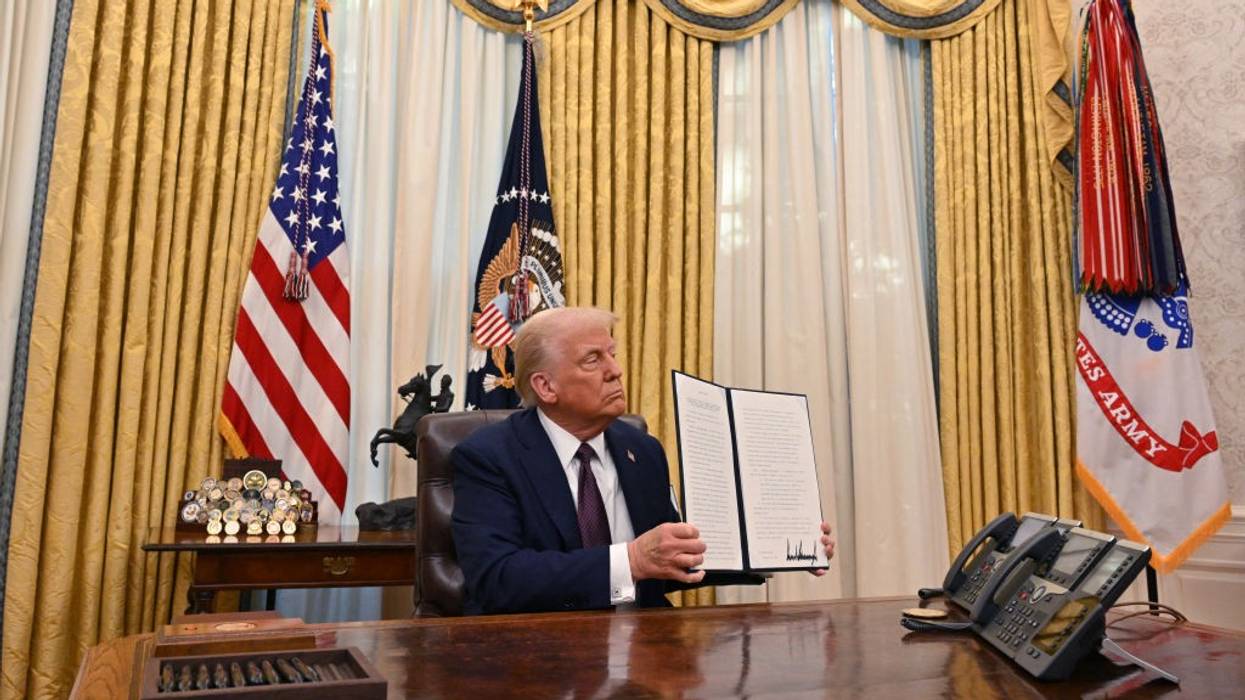
When Trump released the MLK FBI files, privacy concerns and an ideological assault on King’s memory had little meaning for Trump as he tried to escape his Epstein crisis by any means necessary.
On January 20, Donald Trump returned to the Oval Office with—at least in his mind—an aura of invincibility. A fully compliant Congress was controlled by Republicans who were, in turn, controlled by him. Conservative justices, three of whom he had appointed, dominated the Supreme Court. The defeated opposition, the Democratic Party, seemed distinctly befuddled and weak.
Trump then smashed and bullied his way through his first 100 days, ruling via dictator-like decrees—executive orders—and carrying out retribution at every turn. Democracy’s redlines were crossed daily, and his MAGA base remained passionately loyal even as the rest of the nation soured watching him do little to make the country better.
However, his “realignment” was never faintly as broad or as solid as he pretended it was. For example, while he made gains with Black voters in the 2024 election, rising from 8% in 2020 to 15%, the last six months have seen a dramatic change in that support. In January 2025, according to a YouGov poll, Black Americans’ disapproval of Trump was at about 69%. By June, it had risen to about 85%. Through it all, however, his support among Republicans continued to hover between 88% and 95%.
Then, of course, came the Jeffrey Epstein crisis. Trump himself seeded conspiracies surrounding the dead pedophile and his accomplices at rallies and in social media postings. He minimized his 20-year friendship with both Epstein and his girlfriend (and convicted child trafficker) Ghislaine Maxwell, who is serving a 20-year sentence for her part in their horrific crimes. Trump, Attorney General Pam Bondi, and Federal Bureau of Investigation (FBI) Director Kash Patel each claimed at some point to have evidence that would expose a “deep-state” cover-up in the case, while bizarre stories of global pedophile rings led by Democrats animated MAGA as much as Trump’s “build the wall” dreams.
The MAGA faithful were waiting for the deliverable. Trump, however, found himself trapped, knowing that he’s part of whatever materials exist and that he will not look good (whether he did anything illegal or not) if the Epstein files are actually released. His constantly changing excuses have spread dissent among his own worshipers and led a panicked Trump to throw out any shiny objects he could think of to change the subject.
On July 21, as part of his Epstein Distraction Campaign, Trump released more than 230,000 pages of FBI and government files related to Martin Luther King Jr.’s assassination on April 4, 1968. The more than 6,000 files include FBI documents related to the killing, most of which are not new, according to experts who have reviewed them. They do not, however, include the agency’s nefarious wiretaps of King that are scheduled for release in 2027. There was, of course, neither rhyme nor reason to Trump’s dispersal of those files at that moment.
The president’s claim was that he was keeping a promise he had made when he returned to the White House in January. Within a few days of being in office, on January 23, Trump issued Executive Order 14176 with instructions for the declassification and release of files related to the assassinations of King, John F. Kennedy, and Robert Kennedy. It was a feint at transparency meant to feed the anti-federalist conspiracists in his base. For decades, a cadre of Americans has believed that there was a government-backed cover-up of those killings. In the modern era, the “deep-state” adherents of MAGA world and online extremists have indeed kept those fantasies circulating.
Martin Luther King III and Bernice King, the surviving King children, were advised of the release and opposed it. They then issued a statement that read in part, “While we support transparency and historical accountability, we object to any attacks on our father’s legacy or attempts to weaponize it to spread falsehoods. We strongly condemn any attempts to misuse these documents in ways intended to undermine our father’s legacy and the significant achievements of the movement.” Bernice would later post on social media, “Now, do the Epstein files,” making it clear that she was not fooled by Trump’s flaccid bait-and-switch game. Of course, privacy concerns and an ideological assault on their father and his legacy have little meaning for Trump as he tries to escape his Epstein crisis by any means necessary.
The president’s efforts to roll back the 20th century and overthrow everything King stood for have helped him forge allies with some of the most extreme elements in the nation.
What the King family, scholars, and followers of Martin Luther King Jr.’s legacy are legitimately worried about is that the content of those files may serve to reenergize the long and shameful history of the FBI’s attacks on the late civil rights leader. Under the dictatorial rule of then-FBI Director J. Edgar Hoover, the agency surveilled, wiretapped, and harassed King and other Black leaders relentlessly during his lifetime.
It was the FBI that tried to convince King to commit suicide. It was the FBI that sent information to news outlets accusing King of being controlled by communists. It was the FBI that fostered conflicts and divisions both among Black activists and between the civil rights Movement and white allies. Accusations of womanizing were issued to newspapers to embarrass and discredit King. The purpose, as clear as a bell, was to destroy him, his leadership, and the movement.
More broadly, the FBI’s Cointelpro (counter-intelligence program), which officially lasted from 1956 to 1971, sought to annihilate movements for justice, fairness, democracy, peace, and inclusion in the 1950s and beyond. Lives were ruined and campaigns suffered setbacks for exercising legitimate and constitutionally protected free speech and protest rights. Despite the exposure of its many, many crimes, for the most part, neither the FBI nor Hoover were held accountable for what they had done. Hoover, in fact, died of a heart attack while still director in May 1972.
Investigations by scholars and even Congress have since uncovered a wide range of illegal and unethical behavior by the federal government as it sought to disrupt and destroy the civil rights and other movements of the period. It would be decades, however, before the FBI itself offered anything close to an apology, let alone any effort to repair the carnage it had wrought.
When James Comey assumed the role of FBI director in 2013, he made a bit of a mea culpa. In his inaugural speech, he called the agency’s treatment of King “abuse and overreach,” an appropriate (if exceedingly mild) acknowledgement and rebuke of its deplorable and criminal conduct toward him and other racial and social justice activists. And as the American Civil Liberties Union (ACLU) noted in “Unleashed and Unaccountable, The FBI’s Unchecked Abuse of Authority,” a report released at that time, the agency’s violations of rights were then still continuing, particularly against people of color, immigrants, and Muslims.
The current FBI director, Trump loyalist, and true believer Kash Patel is seen as anything but a friend of civil rights and civil liberties. Besides being unqualified for the job, having never served in a serious senior law enforcement position, he’s an election denier and an advocate of Trump’s desire for retribution against his perceived enemies. Prior to becoming FBI director, he had published his own enemies list. His nomination as director was denounced by the ACLU, the NAACP, the National Organization for Women, the Southern Poverty Law Center, and many other civil rights and civil liberties organizations.
With Trump’s blessing (essentially orders), Patel began purging the FBI of agents and investigators who had worked successfully on cases involving the pro-Trump January 6, 2021, assault on the Capitol and others simply seen as not sufficiently MAGA or supplicant enough to the president. His job is to crush the bureau as part of a Trumpian revenge fantasy, while weaponizing its authority for political purposes. If there is information in the released King documents that might embarrass the FBI, so be it. But there is little doubt that the Epstein files, which could actually put Trump in a compromised position, even though his name has reportedly been redacted in them, will never see the light of day.
Whatever may or may not be in the files Trump did release, it’s a stretch to believe that his concern in releasing them had anything to do with truth and openness regarding what happened to King or the Kennedys, rather than a distraction from his own situation. In fact, Trump has failed to criticize in any fashion the MAGA supporters who have been on an anti-King rampage in recent years. His feral sense of survival tells him that King is too much of an icon to go directly after him, while quoting him on occasion is a way, however superficial, of trying to win more Black support.
It’s been quite a different matter for other significant MAGA figures. In such an anti-diversity, equity, and inclusion (DEI), anti-woke era, Trump-loving far-right activists have, in fact, repeatedly and viciously attacked King. Typically, for instance, in December 2023, Charlie Kirk, founder of the far-right Turning Point USA (TPUSA) and frequently seen with Trump, insisted that King’s reputation was overblown and that he was “awful” and “not a good person.” In particular, he called the passage of the 1964 Civil Rights Act (CRA), the result of one of King’s most significant and defining campaigns and a giant step forward for the nation, a “huge mistake.” In his view, the CRA established a “permanent DEI-type bureaucracy,” a perspective that perfectly fits Trump’s ongoing blitzkrieg against all the accomplishments of the civil rights and racial justice movements.
Nor is Kirk faintly alone. Other TPUSA associates and allies have joined his crusade. Far-right activist Blake Neff, an associate of Kirk, typically has accused King of not really being a “peaceful activist,” but actually advocating for an activism that became “a very violent thing.” Naturally, Neff provided no evidence to back up such an assertion.
Yet another TPUSA spokesperson, Andrew Kolvet, has also fed such attacks. In an email, for instance, he wrote: “A core part of this fake history of America is the elevation of MLK into a saint, whose entire being is beyond reproach and above question. This sanctified version of MLK strips away his actual views and ignores his actual actions.”
In the past, like many conservatives, including Trump, they also sometimes misappropriated King’s words to attempt to deradicalize him. Kirk used to refer to him as a “hero” and the TPUSA website sold a T-shirt with King’s name and stickers that had King saying, “Let freedom ring.” But that was yesteryear.
Some Black MAGA personalities pushed back against Kirk, including Reverend Darrell Scott, who called him “an a-hole” and “a racist.” Scott was a high-profile Black advocate for Trump, especially during his first term, and remains loyal to him. He charged that Kirk wants to bring “white superiority attitudes” back to the Republican Party. Scott, of course, has long ignored or excused Trump’s attitude of “white superiority.”
Conservative media personality Armstrong Williams, who has kept a bit of distance from Trump, also criticized Kirk. He suggested he do more reading on US and Black history.
However, Black far-right condemnation was anything but universal. Chicago-based MAGA promoter Bishop Aubrey Shines and TPUSA Director of Black Outreach Pierre Wilson both went on Kirk’s podcast defending his attacks on King, insisting Kirk was not a racist, and adding their own venom to the mix. Wilson, for instance, stated, “Maybe just maybe he’s not the hero that everyone said he is.”
In Trump’s second term, propelled by his all-in, full-spectrum anti-DEI agenda, there’s no longer any need for his followers to pretend there’s anything about Martin Luther King Jr., however distorted, that needs to be praised. The president’s efforts to roll back the 20th century and overthrow everything King stood for have helped him forge allies with some of the most extreme elements in the nation. It’s always been the case for Trump that any positive mention of King was performative and meaningless. What matters now, however, are the actual policies and laws that Trump has promulgated, which are meant to wipe a King-like view of this country from the face of the Earth.
Although Trump was a teenager during King’s last years, there is no record of his participation in or concern for the civil rights and racial justice issues of that era. In fact, the only policy relationship to Blacks that he had then lay in the way he and his father violated the Fair Housing Act of 1968, which King had championed in his last days and which was passed by Congress and signed into law by President Lyndon B. Johnson on April 10, 1968, only six days after King was murdered.
In 1973, Donald Trump first broke into the news in New York and nationally when Trump properties in that city were sued by the Department of Justice for refusing to rent to African Americans. After a years-long court fight, a consent decree was signed in which Donald and his father, Fred Trump, admitted no guilt but were forced to change their rental practices. However, despite their denials, a later New York Times investigation “uncovered a long history of racial bias at his family’s properties, in New York and beyond.”
Donald Trump would, of course, love for the debate to shift to what the FBI—“the deep state”—did to King, and to see liberals and conservatives alike spin off on that tangent and forget about his Epstein troubles.
In our time, Trump’s attacks on civil rights and voting rights belie any rhetoric he may spew on King’s birthday or other occasions. In his first term, and with far less restraint the second time around, Trump has, in fact, sought to roll back decades of achievements in the areas of racial and social justice and democracy that King and so many others fought and died for. He’s taken a wrecking ball to institutions, programs, and policies throughout the federal government that were put in place to advance the full inclusion of people of color, women, the disabled, and the LGBTQ community. The attack on DEI is more broadly an effort to erase the hard-won gains that have evolved in the years from the passage of the post-Civil War 13th, 14th, and 15th Amendments to President Franklin D. Roosevelt’s New Deal to President Johnson’s Great Society to the Black Lives Matter uprisings, while establishing an unchallengeable fascist state and authoritarian presidency.
The pushback against the expansion of rights from Ronald Reagan’s presidency to the Trumpian moment confronted laws that were passed, policies put in place, agencies that were established, and sometimes weak but stable democratic structures that limited the harm that could be done—until, that is, the Trump and MAGA movement. After only six months in office the second time around, driven by numerous unlawful decrees, nearly every department and agency in the federal government has eliminated its civil rights enforcement division. Discrimination cases involving people of color have been dismissed. Laws to fight bigotry continue to go unenforced. As Nikole Hannah Jones wrote in the New York Times, the administration is sending “a powerful message to American institutions that discrimination will not be punished.”
Donald Trump would, of course, love for the debate to shift to what the FBI—“the deep state”—did to King, and to see liberals and conservatives alike spin off on that tangent and forget about his Epstein troubles, his failing and flailing tariff war, and the growing unpopularity of his Big Ugly Budget and his recission proposal. A significant part of his base, which he consciously cultivated to a cult-like fidelity, is righteously angered and demanding answers. His deflections when caught in a lie or a scandal have long worked to move past the immediate crisis, but maybe, just maybe, not this time.
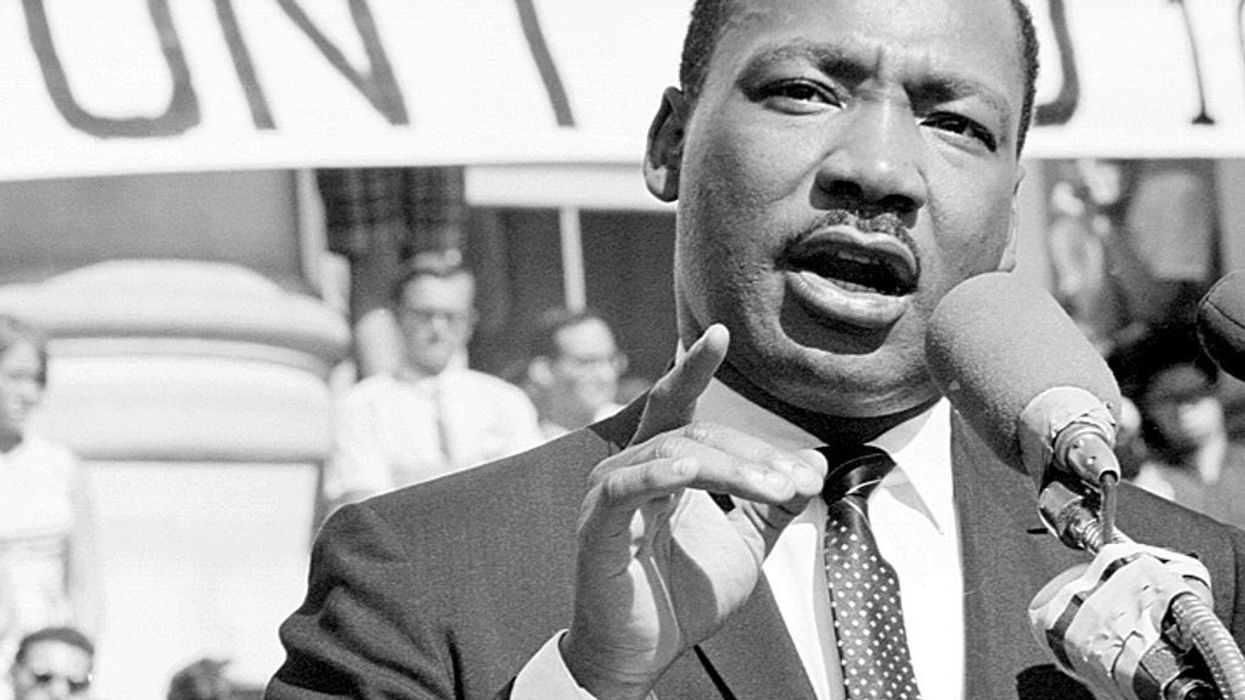
One critic called the move "a desperate attempt to distract from the Trump administration's decision to block the release of the Epstein files."
As U.S. President Donald Trump and congressional Republicans stonewall efforts to keep the full files on deceased financier and convicted child sex criminal Jeffrey Epstein under wraps, Director of National Intelligence Tulsi Gabbard on Monday released a long-anticipated massive trove of documents related to the 1968 assassination of Martin Luther King Jr., despite opposition from his family.
"Today, after nearly 60 years of questions surrounding the assassination of Dr. Martin Luther King Jr., we are releasing 230,000 MLK assassination files, available now at https://archives.gov/mlk," Gabbard said on the social media site X. "The documents include details about the FBI's investigation into the assassination of MLK, discussion of potential leads, internal FBI memos detailing the progress of the case, information about James Earl Ray's former cellmate who stated he discussed with Ray an alleged assassination plot, and more."
"Thanks to President Donald Trump's leadership, Executive Order 14176 resulted in three, unprecedented interagency efforts to identify, digitize, declassify, and release files related to the federal government's investigations into the assassinations of President John F. Kennedy, Sen. Robert F. Kennedy, and Dr. King," Gabbard added.
However, many of the MLK documents remain heavily redacted.
Responding to the MLK files' publication, the King family said in a statement: "As the children of Dr. King and Mrs. Coretta Scott King, his tragic death has been an intensely personal grief—a devastating loss for his wife, children, and the granddaughter he never met—an absence our family has endured for over 57 years. We ask those who engage with the release of these files to do so with empathy, restraint, and respect for our family's continuing grief."
Statement from the King Family on the Release of Dr. Martin Luther King Jr.’s Assassination Files:
[image or embed]
— Martin Luther King III (@officialmlk3.bsky.social) July 21, 2025 at 1:00 PM
The King family reiterated their belief that "someone other than James Earl Ray was the shooter, and that Mr. Ray was set up to take the blame."
"As we review these newly released files, we will assess whether they offer additional insights beyond the findings our family has already accepted," their statement said.
As his relatives noted, the FBI infamously surveilled King—America's most hated man, according to a 1968 Harris poll that showed the civil rights icon with a 75% negative approval rating—under the notorious COINTELPRO program, especially after his civil rights activism evolved into staunch critiques of U.S. militarism during the escalating Vietnam War and capitalism-driven economic inequality.
Then-Attorney General Robert F. Kennedy authorized the wiretapping of King's phone, with the head agent in charge of COINTELPRO, William Sullivan, warning that "we must mark [King]... as the most dangerous Negro of the future in this nation." This, just before King was awarded the Nobel Peace Prize in 1964 for helping to lead the struggle against Jim Crow segregation and disenfranchisement.
The FBI systematically bugged King's home and hotel rooms, mailed an anonymous letter urging him to kill himself, and even sent a tape of what it claimed was King having one of his numerous alleged affairs to his wife. When King criticized the FBI for ignoring the heinous and often murderous crimes of the Ku Klux Klan and other white supremacists who were still lynching Black people with alarming regularity and impunity, an infuriated Hoover publicly called him the "most notorious liar" in America.
People from across the political spectrum took to social media to slam the MLK document dump as "a desperate attempt to distract from the Trump administration's decision to block the release of the Epstein files (despite earlier promises)," as the X account Republicans Against Trump portrayed the move.
Prominent attorney and Democratic strategist Aaron Parnas wrote on the social media site Bluesky, "Whether through releasing the MLK files or trying to prosecute President [Barack] Obama, Donald Trump is flooding the zone with information to distract you from the Epstein files."
Bernice King—MLK's granddaughter and CEO of the Martin Luther King Jr. Center for Nonviolent Social Change—wrote on X: "Now, do the Epstein files."
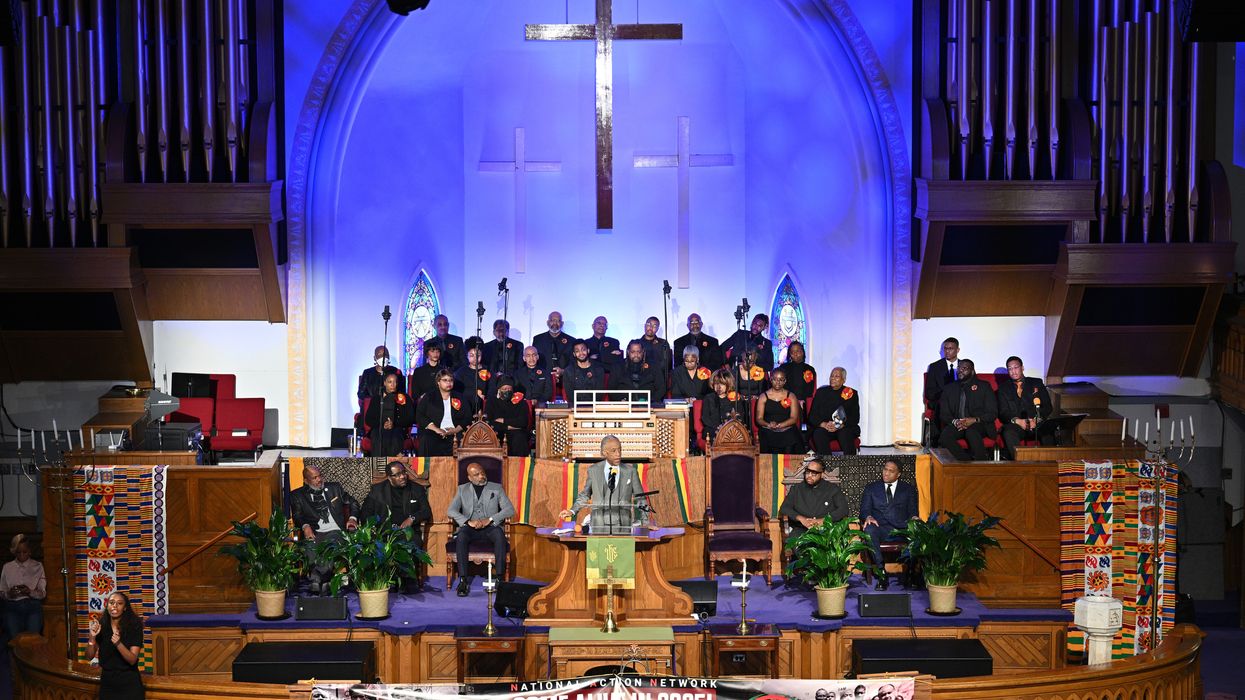
Trump is, in effect, attempting with the stroke of a pen to undo over 60 years of hard-won progress in overcoming racism, sexism, and other forms of bigotry.
This year, the presidential inauguration took place on the federal holiday honoring Dr. Martin Luther King Jr. President Donald Trump fully exploited the opportunity, hijacking King’s memory to advance his agenda. In his inaugural address, Trump took immediate aim at diversity, equity, and inclusion, or DEI. The bigotry embedded in Trump’s plans to “Make America Great Again” is stark—purging people of color and LGBTQIA people, not only from employment in the federal government, but from public life. But people have fought for too long, and too many have died, in the fight for equality.
“Diversity, Equity and Inclusion” refers to a system of policies and practices that promote fair treatment, full participation, and full access to employment and opportunities for all, especially for people from historically marginalized communities. Trump is, in effect, attempting with the stroke of a pen to undo over 60 years of hard-won progress in overcoming racism, sexism, and other forms of bigotry.
“Today is Martin Luther King Day,” Trump said in his inaugural speech in the Capitol Rotunda, one of the only factually accurate statements he made. He went on, “In his honor, we will strive together to make his dream a reality. We will make his dream come true.”
Moments later, though, he pledged,
“This week, I will also end the government policy of trying to socially engineer race and gender into every aspect of public and private life. We will forge a society that is colorblind and merit-based.”
Following the speech, Trump issued a flurry of executive orders. Within hours, a form letter was emailed to federal departments, ordering the suspension, by end of day Wednesday, of any staff working on DEI initiatives, and giving remaining staff 10 days to report any ongoing “disguised” DEI activity, ie, to rat out colleagues.
While Trump spoke at his inauguration, a different gathering was taking place just a few blocks from the White House. Hundreds packed into the historic Metropolitan AME Church, the storied Black church that abolitionist Frederick Douglass attended, and where his funeral took place. In 2005, after Rosa Parks lay in state in the Capitol, her casket was moved to Metropolitan AME, for a memorial service.
Civil rights activist Rev. Al Sharpton was speaking at the same moment as Trump. Hearing that Trump had invoked King’s name in his speech, Sharpton responded:
Donald Trump just said that he is going to end DEI this week, he’s gonna put out his executive orders. You have all these corporations that are saying they’re gonna back off DEI. Why do we have DEI? We have DEI because you denied us diversity, you denied us equity, you denied us inclusion. DEI was a remedy to the racial institutional bigotry practiced in academia and in these corporations. Now you want to put us back in the back of the bus? We’re going to do the Dr. King/Rosa Parks on you. We will call you out one by one, and we will shut you down.
Later on King Day, Trump held a rally where he signed the first stack of executive orders, including a blanket rescission of many of former President Joe Biden’s executive orders, including at least 15 that advanced diversity, equity, and inclusion. Later, Trump signed a much broader order calling for the termination of all “illegal DEI and ‘diversity, equity, inclusion, and accessibility’ (DEIA) mandates, policies, programs, preferences, and activities in the Federal Government,” and to “terminate, to the maximum extent allowed by law, all DEI, DEIA, and ‘environmental justice’ offices and positions.”
The “A” in DEIA stands for “accessible,” thus extending Trump’s war on fellow citizens to include the disabled.
Sharpton and other speakers invoked not only Martin Luther King Jr. and Rosa Parks, but the whole sweep of history, from the first arrival of enslaved Africans in 1619, to Frederick Douglass, to the role of freed slaves fighting in the Civil War, through the protests in 2020 following the police killing of George Floyd.
Marc Morial, president of the National Urban League, convened an emergency “Demand Diversity” roundtable in Washington D.C. on Wednesday. While Trump was inaugurated on King Day, Morial pointed out that Trump is no king:
These executive orders are unlawful, they are unconstitutional, and they seek to do what we always suspected. This is not a monarchy. You can’t rule by decree or edict. This is a constitutional democracy… we have to remember this as we go into this very important battle.
Participants in the roundtable, representing over 20 national civil rights and human rights organizations, form the core of a coalition committed to fighting Trump’s agenda. The coalition is guided and inspired by the memory and the lessons of Martin Luther King Jr. Organize, boycott, resist. These are the struggles, ultimately, that history will remember as great.