

SUBSCRIBE TO OUR FREE NEWSLETTER
Daily news & progressive opinion—funded by the people, not the corporations—delivered straight to your inbox.
5
#000000
#FFFFFF
To donate by check, phone, or other method, see our More Ways to Give page.
Daily news & progressive opinion—funded by the people, not the corporations—delivered straight to your inbox.

Protests across Europe have focused on education cuts, while a Gen Z-led movement has spearheaded demonstrations over voting rights in India.
"We are going to sweep away the old world," said the deputy of the French National Assembly on Thursday, highlighting a rapidly growing global protest movement, largely led by students and young people, against austerity measures.
Clémence Guetté, a member of the left-wing French party La France Insoumise, or France Unbowed, added that "the youth wants to change everything," posting on social media a video of a massive demonstration in Paris—just one of several cities across France where students have led more than 250,000 people in protests demanding education funding and decrying cuts in the proposed 2027 national budget.
But Guetté noted that while France's growing protests—and the violent response of the police—have captured international attention, with thousands of people demanding the resignation of President Emmanuel Macron in Place de la Bastille, Paris on Thursday, the movement against austerity and corrupt governance has spread across Europe and is also gaining traction across Latin America and South Asia.
"The youth of the world are rising up," said Guetté.
The protests against education cuts, dilapidated school buildings, and crowded classrooms in France began in mid-September in lower-income Parisian suburbs before spreading nationwide.
As they have shown no sign of slowing down, thousands of miles away in India, the Generation Z-led Cockroach Janta Party (CJP)—so named because the chief justice of the Supreme Court derided unemployed young people as "cockroaches" this year—has spearheaded calls for the resignation of the country's top Election Commission official.
The Election Commission has been accused of an illegal purge of voters over its “special intensive revision” of voter rolls, which has included removing more than 130 million names.
The CJP initially took to the streets over the summer to demand the resignation of the Indian education minister, due to leaks of the country's medical school entrance exam, which had delayed university admissions for millions of students and forced them to retake the intense exams. CJP organizers said the scandal has led to the suicides of more than 20 students.
Those protests were ultimately successful in forcing Education Minister Dharmendra Pradhan out of office.
Thousands of supporters joined a demonstration in Bengaluru on Thursday as the CJP condemned the detention on Wednesday of politician Rahul Gandhi, a leader of the opposition against Prime Minister Narendra Modi, as well as other protesters.
Leaders of the mass protest movement on Thursday rejected allegations that the protests, which have also been met with violence from police, are "destabilizing the country."
"When you declare living people as dead [on voter rolls] for your political gains, that is destabilizing the country," said one organizer.
When you declare living people as “Dead” for your political gains, that is destabilising the country. https://t.co/FZTPkKgBJk
— Cockroach Janta Party - CJP (@Cockroachisback) October 8, 2026
As Common Dreams reported Wednesday, Spain residents have also been inspired in recent days to take to the streets by the tens of thousands following the eviction of María del Carmen Abascal Martín, an 87-year-old woman who died this week before she was able to return home, as the demonstrations over housing justice were underway.
After Maricarmen's eviction on September 23, the Spanish Socialist Workers’ Party, led by Prime Minister Pedro Sánchez, announced new rental regulations and protections for vulnerable tenants, but lawmakers rejected the package. Sánchez responded by dissolving the legislature and calling for snap elections in November.
Meanwhile, tens of thousands of people have marched in Madrid, Valencia, and other cities to demand a general strike and affordable housing across Spain, where the average rent has doubled over the last 10 years.
More than 1,000 people have set up encampments at Puerta del Sol in Madrid and Plaza Catalunya in Barcelona, saying they will not leave until the government takes concrete steps to protect tenants.
🇪🇸 Maricarmen Abascal, the 87-year-old woman whose eviction sparked housing protests in #Spain, has died, Madrid's tenants' union said on Wednesday.Abascal became a symbol of Spain's housing market on September 23 when she was evicted from her life-long Madrid home on a stretcher after the real estate firm that owned the apartment drastically hiked the rent.
— FRANCE 24 English (@France24_en) October 8, 2026
In Chile, student unions led protests last week against proposed education cuts in the country's 2027 budget, put forward by conservative President Jose Antonio Kast. Chilean national police blocked people from marching through Santiago last Thursday toward La Moneda presidential palace, with officers firing water cannons and tear gas at the crowd.
According to the undersecretary of the interior, at least 17 people were arrested, and Kast condemned the protests.
One commentator on the social media platform X called on the public to connect "the dots on these Gen Z protests."
Across the globe, they said, "young people can't get hired. Can't afford rent. Can't afford a house. Can't see a future."
"The streets are the only place left," they added. "This is going global."
Another recent entry into the international protest movement came last week in Belgium, where students in Liège were reportedly directly inspired by the France protests to speak out against rising education costs and overcrowding in schools.
The city's main train station was temporarily closed on Thursday and traffic was disrupted, and more than 100 protesters were arrested.
“We support each other because we’re facing pretty much the same issues,” Alfred, a 19-year-old student, told Reuters of the connection between the Belgian and French unrest.
Students in Italy, Ireland, and Germany have also called for protests over soaring university costs and government disinvestment in education, particularly as worldwide energy costs have gone up due to the US-Israeli war on Iran.
In Rome and Turin, high school students began occupying their schools on Monday under the slogan, "Let's do as in France."

The 25-year-old American, her newlywed husband, and former Chilean diplomat Orlando Letelier were driving to work at the Institute for Policy Studies in Washington, DC when their car was bombed.
The Institute for Policy Studies on Monday welcomed a judge's homicide convictions and prison sentences for three agents of former US-backed Chilean dictator Gen. Augusto Pinochet who murdered Ronni Karpen Moffitt, one of the progressive think tank's employees, during a 1976 car bombing targeting her colleague, the exiled leftist diplomat Orlando Letelier.
Last Thursday, Chilean Judge Paola Plaza González sentenced three former agents of the Directorate of National Intelligence (DINA)—Pedro Octavio Espinoza Bravo, José Octavio Zara Holger, and Raúl Eduardo Iturriaga Neumann—to 15 years' imprisonment each for the qualified homicide of Moffitt, who was 25 at the time she was killed with her Institute for Policy Studies colleague Letelier.
There is no legal status of murder in Chile, where homicides are divided into two categories, simple and qualified (aggravated).
On the morning of September 21, 1976, Moffit, Letelier, and Michael Moffitt—Ronni's husband of four months, who also worked at IPS—were on their way to work when the Chevy Malibu in which they were traveling was blown up in Sheridan Circle on Washington, DC's Embassy Row.
Michael, who was sitting in the back seat, survived the blast and watched as Ronni staggered from the mangled car, mortally wounded in the neck, drowning in her own blood. Letelier, whose legs were blown off and torso mangled, died before an ambulance arrived.
It was the first and last time a foreign diplomat was assassinated on US soil.
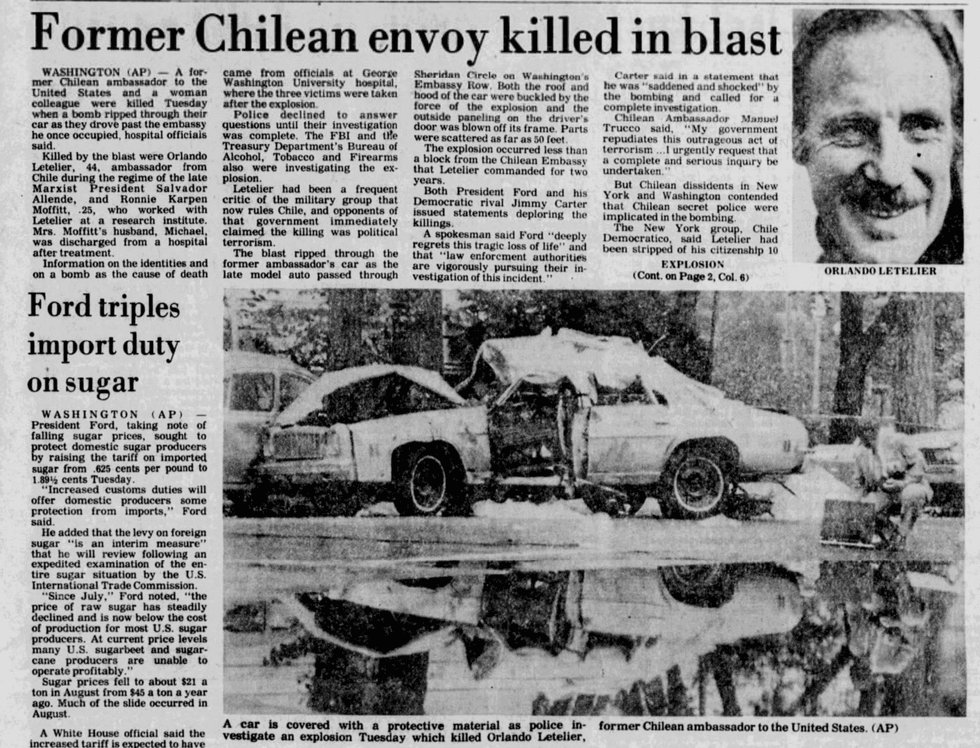 Associated Press coverage of the Letelier-Moffitt assassination, as published in the Fargo-Moorehead Forum on Sept. 22, 1976.
“For a half century, IPS has turned this heinous act of international terrorism into a force for justice and for lifting up new human rights champions in the United States and Latin America,” IPS executive director Tope Folarin said in response to the sentences. “We are thrilled to see this huge step towards accountability for the murder of Ronni Karpen Moffitt, a young American woman whose work to improve lives in her community and her world was cut tragically short.”
Moffitt's niece, Rebecca Karpen, said that "the recent sentencing of three of the men responsible for my aunt’s murder comes 50 years after their crime was committed—17 years after the death of my grandfather, Murray Karpen, who dedicated his life to fighting for justice for his daughter, and four years after the death of her brother, my father Harry, who carried her picture in his wallet for decades after his big sister was murdered."
"It is often said that justice delayed is justice denied," Karpen added. "So many of my family members who loved Ronni never lived to see this measure of justice applied, and that is a tragedy."
"So many of my family members who loved Ronni never lived to see this measure of justice applied, and that is a tragedy."
Plaza noted that the attack was planned under the direction of then-DINA Director Gen. Manuel Contreras Sepulveda and his deputy, Pedro Octavio Espinoza Bravo, as part of "a series of attacks outside the national territory against the lives of Chilean citizens" during Operation Condor.
The secret, US-backed effort, which ran from 1975-83, saw right-wing military dictatorships in Chile, Argentina, Uruguay, Bolivia, Paraguay, Brazil, Peru, and Ecuador collaborate on an international campaign of terror in which an estimated 60,000 leftists were killed, while tens of thousands of others were arrested and tortured.
Letelier was targeted because he was once a Chilean foreign minister under former socialist President Salvador Allende and had become a prominent critic of the Pinochet dictatorship while living in exile after the US-backed 1973 coup that overthrew the democratically elected reformist government and brought Pinochet to power.
Other prominent leftists forced into exile during Pinochet's reign of terror—including former Army commander Gen. Carlos Prats and his wife Sofia Cuthbert—were assassinated during Operation Condor. In fact, Contreras and the three men convicted last week were also found guilty in 2010 of killing the couple in a 1974 car bombing in Buenos Aires.
Officials in the administration of US President Gerald Ford, including Secretary of State Henry Kissinger, knew Pinochet's government and other Condor partners were planning to murder their political opponents abroad. The State Department drafted warnings regarding the impending assassinations but withdrew them shortly before the Letelier-Moffitt killings.
In her sentencing order last week, Plaza affirmed the role of DINA Capt. Armando Fernández Larios in obtaining passports for members of the hit squad, as well as for Michael Townley, a US citizen and DINA operative who built the remote-control bomb and placed it under Letelier's driver's seat.
However, last week's convictions and sentences were solely for Espinoza, Zara, and Iturriaga—and exclusively for Moffitt's murder.
In 1993, Contreras and Espinoza were convicted in Chile for ordering and implementing Letelier's assassination. Contreras was sentenced to seven years in prison, where he died in 2015 while serving hundreds of years of cumulative sentences for Pinochet-era crimes. Espinoza was sentenced to six years behind bars.
Townley, Fernández, and five right-wing Cuban exile militants were separately convicted in the United States in connection with Letelier's assassination. Townley served just over five years before being placed in witness protection due to his cooperation with investigators. Fernández was released after seven months, due to a plea bargain. Two of the Cubans served eight years; the convictions of their three co-defendants were overturned on appeal.
All three men convicted and sentenced last week for Moffitt's murder attended the US Army School of the Americas (SOA), then located in Panama. So did Contreras and Fernández.
SOA is sometimes called the School of Assassins and the School of Coups due to its notorious graduates and their crimes, including the drug trafficking Panamanian president Manuel Noriega, Bolivian despot Hugo Banzer, Haitian death squad commander Raoul Cedras, and Argentine “Dirty War” dictator Leopoldo Galtieri
At least hundreds of war criminals from throughout the hemisphere have been trained at the SOA, whose graduates planned, ordered, committed, or covered up some of the most notorious atrocities of the era, including the Guatemalan genocide; El Mozote massacre; assassination of Archbishop Óscar Romero; Jesuit massacre; and kidnapping, rape, and murder of four US churchwomen.
Juan Pablo Letelier, the son of Orlando Letelier and a former Chilean senator, called last week's sentences "an act of justice."
"Truth has prevailed," Letelier asserted. "Many years have gone by in this effort for truth and justice. Yet, with perseverance and with conviction, we’ve reached the point where, in a Chilean court, this act of terrorism in which an American citizen was assassinated by Chile’s secret police in 1976 has finally had a case, an investigation, and a sentencing of the three main people responsible."
"We hope that US government authorities will now consider that what has been done in Chile should also be done in the US regarding the investigation and the sanctioning of those responsible for this terrorist act," he added. "There are persons who are responsible for Ronni Karpen Moffitt’s death 50 years ago who are still in liberty on US soil, and there are pending Chilean requests for their extradition with which the US government has not complied."
Chile is seeking the extradition of Fernández, who was arrested by US Immigration and Customs Enforcement agents in Florida last year but has not been handed over to Chilean authorities to stand trial.
“Justice is slow," Letelier recently wrote. "There are many families in Chile who were victims... and they want justice... Armando Fernández Larios should never have been free in the United States.”

The Hind Rajab Foundation filed the complaint, citing universal jurisdiction and Chile's law against genocide, crimes against humanity, and war crimes.
A Brussels-based human rights group on Monday filed a criminal complaint in Chile seeking the prosecution of an Israel Defense Forces sniper accused of taking part in the deadly 2024 siege and destruction of Gaza's largest hospital.
The Hind Rajab Foundation (HRF)—named after the young Palestinian girl who was killed in January 2024 along with six relatives and two rescue workers by IDF troops in Gaza City—said it filed the complaint in the 8th Guarantee Court in Santiago, the Chilean capital, requesting investigation and prosecution of Rom Kovtun, an Israeli Ukrainian sniper in the 424th “Shaked” Battalion of the Givati Brigade, under Chilean Law 20.357.
The law criminalizes genocide, crimes against humanity, and war crimes under the Rome Statute, the 1998 treaty establishing the International Criminal Court (ICC), which in 2024 issued arrest warrants for Israeli Prime Minister Benjamin Netanyahu and former Israeli Defense Minister Yoav Gallant for alleged murder and forced starvation in Gaza.
HRF's complaint was formally submitted by Chilean lawyer Pablo Andrés Araya Zacarías, a partner at Silva-Riesco Abogados. The filing invokes universal jurisdiction—the legal principle empowering states to investigate and prosecute individuals for heinous crimes regardless of where they occurred—based on Kovtun's presence in Chile and Israel's refusal to prosecute him.
According to the complaint, Kovtun took part in the March-April 2024 siege and attack on al-Shifa Hospital in the Rimal neighborhood of Gaza City. The World Health Organization said at least 21 patients were killed during attacks on the facility, while Gaza officials claimed the toll was much higher.
Survivors and witnesses said IDF troops executed civilians during the raid on al-Shifa, including 13 children. The IDF denied the allegations. Doctors, nurses, and other hospital workers were also abducted and allegedly tortured by their IDF captors. Israeli claims that Hamas fighters were using al-Shifa as a command center were subsequently debunked as lies.
Hundreds of Palestinian bodies—some with bound limbs and signs of torture and execution—were found outside the hospital after IDF troops withdrew from the area, although it is not known if they were all killed there.
"The targeting and destruction of a functioning hospital during a military siege strike at the core of international humanitarian law,” HRF general director Dyab Abou Jahjah said on Monday. “When evidence indicates that a sniper participated in such an operation, domestic courts cannot look away. Universal jurisdiction exists to ensure that the most serious crimes do not go unexamined simply because they were committed abroad."
The @hindrajabfoundation.be has filed a complaint in 🇨🇱 #Chile, seeking investigation and prosecution of sniper Rom Kovtun for genocide, crimes against humanity, and war crimes. The filing details his alleged participation in the siege and destruction of Al-Shifa Hospital.→ https://bit.ly/4tF1EJt
[image or embed]
— The Hind Rajab Foundation (@hindrajabfoundation.be) February 16, 2026 at 12:27 PM
HRF head of litigation Natacha Bracq said that "international humanitarian law grants special protection to hospitals, medical personnel, and the wounded."
"The encirclement and destruction of a functioning medical complex, combined with the deprivation of food, water, and medical care, are not collateral damage—they constitute war crimes, crimes against humanity, and acts of genocide," she added.
Israel is facing a genocide case filed by South Africa at the International Court of Justice (ICJ), which has issued multiple provisional orders for Israel to avoid genocidal acts in Gaza. Critics say Israel has ignored the orders.
Chile embraced universal jurisdiction in the decades following the fall of the US-backed military dictatorship of Gen. Augusto Pinochet, whose 1998 arrest in London for crimes against humanity stemmed from an international warrant issued by Spanish judge Baltasar Garzón based on universal jurisdiction.
HRF, which was founded in the Belgian capital in September 2024, has filed numerous legal complaints targeting alleged IDF war criminals. In one case, Israel helped an IDF soldier targeted by the group while vacationing in Brazil to flee the country in order to avoid arrest.
In October 2024, HRF filed what it called an "unprecedented" complaint at the ICC—which, like the ICJ, is located in The Hague, Netherlands—against 1,000 IDF troops accused of war crimes, crimes against humanity, and genocide in Gaza. One year later, HRF filed another ICC complaint against 24 IDF members allegedly involved in the killing of Hind Rajab, her relatives, and two paramedics.
While there have been no known prosecutions of any individuals targeted by HRF, last May Peru formally opened a probe into "an Israeli national accused of participating in the genocide in Gaza."
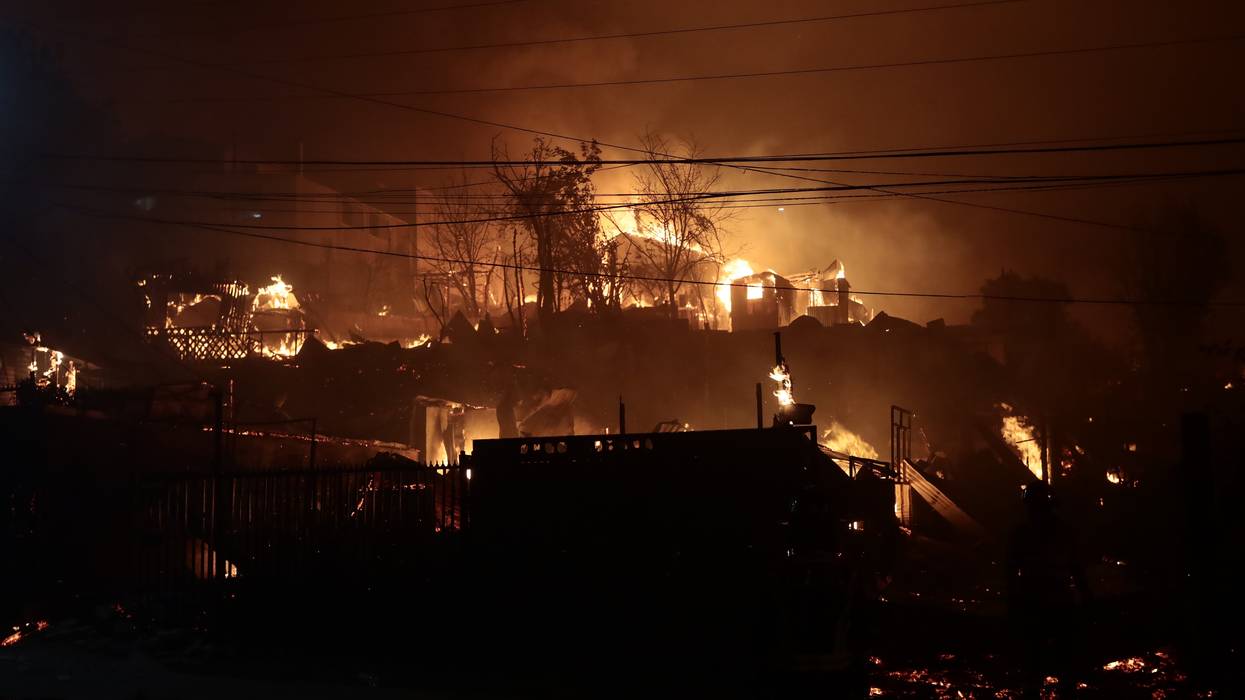
"The first priority, as you know, in these emergencies is always to fight and extinguish the fire. But we cannot forget, at any time, that there are human tragedies here," said the country's president.
On the heels of another historically hot year for Earth, disasters tied to the fossil fuel-driven climate emergency have yet again turned deadly, with wildfires in Chile's Ñuble and Biobío regions killing at least 18 people—a figure that Chilean President Gabriel Boric said he expects to rise.
The South American leader on Sunday declared a "state of catastrophe" in the two regions, where ongoing wildfires have also forced more than 50,000 people to evacuate. The Associated Press reported that during a Sunday press conference in Concepción, Boric estimated that "certainly more than a thousand" homes had already been impacted in just Biobío.
"The first priority, as you know, in these emergencies is always to fight and extinguish the fire. But we cannot forget, at any time, that there are human tragedies here, families who are suffering," the president said. "These are difficult times."
According to the BBC, "The bulk of the evacuations were carried out in the cities of Penco and Lirquen, just north of Concepción, which have a combined population of 60,000."
Some Penco residents told the AP that they were surprised by the fire overnight.
"Many people didn't evacuate. They stayed in their houses because they thought the fire would stop at the edge of the forest," 55-year-old John Guzmán told the outlet. "It was completely out of control. No one expected it."
Chile's National Forest Corporation (CONAF) said that as of late Monday morning, crews were fighting 26 fires across the regions.
As Reuters detailed:
Authorities say adverse conditions like strong winds and high temperatures helped wildfires spread and complicated firefighters' abilities to control the fires. Much of Chile was under extreme heat alerts, with temperatures expected to reach up to 38ºC (100ºF) from Santiago to Biobío on Sunday and Monday.
Both Chile and Argentina have experienced extreme temperatures and heatwaves since the beginning of the year, with devastating wildfires breaking out in Argentina's Patagonia earlier this month.
Scientists have warned and research continues to show that, as one Australian expert who led a relevant 2024 study put it to the Guardian, "the fingerprints of climate change are all over" the world's rise in extreme wildfires.
"We've long seen model projections of how fire weather is increasing with climate change," Calum Cunningham of Australia's University of Tasmania said when that study was released. "But now we're at the point where the wildfires themselves, the manifestation of climate change, are occurring in front of our eyes. This is the effect of what we're doing to the atmosphere, so action is urgent."
Sharing the Guardian's report on the current fires in Chile, British climate scientist Bill McGuire declared: "This is what climate breakdown looks like. But this is just the beginning..."
The most recent United Nations Climate Change Conference, where world leaders aim to coordinate a global response to the planetary crisis, was held in another South American nation that has faced devastating wildfires—and those intentionally set by various industries—in recent years: Brazil. COP30 concluded in November with a deal that doesn't even include the words "fossil fuels."
"This is an empty deal," Nikki Reisch of the Center for International Environmental Law said at the time. "COP30 provides a stark reminder that the answers to the climate crisis do not lie inside the climate talks—they lie with the people and movements leading the way toward a just, equitable, fossil-free future. The science is settled and the law is clear: We must keep fossil fuels in the ground and make polluters pay."
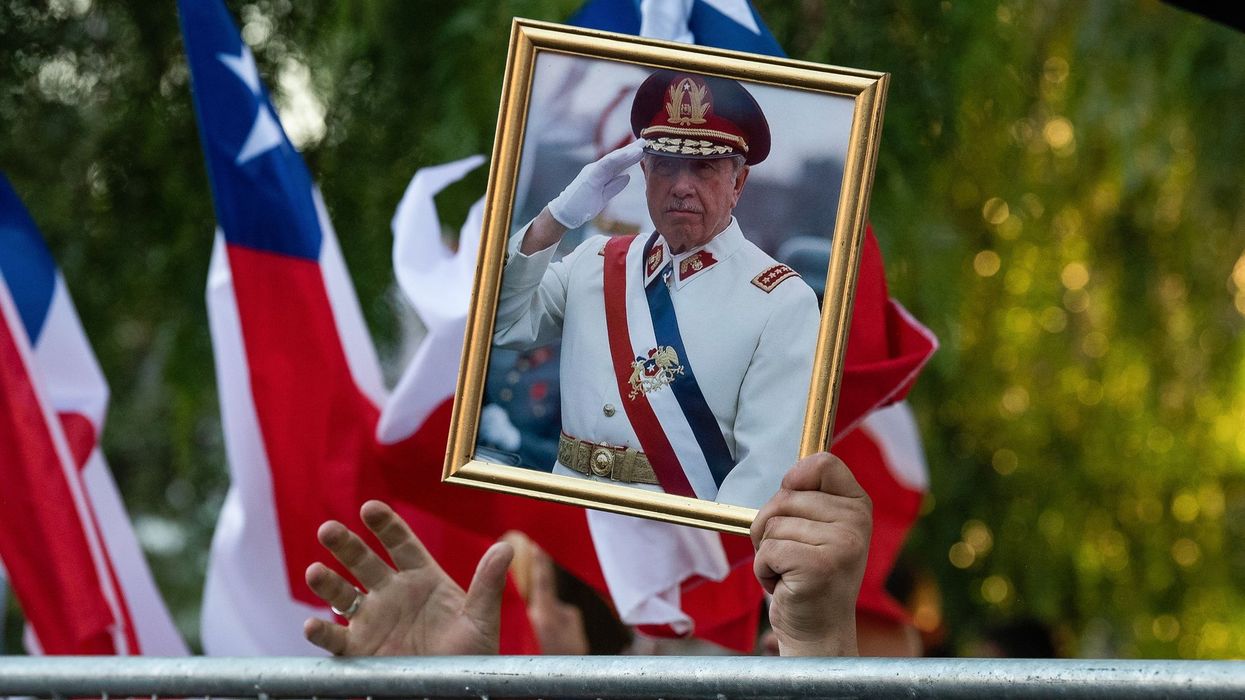
José Antonio Kast has described the dictator who ended democracy for nearly two decades and presided over the persecution of tens of thousands of dissidents as someone who brought "order" to Chile.
José Antonio Kast, a far-right former lawmaker, won over 58% of the vote in Chile's runoff elections on Sunday over Jeannette Jara, the labor minister under outgoing left-wing President Gabriel Boric, to become the nation's next president.
The win came despite Kast's open admiration for General Augusto Pinochet, who ended civilian rule in Chile after taking power through a coup d'etat in 1973, overthrowing its democratically elected socialist leader in a US Central Intelligence Agency-backed plot and implementing a radical program of economic austerity.
Until he was ousted by a democratic referendum in 1990, Pinochet governed Chile as a military dictatorship rife with human rights abuses, resulting in his indictment by a Spanish court in 1996 for crimes against humanity. His regime assassinated or "disappeared" nearly 3,200 people, while tens of thousands were tortured and more forced into exile.
Human rights groups have accused Kast and his family—the patriarch of which was a member of the Nazi Party who fled to Chile in 1950—of collaboration with the Pinochet regime's detention of opponents. The president-elect's brother was a minister for Pinochet during the dictatorship.
Kast will be the first president of Chile since its return to democracy to have campaigned for and voted “Yes” in the 1988 plebiscite for the dictator to stay in power for another eight years despite his reign of terror.
But rather than distance himself from Pinochet's legacy, Kast has described himself as his spiritual successor.
In 2017, during his first of three presidential campaigns, Kast told a local newspaper that “if he were alive,” Pinochet “would vote for me.” Kast later described Pinochet as someone who brought “order” to Chile, comments that the Buenos Aires Times wrote in 2021, “railed many who are still scarred by this dark period in the country’s history.”
But Kast's nostalgia for that period of repression was not enough to hobble him this time around. At a time when the right is making gains across Latin America, Kast's policy agenda sits at the nexus point between the free market fundamentalism of Argentina's Javier Milei and the police state ambitions of El Salvador's Nayib Bukele.
He has pledged an economic program in the same vein as Pinochet's and, later, Milei's "shock therapy," proposing an unprecedented cut of $21 billion in public spending over his term, paired with a reduction in taxes on the wealthy.
Kast has pledged that these cuts would only affect "waste" and "political" spending, but not impact social programs that benefit Chileans. But economic analysts, including Javiera Toro, Chile's social development minister, have argued that a cut of that size would inevitably cut into the social safety net, including its popular state pension program and others related to health, housing, and education.
Kast successfully martialed fear of high crime (even though it actually fell under Boric's tenure) into outrage toward the nation's undocumented migrants—mainly from Venezuela—whom he has pledged to deport en masse. As in the US, where President Donald Trump is also spearheading a mass deportation operation, immigrants in Chile commit crimes at lower rates than those born in the country.
Last year, Kast visited the sprawling prison complex where Bukele has used emergency powers to detain tens of thousands of people as part of his sweeping war on gangs, often in punishing conditions where they've faced torture. Amnesty International described it as a "state policy of massive and arbitrary deprivation of liberty." Kast said he'd like to implement a similar policy in Chile.
Kast immediately raised fears for the future of Chile's democracy in his victory speech, vowing to form an "emergency government" when he takes power in 2026. However, he will not command a majority in Chile's legislature, which may make the delivery of his agenda more challenging.
Jenny Pribble, professor of political science and global studies at the University of Richmond, told Al Jazeera: “It remains to be seen if Kast could or would pursue such an approach, but if Chile follows the Salvadoran model, it would constitute significant democratic backsliding.”

They’re usually worse off during their subsequent terms in office. So are the rest of us.
On November 5, Donald Trump was elected as the 47th U.S. president. Trump is an oligarch—an economic or political actor who secures and reproduces power and wealth, then transforms one into the other. And now he is in the small minority of oligarchs across history who have had second acts—having lost power or wealth, they find a way back. What can we learn from those experiences that might inform our understanding of Trump’s second term?
To answer that question, we looked at the track records of three other business oligarchs like Trump who have served as heads of state or government since World War II. Business oligarchs begin their journey by accumulating wealth, then move to power.
In our book The Oligarch’s Grip: Fusing Wealth and Power, we wrote about Chilean president Sebastian Piñera. He served two non-consecutive terms in office (2010-14 and 2018-22). His second act was decidedly worse than his first. During his first term in office, per capita income in constant dollars grew by 14%, while life expectancy expanded by 0.9 years. Sure, there were controversies, such as the appointment of Pinochet-era figures as cabinet ministers and protests over the end of the school voucher system. But, in general, Chileans felt better off.
While we are hesitant to make any grand predictions for the Trump second term based on these cases, it does seem questionable that it will be any better than the first.
By contrast, Piñera’s second term was disastrous. Per capita income rose by only 2% and life expectancy contracted by 0.8 years. The Covid-19 pandemic played a role in these outcomes, but it wasn’t the only driver. Piñera’s poor handling of a second, larger set of student protests has also led to his relatively low ranking among modern Chilean heads of state. He died in a helicopter accident in 2024.
Trump has been compared to Silvio Berlusconi, Italy’s three-time prime minister (1994-95, 2001-06, and 2008-11). We will focus on his second and third terms, which are longer. Per capita income expanded by 3.5% in that second term, and life expectancy grew by a remarkable 1.4 years. Ambitious goals aimed at constitutional and tax reform were thwarted, but, still, Italians felt better off, even if they narrowly backed a center-left coalition that removed Berlusconi from office.
His third term was dominated by the 2007-08 global financial crisis, the Great Recession of 2008-09, and the 2009-10 eurozone crisis. Italy’s economy was one of the most highly indebted in Europe, and higher interest rates led to a 6.8% GDP decline during 2008-09. Per capita income declined by 3.6% during this term, while life expectancy increased by 0.6 years. Having been ranked by Forbes as the 12th most powerful person in the world in 2009, Berlusconi resigned in 2011 as a deeply unpopular and polarizing figure.
A similar pattern of a poor second act emerges with Rafic Hariri, Lebanon’s prime minister for two terms (1992-98 and 2000-04). Per capita income grew by a substantial 44% during his first term, while life expectancy expanded in the post-civil war period by 2.2 years. But when Hariri returned to office for a second term, results were much less compelling: income up by 16% and life expectancy by 0.6 years. Political tensions led to his assassination in 2005. His son Saad served two terms as well and also left office under a cloud. A third oligarch prime minister, Naguib Mikati, is in his third term and, given the recent Israeli invasion, is unlikely to have a successful ending.
Does history offer any relief from this picture of disappointing second acts? Not really. For example, Marcus Licinius Crassus—one of the Roman Republic’s richest and most powerful men, served as consul twice (70 and 55 BCE), both times with often rival and sometimes ally Pompey. The first consulship led to the Triumvirate Alliance of Caesar, Pompey, and Crassus. The second consulship led to Crassus being named governor of the endlessly wealthy province of Syria, where he was defeated by the Parthians and died in 53 BCE.
These examples suggest some preliminary findings and cautions. First, oligarchs’ second acts generally end badly. Sometimes, external circumstances drive this result. Other times, it seems that oligarchs don’t show much evidence of learning from their first terms.
Second, many oligarchs never serve in decision-making roles as heads of state or government like Piñera, Berlusconi, or Hariri. Some have agenda-setting power through political contributions or media ownership. Others have ideological power, shaping the way we think and act. Based on our dataset at the Center for the Study of Oligarchs, we are unaware of any oligarchs who had and lost those types of power who were able to regain it. We also don’t know of any significant cases of oligarchs losing their wealth and then recovering it.
While we are hesitant to make any grand predictions for the Trump second term based on these cases, it does seem questionable that it will be any better than the first. During that first term, per capita in the U.S. rose by 2.9% and life expectancy fell by a jaw-dropping 1.7 years. That record helped earn Trump a ranking as the worst president in U.S history, according to the American Political Science Association survey.
It is difficult to imagine how Trump will be able to successfully fight the dismal history of oligarchs’ second acts.
"Just as the Human Rights Declaration paved the way for peace after WWII, we must now make nature's rights a global priority."
A report released Thursday, ahead of a summit in Colombia, argues that "recognition of the Rights of Nature and national implementation of Mother Earth-centric actions are critical for meeting the 2030 and 2050 goals of the Kunming-Montreal Global Biodiversity Framework."
Finalized in late 2022, the framework aims to protect 30% of all land and water vital to species and ecosystems by 2030. The new publication urges governments to include ecocentric commitments in their National Biodiversity Strategies and Action Plans (NBSAPs), which are each country's proposal to meet the goals of the agreement.
"To halt and reverse the biodiversity crisis, nations must urgently transform their laws and societies to live in harmony with nature," said report co-author and Earth Law Center (ELC) executive director Grant Wilson in a statement.
"The Global Biodiversity Framework presents an unprecedented opportunity to advance the Rights of Nature and other transformative legal paradigms for the planet," Wilson continued. "For many countries, this could also mean receiving significant financial support, catalyzing a profound shift in how we relate to and protect the natural world."
"Acknowledging the Rights of Nature and Mother Earth should be at the top of the priority list of the biodiversity convention, not merely in the footnote."
As the Intergovernmental Science-Policy Platform on Biodiversity and Ecosystem Services explains, Rights of Nature "is a legal instrument that enables nature, wholly or partly, i.e. ecosystems or species, to have inherent rights and legally should have the same protection as people and corporations; that ecosystems and species have legal rights to exist, thrive and regenerate. It enables the defense of the environment in court—not only for the benefit of people, but for the sake of nature itself."
The new report emphasizes that Target 19 of the framework "seeks to mobilize at least $200 billion per year by 2030—from domestic, international, public, and private resources—to implement national biodiversity strategies and action plans," and "explicitly stipulates... funds will be available for enhancing 'Mother Earth-centric actions.'"
The paper was produced by ELC with support from End Ecocide Sweden, Keystone Species Alliance, Lawyers for Nature, and Rights of Mother Earth. It comes ahead of the next meeting of the Conference of the Parties to the Convention on Biological Diversity (COP16), set to be held in Cali from October 21 to November 1.
"To achieve COP16's theme of 'Peace with Nature,' acknowledging the Rights of Nature and Mother Earth should be at the top of the priority list of the biodiversity convention, not merely in the footnote," said Rights of Mother Earth co-founder Doris Ragettli. "Just as the Human Rights Declaration paved the way for peace after WWII, we must now make nature's rights a global priority."
Noting that the paper shows "over 30 countries already recognize Rights of Nature through constitutional provisions, laws, or court decisions," Lawyers for Nature affiliate Jeremie Gilbert similarly said that "achieving 'Peace with Nature' requires incorporating these rights into biodiversity conservation efforts globally."
Just last week, communities in Chile launched a Declaration of Rights to protect the Biobío River "against mounting environmental threats." While the river is the first ecosystem in the South American country protected by such action, the declaration followed other recent progress on the continent, including a court decision in Peru that granted rights to the Marañón River and a ruling in Ecuador that found pollution violated the rights of the Machángara River.
The recognition of the waterway's rights in Chile is "a bridge that not only guarantees the inherent value of rivers and natural entities, but is also key to the full realization of the human rights of their communities," said Constanza Prieto Figelist, Latin America director for ELC.
"It is incredibly inspiring to see people from all over the world with diverse interests uniting to uphold the intrinsic value of nature."
ELC noted that Thursday's report "was primarily authored by law school and undergraduate interns working alongside sponsoring organizations. These youth advocates, increasingly vocal in their support of Rights of Nature and ecocentric law, will join the Earth Law Center delegation at COP16 to engage with governments on how to implement transformative Earth-centered policies."
Emily Zinkula, a Stanford Law School student who contributed to the paper as an ELC intern, said that "it is incredibly inspiring to see people from all over the world with diverse interests uniting to uphold the intrinsic value of nature."
"For many of us, nature's right to be protected feels intuitive," Zinkula added. "Seeing ELC and its partners tirelessly work to turn that intuition into a global truth is empowering. The recognition of nature's rights by global leaders gives much-needed hope, courage, and validation to a generation longing for it."
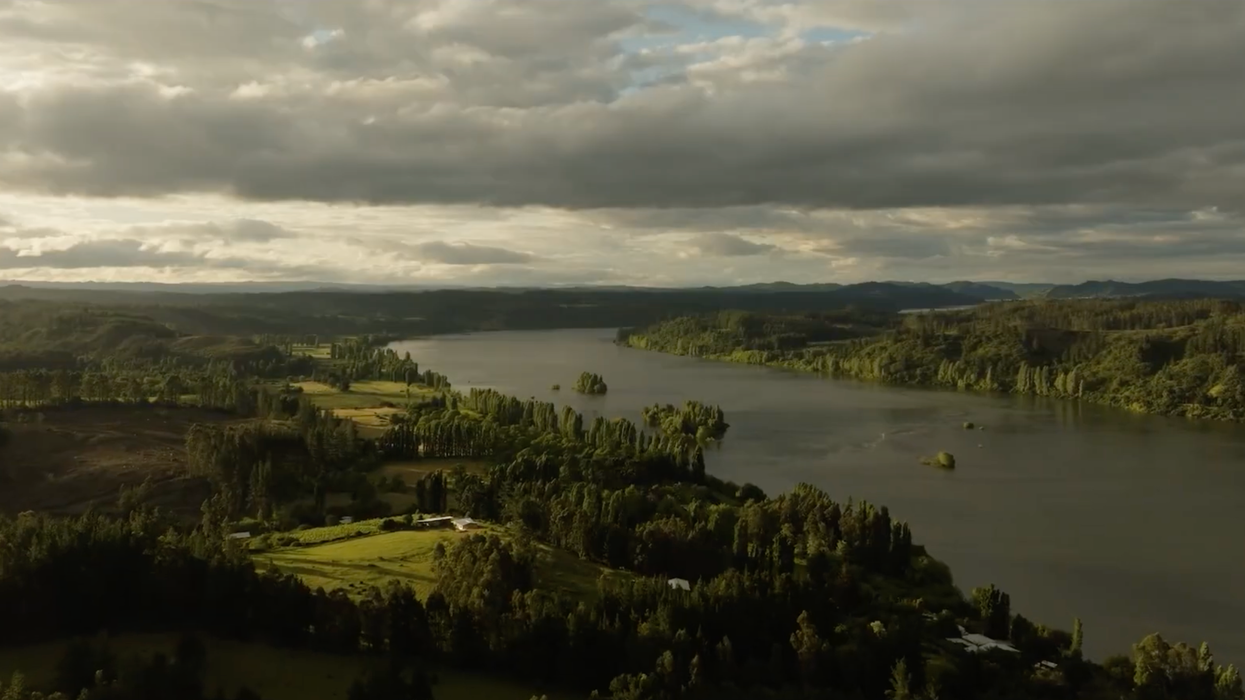
"A paradigm shift is necessary," said an advocacy group. "Let's recognize now that the Biobío River has value in itself."
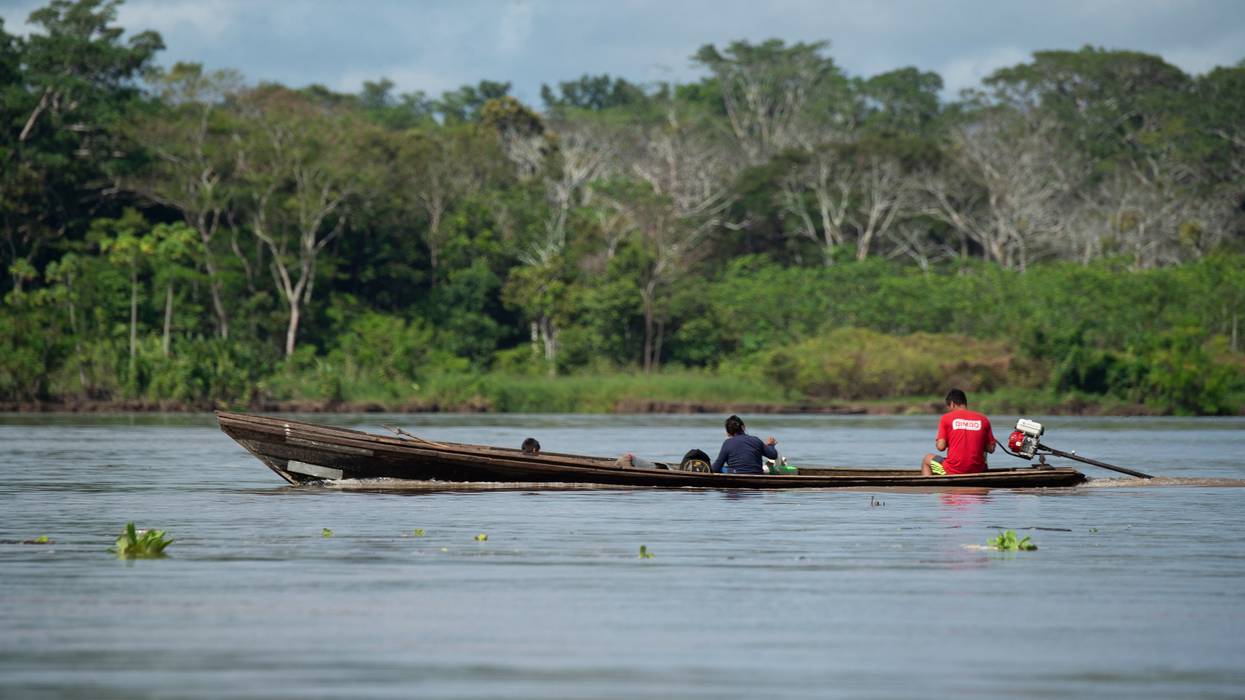
Biodiversity and Rights of Nature defenders celebrated a "historic moment" on Wednesday as communities in Chile joined advocacy groups in launching the first Declaration of Rights protecting an ecosystem in the South American country, with the document aiming to safeguard "the rights of Chile's Biobío River against mounting environmental threats."
Communities located along the river—the second-longest in the country—joined environmental advocates, Indigenous tribes including the Pehuenche and Lafkenche people, and scientists in several months of "participatory dialogues" to determine how to protect the Biobío River from industrialization and other threats to the countless species it supports and to the river itself.
International Rivers, a group dedicated to protecting free-flowing rivers around the globe, said that the "cornerstone of the declaration lies in its profound acknowledgment of the intrinsic value held by the Biobío River" and its right to flow unimpeded by hydroelectic projects, disruptions to the riverbed, and other activities.
The Declaration of Rights affirms the river's right to:
Another proposed plant is in the planning stages, and like the others would "jeopardize the river's flow and water quality, resulting in loss of native biodiversity and affecting fish migration and ultimately leading to irreversible damage," said International Rivers.
The riverbed structure and water quality have also suffered from both legal and illegal extraction of boulders, rubble, gravel, and sand that have been taken for use in construction, and ecosystem defenders have warned about the negative impact of proposed road infrastructure projects in the Biobío region.
Projects including the Concesión Vial Puente Industrial, a viaduct and road connection, and road projects such as Costa Mar and Costanera "would cause the total destruction of the wetlands of these localities," said the group.
"These developments underscore the inadequacy of the national legal framework in ensuring the protection of riparian ecosystems and citizen participation, lacking international standards that prioritize sustainable development in harmony with nature," said International Rivers.
Alejandro Gatica, a member of the community group Defensa Ribera Norte Chiguayante, said the Declaration of Rights "revalues and protects the water network," which is "in an environmental crisis due to extractivist actions on its banks, with uncontrolled logging, lack of protection of its wetlands, and the coastal project that threatens to intervene in its structure."
In a video about the Declaration of Rights, International Rivers said the Biobío "has been sadly silenced" by industrialization, despite the crucial support it provides to "multiple ecosystems and countless riverine and terrestrial species, many of them endemic," in addition to "water security and food sovereignty of its riparian communities for whom it is a crucial element in agriculture, fishing, and tourism."
"When we deny its right to flow we are silencing it. When we pollute, exploit, degrade, and urbanize it we are silencing it. When we block its access and connection to communities we are silencing it," said the group. "A paradigm shift is necessary. Let's recognize now that the Biobío River has value in itself."
The launch of the declaration "signifies a pivotal moment," said Monti Aguirre, Latin America program director of International Rivers.
"This initiative underscores our shared dedication to preserving this vital ecosystem amidst mounting destructive pressures," said Aguirre. "The well-being of the Biobío River, along with that of surrounding communities, is imperiled by the pressures imposed on its ecosystem, stemming from established dams such as Ralco, Pangue, and Angostura, as well as proposed hydro-projects and extractive activities."
The recognition of the waterway's rights is "a bridge that not only guarantees the inherent value of rivers and natural entities, but is also key to the full realization of the human rights of their communities," said Constanza Prieto Figelist, Latin America director for Earth Law Center.
The international Rights of Nature movement has celebrated several victories in South America in recent months, including a court decision in Peru that granted rights to the Marañón River and a ruling in Ecuador that found pollution violated the rights of the Machángara River.
"The Rights of Nature favor the incorporation of more powerful standards of environmental protection and citizen participation in environmental issues through, for example, the figure of representatives or guardians of nature," she said. "Likewise, comparative experience shows that they are a powerful instrument for combating activities that favor biodiversity loss or climate change."

The Maersk-chartered MV Dali—which lost propulsion just before the collision—not only was involved in a previous crash, but was also briefly detained last year over problems with its propulsion system.
The mega-container ship that lost propulsion before toppling Baltimore's Francis Scott Key Bridge in a Tuesday morning collision was involved in a previous crash, and was cited last year for propulsion-related problems.
Newsweek reported that the Maersk Line Limited-chartered MV Dali—which crashed into the Interstate 695 Patapsco River crossing just before 1:30 am, causing the span to collapse and sending a construction crew into the water—collided with a wall in the harbor at Antwerp, Belgium in 2016. The accident, which was reported by Vessel Finder and other outlets at the time, was attributed to errors made by the ship's master and pilot.
The 9-year-old Dali was also detained by port officials in San Antonio, Chile last June after inspectors discovered a problem related to the vessel's "propulsion and auxiliary machinery," according to The Washington Post, which cited records from the intergovernmental shipping regulator Tokyo MOU.
The ship's owner, Grace Ocean Private Ltd., and operator, Synergy Marine, "have been sued at least four times in U.S. federal court on allegations of negligence and other claims tied to worker injuries on other ships owned and operated by the Singapore-based companies," according to The Associated Press.
Maersk was also sanctioned last year by the U.S. Labor Department for allegedly stopping employees from reporting safety concerns, documents published by The Lever revealed.
According to a July 14, 2023 Labor Department letter to Maersk regarding an Occupational Safety and Health Administration investigation, the Danish company "suspended and then terminated" a worker "in retaliation for reporting unsafe conditions and contacting the U.S. Coast Guard."
The fired employee "engaged in numerous protected activities" including reporting a leak and the need for repairs to a ship's cargo hold bilge system, alcohol use aboard the vessel by crew members, and inoperable equipment including an emergency fire pump and lifeboat block and releasing gear.
The search for six construction workers who were on the bridge when it collapsed into the river was suspended until Wednesday, according to The Associated Press. The workers are presumed dead by their employer, Brawner Builders. Local media reported that multiple vehicles plunged into the river and that two workers—one of whom was briefly hospitalized—were rescued from the water.
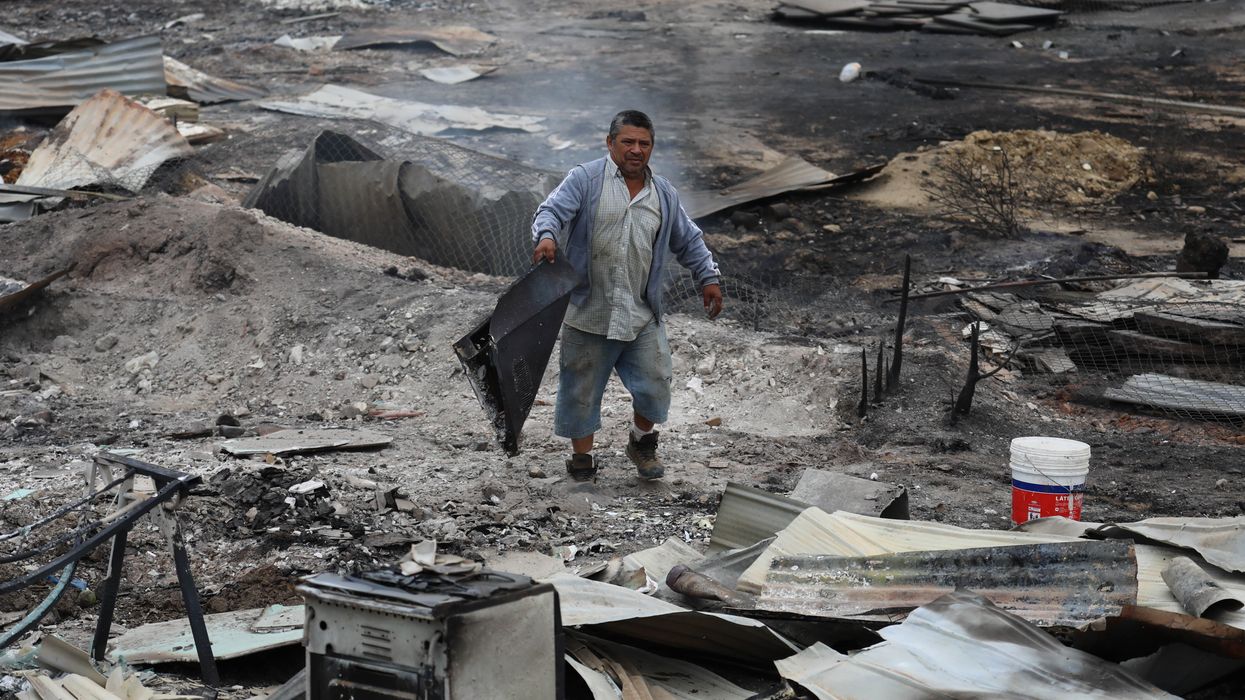
"We are becoming one of the most vulnerable territories in the world to fires," Chilean president Gabriel Boric said in 2023.
Extreme wildfires made more likely by the ongoing climate crisis killed at least 122 people in Chile, destroyed at least 6,000 homes, and damaged around 14,000 as the country entered a two-day morning period on Monday after a weekend of destruction and chaos.
The fires, which ignited in the coastal region of Valparaíso late last week, were "without a doubt" the deadliest in the country's history, Interior Minister Carolina Toha said, as Le Monde reported. President Gabriel Boric said Sunday that the fires were also Chile's deadliest disaster overall since an earthquake and tsunami in 2010 and that the death toll would "increase in a significant way."
"We're facing an unprecedented catastrophe," mayor of hard-hit city Viña del Mar Macarena Ripamonti said, "a situation of this magnitude has never happened in the Valparaíso region."
"There was smoke, the sky turned black, everything was dark. The wind felt like a hurricane. It was like being in hell."
The fires first ignited in hard-to-access wooded hillsides around Viña del Mar, a popular tourist destination on the coast, according to The Associated Press. But they then descended upon developed areas, fueled by drought and heatwave. With temperatures in the area reaching 40°C, the fires devoured a famous botanical garden in the city on Sunday and rendered at least 1,600 people homeless, according to AP. The nearby towns of Quilpe and Villa Alemana were also impacted.
"From one moment to the next, the fire reached the botanical park. In ten minutes the fire was already on us," Jesica Barrios, whose Viña del Mar home was one of those destroyed, told Reuters. "There was smoke, the sky turned black, everything was dark. The wind felt like a hurricane. It was like being in hell."
Another resident of nearby Villa Independencia evacuated her home on Friday to find it destroyed on Monday.
"It's like a war zone, as if a bomb went off," 63-year-old Jacqueline Atenas said. "It burned like someone was throwing gasoline on the houses. I don't understand what happened... There was a lot of wind, a lot of wind and big balls of fire that would fly by."
Drone footage shared by The Guardian showed blocks of homes torched and reduced to rubble and ashes.
"We need help, pet food, supplies, clothing," one woman told
The Guardian. "I don't know. My house, I lost everything, everything."
Boric declared an emergency in Chile's central and southern regions due to the fires. "All of Chile is suffering," Boric said, "but we will stand up once again."
Deputy Interior Minister Manuel Monsalve said that 165 fires were still blazing as of Sunday night, though cooler and cloudier weather predicted for the next few days should help firefighters to control them, according to Reuters. The AP reported that fires burned less intensely on Monday.
Toha said that 43,000 hectares had burned as of Saturday, according to AFP. On Sunday, Toha said around 1,400 firefighters had been sent to fight the flames, as BBC News reported. The military is also assisting emergency services.
There are reports that some of the fires may have been intentionally started.
"These fires began in four points that lit up simultaneously," Valparaíso Governor Rodrigo Mundaca said Sunday, as AP reported. "As authorities we will have to work rigorously to find who is responsible."
El Niño conditions have also brought a drought and heatwave to southern South America during its summer, creating ideal conditions for fire. At the same time, scientists point out that this occurs in the broader context of an ongoing climate crisis driven primarily by the burning of fossil fuels.
"No country can address the Climate Crisis alone. We need a global phase out of fossil fuels."
The fires ignited weeks after a study published in Nature on January 23 concluded that "the concurrence of El Niño and climate-fueled droughts and heatwaves boost the local fire risk and have decisively contributed to the intense fire activity recently seen in Central Chile."
Fires burned three times as many acres last decade compared to the one before, and six of the seven most destructive fire seasons in Chile's history have happened since 2014.
"In the last few years, our country has lived through the impacts of climate change," Boric said last year, which also saw intense fires, as Mongabay reported. "We are becoming one of the most vulnerable territories in the world to fires."
This is not an experience unique to Chile, as Canada's record-breaking wildfire season during summer 2023 attests. Texas Tech University climate scientist Katharine Hayhoe explained on social media that "climate change is the difference between dropping a match into green, wet wood vs. bone-dry kindling that's been baking in unseasonably warm temps for weeks. That's how climate change is making wildfires bigger and more dangerous, regardless of their cause."
In a thread on social media, Cardiff University School of Social Sciences graduate student Aaron Thierry explained the climactic context for Chile's fires, including an ongoing drought and record-breaking heatwave and increased fires across South America.
While Chile's government is aware of and taking action on the problem, "no country can address the Climate Crisis alone," Thierry said. "We need a global phase out of fossil fuels. That means all countries need politicians who will deliver this transformative shift in governance. That means we need to get out and vote for them!"