

SUBSCRIBE TO OUR FREE NEWSLETTER
Daily news & progressive opinion—funded by the people, not the corporations—delivered straight to your inbox.
5
#000000
#FFFFFF
To donate by check, phone, or other method, see our More Ways to Give page.
Daily news & progressive opinion—funded by the people, not the corporations—delivered straight to your inbox.

"I think all kids and people should have medical care, I don't think anyone needs a billion dollars ever, I think all kids should be safe from violence, I think parents should be able to afford high-quality childcare if they want it."
The online child educator known as Ms. Rachel on Friday used her massive platform on Instagram to promote a dozen progressive Democrats running for seats in the US Senate and House of Representatives.
"These are the folks I believe care about all kids," wrote Rachel Accurso, whose wildly popular videos are designed to encourage language development. She asked her more than 5 million followers to share "which candidates you're voting for and why."
Accurso is supporting:
"I think politicians shouldn't attack each other and I don't think big groups should be able to use millions to attack candidates," Accurso asserted. From her home state of Maine to Michigan, super political action committees (PACs) and billionaires have spent big to boost "moderate" Democrats and Republicans amid a recent series of progressive primary victories.
"I'm for peace and kindness always but that doesn't mean not telling the truth and not standing up against injustice," said the educator, who has outraged right-wingers for speaking out against Israel's assault on Palestinian children in the Gaza Strip.
Accurso wrote that "I'm for the kids, I'm for the people—I think all kids and people should have medical care, I don't think anyone needs a billion dollars ever, I think all kids should be safe from violence, I think parents should be able to afford high-quality childcare if they want it/a parent should be able to stay home if they want to."
"I think everyone should be able to feed their kids and have high-quality schools without stress—I just love literally everyone," she added.
Balint is seeking a third term in the House. As the presumptive Democratic nominee, she is expected to face the Republican who wins the August 11 primary—likely Gerald Malloy, an Army veteran and defense contractor who previously ran for Senate, according to recent polling.
Bush—who was previously part of the progressive "Squad" in Congress—is hoping to reclaim the seat she lost last cycle to Democratic Rep. Wesley Bell, who was financially backed by the American Israel Public Affairs Committee's super PAC, the United Democracy Project (UDP). Their primary is August 4.
During this cycle, UDP is targeting El-Sayed, who is facing Congresswoman Haley Stevens in Michigan's August 4 Democratic primary. After Accurso contributed $3,000 to El-Sayed, Samantha Cantrell, a spokesperson for the National Republican Senatorial Committee told the New York Post last Saturday that "Abdul El-Sayed and Ms. Rachel are one and the same, forcing their socialist, they/them, anti-America agenda on our children, and parents should be worried when they head to the ballot box."
Flanagan, Minnesota's lieutenant governor, is running to replace Democratic Sen. Tina Smith, who decided not to seek reelection and is supporting the progressive. Polling conducted in the lead-up to the August 11 primary for the Democratic-Farmer-Labor Party shows Flanagan ahead of Congresswoman Angie Craig.
Maine Democrats last weekend nominated Jackson, a former state Senate president and logger, to challenge longtime Republican Sen. Susan Collins in November. He replaced Graham Platner, who stepped aside after sexual assault allegations, which he denied. Platner's surge in popularity and series of scandals have drawn national attention to the race.
Keohokalole is running to oust incumbent Democratic Rep. Ed Case, who is currently leading in polls. According to Hawaii Public Radio, the state senator "decided to run for Congress after seeing how Case reacted to immigration agents holding teachers at gunpoint on Maui." Their primary is August 8.
Larkin is challenging another Democratic incumbent: Florida Congressman Jared Moskowitz. As the South Florida Sun Sentinel reported Friday, Larkin is "a democratic socialist inspired to get involved in politics by progressive icon US Sen. Bernie Sanders," a Vermont Independent. Their primary is August 18.
Lawrence, a co-founder of the youth-led climate organization Sunrise Movement, is hoping to beat former Navy SEAL Matt Maasdam and Bridget Brink, who was previously US ambassador to Slovakia and Ukraine, in Michigan's primary on August 4.
Manley aims to represent a Florida district impacted by Republicans' mid-decade map-rigging at the request of President Donald Trump. Longtime Democratic Congresswoman Debbie Wasserman Schultz has faced criticism for opting to run in this primary, scheduled for August 18.
Backed by progressives in Congress including Sanders and Rep. Rashida Tlaib (D-Mich.), McKinney is running to unseat Democratic Michigan Congressman Shri Thanedar, who has support from key party leaders in the House. The pair faces off in the August 4 primary.
Nixon "is running an unapologetically progressive campaign" against Alex Vindman, a retired US Army lieutenant colonel who was a key witness in Trump's first impeachment trial. The winner of the August 18 primary will face Republican Sen. Ashley Moody, who was appointed last year and is now seeking a full term.
Pearson, known nationally for being expelled from the Tennessee House of Representatives by Republicans over his protest for stricter gun laws, is running in the Memphis district targeted by GOP gerrymandering efforts. After the redistricting, Democratic Rep. Steve Cohen opted to retire. The primary is August 6.

"Abandoning children to meet deportation targets is immoral. This must stop. These children deserve legal representation."
Thousands of unaccompanied immigrant children could lose their lawyers beginning Friday as federally funded contracts supporting them are set to expire, prompting advocates to warn that the move will leave vulnerable minors to face deportation proceedings frightened and alone.
Since 2003, the US Department of Health and Human Services (HHS) has funded a nationwide network of around 100 advocacy groups that have offered legal services to unaccompanied minors who arrived in the United States without their parents or legal guardians, as well as children already in immigration custody.
The Trump administration's move to withhold over $65 million in congressionally appropriated funding starting late last year forced dozens of nonprofit advocacy groups to trim operations, refuse new clients, or end vital programs altogether. There is no apparent plan for continuing representation for roughly 20,000 children currently receiving legal assistance as they navigate the US immigration courts and deportation process.
"This is a five-alarm fire," Sen. Jeff Merkley said Thursday on social media. "It’s wrong under every moral code."
Shaina Aber, executive director of Acacia Center for Justice—one of the nonprofits that received funding through the program—told El País' Patricia Clarembaux on Thursday, "We don’t know what’s going to happen on August 1 because the government has not informed us of the transition plan for the 20,000 children who have representation under this contract."
“It will really depend on whether the attorneys have alternative funding that allows them to continue," she added.
A child cannot be expected to navigate immigration court alone, yet that is exactly what will happen starting this Saturday if the Trump administration succeeds in dismantling these legal services.Tell Congress to honor its promise to protect unaccompanied children: tinyurl.com/protect-kids
[image or embed]
— Acacia Center for Justice (@acaciajustice.org) July 29, 2026 at 2:51 PM
HHS told El País that its Office of Refugee Resettlement—which is responsible for looking after immigrant minors—“remains fully compliant with legal and regulatory obligations and does not act in any way that could dissuade a child from seeking appropriate legal relief.”
However, as Acacia Center noted, "without legal representation, fewer than 1% of immigrant children are granted immigration relief. Without access to counsel, tens of thousands of vulnerable children could be forced to navigate life-changing legal proceedings with fewer protections, fewer advocates, and less time."
"HHS must honor its commitment and fulfill its obligation to pay for legal services already provided to prevent unaccompanied children from being stripped of their lawyers and deported without due process," the group argued.
Critics also point to President Donald Trump's record of mistreating unauthorized immigrants, especially children, over the course of his two terms. During his first term (2017–21), "zero tolerance" policies, including family separation and expanded use of what many observers call concentration camps, left thousands of children traumatized. Detention in overcrowded and often squalid facilities reportedly plagued by abuse has harmed many children since Trump's return to the White House last year.
Katie, a member of the group Women of Welcome and sponsor of immigrant children, responded to the imminent HHS funding cutoff last week, saying, “I have worked with immigrants in my professional life and have a lot of immigrant friends, but seeing the journey through the eyes of these kids was very new."
"The little girl I am adopting has been through a lot of trauma, and I may never know what she has gone through," Katie added. "She is resilient and funny, but she is 6, and she shouldn’t have to fight this system alone. This experience has not only deepened my faith, but I have learned more and more about how important the work of advocacy and loving people is. For these children, it is difficult to fight a system that isn’t built to protect them.”
Anna Devereaux, senior managing attorney at the Michigan Immigrant Rights Center, said that “children are children, regardless of their nationality, and our law and our values require us to act in their best interest."
"But the government’s failure to provide long-term funding has made it challenging to sustain a legal program for children," she added. "If this funding ends now, the future for these children is uncertain.”
Aber said: “These children are not leverage in a political negotiation. They are human beings—many of whom fled violence, trafficking, and abuse—who have a legally and morally recognized right to have their cases heard with a lawyer by their side."
"Abandoning children to meet deportation targets is immoral," she asserted. "This must stop. These children deserve legal representation."
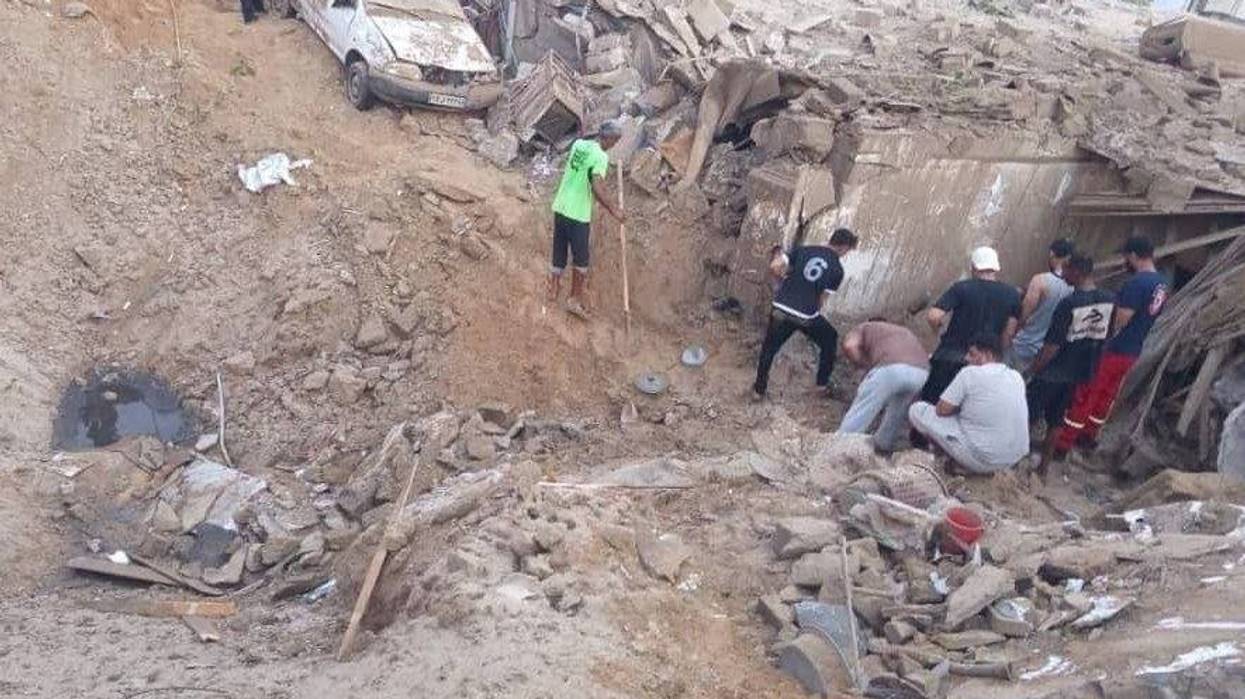
Iran has reported that at least 383 children, including seven infants, had been killed in the US-Israeli war there, prior to the resumption of attacks this month.
A family of three, including their 2-year-old child, were killed by US strikes against a residential building in Iran's Qeshm City, according to reports from Iranian media on Thursday.
Videos posted by the official IRNA news agency showed rescue teams searching through rubble for survivors. Two other children, ages 7 and 9, were found wounded in the wreckage and have been transported to the hospital, according to the agency.
The US attack on the building in the neighborhood of Chah Tangu was one of several launched against residential areas across Qeshm Island in the Persian Gulf overnight in what US Central Command (CENTCOM) said were dozens of strikes on Iranian Revolutionary Guard Corps (IRGC) sites across the country.
The IRGC said that it would respond to Thursday's strikes by hitting back against the “aggressor." Iranian strikes on sites in Kuwait and Jordan followed shortly after, leading to the death of a worker in a Chinese-owned building in Kuwait. Iran also claimed that its attacks destroyed US aircraft in Jordan, which has not been confirmed.
The wave of US attacks came after Trump vowed on Wednesday to "beat the fucking shit out of" Iran after it fired ballistic missiles toward US troops in Jordan, the first such strike since a brief bombing pause over the weekend. The US also partnered with Saudi Arabia to carry out attacks on Iran-backed militias in Iraq, which reportedly killed 20 fighters and six Iranian advisers.
In a statement on Thursday, CENTCOM said it had "successfully completed a heavy wave of strikes" against Iran "in response to yesterday’s attempted missile attacks on US forces." It did not specify the strategic reason for the strikes on Qeshm or acknowledge the reported civilian casualties.
According to the US-based Human Rights Activists News Agency (HRANA), at least 254 children have been killed in Iran since the US and Israel launched the war on February 28, among more than 1,700 total civilians.
Iran has reported that at least 383 children, including seven infants, had been killed over the course of the war, prior to the resumption of attacks in July. With Thursday’s attacks, at least three more children have been killed since the conflict resumed this month.
Many of those casualties include at least 123 children killed by US strikes on the Shajareh Tayyebeh elementary school in Minab on the first day of the war. Earlier this month, Trump declined to release the findings of a Pentagon investigation into the massacre, saying it would be impossible to ever determine who was at fault.
Since restarting the war earlier this month, the US has focused its attacks on southern Iran in areas near the Strait of Hormuz, where Iran has once again functionally blocked travel, despite US demands for unrestricted travel through the waterway, which carried around a fifth of the global oil supply before the war.
Trump's continued escalation comes as Americans are overwhelmingly skeptical of the war. A CNN poll released Wednesday showed that 67% of Americans believe Trump's military actions have "hurt the US" by causing oil prices to spike. Nearly three-quarters of Americans believe Trump does not “have a clear plan for handling the situation in Iran,” according to the poll.

"There's a 2-month-old baby there and four pregnant women there," said the Texas Democrat. "It's no place for a 2-month-old baby to be, or even a 1- or 5-year-old kid."
Democratic Texas Congressman Joaquin Castro appeared on MS NOW early Wednesday to discuss his recent trip to and persistent efforts to shut down what he called a "trailer prison" where US Immigration and Customs Enforcement is holding families in Dilley.
After leading a letter signed by over 100 other Democrats calling for the closure of the Dilley Immigration Processing Center, Castro on Tuesday conducted a congressional oversight visit of the facility with members of the Democratic Women's Caucus, including Reps. Yassamin Ansari (Ariz.), Lizzie Fletcher (Texas), Ayanna Pressley (Mass.), and Luz Rivas (Calif.).
During the interview on "Morning Joe," Castro said that Americans have watched in horror as ICE has killed and brutalized US citizens and immigrants in the streets, "but there's a brutality behind the prison walls of these detention centers that almost no one gets to see except for members of Congress who have an opportunity to go inspect them."
While touring the Dilley center seven times recently, "I've seen a lot of desperate children. I've seen traumatized children. There is a system there that is abusive of people," Castro said, citing complaints of worms in food, yellow drinking water, and inadequate medical care.
"When I asked, they said the youngest person there is 2 months old—so there's a 2-month-old baby there and four pregnant women there right now. And, you know, I can tell you that it's no place for a 2-month-old baby to be, or even a 1- or 5-year-old kid," he said.
Noting that the Texas facility is run by a private prison company—CoreCivic—and condemning the "commodification of child imprisonment," Castro declared that "we want the Dilley detention center shut down."
His comments on MS NOW mirrored those he and other lawmakers delivered outside the facility, also known as the South Texas Family Residential Center, and during a press conference with the organizations FWD.us and Families Belong Together.
The center is currently detaining 539 individuals, from 84 families, according to Pressley. She said that "these are law-abiding people that are our neighbors—people we love, people we live next to, we work and worship with, who were just going about their lives and met with such an aggressive disruption that they will be recovering from for the rest of their lives."
"Dilley must be shut down. We have to abolish ICE. And then I'm gonna take it one step further and say any of those agents that have contributed to and caused the injury, the harm, and even fatalities, they must also be held accountable, and we should abolish qualified immunity for these federal law enforcement officers," she argued.
FWD.us president Todd Schulte also called for "shutting down Dilley and releasing these children and families immediately."
"Dilley reflects a broader pattern that should not be expanded with additional, unprecedented taxpayer funding," he stressed, denouncing the hundreds of thousands of dollars that the Republican-controlled Congress has poured into President Donald Trump's mass detention and deportation campaign, led by ICE and US Customs and Border Protection.
"This will only cause irreparable harm to children and communities," Schulte warned. "Thank you to the members who continue to call for the release of families, and we join them in their calls for Dilley's closure."
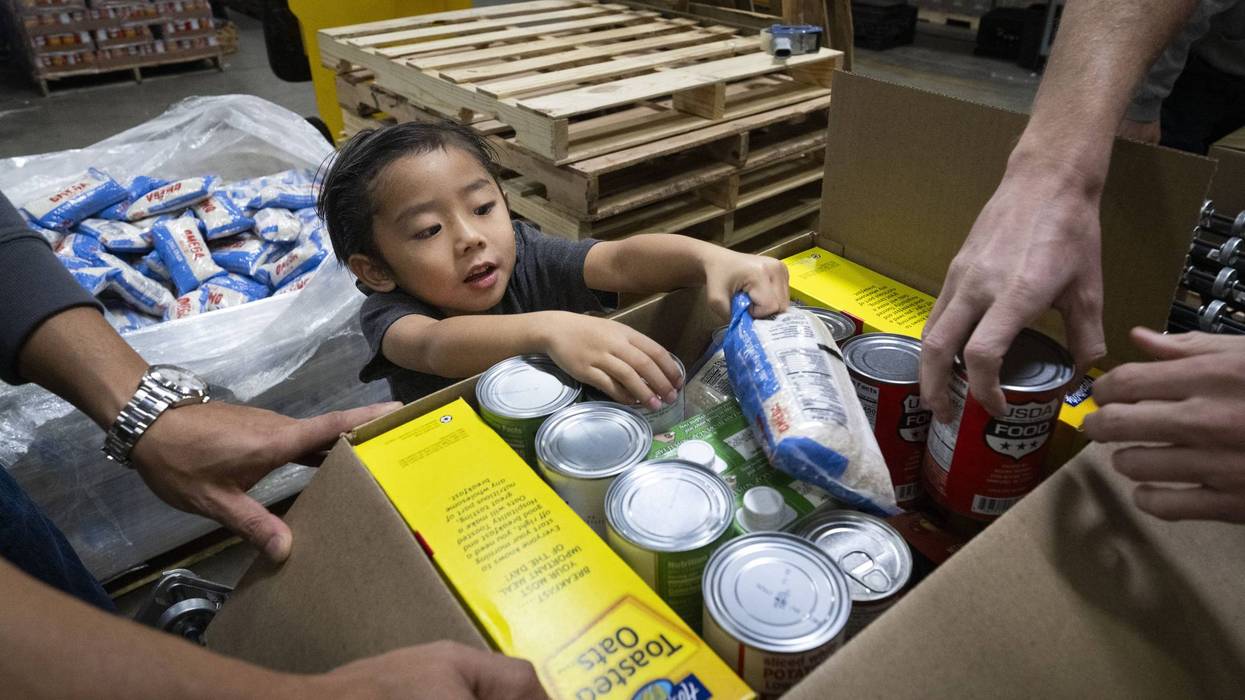
"The damage from the SNAP cuts could worsen quickly as some states are considering ending their SNAP programs entirely as soon as October 2027," warned one expert.
At least 1.5 million children have lost Supplemental Nutrition Assistance Program benefits since US President Donald Trump signed the Republican budget package into law last summer, enacting the largest cuts to federal food aid in the nation's history.
The new estimate of food aid loss among children comes from the Center on Budget and Policy Priorities (CBPP), which said Tuesday that SNAP participation was down by over 4.5 million people overall between July 2025 and April 2026. Refuting the Trump administration's narrative, the liberal think tank emphasized that the unemployment rate nationwide has been roughly flat since last July, meaning it is "very unlikely that reduced need is driving the decline in SNAP participation."
Arizona has seen the most staggering decline in SNAP participation. It has fallen 48% overall and 49% among children in the state since enactment of the Trump-GOP budget law, which instituted new work-reporting requirements for some recipients and punishments for states with elevated payment error rates. Under Republican law, states will for the first time have to pay a portion of SNAP benefit costs, which previously were fully covered by the federal government.
"Grotesque and indefensible," policy analyst Michael Linden wrote in response to the new data, noting that the Republican budget law slashed taxes for wealthy households while decimating SNAP.
Earlier this week, The New York Times published a report detailing the horror show residents have experienced as they've attempted to reenroll in SNAP after improperly losing benefits due to bureaucratic chaos stemming from the GOP law.
As states have raced to limit the massive new costs they will soon face under the law's cost shift, many eligible families are losing SNAP because they can’t navigate new bureaucratic obstacles & understaffed states can’t keep up with the added paperwork. https://t.co/DOCI3axDed pic.twitter.com/8OzMUpkLc7
— Katie Bergh (@Katie_Bergh) July 21, 2026
Sharon Parrott, CBPP's president, said Tuesday that the consequences of the massive SNAP cuts—totaling around $200 billion over the next decade—have been "stark: an ill grandmother raising teens can’t get her SNAP reinstated despite being eligible, and parents are skipping meals to save food for their children. Families who have had their food assistance taken away are turning to overburdened food banks, which cannot fill the gap."
" House Republicans are looking past this emergency in their budget legislation—while using it to help farmers struggling with high costs due to Trump’s tariffs and oil prices driven up by the war in Iran," said Parrott, referring to the GOP's new reconciliation package.
"The damage from the SNAP cuts could worsen quickly as some states are considering ending their SNAP programs entirely as soon as October 2027, when the cost shift takes effect. States unable or unwilling to pay the costs they incur will have no choice but to end the program," Parrott warned. "People across the US consistently say they want Washington to focus on affordability, especially the cost of food. Mitigating last year’s cuts to SNAP and staunching the number of families and children losing SNAP would be a good place to start."

One US author called the staggering surge a "reproductive genocide that Western feminists can't be allowed to ignore."
A senior medical official in the Gaza Strip sounded the alarm on Tuesday over a dramatic rise in miscarriages in the Palestinian exclave, with nearly 4,000 cases reported during the first half of 2026 amid Israel's ongoing genocide.
Gaza Medical Relief Director Bassam Zaqout said that 3,958 miscarriages were recorded in Gaza during the first half of this year—an increase the doctor called "unprecedented," and a serious risk to the health of pregnant women and their unborn fetuses.
Zaqout cited the soaring miscarriage rate to factors in Israel's genocidal assault on Gaza, including the destruction of the strip's infrastructure, unsanitary living conditions in camps for forcibly displaced Palestinians—where numerous babies have died of hypothermia—lack of hot water and hygiene supplies, and relentless terror caused by Israel Defense Forces bombing.
The Gaza Health Ministry documented 921 miscarriages and 2,004 live births in April. This staggering ratio—460 miscarriages for every 1,000 live births—is more than double that in neighboring nations Israel and Egypt.
Live births have also dropped dramatically in Gaza this year, from 5,210 in January, to 3,433 in February, 3,233 in March, 2,004 in April, and just 1,701 in May 2026, according to the ministry.
Last month, the Gaza Center for Human Rights said that the alarming rise in miscarriages is due to the systematic destruction of Gaza’s healthcare system, repeated attacks on hospitals, and widespread deprivation of food, medicine, and essential medical services amid 33 months of what United Nations experts and others have described as a genocide.
The Gaza Center for Human Rights said the following factors are the most significant drivers of the miscarriage crisis:
The center also noted that Article II of the Genocide Convention—the legal basis for the South Africa-led genocide case against Israel currently before the International Court of Justice—includes “imposing measures intended to prevent births within the group” in its definition of the crime.
United Nations officials and other experts have accused Israel of “systematically” using reproductive, sexual, and other forms of gender-based violence against Palestinians in Gaza and committing “genocidal acts” by deliberately destroying reproductive and healthcare facilities in the strip.
There has also been a documented surge in birth defects among Gaza newborns. According to the Gaza Health Ministry, congenital anomalies doubled in 2025 compared with 2022.
Successive medical warnings of a long-term health catastrophe in the Gaza Strip, with a notable increase in fetal deformities and miscarriages resulting from the harsh conditions of war. pic.twitter.com/T2rN6XQec6
— Eye on Palestine (@EyeonPalestine) June 25, 2026
Experts attribute the increase to many of the same factors driving miscarriages, pointing to contaminated water and widespread malnutrition, including the former famine that killed at least hundreds of Palestinians in Gaza, many of them children and infants.
Zaqout warned that Gaza’s health crisis is worsening as severe shortages of medicines, equipment, diagnostic tools, and laboratory supplies persist amid the strip's heavily damaged healthcare infrastructure and ongoing siege. He also noted the epidemics of diseases such as chickenpox, waterborne illnesses, and respiratory infections.
Numerous Palestinian women have lost their pregnancies due to direct acute trauma inflicted by Israeli bombs and bullets, which have often also killed would-be mothers. Israeli invaders have also ordered the evacuation of Gaza's hospitals, forcing staff to leave prematurely born babies to die and decompose in incubators.
A United Nations commission of inquiry reported last month that approximately 30% of the more than 73,000 Palestinians killed during Israel's 33-month war on Gaza were children—many of whom were deliberately targeted. Israeli forces have killed more than 21,500 Gazan children, including 1,022 babies, since the October 7, 2023 Hamas-led attack, according to the Gaza Government Media Office.
The United Nations Children's Fund has called Gaza "the most dangerous place in the world to be a child."
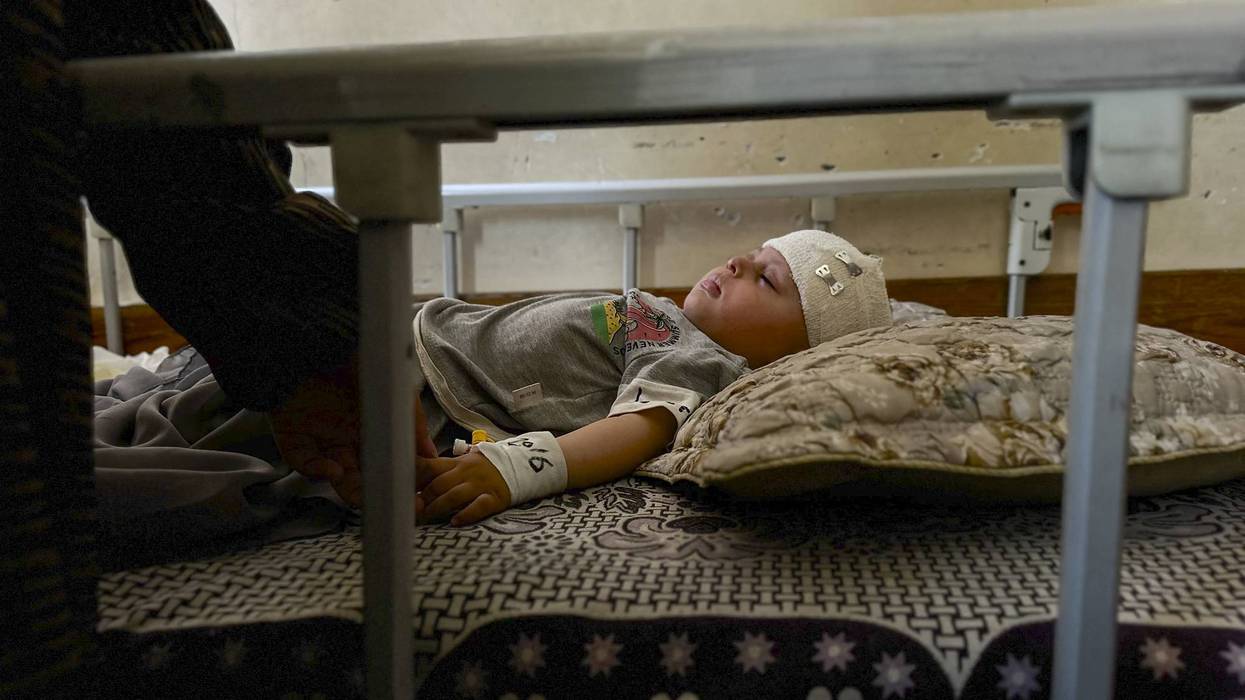
In Gaza, where “the essence of childhood has been destroyed,” even the smallest acts of humanity have become acts punishable by death.
Mohamed al-Wahidi, 57 years old, a husband, father and grandfather, spent his days doing what aid workers do in a place with almost nothing left: clearing rubble, reopening roads, repairing a leaking pipe, filling a community water tank, or building tents for families with nowhere else to go. In his spare time, he carried out a “perilous project” setting up screens and generators across Gaza so people could watch the World Cup. On the eve of Egypt's match against Argentina, Israel killed him along with the 33-year-old taxi driver as well as two young brothers, ages 8 and 10, walking nearby. Israel's military said it was investigating “the incident.”
As it almost always does, Israel commits murder first, then trumps up a pretext after the kill.
Al-Wahidi is one name in Gaza's daily killing rituals under the supposed ceasefire. Israel has murdered more than 1,100 Palestinians in the Strip since October 2025—265 of them children. Not a single Israeli civilian has been killed on the other side. This is the "peace" Trump's board is managing.
Nearly 1 million people remain trapped in tents through a Gaza summer where temperatures reach 35°C. Season after season, they are left exposed to the elements: first a freezing winter, then the merciless heat of summer. Families survive in tent cities or beneath dangling concrete slabs in destroyed buildings. Meanwhile, Israel continues to block shade nets and plastic sheeting at the border, just as it blocked warm blankets during the winter.
This is what the Board of Peace normalizes: an occupying power expanding while a one-sided truce remains in force, a starvation policy rebranded as a stabilization success.
Children bake in tents, while Israel keeps pushing the civilian population into smaller corridors. When the so-called Board of Peace was formed, Israel occupied 53% of Gaza. A month later, 60%. By late May, Prime Minister Benjamin Netanyahu ordered the Israel Defense Forces to seize 70%, squeezing 2.3 million human beings into an ever-shrinking cage away from all the farming areas. Energy Minister Eli Cohen has said the quiet part out loud, telling Israeli radio that Israeli control will keep growing “until we reach 100%.” The next phase envisions corralling Palestinians into fenced “humanitarian shelters” near the ruins of Rafah as part of the ultimate ethnic cleansing program, cynically marketed as a “plan for free movement.”
Concentration camps built on the same mechanisms Nazi Germany used to cage Jews in World War II. A United Nations independent commission of inquiry released this summer found that Israel's killing of children in Gaza is not collateral damage of war but part of a strategy to destroy the biological continuity of Palestinian society. Acts that meet the legal definition for war crimes and the crime against humanity.
Israel has murdered or injured more than 10% of Gaza’s population since October 2023. At least 20,179 children, more than 5,000 under 5 years old, and another 44,143 injured. The number of murdered children is one-third of the total number of dead Palestinians in Gaza. The commission documented children shot by snipers and quadcopter-mounted rifles with a precision that ruled out accidents and cited Israeli soldiers' own testimonies where soldiers celebrate and congratulate each other after murdering civilians. The commission called Gaza the most dangerous place on Earth to be a child.
In June, a father named Bahaa Abu Al-Ajeen watched an Israeli soldier kneel and shoot his 3-year-old son in the head as the boy cried in his arms near Deir al-Balah. In April, 9-year-old Ritaj Rihan was shot through the mouth while standing in a classroom tent waiting for her teacher. These are not outliers under a ceasefire. They are the continuation of an Israeli genocide under the shadow of the ceasefire.
When Israel and the US launched their war against Iran at the end of February, Israel closed every crossing into Gaza outright. Not because there is any connection, but because of Israel’s malevolent nature and because it can get away with it under the fog of war. Weekly truck deliveries collapsed from an average of roughly 4,200 down to just 590. Kerem Shalom and Zikim remain the only crossings still functioning, and even now, roughly half the trucks arriving from Egypt are turned away rather than unloaded.
As of now, aid volumes have never recovered to where they stood before the Iran war, let alone reached the minimum the UN says Gaza needs. Four UN agencies have already warned that the famine the ceasefire was supposed to end could return without sustained access. Sixty-eight percent of Gaza's population is now burning garbage to cook because there isn't enough gas. Not one of Gaza's 37 hospitals is fully operational; only 19 are even partially running. Nearly half of essential medicines are out of stock, and Israel is delaying the surgical equipment needed to treat the more than 43,000 people left with life-changing injuries. More than 40,000 people who will likely become permanently disabled for lack of treatment are another phase of Israel's silent genocide.
The Board of Peace's own six-month progress report claims aid distribution rose 70% and that basic food needs have been “stabilized” for the first time since 2023. In the art of euphemism, 70% of zero is zero, and basic food has “stabilized,” meaning shipments are entering regularly, but not that it is adequate. Conspicuously absent from the report is any mention that aid truck deliveries have never returned to their pre-Iran war levels and remain well below the minimum the UN itself considers necessary.
The board's own biannual report to the Security Council spends its pages blaming the Palestinian resistance, with no mention of an occupying army that has pushed past the ceasefire's demarcated line, nor Israel’s order to aid groups like Doctors Without Borders, the Norwegian Refugee Council, and Oxfam to choose between handing over staff names to a government that targets humanitarian workers, or ceasing operations in Gaza entirely.
Even how to count the murdered journalists is contested. The Committee to Protect Journalists (CPJ) was pressured to redefine who qualifies as a “Palestinian” journalist. The move was intended to give Israel a license to kill Palestinian reporters with impunity. A CPJ board member who objected to considering Israel's request was removed within days of protesting publicly. The board ultimately kept its definition intact, but only after stripping 20 murdered Palestinian journalists from the count.
This is what the Board of Peace normalizes: an occupying power expanding while a one-sided truce remains in force, a starvation policy rebranded as a stabilization success, concentration camps as a housing plan, ethnic cleansing as free movement, and a licensed death toll that keeps climbing with impunity.
A grandfather who wanted nothing more than to give displaced families an hour of joy watching a soccer match instead became another name on the ever-growing list of genocide victims. In Gaza, where “the essence of childhood has been destroyed,” even the smallest acts of humanity have become acts punishable by death.
Peace was never the board’s plan. Genocide management was.

Iran's foreign ministry called the attack, which led to the evacuation of pediatric cancer patients, a "war crime."
A doctor at Shahid Baqaei Hospital in Ahvaz in Iran's southern Khuzestan province emphasized that the children being treated at the facility when the US military attacked the area on Wednesday were suffering serious illnesses, and had to be urgently evacuated while on ventilators and receiving chemotherapy.
"There have been patients with various illnesses, cancer patients and special illnesses, who are fragile," the doctor told Al Jazeera. "People are not here by accident, they have particular illnesses. The blast wave was intense. It was so close we said they had hit the hospital, the upper floors of the hospital."
Hospital director Majid Bouadhar said 211 children had to be urgently taken to nearby facilities after, as Drop Site News reported, "multiple projectiles landed in the immediate surroundings" of the hospital.
The specialized pediatric center "sustained severe shockwaves that shattered windows, triggered intense vibrations, and sparked widespread panic," reported Drop Site.
Iranians are inspecting the damage from days of US strikes on key cities in the country’s south and west. Residents say attacks have damaged ports and at least one hospital. pic.twitter.com/LDOBmbENDd
— Al Jazeera English (@AJEnglish) July 16, 2026
Esmaeil Baqaei, a spokesperson for the Iranian Foreign Ministry, said in a statement that the "barbaric attack" was "reminiscent of Israel’s atrocities against healthcare facilities, [and] caused severe suffering and anxiety upon the hospitalized children."
"This constitutes a cowardly war crime against the most innocent of human beings—children who are bravely fighting for their lives," said Baqaei. "Those who ceaselessly preach human rights, yet deliberately turn a blind eye to the targeting of hospitals and health centers, have forfeited every shred of moral credibility."
Assal Rad of the Arab Center Washington, DC said, "Imagine the coverage in Western media if it was a children’s hospital in Israel."
The strikes came days after President Donald Trump notified Congress that he had ordered "defensive strikes" in Iran, claiming the War Powers Resolution of 1973 gave him the authority to do so. The US strikes were renewed despite a negotiated memorandum of understanding to end hostilities that was agreed to in mid-June.
The president this week also renewed his previous threat to attack civilian infrastructure unless there is a new deal by next week—a war crime under international law—as the Iranian military attacked US military assets in Kuwait and Jordan.
The attack near the hospital was just one sign that the US has already begun striking civilian infrastructure, particularly in port cities and towns across Iran's southern coast.
The war that was started by Israel and the US in late February, which Trump said would last a few weeks, is now in its fifth month as the president aims to take control of the Strait of Hormuz.
The Iranian Embassy in Kenya noted that days before the US forced the evacuation of hundreds of children in Ahvaz, Trump said the military was being "very careful with civilians."
The war has killed more than 3,400 people in Iran, including hundreds of children in attacks on schools and other civilian infrastructure.
Al Jazeera reported Thursday that the US also struck the main building of a civilian airport and a storage facility in Semnan, near Tehran. The outlet also reported on US strikes across the southern port city of Bushehr, where Iran's only civilian nuclear plant is located.
"This port is used completely for tourism and commercial business such as for oil," one man said in a video posted by the outlet. "It has nothing to do with the military."
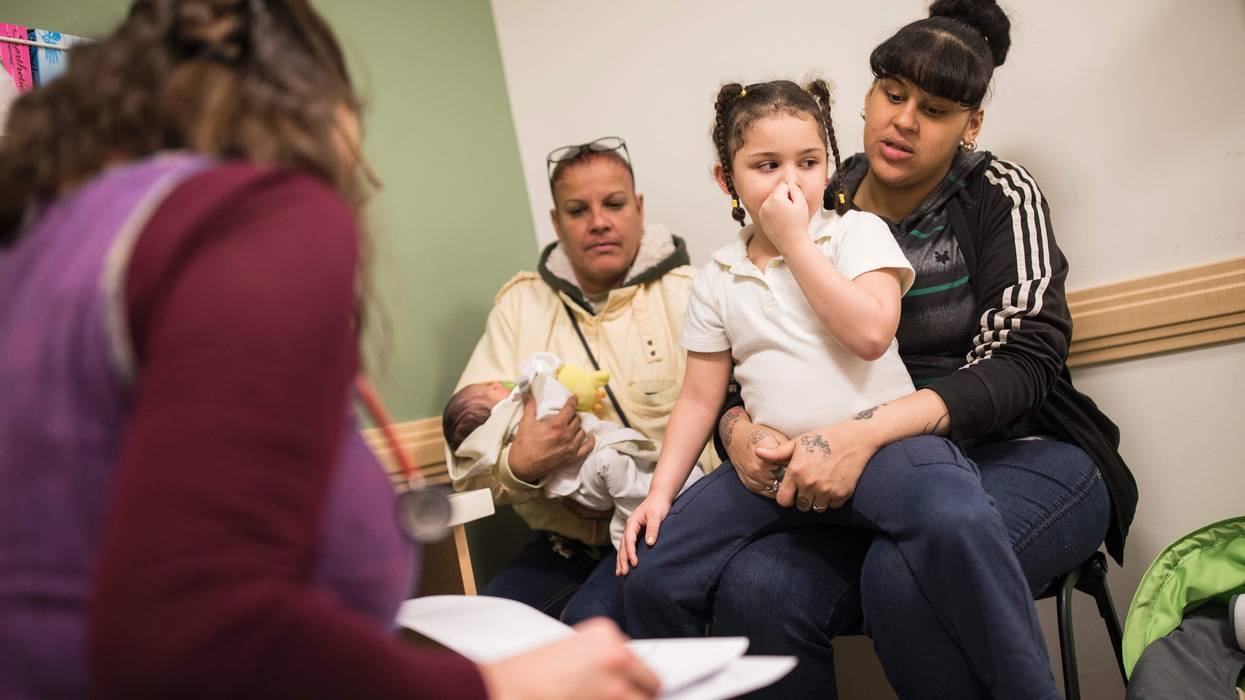
Cuts to Medicaid don’t only hurt the poor, disabled, or seniors—as my family and I learned, they hurt all of us.
I was 13 years old. We’d just returned from Christmas vacation, and I was asleep in my room.
My mother tells me she heard a noise and found me in my bed, twisted up like a clam, frothing at the mouth. She was in shock. The paramedics came and took me to the ER. I don’t remember anything about it.
That night, I had a CT scan and an MRI. They found an abnormality in my brain called a cavernoma, and I needed surgery right away to correct it. Because it was a delicate operation, I needed not only a pediatric surgeon but a sub-specialist—a pediatric neurologist.
Little did my family know, there is a nationwide shortage of pediatric sub-specialists.
Medicaid and CHIP must be protected. Congress must invest in pediatric care so that no other children are told to wait months for necessary care.
The surgeon on-call that night assured us that I could be cured with surgery, but we needed to get it done as soon as possible to avoid another seizure and more damage. But when my mom called the hospital, they said the next available appointment was more than three months away due to a lack of pediatric neurosurgeons.
I was already isolating myself. Scared, missing school, I withdrew from sports and hid from my friends. At 13, you don’t want to be different, and you definitely don’t want anyone to know there’s something wrong with your brain. The depression and anxiety deepened. And I would have to go on like this for months?
My family was financially comfortable, we had private insurance, and we lived in Manhattan. Yet even someone as fortunate as I was had to wait because there’s a severe shortage of pediatric specialists.
What if it happens to a girl from a poor or middle class family without good insurance, or who lives farther away from good care? How long would her wait be? Would her family be able to afford it all?
Thankfully, I was lucky. I was able to get the surgery sooner before three months passed, and I’m cured now. But having gone through this experience, my mom and I wanted to find out the cause of the deficit in pediatric care—and how it can be fixed.
With the help of a bipartisan advocacy organization that works on these issues, First Focus On Children, we found out that most pediatric specialties are reimbursed largely through Medicaid and its state-tailored companion program, the Children’s Health Insurance Program (CHIP).
Half of the nation’s children receive health coverage through Medicaid or CHIP, and even children with private insurance rely on Medicaid when they need specialized care. So most pediatric specialists and sub-specialists have to rely on these government programs for reimbursement.
But unlike Medicare and private insurance, which reimburse adult and senior care specialists at much higher levels, Medicaid reimbursements are significantly smaller for pediatric care—though the doctors go through the same expensive training and have the same qualifications. Because of this, far fewer medical specialists go into pediatric care because it’s financially untenable.
As a result, there is a crisis in pediatric care. To make it worse, Congress’s partisan “Big Beautiful Bill” slashes almost $1 trillion from Medicaid over 10 years. At a time when we desperately need more investment in Medicaid, we are going in the opposite direction.
Cuts to Medicaid don’t only hurt the poor, disabled, or seniors—as my family and I learned, they hurt all of us. Healthcare in this country isn’t sufficiently serving those in need. If things continue this way, what will pediatric care look like for my own children one day?
We must do better. Medicaid and CHIP must be protected. Congress must invest in pediatric care so that no other children are told to wait months for necessary care. It’s not only about the “haves” and the “have-nots.” It’s about all of us.

"Children are not incidental victims; they are directly affected, facing forced recruitment, sexual violence, unlawful detention, torture, and a lack of medical care," Amnesty International USA stressed.
Demands for a ceasefire in Sudan's three-year civil war mounted this week amid reports that more than 300 children have been killed or injured in the northeastern African nation this year alone, mostly by drone strikes.
The United Nations Children's Fund (UNICEF) said Modaysu that "children across Sudan continue to bear the brunt of a war that is becoming increasingly deadly, with at least 330 children reported killed or injured during the first six months of 2026. Darfur and Kordofan states continued to record the highest levels of child casualties."
"The situation in and around al-Obeid, and more broadly across North Kordofan, is particularly alarming," UNICEF continued. "Since May 2026, drone strikes and other attacks have reportedly resulted in more than 35 child casualties in the state, including at least 18 children killed and more than 17 injured. The affected children ranged in age from just 2 months to 17 years. According to reports, drone attacks accounted for 60% of these casualties, highlighting the growing impact of this method of warfare on children and families."
"Repeated drone strikes and shelling have also damaged civilian infrastructure, including homes, schools, health facilities, water systems, and markets; disrupted supply routes; and placed essential services under increasing strain," the agency added. "With an estimated 500,000 civilians at risk in and around al-Obeid and across North Kordofan, any further deterioration could expose even more children to death, injury, displacement, and other grave protection risks."
Amnesty International USA said Monday that both the Sudanese Armed Forces (SAF) and Rapid Support Forces (RSF) rebels "have committed numerous human rights violations, including deliberate attacks on civilians."
"Ethnic targeting has resulted in assaults on non-Arab communities, with women and girls subjected to sexual violence and exploitation," Amnesty added. "Children are not incidental victims; they are directly affected, facing forced recruitment, sexual violence, unlawful detention, torture, and a lack of medical care."
On Monday, the United Nations Human Rights Council approved a measure proposed by five European countries—Germany, Ireland, the Netherlands, Norway, and the United Kingdom—condemning escalating RSF-led violence in and around al-Obeid.
While both the SAF adnd RSF have committed documented human rights crimes, an independent United Nations panel released a report earlier this year detailing allegedly genocidal crimes committed by RSF rebels during last October's offensive in Darfur, where thousands of people were killed and others tortured, raped, and starved during the capture of el-Fasher.
The UN experts found that “genocidal intent is the only reasonable inference that can be drawn” from RSF's actions.
The ceasefire demands from UNICEF and Amnesty follow similar calls from governments, including France and the United Arab Emirates, as well as other UN agencies.
On Friday, UN High Commissioner for Human Rights Volker Türk warned that "another human rights catastrophe is unfolding" in al-Obeid.
"The signs from #ElObeid are clear & unmistakable: another human rights catastrophe is unfolding in #Sudan," @volker_turk told the @UN Human Rights Council.
"This is not a drill. It is a red alert that needs to land on the desks of Heads of State & Government around the world." pic.twitter.com/zH3bVIpX34
— UN Human Rights Council (@UN_HRC) July 3, 2026
“Civilians have been subjected to siege-like conditions for 18 months, battered by relentless drone attacks as the Sudanese Armed Forces and the Rapid Support Forces battle for control over areas surrounding the city," Türk noted.
“Some people are selling their belongings to finance their escape from the city," he continued. "For many, the exorbitant cost of transport and constant attacks on vehicles along exit routes, make leaving impossible."
"We have documented patterns of summary executions, abductions, torture and ill-treatment, sexual violence, and looting along the routes taken by displaced people across the Kordofan region," Türk added. "This is not a drill. It is a red alert that needs to land on the desks of heads of state and government around the world."
Since April 2023, Sudan's conflict has killed at least 59,000 people, displaced around 13 million others, and fueled famine in different parts of the country of approximately 52 million inhabitants. More than 30 million Sudanese are also in need of humanitarian assistance.