

SUBSCRIBE TO OUR FREE NEWSLETTER
Daily news & progressive opinion—funded by the people, not the corporations—delivered straight to your inbox.
5
#000000
#FFFFFF
To donate by check, phone, or other method, see our More Ways to Give page.
Daily news & progressive opinion—funded by the people, not the corporations—delivered straight to your inbox.
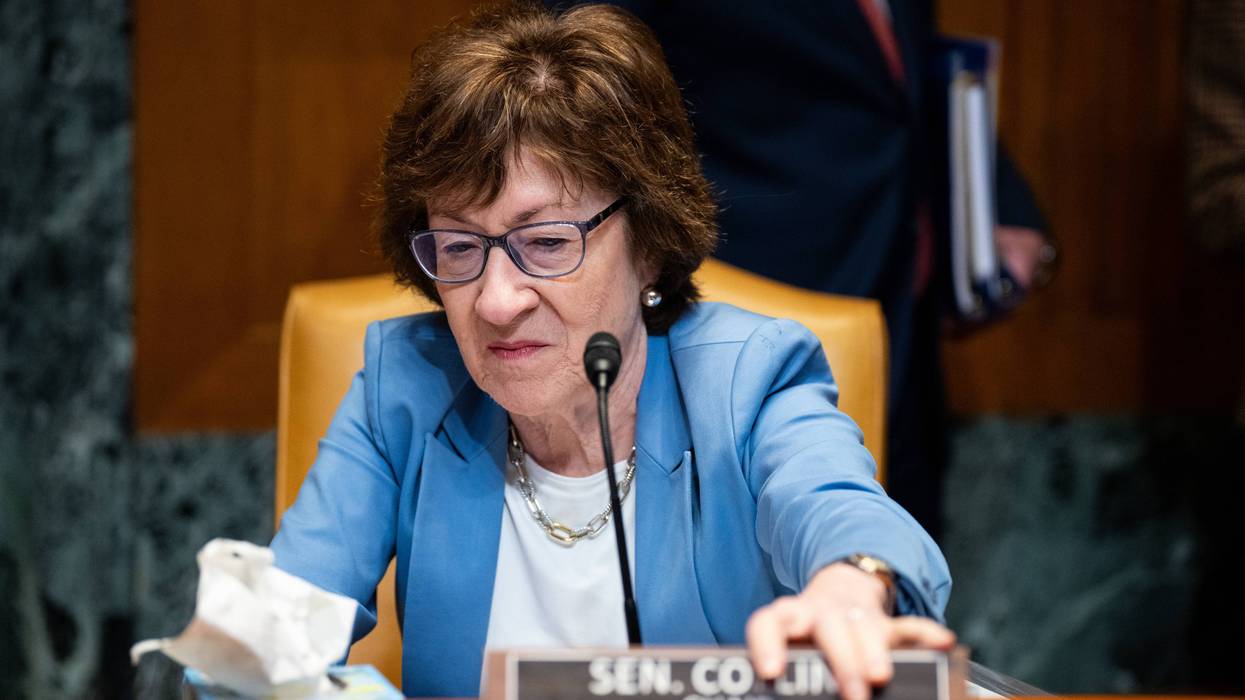
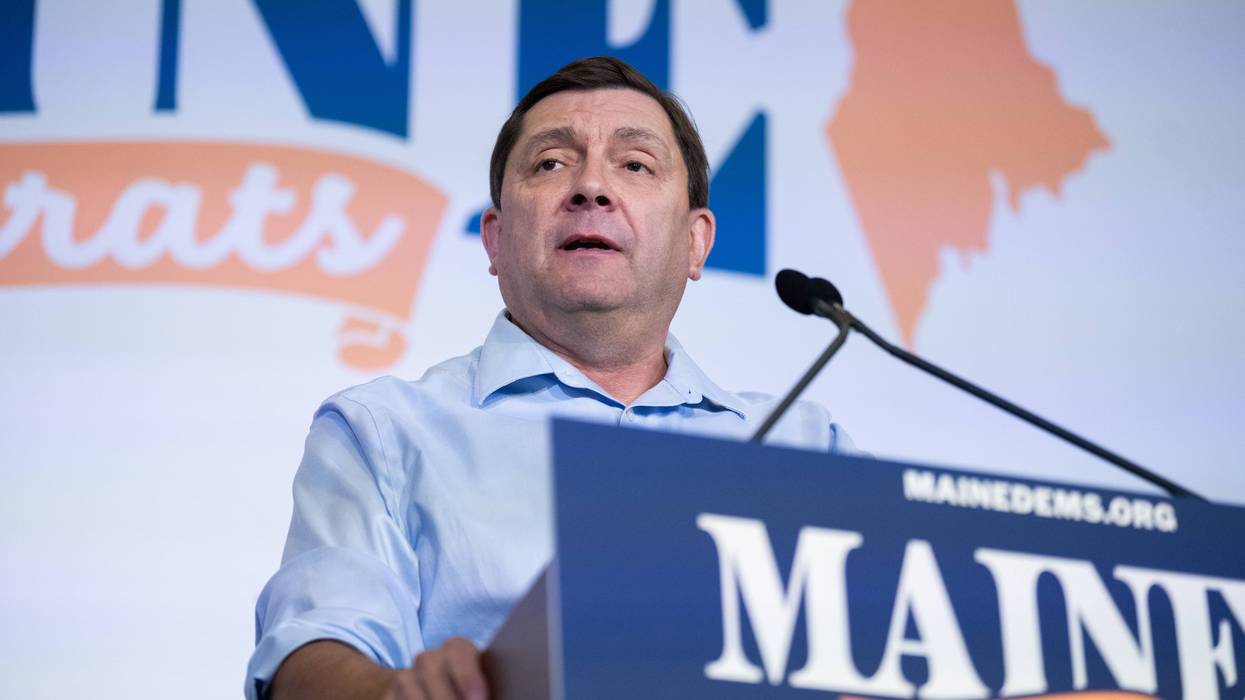
"I'm not going to stand up for ICE, and I don't think Senator Collins should either," said Democratic US Senate candidate Troy Jackson.
Democratic US Senate candidate Troy Jackson on Tuesday castigated his Republican opponent, incumbent Sen. Susan Collins, for voting to funnel tens of millions of dollars to Immigration and Customs Enforcement just over a month before one of the agency's officers killed 25-year-old Johan Sebastián Durán Guerrero in Biddeford, Maine.
"Senator Collins paid for the bullets at [President] Donald Trump's command. Now she wants credit for not pulling the trigger," Jackson said in his closing remarks at the third debate of the critical US Senate contest. The debate was held three months to the day after ICE agent David Brouillette shot and killed Durán Guerrero—a father and Colombian national who had been authorized to work in the US—during a traffic stop.
Jackson pointed to Collins' June vote in favor of a $70 billion funding package that included nearly $40 billion for ICE, whose agents Trump has unleashed on American cities with deadly consequences. According to a CBS News review, federal immigration agents have killed at least nine people and injured over a dozen more in roughly 30 shootings so far during Trump's second White House term.
Days after the shooting in Biddeford, Collins—who chairs the powerful Senate Appropriations Committee—declined to say she regretted supporting the additional ICE funding, which had few meaningful guardrails.
During Tuesday's debate, Collins admitted that "far too many ICE officers were hired and deployed without adequate vetting and training" and touted funding she secured for body cameras and "deescalation training" for immigration agents. (Collins voted against a Democratic amendment to the $70 billion funding package that would have required federal immigration agents to wear body cameras and make footage "accessible to Congress.")
Jackson said marginal reforms aren't enough to rein in "a rogue agency that's doing Trump's bidding."
"I do believe it's important to get rid of it and take that money and prioritize it into existing law enforcement," said Jackson. "So, no, I'm not going to stand up for ICE, and I don't think Senator Collins should either."

"Mainers can't afford to pay their bills with a press release or a strongly worded letter," said Jackson.
Democratic US Senate candidate Troy Jackson took his Republican opponent, incumbent Sen. Susan Collins, to task during a Tuesday debate for her role in Maine's worsening healthcare crisis, accusing her of paving the way for the disaster while attempting to take credit for an inadequate relief fund.
"Senator Collins is like an arsonist who helped set the fire, and then she wants credit for bringing a cup of water to put it out," Jackson said after Collins touted her role in securing a $50 billion fund for rural hospitals. The fund was part of a Republican budget package that includes the largest Medicaid cuts in the program's history—roughly $900 billion over the next decade.
Collins, who is running for a sixth term, voted against final passage of the Republican budget legislation, but she played a key role in advancing the bill through the Senate.
"She could have stopped it," Jackson, the former president of Maine's Senate, said of the budget law, which is fueling hospital staffing cutbacks and closures across the US, including in Maine. "What she brought back is a pittance to what we're losing in this state. I mean, we're watching our healthcare system crash right in front of us."
Watch:
Tuesday's debate came weeks ahead of the November general election, which polling indicates is a tight race. A survey conducted at the end of September by the Maine People’s Resource Center found Jackson leading Collins 49.3% to 46.5%—an advantage that was within the poll's margin of error.
During the debate, Jackson hammered Collins over her pro-Trump voting record and repeatedly accused her of playing up minuscule or largely symbolic opposition to the president's unpopular actions, including his tariffs on Canada and his illegal war on Iran.
After Collins noted that she "got concrete, pulp, and road salt removed from the tariff list," Jackson responded: "We can't eat road salt."
"Mainers can't afford to pay their bills with a press release or a strongly worded letter," said Jackson.
Jackson also highlighted recent ProPublica reporting that placed Collins at the center of a “sprawling pay-to-play operation” involving a Hawaii-based defense contractor accused of funneling donations to lawmakers in exchange for federal contracts.
"As late as 2024, the FBI was circling around Senator Collins," Jackson noted, citing the federal investigation that ProPublica revealed. "Then, whenever President Trump came back, his administration dismantled the investigation. Now, she votes with Donald Trump 96% of the time."
"I don't owe Trump. I don't owe the billionaires nothing. In fact, I've spent my life fighting back against billionaires," Jackson added. "But I do owe the people of Maine everything. I refuse corporate PAC money, I want to ban congressional stock trading. I fight for working Mainers every day. I'm not taking money from corporations like Susan Collins does."

"Donald Trump knows he can’t get these cuts through Congress, so he is illegally making them through the back door," said the House Budget Committee's top Democrat.
Elected Democrats—and even the Senate's top Republican appropriator—blasted President Donald Trump late Friday for rescinding nearly $1 billion in congressionally approved spending that the White House deemed "wasteful and harmful" through a legally contested process.
In a statement announcing what was targeted, the administration celebrated funding cuts for what it called "pro-illegal immigration programs," a "nefarious" Department of Justice subagency, a program that "propagates America Last climate alarmism," an office that promotes diversity, equity, and inclusion (DEI)—or "discrimination, and radical woke ideologies"—and more.
House Budget Committee Ranking Member Brendan Boyle (D-Pa.) responded in a statement that "Donald Trump knows he can't get these cuts through Congress, so he is illegally making them through the back door."
"Trump's actions are a blatant attack on Congress' constitutional power of the purse," he added. "It is exactly why we need to pass my Congressional Power of the Purse Act and stop any president from illegally overriding Congress."
The Associated Press reported that "under federal law, Congress has 45 days to review the president's proposed spending cuts before they take effect. But Trump made that all but impossible by announcing them with just five days left in the federal fiscal year and the House out of session through the November election."
Senate Budget Committee Ranking Member Jeff Merkley (D-Ore.) stressed on social media that "a pocket rescission is an illegal line-item veto. It is the president saying that he and he alone will convert a bipartisan spending bill (that has been signed into law) into a partisan spending bill. He is canceling the lines of spending he doesn't like."
"This violates the core separation of powers embedded in our Constitution in which it is the Congress, not the president, who decides what programs are designed and at what level they are funded," he continued. "Republican colleagues said they would never let this happen. Well, here it is. They should ask themselves: 'How would I like to have a Democratic president canceling out the Republican flavored programs he or she doesn't like in a bipartisan spending bill that has been signed into law?' If they have any integrity or any spine, they will join us in ending this practice."
Noting that the cuts will impact everything from critical health research, to combating the international illicit narcotics trade, Senate Appropriations Committee Vice Chair Patty Murray (D-Wash.) declared: "This is theft from the American people, plain and simple. These are funds Congress has delivered on a bipartisan basis and should be helping people—not cut off by a president more focused on building a ballroom than investing in families."
She specifically called out Office of Management and Budget (OMB) Director Russell Vought—a co-author of Project 2025, the Heritage Foundation-led blueprint for a right-wing overhaul of the federal government, who was recently condemned as an "unelected shadow president" by the House Democrat who introduced impeachment articles against him. According to Murray, "Every Republican who voted for these bills should be furious because Vought is saying their votes don't count."
Murray also pointed out that during negotiations for the recently enacted stopgap spending legislation, "Democrats fought to include language to prevent the Trump administration from once again usurping Congress' power—but for the second time in a year, Republicans refused to take common sense action and prevent this from happening."
"While Trump spends tax dollars on ads promoting himself, Congress needs to reassert its powers to help people, and it's past time Republicans join us in that fight," she argued. "Russ Vought's message to Congress is that your votes don't count, and your laws are optional. It is now time for my Republican colleagues who said they would never let this happen to stand up and join us to stop this, and remind this administration this is not how this works."
Senate Minority Leader Chuck Schumer (D-NY) emphasized the impact of the administration's move, saying that "Trump is gleefully eviscerating programs and protections that help hardworking American families live a safe and healthy life, all while he continues to punish them with skyrocketing gas and grocery prices."
"With this rescissions package, the Trump administration is illegally stripping nearly $1 billion in critical funding that supports kids, K-12 students, small businesses, and health and clean air research," he highlighted. "Americans are crying out for relief."
"Instead of ending his Iran War and tariff chaos that are driving up costs, Trump is rolling out the red carpet for our adversaries while stealing funds meant to help American families," he added. "Senate Democrats will challenge Trump's illegal cuts at every turn and continue the fight to help American families, lower healthcare costs and secure our communities."
The administration's rescission announcement came less than six weeks away from the midterm elections. Democrats aim to win majorities, while Trump's Republican Party is fighting to keep control of both chambers of Congress. One of the nationally watched races is that of Senate Appropriations Committee Chair Susan Collins (R-Maine).
As some congressional Republicans cheered the Friday action, Collins put out a statement denouncing it. She said that "without warning or consultation, Congress just received an $810 million package of pocket rescissions from the administration," which she called OBM's most recent attempt "to undermine Congress' constitutional power of the purse."
"This move shows that OMB intentionally withheld these funds for months to execute this unlawful cancellation of appropriations that were approved on a bipartisan basis and signed into law," Collins continued. "Not only is the delay itself an impoundment that was not reported to Congress, but also it is a usurpation of Congress' appropriations powers. OMB is an agency of the executive branch. It does not get to decide which programs are worth funding."
"The independent Government Accountability Office has concluded that pocket rescissions are unlawful and not permitted by the Impoundment Control Act," she added. "Any effort to rescind appropriated funds without congressional approval is a clear violation of the law. I will work with my colleagues to address these illegal actions."
While some Democrats had called for their Republican colleagues to make such promises, Sen. Chris Murphy (D-Conn.) fired back at Collins on social media, writing that "Senate Republicans had chance after chance to stop Trump's illegal seizure of taxpayer money. Time after time, they pledged allegiance to Trump instead of to citizens. And he'll keep rolling them if the Senate doesn't change hands."
So did Troy Jackson, the former Democratic Maine Senate president running to unseat Collins. He said that "Susan Collins voted for Trump's pick to lead the OMB. Now she’s surprised he's doing exactly what he promised to do? She's the appropriations chair who voted with Trump 96% of the time. Expressing concern isn't enough. Mainers see through the bullshit."

"We deserve answers about every contract and every conversation that Collins and her team facilitated on the backs of taxpayers. The jig is up."
Maine Democratic US Senate candidate Troy Jackson pounced on Tuesday after ProPublica published a damning story putting incumbent Republican Sen. Susan Collins at the center of what the publication described as a "sprawling pay-to-play operation."
In a statement released shortly after the ProPublica story dropped, Jackson accused Collins of engaging in "corruption of the highest order."
"Susan Collins delivered millions in taxpayer dollars for a corrupt donor bankrolling her campaign," said Jackson, "and then [President] Donald Trump helped her cover it up."
The ProPublica report unearthed internal records revealing an FBI investigation into defense contractor Navatek, now known as Martin Defense Group, for making campaign contributions to politicians in exchange for federal contracts.
According to ProPublica, former Navatek CEO Martin Kao told a group of FBI agents and federal prosecutors in 2022 about a 2019 meeting he'd had with the head of a pro-Collins super political action committee where he committed to cut a big check to the Maine Republican's campaign if she steered federal cash to his company.
After the meeting, ProPublica wrote, Kao "sent an initial $150,000 to the Collins super PAC using the shell company" and then told Navatek executives in an internal email two months later that "Collins committed to getting the company $32 million in naval contracts."
The alleged corruption outlined in the report went far beyond Collins, as Kao also provided FBI agents with a 50-page document that named "dozens of lobbyists, congressional staffers, and members of Congress who he said helped him trade cash for contracts."
However, the probe into Kao's alleged efforts to bribe politicians was shut down shortly after Trump returned to the White House in 2025, which Jackson said may explain why Collins "voted with him 96% of the time and has rubber-stamped his agenda to hurt Maine."
"Susan Collins doesn’t care," Jackson added, "that we’re losing our healthcare that ICE is killing people on the streets, and that we’ve been dragged into a pointless war—as long as her donors get their contracts and her coffers get filled. We deserve answers about every contract and every conversation that Collins and her team facilitated on the backs of taxpayers. The jig is up."
Annie Clark, Collins' deputy chief of staff, disputed the allegations made in the ProPublica story, and accused the publication of wrongly lending credibility to Kao, whom she said "began making outlandish charges about the Collins office, deflecting blame from himself" for his own criminal behavior.
"The seven-year-old allegations made against Sen. Collins and her staff in this piece are categorically false," said Clark. "There have never been any allegations of wrongdoing by the Collins for Senator campaign, and the campaign was never the target of the FBI investigation."
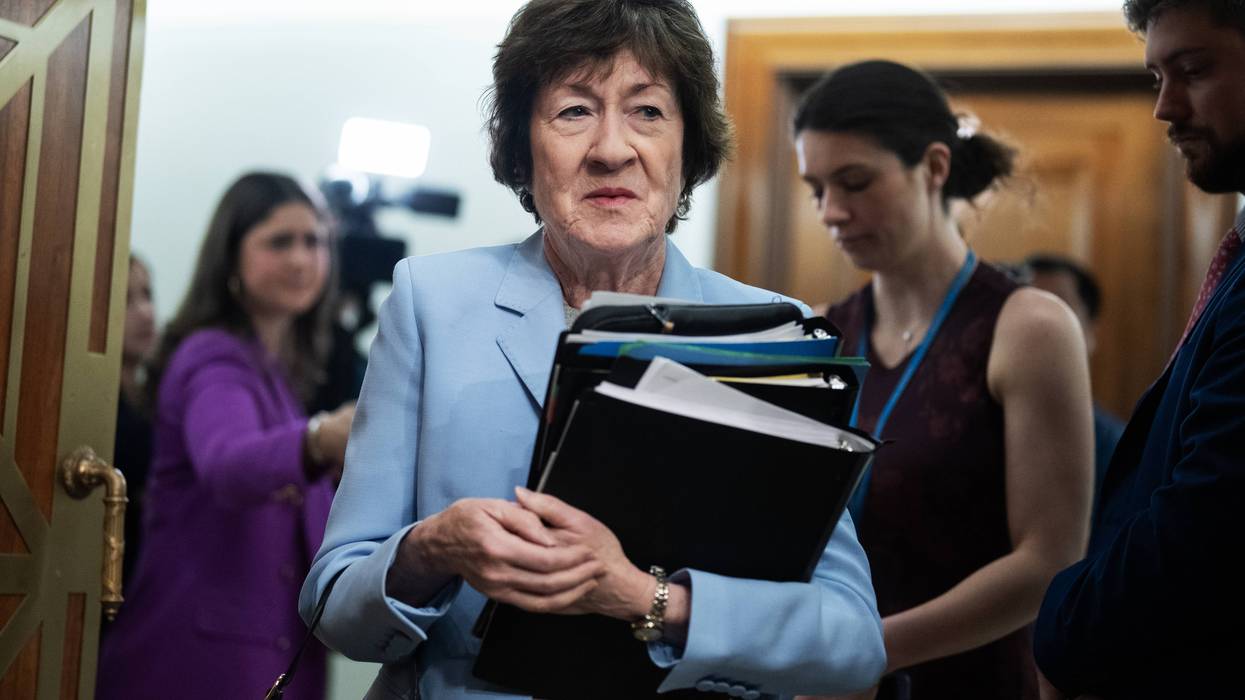
ProPublica reported that the US senator from Maine, now running for a sixth term, was the "most important patron" of a defense company accused of bribing members of Congress for federal contracts.
Explosive reporting published Tuesday by the investigative outlet ProPublica details how US Sen. Susan Collins was at the center of a "sprawling pay-to-play operation" under which the chief executive of a Hawaii-based defense contractor allegedly funneled campaign cash to lawmakers in exchange for lucrative federal contracts.
ProPublica's story—based on internal emails, thousands of pages of legal records, interviews, and other evidence—reveals for the first time the existence of an FBI investigation into possible bribery of members of Congress, including Collins, by the defense contractor Navatek, a probe that was shuttered after President Donald Trump took office for his second term.
In late 2019, according to ProPublica, the head of a pro-Collins super PAC, Scott Reed, met with then-Navatek CEO Martin Kao and other executives at a Washington, DC bakery and asked them for a $500,000 donation to the longtime Maine senator's 2020 reelection bid.
"If they cut a big check, the CEO told Reed, Navatek wanted Collins to guarantee tens of millions of dollars in additional federal funding," ProPublica reported. "After the Corner Bakery meeting, [Kao] sent an initial $150,000 to the Collins super PAC using the shell company. Two months later, he told Navatek executives that Collins committed to getting the company $32 million in naval contracts, according to an internal company email."
In 2022, Kao pleaded guilty to making illegal campaign contributions. The $150,000 check to the pro-Collins group, the 1820 PAC, was funneled through an entity titled "the Society of Young Women Scientist [sic] and Engineers." The money flowed from Navatek's account, violating the ban on federal government contractors making campaign donations.
This is an incredible story of corruption.
I kinda love that the fake shell company the weapons maker used to bribe Susan Collins was called “Society of Young Women Scientist and Engineers LLC.” https://t.co/I06XpPHIO9
— Ryan Grim (@ryangrim) September 22, 2026
ProPubulica revealed that Kao, facing years in federal prison, handed FBI agents "a 50-page document naming dozens of lobbyists, congressional staffers, and members of Congress who he said helped him trade cash for contracts." Kao also told federal agents that Navatek’s federally funded research "was of no real value," according to ProPublica.
"Of all the politicians Navatek courted under Kao’s leadership, Collins was its most important patron," the investigative outlet reported. "The senator’s office steered government contracts worth millions toward the company while her campaign was pumping Kao and his network for donations, according to emails seen by ProPublica. Sometimes they cut checks within 24 hours of the annual defense spending bill, which funds military contracts, clearing a key Senate hurdle."
Collins, who is currently running for a sixth Senate term, denied allegations of bribery through a spokesperson, who dismissed Kao's claims as "outlandish" and said the Collins campaign "disgorged the illegal contributions that Martin Kao had made without our knowledge."
But ProPublica's reporting details, with documentary evidence, Collins' yearslong relationship with Kao, who first met the Maine senator face-to-face in 2018.
"In that first meeting with Collins and her staff, Kao pitched an $8 million boat hull research project for Navatek and [the University of Maine]. Collins seemed supportive," the outlet noted. Kao funneled donations to Collins' campaign, and the senator later included funding for Navatek's project in the annual US military budget.
"Emails showed her staff made it clear to the Navy that it should send the money to Navatek," ProPublica reported.
The outlet also revealed the details of a 2019 meeting between Kao, Collins, and Amy Abbott, who was then serving as the campaign finance director for the senator's 2020 reelection campaign. The meeting took place before an event at Navatek's Maine headquarters, where Collins posed for pictures with Kao.
"Before the event, Kao said, Collins, Abbott, and another staffer met with him in private," ProPublica reported. "One of the staffers told Kao the campaign expected more donations. It was in this meeting that Collins said, 'You’ve seen me deliver,' he told the FBI."
 Martin Kao, second from left, was pictured with Sen. Susan Collins during an event in August 2019. (Photo: Sen. Susan Collins/Facebook)
Avi Asher-Schapiro, one of four ProPublica reporters who bylined the bombshell story, lamented that "we may never know the full story" of the large-scale bribery scheme alleged by Kao because the Trump administration "took a wrecking ball to the FBI teams and DOJ lawyers specializing in these cases—everyone who worked it is gone."
"And as far as we know," Asher-Schapiro added, "the FBI abandoned a witness who might have been able to expose a generational corruption scandal."
The report was published just weeks before the November midterms, when Collins will attempt to retain her seat against former Maine Senate candidate Troy Jackson, who has said that billionaires and corporate-funded super PACs "have her in their pockets."
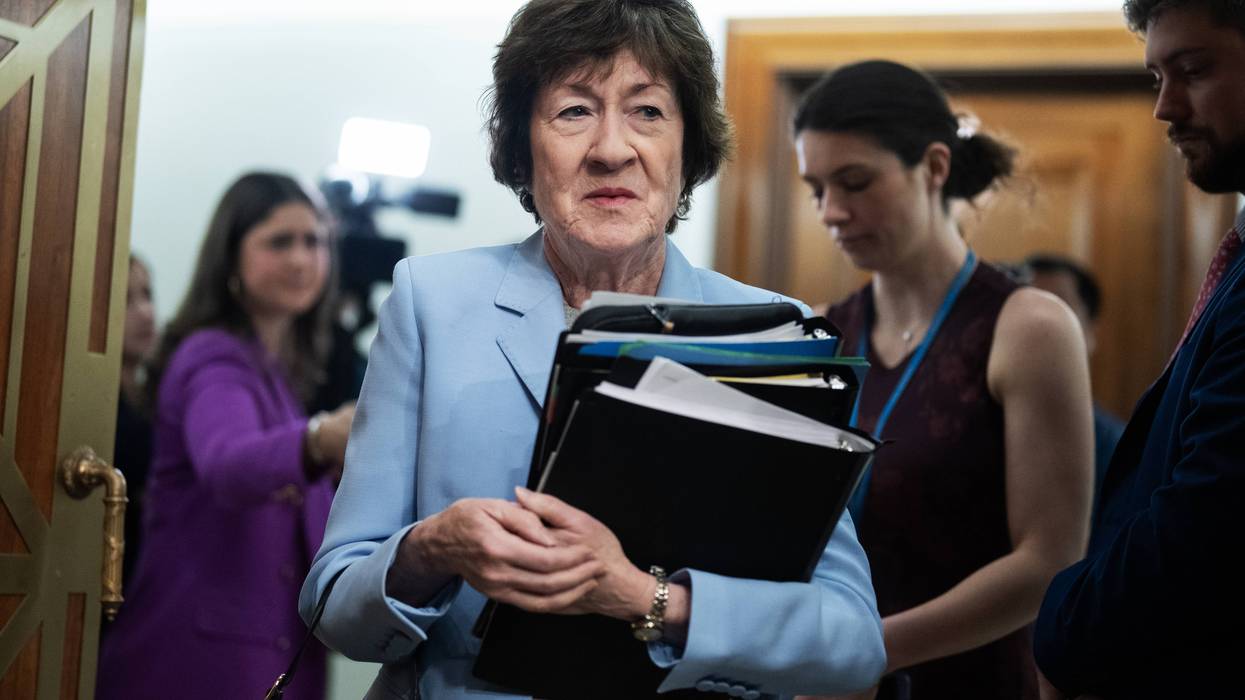
"Does she think that people in Maine are stupid?" said Jackson of the Republican senator, who has long claimed to be a supporter of reproductive rights.
"Enough is enough," Democratic US Senate candidate Troy Jackson declared on Thursday after Republican Sen. Susan Collins voted once again for an anti-abortion judge to join a federal court for a lifetime appointment—a frequent action taken by the five-term Maine lawmaker despite her persistent claims that she supports reproductive rights.
Collins' vote on Thursday was for Kasdin Miller Mitchell, a litigator and former solicitor general of Alabama who also served as a clerk for far-right US Supreme Court Justice Clarence Thomas. She was confirmed in a 49-45 vote to serve on the US District Court for the Northern District of Texas.
But Mitchell wasn't the only anti-choice judge Collins voted to confirm this week, Jackson noted with scorn.
On Tuesday, the former logger and Maine state Senate president recorded a video responding to her tie-breaking vote in support of Judge Matthew Byrne to join the US District Court for the Southern District of Ohio.
Byrne sits on the board of an anti-abortion crisis pregnancy center and said in 2020 that he opposed allowing pregnant patients to access abortion in nearly all cases, without any exceptions for rape or incest. He said he supported exceptions—which, in reality, often do little to protect access to care—for cases in which a pregnant patient's life is at risk, but said that the term “life of the mother” should be “strictly defined so as to avoid creating loopholes.”
Jackson asked in his video on Tuesday, "Does she think that people in Maine are stupid?"
"It's time that Mainers had somebody that's going to fight for their reproductive rights every damn time," he added.
On Thursday, Jackson expressed disbelief that for the second time in four days, Collins had voted in favor of an anti-choice judge.
Mitchell helped defend the state of Alabama as it tried to terminate Medicaid funding for Planned Parenthood, arguing in a brief that the state had "inherent sovereign authority to determine which providers qualified" for Medicaid, "based on their own unchecked assessment of an organization’s ethics," according to Reproductive Freedom for All.
Mitchell also signed letters to the Senate Judiciary Committee in support of other anti-abortion judges and served as the counsel of record for the Independent Women’s Law Center, an anti-choice group that has opposed the Affordable Care Act's contraception coverage, equal pay and family leave legislation, and the Violence Against Women Act.
Maine Democratic Party spokesperson Misha Linnehan said Collins' votes this week "show she’s not going to stand up for Maine women any time soon.”
“Susan Collins confirmed justices who overturned Roe v. Wade, and said herself she still doesn’t regret it," said Linnehan. "Now, she’s falling in line with Trump once again to put fanatical anti-abortion judicial nominees on the bench for life."
The Maine Democratic Party highlighted more than a dozen federal judges Collins has backed in recent months, including Judge Whitney Hermandorfer of the US Court of Appeals for the 6th Circuit, who defended Tennessee’s total abortion ban; Judge Joshua Dunlap of the US Court of Appeals for the 1st Circuit, which includes Maine, who advocated for a "fetal personhood" bill in the state; and Judge Maria Lanahan to the US District Court for the Eastern District of Missouri, who defended Missouri’s near-total abortion ban and pushed for restrictions on medication abortion.
"For the second time this week, Susan Collins has voted to confirm ANOTHER anti-abortion, MAGA judge," said Jackson on Thursday. "It’s time we send her packing."

"To come here and say, 'Have some perspective'? You ought to have some damn perspective," Jackson said in a video reply to the vice president.
Troy Jackson, the Democratic US Senate nominee for a critical seat in Maine, denounced Vice President JD Vance on Monday for downplaying the killing of Johan Sebastián Durán Guerrero, a 25-year-old Colombian national who was killed by a federal immigration agent last month in Biddeford.
During a visit to Maine on Monday, Vance told residents who are "so worried about that situation" to "have a little bit of perspective." Vance added that "we can absolutely investigate every shooting and we will, but we can also secure our border and ensure that that poison stops coming into our country." (The legal representative for Durán Guerrero's family said no federal agencies have reached out as part of any investigation into the killing.)
Jackson, the former president of Maine's Senate who is running to unseat Republican US Sen. Susan Collins, responded to the vice president in a video message posted to social media.
"JD Vance is a dirtbag," said Jackson. "There was a young man who had a Social Security number, he had a job, I mean, he had a life. He had a family. To come here and say, 'Have some perspective'? You ought to have some damn perspective. I mean, you don't even know what the hell's goin' on. You got a rogue agency that's going around, pulling people out of homes."
Jackson then turned his attention to Collins, who recently voted for legislation that included around $70 billion in funding for US immigration agencies, including nearly $40 billion for Immigration and Customs Enforcement (ICE). After an ICE agent killed Durán Guerrero last month, Collins refused to say she regretted her vote to boost the agency's funding.
"I want to know: What are you doing about it, Susan?" Jackson asked. "She gave them an additional $70 billion to pull this shit off. We lost a person that JD Vance seems to not give a shit about. And that should piss us all off. So I want to know: Do you agree with JD Vance dismissing the killing of this young man? Because I tell you what, 'concerns' and all that does nothing for all of us, does nothing for that family, and I'm sick of your 'concerns.'"
My response to @JDVance saying we should "have a little bit of perspective" on ICE murdering a young father pic.twitter.com/fNRxN9oBiF
— Troy Jackson (@TroyJackson207) August 24, 2026
During his remarks in Brewer, Maine on Monday, Vance said Collins is "doing an amazing job" and characterized her as "the most independent member of the United States Senate," even though she votes with President Donald Trump around 96% of the time.
Misha Linnehan, a spokesperson for the Maine Democratic Party, said in response to the vice president's remarks that "Susan Collins voted to give Donald Trump and JD Vance $70 billion to send armed ICE agents into Maine with no guardrails."
"Now that a man has been killed," said Linnehan, "JD Vance thinks Mainers need to ‘have a little bit of perspective’ about children losing their father and a wife losing her husband—does Susan Collins agree?"

"They're scared of a movement that demands Medicare for All, prescription drug coverage, and a government that everyday people can be proud of and know works for them."
Troy Jackson, the Maine Democrat running to unseat Republican US Sen. Susan Collins in November, took aim at Elon Musk and other billionaires Wednesday evening for supporting his GOP opponent directly or through a key super political action committee.
"Look, the billionaires in the country know whose side they're on, and it's not ours," Jackson, a former logger and state Senate president, said in a brief video shared on social media, including Musk's platform X.
Jackson—chosen as the Democratic nominee via a convention process last month, after primary winner Graham Platner left the race following a rape allegation that he denied—pointed to a $42 million investment in the contest from the Senate Leadership Fund (SLF), whose backers include Musk and various other right-wing megadonors.
"They're here to prop up Susan Collins because they want her to continue to be a rubber stamp and get their income tax cuts," Jackson said. "They're already out with an ad attacking me and my family, to try and make sure that they totally don't talk about the issues."
SLF's 30-second ad, which launched Wednesday, notes his son's lobbying work and smears Jackson as "another dirty politician."
According to Jackson: "They're scared of a movement that goes against the things that they want. They're scared of a movement that demands Medicare for All, prescription drug coverage, and a government that everyday people can be proud of and know works for them."
Wednesday isn't the first time Jackson—who previously ran for governor—has called out billionaires, specifically Musk. After The New York Times reported last month that through his America PAC, Musk intends to spend up to $120 million on a program to help elect Republicans in at least eight states, including Maine, Jackson released a video stressing that the billionaire "doesn't care about us. Really doesn't care about Susan. He cares about him."
"So I would say to you Elon: Maine and really the whole United States doesn't want your dirty money in our politics," Jackson continued. "You don't get to buy the government that you want. This is about all of us coming together and fighting for the government that we deserve, and you're not in it."
Musk became the world's first trillionaire in June, when his company SpaceX made its public market debut, but his current net worth is estimated at over $860 billion, according to the regularly updated Bloomberg and Forbes lists. His trillionaire status came after the early months of the second Trump administration, when Musk was the de facto leader of the Department of Government Efficiency.
Reuters reported Thursday that new data from the American Federation of Labor and Congress of Industrial Organizations shows how Musk's controversial compensation plans for SpaceX and Tesla are benefiting other chief executives. Fred Redmond, the AFL-CIO's secretary-treasurer, said that his pay "changes the dynamic when other CEO compensation plans come up, boards use it as a reference."
The average ratio of CEO to worker pay at S&P 500 companies rose from 285:1 in 2024 to 312:1 last year, excluding Musk's Tesla compensation. When that is included, the ratio becomes 5,387:1. Redmond told Reuters that "as we talk to our members, they're pissed off over what's happening to them, and they feel as though they should be more vocal in terms of calling attention to inequality."
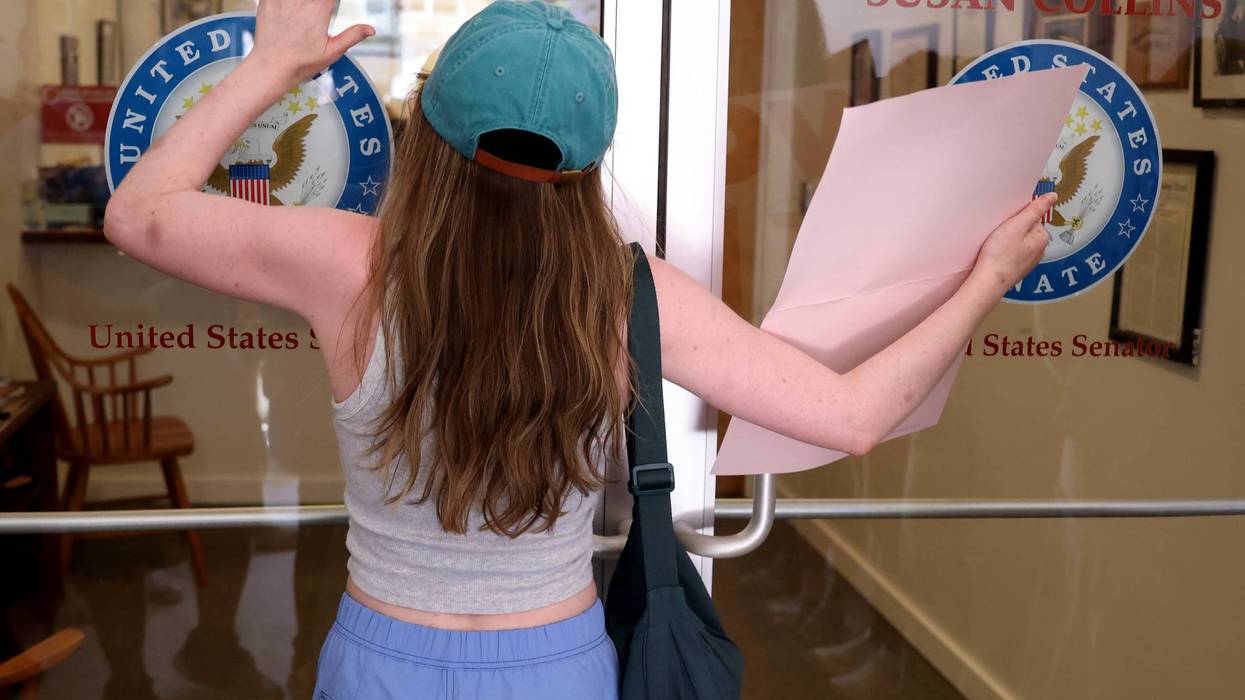
"Congress must end the blank check to ICE," said the president of one immigrant rights group.
As Mainers continue to target Sen. Susan Collins' office with protests following a recent killing by an immigration agent, new reporting shows how some of the $70 billion she and her GOP colleagues gave to President Donald Trump's immigration agencies is being spent.
According to the Associated Press on Tuesday:
Immigration and Customs Enforcement (ICE) officers may soon be outfitted with gloves that can deliver painful electric shocks intended to gain compliance from combative individuals.
ICE plans to spend up to $20 million to purchase thousands of “conductive distraction and de-escalation devices” for officers and agents by March, according to a notice published Monday by the Department of Homeland Security.
The devices are known as the GLOVE, which stands for Generated Low Output Voltage Emitter, and are manufactured by Compliant Technologies LLC of Lexington, Kentucky. They have been used in recent years by some jails and police departments.
As the company's website explains, "the discomfort associated with the stimulation is usually effective in bringing individuals into compliance in less than three seconds and leaves no burns, marks, or scars." It describes them as a "humane, low-optics, de-escalation solution for many situations facing our men and women in uniform."
John Peters, president of the Institute for the Prevention of In-Custody Deaths, told the AP that the sensation is "immediate and sharp," comparing it to a "bee sting."
While he said it could be an effective tool to prevent "resistance," he warned that it should not be used as a form of punishment against those merely exhibiting “verbal defiance or belligerence” or on high-risk populations such as children, pregnant women, or elderly or disabled people.
But given the recent record of rampant civil rights abuses, extrajudicial killings, excessive use of force, and efforts to lie about misconduct, civil rights advocates are warning that these gloves are being placed into, or onto, the exact wrong hands.
"ICE spent the last year showing this country that they are willing to disregard the law and are too quick to use force, with devastating and at times fatal consequences for citizens and noncitizens alike," Jenn Rolnick Borchetta, deputy director on policing at the American Civil Liberties Union, told Common Dreams. "Now they might be equipped with a device that allows them to deliver an electric shock with their hands by pushing a small button, in a move that might be imperceptible to those watching."
Kica Matos, president of the National Immigration Law Center, concurred, telling Common Dreams that ICE is a "rogue agency with an $80 billion slush fund that allows them to concoct and fund new ways to visit cruelty upon our communities."
"Arming poorly trained agents with electric shock gloves to inflict pain on our neighbors is disgusting and barbaric," Matos added. "Congress must end the blank check to ICE, and ICE must get out of our communities.”
The shock gloves are just one way that immigration agencies are spending the $70 billion in additional funding they were given back in June, when Republicans in the Senate voted 52-47 to authorize the funding despite rampant lawlessness. Only one Republican, Sen. Lisa Murkowski (Alaska), voted against supercharging the funding.
In a July 16 letter to Democratic Gov. Janet Mills, Collins defended her vote for the increased ICE funding by pointing to "reforms" passed in April as part of the Department of Homeland Security's broader appropriations bill, which included $20 million for body cameras and $2 million for "de-escalation" training.
Collins' office did not immediately respond when asked by Common Dreams whether she believes electric shock gloves were a good form of "de-escalation."
A five-term senator in the midst of a fierce reelection bid against Democrat Troy Jackson has taken fierce criticism for her vote to support ICE on the campaign trail, which has only grown in intensity since July's fatal shooting of 25-year-old Johan Sebastián Durán Guerrero in Biddeford.
It was one of two fatal shootings of men without criminal records over the course of a week. ICE later acknowledged that the victims were not the target of their operations.
When asked after the shooting, Collins declined to say that she regretted her vote for increased ICE funding.
Protesters who gathered outside Collins' Biddeford office on Tuesday said she should.
"$70 billion to fund the terror that left my family and community in fear,” Fernanda McLaughlin, a Maine resident and community organizer, said over the loudspeaker, according to NBC News Center Maine. "You know what that money can be really used for? To feed Mainers. To fund our schools. To fund our health system."
"There were no guardrails included, and she still voted yes on it," McLaughlin said. "Simple guardrails that exist in nearly every other law enforcement agency across our nation."
"Susan has voted with Trump 96% of the time. The other 4%? She waits until her vote won’t change the outcome."
Democratic US Senate candidate Troy Jackson on Friday accused rival Sen. Susan Collins of trying to pull the wool over Maine voters' eyes with her decision to vote against confirming Todd Blanche as the next US attorney general.
In a social media post, Jackson pointed to a statement from right-wing radio host John Fredericks praising Collins' (R-Maine) "very savvy team" for having her vote against Blanche while already knowing the former personal attorney for President Donald Trump would have enough support in the US Senate to be confirmed.
"They know that even without her, Blanche has the votes to get confirmed," Fredericks said. "So this was a vote to help her get elected, to help her with Maine voters, but it does nothing to hurt Todd Blanche because he’s already got the votes."
Jackson accused his Republican opponent of participating in a shell game where she arranged to be shielded from what would have been a very damaging vote.
"Weak sauce," wrote Jackson. "Susan has voted with Trump 96% of the time. The other 4%? She waits until her vote won’t change the outcome."
Jackson, the former president of the Maine state Senate, predicted that voters would see right through Collins' ploy.
"Mainers aren’t stupid," wrote Jackson. "We deserve a fighter who will actually stand up to Trump."
Collins earlier this week announced her intention to vote against Blanche, who as assistant attorney general orchestrated Trump's widely criticized $1.8 billion slush fund for political allies.
On Friday morning, Sen. Bill Cassidy (R-La.) announced he would be the final vote needed to drag Blanche's confirmation over the finish line, which led some critics to speculate that Collins knew all along that her vote would not be needed.
Collins in 2018 was a decisive vote in favor of confirming US Supreme Court Justice Brett Kavanaugh. During her speech announcing her vote for Kavanaugh, she insisted that he would uphold the precedent set by Roe v. Wade establishing the constitutional right to an abortion.
Four years later, however, Kavanaugh joined the Supreme Court majority in overturning Roe, and Jackson has been hammering Collins' decisive confirmation vote as a major reason why she must be unseated this fall.