

SUBSCRIBE TO OUR FREE NEWSLETTER
Daily news & progressive opinion—funded by the people, not the corporations—delivered straight to your inbox.
5
#000000
#FFFFFF
To donate by check, phone, or other method, see our More Ways to Give page.
Daily news & progressive opinion—funded by the people, not the corporations—delivered straight to your inbox.

"Our bill will force ICE to pay the price for the damage they’ve left in their wake and ensure that these devastating operations can never be repeated," said the Minneapolis congresswoman.
On January 10, days after US Immigration and Customs Enforcement agents fatally shot US citizen and mother of three Renee Nicole Good in Minneapolis, US Rep. Ilhan Omar stood in the bitter cold of her home city, surrounded by a crowd of angry residents who'd taken to the streets.
It was just over a month into the Trump administration's "Operation Metro Surge"—a campaign that would come to be marked by the staggering scale of racial profiling that led to the arrests of US citizens, brazen defiance of court orders, and stunning displays of force, including two more shootings, one of them fatal.
Of the thousands of armed and masked agents who'd arrived to inflict terror upon the Twin Cities, Omar (D-Minn.) declared, "We are going to make sure that these people pay for what they have done to us." A cheer erupted from the crowd.
On Thursday, Omar introduced a piece of legislation aimed at fulfilling that promise. Titled the Make ICE Pay Act, the bill would block the roughly $140 billion allocated to immigration enforcement in last year's massive Republican budget law and redirect it to recovery efforts in communities reeling from ICE sieges.
"For over a year, ICE has been tearing through our nation, leading racist terror campaigns that have caused devastating damage to our cities, to our businesses, and to the lives of our constituents," Omar said.
"In Minneapolis, Operation Metro Surge cost our community nearly $700 million," she said, citing an estimate by the city of Minneapolis. "We have a moral responsibility to end this abuse of power. Our bill will force ICE to pay the price for the damage they’ve left in their wake and ensure that these devastating operations can never be repeated."
The Trump administration has used this funding to construct an enormous network of detention camps that have often held people in squalid conditions without contact with their loved ones or lawyers and to launch a hiring blitz that has swelled the agency's ranks with poorly vetted recruits, some of whom have gone on to commit deadly abuses of their newfound power.
It has also been used to supercharge ICE's footprint nationwide. With 51,000 arrests, August was the third consecutive month in which the agency set detention records.
And more than ever, the agency has gone after immigrants without criminal records, as well as asylum seekers, green card and visa holders, and Haitian and Syrian immigrants the administration abruptly stripped of Temporary Protected Status.
Through the US Department of Housing and Urban Development, Omar's bill would redirect this funding to states and cities on the receiving end of ICE abuses.
It would be used to provide them with economic relief, reimburse them for extra costs and lost economic activity resulting from raids, support schools and colleges that were disrupted, and provide mental health and social support to those affected.
Funds could also be allocated to support record-keeping and investigations into immigration agencies' conduct and to commissions that allow members of the public to testify about their experiences.
In addition to Minnesota, Omar's bill identifies several other localities that would be eligible for funding after being besieged by ICE, including California, Illinois, Louisiana, Maine, North Carolina, and Oregon, where numerous incidents of misconduct have also been documented.
The legislation is co-sponsored by Rep. Jesús "Chuy" García (D-Ill.), Rep. Rashida Tlaib (D-Mich.), Rep. Chellie Pingree (D-Maine), Rep. Sydney Kamlager-Dove (D-Calif.), Rep. Janelle Bynum (D-Ore.), and Rep. Angie Craig (D-Minn.).

“Nobody tell us that we’re going to Guantánamo Bay,” said one victim. “Just like kidnapping.”
Anger is growing this week as more details emerge about the Trump administration's detention of Somali immigrants at Guantánamo Bay, including people with no criminal records and, in at least one case, a legal US resident.
At least eight Somali men are being held at the notorious US military base in Cuba, while as many as 12 Somali deportees have passed through the facility in recent weeks, according to Sahan Journal. Seven of those still there are being held at Camp 6, which was originally opened under the George W. Bush administration during the so-called War on Terror to imprison men and at least one child in a facility rife with torture and other abuse.
“I never expected to be arrested in a prison established for the terrorists who I fled from,” 31-year-old Hassan Abdi Abtidoon told Sahan Journal's Mohamud Farah on Tuesday.
Among the other Somalis held at Guantánamo is 31-year-old Adam Abdullah, a St. Paul, Minnesota, resident who came to the United States as a legal asylum seeker in 2023. Abdullah had a work permit and Social Security number, operated an auto repair business, and had no criminal record, according to Minnesota court records. His past involvement with law enforcement appeared to include nothing more than two parking tickets.
US Immigration and Customs Enforcement (ICE) agents arrested Abdullah in December during the Trump administration's deadly Operation Metro Surge campaign, which targeted Minnesota's large Somali community amid widespread racist demonization and dehumanization by Republicans, including President Donald Trump.
After months of detention in Minnesota, Kentucky, and Louisiana, Abdullah said officials told him he was being deported to Somalia.
"From Miami, they say, 'OK, now we go to Somalia. Then, first we go to Cuba for refueling, and then we go to some other countries to Somalia,'" Abdullah told Minnesota Public Radio (MPR) earlier this month.
The flight never left Cuba. Abdullah was taken to Camp 6, where he has remained.
Another Somali detainee, Sakariye Abdi Mohamed, described Camp 6 as "the worst place ever I've been in my life."
Mother Jones reported Wednesday that Mohamed was one of 12 Somali men forced onto a plane last month by ICE agents, who told them they were being deported to Somalia.
"Nobody tell us that we're going to Guantánamo Bay," Mohamed said. "Just like kidnapping."
This is APPALLING. The Trump administration is detaining multiple random Somali immigrants with no criminal record at Guantanamo Bay, seemingly because the White House ordered ICE specifically to detain Somalis at Gitmo as part of its effort to punish an ethnic group Trump has attacked.
[image or embed]
— Aaron Reichlin-Melnick (@reichlinmelnick.bsky.social) September 16, 2026 at 12:36 PM
Seven or eight of the men reportedly remain at Guantánamo, where some of them have described being shackled and subjected to frigid temperatures. Detainees also said they are subjected to constant surveillance, including cameras inside bathrooms.
The US Department of Homeland Security claimed the flight included "some of the worst of the worst" with criminal histories including assault, weapons offenses, robbery, theft, drug charges, and drunken driving.
However, Sahan Journal reported that the attorney for six of the eight detainees had found that all had final deportation orders but no additional criminal charges. Four were recent asylum seekers, and two had lived in the United States for decades.
“The administration says we send the worst of the worst to Guantánamo,” US Sen. Tina Smith (D-Minn.) told MPR Wednesday. “Yet in the case of Mr. Abdullah, there has been no evidence presented about what he has done, no explanation for why he has been detained. I mean, there is really has been no due process.”
The Trump administration's use of Guantánamo for immigration detention is not unprecedented. The facility—which experts have placed within the centuries-long story of American concentration camps—has a long history as an offshore immigration detention site that predates the post-9/11 military prison camp.
During the George H.W. Bush administration, thousands of Haitian refugees fleeing political violence were intercepted at sea and taken to Guantánamo. The Clinton administration continued the policy and, at its peak in 1994, roughly 14,300 Haitians were held there. Clinton officials subsequently used Guantánamo for Cuban migrants, more than 30,000 of whom were jailed at the base.
The treatment of Somali immigrants at Guantánamo has also drawn renewed criticism regarding who has and has not been targeted for deportation from the United States.
Human rights activist Suleiman Bolaleh, who has documented atrocities committed under former US-backed Somali President Mohamed Siad Barre, noted in a recent social media post that Somali immigrants with no criminal records are being rounded up and sent to Guantánamo, while members of the former dictatorship's ruling family and senior figures have lived in the United States.
"Men once positioned at the heart of a regime accused of mass killings, war crimes, and ethnic cleansing continue to reside openly in American communities," Bolaleh wrote. "The contrast is jarring: An immigrant [who] has no criminal record is detained at Guantánamo, while figures tied to that dictatorship’s violent apparatus remain unexamined and unaccountable."
Multiple legal challenges to the Trump administration's use of Guantánamo Bay for immigrant detention have been launched.
Meanwhile, the longstanding habeas litigation involving War on Terror detainees at Guantánamo continues. In May, Somali national Guled Hassan Duran—who has been held at Guantánamo since 2006 without being charged—asked a federal court to order his release after years of inaction on his habeas petition.
Duran was approved for release by senior US officials in 2021, but remains imprisoned at Guantánamo along with 14 other men—none of whom has ever been convicted of any terrorism-related crimes. Former Bush administration and US military officials have said that most of the men and boys who were ever imprisoned at Guantánamo were innocent, and that senior administration officials knew it but kept them locked up for political purposes.
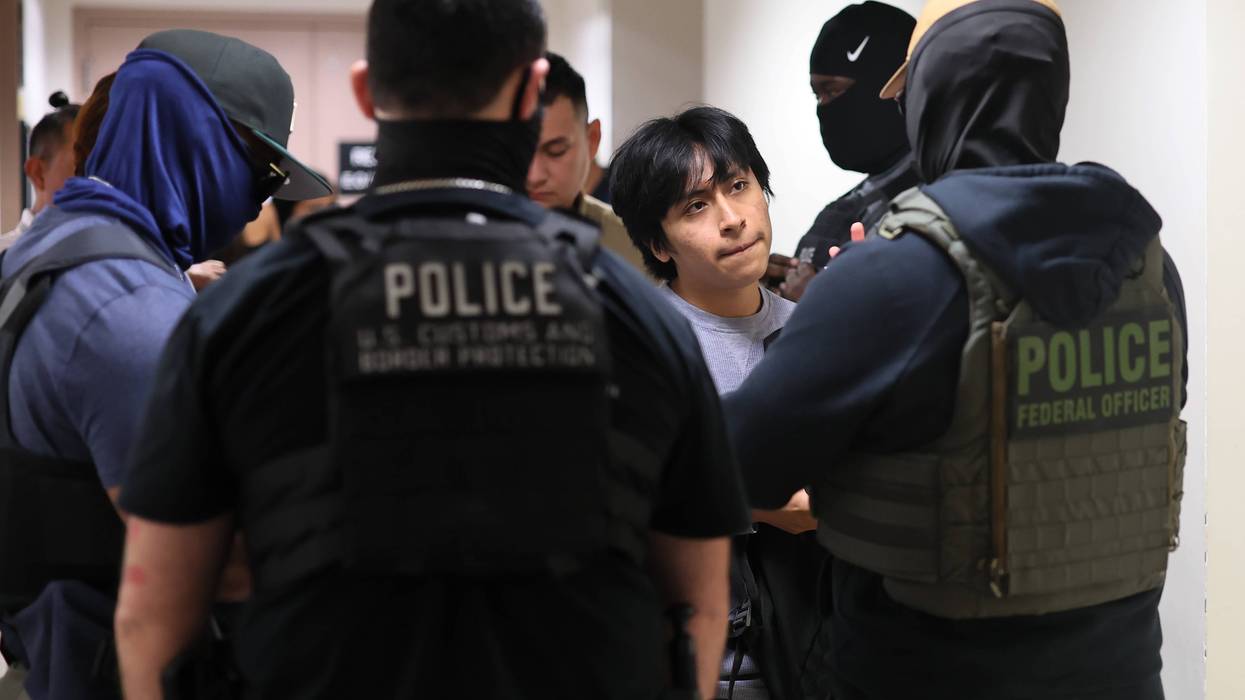
"When ICE continuously raids a community, everyone pays for it—in lost jobs, higher prices, and damaged businesses," said an advocate at the ACLU.
The Trump administration has billed its "mass deportation" agenda as a necessity to bring about an age of prosperity for US-born workers. But a new report suggests it's actually doing the opposite—exacerbating an already severe affordability crisis by suppressing wages, killing jobs, and raising costs.
On Wednesday, the ACLU and AFL-CIO published an analysis examining how the administration's unprecedented deployment of Immigration and Customs Enforcement (ICE) agents to communities around the country has not only created a climate of fear, but also caused labor shortages, reduced economic activity, and given employers new tools to suppress employees' wages.
"When ICE continuously raids a community, everyone pays for it—in lost jobs, higher prices, and damaged businesses," said Naureen Shah, director of government affairs at the ACLU's equality division.
Previous national data has already shown that, contrary to the Trump administration's argument that rounding up immigrant laborers simply creates room for those born in the US, areas that have experienced increases in ICE activity have also seen employment reductions for US-born workers.
"In our interdependent labor market, harm to one group of workers spills over to all those who labor alongside them or within the same supply chain, regardless of immigration status. Roughly 1 in 5 workers in our country is an immigrant, spanning all sectors of the economy," the report explains.
"Targeting this large and vital segment of the workforce sharply reduces the supply of labor, threatening the ability of employers to generate revenue and cover business expenses, including the wages of any remaining workers," it continues.
Reducing the labor supply consequently reduces production. The report argues that this is why industries with large numbers of immigrant laborers have seen skyrocketing costs for their products nationwide.
Data from previous deportation surges during the Obama administration shows that immigration enforcement has reduced construction labor, resulting in nearly 2,000 fewer completed homes on average and an 18% increase in home prices.
In June 2026, data showed that while core inflation was just 2.6% over the previous year, prices had shot up much more dramatically in immigrant-heavy sectors: The cost of lettuce was up 32.1%, landscaping was up 10.8%, home health care climbed 10.7%, whole milk increased 9%, and canned fruit jumped 7.9%.
The report also argues that ICE surges, which have often involved racial profiling and indiscriminate targeting, use of excessive force, and arrests of US citizens, have created terror in communities that suppresses economic activity.
A May working paper from the Wharton School of Business at the University of Pennsylvania, which examined nearly 5,400 raids around the country during 2025, showed that areas targeted by ICE raids experienced a 2.7% decline in foot traffic and a 6.2% decline in spending per business per week, which the author extrapolated would amount to 8.1 billion fewer visits and as much as $14 billion in forgone spending annually across the nation.
US-born employees in sectors with large numbers of immigrant workers were hit especially hard. Data from "Operation Metro Surge" in Minnesota earlier this year demonstrates this in miniature.
Research released in June by the Upjohn Institute estimated that the surge of immigration agents cost the state’s leisure-and-hospitality sector 4,600 jobs, 3.8 million work hours, and $71 million in wages between January and March.
Economist Exequiel Hernandez, quoted in the ACLU/AFL-CIO report, said these findings highlight the danger of creating an "economy of fear."
"If fewer people are showing up to work, they’re making less income, they’re spending less," he explained. "If they’re spending less, businesses have to cut back in hiring and selling, and it’s really quite damaging."
The report cites projections from the Economic Policy Institute (EPI) last year on what this could mean if the Trump administration meets its target of deporting 1 million people per year.
Using data from previous immigration enforcement studies, the EPI estimated that nearly 6 million fewer people could be employed by the end of President Donald Trump's second term if the administration follows through on its deportation promises. That includes 3.3 million immigrants, but also 2.6 million US-born workers, many of whom are working in immigrant-heavy sectors.
The report argues that a pathway to citizenship rather than deportation would not only be a more humane solution, but also deliver economic benefits that ripple through the economy, including for US-born residents.
It cites projections that allowing undocumented immigrants to become citizens would increase US gross domestic product (GDP) by nearly $2 trillion over a decade and generate hundreds of billions in new tax revenue.
This is because legalization would allow workers to move into jobs that better match their skills rather than being confined to low-paying jobs that tend to accept them. It would also remove immigration enforcement as a threat that employers could use to suppress wages, both for immigrant and US-born workers.
"Working people are paying the price for an immigration system that is destabilizing entire industries and communities and making it easier to exploit workers,” said AFL-CIO president Liz Shuler. “As this report demonstrates, a broad pathway to citizenship for all would raise wages, create more and better jobs, and strengthen our economy in ways that help all of us."
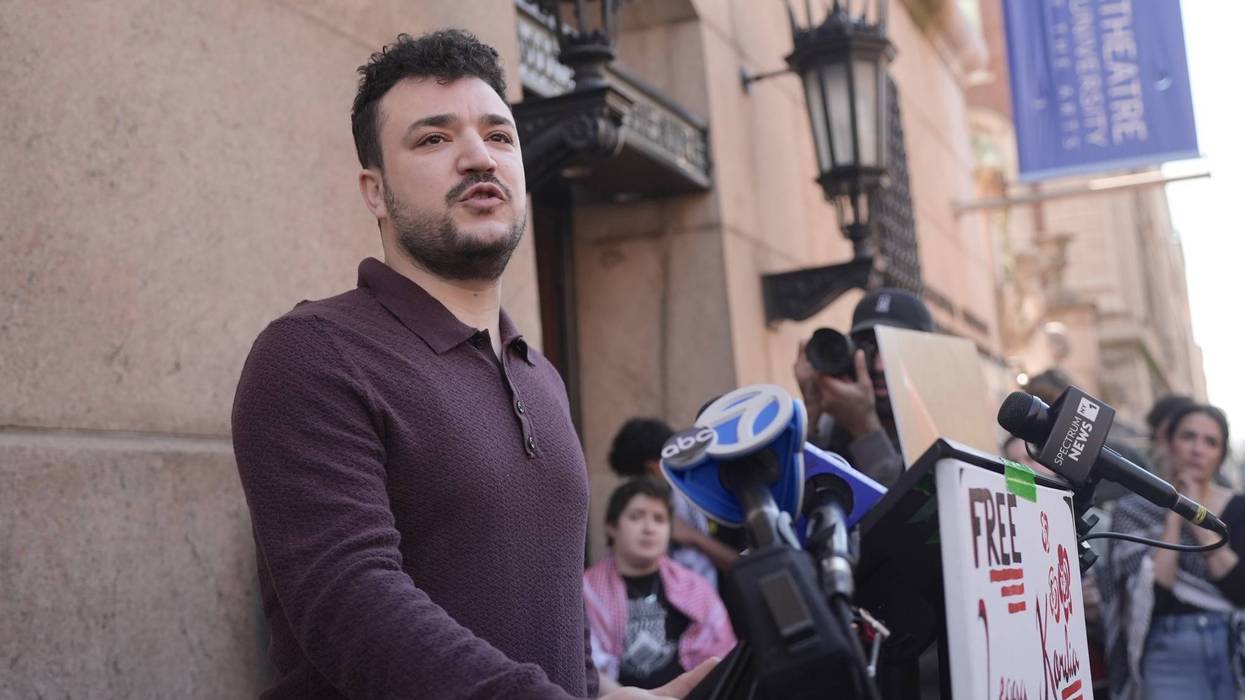
"We are suing because no student should ever have to go through the hell Columbia put us through all these years."
Former Columbia University graduate student Mahmoud Khalil and other Palestine defenders sued the Ivy League institution in federal court on Monday over what Khalil called "gross and systemic discrimination against Palestinian students."
After helping lead pro-Palestinian protests at Columbia, Khalil was forcefully arrested by federal immigration officials at his New York City apartment building in March 2025, despite being a lawful permanent resident married to an American. The Algerian citizen of Palestinian descent was detained at various facilities for more than 100 days, missing the birth of his son.
Khalil—one of several university students targeted by the administration since President Donald Trump returned to power last year—has been involved in a series of legal battles since, including his ongoing fight against deportation. The new suit was filed in the Southern District of New York by him, a student group he led, and the organization's current president, Mohammad Ibrahim Zubairi.
The organization, the Palestine Working Group, was indefinitely suspended from campus last September. The complaint explains that since PWG was formed "at Columbia University's School of International and Public Affairs (SIPA) in 2018, its members have been antagonized and harassed without consequence because of their vocal support of Palestine, perceived shared Arab and/or Muslim ancestry, and status as non-citizens and/or immigrants."
After the Hamas-led October 7, 2023 attack on Israel, which has been followed by Israeli forces' continued genocidal violence against Palestinians in the Gaza Strip, "on-campus harassment and hostility directed towards PWG, its members, and other similarly situated students escalated to an extreme level," according to the suit.
The filing also says that "defendants' deliberate indifference towards this harassment enabled the coordinated, persistent doxxing of multiple PWG members, and directly led to Mr. Khalil's March 8, 2025, illegal detainment and attempted deportation by US Immigration and Customs Enforcement."
Khalil wrote on social media that "we are suing because no student should ever have to go through the hell Columbia put us through all these years," and suggested there is more to come, pledging that "next, I will turn to the hateful individuals at Columbia who were also responsible for what we endured."
The defendants in this case include not only Columbia University and its trustees, but also SIPA Dean Keren Yarhi-Milo, whom the plaintiffs accuse of using her role "to take several actions that caused the on-campus harassment of and hostility towards Muslim and/or Arab, outwardly pro-Palestine students to notably worsen."
University spokesperson Samantha Slater declined to comment on the litigation, but gave a general statement to the campus newspaper, the Columbia Spectator, and various other outlets.
"Creating a campus environment where every member of our community feels welcome, supported, and safe is fundamental to who we are as a university. It is also a responsibility we take seriously," Slater said. "Columbia is committed to protecting our community from discrimination and harassment, and responding promptly and appropriately when concerns arise."
The lawsuit argues that the defendants violated contractual obligations along with multiple laws, including Title VI of the Civil Rights Act of 1964, and seeks injunctive relief. In addition to ending "discriminatory policies, practices, procedures, or protocols," PWG and its members want the group allowed back on campus, plus monetary damages.
According to the Spectator, dozens of people gathered at the university's gates for a Monday press conference during which Khalil, Zubairi, and their attorneys Brittany Finley and William Reynolds announced the suit.
"Columbia laid the groundwork for my targeting by the Trump administration through its deliberate indifference and discrimination aimed at intimidating Palestinian students," said Khalil. "For over two years, we pleaded with Columbia. Columbia did not care."
"Our safety and well-being did not serve the ideological project its board of trustees was protecting," he declared—as The Intercept reported Monday that, based on tax filings, as the university "ramped up its crackdown on pro-Palestine protesters over the past three years, the Ivy League institution was paying hundreds of thousands of dollars to pro-Israel groups," and "gave little or no such funds to pro-Palestine, Arab, or Muslim groups over the same period."
While a spokesperson for the school said that "these grants did not come from Columbia's operating funds and were payments distributed from a donor-advised fund established" in accordance with federal rules, Joseph Howley, a Jewish associate professor of classics at the university, said that "it confirms our worst suspicions since fall of 2023 that pro-Israel and anti-Palestinian politics are the official policy of this institution."

Center on Budget and Policy Priorities experts said the move “would harm people who are immigrants and their families, including many US citizen children, who are critical to the nation’s future prosperity.”
Hundreds of thousands of US citizen children could lose access to key benefits as part of a Trump administration proposal to strip tax credit refunds away from immigrant families, including those with legal status.
In August, the US Treasury Department and Internal Revenue Service (IRS) proposed rules redefining four tax credits—the adoption tax credit, child tax credit (CTC), American opportunity tax credit, and earned income tax credit (EITC)—as "federal public benefits" under a decades-old welfare reform law, meaning that certain groups of noncitizens, not considered "qualified aliens," would be ineligible to claim refunds from them.
Among them are undocumented immigrants, but also many people with temporary nonimmigrant visas, as well as holders of Temporary Protected Status (TPS), and recipients of Deferred Action for Childhood Arrivals (DACA).
According to the Treasury and IRS, the average refunded benefit among all taxpayers whose claims contain at least one of the affected credits is $3,656.
Reporting on the proposal last month, CNBC described it as an effort to "use the nation’s financial safety net as a way to implement stricter immigration policy" and noted that low-income recipients, who are less likely to have large income tax bills to refund, would be hit the hardest.
In a policy brief published on Monday, a group of experts at the Center on Budget and Policy Priorities (CBPP)—director of federal tax policy Kris Cox, vice president for immigration policy Shelby Gonzales, deputy director of federal tax policy Samantha Jacoby, and senior research analyst Claire Zippel—examined the likely effects of the policy.
They estimated that the proposal would take away access to the refundable portion of the CTC and/or the EITC for 1 million people in affected families, including US citizens and people with lawful immigration statuses.
While the proposed rule estimates that between 200,000 and 700,000 taxpayers would become ineligible, the researchers said this understated the potential impact because it only included the tax filers themselves, without noting that their family members would also be hurt.
Using immigration status data from the Department of Homeland Security, the researchers said they determined that "the rule would take access to refundable credits away from hundreds of thousands of US citizen children if both parents—or their parent, for single-parent families—have an immigration status that is not a 'qualified' status."
"For 30 years, no administration, Democratic or Republican, has treated refundable tax credits this way," the researchers said. "The proposed rule includes a misguided reinterpretation of a 1996 law that created restrictive immigration-related eligibility standards for 'federal public benefits,' taking away access to basic needs programs from many immigrants with lawful statuses."
"The Trump administration is seeking to apply those same immigration-related restrictions—which require people to have a 'qualified' immigration status—to the refunded portion of certain tax credits," they continued. "This contradicts both the clear reading of the statutory text and congressional intent, which Congress has demonstrated by legislating on immigrant eligibility for tax credits several times since the 1996 law, most recently in 2025."
They noted that the new policy follows other efforts by the administration to restrict access to other programs for families with immigrants, including Head Start, child welfare services, and health services, all of which are being challenged in court.
Many of the people who'd be barred from receiving the credit refunds, the researchers said, are especially vulnerable, including:
"Taking away these tax credits would harm people who are immigrants and their families, including many US citizen children, who are critical to the nation’s future prosperity," the researchers said, pointing to studies linking additional income from tax credits with improved health, education, employment, and earnings."
"People who are immigrants and their families contribute to our communities and nation in immeasurable ways," they concluded. "These restrictions on tax credits create a higher effective tax rate for people who are filing their taxes solely based on their immigration status."
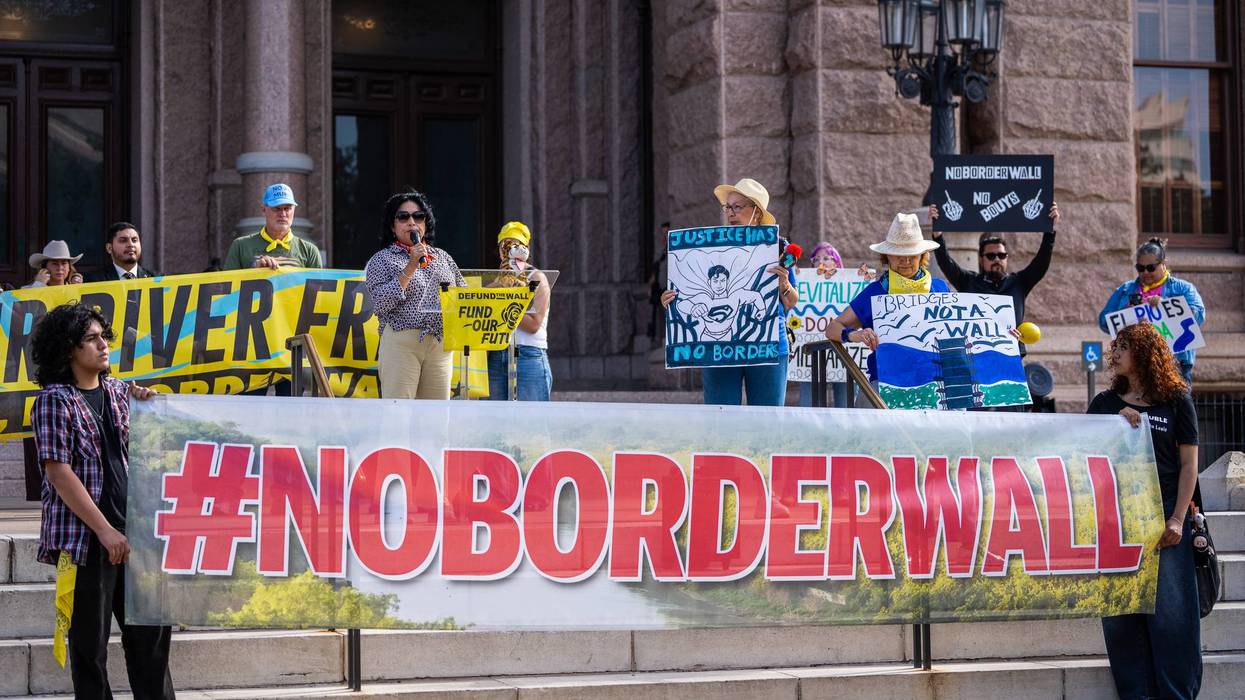
"We have brought this extraordinary challenge because, for us, the Big Bend is not an empty place on a map. It is our home."
A coalition of Texas ranchers, landowners, business owners, and conservationists in the Big Bend region on Monday sued the Trump administration over plans to build border barriers and other destructive infrastructure across one of the most remote and environmentally sensitive stretches of the US-Mexico border.
The lawsuit—filed in the US District Court for the District of Columbia by Conserve Big Bend and six landowners with the backing of many others—challenges the administration’s determination that the region is an area of “high illegal entry" under Section 102 of the Illegal Immigration Reform and Immigrant Responsibility Act (IIRIRA) of 1996, a finding the plaintiffs say is contradicted by the government’s own statistics.
"That high illegal entry determination is the legal predicate for defendants’ invocation of extraordinary power to immediately construct a 30-foot-high border wall while bypassing all federal, state, and local procedural protections," the complaint states. "That determination is legally and factually unsound and unsupported."
"A host of government statistics and other public reporting [show] that the opposite is true," the lawsuit notes. "The Big Bend sector is the area of the lowest illegal entry along the southwest border... The Big Bend sector has recorded the fewest yearly apprehensions of any Southwest sector for the last 53 years, with last year’s numbers being the lowest yearly apprehension total recorded by any sector in the region since 1967."
The suit comes as the Trump administration presses forward with a $46 billion border security construction program authorized by Congress, including 30-foot steel bollard walls, vehicle barriers, roads, lighting, cameras, and other surveillance infrastructure.
The plaintiffs argue that the administration is abusing the extraordinary authority granted to the Department of Homeland Security (DHS) under the IIRIRA, to sidestep laws protecting wildlife, water, Indigenous rights, historic resources, and private property.
“Thank you, President Trump. You’ve secured the border. But now let it go. It’s time," Laura Allen said at a Monday press conference in Marfa announcing the lawsuit. A former Val Verde County judge and two-time Trump voter, Allen's family owns a ranch that would be divided by the proposed border barrier.
David Keller, an archaeologist and historian who lives in the region, spoke at the press conference. He accused officials supporting the administration's proposal of being "woefully unprepared for the hornet’s nest they stirred up because they had no idea how much we love this place."
“For us, the Big Bend is not an empty place on the map,” Keller stressed. “It is our home.”
Earlier this year, the Trump administration waived dozens of environmental laws—including the National Park Service Organic Act, Endangered Species Act, and National Wild and Scenic Rivers Act—to expedite the construction of border roads and barriers through Big Bend National Park.
This isn't the first court challenge to the administration's Big Bend border barrier plans. Last month, the Presidio Municipal Development District sued to stop construction, citing alleged violations of the Rivers and Harbors Act. But after DHS added that law to its waiver, US District Judge Reggie Walton—an appointee of former President George W. Bush—ruled that the plaintiffs could not prevail on the merits and declined to block construction plans, declaring that the administration was legally allowed to bypass the legislation.
“Under federal statute, the secretary of homeland security is granted extraordinary, expedited powers to construct border barriers and sweep aside dozens of federal protections, environmental laws, and ordinary due process,” Clara Bensen, a board member with Conserve Big Bend and head of communications for the No Big Bend Wall initiative, said in a statement Monday. “But Congress explicitly set a strict legal prerequisite for that extraordinary power: it can only be invoked in designated areas of ‘high illegal entry.’”
"The government’s own official statistics tell the real story," Bensen added. "You cannot legally bypass the laws of this country by fabricating an emergency that does not exist. Declaring over 500 miles of steep cliff faces and perilously rugged desert an area of ‘high illegal entry’ is not just detached from reality, under federal law, it is arbitrary, capricious, and unlawful.”
Also last month, People of La Junta for Preservation—a Native American advocacy group focused on protecting Indigenous historical and cultural sites in the Big Bend region—sued the administration, arguing that construction threatens sacred sites of the Lipan Apache people. The complaint also challenges DHS' authority to conduct work inside Big Bend National Park.
Amid intense opposition spanning the political spectrum, US Customs and Border Protection Commissioner Rodney Scott last month announced a temporary pause on construction in Big Bend National Park pending an “on-the-ground evaluation."
Some conservatives who oppose the administration's plans have cited the inviolability of private property rights, which Lico Miller, whose land is in the path of the border barrier, called "the bedrock of Texas sovereignty" during Monday's press conference.
“The moment we allow any government—state or federal—to come in and seize private land and tell us what is good for us and what constitutes an emergency, we set a precedent that will come back and bite every single Texan,” he argued. “If they can take our land along the river today, they can come for yours tomorrow.”
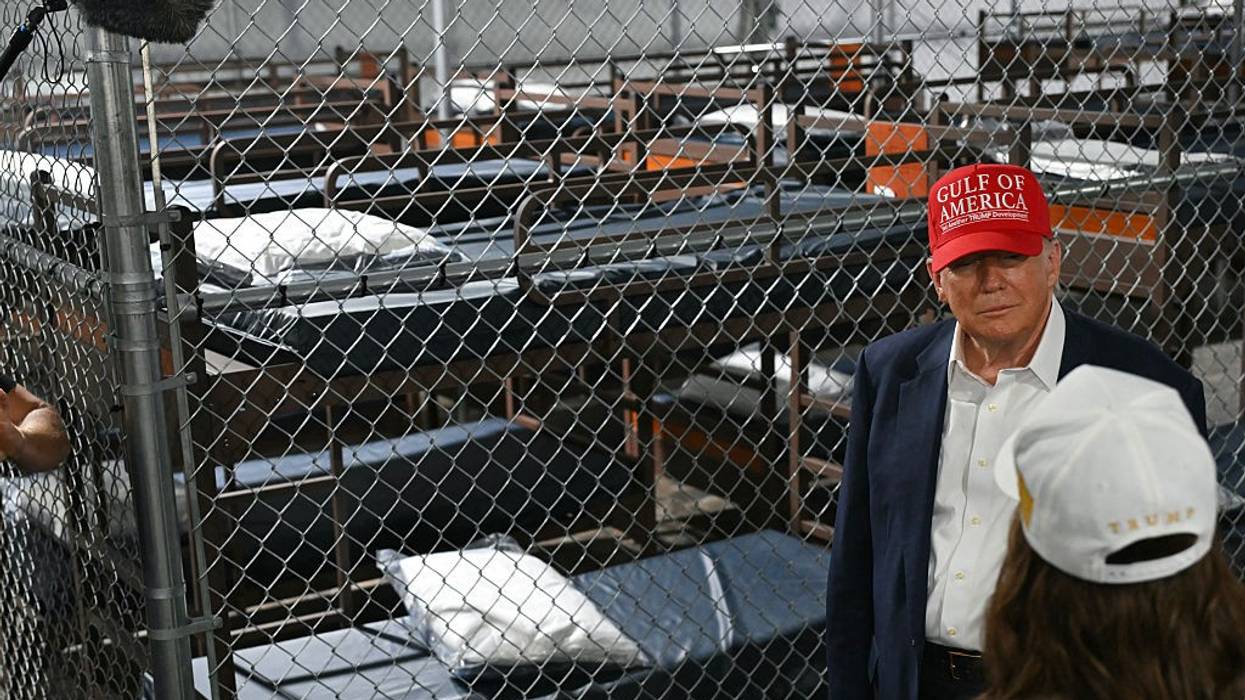
"DHS needs to be dismantled and held accountable for this complete inhumanity," said Rep. Pramila Jayapal.
While US President Donald Trump publicly joked about giant reptiles devouring would-be escapees from the now-shuttered Alligator Alcatraz immigrant detention center in the Florida Everglades, a newly published report by the Department of Homeland Security's internal watchdog confirms that the biggest dangers facing detainees at the notorious lockup were found inside its walls.
The DHS Office of Inspector General (OIG) found that staff at Alligator Alcatraz—officially called the Florida Soft-Sided Facility (FSSF)—"complied with intake and use-of-force standards but did not comply with standards related to environmental health and safety, special management units, medical care, food service, personal hygiene, and recreation."
Affirming reports from human rights groups like Amnesty International, the OIG reported on September 11 that staff at the facility, which was operated by the state of Florida and private contractors, "confined 79 detainees in small metal enclosures—each offering about 18 square feet of floor space—for periods ranging from several minutes to nearly two hours."
"Facility staff described the small metal enclosures as 'calming areas' for detainees to de-escalate and have time alone," the report states. "Staff further maintained that detainees asked to spend time in the small metal enclosures. We found at least one instance in which the small metal enclosures may have been used as a disciplinary tool."
NEW: DHS's Inspector General releases a scathing report about the Everglades detention camp known as "Alligator Alcatraz." The OIG finds that the now-closed camp, violated multiple ICE standards.The OIG also confirms detainees were punished with placement in a metal cage in the Florida heat.🧵
[image or embed]
— Aaron Reichlin-Melnick (@reichlinmelnick.bsky.social) September 14, 2026 at 8:53 AM
While held in the cages, detainees—who reported being shackled and locked to the ground—were subjected to dangerously high temperatures and swarms of mosquitoes. Amnesty described the use of the cages as a form of torture.
"Use of these small metal enclosures for any reason is unprecedented among detention facilities OIG has inspected and presents significant risks to detainee health and safety," the DHS report notes.
Responding to the report's findings, Congresswoman Pramila Jayapal (D-Wash.) said on social media that "this is nothing short of torture."
"DHS needs to be dismantled and held accountable for this complete inhumanity," she added.
The OIG report additionally found that "FSSF did not provide detainees with sufficient living space, creating cramped conditions for detainees who spent most of their time in their housing units, which may harm detainees’ physical and mental health."
According to the OIG, detainees had about 28 square feet of living space each when the facility was at maximum capacity, well below the 75-square-foot DHS benchmark.
Three-quarters of the detainees interviewed by the OIG said they did not have access to clean drinking water.
The OIG also found that detainees were generally permitted to shower just three times a week, and inspectors noted insects in the showers.
Detainee recreation was also limited to three one-hour sessions per week.
The OIG report ominously concludes that "although FSSF ceased operations in June 2026, the issues raised by the department’s
management response regarding [US Immigration and Customs Enforcement's] level of oversight and responsibility for immigration detention remain consequential."
The publication cites the Baker Correctional Institution—also known as "Deportation Depot"—in Sanderson, Florida, which has yet to undergo OIG inspection, and where detainees and their advocates have reported abuses and inhumane conditions similar to those alleged at Alligator Alcatraz.
Some critics of the new OIG report denounced what they said were critical omissions and falsehoods, including that FSSF complied with use-of-force standards. Clients of attorney Katherine Blankenship and other detainees at the facility said they were beaten—and one man had his wrist fractured—after complaining about not having phone access earlier this year.
The Associated Press reported in April:
When one detainee approached a guard, he was punched in the face. The guards then started beating other detainees in the cell. One of Blankenship’s clients was punched in the right eye, thrown to the floor, and beaten by several guards. He was kicked in the head and his shoulder and arm were injured. A guard put his knee on the detainee’s neck while restraining him, according to the attorney’s declaration, which included a photo made during a video call almost a week later showing the detainee with a bruised eye.
Other alleged abuses and inhumane conditions at Alligator Alcatraz not mentioned in the OIG report include rotten and maggot-infested food, 24-hour lighting, flooding, and denial of religious practice.
Some detainees also claimed they were held in the phone booth-sized cages for far longer than two hours.
“People ended up in the ‘box’ just for asking the guards for anything," one former detainee told Amnesty. "I saw a guy who was put in it for an entire day."
Glad folks are appalled by photos of the "phone booth" cage under an awning, but pls understand: This IG report is likely part of a cover-up. Amnesty Int'l interviewed detainees EIGHT MONTHS AGO who said the cage was half this size (couldn't stand up), had no awning, w feet chained to the bottom.
[image or embed]
— Gillian Brockell (@gillianbrockell.com) September 14, 2026 at 9:20 AM
Responding to the new OIG report, Congressman Adam Smith (D-Wash.) said Monday on social media that "people at Florida's Alligator Alcatraz were subjected to inhumane, unjust punishment, risking their health and safety while in federal detention. No person should be locked into an 18-square-foot cage, period."
Last year, Jayapal and Smith introduced the Dignity for Detained Immigrants Act, which Jayapal's office described as "legislation to enact guardrails and oversight on immigration detention, and to ensure civil and human rights are protected."
Since Trump returned to the White House in January 2025, more than 50 people have died in ICE custody, including detainees who died inside lockups, during transfers, and in hospitals while still under DHS control. The agency also announced earlier this year that it would stop reporting the deaths of people recently released from ICE detention.
Krish O'Mara Vignarajah, President and CEO of the advocacy group Global Refuge, said in a statement responding to the new OIG report that "there is no euphemism that can sanitize caging human beings. Calling a metal box a 'calming area' is an affront to the English language and to human dignity alike."
"The stark reality is that human beings, many of whom came to this country seeking protection, were crammed into spaces unfit to accommodate them, denied adequate medical care, food, and basic hygiene—and in at least one case locked in a cage as punishment," Vignarajah continued. "That is not immigration enforcement. It is cruelty, carried out in our name and on our dime, to the tune of more than a million dollars a day."
"The facility is closed, but the mindset that built it lives on," she added. "We cannot let Alligator Alcatraz become a blueprint. We call on Congress and the Department of Homeland Security to guarantee that no one held in the United States—regardless of where they were born or how they arrived—is subjected to conditions this administration's own watchdog has deemed inhumane."
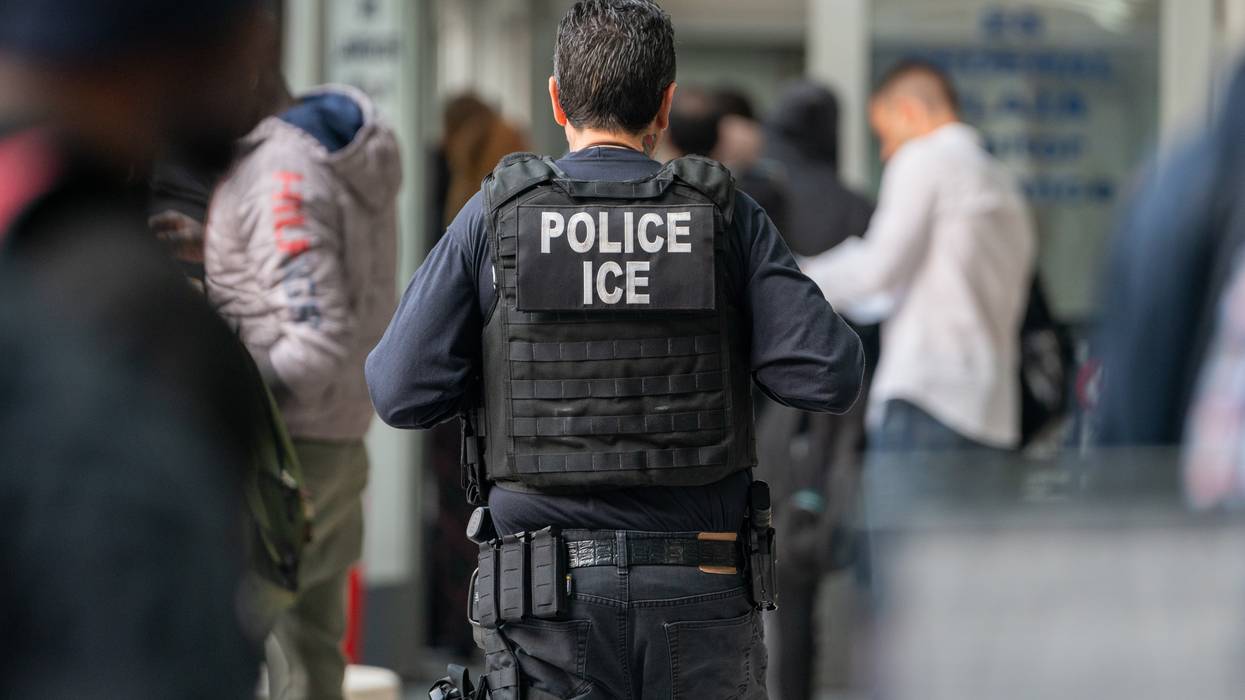
For a quarter century, America has treated immigration enforcement as a form of counterterrorism. Yet, instead of making us safer, it has given rise to an increasingly militarized agency that, in the name of protecting ‘the homeland,’ uses its vast surveillance network and policing powers to target and kill innocent people.
Since the start of its second term, the Trump administration has repeatedly defended Immigration and Customs Enforcement shootings and killings, smeared their victims as “domestic terrorists,” racially profiled people with the Supreme Court’s consent, expanded their biometric and social media surveillance capabilities while also maintaining over a dozen “secret and obscure” watchlists. It is effectively dismantling the Deferred Action for Childhood Arrivals program, tried—and is trying again—to repeal birthright citizenship, paused all immigrant visa applications, and is aggressively pursuing politically motivated visa revocations and denaturalizations, among other extreme measures.
All of this is reflective of the rampant and unfettered xenophobia, Islamophobia, and white nationalism that define the Trump administration. Yet, at same time, we must also acknowledge that Immigration and Custom Enforcement’s (ICE) violence and Trump’s assault on the immigration system is an extension of the national security framework built following the 9/11 attacks.
ICE was established in March 2003 as part of “the single-largest government reorganization since the creation of the Department of Defense.” A key rationale for including ICE within the newly created Department of Homeland Security (DHS) was that the 9/11 hijackers entered the US legally via temporary visas. To keep “the homeland” safe, a more aggressive approach to immigration was thus deemed necessary. As Attorney General John Ashcroft remarked in 2002:
In this new war, our enemy's platoons infiltrate our borders, quietly blending in with visiting tourists, students, and workers. They move unnoticed through our cities, neighborhoods, and public spaces. They wear no uniforms. Their camouflage is not forest green, but rather it is the color of common street clothing. Their tactics rely on evading recognition at the border and escaping detection within the United States. Their terrorist mission is to defeat America, destroy our values, and kill innocent people.
Going forward, immigration enforcement and control agencies would police and surveil every immigrant as if they were potential terrorists. As the Department of Justice (DOJ) emphasized in 2004, “The primary mission of ICE is to prevent acts of terrorism by targeting the people, money, and materials that support terrorists and criminal activities.”
In the name of counterterrorism, the DOJ launched the National Security Entry-Exit Registration System (NSEERS) in 2002. Under this program, male foreign nationals aged 16 or older from 25 countries—24 of which were majority-Arab and Muslim (the other was North Korea)—were fingerprinted, interviewed, photographed, and required to check in with immigration officials at regular intervals. These regulations applied to both new arrivals and individuals who were already in the US on temporary visas. NSEERS was suspended in 2011 and finally terminated in 2016 by President Barack Obama—it led to no terrorism prosecutions.
Despite its failure, NSEERS, alongside other measures and decades of Republican fearmongering, functioned to normalize the link between immigration enforcement, border control, and counterterrorism. In doing so, it amplified the alleged danger posed by “radical Islamic terrorism,” thus setting the stage for the Trump administration’s relentless attacks on Muslims. This, in turn, served to distract from the far greater and actual domestic terrorism threat posed by white supremacist groups. As a report by the US Senate Committee on Homeland Security & Governmental Affairs noted, “In 2019, DHS publicly acknowledged white supremacist violence as a major threat to national security for the first time, despite being aware internally of the severity of the threat for 10 years.”
In our desperation to prevent another 9/11, we have spent billions building our own homegrown domestic terrorism threat.
The goal of combating terrorism also promoted a demand for more biometric technologies. As Sen. Dianne Feinstein (D-Calif.) noted in 2001, the reason why “a large group of coordinated terrorists [could] operate for more than a year in the United States without being detected” is because “we could not identify them. We did not know they were here. Only if we can identify terrorists planning attacks on the United States do we have a chance of stopping them. And the biometrics technology, the state-of-the-art technology of today, really offers us a very new way to identify potential terrorists.”
To that end, DHS established the US Visitor and Immigrant Status Indicator Technology (US-VISIT) program in 2003 to collect biometric identifiers from foreign nationals and build an electronic check in-check out system. As Undersecretary for Border and Transportation Security at DHS Asa Hutchinson remarked in 2003, “initially, fingerprints and photographs” will be used; however, “as the technology is perfected, additional forms such as facial recognition or iris scans may be used as well.”
Fast forward two decades and now, ICE agents are currently deploying facial recognition software such as Mobile Fortify. In May 2026, ICE awarded a $25.1 million contract to BI2 Technologies to acquire over 1,500 wireless, handheld iris-scanning devices. In its fiscal year 2027 budget request, DHS allocated $7.5 million to develop face-scanning “smart glasses” that would grant agents real-time access to biometric databases.
Now, importantly, none of this should be taken to mean that the pre-9/11 landscape was entirely welcoming to immigrants. The “browning of America” discourse depicted—and continues to depict—immigrants as an existential threat to the nation. Meanwhile immigration policies like the Illegal Immigration Reform and Immigration Responsibility Act (IIRIRA) of 1996 expanded the number of deportable offenses while also introducing expedited removal processes that allowed immigration officers to deport people without a formal hearing.
And yet, there were a few rays of hope. There was broad support for the Development, Relief, and Education for Alien Minors (DREAM) Act, with a Senate hearing scheduled for September 12, 2001. On September 6, 2001, the US and Mexico announced they had reached an agreement on a framework for border and immigration reform that included “respecting the human dignity of all migrants, regardless of their status; recognizing the contribution migrants make to enriching both societies.” At the time, both President George W. Bush and President Vincente Fox “agreed that US-Mexican relations have entered their most promising moment in history.” Then 9/11 happened, and everything changed.
For 25 years, America has treated immigration enforcement as a form of counterterrorism. Yet, instead of making us safer, it has given rise to an increasingly militarized agency that, in the name of protecting “the homeland,” uses its vast surveillance network and policing powers to target and kill innocent people. In our desperation to prevent another 9/11, we have spent billions building our own homegrown domestic terrorism threat.
After 25 years, we must finally recognize that DHS and ICE were never the solution. If we truly wish to make America safer and greater, we must choose to forge a new path—to work toward a world without war, resentment, and violence.
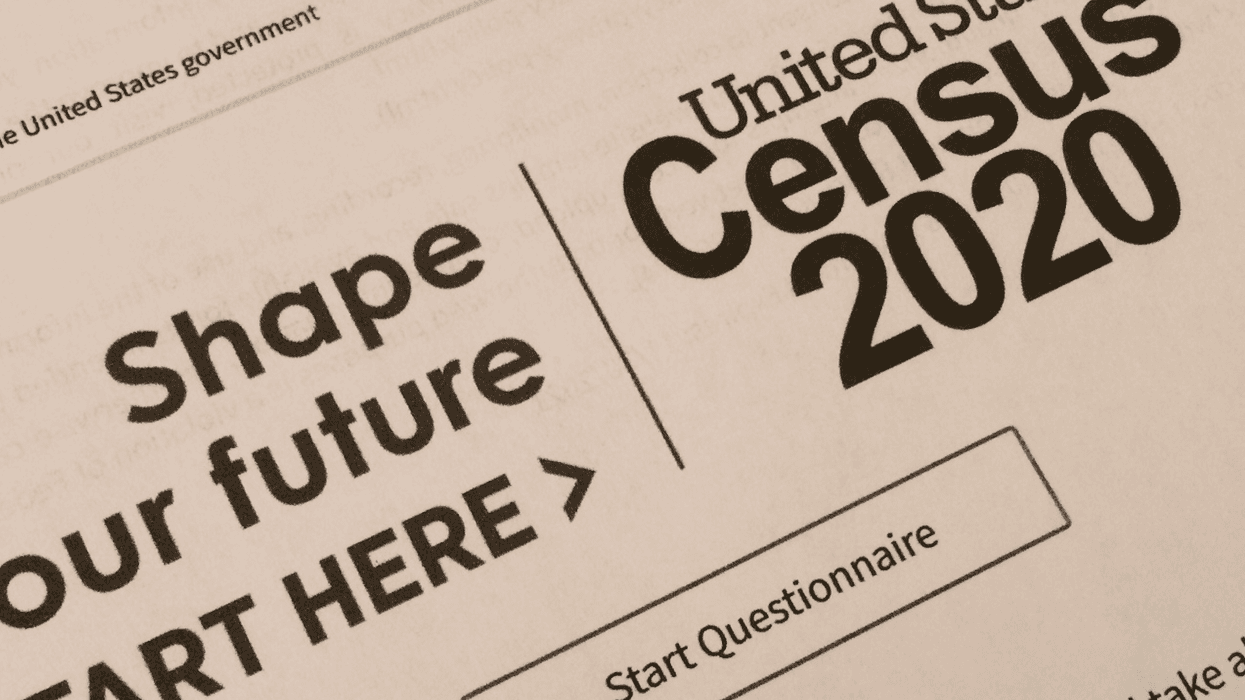
“The Constitution is clear. Every person living in the United States, regardless of immigration status, must be counted in the Census,” said New York Attorney General Letitia James.
The Trump administration on Wednesday formally proposed sweeping changes to the 2030 US Census that could exclude millions of people from the population count, alter congressional representation in favor of Republicans, and shift the distribution of federal resources among states.
The proposal—which was published in the Federal Register and is subject to a 30-day public comment period—redefines a person's “usual residence” as the place where they legally spend the most days during the Census count period, with tax records such as returns and W-2s used as evidence.
Most significantly, people who are not US citizens or permanent residents as of April 1, 2030, would be excluded from the apportionment count altogether, a sharp departure from the 2020 census, which counted foreign citizens living in the United States regardless of immigration status as required by the Constitution.
The proposed change is rooted in a disputed interpretation of the Constitution’s reference to the “whole number of persons” in each state, with the administration arguing that “persons” should be understood through the historical concept of “inhabitants” and membership in the political community.
Under the proposal, Census questionnaires would also be barred from asking about race, ethnicity, or sexual orientation, arguing that such information is outside the Census' core constitutional purpose.
Some of the proposed changes track closely with Project 2025, the Heritage Foundation-led plan to expand executive power and shrink the federal government.
Left-leaning legal experts asserted that the changes proposed by the Trump administration violate the 14th Amendment, which mandates congressional apportionment based on “the whole number of persons in each state,” regardless of their immigration status.
"The Constitution is clear. Every person living in the United States, regardless of immigration status, must be counted in the Census," Democratic New York Attorney General Letitia James said on social media.
"We stopped the Trump administration's Census attacks in 2020, and we're exploring our legal options to fight back again," she added, referring to successful lawsuits to stop the administration's efforts to end the Census count early, add a citizenship question, and exclude undocumented immigrants from congressional apportionment.
In 2019, US Supreme Court Chief Justice John Roberts wrote for the majority in Department of Commerce v. New York that the Trump administration's rationale for the proposed citizenship question “seems to have been contrived."
Responding to Wednesday's announcement, William Roberts, senior vice president of rights and justice at the Center for American Progress (CAP), said in a statement that "the administration’s proposal is a flagrant assault on our democracy, designed to manipulate voting maps and dilute the political representation of diverse American communities."
"Eliminating questions on race, ethnicity, and sexual orientation strips our government of critical data needed to ensure vital resources are extended to the communities who need them most; and notably, it would also make it more difficult to enforce the Voting Rights Act of 1965," he continued.
"Furthermore," Williams stressed, "excluding undocumented immigrants and noncitizens from congressional apportionment directly violates the [14th] Amendment’s mandate to count the 'whole number of persons in each state.'"
"CAP condemns this blatant attempt to weaponize the Census for political gain," he added. "Congress has final authority over the census, and the public has 30 days to write their representatives and oppose this rule."
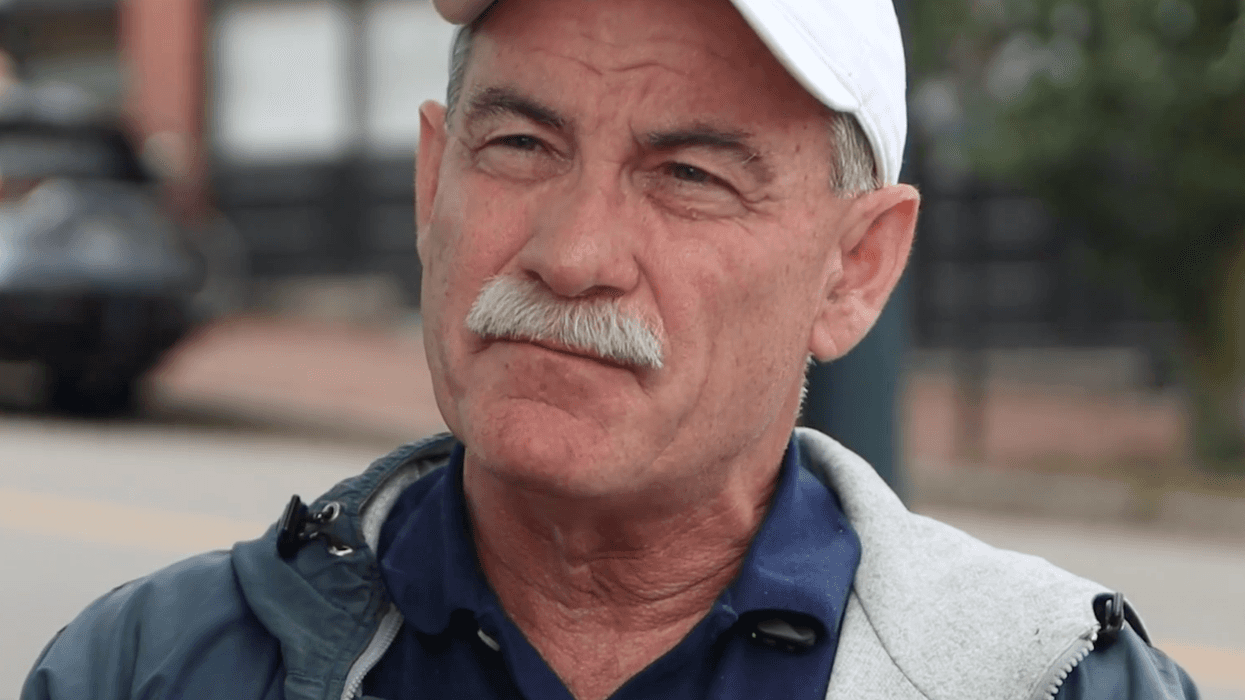
"Under the anti-choice positions Bobby holds today, even in cases of rape, I would not have been able to make a decision about my own body should that have become necessary," said Anita Charles, a sexual assault survivor.
Just two weeks after Maine gubernatorial candidate Bobby Charles drew national headlines with his comments about sending immigration agents to polling stations, the Republican's sister publicly explained why she won't be voting for him in November, calling out his campaign rhetoric and platform as well as his relationship with an infamous pedophile.
The campaign website for Bobby Charles, a former Washington, DC lobbyist, highlights that their mother was a public school teacher. In a Wednesday opinion piece for The Portland Press Herald, Anita Charles, a longtime educator herself, wrote that their mother taught them both "that how we treat other people matters."
"She taught us to be compassionate, not to name-call or judge people by their race, gender, religion, country of origin, or who they love. She taught us that differences do not diminish us, and that we have a responsibility to treat others with dignity. Those lessons shaped my entire life, as well as my career," according to Anita Charles. "They are also the reason I cannot support my brother's campaign for governor."
Anita Charles acknowledged that "Bobby and I have never agreed politically. For most of our adult lives, we have managed those differences with civility. But as divisive rhetoric has become central to his campaign, I can no longer remain silent. It shows up in how he talks about our schools, our vulnerable communities, and about women's healthcare."
She noted that "there is one issue I cannot discuss without speaking from the deepest part of my own experience: sexual assault."
As she detailed:
Bobby was a close friend and colleague of former House Speaker Dennis Hastert from 1995 to 1999. He praised Hastert and benefited from their relationship as he built his career in Washington. Hastert later admitted to sexually abusing children and was convicted of illegally paying hush money to conceal that abuse. Bobby has never publicly renounced that association.
That is difficult for me to understand because my own childhood was marked by sexual violence. Someone who was part of our lives for more than a decade was a pedophile who repeatedly assaulted me. My brother has known what happened to me for 50 years.
Under the anti-choice positions Bobby holds today, even in cases of rape, I would not have been able to make a decision about my own body should that have become necessary. This isn't a debate I'm observing from a distance; it's about my childhood. And it's about my ongoing health and well-being as a woman.
As the Bangor Daily News noted Wednesday, Bobby Charles' current "campaign website doesn't list any proposals about abortion," but he has "called abortion 'abhorrent' and supported the 2022 US Supreme Court decision overturning Roe v. Wade."
Arguing that "Maine deserves leadership rooted in empathy, dignity, intellectual honesty, and respect for every person who calls this state home," Bobby Charles' sister concluded that she will be voting for Democrat Hannah Pingree for governor.
The op-ed quickly circulated on social media after its publication. Local writer Anthony Emerson said that an "atom bomb dropped in the Maine governor’s race this morning."
Anita Charles' article came as her brother continues to face criticism for boasting about his ties to President Donald Trump's border czar, Tom Homan, at a Maine Young Republicans event and claiming that he would ask the federal offical to send US Immigration and Customs Enforcement (ICE) and US Marshals to the state's voting booths.
Maine AFL-CIO president Cynthia Phinney said in a Wednesday statement that "in Maine and the United States, voters elect our leaders in free and fair elections. Calling for masked federal agents to be deployed around polling locations is a cynical attempt to intimidate voters."
"No one should be afraid to show up and exercise their constitutional right to vote, but that's exactly what this is trying to do," Phinney continued. "Our union movement rejects this desperate political tactic, and we know our democracy is strongest when all of us show up to exercise our democratic rights in peaceful elections free from fear or intimidation."
Trump's weaponization of ICE has been a key issue in Maine politics this cycle—including the contest between Republican US Sen. Susan Collins and Democratic challenger Troy Jackson—particularly since an agent fatally shot Biddeford resident Johan Sebastián Durán Guerrero in July.
"Every Mainer deserves to feel safe in their own neighborhood," Pingree said last month. "As governor, I'll demand real, independent oversight, not empty promises. I'll keep fighting for accountability. ICE out of Maine."
The US National Domestic Violence Hotline can be reached at 1-800-799-SAFE (7233), by texting "START" to 88788, or through chat at thehotline.org. It offers 24/7, free, and confidential support. DomesticShelters.org has a list of global and national resources.