

SUBSCRIBE TO OUR FREE NEWSLETTER
Daily news & progressive opinion—funded by the people, not the corporations—delivered straight to your inbox.
5
#000000
#FFFFFF
To donate by check, phone, or other method, see our More Ways to Give page.
Daily news & progressive opinion—funded by the people, not the corporations—delivered straight to your inbox.
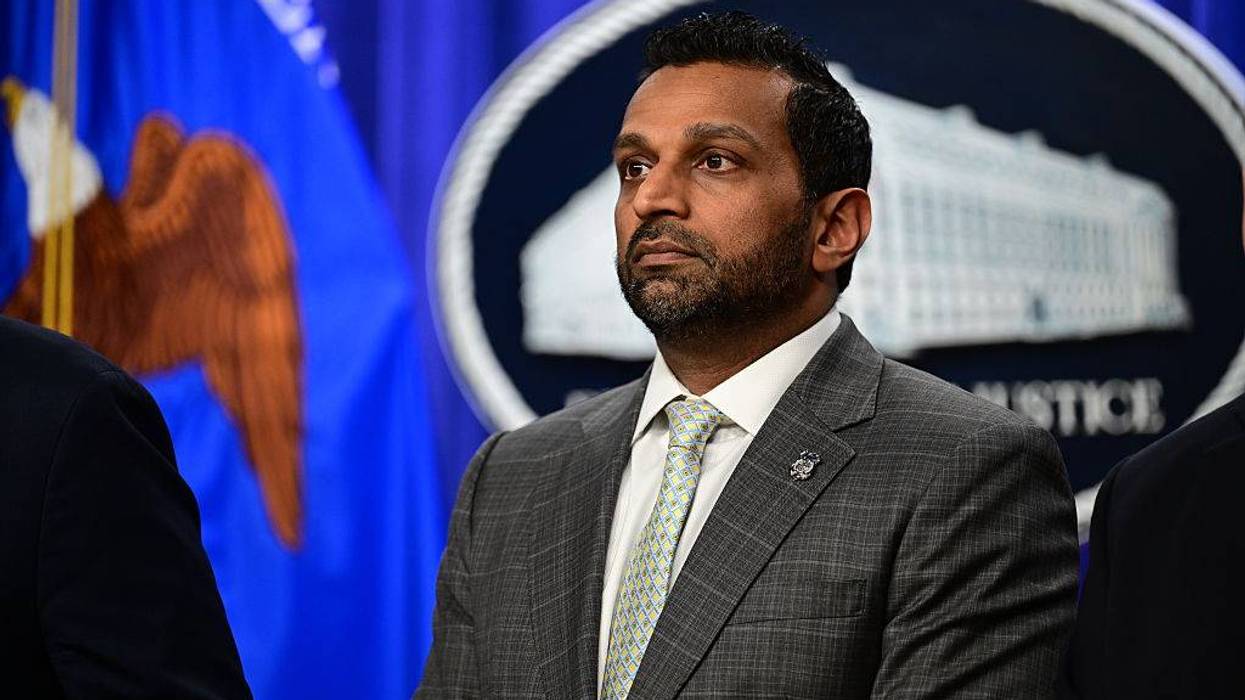
One press freedom advocate said the reported FBI investigation "would be outrageous even if The Atlantic reported classified information, which it didn’t."
The Federal Bureau of Investigation on Wednesday denied that it launched a reported probe into The Atlantic, which recently published a damning account of FBI Director Kash Patel’s alleged drunkenness, though magazine leadership and press freedom advocates remain alarmed.
As reported by MS NOW on Wednesday, the FBI is conducting a criminal leak investigation into The Atlantic's Sarah Fitzpatrick, whose reporting on Patel cited two dozen anonymous sources to document concerns about the FBI director's behavior.
MS NOW noted that the investigation into Fitzpatrick's reporting is "highly unusual because it did not stem from a disclosure of classified information" on the part of government insiders.
One source told MS NOW that the FBI agents assigned to the case have expressed serious reservations about its scope and purpose.
"They know they are not supposed to do this," the source said. "But if they don’t go forward, they could lose their jobs. You’re damned if you do and damned if you don't."
FBI spokesperson Ben Williamson denied to MS NOW that the agency had launched an investigation into Fitzpatrick, saying that "every time there’s a publication of false claims by anonymous sources that gets called out, the media plays the victim via investigations that do not exist."
Jeffrey Goldberg, editor-in-chief of The Atlantic, said the magazine was working to learn more about the alleged investigation, but "if true, this would be an outrageous, illegal, and dangerous attack on the free press and the First Amendment."
"We will defend Sarah and all of our reporters who are subjected to government harassment simply for pursuing the truth," Goldberg added.
Seth Stern, chief of advocacy at the Freedom of the Press Foundation, also condemned the reported investigation, which he said "would be outrageous even if The Atlantic reported classified information, which it didn’t."
"The FBI is reportedly conducting an invasive leak investigation merely to settle a personal vendetta," added Stern. "Separately, it doesn’t make much sense for Patel’s FBI to investigate leaks from what Patel’s lawsuit over the same reporting called ‘sham sources.’ Fake sources can’t leak."
Patel last month filed a $250 million defamation suit against The Atlantic for its report on his behavior, which the magazine said included "episodes of excessive drinking and unexplained absences."
The Atlantic vowed to fight the lawsuit, saying it stood by its reporting while describing Patel's complaint as "meritless."
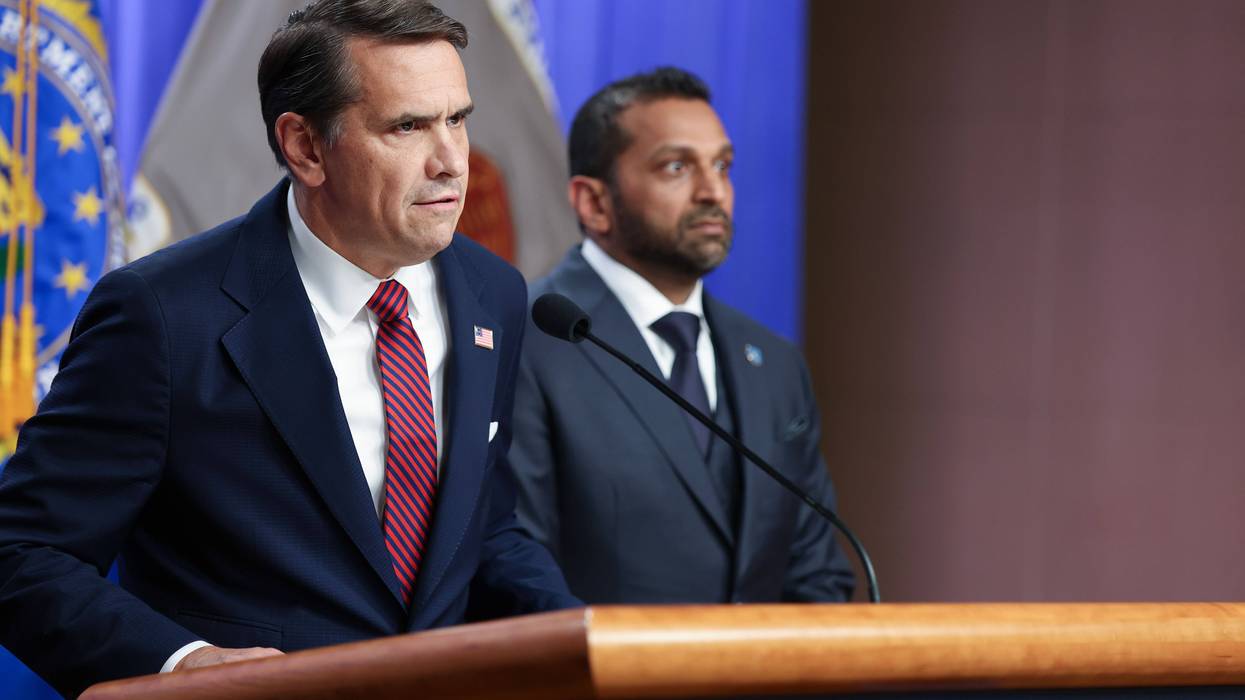
"This is embarrassing for America," said one First Amendment advocate.
As the corporate media joins the White House in a new round of accusations against critics of President Donald Trump in the wake of an attempted attack on the White House Correspondents' Association dinner last week—with acting Attorney General Todd Blanche blaming anti-Trump "rhetoric" for the violence at the event—the administration on Tuesday unveiled a new indictment of longtime Trump foe James Comey in what legal experts called a transparent attack on the First Amendment.
At a press conference held by Blanche and FBI Director Kash Patel, the officials made the case—without presenting specific evidence—that a federal grand jury in North Carolina had indicted former FBI chief Comey because he'd "knowingly and willfully [made] a threat to take the life of, and to inflict bodily harm upon" Trump in May 2025 in a photo he posted on Instagram.
The picture showed seashells grouped together in a pattern, reading, "86 47."
Trump is the 47th president of the United States, and the slang term "86" means "to get rid of," originating in the 1930s. According to Merriam-Webster, the term began being used as a verb in the 1950s when restaurants and bars used it to mean refusing service to a customer or throwing them out of an establishment. That use of the term is still the most common, according to the dictionary, which wrote: "Among the most recent senses adopted is a logical extension of the previous ones, with the meaning of 'to kill.' We do not enter this sense, due to its relative recency and sparseness of use."
Comey quickly deleted his post last May, which he said he had shared after finding the seashells in the arrangement during a walk on a beach. The former FBI director said he deleted that post after realizing "some folks associate those numbers with violence," and said he opposes violence "of any kind."
Nevertheless, the indictment handed down on Tuesday reads that the shells were “arranged in a pattern making out ‘86 47,' which a reasonable recipient who is familiar with the circumstances would interpret as a serious expression of an intent to do harm to the president of the United States.”
Comey was charged with one count of making threats against Trump and one count of transmitting a threat across state lines.
Federal officials issued a warrant for Comey's arrest, but Blanche did not say whether any court dates had been scheduled in the case.
The indictment was dismissed by several legal experts, with prosecutors within the US Department of Justice reportedly calling it "the flimsiest federal indictment in memory," according to ABC News correspondent Jonathan Karl. Building a case based solely on an image of seashells will be an uphill battle for the DOJ, particularly considering First Amendment protections on speech.
New York University law professor Ryan Goodman called the indictment "laughably ludicrous" and a "political act masquerading as an indictment," while US Sen. Chris Van Hollen (D-Md.) condemned the president for using the DOJ as his "personal attack dog, using taxpayer money to settle Trump's petty grievances."
This is the second federal indictment that's been handed down by the DOJ for Comey in seven months. Last September he was indicted on two counts of lying to Congress during a testimony he gave in 2020 regarding the FBI's handling of its investigation into Trump's 2016 presidential campaign's ties to Russia.
The DOJ indicted Comey in that case even though a Trump-appointed US attorney had concluded there was insufficient evidence to charge him; the president later forced the prosecutor out of his job. A judge ultimately threw out the indictment, ruling that the prosecutor's replacement had been unlawfully appointed to oversee the case.
Both cases have come years after Trump, during his first term, fired Comey as FBI director over the agency's investigation into his 2016 campaign.
Conservative lawyer Gregg Nunziata of the Society for the Rule of Law called the latest indictment of Comey "legally deficient" and a "scandalous marker of a president and his administration corruptly using government power to punish dissent."
American Immigration Council senior fellow Aaron Reichlin-Melnick noted that the administration has "repeatedly pursued criminal charges (or other punishments) against political opponents for their speech, at a level not seen since the most censorious days of the early 20th century," including by attempting to charge members of Congress for reminding service members they are obligated to disobey illegal orders.
"In an administration at war with the First Amendment," said Reichlin-Melnick, "this is a new low."
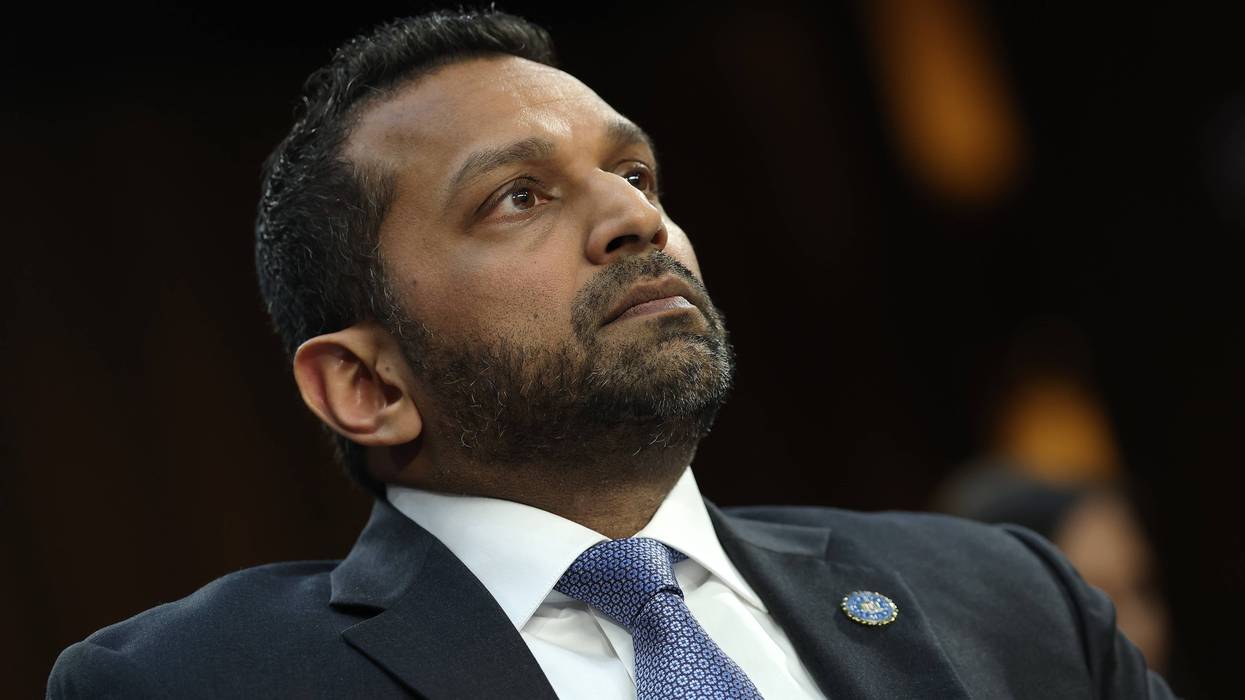
"If your political views are practically anything other than MAGA, you’re on notice, courtesy of the FBI," said journalist Ken Klippenstein.
Along with cutting environmental, housing, and health programs and proposing an increase of nearly $500 billion in military spending, President Donald Trump's new budget proposal shows how the White House "wants to use taxpayer dollars to spy on those who oppose its extremist agenda," one Democratic congresswoman said Monday evening.
Rep. Mary Gay Scanlon (D-Penn.) was referring to the budget's description of a new FBI center that is already working to root out what the White House broadly defined as "domestic terrorism" in a federal memo last year.
As independent journalist Ken Klippenstein wrote this week, buried in Trump's budget request—which includes $12.5 billion for the FBI to invest in counterterrorism efforts and other spending—is the White House's latest assertion that "domestic terrorists... pose an elevated threat to the Homeland."
"In recent years, heinous assassinations and other acts of political violence in the United States have dramatically increased," reads the budget's section on domestic terrorism. "Commonly, this violent conduct relates to views associated with anti-Americanism, anti-capitalism, and anti-Christianity; support for the overthrow of the US government; extremism on migration, race, and gender; and hostility to those who hold traditional American views on family, religion, and mortality."
The views described echo National Security Presidential Memorandum 7 (NSPM-7), the memo signed last September that directed federal agencies to develop a national strategy to "investigate and disrupt networks, entities, and organizations that foment political violence" in order to stop violent attacks before they happen.
But despite the administration's singular focus on groups and individuals who hold left-wing, anti-capitalism views and subscribe to belief systems other than Christianity, the National Institute of Justice found that since 1990, 227 attacks motivated by right-wing views killed 520 people, while far-left groups carried out 42 attacks that killed 78 people. The NIJ study was removed from the US Department of Justice website shortly after the assassination of right-wing activist Charlie Kirk—an event that Trump explicitly blamed on left-wing groups without evidence, and which came weeks before the signing of NSPM-7.
The budget proposal explains that as a result of NSPM-7, the FBI recently created the NSPM-7 Joint Mission Center (JMC), which is run by personnel from 10 federal agencies.
"The JMC is working to counter domestic terrorism and organized political violence by integrating intelligence operational support, and financial analysis to proactively identify networks and prosecute domestic terrorist and related criminal actors," reads the proposal.
Scanlon is one of a small number of elected Democrats who have spoken out about NSPM-7 in congressional hearings and media interviews.
"If anyone can be labeled a domestic terrorist for speech opposing this administration, our First Amendment rights are under grave threat," said Scanlon recently.
Klippenstein noted that the budget document describes social media platforms and encrypted communications apps as being used by "domestic terrorists" to "recruit new adherents, plan and rally support for in-person actions, and disseminate materials encouraging radicalization and mobilization to violence.”
FBI Director Kash Patel told Congress that anyone who used the Discord channels used by Tyler Robinson, who was accused of killing Kirk, would be investigated by the agency.
Klippenstein noted that the FBI's domestic terrorism watchlist, which as of last September listed about 5,000 US citizens, reportedly "is growing."
"If your political views are practically anything other than MAGA, you’re on notice, courtesy of the FBI," Klippenstein wrote.