

SUBSCRIBE TO OUR FREE NEWSLETTER
Daily news & progressive opinion—funded by the people, not the corporations—delivered straight to your inbox.
5
#000000
#FFFFFF
To donate by check, phone, or other method, see our More Ways to Give page.
Daily news & progressive opinion—funded by the people, not the corporations—delivered straight to your inbox.
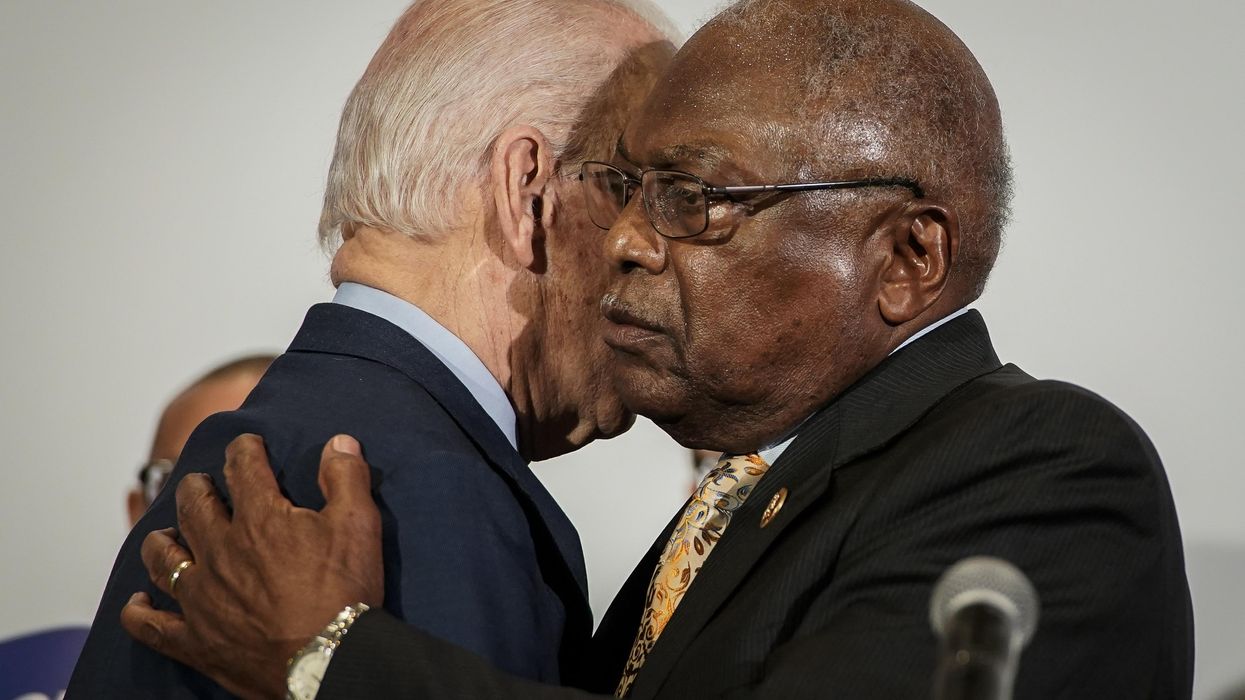
Biden should bow out gracefully, and soon. It’s time to trust the Democratic rank and file to select the next presidential candidate.
In 1971, I worked as a paid staff member for Vinnie Sirabella, a charismatic labor leader who was running for mayor of New Haven, Connecticut. After personally conducting a voter-registration canvas in an area that Vinnie assured me was his stronghold, I found that he was universally disliked by his would-be supporters because he led a strike against the city’s most respected institution —Yale University. His lack of support turned out to be the case in neighborhood after neighborhood. When I reported this troubling situation to Vinnie and suggested he consider bowing out of the race gracefully, the staff became furious and ran me out of town. I learned it’s nearly impossible to bring bad news to a geared-up campaign -- the momentum to continue is just too great. Vinnie stayed in the race and received three percent of the vote.
It appears these days that the Democratic Party establishment is refusing to face up to bad news. Many, if not most, Democratic staff and operatives realize that Biden, at this point is his career, is a weak candidate. They understand that the risk of losing to Trump is very real, putting all of democracy in danger. But very few are willing to say that to Biden. And those who do, like former Obama advisor David Axelrod, are quickly denigrated.
The failure of Democratic operatives to act may be connected to Upton Sinclair’s astute observation made in 1935 made when running for Governor of California: “It is difficult to get a man to understand something, when his salary depends on his not understanding it.”
In a real sense democracy is at risk in two ways.
Nevertheless, multiple polls show that somewhere between 50 to 70% of Democratic and Democratic-leaning voters don’t want Biden to run. Their only choices so far, however, in the opening primary in South Carolina on February 3, 2024, are little-known Representative Dean Phillips, of Minnesota, and self-help guru Marianne Williamson.
Why are the Democratic leaders not listening to their base? Isn’t this what democracy is supposed to be about? And where are all the other more established contenders? Why haven’t popular Democratic governors like Gavin Newsom (CA), Gretchen Whitmer (MI), J.B Pritzker (IL) or Phil Murphy (NJ) thrown their hats in the ring? And what about Ohio’s Senator Sharrod Brown?
No one is jumping in because that’s not how this game is played. As sitting president, Biden, and Biden alone, gets to make the decision, and he has chosen to run. The rest of the Democratic establishment is obliged to follow. Anyone who doesn’t will see their access to presidential power greatly reduced or eliminated, which raises serious questions about the role of grass-roots democracy within the Democratic Party.
The Democratic establishment, like the rank-and-file, certainly knows that Biden is too old, not just in years but in the way he moves and acts. His staff keeps him away from unscripted press events for fear he will struggle with his language. Instead, we hear rationalizations galore about how this really doesn’t matter. Here are more than a few:
Or as John Nichols put it in The Nation, “The current obsession with polls revolves around two basic premises: Biden is old and a lot of voters would prefer a younger alternative. Fair enough, but that doesn’t have much meaning if Biden is committed to running—and he is—along with the almost equally old and more bedraggled Trump.”
Multiple polls show that somewhere between 50 to 70% of Democratic and Democratic-leaning voters don’t want Biden to run.
In a real sense democracy is at risk in two ways. First, Trump is a clear and present danger if re-elected. But also, Democratic Party democracy, to restate Nichols, “doesn’t have much meaning if Biden is committed to running…”
Biden should bow out gracefully, and soon. It’s time to trust the Democratic rank and file to select the next presidential candidate. By refusing to do so, the Democratic establishment and its many progressive allies are playing with fire. They are not listening to their voters, and they are running the very real risk that a substantial portion of those who voted for Biden last time around will either sit home or cast their votes for a third-, fourth- or fifth-party candidate. The willful disregard of grass roots democracy within the Democratic Party could very well lead to the demolishment of democratic norms under a vengeful President Trump.
This is no time for collective cowardice. It is time for Democratic Party leaders to say out loud what they are saying to themselves: “Joe, for the sake of democracy, please don’t run!”
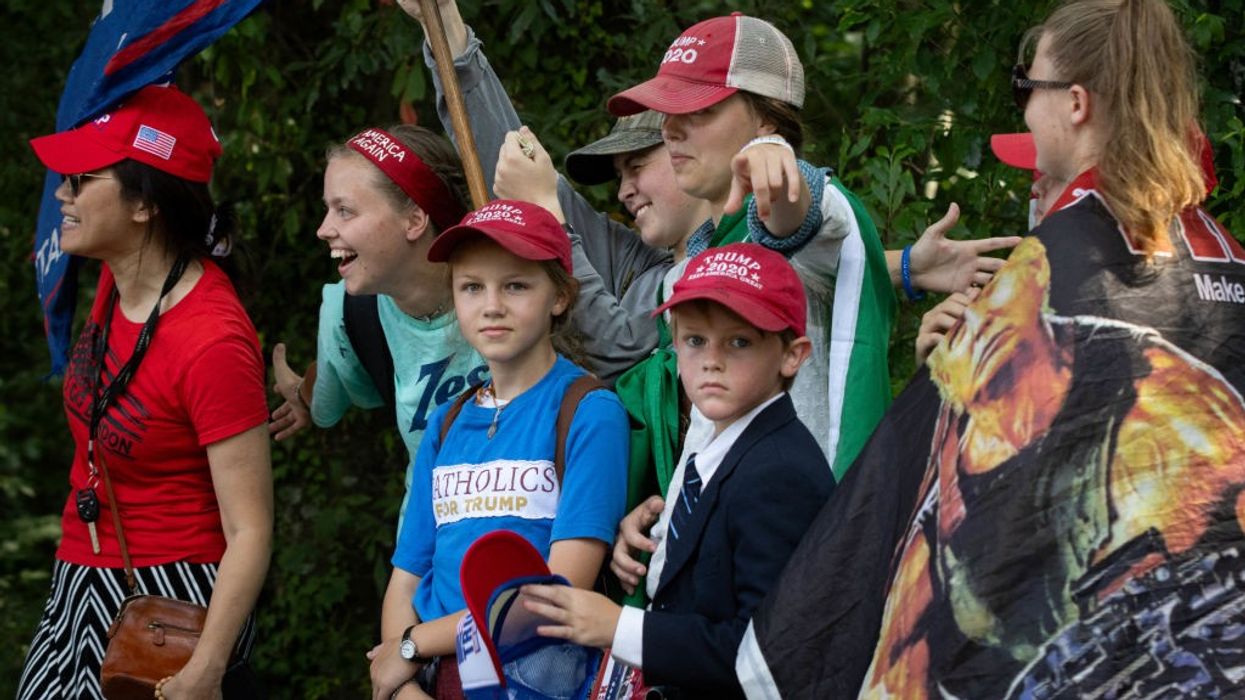
His ability to campaign may be limited by his legal woes, but his supporters will vote for him anyway.
It’s election season, and the leading candidates for president are barnstorming from state to state on the stump-speech circuit. Or, in the case of former president Donald Trump, to keep court dates.
As they say: priorities.
Trump was indicted last week, along with 18 other defendants, in Fulton County, Georgia. That makes the fourth jurisdiction in which the former president is facing criminal penalties, following the cases in Washington, D.C., where he was charged in federal court with conspiracy to overturn the election (four counts), and in Florida for illegally possessing classified documents (40 counts, including superseding indictments, for obstructing the government’s efforts to get them back), and in New York for paying off an adult film star to cover up an affair (34 counts of falsifying business records).
In Georgia, Trump himself faces 13 counts in the latest indictment, out of 41 total charges that also target 18 co-defendants. Trump’s charges include violating Georgia’s racketeering laws, and several that stem from the conspiracy to submit a false slate of electors to the Electoral College—and which also include the “absolutely perfect phone call” to Georgia Secretary of State Brad Raffensperger, asking him to “find 11,780 votes” to change the outcome of the election.
If four indictments seem excessive, it’s because Donald Trump was excessive in committing crimes in multiple jurisdictions.
Among the flurry of indictments and addenda and superseding indictments, it’s hard to keep track of which ones are important. The answer is that all of them are vitally important. If four indictments seem excessive, it’s because Donald Trump was excessive in committing crimes in multiple jurisdictions.
In the words of another former president, Trump is in deep doo-doo. But that doesn’t mean we can let down our guard.
We need to come to terms with an uncomfortable truth: the fact that Donald Trump will be the Republican nominee for president. His ability to campaign may be limited by his legal woes, but his supporters will vote for him anyway. We’re entering a presidential election phase where the Biden-vs.-Trump rematch is 99% certain, and that 1% hedge has only to do with both candidates being decades older than the average American president.
No viable candidate is going to emerge on the Democratic side to challenge an incumbent president with a largely successful term in office under his belt. First, we have Robert F. Kennedy Jr., a new darling of the right whose dangerous anti-vaccine crusade has been shown to be just the surface of his conspiracy-mongering and transphobia. Second, we have Marianne Williamson, whose “politics of love” nonetheless failed to win over American hearts in 2020, and whose own views on vaccines are likewise suspect, even if they’ve since been eclipsed by those of RFK Jr.
And it’s been obvious from day one that the Republican Party is setting itself up to repeat the 2015 primary race, where Trump picks off, one by one, a large number of third-tier politicians too cowardly to challenge him directly. Just as in 2015, he won’t even need a majority of the Republican vote, because he’s the only candidate who will have more than 20% to begin with.
(The one possible exception to this is former New Jersey Gov. Chris Christie, who has said he’s in the race specifically to try to take Trump down. More power to him if he does, because no one can defeat Trump by ignoring him—he has to be confronted head-on and destroyed. Maybe Christie is the one to do that, but I’m still waiting for evidence.)
In 2023 though, Trump’s already polling well above 50% among Republicans, despite the indictments. That’s because the GOP since 2015 has largely purged itself of its establishment wing, leaving the extremists in control. (Meanwhile, 53% of Americans actually approve of the indictments, and they may be hurting Trump’s overall favorability as the campaign season begins.)
And, while the indictments seem to be fueling a modest dip in Trump’s national polling numbers, the indictments are boosting his polling numbers within the Republican primary. That’s because his followers believe, with all the fervent religiosity of cult members, that the Big Bad Woke Government is persecuting loyal, patriotic Republicans. The charges only feed their persecution complex, which is what feeds the hand-wringing commentators urging us not to prosecute Trump, out of fear of what his supporters will do. As if his supporters haven’t already tried to violently overthrow the government.
Let’s disabuse ourselves of another fantasy. Even if Trump goes to prison because he’s found guilty, or he’s put in jail for contempt by a judge who refuses to tolerate his taunts and threats, he will continue running for president, he will win the GOP nomination, and he could indeed be reelected. There ought to be a law, but there isn’t. The narrowly divided Congress has been unable to do the sensible thing and pass legislation barring him under the 14th Amendment from holding public office, or even just in response to his two impeachments.
I wouldn’t put much stock in the recent “conservative argument for barring Trump” articles either. They’re interesting arguments, and the law professors making the case are perhaps even correct that the 14th Amendment prohibition is automatic, with no Congressional action needed. But most state GOP officials who have the power to boot Trump from the ballot aren’t going to do that without a court order, and this is a party that has increasingly shown its willingness to ignore the law entirely.
This doesn’t mean Trump won’t eventually go to prison. But it’s very unlikely to happen before the next election, given the inevitable appeals and Trump’s expertise in delay tactics and avoiding accountability. After all, he still insists he won the 2020 election. This could go on for a long time.
But there are signs we will see some major results before the election.
Special Prosecutor Jack Smith, who brought both the classified documents case in Florida and the election interference case in Washington, D.C., has indicated he isn’t going to accommodate Trump’s usual tactics and requested January 2 as a date for Trump’s election interference trial. Smith even indicated he’d allow the documents trial to be postponed to accommodate this one.
That’s important for two reasons. One, voters have a right to know if Trump is guilty or not guilty before casting their votes. More importantly, if Trump wins, he can, and will, simply dismiss any federal cases that are still pending. Maybe he’ll even settle the cases with a payout from the government to himself to cover his (likely inflated) legal fees. He may pardon himself if he’s both found guilty and wins the election, because his handpicked, subservient attorney general won’t stop him—and that’s even more of an argument to make sure Trump never again obtains power.
Speaking personally as someone who grew up on the East Coast in the 1970s and ’80s, it was pretty obvious back then that Trump was, at best, a tawdry huckster with a long line of shady deals and business failures to his name, both his own and others’.
Fortunately, U.S. District Court Judge Tanya Chutkan also appears to be resistant to Trumpian antics, granting Smith’s early request to prevent Trump from sharing trial evidence publicly, as he is almost certainly going to do. She’s also issued a warning to Trump, indicating that she will take any necessary measures to stop Trump from intimidating witnesses or tainting the jury pool with his trial-by-tantrum strategy.
In 2016, someone who hadn’t been paying attention might be forgiven for not expecting the rampancy of criminal behavior once Trump ascended to national office. But the mass media can’t be forgiven, since it’s their job to be paying attention. And, speaking personally as someone who grew up on the East Coast in the 1970s and ’80s, it was pretty obvious back then that Trump was, at best, a tawdry huckster with a long line of shady deals and business failures to his name, both his own and others’. He was a regular of the New York Post’s “Page Six” gossip column and grocery store checkout-line magazines. By extension, the “serious” media should have done a better job warning American voters about someone they only knew from highly scripted appearances on The Apprentice.
In 2023, mass media no longer have an excuse, and largely they’ve been fairly good. But they’re still acting as if the Republican nomination isn’t a foregone conclusion. And the possibilities of more Trumpian violence, let alone another January 6-style insurrection, can’t be understated.
The United States is quite imperfect in living up to its ideals, but the general trend has been to get better at it. Allowing someone to escape justice just because he’s a former president, or because we’re afraid of his followers, undermines our commitment to have justice for all.
Fortunately, it appears we aren’t going to allow justice to be denied in this case. Prosecuting (and convicting) Trump won’t change the minds of his loyal base, and it may indeed push some of them over the edge. But it will show that the rest of the nation is willing to live up to its principles.
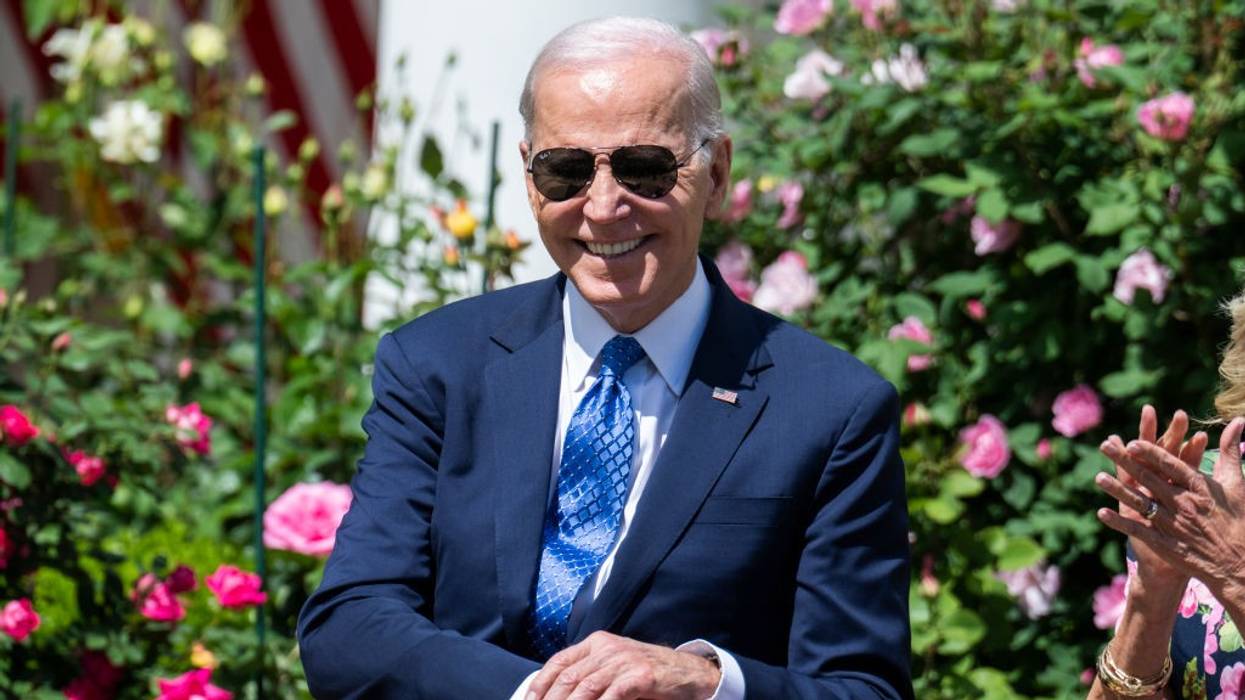
"If President Biden is serious about defeating the fascists and right-wing nominee in 2024," said the youth-led Sunrise Movement on Tuesday, "he must run on a progressive platform and use the final year of this term to rack up more wins for our generation."
President Joe Biden made his reelection campaign official Tuesday morning as he evoked the threat to foundational and hard-won rights and freedoms posed by the increasingly fascist Republican Party.
"Every generation has a moment where they have had to stand up for democracy. To stand up for their fundamental freedoms," Biden declared in an early morning post to social media. "I believe this is ours."
While Biden had long said he would seek another term, he states in his campaign's kickoff video that the key to his run will be warding off any possible victory from the increasingly anti-democratic GOP, including his predecessor Donald Trump, the GOP's leading contender, or other hopefuls like Nikki Haley, who launched her campaign in February, and Florida Governor Ron DeSantis, who is expected to throw his hat in the ring later this year.
Biden accused "MAGA extremists" around the country for their persistent assault against "bedrock freedoms" and liberal democracy while they also threaten cuts on Social Security, eviscerate reproductive choice and abortion care, ban books, attack the LGBTQI+ community, and actively work to make voting for Americans.
"When I ran for President four years ago, I said we were in the battle for the soul of America," Biden says in the launch video. "And we still are."
"If President Biden is serious about defeating the fascists and right-wing nominee in 2024, he must run on a progressive platform and use the final year of this term to rack up more wins for our generation."
With the Republicans hungry to retake both Congress and the White House, Biden warns that now "is not time to be complacent" and that "this is our moment" to stand up to defend the nation and the values it claims to value.
Not wholly unchallenged on the Democratic side, Marianne Williamson and Robert F. Kennedy Jr. have launched presidential campaigns to offer an alternative to the incumbent. On the Republican side, Trump's popularity—despite a recent criminal indictment and his role in triggering the January 6. insurrection effort on the U.S. government in 2021—remains the overall favorite to win the GOP nomination.
While the Democratic National Committee will clear a path for Biden, progressives disappointed in the president's failures or shortcomings, including repeated failures to live up to his commitments on climate, say Biden cannot afford to ignore them if he hopes to beat Trump for a second time.
"If he wants to win," said the youth-led Sunrise Movement on Tuesday, "he must energize the young voters who have been carrying the Democratic Party since 2018. He can't take our generation for granted."
In a statement, Sunrise's executive director Varshini Prakash said: "Let's be clear—President Biden ran and won in 2020 by mobilizing our generation on the promise of bold, Green New Deal-style climate plans, and it's how Democrats won again in 2022 after passing the Inflation Reduction Act."
"If President Biden is serious about defeating the fascists and right-wing nominee in 2024, he must run on a progressive platform and use the final year of this term to rack up more wins for our generation," Prakash added. "The steps backward on policy that the administration has taken—especially on Willow and drilling projects—make our job of getting young people out to vote all the more difficult, and this is a fight we can't afford to lose."
According to Sean Eldridge, president and founder of the advocacy group Stand Up America, said Biden helped "save American democracy by defeating Donald Trump in 2020, and he did it again by opposing MAGA extremists in last year’s midterm elections."
It's very possible Biden could face off against Trump in the general election again, said Eldridge.
"The future of our democracy will once again be on the ballot in 2024," he said. "As the Republican field is beginning to take shape, voters should be alarmed by the election deniers, January 6 enablers, and other anti-democratic politicians throwing their hats into the ring. Our community of nearly two million members is ready to mobilize in 2024 to support democracy defenders up and down the ballot."

Human rights defenders spoke at a rally in New York City Monday ahead of what they called a "show trial" for attorney Steven Donziger, who was held in contempt of court in 2019 by a prosecutor with ties to the fossil fuel industry.
Donziger won a historic $9.5 billion judgment against oil giant Chevron in 2013 over the company's dumping of 16 billion gallons of oil into the Amazon in Ecuador. That ruling has been upheld by three Ecuadorian courts, but Chevron has gone to great lengths to avoid paying the settlement.
Donziger's federal trial--without a jury--began Monday morning, with right-wing Judge Loretta Preska presiding. As Common Dreams reported last week, Preska is a leader in the conservative Federalist Society, which has backing from oil giant Chevron--the corporation at the center of the case against Donziger.
Dozens of supporters arrived at the Daniel Patrick Moynihan United States Courthouse in Manhattan to speak out against the misdemeanor charge against Donziger, which carries a potential six-month prison sentence and which, Donziger said in a video released Sunday night, is "an effort by corporate America, particularly the fossil fuel industry," to "attack and silence their critics."
Called "America's first corporate political prisoner," Donziger has been under house arrest for more than 600 days since U.S. District Judge Lewis A. Kaplan of the Southern District of New York held him in contempt of court in July 2019, after Donziger refused to disclose privileged client information to the fossil fuel industry.
Kaplan is a former corporate lawyer with investments in Chevron. Aside from Kaplan and Preska's ties to Chevron, the special prosecutor selected for the trial is a partner at a firm which once counted the oil giant as one of its clients.
The conflicts of interest in the case have led Donziger's supporters to decry the attorney's "persecution" and deem the federal trial a "kangaroo court." Instead of paying the $9.5 billion settlement to clean up the pollution it dumped into the Amazon, activist and actress Susan Sarandon said at the rally, Chevron instead "chose to silence and persecute Steven...because it's also a signal to other activists, to other people who are trying to save our environment that you will have dire consequences if you open your mouth and if you take legal action."
Sarandon echoed the message shared by Donziger on the eve of the trial.
"I'm just a symbol that they want to go so they can use it as a weapon of intimidation to try to stop this work happening, to try to discourage lawyers and campaigners and human rights advocates, environmental justice campaigners from even doing this work," Donziger told his supporters.
Donziger also noted ahead of the trial that two Chevron lawyers dropped out at the eleventh hour after planning to appear as key witnesses for the prosecution.
"They know when they take the oath they can't lie any longer," Donziger said. "This is what happens when the world watches."
Donziger's trial has garnered the attention of nearly 70 Nobel laureates and 200 law students who called on the Department of Justice in recent days to investigate and intervene in the case.
"We fear that this case will embolden further strategic lawsuits against public participation ('SLAPP') and deter other students from representing clients seeking to redress harm by corporations," the students wrote in a letter released Sunday with signatories representing 55 law schools. "A successful campaign to criminalize Mr. Donziger would suppress the public interest advocacy that is crucial to a fair justice system and social progress."
Progressive lawmakers including Reps. Alexandria Ocasio-Cortez (D-N.Y.), Cori Bush (D-Mo.), and Jamaal Bowman (D-N.Y.) have also demanded that U.S. Attorney General Merrick Garland review Donziger's case.
Donziger called on his supporters to "bear witness" to the trial and enter the courtroom during the trial if possible.
"We need as many people as we can to bear witness to what is really set up to be a travesty of justice," Donziger said Sunday evening.

Will Joe Biden end the endless wars or won't he?
I have serious doubts that he has the will or political acumen to do so. But that's only a fragment of the question that needs to be asked, as we approach the twentieth anniversary of our global "war on evil."A far, far bigger question looms, a question with answers scattered across the global landscape: Can we learn to wage peace? Can we create a united world, free of borders and scapegoats? Can we transcend our alienation from and exploitation of the planet that is our home and our nurturer? Can we stop being afraid of people we don't know, people who are "different"from us? Can we let go of our need for an enemy?
The war is still there, absurdly, pointlessly, one of many that we don't even bother to justify anymore. They just are.
Millions of global citizens believe the answer to these questions is yes and are committed to creating a different world--I call it participatory evolution--but at the highest levels of collective human organization, cynicism and ignorance rule. Or perhaps I simply mean cluelessness. Militarism is embedded in the infrastructure of the nation state. It's not simply that borders and interests have to be "defended"; the easiest way to maintain the illusion of national unity is to present the people with a powerful enemy, imaginary or otherwise.
"Ours is the cause of freedom," George W. Bush declared in November 2001, a month after the U.S. began its war on Afghanistan and two months after 9/11, recently quoted in an essay by Andrew Bacevich. "We've defeated freedom's enemies before, and we will defeat them again. . . . My fellow Americans, let's roll."
That's how wars always start--with enthusiastic optimism to beat the band. Wow, we're going to make the world a better place. Two decades later . . . huh? The war is still there, absurdly, pointlessly, one of many that we don't even bother to justify anymore. They just are. We have to complete our mission. Sorry about the background noise.
Bacevich also quotes Gen. Stanley McChrystal, one-time commander of coalition forces in Afghanistan, who--ten years into the debacle--acknowledged that the United States and its military had no idea who they were actually invading.
"We didn't know enough, and we still don't know enough. Most of us--me included--had a very superficial understanding of the situation and history, and we had a frighteningly simplistic view of recent history, the last 50 years,"he said.
As Bacevich noted, McChrystal was speaking purely in a strategic sense. We could have conquered our enemies and won the war if we had had a clearer understanding of the country we were about to invade, the people we were about to bomb. Unbeknownst to the general, of course, his confession of top-level military and political ignorance opens the door to much larger matters, such as how to live in peace and sanity. What if we actually spent time trying to understand one another? What if we valued rather than feared our differences? What if we actually had less revved-up determination to kill our problems and more determination to solve them?
What if? What if?
"Both domestically and internationally, we must dramatically ramp up the use of proven powers of peace-building, including dialogue, mediation, conflict resolution, economic and social development, restorative justice, public health approaches to violence prevention, trauma-informed systems of care, social and emotional learning in schools, and many others."
What if those were the words of President Biden? If they were, maybe war itself would not seem endless or inevitable. But the words are from Marianne Williamson's website, specifically from the "Plan for a U.S. Department of Peace"--a bill initially introduced by former U.S. Rep. Dennis Kucinich in 2001, and reintroduced in every new Congress since then, calling for a cabinet-level Department of Peace.
"Domestically,"the plan continues, "the need for coordinated effort to end violence in our country is also greater than ever. Too many of our citizens, and in particular our children, fear violence on a daily basis. One hundred Americans die of gun violence every day. We have areas in our inner cities called 'domestic war zones.' From gang and drug violence, to mass shootings even in our schools, to bullying and sexual violence, the United States is riddled with violence. We have not yet addressed it holistically or in an integrated fashion. While we treat symptoms, we do not treat cause."
I repeat: We treat the symptoms. We hide in utter fear of the cause, because confronting causes means looking inward as well as outward. The refusal--the inability?--of most leaders at the national level to approach humanity's biggest problems holistically, rather than simply blame them on "the other,"says to me it's time to begin loosening the certainty that borders are real, that nation states are real. As George W. Bush--not to mention Donald Trump--taught us, nation states (and wars) are built on public relations: on cliches and lies. "We've defeated freedom's enemies before, and we will defeat them again."
How could any sane human being imagine that actions built on this kind of thinking could solve, or heal, a complex issue? That's like suggesting that we try healing Covid-19 by injecting bleach. You know, going to war against it.

Though the international community recognizes water access as an essential human right, hedge fund managers and public water agencies are poised to begin profiting off water scarcity, which experts say will worsen in the coming years in the U.S. as well as other countries.
As Bloomberg reported late Sunday, water will be treated as a commodity and traded on Wall Street for the first time starting this week, with market participants able to bet on or against potential water scarcity.
The Chicago-based global markets company CME Group first announced in September--as wildfires linked to higher temperatures and drought raged across the West Coast--that it would soon offer contracts within California's $1.1 billion spot water market.
" Climate change, droughts, population growth, and pollution are likely to make water scarcity issues and pricing a hot topic for years to come," RBC Capital Markets managing director and analyst Deane Dray told Bloomberg Sunday.
Progressives, climate action campaigners, and rights advocates expressed shock Monday that traders are poised to treat water scarcity--which plagues two billion people around the world and is expected to affect two-thirds of the population in the next four years--as an opportunity to profit.
"If we do nothing about the climate crisis and if we do nothing about our system, which fuels extreme inequality, this is a small indicator of our very dark destiny," tweeted former New York congressional candidate Lindsey Boylan.
"What could possibly go wrong?" tweeted environmental lawyer Scott Hecht sarcastically, adding that the U.N. officially recognized the human right to water in 2010.
In the water market, based on the Nasdaq Veles California Water Index, market participants will be able to claim quarterly contracts through 2022, betting on the prices of 10 acre-feet of water, equal to about 3.26 million gallons.
CME Group told Bloomberg that agriculture producers, public water agencies and utilities, and Wall Street investors have discussed participating in the market.
Human rights non-profit Dig Deep and the U.S. Water Alliance released a study last year showing that more than two million people in the U.S. lack access to running water. Even in the wealthiest country on the planet, the share of households that will face unaffordable water bills is expected to skyrocket to 36% from 12% over the next five years, according to a 2017 analysis published in the journal PLOS One, due to an "increasing strain on water prices" brought on by the climate crisis, water quality, and other factors.
Indigenous rights defender and journalist Ruth H. Hopkins tweeted that in addition to rising global temperatures and the prevalence of drought--which affected nearly half of the continental U.S. this fall, in the most widespread drought the country has seen since 2013--water supply is negatively affected by fossil fuel projects which "continue to poison it."
Water is joining gold, oil & other commodities traded on Wall Street, revealing new scarcity.
Water is life, we said. While fresh water becomes rarer, extractive industries continue to poison it with wasteful projects & leaky pipelines. We warned you. https://t.co/PnAZ7PZQwu
-- Ruth H. Hopkins (@Ruth_HHopkins) December 7, 2020
"If nothing else does it, this should make you passionate about climate change," author and former Democratic presidential primary candidate Marianne Williamson tweeted.

Joe Scarborough, a former Republican Congressman cum pundit, labelled Mitch McConnell" Moscow Mitch" and it may have done more to expose McConnell as the dangerous autocratic hypocrite he is. But McConnell is just a symptom of a much larger malady, one that has been brewing for four decades - the increasing influence of money in politics and government.
Ever since Reagan declared the markets to be the answer, and government to be the problem, we've been rolling back the New Deal policies which contributed to building a civil society, and shredding the controls that made democracy work.
It's come to the point where congressional districts are routinely gerrymandered; where monied interests - not the will of the people -- decide who's elected and what laws and policies are pursued; where legislation to make democracy work better disappear from view with nary a whisper of complaint from the corporate-owned media; where voters are caged; where impediments to voting are erected by petty autocrats; where a president's Supreme Court nominee is ignored for a year and a half - again, with nary a whimper of complaint from we the people or the media we watch, listen to and read.
If government is indeed a wholly-owned subsidiary of corporate America and the system is hopelessly rigged, why participate?
How can this be happening here in the land of the free and the home of the brave? Because money talks and the people walk. As a result, people simply don't believe government works for them. And the evidence shows they are right. If government is indeed a wholly-owned subsidiary of corporate America and the system is hopelessly rigged, why participate?
It's almost unbelievable, but in Tuesday's Democratic debate, Marianne Williamson, better than anyone on the stage, captured the number one issue that has been sabotaging democracy in America for decades, when she said:
The issue of gun safety, of course, is the NRA has us in a chokehold, the pharmaceutical companies, the health insurance companies, so do the fossil fuel companies, and so do the defense contractors. None of this will change until we either pass a constitutional amendment or pass legislation that establishes public funding for federal campaigns.
CNN's pundits asked questions that were designed to generate heat at the expense of shedding light. But Williamson was having none of it. She dodged the gotcha questions and reframed the narrowly framed single-issue questions to address the systemic problem facing America today. To be fair, Sanders and Warren did, too, and have been for some time, but Williamson was relentless in her focus and did it with a magnanimity that kept the focus on the issue of money in politics, not the candidates who won't admit it's the main problem.
Yes, healthcare is important, and yes, income inequality is important, and yes immigration is important, and yes, gun violence is important, and certainly climate change - a truly existential threat - is important.
And the fact that we have a narcissistic, racist incompetent as President, and that no one in his party will stand up to him is a problem. But at the end of the day, Ms. Williamson is right - these are symptoms. Money in politics is the real impediment to solving any of the problems we are facing, including the erosion of our system of government.
Money in politics is the reason government doesn't work and doesn't represent the people. It's the reason we haven't adopted Medicare for All; it's the reason we won't address climate change; it's the reason your representative doesn't give a damn about what you want; it's the reason we keep passing laws that favor the ultra-rich and corporations while they screw the people. And finally, it's the reason the US is an oligarchy headed toward authoritarian rule.
It's this last issue that explains why hate, xenophobia, fear, blame and racism have been so effective that they get some 40 to 45 percent of Americans to vote for an ignorant buffoon, and why that buffoon can win with a mere 27 percent of the eligible voters. When people are feeling powerless, a demagogue like Trump can leverage blame, hate, fear and anger and use it to mobilize the people who've been screwed by the system that used to work for them. Those who aren't conned by the hatemongers fall prey to a justifiable cynicism, and too often, stay home.
When Williamson said, "I don't think the Democratic Party should be surprised that so many Americans believe yada, yada, yada," she captured exactly what the Democrats' problem is - after decades of running as the people's party, but representing elites and corporations once elected, they have little credibility when they talk about helping the average Joe or Jane.
The Democratic debates turned into an all-out war between progressives and centrists, and the centrist neoliberals used words like "fantasy," "unrealistic," and "fairy tale," to describe things like Medicare for All - even though MFA and similar plans for universal coverage are no-brainers that are practiced in virtually every other developed country and in many developing countries as well; or to describe things like the Green New Deal - a program that is necessary to avoid mass extinction and destruction of the ecosystems which sustain us. They used terms like "practical" and "realistic" to describe programs that are equivalent to medical extortion or ecological devastation.
As I explained in my book, WTF, America? How the US Went Off the Rails and How to Get it Back on Track this is all part of an effort to brand policies and programs that support people, not plutocrats, as fringe. It's part of a well-funded and longstanding campaign to put the interests of capitalism and capitalists above the people's interest. It uses techniques of rhetoric to distort, delude and confuse.
Which brings us to "Moscow Mitch" and Ms. Williamson's "Yada, Yada, Yada." Both seem to have struck a nerve and resonated with the news media and the people. And both employ some of the tested techniques of rhetoric.
Which brings us to "Moscow Mitch" and Ms. Williamson's "Yada, Yada, Yada." Both seem to have struck a nerve and resonated with the news media and the people. And both employ some of the tested techniques of rhetoric. Moscow Mitch uses alliteration, metaphor, and simple words to convey a deeper meaning. It doesn't get much simpler than yada, yada, yada, and it, too, functions as a metaphor for something much deeper - the alienation and justifiable cynicism of the average voter. It has the advantage of being a well-known and popular meme that is readily understood by nearly everyone.
It's not surprising that both these memes came from outside the party mainstream. Democrats have been notoriously inept at messaging. They still are.
Consider the debate about MFA. There are simple answers to the sound bites about "taking away your insurance plan" and "increasing your taxes." No one cares about their insurance plan. They care about their doctors and hospitals, and under MFA, they get more choices for each. As for "tax increases," MFA advocates need to reframe the payments as insurance premiums. If they did this, their answer to the "tax" question would go something like this. "Your choice is to pay a smaller premium to the government for better care, guaranteed coverage and access to more doctors and hospitals; or to pay a higher premium to private insurance companies for uncertain coverage, fewer choices, higher copays and inferior care."
Sanders has used the line about people preferring their doctors, not their health insurance plans, but he didn't in the debates. One of the key tenets of rhetoric is that repetition is an essential part of communicating ideas. Another is to reframe questions to address core issues.
Scarborough's formulation captures the essential anti-freedom agenda of the Republican Party, and Williamson's showed progressives how to get out of the "gotcha" and single-issue trap the media puts them in. I'm not suggesting that Democrats run Ms. Williamson, or that progressives embrace Mr. Scarborough but they could learn a lot by just listening to them.

Arguing that the winner of the 2020 presidential election will need to embrace a number of pro-democracy reforms in order to improve the lives of all Americans, the grassroots organization Common Cause on Wednesday launched a campaign aimed at getting candidates on the record about a number of proposals aimed at expanding civil rights and increasing representation in Washington.
With the Our Democracy 2020 campaign, Common Cause sent all 24 Democratic primary candidates--as well as Republicans Bill Weld and President Donald Trump--a 17-question survey asking contenders about their support for proposals like the For the People Act (H.R. 1) and reforming the electoral college and the filibuster.
"No single solution will solve all the challenges our democracy faces, but this comprehensive agenda helps policy makers and voters know there are concrete steps we can take and proven solutions we can pass to make our government work for everyone," reads the campaign's website.
"Between now and Election Day, we must make sure candidates know how important democracy issues are to voters--and that we expect them to let us know where they stand on our common-sense democracy solutions," Common Cause added.
Questions on the survey address:
The survey was sent to candidates in June, and as of this writing, six current Democratic contenders had replied to the questions.
Sens. Bernie Sanders (I-Vt), Elizabeth Warren (D-Mass), and Cory Booker (D-N.J.) had all responded, as well as Pete Buttigieg, Marianne Williamson, and Gov. Steve Bullock.
Warren and Buttigieg supported all but one of the proposed reforms; Buttigieg said he would not back restoring voting rights to currently and formerly incarcerated Americans, while Warren entered no response for the question.
Sanders supported 15 of the 17 proposals; he did not enter a response about whether he would appoint a "democracy czar" and whether he would "fix the Senate filibuster."
Simply electing a democratic president, Common Cause president Karen Hobert Flynn suggested in a statement, is not enough to ensure a strong democracy where voting rights are respected and government decision-making is not done in favor of corporations and the wealthiest Americans.
"The 2020 presidential election must focus on how we can change our political system so every person has a voice and is truly represented in government," said Karen Hobert Flynn, president of Common Cause. "The 'Our Democracy 2020' campaign is an important grassroots effort to ensure voters know where candidates stand."
"From guaranteeing a right to basic healthcare to ensuring living wages to solving the climate crisis," she added, "the imbalance in our democratic system and the power of wealthy special interests is in the way of making real progress on these important issues and Americans need to know how presidential candidates plan to fix it."

Reparations for slavery? Upending militarism and waging peace? Taking climate change seriously? Getting carbon out of the atmosphere and fossil fuel money out of the EPA? Valuing healing over punishment in our disastrous criminal justice system? Ending mass incarceration?
Bringing all this up--and much, much more--in a presidential race?
"Join with me for a year," cries Marianne Williamson, "of talking about things that matter!"
Williamson, best-selling author and long-time political activist (and a friend I've known and respected for many years), is, indeed, running for president of the United States, bringing into her campaign a burning commitment not so much to winning as to pushing past the consensus of know-nothingism that has long dominated American politics--and certainly the Democratic Party--at the highest level.
"Our democracy has stage 4 cancer," she says in her campaign video, "and all the traditional politicians are offering is a topical ointment."
Can this actually happen here? Can American democracy dig to the level of the national soul? Can it burrow beyond our superficial "exceptionalism" into our past and truly look at what we've done over the last two and a half centuries? Can the nation hold itself accountable . . . for slavery, for Native American genocide, for wasting trillions of dollars and murdering millions of people by waging endless war?
Can America change?
How, I asked her the other day, did you decide to run for president?
"One day I was sitting on my bed in New York and the idea just popped in," she said. Her first thought was: "Are you insane?" She spent a year and a half processing the idea before finally making the commitment to such an arduous undertaking: to run not simply as an isolated individual with a strategy and a bumper sticker, but as part of a movement, determined to bring the aspirations of that movement into direct confrontation with the forces of Big Money.
Join the evolution!
"I'm doing this," she said, "not just to elevate the conversation but to begin the process of making it happen. Why assume the American people won't do it?"
Williamson says on her website: "There is a groundswell of Americans seeking higher wisdom, in politics as well as everywhere else. . . My campaign for the presidency is dedicated to this search, for wisdom of the heart has been absent from the political sphere for far too long. Together we can reclaim both our democratic principles and the angels of our better selves, expressed not only in our personal lives but in acts of citizenship as well. Politics should not be a pursuit disconnected from the heart; it should be, as everything should be, an expression of the heart. Where fear has been harnessed for political purposes, let's now harness the power of love."
This is not how a presidential candidate is supposed to talk. A word like "love" ignites cynicism. It's soft. What about our enemies? What about the interests we need to pursue in a hostile world? Politics is supposed to be tough and hard, or pretend to be, as candidates spout cliches about "a strong defense" and dance away from any real challenge to the status quo.
Suddenly, as I was talking to Williamson, I thought about the John Kerry campaign of 2004 and how, when I received a call from a Kerry fundraiser one day, I got hung up on when I kept pestering the guy about Iraq. At that point, we were a year into the carnage and quagmire. He refused to discuss the candidate's position and finally rang off. I was so disturbed by this I called Kerry's central campaign office, where a spokesman did nothing but spout Bush-lite truisms. Even though the heart of Kerry's constituency thought the war was a disaster, the spokesman could speak only of "crushing the terrorists" and "building a democracy" in Iraq. He too hung up on me.
This confirmed what I pretty much knew. The country had become no more than a spectator democracy. The government's agenda is none of our -- the public's -- business. We get to go shopping and watch the bombing on TV. But . . .
"There is a groundswell of Americans seeking higher wisdom, in politics as well as everywhere else . . ."
Yes, I believe this as well. American democracy has not been completely undone. There's something happening here. Evolution -- the creation of a world beyond war and environmental exploitation -- has grabbed hold of the political system and is no longer irrelevant to it. In 2016, Bernie Sanders scared the DNC to within an inch of its corporate life. In 2018, a wave of progressive change flooded Congress.
"America should embark on a 10- to 20-year plan for turning a wartime economy into a peace-time economy."
Williamson told me she wants to confront the gatekeepers with "the necessary audacity to keep democracy alive."
Visit her website and imbibe some of her audacity:
"America should embark on a 10- to 20-year plan for turning a wartime economy into a peace-time economy, repurposing the tremendous talents and infrastructure of our military-industrial complex in such a way as to leave us strong enough to deal with America's legitimate needs for military preparedness, yet moving on to the urgent task of building a sustainable society and sustainable world. . . . (It) is time to release this powerful sector of American genius to the work of promoting life instead of death. .
"In many ways, America has continued the process of racial reconciliation begun in the 1960s. Yet in other ways, we have actually slipped backward. Yes, there are no more colored bathrooms and separate drinking fountains. But we now have mass incarceration; racial disparity in criminal sentencing; lost voting rights; outright voter suppression; and police brutality often focused on black populations. . . .
"Criminal justice has become both a political and moral disaster. . . . Trauma sends people into the criminal justice system, and then the criminal justice system too often heaps more trauma on those incarcerated or facing incarceration. If we are serious about breaking the cycle of violence, we need to be sensitive to these traumatic experiences that lead to violence, and by doing so, we have a chance of addressing both."
And there's so much more. Her goal is to cry truth at the American political consensus. To get into the debates, she must receive 65,000 unique donations. She's about two-thirds of the way there right now.
The political groundswell is just beginning. Democracy does not mean business as usual.
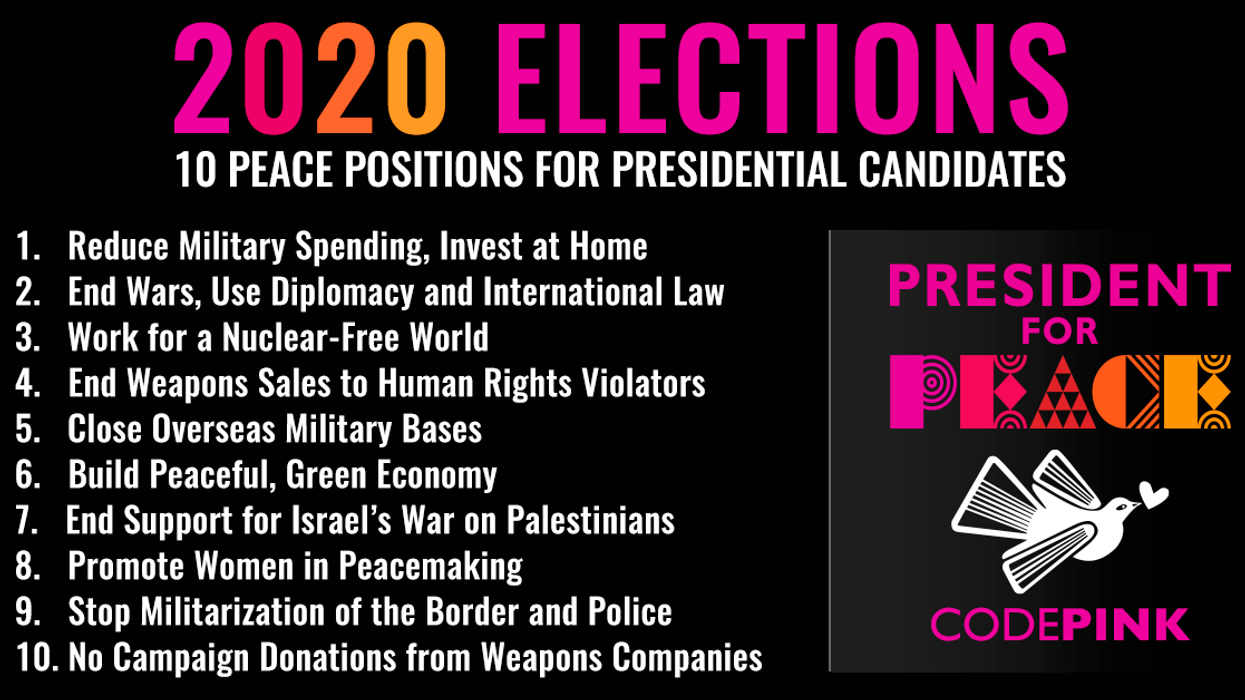
Forty-five years after Congress passed the War Powers Act in the wake of the Vietnam War, it has finally used it for the first time, to try to end the U.S.-Saudi war on the people of Yemen and to recover its constitutional authority over questions of war and peace. This hasn't stopped the war yet, and President Trump has threatened to veto the bill. But its passage in Congress, and the debate it has spawned, could be an important first step on a tortuous path to a less militarized U.S. foreign policy in Yemen and beyond.
While the United States has been involved in wars throughout much of its history, since the 9/11 attacks the U.S. military has been engaged in a series of wars that have dragged on for almost two decades. Many refer to them as "endless wars." One of the basic lessons we have all learned from this is that it is easier to start wars than to stop them. So, even as we have come to see this state of war as a kind of "new normal," the American public is wiser, calling for less military intervention and more congressional oversight.
The rest of the world is wiser about our wars, too. Take the case of Venezuela, where the Trump administration insists that the military option is "on the table." While some of Venezuela's neighbors are collaborating with U.S. efforts to overthrow the Venezuelan government, none are offering their own armed forces.
"Ever since the Bush/Cheney administration launched the present-day 'Long Wars,' new presidents from both parties have dangled superficial appeals to peace during their election campaigns. But neither Obama nor Trump has seriously tried to end our 'endless' wars or rein in our runaway military spending."
The same applies in other regional crises. Iraq is refusing to serve as a staging area for a U.S.-Israeli-Saudi war on Iran. Traditional Western allies of the U.S. oppose Trump's unilateral withdrawal from the Iran nuclear agreement and want peaceful engagement, not war, with Iran. South Korea is committed to a peace process with North Korea, despite the erratic nature of Trump's negotiations with North Korea's Chairman Kim Jung Un.
So what hope is there that one of the parade of Democrats seeking the presidency in 2020 could be a real "peace candidate"? Could one of them bring an end to these wars and prevent new ones? Walk back the brewing Cold War and arms race with Russia and China? Downsize the U.S. military and its all-consuming budget? Promote diplomacy and a commitment to international law?
Ever since the Bush/Cheney administration launched the present-day "Long Wars," new presidents from both parties have dangled superficial appeals to peace during their election campaigns. But neither Obama nor Trump has seriously tried to end our "endless" wars or rein in our runaway military spending.
Obama's opposition to the Iraq war and vague promises for a new direction were enough to win him the presidency and the Nobel Peace Prize, but not to bring us peace. In the end, he spent more on the military than Bush and dropped more bombs on more countries, including a ten-fold increase in CIA drone strikes. Obama's main innovation was a doctrine of covert and proxy wars that reduced U.S. casualties and muted domestic opposition to war, but brought new violence and chaos to Libya, Syria and Yemen. Obama's escalation in Afghanistan, the fabled "graveyard of empires," turned that war into the longest U.S. war since the U.S. conquest of Native America (1783-1924).
Trump's election was also boosted by false promises of peace, with recent war veterans delivering critical votes in the swing states of Pennsylvania, Michigan and Wisconsin. But Trump quickly surrounded himself with generals and neocons, escalated the wars in Iraq, Syria, Somalia and Afghanistan, and has fully backed the Saudi-led war in Yemen. His hawkish advisers have so far ensured that any U.S. steps toward peace in Syria, Afghanistan or Korea remain symbolic, while U.S. efforts to destabilize Iran and Venezuela threaten the world with new wars. Trump's complaint, "We don't win any more," echoes through his presidency, ominously suggesting that he's still looking for a war he can "win."
While we can't guarantee that candidates will stick to their campaign promises, it is important to look at this new crop of presidential candidates and examine their views--and, when possible, voting records--on issues of war and peace. What prospects for peace might each of them bring to the White House?
Senator Sanders has the best voting record of any candidate on war and peace issues, especially on military spending. Opposing the oversized Pentagon budget, he has only voted for 3 out of 19 military spending bills since 2013. By this measure, no other candidate comes close, including Tulsi Gabbard. In other votes on war and peace, Sanders voted as requested by Peace Action 84% of the time from 2011 to 2016, despite some hawkish votes on Iran from 2011-2013.
One major contradiction in Sanders' opposition to out-of-control military spending has been his support for the world's most expensive and wasteful weapon system: the trillion-dollar F-35 fighter jet. Not only did Sanders support the F-35, he pushed--despite local opposition--to get these fighter jets stationed at the Burlington airport for the Vermont National Guard.
In terms of stopping the war in Yemen, Sanders has been a hero. Over the past year, he and Senators Murphy and Lee have led a sustained effort to shepherd his historic War Powers bill on Yemen through the Senate. Congressman Ro Khanna, whom Sanders has chosen as one of his 4 campaign co-chairs, has led the parallel effort in the House.
"Senator Sanders has the best voting record of any candidate on war and peace issues, especially on military spending."
Sanders' 2016 campaign highlighted his popular domestic proposals for universal healthcare and social and economic justice, but was criticized as light on foreign policy. Beyond chiding Clinton for being "too much into regime change," he seemed reluctant to debate her on foreign policy, despite her hawkish record. By contrast, during his current presidential run, he regularly includes the Military-Industrial Complex among the entrenched interests his political revolution is confronting, and his voting record backs up his rhetoric.
Sanders supports U.S. withdrawals from Afghanistan and Syria and opposes U.S. threats of war against Venezuela. But his rhetoric on foreign policy sometimes demonizes foreign leaders in ways that unwittingly lend support to the "regime change" policies he opposes - as when he joined a chorus of U.S. politicians labeling Colonel Gaddafi of Libya a "thug and a murderer," shortly before U.S.-backed thugs actually murdered Gaddafi.
Open Secrets shows Sanders taking in over $366,000 from the "defense industry" during his 2016 presidential campaign, but only $17,134 for his 2018 Senate reelection campaign.
So our question on Sanders is, "Which Bernie would we see in the White House?" Would it be the one who has the clarity and courage to vote "No" on 84% of military spending bills in the Senate, or the one who supports military boondoggles like the F-35 and can't resist repeating inflammatory smears of foreign leaders? It is vital that Sanders should appoint genuinely progressive foreign policy advisors to his campaign, and then to his administration, to complement his own greater experience and interest in domestic policy.
Tulsi Gabbard
While most candidates shy away from foreign policy, Congressmember Gabbard has made foreign policy--particularly ending war--the centerpiece of her campaign.
She was truly impressive in her March 10 CNN Town Hall, talking more honestly about U.S. wars than any other presidential candidate in recent history. Gabbard promises to end senseless wars like the one she witnessed as a National Guard officer in Iraq. She unequivocally states her opposition to U.S. "regime change" interventions, as well as the New Cold War and arms race with Russia, and supports rejoining the Iran nuclear deal. She was also an original cosponsor of Rep. Khanna's Yemen War Powers bill.
"Gabbard still believes in a militarized approach to counterterrorism, despite studies showing that this feeds a self-perpetuating cycle of violence on both sides."
But Gabbard's actual voting record on war and peace issues, especially on military spending, is not nearly as dovish as Sanders'. She voted for 19 of 29 military spending bills in the past 6 years, and she has only a 51% Peace Action voting record. Many of the votes that Peace Action counted against her were votes to fully fund controversial new weapons systems, including nuclear-tipped cruise missiles (in 2014, 2015 and 2016); an 11th U.S. aircraft-carrier (in 2013 and 2015); and various parts of Obama's anti-ballistic missile program, which fueled the New Cold War and arms race she now decries.
Gabbard voted at least twice (in 2015 and 2016) not to repeal the much-abused 2001 Authorization for the Use of Military Force, and she voted three times not to limit the use of Pentagon slush funds. In 2016, she voted against an amendment to cut the military budget by just 1%. Gabbard received $8,192 in "defense" industry contributions for her 2018 reelection campaign.
Gabbard still believes in a militarized approach to counterterrorism, despite studies showing that this feeds a self-perpetuating cycle of violence on both sides.
She is still in the military herself and embraces what she calls a "military mindset." She ended her CNN Town Hall by saying that being Commander-in-Chief is the most important part of being president. As with Sanders, we have to ask, "Which Tulsi would we see in the White House?" Would it be the Major with the military mindset, who cannot bring herself to deprive her military colleagues of new weapons systems or even a 1% cut from the trillions of dollars in military spending she has voted for? Or would it be the veteran who has seen the horrors of war and is determined to bring the troops home and never again send them off to kill and be killed in endless regime change wars?
Elizabeth Warren made her reputation with her bold challenges of our nation's economic inequality and corporate greed, and has slowly started to stake out her foreign policy positions. Her campaign website says that she supports "cutting our bloated defense budget and ending the stranglehold of defense contractors on our military policy." But, like Gabbard, she has voted to approve over two-thirds of the "bloated" military spending bills that have come before her in the Senate.
Her website also says, "It's time to bring the troops home," and that she supports "reinvesting in diplomacy." She has come out in favor of the U.S. rejoining the Iran nuclear agreement and has also proposed legislation that would prevent the United States from using nuclear weapons as a first-strike option, saying she wants to "reduce the chances of a nuclear miscalculation."
"Warren made her reputation with her bold challenges of our nation's economic inequality and corporate greed, and has slowly started to stake out her foreign policy positions."
Her Peace Action voting record exactly matches Sanders' for the shorter time she has sat in the Senate, and she was one of the first five Senators to cosponsor his Yemen War Powers bill in March 2018. Warren took in $34,729 in "Defense" industry contributions for her 2018 Senate reelection campaign.
With regards to Israel, the Senator angered many of her liberal constituents when, in 2014, she supported Israel's invasion of Gaza that left over 2,000 dead, and blamed the civilian casualties on Hamas. She has since taken a more critical position. She opposed a bill to criminalize boycotting Israel and condemned Israel's use of deadly force against peaceful Gaza protesters in 2018.
Warren is following where Sanders has led on issues from universal healthcare to challenging inequality and corporate, plutocratic interests, and she is also following him on Yemen and other war and peace issues. But as with Gabbard, Warren's votes to approve 68% of military spending bills reveal a lack of conviction on tackling the very obstacle she acknowledges: "the stranglehold of defense contractors on our military policy."
Senator Harris announced her candidacy for president in a lengthy speech in her native Oakland, CA, where she addressed a wide range of issues, but failed to mention U.S. wars or military spending at all. Her only reference to foreign policy was a vague statement about "democratic values," "authoritarianism" and "nuclear proliferation," with no hint that the U.S. has contributed to any of those problems. Either she's not interested in foreign or military policy, or she's afraid to talk about her positions, especially in her hometown in the heart of Barbara Lee's progressive congressional district.
"Either [Harris} is not interested in foreign or military policy, or she's afraid to talk about her positions."
One issue Harris has been vocal about in other settings is her unconditional support for Israel. She told an AIPAC conference in 2017, "I will do everything in my power to ensure broad and bipartisan support for Israel's security and right to self-defense." She demonstrated how far she would take that support for Israel when President Obama finally allowed the U.S. to join a UN Security Council resolution condemning illegal Israeli settlements in occupied Palestine as a "flagrant violation" of international law. Harris, Booker and Klobuchar were among 30 Democratic (and 47 Republican) Senators who cosponsored a bill to withhold U.S. dues to the UN over the resolution.
Faced with grassroots pressure to #SkipAIPAC in 2019, Harris did join most of the other presidential candidates who chose not to speak at AIPAC's 2019 gathering. She also supports rejoining the Iran nuclear agreement.
In her short time in the Senate, Harris has voted for six out of eight military spending bills, but she did cosponsor and vote for Sanders' Yemen War Powers bill. Harris was not up for reelection in 2018, but took in $26,424 in "Defense" industry contributions in the 2018 election cycle.
After Senator Sanders, Senator Gillibrand has the second best record on opposing runaway military spending, voting against 47% of military spending bills since 2013. Her Peace Action voting record is 80%, reduced mainly by the same hawkish votes on Iran as Sanders from 2011 to 2013. There is nothing on Gillibrand's campaign website about wars or military spending, despite serving on the Armed Services Committee. She took in $104,685 in "defense" industry contributions for her 2018 reelection campaign, more than any other senator running for president.
"Gillibrand cosponsored the Anti-Israel Boycott Act in 2017 but later withdrew her cosponsorship when pushed by grassroots opponents and the ACLU, and she voted against S.1, which included similar provisions, in January 2019."Gillibrand was an early cosponsor of Sanders' Yemen War Powers bill. She has also supported a full withdrawal from Afghanistan since at least 2011, when she worked on a withdrawal bill with then Senator Barbara Boxer and wrote a letter to Secretaries Gates and Clinton, asking for a firm commitment that U.S. troops would be out "no later than 2014."
Gillibrand cosponsored the Anti-Israel Boycott Act in 2017 but later withdrew her cosponsorship when pushed by grassroots opponents and the ACLU, and she voted against S.1, which included similar provisions, in January 2019. She has spoken favorably of Trump's diplomacy with North Korea. Originally a Blue Dog Democrat from rural upstate New York in the House, she has become more liberal as a Senator for New York state and now, as a presidential candidate.
Senator Booker has voted for 16 out of 19 military spending bills in the Senate. He also describes himself as a "staunch advocate for a strengthened relationship with Israel," and he cosponsored the Senate bill condemning the UN Security Council resolution against Israeli settlements in 2016. He was an original cosponsor of a bill to impose new sanctions on Iran in December 2013, before eventually voting for the nuclear agreement in 2015.
"Despite serving on the Foreign Affairs Committee, [Booker] has not taken a public position for ending America's wars or cutting its record military spending." Like Warren, Booker was one of the first five cosponsors of Sanders' Yemen War Powers bill, and he has an 86% Peace Action voting record. But despite serving on the Foreign Affairs Committee, he has not taken a public position for ending America's wars or cutting its record military spending. His record of voting for 84% of military spending bills suggests he would not make major cuts. Booker was not up for reelection in 2018, but received $50,078 in "defense" industry contributions for the 2018 election cycle.
Senator Klobuchar is the most unapologetic hawk of the senators in the race. She has voted for all but one, or 95%, of the military spending bills since 2013. She has only voted as requested by Peace Action 69% of the time, the lowest among senators running for president. Klobuchar supported the U.S-NATO-led regime change war in Libya in 2011, and her public statements suggest that her main condition for the U.S. use of military force anywhere is that U.S. allies also take part, as in Libya.
"Klobuchar is the most unapologetic hawk of the senators in the race."In January 2019, Klobuchar was the only presidential candidate who voted for S.1, a bill to reauthorize U.S. military aid to Israel that also included an anti-BDS provision to allow U.S. state and local governments to divest from companies that boycott Israel. She is the only Democratic presidential candidate in the Senate who did not cosponsor Sanders' Yemen War Powers bill in 2018, but she did cosponsor and vote for it in 2019. Klobuchar received $17,704 in "defense" industry contributions for her 2018 reelection campaign.
Beto O'Rourke
Former Congressmember O'Rourke voted for 20 out of 29 military spending bills (69%) since 2013, and had an 84% Peace Action voting record. Most of the votes Peace Action counted against him were votes opposing specific cuts in the military budget. Like Tulsi Gabbard, he voted for an 11th aircraft-carrier in 2015, and against an overall 1% cut in the military budget in 2016. He voted against reducing the number of U.S. troops in Europe in 2013 and he twice voted against placing limits on a Navy slush fund. O'Rourke was a member of the House Armed Services Committee, and he took in $111,210 from the "defense" industry for his Senate campaign, more than any other Democratic presidential candidate.
"O'Rourke has not highlighted foreign or military policy in his Senate or presidential campaigns, suggesting that this is something he would like to downplay."
Despite an obvious affinity with military-industrial interests, of which there are many throughout Texas, O'Rourke has not highlighted foreign or military policy in his Senate or presidential campaigns, suggesting that this is something he would like to downplay. In Congress, he was a member of the corporate New Democrat Coalition that progressives see as a tool of plutocratic and corporate interests.
John Delaney
Former Congressmember Delaney provides an alternative to Senator Klobuchar at the hawkish end of the spectrum, after voting for 25 out of 28 military spending bills since 2013, and earning a 53% Peace Action voting record. He took in $23,500 from "Defense" interests for his last Congressional campaign, and, like O'Rourke and Inslee, he was a member of the corporate New Democrat Coalition.
Jay Inslee, the Governor of Washington State, served in Congress from 1993-1995 and from 1999-2012. Inslee was a strong opponent of the U.S. war in Iraq, and introduced a bill to impeach Attorney General Alberto Gonzalez for approving torture by U.S. forces. Like O'Rourke and Delaney, Inslee was a member of the New Democrat Coalition of corporate Democrats, but also a strong voice for action on climate change. In his 2010 reelection campaign, he took in $27,250 in "defense" industry contributions. Inslee''s campaign is very focused on climate change, and his campaign website so far does not mention foreign or military policy at all.
Marianne Williamson and Andrew Yang
These two candidates from outside the world of politics both bring refreshing ideas to the presidential contest. Spiritual teacher Williamson believes, "Our country's way of dealing with security issues is obsolete. We cannot simply rely on brute force to rid ourselves of international enemies." She recognizes that, on the contrary, the U.S. militarized foreign policy creates enemies, and our huge military budget "simply increase(s) the coffers of the military-industrial complex." She writes, "The only way to make peace with your neighbors is to make peace with your neighbors."
Williamson proposes a 10 or 20 year plan to transform our wartime economy into a "peace-time economy." ""From massive investment in the development of clean energy, to the retrofitting of our buildings and bridges, to the building of new schools and the creation of a green manufacturing base," she writes, "it is time to release this powerful sector of American genius to the work of promoting life instead of death."
Entrepreneur Andrew Yang promises to "bring our military spending under control," to "make it harder for the U.S. to get involved in foreign engagements with no clear goal," and to "reinvest in diplomacy." He believes that much of the military budget "is focused on defending against threats from decades ago as opposed to the threats of 2020." But he defines all these problems in terms of foreign "threats" and U.S. military responses to them, failing to recognize that U.S. militarism is itself a serious threat to many of our neighbors.
Julian Castro, Pete Buttigieg and John Hickenlooper
Neither Julian Castro, Pete Buttigieg nor John Hickenlooper mention foreign or military policy on their campaign websites at all.
Although Biden has yet to throw his hat into the ring, he is already making videos and speeches trying to tout his foreign policy expertise. Biden has been engaged in foreign policy since he won a Senate seat in 1972, eventually chairing the Senate Foreign Relations Committee for four years, and becoming Obama's vice president. Echoing traditional mainstream Democratic rhetoric, he accuses Trump of abandoning U.S. global leadership and wants to see the U.S. regain its place as the "indispensable leader of the free world."
Biden presents himself as a pragmatist, saying that he opposed the Vietnam War not because he considered it immoral but because he thought it wouldn't work. Biden at first endorsed full-scale nation-building in Afghanistan but when he saw it wasn't working, he changed his mind, arguing that the U.S. military should destroy Al Qaeda and then leave. As vice president, he was a lonely voice in the Cabinet opposing Obama's escalation of the war in 2009.
Regarding Iraq, however, he was a hawk. He repeated false intelligence claims that Saddam Hussein possessed chemical and biological weapons and was seeking nuclear weapons, and therefore was a threat that had to be "eliminated." He later called his vote for the 2003 invasion a "mistake."
Biden is a self-described Zionist. He has stated that the Democrats' support for Israel "comes from our gut, moves through our heart, and ends up in our head. It's almost genetic."
There is one issue, however, where he would disagree with the present Israeli government, and that is on Iran. He wrote that "War with Iran is not just a bad option. It would be a disaster," and he supported Obama's entry into the Iran nuclear agreement. He would therefore likely support re-entering it if he were president.
"Like many other corporate Democrats, Biden champions a misleadingly benign view of the dangerous and destructive role the U.S. has played in the world over the past 20 years, under the Democratic administration in which he served as vice-president as well as under Republican ones." While Biden emphasizes diplomacy, he favors the NATO alliance so that "when we have to fight, we are not fighting alone." He ignores that NATO outlived its original Cold War purpose and has perpetuated and expanded its ambitions on a global scale since the 1990s - and that this has predictably ignited a new Cold War with Russia and China.
Despite paying lip service to international law and diplomacy, Biden sponsored the McCain-Biden Kosovo Resolution, which authorized the U.S. to lead the NATO assault on Yugoslavia and invasion of Kosovo in 1999. This was the first major war in which the U.S. and NATO used force in violation of the UN Charter in the post-Cold War era, establishing the dangerous precedent that led to all our post-9/11 wars.
Like many other corporate Democrats, Biden champions a misleadingly benign view of the dangerous and destructive role the U.S. has played in the world over the past 20 years, under the Democratic administration in which he served as vice-president as well as under Republican ones.
Biden might support slight cuts in the Pentagon budget, but he is not likely to challenge the military-industrial complex he has served for so long in any significant way. He does, however, know the trauma of war firsthand, connecting his son's exposure to military burn pits while serving in Iraq and Kosovo to his fatal brain cancer, which might make him think twice about launching new wars.
On the other hand, Biden's long experience and skill as an advocate for the military-industrial complex and a militarized U.S. foreign policy suggest that those influences might well outweigh even his own personal tragedy if he is elected president and faced with critical choices between war and peace.
Conclusion
The United States has been at war for over 17 years, and we are spending most of our national tax revenues to pay for these wars and the forces and weapons to wage them. It would be foolish to think that presidential candidates who have little or nothing to say about this state of affairs will, out of the blue, come up with a brilliant plan to reverse course once we install them in the White House. It is especially disturbing that Gillibrand and O'Rourke, the two candidates most beholden to the military-industrial complex for campaign funding in 2018, are eerily quiet on these urgent questions.
"We need to hear a much more vigorous debate about war and peace in this campaign, with more specific plans from all the candidates."
But even the candidates who are vowing to tackle this crisis of militarism are doing so in ways that leave serious questions unanswered. Not one of them has said how much they would cut the record military budget that makes these wars possible - and thus almost inevitable.
In 1989, at the end of the Cold War, former Pentagon officials Robert McNamara and Larry Korb told the Senate Budget Committee that the U.S. military budget could safely be cut by 50% over the next 10 years. That obviously never happened, and our military spending under Bush II, Obama and Trump has outstripped the peak spending of the Cold War arms race.
In 2010, Barney Frank and three colleagues from both parties convened a Sustainable Defense Task Force that recommended a 25% cut in military spending. The Green Party has endorsed a 50% cut in today's military budget. That sounds radical, but, because inflation-adjusted spending is now higher than in 1989, that would still leave us with a larger military budget than MacNamara and Korb called for in 1989.
Presidential campaigns are key moments for raising these issues. We are greatly encouraged by Tulsi Gabbard's courageous decision to place solving the crisis of war and militarism at the heart of her presidential campaign. We thank Bernie Sanders for voting against the obscenely bloated military budget year after year, and for identifying the military-industrial complex as one of the most powerful interest groups that his political revolution must confront. We applaud Elizabeth Warren for condemning "the stranglehold of defense contractors on our military policy." And we welcome Marianne Williamson, Andrew Yang and other original voices to this debate.
"We are calling for this debate most of all because we mourn the millions of people being killed by our country's wars and we want the killing to stop."
But we need to hear a much more vigorous debate about war and peace in this campaign, with more specific plans from all the candidates. This vicious cycle of U.S. wars, militarism and runaway military spending drains our resources, corrupts our national priorities and undermines international cooperation, including on the existential dangers of climate change and nuclear weapons proliferation, which no country can solve on its own.
We are calling for this debate most of all because we mourn the millions of people being killed by our country's wars and we want the killing to stop. If you have other priorities, we understand and respect that. But unless and until we address militarism and all the money it sucks out of our national coffers, it may well prove impossible to solve the other very serious problems facing the United States and the world in the 21st century.