
SUBSCRIBE TO OUR FREE NEWSLETTER
Daily news & progressive opinion—funded by the people, not the corporations—delivered straight to your inbox.
5
#000000
#FFFFFF
To donate by check, phone, or other method, see our More Ways to Give page.


Daily news & progressive opinion—funded by the people, not the corporations—delivered straight to your inbox.
Recent election cycles represented the first time in modern American history where Palestine factored as a major, decisive variable in how citizens cast their ballots.
A major showdown on the House floor seemed imminent. An amendment, advanced by the Rules Committee, was poised to force a rare and telling record vote on stripping Israel of $3.3 billion in annual US military aid.
Brought forward by Republican Rep. Thomas Massie (Ky.) and drawing support from key progressive Democrats like Alexandria Ocasio-Cortez (NY) and Greg Casar (Texas), the measure was set to put every lawmaker's stance on unconditional foreign assistance under a public microscope.
However, the high-stakes vote never actually happened. On June 30, the entire legislative package collapsed under the weight of Washington's internal political warfare. In a dramatic procedural twist, a coalition of Democrats and disgruntled conservative Republicans voted down the mandatory "rule" required to even begin debating the underlying State Department spending bill.
But even if the vote on Massie's amendment had occurred, the result would have been entirely predictable. It would have been defeated, as support for Israel on both sides of the congressional aisle remains structurally entrenched—even as the American public shifts against Israeli policy in historic numbers.
The strategic focus must remain on reaching out to the public, who hold the true power to influence—and even coerce—politicians into making the right choices.
According to a watershed Gallup poll published on February 27, a plurality of Americans now sympathize more with the Palestinians than the Israelis, leading by a margin of 41% to 36%. This marked the first time since Gallup began tracking the metric over two decades ago that Israel did not hold the upper hand in public sympathy.
Yet the shift is part of a broader, undeniable trend. A nationwide survey published in late June 2026 by Quinnipiac University revealed that an unprecedented 48% of American voters now think the United States is “too supportive” of Israel—the highest percentage recorded since the pollster first began tracking the question in 2017.
This is precisely why Massie's amendment carries such profound weight. It is significant not because US politicians have suddenly developed a collective moral conscience, but because recent election cycles represented the first time in modern American history where Palestine factored as a major, decisive variable in how citizens cast their ballots.
For years, conventional political analysts dismissed pro-Palestinian mobilization, claiming Americans only vote based on immediate socioeconomic interests and rigid party loyalties. That assessment has since proven faulty.
The political cost of Washington's complicity became undeniable following the fallout of the 2024 presidential race, a reality later confirmed by those within the inner sanctums of power. In the post-election debates, senior administration insiders admitted that the handling of the Gaza genocide alienated core voter blocks.
The political cost of Washington's complicity became undeniable after the 2024 presidential race. According to Axios, top Democratic strategists conducting the party's post-election audit explicitly admitted to advocacy groups that internal party data proved the administration's Gaza policy was a "net-negative" on the ballot.
This finding—disclosed during internal briefings by Democratic National Committee autopsy author Paul Rivera—confirmed that the party's unconditional backing of Israel directly fractured its base, and ultimately contributed to its loss of the elections.
The upcoming November elections are expected to be fiercely contested, and Gaza will, once more, be on the ballot. Following a series of progressive, anti-war victories in local primaries, The Guardian reported that US foreign policy toward the conflict has effectively "turned into something of a litmus test for the left."
This historic transformation in the popular American perception of Palestine and Israel does not indicate that a political rupture is soon to follow, as US politicians are notorious for their moral flexibility and their ability to spin language in whatever way is necessary to remain in power.
Indeed, the evolution of the language used by Rep. Alexandria Ocasio-Cortez regarding the word "genocide" in Gaza tells the entire story of how the Democratic establishment is never compelled by genuine moral urgency, but rather by sheer political expediency.
In the early months of the genocide, Ocasio-Cortez hesitated to adopt the term, acutely aware of the deep sensitivities surrounding such language in US media and mainstream society.
"The fact that this word is even in our discourse... demonstrates the mass inhumanity that Gaza is facing," she stated, attempting to navigate an acceptable rhetorical middle ground in January 2024 during an appearance on NBC's "Meet the Press."
Yet, under the relentless weight of pressure from an increasingly mobilized progressive constituency, she systematically upgraded her language in March of the same year, declaring on the House floor: "If you want to know what an unfolding genocide looks like, open your eyes. It looks like the forced famine of 1.1 million innocents."
This linguistic shift continued to intensify until it reached the Munich Security Conference last February, where Ocasio-Cortez finally deployed the term without any qualification. Unconditional US aid, she flatly argued, "enabled a genocide in Gaza."
Ocasio-Cortez is just one of many Democratic progressives who carefully filtered their vocabulary to avoid the political fallout of using the term genocide too early, or too late. Her position was eventually corrected not because of a sudden moral awakening or the discovery of new information regarding the "unfolding genocide," but because the margins of error allowed by a newly conscious American public have completely closed.
Therefore, the strategic focus must remain on reaching out to the public, who hold the true power to influence—and even coerce—politicians into making the right choices.
Ultimately, the current movement serves as a crucial barometer, proving that sustained, grassroots, anti-war pressure is successfully destabilizing Israel's traditionally unquestioned shield in Washington.
An investigation found that the anti-socialist group Promise to America has ties to a PAC funded by billionaires such as LinkedIn founder Reid Hoffman.
More than a dozen corporate Democrats last week responded to upstart progressive wins in primaries by pledging their support to a political manifesto called "Promise to America," which emphasizes support for capitalism, law enforcement, and "fiscal discipline."
A Thursday report published by Sludge about the Promise to America found that it "is closely tied to the Welcome Party, a group whose PAC has received more than half of its individual contributions from billionaires."
According to Sludge, the Promise to America appeared in public for the first time last month at Welcome Party's annual WelcomeFest conference, where it was signed by Reps. Tom Suozzi (D-NY) and Adam Gray (D-Calif.).
Other prominent Democrats who have signed the pledge include Reps. Josh Gottheimer (D-NJ), Vincente Gonzalez (D-Texas), and Don Davis (D-NC).
Although Sludge uncovered no evidence that Welcome Party is financially supporting the Promise to America, the manifesto's presence at the group's conference was notable given that billionaire donations account for more than 60% of the $10.8 million in donations that it has received over the last five years.
Major donors to the PAC include LinkedIn founder Reid Hoffman, who has donated a total of $1.8 million, and former 21st Century Fox CEO James Murdoch, who with his wife Kathryn has donated $2.5 million.
Other notable billionaires who have contributed to WelcomePAC include Bain Capital co-founder Joshua Bekenstein, former New York City Mayor Michael Bloomberg, and several members of the Walton family.
Sludge's investigation also found that "more billionaires may have donated to the Welcome Party’s two 'dark money' nonprofit arms, which do not disclose their donors publicly."
The Promise to America manifesto has drawn heavy criticism from progressives.
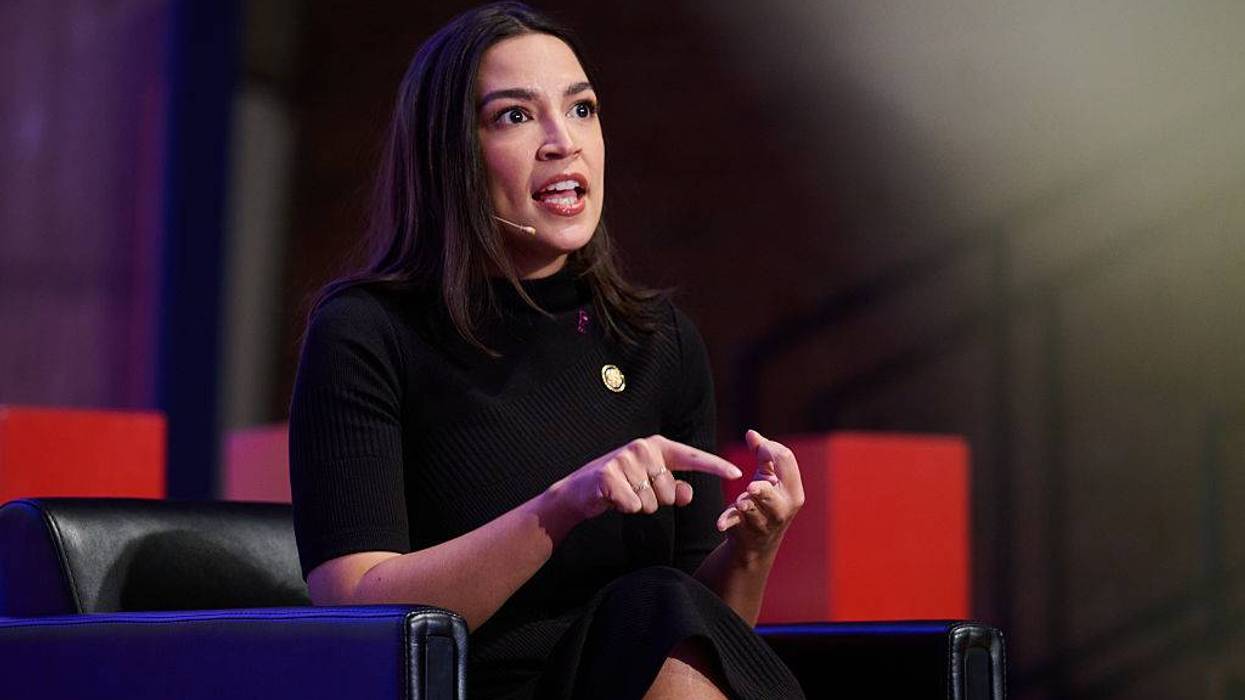
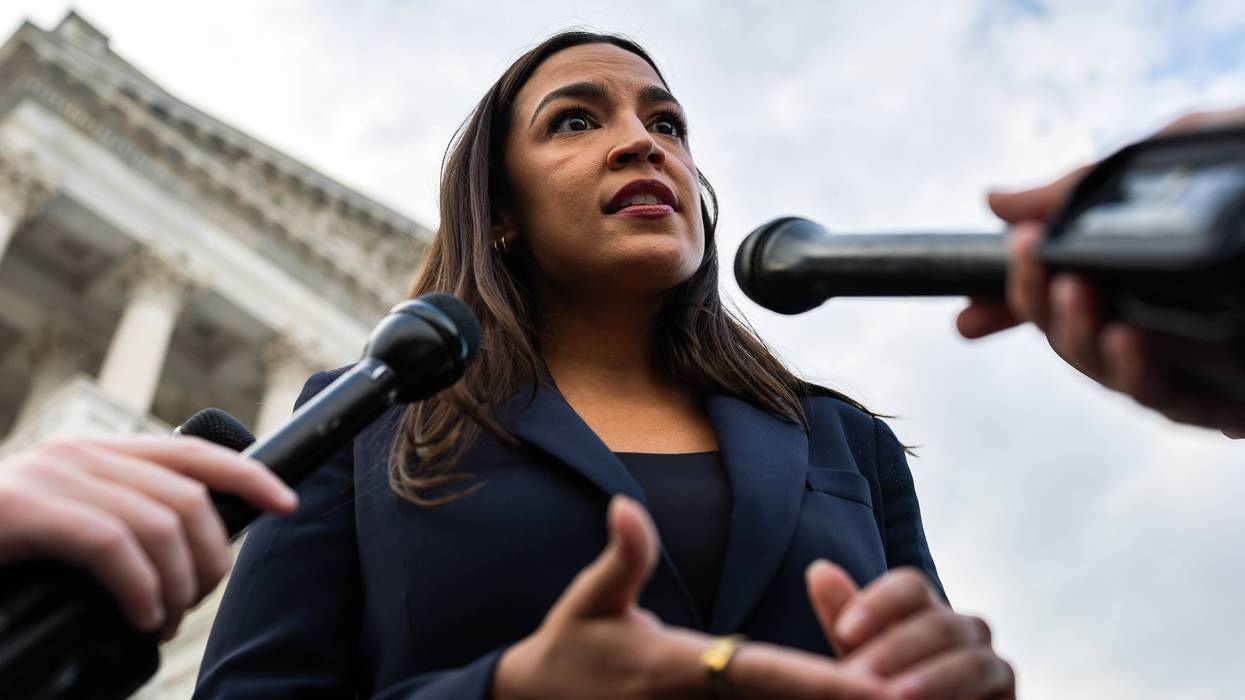
In a recent interview with political commentator Santita Jackson, Rep. Alexandria Ocasio-Cortez (D-NY) said that the corporate Democrats' pledge was a reactive document that lacked policy solutions to the problems facing Americans.
"Okay fine, if you’re against [democratic socialists], that’s okay. But what do you believe?" said Ocasio-Cortez. "And that I think is the core of the weaknesses from that wing at this moment. There’s no affirmative vision really coming from most places in the Democratic Party with the exception of democratic socialism."
Rep. Ro Khanna (D-Calif.) last week also challenged the corporate wing of the party in a speech on the floor of the US House of Representatives in which he defended the vision being laid out by progressive insurgents.
“The progressive movement is winning across the country, from the heart of New York to Michigan to Maine,” Khanna said. “The people are saying no to foreign wars and they’re saying no to genocide in Gaza. They’re saying no to the unfair and lopsided economy that has allowed a few people to hoard extreme wealth and power, and they’re saying yes to Medicare for All.”
"Together, we’re proving that even in the face of unprecedented outside spending, a movement powered by the people can win," El-Sayed said.
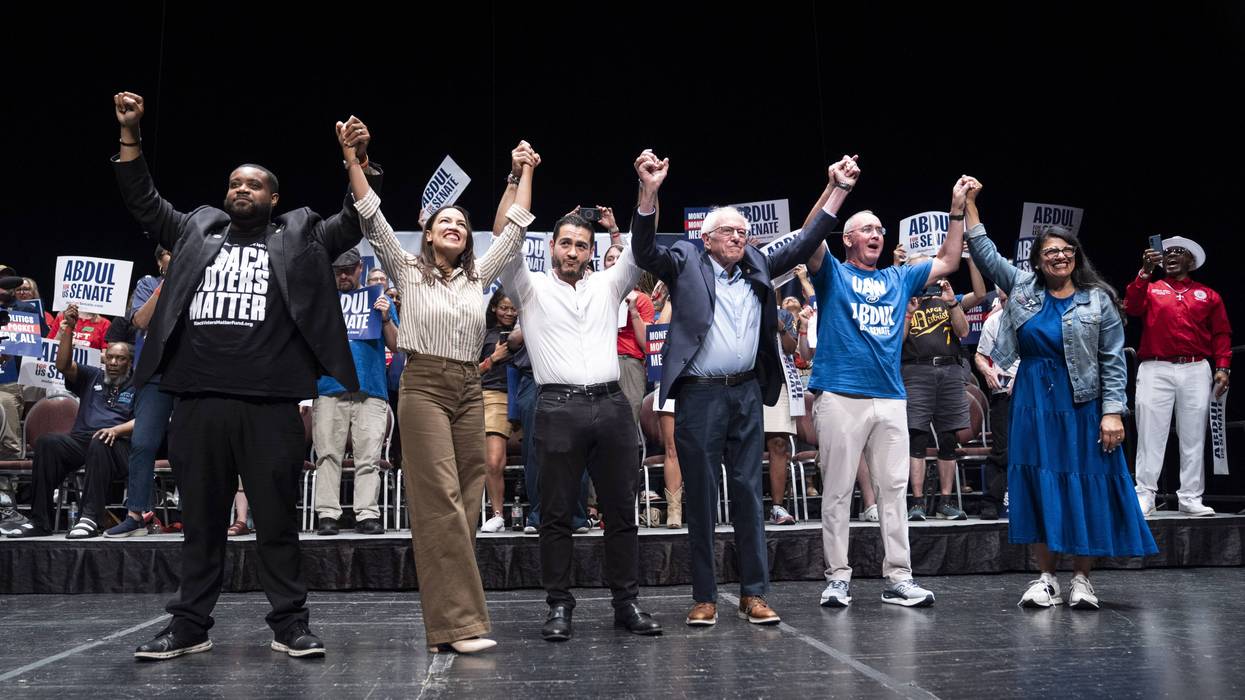
As the progressive movement builds its momentum in Democratic primaries, Rep. Alexandria Ocasio-Cortez issued her first endorsement in a competitive Senate primary on Thursday, throwing her support behind Dr. Abdul El-Sayed as he battles for the party's Senate nomination in Michigan.
Ocasio-Cortez (D-NY), a likely 2028 presidential candidate and one of the most popular figures among the Democratic base, is perhaps the biggest player yet to back El-Sayed, the former public health director for Detroit, who polls currently show leading the more establishment-friendly Rep. Haley Stevens (D-Mich.) and state Sen. Mallory McMorrow (D-8).
The primary, which will take place on August 4, will determine who faces Republican former Rep. Mike Rogers in a race that could decide whether Democrats flip the Senate in November.
AOC's support for El-Sayed—who has championed Medicare for All, an arms embargo against Israel, raising taxes on the wealthy, and overturning Citizens United—puts her at odds with Senate Minority Leader Chuck Schumer (D-NY), who has backed Stevens, and with other progressive Democrats like Sens. Elizabeth Warren (D-Mass.) and Chris Murphy (D-Ct.) who prefer McMorrow.
However, El-Sayed has his own share of high-profile supporters, including Sens. Bernie Sanders (I-Vt.) and Chris Van Hollen (D-Md.), as well as a host of progressive House members, including Reps. Ro Khanna (D-Calif.), Rashida Tlaib (D-Mich.), and Pramila Jayapal (D-Wash.).
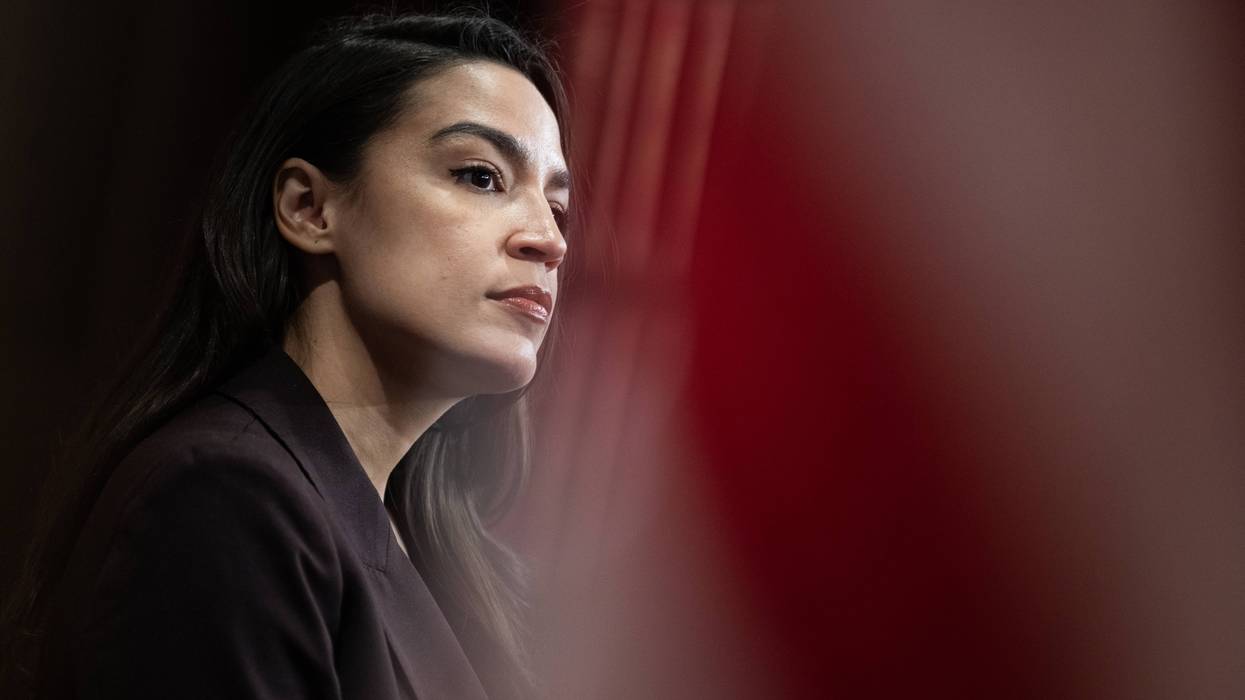
“Despite our ideological differences and whatever disagreements there are in the party, every single one of us sees this moment as existential,” Ocasio-Cortez told The New York Times. “And I think many people are willing to put aside differences in order to give us the best chance at winning. And I think that Abdul gives us that right now.”
Though he appears to be in the driver’s seat with just over a month before the August 4 Michigan primary, El-Sayed still faces a perilous path to the nomination that AOC’s endorsement may help him to weather.
While El-Sayed has sworn off big money donors, Stevens—the candidate closest behind him—is armed with more than $16 million in super PAC spending, including millions from the American Israel Public Affairs Committee's (AIPAC) political spending arm, the United Democracy Project, which has begun to blanket the airwaves with ads boosting Stevens, who also has the backing of nearly 100 other corporate PACs representing the health insurance industry, Wall Street banks, fossil fuels, and Big Tech, among others.
The alliance between AOC and El-Sayed is nearly a decade in the making. Fresh off the stunning primary upset that led her to Congress in 2018, she endorsed the doctor's then-longshot bid to become governor of Michigan.
Sharing a photo of the two at a campaign event eight years prior, El-Sayed celebrated AOC as someone who "has spent her career taking on the powerful on behalf of everyday people, and she has shown all of us what courageous, smart, values-driven leadership looks like."
He added that she "has changed the trajectory of American politics and inspired a generation to believe that government really can work for working people."
"Together, we’re proving that even in the face of unprecedented outside spending, a movement powered by the people can win," El Sayed said.
Indeed, that movement has been winning of late.
AOC's endorsement of El-Sayed comes after three House candidates backed by New York City Mayor Zohran Mamdani—including multiple self-identified democratic socialists—cruised to victory over establishment Democrats in their primaries last week.
This week showed that the left-wing insurgency was underway nationwide, with 29-year-old democratic socialist Melat Kiros stunning longtime Democratic Rep. Diana DeGette in Colorado's primary.
Pollster Adam Carlson said that El-Sayed's race in Michigan will go a long way towards demonstrating the extent to which AOC and her movement truly have reshaped the political landscape.
“If El-Sayed wins the primary and the general election in the swingiest of swing states, ahead of 2028,” he said, “it would give the progressive wing of the party a proof of concept that the conventional wisdom of 'more moderate equals more electable' has some serious holes in it, at least in the second Trump era.”