SUBSCRIBE TO OUR FREE NEWSLETTER
Daily news & progressive opinion—funded by the people, not the corporations—delivered straight to your inbox.
5
#000000
#FFFFFF
To donate by check, phone, or other method, see our More Ways to Give page.
Daily news & progressive opinion—funded by the people, not the corporations—delivered straight to your inbox.
One critic said Buttigieg's description of Israel's genocide in Gaza as "complicated" is "disqualifying... both as a politician and a human being."
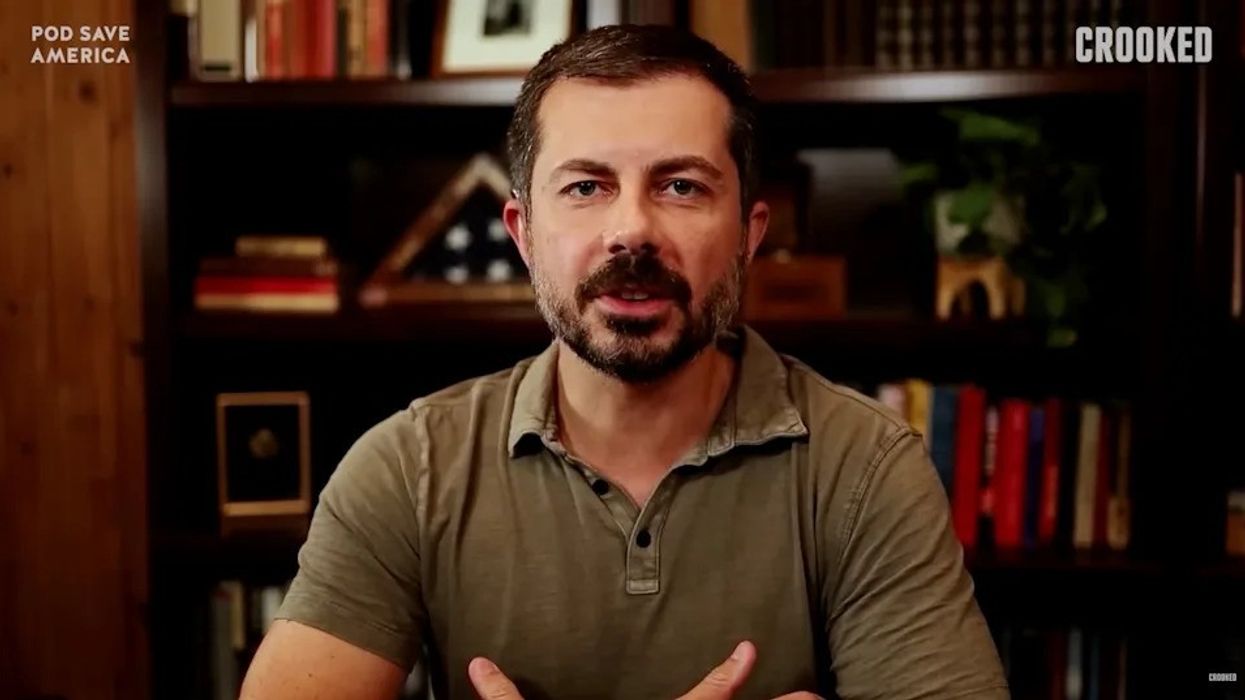
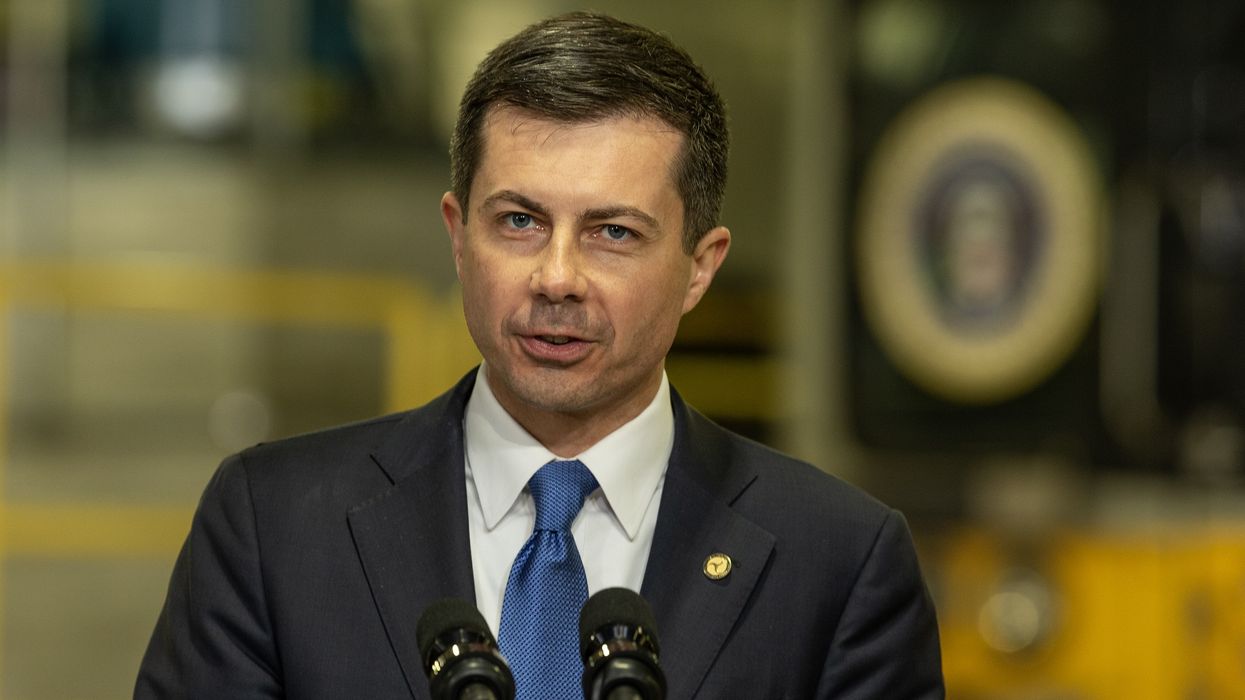
Pete Buttigieg, one of the top contenders for the Democratic presidential nomination in 2028, is facing a bevy of criticism, including from his supporters, after he gave a largely incoherent answer about his preferred policy towards Israel and Palestine.
Over the past several weeks, the genocidal nature of Israel's actions in the Gaza Strip has become undeniable to much of the world. Israeli leaders have openly discussed the goal of clearing the strip of Palestinians and, to that end, have inflicted a punishing blockade that has resulted in mass starvation.
Though official estimates from the Gaza Health Ministry put the death count around 60,000, many expert analyses have found that it will have likely eclipsed 100,000 or potentially 200,000 once all indirect deaths from disease and starvation are accounted for.
In an interview on Pod Save America, the former South Bend mayor and Biden transportation secretary was asked if he would support efforts backed by a majority of Senate Democrats to halt weapons sales to Israel.
Buttigieg began by acknowledging that taxpayer money should not be going to "things that shock the conscience," adding that "we see images every day that shock the conscience" out of Gaza.
"So much of this is complicated," he continued. "But what's not complicated is that if a child is starving because of a choice made by a government, that is unconscionable."
After this brief acknowledgment, however, Buttigieg proceeded to give an answer that Gal Debored of the Quincy Institute for Responsible Statecraft called "a beautiful example of sounding like you care about genocide while actually saying nothing at all."
Buttigieg spent the bulk of his time discussing how Israelis were being affected.
He discussed the necessity of "including the voices of those who care about Israel, who believe in Israel's right to exist, who have stood with Israel in response to the unbelievable cruelty and terrorism of October 7th."
He said what was happening in Gaza was a "catastrophe for Israel in the long run," before describing the United States as "Israel's strongest ally and friend."
"You put your arm around your friend when there's something like this going on," he said, "and talk about what we're prepared to do together."
William Lafi Youmans, a professor at the George Washington School of Media and Public Affairs, described this as rhetorically identical to former U.S. President Joe Biden's approach to Israel.
"Biden wanted to 'bear hug' Israel to constrain it via friendship," he said, noting that it "ended in genocide."
When asked whether he'd support recognizing a Palestinian state, Buttigieg said it was "a profound question that arouses a lot of the biggest problems that have happened with Israel's survival."
Zeteo founder Mehdi Hasan responded: "Answer the fricking question."
Buttigieg later seemed to contradict his previous statement, saying he'd support a "two-state solution" to end the conflict.
J.P. Hill, the author of the Substack newsletter New Means, called out Buttigieg's unwillingness to take a clear stance.
"Pete Buttigieg talking about Palestine," Hill said, "is what happens when someone who wants to perfectly triangulate a middle position on every issue runs into an issue where [there] is no middle ground for him to hide in."
Even Ben Rhodes, a foreign policy official for former President Barack Obama and a co-host on the Democrat-friendly network that produces Pod Save America, was left bewildered.
"Pete is a smart guy and I admire a lot of what he's done," Rhodes said on X. "But I have absolutely no idea what he thinks based on these answers. Just tell us what you believe."
These outraged comments reflect a now overwhelming dissatisfaction among Democratic voters with the party's near-unwavering devotion to Israel. In a July Gallup poll, just 33% of them described themselves as having a favorable view of Israel.
While Buttigieg continues to find himself on the wrong side of that increasingly yawning chasm of public opinion, other Democrats have become much more willing to call for swift action to be taken to constrain Israel.
Rep. Ro Khanna (D-Calif.), another potential 2028 candidate who introduced a resolution calling for the U.S. to recognize Palestinian statehood and urged his fellow Democrats to support a bill that would block weapons to Israel, also denounced Buttigieg's feckless response.
"I respect Pete. But we need moral clarity," Khanna wrote on X. "[President Donald] Trump AND Biden disastrously failed on Gaza, and we need a new human rights-centered vision."
I doubt you would want your legacy to read, “USDOT Secretary Pete let the Black Shiloh community and homeowners drown.”
Dear Secretary Pete Buttigieg,
I understand you and your top-level appointed officials at the U.S. Department of Transportation are preparing to leave their positions given the results of the November 5 elections. Again, I am pleading with you to fully resolve the highway flooding problem and secure the funds for binding commitments to cover flood damages to homes, businesses, and property in Elba, Alabama’s historically Black Shiloh community before the Biden-Harris administration comes to an end on January 20, 2025. We have two months to get justice for the Shiloh community. Let’s not fail them. Remember, they have been flooded for six-plus years.
Again, the matter of highway flooding in my hometown of Elba is no stranger to you and the USDOT. On February 27 this year, the Bullard Center sponsored a small delegation of Shiloh leaders to meet with Assistant Secretary Christopher Coes and high-level USDOT officials in Washington, D.C. And on April 3 of this year, you and several high-ranking members of your staff, including Assistant Secretary Coes and Federal Highway Administrator Shailen Bhatt (who has already left FHWA), participated in our “Journey to Justice” tour of the Shiloh community, talked with flood impacted residents, and saw firsthand the devastation left behind by six-plus years of highway flooding. It’s not a pretty picture—a shameful and dark reminder of misuse and abuse of federal transportation tax dollars.
Yes, racism created the highway flooding problem in Shiloh and it will require environmental justice to fix it.
Through no action or fault of their own, Shiloh residents are helpless as their beloved community becomes a small lake after a rainstorm—all due to racism, reckless design, and expansion of U.S. Highway 84 (that began in 2018 by the Alabama Department of Transportation or ALDOT) under the first Trump administration USDOT. And worse, lack of government response to the Shiloh residents’ complaints about flooding and damage to their homes and property add to growing mistrust of government—including restrictive covenants ALDOT attached to residents’ deeds and an unconscionable property settlement agreement that limits the ability of current and future residents to file actions against the state. The persistent flooding is also responsible for causing residents to lose homeowners insurance coverage, making them even more vulnerable to future economic losses due to climate change.
There is an abundance of documentation and irrefutable evidence to show flooding was not a problem in Shiloh before the Alabama DOT (ALDOT) widened U.S. 84 from two lanes to four lanes and elevated it, placing the once-flat land in the Shiloh community in a bowl and forcing stormwater downhill to flood its residents. To understand this highway flooding problem, one need not be a highway planner, engineer, hydrologist, or lawyer. It’s common-sense knowledge that gravity is forcing water downhill—in this case forcing highway stormwater into the Shiloh community.
By applying the widely accepted “polluter pays principle,” it’s clear who caused the problem and where the responsibility for addressing the flooding problem rests. ALDOT caused highway flooding in the Shiloh community and should be tasked with fixing the highway and required to pay for the damages and losses suffered by the Shiloh home, business, and property owners.
The hard-working Shiloh residents deserve better. They should not have their hard-earned tax dollars used to build a highway project that’s destroying their community and stealing their inheritance and intergenerational wealth. It would be shameful and immoral to allow the flooding problem in Shiloh to carry over into the second Trump administration, when it could be fully resolved on your watch under the Biden administration. I doubt you would want your legacy to read, “USDOT Secretary Pete let the Black Shiloh community and homeowners drown.” Yes, racism created the highway flooding problem in Shiloh and it will require environmental justice to fix it.
The October 4 Voluntary Resolution Agreement (VRA) between FHWA and ALDOT was reached on a civil rights discrimination complaint filed by Shiloh homeowners against the tate agency more than two years ago. The VRA represents binding commitments to fix the highway stormwater drainage system. It’s understandable why Shiloh residents see the VRA only as a partial civil rights victory, since the agreement does nothing to resolve or compensate residents for property losses or damaged homes and businesses. This is a textbook example of highway robbery. A just solution requires putting in place binding commitments to fully compensate Shiloh residents for more than six-plus years of flood losses and damages to their homes, businesses, and property, and offering voluntary buyouts and relocation for those who seek it. That’s the just, fair, and equitable thing to do.
Again, it is important the VRA fix the highway stormwater drainage problem. And it is equally important that binding commitments and an agreement to address damaged homes, property, and businesses be reached before this administration ends because it is unlikely the next USDOT under a second Trump administration would be inclined to resolve highway flood damages and losses of Shiloh residents that were caused by ALDOT under the first Trump administration USDOT.
Finally, ALDOT caused the problem and ALDOT should be held accountable to pay for a comprehensive solution—not a “partial fix” as contained in the VRA. The pressure is mounting for Secretary Pete to act as the clock is ticking for you to step up and make the flooded Shiloh community residents whole before this administration’s time runs out for them on your watch. It’s the just thing to do and the right time to do it. And you need to act with the urgency of now! Let’s not have the record show “you left Black people in Shiloh to drown” on your watch.
One critic argued Harris would risk alienating "precisely the people she needs to ensure her victory over Trump" if she picks Pennsylvania's governor as her running mate.
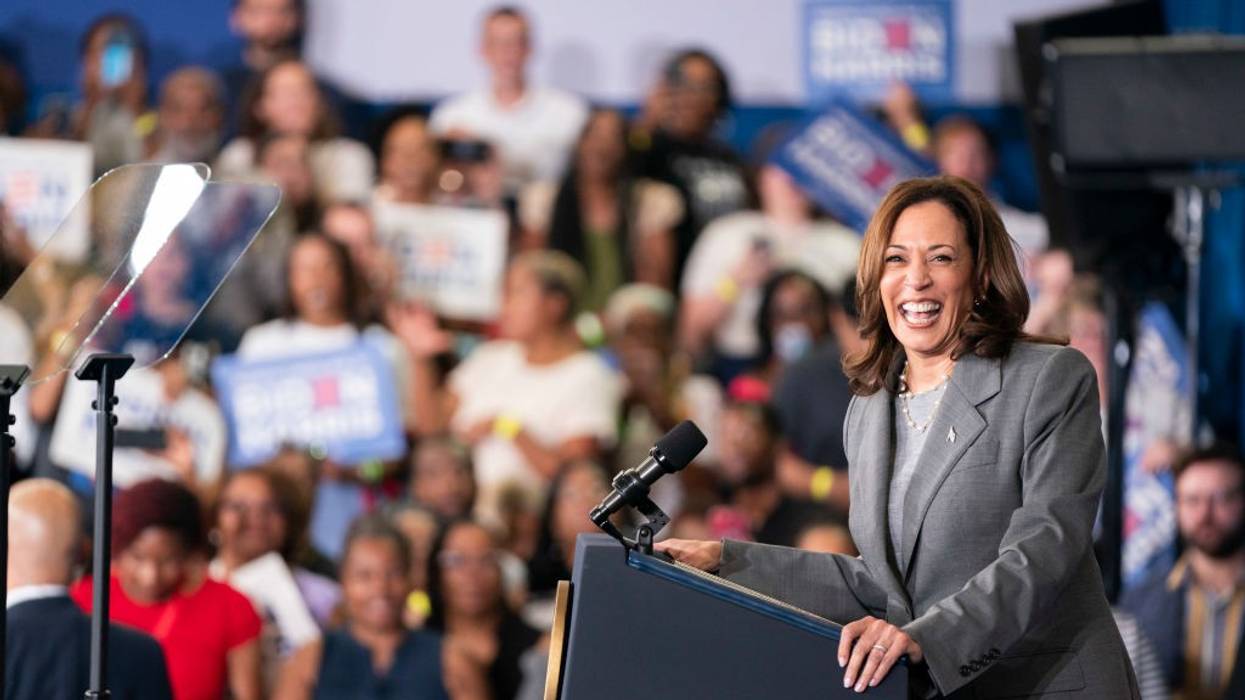
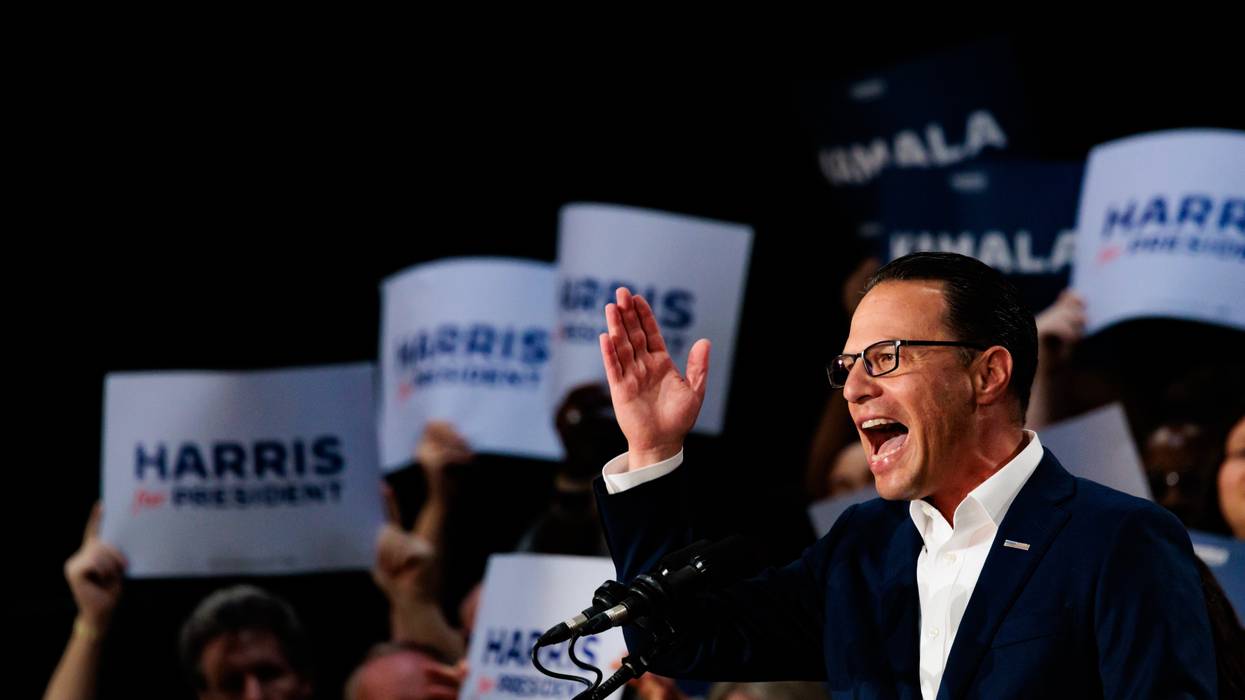
Reports that presumptive Democratic presidential nominee Kamala Harris is leaning toward selecting Pennsylvania Gov. Josh Shapiro as her running mate have sparked warnings from progressives who say his record and policy positions on key issues—from Palestine to public schools to climate—are cause for serious alarm and should be disqualifying.
Earlier this week, dozens of progressive leaders from across the United States wrote in a letter to Harris that Shapiro's "support for school vouchers is in direct conflict with our teachers union allies and the Democratic Party Platform, threatening to undermine labor support" in a general election matchup with Republican nominee Donald Trump.
The letter's signatories recommended Minnesota Gov. Tim Walz and Kentucky Gov. Andy Beshear as possible alternatives to Shapiro, who last year relented to pressure and vetoed a school voucher program that he previously supported.
The Philadelphia Inquirer reported last month that Shapiro "says school vouchers are still a priority for him."
"Democrats need a credible and respected voice that has a track record of winning over and exciting an electorate, especially the ability to turn out young voters, immigrants, and independents in swing states," reads the progressives' letter, signed by the chair of the California Democratic Party's Progressive Caucus, the head of the Nevada Democratic Party, the executive director of Progressive Democrats of America, a member of the Ohio Democratic Party's executive committee, and others.
"Shapiro has... done far more than most Democrats to attack pro-Palestine antiwar demonstrators, in ways that call into question his basic commitment to First Amendment rights."
Shapiro's attacks on pro-Palestine demonstrators and uncritical support for Israel—as well as his support for Pennsylvania's anti-boycott, divestment, and sanctions law—have also drawn progressive ire.
"Shapiro has... done far more than most Democrats to attack pro-Palestine antiwar demonstrators, in ways that call into question his basic commitment to First Amendment rights," writer David Klion argued in The New Republic last week, noting that the Pennsylvania governor compared protesters rallying against Israel's genocide in Gaza to the Ku Klux Klan.
"Then, in an executive order, Shapiro updated his administration's code of conduct to forbid state employees from engaging in 'scandalous or disgraceful' behavior, a vaguely worded instruction that civil libertarians immediately interpreted as threatening pro-Palestine speech," added Klion, who warned Harris that picking Shapiro could "discourage precisely the people she needs to ensure her victory over Trump."
A coalition of pro-Palestine groups has launched a website dubbing Shapiro "Genocide Josh" and warning Harris against picking him as her running mate.
"The left must unite over the next four weeks to ensure that America doesn't fall down the path of fascism, authoritarianism, and runaway corporatism," the website states. "It is in Harris' and the Democrats' best interests to listen to their base and ensure that both their new VP pick and their platform support the majority of Democrats and Americans who want social and economic justice for workers and an immediate cease-fire in Palestine."
Progressive organizers Jeff Cohen and Norman Solomon, co-founders of the advocacy group RootsAction, warned in a Common Dreams op-ed Monday that if Harris "chooses a running mate who intensely connects her to Biden's policies on the Gaza war that are so unpopular with much of the Democratic base, party unity—and the chances of defeating Trump—would be undermined."
On top of his attacks on pro-Palestinian demonstrators and promotion of school vouchers, Shapiro has also faced criticism for supporting corporate tax cuts.
The American Prospect's David Dayen wrote Thursday that Shapiro is currently "trying to accelerate an already scheduled cut" to Pennsylvania's corporate tax rate "from 9.9% to 4.9%" as Democrats at the national level push for a repeal of Trump's massive tax cuts for big business and the rich.
Harris herself attacked Trump during an Atlanta rally earlier this week for wanting to "give tax breaks to billionaires and big corporations."
Harris is expected to announce her vice presidential pick ahead of a scheduled rally Tuesday in Philadelphia, part of a broader campaign swing through pivotal battleground states. According to Politico, a Harris aide "cautioned against reading too much into the first city chosen for the tour," pushing back on speculation that the event's location confirms Shapiro will be Harris' running mate.
A survey released earlier this week showed that Trump is narrowly leading Harris in Pennsylvania, and it's far from clear that picking Shapiro as her running mate would help her win the state.
"Other names in the mix include Arizona Sen. Mark Kelly, Minnesota Gov. Tim Walz, Kentucky Gov. Andy Beshear, and Transportation Secretary Pete Buttigieg," Politico reported earlier this week. "Shapiro said on Tuesday that he had not spoken to Harris since July 21, the day that Biden dropped out."
Will Bunch argued in a column for The Philadelphia Inquirer "that it's no wonder that progressives seem to be lining up in the VP contest behind Minnesota's Walz, who like Shapiro has some policy wins on cherished liberal issues like expanding free school lunches but isn't lugging around political baggage like the Pennsylvania governor."
"Whether Harris, said to have close ties to Shapiro, sees it the same way will tell us a lot about her White House bid," Bunch added.
Kamala Harris needs to lead the country in addressing this biggest of all problems: our climate crisis and the dominance of the fossil fuel industry in our politics and policies.
President Joe Biden lost a lot of support, especially among young voters and climate voters, when he approved the foolish Willow Project. The Mountain Valley Pipeline (MVP) was equally unpopular with those groups but they rightfully placed most of the blame for that project on Sen. Joe Manchin (D-W.V).
What a lot of people, including reporters, don’t realize is that Pete Buttigieg, as Secretary of Transportation, had (and still has) the power to stop MVP. The Pipeline and Hazardous Materials Safety Administration (PHMSA) reports to Buttigieg and PHMSA, as its name implies, has the authority and responsibility to ensure the pipelines are built and operated safely. But the MVP was not built—nor is it operating—safely. That is not an opinion pulled out of thin air by a climate activist. Rather it is the conclusion of a study done by TC Energy (formerly TransCanada), the company that wanted to build the Keystone XL Pipeline (KXL). That study was the subject of an article (pg 16) in the Jan/Feb 2020 issue of Corrosion Management, a journal of the Institute of Corrosion.
This topic has been written about extensively for over a year. If reporters and other readers want to understand the particulars they can find them here. The long and short of it is that the TC Energy/KXL study proved that MVP’s corrosion-proof coating is “no longer fit for purpose.” That’s a pretty damning indictment, especially given the enormous diameter (42 inches) of MVP and the extremely high pressure it will be operating under. It’s particularly scary for all those who live within MVP’s blast zone.
MVP is made of thick steel. It isn’t going to corrode extensively tomorrow or anytime right away. But pipelines like MVP are built with the intention that they will operate for many, many decades, which is why legally they MUST have an adequate corrosion-proof coating. Otherwise they will corrode prematurely which could lead to a massive explosion. Delaney Tercero was 3 when a 10 inch gas pipeline exploded near her home because defective coating allowed the pipe to corrode. She died 2 days later in a hospital burn unit. Again, MVP is 42 inches.
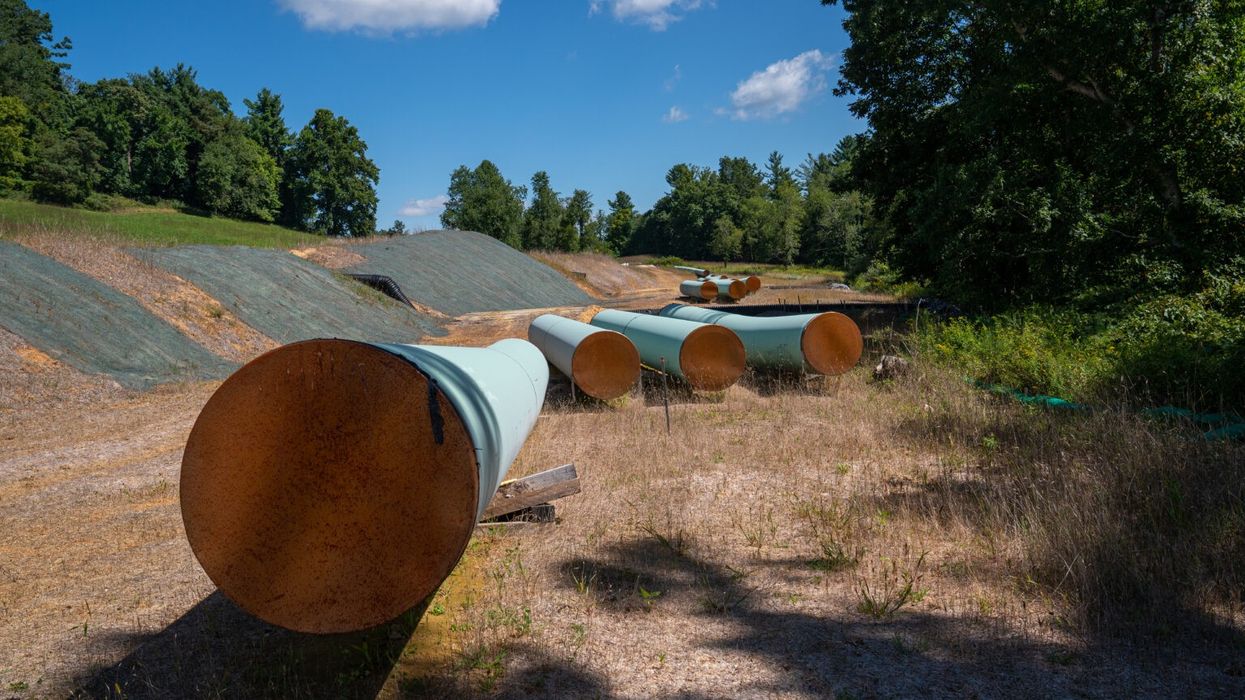
The National Association of Pipe Coating Applicators (NAPCA) recommends that the pipe coating that was applied to MVP pipe should not be exposed to the harmful rays of the sun for more than 6 months. MVP pipe sat out in the sun for 6-7 years. A KXL pipeline manager, speaking at an oil and gas forum in Canada, said that, when the coating has deteriorated to such a degree, the pipe either needs to be replaced or sent back to the factory for stripping, cleaning, and recoating. He said this is a problem that can’t be remedied in the field. MVP pipe was neither replaced nor properly recoated. It was just quickly buried and covered up, as if that would make the problem go away.
Pete Buttigieg is obviously a very smart guy. He’s articulate, does his homework and has a knack for making members of Congress look ridiculous when they try to question him. If anyone can explain why the KXL coating study doesn’t apply to MVP, it would be Secretary Buttigieg. But neither he nor PHMSA nor MVP nor anyone else has ever offered that explanation. Buttigieg seems to pop up everywhere these days but he hasn’t met with the people who live next to MVP and been willing to address their fears about the defective pipe coating. And the reason he hasn’t is because he can’t explain away the KXL study’s obvious relevance to MVP which leaves him unable to defend PHMSA’s decision to allow MVP to operate.
And this problem isn’t limited to MVP. Pipeline giant, Williams, has just built pipelines in Louisiana and Pennsylvania using old pipe intended for the now-dead Constitution Pipeline in NY. That pipe has been sitting out in the sun for over a decade. Williams has now buried it right next to houses, schools, playgrounds, ball parks, through golf courses and under interstate highways.
Essentially, despite all their posturing, Pete Buttigieg and PHMSA are just part of the Good Ol’ Boy network that oversees much of our country’s energy regulatory system which remains heavily controlled by the fossil fuel industry. Up and down the chain of command people go along to get along, as pointed out in this article that Bill McKibben called landmark by Mike Soraghan of Politico’s E&E News. That system has resulted in America being the largest oil and gas producer ever, which is deplorable given the scientific consensus regarding climate change. It is why we are so far behind in achieving our climate goals.
Kamala Harris needs to lead the country in addressing this biggest of all problems. She needs to separate herself from the Good Ol’ Boy network. She should start by picking someone other than Pete Buttigieg to be her VP.
Hooray! We have free will and free choice: you get to live happily ever after in the stupor of our surrealistic dystopia, or you can (if you wish) bang your head against the padded walls of the insane asylum that is America.
It is as if we all synchronized our nightmares—or, rather, in a world of neoliberal austerity, we have run out of night-time horror tales and need to all share the same moth-eaten, unraveling, tedious bad dream. We have a tsunami of infected shit pouring mightily through our paper mache sea wall—a fierce, eternal heat wave, wars and genocides, fires, storms, poisons, plastics, and perverts oh my, and to make matters worse, our so called Democratic party has just discovered that the refrigerator went down in a blackout and the carton of milk turned as dank, sour, and foul as raw sewage. I am talking about Joe "I-supply-weapons-for-genocide" Biden, who just yesterday was as vibrant and clever as, uh... a normal person... and now, in a snap of the fingers, stares blankly into eternity like the two knotholes in your attic wall.
This sour milk emergency has provoked the Democratic Party big wigs—the people who could not possibly have known that Joe Biden's wits had taken the uptown A-Train to oblivion without so much as leaving a note—to run in every direction at once in a frantic search for a warm, corporate friendly body to stuff into the empty ballot. I swear that if Curly of Three Stooges fame had gotten Ilse Koch pregnant, she might have given birth to the Democratic Party. The admixture of evil and slapstick ineptitude defies imagination. How do you not fucking know that your standard bearer, your champion of freedom and apple pie, has been stumbling into walls and wandering naked in the woods at night?
We have stopped wars and kicked scoundrels out of office. But those were simpler times.
It appears as though the Democrats will finally put the gong show hook around grandpa's waist, and call Kamala, or Pete Buttigieg, or Ronald MacDonald out of the storage bin to save our democracy. Fortunately, we live in the greatest country ever created and have so much freedom that we can't figure out what to do with it all. We are free to vote for the Democratic clown car ticket, or the alternative, Night-of-the-Living-Dead party that just nominated Darth Vader and Heinrich Himmler as their candidates. Forgive me for my metaphoric extravagance—not the Vader/Himmler ticket, but Donald Trump and whatever evil fuckwit he bites in the throat to be his VP.
And the beautiful thing about a Donald Trump/Joseph Goebbels ticket is that your vote automatically brings forth Clarence Thomas, Sam Alito, Stephen Miller, and Ted Bundy... oops, I mean Ted Cruz.
That is the lovely thing about democratic freedom and your choice to be yourself and vote for whomever the fuck you want, so long as it is a Democrat or Republican. We get to vote Clown Car or Nazi wannabe in a free and fair election. You get to "drill baby drill" or bomb Gaza into the sea of Armageddon.
We have free will and free choice: you get to live happily ever after in the stupor of our surrealistic dystopia, or you can (if you wish) bang your head against the padded walls of the insane asylum that is America. If this was some other country, some other planet, some other dimension of being, we might be out in the streets shutting it all down, but there are Amazon orders to wait for, and Tik-Tok videos to watch. We live in our perfectly ordered reality where nothing can shake us up. If a giant lobster from Andromeda landed in Wyoming wielding inter-galactic death rays in either pincer—so what?
The U.S. has an honorable history of mass protest. We all recall that Abbie Hoffman nominated a pig for president in 1968 Chicago, and that the mighty U.S. army turned tail in Vietnam and left Henry Kissinger with a mouthful of blood and guts looking for new outlets for his cannibalism. We have stopped wars and kicked scoundrels out of office. But those were simpler times. A mere four years ago we had millions in the streets over the police murder of George Floyd. How did that fizzle out and leave us all washed up—a nation of beached whales? The big question is this: how passively can we watch the planet burn to a crisp and remain as fatalistic about our political perpetrators as we all appear to be?
If the 42-inch pipeline ever explodes at 1,480 pounds per square inch of gas pressure, it will be like nothing we have ever seen.
When water pressure blew a gaping hole in the Mountain Valley Pipeline on May 1, folks living near the right of way must have had many mixed reactions—anger, fear, outrage, I told you so, even relief. Relief that it happened now before the pipeline becomes highly pressurized with methane gas.
If the 42-inch pipeline ever explodes at 1,480 pounds per square inch of gas pressure, it will be like nothing we have ever seen. Anyone nearby will likely not survive.
It will probably also mark the end of Secretary of Transportation Pete Buttigieg’s political career because he oversees the Pipeline and Hazardous Materials Safety Administration (PHMSA) whose job it is to make sure MVP gets built safely. Of course, ultimately, it is President Joe Biden who is in charge. His path to reelection, already not easy, will become much harder if MVP ruptures prior to November 5.
It’s 2024, and we know we need to get off fossil fuels ASAP. Why are we building a giant pipeline to suck a climate change accelerant out of America’s biggest deposit of contained methane?
One thing we know for sure is that MVP’s corrosion-proof coating is “no longer fit for purpose.” We don’t know it because we’re experts. We know it because we understand English and we can read. That quote is from a study done by…TC Energy, the company that wanted to build the Keystone XL pipeline (and may still try to if former President Donald Trump wins again).
The picture of the truck hauling away the ruptured section of MVP pipe is alarming, to say the least, but to the untrained eye it offers no clue as to why the steel separated. Hopefully, there will be transparency regarding the investigation and we’ll be able to trust its findings.
Although we know the pipe coating is no good, up until now we’ve had no reason to necessarily question the quality of the pipe itself. But the company that manufactured the pipe, Welspun, has some history that people should be aware of.
In what seems like a weird combination of products lines, besides manufacturing heavy steel pipe, the company also manufactures fine linen. In 2016, Target and Walmart cut ties with Welspun and hundreds of thousands of bed sheets were pulled off store shelves because they were falsely labeled and not as luxurious as advertised.
In 2010, Plains Justice released a report titled Use of Substandard Steel by the U.S. Pipeline Industry 2007 TO 2009. It begins with this: “Between 2007 and 2009 a number of pipe mills produced substandard steel pipe for U.S. pipeline companies. This pipe failed to comply with the American Petroleum Institute Grade 5L X70 standard (API 5L X70 Standard).”
A few paragraphs later: “A number of companies are implicated in producing defective pipe, but it appears that Welspun Corp. Ltd (Welspun), an Indian steel pipe manufacturer, produced most of it. For example, according to released documents, Welspun was responsible for 88% of pipe with expansion anomalies provided to Boardwalk,” which was one of the pipeline building companies.
In 2009, pipeline company Kinder Morgan sued Welspun because pipe that had been purchased was “defective and would not hold up under the required pressure load.”
So has MVP been built with bad pipe? We don’t know, and we need to find out. But regardless, what we do know is MVP’s pipe coating is shot and “no longer fit for purpose.” That alone is more than enough reason to finally throw in the towel and cut our losses on this insane boondoggle.
It’s 2024, and we know we need to get off fossil fuels ASAP. Why are we building a giant pipeline to suck a climate change accelerant out of America’s biggest deposit of contained methane? How much do we want our grandkids to hate us in coming years? How hard do we want to make their lives?
To understand how we know that MVP’s pipe coating is no good, read this. It also tells about three-year-old Delaney Tercero’s death in a hospital burn unit two days after a gas pipeline (which was minuscule compared to MVP) exploded near her home. The cause of the explosion was corrosion due to defective pipe coating. Her parents and younger sister escaped with their lives, but they’ll never get over their loss.
"Nothing about this project is in alignment with Biden's climate and environmental justice goals," said one campaigner.
Climate action groups are vehemently rejecting the Biden administration's claim that the approval of a new offshore oil terminal—planned to be the largest in the U.S.—is in the "national interest," after the U.S. Department of Transportation announced the project had met several federal requirements and could begin operations by 2027.
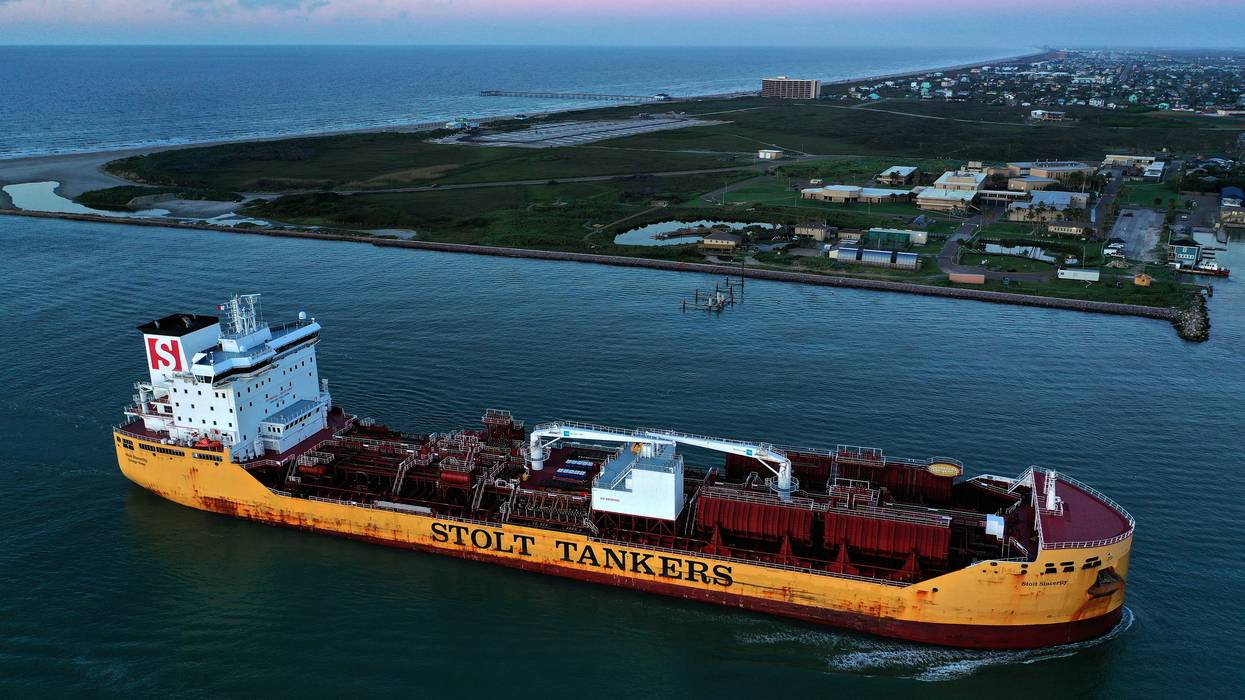
The agency's Maritime Administration said last week that Enterprise Product Partners, a Houston-based pipeline company, had been granted a deepwater port license to build the Sea Port Oil Terminal (SPOT) near Freeport, Texas following a five-year federal review process.
The federal government determined the $1.8 billion terminal project had undergone sufficient environmental impact reviews and would overall benefit the country—even as it was projected by the Sierra Club, which has fought SPOT for several years, to emit greenhouse gases equivalent to those of nearly 90 coal-fired power plants.
"The evidence is clear that SPOT would be catastrophic to the climate, wildlife, and frontline communities of the Gulf," said Devorah Ancel, senior attorney with the Sierra Club. "It threatens the future existence of the endangered Rice's whale with a population of less than fifty, and its ozone pollution would compromise the health of thousands of Gulf residents who have endured decades of fossil fuel industry pollution. Make no mistake, SPOT is not in the national interest."
The project is expected to include two pipelines that would carry crude oil to the deepwater port each day, enabling the export of 2 million barrels of crude oil, loaded onto two supertankers at once, daily.
"Nothing about this project is in alignment with Biden's climate and environmental justice goals," said Kelsey Crane, senior policy advocate at Earthworks. "The communities that will be impacted by SPOT have once again been ignored and will be forced to live with the threat of more oil spills, explosions, and pollution. The best way to protect the public and the climate from the harms of oil is to keep it in the ground."
Allie Rosenbluth, U.S. manager at Oil Change International, noted that the project has been approved despite the International Energy Agency's clear assessment in 2021 that "all new investments in oil and gas projects must stop if the world is going to reach its climate goals," including limiting planetary heating to 1.5°C.
"The Biden administration's decision to approve the Sea Port Oil Terminal is a grave mistake. This approval will only harm local communities and ecosystems, and lead to even more devastating impacts of the climate crisis," said Rosenbluth. "The U.S. is already the largest producer of oil and gas and has the largest expansion plans globally. Instead of continuing this legacy of harm by approving fossil fuel projects, President Biden should be listening to the science and the masses of his constituents calling for an end to fossil fuels."
The direct action group Climate Defiance expressed doubt that the approval of SPOT will help Biden win over any voters as the 2024 election approaches.
Nine in 10 Democratic voters and Democratic-leaning independents told Pew Research Center last year that they believe the U.S. should prioritize developing renewable energy sources—and two-thirds of Republican voters under age 30 agreed.
"This project would be the single-largest oil export terminal in the U.S." said the group. "We are being boiled alive here, literally burned to death by 'moderate' politicians who see fit to torch us in the name of quarterly profits. How can we live like this? How can this go on?"
Last year was the hottest on record, and the first three months of 2024 have each broken records for high global temperatures. Scientists found last year that climate disasters including wildfires in Canada and extreme heat in Europe were made far more likely by fossil-fueled planetary heating.
Local organizers in Texas condemned the Biden administration's decision to ignore campaigners who have warned of the danger SPOT poses to marine habitats as well as people who live in the area where two crude oil pipelines have now been given final approval to run.
"We continue to struggle to see why Biden and [Transportation Secretary Pete] Buttigieg prefer to protect the corporate profits of billion-dollar oil giants like Enbridge and Enterprise over the hardcore objections of the people who would have to live with the consequences of pipelines criss-crossing our beaches," said Trevor Carroll, Brazoria County lead organizer with Texas Campaign for the Environment. "If you care about environmental justice and the climate, you just can't support a monstrosity like SPOT. The local community and the global climate justice movement are continuing to fight... This is not over."
Melanie Oldham, director of Better Brazoria, said SPOT will be "an oil spill waiting to happen that would not only lower property value, but harm our local ecosystems, ecotourism, beaches, recreation, and kill marine life like the endangered Rice's whale and Kemp's Ridley sea turtles."
"Those of us residents, beachgoers, and voters that have for the past four years opposed the SPOT offshore terminal and pipelines are very disappointed with the approval of the project license," said Oldham. "President Biden has again broken promises to protect frontline communities in Surfside and Freeport."
The administration's approval came three months after the White House announced it was delaying consideration of new gas export terminals, and the same day the federal government said fossil fuel companies will have to pay higher royalties in order to drill on federal lands.
But those climate actions paired with the SPOT approval amount only to "flip flopping," said Climate Defiance.
"It is not enough that the administration stopped new gas exports if they are going to back stab us with this death-sentence decision now," said the group. "This is not us being 'ungrateful.' This is the science. The pure, unvarnished, science."
The Mountain Valley Pipeline uses pipe with illegal and unsafe corrosion-proof coating that’s “no longer fit for purpose.”
The builders of the Mountain Valley Pipeline are bringing frivolous multi-million dollar SLAPP suits—or strategic lawsuits against public participation—against pipeline protesters in an attempt to bully them into being quiet.
If only they would slap one here, because this vastly underreported coating issue really needs a lot more publicity. But that’s precisely why I doubt that they will. They don’t want anyone, least of all any real investigative reporters, to focus on their pipes’ serious coating problems.
One thing is clear, MVP has been burying, and continues to bury, illegal, dangerous pipe. A study was done which proves that this is not debatable.
The people who are forced to live within MVP’s blast zone should not have to endure the daily stress of knowing it wasn’t built safely.
Bill McKibben hit the nail on the head when he wrote that the “transition away from fossil fuels” language agreed to at COP28 could be either meaningful or meaningless depending on whether or not it is acted upon. This is similarly true for a rule written into the U.S. Code of Federal Regulations and published in the Federal Register, which is, or at least should be, a million times more legally binding than anything that came out of Dubai. That rule says that pipelines MUST be protected from external corrosion by having a protective coating which, among other things, is “sufficiently ductile to resist cracking.”
The rule exists because long sections of pipe flex a great deal between the time they are manufactured and coated at the plant and when they finally come to rest in a ditch. If the corrosion-proof coating on the pipe is not “sufficiently ductile” (flexible) to also flex when the pipe does, then it will crack. Once a crack in the coating opens up, it creates a pathway for moisture to come in contact with the steel and begin corroding the pipe. Corrosion is a leading cause of pipeline explosions. Controlling corrosion is of particular concern regarding MVP because of its huge size (42-inch diameter) and the extremely high pressure (1,480 pounds per square inch, or psi,) it will be operating under.
In 2018 three-year-old Delaney Tercero was badly burned, as were her parents and younger sister, when a pipeline exploded near their home. Delaney died two days later after what must have been an agonizing ordeal in a hospital burn unit. The pipeline that killed her exploded because of corrosion due to defective pipe coating. It was a 10-inch pipeline. MVP is a 42-inch pipeline. It also has defective pipe coating.
On January 30, 2024 there was a gas pipeline explosion in Oklahoma. It shot flames 500 feet into the air. The fire could be seen from 36 miles away, and it took hours to bring it under control. It started because of corrosion in an 8-inch pipeline and is thought to have migrated to a 24-inch pipeline based on the intensity of the fire. MVP is a 42-inch pipeline.
A 24-inch gas pipeline explosion in Oklahoma in January 2024 sends flames 500 feet into the air. MVP is a 42-inch pipeline.
In July 2023, a gas pipeline exploded near Strasburg, Virginia, next to Interstate 81, shutting down traffic in both directions for hours. It was a 26-inch pipeline operating at 777 psi. MVP is a 42 inch pipeline that will operate at 1,480 psi.
Although language was inserted into last summer’s debt deal that allowed MVP to steamroll the normal permitting process, in no way did any of that language negate the “sufficiently ductile to resist cracking” rule, which has been on the books for over 50 years. Even MVP’s own attorney said that the debt deal dealt specifically and only with permitting issues.
The key to understanding why MVP pipe is illegal lies in a study reported on in the Jan/Feb 2020 issue of Corrosion Management (CM), a publication of the Institute of Corrosion. The article (on p. 16) is not very long nor is it difficult to understand, although there may be a word or two that requires googling. Everyone should read it and print a copy for future reference, before it becomes harder to access. To do so you might have to sign up for a free 30-day subscription to Scribd. The wording in the article and the results of the study make clear that MVP pipe coating has serious, unacceptable flaws.
It should be noted who undertook the study and wrote the article. It wasn’t anti-fossil fuel climate activists. Participants and contributors included TC Energy, the company that wanted to build the Keystone XL (KXL) pipeline, and Welspun, the company that manufactured and coated pipe for both KXL and MVP. One of the authors was James Ferguson, who worked for TC Energy (formerly Trans Canada) for over 18 years and who, at the time of the study, was the director of KXL Technical Services.
The point of the study was to determine how effective applying whitewash to KXL pipes was in terms of protecting the pipe coating from ultraviolet (UV) exposure, meaning the harmful effects of the sun. Most fossil fuel pipe, including KXL and MVP pipe, is coated with a greenish fusion bonded epoxy (FBE). FBE is, and is meant to be, flexible or ductile after it is applied and dries. However, exposure to the sun will reduce that flexibility over time and the coating can become brittle and crack. The National Association of Pipe Coating Applicators (NAPCA) recommends that FBE not be exposed to the sun for more than six months.
The beginning of the CM article has a paragraph with the heading “Effects of Ultraviolet Exposure on Fusion Bond Epoxy Coatings.” It says that “previous studies of exposed weathering of FBE coating had identified that UV exposure could have a serious deleterious effect on the inherent physical properties of the coating. This phenomenon is common to all FBE coatings that are primarily designed only for below ground service.” Over time, UV exposure will give the glossy green coating applied at the plant more of a chalky green look. Prolonged UV exposure will lead to “a noticeable reduction in the coating thickness” and cause all FBE coatings to “struggle to retain their original flexibility.” The change from glossy to chalky “clearly is accompanied by an embrittlement of the coating” and “reduction of flexibility performance.”
After KXL pipe was manufactured, the pipeline came up against all kinds of opposition for numerous very good reasons. And so it got delayed for years and was ultimately killed near the end of the Obama administration. Because TC Energy was aware of the problems UV creates for FBE coating, twice during that time period the company applied whitewash to the pipe to act as a sort of sunscreen. (It’s important to note here, and then remember, that whitewash was NOT applied to MVP pipe during the six to seven years it has sat in pipe yards and along the pipeline right of way. Dated satellite images can confirm this, as can photographs taken by frontline pipeline opponents.)
Regarding MVP, Buttigieg could rightly point to Sen. Joe Manchin (D-W.V.) as the reason it is being built. But it is on the secretary and a department under his control to make sure MVP is built safely and according to legal rules and regulations.
After former President Donald Trump was elected in 2016, Keystone XL came back to life, which is what prompted the study of its whitewashed pipe. They wanted to show that the whitewash had protected the FBE coating well enough that the pipe was still usable. But that’s not what they found.
The study tested three different groups of KXL pipe, which was generally stacked five layers high. One group included pipe below the top layer. Those pipes weren’t whitewashed, but they also were shaded from the sun by the pipe above them. The coating on those pipes tested OK.
The second group of pipe was from the top layer that had been whitewashed twice, once after 18-24 months of UV exposure and again four to five years later.
The third group involved the last few feet at the ends of top layer pipe. Those last few feet were not whitewashed so as not to cover up stenciling and markings. Those top layer pipe ends received no protection from the sun, and they best represent the coating on MVP pipe.
In eight out of ten tests, the whitewashed pipe failed to attain acceptable adhesion ratings. The non-whitewashed pipe ends “exhibited complete failures” regarding the adhesion test. In addition, the coating thickness on the non-whitewashed pipe ends had been reduced by more than 50%.
Another way to evaluate how well pipe coating will resist corrosion is to perform a catholic disbondment (CD) test. “The CD results of the non-whitewashed pipe ends exposed to UV were deemed total failures,” the study found.
“The flexibility tests were all deemed failures” on both the whitewashed and non-whitewashed pipe. All the flexibility tests “demonstrated similar results of cracking within the coating” even after they reduced the severity of the flexibility test three times from 2.5 degrees to 2.0 degrees to, finally, as little as 1.0 degree.
The first sentence under “Observations” states, “All non-whitewashed pipe that was exposed to continuous UV at the storage site” was “deemed no longer fit for purpose.” Even for whitewashed pipe, the flexibility of the underlying coating was “adversely affected to the point where it was no longer acceptable.”
In 2018 at an oil and gas forum in Canada, a KXL pipeline manager said that defective coating like this is not something that can be remedied in the field but instead it requires shipping the pipe back to the plant for proper stripping, cleaning, and re-coating. This short video shows the elaborate process undertaken to properly apply FBE coating.
The slipshod method that MVP is applying to its degraded pipe coating is wholly inadequate. The “no longer fit for purpose” phrase in the Corrosion Management article basically means that the pipe has a bad case of terminal skin cancer, which is not something MVP is going to remedy with its sporadic paintbrush-applied Band-Aids.
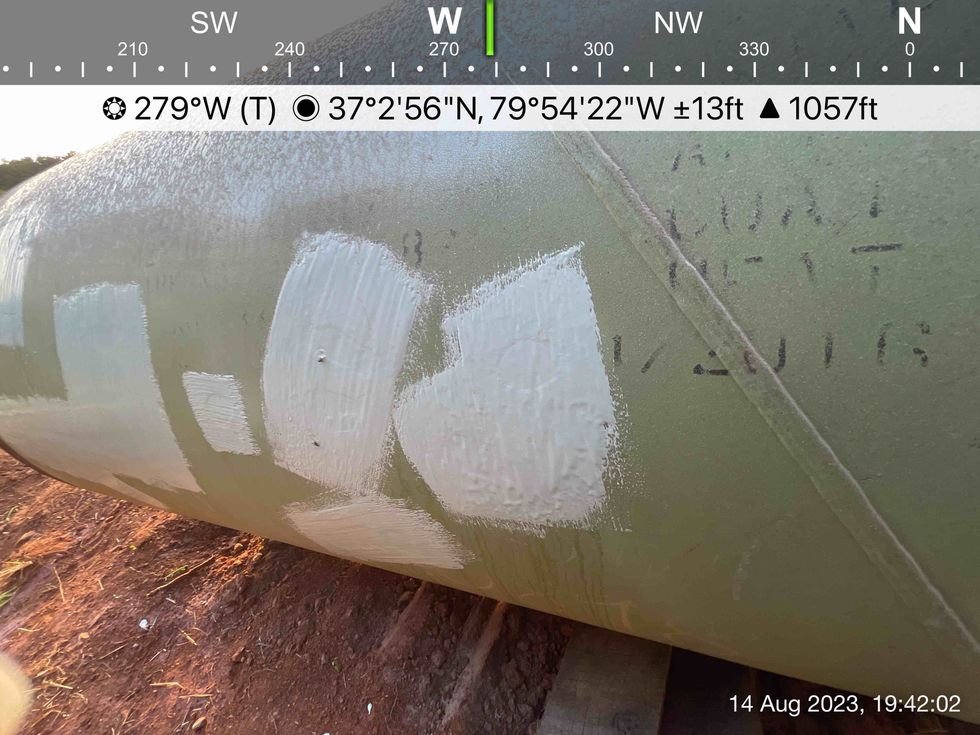
This coating problem is far from unique to MVP. Since 2010 the fossil fuel industry has built 70,000 miles of pipelines, and they have plans to build another 70,000 miles. Most of those pipelines have been and will be fought against, resulting in pipe sitting above ground for extensive periods of time instead of getting quickly buried.
Right now pipeline giant Williams is building the Regional Energy Access Expansion (REAE) project in Pennsylvania. It will lead to a significant increase in fracking in that state, which the majority of Pennsylvanians say they don’t want. Williams is also building the Louisiana Energy Gateway (LEG) project, which will increase gas flow to the LNG export terminals that the people living along the Gulf Coast are trying to shut down. Both REAE and LEG are being built with leftover pipe from the long dead Constitution Pipeline in New York. That pipe was manufactured and coated 10 years ago, and, like MVP pipe, its coating is shot.
But apparently and naturally, after sitting out in the sun for a decade, the pipe was cheap to buy. Cheap enough that it made economic sense for Williams to ship it all the way to Louisiana from New York. In fact, a Williams executive admitted that acquiring the surplus pipe helped keep costs down, making those pipeline projects possible.
Secretary of Transportation Pete Buttigieg was recently in the news during the one-year anniversary of the train derailment in East Palestine, Ohio. He said his department was doing all it could to prevent a similar disaster from happening again. He blamed Congress for not passing helpful legislation.
Regarding MVP, Buttigieg could rightly point to Sen. Joe Manchin (D-W.V.) as the reason it is being built. But it is on the secretary and a department under his control to make sure MVP is built safely and according to legal rules and regulations. That’s the whole reason that PHMSA, the Pipeline and Hazardous Materials Safety Administration, exists. It’s up to Buttigieg and PHMSA to enforce the “sufficiently ductile to resist cracking” rule. It’s up to them to publicly explain why they are disregarding the Corrosion Management study. The fact that now, in his fourth year on the job, Buttigieg still has not even filled the top job at PHMSA makes one ask just how seriously is he regarding pipeline safety.
MVP would never get built near Manchin’s or Buttigieg’s homes. The people who are forced to live within MVP’s blast zone should not have to endure the daily stress of knowing it wasn’t built safely.
MVP and government regulators may argue that there are ways to detect corrosion and other problems before they cause harm. Yet the biggest climate disaster of 2022 was caused by corrosion and created by the same company, Equitrans, that is building MVP. That huge methane leak occurred just 10 days after the site had been inspected and no problem was detected. It took almost two weeks for Equitrans to bring the leak under control.
In 2008 five people were injured and two homes were destroyed when a Williams gas pipeline exploded near Appomattox, Virginia. It was a 30-inch pipeline operating at about half the pressure MVP will operate at. The cause of the explosion was external corrosion due to defective coating that had been compromised by rocks. An inspection undertaken shortly before the pipe exploded did not identify the corroded section of pipe.
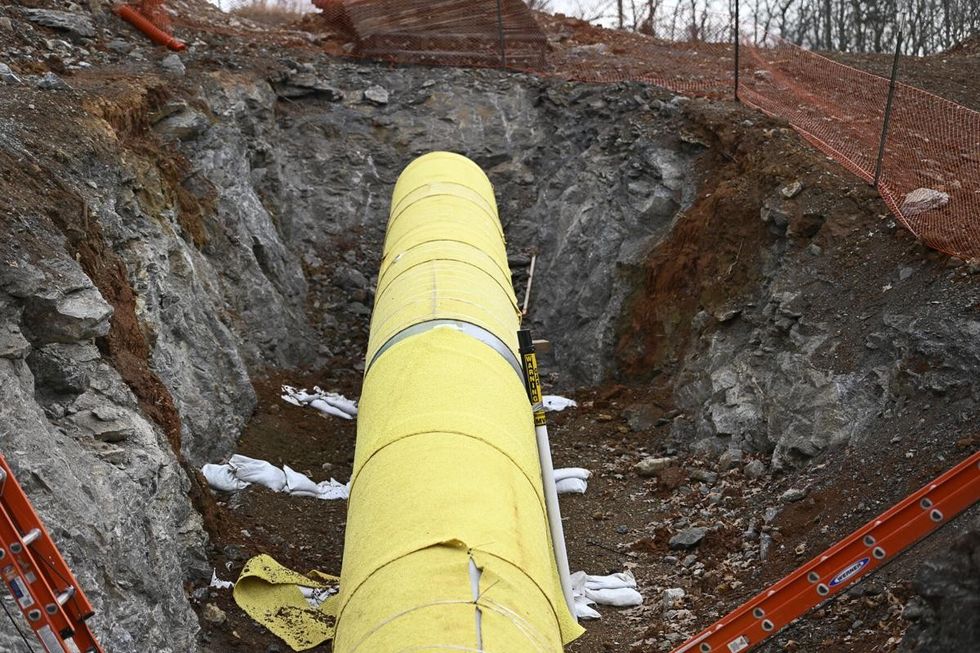
The Pennsylvania attorney general has charged Equitrans with crimes regarding a 2018 gas explosion that severely burned a four-year-old boy and his parents, killed their dog, and destroyed their home. The explosion resulted from a leaking Equitrans gas well that the company knew was leaking somewhere, but they never bothered to determine exactly where. Equitrans even had a protocol in place to help prevent corrosion at the well, but they didn’t follow it. One Equitrans employee testified that wells were often not serviced for budgetary reasons. And after the explosion, Equitrans didn’t even conduct the legally required investigation to determine the cause.
If Secretary Buttigieg and PHMSA are going to allow 42-inch MVP to come online with degraded pipe coating, they need to be asked, repeatedly, how they square that decision with the Corrosion Management article and the KXL study. And if someday another person meets Delaney Tercero’s fate because of a MVP explosion, Buttigieg and regulators at PHMSA can blame Equitrans and Manchin… but the fault will be theirs too.
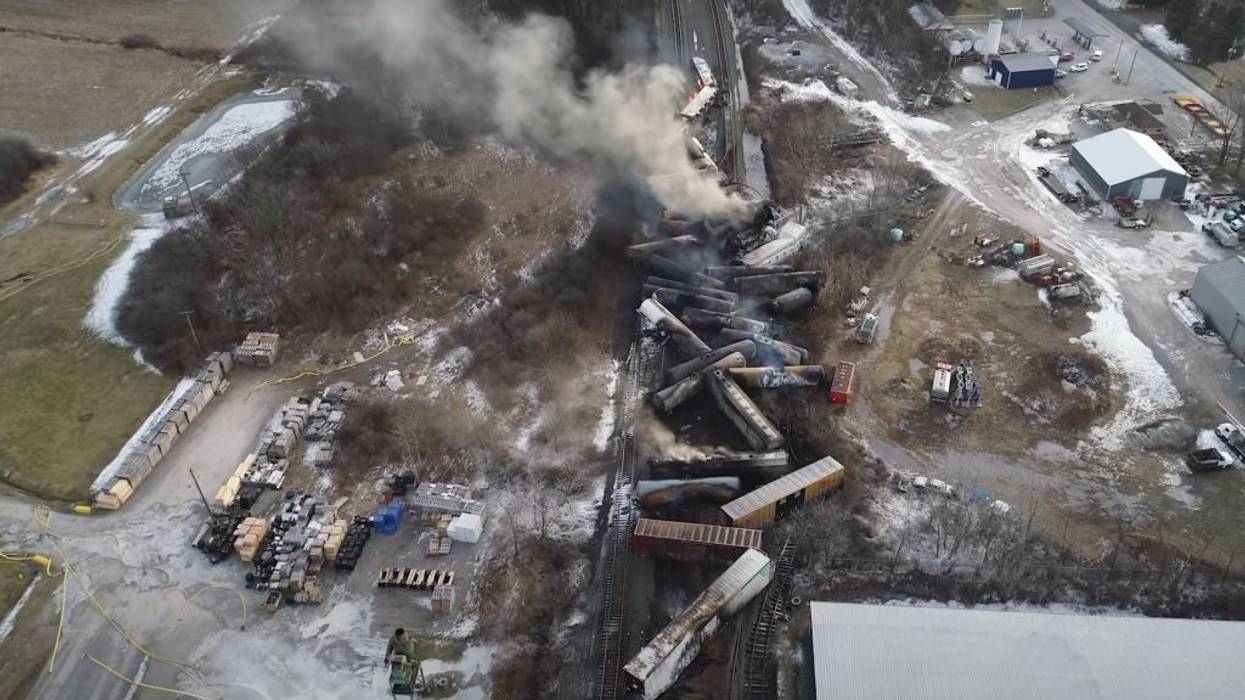
He needs to not only empathize with residents who feel disrespected by his prolonged absence but also attack Norfolk Southern for causing so much pain by prioritizing profits over people.
On the night of February 3, 2023, a Norfolk Southern-owned cargo train carrying hazardous materials careened off the tracks in East Palestine, Ohio, a small town bordering Pennsylvania. Some overturned tank cars caught fire and some spilled their contents onto the ground, after which the harmful substances flowed into local waterways and seeped into the soil.
Fearing a catastrophic explosion, public officials ordered thousands of people living in the vicinity to evacuate and on February 6 conducted a controlled release and incineration of vinyl chloride, a known human carcinogen, from five tank cars—creating an ominous plume of black smoke. Authorities on February 8 told those who had fled their homes that it was safe to return despite lingering concerns about air, soil, and water pollution.
Debate persists about the necessity of the chemical vent and burn. What seems certain is that communication between key stakeholders could have been better. In June, it was revealed that while Norfolk Southern said the procedure was necessary, the company that owned the vinyl chloride en route said it wasn’t. That latter information never reached the local fire chief, who said he was given just 13 minutes to make a final call on whether to approve the process. One year later, local residents are still suffering amid the toxic aftermath and remain worried about long-term health effects.
In the wake of the East Palestine catastrophe, Norfolk Southern is intensifying its efforts to thwart stronger regulation.
In the days and weeks following the derailment, members of Congress on both sides of the aisle vowed to enact stronger rail safety measures to prevent similar calamities from occurring in the future. No such legislation has been passed, however, because several Republican lawmakers wavered as soon as industry cash started flowing their way. (The Intercept reports that some Senate Republicans “haven’t looked” at the Railway Safety Act). Meanwhile, the number of derailments reported by the country’s five Class 1 freight railroad companies has increased over the past 12 months. It’s a miracle that none of them has unleashed a comparable amount of noxious compounds and fumes. But that’s a matter of luck—and luck runs out.
We know the GOP has failed to do right by the people of East Palestine (and by extension, has failed to mitigate the dangers faced by millions of Americans who live near railroads). But how has the Biden administration responded so far? And what actions does it still need to take to address ongoing risks to public and environmental health in East Palestine—and to protect other places threatened by the nation’s highly consolidated freight rail industry?
A White House fact sheet published last week touts the Biden administration’s contributions to the ongoing cleanup effort. The Department of Transportation (DOT), Environmental Protection Agency (EPA), Department of Health and Human Services (HHS), Federal Emergency Management Authority (FEMA), and other federal agencies joined state and local officials on the ground in East Palestine within hours of the derailment.
Since then, multiple HHS agencies have conducted public health testing, offered technical assistance, and provided resources to people in need. On February 21, the EPA ordered Norfolk Southern to clean up the mess on its own dime. In the intervening months, substantial amounts of contaminated soil and wastewater have been disposed of, and thousands of air, soil, and water samples have been taken (though there are sharp disagreements over the quality of the evidence, interpretations of it, and messaging about it). As the operation proceeds, the EPA continues to direct and supervise Norfolk Southern and its contractors while doing community outreach. Executive Order 14108, issued by the White House on September 20 to “ensur[e] the people of East Palestine are protected now and in the future,” instructs several departments to provide President Joe Biden with reports updating him on the status of their efforts.
The cleanup and communications surrounding it have faced significant criticism. This is unsurprising given that public officials’ assurances that residents “are not in danger from contaminated drinking water, soil, or air” don’t correspond with symptoms they’ve experienced and don’t assuage their fears of deleterious consequences manifesting in the years to come. Another sticking point was the EPA’s decision to wait until March 2 to require Norfolk Southern to test for dioxins (a potent byproduct of chemical burning), as well as the agency’s initial lack of transparency about their prevalence in the area. It took until October 2, almost six months after the crash, for the EPA to provide a report summarizing its (mainly positive) findings to the public. In addition, there is controversy surrounding some of the contractors Norfolk Southern has hired to collect data from the environment and people’s homes. One of them—the Center for Toxicology and Environmental Health—has been sued in the past for its conduct.
So far, Biden has rejected the state of Ohio’s request for a major disaster declaration. But pursuant to E.O. 14108, FEMA Administrator Deanne Criswell has designated Jim McPherson to serve as a Federal Disaster Recovery Coordinator. In this role, McPherson is tasked with overseeing long-term recovery efforts in communities harmed by the derailment in East Palestine. This includes identifying “any unmet needs that are not addressed by Norfolk Southern and would qualify for federal assistance.”
Making East Palestine whole is essential, but what about addressing root causes to fend off additional catastrophes? As Jennifer Homendy, chair of the National Transportation Safety Board (NTSB), which is independent of the DOT, said during a February 23 press conference announcing the initial findings of the NTSB’s ongoing probe into the derailment: “This was 100% preventable. We call things accidents. There is no accident. Every single event that we investigate is preventable.”
It’s imperative to remember that the fiery train crash—and ensuing burnoff of carcinogenic petrochemicals—could have been averted. As our executive director Jeff Hauser said soon after the transportation disaster began: “The Obama administration attempted to prevent dangerous derailments like the one in East Palestine by mandating better brake systems on freight trains. But this effort was watered down thanks to corporate pressure, first by writing in many exemptions to the proposed rules and then, under former President Donald Trump, by repealing the requirement altogether.”
Early reporting by The Lever showed that in the immediate wake of the derailment, U.S. Transportation Secretary Pete Buttigieg made no moves to reinstate or strengthen the Electronically Controlled Pneumatic (ECP) brake rule rescinded by the Trump administration and in fact was considering an industry-backed proposal to weaken remaining safeguards. The Lever also pointed out that the train in question was not being regulated as a high-hazard flammable locomotive even though it was clearly both high-hazard and flammable. As Jeff noted at the time, “These types of failures to protect the public are invited by perpetual lax enforcement and laziness toward even getting back to the too-low regulatory standards under Obama.”
Jeff urged Buttigieg to “call out the brake rule repeal for the horrendous decision it was, start working to implement a new rule, take Norfolk-Southern to task, and push back on corporations deciding how the Department of Transportation regulates them.” “Anything short of that,” he warned, “only signals to the railroads that this type of incident will be tolerated.”
How is Buttigieg doing? He’s certainly talking the talk. For instance, when the DOT on February 21 unveiled its plan to crack down on rail operators and protect the well-being of workers and communities nationwide, Buttigieg declared that “profit and expediency must never outweigh the safety of the American people,” and added, “we… are doing everything in our power to improve rail safety.”
However, the agency has yet to revive—let alone improve—the ECP brake rule eliminated by Trump’s transportation secretary, Elaine Chao. Unfortunately, this is but one example of how Buttigieg is not walking the walk.
To be fair, Homendy has said that the East Palestine derailment still would have happened if the abandoned brake rule had been in place. Because the train that derailed was considered—against the NTSB’s recommendations—a mixed freight train instead of a high-hazard flammable train, it wouldn’t have been required to have ECP brakes under the jettisoned regulation. The NTSB’s investigation is ongoing, with a final report not expected for a few more months, but the preliminary report it published last February blamed the crash on an overheated wheel bearing.
Nevertheless, in a country that is home to nearly 1,500 derailments per year, that is beside the point. Even if the forsaken ECP brake rule alone wouldn’t have staved off the derailment in East Palestine, requiring high-hazard flammable trains (HHFTs) to be equipped with 21st-century (rather than Civil War-era) braking technology would prevent other disasters. And redefining the HHFT category to include a broader array of freight trains (encompassing, for example, all locomotives carrying vinyl chloride, among other hazardous cargo) would prevent even more damage. To make things easier, the government could mandate that every train is equipped with ECP brakes.
There’s no excuse for Buttigieg to delay any further on this rulemaking. Speaking of other disasters waiting to happen, Biden still needs to nominate an administrator to lead the DOT’s Pipeline and Hazardous Materials Safety Administration. Again, there’s no excuse; he’s had three years in the White House and one year since East Palestine made this a prominent issue.
The DOT’s Federal Railroad Administration, to its credit, is assessing the compliance of each Class 1 rail carrier with existing regulations, a move that comes after it scrutinized Norfolk Southern’s reckless disregard for safety. That’s a good stfart, but there’s much more that Biden himself can and should be doing to vilify freight industry malfeasance.
It was a strategic blunder for Biden to let Trump beat him (and Buttigieg) to the scene of the crime in East Palestine. While it’s clear that Trump’s “attempt to portray himself as a friend of the town and as someone who would have stood up to Norfolk Southern… couldn’t be further from the truth,” as More Perfect Union argued last year, the perception that he cares is important.
Of course, as Philadelphia Inquirer columnist Will Bunch observed ahead of Trump’s February 22 press conference in the Ohio village, “if residents of East Palestine—a modern news desert of downsized or disappeared news sources, which allows misinformation to fester—truly knew the reality, a delegation of townsfolk would likely greet Trump with tiki torches and pitchforks.” Bunch was referring to Trump’s destructive deregulatory legacy, which goes far beyond the rollback of a single brake rule.
It could have been Biden, rather than Bunch, discussing how Republicans’ life-threatening disdain for regulating corporations (justified through a deeply flawed cost-benefit calculus) puts millions of Americans in harm’s way on a daily basis. But for reasons that remain unclear, the president has yet to visit East Palestine (and he even neglected to mention the derailment in his 2023 State of the Union address, delivered just four days after the train crash). Biden said last March that he was going to travel to East Palestine “at some point.” That time seems to be nearing, as the president recently accepted an invitation from the town’s mayor to visit this month.
Highly visible and drawn-out skirmishes would allow the president to tell a compelling story about how concentrated economic and political power is hurting ordinary people and to contrast his pro-worker orientation to Trump’s agenda, which would create more East Palestines and otherwise make life hellish for the vast majority.
When Biden finally does make an appearance, he needs to not only empathize with residents who feel disrespected by his prolonged absence but also attack Norfolk Southern for causing so much pain by prioritizing profits over people. As my colleague Emma has argued at length, Biden has much to gain from picking fights with specific white-collar criminals who routinely exploit workers and the environment.
Norfolk Southern CEO Alan Shaw is the perfect corporate villain for Biden to make an example of. For inspiration, Biden should rewatch the March 9 Senate hearing on East Palestine, during which Sens. Bernie Sanders (I-Vt.) and Jeff Merkley (D-Ore.) grilled Shaw. The wealthy executive’s refusal to abandon precision-scheduled railroading—the profit-maximizing scheme that forces fewer workers to handle longer trains in less time—and halt stock buybacks made him look like the out-of-touch robber baron that he is. According to More Perfect Union, payouts to Norfolk Southern’s shareholders surged by more than 4,500% over the past 20 years, from $101 million in stock repurchases and dividend bumps in 2002 to $4.7 billion in 2022.
If Biden were to denounce Shaw’s support for Wall Street-backed policies that make the nation’s railroads more dangerous, the Norfolk Southern CEO would likely try to defend himself. This would be ideal. Our theory of corporate crackdown holds that these battles should be public and prolonged, not one-off tweets. Highly visible and drawn-out skirmishes would allow the president to tell a compelling story about how concentrated economic and political power is hurting ordinary people and to contrast his pro-worker orientation to Trump’s agenda, which would create more East Palestines and otherwise make life hellish for the vast majority.
Shaw might protest that his company was the only Class 1 railroad to report a decrease in derailments over the past year. There’s no need for Biden to fall for this. The president could point out that last year’s decline followed a decade in which Norfolk Southern’s accident rate outpaced those of its peers.
Maybe Shaw would have the audacity to mention all the money his multibillion-dollar corporation is spending on environmental remediation, temporary relocation assistance, legal fees, and other costs related to the crisis it unleashed. Fine. That’s when Biden should cite last week’s report from Public Citizen, which showed that Norfolk Southern still had enough resources at its disposal to spend $2.3 million on federal lobbying in 2023—a 30% increase over the $1.8 million it spent in 2022. (And keep in mind lobbying expenses that are disclosed are always the tip of the iceberg when it comes to a corporation’s total expenditures seeking to influence political outcomes).
Let that sink in. In the wake of the East Palestine catastrophe, Norfolk Southern is intensifying its efforts to thwart stronger regulation. As The Lever noted, last year’s lobbying expenditure “is nearly five times the amount Norfolk Southern has pledged to protect drinking water around East Palestine.” That’s morally repugnant. And it’s exactly the kind of thing Biden should bring up during his visit to show the town’s residents that he’s on their side and will fight for them.
"Folks like us, who live along or near the tracks, refuse to be treated as collateral damage in the way of big railroads' profits," said Congressman Chris Deluzio.
On the eve of the first anniversary of a toxic train derailment in East Palestine, Ohio, residents, lawmakers, and members of U.S. President Joe Biden's administration are renewing calls for Congress to swiftly pass federal legislation boosting rail safety.
In a Friday letter, U.S. Rep. Chris Deluzio (D-Pa.) urged House Speaker Mike Johnson (R-La.) to "bring the Railway Saftey Act to the floor for a vote before Congress adjourns for the August recess," highlighting that the bill is backed by Democratic and Republican lawmakers as well as the Biden administration and former President Donald Trump, the GOP presidential frontrunner.
Deluzio, who introduced the House version of the bill with Rep. Nick LaLota (R-N.Y.), noted that the Norfolk Southern train derailed and released hazardous materials "less than a mile from the Pennsylvania state line and the homes and farms of my constituents."
"Without dwelling on the resulting health problems, environmental scare, and general lack of trust that I still regularly hear from my constituents, I instead want to empathize that we cannot accept congressional inaction, and how the February 3, 2023 derailment could have been much worse," the congressman wrote. "Folks like us, who live along or near the tracks, refuse to be treated as collateral damage in the way of big railroads' profits."
"Over the last two centuries, railroad companies have wielded their power and influence to protect their profits and avoid commonsense safety measures, allowing them to cut corners and pad the pockets of their corporate shareholders at the expense of the American people," he explained. "After the East Palestine derailment, the big railroad lobby sprang into action once again and lobbied members of Congress—directing them to do nothing to make rail safer and risk cutting into their profits."
The Railway Saftey Act—led in the Senate by Sens. Sherrod Brown (D-Ohio) and JD Vance (R-Ohio)—contains provisions to enhance safety procedures for trains carrying hazardous materials, reduce the risk of wheel bearing failures, require well-trained two-person crews, force carriers to face higher fines for wrongdoing, support communities impacted by disasters, and invest in safety improvements.
Brown and Vance have also issued fresh calls for action this week.
"Over the last year, I've visited East Palestine repeatedly, and our staff is there even more often," Brown said Tuesday. "Each time, we ask residents what we can do. They want the support and the compensation they are owed, but they do not want this derailment to define them. I don't want that either, and I don't want any other community in Ohio or around the country to have to deal with a disaster like this ever again."
"As I've told the people of East Palestine—and as I keep telling them: I'm here for the long haul," he added. "I will always fight for the people of East Palestine. I will always fight to hold Norfolk Southern accountable. And I will always fight to make our railways safer."
As Nexstar's Reshad Hudson reported Tuesday:
Vance says he's working with Brown to get the needed support for the bill.
"It's not going to eliminate every train crash, but it hopefully can make these things much less common because they happen way too often,” Vance said.
According to Roll Call, U.S. Transportation Secretary Pete Buttigieg told reporters this week that his department has "done our part" and "we are pressing industry to do their part, Congress needs to act as well."
"Any congressional leader of any party who is serious about railroad safety should support funding for railroad safety inspections... and should support the Railway Safety Act," he said.
While the outlet noted that delays in the House are partly tied to a forthcoming national Transportation Safety Board investigation report, the bill's sponsors and Buttigieg are largely blaming industry opposition, with the secretary saying that "in the past, there have been times when Congress stood up against the railroad lobby... they should do that now."
The White House announced this week that Biden plans to visit East Palestine sometime in February "to meet with residents impacted by the Norfolk Southern train derailment and assess the progress that his administration has helped deliver in coordination with state and local leaders to protect the community and hold Norfolk Southern accountable."
The White House also reiterated the administration's support for the Railway Safety Act—a bill that is backed by workers but also contains loopholes that "you can run a freight train through," as Eddie Hall, national president of the Brotherhood of Locomotive Engineers and Trainmen, warned last year.
Other measures before Congress include the Railway Accountability Act—led by Brown along with Sens. John Fetterman (D-Pa.) and Bob Casey (D-Pa.), who are also fighting to pass the Railway Safety Act.
Demands for congressional action on rail safety and more have also continued to pour out of East Palestine and surrounding communities—particularly from people who remain displaced and are suffering a wide range of symptoms.
"What I've been experiencing is some of the fear that I've never known in almost all of my 70 years," Stella Gamble, a grandmother of nine who lives less than a mile from the derailment, said in a testimony shared by The Real News Network. "I am so afraid for my grandchildren and for the other children in this town. My granddaughters have rashes on their skin. They've been having female issues. They get massive headaches."
"I think that the whole thing behind everything that's happened here is the same as it is everywhere else in this country. It's all about the money," Gamble added. "Everything about it is the money, and they will gladly sacrifice a few thousand Appalachians to keep their trains going through here... We're just a sacrifice. That's how I feel. And I feel like my grandkids are being sacrificed, too."