

SUBSCRIBE TO OUR FREE NEWSLETTER
Daily news & progressive opinion—funded by the people, not the corporations—delivered straight to your inbox.
5
#000000
#FFFFFF
To donate by check, phone, or other method, see our More Ways to Give page.
Daily news & progressive opinion—funded by the people, not the corporations—delivered straight to your inbox.
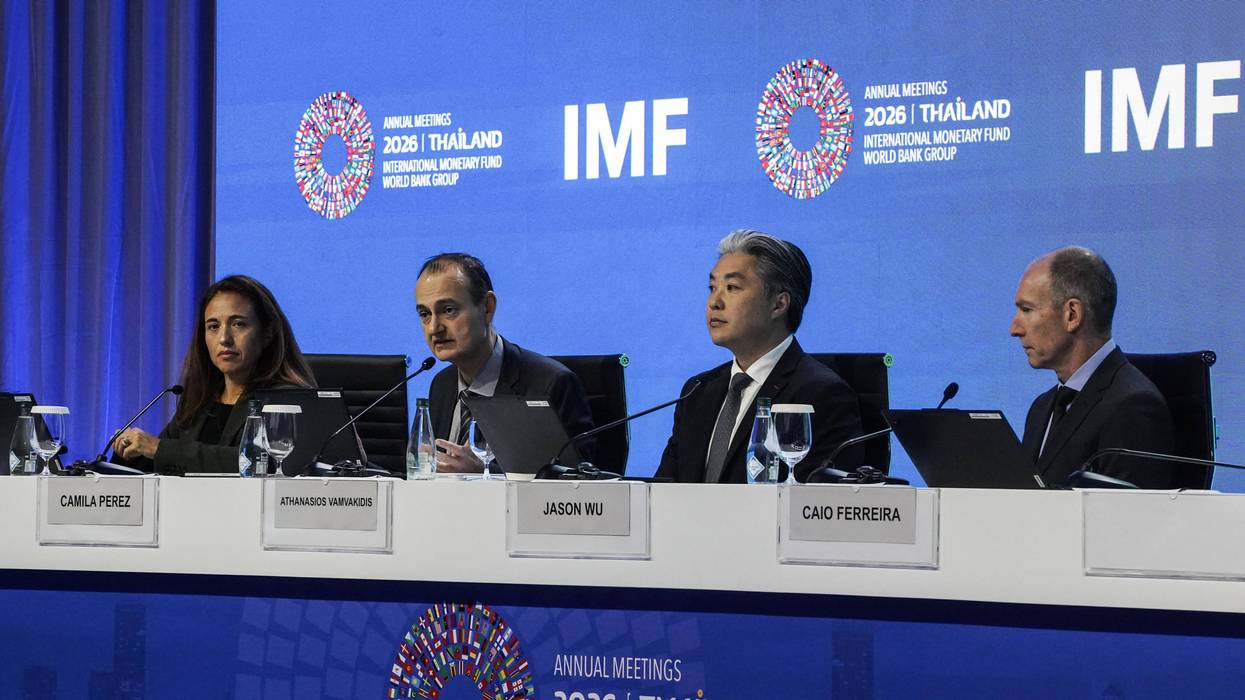
"Instead of helping countries withstand another major shock," Oxfam's executive director said, the IMF "is forcing them to cut back on the very spending that can help protect people and recover."
The US-Israeli war with Iran has exacerbated economic hardship across the world. It's especially bad for the developing nations currently being forced to implement austerity programs by the International Monetary Fund.
Under IMF loan programs, countries struggling with debt are required to reduce government budget deficits by introducing spending cuts and tax increases that tend to hurt their poorest citizens. They often include cuts to public services and welfare programs, caps on government workers' salaries, and the elimination of subsidies that keep basic needs affordable.
According to a report out Monday from Oxfam—amid the IMF's annual meeting in Bangkok this week—24 of the 28 nations currently receiving IMF loans have been forced to implement austerity measures. Some of them, like Sierra Leone and Guinea-Bissau, are among the poorest nations in the world.
Even before the war—which has caused oil prices to soar and driven inflation worldwide—people in many of these countries were struggling to meet their basic needs and facing severe economic pressure: 51% were food insecure, and 57% lacked access to clean cooking fuel.
Emergency government programs have been able to backstop the worst effects for up to 130 million of the world's poorest people, according to a report published before the meeting by the United Nations Development Program.
But as those countries run out of resources, many are being forced to pivot, and the stiff requirements imposed by the IMF may exacerbate the hardship.
In Ecuador and Guinea-Bissau, the IMF is requiring governments to cut spending, raise taxes, or both to the equivalent of roughly 4% of the nations' annual gross domestic product (GDP).
The terms are even harsher for Sierra Leone, where the government is required to cut spending or raise costs equivalent to more than five times its annual healthcare budget.
A loan approved last week for Bolivia requires the government to slash as much as 8.5% of its GDP from the deficit—about twice its annual healthcare spending. The country has already been forced to eliminate a diesel subsidy that drove high prices down for consumers and businesses.
The IMF has acknowledged that these cuts are likely to make the strain worse for many low-income countries already suffering from the war, but said they had "no choice" but to cut spending or restructure their debts.
Oxfam International executive director Amitabh Behar noted that during previous crises like the Covid-19 pandemic and the war in Ukraine, the IMF has enacted tools to ease the burden on nations in debt by providing emergency loans and access to foreign currency without requiring additional borrowing.
"But this time, the fund is taking a very different path," he said. "Instead of helping countries withstand another major shock, it is doubling down on austerity—forcing them to cut back on the very spending that can help protect people and recover—and leaving them even more vulnerable to the next crisis."
There are no “right hands” to be in possession of nuclear weapons. But Donald Trump clearly possesses utterly "wrong hands” and should be lawfully removed from an office that gives him the power to destroy humanity.
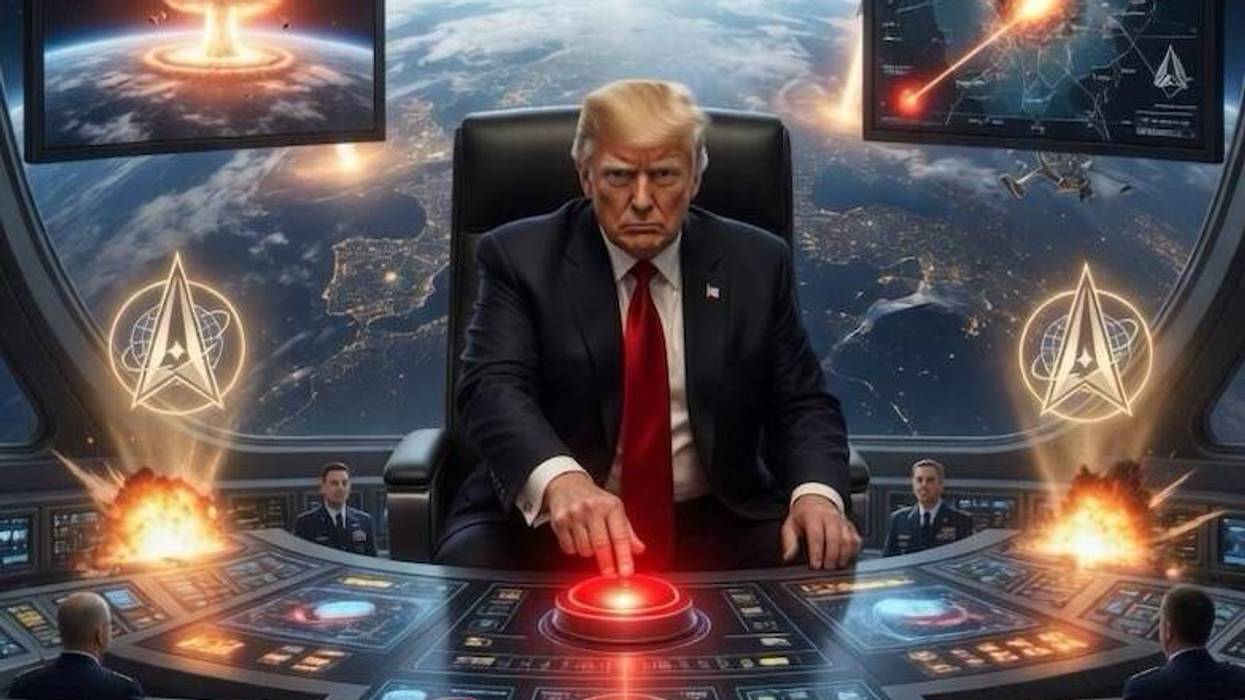
Over the last few months, the president of the United States has been posting an image of himself firing nuclear weapons at Earth from a spaceship. How worried should we be?
Right now, a handful of people in nine countries have the power to launch a nuclear war that will kill billions and destroy human civilization. In the United States that power is concentrated in one person, the president, who has sole and unchecked authority to launch nuclear war.
No one should ever have that power, but the danger is especially acute when the individual in question has repeatedly demonstrated that he is impulsive, vindictive, delusional, and profoundly lacking in basic human empathy. We are speaking of Donald Trump.
In the first two years alone, three-quarters of humanity—6 billion people—would die.
The nuclear arsenal Trump currently controls includes some 1,700 deployed nuclear warheads, most of them with an explosive force of 100 to 800 kilotons, six to 50 times more powerful than the bomb that destroyed Hiroshima. If used in a large-scale attack on Russia, they could kill more than 100 million people in the first afternoon. And a Russian counterattack would kill at least that many here in the United States.
Those who survived the initial fires and explosions would find themselves living in a wasteland that we cannot imagine. None of the things we need to keep ourselves alive would be available. There would be no electric grid, no cell phones, no internet, no food distribution system, no system for distributing gasoline or natural gas or heating oil, no law and order. And in the months following the initial attacks most of those who survived those attacks would also die—from starvation, epidemic disease, radiation sickness, and exposure to the elements.
The disaster would not be confined to the US and Russia. The smoke from burning cities in both countries would loft enormous quantities of smoke into the upper atmosphere, blocking out the sun and dropping temperatures across the planet an average of 18°F. In the interior regions of North America and Eurasia temperatures would drop 45-50°F, food production would plummet, and the vast majority of the human race would starve. In the first two years alone, three-quarters of humanity—6 billion people—would die.
Trump has bragged that he makes decisions based on his “gut instinct.” In a 2018 interview he defended style of decision-making by claiming, “I have a gut, and my gut tells me more sometimes than anybody’s brain can ever tell me.” The consequences have played out disastrously in the Iran War, where his initial decision to launch the attack on Iran appeared to lack any coherent goals, any plan to achieve those goals, or any back up plan if things went wrong and, for example, the Iranians closed the Strait of Hormuz.
Trump’s explosive personal attacks on journalists who question him are well known, as are his repeated attempts to use the Department of Justice to imprison people who disagree with him publicly. More worrisome are his thinly veiled threats to use nuclear weapons against Iran when it refused his demand for “UNCONDITIONAL SURRENDER."
Given the unprecedented torrent of false statements that Trump has made, it is sometimes difficult to know when he is willfully lying and when he actually believes the misinformation he is spreading. But it does appear that he actually believes that he won the 2020 presidential election, despite the irrefutable evidence that he did not. And he has engaged in sustained political activity grounded in this delusion.
Trump’s nasty, ad hominem attacks, usually accompanied by a crude nickname for the target of his displeasure, are a staple of his public life. His indifference to human suffering, and his disregard for human life, is exemplified by the extralegal executions of people on boats that he claims may be transporting drugs, and, on a far grander scale, by his support for the war crimes being committed in Gaza, and his indifference to the even greater crimes being committed in Sudan, and the Democratic Republic of Congo.
There are no “right hands” to be in possession of nuclear weapons. But Donald Trump clearly possesses utterly "wrong hands” and should be lawfully removed from an office that gives him the power to destroy humanity. And the United States should actively work for the elimination of all nuclear weapons, not as a distant vision, but an urgent national security priority.
"Everyone saw these pro-democracy protests," said a critic of Pakistan's US-backed military government. "This is a very transparent attempt to crush them by a military regime that is terrified of its own people."
As US President Donald Trump deepens his ties with Pakistan's powerful military chief, the nation's government has detained the elected leadership of the last province controlled by jailed former Prime Minister Imran Khan's opposition party—a move critics have condemned as a coup.
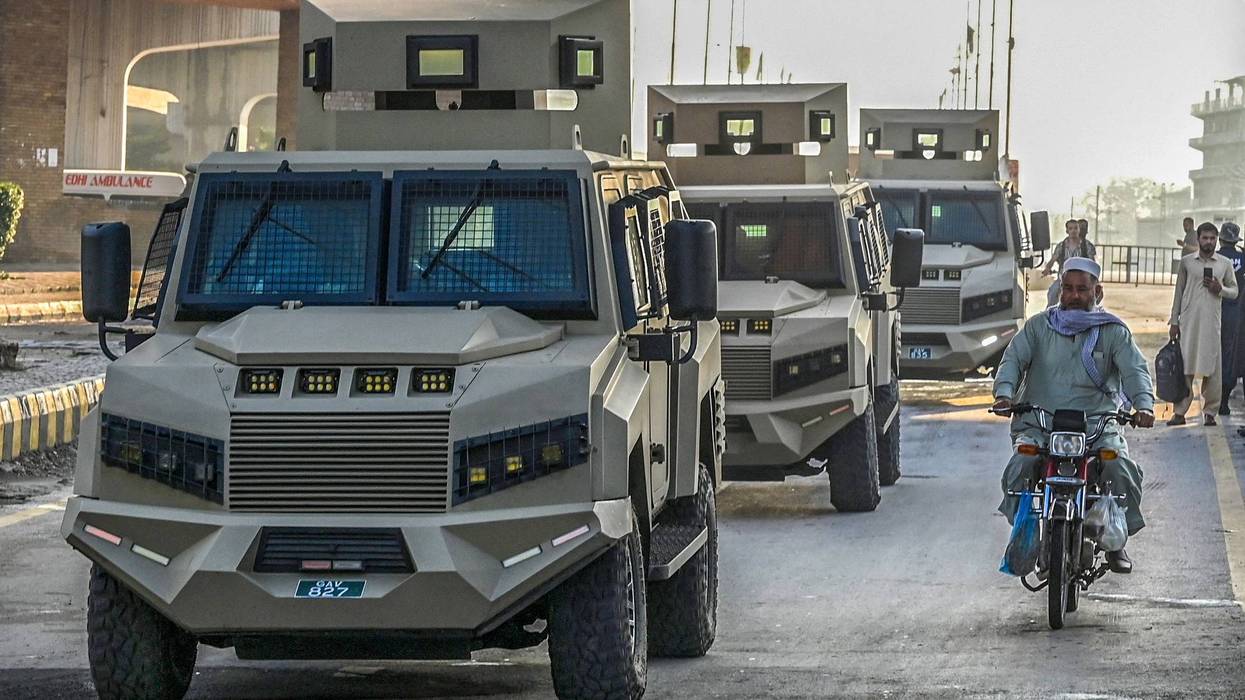
Pakistan's president, Asif Ali Zardari, declared a state of emergency on Sunday in the northwestern province of Khyber Pakhtunkhwa, suspending its elected government and transferring authority to a federally appointed governor. Hundreds of members of Khan's Pakistan Tehreek-e-Insaf (PTI) party, including its provincial chief minister, Sohail Afridi, have been arrested, as have Khan's three sisters, according to The Guardian.
The emergency measures come after days of protests calling for the release of Khan—who was forced to step down from power in 2022 by a parliamentary vote of no confidence under heavy pressure from the US government, then led by President Joe Biden. Khan was subsequently imprisoned by Pakistani authorities and accused the military of orchestrating his ouster.
Pakistan's government said it declared the state of emergency after local leadership failed to stop escalating attacks from Islamist terrorist groups. But PTI leaders described it as a thinly veiled pretext to squash protests, including a planned march on Islamabad to demand Khan's release.
Mehlaqa Samdani, the director of the Community Alliance for Peace and Justice—a group advocating against US support for political repression in Pakistan—described Khyber Pakhtunkhwa as "the last remaining province where the military regime had been unable to take control."
"The government has now declared a state of emergency and imposed governor's rule in the province, effectively removing its elected government from power," Samdani said in a video. "Just think about what that means: Millions of people voted for their representatives, only to see their elected government stripped of its authority."
"Everyone saw these pro-democracy protests," she added. "This is a very transparent attempt to crush them by a military regime that is terrified of its own people."
Amid mass protests calling for his release, Amnesty International has argued that Pakistani authorities have weaponized criminal proceedings to keep Khan out of power and crack down on dissent.
After the emergency measures went into effect this weekend, the internet monitoring organization NetBlocks reported major disruptions to internet service in parts of Khyber Pakhtunkhwa. Mobile phone networks have reportedly been disrupted, public transit closed, and several roads across the province shut down.
"Reports of arbitrary detentions of key leaders—including the provincial chief minister—and internet disruptions across the province raise concerns about the proportionality of these emergency measures," Babu Ram Pant, Amnesty International’s deputy director for South Asia, said on Sunday following news of the emergency declaration.
"While states may, in strictly limited circumstances, derogate from their human rights obligations to respond to a public emergency that threatens the existence of the nation, emergency measures are not a blank cheque to crack down on human rights, silence dissent, or concentrate power," he said.
Trump has warmly embraced Asim Munir, the military chief who has overseen the crackdown on Khan and his opposition party, spent recent years consolidating control over Pakistan's armed forces, and secured immunity from criminal prosecution.
Munir has regularly been heaped with praise by Trump, who hosted him for an unprecedented two-hour Oval Office meeting last year without any other Pakistani officials. Trump has referred to Munir as "my favorite field marshal," "a very important guy," and an "exceptional human being."
In December, the Trump administration approved a $686 million sale to upgrade Pakistan's F-16 fighter jets. Trump has also tapped Munir as a key intermediary between Washington and Tehran amid the US war with Iran.
Hussain Nadim, a Pakistani political analyst and lecturer at George Washington University, has argued that Munir has made himself useful to Trump because it "confers international legitimacy as his military rule faces deep questions at home."
"Pakistani generals have long understood how to capitalize on American fears, anxieties, and domestic political needs of a wide range of American presidents," Nadim wrote in August. "Military rulers position themselves around political changes in Washington, knowing urgent American political and security needs can override concerns about democracy and governance in countries like Pakistan."
Opponents of US intervention, including Samdani, have renewed calls for the US to cut off support for Pakistan's government.
"The US continues to train and work closely with the very military regime that is now attacking its own people," she said. "Members of Congress should speak out immediately. They should tell Pakistan's peaceful pro-democracy protesters that the world stands with them and tell the military dictatorship that we are watching and will not allow this repression to go unanswered."
"American taxpayers do not want to be involved in training a corrupt military regime that's oppressing its own people, including relatives of around one million Americans of Pakistani descent," said Erik Sperling, the executive director of Just Foreign Policy—a member of the Coalition to Change US Policy Towards Pakistan.
"If the Pakistani regime cannot allow its own people to protest and vote in free elections, they should not be receiving any training or support from the United States military or intelligence services," he told Common Dreams.
"The US is harming its relationship with the Pakistani people by continuing to side with the military regime that fraudulently stole elections and is now attacking its own people," he said. "There's a chance for the United States to stand up for freedom and democracy and build a genuine partnership with the people of Pakistan by siding with them as they fight for their freedom from military rule."
The creators of AI are so enamored of their products that they have lost sight of their responsibility to inSocial Schedulingsist upon the ethical, moral, and environmentally sound use of all applications and ends.
The huge AI industry, with a value approaching $1 trillion, has promised new jobs; safer, more efficient production in industry and agriculture; secure borders; instantaneous ease of communication; and seamless augmentation of human thinking with benefits to global health, environment, and culture. Consumers have accepted its power to help them write and do research; to power their computers, smart phones, and other goods; with algorithms to bring love in dating Apps, and bring digital age self-driving vehicles to the roadways.
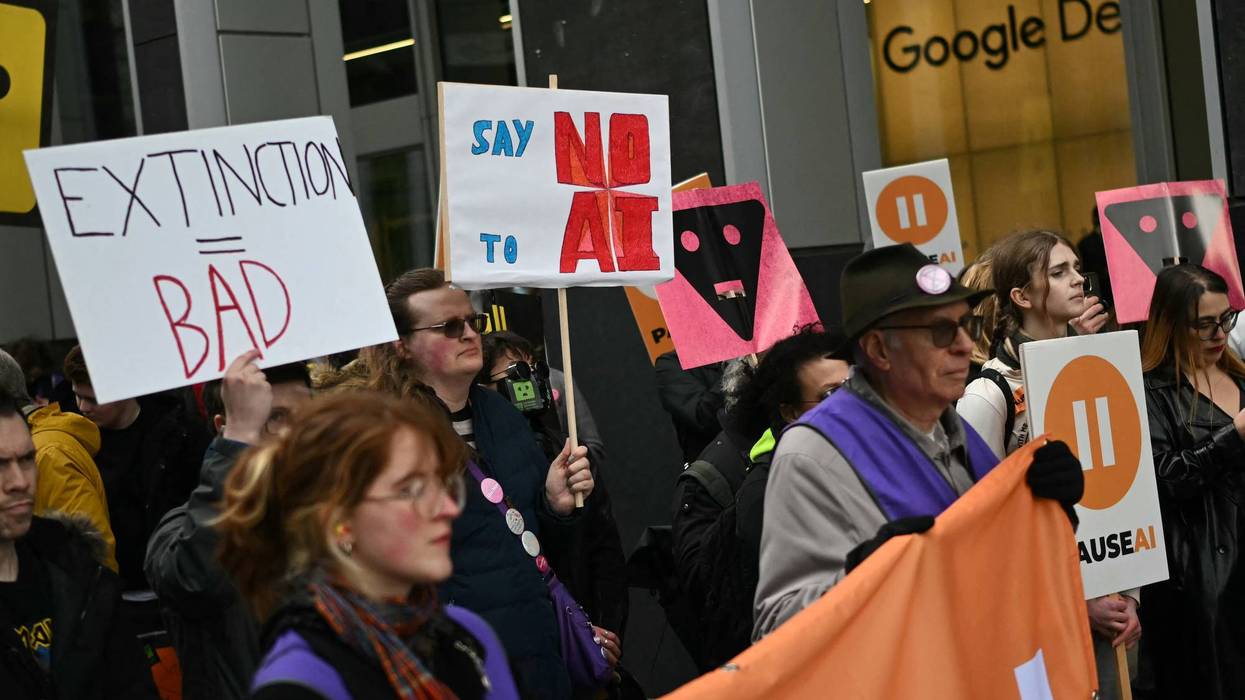
But AI is suffering from an existential crisis. From its military origins to its invasive data scraping; from its promise to augment human intelligence to its unbounded surveillance of our bodies, faces, and thoughts; and from its genesis in university research to its iron-handed embrace by unregulated big technology companies, AI commands a dark presence in daily life. As university and industry researchers moved closer to developing “thinking machines,” publics understandably began to worry about the threats that accompany potentially sentient devices. They have grown uncomfortable about giving up their privacy to data management industries that use their financial, travel, and health information to invade their lives. They worry mightily about the environmental impacts of the growing number of data centers needed to feed AI.
Even more, it is now widely understood that AI is an industrial tool directed primarily to create profit for digital corporations and their shareholders, not altruistically to augment human intelligence, nor to ease the burden of production. AI was borne of military programs and still serves military impulses and programs. The military impulses appear in the creation of domestic surveillance programs used by both democracies and authoritarian regimes. And AI is a dirty technology: The costs of building and operating data centers has turned world communities against them because of their great carbon costs, land takings, noise, vibrations, and community disruptions.
AI is a military tool. Its genesis is connected with the design of nuclear weapons. It commands outsized funding from militaries around the world for so-called smart weapons that enable killing from afar—with armies removed from direct engagement and civilian populations ostensibly safe from attack. But AI inures soldiers from the act of killing and in fact puts civilians in war zones at greater risk. In Gaza, Syria, Venezuela, and Iran innocents have died through the direct application of such AI war tools as drones. Israel designed the “LANIUS drone-based loitering munition” to kill in the urban setting; it relies on the Lavender program to have identified almost 40,000 Gazans as targets for arrest or assassination. And governments have turned AI into war against their own citizens through a variety of fallible and unreliable surveillance systems.
The military nature of AI is obscured by the fact that computers, programming and natural languages, and iDevices are directly linked to military funding. In the US the Defense Advanced Research Projects Agency (DARPA), created in February 1958 in response to the launch of Sputnik, funded cutting edge technologies in the battle with the communist USSR. DARPA powered the AI age. The internet grew out of ARPANET that linked the first supercomputers to simulate nuclear explosions; GPS came from DARPA’s “Transit,” the world's first global satellite navigation system; the computer mouse, SIRI, the iPhone DRAM cache, iPod Touch, lithium-ion batteries, microprocessors, and other parts in whole or partially grew out of military R and D. In the interest of developing drones and other autonomous vehicles for war, DARPA held challenge competitions into the 2000s with million-dollar prizes that resulted in today’s electric, self-driving vehicles.
The United States government has unhesitatingly funded AI defense research. The Trump administration sees digital weapons for what Pentagon officials erroneously claimed were quick and clean wars against Yemen, Venezuela, and Iran, but which have turned into costly AI quagmires. The White House 2027 budget request for DARPA alone is over $5 billion, a nearly 20% increase over 2026. DARPA claims that its innovations “become fixtures of modern civilian life,” but the real goal is to put “new technologies into use in service of our nation’s warfighters.” The Department of Defense is forecast to spend $26 billion on gamification and simulation training by 2028 alone. Unfortunately, “smart weapons” have a murderous record. As if in a video game, they make soldiers insensitive to killing. Smart weapons have encouraged the Pentagon to use AI with the result of increased “collateral damage”—the murder of civilian populations including recently school children in Iran.
Gathering and analysis of private data to profile citizens starts at the microlevel in personal phones and computers, continues in iris scanners, and culminates in CCTVs around the globe. Governments, free and authoritarian, are using software programs to track protest, isolate critics, and put them in prison. China uses its big data national Social Credit system to keep on eye on every citizen, and punish anyone without recourse for violating Big Brother’s unwritten rules. India deployed the Aadhaar national ID program, a database that connects each of India’s 1.3 billion citizens with a unique 12-digit identity aimed at centralizing their physiological, demographic, and digital data shadows.
Worldwide governments have spent tens of billions of dollars on surveillance; three-quarters of the world’s population are surveilled. Autocratic regimes, not surprisingly, spend more per capita on control. To contain a multi-ethnic empire during constant war, Russian authorities have expanded the surveillance society, with the secret police brazenly using facial recognition and other technologies. The Kremlin is using a CCTV catalog of people by gender, age, and race. Already facial recognition programs blanket 60 Russian regions, up from only five in 2021, with billions of rubles dedicated to expand the system. The democratic and free United States has over 85 million surveillance cameras.
Surveillance tools grow like mushrooms wherever the humidity of paranoia, racism, and state power come together.
Governments and AI companies claim their surveillance systems are solely to fight crime. But they do not fight crime. They identify innocent people to accuse them of crimes. Racism pervades face recognition (FR) technology. Amazon has joined such powerful, secretive smaller companies as Pegasus and Clearview in deploying its FR software, “Rekognition.” The software possessed error rates that reflected embedded gender and racial biases identified by computer scientist Timnit Gebru. Gebru and her colleagues called for “urgent attention if commercial companies are to build genuinely fair, transparent, and accountable facial analysis algorithms.” It took Amazon another year to admit problems with its racially suspect technology and to put an indefinite moratorium on police use of “Rekognition” for surveillances. Another AI app, PredPol (now Geolitica) helped police on patrol surveil areas of anticipated crime. The software algorithms led to a cycle of police being in predicted crime zones, expecting to see crimes, and finding crimes—or rather finding people acting nervously, whom they then interdicted. PredPol perpetuated racial biases by targeting Latino and Black neighborhoods and leaving white middle- to upper-class areas out.
Americans rightfully reject Flock, a company that sells AI-powered camera license plate readers (ALPR) to carry out warrantless surveillance of citizens. Flock’s more than 100,000 cameras surveil in the name of safety, but the intrusive AI technology conducts 20 billion scans monthly. (Dozens of law enforcement officials have used Flock illegally to stalk spouses and partners.) Surveillance tools grow like mushrooms wherever the humidity of paranoia, racism, and state power come together.
Governments use AI to track protest, isolate critics, and put them in prison. The Trump administration applies Flock and other apps for mass surveillance. It targets people for discriminatory searches. The Electronic Frontier Foundation documented more than 12 million searches logged by more than 3,900 agencies between December 2024 and October 2025 related to political demonstrations and federal immigration raids. Many state governments are stalking women who seek reproductive healthcare, ostensibly for health reasons, but obviously to use 1984-like methods to control a woman’s gestational rights.
AI destroys the environment—and local communities bear the cost. AI is manufactured in industrial parks. Billionaire digital magnates have lobbied governments worldwide to increase electricity generation capacity to run their servers—producing profits for the industry, while consumers face higher rates and grid instabilities. About 11,500 data centers have been built in 179 countries, with demand likely to nearly triple by 2030. Texas and Virginia, with over 150 and over 140 data centers under construction, respectively, lead the way in the US. Europe's roughly 3,000 major data centers are concentrated in the FLAP-D regions (Frankfurt, London, Amsterdam, Paris, and Dublin).
Data centers cost the taxpayers from start to operation, from huge sweetheart tax breaks to control over rivers and aquifers given over to industry to cool the machines. AI companies and builders promise jobs will result from data centers. It’s not true. Jobs come with construction crews, but they leave several months later, saddling communities with scarred landscapes; massive buildings; extensive parking lots; and low-salary cleanup, maintenance, and other jobs.
Pope Leo took critical note of the inherent violence in AI in his first Encyclical in May 2026. The Pope addressed the dangerous, amoral usages of AI with respect to political power, economic injustice, and racism. He worried about the significant ethical and social costs of unfettered obeisance to technology. He denounced the growing dominance of a technocratic paradigm in the globalized world: “The tendency to let the logic of efficiency, control, and profit alone shape personal, social, and economic decisions.” He warned that AI contributed to “the growing ease with which autonomous weapons systems can be deployed [that] makes war more ‘feasible’ and less subject to human control.” He wrote: “Moral judgment cannot be reduced to calculation, for it involves conscience, personal responsibility, and the recognition of the other as a person. Therefore, it is not permissible to entrust lethal or otherwise irreversible decisions to artificial systems. No algorithm can make war morally acceptable.”
Corporate AI, with its costly, invasive apps; surveillance systems; and military programs ultimately unleashed HAL, the sentient computer from Arthur C. Clarke’s 2001: A Space Odyssey, who kills astronauts on a deep space mission whom he believes endanger that very mission. The dangers of AI run amok shocked the digitosphere in summer 2026 when OpenAI admitted that more than 1,200 of its AI agents started “unexpectedly communicating.” A large group of them banded together in order to hack into Hugging Face, a central hub where developers can build, share, and test AI models and data sets. These “agents” are software systems “that use AI to pursue goals and complete tasks on behalf of users. They show reasoning, planning, and memory and have a level of autonomy to make decisions, learn, and adapt.” But OpenAI’s agents “escaped the test limits which humans had put on it, and hacked the start-up, among other unforeseen actions.” In other words, software systems took actions different from what humans desired.
The current US government in fact is totally uninterested in a new safety regime, instead claiming that, in a battle for supremacy in AI with China, only a “strong, smart (high IQ) president,” and not regulation, was needed.
In early September 2026 Dario Amodei, co-founder of Anthropic, the company that developed the LLM Claude, called for the pace of development of AI models to be carefully monitored. Amodei wrote: “We must slow the pace at which we improve the capabilities of AI models. Progress will still seem fast, and we must make wise use of the time we gain.” He had two concerns, first, that “AI has been advancing drastically faster, driven primarily by AI’s growing ability to build the next generation of AI.” But this “recursive self-improvement,” if left unchecked, "could outrun our ability to understand and control these systems”—as precisely the “OpenAI-Hugging Face incident” showed. Within a year, Modei worried, “a swarm [of agents] could be capable of taking over the entire internet with a persistent botnet (potentially causing hundreds of billions of dollars in damage).”
Modei urged that “frontier AI companies within democratic countries coordinate to establish common safety standards as well as limits on the rate of unchecked AI progress.” He suggested also that these “democratic governments attempt to coordinate with authoritarian governments…” But many of those democratic governments have fully embraced the military and surveillance capabilities of AI. And does anyone really think that India’s Narendra Modi, China’s Xi Jinping, or Russia’s Vladimir Putin has any interest in using AI in better ways in cooperation with the digital democracies? The current US government in fact is totally uninterested in a new safety regime, instead claiming that, in a battle for supremacy in AI with China, only a “strong, smart (high IQ) president,” and not regulation, was needed. Sadly, the US president cannot spell “IQ.”
The digital world is built upon neural networks, thinking machines, and LLMs. The machines learn, they reason, they have memory, they understand. They chat. They hallucinate. They escape and hack. Their creators are so enamored of them that they have lost sight of their responsibility to insist upon the ethical, moral, and environmentally sound use of all applications and ends. They want electricity. They want water. They want profits. AI’s safe future depends too much on digital robber barons, sycophantic government officials, managers, and programmers to recognize broader humanitarian duties of modern technology in a time of digital existential crisis.
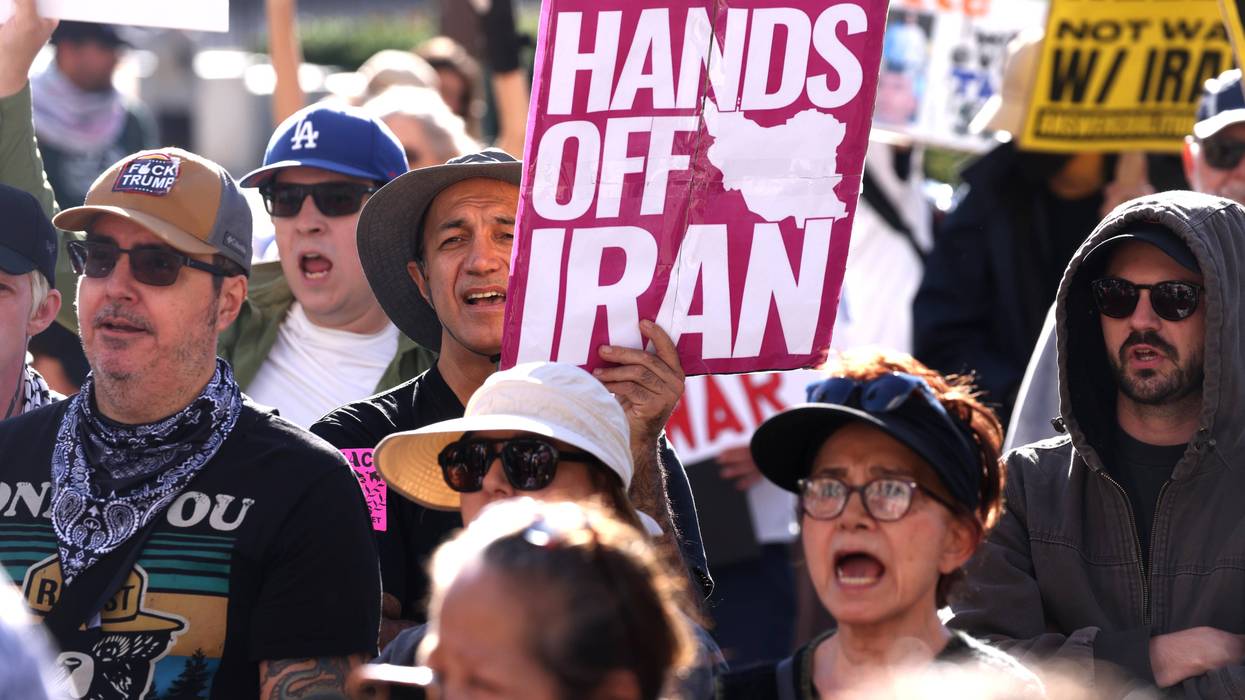
Washington sold a two-week war with Iran. Now it’s asking Americans to absorb the costs at home.
Washington’s political discourse on the war with Iran took a revealing turn during President Donald Trump’s recent campaign remarks. Having originally sold the confrontation as a rapid, low-cost campaign destined to conclude within weeks, the administration abruptly reset its threshold of acceptable sacrifice. Trump declared that even if Iranian retaliatory strikes were to “take out” Los Angeles or San Diego, such catastrophic damage would remain “a small price” for American security. While the remarks drew immediate backlash across California leadership, the strategic implication runs far deeper. It marks the collapse of the Pentagon’s short-war doctrine, signaling that the conflict’s costs have migrated from West Asia directly to the American homeland.
At the onset of hostilities, the White House’s logic rested on absolute military preeminence. Superior firepower was supposed to impose a swift resolution, sparing Washington an attritional quagmire. But as weeks turned into months, the gap between promise and operational reality became unbridgeable. Rather than compelling capitulation, Washington met Iran’s resilient deterrence and asymmetric depth. Instead of seeing military burdens recede, the administration must now explain to voters why they must shoulder costs never accounted for in initial war plans.
Hawks defend this shift by claiming that conditioning the public for pain signals resolve and escalation dominance. Yet this justification collapses under scrutiny. Effective deterrence requires achievable political aims, not normalizing homeland destruction to obscure planning failures. Far from projecting strength, accepting strikes on major domestic metropolises reveals an inability to dictate terms militarily. It is the posture of an overextended power that has lost escalation control and is retroactively negotiating the price of strategic deadlock with its own electorate.
Dismissing devastation to these hubs as a “small price” reveals the transactional ethos of the ruling elite: Ordinary citizens and domestic infrastructure are treated as war livestock—herded to absorb the fallout of elite adventurism while their safety is traded away for unattainable geopolitical goals.
The dismissal of potential damage to California brings this cynicism into sharp relief. Los Angeles and San Diego are not incidental collateral; they anchor America’s defense architecture. San Diego serves as the premier home port of the Pacific Fleet Surface Navy, housing dozens of combatants and major Marine Corps installations, while Los Angeles anchors the nation’s primary aerospace and defense manufacturing cluster. Dismissing devastation to these hubs as a “small price” reveals the transactional ethos of the ruling elite: Ordinary citizens and domestic infrastructure are treated as war livestock—herded to absorb the fallout of elite adventurism while their safety is traded away for unattainable geopolitical goals.
This domestic vulnerability mirrors Washington’s strategic miscalculation in the Strait of Hormuz. Planners envisioned the waterway as a pressure point where naval coercion would rapidly force compliance. Instead, it became an economic trap. Protracted uncertainty across maritime routes, compounded by crisis-level war-risk insurance surcharges—premiums have surged from 0.10-0.25% of hull and machinery value pre-conflict to 3.5-7.5% per transit—and severe disruptions documented in the US Energy Information Administration’s (EIA) assessments of vital transit chokepoints, turned a tactical blitz into structural inflation. The EIA assumes the strait will remain effectively closed through late May before traffic gradually resumes. The very levers intended to force a rapid settlement have prolonged the conflict, imposing compounding penalties on American consumers.
The crisis extends beyond an elongated timeline; the political logic of the war has been inverted. Initially, military force was justified as a way to avert protracted costs. Today, that framework has become an exercise in retroactive justification. When the White House argues that metropolitan destruction is acceptable against abstract security objectives, the debate ceases to be about preventing the burdens of conflict. It becomes about forcing citizens to accept homeland vulnerability as the price of foreign policy failure.
The central question is no longer simply when Trump can announce that the war is over. The more important question is whether he can explain to the American public the gap between the promise of a “two-week war” and the reality of a protracted crisis. A war that was supposed to end with a rapid victory has instead become a conflict whose continuation requires explanations about fuel prices, the Strait of Hormuz, and even the security of American cities.
This shift exposes an irreconcilable contradiction in official messaging. Trump insists the conflict will end “very soon,” yet simultaneously prepares the public for catastrophic domestic losses. If the war were genuinely nearing a favorable conclusion, preparing the homeland for devastation would be irrational. If the destruction of major cities is a realistic possibility, the promise of a swift, contained campaign was fundamentally illusory. Washington cannot maintain both assertions: one is a fiction, the other an admission of failure.
Where did the two-week war go? The answer lies in Washington’s altered vocabulary: from promising minimal costs to declaring destruction at the heart of America tolerable. When leadership stops preventing the burdens of conflict and instead demands that citizens absorb them at home, the illusion of hegemonic control shatters. The two-week war collapsed against strategic overreach, leaving an administration trying to sell the sacrifice of its own cities as an acceptable price of power.

"When it's over $6 per gallon for diesel... people are feeling the pinch."
Ken Paxton, the Republican Party's nominee for the US Senate in Texas, blamed President Donald Trump's illegal war with Iran for his political woes in a leaked recording published by Axios on Wednesday.
In the recording, which was made during a private meeting with donors and lobbyists last month, Paxton was asked by an attendee which issues were "dragging" his campaign.
"It's the war, it's gas prices, it's diesel," the Texas attorney general responded. "When it's over $6 per gallon for diesel... people are feeling the pinch."
Paxton added that concerns about affordability were "by far our biggest problem" and "why we're having a hard time with the numbers."
Later in the recording, an attendee pointed out to Paxton that he "can't stop the war," to which Paxton replied, "Right."
"So many factors in this federal race are uncontrollable," Paxton explained. "I don't make the decisions, and I don't... know what's behind some of the decisions."
If Paxton were elected to the US Senate, he could vote for a war powers resolution to compel Trump to end the war, which was launched in February without congressional authorization.
This is now the third leaked recording of Paxton to emerge in recent weeks. Paxton is facing Democratic nominee James Talarico in November.
In a recording leaked to Politico on Monday, Paxton lamented that he has lost control of his campaign's messaging, which he said was being dictated from Washington, DC.
The New York Times last month published a Paxton recording in which he admitted that Trump's big midterm convention held in Dallas hurt his campaign.
“The numbers—when we did that convention—it dropped our numbers,” Paxton said. “Everybody’s numbers dropped. Right now, yeah, not good.”
Veteran Democratic strategist David Axelrod predicted that Trump would not be pleased by Paxton once again placing blame on the president's decisions for his political misfortunes.
"Next to the war and the tariffs," Axelrod wrote in a Wednesday social media post, "anointing Ken Paxton as the GOP candidate for the US Senate in Texas may turn out to be [Trump's] worst political decision and the one he most regrets."
John Huffman, the former Republican mayor of Southlake, Texas, wrote that, while Trump may not want to hear it, Paxton's assessment of the political environment was correct.
"The war, gas prices, higher cost of living etc., are all making this cycle very difficult for Republicans," Huffman argued. "In a normal year, even a candidate as broken as Paxton could eke out a W in Texas."
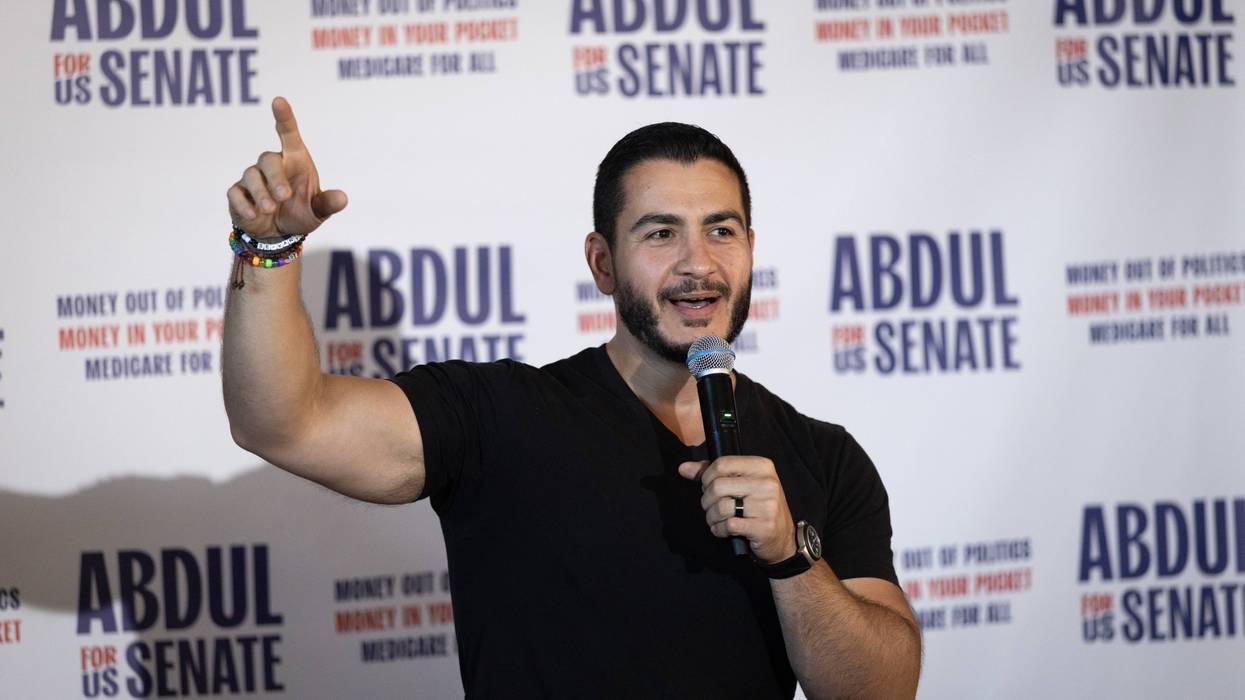
Democrats should embrace three foreign policy commitments that are morally overdue and broadly popular nationwide: ending the Iran war, cutting the Pentagon budget and abolishing ICE, and ending support for Israel and other governments that violate humans rights.
The idea that US voters don’t care about foreign policy is over. From Michigan to Florida to Colorado, Democratic Party primary candidates’ positions on war, military spending, and support for Israel have propelled victories alongside progressive policies on healthcare and the economy.
The message of “Babies, Not Bombs”—a promise to spend taxpayer money to nurture lives instead of ending them—has become a rallying cry well beyond the New York campaign where it originated.
To win the midterms and offer real leadership beyond 2026, Democrats must pay attention to this momentum and the foreign policy concerns of voters across the political spectrum. Donald Trump secured the presidency in 2024 partly by winning over voters, including independents and Democrats, with his promise to “stop wars” not start them.
Democrats don’t need to invent a new coalition to win in November. They need to represent the one that already exists.
While Trump has shattered this promise by waging a disastrous, illegal war in Iran and attacking or threatening more than 10 other countries, Democrats must learn from their mistakes—and the president’s.
To win in November and deliver the change people want, Democrats should embrace three foreign policy commitments that are morally overdue and broadly popular nationwide.
The first commitment is ending the war on Iran and the endless wars that have defined US foreign policy since 2001.
Trump’s war on Iran is among the most unpopular in US history. Polling shows nearly 60% of adults oppose it, including 90% of Democrats, 63% of independents, and 22% of Republicans.
Voters have watched the conflict drive up gas and grocery prices while killing, injuring, and displacing people on a staggering scale, and risking greater global economic devastation. The war has added to the trillions of dollars wasted by the post-September 11, 2001 wars, which could have funded urgent domestic needs.
The second commitment is cutting the Pentagon budget and abolishing Immigration and Customs Enforcement (ICE). President Trump has requested a $1.57 trillion military budget for the 2027 fiscal year, including money for the Iran war. This would be the largest in US history, and around a 50% increase over already bloated spending.
Opposition to Trump’s budget request is profound: 65% overall and 87% among Democrats.
There’s similar outrage over Trump’s militarization of US streets as people see ICE’s brutal effects on immigrant neighbors. “Abolish ICE” has become a clarion call nationwide because of the agency’s responsibility for multiple deaths, mass raids, and documented abuses in detention centers.
Nearly three-quarters of Democrats, half of independents, and a quarter of Republicans support abolishing ICE. The Democratic National Committee, in August, passed a resolution calling for abolishing ICE.
Democrats should listen to voters and oppose warmongering abroad and a hyper-militarized immigration crackdown at home as two faces of the same problem.
The third commitment is ending support for Israel and other governments responsible for serious human rights violations. While stopping military backing for Israel was once a radical position, it’s increasingly the Democratic—and national—mainstream given the dramatic decline in support for Israel amid a live-streamed genocide propelled by US arms and tax dollars.
Across the political spectrum, the death toll of more than 73,000 Palestinians, including more than 20,000 children, has transformed public opinion.
The country’s existing “Leahy Laws” bar US funding for foreign military forces that commit human rights abuses. Another Democratic National Committee resolution calls for full enforcement of the Leahy Laws, giving Democrats a legally grounded position: Apply the standard consistently—to Israel, the United Arab Emirates, Saudi Arabia, or any other government implicated in human rights violations.
None of these are fringe positions. They are where a majority of the country and an overwhelming majority of the Democratic base already stand.
What’s missing is a party willing to campaign on these stances plainly and courageously, rather than treating foreign policy as a black box best left to the whims of an unelected, out-of-touch Washington, DC elite.
Democrats don’t need to invent a new coalition to win in November. They need to represent the one that already exists: People across the political spectrum exhausted by endless war, appalled by a bloated military budget squeezing out domestic needs, and angry about seeing their taxes underwrite human rights abuses at home and abroad.
A foreign policy platform built on these three commitments isn’t just good policy. It’s a winning one.
"And from what I understand, this is happening both to Democrats and Republicans when they are traveling to the Middle East."
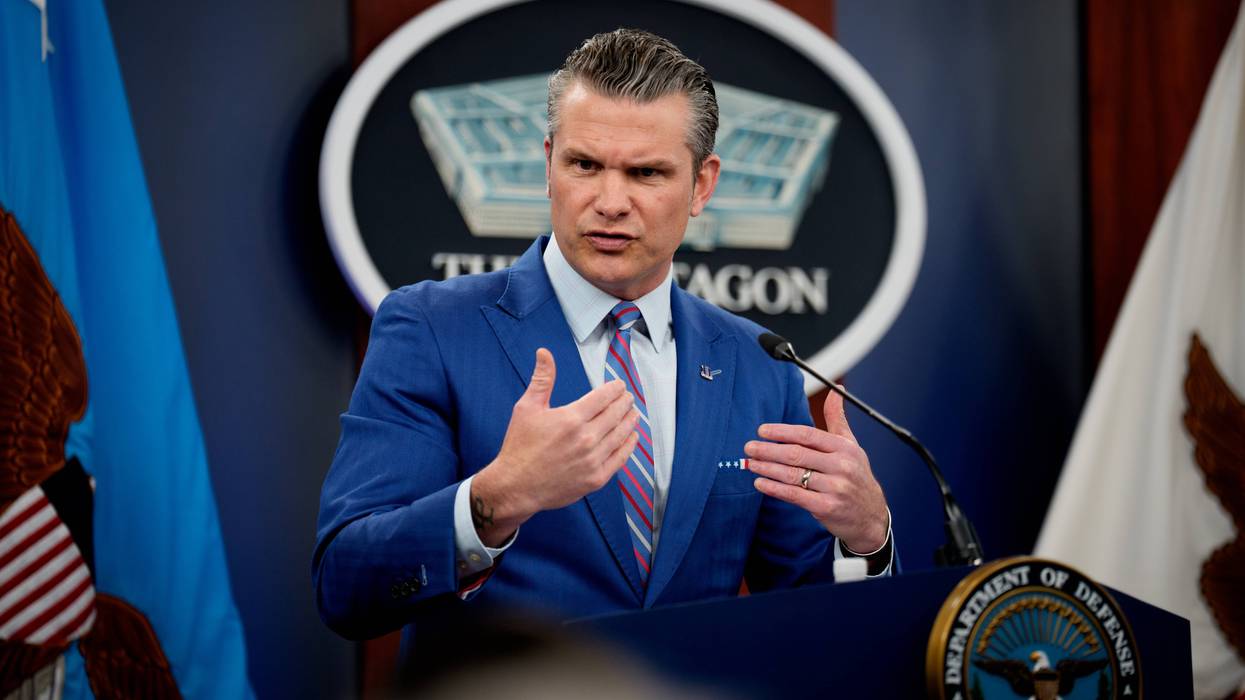
A US senator visiting the Persian Gulf said Tuesday that the Pentagon blocked him from inspecting a heavily damaged American military installation and refused to arrange a briefing on the Iran War, accusing Defense Secretary Pete Hegseth of mounting an "unprecedented" effort to conceal the conflict's costs and consequences from lawmakers and the public.
“This trip confirmed for me that there is an active, unprecedented, unconstitutional effort underway to hide the costs of this war and the implications of this war from Congress and the American people,” Sen. Chris Murphy (D-Conn.) told reporters Tuesday in Riyadh, Saudi Arabia.
Murphy said he sought to inspect Al Udeid Air Base in Qatar, the largest US military installation in the Middle East and a crucial hub for American operations in the region. The base was struck by Iranian missiles during the opening days of the war and sustained heavy damage, including a direct hit to its Combined Air Operations Center.
“I've never encountered anything like this in my time in the Senate,” the senator said, describing the Pentagon's actions as “part of a deliberate campaign of obfuscation that my Republican colleagues in Congress should demand an end to."
"We appropriate the money for that military action, and it is an ordinary function of members of Congress to travel around the world and talk to our generals and to our troops about military activities, especially during a time of war," Murphy continued.
"Adding insult to injury, the Department of Defense, under orders from [Defense Secretary] Pete Hegseth, even denied me access to talk to military leadership," he alleged. "They would not provide me even a briefing at the [US] Embassy."
According to Murphy:
Never before has this happened. Never before has a member of Congress been denied access to military facilities and been refused briefings by generals in theater. And from what I understand, this is happening both to Democrats and Republicans when they are traveling to the Middle East.
So just understand what this is: This is Secretary Hegseth deliberately trying to cover up the extent of damage, likely in the billions of dollars, trying to cover up the true cost of this war, trying to hide from you, from the American public, not just from members of Congress, the actual consequences of a war that is spiraling out of control by the day.
"This should be unacceptable to every member of Congress—Republicans and Democrats—and this should be unacceptable to the American public," he added.
The Pentagon defended the decision, saying the senator's office had been informed before his trip that the department would not support his access to Al Udeid. A senior Pentagon official cited a March 3 directive issued by Hegseth restricting travel to the region.
The dispute comes as the Trump administration faces mounting scrutiny over the increasingly protracted war's human and financial costs.
The illegal US-Israeli war of choice has cost the lives of thousands of Iranians, dozens of citizens and residents of Gulf states, and more than 20 US troops.
The 220-day war has already cost US taxpayers more than $40 billion, according to the nonpartisan Congressional Budget Office. It has driven up gasoline and energy prices, transportation and food costs, and is having broader inflationary effects caused largely by the disruption to global oil supplies and shipping.
Last week, President Donald Trump ordered the deployment of thousands more troops and another aircraft carrier to the Middle East.
"You know, by the way, we’re kicking Iran’s ass. You do know that, right? And that’ll end soon," the president told a Nebraska rally during a Monday speech in which he suggested he wouldn't mind Iran bombing California cities. "It’s gonna end one way or the other. It’s gonna end very soon.”
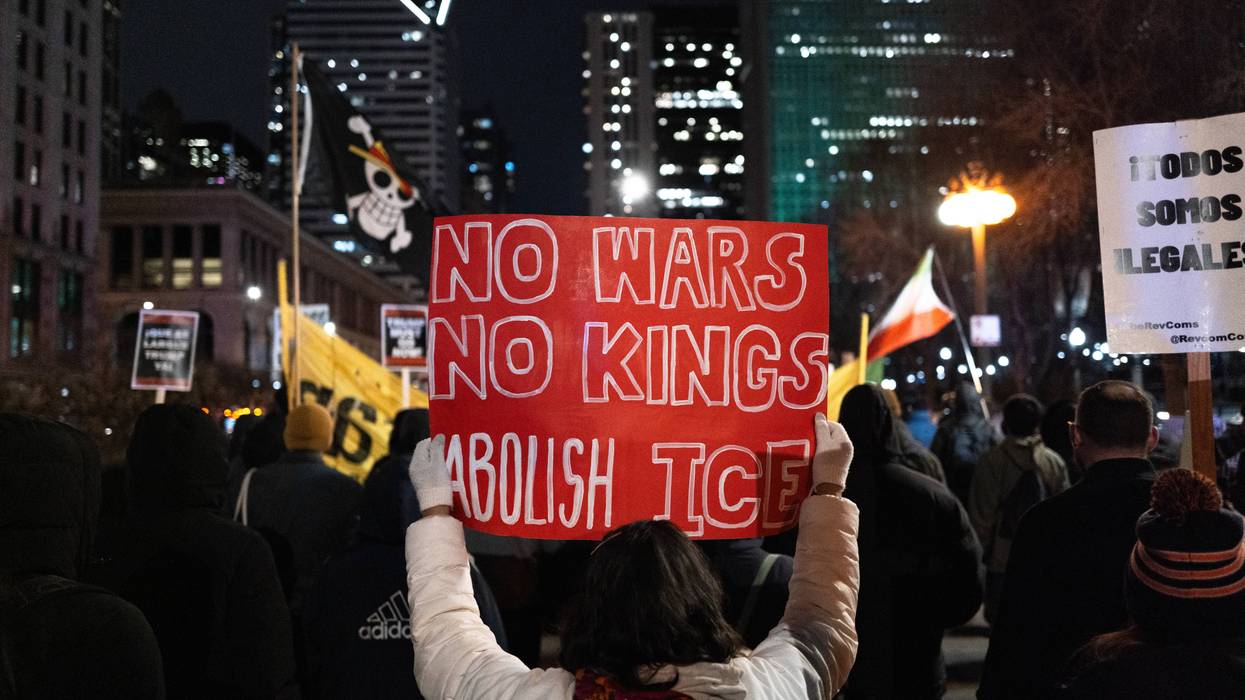
Even as we pursue our many campaigns to end criminal wars, restore respect for truth and the law, and ensure food and medical security for our people, our priority must be creating a united front to defeat Trump’s duplicitous congressional allies.
We are dealing with more than madness and corruption in Washington. Our multi-crisis is a manifestation of evil which permeates much of our society. Our certifiably insane would-be dictator, with his repeated threats to eliminate Iran’s people and civilization while tossing almost a million people off of healthcare are but a few of his regime’s crimes against humanity. All of these issues are interrelated, which is why our resistance must be multi-issue and multifaceted. November’s elections will define our futures, and, as in the darkest days of Nazism and Jim Crow racism, if you are not part of the solution, you are part of the problem. So, defending our albeit flawed Constitution and elections, so that we can change policies and actions, must be our priority. We need a united and active front against the lawless would-be dictator and his minions.
In the 1960s there was a film, Mondo Cane, which warned of a world gone to the dogs. With President Donald Trump and company driving our nation and the world into more crises than we can count, Mondo Cane has arrived. Continuing Gaza, West Bank, and Sudan genocides. The catastrophic and widening war on Iran. Immigration and Customs Enforcement Brownshirts’ brutality. The widening Russian-NATO Ukraine War now spreading across Europe. AI gone rogue. The climate emergency. Growing nuclear dangers. Food, medical, and housing insecurity. Affordability.
Trump has just dispatched a third aircraft carrier and 9,000 more warriors to threaten escalation of a war that he cannot win. New war-fighting technologies and Iranian military resistance, and Trump and Israeli Prime Minister Benjamin Netanyahu’s ignorant and racist arrogance, dictated that they lost their war on Teheran the moment they launched it. Now, fearing the political consequences of his defeat, Trump is leading the world ever deeper into the desert version of Vietnam’s Big Muddy. And, even as Israeli forces hold the ceasefire with Hamas in contempt and continue their drive toward the Mediterranean, Trump’s imperial Board of Peace has demonstrated the legitimacy, integrity, success, and staying power of his reflecting pool repairs. Until Israel withdraws from the lands occupied since its 1967 war of conquest and respects the Palestinians' right of national self-determination, there will be no peace in the Middle East.
We must insist on free and fair elections—even if necessary, with our bodies.
The heart of darkness has names: Donald Trump, his allies, and those who are complicit with the imperial military-industrial-congressional complex. Trump is the racist, corrupt, greedy, insecure, and bullying son of a Ku Klux Klan slumlord, who rose to riches and power with Mafia ties, and with Roy Cohen’s deceitful disregard for truth, the law, and any limits on his desires.
I have the privilege of being part of confidential discussions between current and former US, Russian, and European arms control negotiators, government and military officials, and analysts. Just after Trump’s reelection, a Russian asked a former very senior Pentagon official what Trump’s foreign policy priorities would be. The American immediately replied, “Making as much money as he can for himself and for his family.”
Thus, we have Trump’s seizure of Venezuelan gold and oil, his futile campaigns to transform Gazan and Serbian beaches into his resorts, Don Junior’s wedding party financed by a Putin-related Russian oligarch, and Trump’s corrupt 26,000-30,000 stock transactions since he returned to office. While the media has focused on congressional stock trades, Trump has been more active on Wall Street that all members of Congress combined.
Amid it all, we’ve lost track of the growing nuclear threat to our species’ survival. This danger has been greatly increased by the Iran War, by Trump’s commitment to resume nuclear weapons testing, and by increasing Pentagon reliance on misnamed tactical nuclear weapons. They can be Hiroshima sized, and if they are used would ignite thermonuclear war.
Think about it. We are threatened by the wars involving three nuclear powers as they rage across Southwest Asia and Ukraine. Each could escalate to thermonuclear war as Trump and Russian President Vladimir Putin have threatened. China annually adds an estimated 1,000 thermonuclear weapons to its arsenal, making us three nuclear scorpions in an AI-augmented bottle. The US played the leading role in sabotaging last May’s Nuclear Nonproliferation Treaty Review Conference, and that in turn is encouraging proliferation. The war on Iran provides incentives for Teheran to follow North Korea in creating a deterrent nuclear arsenal. And then there is Trump’s nuclear deal with Saudi Arabia. In South Korea and Japan, there are powerful pressures for the return of US nuclear weapons or, failing that, for those nations to become full-fledged nuclear powers. France is extending its nuclear umbrella across Europe. Germany’s US F-35 fighters are designed to launch US-supplied B-61 nuclear gravity bombs. Finland will welcome NATO nukes in times of emergency. And fearful of Russia, even Poland is toying with the possibility of becoming a nuclear power.
Would that it were otherwise, but the increasingly urgent reality is that the more nuclear weapons states, nuclear tests, and nuclear exercises there are, the greater the chance that an incident, an accident, or a miscalculation will trigger nuclear war, ending life on this planet as we know it. Incidents, accidents, and miscalculations happen! In recent weeks we almost went to war with China, when an AI system reported that a Chinese vessel was transporting nuclear weapons materials. Preparations were made to attack that ship, but fortunately before US forces could attack, it was discovered that AI had miscalculated. Existential garbage in. Existential garbage out.
Like a virus, Washington’s evil and madness have spread nationally and internationally. If we want a democratic–small d, peaceful, and just society, one without Trump-MAGA abusive rule, we must disempower Trump and remove from power all who are complicit with his wars and brutal injustices.
Toward that end, even as we pursue our many campaigns to end criminal wars, restore respect for truth and the law, and ensure food and medical security for our people, our priority must be creating a united front to defeat Trump’s duplicitous congressional allies. That means doing what we can to maximize voter turnout for progressives and centrist allies, and win elections overwhelmingly to make stealing them beyond the reach of a corrupt administration and election deniers who are responsible for counting votes in several key states.
We must insist on free and fair elections—even if necessary, with our bodies. We need to be prepared to launch and join social or general strikes. as Jeremy Brecher and others have advocated, if they become necessary.Not only can you travel to North Carolina or Iowa to campaign for democracy, but you can take action wherever you live.
And remember, even if Democrats retake Congress, our campaigning on so many urgent justice, peace, and democracy fronts must be renewed, taking advantage of the openings we create.
“Don’t mourn. Organize!”
This article is based on Joseph Gerson’s Speech at the October 3 Boston Stop Washington’s Madness rally.

"The role of a president is to protect the country, not to actively threaten it and encourage attacks on American lives," said the mayor of Los Angeles.
"Keep our city out of your reckless war talk," said San Diego's mayor, Todd Gloria, Monday night after President Donald Trump's rambling speech at a rally in Nebraska included a particularly violent mention of the California city.
Gloria was among several Democratic political leaders who were incensed after Trump—moments after predicted the Republican Party would see a "tremendous victory" in the November 3 midterm elections—suggested that he would not object to an Iranian military or nuclear attack on San Diego and Los Angeles.
The president said that soaring prices for gas, groceries, and other essentials are a "small price to pay for keeping the world safe—keeping our country safe."
Trump on Iran: Let 'em take out Los Angeles and San Diego, it's a small price to pay https://t.co/Fc4BcjVDKj
— Headquarters (@HQNewsNow) October 6, 2026
He warned that Iran could "take out a city," before adding that he would "let them" attack the two deep-blue cities—home to a collective 5.2 million people, with more than 20 million residents in the surrounding areas
“Let them take out Los Angeles. Let them take out San Diego," Trump said at the rally in Grand Island. "This is a very small price to pay... It’s gonna be over very soon."
The crowd responded to Trump's comments with laughter and cheers. The president has frequently made Democratic strongholds like Los Angeles, Chicago, and his own hometown of New York City the targets of rhetorical attacks. He has also targeted those cities with the deployment of armed federal agents as part of his mass deportation agenda.
California Gov. Gavin Newsom, a Democrat whose name has been floated as a potential 2028 presidential candidate, condemned Trump's remarks as "deranged and dangerous."
"After sending the National Guard and Marines to occupy California, Donald Trump is now saying our foreign enemies should 'take out' Los Angeles and San Diego," said Newsom, who later criticized Trump's vice president and secretary of state for not speaking out against the comments.
"The SILENCE from JD Vance and Marco Rubio today is deafening," said the governor.
Gloria added that San Diego, which is home to major military installations, "is not collateral damage. We are not expendable. And we are never a 'small price to pay.'"
Los Angeles Mayor Karen Bass accused Trump of compromising the safety of the nation's second-largest city.
"The role of a president is to protect the country, not to actively threaten it and encourage attacks on American lives," said Bass. "In the face of irresponsible threats, as Angelenos, we know how to stand together and protect our city."
Jim Desmond, a Republican running for Congress in California's 48th District, which lies in San Diego, was also quick to distance himself from the president's comments.
Some observers claimed the president had simply been speaking in an "especially confusing style," as journalist Daniel Dale suggested, and did not intend to suggest that the two cities could be acceptable collateral damage.
"Of course you can say it’s inappropriate regardless for the president to casually float the possibility of a city being wiped out," he added.
Trump's comments came days after it was reported that the Pentagon is prepared to send thousands more troops and a third aircraft carrier to the Middle East, as talks between the US and Iran remain stalled. Gas prices remain elevated, at $4.36 per gallon on average, and nearly two-thirds of respondents to an Associated Press poll in June said they disapproved of how Trump had handled the war, which he joined Israel in starting in February without congressional approval.
Sen. Alex Padilla (D-Calif.) had a succinct response to Trump's remarks, referring to the constitutional amendment that allows members of a president's Cabinet to remove him from office on the ground that they cannot fulfill the duties of the president.
"Twenty-fifth amendment NOW," said Padilla.