

SUBSCRIBE TO OUR FREE NEWSLETTER
Daily news & progressive opinion—funded by the people, not the corporations—delivered straight to your inbox.
5
#000000
#FFFFFF
To donate by check, phone, or other method, see our More Ways to Give page.
Daily news & progressive opinion—funded by the people, not the corporations—delivered straight to your inbox.
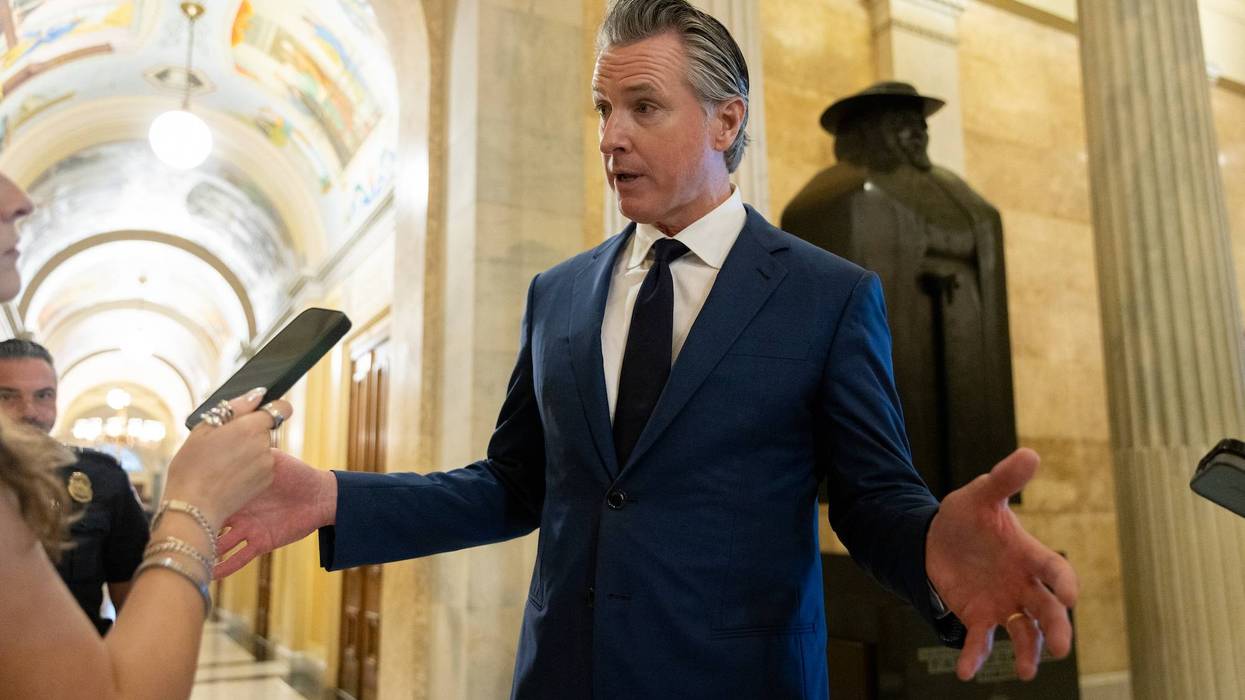
"He’d rather millions of children and families lose their healthcare than ask a couple hundred billionaires to finally pay their fair share."
California Gov. Gavin Newsom ramped up his opposition to a proposed tax on the state's billionaire residents on Friday by endorsing a competing ballot measure that would both cancel out the billionaire wealth tax initiative and prohibit any new taxes on the ownership of financial assets or other personal property.
"He’s showing California his true colors," Debru Carthan, vice president of Service Employees International Union-United Healthcare Workers West (SEIU-UHW)—which is leading the campaign for the California billionaire tax—said in response to Newsom's endorsement of Proposition 42. "He’d rather millions of children and families lose their healthcare than ask a couple hundred billionaires to finally pay their fair share."
The push for Proposition 42 is funded by Building a Better California, a group bankrolled by Google co-founder Sergey Brin and other billionaires.
If passed, Prop 42 would ban "any new state tax... imposed on the ownership of personal property (all things people own other than real estate)." It would also prohibit any tax that "applies retroactively based on taxpayer’s past activities." (The proposed 5% billionaire tax, which will appear on California's November ballot as Proposition 40, would apply retroactively to billionaires living in California on or after January 1, 2026.)
In a statement, Newsom framed his support for Prop 42 as an effort to protect Californians' retirement savings.
"We all agree that Californians deserve to have their retirement and life savings protected from new state taxes so those savings are there when they need them," the governor said.
But critics have described Prop 42 as a "poison-pill measure" whose supporters are fearmongering about a nonexistent threat to retirement savings in an effort to defeat the proposed billionaire tax, revenue from which would be used to fund healthcare, food aid, and education in the state.
"Its true target is Prop 40," the editorial board of the San Francisco Chronicle wrote of the Newsom-backed measure. "Prop 42 papers over its real purpose by cynically appealing to middle-class worries about retirement security. Reject this appalling tactic and disincentivize its further use by voting no."
Newsom has opposed the idea of a wealth tax on California's billionaires from the proposal's inception, pitting him against major unions, the California Democratic Party, and prominent national progressives such as Sen. Bernie Sanders (I-Vt.) and Rep. Ro Khanna (D-Calif.).
"Some of the SEIU-UHW members I’ve talked to are tired of Democratic politicians like Gavin Newsom taking their marching orders from the donors who would fund a future presidential campaign," Khanna, who is considering a presidential run, said during a rally in support of Prop 40 last weekend. "We are tired of a governor defying grassroots delegates in the California Democratic Party, defying California labor... all because he’s on the side of Trump allies like Peter Thiel and Sergey Brin."
"You can’t pretend to be anti-Trump if you’re doing the bidding of Trump donors," Khanna added.
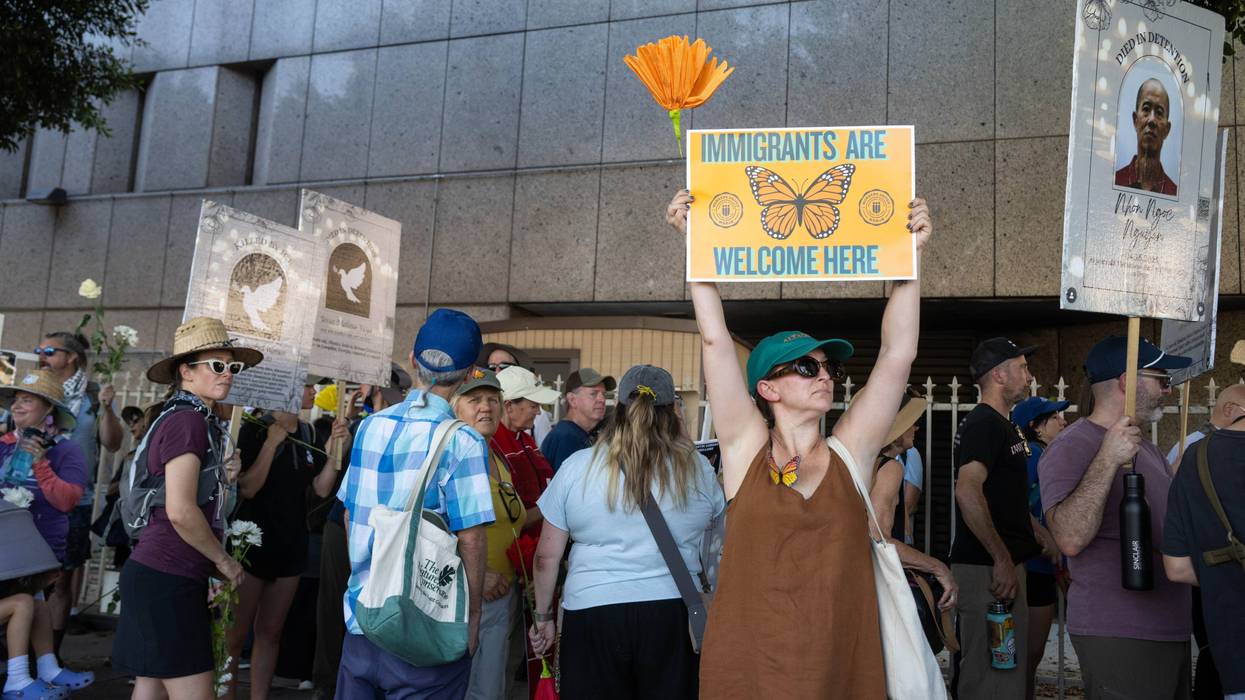
"California will not be intimidated by Trump's fear campaign. He's afraid because he knows he's losing," said Los Angeles Mayor Karen Bass.
Politicians and activists are denouncing the Trump administration for initiating a surge in federal immigration enforcement operations less than a month before the 2026 midterm elections.
According to a Wednesday report in the Washington Examiner, US Immigration and Customs Enforcement (ICE) has launched an operation expected to last for six weeks that is targeting undocumented immigrants regardless of whether they have a past criminal record.
The Examiner's sources said that ICE officers have been "told to go after anybody," with one source saying that the agency's management wants "numbers."
Democratic California Gov. Gavin Newsom, a potential 2028 presidential candidate, on Thursday condemned the ICE surge in a social media post, accusing President Donald Trump of "using fear and panic as a weapon."
"No president is above the Constitution," Newsom wrote. "No one in this country is without rights. California will stand up for our communities and hold federal agents accountable. Know your rights and exercise them safely."
Rep. Robert Garcia (D-Calif.), ranking member of the House Oversight Committee, called for ICE to be abolished because of the agency's continued "assault on immigrants and US citizens with no criminal history."
Rep. Pete Aguilar (D-Calif.) called the current ICE surge "alarming," but warned the agency that its days of consequence-free lawlessness are coming to an end.
"House Democrats will continue to demand oversight over this out of control agency," Aguilar wrote, with the November midterm elections just weeks away. "Accountability is coming."
Sen. Alex Padilla (D-Calif.) released a statement accusing the Trump administration of conducting an "arrest first, questions later" policy that is sweeping up documented immigrants and even US citizens.
Los Angeles Mayor Karen Bass drew a straight line between the California ICE operation and Trump's declining political standing, as polling averages show his approval numbers hitting record lows.
"California will not be intimidated by Trump's fear campaign," Bass wrote. "He's afraid because he knows he's losing. My office has your back. Stay safe, know your rights, protect your neighbors, and vote if you're eligible."
Joel Payne, chief communications officer for MoveOn, similarly linked the ICE campaign with midterm elections.
"No one is safer because ICE is terrorizing and violently hunting down our neighbors," said Payne. "The surge of ICE activity in California is a clear attempt to intimidate Latino communities and force them to stay home in the midterm elections. It won’t work."
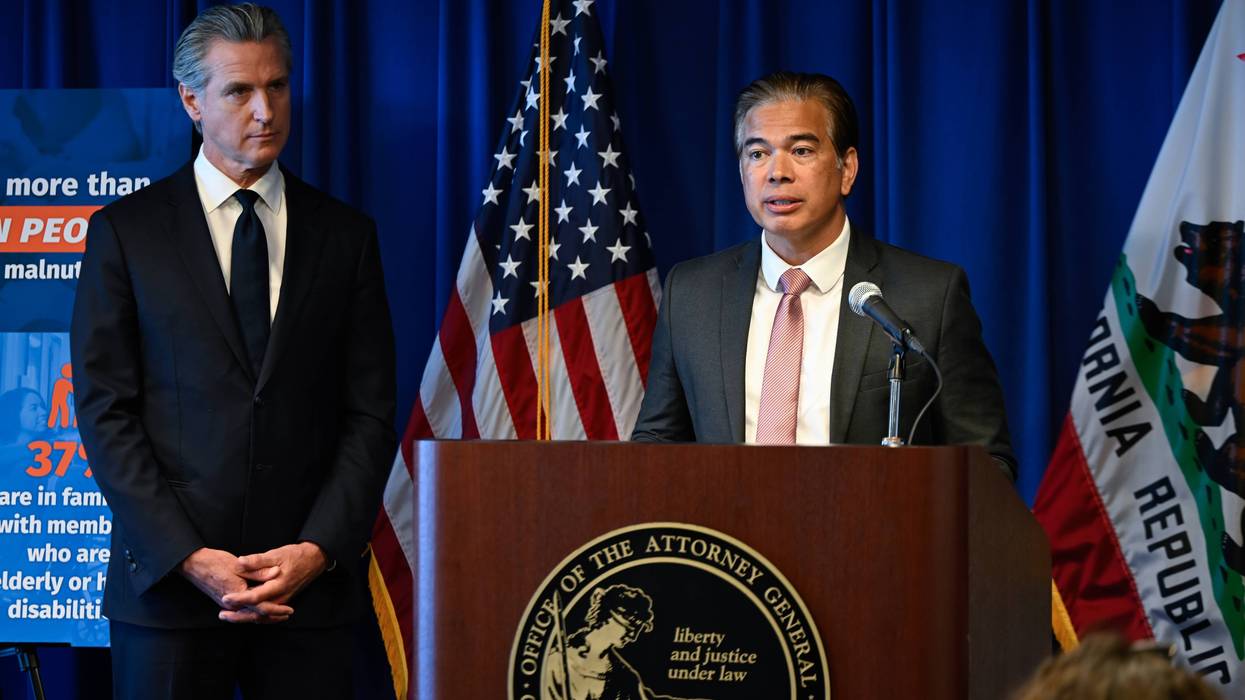
"Today, billionaires have yet again bribed, censored, and bullied their way to the top."
A coalition of state attorneys general led by California's Rob Bonta reportedly reached a deal on Monday to let Paramount's acquisition of Warner Bros. Discovery proceed, an outcome that press freedom advocates and antitrust campaigners condemned as a disaster for journalism, entertainment industry workers, and American democracy.
The deal, which is set to be formally announced later Monday, will pave the way for the creation of one of the largest media conglomerates in the world, helmed by the son of a billionaire megadonor to President Donald Trump and the Republican Party.
If the merger is finalized, the resulting media behemoth would control nearly 30% of both wide-release theatrical film distribution and basic cable channel licensing in the US. The combination would also put CNN under Ellison's control, heightening press freedom concerns that have intensified since Paramount's takeover of CBS.
"The AGs’ capitulation marks a new low."
“Today, billionaires have yet again bribed, censored, and bullied their way to the top,” Alvaro Bedoya, senior adviser at the American Economic Liberties Project, said in a statement. “As a result, a billionaire media conglomerate closely allied with the president will soon own one of its closest rivals, including some of the nation’s most critical news outlets. Saudi Arabia’s sovereign wealth fund will co-own those outlets, too.”
Bedoya criticized Bonta and California's Democratic governor, Gavin Newsom, who privately pushed the state attorney general's office to settle the lawsuit out of court. Xavier Becerra, the frontrunner to succeed Newsom, also called for a settlement, citing Paramount's threat to leave California if its proposed acquisition of Warner Bros. was blocked.
“People want champions who are not afraid of rich bullies. Newsom, Becerra, and Bonta did not meet that mark," said Bedoya. "The people who work in the film and TV industry and the small businesses who support it will suffer as a result. And so will everyone who values dissent in our democracy.”
Jessica González, co-CEO of the advocacy group Free Press, also denounced Bonta for reneging on "his promise to enforce the law and protect consumers and workers."
"Hundreds of thousands of people called on our state AGs to stand up to the Ellisons, who have engaged in a campaign of corruption and extortion to pave the way for this unlawful merger. We can no longer rely on the federal government to enforce the law and protect regular people. That much is clear. But the AGs’ capitulation marks a new low. It’s a sad day for all of us who have been opposing this merger because it will cut jobs and raise prices, all as it consolidates the media even more to enable authoritarians."
Actor Mark Ruffalo, an outspoken opponent of the merger who was subjected to what critics called a corporate "smear campaign" because of his stance, trained his ire on California's governor in response to news of the settlement.
"Gavin Newsom hands huge win to Trump and his billionaire cronies," Ruffalo wrote on social media.
The trial was scheduled to begin in March of next year. In its original lawsuit against the proposed merger—filed shortly after the Trump Justice Department dropped its investigation of the proposed purchase—the coalition of 12 attorneys general warned the deal would "combine two of Hollywood’s five major film distributors and two of the five major basic cable channel owners, extinguishing competition between Paramount and Warner Bros. and inflicting substantial harm on movie theaters, basic cable distributors and, ultimately, audiences nationwide."
The settlement deal reached Monday also reportedly includes the lawsuit filed by the Writers Guild of America, which represents TV screenwriters and others in the entertainment industry.
Bloomberg reported that the attorneys general of New York, Connecticut, and other states that had pushed back during settlement talks were able to secure "independent editorial boards for CBS and CNN as part of the deal"—though it's unclear how such boards would function.
"The terms are said to include a financial penalty if the company fails to make good on a promise to distribute 30 films per year in theaters," Bloomberg added.
This news is deeply disappointing and a massive betrayal of everyday workers and small businesses.
David Ellison is willing to make big promises, like 30 films a year, because he knows he doesn't actually have to stand by it.
We've seen it before with past mergers: Promises… https://t.co/yAYXusKiRM
— American Economic Liberties Project (@econliberties) September 21, 2026
The Los Angeles Times noted that Paramount's purchase of Warner Bros. "will be heavily leveraged."
"The company’s bankers have lined up nearly $80 billion in debt to finance the merger. [Paramount CEO David] Ellison’s father, billionaire Larry Ellison, late last year agreed to backstop the $47-billion in equity needed to complete the acquisition. Royal families from Saudi Arabia, Qatar and Abu Dhabi have agreed to chip in $24 billion for an equity stake by assuming some of Ellison’s financial commitments."
González of Free Press warned Monday that "consolidating the media in the hands of friendly oligarchs is right out of the authoritarian playbook."
“What’s exceedingly clear is that our laws and our political system are not strong enough to resist the pressure and manipulation of corrupt billionaires," said González. "We need to strengthen democratic systems of government, including getting money out of politics, and pass laws that break up big media conglomerates. We need to ensure that a few billionaires can’t drown out the masses to dictate bad policy.”
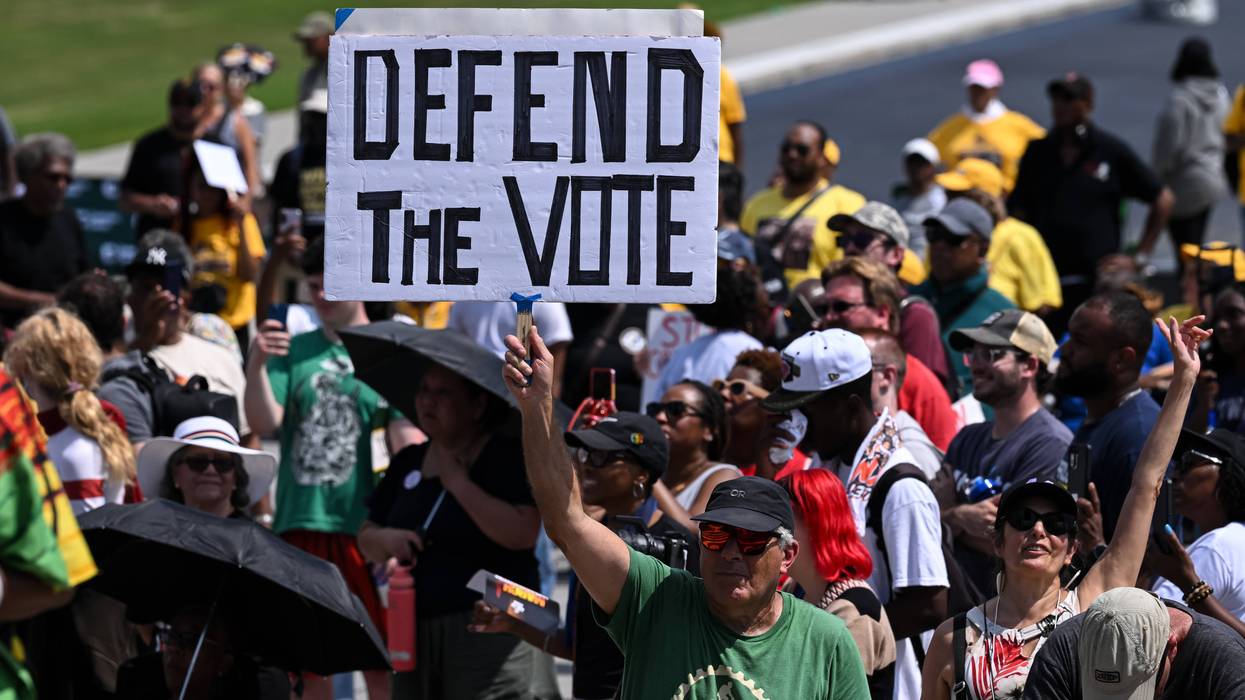
The First Circuit Court of Appeals found implementing Trump's order would cause "chaos and widespread disenfranchisement... between now and November 3."
A federal court on Thursday rejected the Trump administration's request to reinstate an executive order that placed restrictions on mail-in voting ahead of the midterm elections, arguing that the order is "likely unlawful."
The US First Circuit Court of Appeals ruled that President Donald Trump's mail-in voting executive order likely violates the US Constitution's elections clause, which grants states the rights to oversee their own elections, subject to oversight from the US Congress.
The court also found that the regulations proposed by the order "could prevent millions of Americans from obtaining and returning their ballots" in the coming election.
The ruling noted that the Trump executive order places a number of onerous restrictions on mail-in voting, such as requiring states to print "a voter-specific Intelligent Mail barcode ('IMb')" on all outgoing ballots as a precondition for their delivery by the United States Postal Service (USPS).
Additionally, the court wrote, the order would compel states "to obtain USPS approval for new ballot-envelope designs; to purchase new envelopes to replace those already ordered; to assure that there are technological systems in place adequate to generate IMbs; and to upload voter-specific information to a USPS online portal that is still not operational."
The court said these restrictions are so severe that they validate an earlier ruling from a federal district court, which found that implementing Trump's executive order would lead to "chaos and widespread disenfranchisement... between now and November 3."
Among other things, the court found these Trump-ordered rules would make it "impossible for some states to reprint compliant envelopes," while also creating a "herculean task" of "scanning tens of millions of ballot envelopes and reviewing for a match with information in the presently non-operative portal."
The court also took a shot at Trump administration lawyers, whom it alleged "have not even seriously challenged" the district court's finding about the chaos the president's executive order would cause.
The injunction against Trump's mail-in voting order came as a result of a complaint filed by a number of civil society groups, including the League of Women Voters and the Association of Americans Resident Overseas.
In a joint statement released after the ruling, the plaintiffs and their counsel said that the court affirmed that "the US Postal Service is not the gatekeeper for mail ballots."
"This decision rightly keeps in place an order blocking USPS from enforcing its disruptive and disenfranchising rule through the November election," they added, "and preserves the current system, which has worked safely, securely, and reliably for decades."
Democratic California Gov. Gavin Newsom took the opportunity to taunt the Trump administration for suffering yet another loss in its crusade to clamp down on mail-in voting.
"The rule of law continues to slap down Donald Trump's dangerous and un-American attacks on our free and fair elections," Newsom wrote. "California will never stop fighting for our democracy and the people's ability to exercise their constitutional right to vote."
The Trump administration has asked to the US Supreme Court to reinstate the president's voting order. With mail-in ballots for the upcoming midterms already being sent out in some states, a ruling from the nation's highest court is expected in the coming days.
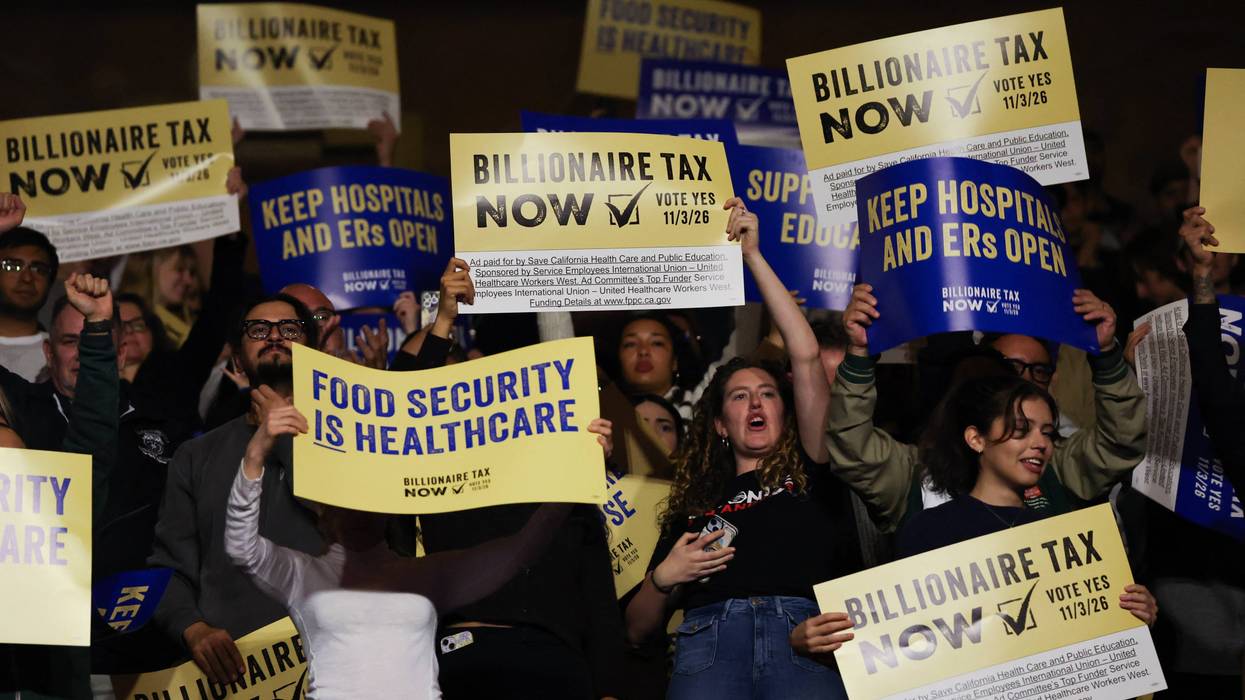
"This endorsement puts to rest the idea that California Democrats are not united by the billionaire tax—they are," said the president of the healthcare workers union leading the ballot measure campaign.
The California Democratic Party on Sunday endorsed a state ballot measure that would impose a one-time, 5% wealth tax on billionaire residents, a popular initiative that has drawn opposition from Democratic Gov. Gavin Newsom and ultra-rich corporate executives who are spending big to defeat it.
California Democrats' executive board voted 145-90 on Sunday to endorse the billionaire wealth tax, which will appear on the November ballot as Proposition 40. The Sacramento Bee reported that "delegates and observers erupted into cheers" following the vote, which barely cleared the 60% threshold needed for a formal endorsement.
Dave Regan, president of SEIU-United Healthcare Workers West, the union leading the campaign for the ballot initiative, said the California Democratic Party's endorsement of the proposal "puts to rest the idea that California Democrats are not united by the billionaire tax—they are."
"Polling shows that more than 80% of registered Democrats support this critical solution to our healthcare crisis," said Regan, "and now the Democratic Party of California has officially embraced that strong support through this endorsement.”
It’s official: the California Democratic Party has endorsed the Prop. 40 billionaire tax on 145-90 vote. They reconsidered an earlier vote where it narrowly failed to clear the 60% threshold. pic.twitter.com/5YnH3Ps7mE
— Ben Paviour (@BPaves) August 2, 2026
If approved by voters and enacted, the tax would raise an estimated $100 billion in revenue that could be used to offset the impact of federal Medicaid cuts and bolster California's education system.
Organizers said Sunday that the endorsement "puts major momentum behind" the proposed billionaire tax, noting that official California Democratic Party election materials will now note its backing of Proposition 40.
Suzanne Jimenez, chief of staff at SEIU-United Healthcare Workers West, said Sunday that "we refuse to accept a future where tens of millions of working families pay the price for tax cuts that benefit 200 billionaires."
"We are proud to stand alongside California Democrats in fighting for passage of the billionaire tax," said Jimenez. "We will work together to put patients first. We will ask those who have gained the most from our economy to help preserve the healthcare access, including to emergency services, that every Californian needs and deserves."
The endorsement from the California Democratic Party came after a coalition of billionaires backed by Google co-founder Sergey Brin reserved nearly $90 million in advertising time across the state and got two other tax-related initiatives on the November ballot: Propositions 41 and 42.
If the billionaire tax measure passes and either 41 or 42 also pass, Proposition 40 "could be stopped from becoming law," according to California's nonpartisan Legislative Analyst's Office (LAO).
"This is because the courts could find that Proposition 41 or 42 conflict with Proposition 40," the LAO noted.
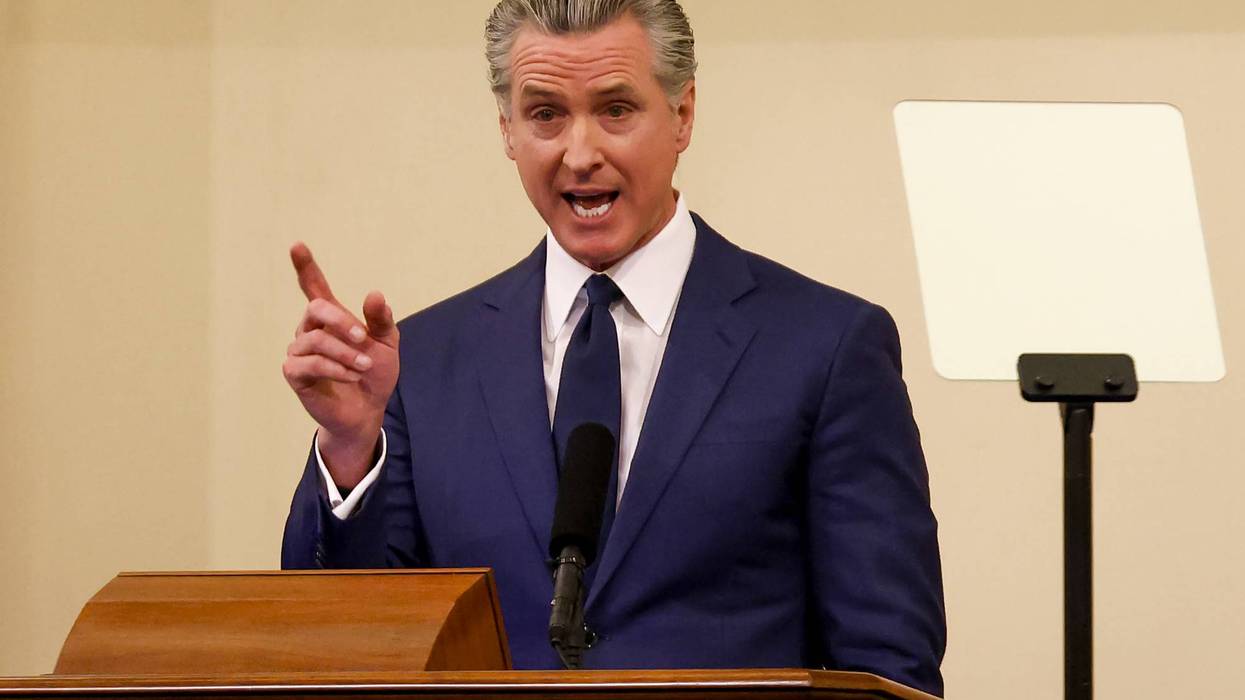
"You're not going to believe this but Gavin Newsom is taking the side of capital over workers," said one critic.
The Wall Street Journal on Friday reported that California Gov. Gavin Newsom has expressed reservations about his state's antitrust lawsuit that aims to block the $110 billion megamerger between Paramount Skydance and Warner Bros.
According to the Journal's sources, Newsom, who is widely expected to seek the Democratic Party's nomination for the presidency in 2028, has expressed concern about the impact that blocking the merger would have on jobs in Hollywood, and his office has reportedly "encouraged" California Attorney General Rob Bonta to reach a settlement with Paramount.
"It is unclear what impact, if any, Newsom’s urging will have on the California attorney general’s suit," the Journal reported. "Newsom doesn’t have a role in the litigation and doesn’t have authority over the state attorney general’s actions."
Bonta, along with several other Democratic state attorneys general who are co-plaintiffs in the antitrust suit, scored a major victory last week when a federal judge granted a temporary restraining order to pause the merger from going forward. In response, the companies have agreed not to close the deal until five days after a trial is held or next June 1, whichever is sooner.
The combination of Paramount and Warner Bros. has long been controversial because it would put control of CBS, CNN, HBO, TikTok, and other major media properties all under the control of David Ellison, the son of billionaire Larry Ellison, a major donor to President Donald Trump.
Newsom earlier this year told Semafor media reporter Maxwell Tani that he's known David Ellison for years, while emphasizing that California's probe of the proposed merger "isn't a personal attack" on the Paramount CEO.
David Dayen, executive editor of The American Prospect, expressed mock surprise at Newsom reportedly going to bat for the merger.
"You're not going to believe this but Gavin Newsom is taking the side of capital over workers," Dayen wrote. "In this case it's tricky because he's backing the very MAGA allies his cosplaying X account claims he's fighting."
Tech journalist Karl Bode described Newsom's reported efforts to push the merger through as a "nice sneak peak of the sort of media policies you can expect under his presidency."
Elections analyst Nick Field questioned Newsom's reported concern about Hollywood jobs being lost if the merger gets blocked, as corporate consolidation usually coincides with mass layoffs.
"Paramount will undoubtedly cut tons of jobs if they buy Warner Bros., as the Ellisons did when they bought Paramount in the first place," wrote Field. "To say nothing of allowing the Ellisons to own CNN and consolidate more power. Just disgusting supplication from Newsom."
Antitrust advocate Matt Stoller, however, expressed skepticism at the Journal's reporting on Newsom, if for no other reason than the California governor was unlikely to risk hurting his image among Democratic primary voters by pushing through an unpopular corporate merger.
"It would be an odd for Gavin Newsom to encourage the control of Hollywood by close allies of Donald Trump considering his 2028 ambitions," wrote Stoller. "He's not stupid."
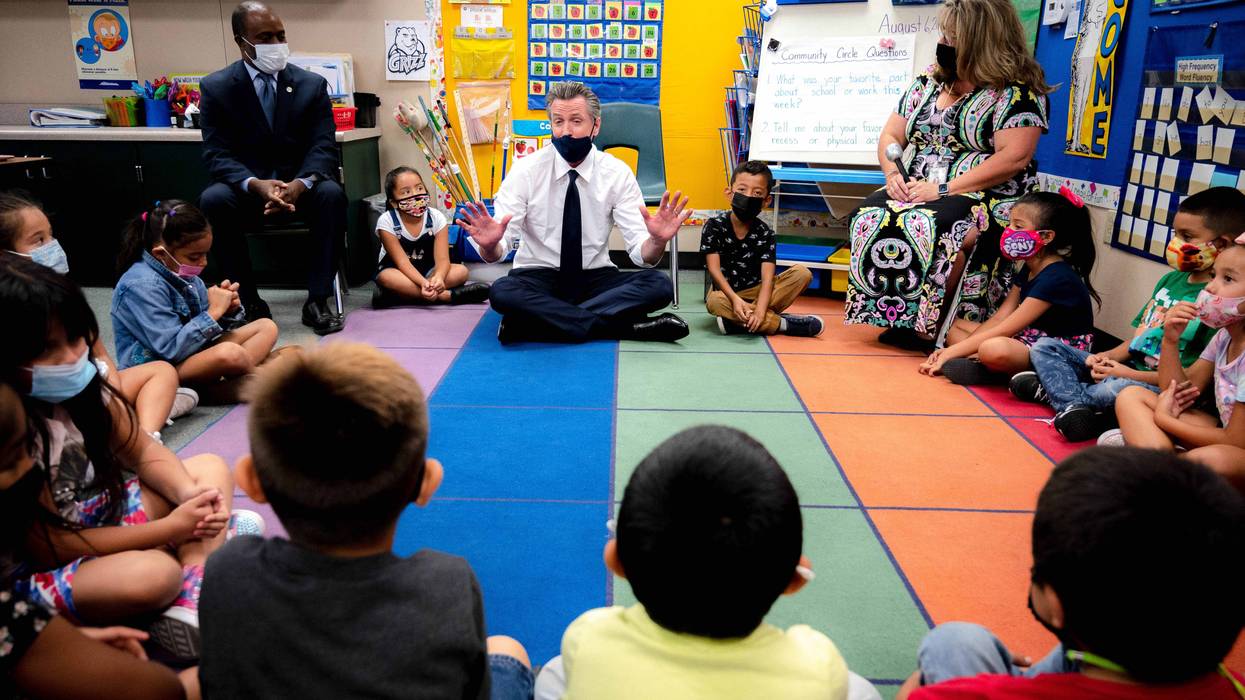
Funding childcare is the difference between realized dreams and delayed futures.
As California's final state budget has been signed and Gov. Gavin Newsom prepares to leave office, we can’t help but look at the impact of childcare funding on families. To build a future, we must look at the present and past.
Ours is a tale of two families. We are both mothers and parent leaders with Parent Voices—Carmen in Marin and Marilynda in Los Angeles. This year, we both attended the 30th annual Parent Voices CA Stand for Children Day, where we joined hundreds of parents, children, and childcare providers to say something simple and urgent: Children matter. Together, we testified at the State Capitol until the final lap to the signing of the final state budget—to remind lawmakers: Superheroes Choose Kids, Not Billionaires!
We are similar in so many ways, but when it comes to access to childcare, we learned there is a disconnect in state policy across counties.
Imagine a state where every child has access to care from birth, where no parent has to choose between working and staying home, and where no child spends years on a waiting list.
I, Marilynda, was living in a homeless shelter when I was pregnant with my first child. I was fortunate to get off the waiting list for a childcare voucher. Because of that, I was able to get through graduate school, work, hold an internship, and earn my Master of Social Work. My daughter, Serenity, is learning, socializing, and growing, and we wouldn’t be where we are without that childcare.
I, Carmen, saw my oldest son age out of eligibility for a childcare voucher after more than 10 years stuck on the childcare waitlist. Years later, my two daughters gained access to childcare when Newsom added new childcare spaces, and today they are thriving. But now, my youngest son, Dyson, is stuck on the waitlist because the state has not expanded childcare since 2023. I don’t have reliable care for him; I can’t work more hours because I can’t leave him, which hurts my ability to provide for my family.
Our stories make it clear: Funding childcare is the difference between realized dreams and delayed futures. No childcare means lost wages for many California families.
Newsom once recognized that waiting is a policy failure. He made a promise to expand childcare, and that promise gave families hope. But then the promise was delayed. Newsom's May revision of the state budget did not provide enough to reach 200,000 new childcare spaces. It will leave more than 77,000 families remaining on what is now known as the "No Hope” childcare waitlist.
So, we advocated. We put pressure on Gov. Newsom to get closer to fulfilling his promise to childcare. He announced 130,000 childcare spaces, much closer to the 200,000 than originally proposed.
Compromises were made. But more must be done when there are thousands of eligible children stuck on the “No Hope” waitlist.
We teach our kids to keep their word. Why should we expect anything less from our governor?
At the same time, childcare educators will receive a 2% cost of living adjustment while TK-12 teachers get 4.31%. The first five years of a child's development are among the most critical, yet the educators who show up for those years are already the lowest paid and getting less than half the investment. That’s a reminder that childcare providers continue to be disrespected in budget decisions.
We have to ask a hard question: What kind of world are we building for our children?
Imagine if the billions lost to incarceration and tax cuts for corporations were invested in universal childcare instead.
Implementing universal childcare and properly supporting the industry is the solution to the affordability crisis. It unlocks opportunities for parents like us to work, pursue education, pay bills, and afford essentials like gas and food. If care becomes available for every family, the future will brighten for all families.
Imagine a state where every child has access to care from birth, where no parent has to choose between working and staying home, and where no child spends years on a waiting list.
This is not out of reach. It is about priorities.
The State has the money. But the commitment to invest in childcare has fallen short.
Will the next governor get closer to fulfilling the promise to fund childcare for all families?
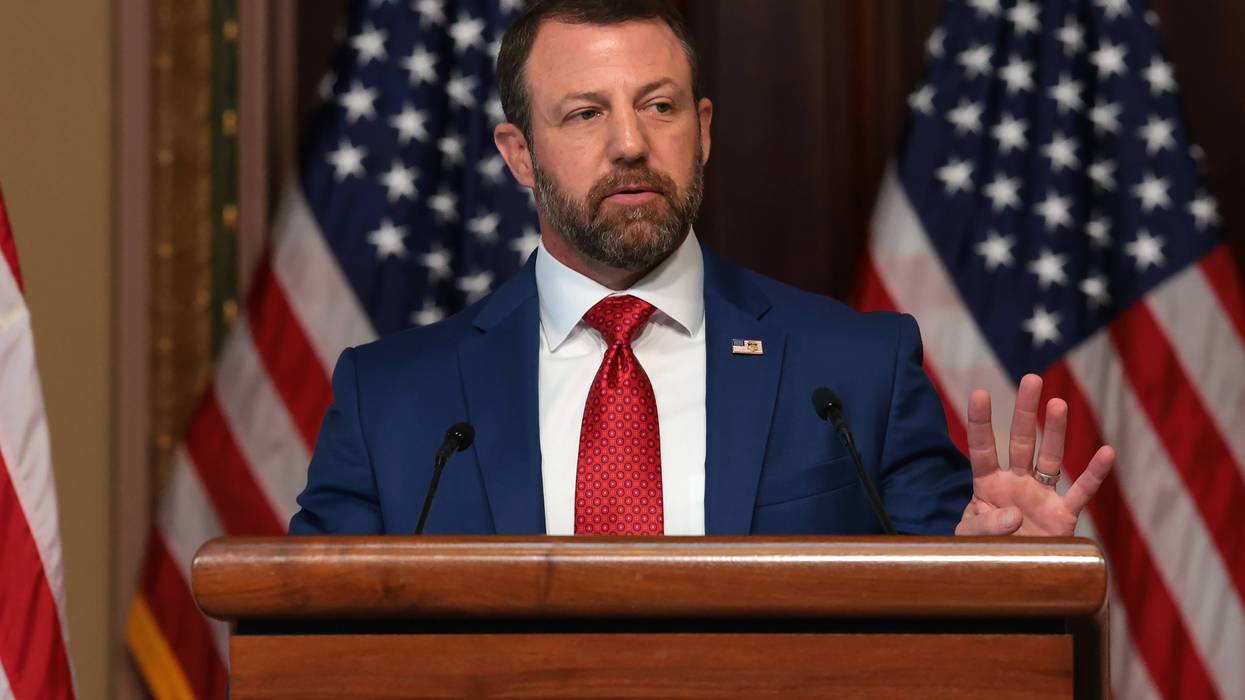
"They are losing, and they know it. Election officials will not be intimidated," said Senate Minority Leader Chuck Schumer.
US Homeland Security Secretary Markwayne Mullin on Friday threatened state election officials with prison time if they do not comply with the Trump administration's "mandatory" changes to how they run their elections.
During a press conference, Mullin said that the Trump administration was making so-called "security enhancements" to US elections "mandatory," adding that any uncooperative states will be penalized.
"If these states want a grant and they want to be reimbursed to run federal elections, they're going to have to implement security issues," Mullin said. "We're saying that your [voting] machines have to be secured and that your voter registration list needs to be scrubbed."
Later in the press conference, Mullin elaborated further on penalties states could face if they didn't "scrub" their voter rolls to the administration's specifications.
"The states that choose... not to participate in securing the elections, we will make sure we make those states a priority to look into who voted in their states, and hold then the election officials accountable," he said. "If the election officials, once we gave them the information they need to secure their elections, and they chose not to, then those individuals can also be held accountable."
Mullin added that this accountability can come "by fines, by penalties, and even, depending on how far it goes, prison time."
Mullin says that election officials in states that don’t cooperate with the Trump administration may face jail time pic.twitter.com/FvIaKmTEdc
— Aaron Rupar (@atrupar) July 17, 2026
Article 1, Section 4 of the United States Constitution explicitly gives states the power to run their own elections, while granting the US Congress the authority to implement federal regulations if needed.
The executive branch of the federal government is given no role in the administration and regulation of elections.
Democratic California Gov. Gavin Newsom reacted to Mullin's threats of jail time for election officials with defiance.
"California has free, fair, and secure elections and we will fight for them," Newsom wrote in a social media post. "Try us."
Senate Minority Leader Chuck Schumer (D-NY) similarly vowed to fight the administration's efforts to meddle in the elections.
"They are losing, and they know it," Schumer wrote. "Election officials will not be intimidated. Senate Democrats will make sure resources are in place to fight back against any illegal activity by the Trump administration."
Sen. Raphael Warnock (D-Ga.) warned that Mullin's Friday statements appear to be an escalation in the administration's tactics.
"First, they sent the FBI to seize ballots in Georgia," he wrote. "Then, they tried to get data on election workers in Fulton County. Now, they’re threatening to imprison election officials. This is escalating quickly. Every single American should be alarmed."
Government watchdog Citizens for Responsibility and Ethics in Washington also indicated it would file legal challenges to the administration's efforts to take over the elections process.
"The Constitution gives states, not the federal government, the power to administer elections," the group wrote. "That's for a good reason, but the Trump admin keeps trying and failing to grab power anyway. We're fighting back in court."
Aaron Reichlin-Melnick, senior fellow at the American Immigration Council, expressed skepticism that the Trump White House's election meddling would be successful.
The Department of Homeland Security "has literally zero power to do this," Reichlin-Melnick wrote. "The Trump admin has lost every single lawsuit on their efforts to get state voter data or change voter requirements. The power to administer elections is given to the states."
Historian Patrick Wyman similarly predicted the administration's efforts would end in failure.
"They’re going to threaten this stuff, they’ll ham-fistedly screw up the implementation, commit seven atrocities, and still lose every election that matters in November," Wyman wrote. "We’re now nearing the 'fuck you, do it, see what happens' stage of this confrontation."
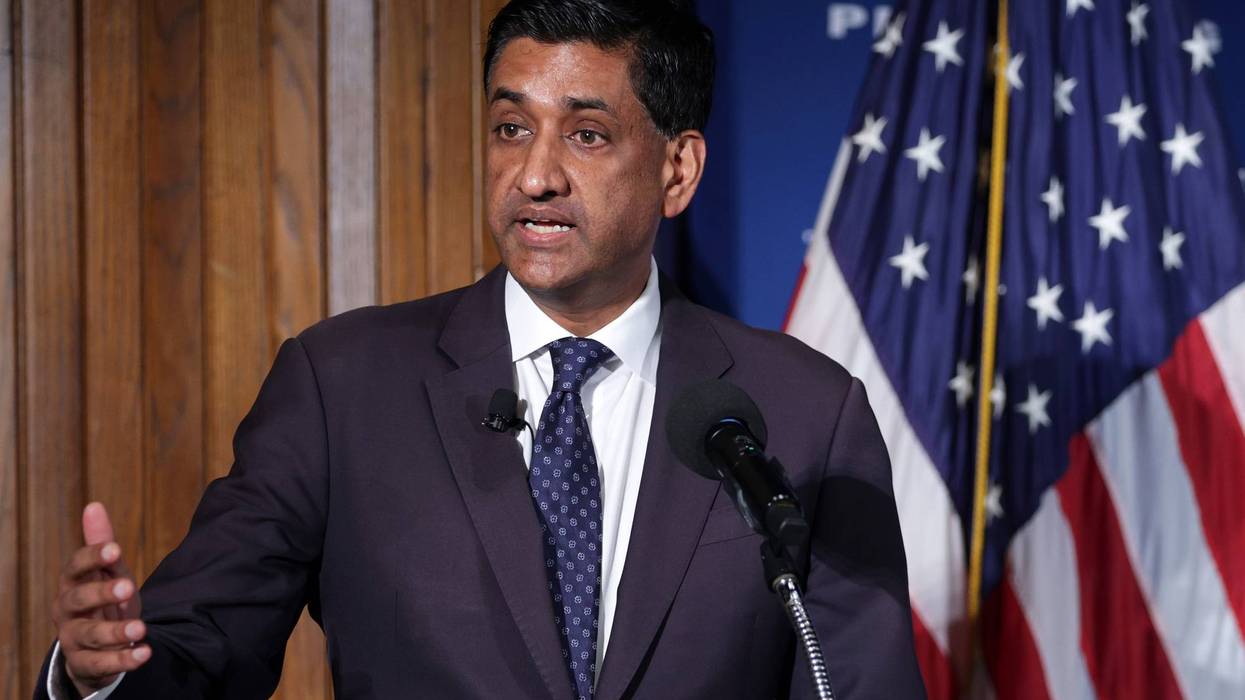
The question before us in California is not complicated. Are we going to stand with the three million people—our friends and neighbors—about to lose their health care, or with the billionaire class that would rather we looked away?
There are more billionaires in my district and the surrounding area than almost any other Member of Congress. Within fifty miles of my district sits nearly a third of the entire American stock market—over $20 trillion in value—and five companies worth more than a trillion dollars each. For years, I have fought for fairness in our tax policy. If America has been good to you, you must do good for America.
There are 938 billionaires in America. Together they are worth $8.2 trillion. The bill I wrote with Bernie Sanders asks them for 5 percent every year.
This is a simple tax on wealth. Every year, this tax evaluates the total value of a billionaire’s holdings, their stock, their companies, their real estate, and taxes 5 percent of it. Not their income, which they have arranged to be almost nothing. The wealth itself. The same way a family pays property tax on a house whether or not they sell it. We conduct this assessment on individual’s estates already when they die.
This billionaire wealth tax will raise $4.4 trillion over a decade. This is enough to establish a $60,000 salary floor for every public school teacher in America, cap child care at 7 percent of a family’s income, and restore the $1 trillion stripped from Medicaid and the ACA, with a $3,000 check left over for every household under $150,000.
California legislators have proposed a state tax to target similar excessive wealth. A proposition on the November ballot would levy a one-time 5 percent tax on the wealth of the state’s 250 billionaires. Accrued over 5 years, it would raise $100 billion to save health care for 3 million Californians. I am backing it.
Opposing these landmark taxes, Governor Newsom has suggested a “minimum income tax”. The focus of this tax is billionaires’ reported income, as well as the loans they take out to live on. An income tax, not a wealth tax. That is the problem. Newsom goes after that income, but billionaires have very little. Most take no salary at all. They borrow against their stock, live on the loans, and pass the fortune to their children without ever selling a share. The wealth underneath goes untouched.
Bernie and I tax the wealth itself, and our bill raises $4.4 trillion. Newsom’s tax on these borrowed assets only raises 1/44th of that. That’s why the tech oligarchs support Newsom’s proposal. They hope they can trick folks into making the issue go away.
Same billionaires, forty-four times the revenue from Bernie and I’s proposal compared to Newsom’s.
Tax what they own, not what they report.
I was criticized for the bill, as well as my support of California’s proposed Billionaire Tax. Many said that the wealth flight from California would devastate our economy. They were wrong. In Q1 of 2026, California received more venture capital investment than the rest of the country combined. Then the billionaires spent millions propping up my primary challenger. He received 6 percent of the vote.
And the tax should not stop at billionaires, it must reach centimillionaires. The tax has to reach all fortunes $50 million and up, and one already does. Every year it has been introduced, I have cosponsored the Ultra-Millionaire Tax Act. It starts at $50 million: 2 percent a year on wealth above that line, And it reaches the money inside irrevocable trusts, taxed to the grantor who set them up. Moving a fortune into a trust should not take it off the books from a wealth tax.
Supporters are right to call the fight in California the reverse Proposition 13 of our generation. In 1978, California voted for Prop 13 to cap property taxes, and that anti-tax revolt carried Ronald Reagan to the presidency two years later. This is that revolt in reverse: instead of capping taxes on property, we are taxing the extreme wealth at the top. This is a philosophical fight, and California is the test case for the nation.
So the question is not complicated. Are we going to stand with the three million Californians about to lose their health care, or with the billionaire class that would rather we looked away? Are we the party of working people, or just the party of the donor class? Are we going to return to the party of FDR, or keep telling ourselves we need to do what the donors want?
Are we willing to tax extreme wealth, or only willing to talk about it?
I know my answer. We cannot have a nation where 938 people grow $1.5 trillion richer in a year while a teacher in my district takes a second job to cover rent.
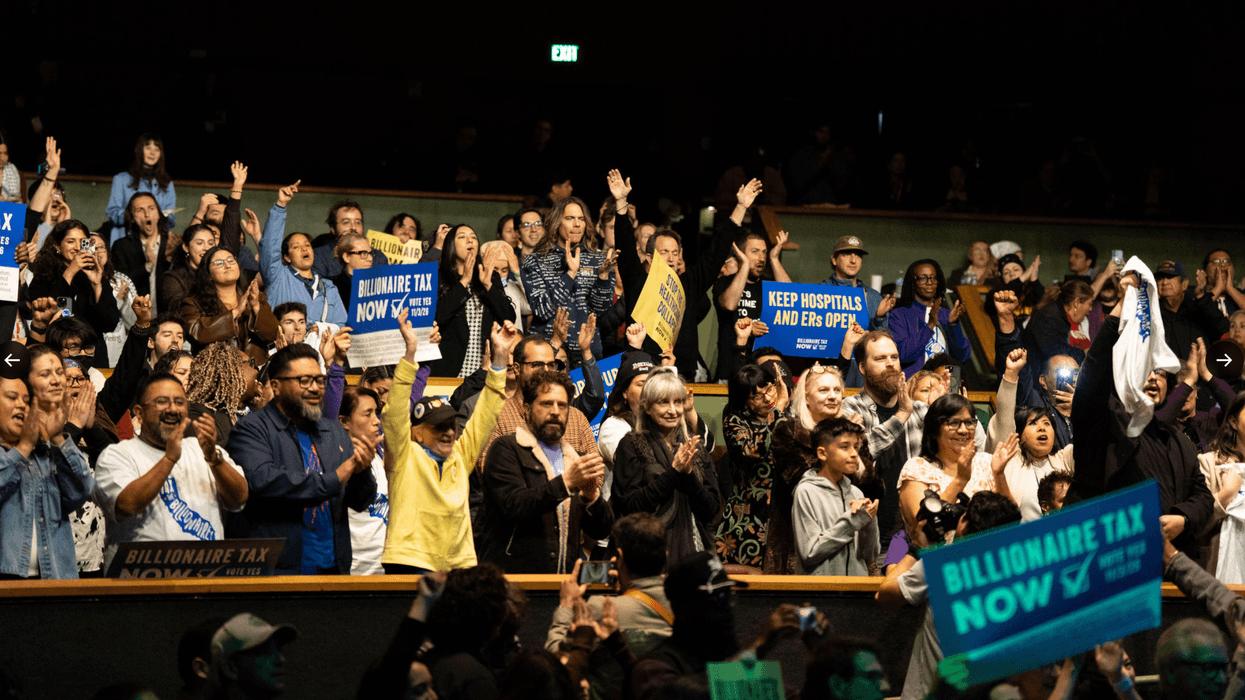
“In November, California voters will at last have a chance to make billionaires pay their fair share," said the coalition behind the proposal.
It's official: The proposed California Billionaire Tax Act, which last week was certified for November's election, has a ballot designation—Proposition 40.
"The people of California now have the opportunity to decide what kind of future they want,” Service Employees International Union-United Healthcare Workers West (SEIU-UHW) vice president Debru Carthan said on Thursday.
“Proposition 40 asks a simple question: At a time when hospitals are reducing services, working families are being squeezed, and essential services are under attack, should a few hundred billionaires contribute their fair share to protect the state that helped make their extraordinary wealth possible?" Carthan asked. "We believe Californians will answer with a resounding yes."
Drafted by SEIU-UHW, Prop 40 would impose a one-time 5% levy on people worth $1 billion or more, to be paid in annual installments of 1% over five years.
It’s official! The billionaire tax will be on the ballot as Prop 40. This November, Vote YES on Prop 40 to ensure billionaires pay their fair share to keep hospitals and ERs open. #BillionaireTaxNow
[image or embed]
— Billionaire Tax Now (@billionairetaxnow.bsky.social) June 30, 2026 at 1:31 PM
The bil would require the state to spend 90% of revenue from the tax on healthcare and the rest on food assistance and public education. Proponents say the tax would raise roughly $100 billion in revenue. Critics argue that it could drive wealthy residents and investment from California and stall economic growth.
Prop 40 supporters include the Teamsters union and progressive groups like the California Democratic Socialists of America (DSA) and Our Revolution, as well as individual progressives like Sen. Bernie Sanders (I-Vt.), Rep. Ro Khanna (D-Calif.), and Democratic congressional candidate Connie Chan, who is running to replace retiring longtime San Francisco Congresswoman Nancy Pelosi.
The measure is opposed by Republicans, business groups, the Democratic Party, and even some progressives, including Chan's opponent, state Sen. Scott Wiener (D-11).
Prop 40's most prominent Democratic opponent is California Gov. Gavin Newsom, whom critics accuse of trying to bamboozle voters with his recently unveiled plan for a national billionaire income tax. Some observers skeptical of the presumed 2028 presidential hopeful contend that his support for an income tax is rooted in knowledge that very rich people actually have relatively little income when compared with their investments and other assets.
Some progressive groups opposing Prop 40—including the California Teachers Association (CTA) and Planned Parenthood Affiliates of California—point out that it is a one-off tax on wealth, not income. CTA is backing a separate ballot measure, the Children’s Education and Health Care Protection Act, which would permanently extend Proposition 55, California’s existing high-income-earner tax, which is set to expire in 2030.
In response to Thursday's ballot designation, Billionaire Tax Now said in a statement that "the measure qualified for the ballot after supporters submitted more than 1.6 million signatures from Californians across the state—nearly twice the number required to qualify—making it one of the strongest citizen-led ballot qualification efforts in California history."
"Voters consistently support the billionaire tax by large, double-digit margins," the coalition continued. "For healthcare workers who have dedicated their lives to caring for patients, today’s news isn’t just welcome, it’s critical. With no other viable alternatives proposed by Gov. Newsom, the billionaire tax is the only available option to stop a cascade of hospital and clinic closures spurred by massive federal cuts in HR 1, known as President [Donald] Trump’s so-called 'Big, Beautiful Bill.'"
"In November," Billionaire Tax Now added, "California voters will at last have a chance to make billionaires pay their fair share to help prevent widespread hospital closures, through a commonsense ballot initiative that places a one-time 5% tax on the wealth of approximately 200 billionaires who reside in the Golden State."