

SUBSCRIBE TO OUR FREE NEWSLETTER
Daily news & progressive opinion—funded by the people, not the corporations—delivered straight to your inbox.
5
#000000
#FFFFFF
To donate by check, phone, or other method, see our More Ways to Give page.
Daily news & progressive opinion—funded by the people, not the corporations—delivered straight to your inbox.
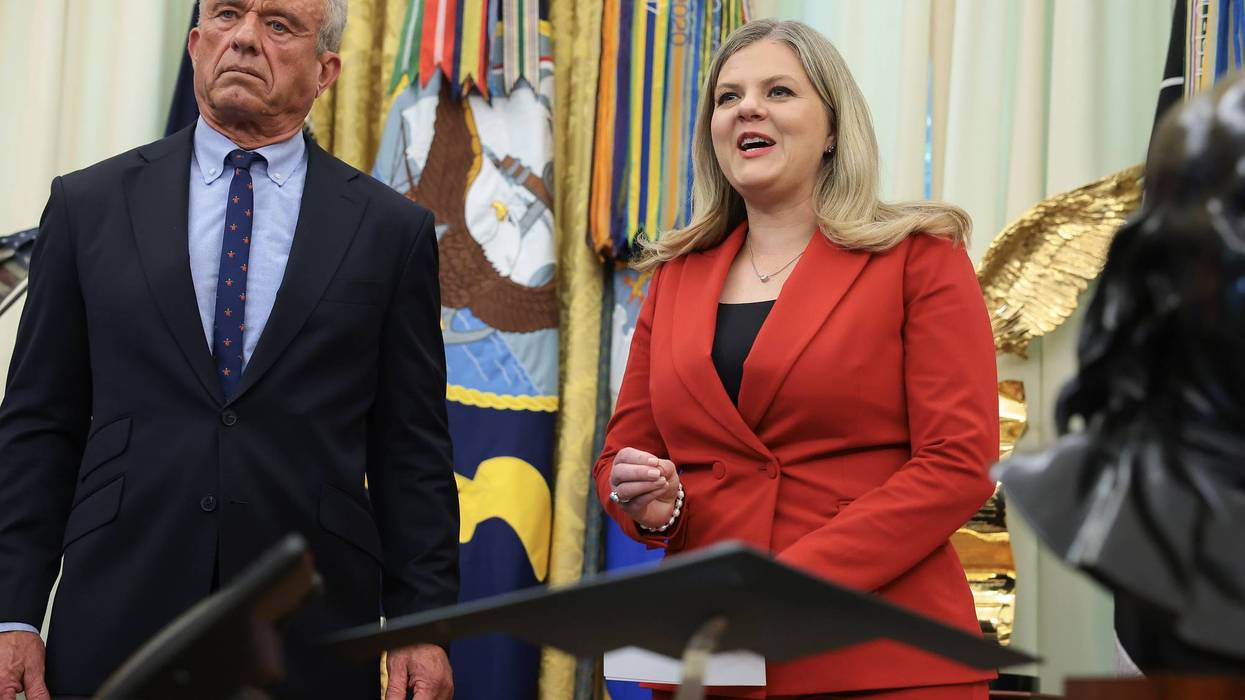
If confirmed as FDA chief, Overton will join the growing list of notably unqualified candidates this administration has nominated at the expense of the American people.
Last week, the US Senate Health, Education, Labor and Pensions (HELP) Committee held a hearing for President Donald Trump’s nominee to lead the Food and Drug Administration (FDA), Dr. Heidi Overton.
During the hearing, Dr. Overton followed suit with many of Trump’s previous nominees for federal agencies—avoiding questions, obscuring her true intentions, and feigning ignorance of her own public record on a range of topics.
Her nomination comes at a fraught moment for the agency. The FDA is facing heavy criticism following a Cyclospora outbreak that sickened many and rattled the public. The prior commissioner abruptly resigned after only 13 months in the role. The agency has also wrestled with political pressure on everything from reproductive health to vaccinations to flavored e-cigarettes, imperiling its historic scientific neutrality and risking a descent into partisan miasma.
Dr. Overton remains dangerously out of step with the general public, medicine, and science on the subject of medication abortion with mifepristone and her record explicitly showcases that she will do everything in her power to ban medication abortion.
The FDA works best when publicly unnoticed, operating smoothly and uncontroversially in the background of our country, keeping us safe. It is vital to our economy as well as our health. Take, for example, my home state of Ohio. Healthcare is our largest employment sector, and nearly half of our land is farmland. As a maternal fetal medicine physician, the scope of my work is providing the best care to my patients and advising on the available options to receive comprehensive medical care.
Therefore, we need an FDA leader steeped in objective, scientific neutrality rather than the culture wars Americans are so tired of — and Dr. Overton is a far cry from what is needed in this moment.
This week marks 26 years since the FDA initially approved mifepristone as safe and effective. Since the Dobbs decision, mifepristone has emerged as a linchpin in the preservation of access to abortion care for millions of patients. It also rests atop an enormous bedrock of research and clinical trials expounding its safety and efficacy.
As of December 2025, medication abortion has accounted for 65% of all US abortions, and one in four clinician-provided abortions were delivered through telehealth. Mifepristone specifically is used to support patients with their reproductive care and is even recommended by the American College of Obstetricians and Gynecologists for miscarriage management.
The American Medical Association has stated that serious adverse events occur in fewer than one-third of one percent of patients who take mifepristone, and continuing a pregnancy carries roughly 14 times the risk of death than abortion related complications. Reimposing in-person requirements, the AMA warns, would eliminate access for rural, low-income, and underserved patients and limit the quality of care that doctors are able to provide. In February 2026, ACOG led a coalition of 15 medical organizations in defending mifepristone's safety record in court.
And yet, Dr. Overton remains dangerously out of step with the general public, medicine, and science on the subject of medication abortion with mifepristone and her record explicitly showcases that she will do everything in her power to ban medication abortion.
She celebrated the overturning of Roe v. Wade as “a huge victory for life,” dismissed federal legislation protecting abortion rights as “radicalism,” and has promoted misinformation about the safety of medication abortion that contradicts more than two decades of evidence. As a member of the America First Policy Institute, Overton authored position papers advocating draconian federal regulation of medication abortion. Such measures would dangerously cripple access to safe abortion.
Her nomination to this role is a threat to women’s health, the credibility of the FDA, and the wellbeing of every American. That’s why I joined over 160+ patients, physicians, and advocates from across the country in signing a letter to Senators to reject her nomination.
Beyond politics, it has been noted that Dr. Overton lacks the administrative experience necessary to manage an organization as large as the FDA, with thousands of employees. If confirmed, she would report to an HHS secretary who also lacked significant administrative experience. When RFK Jr. faced nomination, much of the focus was on his lack of training in science, medicine, or healthcare. Less discussed was his lack of management experience, the consequences of which have been evident in the organizational disarray at HHS.
Dr. Overton has laudable academic credentials, including a PhD from Johns Hopkins. But a prestigious degree and impressive publications alone are not enough to lead one of the country’s most consequential healthcare agencies. They are the table stakes, not the winning hand.
You have to have experience running a large organization to be charged with leading another large organization. Given the respective stakes at the FDA, we should not be rolling those dice.
A physician-leader who can do everything is a truly amazing person: someone who treats patients as a doctor, educates as a teacher, investigates as a scientist, and manages thousands of employees with administrative ease. Such people are rare, but they exist. We know who they are, and these are the people who should be considered for such a critical role at the FDA — not Dr. Overton
If confirmed, Dr. Overton will join the growing list of notably unqualified candidates this administration has nominated at the expense of the American people, and we must continue to speak up against these affronts on our democracy.
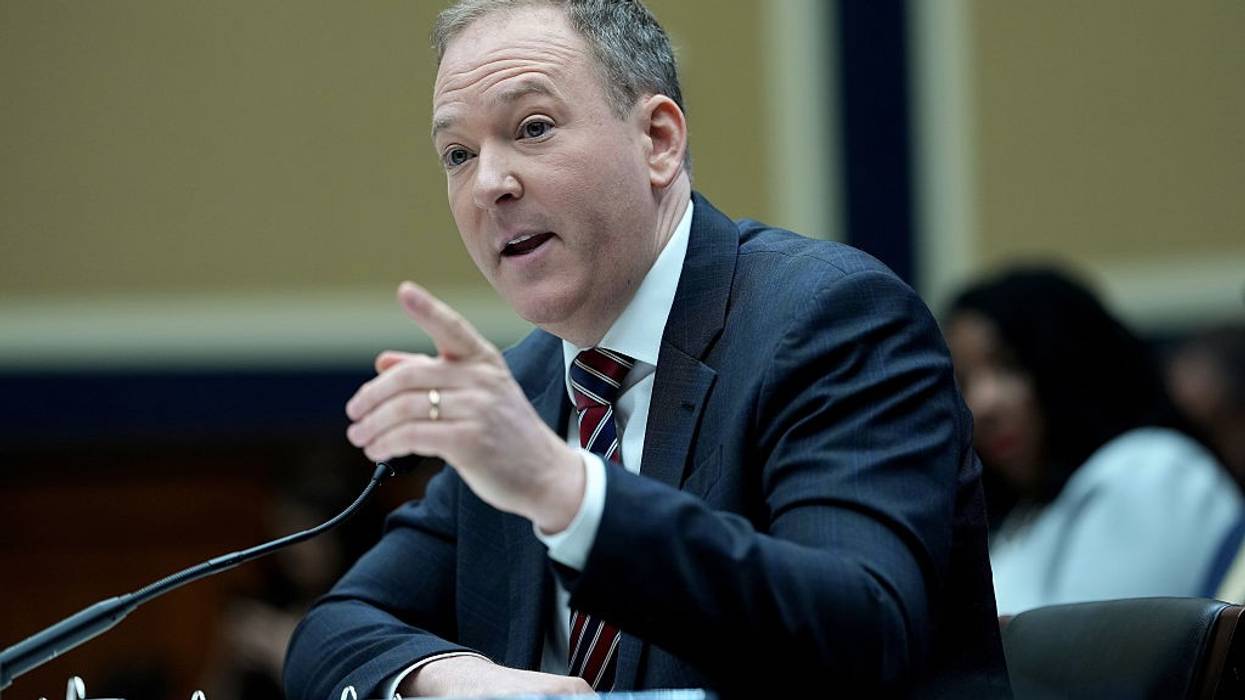
"Singling out medication abortion while ignoring the agricultural and industrial pollutants that are proven threats to our health makes clear that these efforts are about restricting access to abortion, not protecting our water.”
After a yearslong pressure campaign led by Students for Life, President Donald Trump's top environmental agency is including pills used in medication abortions in a new study of drinking water pollutants—part of what one rights advocate called a ramped-up effort to weaponize "environmental protections to restrict abortion medication"—and potentially birth control, as well.
Environmental Protection Agency (EPA) Administrator Lee Zeldin announced the study last week, saying that the agency has "heard loud and clear that Americans are concerned about potential unknown pollutants lurking in their drinking water."
But as Mother Jones pointed out, the Trump administration has shown little concern for drinking water safety as it has gutted the Clean Water Act as recently as this month, pushed for the expansion of artificial intelligence data centers despite evidence that they pollute water, and sought a reversal of rules to protect people from "forever chemicals" in drinking water.
In fact, the outlet noted, the announcement of the abortion pill study came days after Zeldin announced an elimination of pollution standards for power plants.
"The EPA’s unrelated but tandem announcements reveal an agency that has fundamentally overhauled its policies toward environmental and human health in pursuit of the Trump administration’s 'energy dominance' and 'Make America Healthy Again' agendas," wrote Rachel Santasiero at Mother Jones.
The MAHA agenda at the EPA appears to mean a study that will test for mifepristone and misoprostol, the drugs used in medication abortions, as well as levonorgestrel, which is used in contraception, including emergency contraception pills such as Plan B.
"This is the latest tactic of trying to weaponize laws that are meant to protect our environment and protect our wastewater.”
Nathan Donley, director of environmental science at the Center for Biological Diversity, emphasized in an interview with The Cut that the EPA's water-testing approach won't determine how much of a chemical is in drinking water—just that it exists at all in a sample, even in trace amounts.
"That doesn’t matter much, though, in terms of the politics," wrote Jessica Valenti, author of the blog Abortion, Every Day. "If the test finds any trace of abortion pills, conservatives will use it to legitimize their new legal front in the war on reproductive rights—one that includes weaponizing environmental protections to restrict abortion medication (and possibly contraception)."
Anna Bernstein, a federal policy adviser at the Guttmacher Institute, told The Cut that the study is part of an effort to convince Americans that medication abortions are unsafe, at a time when the number of abortions in the US has actually gone up since the Supreme Court overturned Roe v. Wade. Experts have attributed the increase to the expanded use of telehealth and the ability to mail medication abortion pill regimens to patients.
“The anti-abortion movement has become increasingly frustrated with that fact, so they really are throwing everything at the wall and seeing what sticks,” Bernstein told The Cut. “They are really ramping up disinformation campaigns about the safety of medication abortion. This is the latest tactic of trying to weaponize laws that are meant to protect our environment and protect our wastewater.”
She added that she is "concerned about the risk of added surveillance that testing for these chemicals could create in an environment where criminalization is already a factor."
Valenti noted that Kristi Hamrick, the vice president of Students for Life, has acknowledged that attempting to crack down on medication abortion access via environmental protections is "all bullshit."
"This is not because the environment was my first weapon of choice—it’s because it’s the one we have now," Hamrick said last year of the group's Clean Water campaign. "Environmental law has teeth. It already exists. And, frankly, I’m for using the devil’s own tools against them.”
The water study is part of an effort that also includes a push for legislation requiring women who have abortions and miscarriages to collect their pregnancy remains in "catch kits," which has been proposed by state lawmakers in Wisconsin and at the federal level earlier this year.
The Food and Drug Administration already confirmed decades ago—before mifepristone was approved—that it was safe to use “without any expected adverse environmental effects."
A study by Students for Life—published in a journal run by anti-abortion doctors—was called "misleading" by experts who told Politico earlier this year that the research "should not be considered in environmental or public health decision-making.”
Donley called the notion that a one-time dose of mifepristone—a drug that's been taken by about 1% of the US population—could be contaminating water supplies "a joke."
“If you think of most pharmaceutical drugs, you’re not just taking one pill. You’re taking a pill on a daily or semi-regular basis,” Donley told The Cut. What that means is that those drugs used by tens of thousands—sometimes millions—of Americans every day enter our wastewater system at a much larger scale than abortion pills."
“I’ve seen no credible evidence that these drugs are causing widespread environmental harm. There’s just no data to support that whatsoever. Including mifepristone and misoprostol on this list is just stupid, but then again, we’re in a stupid administration,” he added. “It’s completely ideologically driven."
Bernstein told Abortion, Every Day that "singling out medication abortion while ignoring the agricultural and industrial pollutants that are proven threats to our health makes clear that these efforts are about restricting access to abortion, not protecting our water.”
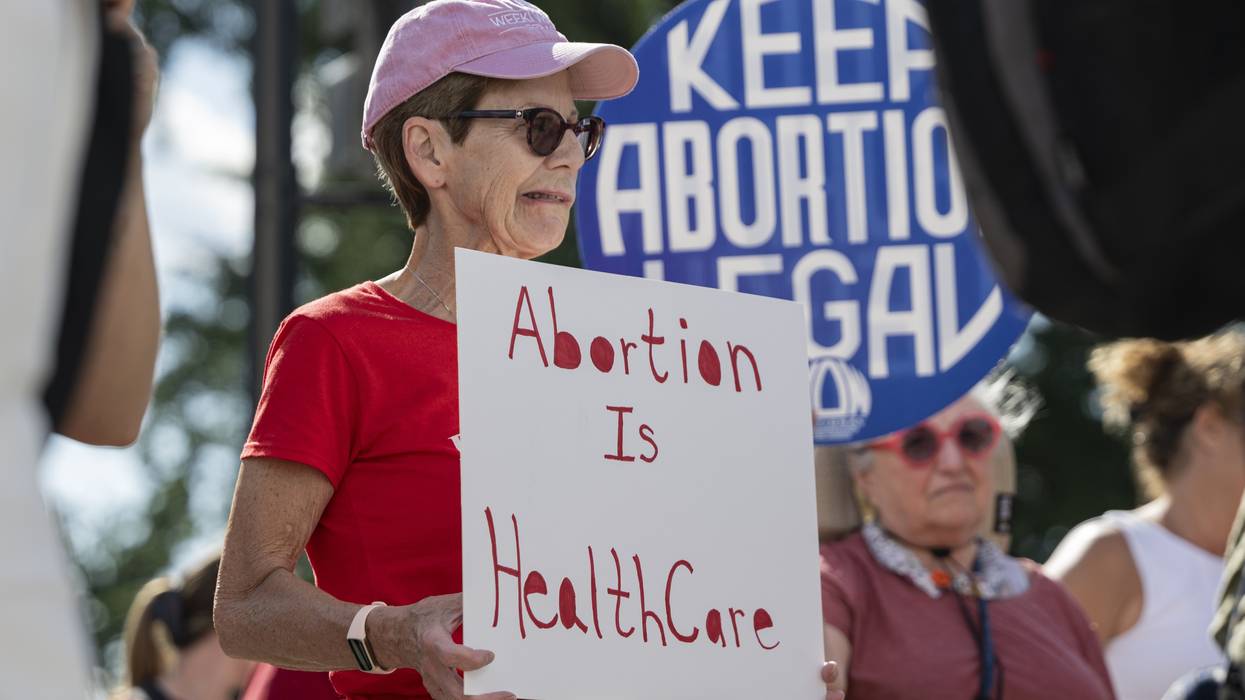
"My husband and I were crushed when we learned that we would never get to bring our daughter home. We wanted mercy for our daughter—but Oklahoma's laws denied us that."
When Sheena Hamlin found out she was pregnant with a daughter she named Ellie, she was "very excited," until her doctors discovered at around 21 weeks that the baby "might survive birth, but that her lungs were so severely underdeveloped that she would suffocate almost as soon as the umbilical cord was cut."
"The alternative would be to terminate the pregnancy," explains a lawsuit filed in state court on Wednesday, but that "was not an option in Oklahoma," where a pair of laws force patients whose "pregnancy will end in miscarriage, stillbirth, or the death of an infant shortly after birth" to leave the state if they choose abortion.
Hamlin and her husband, who have a son, "agreed that they did not want their daughter to suffer," so she flew to Illinois for care shortly before Thanksgiving in 2024, and spent nearly $4,000 out of pocket. After the "devastating" experience, the couple "underwent genetic testing and confirmed that Ellie had Meckel-Gruber syndrome."
They "pursued in vitro fertilization (IVF) and genetic counseling to ensure that they would not have another child affected by the condition," and while Hamlin is now expecting a baby, she "has found it anxiety-inducing to be pregnant in Oklahoma again, particularly in the period leading up to the anatomy scan," the suit says.
Hamlin is not alone. Magon Hoffman is also suing over the abortion bans that prevented her from receiving care. Hoffman and her husband were similarly "thrilled" to learn of her pregnancy in 2022, but a series of unfortunate revelations soon followed: a "huge blood clot," placenta previa, unusual growth measurements, and ultimately, anencephaly.
As Hoffman's doctor, a maternal-fetal medicine specialist, explained at her 19-week anatomy scan, her fetus had a "tiny bit of brain floating around," but "no skull." In other words, the complaint says, "her pregnancy was not viable. Her baby had no chance of survival. Ms. Hoffman was devastated."
Because Oklahoma only allows abortion care to save a patient's life, the doctor warned that she would have to leave the state to end the pregnancy. He then "tried to convince Ms. Hoffman to carry to term," the filing notes, even though "there was nothing they could do to help the baby survive," and if the child lived "for a few hours or a few days... she would be 'blind and 'dying.'"
Hoffman and her husband, who already had a daughter, drove eight hours and spent $3,000 to get abortion care in New Mexico. Afterward, the suit says, she "struggled with anxiety and depression from the loss of a pregnancy she desperately wanted and the stigma and fear she experienced in being forced to seek care out of state."
"In June 2024, while still using birth control, Ms. Hoffman unexpectedly became pregnant for a third time. She was terrified... At no point during the pregnancy was Ms. Hoffman able to believe she would bring home a healthy baby," the complaint continues. She was relieved to deliver another daughter—and does not want any more children, "so her husband decided to have a vasectomy, though he would have preferred to wait. Ms. Hoffman still fears another unexpected pregnancy."
The group Oklahoma Call for Reproductive Justice has joined Hoffman and Hamlin as plaintiffs, as have two of the OB-GYNs who treated them, Drs. Sarah Mashburn and Elizabeth Pinard, who were both born and raised in Oklahoma.
"I have dedicated my life to caring for women from all across our state, including those facing fatal fetal conditions. Doctors routinely provide care according to what our patients want for themselves and their families, but Oklahoma's abortion bans have left me feeling helpless," Pinard said in a statement.
"I don't want to tell my patients to leave the state when I can easily give them the care they need right here in my office," she stressed. "This is not how healthcare should work. My patients deserve access to all of their options for care, and the state needs to allow us to do our jobs."
Hamlin said that "my husband and I were crushed when we learned that we would never get to bring our daughter home. We wanted mercy for our daughter—but Oklahoma's laws denied us that."
Hoffman similarly said that "Oklahoma turned the hardest day of my life into weeks of needless suffering on top of our grief," and the state "is failing families like mine. I'm bringing this case so Oklahomans can have the power again to make the best decisions for our families."
The defendants in the case are the state attorney general and health commissioner, Oklahoma County's district attorney, and executive directors of the state's boards for medical licensing and osteopathic examiners, all of whom have yet to comment on the suit.
The plaintiffs are represented by attorneys at Herbert Smith Freehills Kramer and the Center for Reproductive Rights, a powerhouse that has fought for abortion rights in several high-profile state and federal cases. The legal group's president, Nancy Northup, said Wednesday that "it's unthinkable the pain these families went through because of Oklahoma's abortion bans."
"Forcing women to give birth knowing they won't be bringing a baby home is pure cruelty," she argued. "Every pregnant person should get to decide what is best for their family based on their own beliefs, values, and medical circumstances. The government should have no place in that. We're suing to hold the state accountable for the pain lawmakers have caused these families, and to make sure no other families suffer in this way."
Oklahoma is among the states where anti-choice policymakers have ramped up their longtime efforts to restrict reproductive freedom in the wake of the US Supreme Court's right-wing supermajority overturning Roe v. Wade. Another state on that list is Texas, whose abortion ban led to the 2022 reversal.
In Texas on Wednesday, Tierra Walker's family sued various state officials. The San Antonio woman died in December 2024, at the age of 37, after being denied an abortion. Although such denials have killed a growing number of pregnant people in Texas and beyond, this is the first case of its kind, tying a preventable death to a state abortion ban.
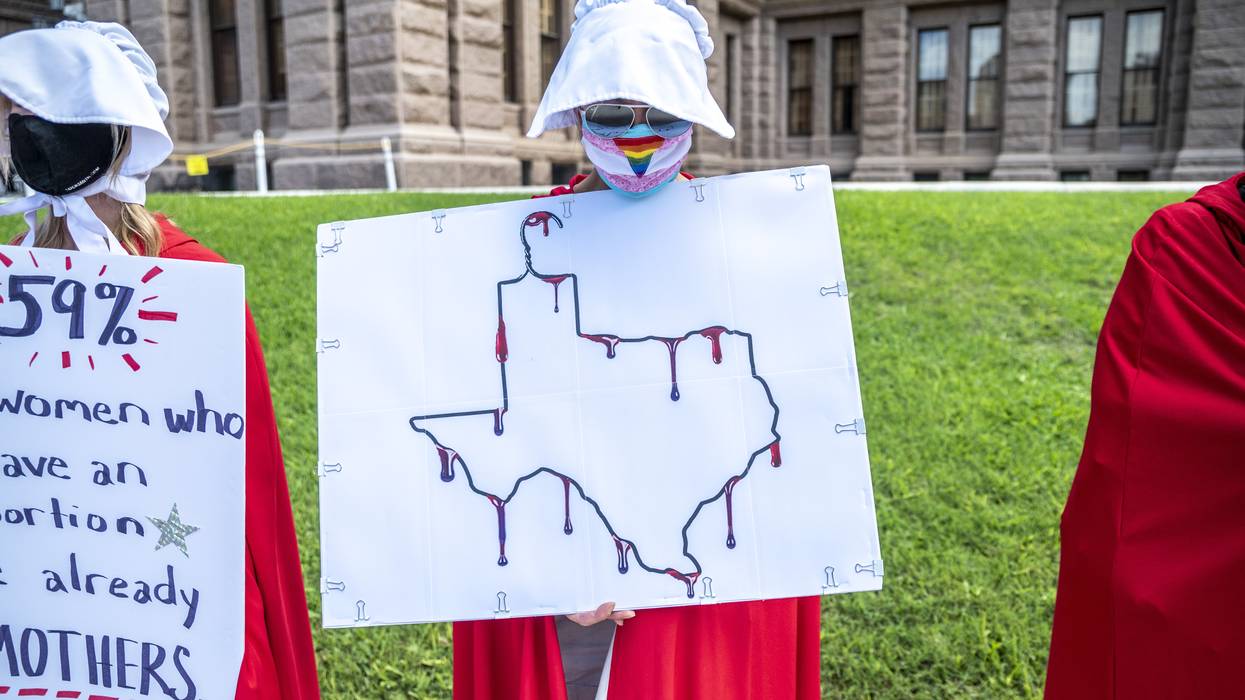
State officials "have imposed a merciless blanket prohibition on abortion that intimidates doctors into inaction," says the lawsuit. "Too many pregnant Texans have already died preventable deaths."
"Tierra Walker is dead, and those responsible must be held accountable."
That's the opening line of a lawsuit filed by Walker's family in Bexar County, Texas this week against the state's Republican attorney general, Ken Paxton, and various others over the death of the 37-year-old pregnant San Antonio woman.
On December 30, 2024, Walker's son "found her in bed, not breathing," the complaint notes. "It was his 15th birthday."
The teenager, as well as Walker's husband, mother, and aunt, who is responsible for her estate, are all involved in the wrongful death suit—the first of its kind, linking a "preventable death" to an abortion ban, according to The 19th.
In addition to Paxton, who is running for US Senate with support from President Donald Trump, the family is suing Bexar County District Attorney Joe Gonzales, Texas Medical Board Executive Director Stephen Brint Carlton, the University of Texas Health Science Center at San Antonio, and three doctors who treated Walker before she died.
"During the four months of her pregnancy, as she suffered through seizures, blood clots, and one hypertensive crisis after another, Ms. Walker repeatedly asked for an abortion to save her life," explains the filing. "Defendants associated with University Health responded only 'your baby is fine,' disregarding Ms. Walker's deteriorating health and constitutionally protected right to life."
The document argues that "their deliberate indifference, discrimination, and medical mistreatment ultimately caused her horrific and tragic death. Now, Ms. Walker's husband is a widower. Her disabled mother has lost her daughter and caregiver. And her teenaged son has no mother."
"Meanwhile, from the moment Texas' first abortion ban went into effect in 2021, through the overturning of Roe v. Wade, through the present day, defendants Ken Paxton and Stephen Brint Carlton have imposed a merciless blanket prohibition on abortion that intimidates doctors into inaction and breeds extreme fear among Texas' medical establishment," the filing notes. "As a result, too many pregnant Texans have already died preventable deaths. Yet no one has held them accountable."
The suit—filed by the principal attorney at the Marynell Maloney Law Firm and Amplify Legal, the litigation arm of the nonprofit Abortion in America—is designed to do just that.
"Tierra had a treatable medical condition, the problem was that the treatment she needed was an abortion," said attorney Michelle Maloney in a statement. "She died a preventable death. Medical and political negligence killed Tierra Walker."
Defendants in the case have declined to comment or, in some cases, even respond to media outlets, including The Texas Tribune. As the newspaper detailed Wednesday:
Months after Walker died, the Texas Legislature passed Senate Bill 31 aimed at ensuring that pregnant women receive lifesaving care under the state’s near-total abortion ban. It says that a patient doesn’t have to be in "imminent" medical crisis for doctors to intervene and that a doctor can only be charged if the state can prove "no reasonable doctor" would have made the same call. It also requires the Texas Medical Board to create training for doctors, which was finalized in early 2026.
But Molly Duane, one of the lawyers representing the Walker family, said during a news conference on Wednesday that SB 31 would not have prevented Walker's death.
"I would love if the Texas Legislature would actually take their responsibility here seriously and get rid of the laws that are causing so many deaths. I just don't have any confidence that that is something that they can do in this environment, but ultimately, that's a political question," Duane said.
ProPublica first reported that Walker "died after she couldn't get an abortion in Texas" last November. The investigative outlet has exposed similar deaths in the state—those of Nevaeh Crain and Porsha Ngumezi—as well as the first known case of a fatal abortion care denial in the wake of the Roe reversal: Amber Nicole Thurman in Georgia.
"No one else should have to experience what my family has gone through. Tierra was the glue that held our family together, and now she's gone," said Walker's aunt, LaTanya Walker. "Doctors all turned a blind eye as Tierra was dying, and refused to give her the abortion she needed to save her life. She deserves justice."
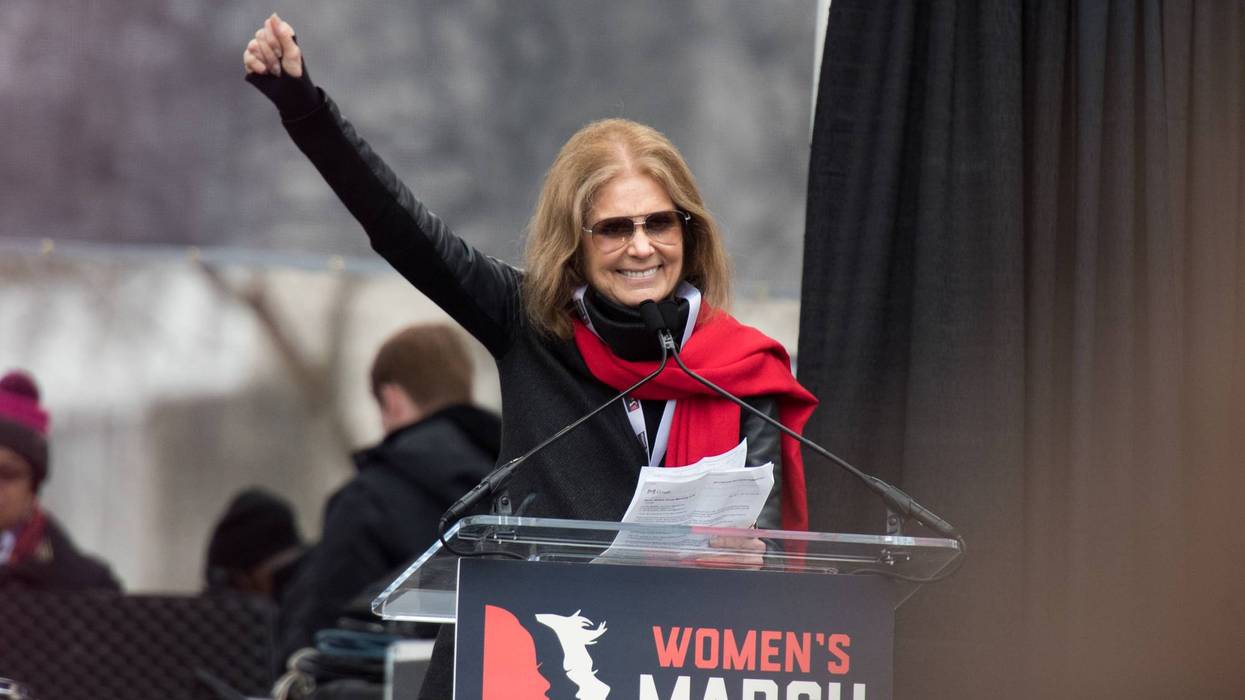
Progressive advocates, lawmakers, veteran journalists, labor leaders, and champions of feminism on Thursday are mourning the death of trailblazing women's rights activist and author Gloria Steinem, who has passed away at the age of 92.
Steinem, regarded as an icon of the second-wave feminism that emerged in the 1960s and 70s and co-founder of Ms. Magazine, was known for decades as a leading voice on reproductive rights, women's equality at work, and gender equity across society.
According to her representatives, Steinem died Wednesday at her home in New York City, surrounded by loved ones. An exact cause of death was not given.
"It is a moment of remembrance and celebration of this extraordinary woman. And it is too a moment of reflection." —Agnes Callamard, Amnesty International
"Gloria’s near-century on earth was years well-lived, and she continued working for equality until the very end," read a message posted to her Instagram account.
"Gloria’s greatest gift was her ability to listen to others, to make others feel seen and heard,” the message continued. “Her words, actions, and example gave people permission to be their truest selves. Gloria lived true to her independent spirit, always with curiosity and a great sense of humor.”
"Oh no," declared Agnes Callamard, secretary general of Amnesty International, upon learning of Steinem's passing.
"It is a moment of remembrance and celebration of this extraordinary woman. And it is too a moment of reflection," Callamard said. "The fight for gender justice and women’s equality is at a critical juncture. The advancements of the last decades are attacked, threatened, mocked. We resist, fight back, build anew."
The progressive advocacy group Our Revolution said that Gloria Steinem "understood that liberation is not something handed down from the powerful. It is something ordinary people organize and fight for."
For more than 50 years, the group added, "she fought for women to have power over our bodies, our work, our lives and our futures. And she understood that the struggle for women’s liberation could never be separated from the struggles for racial justice, economic justice and human dignity. At a moment when women’s rights and fundamental freedoms are once again under attack, the best way we can honor Gloria is not simply by remembering her. It is by organizing. Rest in power, Gloria Steinem."
According to the New York Times:
Steinem helped usher in sweeping cultural transformations across virtually every facet of American life, from the boardroom to the courtroom to the bedroom.
For more than half a century, she personified the women’s movement and became its most enduring symbol; her tinted aviator glasses and curtain of streaked-blond hair parted in the center made her one of the most recognizable women in the world.
A prolific writer, Steinem started her career as a journalist in the 60s and in 1972 she co-founded Ms. Magazine, a publication focused on women's issues with the idea of translating "a movement into a magazine."
Steinem, wrote CNN's chief international anchor Christiane Amanpour, "will go down in history as one of the most important activists of all time, leading a movement for the equality of half the world: its women."
"She lived a long and passionate life dedicated to this vital and basic cause," Amanpour continued. "She did it with intellectual precision, emotional awareness, humor and beauty. May she rest in peace and may the cause thrive."
In a video posted to social media, Rep. Becca Balint (D-Vt.) said that Steinem "always understood that gender equality was absolutely bound up with economic equality and racial justice and that has to continue to be our North Star."
Rest in power, Gloria Steinem. pic.twitter.com/z6f7MMNOVq
— Rep. Becca Balint (@RepBeccaB) September 3, 2026
In 2017, after the first election of President Donald Trump, Steinem was one of the key leaders behind the Women's March, which kicked off opposition to the far-right Republican, with marches in cities nationwide that helped galvanize resistance to the destructive policies to come.
At the time, Steinem warned that Trump's arrival in the White House represented "disaster and a danger," but added that the upside of his ascendancy could be the force brought together to galvanize against him.
“He’s made us see that everything is connected,” she said. “I’m a hope-aholic, nonetheless. I feel we’re beginning to approach the end of one structure and the beginning of another. It’s a time of both danger and possibilities.”
As the Associated Press reports:
On Jan. 21, 2017, when hundreds of thousands of women gathered in Washington in their pink “pussy hats” for the historic Women’s March, it surprised nobody that the keynote speaker, and the most rousing, was Steinem.
“We are linked,” she told the crowd. “And this is a day that will change us forever because we are together.”
For many women, Steinem was the galvanizing voice that day. She would go on to advocate fiercely. But, though many saw her as a singular figure in history, she often liked to say that if she hadn’t come along, someone else would have accomplished the same things.
By the same token, she said, it was less important that younger people listen to her, and more important that they listen to themselves.
“The primary thing is not that they know who I am,” she said, “but that they know who THEY are.”
As news of Steinem's passing spread on Thursday, others offered their reflections on her life and accomplishments.
"Thank you, Gloria, for showing the world what it means to speak up for women’s equality," said the National Organization for Women (NOW) in a statement. "Thank you for fighting for our rights so that every woman and every person can live with dignity, freedom, and equality."
Democratic New York State Rep. Jessica Ramos said Steinem "spent her life refusing to accept a world where women were expected to settle for less."
"She organized, challenged power, and helped turn women’s equality into a movement that changed America," Ramos said. "We honor her legacy by refusing to go backward."
"Gloria Steinem did not simply advocate for women; she changed what women believed was possible," said Victoria Mancinelli, a member of the labor movement in Canada, in response to news of Steinem's death.
"She confronted a world that expected women to remain quiet, accept less, and wait patiently for progress. Gloria refused. Through her journalism, activism, and unrelenting pursuit of equality, she helped transform deeply personal struggles into a powerful collective movement and forced institutions to recognize women as leaders, decision-makers, and agents of change."
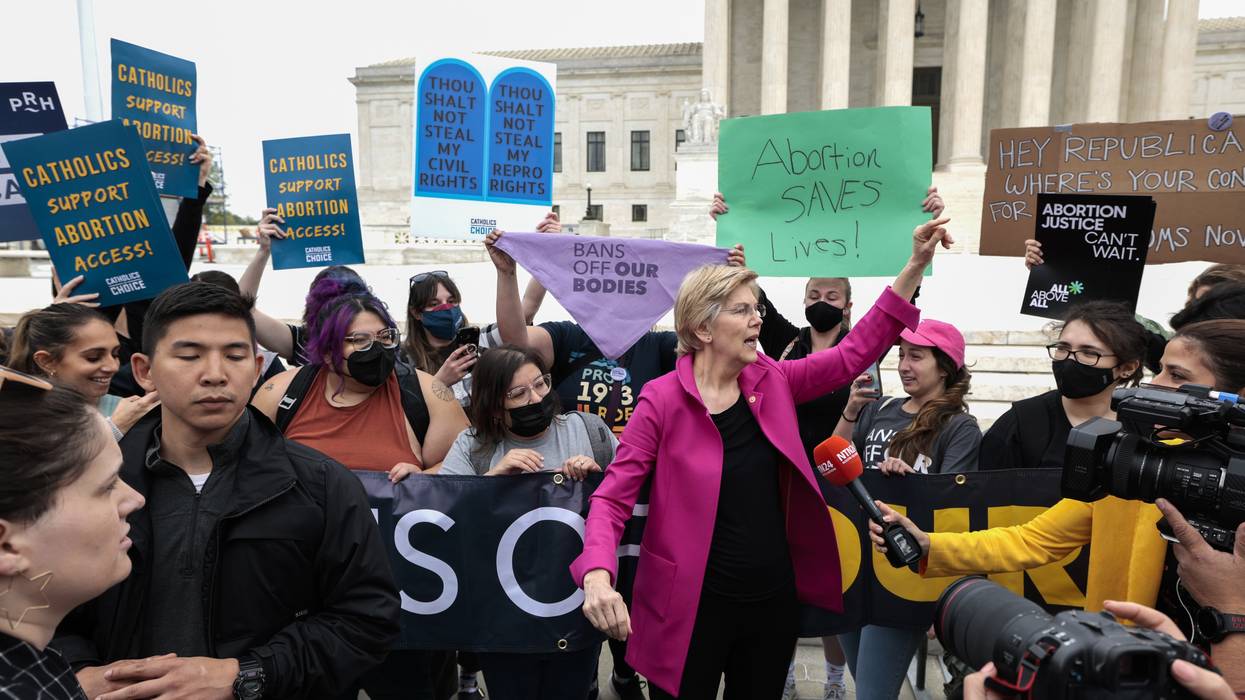
"Moms.gov is not about promoting women’s health. It is an attempt to use HHS resources to further strip women of their rights and privacy.”
Eleven members of the Senate Democratic Caucus on Wednesday urged US President Donald Trump and Health and Human Services Secretary Robert F. Kennedy Jr. to “cease using federal resources to direct people to anti-abortion crisis pregnancy centers" via a government website.
Last month, the Department of Health and Human Services (HHS) launched Moms.gov, which claims to offer "resources, information, and help for new and expecting mothers" by "addressing the needs of mothers and fathers who face difficult or unexpected pregnancies and ensuring the well-being of mothers and the health of American families."
The site has two main options: so-called "crisis pregnancy centers" (CPCs)—which present themselves as reproductive health clinics but often provide misleading information and counseling aimed at discouraging abortion—and "federally qualified health centers," which, presented alongside anti-abortion services on Moms.gov, can blur the distinction between evidence-based healthcare providers and ideologically driven groups.
"This raises profound concerns about the health, safety, and privacy of people who access this government website at a time when women’s health and reproductive rights face increasing attacks,” the 11 senators said in a letter to Trump and Kennedy and shared with HuffPost. “Instead of offering concrete resources to protect the health and safety of pregnant women and their families, the Trump administration is using this website to highlight anti-abortion CPCs."
The letter—led by Sens. Elizabeth Warren (D-Mass.), Chuck Schumer (D-NY), Mazie Hirono (D-Hawaii), and Bernie Sanders (I-Vt.) and signed by Democratic Sens. Ron Wyden (Ore.), Tammy Duckworth (Ill.), Ed Markey (Mass.), Tina Smith (Minn.), John Hickenlooper (Colo.), Cory Booker (NJ), and Michael Bennett (Colo.)—was sent on the four-year anniversary of Dobbs v. Jackson Women’s Health Organization, a ruling by the right-wing US Supreme Court that canceled half a century of abortion rights formerly enshrined in Roe v. Wade.
“Since the US Supreme Court took away the fundamental right to abortion care... 21 states have banned or severely restricted access to abortion, decimating access to care for tens of millions of people,” the senators wrote.
The lawmakers said that the direct link to Option Line, an anti-abortion hotline, "on a government website is also troubling from a data privacy perspective," as the site collects and shares user data with "affiliates, partners, vendors, or contract organizations" and has been beset by breaches.
“Moms.gov is not about promoting women’s health—it is an attempt to use HHS resources to further strip women of their rights and privacy," the letter asserts. “In order to protect the health and data privacy of millions of women, HHS should remove the pregnancy center link from Moms.gov and cease using federal resources to direct people to anti-abortion crisis pregnancy centers.”
In a Wednesday interview with HuffPost, Warren said, "It's horrific that the Trump administration is using taxpayer dollars to prop up a website that pushes pregnant women towards nonmedical anti-abortion centers."
"The Republican plan is to sneak through anti-abortion resources and backdoor abortion bans because they know Americans don’t support their extreme agenda," she added. "Democrats are fighting back.”
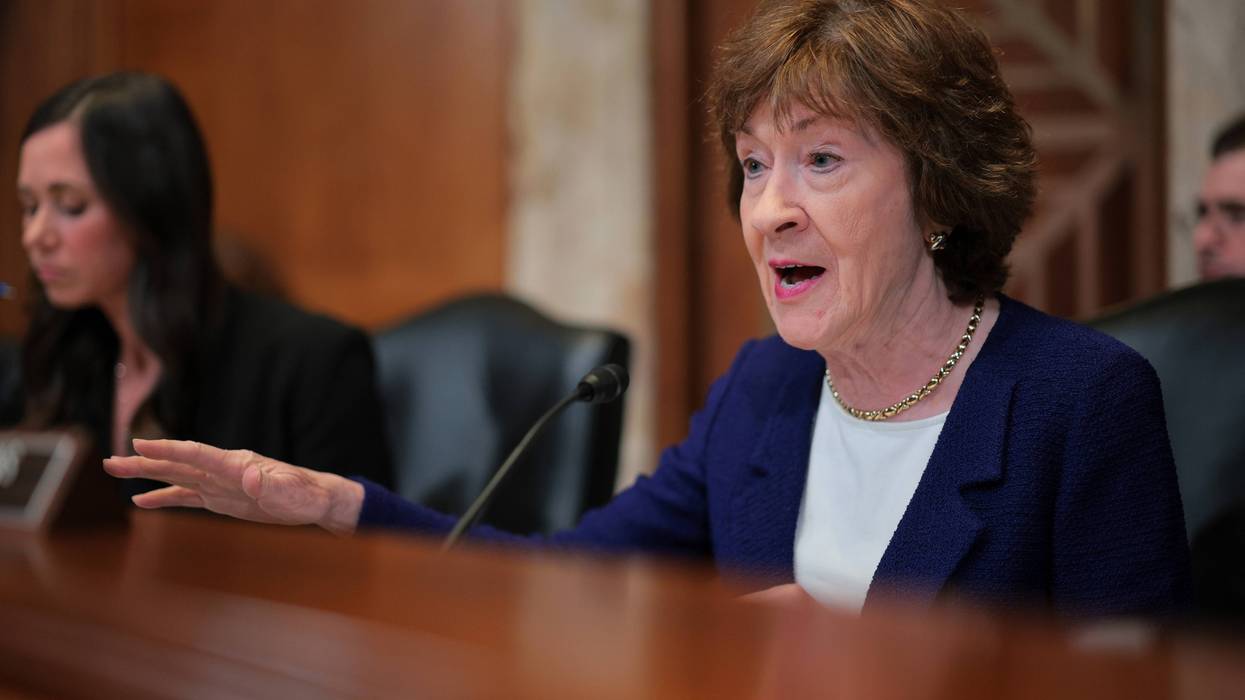
Republican Sen. Susan Collins falsely said the Supreme Court's decision to overturn Roe v. Wade was a 6-3 vote.
US Sen. Susan Collins on Monday faced backlash, including from the Democratic candidate trying to unseat her, for falsely stating that the Supreme Court ruling overturning the federal right to abortion was decided 6-3 and that Justice Brett Kavanaugh was not a pivotal vote.
In a newly aired Fox News interview, Collins (R-Maine) said she "disagreed with the Supreme Court's 6-3 decision overturning Roe v. Wade, but the fact is, whether Justice Kavanaugh were confirmed or not, Roe v. Wade would have been overturned, given the 6-3 vote." The vote to overturn Roe, ending the constitutional right to abortion, was in fact 5-4, with Kavanaugh joining the majority despite Collins' repeated insistence during the judge's Senate confirmation process that he would not support toppling critical precedents.
“Susan Collins is lying through her teeth," Graham Platner, the Republican incumbent's Democratic challenger, said in a statement. "Roe v. Wade was not overturned 6-3. That is a lie. It was 5-4. Brett Kavanaugh was the deciding vote to overturn Roe v. Wade, and Susan Collins was the deciding vote to confirm Brett Kavanaugh to a lifetime appointment on the Supreme Court."
"And let’s be very clear: Everyone knew that Brett Kavanaugh would overturn Roe," Platner continued. "She can lie and say she was misled. She can claim she’s disappointed. But the reality is, she knew exactly why Donald Trump nominated Kavanaugh—and she voted to confirm him anyway."
She's lying. Roe was overturned 5-4. Kavanaugh was the deciding vote. Susan Collins is responsible. https://t.co/kV0viaPq9t
— Demand Justice (@WeDemandJustice) June 22, 2026
Collins said last week that she doesn't regret voting to confirm Kavanaugh in 2018, despite the devastating impact of the high court's ruling in Dobbs v. Jackson Women's Health Organization. A new analysis by the National Partnership for Women & Families found that "more than 47 million women of reproductive age live in states with clinic closures" or "states that have attacked access to medication abortion" in the aftermath of Dobbs.
Earlier on Monday, the Planned Parenthood Action Fund (PPAF) endorsed Platner's campaign to deny Collins a sixth Senate term, noting that "in the four years since the Supreme Court ended the federal right to an abortion, the Trump administration and its backers in Congress and the states have repeatedly weaponized Dobbs and attacked reproductive healthcare."
“President Trump and his allies are using every lever of power at their disposal to make it harder for people to get the care they need, including by attempting to permanently ‘defund’ Planned Parenthood," said Alexis McGill Johnson, PPAF's president and CEO. "Mainers deserve a senator they can trust to have their backs at every turn. It is clear that is not Susan Collins."
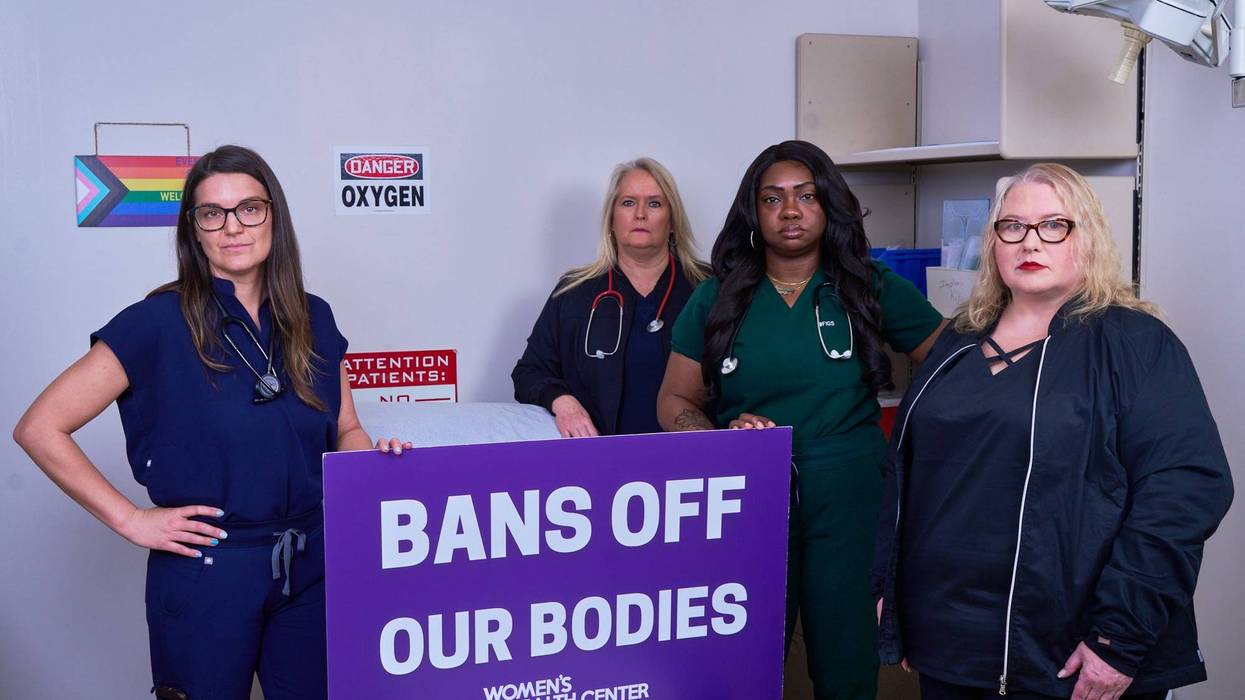
On the anniversary of both Dobbs v. Jackson Women’s Health and US v. Skrmetti, support independent clinics in hard places keeping the doors open.
We’ve been here before. When Dobbs came for abortion care in our states, we did two things: We opened clinics across state lines so our patients would still have a legal option. And we stayed. We kept our original clinics open, expanding the care we'd always offered or always wanted to offer. When Skrmetti came for gender-affirming care, we kept providing that too, because abortion care patients and transgender patients are not separate communities. The calculation patients make before they walk through the door is identical for both communities: Will I be seen? Will I be safe? Will the person across from me treat my body like a problem to be managed, or a life to be supported? June marks anniversaries of both Dobbs v. Jackson Women’s Health and US v. Skrmetti, and that conviction has never felt more urgent.
Long before Dobbs or Skrmetti, the intersection of abortion rights and trans rights was already living in our waiting rooms, in the patients who received reproductive care and gender-affirming hormone therapy (GAHT) under the same roof; in the person who drove hours across the state because we were the only provider they trusted; and in those who trust us with their whole-person care because their grandmothers, mothers, sisters, aunts, and friends have relied on our clinics for care for 50 years. Throughout that history, our organizations have been guided by a simple principle: When members of our community are targeted, excluded, or denied the care they need, we do not look away. We listen, we adapt, and we show up.
When abortion care moved across the border after Dobbs, the patients who remained still needed care they couldn’t access at home. The wall between reproductive healthcare and LGBTQIA+ healthcare that exists in policy language and funding categories has never existed in our exam rooms.
What connects every patient who walks through our doors, whether they’re coming in for an abortion or a hormone therapy appointment, is something our staff recognized long before we had language for it: the experience of arriving at a clinic while carrying the weight of a political target on your back. A clinic’s job of creating a space where people can receive care without shame or fear has always been exactly the same job regardless of why they came.
Bodily autonomy is the foundational principle of reproductive rights, and it only means something if it applies to everyone.
Marty had learned, growing up as a transgender person in rural Maryland, to brace himself before every medical appointment, because finding healthcare that was both competent and genuinely affirming had always required a fight. What he found at our clinic was a staff that met him without conditions, no justifications required, no explanations asked for. His mother has supported the Women’s Health Center (WHC) since its earliest days, and used to volunteer as a clinic escort. Watching the same clinic support her son in his gender-affirming care gave her, in her own words, a peace she hadn’t known she needed. When gaps in care left Ben, a transgender West Virginian, navigating painful dysphoric cycles and a transition that had stalled, he found his way to WHC West Virginia. Today, he says that every time he looks in the mirror, he sees more of himself looking back.
When one of our providers first interviewed to work for CHOICES, she didn't really know much about gender-affirming care. In the time she has been with CHOICES, she has cared for hundreds of gender-affirming care patients across the mid-South. "It's clear how important this care is for patients," she shared. "After patients start hormone replacement therapy, they come back as a much more energetic, vivacious person.” Since the state of Tennessee has restricted gender-affirming healthcare, including banning minors from accessing care, our patients are experiencing increased anxiety and fear about their privacy, safety, and continued access to care. CHOICES' provider shared, "Hormone replacement therapy is routine, like every other service we offer.” If something has such a profound impact on someone's life, why wouldn't we keep this care accessible?
The pattern behind Skrmetti is one reproductive rights advocates should recognize immediately, because it follows the same logic as the restrictions that led to Dobbs: They come for the most vulnerable first, in the states where the political ground is most hostile, and they build from there. Idaho passed the first transgender athlete ban in 2020, West Virginia followed with the Save Women’s Sports Act in 2021, and Tennessee’s restrictions on gender-affirming care for minors moved through the courts the same way abortion restrictions moved state by state in the years before Dobbs. Since abortion care moved across the border, thousands have received gender-affirming and LGBTQIA+ care at our clinics, even as the political, legal, and financial pressure on both organizations has intensified.
Bodily autonomy is the foundational principle of reproductive rights, and it only means something if it applies to everyone. When it becomes conditional, granted to some patients and denied to others, it stops being a principle and starts being a permission slip, and permission slips get revoked. The fights to protect abortion access and gender-affirming care are not parallel struggles that happen to share a difficult political moment. They are the same struggle, rooted in the same conviction, playing out in the same clinics with the same patients, and the forces working to end both of them have always understood that connection even when the rest of us have sometimes lost sight of it.
Between our two organizations, we’ve earned a century’s worth of experience at the practice of staying, enduring. CHOICES has kept their doors open for 52 years, and the Women’s Health Centers of West Virginia and Maryland will celebrate 50 years of care on June 24—the same day Roe v. Wade was overturned four years ago.
Support independent clinics in hard places keeping the doors open. And when the next fight comes, show up for the communities under pressure. Remember that those targeted first won’t be the last, but they will be the ones to lead the way.
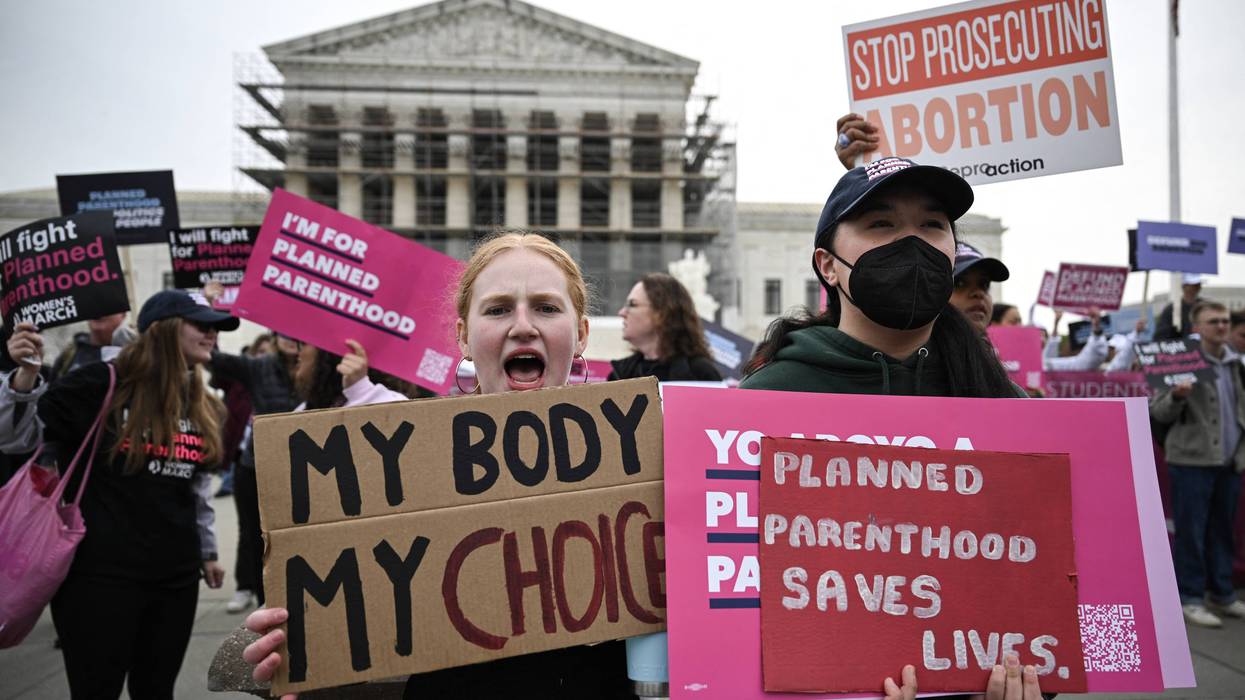
States that deny people's bodily autonomy limit "their ability to pursue the education and career options that are right for them, and to build financial stability," said the Institute for Women's Policy Research president.
Reproductive rights advocates and experts have long highlighted the dangers of abortion bans to people's health, but amid a wave of new state-level restrictions in the wake of Roe v. Wade's reversal, some have also recently emphasized the economic impact, as detailed in an analysis published Tuesday by the Institute for Women's Policy Research.
"IWPR's latest estimates show that states with the most restrictive abortion policies could cost the national economy nearly $68 billion annually in lost earnings, up from $64 billion in last year's estimate," according to the analysis. "Historically, legal abortion access has increased women's labor force participation and earnings. IWPR's analyses suggest that abortion restrictions continue to erode those gains nationwide, reducing women's labor force participation and earnings potential while weakening state and national economies in the process."
"Those losses—amounting to billions of dollars—could otherwise support what families actually need: affordable healthcare, caregiving, higher wages, business growth, and new jobs that strengthen local communities and state economies," the report notes. "This $68 billion estimate reflects only the impact of the most severe restrictions, including total bans and six-week gestational bans, that were in effect in 16 states in 2025."
The publication points out that "many other states may not have banned abortion outright, but still impose barriers that make abortion care harder to access, like waiting periods, mandated counseling, or targeted regulations on abortion providers that delay or deny care altogether. When accounting for all state-level restrictions on abortion access, combined with the federal funding prohibitions and the absence of federal protections, the annual average economic cost now exceeds $140 billion nationwide."
The overall figure is nearly $7 billion more than IWPR's estimate from last year. Putting that figure into context, the report explains that $7 billion "could fund Supplemental Nutrition Assistance Program (SNAP) benefits for about 1 million American families with children for an entire year. This is a striking figure considering the so-called 'One Big Beautiful Bill's' cuts to the program, which are projected to reduce or eliminate benefits for many low-income households."
Removing barriers to reproductive care on a national scale "could mean nearly 325,000 more women participating in the labor force each year, with the largest increases concentrated in states with some of the most restrictive abortion policies," IWPR estimated. For example, in Alabama, Kentucky, and Louisiana, their labor force participation could be over 1.3% higher, while in Mississippi, it could be up 1.5%.
If more women joined the workforce thanks to policies allowing reproductive freedom, IWPR projected that "national gross domestic product (GDP) could rise by 0.5%, and the economic gains would be largest in states such as Alabama, Arkansas, South Carolina, and West Virginia, which rank poorly on both abortion protections and per capita GDP. These states could potentially see their GDP grow by nearly 1% annually."
Like previous analyses, the publication also acknowledges that "Black and Latina women are more likely to experience the consequences of restrictive abortion policies and confront additional economic and structural barriers to accessing care that their White counterparts do not—even as abortion restrictions harm all women and the economy more broadly."
IWPR president and CEO Jamila K. Taylor stressed in a Tuesday statement that "this is fundamentally about human rights and economic justice."
"We know that legal access to abortion care increases women's autonomy to be able to participate in the labor force, which supports the stability of our entire economy," Taylor said. "When states deny people their bodily autonomy, they're also limiting their ability to pursue the education and career options that are right for them and to build financial stability for their family and community. Abortion restrictions don't just harm those who may become pregnant—they harm everyone."
President Donald Trump delivered mixed messages during the last campaign cycle: bragging about being the one to appoint the justices who helped reverse Roe with the Dobbs v. Jackson Women's Health Organization decision, but also suggesting that he wasn't in favor of a nationwide ban on abortion and that the issue doesn't really matter to Americans.
Since returning to the White House, the Republican and his allies in Congress have taken steps to reduce access to reproductive healthcare, and although the right-wing Supreme Court last month declined to restrict access to mifepristone, at least for now, Trump's Food and Drug Administration (FDA) is currently reviewing the medication, which is commonly used in abortion and miscarriage care.
Reproductive rights advocates have sounded the alarm over the FDA review. In response to reporting on it earlier this month, Planned Parenthood CEO Alexis McGill Johnson called it "a politically motivated farce."
"Mifepristone is safe and effective. We know it, the FDA knows it, and the more than 7.5 million people who've used mifepristone for abortion and miscarriage care over the past 25 years know it too," Johnson said. "But the Trump administration is bulldozing the overwhelming body of medical research and evidence to try to make it harder for everyone, everywhere to get an abortion. It's time for every American to take this threat seriously."
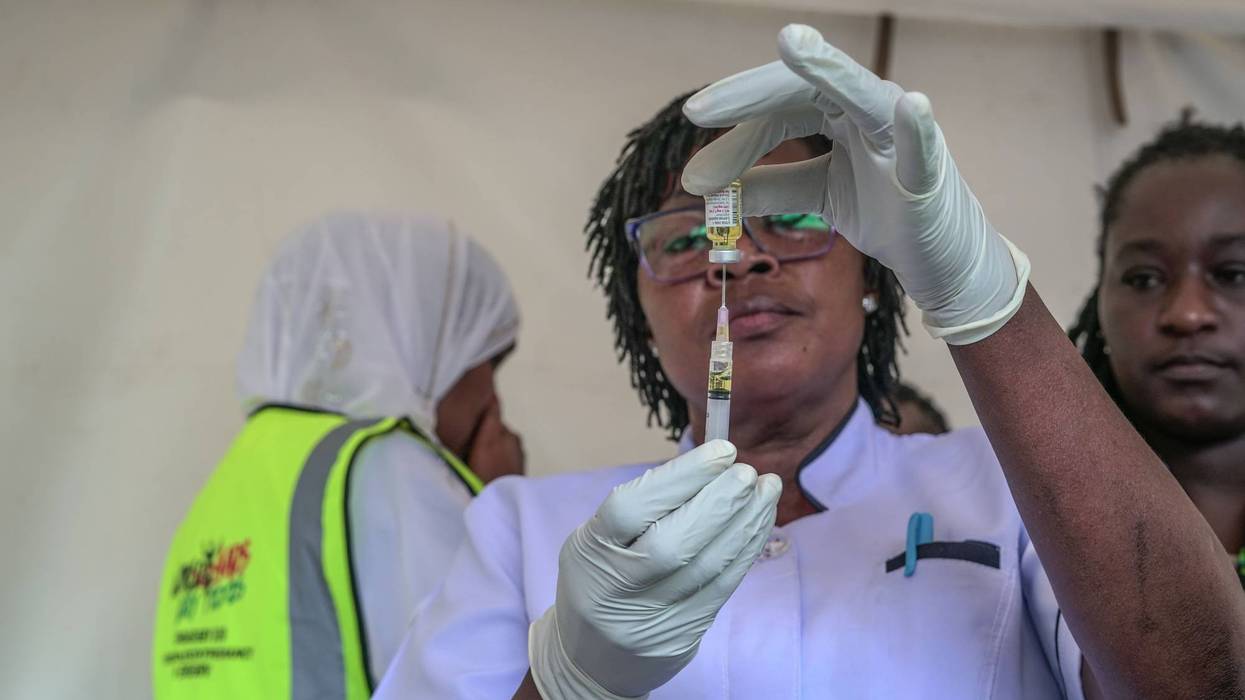
“After the sudden and devastating pullback from US assistance in 2025, governments are now being pressured to accept agreements with contingencies that jeopardize human rights."
The Trump administration is requiring African nations to agree to a series of "troubling conditions" to restore lifesaving health aid, according to a Human Rights Watch report on Monday.
The administration's abrupt shuttering of the US Agency for International Development (USAID) last year shut off billions of dollars and caused havoc across Africa's healthcare system, resulting in what public health models project could be hundreds of thousands of preventable deaths.
But under what has been dubbed the “America First” Global Health Strategy, the administration has negotiated secretive agreements with dozens of these countries to restore some of the funding. Most of them have been kept under lock and key by the US.
Those that have been made public have come with terms that Human Rights Watch said "raise concerns that health aid is being inappropriately leveraged to extract terms beneficial to the US in negotiations around natural resources and access to sensitive health data from recipient countries."
In March, a draft memorandum of understanding with the government of Zambia was revealed to have conditioned $1 billion for HIV, tuberculosis, malaria, and other disease prevention for millions of people, on the country's acceptance of a separate bilateral treaty that would have given US companies greater access to the country's minerals.
A leaked State Department memo, prepared for Secretary Marco Rubio, put the exploitative terms plainly: “We will only secure our priorities by demonstrating willingness to publicly take support away from Zambia on a massive scale.”
After the details of that agreement were met with backlash, the text of agreements with several other countries—Ethiopia, Kenya, Mozambique, Nigeria, and Uganda—were suddenly removed from the State Department’s Freedom of Information Act Library.
A Human Rights Watch assessment of the agreements with those five countries—as well as agreements with Rwanda and Liberia that were leaked—revealed that in order to restore a portion of the more than $800 million collectively stripped from them by the US, they'd have to agree to several coercive measures that jeopardize the reproductive and privacy rights of their citizens.
“The agreements show the US intends to condition vital health assistance for millions of people on acquiescence to troubling conditions,” said Julia Bleckner, senior health researcher at Human Rights Watch. “After the sudden and devastating pullback from US assistance in 2025, governments are now being pressured to accept agreements with contingencies that jeopardize human rights.”
All seven of the agreements require the governments to provide the US with "broad access to data and information" to monitor compliance with the Helms Amendment, which forbids the use of US foreign assistance to pay for abortion care.
The agreements with Mozambique, Rwanda, and Liberia require them to provide “any data” requested by the US to ensure compliance with the amendment, while Uganda's permits the US to conduct unannounced spot checks of health facilities and clinics.
"By making a broad package of health aid contingent on broad and potentially invasive surveillance of Helms compliance, the agreement could encourage a more restrictive regulation of abortion than national law mandates and give rise to further violations of the right to healthcare,” says the report.
The agreements also give the US permission to directly audit clinics, laboratories, and health programs to ensure compliance with the conditions. Six of them require clinics to provide access to "any data" requested by the US at a sample of facilities it chooses.
Agreements with five countries also mandate that they share biological specimens taken from patients and associated information related to novel infectious diseases, which HRW described as part of an effort to undermine a global pathogen access and sharing system being created by the World Health Organization, from which Trump has removed the US.
HRW said in a news release:
The agreements raise serious concerns about use of people’s private health data, without clear limits, uniform safeguards, or meaningful protections for patient confidentiality, including in several countries with weak or absent domestic data protection laws. The agreements contain no prohibition on this data being shared with US pharmaceutical companies without patient consent.
“Governments negotiating health assistance agreements with the United States face difficult choices,” Bleckner said. “They should be wary of terms asking them to sign away their populations’ rights and push for the inclusion of civil society representatives and multilateral global health organizations like the Global Fund in deliberations.”