
SUBSCRIBE TO OUR FREE NEWSLETTER
Daily news & progressive opinion—funded by the people, not the corporations—delivered straight to your inbox.
5
#000000
#FFFFFF
To donate by check, phone, or other method, see our More Ways to Give page.


Daily news & progressive opinion—funded by the people, not the corporations—delivered straight to your inbox.
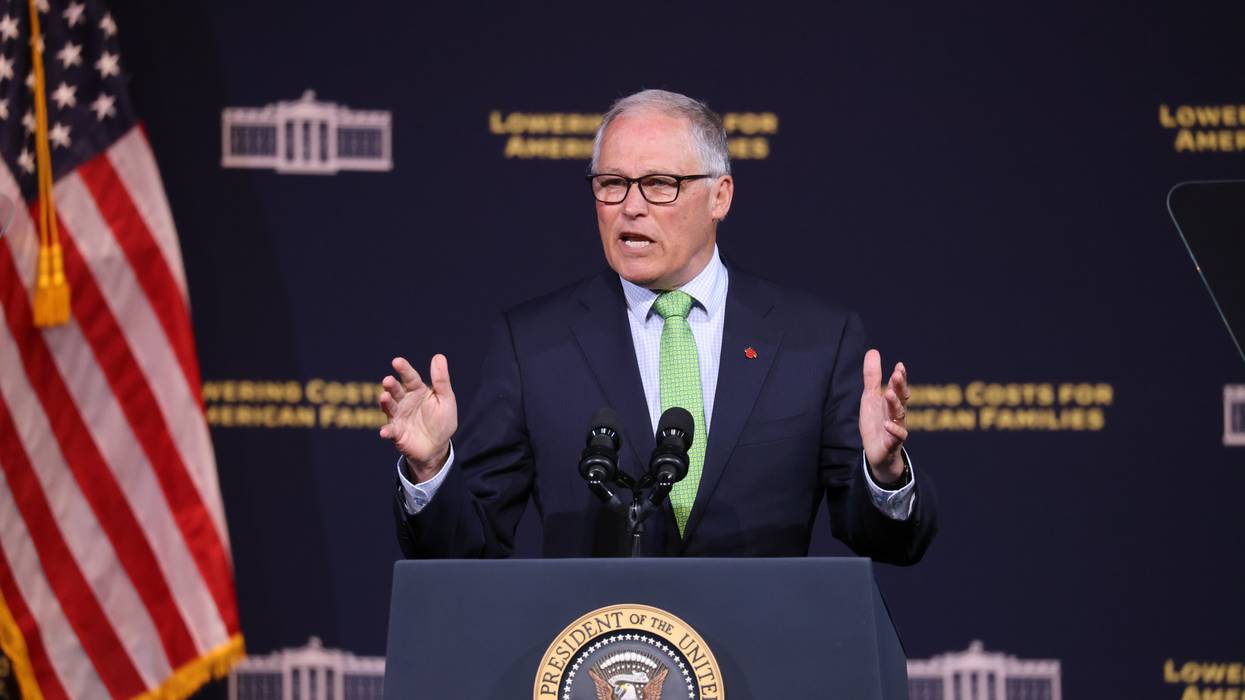
“Trump is getting Americans coming and going. He’s forcing higher power bills on them by blocking clean energy, then he’s fattening the wallets of his cronies," said former Democratic Washington Gov. Jay Inslee.
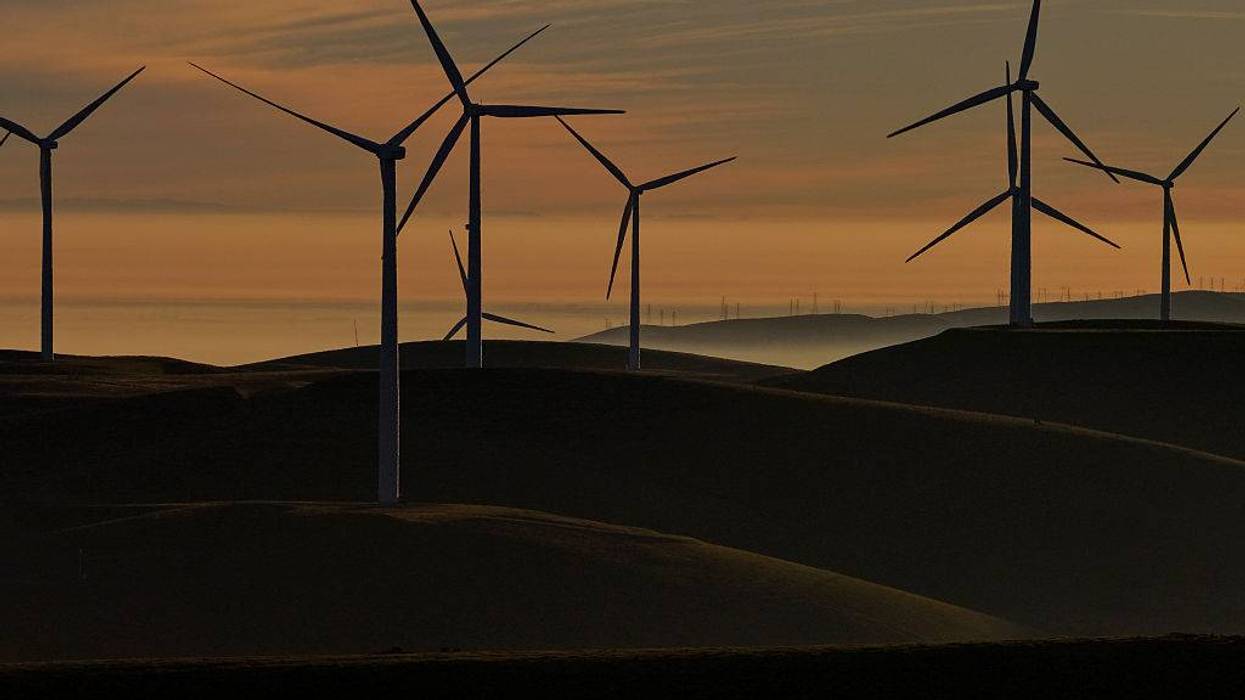
President Donald Trump's obsession with canceling clean energy projects is bad not just for the climate, but for the US economy as a whole.
An analysis released Thursday by nonprofit green energy advocate E2 and conducted by consulting firm BW Research estimates that clean energy projects that have been shut down or downsized during Trump's second term would have added $55 billion to the annual gross domestic product (GDP).
The analysis finds that, in addition to delivering a hit to GDP, scrapping the projects lead to 470,000 fewer jobs, including 42,000 construction jobs related to battery storage, 33,000 construction jobs related to solar projects, and 28,000 construction jobs related to electric vehicle projects.
The cancelations will also hit governments' coffers, as they are projected to deliver a $12 billion annual reduction in tax revenues.
The report points to two big components in Trump White House's attack on clean energy: the Republican Party's 2025 budget law, which rolled back tax credits for clean energy programs, and the administration's own policies, including payoffs to companies to halt project development and a permitting ban on new solar and wind projects.
Bob Keefe, executive director of E2, said the numbers outlined in the analysis show that "making it harder to build clean energy projects means lost jobs, lost investments, lost electricity supplies, and lost local tax revenues."
"Add it all up and it’s clear," Keefe added, "that federal actions to stop clean energy are costing all of us—consumers, businesses and our national economy—big time."
Michael Timberlake, director of research and publications at E2, commented that Trump's policies are "hitting exactly the kinds of projects America needs most: domestic manufacturing, battery storage, solar, wind, and electric vehicles."
“The losses go far beyond the direct jobs announced by companies," Timberlake said. "Every cancelled factory or power project means fewer construction workers on site, fewer suppliers filling orders, fewer dollars flowing through local economies, and fewer tax revenues for schools, fire departments, roads, and public services."
A Friday report in The Guardian similarly highlighted the economic damage being done by Trump's war on clean energy, with a particular focus on the Trump administration's unprecedented policy of paying energy companies to relinquish leases for offshore wind projects they had already purchased.
Jenny Rowland-Shea, senior director for conservation policy at the Center for American Progress, told The Guardian that the administration is "trying to snuff out an entire form of energy," which she said was a particularly irrational thing to do when Americans' utility bills are spiking.
"It’s at a time when the United States needs more energy," said Rowland-Shea. "As people’s rates are going up for electricity, as we see data centers gobbling up more energy."
Former Democratic Washington Gov. Jay Inslee, whose 2020 presidential campaign focused heavily on combating the climate crisis, accused Trump and his administration of "mugging" the American public by forcing them to needlessly pay more for energy.
“Trump is getting Americans coming and going,” said Inslee. “He’s forcing higher power bills on them by blocking clean energy, then he’s fattening the wallets of his cronies—all with billions of our tax dollars.”
"This irresponsible decision will have implications on the health and well-being of communities, as well as lasting impact on generations to come," warned one campaigner.
Elected officials and environmental advocates in the Pacific Northwest on Thursday condemned U.S. regulators for greenlighting a Canadian company's fracked gas pipeline expansion project despite the fossil fuel-driven climate emergency.
The Federal Energy Regulatory Commission (FERC) approved TC Energy's Gas Transmission Northwest (GTN) XPress Project, which would upgrade compressor stations in Kootenai County, Idaho; Sherman County, Oregon; and Walla Walla County, Washington.
"Today's decision by FERC flies in the face of what is morally and economically necessary to protect our communities from the worsening impacts of climate change," declared Democratic Washington Gov. Jay Inslee. "The federal government has finally begun making tremendous climate investments under the Inflation Reduction Act, but this decision essentially digs the hole deeper and locks in long-term capital investments that prevent us from reaching our national and state goals."
Along with Inslee, political opponents of the project include Democratic Oregon Gov. Tina Kotek; U.S. Reps. Earl Blumenauer (D-Ore.), Pramila Jayapal (D-Wash.), and Andrea Salinas (D-Ore.); and U.S. Sens. Maria Cantwell (D-Wash.), Jeff Merkley (D-Ore.), Patty Murray (D-Wash.), Alex Padilla (D-Calif.), and Ron Wyden (D-Ore.).
"Expanding this fossil fuel pipeline for 50 years—until 2073—saddles our children and their children with climate harm and fossil fuel costs," Inslee warned. "This fight isn't over. I'm thankful for the aligned efforts of Gov. Kotek, our senators, and our West Coast attorneys general to make clear why this pipeline is a dangerous detour on our path away from fossil fuels. We are more resolved than ever to keep this pipeline from increasing fossil fuel use."
Advocacy groups are also determined to prevent the expansion.
"FERC failed to listen to senators, governors, state attorneys general, tribes, and the public in its rubber stamp of unnecessary fracked gas in the Northwest," stressed Columbia Riverkeeper staff attorney Audrey Leonard. "The commission's decision violates the public interest and common sense, and we will file a petition for rehearing challenging this project."
"Since the analysis for this project was published, two major TC Energy pipelines have failed, causing safety hazards and spilling fossil fuel," Leonard noted. "If this were to happen in dry, rural, fire-prone lands or in the residential areas where TC Energy's GTN pipeline is located, it would be catastrophic."
Satya Austin-Opper of 350 Deschutes in Oregon stressed that "the GTN Xpress proposal would lock in a huge new influx of fracked gas for decades at the very moment that our communities are experiencing accelerated climate change impacts such as frequent drought and summers of smoke."
"And this pipeline runs right through our community," Austin-Opper continued, also noting the company's recent history. "I'm worried about how devastating the impact would be if the pipeline were to fail, which is certainly a possibility given the unsafe track record of TC Energy's other aging pipelines."
Oil Change International U.S. program co-manager Allie Rosenbluth argued that "with this decision to approve the GTN Xpress expansion, the Biden administration is again failing on its promises to protect environmental justice communities and the climate."
The FERC decision follows a historically hot summer that led United Nations Secretary-General António Guterres to caution that "climate breakdown has begun" and the European Copernicus Climate Change Service's announcement earlier this month that 2023 is on track to be the warmest year ever recorded.
"Any expansion of fossil fuels is incompatible with a livable future," Rosenbluth asserted. "Oregon and Washington must continue to rise to the challenge and safeguard the health and well-being of communities and the climate by challenging FERC's approval of this unnecessary and dangerous gas expansion."
Leaders from Physicians for Social Responsibility (PSR) in both states also highlighted the health impacts of the project.
"FERC's alarming decision to approve the GTN Xpress Project blatantly disregards concerns from community advocates and hundreds of health professionals in Oregon and within our region," said David De La Torre of Oregon PSR. "This irresponsible decision will have implications on the health and well-being of communities, as well as lasting impact on generations to come."
"As wildfires and extreme heat events continue to increase in frequency, straining health services and the well-being of Oregonians, it is imperative that we not continue to approve proposals that accelerate the climate crisis," he added. "We don't need more fracked gas being pumped through our state and communities."
The heat pump target is part of a broader push to decarbonize buildings—which currently contribute more than 30% of the U.S.' climate-heating emissions.
The U.S. Climate Alliance—a group of 25 governors leading states that make up 60% of the U.S. economy and 55% of its population—pledged Thursday to quadruple the number of heat pumps installed in their states by 2030.
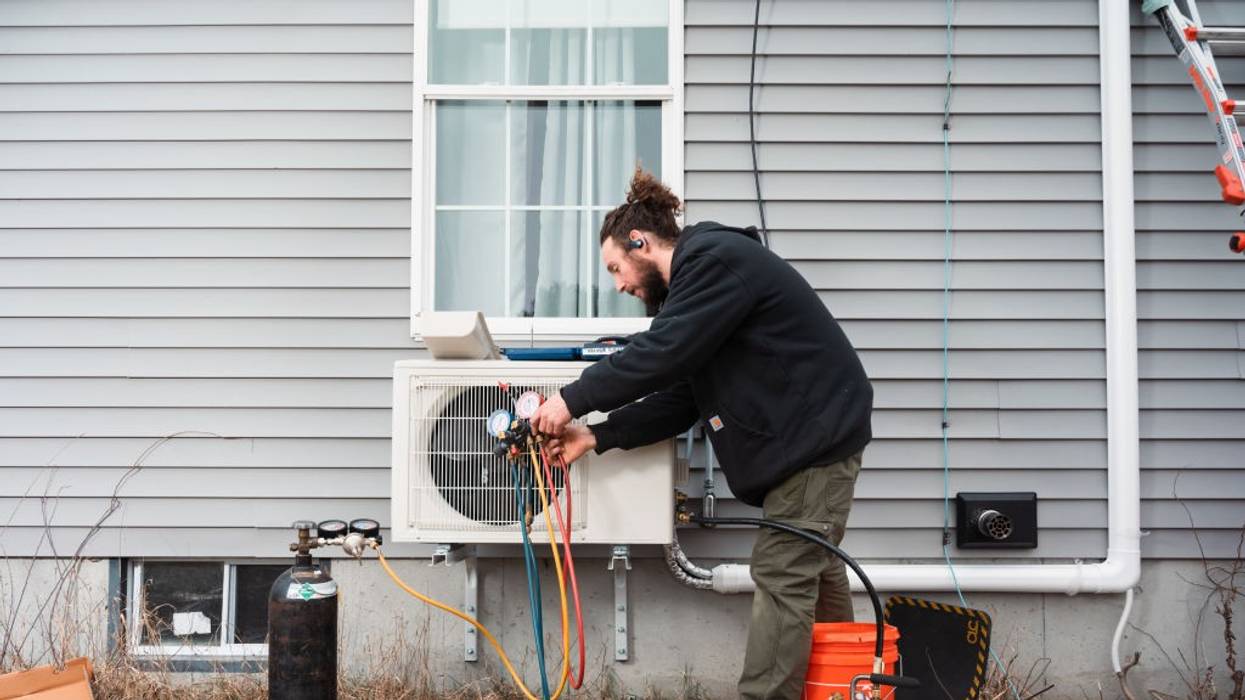
Heat pumps work by either pumping hot air in during winter or hot air out during summer, The Associated Press explained. Because they don't have to first work to heat a coil or other device, they are more energy efficient than other heating methods. They also run on the electric grid, so they don't use extra fossil fuels like oil or gas furnaces.
They're "almost a miraculous solution," Washington Gov. Jay Inslee, one member of the alliance, told AP, adding that they solve the problems of "heating in the winter, cooling in the summer, and a reduction of carbon pollution."
"This coalition continues to prove that when we come together, we can make a greener future more equitable and accessible for all."
The alliance made their announcement at Climate Week NYC Thursday. The heat pump target is part of a broader push to decarbonize buildings—which currently contribute more than 30% of the U.S.' climate-heating emissions.
"We are in a climate emergency and the window to act is closing," Inslee said in a statement. "U.S. Climate Alliance states get that."
The heat pump commitment means that participating states will install 20 million heat pumps by the end of the decade, up from 4.8 million today, according to energy transition nonprofit RMI.
"Heat pumps and heat pump water heaters are core decarbonization technologies that allow buildings to switch from burning fossil fuels for heating and hot water to using electricity instead," the group wrote in response to the news. "Making this switch can reduce home heating emissions in every US state by 35–93% while saving lives through improved air quality and protecting residents from volatile gas commodity prices."
U.S. Climate Alliance members also pledged to ensure 40% of the benefits from the green-buildings mobilization go to marginalized communities.
"This coalition continues to prove that when we come together, we can make a greener future more equitable and accessible for all," New York Gov. and alliance member Kathy Hochul said in a statement.
Fellow alliance member and Maine Gov. Janet Mills spoke of her state's positive experience with heat pumps. Maine set a goal in 2019 of installing 100,000 by 2025 and ended up significantly overshooting that, installing 104,000 by the end of August, as The Cool Down reported at the time.
"Transitioning to heat pumps in Maine is creating good-paying jobs, curbing our carbon emissions, cutting costs for families, and making people more comfortable in their homes," Mills said Thursday, adding that her state would ramp up its target to 275,000 installations by 2027.
The alliance, which was first formed by Washington, New York, and California in response to former President Donald Trump's decision to pull the U.S. from the Paris agreement, is partnering with the Biden administration for their new endeavor.
Other goals include supporting the development of codes and standards for net-zero buildings, working to speed the process of retrofitting homes and businesses to electrify them and make them more efficient, and creating well-paying career-track green building jobs.
"Combined with President Biden's historic climate leadership, these bold commitments by governors to cut emissions from buildings will have a catalytic impact across America," White House National Climate Advisor Ali Zaid said in a statement Thursday. "It will clean up the air our children breathe, save hardworking families money on their monthly energy bills, strengthen America's climate resilience, and create good-paying jobs in every corner of the country."
"What the scientific community is telling us now, is that the Earth is screaming at us," said the Washington governor. "We need to stop using fossil fuels. That is the only solution to this massive assault on humanity."
As record-shattering heat persists from Phoenix, Arizona to southern Europe, Democratic Washington Gov. Jay Inslee highlighted on Sunday that humanity already knows how to combat climate chaos: ditch planet-warming fossil fuels.
With tens of millions of Americans under heat alerts, Inslee—who ran a climate-focused 2020 presidential campaign—appeared on ABC's "This Week" to discuss current conditions and solutions with co-anchor Martha Raddatz.
"Look, the climate change problem, the fuse has been burning for decades, and now the climate change bomb has gone off," Inslee said. "The scientists are telling us that this is the new age. This is the age of consequences because whatever we thought of climate change last year, we now understand that the beast is at the door. We knew this beast of climate change was coming for us, but now, it's pounding on the door."
"What the scientific community is telling us now, is that the Earth is screaming at us, and that is the situation," he added. "I talked to a leading international scientist the other day who told me that we knew this was going to happen to us, but it's happening to us maybe two decades earlier than we really thought could be in the realm of the possible."
"We have to dramatically increase our efforts. That is necessary."
Scientists have long warned that driving up the global temperature will make heatwaves worse—with dangerous consequences, including for the world's food system. Last month was the hottest June on record and the trend is expected to continue during what Malta residents are calling the "summer of hell."
Already, July has seen the warmest day and week ever recorded, and much of the Northern Hemisphere is still enduring extreme heat. Campaigners held an international day of action on Saturday as the "Climate Clock" dropped below six years, a warning of how close humanity is to using up the carbon budget and likely killing any hope for the Paris agreement's 1.5°C limit for global temperature rise this century.
Greek authorities said Sunday that roughly 19,000 people were evacuated from the island of Rhodes due to wildfires. Reuters reported that "thousands spent the night on beaches and streets during what Greece said was its biggest safe transport of residents and tourists in emergency conditions."
"We have to dramatically increase our efforts. That is necessary," Inslee said of action to cut emissions. "There's good news here. We can do this. Look, we're electrifying our transportation fleet. We're electrifying our homes. This is a solvable problem, but we need to stop using fossil fuels. That is the only solution to this massive assault on humanity."
The governor argued that the United States needs to lead on a global scale but also emphasized that "this is not just something for the federal government. States can act. Our state is acting. We have 23 states in the U.S. Climate Alliance. And this is necessary."
"We've had tremendous action under President [Joe] Biden's leadership with the Inflation Reduction Act. And, unfortunately, the Republicans are trying to repeal that now," Inslee noted. "But we need to go further and faster. And states can go further and faster. And we are doing that."
Biden, who is now seeking reelection in 2024, campaigned on bold climate pledges going into the 2020 contest. While he has taken some of those promised actions, the president has also faced criticism from green groups, voters, and some Democratic lawmakers for backing fossil fuel initiatives—from the Mountain Valley Pipeline to the Willow oil project—and so far declining to declare a climate emergency.
Meanwhile, many Republican lawmakers and presidential candidates—including former President Donald Trump and Florida Gov. Ron DeSantis—are pushing policies even more hostile to the climate and friendly to the fossil fuel industry.
Kyle Jones of the Center for Policy Advocacy at the Natural Resources Defense Council said earlier this week that legislation marked up by the GOP-controlled U.S. House Appropriations Committee "reads like a 'how-to' manual for destroying the planet."
Raddatz asked how to convince people to care given that there are "candidates out there like Donald Trump, who mock the idea of climate change, and there are a vast number of Americans who ignore it, don't care about it, or don't believe it."
Inslee insisted that "we can't wait for Donald Trump to figure this out. We don't have time to mess around to wait for this knucklehead to figure this out. We just got to make sure he's not in office. And the way we do this is vote against climate deniers."
"Vote against people who refuse to assist this moral and economic crisis that we have," he advised. "You can't wait for these folks, you've just got to make sure they're not in office where they can do damage. Let them go off and play golf. We'll solve this problem. It's a solvable problem if we work together."
"And people are coming around to this very, very rapidly because their homes are burning down. They're choking on smoke from the Canadian fires," he said. "When Ron DeSantis wants to go swimming, he can't because the water is like a sauna, like a hot tub off his beaches. We've just got to make sure those folks are not in office. We don't have the luxury of allowing these people to destroy the planet."
This post has been updated with reporting on conditions in Greece.
Over three dozen groups on Monday pressured three Democratic West Coast governors to "voice your opposition to the plan to increase the amount of fracked gas flowing through your states" ahead of a decision by federal regulators expected early next year.
"We need our governors to stand with us and send a strong message to the federal government to stop rubber-stamping pipeline expansions."
"The urgency of the climate crisis demands action from your administrations," even before the Federal Energy Regulatory Commission (FERC) weighs in, the organizations wrote to Govs. Kate Brown of Oregon, Jay Insee of Washington, and Gavin Newsom of California.
The letter explains that "Gas Transmission Northwest (GTN) is seeking approval from FERC to increase the capacity of its 1,354-mile fracked gas pipeline that runs from British Columbia, through Idaho, Washington, and Oregon, and down to California."
"FERC estimates the expansion will result in 3.24 million metric tons of greenhouse gas emissions annually, even without considering the upstream methane leakage," which is "the same annual carbon pollution as eight new gas-fired power plants," the letter notes.
The groups praised Brown, Inslee, and Newsom for their "strong efforts to tackle the climate crisis" so far and argued that the expansion project, known as GTN XPress, "would go against these commitments by locking in the region's reliance on fracked gas for at least another 30 years, subsidized by ratepayers."
"We urge you to carefully weigh the climate impacts of increasing gas capacity, and consider how the GTN XPress project is inconsistent with Washington, Oregon, and California's efforts to rapidly reduce greenhouse gas emissions," the letter concludes. "As our state leaders, we ask you to make your opposition to the proposal loud and clear."
Representatives from groups that signed on to the letter also stressed local opposition.
"There are over 30 organizations with a range of climate, social justice, health, and place-based goals that fiercely oppose this project," noted Columbia Riverkeeper staff attorney Audrey Leonard.
Maig Tinnin, Rogue Valley coordinator for Rogue Climate, highlighted that "Northwest communities have organized to win strong climate goals in our states and this project threatens our ability to meet those emission reductions."
"Over the last five years, while many worked to defeat new pipelines like Jordan Cove LNG, FERC approved more than a dozen pipeline expansion projects across the country," Tinnin added. "We need our governors to stand with us and send a strong message to the federal government to stop rubber-stamping pipeline expansions."
Though Republican Gov. Brad Little of Idaho did not receive the letter, some organizations in his state also supported it.
"Like our West Coast neighbors, concerned Idahoans oppose any new or expanded fossil fuels extraction, transportation, and infrastructure projects," said Wild Idaho Rising Tide organizer Helen Yost. "We encourage California, Oregon, and Washington governors to further consider the broad climate impacts of their public actions and decisions, especially for under-represented, rural communities."
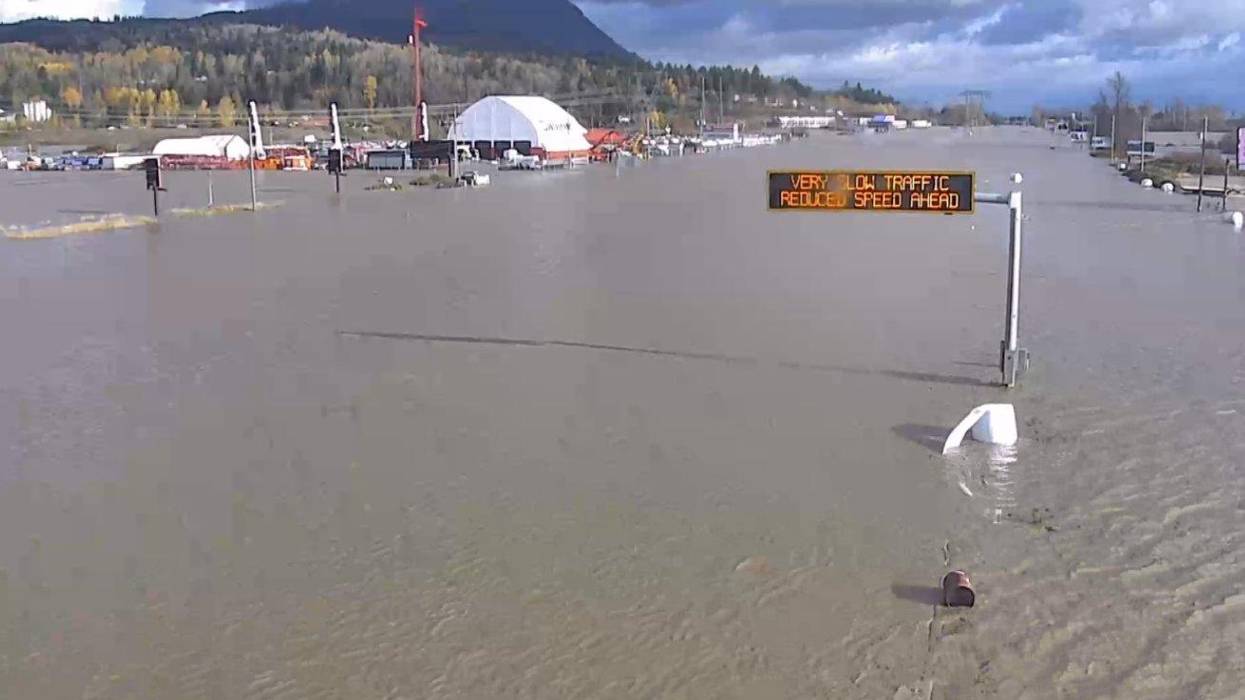
After a summer that featured the "world's most extreme heatwave in modern history," which experts linked to human-caused global heating, the Pacific Northwest was inundated with floodwaters Monday, fueling fresh calls for ambitious action to combat the climate emergency.
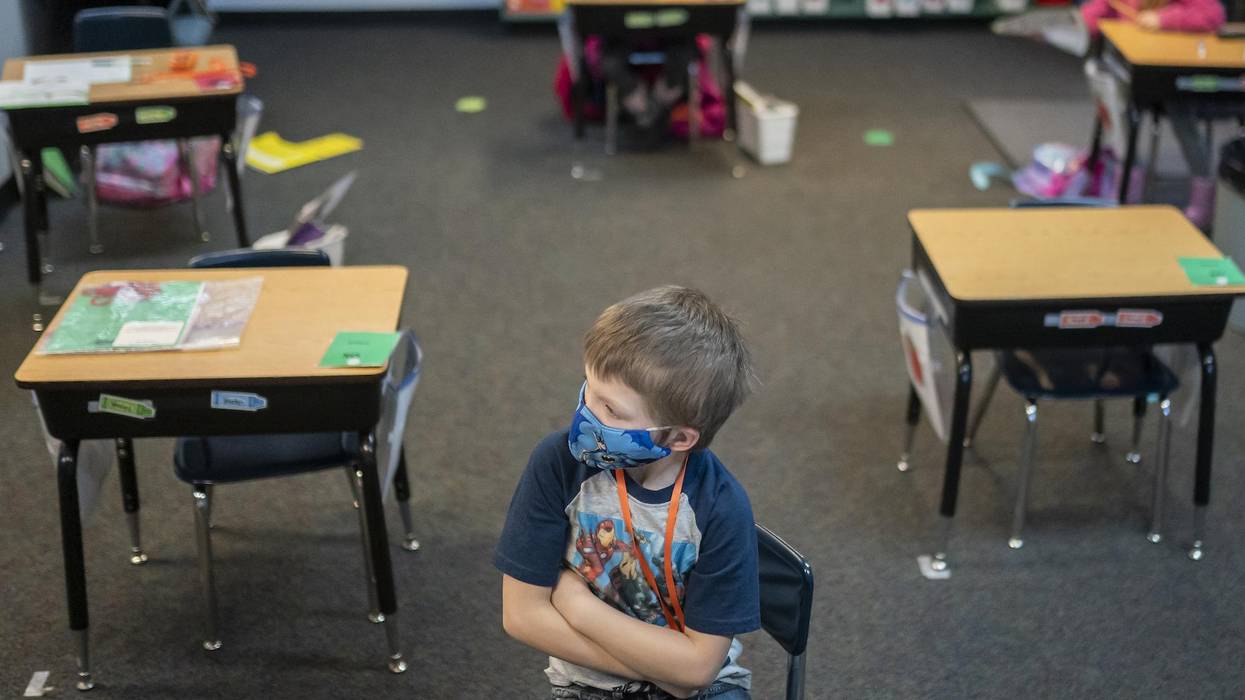
The recent rain and subsequent flooding--which came on the heels of the COP26 climate summit in Scotland--led to evacuations, power outages, rescues, school closures, and stranded vehicles in Washington state and British Columbia, Canada.
"We are in a climate emergency," meteorologist and writer Eric Holthaus tweeted regarding the "torrential flooding."
Washington Gov. Jay Inslee, a Democrat who ran for president in 2020 on a climate-focused platform and attended COP26 earlier this month, issued a severe weather emergency proclamation for 14 counties.
Inslee's office said in a statement that "the severe storm with floods, landslides, mudslides, and the potential for straight-line winds is causing road closures, the need to establish alternate transportation routes, evacuations, impacts to local utility services including significant power outages, localized reductions in available drinking water, and damage to homes and other public and private property and infrastructure."
Citing data from PowerOutage.Us, NBC News reported that "about 70,000 utility customers in Washington were without power early Tuesday."
As NBC detailed:
An atmospheric river--a plume of moisture that stretches across the Pacific and near Hawaii--has been aimed toward the region since last week, said Joe Boomgard-Zagrodnik, an agricultural meteorologist at Washington State University.
Beginning Thursday, a trio of storms tapped into that moisture and hammered areas north of Seattle and on Washington's Olympic Peninsula with driving rainfall.
Atmospheric river patterns are not uncommon in the region, but the barrage of storms comes during a historically wet fall. And the flooding strikes a region that suffered a heat wave that set records in June, became smothered with wildfire smoke in August and remained abnormally dry for much of summer.
"We were super hot and dry in the summer, and the switch flips. It definitely matches what the climate models show for the future around here--hotter, dryer summers and wetter winters," said Boomgard-Zagrodnik. "Our infrastructure isn't designed for that."
Noting that the National Weather Service (NWS) issued flood warnings for at least 12 rivers as of Monday afternoon, AccuWeather highlighted some new records:
An NWS river gauge showed that the Bogachiel River near La Push, Washington, had broken its all-time record high level Monday at 44.93 feet. The previous record for the station was 42.64 feet, set on November 6, 2006. The Nooksack River at North Cedarville, Washington, also broke its record Monday at 150.35 feet, versus the record of 149.61 feet on November 6, 2006. The river was seen still raging Monday evening. The Skagit River near Mount Vernon was forecast to break its record Tuesday and was already at 35 feet Monday evening, forcing officials to close bridges.
Chris Elder, the primary Whatcom County employee managing climate action, told The Bellingham Herald on Monday, "The reality is the impacts are happening."
Standing on his property near the Nooksack River's South Fork, which had flooded an agricultural field used by bison, Elder said, "It's wild, it's the highest I've ever seen it."
North of the U.S. border, Environment Canada meteorologist Armel Castellan told The Globe and Mail that two months of unusually heavy rains preceded the "very potent and strong" weather system that hit British Columbia this weekend.
"The conditions... have been historic," Castellan said, "with many locations getting an average amount of rain for November in under 48 hours."
The Toronto Star reported that "B.C. leaders are not yet saying whether the atmospheric river rainstorm is one of the largest seen in the province, but the speed with which it has wrought destruction and disruption already makes it a monumental disaster and is bringing back memories of the widespread wildfires that took place over the summer--many in the same regions now being hit by the storms."
The newspaper added that "the entire town of Merritt, B.C., home to 7,000 people, evacuated their homes Monday morning, as water from the rushing Coldwater River breached its banks and filled up the streets of surrounding communities as though they were part of a stoppered bathtub."
Along with Merritt, where the municipal wastewater treatment plant failed, an evacuation order was issued for the nearby Nooaitch Indian Band and other communities, according to CBC.
In Vancouver, the province's most populous city, every major highway was shut down Monday afternoon. There were road closures across B.C., and surging rivers even washed away portions of the Coquihalla and Trans Canada highways.
CBC reported that there is currently no timeline for schools to reopen in Merritt or Princeton, where the Tulameen and Similkameen rivers overflowed, forcing evacuations.
Princeton Mayor Spencer Coyne also told CBC journalist Heather Hiscox that residents of his flooded community could go days without heat because of a broken natural gas line.
Author and activist Bill McKibben, co-founder of the environmental group 350.org, noted the "sadly ironic twist" that the flooding shut down a tar sands pipeline controversially owned by the Canadian government in spite of Liberal Prime Minister Justin Trudeau's claims to support climate action and scientists' warnings about the need to keep fossil fuels in the ground.
"The Trans Mountain pipeline has been temporarily shut down because of flooding in the area of Hope," according to CBC, "and all construction on the pipeline expansion project has been halted in the Lower Mainland."
Greenpeace Canada referenced the pipeline in a Tuesday tweet targeting the country's minister of environment and climate change, Steven Guilbeault.
"The people of B.C. don't need your thoughts. They need you... to ACT NOW on the climate crisis in front of us," the group said. "#StopTMX, end fossil fuels."
This post has been updated with comment from Greenpeace Canada.
Gov. Jay Inslee declared it "a good day in Washington state" after lawmakers on Sunday approved a 7% capital gains tax to fund public education.
Senate Bill 5096 passed in a 25-24 vote, and, according to Inslee, "will help us address our upside-down tax system."
The measure imposes a 7% tax on the sale of stocks, bonds, or other capital assets where the profit exceeds $250,000. That revenue will "fund K-12 education, early learning, and child care, and advance our paramount duty to amply provide an education to every child in the state," the bill states.
The raised funds will go to the Education Legacy Trust Account, with an annual cap on those deposits of $500 million. Any additional funds raised will be directed to the Common School Construction Account.
Democrats in the state Senate asserted that tax will hit only about 0.23% of taxpayers and will enable the state "to deliver the critical early learning services and care that our kiddos need for success--throughout school and life."
The tax is expected to affect about 7,000 of the state's residents. It has exemptions including all real estate, retirement accounts, livestock, agricultural land, fishing privileges, and family-owned small businesses.
Democratic state Sen. June Robinson, the bill's sponsor, heralded its passage as an "important step to rebuild our unfair tax code [that] was taken after years of work, years of dialogue, and thousands of voices calling for this policy."
"We've heard that people from every part of our state are ready to move toward a healthier, stronger future together," said Robinson, "and it's time for the wealthiest among us to pay their fair share for that future."
According to the Washington State Budget and Policy Center, which provided research for the legislative proposal, the bill marks "a critical move toward fixing Washington state's inequitable and racist tax code. It's even more meaningful because it comes on the heels of another big win toward making our state tax code more progressive, the passage of the Working Families Tax Credit." The group explained:
This is the most equitable change to Washington state's upside-down tax code in nearly 90 years. Our regressive tax code currently relies on the people with the lowest incomes to pay the largest percentage of state and local taxes as a share of income. This has been especially damaging to people who are Black, Indigenous, and people of color (BIPOC)--because they face higher average tax rates than wealthy white households as a result of racist policies, like redlining and employment discrimination, that have excluded them from access to wealth and opportunity. It has also prevented our state from having necessary resources to adequately invest in the needs of BIPOC communities. ESSB 5096 would be paid for almost entirely by wealthy white people who have benefited from policies and systems that channel resources to them, and it would increase their taxes by a mere 0.9%.
Meanwhile, taxing capital gains will not only increase investment in communities, but it will also help jumpstart our state economy and create nearly 20,000 jobs per year. The tax revenue will also help our state avoid the mistakes of the last recession by providing a permanent replacement for temporary federal recovery funds. This is a commonsense move to ensure there's long-term funding when federal funding--which is an important bridge to recovery--runs out.
Declaring passage of Senate Bill 5096 a "victory," the Cascadia Advocate, a publication of the Northwest Progressive Institute, cautioned, "Our work is not done, of course." The group pointed to a potential legal challenge or "a challenge from the opposition in the form of an initiative to the people for 2021 or (more likely) an initiative to the legislature for 2022."
For now, the bill now heads to Inslee, who said Sunday that it "has been one of my priorities for years."
Hailed by advocates as an important milestone on the road to full marijuana legalization, the U.S. House of Representatives on Monday voted overwhelmingly in favor of a bill that would open the door to banking services for the legal cannabis industry.
"As we continue to push forward with full legalization, addressing this irrational, unfair, and unsafe denial of banking services to state-legal cannabis businesses is a top priority."
--Rep. Earl Blumenauer
All House Democrats and more than half of Republicans in the lower chamber voted to approve the SAFE Banking Act, which passed by a vote of 321-101. If approved by the Democrat-controlled Senate and signed into law by President Joe Biden, the measure would allow banks and other financial institutions to serve state-legal cannabis businesses without running afoul of federal prohibition law.
The House passed a similar bill in 2019. However, the measure never made it past the Senate, which at the time was controlled by Republicans.
Rep. Ed Perlmutter (D-Colo.)--who has introduced versions of the bill since 2013--said on the House floor ahead of the vote that "the fact is, you can't put the genie back in the bottle--prohibition is over."
"I hope this bill is an icebreaker for the House to take up other reforms and finally remove the conflict between state and federal laws," he said.
After the successful vote, longtime cannabis legalization advocate Rep. Barbara Lee (D-Calif.) tweeted that "this is a step toward ending the failed war on drugs and bringing restorative justice to our Black and Brown communities."
Other lawmakers and elected officials, especially in states where recreational or medical marijuana use is legal, applauded the bill's passage.
"As we continue to push forward with full legalization, addressing this irrational, unfair, and unsafe denial of banking services to state-legal cannabis businesses is a top priority," Rep. Earl Blumenauer (D-Ore.) said in a statement after the vote. "This is a critical element of reform that can't wait, and I urge our cannabis champions in the Senate to take up this legislation as soon as possible."
Rep. Diana DeGette (D-Colo.) asserted that "Colorado's multi-billion-dollar marijuana industry employs thousands of people. They should have the same security and access to banking as any other business."
Democratic Gov. Jay Inslee of Washington--which in 2012 became one of the first two states to legalize recreational cannabis--said the SAFE Banking Act will provide legal marijuana businesses "a safer, more transparent financial market."
Cannabis legalization advocates also hailed Monday's vote. NORML--the National Organization for the Reform of Marijuana Laws--said that if signed into law, the bill "would improve the safety of legal marijuana marketplaces and foster more entrepreneurship in the emerging legal industry."
NORML political director Justin Strekal said that "for the first time since Joe Biden assumed the presidency, a supermajority of the House has voted affirmatively to recognize that the legalization and regulation of marijuana is a superior public policy to prohibition and criminalization."
"However, the SAFE Banking Act is only a first step at making sure that these state-legal markets operate safely and efficiently," he added. "The sad reality is that those who own or patronize the unbanked businesses are themselves criminals in the eyes of the federal government, which can only be addressed by removing marijuana from the list of controlled substances."
Steve Hawkins, executive director of Marijuana Policy Project, called Monday's vote "hugely important."
"This will unlock banking services that certainly will be a benefit to small operators in the space as well as social equity businesses," Hawkins told Marijuana Business Daily.
"The SAFE Banking Act is only a first step at making sure that these state-legal markets operate safely and efficiently."
--Justin Strekal, NORML
The SAFE Banking Act has a much better chance of passage now that Democrats control a Senate whose members increasingly favor an end to federal marijuana prohibition. Earlier this month, Senate Majority Leader Chuck Schumer (D-N.Y.)--whose home state legalized recreational cannabis use last month--is currently working on federal marijuana reform legislation with Sens. Cory Booker (D-N.J.) and Ron Wyden (D-Ore.).
Biden, however, remains opposed to full federal legalization. Cannabis activists hope that sustained grassroots pressure and the continuing parade of states ending prohibition could spur the president to reconsider his position. According to Business Insider, recreational marijuana is now legal in 16 states and the District of Columbia, with medicinal use allowed in 36 states.
U.S. environmental and climate activists on Tuesday welcomed presumptive Democratic presidential nominee Joe Biden's "Plan to Build a Modern, Sustainable Infrastructure and an Equitable Clean Energy Future"--a proposal that is notably bolder than what he called for earlier in the primary.
"It's no secret that we've been critical of Vice President Biden's plans and commitments in the past. Today, he's responded to many of those criticisms."
--Varshini Prakash, Sunrise Movement
"Biden will make a $2 trillion accelerated investment, with a plan to deploy those resources over his first term, setting us on an irreversible course to meet the ambitious climate progress that science demands," his campaign website says, detailing related polices on agriculture, the automobile industry, buildings, electricity, environmental justice, housing, infrastructure, public transportation.
The plan calls for creating a million new jobs in the American auto industry, shifting to a power sector free from carbon pollution by 2035, and upgrading four million buildings and weatherizing two million homes over four years. Those building upgrades would create more jobs, as would the construction of 1.5 million sustainable homes and initiatives in "climate-smart agriculture, resilience, and conservation."
The New York Times reported that "in a call with reporters on Tuesday morning, senior Biden campaign officials said the proposal was the product of discussions with scientists, climate and environmental justice leaders, union members and leaders, mayors and governors, and representatives from the small-business and manufacturing communities."
In response to reporting on the proposal ahead of its official unveiling Tuesday, meteorologist and climate correspondent Eric Holthaus tweeted: "Wow. And wow in a good way." Julian Brave NoiseCat, vice president of policy and strategy at Data for Progress, acknowledged the plan's overlap with the Green New Deal.
Washington Gov. Jay Inslee, a former challenger in the Democratic presidential primary race who ran with the climate crisis as his top priority and endorsed Biden in April, praised the proposal in a series of tweets Tuesday, saying that it "shows that he's serious about defeating climate change, and has a roadmap to become the climate president that America needs."
Evergreen Action, which is led by some former Inslee staffers, also welcomed the plan. In a Tuesday Medium post, Sam Ricketts, the group's co-founder, highlighted that Biden's proposal calls for major investments in a clean power-led economic recovery from the coronavirus pandemic; includes enforceable, sector-specific benchmarks for a rapid transition to 100% renewable energy; and aims to hold polluters accountable for environmental injustice.
In a speech about his proposal Tuesday, Biden drew clear contrasts between himself and President Donald Trump. Climate reporter Emily Atkin, who tweeted some of his remarks, observed that "Biden's strategy here is to frame Trump's climate denial as costing America tons of money and jobs. And, to frame his climate plan as an economically exciting, job-heavy solution."
Evan Weber, co-founder and political director of the youth-led Sunrise Movement, also noted the contrast that Biden drew between himself and the current president and pointed out the popularity of job-creating climate policies. As Common Dreams reported Tuesday, new Data for Progress polling shows majorities of U.S. voters support transitioning to a clean energy economy by 2035 and incorporating green infrastructure into the nation's recovery from the ongoing pandemic.
Varshini Prakash is executive director of the Sunrise Movement--which endorsed Sen. Bernie Sanders (I-Vt.) in the presidential primary race--and served on the Sanders-Biden Unity Task Force, which released its policy recommendations on climate and other key issues last week. She addressed Biden's new proposal in a statement Tuesday that noted her group's efforts to pressure every single candidate in this cycle to put out climate plans that matched the severity of the crisis.
"It's no secret that we've been critical of Vice President Biden's plans and commitments in the past," Prakash said. "Today, he's responded to many of those criticisms: dramatically increasing the scale and urgency of investments, filling in details on how he'd achieve environmental justice and create good union jobs, and promising immediate action--on day 1, in his first 100 days, in his first term, in the next decade--not just some far off goals."
"Our movement made this possible, but there's more work to do, and the urgency of this crisis demands that we keep pushing," she continued. "Vice President Biden must build on these commitments and make these actions an immediate and urgent priority on day 1. Our movement, alongside environmental justice communities and frontline workers, has taught Joe Biden to talk the talk. Now let's defeat Trump and mobilize in mass after the election to get Biden to walk the walk."
Members of The Climate Mobilization also praised elements of Biden's new plan in a statement Tuesday while urging him to deliver concrete action addressing the planetary emergency and to consider even more ambitious policies in the future.
"Biden gets a lot right, especially around in the areas of racial and climate justice and equity for historically marginalized groups and working people; but he's still got a lot of room for improvement in increasing the scale, scope, and speed in which he addresses the climate emergency," said Matt Renner, the group's executive director. "Support for a Biden presidency from the climate movement should be contingent on his commitment to actually achieving climate safety in a just and equitable way, not simply going beyond what is considered politically possible."
Laura Berry, director of research and policy for The Climate Mobilization, argued that the proposed decarbonization targets don't go far enough.
"The last twelve months were the hottest we've ever experienced--an average of 1.3oC above pre-industrial temperatures. Vice President Biden's plan, while a clear departure from the market-based solutions of the past two decades, ultimately fails to reckon with the massive climate risks we face within the next decade," Berry said. "Eliminating greenhouse gas emissions from the power sector would only cut domestic emissions by 27%--but we need to be eliminating emissions across the economy as quickly as possible."
Staffers who helped develop Washington Gov. Jay Inslee's widely-praised climate policy during his 2020 presidential run are now calling on congressional Democrats to adopt the bold initiatives included in the plan to make a shift to a renewable energy economy within coronavirus relief legislation.
The staffers formed an advocacy and political action group, Evergreen Action, on Thursday, a month after calling on former vice president and presumptive Democratic nominee Joe Biden to adopt large portions of Inslee's multi-trillion-dollar plan. Progressive groups including Justice Democrats asked that Biden work closely with Inslee's team on climate action after Sen. Bernie Sanders (I-Vt.) suspended his presidential campaign.
Both Biden and Democrats in Congress must view the Covid-19 pandemic as an opportunity to "jumpstart" the United States economy while transitioning away from fossil fuels and offering relief to the 36 million Americans who have lost their jobs so far as a result of the coronavirus, Evergreen Action says.
On social media, the group released a video along with a call for "an all-out national mobilization to defeat the climate crisis."
Evergreen Action's first proposal, Clean Jumpstart for America, calls for a $1.2 trillion federal investment in clean energy and offers 21 areas in which Congress could ramp up spending to shift away from fossil fuels, including:
"Much of this investment could happen immediately, and it's definitely needed in the face of widespread job losses and hits to state budgets in the wake of the coronavirus," wrote Dharna Noor at Earther.
By contrast, the HEROES Act which the House is expected to pass Friday includes no funding for a renewable energy transition.
"While aid to state, local and tribal governments is much-needed, this package, and the ones that came before it, is yet another missed opportunity to invest in growing the clean energy economy," wrote the progressive think tank Data for Progress, which joined Evergreen Action in releasing the proposal. "Such investments are critical to capturing the United States' best economic opportunity for growth and confront the climate crisis that portends growing harm to the health of American communities."
House Democrats also did not adopt language put forward by Reps. Ilhan Omar (D-Minn.), Pramila Jayapal (D-Wash.), and Nanette Barragan (D-Calif.) which would have blocked fossil fuel companies from accessing aid meant for small businesses.
"A stimulus package without clean energy is a... failure to recognize the centrality of these investments in the current moment of recovery," Evergreen Action co-founder Bracken Hendricks told Earther. "We need to jumpstart our economy, and we need to get it moving in the right direction... away from fossil fuels."
The Clean Jumpstart for America proposal also offers 11 ways in which Congress can assist states in promoting environmental justice and clean energy initiatives, including:
Data for Progress and Evergreen Action released the Clean Jumpstart for America plan along with new polling data showing that majorities of respondents supported far-reaching climate initiatives as part of the country's recovery from the pandemic.
Sixty-nine percent of respondents were somewhat or very supportive of coronavirus spending on environmentally-friendly infrastructure, 63% supported the green retrofitting of schools across the country, and 62% said Congress should offer tax credits and incentives to promote the construction of energy-efficient buildings.