

SUBSCRIBE TO OUR FREE NEWSLETTER
Daily news & progressive opinion—funded by the people, not the corporations—delivered straight to your inbox.
5
#000000
#FFFFFF
To donate by check, phone, or other method, see our More Ways to Give page.
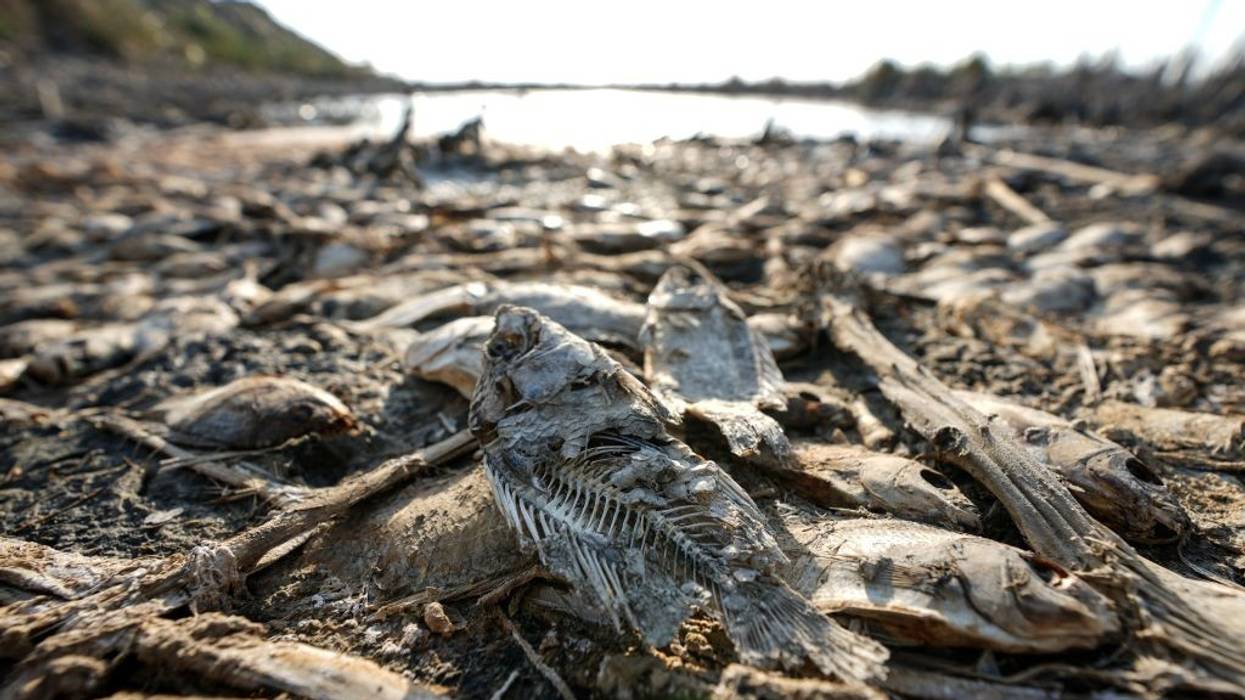
Still, Tikrit fell on April 15 and, historically speaking, that double-crossing of the Tigris was a small triumph for American forces. After all, that wide, deep, swift-flowing waterway had traditionally posed logistical problems for any military force. It had, in fact, done so throughout recorded history, proving a daunting barrier for the militaries of Nebuchadnezzar II of Babylon and the Achaemenid Cyrus the Great, for Alexander the Great and Roman Emperor Justinian, for the Mongols and the Safavid Iranians, for imperial British forces and finally General John H. Kelly. However, just as Kelly’s stature was diminished by his later collaboration with America’s only openly autocratic president, so, too, in this century the Tigris has been diminished in every sense and all too abruptly. No longer what the Kurds once called the Ava Mezin, “the Great Water,” it is now a shadow of its former self.
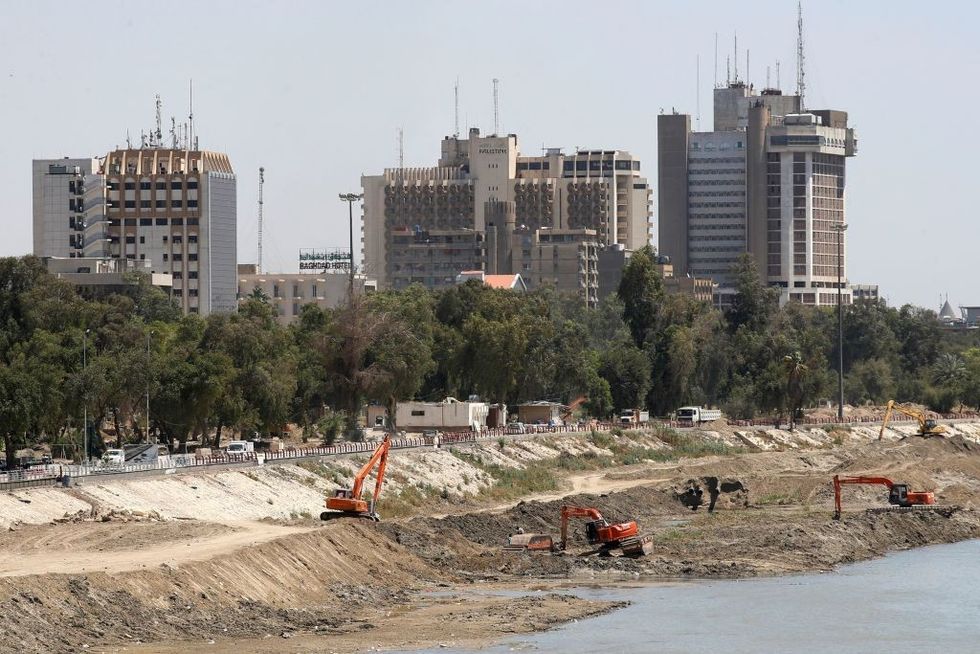
A picture taken on May 1, 2023, shows excavators working on the banks of the Tigris River in Baghdad, which is experiencing drought-induced drop in the water levels.
(Photo: Ahmad al-Rubaye/AFP via Getty Images)
Thanks at least in part to human-caused climate change, the Tigris and its companion river, the Euphrates, on which Iraqis still so desperately depend, have seen alarmingly low water flow in recent years. As Iraqi posts on social media now regularly observe in horror, at certain places, if you stand on the banks of those once mighty bodies of water, you can see through to their riverbeds. You can even, Iraqis report, ford them on foot in some spots, a previously unheard-of phenomenon.
Those two rivers no longer pose the military obstacle they used to. They were once synonymous with Iraq. The very word Mesopotamia, the premodern way of referring to what we now call Iraq, means “between rivers” in Greek, a reference, of course, to the Tigris and the Euphrates. Climate change and the damming of those waters in neighboring upriver countries are expected to cause the flow of the Euphrates to decline by 30% and of the Tigris by a whopping 60% by 2099, which would be a death sentence for many Iraqis.
There was a deep irony that haunted the decision to invade Iraq to (so to speak) liberate its oil exports. After all, burning gasoline in cars causes the earth to heat up.
Twenty years ago, with President George W. Bush and Vice President Dick Cheney, two oil men and climate-change denialists, in the White House and new petroleum finds dwindling, it seemed like the most natural thing in the world for them to use the 9/11 horror as an excuse to commit “regime change” in Baghdad (which had no role in taking down the World Trade Center in New York and part of the Pentagon in Washington, D.C.). They could thereby, they thought, create a friendly puppet regime and lift the U.S. and U.N. sanctions then in place on the export of Iraqi petroleum, imposed as a punishment for dictator Saddam Hussein’s 1990 invasion of Kuwait.
There was a deep irony that haunted the decision to invade Iraq to (so to speak) liberate its oil exports. After all, burning gasoline in cars causes the earth to heat up, so the very black gold that both Saddam Hussein and George W. Bush coveted turned out to be a Pandora’s box of the worst sort. Remember, we now know that, in Washington’s “war on terror” in Iraq, Afghanistan, and elsewhere, the U.S. military emitted at least 400 million metric tons of heat-trapping carbon dioxide into the atmosphere. And mind you, that fit into a great tradition. Since the 18th century, the U.S. has put 400 billion—yes, billion!—metric tons of CO2 into that same atmosphere, or twice as much as any other country, which means it has a double responsibility to climate victims like those in Iraq.
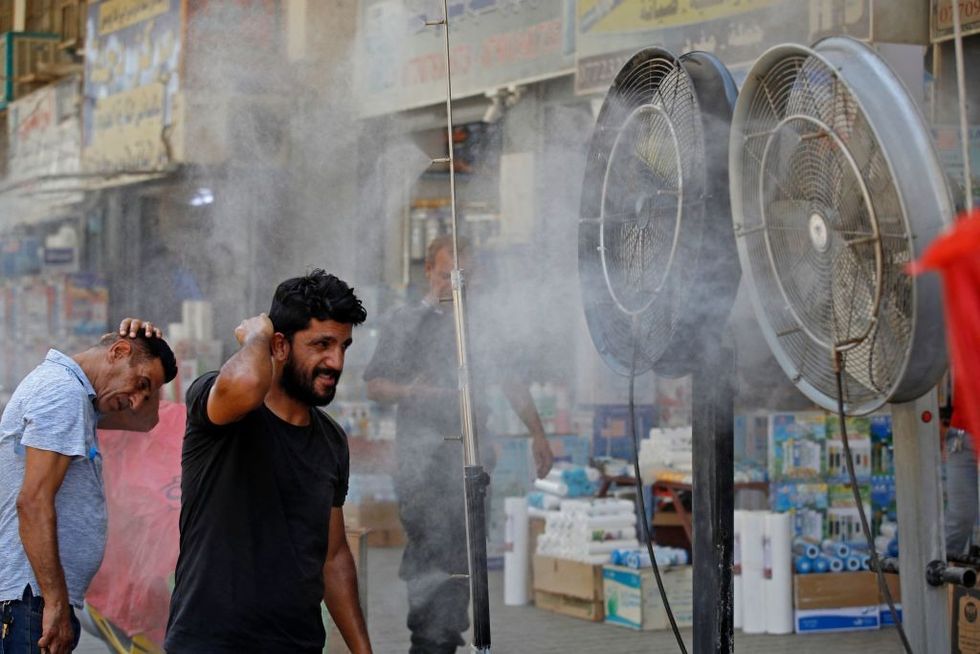
Iraqi men cool down in front of misting fans amid a heatwave in central Baghdad, on July 20, 2022.
(Photo: Ahmad al-Rubaye/AFP via Getty Images)
The United Nations has now declared oil-rich Iraq, the land on which the Bush administration bet the future of our own country, to be the fifth most vulnerable to climate breakdown among its 193 member states. Its future, the U.N. warns, will be one of “soaring temperatures, insufficient and diminishing rainfall, intensified droughts and water scarcity, frequent sand and dust storms, and flooding.” Sawa Lake, the “pearl of the south” in Muthanna governorate, has dried up, a victim of both the industrial overuse of aquifers and a climate-driven drought that has reduced precipitation by 30%.
“I’ve lived in Basra all my life. As a boy, the summer temperature never went much beyond 40°C (104°F) in summer. Today, it can surpass 50°C (122° F).”
Meanwhile, temperatures in that already hot land are now rising rapidly. As Adel Al-Attar, an Iraqi adviser to the International Committee of the Red Cross (ICRC) on water and habitat, describes it, “I’ve lived in Basra all my life. As a boy, the summer temperature never went much beyond 40°C (104°F) in summer. Today, it can surpass 50°C (122° F).” The climate statistics bear him out. As early as July 22, 2017, the temperature in Basra reached 54°C (129.2°F), among the highest ever recorded in the eastern hemisphere. Iraqi temperatures are, in fact, two to seven times higher than average global temperatures, and that means greater dryness of soil, increased evaporation from rivers and reservoirs, decreasing rainfall, and a distinct loss of biodiversity, not to mention rising human health threats like heat stroke.
The American war did direct harm to Iraq’s farmers, who make up 18% of the country’s labor force. And when it was over, they had to deal with staggering numbers of explosives left in the countryside, including landmines, unexploded ordnance, and improvised explosive devices, many of which have since been dangerously covered by desert sands as a climate-driven drought worsens. An article in the journal of the Royal Swedish Academy of Sciences observes that when it comes to military disruptions of waterways, “Displacement, explosions, and movement of heavy equipment increase dust that then settles on rivers and accumulates in reservoirs.” Worse yet, between 2014 and 2018 when the guerrillas of the Islamic State of Iraq and the Levant, whom the American war helped bring into existence, took over parts of northern and western Iraq, they blew up dams and practiced scorched-earth tactics that did $600 million worth of damage to the country’s hydraulic infrastructure. Had the U.S. never invaded, there would have been no ISIL.
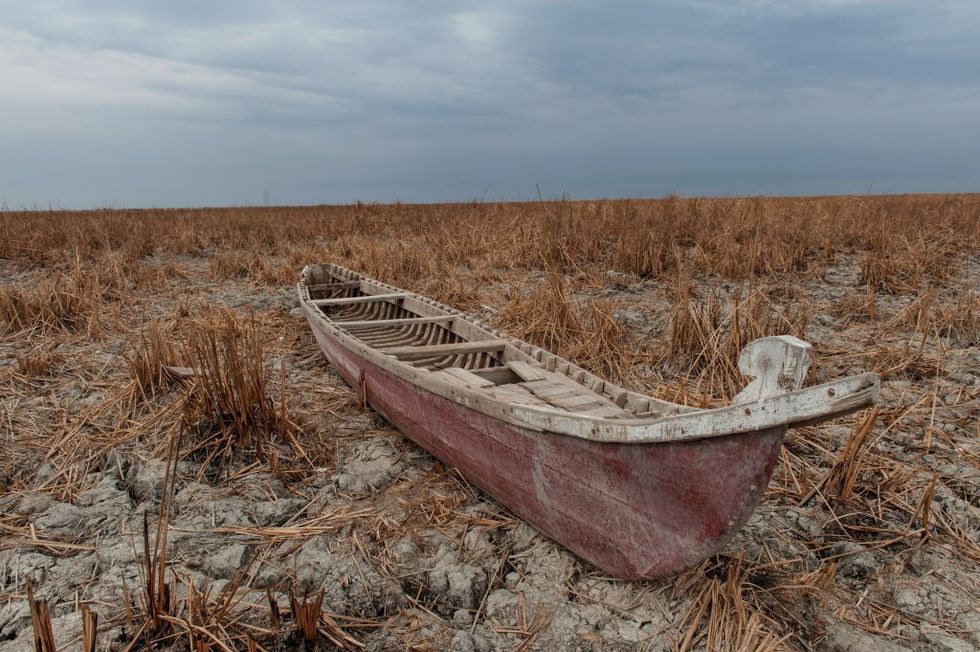
A traditional Marsh Arab boat seen laying idle on dry and cracked Marsh in the Central Marshes of Southern Iraq.
(Photo: John Wreford/SOPA Images/LightRocket via Getty Images)
As Al-Attar of the ICRC observed, “When there’s not enough rain or vegetation, the upper layers of earth become less compact, meaning the chance of dust or sandstorms increases. These weather events contribute to desertification. Fertile soil is turning into desert.” And that is part of Iraq’s post-invasion fate, which means ever more frequent dust- and sandstorms. In mid-June, the Iraqi government warned that particularly violent dust and thunderstorms in al-Anbar, Najaf, and Karbala provinces were uprooting ever more trees and flattening ever more farms. In late May in Kirkuk, a dust storm sent hundreds of Iraqis to the hospital. A year ago, the dust storms came so thick and fast, week after week, that visibility was often obscured in major cities and thousands were hospitalized with breathing problems. In the late 20th century, there already were, on average, 243 days annually with high particulate matter in the air. In the past 20 years, that number has reached 272. Climate scientists predict that it will hit 300 by 2050.
A little over half of Iraq’s farmed land relies on rain-fed agriculture, mostly in the north of the country. Iraqi journalist Sanar Hasan describes the impact of increasing drought and water scarcity in the northern province of Ninewah, where yields have shrunk considerably. Ninewah produced 5 million metric tons of wheat in 2020 but only 3.37 million in 2021 before plummeting by more than 50% to 1.34 million in 2022. Such declining yields pose a special problem in a world where wheat has only grown more expensive, thanks in part to the Russian war on Ukraine. Thousands of Iraqi farming families are being forced off their lands by water shortages. For example, Hasan quotes Yashue Yohanna, a Christian who worked all his life in agriculture but now can’t make ends meet, as saying, “When I leave the farm, what do you expect me to do next? I’m an old man. How will I afford the cost of living?”
Worse yet, southern Iraq’s marshlands are turning into classic dust bowls. The Environment Director of Maysan Governorate in southern Iraq recently announced that its al-Awda Marsh was 100% dried up.
“The drought ended our future. We have no hope, other than for a [government] job, which would be enough. Other work doesn’t fulfill our needs.”
The marshes at the confluence of the Tigris and Euphrates rivers have been storied for thousands of years. The world’s oldest epic, the Mesopotamian tale of Gilgamesh, is set there as it describes a hero journeying to an enchanted garden of the gods in search of immortality. (Echoes of that epic can be found in the biblical story of the garden of Eden.)
Our addiction to fossil fuels, however, has contributed significantly to the blighting of that very source of life and legend. It was there that marsh dwellers once hauled in a majority of the fish eaten by Iraqis, but the remaining wetlands are now experiencing increasingly high rates of evaporation. The Shatt al-Arab, created where the Tigris and Euphrates flow together into the Persian Gulf, has seen its water pressure drop, allowing an influx of salt water that has already destroyed 60,000 acres of farmland and some 30,000 trees.
Many of Iraq’s date palms have also died owing to war, neglect, soil salinization, and climate change. In the 1960s and 1970s, Iraq provided three-quarters of the world’s dates. Now, its date industry is tiny and on life support, while Marsh Arabs and southern farming families have been forced from their lands into cities where they have few of the skills needed to make a living. Journalist Ahmed Saeed and his colleagues at Reuters quote Hasan Moussa, a former fisherman who now drives a taxi, as saying, “The drought ended our future. We have no hope, other than for a [government] job, which would be enough. Other work doesn’t fulfill our needs.”
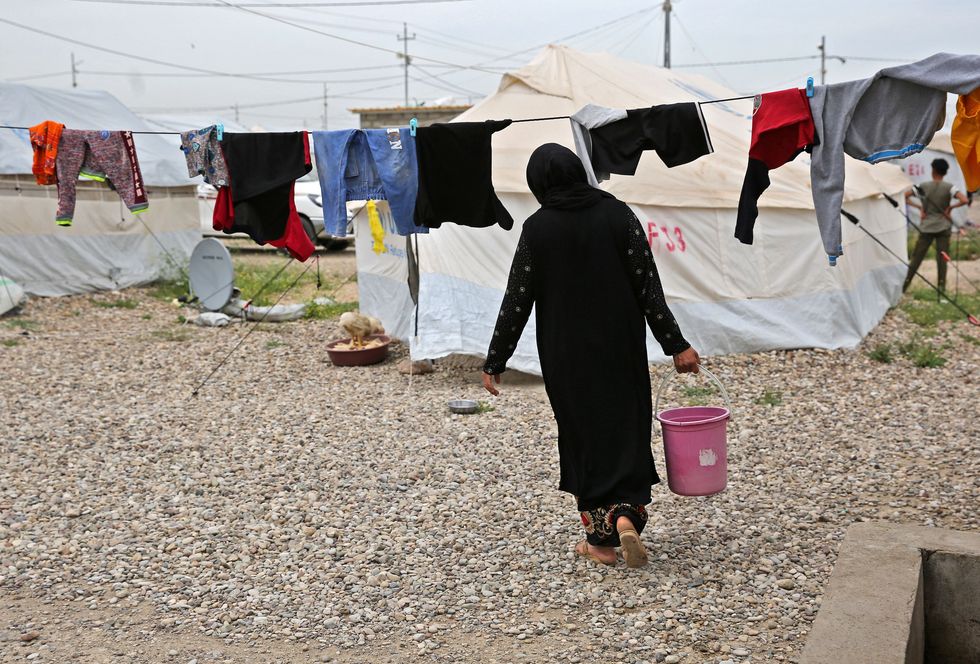
A woman walks with a pail of water at Laylan camp for the displaced about 25 kilometres east of the northern multi-ethnic Iraqi city of Kirkuk on May 9, 2019.
(Photo: Ahmad aL-Rubaye/AFP via Getty Images)
Although it was mostly men who planned out Iraq’s ruinous wars of the past half-century and set their sights on burning as much petroleum, coal, and natural gas as possible for profit and power, Iraq’s women have borne the brunt of the climate crisis. Few of them are in the formal job market, though many do work on farms. Because they are at home, they have often been given responsibility for providing water. Because of the present drought conditions, many women already spend at least three hours a day trying to get water from reservoirs and bring it home. Water foraging is becoming so difficult and time-consuming that some girls are dropping out of secondary school to focus on it.
At home, women are dependent on tap water, which is often contaminated. Men who work outside the home often gain access to water purified for Iraqi industry and its cities. As farms fail owing to drought, men are emigrating to those very cities for work, often leaving the women of the household in rural villages scrambling to raise enough food in arid circumstances to feed themselves and their children.
If, instead of invading Iraq, the American government had swung into action in the spring of 2003 to cut carbon dioxide output..., the emission of hundreds of billions of tons of CO2 might have been avoided.
Last fall, the International Organization for Migration at the United Nations estimated that 62,000 Iraqis living in the center and the south of the country had been displaced from their homes by drought over the previous four years and anticipated that many more would follow. Just as people from Oklahoma fled to California in droves during the Dust Bowl of the 1930s, so now Iraqis are facing the prospect of dealing with their own dustbowl. It is, however, unlikely to be a mere episode like the American one. Instead, it looms as the long-term fate of their country.
If, instead of invading Iraq, the American government had swung into action in the spring of 2003 to cut carbon dioxide output, as one of our foremost climate scientists, Michael Mann, was suggesting at the time, the emission of hundreds of billions of tons of CO2 might have been avoided. Humanity would have had an extra two decades to make the transition to a zero-carbon world. In the end, after all, the stakes are as high for Americans as they are for Iraqis.
If humanity doesn’t reach zero carbon emissions by 2050, we are likely to outrun our “carbon budget,” the ocean’s ability to absorb CO2, and the climate will undoubtedly go chaotic. What has already happened in Iraq, not to speak of the dire climate impacts that have recently left Canada constantly aflame, U.S. cities smoking, and Texans broiling in a record fashion would then seem like child’s play.
At that point, in short, we would have invaded ourselves.
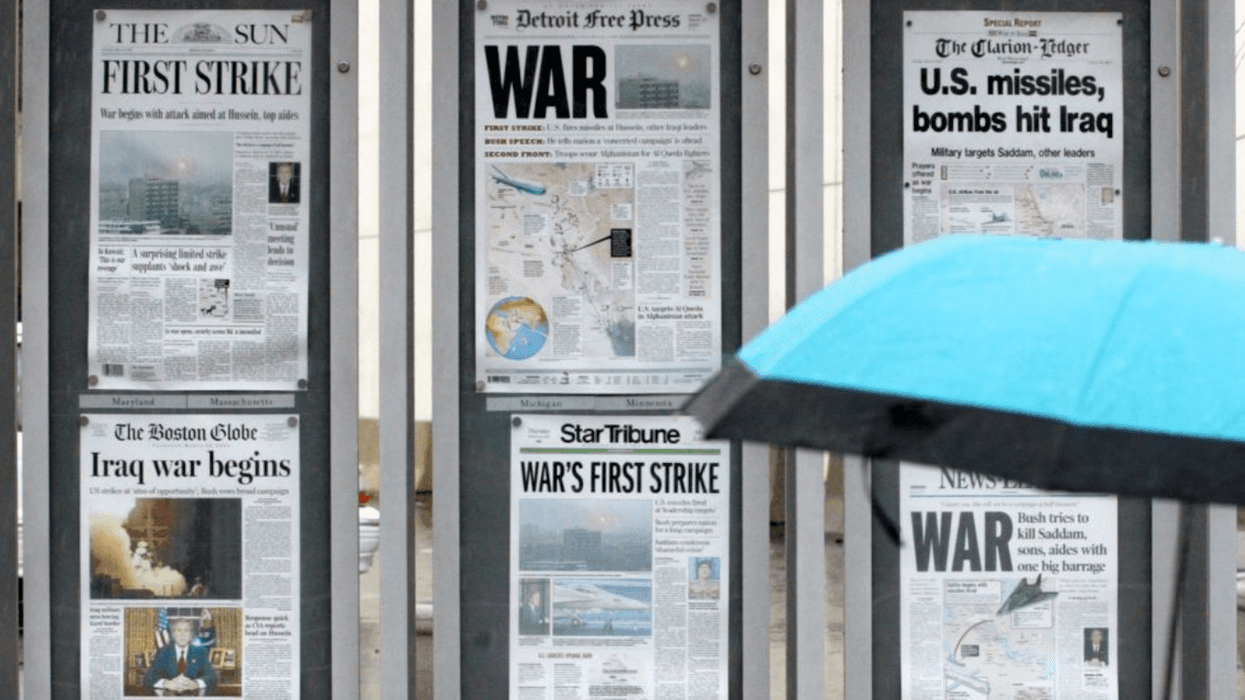
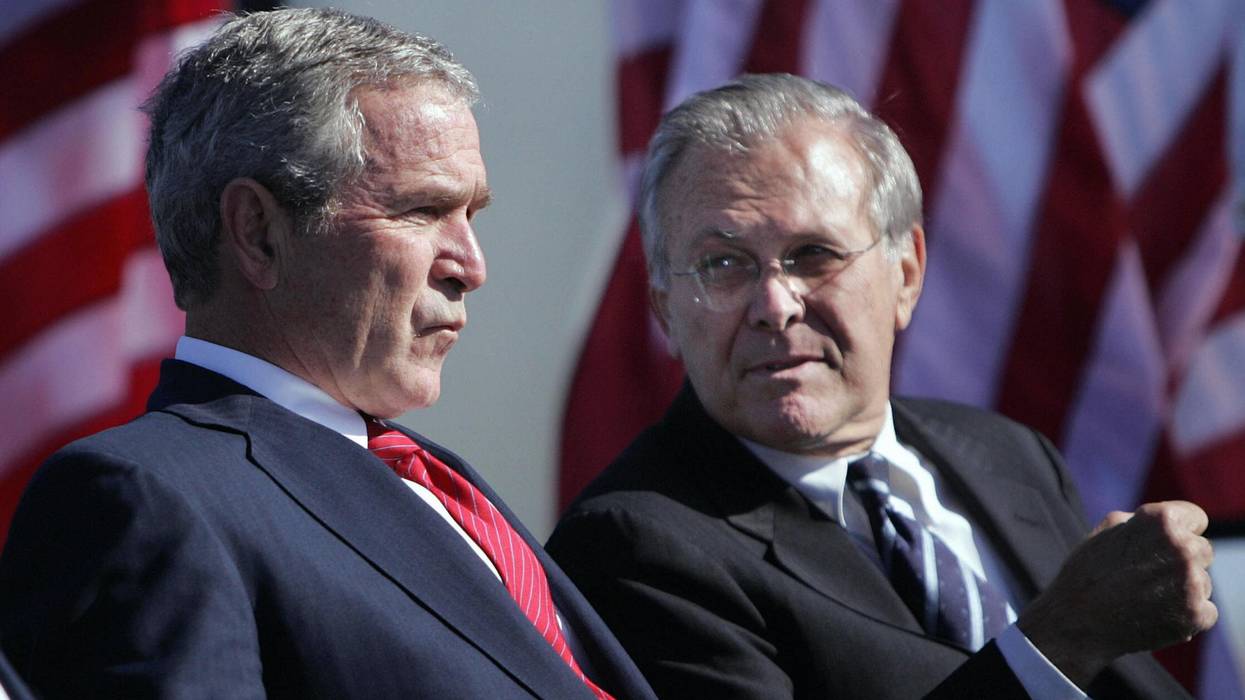
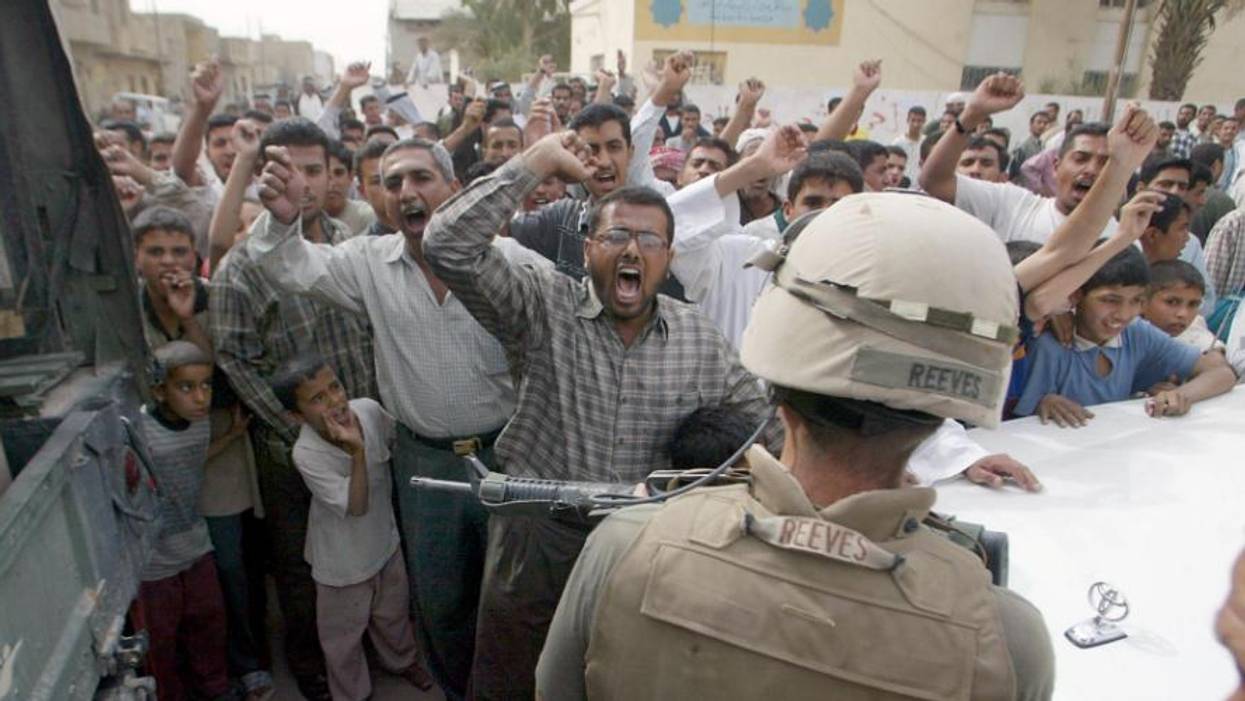


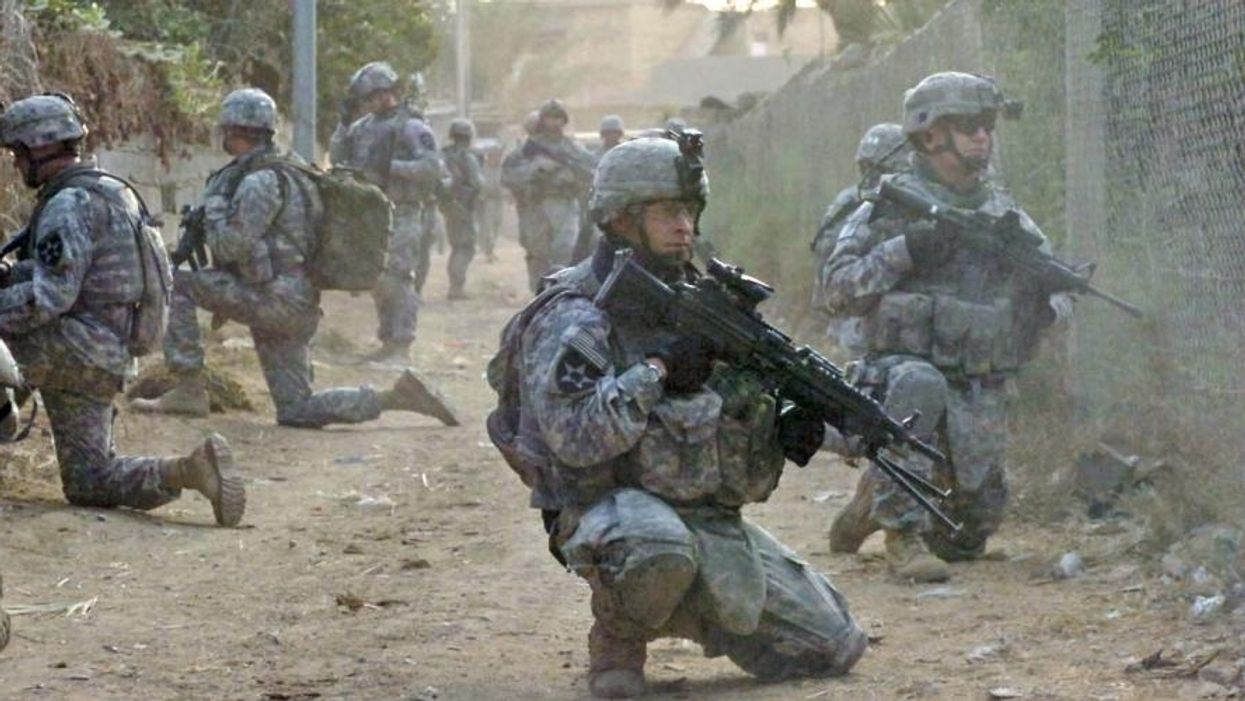

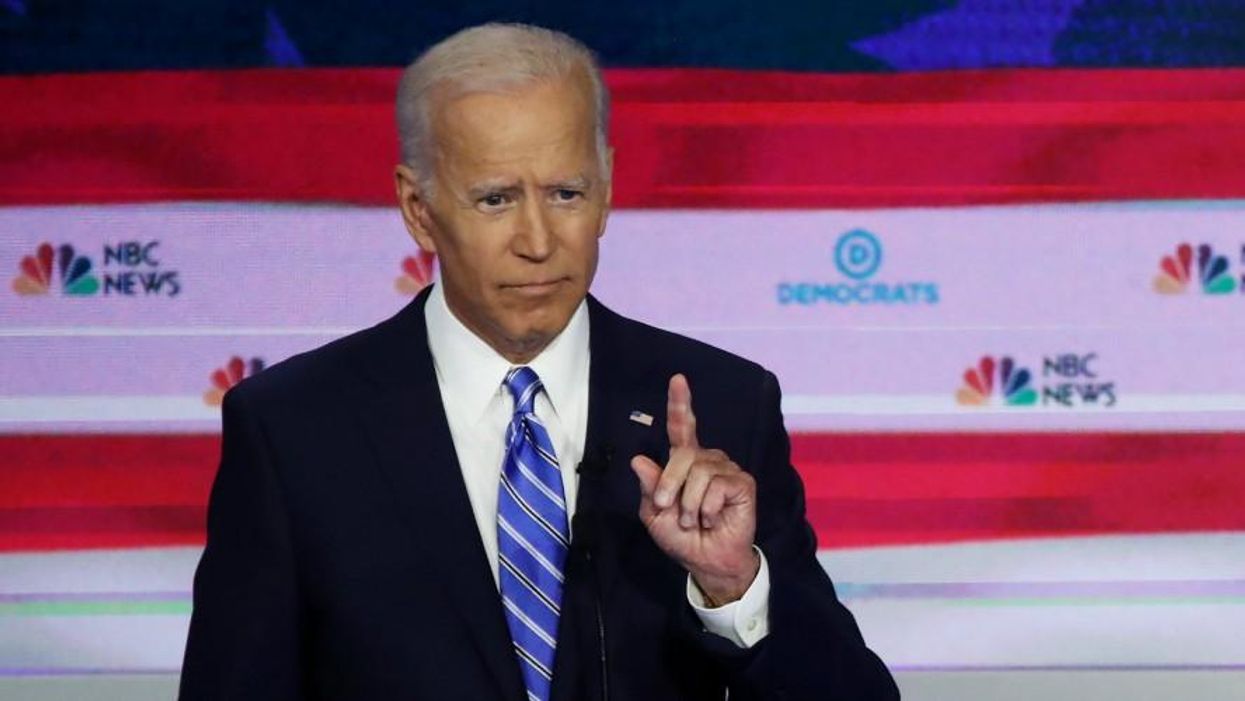
As the Trump administration's saber-rattling toward Iran threatens another disastrous war in the Middle East, foreign policy has gained newfound focus in the 2020 presidential race. And former Vice President Joe Biden's 2002 vote in favor of the Iraq War leaves him with a particularly glaring vulnerability.
Biden's vote had already become a sticking point in the race before President Trump began his provocations toward Iran in earnest. Bernie Sanders has used Biden's record to draw a contrast with his own opposition to the Iraq War. Rep. Seth Moulton, another 2020 candidate, has called for Biden to admit he was wrong for casting the vote. And a recent POLITICO/Morning Consult poll showed more than 40 percent of respondents between 18 and 29 were less likely to back Biden because of it.
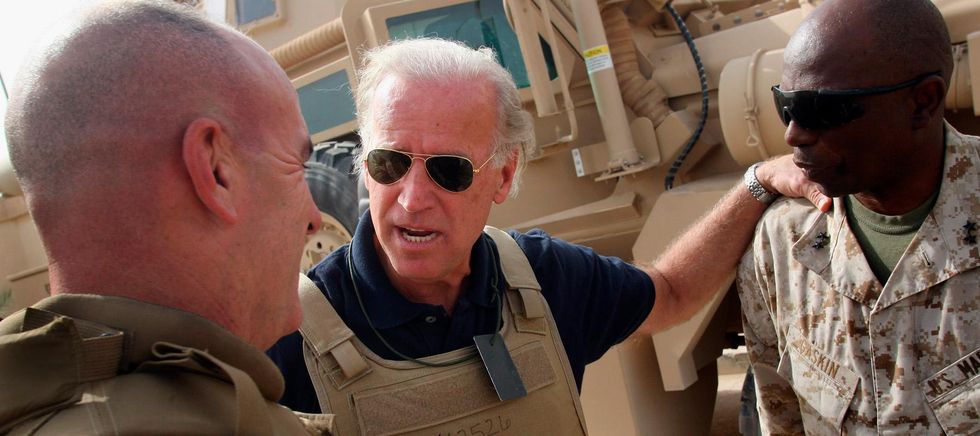
From dove to hawk
Biden hadn't always been a hawk on Iraq. He had voted against the first Gulf War in 1991, though even his opposition to that war had been tepid at best, focused mainly on badgering George H.W. Bush into having Congress rubber stamp a war Bush had already made clear he was intent on waging with or without its approval.
In 1996 Biden criticized Republican claims that then-President Bill Clinton wasn't being tough enough on Iraq amid calls to remove Saddam Hussein from power, labeling an ouster "not a doable policy." Before the War on Terror drove U.S. foreign policy, Biden criticized Bush during his first year in office for the then-president's hawkish position on missile defense.
September 11th changed all this. Only one day before the attacks, at a speech in front of the National Press Club, Biden had called Bush's foreign policy ideas "absolute lunacy" and charged that his missile defense system proposal would "begin a news arms race." But the nearly 3,000 Americans who were killed on U.S. soil that day upended the political consensus. Bush's approval rating shot up to a historic 90 percent, and any elected officials who failed to match the president's zeal for military retribution became vulnerable to accusations of being "soft on terror."
"Count me in the 90 percent," Biden said in the weeks after the attack. There was "total cohesion," he said, between Democrats and Republicans in the challenges ahead. "There is no daylight between us."
In November 2002, just a little over a year following the World Trade Center attacks, Biden faced re-election amidst a political climate in which the Bush administration had incited nationalist sentiment over the issue of terrorism. In October 2001, Biden had been criticized in Delaware newspapers for comments that were perceived as potentially weak, warning that the United States could be seen as a "high-tech bully" if it failed to put boots on the ground in Afghanistan and instead relied on a protracted bombing campaign to oust the Taliban.
Consequently, Biden, then deemed by the New Republic to be the Democratic Party's "de facto spokesman on the war against terrorism," quickly became a close ally of the Bush administration in its prosecution of that war. The White House installed a special secure phone line to Biden's home, and he and three other members of Congress met privately with Bush in October 2001 to come up with a positive public relations message for the war in Afghanistan.
Biden's stance on Iraq soon began to change, too. In November 2001, Biden had batted away suggestions of regime change, saying the United States should defeat al-Qaeda and Osama bin Laden before thinking about other targets. By February 2002, he appeared to have creaked opened the door to the possibility of an invasion.
"If Saddam Hussein is still there five years from now, we are in big trouble," he told a crowd of 400 Delaware National Guard officers that month at the annual Officers Call event.
"It would be unrealistic, if not downright foolish, to believe we can claim victory in the war on terrorism if Saddam is still in power," he said around the same time, echoing the language of hawks like Connecticut Sen. Joe Lieberman.
Biden soon developed the position he would hold for the following 13 months leading into Bush's March 2003 invasion of Iraq: While the Bush administration was entirely justified in its plans to remove Hussein from power in Iraq, it had to do a better job of selling the inevitable war to the U.S. public and the international community.
"There is overwhelming support for the proposition that Saddam Hussein should be removed from power," he said in March 2002, while noting that divisions remained about how exactly that would be done. If the administration wanted his support, Biden continued, they would have to make "a complete and thorough case" that Iraq possessed weapons of mass destruction (WMDs) and to outline what they envisioned a post-Hussein Iraq would look like.
It was a stance well-calibrated for the political climate. Biden could continue to point to disagreements with the administration for liberal audiences, even if they were merely procedural, while putting his weight behind the ultimate goal of war with Iraq. At the same time, Biden's apparent criticisms doubled as advice for the administration: If you want buy-in from liberals for your war, this is what you'll have to do.
"I don't know a single informed person who is suggesting you can take down Saddam and not be prepared to stay for two, four, five years to give the country a chance to be held together," Biden recounted telling Bush privately in June 2002. It was a talking point he would repeat often over the next year, that regime change in Iraq was the correct thing to do, but would require a long-term commitment from the United States after Hussein's removal.
Setting the ground rules
During frequent television appearances, Biden didn't just insist on the necessity of removing Hussein from power, but appeared to signal to the Bush administration on what grounds it could safely seek military action against Iraq.
When Bush's directive to the CIA to step up support for Iraqi opposition groups and even possibly capture and kill Hussein was leaked to the Washington Post in June, Biden gave it his approval. Asked on CBS's "Face the Nation" if the plan gave him any pause, Biden replied: "Only if it doesn't work."
"If the covert action doesn't work, we'd better be prepared to move forward with another action, an overt action, and it seems to me that we can't afford to miss," he added.
"Prominent Democrats endorse administration plan to remove Iraqi leader from power," ran the subsequent Associated Press headline.
A month later in July, Biden affirmed that Congress would back Bush in a pre-emptive strike on Iraq in the event of a "clear and present danger" and if "the president can make the case that we're about to be attacked."
Asked on "Fox News Sunday" the same month if a discovery that Hussein was in league with al-Qaeda would justify an invasion, Biden replied: "If he can prove that, yes, he would have the authority in my view."
"And this will be the first time ever in the history of the United States of America that we have essentially invaded another country preemptively to take out a leadership, I think justifiably given the case being made."
These themes would be used by the Bush administration in the months ahead to sell the war to the American public. The non-existent ties between Hussein and al-Qaeda became one of the most high-profile talking points for the war's proponents. And the Bush administration would publicize the supposedly imminent threat Hussein posed to the United States, including then-National Security Advisor Condoleezza Rice's infamous September declaration that "we don't want the smoking gun to be a mushroom cloud."
By July Biden appeared to rule out a diplomatic solution to the conflict. "Dialogue with Saddam is useless," he said.
Not a skeptic to be heard
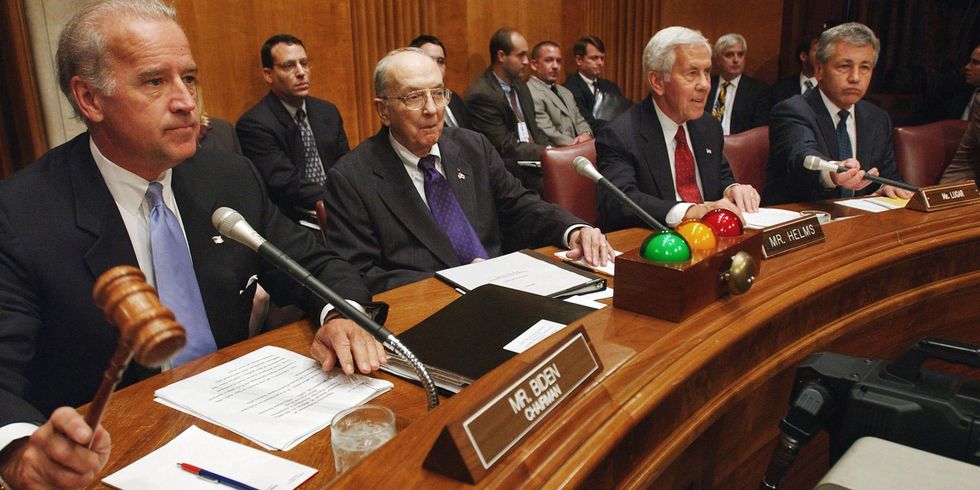
It was also in July 2002 that Biden carried out one of his most consequential actions in the lead-up to the Iraq War, when he held several days of congressional hearings about the then-potential invasion.
Biden stressed the hearings weren't meant to antagonize the White House. Rather, as he explained, they would inform the American people about the stakes of the conflict and the logistical issues involved in waging it.
At the time, the pro-war stance shared by the administration, much of the press, and Democrats like Biden was by no means unanimous. Many of the United States' closest allies in Europe (apart from Tony Blair's British government) were wary of the war drums beating from Washington, as were many Arab states. In July, King Abdullah II of Jordan, a U.S. ally in the Middle East, called the idea of an invasion "somewhat ludicrous."
The same month, the Houston Chronicle reported, based on interviews with anonymous officials, that a number of senior military officials, including members of the joint chiefs of staff, were in disagreement with the White House's drive for war with Iraq, and believed that Hussein posed no immediate threat to the United States. The day before the hearings, Scott Ritter, the former chief weapons inspector at the UN, cautioned that it was far from "inevitable" that Iraq had restarted its weapons program, and warned that "Biden's open embrace of regime removal in Baghdad" threatened to make the hearings "devolve into a political cover" for Congress to authorize Bush's war.
Yet as Stephen Zunes reported for The Progressive in April 2019, none of these views were aired at Biden's hearings, which opened with Biden stating that WMDs "must be dislodged from Saddam, or Saddam must be dislodged from power," and that "if we wait for the danger from Saddam to become clear, it could be too late." Ritter himself was never invited to testify.
Neither were other experts critical of the Bush narrative on Iraq, including Rolf Ekeus, the former executive chairman of the United Nations Special Commission, the inspection regime set up after the Gulf War to deal with WMDs, and former UN Assistant Secretary General Hans Von Sponeck, who complained that he was "very agitated by the deliberate distortions and misrepresentations" that made it "look to the average person in the U.S. as if Iraq is a threat to their security." According to Biden, Bush later thanked him for the hearings.
By Zunes' count, none of the 18 witnesses who were called objected to the idea that Hussein had WMDs, and all three witnesses who testified on the subject of al-Qaeda claimed the organization received direct support from Iraq--the very red line Biden had said would give Bush the authority to invade the country. Out of the 12 witnesses who discussed an invasion, half were in favor and only two opposed. Biden himself said throughout the hearings that Iraq was a national security threat.
It was largely up to Republicans on the committee--namely Lincoln Chafee and Chuck Hagel--to voice skepticism about a war effort. Ritter accused Biden and other members of congress of having "preordained a conclusion that seeks to remove Saddam Hussein from power regardless of the facts." Indeed, on the day of the hearings, Biden had co-authored a New York Times op-ed suggesting that continued "containment" of Hussein "raises the risk that Mr. Hussein will play cat-and-mouse with inspectors while building more weapons," and that "if we wait for the danger to become clear and present, it may be too late."
Having given a platform to pro-war talking points, Biden then hit the talk show circuit to cite the lopsided testimony he himself had arranged in order to argue for war. Determining Hussein's intentions was "like reading the entrails of goats," Biden told NBC's "Meet the Press," and what mattered more was Hussein's ability to use WMDs, whatever those intentions might be. He pointed to testimony in the July hearings to argue it was clear that Iraq had such weapons.
"We have no choice but to eliminate the threat," he said. "This is a guy who's an extreme danger to the world."
While the mainstream press featured few skeptical and anti-war voices at the time, a number of them assailed Biden for going along with the Bush administration.
"Biden apparently believes that he fulfills the constitutional function of advise and consent by merely being the cheerleader for the administration's rising chorus demanding war with Iraq," wrote Stanley Kutler in the Milwaukee Journal Sentinel. "When and how are the only questions in his repertoire."
"A course of moderation and deliberation"
By fall 2002, Bush appeared to have heeded Biden's frequent exhortations for how to sell the war.
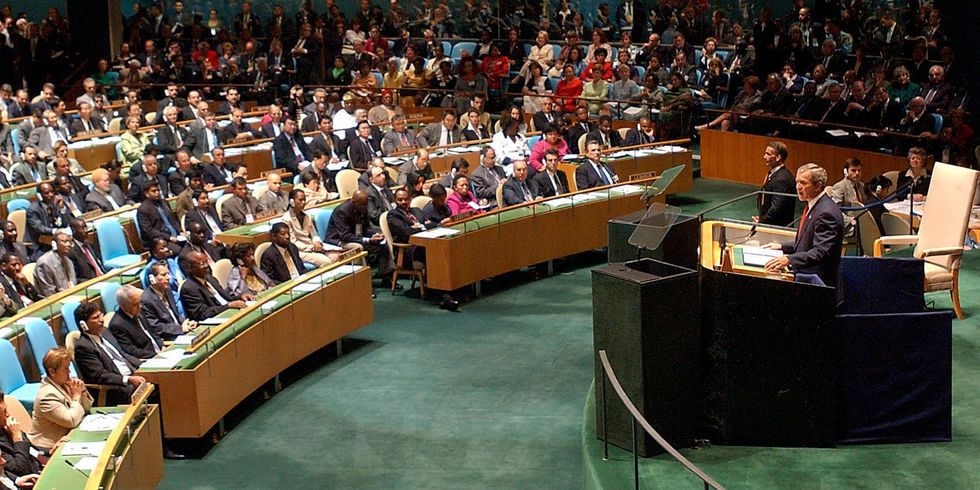
On September 12, almost a year to the day of the terrorist attacks that had sparked the march to war, Bush went before the UN to make a case for an invasion directly to the international community. Biden praised him for doing "a very good job" in making that case with a "brilliant" speech, and again stressed that "this is the world's fight," though cautioning that "the worst option is going it alone, but it is an option."
That September, Bush also finally asked Congress for a war authorization. While the president backed an expansive resolution in the House, Biden and fellow Foreign Relations Committee member Richard Lugar (R-Ind.) put forward their own rival resolution in the Senate that scaled back some of the House version's more alarming language and stressed the themes Biden had been articulating for the better part of a year. The Senate resolution limited the use of force to Iraq, made dismantling WMDs the primary justification for war, and stressed the importance of international support (though reserving the right to act unilaterally if the UN Security Council moved too slowly).
"We are trying to give the president the power that he needs and get a large vote," Biden explained.
Bush quickly routed Biden by making a compromise with Democratic House Minority Leader Dick Gephardt that swung momentum behind the House resolution. Deciding it was too late, and that there was no way of stopping its passage, Biden simply resigned himself to the compromise House resolution.
"In this place, everybody's pretty practical at the end of the day," he said.
Bush ultimately won over Biden by incorporating several of his suggestions into the final resolution and a speech he gave on October 7, 2002, in which he painted Iraq as a "grave threat to peace" creating an "arsenal of terror." He had "made a compelling case," said Biden, who was "very pleased with his rationale that he laid out."
While Biden reportedly wavered at the last moment on his promise to cast his vote, he ultimately fell in line, arguing the resolution would "give the president the kind of momentum he needs" to get Security Council backing. On October 11, Biden was one of 77 senators who voted to give Bush the authorization to wage war on Iraq, joining fellow Democrats such as Hillary Clinton, Chuck Schumer, Harry Reid and Dianne Feinstein. Twenty-one Democratic senators, including Dick Durbin, Ron Wyden and Patrick Leahy, voted against it.
"At each pivotal moment, [President Bush] has chosen a course of moderation and deliberation," Biden said on the Senate floor. "I believe he will continue to do so ... the president has made it clear that war is neither imminent nor inevitable."
A month later, Biden sailed to a sixth term to the Senate with 58 percent of the vote.
"Powerful and irrefutable"
Biden wasn't as eager to tout his leading role in the lead-up to the Iraq War in front of all audiences.
On November 11, 2002, Biden gave a speech at a meeting of the Trotter Group, an organization of African-American columnists. Perhaps owing to strong black opposition to the war, including the NAACP board's October 28, 2002, adoption of a resolution opposing the invasion, Biden sounded very different notes in front of the audience. He denied there was a direct link between Hussein and al-Qaeda ("I don't consider the war on Iraq the war on terror") and struck a less hawkish note ("My hope is that we don't need to go into Iraq").
After chairing hearings filled with pro-war testimony, Biden told the Trotter Group crowd that "the guys who have to fight this war don't think it's a good idea," and that doing so would be "the dumbest thing in the world." Discussing the war authorization he had voted for, he claimed that Republicans had taken "something that nobody, including the president, believes is an imminent danger and moved it up in the election cycle," and that he reluctantly supported the final resolution in order to give then-Secretary of State Colin Powell leverage to get a resolution out of the UN that would slow the administration's march to war.
Yet even as he painted himself as a war opponent, Biden's role in making the war happen wasn't finished.
In December 2002, Biden embarked on a trip to Germany and the Middle East with Republican Sen. Chuck Hagel to cobble together a coalition for the impending war. He first flew to Germany to meet with an Iraqi resistance leader, then headed to Jordan to meet with its monarch, before stopping in Israel and Qatar. The Delaware Republican Party sent him its best wishes.
"We wish the senator good luck and hope he continues to support the president on foreign-policy matters," its chairman said.
At one point, Biden spoke to the Kurd Parliament in Kurdish-controlled northern Iraq, carved out in the wake of the first Gulf War. Biden made clear to the Kurds, longtime opponents of Hussein's regime, that the United States had their back.
"We will stand with you in your effort to build a united Iraq," he told them, adding that "the mountains are not your only friends," playing off a local saying.
As Colin Powell prepared to present supposed evidence of Iraq's WMD program to the UN in February--a factually flawed address that Powell two years later would call a "blot" on his record--Biden hyped the presentation to the press, saying the administration "has evidence now that can change people's minds."
"I know there's enough circumstantial evidence that if this were a jury trial, I could convict you," he said. After Powell's address, Biden called his case "very powerful and I think irrefutable," and told him, "I am proud to be associated with you."
At the same time, Biden spent much of the rest of the month leading up to invasion painting himself as its opponent. He criticized Bush for everything but the actual decision to remove Hussein: for failing to make a sufficiently strong case to the public, for not securing more international buy-in for the invasion, for keeping Congress out of the loop and for grossly lackluster planning for postwar Iraq.
"As every hour goes by, I think the chance of war is increasing," he said in early March, five months after voting to give Bush the power to invade Iraq. "I was hoping it wasn't, hoping there was a shot at doing this peacefully, but that looks slimmer and slimmer."
Yet even after Bush failed to secure the international cooperation Biden had spent months insisting was necessary, the lack of support wasn't enough to convince Biden to abandon his support. As Bush issued an ultimatum to Hussein on March 17--leave or be invaded--Biden was behind him.
"I support the president," he said after meeting with Bush and other officials before the ultimatum. "Diplomacy over avoiding war is dead. ... I do not see any alternative. It is not as if we can back away now."
Biden portrayed himself as someone who had been powerless to stop the conflict.
"A lot of Americans, myself included, are really concerned about how we got to this stage and about all the lost opportunities for diplomacy," he said. "But we are where we are. ... Let loose the dogs of war. I'm confident we will win." He and the rest of the Democrats voted to pass a Senate resolution 99-0 supporting Bush and commending the troops.
Months after the war was launched and Hussein was deposed, any reservations Biden claimed to have had about the war appeared to melt away.
"I, for one, thought we should have gone in Iraq," he told CNN in June 2003, while noting that not all Democrats had been as enthusiastic about invading the country.
With the much-ballyhooed WMDs failing to materialize, Biden cast himself as a skeptic about the administration's claims about their existence.
"I also said at the time, as far back as August, that I thought the administration was exaggerating the threat of weapons of mass destruction," he told CNN
During an appearance on "Fox News Sunday" later that month, he told host Tony Snow that he had never believed the Bush administration's rhetoric on the issue, and that it had erred in exaggerating the threat, as there was sufficient grounds to invade Iraq based on the weapons it was reported to have in 1998.
"So you think, looking back on it, still, that it was a just war, in your opinion?" asked Snow.
"Oh, I do think it was a just war," said Biden.
After playing a clip of then-presidential candidate Howard Dean boasting of his opposition to the war even at the height of its popularity, Snow asked Biden if Dean's position should be the consensus view of the Democratic Party.
"No," Biden flatly replied.
Even as the war effort rapidly went awry in the months that followed, with U.S. soldier deaths continuing to climb after major combat operations were declared over on May 1 and terrorist attacks becoming a regular feature of Iraqi life, Biden continued to insist that war had been the right course of action.
"I voted to go into Iraq, and I'd vote to do it again," he said at a July 2003 hearing.
As growing numbers of Democrats, and even members of the general public, turned against the war, Biden rebuked them, implicitly and explicitly.
"In my view, anyone who can't acknowledge that the world is better off without [Hussein] is out of touch," he said two days later.
"Contrary to what some in my party might think, Iraq was a problem that had to be dealt with sooner rather than later," he insisted.
An increasingly lonely voice in a party that would soon make common cause with the growing anti-war movement, Biden continued to back Bush.
"The president made [the case against Saddam] well," he concluded on July 31. "I commend the president."
No regrets
In the eyes of the public, a vote for the resolution that gave Bush the authority to wage war on Iraq is enough to cast serious doubt on a candidate's judgment, as Hillary Clinton learned in 2016. But the fact is, Joe Biden did a lot more than cast a vote.
As an experienced and respected voice on foreign policy, a powerful Democrat, and someone widely perceived as a dove due to his opposition to the Vietnam war, Biden's backing of regime change in Iraq was crucial to Bush's effort of selling the public on the war. Biden's insistence that Hussein posed a serious threat to the United States, possessed WMDs and needed to be removed from power helped create momentum for the rising pro-war campaign. And as chair of the Senate Foreign Relations Committee, rather than question the prominent voices of doubt, including senior members of the U.S. military, Biden stacked his Iraq hearings with voices in agreement with Bush's fallacious case for war.
Hillary Clinton's hawkishness--including her vote for the Iraq war--was one of several factors that likely contributed to her 2016 loss to Donald Trump in key traditional Democratic states. But beyond arguments about electability, the next president will inherit a volatile world on the brink of several different conflicts, including a possible showdown with Iran. When voters choose the next Democratic nominee, they'll have to decide whether someone who helped lead the march to war in Iraq is really the best person to take on Trump--and guide U.S. foreign policy as president.