

SUBSCRIBE TO OUR FREE NEWSLETTER
Daily news & progressive opinion—funded by the people, not the corporations—delivered straight to your inbox.
5
#000000
#FFFFFF
To donate by check, phone, or other method, see our More Ways to Give page.
Daily news & progressive opinion—funded by the people, not the corporations—delivered straight to your inbox.

"The only reason" to take the rules off the books now, said one critic, "is to score points with broadband monopolies and their lobbyists, who've fought against essential and popular safeguards for the past two decades straight."
The advocacy group Free Press on Friday blasted U.S. President Donald Trump's Federal Communications Commission chief for an order that rips net neutrality rules off the books, without any time for public comment, following an unfavorable court ruling.
A panel from the U.S. Court of Appeals for the 6th Circuit ruled in January that broadband is an "information service" instead of a "telecommunications service" under federal law, and the FCC did not have the authority to prohibit internet service providers (ISPs) from creating online "fast lanes" and blocking or throttling web content.
Trump-appointed FCC Chair Brendan Carr said in a Friday statement that as part of his "Delete, Delete, Delete" initiative, "we're continuing to clean house at the FCC, working to identify and eliminate rules that no longer serve a purpose, have been on our books for decades, and have no place in the current Code of Federal Regulations."
"Today's action is just the latest step the FCC is taking to follow the Trump administration's effort to usher in prosperity through deregulation," he said of the order that scraps the net neutrality rules. "And it's just one of many, with more on the horizon, so stay tuned."
Responding in a lengthy statement, Free Press vice president of policy and general counsel Matt Wood said that "the FCC's so-called deletion today is little more than political grandstanding. It's true that the rules in question were first stayed by the 6th Circuit and then struck down by that appellate court—in a poorly reasoned opinion. So today's bookkeeping maneuver changes very little in reality."
"What's sad about it is Brendan Carr, as usual, prioritizing political theater and ideological obeisance over actual legal reasoning and policy impacts," Wood continued. "There's no need to delete currently inoperative rules, much less to announce it in a summer Friday order. The only reason to do that is to score points with broadband monopolies and their lobbyists, who've fought against essential and popular safeguards for the past two decades straight."
"It also shows subservience to Elon Musk's incredibly destructive government-by-chainsaw attitude—which seems to have outlived Musk himself in some corners of the Trump administration," he argued, referring to the tech billionaire who initially spearheaded the president's Department of Government Efficiency but has since had a public breakup with Trump.
Wood noted that "the appeals process for this case has not even concluded yet, as Free Press and allies sought and got more time to consider our options at the Supreme Court."
"Today's FCC order doesn't impact either our ability to press the case there or our strategic considerations about whether to do so," he added. "It's little more than a premature housekeeping step, with Brendan Carr deciding to get out ahead of the Supreme Court in ways that someone with so-called regulatory humility might typically avoid."
The fight for net neutrality has been strongly influenced by Trump's time in office. During his first term, the FCC—led by the president's first chair, Ajit Pai—repealed the Obama administration's policies. Under former President Joe Biden, the agency voted to restore the rules, sparking a fresh legal battle with ISPs, which led to the appellate court's decision earlier this year.
Just like Tom Paine, and until the very end, Bob saw hope in the people who were rising up and demanding a future defined by their humanity, as opposed to corporate power.
Bob McChesney, who died on Tuesday at the age of 72, first introduced himself to me almost 30 years ago, on the set of a public television news program in Madison, Wisconsin. Bob was a distinguished University of Wisconsin professor who was gaining an international reputation for his groundbreaking analysis of the threat to democracy posed by corporate control of media. Raising his arguments in books, speeches, and frequent C-Span appearances, he was well on his way to becoming one of the great public intellectuals of his time. I was a young newspaper editor who had earned a slim measure of recognition for my advocacy on behalf of investigative journalism and press freedom.
The program was framed as a debate about the future of journalism. Bob was positioned as the doomsayer, warning about how media consolidation was killing journalism. I was expected to counter that the future was actually bright. As it turned out, neither of us wanted to follow the script. Instead of arguing, we both agreed that profit-obsessed corporations were destroying American journalism, and that this destruction would pose an ever more serious threat to American democracy.
It wasn’t a particularly satisfying exchange for our hosts that evening, but it was the beginning of a collaboration that would span three decades. Bob and I cowrote half a dozen books and dozens of articles, joined Bill Moyers for a series of PBS interviews that would examine threats to journalism and democracy, and did our best, with more allies than we could have imagined in those early days, to stir up a reform movement that recognized the crisis and endeavored to set the stage for media that serves people rather than corporate bottom lines.
Bob, with his remarkable intellect and even more remarkable capacity for communicating his vision of a media that served citizens rather than corporations, was always the driving force. His research and his insatiable curiosity helped him to see the future more clearly than any scholar of his generation, with such precision that Moyers would compare him to both Tom Paine and Paul Revere. As new political and societal challenges arose in an ever more chaotic moment for America and the world, Bob explained how they should be understood as fresh manifestations of an ancient danger: the concentration of power—in this case, the power of the media, in the hands of old-media CEOs and new tech oligarchs, all of whom cared more about commercial and entertainment strategies than democratic and social values.
Bob, with his remarkable intellect and even more remarkable capacity for communicating his vision of a media that served citizens rather than corporations, was always the driving force.
Bob took the “public” part of “public intellectual” seriously. You knew he wanted to swing into action when he’d say, “We need to put our heads together…” That was his call to write another book, organize another national conference on media reform, or rally another movement to defend the speak-truth-to-power journalism that the founders of the American experiment understood as the only sure footing for representative democracy.
Bob kept issuing the call, even as a series of health challenges slowed him down. He was still doing so a few days before his death following a year-long fight with cancer. His was a life fulfilled in the best sense of the word. He died a happy man, holding the hand of his beloved wife, Inger Stole, and reflecting on time spent with his daughters, Amy and Lucy.
Our last conversations recalled friends and colleagues who had answered his calls to save journalism and renew our democracy: Craig Aaron, Victor Pickard, Josh Silver, Kimberly Longey, Russell Newman, Derek Turner, Ben Scott, Joe Torres, Tim Karr, Matt Wood, Katrina vanden Heuvel, Michael Copps, Noam Chomsky, Amy Goodman, Bernie Sanders, Ralph Nader, the Rev. Jesse Jackson, and too many others to name. Bob loved scholarship, loved activism, and loved collaborating with people who made connections between the two—sharing writing credits with former students at UW-Madison and later at the University of Illinois at Urbana-Champaign, working with unions of media workers and, perhaps above all, strategizing with the team at Free Press, the media reform group he co-founded in 2003 to advocate for diversity in ownership, robust pubic media, net neutrality and always, always, democracy. Bob was frustrated by the oligarchical overreach now on display in the Washington of Donald Trump and Elon Musk—a development he had predicted with eerie accuracy. Yet he remained undaunted to the end, still spinning out fresh ideas for upending corporate control of media, getting Big Money out of politics, and ushering in a new era of freewheeling debate and popular democracy.
That was the essence of Robert Waterman McChesney. He was a globally respected communications scholar who was wholly welcome in the halls of academia, yet he was never satisfied working within an ivory tower. He was a rigorous researcher into the worst abuse of corporate and political establishments. Yet he refused to surrender his faith in the ability of people-powered movements to upend monarchs and oligarchs and, in the words of Tom Paine, “begin the world over again.”
Bob regarded Paine—the immigrant pamphleteer who rallied the people of his adopted country to dismiss King George III and the colonial enterprise, and who spent the rest of his life demanding that this new United States live up to the egalitarian promise of liberty and justice for all—as the essential founder of the American project. Like Paine, Bob believed that with information and encouragement, grassroots activists could carry Paine’s legacy forward into the 21st century. Countless people heeded his call.
“Bob McChesney was a brilliant scholar whose ideas and insights reached far beyond the classroom. He opened the eyes of a generation of academics, journalists, politicians, and activists—including mine—to how media structures and policies shape our broader politics and possibilities,” explained Craig Aaron, the co-CEO of Free Press. “While McChesney spent much of his career charting the problems of the media and the critical junctures that created our current crises, he believed fundamentally in the public’s ability to solve those problems and build a media system that serves people’s needs and sustains democracy. His ideas were bold and transformative, and he had little patience for tinkering around the edges. Rather than fighting over Washington’s narrow vision of what was possible, he always said—and Bob loved a good sports metaphor—that we needed to throw the puck down to the other end of the ice.”
Bob examined the relationship between media and democracy with scholarly seriousness. Yet he coupled that seriousness with a penchant not just for sports metaphors and references to rock-and-roll songs but spot-on cinematic analogies, which invited Americans to recognize the crisis. Speaking to Moyers about how America’s media policies were forged behind closed doors in Washington, by lobbyists and politicians, Bob succintly defined that process: “Pure corruption. This is really where Big Money crowds everything else out. The way to understand how policymakers make media in this country [is to watch] a great movie: The Godfather: Part II. There’s a scene early in the movie where all the American gangsters are on top of a hotel roof in Havana. It’s a classic scene featuring Hyman Roth and Michael Corleone. They’ve got a cake being wheeled out to them. And Hyman Roth is cutting up slices of the cake. The cake’s got the outline of Cuba on it, and they’re giving each gangster a slice of Cuba. And while he’s doing this, Hyman Roth’s [talking about how they can work with government to carve up Cuba in ways that make them all rich]. That’s how media policy is made in the United States.”
The accessibility of his speech—the way it turned something as potentially obscure as communications policy into a readily understandable issue—was Bob’s genius. He wanted to upend the money power and tip the balance toward systems that would empower working-class people—as opposed to billionaires—to shape the future of media: with strategies for giving citizens democracy vouchers that they could use to support independent media, and a host of other remedies. Like his friend Bernie Sanders, Bob believed it essential to have a media free enough from corporate influence to speak truth to economic and political power, boldly critique the excesses of capitalism, and raise the alarm against creeping oligarchy.
The accessibility of his speech—the way it turned something as potentially obscure as communications policy into a readily understandable issue—was Bob’s genius.
This was the premise that underpinned an academic career that saw Bob author or co-author almost 30 books—including the groundbreaking Rich Media, Poor Democracy, his 1999 manifesto on how the decay of journalism would lead to a collapse of democratic norms, and 2013’s Digital Disconnect, his essential assessment of the danger of allowing Silicon Valley billionaires to define online communications. Many of the same themes ran through examinations of the shuttering of newspapers by corporate conglomerates that left communities as news deserts, of the destructive influence of political advertising on the national discourse, and of the failure of political and media elites to bring citizens into debates about automation, machine learning, and artificial intelligence. Noam Chomsky, whose own work on the media’s manufacturing of consent had profoundly influenced Bob’s scholarship (along with that of Ben Bagdikian, the journalist who wrote The Media Democracy), became Bob’s most ardent champion. “Robert McChesney’s work has been of extraordinary importance,” explained Chomsky. “It should be read with care and concern by people who care about freedom and basic rights.”
Bob’s research—and the books, lectures and activism that extended from it—earned him Harvard’s Goldsmith Book Prize, the Kappa Tau Alpha Research Award, the Newspaper Guild’s Herbert Block Freedom Award (for “having done more for press freedom than anyone”), and the International Communications Association’s C. Edwin Baker Award for the Advancement of Scholarship on Media, Markets and Democracy. It also gained him a hearing from thoughtful members of Congress, the Federal Communications Commission, and the Federal Trade Commission. Even if they did not always follow his advice, progressive officials recognized the wisdom of his analysis and incorporated it into their work. That’s one of the reasons why, in 2009, Utne Reader named Bob as one of “50 visionaries who are changing your world.” Charles Lewis, the founder of the Center for Public Integrity, simply referred to Bob as “the conscience of the media in America.”
Bob’s last words to me, though they were a bit more labored due to his illness, were a repeat of his constant call to action: “Let’s put our heads together…”
Lewis wrote those words the better part of two decades ago. Bob remained that conscience, even as “media deserts” spread their arid path across America, as disinformation and misinformation overwhelmed the Internet, as propagandistic advertising warped our politics and as democratic expectations were undermined. It was all as he had predicted. But he was not inclined toward “I told you so” rejoinders.
Rather, Bob kept the faith that popular movements would push back against the decay, and the chaos, just as they had in the Progressive Era, the New Deal years, and the 1960s. “You’ve got to look in the mirror and understand that, if you act like change for the better is impossible, you guarantee it will be impossible,” he would say. “That’s the one decision each individual faces.”
Bob looked in that mirror confidently and courageously throughout a life of scholarship and activism. Some of our last conversations were about the huge crowds Bernie Sanders was attracting for his “Fighting Oligarchy” tour, and the thousands of Americans who have been showing up to challenge Republican members of Congress at town hall meetings. Just like Tom Paine, Bob saw fresh hope in the people who were rising up and demanding a future defined by their humanity, as opposed to corporate power. This might, he suggested, be the opening for a new surge in activism for journalism and democracy, a surge that might “begin the world over again.”
Bob’s last words to me, though they were a bit more labored due to his illness, were a repeat of his constant call to action: “Let’s put our heads together…” In other words, let’s make a plan. Let’s do something. That was his charge to those of us who cherished Bob McChesney’s mission and his spirit. We honor him best by accepting it.
The powerful telecom industry did what they always do when the FCC does anything good or important on behalf of consumer: They sued to overturn the rules.
Happy New Year to everyone but the U.S. Court of Appeals for the 6th Circuit.
On Thursday, this federal court in Cincinnati threw out the Federal Communication Commission’s Net Neutrality rules, rejecting the agency’s authority to protect broadband consumers and handing phone and cable companies a major victory just weeks before the Trump administration returns to power.
The ruling against the FCC by three Republican judges isn’t shocking, but their reasoning is shoddy, a mish-mash of tired industry claims paired with a willful misrepresentation of how the internet actually works.
As Matt Wood, an experienced telecommunications attorney and my colleague at Free Press, explains: “Beyond being a disappointing outcome, the 6th Circuit’s opinion is just plainly wrong at every level of analysis. The decision missed the point on everything from its granular textual analysis and understanding of the broader statutory context, to the court’s view of the legislative and agency history, all the way to its conception of Congress’s overarching policy concerns.”
Our job now is to channel the growing outrage over this appalling decision into the long-term changes we need to keep the internet safe, reliable, accessible, affordable and free from unlawful discrimination.
Under the leadership of Chairwoman Jessica Rosenworcel, the FCC moved in April 2024 to restore Net Neutrality and the essential consumer protections that rest under Title II of the Communications Act, which had been gutted under the first Trump administration. This was an all-too-rare example in Washington of a government agency doing what it’s supposed to do: Listening to the public and taking their side against the powerful companies that for far too long have captured and called the shots in D.C.
And the phone and cable industry did what they always do when the FCC does anything good or important: They sued to overturn the rules.
This time, however, the lawyers for the biggest phone and cable companies had two things working in their favor. First, they got lucky: They won the forum-shopping lottery and got their case moved outside of Washington, D.C., where previous rounds of the Net Neutrality fight had been decided.
Second, the Supreme Court handed down a ruling in June in the Loper Bright Enterprises vs. Raimondo case that overturned the so-called Chevron doctrine that gave deference to expert agencies in complex matters like environmental and telecommunications regulations.
Unfortunately, the lawyers representing massive companies like AT&T, Comcast and Verizon found an eager audience in Cincinnati for their debunked arguments.
Despite extensive legal and economic analysis provided by Free Press and our allies in the case and at oral arguments in October, the court ruled against the FCC and deemed internet access to be an “information service” largely free from FCC oversight.
In a post-Chevron world where courts no longer have to defer to expert agencies, we’ve replaced years of evidence and argument with revelations like this from Judge Griffin: “The existence of a fact or thought in one’s mind is not ‘information’ like 0s and 1s used by computers.”
In the short term, this decision will let the incoming Trump FCC abdicate its responsibility to protect internet users so it can focus on its new priority of threatening TV broadcasters and social-media sites to carry more pro-Trump views.
I’ll spare you the rest. This court’s warped decision scraps the common-sense rules the FCC restored in April. The result is that throughout most of the country, the most essential communications service of this century will be operating without any real government oversight, with no one to step in when companies rip you off or slow down your service.
This ruling is far out of step with the views of the American public, who overwhelmingly support real Net Neutrality and despise the cable companies. They’re tired of paying too much, and they hate being spied on when they surf (or talk, thanks Siri). Now they’ll have even less recourse to deal with unscrupulous and abusive business practices.
Incoming FCC Chair Brendan Carr and his old boss Ajit Pai, who’s part of the Trump transition team, are crowing everywhere about the decision and cheering this strike against “regulatory overreach.” Of course, Carr and his ilk have never been interested in protecting the public interest, only private profits.
In the short term, this decision will let the incoming Trump FCC abdicate its responsibility to protect internet users so it can focus on its new priority of threatening TV broadcasters and social-media sites to carry more pro-Trump views. The hypocrisy of crushing light-touch regulations while aggressively pursuing government censorship is something to behold.
In the weeks ahead, the FCC, as well as Free Press and the other parties who intervened in the case, will consider our legal options and decide whether to appeal the case to the Supreme Court. In Congress, we’ll start laying the groundwork for a future bill that restores Net Neutrality and FCC authority. Meanwhile, we’ll look to the states to hold the line, with laws like California’s strong Net Neutrality regulations thankfully still on the books.
Our job now is to channel the growing outrage over this appalling decision into the long-term changes we need to keep the internet safe, reliable, accessible, affordable and free from unlawful discrimination.
It may have gotten harder, but the fight for the free and open internet is far from over.
The ruling creates a "dangerous regulatory gap that leaves consumers vulnerable and gives broadband providers unchecked power over Americans’ internet access," said one advocate.
Citing last year's U.S. Supreme Court decision that stripped federal agencies of their regulatory powers, an all-Republican panel on the U.S. Court of Appeals for the 6th Circuit on Thursday ruled that the Federal Communications Commission lacks the authority to reinstate net neutrality rules.
The panel ruled that broadband is an "information service" instead of a "telecommunications service," which is more heavily regulated under the Communications Act, and said the FCC did not have the authority to prohibit telecommunications companies from blocking or throttling internet content and creating "fast lanes" for certain web companies that pay a fee.
Last April the FCC voted to reinstate net neutrality rules, which were first introduced under the Obama administration but were repealed by former Republican FCC Chair Ajit Pai, who was appointed by President-elect Donald Trump.
The ruling cited by the 6th Circuit panel was Loper Bright Enterprises v. Raimondo, which overturned the so-called Chevron doctrine last year. Under the decades-old legal precedent, judges have typically deferred to federal agencies' reasonable interpretation of a law if Congress has not specifically addressed an issue.
"Applying Loper Bright means we can end the FCC's vacillations" between imposing and repealing net neutrality rules, said the judges on Thursday.
The ruling serves as "a reminder that agencies are going to be neutered across any and all industries," said one observer.
John Bergmayer, legal director for the free expression and digital rights group Public Knowledge, said that by "rejecting the FCC's authority to classify broadband as a telecommunications service, the court has ignored decades of precedent and fundamentally misunderstood both the technical realities of how broadband works and Congress' clear intent in the Communications Act."
The ruling creates a "dangerous regulatory gap that leaves consumers vulnerable and gives broadband providers unchecked power over Americans’ internet access," added Bergmayer. The decision could harm the FCC's ability to protect against everything from broadband privacy violations to threats to universal service programs for low-income and rural households.
Matt Wood, vice president of policy and general counsel for another media justice group, Free Press, said the ruling was "just plainly wrong at every level of analysis."
"In April, the FCC issued an order that properly restored the agency's congressionally granted oversight authority to protect people from any [internet service provider] discrimination and manipulation. That commonsense FCC order tried to ensure that the companies providing America with the essential communications service of this century don't get to operate free from any real oversight," said Wood.
Companies and industry groups that sued over the regulations, including the Ohio Telecom Association, "baselessly claim that any regulation will hurt their bottom line," Wood added. "Treating broadband like a common-carrier service does nothing to dampen or dissuade private investment in this crucial infrastructure. And the question for any court interpreting the Communications Act must be what is in the public's best interest, not just one industry sector's financial interests."
The groups, along with FCC Chair Jessica Rosenworcel, called on Congress to take legislative action to protect internet users and small web businesses from discrimination.
"Consumers across the country have told us again and again that they want an internet that is fast, open, and fair. With this decision it is clear that Congress now needs to heed their call, take up the charge for net neutrality, and put open internet principles in federal law," Rosenworcel said.
Congress must "clarify the FCC's authority—and responsibility—to protect the Open Internet and broadband users," said Bergmayer.
Bergmayer also noted that the ruling leaves states' ability to enforce their own net neutrality laws in place, and said the group "will continue to look to states and local governments to help lead on broadband policy."

"For more than a year now Carr has been auditioning for this job," said one critic. "His groveling is now being rewarded with a promotion, and it's the American public who will pay a heavy price."
U.S. President-elect Donald Trump claimed on Sunday that his nomination of Brendan Carr to chair the Federal Communications Commission would elevate "a warrior for free speech," but one veteran journalist warned the selection of Carr is a "key step in Trump's assault on the free press," while others expressed concerns about the future of net neutrality and censorship on social media platforms.
A portion of Project 2025—the far-right policy document that Trump repeatedly said he had nothing to do with—was authored by Carr, who has been an FCC commissioner since 2017.
Carr wrote in Project 2025 about "reining in Big Tech" and called for Section 230 of the Communication Act to be limited in order to stop what conservatives have called discrimination against right-wing views by Facebook, Google, and other Silicon Valley giants. Carr was the only current government official to co-author Project 2025.
Section 230 affirms that online platforms are not the "publishers" of users' content and are permitted to use content moderation "in good faith" as they see fit, to limit content that is violent, bigoted, or otherwise objectionable.
The U.S. Supreme Court this year affirmed in Netchoice v. Paxton that content moderation is protected by the First Amendment, but both Carr and Trump have decried Section 230 as censoring conservative views.
"When people tell you what they plan to do, you should believe them. Brendan Carr has clearly stated that he plans to attack Section 230 and force online platforms to carry sludge," said Adam Kovacevich, founder and CEO of progressive tech coaltion Chamber of Progress. "That's why Democrats need to defend Section 230, which protects content moderation and keeps the Internet from becoming a cesspool."
Last week, Carr wrote to tech companies including Google, Meta, Microsoft, and Apple, accusing them of silencing conservatives by partnering with NewsGuard, which rates the credibility of news websites, and calling the companies a "censorship cartel."
As an FCC commissioner, said City University of New York journalism professor Jeff Jarvis, Carr "is already trying to force platforms to carry right-wing propaganda."
Meanwhile this is terrible news for the internet and freedom of expression. Carr is already trying to force platforms to carry right-wing propaganda. Compelled speech is not free speech. Trump picks Brendan Carr as FCC chairman www.washingtonpost.com/technology/2...
[image or embed]
— Jeff (Gutenberg Parenthesis) Jarvis (@jeffjarvis.bsky.social) November 18, 2024 at 7:20 AM
Carr also called for social media platform TikTok to be banned in the U.S. if it does not cut ties with its China-based parent company, ByteDance.
TikTok sued the U.S. government earlier this year over the Protecting Americans From Foreign Adversaries Act, which threatens the company with a ban unless ByteDance sells the platform.
Supporters of net neutrality rules, the Obama-era regulations that stop internet service providers from blocking or throttling content and creating "fast lanes" for web companies that pay a fee, condemned Carr's nomination, saying the commissioner will "kill" the regulations that the Biden FCC has worked to revive.
"He's committed to ending net neutrality and undermining the FCC's ability to hold accountable companies like AT&T, Comcast, and Verizon for abusing internet users," said Craig Aaron, co-CEO of public advocacy group Free Press.
Carr's nomination was announced two weeks after the commissioner claimed on social media that Vice President Kamala Harris' appearance on NBC's "Saturday Night Live" was "a clear and blatant effort to evade the FCC's Equal Time rule."
The FCC's equal time guidelines do not require networks to "provide opposing candidates with programs identical to the initiating candidate." A spokesperson for the commission said in a statement after Carr's complaint that "the FCC has not made any determination regarding political programming rules."
The FCC is barred from punishing TV networks for their editorial decisions in most cases, but with Trump having called on the commission to strip companies like NBC and CBS of their licenses because of what he views as unfair coverage of him, advocates expressed concern that Carr could use his position to pressure and threaten networks.
"Be wary of any reporting that regurgitates Trump's claim that Brendan Carr is a 'warrior for Free Speech,'" said Tim Karr, senior director of strategy and communications for Free Press. "He's actually the opposite, willing to use the FCC to go after TV broadcasters that are 'unfair' to Trump, or to punish fact-checkers, like NewsGuard, that vet Trump's many false claims."
Carr has aligned himself with billionaire Tesla and SpaceX CEO Elon Musk, who spent nearly $120 million to support Trump's presidential campaign. The commissioner dissented in 2022 when the FCC revoked an $885 million grant that had been given to Starlink, Musk's satellite internet provider; the Democratic-led FCC said Starlink didn't meet the requirements for the commission's Digital Rural Opportunity Fund.
"Carr wants to use his perch to funnel money to companies run by Trump cronies like Elon Musk, while punishing opponents by increasing their fees or ending subsidies and contracts," said Evan Greer, director of Fight for the Future. "In short, Carr plans to use the full weight of the FCC to help billionaires and authoritarians while abandoning the agency's actual mission of protecting the public interest."
Carr, said Aaron, "has been campaigning for this job with promises to do the bidding of Donald Trump and Elon Musk," and "got this job because he will carry out Trump and Musk's personal vendettas."
"While styling himself as a free-speech champion, Carr refused to stand up when Trump threatened to take away the broadcast licenses of TV stations for daring to fact check him during the campaign," said Aaron. "This alone should be disqualifying. The public needs a watchdog looking out for them at this independent agency, not an attack dog for Trump and Musk."
"His close relationships with far-right zealots and his craven cozying up to the CEOs he's supposed to be regulating tell you everything about the kind of FCC chairman he will be," he added. "For more than a year now Carr has been auditioning for this job, desperate to gain Trump's attention and show how he's willing to bend the rules and twist the law to serve this administration. His groveling is now being rewarded with a promotion, and it's the American public who will pay a heavy price."
"Today's ruling is a setback, but a temporary one," said one campaigner. "The nation's communications regulator must be able to oversee the nation’s communications infrastructure."
Net neutrality advocates on Thursday sharply condemned a U.S. appellate court decision blocking implementation of the Biden administration's broadband policy while a legal challenge launched by the telecommunications industry moves forward.
Federal Communications Commission Chair Jessica Rosenworcel joined with Commissioners Anna Gomez and Geoffrey Starks in April to reclassify broadband as a public service under Title II of the Communications Act—undoing damage done during the Trump administration.
Internet service providers (ISPs) are fighting to stop the FCC's order. After temporarily delaying the rules last month, the U.S. Court of Appeals for the 6th Circuit just granted a stay. Oral arguments aren't expected until October or November.
"The 6th Circuit's stay will leave Americans without critical net neutrality protections and leave the Federal Communications Commission without its rightful authority over broadband," warned U.S. Sens. Ed Markey (D-Mass.) and Ron Wyden (D-Ore.) in a joint statement Thursday.
"We need net neutrality to protect the free and open internet and ensure that internet gatekeepers cannot control what we see, who we talk with, and how we communicate online."
"That is unacceptable," added the senators, who have led the fight for reviving net neutrality rules in Congress. "We need net neutrality to protect the free and open internet and ensure that internet gatekeepers cannot control what we see, who we talk with, and how we communicate online."
Advocacy groups were similarly critical. John Bergmayer, legal director at Public Knowledge, said that "it is unfortunate that the court granted the ISPs' request for a stay of the FCC's net neutrality rules. These rules would bar broadband providers from throttling connection speeds, blocking websites, and discriminating in favor of preferred internet traffic."
"Millions of Americans have expressed support for these rules by submitting comments with the FCC urging the agency to enact these protections," he noted. "Consumers need net neutrality rules as well as the other consumer benefits provided by the FCC's recognition that broadband is a 'telecommunications' service, including online privacy, public safety and national security, and affordable, competitive broadband service."
"Despite this court's action, we remain confident that the FCC's rules—and classification of broadband as a telecommunication service under Title II of the Communications Act—will ultimately be upheld, just as they were before—or that Congress will step in to reinstate these popular and necessary protections," Bergmayer added.
Free Press vice president of policy and general counsel Matt Wood also characterized the stay as unfortunate but stressed that "we believe that the litigation to follow will dispel these unfounded phone-and cable-company arguments about Title II's supposed harms and about the commission's authority to classify broadband providers properly under the statute."
"Industry lobbyists and other net neutrality opponents have argued, loudly but cynically, that the Trump-era repeal somehow spurred broadband deployment and speed increases, claiming that the rules' presence impairs those upgrades. This is nonsense, as Free Press has shown time and time again by examining the companies' own financial statements and investor briefings," he highlighted. "Today's order unfortunately accepts the false premise that the FCC's rules prevent broadband providers from rolling out new products. ISPs make such claims only in court; they never make them to their investors."
"Today's ruling is a setback, but a temporary one. The nation's communications regulator must be able to oversee the nation’s communications infrastructure," Wood continued. "While we hit a procedural hurdle today, Free Press is determined to see the FCC's decision go into effect. The 6th Circuit will still need to evaluate the ISPs' and FCC's arguments in full when it reviews the case on the merits. We're confident that we will ultimately prevail in this case, even in the wake of this disappointing outcome and even in light of recent Supreme Court decisions aimed at weakening federal agencies' oversight."
Rosenworcel was also determined to defend the FCC's decision, declaring Thursday that "the American public wants an internet that is fast, open, and fair. Today's decision by the 6th Circuit is a setback but we will not give up the fight for net neutrality."
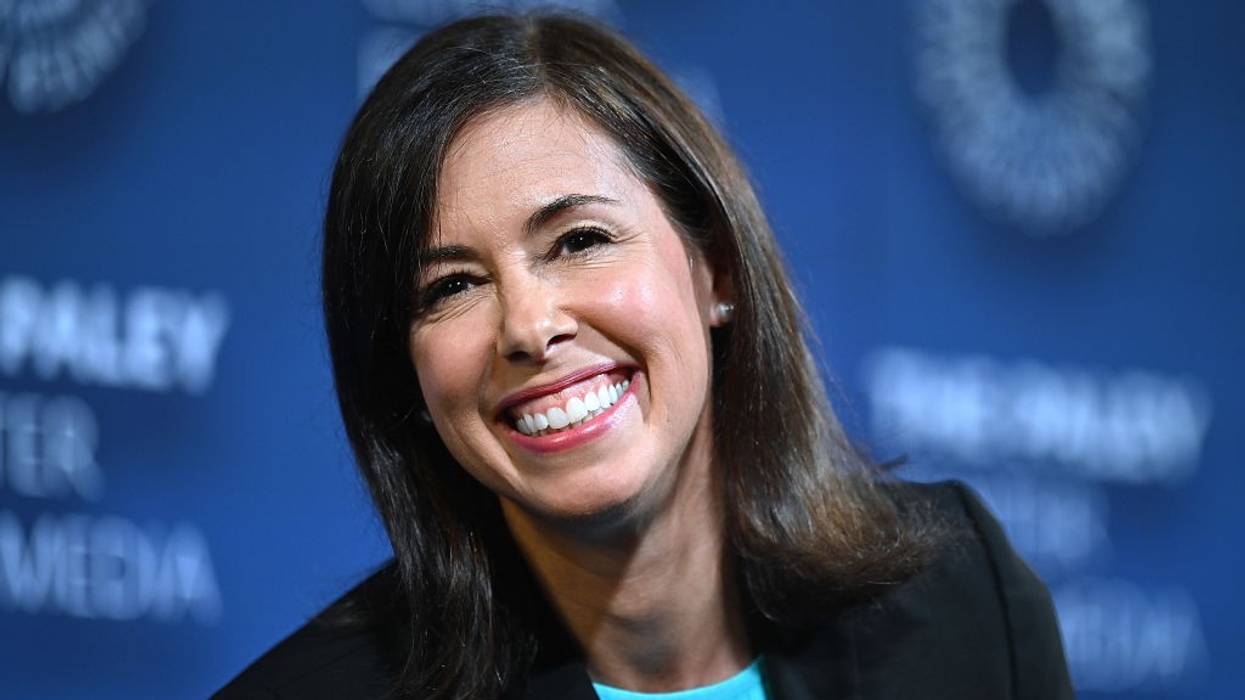
"Today marks the last day that internet service providers can continue to put profit over people," said one advocate.
Open internet advocates on Thursday applauded the Federal Communications Commission's long-anticipated vote to revive net neutrality rules and reestablish FCC oversight of broadband.
The 3-2 vote along party lines to reclassify broadband as a public service under Title II of the Communications Act came seven months after FCC Chair Jessica Rosenworcel announced the push in the wake of the U.S. Senate confirming Commissioner Anna Gomez.
Commissioner Geoffrey Starks joined Rosenworcel and Gomez to launch the rulemaking process last year and finalize the policy change on Thursday. Commissioner Brendan Carr and Nathan Simington both aligned with the powerful telecom industry by opposing the effort to prevent internet service providers from blocking, throttling, or engaging in paid prioritization of lawful online content.
Demand Progress Education Fund senior campaigner Joey DeFrancesco said the revival "has been desperately needed" since former FCC Chair Ajit Pai—an appointee of former Republican President Donald Trump—led the "disastrous decision" in 2017 to gut a 2015 agency policy codifying the principle that has been foundational to the internet since its inception.
"Internet access is not a luxury, but a necessity to participate in society and survive in our modern economy," DeFrancesco stressed. "The FCC's new rule will ensure the commission has the full ability to expand broadband and the authority to ensure access to an open internet."
"The FCC's vote today returns the internet to the American people."
Free Press co-CEO Craig Aaron declared that "everyone should celebrate today's FCC vote."
"Public support for net neutrality is overwhelming, and people understand why we need a federal watchdog to protect everyone's access to the most essential communications platform of our time," he noted. "The FCC heard the outcry and did its job: delivering on promises to stand with internet users and against big telecom companies and their trade groups, which have spent untold millions of dollars to spread lies about net neutrality and thwart any oversight or regulation."
Aaron praised Rosenworcel and her staff for leading the restoration effort, as well as Starks and Gomez for working with her to reverse the Trump FCC's move and ensure "that the agency can once again protect internet users whenever big phone and cable companies like AT&T, Comcast, Spectrum, and Verizon attempt to harm them."
"Big cable and phone companies won't be able to pick and choose what any of us can say or see online. Net neutrality is a guarantee that these companies will carry our data across the internet without undue interference or unreasonable discrimination," he emphasized. "This is what democracy should look like: Public servants responding to public sentiment, taking steps to protect just and reasonable services and free expression, and showing that the government is capable of defending the public interest."
Michael Copps, a former FCC commissioner and current Common Cause special adviser, was similarly enthusiastic, saying that "if I weren't out of the country today, I would be personally at the FCC jumping up and down, saluting the majority for reinstituting the network neutrality rules that were so foolishly eliminated by the previous commission."
"Our communications technologies are evolving so swiftly, affecting so many important aspects of our individual lives, that they must be available to all of us on a nondiscriminatory basis. And they must advance the public interest, protecting consumers, fostering competition, and providing us all the news and information we need as we fight to maintain our democracy," he continued. "We still have much to do; but today, let's celebrate a huge step forward."
The vote notably comes during an election year—and as Democratic President Joe Biden, a net neutrality supporter, is gearing up for a November rematch against Trump.
"The internet is crucial to civic engagement in the United States today. It functions as a virtual public square where social justice movements organize and garner support," said Common Cause's Ishan Mehta. "The FCC's vote today returns the internet to the American people."
Jenna Leventoff, senior policy counsel at the ACLU, also piled on the praise, proclaiming that "today marks the last day that internet service providers can continue to put profit over people."
"We are thrilled that the FCC now has the authority it needs to protect consumers, promote the exercise of First Amendment rights online, and ensure that everyone has access to high-quality, affordable internet," she said. "However, we urge the commission not to exercise its authority to preempt consistent state laws that grant consumers additional protections."
John Bergmayer, legal director at Public Knowledge, also celebrated the vote while stressing that the commission's work is far from over. In addition to warning of court fights to come, he said that "broadband providers will continue attempting to rebrand their old plans for internet fast and slow lanes, hoping to sneak them through."
"The FCC will need to diligently enforce its rules," Bergmayer argued, "including clarifying that discrimination in favor of certain apps or categories of traffic 'impairs' and 'degrades' traffic that is left in the slow lane, and that broadband providers cannot simply take apps that people use on the internet every day and package them as a separate 'nonbroadband' service."
"The FCC must also ensure that practices that are not expressly prohibited but still unreasonably interfere with the ability of end users to freely use the internet, or of edge providers to freely compete, are disallowed," he added. "These practices include discriminatory zero-rating and network interconnection practices."
Like Leventoff, he also recognized the vital role of states with stricter policies, saying that those "with excellent net neutrality and broadband consumer protection statutes, like California, can be a nationwide model for other states and the FCC to adopt to strengthen their own rules."
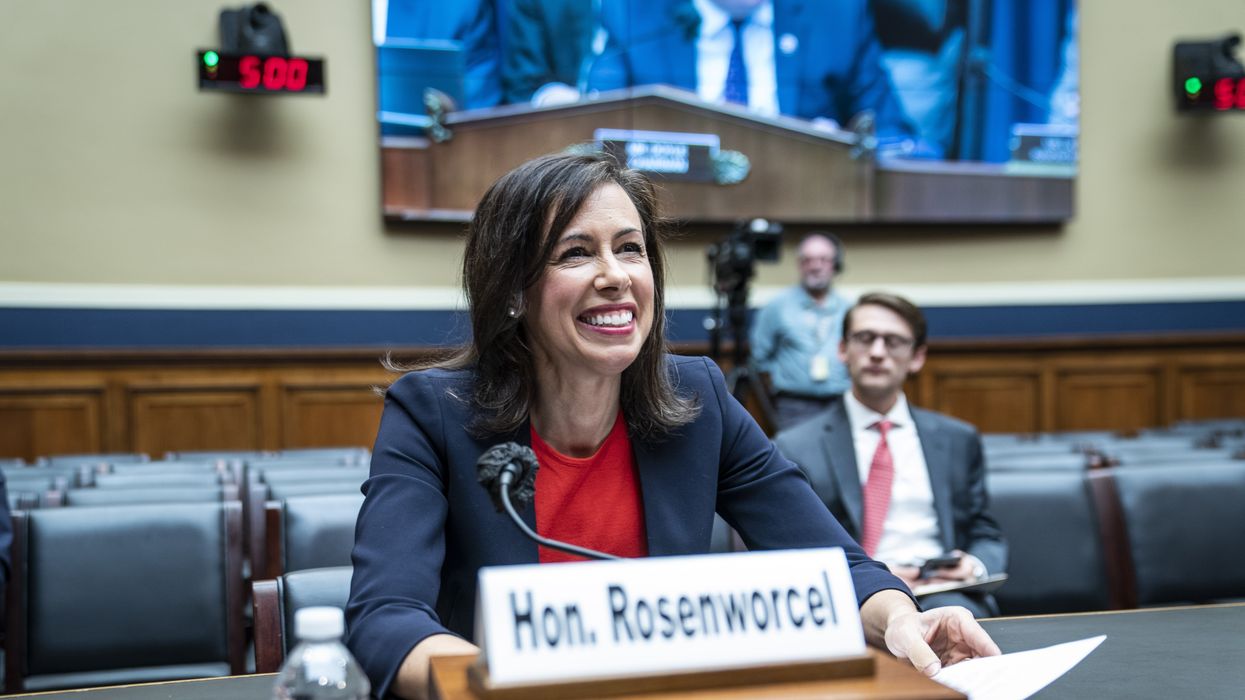
A majority of commissioners is set to return to the agency the authority it needs to act as a strong advocate for a user-powered internet.
Later this week, the Federal Communications Commission is expected to reverse a Trump-era decision that stripped away essential open-internet protections. In a Thursday vote, a majority of commissioners will return to the agency the authority it needs to act as a strong advocate for a user-powered internet.
They will do this by reclassifying broadband-access services as telecom services subject to Title II of the Communications Act. Title II authority allows the FCC to safeguard Net Neutrality and hold companies like AT&T, Comcast and Verizon accountable to internet users across the United States.
Title II authority gives the FCC the tools to make the internet work better for everyone, ensuring that internet service providers can’t block, throttle, or otherwise discriminate against the content everyone accesses online. But it also gives the FCC the regulatory means to ensure that broadband prices and practices are “just and reasonable.” The agency will be able to step in to stop price gouging, safeguard user privacy, protect public safety, eliminate junk fees, and stop other abusive behavior from providers.
During a Capitol Hill press conference last week, FCC Chairwoman Jessica Rosenworcel said, “There are a lot of things in this country that divide us, but Net Neutrality is not one of them.” Rosenworcel cited poll after poll that show that people across the political spectrum overwhelmingly support the 2015 Title II Net Neutrality safeguards that the Obama FCC put in place. The same polls show majorities opposed the Trump FCC’s 2017 repeal of these protections.
“Bringing back the FCC’s authority over broadband and putting back net neutrality rules is popular, and it has been court-tested and court-approved,” she added. “[W]e have an opportunity to get this right. Because in a modern digital economy, it is time to have broadband oversight, national Net Neutrality rules, and policies that ensure the internet is fast, open, and fair.”
The rules up for a vote on April 25 are identical to the 2015 rules. The FCC will enforce them in the same way. And the draft order text that the agency will finalize and adopt already makes this clear — in some cases, going further than the 2015 order did — with a chance before the vote occurs for the FCC to make this language even stronger.
Losing Title II hurt people, which is why millions protested the Trump FCC’s action. Not only did its 2017 repeal gut the Net Neutrality rules, it also surrendered the agency’s power to protect communities from unjust or unreasonable practices by these internet-access goliaths.
This had troubling consequences during the early months of the Covid-19 pandemic, when Trump FCC Chairman Ajit Pai asked broadband providers to sign a
voluntary pledge to preserve people’s vital internet access (he couldn’t force providers to do this since he’d abdicated the agency’s authority to compel these companies to keep users connected). Despite Pai’s claim that the pledge was a success, reporting by Daily Dot found that many of these same companies still cut users’ connections during a national emergency, when everything from work to health care had shifted online.
A 2019 study by Northeastern University and UMass Amherst found that ISP throttling of network services happens “all the time.” Researchers analyzed data from hundreds of thousands of smartphones to determine whether wireless providers were slowing, or throttling, data speeds for specific mobile services. They found that “just about every wireless carrier is guilty of throttling video platforms and streaming services unevenly.”
In everyday terms, this means that companies like AT&T are picking winners and losers online. Allowing such throttling to continue opens the door to more content-based discrimination. This isn’t just about economic favoritism — for example, an ISP slowing down a competitor’s online app so people would use their product instead — but, potentially, the blocking of political messages that gigantic communications companies don’t like.
This isn’t a hypothetical. In 2005, the internet service provider Telus blocked access to a server that hosted a website supporting a labor strike against the company. And in 2011, the Electronic Frontier Foundation found that several ISPs were intercepting user search queries on Bing and Yahoo and directing them to “results” pages that they or their partners controlled.
Lobbyists working for these large internet-access companies like to say that Title II authority offers “a solution in search of a problem” that doesn’t exist. And you can bet they’ll repeat
a lot of these lies in the aftermath of this week’s vote.
Throughout the 20 years of debate around Title II and Net Neutrality, the powerful phone and cable lobby has demonstrated a willingness to say anything and everything to avoid being held accountable. They’ll say that Title II’s open-internet standard is a heavy-handed regulation that will undermine investment in new broadband deployment; in reality, executives from these companies have said publicly that their capital expenditures
aren’t impacted in any way by Title II rules. The lobbyists will say that Net Neutrality is a hyper-partisan, politicized issue — ignoring public polling (see above) that shows internet users on the political left, right, and center overwhelmingly support the sorts of baseline protections offered under Title II.
The fight for this week’s victory predates the Trump FCC repeal of strong Title II rules in 2017. By restoring safeguards that millions fought so hard to make a reality, the FCC is recognizing the broad-based grassroots movement that coalesced in 2005 around the then-obscure principle of Net Neutrality and built a movement focused on retaining the people-powered, democratic spirit that was baked into the internet at its inception.
Without baseline open-internet protections, internet users are subject to privacy invasions, hidden junk fees, data caps, and billing rip-offs from their ISPs. In addition, without Title II oversight the FCC is severely limited in its ability to promote broadband competition and deployment, bringing this essential infrastructure within reach of people in the United States who lack access.
The FCC will change all of that later this week. It will respond to overwhelming public opinion and stand up for internet users against a handful of monopoly-minded companies that for too long have dictated media policy in Washington.
Come Thursday, I and many of the amazing advocates who’ve been fighting this fight for the past 20 years will be on hand at the FCC to witness the final vote. It will be a moment to appreciate our hard work and thank the agency for restoring to Americans their all-important online rights. Join us in celebrating!
"A healthy democracy requires a well-informed and educated public, but that's not possible without an open and accessible internet."
Open internet advocates on Wednesday welcomed the Federal Communications Commission's plan to vote on reestablishing FCC oversight of broadband and restoring net neutrality rules on April 25.
"The pandemic proved once and for all that broadband is essential," said FCC Chair Jessica Rosenworcel, who announced the restoration effort in September, shortly after the U.S. Senate confirmed Anna Gomez to a long-vacant seat on the five-member commission. The following month, the pair joined with Commissioner Geoffrey Starks to start the rulemaking process.
"After the prior administration abdicated authority over broadband services, the FCC has been handcuffed from acting to fully secure broadband networks, protect consumer data, and ensure the internet remains fast, open, and fair," Rosenworcel explained Wednesday. "A return to the FCC's overwhelmingly popular and court-approved standard of net neutrality will allow the agency to serve once again as a strong consumer advocate of an open internet."
The three Democratic commissioners aim to reverse a deeply unpopular rollback that happened under former Republican President Donald Trump by reclassifying broadband as a public service under Title II of the Communications Act and preventing internet service providers (ISPs) from blocking legal content, creating fast lanes, and throttling speeds.
"We've been fighting for this moment since Trump's FCC threw out strong Title II rules and abandoned net neutrality back in 2017—and really for nearly 20 years since net neutrality first came under threat," Free Press Action co-CEO Craig Aaron
said of the upcoming vote. "We welcome and celebrate the FCC's decision to move ahead and make sure that internet users will again be protected against harms by big phone and cable companies like AT&T, Comcast, and Verizon."
"Under these strong but flexible FCC rules, every ISP will be responsible for making resilient networks available to people on just and reasonable terms," he noted. "And they won't be able to pick and choose what any of us can say or see online. Net neutrality is a guarantee that the phone and cable companies will carry our data across the internet without undue interference or unreasonable discrimination."
Aaron warned that "without this clear authority over broadband access, the FCC is vastly weakened in its ability to protect internet users from ISPs' privacy invasions, promote broadband competition and deployment, and take action against hidden junk fees, data caps, and billing rip-offs."
Public Knowledge legal director John Bergmayer similarly applauded the commission's effort, stressing that "broadband is now a necessity for work, education, entertainment, healthcare, social connection, and civic engagement."
"Title II classification is the foundation of net neutrality," Bergmayer said. "With this legal tool, the FCC can reassert its role as the nation's top cop on the broadband beat. It will help the FCC more fully address digital redlining, ensuring that broadband access is not denied or degraded to low-income areas, or based on people's race or other protected characteristics."
"It will give the FCC clearer authority to promote network reliability and resiliency, so that users have a consistent internet experience that is ready for times of crisis and recovers quickly from outages," he continued. "It will also help the FCC combat cyber attacks and address other national security risks that could cripple our increasingly internet-dependent economy and society."
"Title II is also a pro-competition tool. It will help the FCC streamline the deployment of new broadband networks and reduce barriers to competition," Bergmayer added.
The FCC's vote is scheduled to happen just months away from the November presidential election, in which Trump is expected to again face Democratic President Joe Biden, who called for restoring net neutrality with a 2021 executive order.
"The internet is a gateway to democracy for many and every voter has the right to a free and fair internet. From looking up information about candidates to finding polling sites, this net neutrality proposal will make it easier for every voter to participate in our modern democracy," said Common Cause Media & Democracy Program director Ishan Mehta.
"We strongly encourage the FCC to restore net neutrality and return control of the internet to the people," he added. "Especially in a major election year, the FCC must do all it can to protect every voter's right to basic information online."
Former FCC Commissioner Michael Copps, now a special adviser to Common Cause, agreed that the pending rules are especially important for those participating in elections.
"A healthy democracy requires a well-informed and educated public, but that's not possible without an open and accessible internet," he said. "We look forward to strengthening a healthy communications ecosystem for all voters."
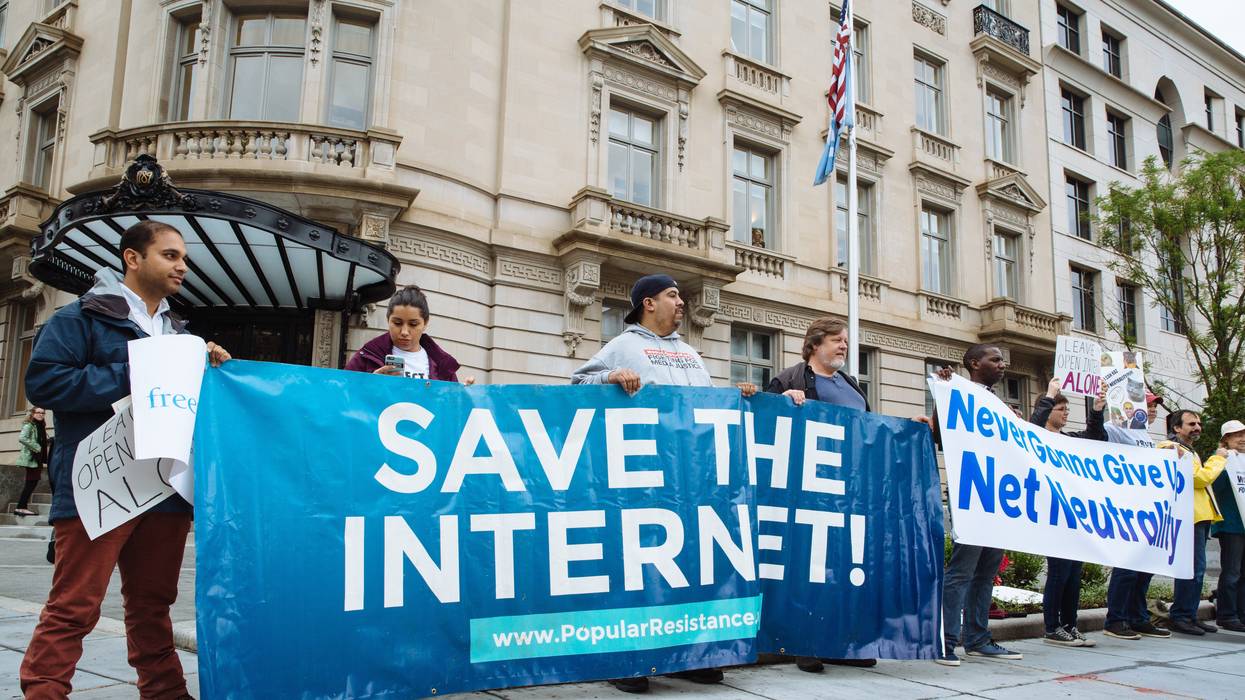
"We know that Big Cable is going to pull out all the stops in an attempt to water down or even block the rules," said one campaigner. "That's why we're mobilizing the grassroots."
Following the Federal Communications Commission's vote last week to start restoring FCC oversight of broadband and net neutrality rules rolled back under former President Donald Trump, more than 30 groups relaunched the Battle for the Net campaign.
"We are proud to relaunch Battle for the Net along with over 30 organizations representing millions of Americans," said Demand Progress communications director Maria Langholz in a statement. "It is absolutely critical for the FCC to succeed in this process to restore net neutrality and Title II protections."
Despite intense opposition from internet providers, broadband was previously treated as a public service under Title II of the Communications Act. However, in 2017, then-FCC Chair Ajit Pai—a former telecom industry lawyer appointed by Trump—led an unpopular rollback of the policy.
After the U.S. Senate last month finally confirmed Commissioner Anna Gomez to a long-vacant FCC seat, Chair Jessica Rosenworcel announced her plan to try to revive the policy—which prevents providers from blocking legal content, throttling speeds, and creating fast lanes. Commissioner Geoffrey Starks joined the two women in supporting the restoration effort.
"We applaud the FCC for moving forward this proposal, and especially commend Chair Rosenworcel's leadership on this issue," Langholz said Tuesday. "In addition to the commission, we impel members of Congress to stand with their constituents by supporting Title II reclassification."
The campaign website, BattleForTheNet.com, identifies "next steps" as FCC reinstatement of net neutrality and pressuring Congress to enshrine the policy into law.
"As the commission moves forward with this rulemaking, we know that Big Cable is going to pull out all the stops in an attempt to water down or even block the rules," Langholz explained. "That's why we're mobilizing the grassroots, making use of the years of organizing we and our partner organizations have done, to push this proposal through the finish line."
The campaign site currently features a form allowing U.S. voters to let members of the commission and Congress know that "I strongly support the FCC's current effort to reinstate net neutrality and Title II authority, which is critical for an open internet, expanding broadband access, privacy protections, and public safety."
The pre-written comment, which users are able to personalize before submitting, adds that "the agency must move forward a strong rule that rejects zero-rating, ensures interconnection, and allows for state preemption."
Caitlin Seeley George, campaigns and managing director at Fight for the Future, highlighted that "net neutrality has so much support across the political spectrum. And we've seen this support in action as millions of people have taken action over the years at the Battle for the Net hub in support of these commonsense protections against Big Telecom's abusive power."
"Now that the hurdles blocking the FCC from reinstating net neutrality have finally been cleared, they must listen to all of these supporters and swiftly move forward," she stressed. "Internet providers will do all they can to block the agency, spending obscene amounts of money to retain their power. But the FCC must listen to experts and the general public, and move forward with a strong rule to restore net neutrality and Title II protections."