
SUBSCRIBE TO OUR FREE NEWSLETTER
Daily news & progressive opinion—funded by the people, not the corporations—delivered straight to your inbox.
5
#000000
#FFFFFF
To donate by check, phone, or other method, see our More Ways to Give page.


Daily news & progressive opinion—funded by the people, not the corporations—delivered straight to your inbox.
One critic warned that President Donald Trump "almost certainly will abuse the legal system to investigate and prosecute his critics and the journalists they talk to."
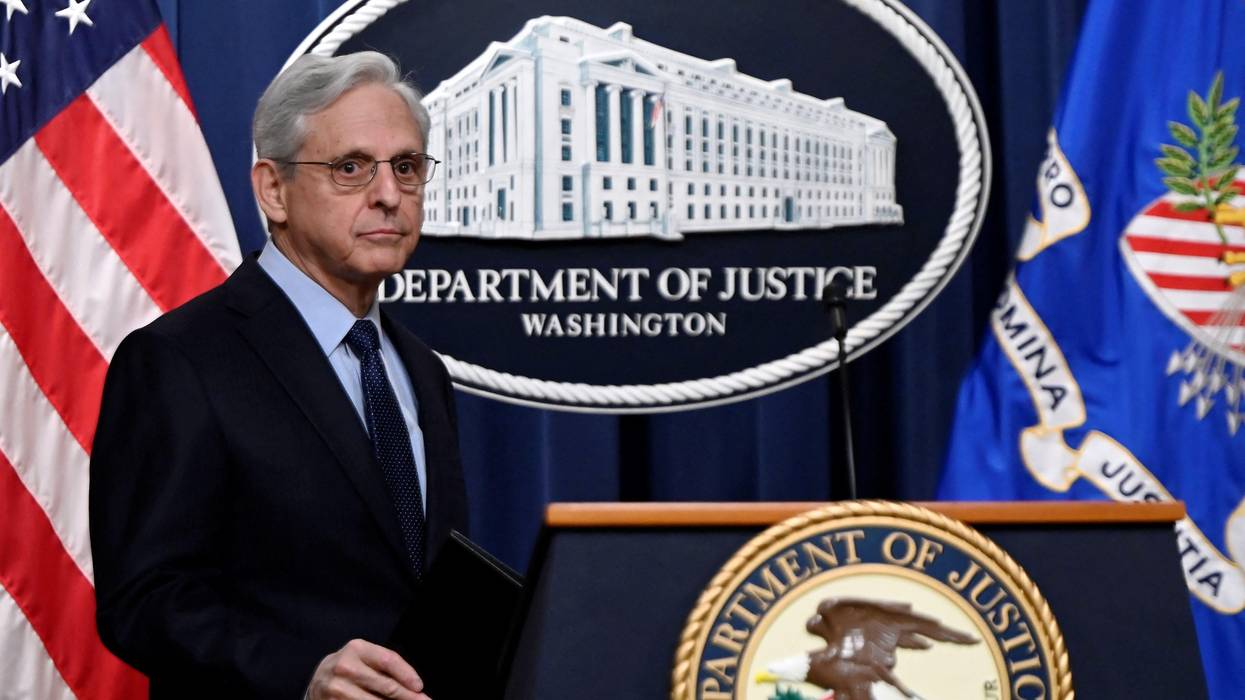
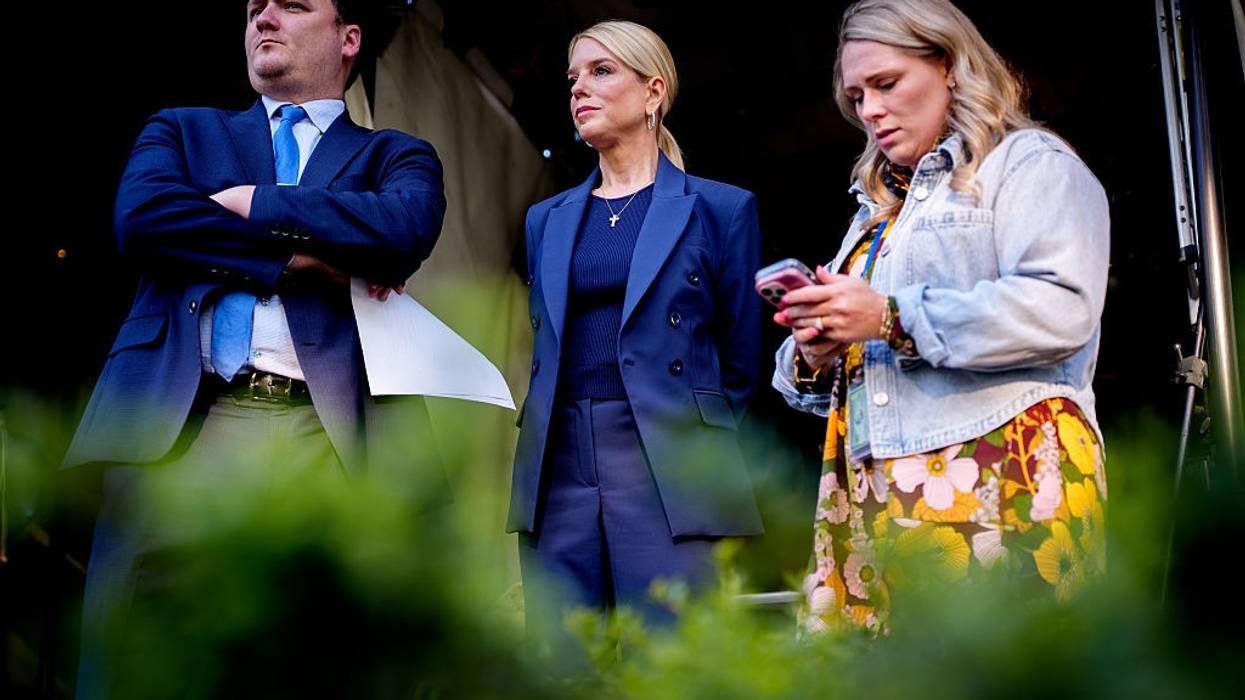
U.S. Attorney General Pam Bondi has scrapped a Biden-era policy that sharply restricted the Justice Department's ability to seize journalists' records and force them to testify in leak investigations, an alarming move that press freedom advocates said carries dire implications for reporters and whistleblowers.
In an internal memo first reported Friday by CBS News, Bondi wrote that the Justice Department "will not tolerate unauthorized disclosures that undermine President [Donald] Trump's policies, victimize government agencies, and cause harm to the American people."
"The perpetrators of these leaks aid our foreign adversaries by spilling sensitive and sometimes classified information onto the Internet. The damage is significant and irreversible," Bondi continued. "Accountability, including criminal prosecutions, is necessary to set a new course."
As part of a renewed crackdown on leaks, Bondi said she is issuing revised Justice Department regulations stating that media outlets "must answer subpoenas" related to efforts to uncover sources of unauthorized disclosures within the federal government.
"The policy contemplates the use of subpoenas, court orders, and search warrants to compel production of information and testimony by and relating to members of the news media, subject to the Privacy Protection Act, 42 U.S.C. § 2000aa, and the approval of the department's leadership in some instances," the memo states. "The attorney general must also approve efforts to question or arrest members of the news media."
"Some of the most consequential reporting in U.S. history—from Watergate to warrantless wiretapping after 9/11—was and continues to be made possible because reporters have been able to protect the identities of confidential sources."
The Freedom of the Press Foundation (FPF)—a group co-founded by the late Daniel Ellsberg, who leaked classified documents that came to be known as the Pentagon Papers—noted in a statement that Bondi's memo followed "news that Director of National Intelligence Tulsi Gabbard asked the Department of Justice to investigate recent leaks to reporters."
Seth Stern, FPF's advocacy director, said Bondi's move was made possible by lawmakers' failure to pass the PRESS Act, bipartisan legislation would have codified into law rules prohibiting the federal government from forcing journalists or telecom companies from disclosing information about their sources.
"Every Democrat who put the PRESS Act on the back burner when they had the opportunity to pass a bipartisan bill codifying journalist-source confidentiality should be ashamed," said Stern. "Everyone predicted this would happen in a second Trump administration, yet politicians in a position to prevent it prioritized empty rhetoric over putting up a meaningful fight."
"Because of them," Stern added, "a president who threatens journalists with prison rape for protecting their sources and says reporting critically on his administration should be illegal can and almost certainly will abuse the legal system to investigate and prosecute his critics and the journalists they talk to."
After his victory in the 2024 presidential election, Trump instructed Republicans to block the PRESS Act, writing on his social media platform, "REPUBLICANS MUST KILL THIS BILL!"
Since the start of his second term, Trump has launched what Reporters Without Borders (RSF) characterized as "a monumental assault on press freedom," including by engaging in "legal intimidation" against media outlets.
"When you step back and look at the whole picture, the pattern of blows to press freedom is quite clear," Clayton Weimers, executive director of RSF North America, said late last week. "RSF refuses to accept this massive attack on press freedom as the new normal. We will continue to call out these assaults against the press and use every means at our disposal to fight back against them. We urge every American who values press freedom to do the same."
Earlier this month, the Committee to Protect Journalists issued a safety advisory to journalists planning to visit the United States, warning "journalists who are at high risk of being detained at the border" to "consider leaving their personal and/or work devices at home and instead carry separate devices and a new SIM card."
Bruce Brown, president of the Reporters Committee for Freedom of the Press, said in a statement following Bondi's memo that "strong protections for journalists serve the American public by safeguarding the free flow of information."
"Some of the most consequential reporting in U.S. history—from Watergate to warrantless wiretapping after 9/11—was and continues to be made possible because reporters have been able to protect the identities of confidential sources and uncover and report stories that matter to people across the political spectrum," Brown said.
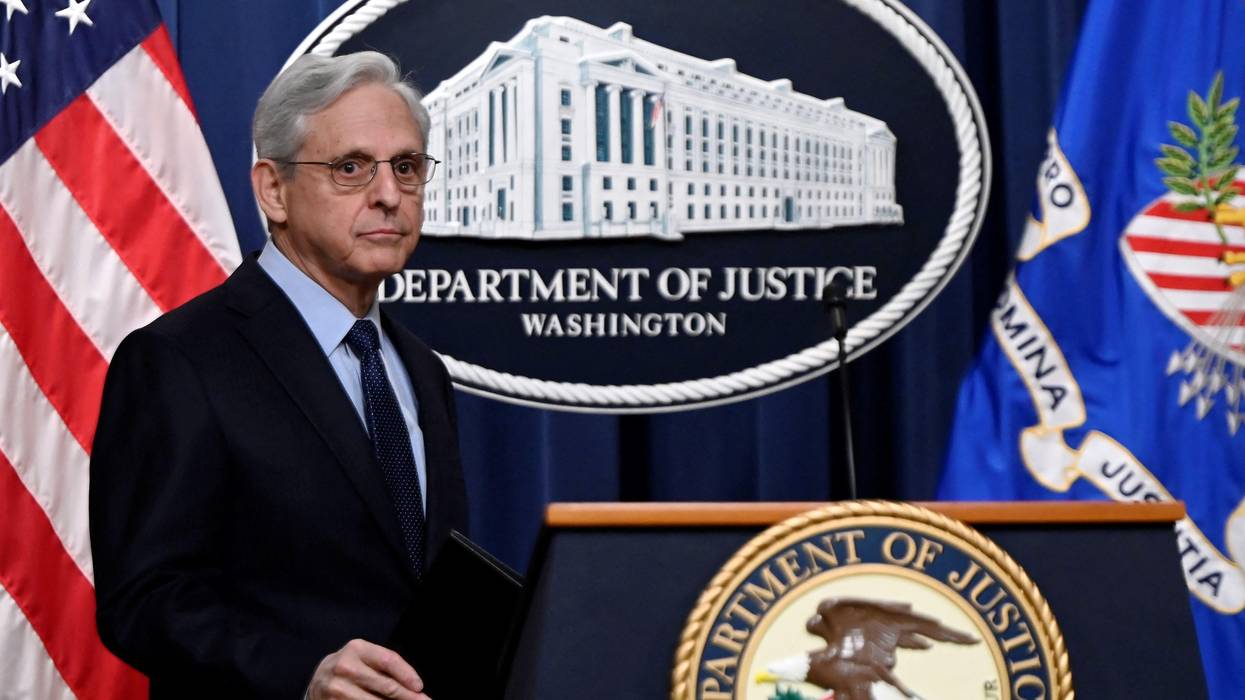
Decades from now, historians will memorialize Garland not as a dedicated public servant but as the head of the Justice Department who brought a butter knife to an existential gunfight with Trump, quickening our collective descent into neo-fascism.
It’s hard to say who is the worst attorney general in American history. The candidates are many and comprise a veritable rogue’s gallery of sadists, reactionaries, and incompetents. They range from A. Mitchell Palmer, mastermind of the original Red Scare that decimated the left in the wake of the First World War, to Jefferson Beauregard Sessions III and William Pelham Barr, who sacrificed the rule of law in service to Donald Trump.
Merrick Garland may not share the malignancies of his fellow train wrecks, but he deserves to be in the discussion. Decades from now, historians will memorialize Garland not as a dedicated public servant and fair-minded federal judge whose nomination to the Supreme Court was torpedoed by Mitch McConnell and Senate Republicans, but as the head of the Justice Department who brought a butter knife to an existential gunfight with Trump, quickening our collective descent into neo-fascism.
After his appointment to helm the DOJ, Garland had one overarching mission: to swiftly convene a grand jury to investigate Trump for his role in inciting the Jan. 6, 2021, insurrection at the Capitol. This was a task a third-year law student could easily have accomplished. Garland failed, abjectly.
Garland will forever bear the principal stain of wimping out when courage and—to put it in the vernacular—balls were needed to stop Trump.
Probable cause for an early indictment was abundant and obvious. On January 6, millions of Americans watched Trump stand on the Ellipse at the south end of the White House and urge his supporters to march on the Capitol and “fight like hell.” Millions watched the actual assault that followed, blow by medieval blow. Even the corrupt McConnell, who voted to acquit Trump in his second impeachment trial in February 2021, declared on the Senate floor, “There’s no question, none, that President Trump is practically and morally responsible for provoking the events of the day [January 6].”
Instead of targeting Trump and his chief lieutenants immediately, Garland set out to arrest and try the foot soldiers of the uprising. And while he did a commendable job in that respect (eventually charging more than 1,500 with federal crimes), he dithered on Trump until November 2022, when he appointed Jack Smith as a special counsel to probe Trump for the insurrection and absconding from the White House with a trove of highly classified documents.
By then, it was too late.
Although Smith secured an indictment of Trump in Washington, D.C., for conspiracy, obstruction, and election subversion on August 1, 2023, the indictment was gutted by the Supreme Court (Trump v. United States) the following July in a decision that granted Trump sweeping and unprecedented immunity from criminal prosecution.
Written by Chief Justice John Roberts, a lifelong conservative activist with an undeserved reputation as a judicial institutionalist, the ruling is arguably the worst edict handed down by the high court since the Dred Scott case of 1857. “Trump v. United States is distinct as a deliberate attack on the core institutions and principles of the republic, preparing the way for a MAGA authoritarian regime much as Dred Scott tried to do for the slavocracy,” wrote Sean Wilenz in a scathing article for The New York Review of Books.
Smith also indicted Trump in Florida in the documents case, but that prosecution was subsequently scuttled by District Court Judge Aileen Mercedes Cannon, an inexperienced MAGA sycophant whom Trump installed on the federal bench in the runup to the 2020 election.
In addition to Garland, the Supreme Court, and Cannon, former President Joe Biden also shares responsibility for letting Trump off the hook. From Day 1, Biden should have used the bully pulpit to attack, isolate, and destroy Trump and his MAGA base. Instead, he pursued a politics of accommodation, preaching a return to the false neoliberal normalcy of bipartisanship. Most critically of all, Biden decided to seek a second term, when it was apparent to everyone with two eyes and ears that he was no longer fit, either physically or mentally, for another stint behind the Resolute Desk. With Biden’s approval rating plunging to 40%, former Vice President Kamala Harris had little to no chance of defeating Trump at the polls.
But standing atop the heap, Garland will forever bear the principal stain of wimping out when courage and—to put it in the vernacular—balls were needed to stop Trump before the forces of reaction had time to regroup and reorganize. They are now in control.
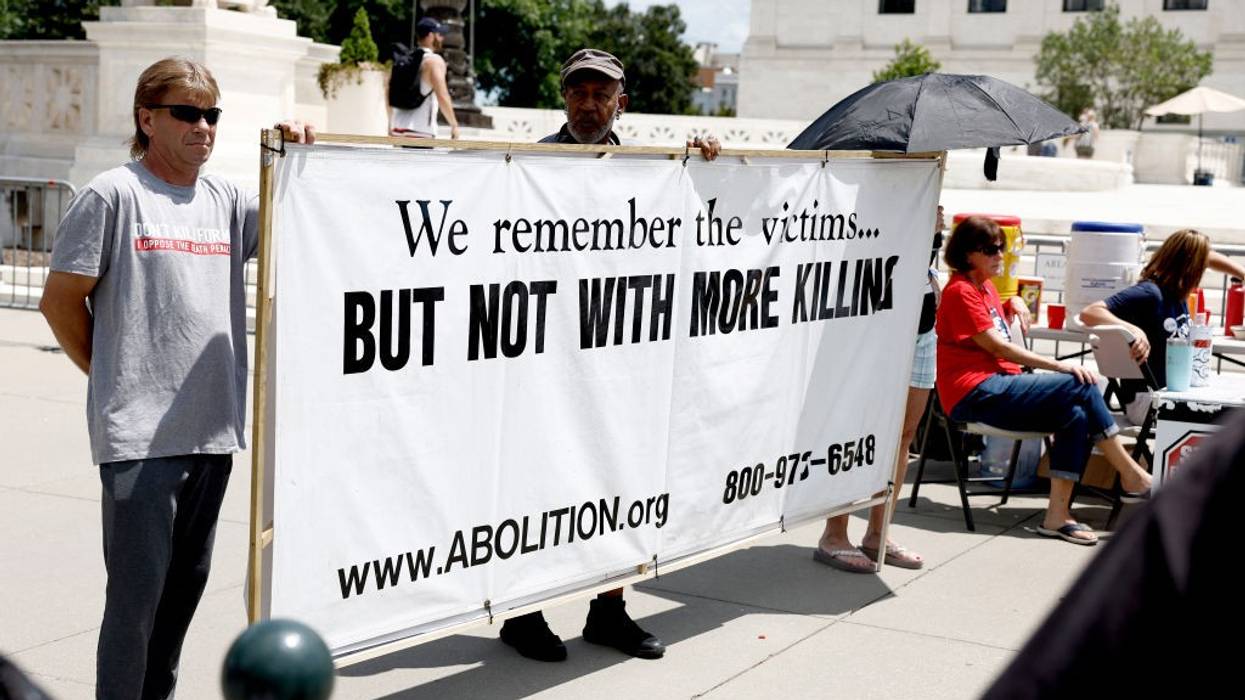
The Republican president "articulated his plan to drastically increase executions, and we all know this is one promise he can't wait to keep," said one death penalty abolitionist.
Delivering on a promise to "vigorously pursue the death penalty," U.S. President Donald Trump on Monday night signed an executive order that reverses his predecessor's moratorium on federal capital punishment and calls for expanding it.
The widely expected order—one of several issued on Inauguration Day—was swiftly criticized on factual and moral grounds.
Attorney and death penalty expert Robert Dunham pointed out that the order "starts with a demonstrable falsehood ('Capital punishment is an essential tool for deterring and punishing those who would commit the most heinous crimes'), signaling that the administration intends not to allow the facts to affect its policy decisions."
"In fact, the death penalty does not contribute anything to public safety," said Dunham, citing a study by the Death Penalty Policy Project, which he directs. "As for 'deterring the most heinous crimes,' see my analysis of the worst of the worst mass shootings in the United States."
"It is essential, with the importance and deadly consequences of this policy, that media coverage report the truth and not just the rhetoric," he stressed. "The executive order is grounded in a false, dark fantasy about deterrence and has nothing to do with making the public safer."
Declaring that "the death penalty is unjust and cruel," the ACLU warned that Trump's order not only directs an expansion of its use at the federal level but also encourages states to do the same.
Specifically, the order says that "in addition to pursuing the death penalty where possible," the attorney general shall seek it "regardless of other factors" for federal cases involving the murder of a law enforcement officer or a capital crime committed by an undocumented immigrant—and shall "encourage state attorneys general and district attorneys to bring state capital charges for all capital crimes with special attention to" those circumstances, "regardless of whether the federal trial results in a capital sentence."
The order further directs the head of the U.S. Department of Justice to "seek the overruling of Supreme Court precedents that limit the authority of state and federal governments to impose" the death penalty and "ensure that each state that allows capital punishment has a sufficient supply of drugs needed to carry out lethal injection."
Last week, outgoing U.S. Attorney General Merrick Garland "withdrew the Justice Department's protocol for federal executions that allowed for single-drug lethal injections with pentobarbital, after a government review raised concerns about the potential for 'unnecessary pain and suffering,'" The Associated Press reported. "The protocol could be imposed by Trump's new acting Attorney General James McHenry III, or his pick to lead the Justice Department, Pam Bondi, once she's confirmed by the Senate."
Though Trump's order doesn't name Garland, it explicitly takes aim at former President Joe Biden for his moratorium as well as his attempt to prevent another GOP killing spree like the one that occurred at the end of the Republican's first term, accusing the Democrat of commuting the sentences of "37 of the 40 most vile and sadistic rapists, child molesters, and murderers on federal death row: remorseless criminals who brutalized young children, strangled and drowned their victims, and hunted strangers for sport."
Biden said last month that "in good conscience, I cannot stand back and let a new administration resume executions that I halted." He left Charleston church gunman Dylann Roof, Pittsburgh synagogue shooter Robert Bowers, and Boston bomber Dzhokhar Tsarnaev on death row. The others now face life in prison without the possibility of parole.
Trump cannot reverse Biden's commutations, but he directed the attorney general to "evaluate the places of imprisonment and conditions of confinement for each" of those 37 men and "take all lawful and appropriate action to ensure that these offenders are imprisoned in conditions consistent with the monstrosity of their crimes and the threats they pose."
The president also said that the attorney general "shall further evaluate whether these offenders can be charged with state capital crimes and shall recommend appropriate action to state and local authorities."
Death Penalty Action executive director Abraham Bonowitz said in a Monday statement:
President Trump's executive order demanding capital charges for the murder of law enforcement officers or capital crimes by illegal aliens is unnecessary bluster, because the death penalty already exists for such crimes. But Trump can't help himself. Donald Trump's Agenda2025 articulated his plan to drastically increase executions, and we all know this is one promise he can't wait to keep.
We are also dismayed at President Biden's cynical compromise that commuted 37 federal death sentences while leaving seven prisoners on federal and military death rows. While expressing both his personal opposition to the death penalty and his desire to maintain the moratorium on executions he imposed in 2021, Biden has nevertheless primed the pump for Donald Trump to resume his execution spree.
Social media users also slammed Trump's order, with one saying that "this is extremely disturbing" and another calling it "one of the most ghoulish things I've ever fucking read." Many critics highlighted that the president issued the measure while pardoning over 1,500 insurrectionists who stormed the U.S. Capitol on January 6, 2021, which led to the deaths of multiple police officers.
James Goodwin, policy director at the Center for Progressive Reform, noted that it "is straight out of Project 2025," the sweeping Heritage Foundation-led playbook from which Trump unsuccessfully tried to distance himself during the campaign.
Trump has a long history of supporting capital punishment. As journalist Prem Thakker
put it, "On Martin Luther King Jr. Day, the man who bought [a] full-page [newspaper] ad calling for the execution of the Central Park Five—five Black and Latino teens wrongfully convicted of rape—makes one of his first acts as president to restore and prioritize the death penalty."
Praising his targeting of "overbroad, undemocratic, and dangerous" opinions, one lawyer said that "irrespective of who holds the presidency, no one should have unilateral power to plunge the nation into major conflicts."
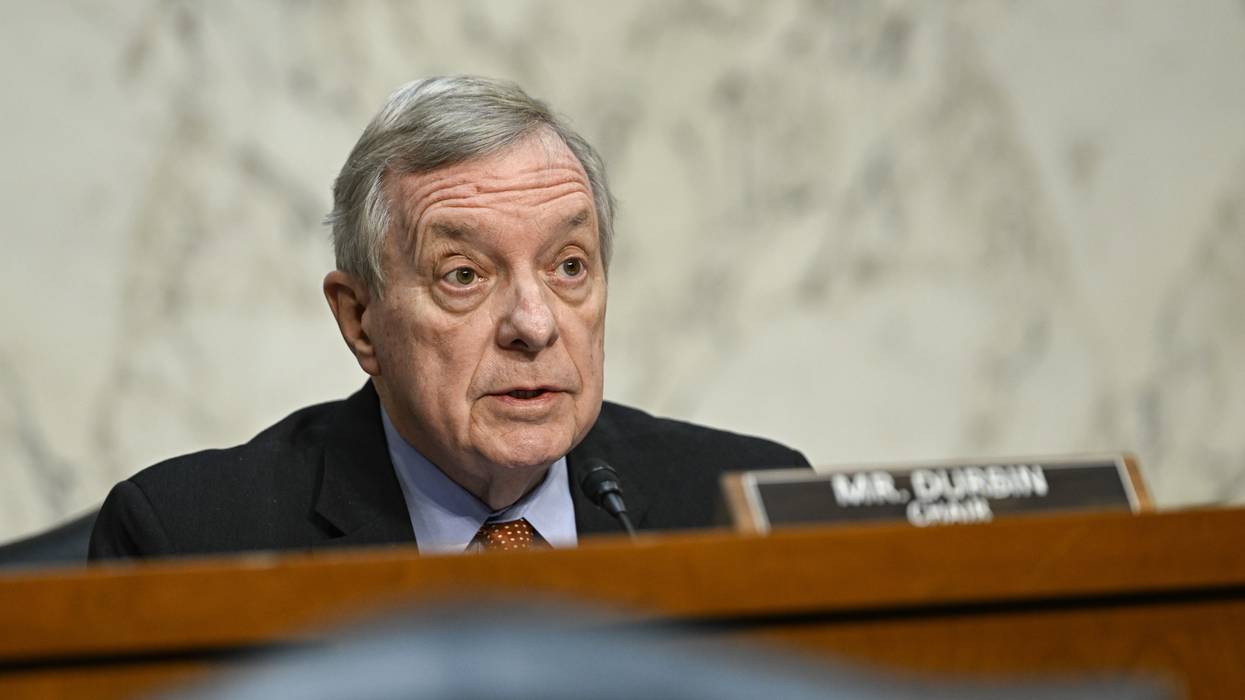
The top Democrat on the U.S. Senate Judiciary Committee this week urged the Department of Justice to rescind some war powers-related legal opinions and release certain records, a call that came in the lead-up to Republican President-elect Donald Trump's return to the White House.
Sen. Dick Durbin (D-Ill.) made the request in a Tuesday letter to U.S. Attorney General Merrick Garland, stressing the Constitution's division of treaty-making and war powers between Congress and the president, as well as the president's obligation "to take care that the law be faithfully executed."
Highlighting that the DOJ "has previously withdrawn flawed or outdated" guidance, Durbin identified five opinions from the department's Office of Legal Counsel (OLC) that he believes should be taken off the books:
"Congress and the executive branch may have differing views in some respects as to the separation of powers between them," Durbin wrote. "However, these opinions are concerning outliers even by the standards of the executive branch's own legal doctrine. Indeed, it does not appear that OLC has relied upon these opinions in other publicly available legal memoranda. For these reasons, I urge the Department of Justice to withdraw them."
The senator also gave Garland a list of 20 records to release "relating to the president's authority to deploy U.S. armed forces within the United States, and the activities in which those military personnel may or may not engage."
"The need for transparency regarding these legal interpretations is particularly urgent today given the risk of domestic military deployment to suppress protests or carry out mass deportations," he wrote to the outgoing attorney general.
Sharing the letter on social media Wednesday, Durbin more clearly said, "Donald Trump has promised to deploy the military for mass deportations, and we have a right to know how the Justice Department interprets this authority."
Durbin sent the letter on the same day that Trump, during a press conference at Mar-a-Lago, refused to rule out using military force to take over the Panama Canal and Danish territory Greenland, sparking global condemnation.
The attorney general intends to withhold the classified documents report while a related legal battle plays out but make it available to certain members of Congress, according to a court filing.
With less than two weeks until U.S. President-elect Donald Trump's inauguration, the Department of Justice said Wednesday that outgoing Attorney General Merrick Garland will make public the portion of Special Counsel Jack Smith's report that deals with the Republican's attempt to circumvent his 2020 election loss—an effort that culminated in the violent storming of the Capitol on January 6, 2021.
The full report that Smith sent Garland on Tuesday is in two parts—one for each federal case that Smith took over in 2022 but later dropped due to Trump's November win. Volume one is about election subversion, and volume two is about the ex-president's alleged mishandling of classified material, which led to a raid of Mar-a-Lago, his Florida residence.
"The attorney general intends to release volume one to Congress and the public consistent with 28 C.F.R. § 600.9(c) and in furtherance of the public interest in informing a co-equal branch and the public regarding this significant matter," the DOJ explained in a Wednesday filing to the U.S. Court of Appeals for the 11th Circuit.
The filing relates to an attempt by Trump's co-defendants in the second case—valet Waltine Nauta and Mar-a-Lago property manager Carlos De Oliveira—to block the release of the report. The DOJ said that "to avoid any risk of prejudice to defendants Nauta and De Oliveira, the attorney general has determined, at the recommendation of the special counsel, that he will not publicly release volume two so long as defendants' criminal proceedings remain pending."
"For the time being, volume two will be made available for in-camera review only by the chairmen and ranking members of the House and Senate Judiciary Committees upon their request and agreement not to release any information from volume two publicly," the DOJ added. "This limited disclosure will further the public interest in keeping congressional leadership apprised of a significant matter within the department while safeguarding defendants' interests."
The filing does not say when Garland will release volume one. The revelations of his plans came a day after Trump-appointed U.S. District Judge Aileen Cannon—who last July dismissed the classified documents case, leading to an appeal—ordered the DOJ to withhold Smith's final report, despite questions about her authority to do so.
Government watchdog groups and ethics experts have lambasted Garland for not going after Trump quickly and forcefully enough for his various alleged crimes—which critics argue could have prevented his looming return to office.
The president-elect is set to be sworn in on January 20. His attorneys claimed in a Monday letter to Garland that releasing Smith's report would "violate the Presidential Transition Act and the presidential immunity doctrine."
Trump's lawyers have seen a draft of Smith's report and offered a preview in the letter to Garland, writing in part that "volume one of the draft report falsely asserts, without any jury determination, that President Trump and others 'engaged in an unprecedented criminal effort,' was 'the head of the criminal conspiracies,' and harbored a 'criminal design,'" while "volume II asserts, without any supporting verdict, 'that Mr. Trump violated multiple federal criminal laws,' and that he and others engaged in 'criminal conduct.'"
Politico pointed out Wednesday that "Trump welcomed the public release of previous special counsel reports, including Special Counsel Robert Hur's devastating assessment of President Joe Biden."
The Republican-controlled Senate is already preparing to hold confirmation hearings for Trump nominees including Pam Bondi, a former Florida attorney general and the president-elect's pick to replace Biden-appointed Garland.
Trump, meanwhile, has said that he is considering swiftly issuing pardons for his supporters charged and convicted for storming the U.S. Capitol four years ago—which opponents have warned "would be an affront to our democracy."
"Delay is the name of the game here," said one legal analyst. "If they can just stop the clock until January 20th, then... the attorney general will be a Trump appointee and they can kill the whole thing."
Aileen Cannon, a Trump-appointed federal judge in Florida, ordered the Justice Department on Tuesday to temporarily withhold from the American public special counsel Jack Smith's final report on his investigations into the president-elect, despite questions about her authority to do so.
Cannon's order came in response to a Monday request by President-elect Donald Trump's longtime valet Walt Nauta and Mar-a-Lago property manager Carlos De Oliveira, who are facing charges in a classified documents case brought by Smith. Trump was also charged in the classified documents probe, but Smith dropped the case against the Republican leader after he won the 2024 presidential election.
In their filing on Monday, Nauta and De Oliveira's attorneys called on Cannon to bar the release of Smith's final report, even though the classified documents case is currently before the 11th Circuit Court of Appeals in Atlanta—not Cannon's court. The Justice Department is appealing Cannon's decision last summer to dismiss the classified documents case as the agency pursues charges against Nauta and De Oliveira.
Cannon wrote in her order Tuesday that Attorney General Merrick Garland, Smith, and other Justice Department employees are enjoined from "releasing, sharing, or transmitting" Smith's final report or "any drafts of such report" outside the DOJ. The judge said her order would remain in effect until the 11th Circuit rules on Nauta and De Oliveira's motion to prohibit the release of Smith's report.
Barbara McQuade, a professor at the University of Michigan Law School, said in an appearance on MSNBC that she doesn't believe Cannon has "any jurisdiction" over decisions surrounding Smith's report.
"But delay is the name of the game here," she added. "If they can just stop the clock until January 20th, then... the attorney general will be a Trump appointee and they can kill the whole thing and say, 'There's no report to disclose.' So that's the goal here."
Speaking to reporters Tuesday just ahead of Cannon's order, Trump claimed he didn't "know" the Florida judge—despite appointing her—but praised her as "brilliant."
Trump on Judge Cannon who he appointed: I don't know the judge in Florida, but we had a brilliant judge in Florida.. her opinion was so brilliant that they dropped the appeal pic.twitter.com/rjzsNANHyu
— Acyn (@Acyn) January 7, 2025
Smith said in a filing earlier Tuesday that his office is still "working to finalize" the report on his investigations into Trump's hoarding of classified documents and efforts to subvert the 2020 presidential election. By law, special counsels are required to submit a final report to the attorney general, who has the authority to decide whether to make the findings available to the public.
Smith said in his filing that he would not transmit his report to Garland before 1:00 pm on Tuesday, and that the attorney general would not release the findings before the morning of January 10—if at all. It's unclear how Cannon's order will impact Smith's timeline.
Trump's lawyers have demanded that Garland withhold Smith's report entirely, claiming in a letter to the attorney general on Monday that making it public would "violate the Presidential Transition Act and the presidential immunity doctrine."
In their letter to Garland, Trump's attorneys—who have reviewed Smith's confidential report in recent days—revealed that the first volume of the document states that the president-elect "engaged in an unprecedented criminal effort" and was "the head of the criminal conspiracies" surrounding the 2020 election.
"This is his last chance to do something right," said one activist.
U.S. Attorney General Merrick Garland faced calls Monday to release special counsel Jack Smith's final report on his investigations into Donald Trump as quickly as possible after the president-elect's legal team demanded that the Justice Department withhold the findings from the public.
In an emailed letter to Garland—sent on the fourth anniversary of the January 6, 2021 attack on the U.S. Capitol that Trump incited—the president-elect's attorneys demanded that Smith "terminate all efforts toward the preparation and release of this report," claiming its disclosure would "violate the Presidential Transition Act and the presidential immunity doctrine."
"If Smith is not removed, then the handling of his report should be deferred to President Trump's incoming attorney general, consistent with the expressed will of the people," wrote Trump's lawyers, who were permitted to review the two-volume report in recent days.
One of the authors of the letter to Garland, Todd Blanche, is Trump's nominee to serve as deputy attorney general in the incoming administration.
The demand from Trump's lawyers intensified calls for Garland to make Smith's findings available to the public.
"Merrick Garland has exactly one more chance to show any smattering of spine—he has two weeks to release Jack Smith's report," wrote activist Jon Bauman, president of the Social Security Works PAC. "This is his last chance to do something right."
Smith was tasked with investigating Trump's unlawful hoarding of classified documents at his Mar-a-Lago estate and his efforts to subvert the 2020 presidential election. The special counsel dropped both federal cases shortly after Trump won the 2024 election, arguing that "the Constitution requires that this case be dismissed before the defendant is inaugurated."
But Smith stressed that the decision was "not based on the merits or strength of the case against the defendant."
Under federal regulations, special counsels are required to submit reports on their findings to the attorney general, who can decide whether to publicize the findings.
In addition to Trump's pressure campaign against Garland, two of the president-elect's former co-defendants in the classified documents case are pushing Trump-appointed U.S. District Judge Aileen Cannon to bar the Justice Department from releasing Smith's report.
Politico noted that it's not clear whether Cannon has the authority to grant that request.
"After she dismissed the case—ruling that Smith's appointment as special counsel was unconstitutional—the Justice Department appealed to the Atlanta-based 11th Circuit Court of Appeals," the outlet observed. "That court, not Cannon, currently has control of the case."
Smith said in a filing on Tuesday that his office is "working to finalize a two-volume confidential report to the attorney general explaining the special counsel's prosecution decisions."
"The attorney general will decide whether any portion of the report should be released to the public," the new filing continues. "The attorney general has not yet determined how to handle the report volume pertaining to [the classified documents case]... but the department can commit that the attorney general will not release that volume to the public, if he does at all, before Friday, January 10, 2025 at 10:00 am."
The president-elect's "ability to escape prosecution does not retroactively validate his illegal, unconstitutional and democracy-destroying activities," said one critic.
Special Counsel Jack Smith's announcement on Monday that he was dropping his case regarding President-elect Donald Trump's alleged handling of classified documents and election subversion was not unexpected, as U.S. Justice Department policy dictates that a sitting president can't be prosecuted while in office.
But government watchdogs said the developing was no less "troubling," and vowed that Trump must ultimately face accountability.
"At least for now, Trump may escape justice for his role in trying to overturn the 2020 election, fomenting the January 6 insurrection, and improperly handling classified documents," said Lisa Gilbert, co-president of Public Citizen. "But his ability to escape prosecution does not retroactively validate his illegal, unconstitutional and democracy-destroying activities. They were heinous and unconscionable acts that literally cost lives and threatened the peaceful transfer of power."
"If not the courts, history will judge them appropriately," said Gilbert.
In his motion to dismiss the case, filed in the U.S. District Court for the District of Columbia, Smith wrote that "the government's position on the merits of the defendant's prosecution has not changed. But the circumstances have."
" Donald Trump aims not just to excuse but to normalize all this behavior. Permitting him to succeed would enable a slide into authoritarianism. The American people must not let that happen."
Former Labor Secretary Robert Reich wrote in his Substack newsletter that regardless of DOJ policy, the filing was "a grave mistake," because Smith did not specify that the prosecution of Trump would be restarted after the president-elect leaves office.
"Smith says he had no choice," wrote Reich. "But he did have a choice. He could have asked the courts to put the cases on hold until Trump is no longer president... To be sure, Smith's requests were for dismissals 'without prejudice,' which technically leaves open the possibility that charges could be refiled after Trump leaves office. But refiling charges is vastly more cumbersome than simply ending a stay."
While Smith left the door open to once again bring charges against Trump in 2029, he "should have put the responsibility for avoiding the rule of law squarely on Trump," wrote Reich.
Legal analyst Barb McQuade added that Smith's tactic leaves the possibility that "there may be no appetite" to refile charges regarding eight-year-old allegations after Trump leaves office.
At Slate, Dahlia Lithwick and Mark Joseph Stern wrote that Attorney General Merrick Garland's "institutionalist instincts paralyzed the Justice Department for nearly two years, giving Trump a chance to run out the clock by the time Smith finally indicted him."
The attorney general is "partly at fault for waiting so long to commence the investigation into Jan. 6," they wrote, while right-wing federal Judge Aileen Cannon "is guilty of sabotaging" the case regarding Trump's retention of classified documents after he left office in 2021, which Cannon dismissed in July, claiming Smith's appointment as special counsel violated the Constitution.
"In a simplistic sense, the voting public also bears culpability for putting Trump back in the Oval Office despite his egregious attempts to steal the previous election. But that victory could not have happened without the Supreme Court, which essentially nullified the constitutional bar against insurrectionists returning to office, then awarded Trump sweeping immunity in Smith's Jan. 6 case. The court's immunity decision guaranteed that the former president would not face trial before the election, which in turn prevented the public from hearing the full range of evidence against him."
Gilbert emphasized that "at Public Citizen we believe that no one should be above the law, that criminality by the powerful must be punished, and that attempting to overturn the nation's election and fomenting political violence should be harshly sanctioned."
" Donald Trump aims not just to excuse but to normalize all this behavior," said Gilbert. "Permitting him to succeed would enable a slide into authoritarianism. The American people must not let that happen."
The U.S. attorney general is also facing internal pressure to investigate Israel's killing of Americans.
A dozen members of Congress led by Sen. Bernie Sanderssent a Tuesday letter demanding the Biden administration open an independent investigation into an Israeli attack on journalists, including U.S. citizen Dylan Collins, in Lebanon last year.
Collins, a Vermonter working for Agence France-Presse, was the only American in a group of reporters who endured Israeli tank fire on October 13, 2023, just days after the Hamas-led attack on Israel. He and five others were injured, and Lebanese Reuters journalist Issam Abdallah was killed.
The journalists were covering cross-border fire between the Lebanese political and paramilitary group Hezbollah and Israeli forces—armed with diplomatic and weapons support from the Biden administration and Congress—during the early stages of a retaliatory assault on the Hamas-governed Gaza Strip for which Israel is now on trial for genocide.
The lawmakers' letter to U.S. President Joe Biden, Secretary of State Antony Blinken, and Attorney General Merrick Garland came as Israel continued its war on Gaza and ramped up the operation against its northern neighbor, killing civilians and endangering peacekeepers with the United Nations Interim Force in Lebanon (UNIFIL).
"Mr. Collins deserves better from his own government."
In addition to Collins' members of Congress—Sanders (I-Vt.), Sen. Peter Welch (D-Vt.), and Rep. Becca Balint (D-Vt.)—the letter is signed by Sens. Jeff Merkley (D-Ore.) and Chris Van Hollen (D-Md.) and Reps. Cori Bush (D-Mo.), Pramila Jayapal (D-Wash.), Barbara Lee (D-Calif.), Jim McGovern (D-Mass.), Delia Ramirez (D-Ill.), Melanie Stansbury (D-N.M.), and Rashida Tlaib (D-Mich.).
"To date, Mr. Collins has received no explanation for the attack, and there have been no steps toward accountability," the letter states, taking aim at Israel's leader. "Given the inaction of Prime Minister Benjamin Netanyahu's government, the United States must open an independent investigation into this incident."
The journalists were "clearly marked as press and had selected an open and highly visible position on a hilltop near the Blue Line to minimize the risk of misidentification," the lawmakers wrote. "The group was clearly visible to several Israeli military positions, as well as to an Israeli Apache helicopter and drone circling overhead. There were no Hezbollah positions in the vicinity. The group had been filming from the position for close to an hour when, despite these precautions, they were struck twice by Israeli tank rounds, followed by a sustained burst of .50 caliber heavy machine gun fire."
"Six rigorous investigations—by UNIFIL, Reuters, AFP, Human Rights Watch, Amnesty International, and the Netherlands Organization for Applied Scientific Research (TNO)—have all independently corroborated these details, based on video footage and multiple firsthand accounts, and concluded that it was an unlawful attack on civilians," they noted.
Referencing the Vermont delegation's May missive about Collins' case, the lawmakers highlighted that "in its June 27 response to our earlier letter, the State Department relied heavily on these investigations, indicating that the department finds them credible."
The new letter continues:
Unfortunately, this incident is part of a wider pattern of disregard by the Israeli military for the safety of civilians, including journalists and humanitarian aid workers. The Committee to Protect Journalists reports that 116 journalists and media workers have been killed by Israeli military strikes since October 7, 2023, an unprecedented number. The United Nations reports that 173 journalists and media workers have been killed, as well as 228 United Nations staff.
It is painfully obvious that the United States cannot rely on the Netanyahu government to ensure accountability for these attacks. For many years, the Israeli authorities have failed to investigate or account for attacks on journalists.
"We call on the U.S. government to immediately open an independent, impartial, comprehensive, and transparent investigation led by the Department of Justice into the attack," the lawmakers wrote. "This investigation is necessary to confirm the details of the attack, secure an explanation as to why it was carried out, identify those responsible throughout the chain of command, and hold to account those who ordered and executed the attack."
"Mr. Collins has done his part," the members of Congress added, detailing how he has met with various U.S. officials and provided video footage of the attack. "Mr. Collins deserves better from his own government."
They also emphasized the attack's relevance to the billions of dollars in security assistance that the U.S. gives Netanyahu's government, writing that "this is particularly important as the United States Congress considers joint resolutions of disapproval regarding the sale of additional arms to Israel, including 32,739 more 120mm tank cartridges, the same kind of tank rounds used against Mr. Collins and his journalist colleagues (and numerous other strikes on civilians)."
The Sanders-led letter came a day after McGovern and 64 other House Democrats called on Biden and Blinken to "take immediate action to advocate for unrestricted, independent media access" to Gaza.
The Monday coalition stressed that the "effective ban on foreign reporting has placed an overwhelming burden on local journalists who are documenting the war they are living through. Tragically, at least 130 journalists have lost their lives since the start of the war, and those who remain face conditions of extreme hardship and danger."
Also on Monday, Zeteo exclusively reported that Justice Department attorneys have sent a letter to Garland, urging him to "investigate potential violations of U.S. law by Israel's government, military, and citizenry, and hold the perpetrators to account."
Specifically, according to Zeteo, they want to probe Israeli citizens and soldiers killing U.S. citizens—including Ayşenur Eygi, Kamel Ahmad Jawad, Jacob Flickinger, Tawfiq Abdel Jabbar, Mohammad Khdour, Omar Assad, and Shireen Abu Akleh—as well as Israel's illegal settlement activity in the occupied West Bank and proof of troops committing war crimes and engaging in torture.
"We could, at any time, simply stop providing weapons to a far-right nationalist state intent on genocide. Instead, we just filed criminal charges against Palestinian militants who fought back," one professor lamented.
The U.S. Department of Justice on Tuesday unsealed terrorism and other criminal charges have been filed against half a dozen senior members of Hamas, the Palestinian resistance group that governs the Gaza Strip, and whose militant arm led the October 7 attacks on Israel.
The DOJ said in a
statement that the six individuals "are senior leaders of Hamas responsible for planning, supporting, and perpetrating Hamas' October 7 terrorist attacks in Israel resulting in the brutal murders of more than a thousand innocent civilians, including over 40 American citizens."
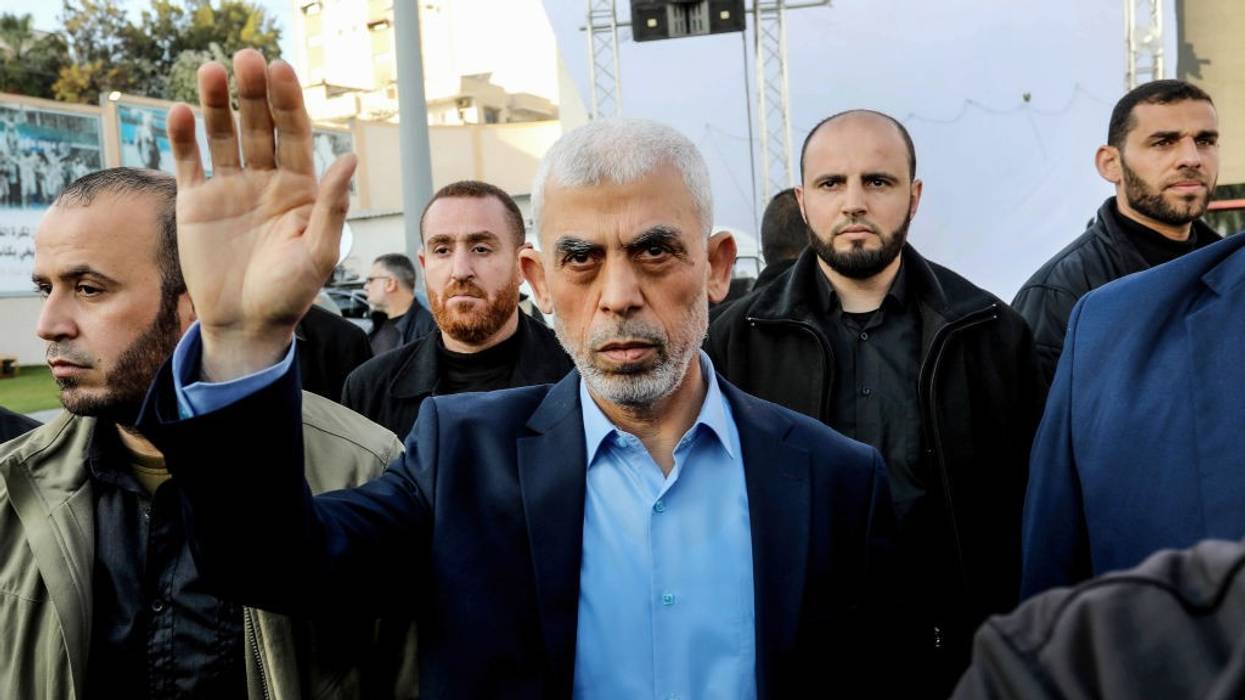
In announcing the charges, U.S. Attorney General Merrick Garland said that "the Justice Department has charged Yahya Sinwar and other senior leaders of Hamas for financing, directing, and overseeing a decadeslong campaign to murder American citizens and endanger the national security of the United States."
"On October 7, Hamas terrorists, led by these defendants, murdered nearly 1,200 people, including over 40 Americans, and kidnapped hundreds of civilians," he continued. An unknown number of Israelis were killed by so-called "friendly fire" and under the Hannibal Directive, which allows Israeli forces to kill Israelis rather than let them fall into enemy hands.
"This weekend, we learned that Hamas murdered an additional six people they had kidnapped and held captive for nearly a year, including Hersh Goldberg-Polin, a 23-year-old Israeli American," Garland said. "We are investigating Hersh's murder, and each and every one of Hamas' brutal murders of Americans, as an act of terrorism."
"The charges unsealed today are just one part of our effort to target every aspect of Hamas' operations," he added. "These actions will not be our last."
International Criminal Court Prosecutor Karim Khan has applied for warrants to arrest Sinwar plus two other men charged on Tuesday: Ismail Haniyeh, the Hamas political leader assassinated in Tehran in July, and Mohammed Deif, who led the group's militant arm. Israel also claims to have killed Deif.
The men are wanted for alleged crimes including extermination and rape. Khan also wants to arrest Israeli Prime Minister Benjamin Netanyahu and Yoav Gallant, his defense minister, for alleged crimes including extermination and forced starvation.
Israel is already on trial for genocide at the International Court of Justice. Israel’s obliteration of Gaza has left more than 145,000 Palestinians dead, wounded, or missing and millions more displaced, sick, and starving.
Despite this, the Biden administration continues to provide Israel with billions of dollars in weapons, diplomatic cover in the form of United Nations Security Council cease-fire resolution vetoes, and repeated genocide denials.
Responding to the new DOJ charges, Liam O'Mara, a history professor at Chapman University in California, said: "Our government doesn't want peace in Palestine. It never has. We could, at any time, simply stop providing weapons to a far-right nationalist state intent on genocide. Instead, we just filed criminal charges against Palestinian militants who fought back."