

SUBSCRIBE TO OUR FREE NEWSLETTER
Daily news & progressive opinion—funded by the people, not the corporations—delivered straight to your inbox.
5
#000000
#FFFFFF
To donate by check, phone, or other method, see our More Ways to Give page.
Daily news & progressive opinion—funded by the people, not the corporations—delivered straight to your inbox.
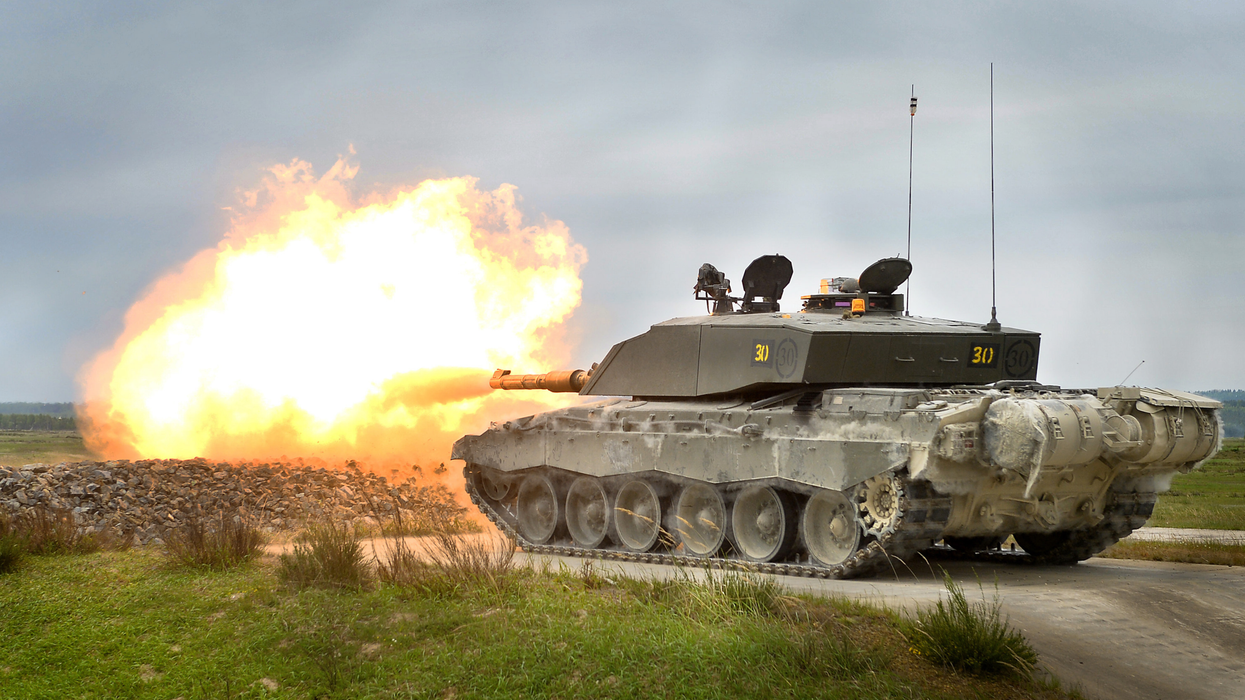
"Like in Iraq, the addition of depleted uranium ammunition into this conflict will only increase the long-term suffering of the civilians caught up in this conflict," said one peace campaigner.
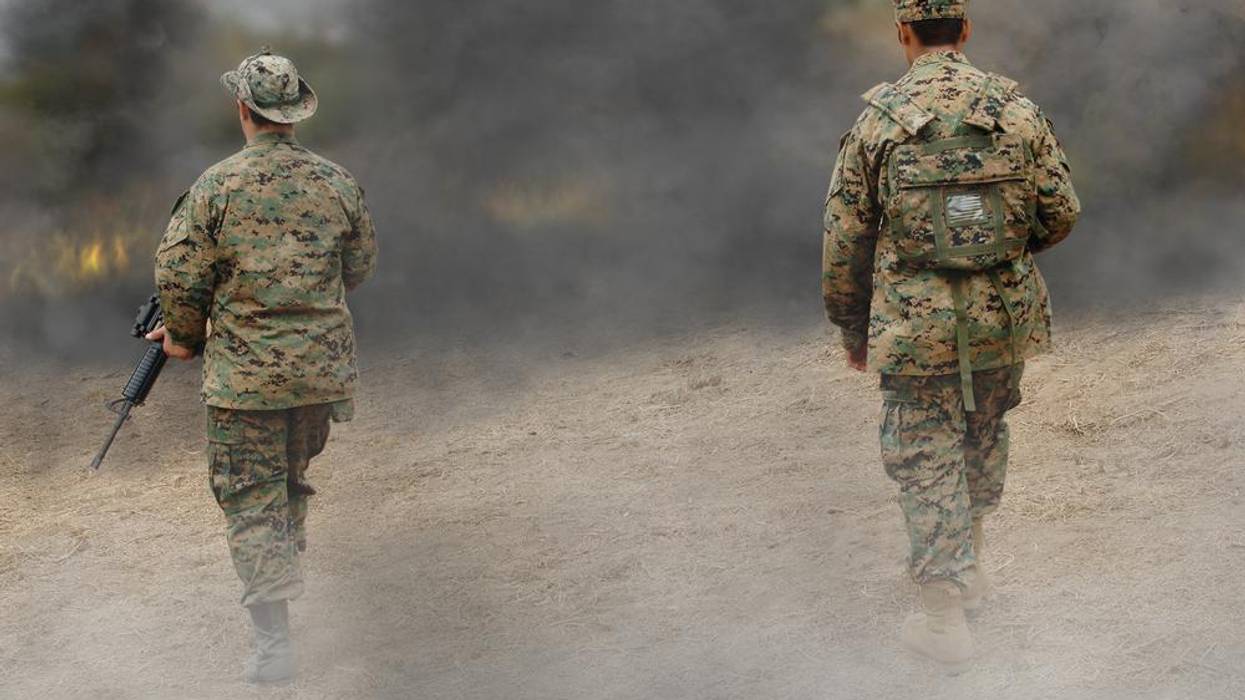
Dismissing a warning from Russia that it would regard the deployment of Western depleted uranium munitions in Ukraine as an act of nuclear war, a top British defense official said Monday that the United Kingdom will send DU armor-piercing tank rounds to Ukrainian homeland defenders—a move condemned by peace campaigners in the U.K. and beyond.
Responding to a written question from Raymond Jolliffe, 5th Baron Hylton, a hereditary peer in the House of Lords, about "whether any of the ammunition currently being supplied to Ukraine contains depleted uranium," Minister of State at the Ministry of Defense Lord Annabel MacNicoll Goldie said that "alongside our granting of a squadron of Challenger 2 main battle tanks to Ukraine, we will be providing ammunition including armor-piercing rounds which contain depleted uranium. Such rounds are highly effective in defeating modern tanks and armored vehicles."
In addition to the British tanks, U.S. Bradley Fighting Vehicles, as well as German Leopard 2 tanks can fire DU rounds—although American officials have not said whether such munitions would be included as part of military aid to Ukrainian forces fighting a yearlong Russian invasion.
Fired from tanks, aircraft, and field artillery, DU rounds—which are extremely dense—are ideal for piercing hardened armor. However, the exploding shells produce radioactive dust that contaminates soil, water, and air for many years. U.S. Army training manuals warn that DU contamination "will make food and water unsafe for consumption" and requires soldiers to wear protective clothing when in or near contaminated areas.
U.S. and allied forces fired DU munitions during the 1991 and 2003-11 invasions of Iraq, and in Syria during the campaign against Islamic State. Miscarriages, birth defects, and cancers soared in Iraq after both wars. According to one study, more than half of the babies born in Fallujah between 2007 and 2010 had birth defects. Among pregnant women in the study, over 45% experienced miscarriages in the two-year period following the battles for Fallujah. Geiger counter measurements of DU-contaminated sites in Iraqi cities have consistently shown radiation levels 1,000 to 1,900 times greater than normal.
"Like in Iraq, the addition of depleted uranium ammunition into this conflict will only increase the long-term suffering of the civilians caught up in this conflict," Kate Hudson, general secretary of the U.K.-based Campaign for Nuclear Disarmament (CND), said in a statement. "DU shells have already been implicated in thousands of unnecessary deaths from cancer and other serious illnesses."
"CND has repeatedly called for the U.K. government to place an immediate moratorium on the use of depleted uranium weapons and to fund long-term studies into their health and environmental impacts," Hudson added. "Sending them into yet another war zone will not help the people of Ukraine."
In January, Konstantin Gavrilov, head of the Russian delegation to the Vienna Negotiations on Military Security and Arms Control, cautioned NATO countries against giving Ukrainian forces DU shells, warning that "if Kyiv were to be supplied with such munitions for the use in Western heavy military hardware, we would regard it as the use of 'dirty nuclear bombs' against Russia, with all the consequences that entails."
"Another step has been taken, and there are fewer and fewer left."
Asked if the U.K.'s move brought the world closer to nuclear war, Russian Defense Minister Sergei Shoigu told reporters Tuesday that "another step has been taken, and there are fewer and fewer left."
Responding to Goldie's announcement, Russian President Vladimir Putin—who last week was hit with an International Criminal Court war crimes arrest warrant—said Tuesday that "if all this happens, Russia will have to respond accordingly, given that the West collectively is already beginning to use weapons with a nuclear component."
On Telegram Tuesday, Maria Zakharova, a spokesperson for Russia's Ministry of Foreign Affairs, decried what she called a "Yugoslav scenario," a reference to NATO's use of DU rounds during the 1999 air war in Serbia and Kosovo, which many believe caused a surge in leukemia in the region—both among the local population and foreign troops deployed there.
Zakharova added that "it is naive to believe that only those against whom all this will be used will become victims. In Yugoslavia, NATO soldiers, in particular the Italians, were the first to suffer. Then they tried for a long time to get compensation from NATO for lost health. But their claims were denied."
Numerous researchers and veterans groups believe DU may be the cause of the mysterious Gulf War Syndrome afflicting hundreds of thousands of U.S. and coalition troops, although in 2021 the Pentagon concluded there is "no link" between the illness and DU.
"CND has repeatedly called for the U.K. government to place an immediate moratorium on the use of depleted uranium weapons and to fund long-term studies into their health and environmental impacts."
Peace groups have long campaigned for a ban on DU munitions. The United Nations General Assembly last year approved an Indonesian draft resolution expressing concerns about "the health risks and environmental impact" of DU weapons and calling for a "cautionary approach" to their use. The vote was 147-4, with the U.S., U.K., France, and Israel dissenting and 24 nations abstaining.
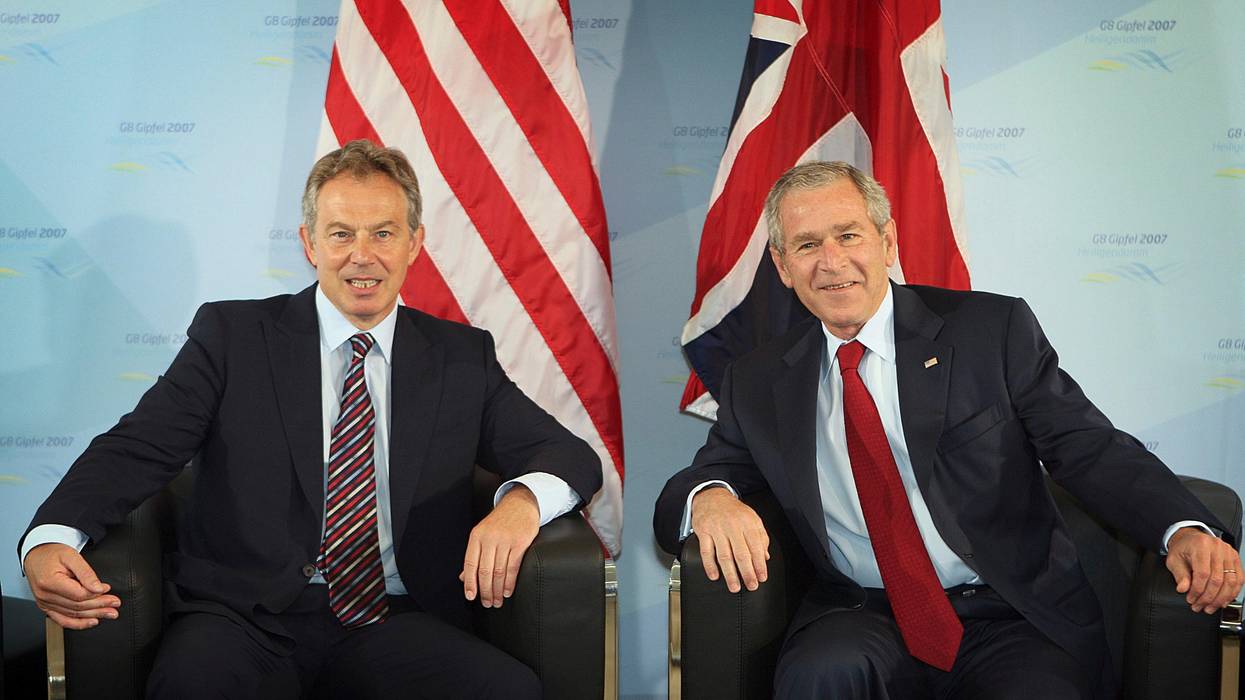
Citing his role in the Iraq War and other devastating conflicts, hundreds of thousands of people in the United Kingdom and beyond are calling for former British Prime Minister Tony Blair to be stripped of his newly bestowed knighthood.
"He was personally responsible for causing the death of countless innocent civilian lives and servicemen in various conflicts."
As of Thursday afternoon, over 900,000 people had signed the Change.org petition seeking to have Blair's "Knight Companion of the Most Noble Order of the Garter"--one of the highest honors a British monarch can bestow upon a subject--rescinded. Queen Elizabeth II announced Blair's knighthood on New Year's Eve.
"Tony Blair caused irreparable damage to both the Constitution of the United Kingdom and to the very fabric of the nation's society," the petition states. "He was personally responsible for causing the death of countless innocent civilian lives and servicemen in various conflicts. For this alone he should be held accountable for war crimes."
"Tony Blair is the least deserving person of any public honor, particularly anything awarded by Her Majesty the Queen," the petition asserts.
Blair was then-U.S. President George W. Bush's staunchest ally during the Iraq War, which was waged on a foundation of nearly a thousand lies, including many about erstwhile ally Saddam Hussein's nonexistent weapons of mass destruction and involvement in the September 11, 2001 terrorist attacks.
The war destroyed Iraq. The Costs of War Project at Brown University's Watson Institute for International and Public Affairs says that possibly over 200,000 Iraqi civilians died "from direct war-related violence caused by the U.S., its allies, the Iraqi military and police, and opposition forces from the time of the invasion through October 2019," with the vast majority of those deaths occurring during the invasion and eight-year occupation of the country, according to Iraq Body Count. One survey placed the number of Iraqi deaths at over one million. The Costs of War Project estimates that over 9.2 million Iraqis were displaced by the war.
The U.K. Ministry of Defense (MOD) reported that 179 British troops and MOD personnel died during Operation TELIC, which lasted from March 2003 through May 2011. That's the second-highest total of coalition service member deaths after the U.S., which lost over 4,400 troops and Department of Defense employees in what the Bush administration initially called Operation Iraqi Liberation (OIL).
One of the petition's signatories, Elsie Manning, lost her daughter, Royal Army Staff Sgt. Sharron Elliott, when the patrol boat she and three other British service members were traveling in was hit by a bomb near Basra on Remembrance Day in 2006.
Manning told The East Anglian Daily Times she was "absolutely disgusted" to learn of Blair's knighthood.
"It's just a real insult to all those kids that have died and were injured and who are struggling with life," she said. "We as families are absolutely gutted. It's just heartbreaking really to think he's being rewarded for all the deaths that have happened."
"If he had any morals at all," Manning added, "he would decline and refuse it."
Blair also sent thousands of troops to fight in the U.S.-led coalition war against the Taliban and al-Qaeda in Afghanistan, a conflict in which over 200,000 people were killed and millions more were displaced. Last August, as U.S. troops withdrew from Afghanistan after 20 years of war and occupation, Blair blasted what he called the "tragic, dangerous, unnecessary" American "abandonment" of the country.
In addition to facing intense criticism for Britain's involvement in the Iraq and Afghanistan wars and for backing brutal dictatorships around the world, Blair was also condemned for joining the devastating 1999 NATO air war against Yugoslavia. Echoing then-U.S. President Bill Clinton, Blair listed one of the main reasons for the bombing campaign--which targeted civilian infrastructure, killing hundreds of men, women, and children--as protecting NATO's "credibility."
According to a January YouGov poll, only 14% of Britons approve of Blair's knighthood, with 79% of Conservatives and 56% of supporters of the former prime minister's own Labour Party opposing the move.
"The contempt in which Britain's elite holds the public has never been more eloquently expressed than in the decision to award Tony Blair the highest order of knighthood," Australian journalist John Pilger tweeted earlier this week, sardonically adding, "Rise, Sir Tony!"
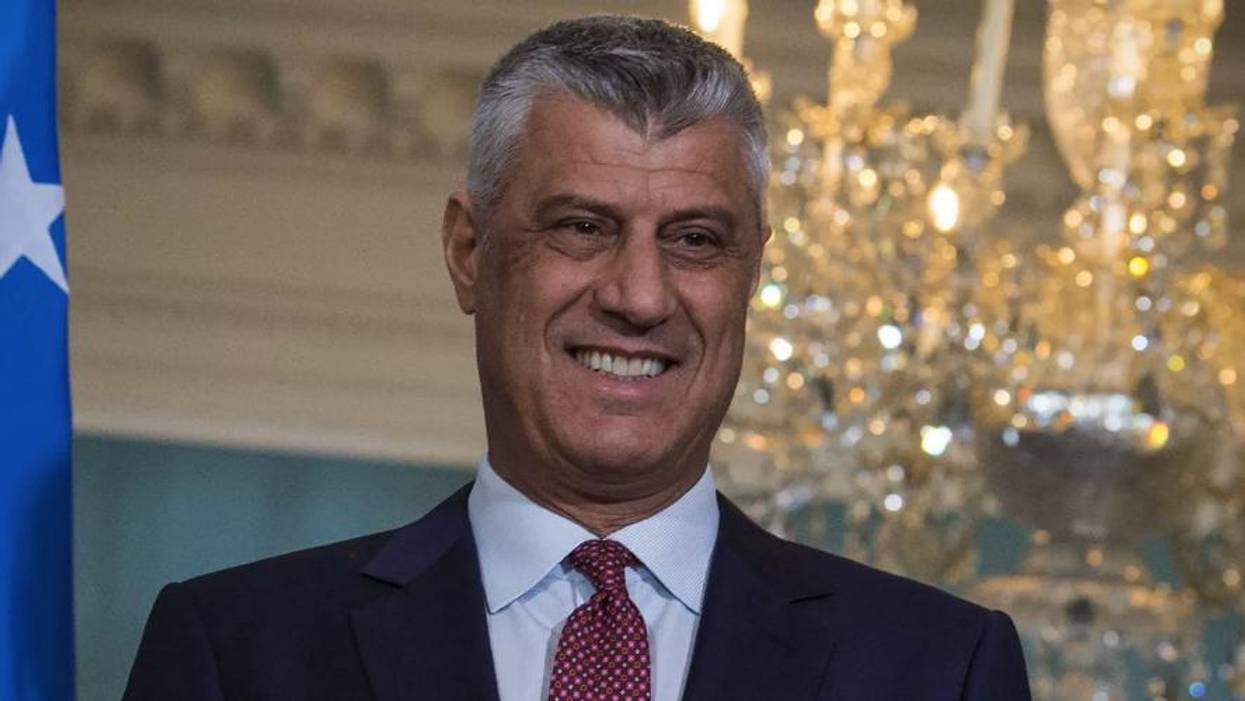
When the court in the Hague unveiled the charges against Thaci on June 24th, he was on his way to Washington for a White House meeting with Trump and President Vucic of Serbia to try to resolve Kosovo's diplomatic impasse. But when the charges were announced, Thaci's plane made a U-turn over the Atlantic, he returned to Kosovo and the meeting was canceled.
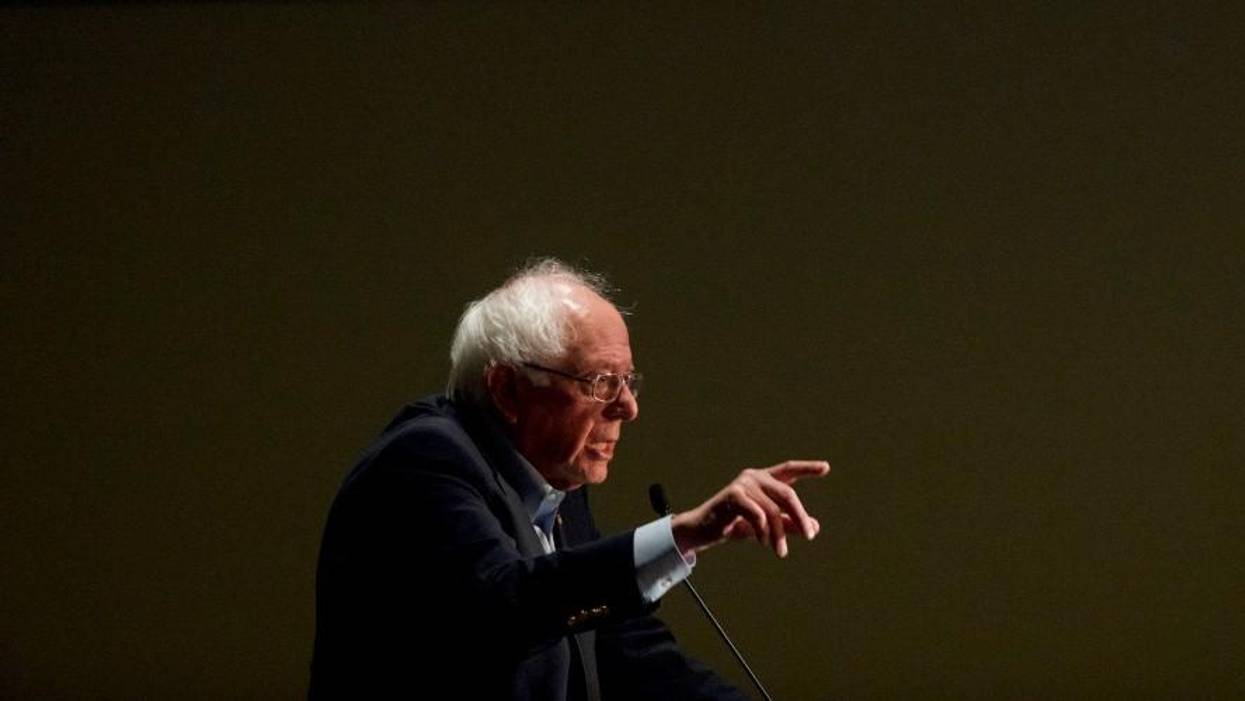
I am a child of the presidency. I came of age politically in the early 1970s when the end game in the Vietnam War still stoked furious debate and the constitutional crisis of Watergate brought down the Nixon presidency. Historians, presidential scholars and politicians fell over themselves to decry the excesses of what Arthur Schlesinger, Jr famously termed "the imperial presidency." And young minds like mine were entranced with sorting it all out. I have since struggled to convey to students the seismic feeling that the tectonic plates of politics in the US were shifting under our feet.
Today conjures similar tremors. An obstructionist Senate leadership awaits delivery of articles of impeachment against a criminally unhinged chief executive who blithely walks us to the brink of war with Iran, the planet faces the existential crisis of a sixth extinction with the relentless march of climate change, and--OMG!--democratic socialist Bernie Sanders has a serious shot at being elected President. WTF!
In the '70s political leaders sought to allay such fears with the comforting conclusion that amidst utter chaos, "the system works." Bad guys got jail time. Nixon resigned. Elections brought change. And Congress passed legislation to reclaim its budgetary and wars powers. Our political thinking was dominated by the imagery of a constitutional "balance of power," a metaphorical see-saw rebalanced with a now-chastened presidency on one end and a reenergized Congress on the other. Understandably reassuring back then, the imagery was misleading; we should resist its revival in today's polarized climate. For beneath partisan differences lies a deeper structure of political and economic power to which both parties are beholden.
"The message is crystal clear: the Democratic Party establishment and corporate media would prefer a Trump reelection to a Sanders presidency."
The modern presidency was rooted in the long tenure of FDR who confronted the crises of the Great Depression and WW II. His success was rooted, in part, in his willingness to embrace reforms--stealing "the thunder of the left"--that moved the US in a more progressive direction, thus appeasing the populist agitation routinely out in the streets. But the foundation of the office was built upon the twin pillars of endless economic growth (defined as ever-expanding GDP) and promotion of national security (defined as the projection of American power against all "enemies"). These twin goals were bipartisan, a shared consensus wedded to corporate definitions of the ends of US economic and military power, captured succinctly in Eisenhower's 1961 farewell warning about the dangers of the "military-industrial complex."
The shared ends are taken as a given, while the media highlight (sometimes strong) tactical differences over means. Yet this consensus on economic growth and national security simply is not sustainable today in the face of accelerating climate change and the decline of American empire. Soaring economic growth is assumed to be the antidote to all problems. Hence media analysts, and especially liberals, didn't bat an eyelash when President Obama proclaimed his market-based climate policy, reassuring us that being caretakers of the future of the planet involves "no contradiction between a sound environment and strong economic growth," a proposition with which President Trump readily concurs. As scientists continue to tell us, the US (indeed the world) needs to reduce drastically the production of greenhouse gases by 2030. Promoting soaring economic growth--even in pursuit of the vital goal of expanding the economic pie and distributing it most justly--risks making emission targets even harder to reach. Physics and chemistry are spectacularly indifferent to who chairs the key environmental committees in the House and Senate.
Similarly, our common understanding of "national security" must change. Maintaining more than 800 military bases around the world, along with the environmental hazards inherent in them, will not make us more secure. Neither will the continued sophistication of our weapons and surveillance capabilities, a lesson made ever more poignant by President Trump's recent drone assassination of Iranian Gen. Suleimani. As much as Democrats insist on the need to be briefed before such an attack, this procedural argument overlooks the deeper substantive agreement that historian Andrew Bacevich terms the American national security "credo," which "summons the United States--and the United States alone--to lead, save, liberate, and ultimately transform the world." Both parties are marinated in American exceptionalism.
In justifying the death of some 500,000 Iraqi children subjected to a punishing UN embargo, for instance, Secretary of State Madeleine Albright commented to CBS in 1996, "I think this is a very hard choice, but the price, we think the price is worth it." She elaborated on the hubris underlying this imperial foreign policy mindset two years later, again with reference to Iraq, allowing that while diplomacy can be useful, "if we have to use force it is because we are America; we are the indispensable nation." Not to be outdone, Secretary of State Hillary Clinton--who campaigned to the right of Trump on foreign policy in 2016--offered a giddy off-air declaration to CBS following the 2011 killing of Muammar Gaddafi in Libya: "We came, we saw, he died." This cheery sentiment should reverberate in the ears of all who harbor hopes that the Democrats operate on a fundamentally different moral plane than Republicans. To be clear, unilateral presidential action is troubling within our constitutional framework. Ignoring it would be dangerous; accountability matters. But in short, if we have an imperial presidency it is because the US has been, since the end of WW II, an imperial power.
What can be done? In this election season progressives have a viable choice between Elizabeth Warren or Bernie Sanders. Both are impressive in their own right. The question for the progressive left is not the one thrown in our faces every day: which one can beat Trump? Either one can pull that off, although Sanders's grassroots support and fundraising ability is deeper, the loyalty of his supporters more fervent, his message to the working class more authentic. He can erode Trump's base. The larger question is, which one is more likely to move the nation in a progressive direction, beyond mere reformism? Like Sanders, Warren did not come from a privileged background. While she was a registered Republican until 1996, her views have evolved, and it is refreshing that her economic populism frightens Wall Street. Her views of foreign policy are less much less bold and overall her political career leans toward accommodation and compromise. At her core she does not appear to question the conventional bipartisan consensus on economic growth and national security. She clearly articulated her brand of reformism in a 2018 interview: "I am a capitalist. Come on. I believe in markets. What I don't believe in is theft, what I don't believe in is cheating." It is sad that in the age of Trump a candidate must come out against theft and cheating, but such is our political life under a narcissist with authoritarian impulses.
"The day after his triumph, President-elect Sanders would be staring in the face of capital strike. The practical result not of some 'deep state' conspiracy but of the normal protective reaction of elite interests, capital strike must be given sober forethought among progressives."As the longest serving Independent in American history, Bernie Sanders potentially can take the movement further. His presidency would open the door to deeper change, what in the late 1960s used to be called "non-reformist reforms," reforms that facilitate more fundamental change--call it a "revolution," or democratic socialism, or call it creating a genuinely just society with an honest chance of thriving. He has a long and consistent record of progressive politics and organizing vitality, working with Democrats and Republicans, particularly on amendments to bills in the Senate. So yes, he does compromise. Criticizing him from the left has become a cottage industry. If you listen closely you can hear The Nation columnist Alexander Cockburn screaming from the grave about Bernie's vote in favor of the 1994 Crime Bill. The bombing of Yugoslavia in 1999 has led some on the left to write him off. In a long legislative career, the votes are there to criticize. And, of course, he supported Clinton over Trump last time around, although she continues to blame him for her defeat. Nonetheless, it cannot be denied that to a significant extent Sanders has profoundly impacted political discourse in the United States. Has any other post-FDR presidential candidate inspired the wrath of economic elites more than Sanders? Has the struggle for universal health care and income and wealth tax equity had a stronger advocate? His voice has had efficacy. And in light of the current Democratic opposition to President Trump's bombing in Iran, can we imagine any other Democrat or Republican reminding us that US policy in Iran goes back beyond the seizure of hostages at the US embassy in 1979, back at least as far as CIA intervention to overthrow Iran's elected government in 1953 and the installation of the murderous Shah, the US-funded bipartisan dictator for 26 years? Warts and all, a President Sanders would challenge the status quo and give non-reformist reforms some breathing space.
What, then, are the biggest remaining obstacles to Sanders's candidacy? How does the deeper power structure threaten real change? Two major barriers are most pressing, both in the form of strikes. Think of them as capitol strike and capital strike. The first, capitol strike, refers primarily to the political, economic and media establishment that engulfs Washington, DC. The politics of Capitol Hill mitigate against ideas that seriously threaten business as usual. Under the leadership of Rep. Debbie Wasserman Schultz, the DNC loaded the dice against Sanders in 2016. The process is somewhat more open this time around, although the confounding power of superdelegates still exists at the Convention if no one wins the first round of balloting. And President Obama's private admission in late November that he would speak up to stop Bernie from becoming the Democratic nominee should the race appear headed in that direction is instructive. MSNBC--America's alleged "left-liberal" network--renders Sanders essentially invisible, bludgeoning its listeners with the vacuous concept of "electability" among Democratic contenders. Led by the "steady hand" of Biden, the "fresh new face" of Buttigieg, or the "sensible midwestern centrism" of Klobuchar, we are assaulted by the professed wisdom of the political middle. And if all goes to hell, there are two billionaires waiting in the wings. Of course, capitol strike could follow a newly elected President Sanders into the White House, even if the Democrats were to take control of both chambers of Congress. The message is crystal clear: the Democratic Party establishment and corporate media would prefer a Trump reelection to a Sanders presidency. Sanders is, in effect, the target of capitol strike, a presidential "pre-impeachment" of sorts, being tried daily for the high crime and misdemeanor of opening the door to fundamentally challenging the "givens" of the American political economy.
"One of Sanders' campaign slogans is 'Not me. Us.' That thought literally needs to become reality if Sanders is to address the challenges that await him."
A thought experiment will clarify the even more troubling obstacle of capital strike. Assume that despite the odds, Bernie Sanders wins the nomination and defeats Donald Trump. After all, voters still have their say, and right now Sanders continues to poll well in primary states. Beyond the emolument of a lifetime supply of Ben & Jerry's ice cream, what awaits President-elect Sanders the day after the general election? Financial panic would immediately ensue. Global financial markets would plummet in reaction to the rash decision of US voters. The swift negative response would be amplified in corporate boardrooms as the specter of severe market instability and declining business confidence shook the capitalist world. Mainstream media outlets will crackle with pundits citing the "irony" that the champion of the working class is tanking their already bleak economic prospects. The day after his triumph, President-elect Sanders would be staring in the face of capital strike. The practical result not of some "deep state" conspiracy but of the normal protective reaction of elite interests, capital strike must be given sober forethought among progressives.
Again, that is Day 1 of the end of Trump. The economic tumult would not ebb. Sanders would face enormous pressure to use his 11-week transition period to calm market fears by announcing the appointment of "sensible" moderate voices to his Cabinet--non-confrontational "level heads" acceptable to corporate power holders. Ben as Secretary of Commerce and Jerry leading the Small Business Administration? Bill McKibben at the Interior Department? Amy Goodman as Press Secretary? Rage Against the Machine playing the inaugural ball? Possible, but not likely. The pressure to put forward the name of nice, "safe" department heads would be intense, personnel decisions that would undermine the very progressive agenda his electoral coalition had worked so hard to create. Briefly put, the economics of capital strike would threaten to reverse the verdict of democracy.
These are not idle considerations. It is not an exercise in negativism to anticipate systemic responses to perceived threats. Both types of strikes likely would confront a Warren nomination as well, but with a greater likelihood of capitulation to the realities of systemic pushback. One of Sanders' campaign slogans is "Not me. Us." That thought literally needs to become reality if Sanders is to address the challenges that await him. Howard Zinn once observed, "What matters most is not who is sitting in the White House, but who is 'sitting in'--and who is marching outside the White House, pushing for change." Zinn's words were never more relevant. A president is, among other things, the nation's educator-in-chief. With the backing of social movements, Sanders will need to educate the public about how to redefine our basic notions of "progress" and "growth." Only a sustained social movement--for climate justice, racial justice, economic justice--can help him achieve that goal. It must be more than an electoral coalition; amassing the requisite 270 electoral votes is only the beginning. Agitation and demonstrations need to guide him into power having survived the initial strategic dilemmas of capitol strike and the even more intense pressure of capital strike. Unlike FDR, Sanders is not about stealing "the thunder of the left." He needs to mobilize it and ride it beyond mere reformism. Emboldened and legitimized by "street heat," Sanders and the nation's progressive hopes have a chance to prevail. Otherwise, the titans of capitalism and faux democracy will be out on strike.
Practically speaking, the Trump administration's extrajudicial assassination of a top Iranian general was probably legal. The rationale is straightforward: Congress has steadily settled on a constitutionally dubious theory of handing the president near-limitless authority over how, when, and why the country goes to war.
The 1973 War Powers Resolution, the often-cited check on this extraordinary authority, is central to the mess.
The Promise
Passed into law over President Nixon's veto, the joint resolution is not short on lofty language.
Section 2 announces that its "purpose and policy" is "to fulfill the intent of the framers of the Constitution of the United States and ensure that the collective judgment of both the Congress and the President will apply to the introduction of United States Armed Forces into hostilities, or into situations where imminent involvement in hostilities is clearly indicated by the circumstances, and to the continued use of such forces in hostilities or in such situations."
In the preceding congressional debates, Senator Hubert Humphrey put it more bluntly. "When a president initiates a war," he told his colleagues. "He is taking away a power from the Congress. His act is unconstitutional. He is breaking the law."
It does seem to be true that the framers of the U.S. constitution, for all their faults, boldly placed unprecedented constraints on executive war-making. Their broad motivations were nicely distilled by John Jay in Federalist No.4: "Absolute monarchs will often make war when their nations are to get nothing by it, but for the purposes and objects merely personal, such as thirst for military glory, revenge for personal affronts, ambition, or private compacts to aggrandize or support their particular families or partisans."
Although the framers gave the president the impressive job title of "commander-in-chief," and Alexander Hamilton eloquently expressed the need for a nimble and effective executive branch, the core powers to "declare war," "raise and support Armies," "provide and maintain a Navy," and "make Rules for the Government and Regulation of the land and naval Forces" were explicitly vested in Congress.
After the calamity of Vietnam, the War Powers Act promised to restore this constitutional balance.
Yet, you don't need a degree in constitutional law to notice that things have since panned out rather differently.
From brief military adventures in Grenada and Panama to massive aerial bombardments of the former Yugoslavia and the abject destruction of Libya, successive presidents have rarely wasted their time on Capitol Hill asking for a rubber-stamp.
Some, like George W. Bush, have embraced an extreme vision of their office's "inherent" powers. Others, like Clinton and Obama, have put a little more effort into legal arguments. In the end, however, they have all been content to treat Congress as an afterthought.
The War Powers Resolution is rarely blamed for this constitutional mutation. To be sure, presidential contempt, cynical redefinitions of "hostilities," and more drastic legislative delegations, such as the Authorization for the Use of Military Force (AUMF) resolution, have inevitably diminished Congress's role. The AUMF -- in giving the president endless and geographically unbound power to fight any person or group that his secretary of state labels a "terrorist" -- is especially liable for the post-2001 revival of once-prohibited executive branch assassinations.
However, the War Powers Resolution still contains some clearly defective features. Once we read beyond the high-minded preamble, we find less potent words like "consultation" and "reporting." Here, we can also see the resolution's fundamental flaw: It lets the president move first.
Yes, he must explain his actions to congressional leaders within 48 hours (a requirement that even Trump could meet), and he is supposed to withdraw any commitments of American troops after 60 days without affirmative congressional approval. (Although, in an Orwellian caveat, the president is allowed 30 more days if he or she "determines and certifies to the Congress in writing that unavoidable military necessity respecting the safety of United States Armed Forces requires the continued use of such armed forces in the course of bringing about a prompt removal of such forces.")
But, by then, we're already at war. And war usually means an emboldened president, supine media, and hesitant judiciary. Once it starts, it's hard to stop -- even if popular support is lukewarm. Witness Vietnam, Afghanistan, and Iraq, among other protracted catastrophes.
Of course, we cannot forget to throw some share of scorn toward the people elected to Congress who have allowed us to arrive at this point. Until very recently, their persistent failure to make use of the War Powers Resolution embodied their cowardice and negligence.
Do we need a new, stronger War Powers Resolution? If by this we mean another sweeping restatement of congressional authority over foreign policy, I think the answer is no.
To begin with, it would be almost impossible for the House and the Senate to pass something that is both veto-proof and forceful. More importantly, Congress doesn't need such a resolution to rein in a rogue, belligerent president. The authority for this is already stated--rather more simply and concretely-- in the constitution itself.
Apart from the war declaration clause, which has receded in relevance along with the global decline of formal war declarations, Congress retains its most direct constitutional instrument: money.
As Julian Zelizer points out, the efforts of the Nixon and Ford Administrations to prolong and extend the war in Vietnam were scuttled by repeated denials of funding in the early 1970s. The "power of the purse" was used reactively and belatedly in this context, but there's no good reason why it shouldn't be deployed preemptively, as a credible warning to a president contemplating unilateral military action.
Congress can also investigate: a tool not derived from the constitutional text, but well-established through practice and precedent. The power to compel public testimony under oath and demand crucial documents can be remarkably effective, as demonstrated in wide-ranging hearings exposing misconduct by the nation's intelligence agencies in 1975. Although the Republican Benghazi investigation also reflects the potential for farcical partisanship, tough questioning, aired on television, can at least make the president's underlings answer for their actions.
There are some indications now that Democrats want to substitute more concrete tools for feel-good gestures like the War Powers Resolution. We can only hope that this isn't happening too late.

In 1965, the Lyndon B. Johnson administration backed a military coup by a right-wing Indonesian general named Suharto -- who like many Javanese used only his given name -- that overthrew Sukarno, hero of his country's freedom struggle against Dutch colonialism and its first post-independence president. Sukarno, an ardent anti-imperialist, had made the fatal errors of protecting Indonesian communists and cozying up to the Soviet Union and China, and was marked for elimination. In service of this, the US Embassy in Jakarta gave Suharto's forces "shooting lists" of known and suspected communists; US officials later admitted checking off names of victims who had been killed or captured.
"It was a really big help to the army," explained former diplomat Robert Martens. "They probably killed a lot of people, and I probably have a lot of blood on my hands, but that's not all bad." Suharto consolidated his power and, with US support, ruled Indonesia by 1967. More than half a million Indonesians died in what the New York Times called "one of the most savage mass slayings of modern political history.
Of Hands and Blood
Fast-forward 55 years to the present, when amid the crescendoing drumbeat of war, this time against Iran, one phrase seems to dominate the rhetoric of warmongering politicians and pundits alike: Qasem Soleimani, the top Iranian general assassinated along with numerous associates in a US drone strike in Baghdad on Thursday, "has the blood of Americans on his hands," we're told. And yes, it's true that hundreds of US troops in Iraq were killed or wounded by Iran-backed fighters. It's also true that those troops were foreign invaders engaged in an illegal war of regime change, occupation and exploitation, and that Soleimani is seen by many as a hero who courageously -- and successfully -- defended his Shia brethren in Iraq and elsewhere from imperialist domination.
In the post-World War II era, (U.S.) has invaded or attacked, in more or less chronological order, North Korea, Puerto Rico, Lebanon, Cuba, North Vietnam, Laos, the Dominican Republic, Cambodia, Libya, Grenada, Nicaragua, Panama, Iraq, Bosnia, Somalia, Haiti, Afghanistan, Sudan, Serbia, Yemen, Pakistan and Syria. That's 22 countries.
We're not here today to debate whether Soleimani was a hero or a villain, for it is possible to be both, to different people. Nor are we here to remind that Iran is a country -- which despite being surrounded by hostile US and allied forces, and despite a long history of sometimes extreme US aggression and meddling -- that hasn't started a foreign war since the early 1700s. Or that the immediate genesis of the current crisis is Trump's unilateral withdrawal from the nuclear deal with which everyone agrees Iran was compliant, a move which many warned could precipitate fallout of a sort very much like what's happening now. Or, for that matter, how President Donald Trump's act of war will further inflame the world's most combustible region.
No, we're here today to discuss bloody hands. America's bloody hands, to be precise. Logic would dictate that the US presumption that having American blood on one's hands marks one for what Trump called "termination" would apply equally to those touched by America's bloody hands, and the US has exponentially more blood on its hands than Iran. In the post-World War II era, it has invaded or attacked, in more or less chronological order, North Korea, Puerto Rico, Lebanon, Cuba, North Vietnam, Laos, the Dominican Republic, Cambodia, Libya, Grenada, Nicaragua, Panama, Iraq, Bosnia, Somalia, Haiti, Afghanistan, Sudan, Serbia, Yemen, Pakistan and Syria. That's 22 countries, some of them subjected to two or more US attacks or invasions.
'Life Is Cheap'
While it is impossible to tell precisely how many people have been killed by a country that infamously "doesn't do body counts," contemporary accounts and historical analyses paint a very bloody picture. After the Korean War, US strategic air commander Gen. Curtis "Bombs Away" LeMay acknowledged that "we killed off 20 percent of the population" of North Korea. That's nearly 1.9 million men, women and children. In comparison, the Nazis killed 17 percent of Poland's pre-World War II population. At least half a million--and perhaps as many as a million--North Korean and Chinese troops also died.
At least one million North Vietnamese soldiers, civilians and allied Viet Cong fighters, along with at least 150,000 Cambodians and a similar number of Laotians were killed by US and allied bombs and bullets during the Vietnam War. Hundreds of millions of bombs were dropped on the peasants of Laos, the most heavily-bombed nation in history, and more than 20,000 Laotians, many of them children, have been killed by unexploded ordnance since the bombing ended in 1973. President Richard Nixon's secret bombing of Cambodia, along with a US-backed coup, ushered in the horrific era of Khmer Rouge rule and an ensuing genocide that claimed another 1.5 to 2 million lives.
Such bloodletting was a secondary concern for Secretary of State Henry Kissinger, who in November 1975 told Thailand's foreign minister to inform the Khmer Rouge that the United States would not oppose its rule. "We will be friends with them," Kissinger said. "They are murderous thugs, but we won't let that stand in our way." A month later, President Gerald Ford and Kissinger were in Jakarta green-lighting another genocidal campaign, this time in East Timor. By the time it was over, 200,000 of the territory's 700,000 people were dead.
"The Oriental doesn't put the same high price on life as does a Westerner," Gen. William C. Westmoreland, commander of US forces in Vietnam, explained in 1974. "Life is cheap in the Orient."
Although not quite Oriental, life was also cheap in Iraq, where US forces killed an estimated 200,000 Iraqi troops and civilians, at a cost of only 292 coalition troops, during the 1991 Gulf War. The United Nations later acknowledged that subsequent sanctions were to blame for the premature deaths of more than half a million Iraqi children. When journalist Lesley Stahl noted that this was "more children than died in Hiroshima," then-US ambassador to the United Nations Madeleine Albright replied, "we think the price is worth it."
The price was even higher for Iraqis the second time around, with a 2015 study concluding at least 1.2 million, and possibly more than 2 million, civilians and combatants in Iraq, Afghanistan and Pakistan have died in the ongoing US-led war on terrorism, now in its 19th year. Thousands more people have died in Syria, Somalia, Yemen and Libya.
A World of Hurt
Those were just the big wars. Thousands of men, women and children have been killed by US bombs and bullets in Cuba, the Dominican Republic, Grenada, Panama and Yugoslavia. Proxy forces have killed at least hundreds of thousands more on every inhabited continent save Australia. In Iran, the US has overthrown the most popular government Iranians have ever known, supported a brutal monarch and trained his forces in torture and repression, shot down a civilian airliner killing hundreds of civilians and trained terrorists who have carried out deadly attacks against Americans and Iranians alike.
Perhaps this sanguinary legacy is why, in survey after international survey, the United States is perennially voted the world's greatest threat to peace in most of the world's nations. After Soleimani's assassination, Trump boasted that "his bloody rampage is forever gone." If only the same were true of Trump, who continues to fulfill his campaign promise to "bomb the shit out of" Islamist militants and "take out their families" as the US wages war in seven countries and kills thousands of civilians and combatants alike. So much more so than Iran's, America's hands are drenched in blood.

Let's bomb Iowa! Or maybe Texas or Michigan or Nebraska . . .
Oh wait, I got confused for a second. Those places are part of America and we love them. We would never bomb them. These are places we would bomb: Guatemala, Indonesia, Cuba, Congo, Vietnam, Cambodia, Grenada, Libya, El Salvador, Nicaragua, Iran, Panama, Iraq, Kuwait, Somalia, Bosnia, Sudan, Afghanistan, Yugoslavia, Yemen, Pakistan, Syria, etc.
Think how our bombs have kept the country safe over the last half century or so. Indeed, think about "national safety" as a concept: protecting only what's within our borders, because that's all that matters. Indeed, think about the sanctity of those borders. People born on one side of them are citizens; people born on the other side--like Delmer Joel Ramirez Palma--are illegals, plain and simple.
Ramirez Palma, a construction worker, had lived in the U.S. for twenty years. In October, he was nearly killed (and three of his co-workers were killed) when an 18-story hotel under construction in New Orleans started to collapse. He later became a plaintiff in a lawsuit against the developers, who were accused of using substandard building materials and inadequately shoring up the concrete flooring.
But guess what? He wasn't a citizen! He was here without bureaucratic bona fides; and while the investigation was in progress, he was arrested by ICE and quickly deported to Honduras. No matter he's married and has a 10-year-old son in the U.S. The rights of building developers not to have to endure the negative testimony of illegals remains intact.
This is one tiny example of a global absurdity--indeed, a global insanity: the alleged sovereignty of nation states to decide who matters and who doesn't, what matters and what doesn't. And what doesn't matter is that the whole planet is in danger. If its infrastructure, both political and ecological, collapses, every country loses.
As Danny Sjursen wrote recently at Truthdig: "As the U.S. government, as well as far too many Americans, remain fixated on the decidedly minor threat of Islamist 'terrorism,' two actual global existential perils persist and are hardly addressed. I'm speaking, of course, of nuclear war and man-made, climate-based catastrophe."
The xenophobia and global obsession with secure borders--protection from the millions of war and climate refugees at loose on this troubled planet--are "symptoms," he writes, "of what is slowly revealing itself to all: nation states everywhere are in an advanced state of political and moral decay from which they cannot individually extricate themselves."
Can we not look at matters from a planetary, as opposed to an us-vs.-them, perspective? Sjursen's point is that humanity is trembling on the brink of extinction and the global political structure we've built is incapable of addressing or even acknowledging this. Borders are obsolete. Nationalism is obsolete; it's been obsolete, Sjursen maintains, since World War I, which, following the deaths of millions of soldiers, begot the even bloodier World War II, which begot the Cold War, the nuclear arms race and ultimately the endless wars of the 21st Century. Yet "world government," whatever that might mean, and one-world political consciousness seem beyond our collective imagination. But such an evolution is necessary.
Can we envision a world in which bombing Libya or Iraq is as unimaginable as bombing Iowa? Can we envision a world that is organized around the requirements of planetary survival and values the transcultural connectedness of every human occupant?
Rana Dasgupta, writing last year in The Guardian, put it this way: "The most momentous development of our era, precisely, is the waning of the nation state: its inability to withstand countervailing 21st-century forces, and its calamitous loss of influence over human circumstance. National political authority is in decline, and, since we do not know any other sort, it feels like the end of the world."
The xenophobia and global obsession with secure borders--protection from the millions of war and climate refugees at loose on this troubled planet--are "symptoms," he writes, "of what is slowly revealing itself to all: nation states everywhere are in an advanced state of political and moral decay from which they cannot individually extricate themselves."
So what happens next? The time has come, Dasgupta says, to envision what seems impossible: a global order that doesn't currently exist. He takes it upon himself to begin the process and defines three elements as crucial. These are:
1. Global financial regulation: "We must build systems to track transnational money flows, and to transfer a portion of them into public channels. Without this, our political infrastructure will continue to become more and more superfluous to actual material life. In the process we must also think more seriously about global redistribution: . . . the systematic transfer of wealth from rich to poor for the improved security of all."
2. Transnational democracy: "National governments themselves need to be subjected to a superior tier of authority: they have proved to be the most dangerous forces in the nation-state era, waging endless wars against other nations while oppressing, killing and otherwise failing their own populations." He cites the European Union as an imperfect example, which at least has democratized movement and economic opportunity within its confines.
3. New conceptions of citizenship: Citizenship should be de-linked from territory and global movement should be deregulated. Also, people profoundly affected by decisions made on the other side of the planet ought to have a say in those decisions. For instance: "Should a U.S. election not involve most people on earth? What would American political discourse look like, if it had to satisfy voters in Iraq or Afghanistan?"
We're all imperiled by climate change and the possibility of nuclear (or any) war. The time has come to face these real dangers by becoming global citizens. Embracing transnational connectedness does not mean surrendering to homogenization or devaluing diversity but, rather, just the opposite. It means deciding not to fear differences of language, culture or ethnicity. It means realizing that all of us are equal at a global level and what we have to learn from one another is endless.

Here's a quiz question: how many famous songs, or films, can you name that address the serious contemporary issues of torture and rendition? There aren't many. When I think of music in connection with our US secret prisons, it is the kind blasted at prisoners at deafening volume, all day and night.
One such unfortunate was my client Ahmed Rabbani, a Karachi taxi driver sold to the US for a bounty, accompanied by the false accusation that he was Hassan Ghul, a notorious Pakistani terrorist. That was 10 September 2002; I saw him recently on my 39th visit to Guantanamo Bay where he has been held for 17 years without charge or trial.
Artists tend to be leery of entering the political fray, which is a pity, as surely art is just another medium that can bring power to the powerless. Happily, the weekend before I saw Ahmed, I heard a single from the first Who album in many years. The song is Pete Townshend's take on the world's most infamous prison: "Down in Guantanamo, we still got the ball and chain. That pretty piece of Cuba, designed to cause men pain." The censors will never allow Ahmed to hear the song, and my own imitation of Roger Daltrey's growl was a poor substitute. Yet Ahmed and the other men were thrilled that someone remembered they existed.
At the same time, Amazon has released The Report, starring Adam Driver as Senate staffer Daniel J Jones. Jones worked for Senator Dianne Feinstein (Annette Bening), investigating the use of Enhanced Interrogation Techniques ("EITs"), which the CIA vehemently claimed did not amount to torture. All one really needs to know is that the Gestapo's euphemism for torture was Verscharfte Vernehmung, which translates as "Enhanced Interrogation". Various Nazis were hanged for applying "VV" to their prisoners.
The subject of The Report could barely be more dry: in real life, Driver's character spent five years in the bowels of the CIA documenting the abuse of prisoners, writing his 6,400 page "report". Yet the film is gripping and - as far as it goes - compellingly accurate. I likewise spent long hours in a windowless room reviewing classified evidence, and I empathise with Driver's descent into paranoia when would-be whistleblowers accost him beside the concrete pillars of the subterranean Agency garage. As he encounters proof of the torture, the most incriminating papers begin to disappear. This prompts him to leak one document to a senator, who then reveals it in a public hearing. In turn, the CIA tries to have Driver prosecuted, and starts bugging the senators themselves in their cover-up.
The movie does not flinch from the torture to which the prisoners were subjected. Throughout, the action cuts from Langley and Capitol Hill to dark cells in Thailand and Afghanistan where American interrogators are inflicting unspeakable pain and suffering upon the men they (often wrongly) believe to be terrorists. It is exceptionally rare for a film to show US personnel torturing their captives, and the film-makers are to be commended for their courage.
The concluding battle comes between Senator Feinstein and President Barack Obama, the constitutional law scholar who insists on replacing Driver's massive tome with a heavily redacted "Executive Summary."
I discussed the film with Ahmed. Indeed, I told him that watching closely as the camera pans around the CIA basement I saw his picture pinned to the wall. He acknowledged it would be hard to tell the whole story of CIA torture in two hours, but felt that The Report missed some important details.
In the "Executive Summary" Ahmed is listed as one of 17 victims whose torture was "unauthorised". The film might have considered whether torture is morally more or less acceptable if it has been "authorised" by the president. The larger omission is in the report itself. Daniel Jones did not talk to any of the victims: Ahmed asked how we would feel if an inquest into genocide in Rwanda or the former Yugoslavia looked no further than the diaries of the murderers?
Ahmed will not be allowed to see the film in Guantanamo, but he has read the actual "Executive Summary," as he appears in it several times. He was surprised that some CIA agents concluded he was not Hassan Ghul just 24 hours after he was originally kidnapped. Why, then, did they render him to the Dark Prison in Kabul? There, he endured more than 540 days of torture (he did not keep count, but the report helpfully told him). He learned that at some point in his misery, the US captured the real Hassan Ghul and brought him to the same prison. Ghul was "cooperative" and spent only two days there. He was later released back to Pakistan and went back to his terrorism, before being killed by a drone in 2012. Meanwhile, Ahmed was sent to Cuba, to rot as a "forever prisoner."
Much more that could have been said, then, but given its subject The Report is a surprisingly entertaining film. Most importantly, it shines a light on an important story in recent history, and if we hide our sordid mistakes, we will be destined to repeat them.

The three smartest words that Donald Trump uttered during his presidential campaign are "NATO is obsolete." His adversary, Hillary Clinton, retorted that NATO was "the strongest military alliance in the history of the world." Now that Trump has been in power, the White House parrots the same worn line that NATO is "the most successful Alliance in history, guaranteeing the security, prosperity, and freedom of its members." But Trump was right the first time around: Rather than being a strong alliance with a clear purpose, this 70-year-old organization that is meeting in London on December 4 is a stale military holdover from the Cold War days that should have gracefully retired many years ago.
NATO was originally founded by the United States and 11 other Western nations as an attempt to curb the rise of communism in 1949. Six years later, Communist nations founded the Warsaw Pact and through these two multilateral institutions, the entire globe became a Cold War battleground. When the USSR collapsed in 1991, the Warsaw Pact disbanded but NATO expanded, growing from its original 12 members to 29 member countries. North Macedonia, set to join next year, will bring the number to 30. NATO has also expanded well beyond the North Atlantic, adding a partnership with Colombia in 2017. Donald Trump recently suggested that Brazil could one day become a full member.
NATO's post-Cold War expansion toward Russia's borders, despite earlier promises not to move eastward, has led to rising tensions between Western powers and Russia, including multiple close calls between military forces. It has also contributed to a new arms race, including upgrades in nuclear arsenals, and the largest NATO "war games" since the Cold War.
While claiming to "preserve peace," NATO has a history of bombing civilians and committing war crimes. In 1999, NATO engaged in military operations without UN approval in Yugoslavia. Its illegal airstrikes during the Kosovo War left hundreds of civilians dead. And far from the "North Atlantic," NATO joined the United States in invading Afghanistan in 2001, where it is still bogged down two decades later. In 2011, NATO forces illegally invaded Libya, creating a failed state that caused masses of people to flee. Rather than take responsibility for these refugees, NATO countries have turned back desperate migrants on the Mediterranean Sea, letting thousands die.
In London, NATO wants to show it is ready to fight new wars. It will showcase its readiness initiative - the ability to deploy 30 battalions by land, 30 air squadrons and 30 naval vessels in just 30 days, and to confront future threats from China and Russia, including with hypersonic missiles and cyberwarfare. But far from being a lean, mean war machine, NATO is actually riddled with divisions and contradictions. Here are some of them:
An additional major bone of contention is who will pay for NATO. The last time NATO leaders met, President Trump derailed the agenda by berating NATO countries for not paying their fair share and at the London meeting, Trump is expected to announce symbolic US cuts to NATO's operations budget.
Trump's main concern is that member states step up to the NATO target of spending 2 percent of their gross domestic products on defense by 2024, a goal that is unpopular among Europeans, who prefer that their taxdollars to go for nonmilitary items. Nevertheless, NATO Secretary-General Jens Stoltenberg will brag that Europe and Canada have added $100 billion to their military budgets since 2016--something Donald Trump will take credit for--and that more NATO officials are meeting the 2 percent goal, even though a 2019 NATO report shows only seven members have done so: the U.S., Greece, Estonia, the UK, Romania, Poland and Latvia.
In an age where people around the world want to avoid war and to focus instead on the climate chaos that threatens future life on earth, NATO is an anachronism. It now accounts for about three-quarters of military spending and weapons dealing around the globe. Instead of preventing war, it promotes militarism, exacerbates global tensions and makes war more likely. This Cold War relic shouldn't be reconfigured to maintain U.S. domination in Europe, or to mobilize against Russia or China, or to launch new wars in space. It should not be expanded, but disbanded. Seventy years of militarism is more than enough.

A victim of the CIA's post-9/11 torture program who has spent over 15 years locked up in the U.S. military prison at the Guantanamo Bay Naval Station in Cuba shared his thoughts on a new film entitled The Report in an op-ed published Tuesday by USA Today.
"It is interesting to hear about the film, and I am glad Amazon had the courage to make it. On the other hand, there are some omissions that make me sad."
--Ahmed Rabbani, Gitmo detainee
"I will likely never be allowed to see The Report," which was released in United States theaters on Friday, because "the censors will not likely let the movie reach my detention center," wrote Mohammed Ahmed Ghulam Rabbani.
However, "my lawyers have told me about it," Rabbani continued, noting that he is one of the few detainees at the U.S. prison known as Gitmo who received a copy of the redacted executive summary (pdf) from the more-than 6,700-page Senate Intelligence Committee report on CIA torture--which inspired the film.
"It is interesting to hear about the film, and I am glad Amazon had the courage to make it," he wrote. "On the other hand, there are some omissions that make me sad."
Rabbani, a Pakistani citizen and former taxi driver from Karachi, has been imprisoned at Gitmo without charge or trial since 2004. "I was mistaken for an extremist, captured by Gen. Pervez Musharraf's government, and sold to the CIA for a bounty in 2002," he explained in The Los Angeles Times last year. "I have withstood a lot of torture. Before they brought me to Guantanamo, the Americans took me to a black site in Kabul known as the Dark Prison, where my hands were shackled overhead for days on end."
Written and directed by filmmaker Scott Z. Burns, The Report stars Adam Driver as Daniel Jones, the lead Senate investigator for the torture report, and Annette Bening as Sen. Dianne Feinstein (D-Calif.), who chaired the Intelligence Committee 2009-2015. In December 2014, the committee released the report's more-than 500-page executive summary, but the full version remains classified.
The Report's release has provoked fact-checking efforts and a wide range of reviews. Some viewers have called the film "a cool, dry look at the facts" and praised Burns for building "maximum suspense out of people in suits shuffling papers in windowless rooms." Critics have called it "deadly dull" and suggested that "it's like an illustrated lecture by a stolid history professor, or if you prefer, an extended episode of The West Wing leeched of all the fun."
Although Rabbani likely won't ever see The Report, he offered his own criticism based on what his lawyers have shared with him:
There is no explanation why Daniel Jones only reviewed CIA documents and never spoke to us, the victims of torture. I cannot think of another inquiry like it. Imagine that inquests into genocide in Rwanda or the former Yugoslavia took place hearing only from the murderers but not from those who suffered, or their families?
If Jones had asked, I would have told him that his footnote 595--where the CIA asserts that I only suffered "forced standing, attention grasps and cold temperatures" in the dark prison in Afghanistan--was a cruel joke.
I would have described the week I spent in a dark pit hanging by my wrists, forever on tiptoes, while my shoulders gradually dislocated--what the Spanish Inquisition used to call "strappado." I would have mentioned the ear-splitting noise blasted at me round the clock and the beatings every time I began to sleep.
Despite the omissions in The Report and the actual Senate committee report, Rabbani wrote of the film, "I am sorry that I am unlikely to see it for myself, but I would like to thank those who made it, as well as the real Daniel Jones."
"Nothing can change what happened to me, as that is in the past," he concluded. "I do want the world to know about the torture we suffered at the hands of CIA officers, though, because if we do not learn from history we will be doomed to repeat our mistakes--and I would hate for anyone else to endure what I have had to endure. For now, I encourage everyone to watch The Report, to get just a taste of the truth."
Watch The Report's trailer: