

SUBSCRIBE TO OUR FREE NEWSLETTER
Daily news & progressive opinion—funded by the people, not the corporations—delivered straight to your inbox.
5
#000000
#FFFFFF
To donate by check, phone, or other method, see our More Ways to Give page.
Daily news & progressive opinion—funded by the people, not the corporations—delivered straight to your inbox.

"Under the anti-choice positions Bobby holds today, even in cases of rape, I would not have been able to make a decision about my own body should that have become necessary," said Anita Charles, a sexual assault survivor.
Just two weeks after Maine gubernatorial candidate Bobby Charles drew national headlines with his comments about sending immigration agents to polling stations, the Republican's sister publicly explained why she won't be voting for him in November, calling out his campaign rhetoric and platform as well as his relationship with an infamous pedophile.
The campaign website for Bobby Charles, a former Washington, DC lobbyist, highlights that their mother was a public school teacher. In a Wednesday opinion piece for The Portland Press Herald, Anita Charles, a longtime educator herself, wrote that their mother taught them both "that how we treat other people matters."
"She taught us to be compassionate, not to name-call or judge people by their race, gender, religion, country of origin, or who they love. She taught us that differences do not diminish us, and that we have a responsibility to treat others with dignity. Those lessons shaped my entire life, as well as my career," according to Anita Charles. "They are also the reason I cannot support my brother's campaign for governor."
Anita Charles acknowledged that "Bobby and I have never agreed politically. For most of our adult lives, we have managed those differences with civility. But as divisive rhetoric has become central to his campaign, I can no longer remain silent. It shows up in how he talks about our schools, our vulnerable communities, and about women's healthcare."
She noted that "there is one issue I cannot discuss without speaking from the deepest part of my own experience: sexual assault."
As she detailed:
Bobby was a close friend and colleague of former House Speaker Dennis Hastert from 1995 to 1999. He praised Hastert and benefited from their relationship as he built his career in Washington. Hastert later admitted to sexually abusing children and was convicted of illegally paying hush money to conceal that abuse. Bobby has never publicly renounced that association.
That is difficult for me to understand because my own childhood was marked by sexual violence. Someone who was part of our lives for more than a decade was a pedophile who repeatedly assaulted me. My brother has known what happened to me for 50 years.
Under the anti-choice positions Bobby holds today, even in cases of rape, I would not have been able to make a decision about my own body should that have become necessary. This isn't a debate I'm observing from a distance; it's about my childhood. And it's about my ongoing health and well-being as a woman.
As the Bangor Daily News noted Wednesday, Bobby Charles' current "campaign website doesn't list any proposals about abortion," but he has "called abortion 'abhorrent' and supported the 2022 US Supreme Court decision overturning Roe v. Wade."
Arguing that "Maine deserves leadership rooted in empathy, dignity, intellectual honesty, and respect for every person who calls this state home," Bobby Charles' sister concluded that she will be voting for Democrat Hannah Pingree for governor.
The op-ed quickly circulated on social media after its publication. Local writer Anthony Emerson said that an "atom bomb dropped in the Maine governor’s race this morning."
Anita Charles' article came as her brother continues to face criticism for boasting about his ties to President Donald Trump's border czar, Tom Homan, at a Maine Young Republicans event and claiming that he would ask the federal offical to send US Immigration and Customs Enforcement (ICE) and US Marshals to the state's voting booths.
Maine AFL-CIO president Cynthia Phinney said in a Wednesday statement that "in Maine and the United States, voters elect our leaders in free and fair elections. Calling for masked federal agents to be deployed around polling locations is a cynical attempt to intimidate voters."
"No one should be afraid to show up and exercise their constitutional right to vote, but that's exactly what this is trying to do," Phinney continued. "Our union movement rejects this desperate political tactic, and we know our democracy is strongest when all of us show up to exercise our democratic rights in peaceful elections free from fear or intimidation."
Trump's weaponization of ICE has been a key issue in Maine politics this cycle—including the contest between Republican US Sen. Susan Collins and Democratic challenger Troy Jackson—particularly since an agent fatally shot Biddeford resident Johan Sebastián Durán Guerrero in July.
"Every Mainer deserves to feel safe in their own neighborhood," Pingree said last month. "As governor, I'll demand real, independent oversight, not empty promises. I'll keep fighting for accountability. ICE out of Maine."
The US National Domestic Violence Hotline can be reached at 1-800-799-SAFE (7233), by texting "START" to 88788, or through chat at thehotline.org. It offers 24/7, free, and confidential support. DomesticShelters.org has a list of global and national resources.

A federal judge opted not to rule on a lawsuit seeking to overturn FDA approval of mifepristone until the FDA completes a review that has been described as a political pretext to restrict abortion.
Access to the abortion drug mifepristone will remain unchanged in the US for now after a federal district judge on Sunday paused a lawsuit aimed at overturning the Food and Drug Administration's approval of the medication. But he left the door open for the Trump administration to restrict access to the drug.
US District Judge Reed O'Connor of the Northern District of Texas refused the manufacturer's motion to dismiss a lawsuit brought by Texas and Florida seeking to overturn FDA approval of mifepristone altogether. But the judge accepted the US Department of Justice's (DOJ) motion to stay the case until December 1, or until the FDA completes a "review" of the drug that it will use to determine whether access to it should be tightened.
That FDA review, spearheaded by Health and Human Services Secretary Robert F. Kennedy Jr., has been criticized as a politicized effort to create a pretext for the anti-abortion Trump administration to restrict abortion pill access, including in states where the procedure is legal.
Nearly 700,000 people use mifepristone per year, according to the Guttmacher Institute, which has found it to be the method for the majority of US abortions in recent years.
Receiving it through the mail via out-of-state telehealth providers has become a go-to method for those in states with bans on terminating a pregnancy. The drug has been used by around 7.5 million people since it was first approved in 2000.
The FDA's own current webpage states that its periodic reviews of mifepristone have “not identified any new safety concerns” and that the drug is safe when used as directed. Prior FDA reviews have found that hospitalization occurs in only 0.04-0.6% of all medication abortions.
Despite the lack of any clearly identified risk, the Trump FDA has said that the ongoing review could lead to “substantive changes" to the Risk Evaluation and Mitigation Strategy for the drug, leading some to argue that it is a "sham" meant to create a scientific justification for the administration's goal of restricting abortion.
"Ensuring legal access to mifepristone in the long term is vital to women’s healthcare and reproductive freedom," said Evan Masingill, the CEO of GenBioPro, which manufactures generic mifepristone and sued to defend the FDA's approval of its product.
"We expect the FDA’s review of mifepristone to not contradict the decision they made in 2023 that reaffirmed our product is safe and effective," Masingill said.
The US Supreme Court ruled earlier this year that lower courts could not block the FDA's 2023 decision, under the Biden administration, to lift in-person dispensing requirements for mifepristone following the overturning of Roe v. Wade the previous year. The in-person requirement was lifted following a 2021 FDA review that deemed the rules unnecessary.
The Supreme Court has previously blocked individual anti-abortion doctors from bringing lawsuits against the FDA, ruling that they did not have standing to claim personal injury.
But Texas and Florida have sought to get around this by suing as states, and so far, courts have allowed them to do so. The conservative 5th Circuit accepted a similar argument from Louisiana earlier this year.
However, O'Connor—an appointee of former President George W. Bush—did not rule on the merits of whether the states' claims against the FDA were correct.
But even if that lawsuit fails, the Trump administration could dramatically curtail access to mifepristone by reinstating in-person dispensing requirements, placing new limits on which pharmacies can dispense the drug, and adding new requirements for prescribers and patients.
“The FDA has affirmed time and again that mifepristone is safe and effective,” said Skye Perryman, President and CEO of Democracy Forward, which is representing the drugmaker. “Far-right, anti-science extremists may be pressuring the Trump-Vance administration to reach a different, ideologically-driven outcome, but we will continue to represent our clients to hold the FDA to the same science-based standards it has long applied to protect people’s ability to access effective, evidence-based healthcare, including protecting access to medication abortion.”
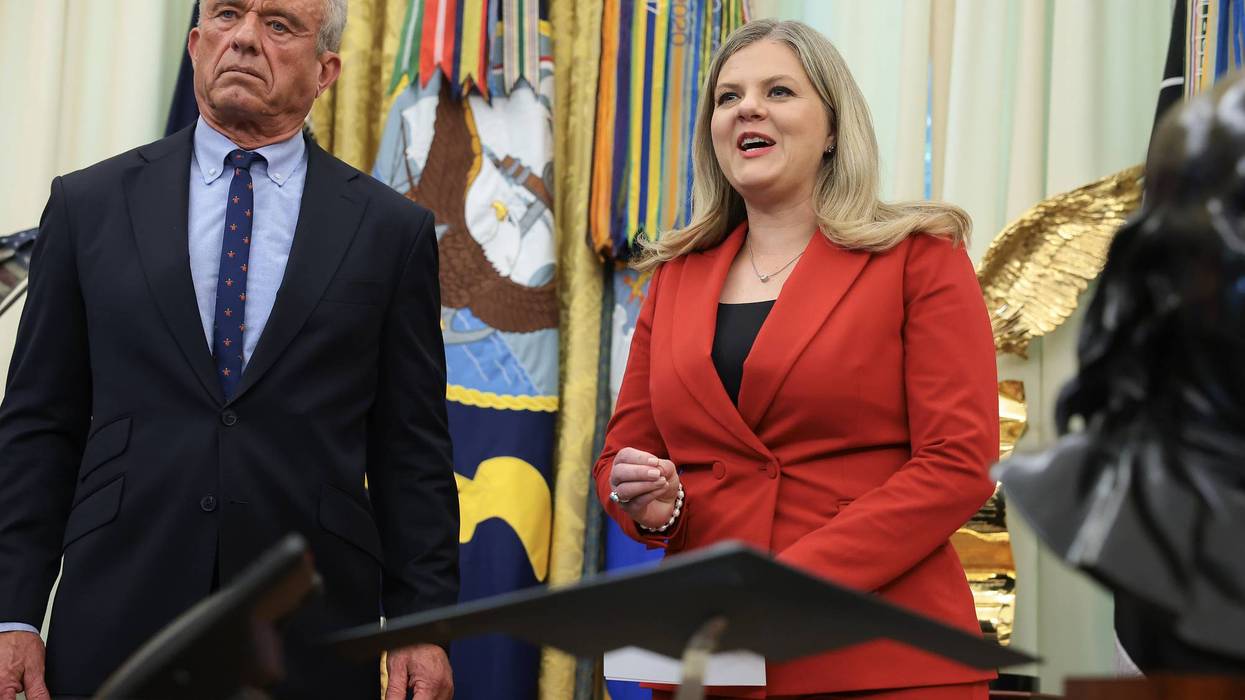
"The American people deserve someone who will put science and facts FIRST, not another Trump sycophant who will make it their mission to attack medication abortion," said one Democratic senator.
President Donald Trump on Wednesday tapped White House health policy adviser Dr. Heidi Overton to lead the Food and Drug Administration, a move that drew fierce opposition from Democratic lawmakers, reproductive rights advocates, and public health experts, who pointed to her opposition to abortion rights and support for controversial changes to federal vaccine policy as cause for alarm.
Trump took to his Truth Social network to announce his pick of Overton, a physician and deputy director of the White House Domestic Policy Council, to replace former FDA Commissioner Marty Makary, who resigned in May following months of turmoil at the agency. The president described Overton as a "ROCKSTAR" in his administration who will "deliver on the MOST TRANSFORMATIVE Health Agenda in History."
"Heidi is 'ALWAYS RIGHT,' Secretary Kennedy recently said in the Oval Office!" Trump continued, referring to Health and Human Services chief Robert F. Kennedy Jr. "We need her leadership at the FDA now to ensure that the US remains the WORLD LEADER for Scientific Discovery and CURES."
The president also said Overton would work with Centers for Medicare & Medicaid Services Administrator Mehmet Oz to advance his agenda of faster drug approvals, increased innovation, clinical trial reforms, and lower prescription drug prices.
However, skeptics argue that Overton’s policy record raises serious questions about whether she would maintain the FDA’s scientific and regulatory independence in an administration in which critics say loyalty to Trump is of paramount importance.
Reproductive Freedom for All—formerly the National Association for the Repeal of Abortion Laws and NARAL Pro-Choice America—noted that "Overton has an extensive anti-abortion record."
The group continued:
She celebrated the overturning of Roe v. Wade as a “huge victory,” and has advocated for the politicization of government agencies to help advance a nationwide anti-abortion agenda. She previously worked at America First Policy Institute, an extreme conservative think tank made up of former Trump administration officials, where she authored a brief pushing disinformation about the safety of medication abortion and calling for additional, medically unnecessary restrictions on access to mifepristone.
“Donald Trump is trying to put an anti-abortion extremist in charge of any agency that could seriously undermine reproductive healthcare—including the agency that could roll back access to mifepristone nationwide," Reproductive Freedom for All president and CEO Mini Timmaraju said. "Her nomination is another alarming step in Trump’s plan to weaponize every part of the federal government to restrict abortion nationwide.”
Overton's shifting stance on vaccines also raised eyebrows.
Endpoints News senior senior reporter Max Bayer highlighted how, while working at AFPI, Overton "and others praised Operation Warp Speed, the massive government initiative to expedite development and manufacturing of the Covid-19 vaccines" during Trump's first administration.
But less than a year later, Bayer said, Overton "advocated against Covid-19 school vaccine mandates, writing in an editorial the data supported more parental choice in the decision."
"Overton stood by Trump earlier in August as he announced a sweeping and contentious new executive order amending the childhood vaccine schedule and advising that the [measles, mumps, and rubella] vaccine be broken up into individual components," he added. "Makers of the vaccine pushed back on the directive, but now with Overton in line to lead the FDA, there could be enhanced pressure for drugmakers to follow through on the request."
Democratic US lawmakers also voiced opposition to Overton's nomination.
"Heidi Overton is a far-right, anti-abortion extremist who has no business leading the FDA," Sen. Patty Murray (D-Wash.) said on social media. "The American people deserve someone who will put science and facts FIRST, not another Trump sycophant who will make it their mission to attack medication abortion. I will vote NO."
At least one Republican lawmaker—who chairs the Senate Health, Education, Labor, and Pensions Committee—also questioned Trump's pick.
"While I respect Dr. Overton’s experience as a physician, I have strong concerns about her nomination to be FDA commissioner," Sen. Bill Cassidy (R-La.), a gastroenterologist, said on X. "Her lack of managerial experience does not prepare her well for leading a large organization that is already dealing with staffing and morale issues."
"Additionally, Dr. Overton’s active role in last week’s nonsensical vaccine executive order calls into question her commitment to standing up for sound science and protecting children’s health. That alone is almost disqualifying," added Casisdy, who earlier this year lost a primary race to a Trump-backed challenger.
Overton's nomination comes amid turmoil at an agency that has seen thousands of employees fired by Kennedy since last year amid Trump administration efforts to shrink the government in line with Project 2025, the Heritage Foundation-led framework for a far-right federal overhaul.
Chris Meekins, a former Trump health official who is now an analyst at the investment bank Raymond James, told clients that Overton would be "like Makary, but probably worse."
“Being seemingly inexperienced and unqualified is fine if you have self-awareness and humility and a strong team around you,” Meekins wrote. “Based off of our DC channel checks, she does not seem to have either."
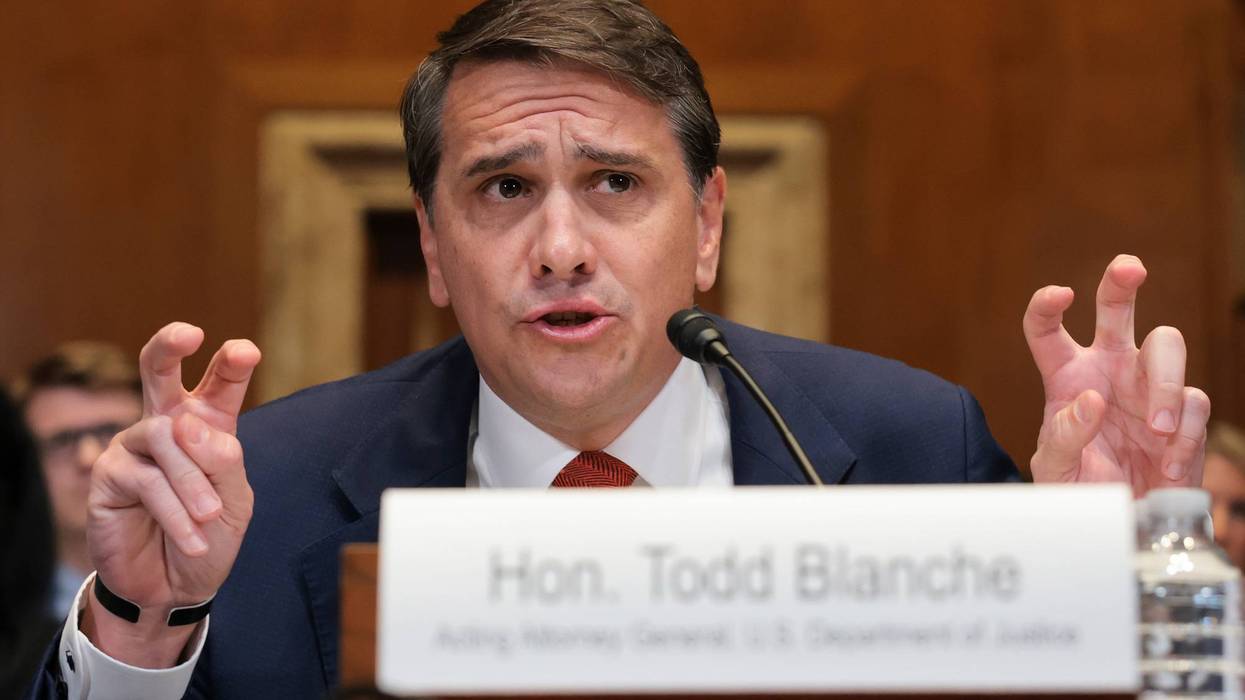
"Anti-abortion zealots like Todd Blanche would not stop until they could restrict our bodily autonomy to the furthest degree," said one critic.
Reproductive rights groups are sounding the alarm about a recent pledge made by acting US Attorney General Todd Blanche to make every state adhere to anti-abortion laws passed in red states.
In a phone call last week hosted by the White House Faith Office, Blanche told a religious group that he would work would work to ensure the US Supreme Court's Dobbs v. Jackson Women's Health Organization decision that overturned the constitutional right to an abortion “becomes permanent in every single state.”
During the call, Blanche hinted that the Trump administration would place restrictions on the ability to mail drugs such as mifepristone to states that have outlawed abortion.
"If states have said, ‘We are going to protect the unborn and we’re going to protect every life from the moment of conception,’ we’re putting practices and policies in place so that other states and other organizations can’t attack that,” Blanche said. "They can’t do things like they’re doing with mailing in mail-order drugs."
In an analysis published Wednesday, journalist Jessica Valenti argued that Blanche's pledge would not result in a nationwide ban on abortions, but rather "stopping the shipping of abortion medication under the auspices of adhering to Dobbs."
"If we lost telemedicine abortion, there would be devastating national consequences," Valenti emphasized. "You could even argue—and I have!—that banning the shipping of abortion pills amounts to a backdoor national ban."
In a Tuesday social media post, Sen. Tina Smith (D-Minn.) highlighted Blanche's call and warned that confirming him as AG permanently would be a green light to assault women's rights.
"Todd Blanche made clear in these secret calls with anti-choice activists that he wants to resurrect the Comstock Act—an antiquated anti-vice law from before women had the right to vote—to ban sending medication abortion in the mail," wrote Smith. "Republicans will likely do what they always do and confirm Blanche as attorney general despite all of this, and once again, women across America will pay the price."
Mini Timmaraju, president and CEO of Reproductive Freedom for All, accused Blanche of "making dangerous promises behind closed doors to weaponize the Justice Department to enact a national abortion ban."
"We must believe Blanche when he says he will come for our rights," Timmaraju added. "Republicans are using every lever of government to attack reproductive freedom, and voters will make their voices heard this November to take our Congress back from these extremists."
Nourbese Flint, president of All* Above All, called Blanche's promise "an open declaration of his intention to use the Justice Department to stop the delivery of abortion medication."
"The lie they told us in the aftermath of Dobbs was that it was about sending abortion law back to the states," Flint said, "but we have known all along that anti-abortion zealots like Todd Blanche would not stop until they could restrict our bodily autonomy to the furthest degree."
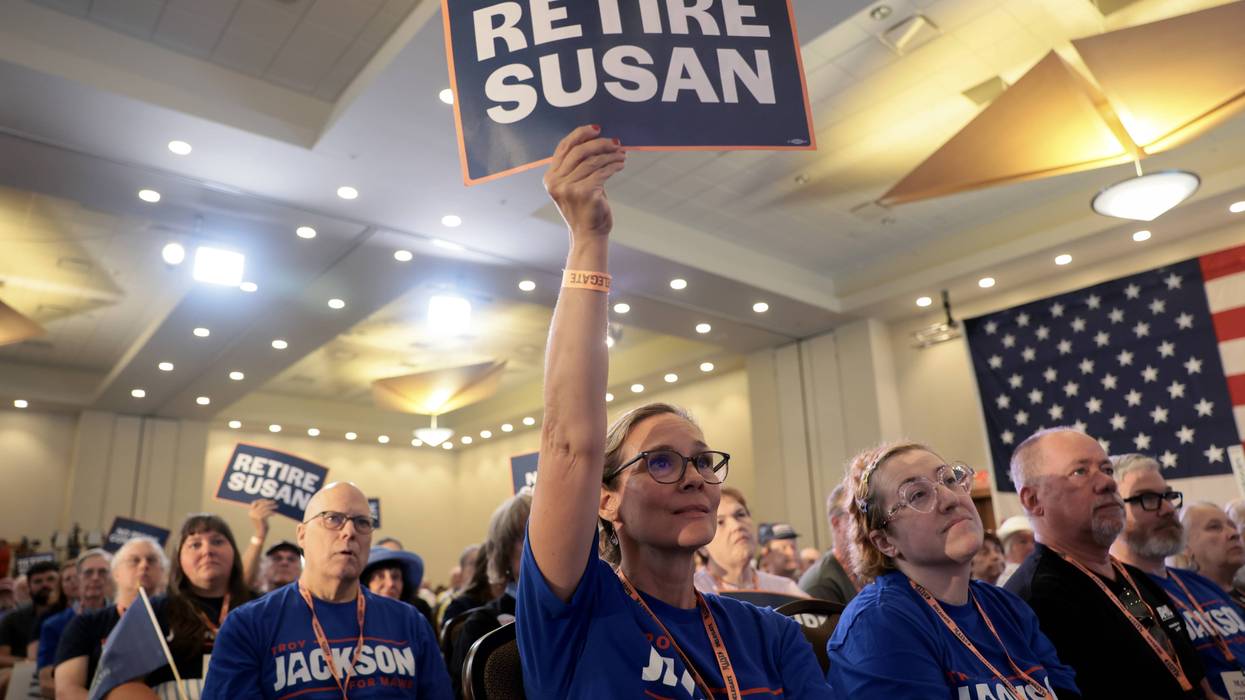
"Typical Susan Collins: Votes against Trump when her vote doesn't change the outcome but lock-in-step when it does."
After Senate Judiciary Committee Republicans advanced Todd Blanche's nomination to be US attorney general, attention shifted to a few GOP senators, including Maine's Susan Collins, who—as she faces a formidable Democratic challenger in November—said late Tuesday that she would vote against President Donald Trump's former personal lawyer leading the Department of Justice.
Collins has been in office for nearly three decades and often played the part of a "concerned moderate" while voting with her party when it needs her. Perhaps the most notable example was when the senator, who claims to support abortion rights, helped confirm US Supreme Court Justice Brett Kavanaugh—and then he helped overturn Roe v. Wade.
Now Collins—along with some other Republicans, such as Sens. Lisa Murkowski (Alaska) and Bill Cassidy (La.), who lost his May primary to a Trump-backed candidate—must contend with a DOJ nominee who, in a recent phone call hosted by the White House Faith Office, said that "we have a lot of work to do" rolling back the Biden administration's progress on abortion rights, and "some of that is taking longer than we want."
Blanche, who is currently acting AG, assured those on the call—a recording of which was posted online by the religious group Intercessors for America, according to Politico—that the DOJ is "working hand in hand" with the White House, Department of Health and Human Services, and Food and Drug Administration to ensure that the Dobbs v. Jackson Women's Health Organization ruling, which reversed Roe and let states enact total abortion bans, "becomes permanent in every single state," promising "victory."
Politico reported that when "asked to explain what Blanche meant by 'victory' and by making the high court decision 'permanent in every single state,' the Justice Department said his comments were made solely 'with respect to mail order abortion drugs' and did not elaborate further."
Collins, who is running against former Democratic state Senate President Troy Jackson, had not said how she planned to vote on Blanche before the panel weighed in on Tuesday; he advanced out of committee after striking a deal with a pair of GOP senators on blocking the so-called "Anti-Weaponization Fund" sought by Trump for his allies, including January 6, 2021 insurrectionists.
A spokesperson for the Maine Republican told the Bangor Daily News on Monday that she was waiting for the results of the panel's vote and "also holding off on a decision until confirming all the details of the agreement hammered out between Blanche and the two senators who were previously holding out, Sens. John Cornyn of Texas and Thom Tillis of North Carolina."
There are 53 Senate Republicans, and although Sen. Darline Graham (R-SC) has taken over for her late brother, former Majority Leader Mitch McConnell (R-Ky.) remains hospitalized, meaning that with otherwise full attendance, losing three GOP votes could block Blanche's path to the permanent post.
In a lengthy statement on social media Tuesday evening, Collins said that "I have carefully reviewed Todd Blanche's qualifications," and "while I believe Mr. Blanche is a capable lawyer, the Department of Justice has become increasingly political."
"Mr. Blanche has taken several actions that have further eroded the department's independence, and that is the basis for my vote to oppose his confirmation," she continued, citing his approval of an immunity deal for the Trump family and the Anti-Weaponization Fund, his promise to "prohibit the mailing of abortion medication to women nationwide," attempted indictments of Democratic senators over their video encouraging resistance to unlawful military orders, and opposition to Blanche within the DOJ.
Brendan Duke, a former Biden administration economic adviser who's now senior director at the Center on Budget and Policy Priorities, responded, "Guess Senate republicans have the votes."
Collins said less than two months ago that "I do not regret" voting for Kavanaugh, despite the fallout that followed. At the time, she was running against Democrat Graham Platner, who had responded to the senator, "You should." Like the Supreme Court Justice, Platner was accused of sexual assault, which he denied; unlike Kavanaugh, Platner stepped aside. He was recently replaced on the ballot with Jackson, via a convention process.
Jackson, a 58-year-old logger by trade, "began his political career as an abortion opponent, having grown up in a Catholic family in the socially conservative St. John’s Valley area of Aroostook County," the Portland Press Herald noted last month. The Democrat has talked openly about his transformation on the issue, influenced by conversations with women, doctors, and rights advocates.
In a July opinion piece endorsing Jackson, Andrea Tirrell and Amanda Gavin, University of Maine PhD candidates who have volunteered at Bangor's Mabel Wadsworth Center, a reproductive healthcare nonprofit, wrote for the Press Herald opinion that "his seven-year streak (2018-2024) of 100% ratings from Planned Parenthood shows a track record we can trust."
Appearing on MS NOW's "Morning Joe" last week, Jackson touted that record and called out Collins for her contribution to the Roe reversal, as well as GOP attacks on healthcare access more broadly.
"When Susan Collins was helping overturn Roe v. Wade,” Jackson highlighted, "here in Maine... I co-sponsored one of the most progressive reproductive rights bills in the country—fought incredibly hard for it."
"I was wrong" to oppose abortion rights many years ago, he said. "But I'm very proud of my record over the past decade or more fighting for access across the state."
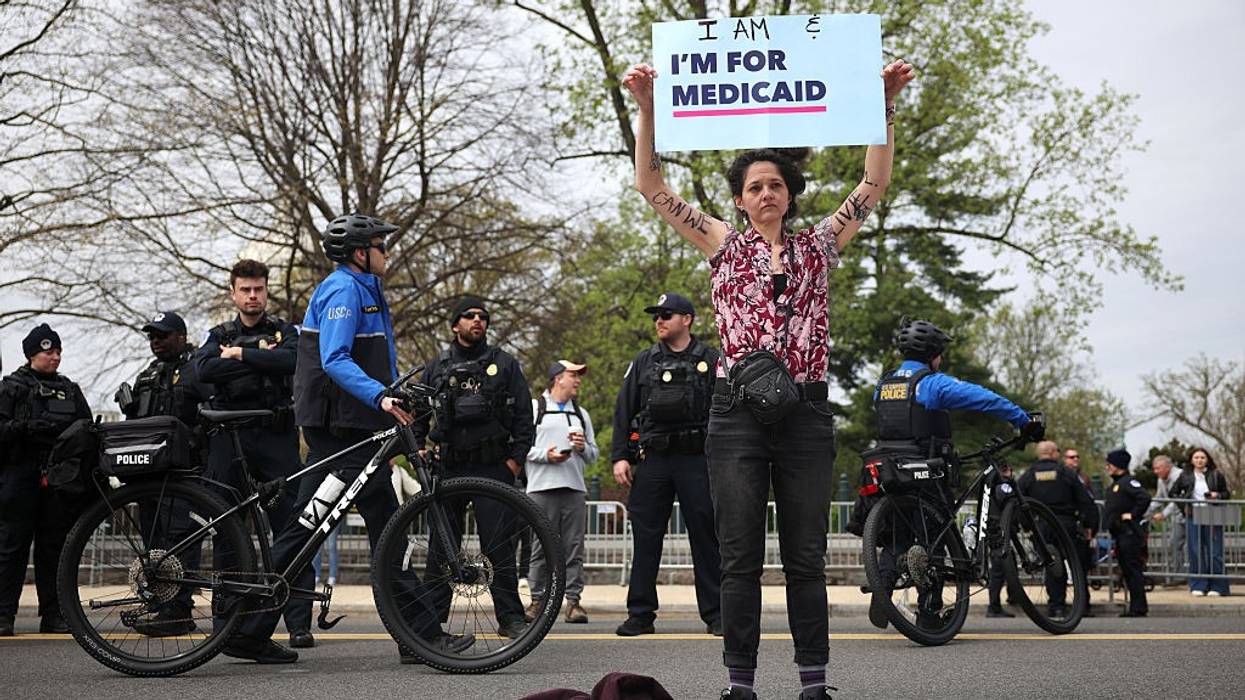
Reproductive healthcare advocates vowed to keep up the fight as conservative activists pressure Congress to make the funding ban permanent.
Planned Parenthood and other reproductive health clinics regained access to Medicaid funding on Saturday after a provision in the One Big Beautiful Bill Act defunding the organizations expired.
The provision depriving Planned Parenthood was touted as a major victory for the anti-abortion movement when the bill was signed on July 4, 2025, but, due to Senate rules, the defunding only lasted for one year, and Congress failed to renew it before their summer recess.
While this means that Planned Parenthood, Health Imperatives in Massachusetts, and Maine Family Planning can once again bill Medicaid for non-abortion related healthcare, it doesn't reverse the damage caused by a year-long lack of access to funds totaling more than $800 million per year for Planned Parenthood alone.
“Tens of thousands of patients have been denied access to services like cancer screenings and birth control and STI testing and treatment. These are things that just can’t be undone,” Nora Walsh-DeVries, vice president of political and legislative affairs at Planned Parenthood Action Fund, told The Hill.
"Patients have totally borne the cost of this politically motivated attack on care."
In a report published July 1, Planned Parenthood and Planned Parenthood Action Fund said that the defunding had led to the closure of almost 30 health centers, two-thirds of which were in rural areas, or locations that had a shortage of medical services or healthcare professionals. In addition, all of the closed centers were in "contraceptive deserts." Overall, the number of Medicaid visits to the organization decreased by 25% compared with the year before.
“By deliberately targeting Planned Parenthood, President [Donald] Trump and his allies in Congress worsened a public health crisis, making it harder for people to get the essential and lifesaving care they needed at their trusted provider," Alexis McGill Johnson, president and CEO of Planned Parenthood Federation of America and Planned Parenthood Action Fund, said in a statement.
Olivia Pennington, a spokesperson for Maine Family Planning, told NPR, "It's been devastating to see this defund and to see the impacts that it's had across the nation."
As Walsh-DeVries further told The Hill, “I think it’s just really clear that patients have totally borne the cost of this politically motivated attack on care."
Despite the restoration of funding, uncertainty lingers. Walsh-DeVries said that it wasn't clear how clinics could obtain the restored funds, and states can now block Medicaid funds to Planned Parenthood on their own, thanks to a Supreme Court ruling last year. To date, 13 states have blocked or tried to block funds.
What's more, conservative and anti-abortion advocates have expressed outrage at Congress' failure to extend the funding ban, and are determined to pressure it do so via a reconciliation bill.
"This failure must be corrected immediately. President Trump and Congress must act as fast as possible to restore and extend the defunding of Planned Parenthood and every organization that commits abortion," Lila Rose, founder and president of anti-abortion group Live Action, said in a statement.
However, 65% of Americans oppose congressional efforts to defund Planned Parenthood, according to polling by the organization, and it is unclear if Republicans as a whole have the political will to renew the ban ahead of the midterm elections. Planned Parenthood Action Fund is currently mobilizing to unseat House republicans who voted for the ban last year.
“We have to really continue to do the work that we’re doing to make this as politically toxic as possible,” Walsh-DeVries told Politico.
McGill Johnson affirmed: "Anti-abortion lawmakers are trying to make ‘defund’ permanent because Planned Parenthood health centers provide abortion care where it’s legal. They are willing to sacrifice the lives and health of people across the country if it gets them closer to their goal of banning abortion everywhere and shutting down Planned Parenthood."
She continued: "We’re in a fight for survival—not just for Planned Parenthood health centers, but for everyone to get high-quality, affordable healthcare from their trusted provider. And know this: Planned Parenthood will never stop fighting to ensure everyone can get the care they need.”
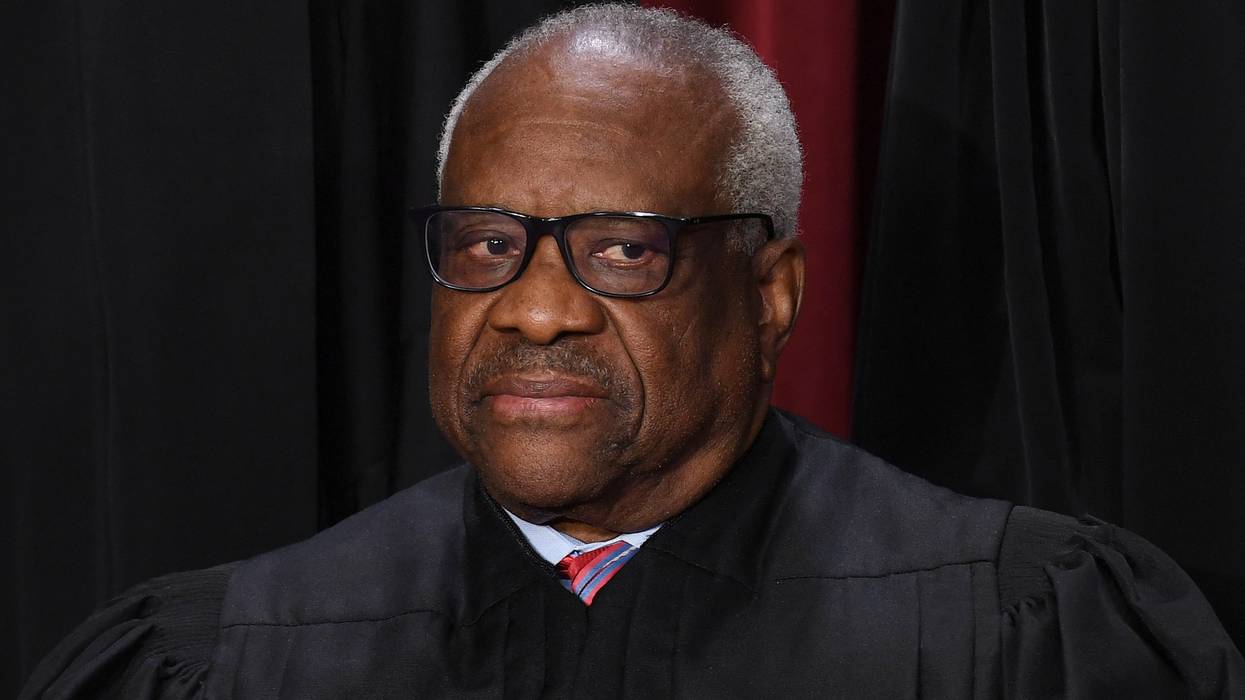
As Thomas reportedly told two of his law clerks in 1993, he planned to serve until 2034, and until then would continue to make the lives of liberals “miserable.” He has already made good on that pledge.
Clarence Thomas went more than 10 years without asking a single substantive question from the bench. His silence between 2006 and 2016 prompted commentators to call his courtroom quietude embarrassing, a sign of fatigue and a lack of intellectual candlepower. Even earlier in his career, he had earned the nickname of “Scalia’s Puppet” for his habit of joining majority opinions written by Justice Antonin Scalia, the outspoken and reactionary “originalist” who shared the dais with him until his death in 2016.
But the characterization of Thomas as an inattentive echo of Scalia is wrong. Thomas has always been more extreme and dangerous than Scalia, and his influence has never been greater.
After his bruising 1991 confirmation hearing, Thomas set his eyes on the goal of moving American law backward to the laissez-faire era of the Gilded Age, undoing the regulatory state of the New Deal, weakening the civil rights legislation of the 1950s and ’60s, and undermining many of the forward-looking precedent decisions issued by the Warren Court. As Thomas reportedly told two of his law clerks in 1993, he planned to serve until 2034, and until then would continue to make the lives of liberals “miserable.” He has already made good on that pledge: He is now the second-longest serving Supreme Court justice in history.
Thomas is best known for concurrences and dissents that seemed culled from the lunatic fringe when he wrote them, but were later embraced by the majority as the court moved hard right.
There is no telling how much more jurisprudential carnage he will cause or how much more disgrace he will bring to the reputation of the world’s most powerful judicial tribunal.
On affirmative action, in a 1995 case on government contracting (Adarand Constructors v. Pena), his concurrence denounced “remedial racial preferences” in federal hiring as a form of “racial paternalism.” This was an astonishing choice of words for the nation’s second Black Supreme Court justice, who overcame childhood poverty and, after a brief flirtation with Black nationalism, became the beneficiary of affirmative action at Yale Law School. Twenty-eight years later, however, in a majority opinion written by Chief Justice John Roberts (Students for Fair Admissions v. Harvard), the court ended affirmative action in higher education.
On abortion in a 2000 case (Stenberg v. Carhart) that invalidated Nebraska’s late-term abortion ban, Thomas dissented, arguing that the Roe v. Wade decision was “grievously wrong,” and that nothing in the Constitution “dictates that a State” must legalize abortion. Twenty-two years later, Samuel Alito’s majority opinion in Dobbs v. Jackson Women’s Health Organization adopted Thomas’ view.
Ditto for the Second Amendment. In Printz v. United States, a 1997 gun-regulation case, Thomas contributed a concurrence arguing that the amendment encompassed a personal right to keep and bear arms rather than simply a right connected with service in state militias, as prior case law had clearly held. Eleven years later, in District of Columbia v. Heller, the court recognized the personal right in an opinion authored by Scalia. Thomas went on to expand the personal right in 2022 with his majority opinion in New York State Rifle & Pistol Association v. Bruen, a decision that severely handicaps state and local authorities from enforcing gun-control laws.
Thomas is also on record advising the court to revisit its precedent decisions on the right to court-appointed counsel in criminal trials (Gideon v. Wainwright, 1963); the right of married persons to contraception (Griswold v. Connecticut, 1965); the right of adults to engage in private consensual sex (Lawrence v. Texas, 2003); and the right to same-sex marriage (Obergefell v. Hodges, 2015). He has also called for the court to reconsider 1964’s New York Times v. Sullivan, the landmark case establishing First Amendment protections in defamation cases involving public officials and public figures, which is widely considered the lynchpin of freedom of the press in America.
In a recent column published by the influential Scotusblog website, constitutional law scholar Erwin Chemerinsky noted that “Thomas is the only justice… who has openly said that precedent deserves little weight in constitutional law.”
Despite his laid-back courtroom demeanor, Thomas has also been an active and loquacious speaker out of court on the right-wing banquet and convention circuit, especially in meetings of the Federalist Society and events hosted by Hillsdale College, the Michigan-based private Christian institution long recognized as a hub for conservative thought leaders and a breeding ground for the right-wing’s ever expanding culture wars.
Supreme Court justices typically attend academic, judicial, and bar-related conferences, and initially, Thomas’ public remarks were fairly judge like, focusing on time-honored topics like judicial independence. But as his stature grew and the court’s lurch to the right accelerated, he shed whatever inhibitions he once had about voicing his personal beliefs, becoming in time a full-fledged and open culture war combatant.
n a 2011 address at a law student symposium sponsored by the Federalist Society in Charlottesville, Virginia, he devoted most of his time not to expounding on legal doctrine but to defending his tea party activist wife Ginni against adverse press coverage. He also exhorted his young audience to be wary of the “fundamental changes” wrought by the left that aimed to distort the original meaning of the Constitution. In a 2016 commencement speech at Hillsdale, he went further, urging graduates “not [to] hide your faith and your beliefs under a bushel basket… in this world that seems to have gone mad with political correctness.”
Thomas is now unbound and unrestrained. In a speech on April 15 at the University of Texas, he went “full Monty” in an unhinged broadside against liberals and progressives. “Progressivism seeks to replace the basic premises of the Declaration of Independence and hence our form of government declaring,” he declared, continuing:
It holds that our rights and our dignities come not from God but from government… [Progressivism] was the first mainstream American political movement—with the possible exception of the pro-slavery reactionaries on the eve of the Civil War—to openly oppose the principles of the Declaration.
He went on to blame progressives for the 20th century evils of racial segregation and eugenics, insisting that “Stalin, Hitler, Mussolini, and Mao” were “intertwined with the rise of progressivism.”
All this from an angry and embittered ideologue who is also arguably the most corrupt justice in the Supreme Court’s history, having failed for 13 years to report his wife Virginia’s earnings on his annual financial disclosure forms, and who has been on the gimme end of lavish vacations funded by billionaire Republican donor Harlan Crow.
Thomas celebrated his 78th birthday on June 23. He may not make it to his projected retirement date of 2034, but until he actually steps down, whether voluntarily or post mortem in the fashion of Scalia, there is no telling how much more jurisprudential carnage he will cause or how much more disgrace he will bring to the reputation of the world’s most powerful judicial tribunal.
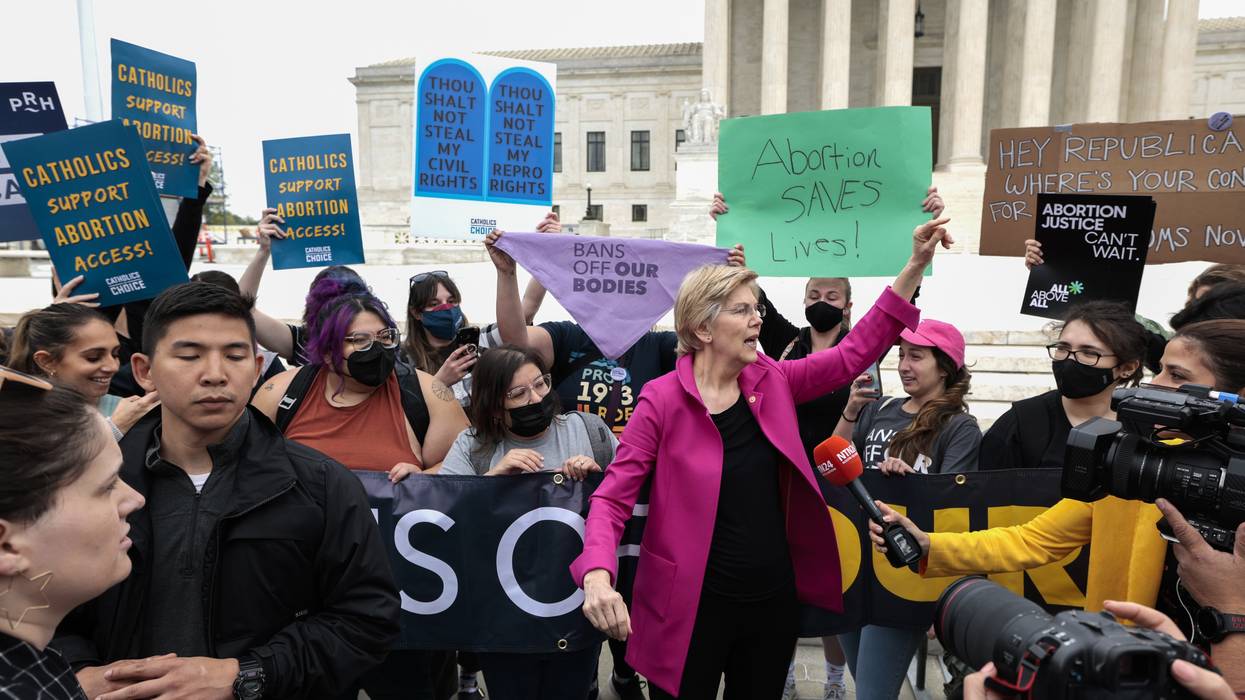
"Moms.gov is not about promoting women’s health. It is an attempt to use HHS resources to further strip women of their rights and privacy.”
Eleven members of the Senate Democratic Caucus on Wednesday urged US President Donald Trump and Health and Human Services Secretary Robert F. Kennedy Jr. to “cease using federal resources to direct people to anti-abortion crisis pregnancy centers" via a government website.
Last month, the Department of Health and Human Services (HHS) launched Moms.gov, which claims to offer "resources, information, and help for new and expecting mothers" by "addressing the needs of mothers and fathers who face difficult or unexpected pregnancies and ensuring the well-being of mothers and the health of American families."
The site has two main options: so-called "crisis pregnancy centers" (CPCs)—which present themselves as reproductive health clinics but often provide misleading information and counseling aimed at discouraging abortion—and "federally qualified health centers," which, presented alongside anti-abortion services on Moms.gov, can blur the distinction between evidence-based healthcare providers and ideologically driven groups.
"This raises profound concerns about the health, safety, and privacy of people who access this government website at a time when women’s health and reproductive rights face increasing attacks,” the 11 senators said in a letter to Trump and Kennedy and shared with HuffPost. “Instead of offering concrete resources to protect the health and safety of pregnant women and their families, the Trump administration is using this website to highlight anti-abortion CPCs."
The letter—led by Sens. Elizabeth Warren (D-Mass.), Chuck Schumer (D-NY), Mazie Hirono (D-Hawaii), and Bernie Sanders (I-Vt.) and signed by Democratic Sens. Ron Wyden (Ore.), Tammy Duckworth (Ill.), Ed Markey (Mass.), Tina Smith (Minn.), John Hickenlooper (Colo.), Cory Booker (NJ), and Michael Bennett (Colo.)—was sent on the four-year anniversary of Dobbs v. Jackson Women’s Health Organization, a ruling by the right-wing US Supreme Court that canceled half a century of abortion rights formerly enshrined in Roe v. Wade.
“Since the US Supreme Court took away the fundamental right to abortion care... 21 states have banned or severely restricted access to abortion, decimating access to care for tens of millions of people,” the senators wrote.
The lawmakers said that the direct link to Option Line, an anti-abortion hotline, "on a government website is also troubling from a data privacy perspective," as the site collects and shares user data with "affiliates, partners, vendors, or contract organizations" and has been beset by breaches.
“Moms.gov is not about promoting women’s health—it is an attempt to use HHS resources to further strip women of their rights and privacy," the letter asserts. “In order to protect the health and data privacy of millions of women, HHS should remove the pregnancy center link from Moms.gov and cease using federal resources to direct people to anti-abortion crisis pregnancy centers.”
In a Wednesday interview with HuffPost, Warren said, "It's horrific that the Trump administration is using taxpayer dollars to prop up a website that pushes pregnant women towards nonmedical anti-abortion centers."
"The Republican plan is to sneak through anti-abortion resources and backdoor abortion bans because they know Americans don’t support their extreme agenda," she added. "Democrats are fighting back.”
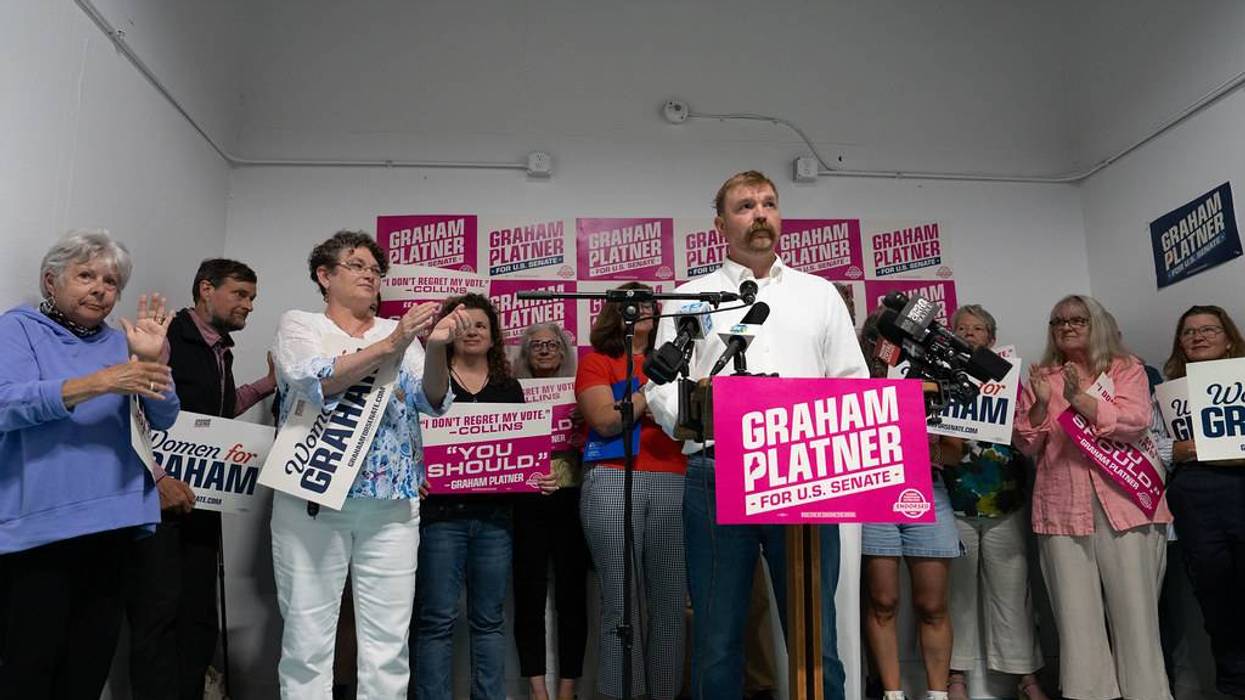
With the Supreme Court's overturning of abortion rights just as unpopular as it was four years ago, Democrats are hoping to highlight the "toxic, anti-choice records" of their GOP opponents.
Fresh off an endorsement from the Planned Parenthood Action Fund, Democratic Senate candidate Graham Platner is continuing to hammer his Republican opponent, Sen. Susan Collins, over her vote to confirm US Supreme Court Justice Brett Kavanaugh, which helped set the stage for the right-wing court to overturn the constitutional right to an abortion in 2022.
Platner marked the four-year anniversary of the court's ruling in Dobbs v. Jackson Women's Health Organization on Wednesday by posting a video of Collins (Maine) from 2018, standing before the Senate and giving what he called a "stirring defense" of Kavanaugh, whose nomination by President Donald Trump was at risk of being derailed by accusations of sexual assault from three women that had been aired during his confirmation hearing.
Collins, who'd go on to serve as a deciding vote to confirm Kavanaugh to the high court, described the then-federal judge as "an exemplary public servant" whom she'd hoped would "work to lessen the divisions in the Supreme Court, so that we have far fewer 5-4 decisions."
Around that time, she said she'd been assured that Kavanaugh viewed Roe v. Wade, which guaranteed the right to abortion before fetal viability, as established precedent that he would keep in place if confirmed.
Of course, Dobbs itself ended up being a 5-4 decision, with Kavanaugh being one of the five conservatives who voted to hand decision-making on reproductive autonomy back to the states. (The court also voted 6-3 to uphold the 15-week Mississippi abortion ban at the center of the case.)
Since the ruling, 13 states have almost or totally outlawed abortion, while seven more have restricted it to between 6 and 12 weeks of gestation, according to KFF. States with bans have seen increases in both infant and maternal deaths, and delays to emergency and miscarriage care from providers unsure if they are putting themselves at legal risk.
As Collins has run for her sixth term in the Senate, her pivotal vote for Kavanaugh has come back to haunt her. While Collins said in 2022 that she had been "misled" by Kavanaugh about his stance on Roe, she has insisted this month that she did not "regret" voting to confirm him.
She has, however, appeared eager to downplay the impact of her decision. On Monday, she falsely stated that, "Whether Justice Kavanaugh were confirmed or not, Roe v. Wade would have been overturned, given the 6-3 vote.”
In fact, the vote to fully overturn Roe was 5-4, as Chief Justice John Roberts did not join his fellow conservatives in ending the precedent, leading Platner to accuse her of "lying through her teeth."
While abortion does not rank high on the list of issues Americans say will determine their vote, the Dobbs decision is just as despised—if not slightly more so—compared with four years ago, when it helped to fuel an unexpectedly strong Democratic showing in the 2022 midterms.
According to a nationwide poll from Marquette University this May, 61% of Americans still said they disapproved of the decision to overturn Roe, compared with 58% who said the same thing in June 2022 shortly after the draft of the Dobbs decision was leaked.
As the second Trump administration turbocharges attacks on reproductive rights, pro-choice groups are hoping to make Collins pay for her role in midwifing this new reality and have thrown their full weight behind Platner, who has said he'd fight "tooth-and-nail to restore and protect reproductive freedom."
"Mainers deserve a senator they can trust to have their backs at every turn. It is clear that it is not Susan Collins,” said Planned Parenthood Action Fund president and CEO Alexis McGill Johnson in a statement endorsing Platner on Monday. "We know we can count on Graham Platner to fight for everyone to get the essential, lifesaving care they need as part of a pro-reproductive rights Senate majority."
Maeve Coyle, a spokesperson for the Democratic Senatorial Campaign Committee (DSCC), said the party is seeking to highlight its Republican opponents' "toxic, anti-choice records" at the national level in the hope that "the American people will vote against Republicans who paved the way for Roe’s demise and cheered on the rollback of our rights.”
A press release sent by the DSCC on Wednesday highlights the voting records of other top GOP midterm targets, including Sen. Dan Sullivan (R-Alaska), who signed an amicus brief in support of overturning Roe and has said he opposes abortion even in cases of rape or incest or to protect a mother's life. It also called out Reps. Mike Collins (R-Ga.) and Ashley Hinson (R-Iowa), who co-sponsored total national abortion bans that would have also outlawed in vitro fertilization (IVF).
The Maine Democratic Party, meanwhile, has zeroed in on Susan Collins' vote for Kavanaugh with a new digital ad and a series of prominent newspaper ads that draw a direct line between her decision and the slew of abortion bans that followed.
“Susan Collins wants Mainers to forget what happened after she cast the decisive vote for Brett Kavanaugh. But Mainers haven’t forgotten," said Kristi Johnston, a spokesperson for the Maine Democratic Party.
"Four years after Dobbs, Collins continues to defend that vote while rubber-stamping more anti-abortion judges onto the federal bench," she added. "Mainers deserve to know exactly what role Susan Collins continues to play in stripping away reproductive freedom.”
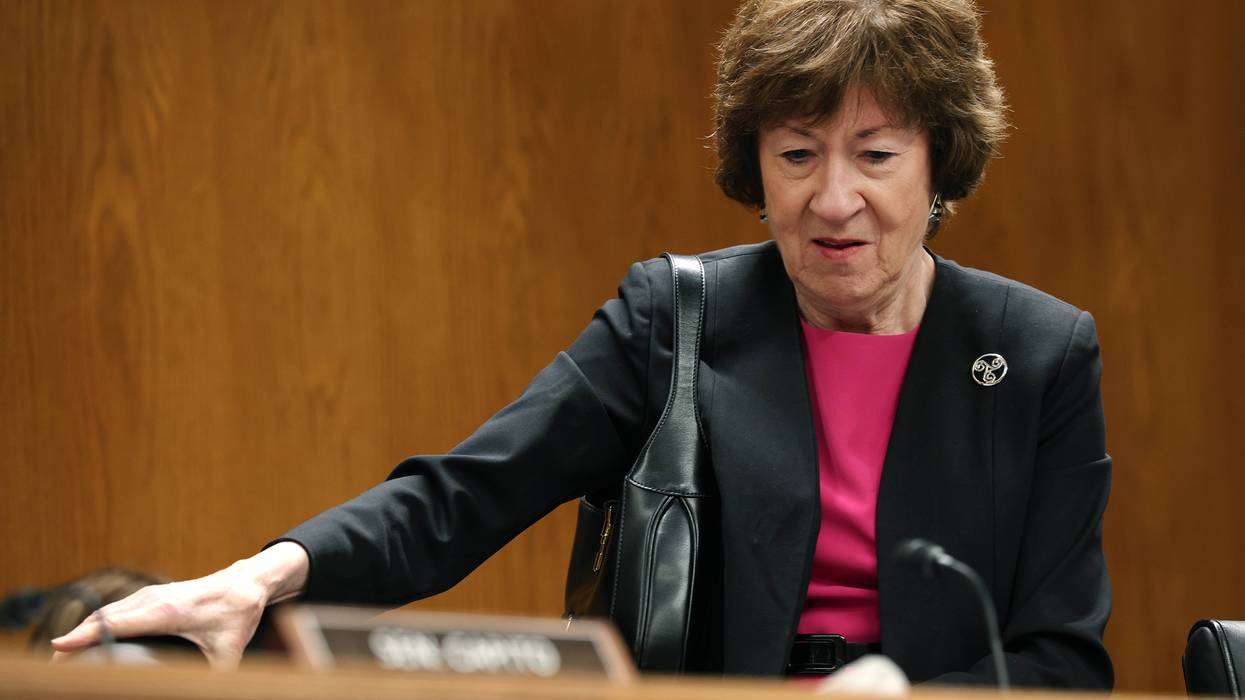
"She lied," says a new ad focusing on Collins' broken promise that she would not support a Supreme Court justice who showed "hostility" to abortion rights. "Now, she won't even admit she was wrong."
Within 48 hours of US Sen. Susan Collins declaring that she stood by her 2018 vote in favor of confirming Supreme Court Justice Brett Kavanaugh, even though her decision helped secure a right-wing majority that later gutted abortion rights—which the Maine Republican has long claimed to support—Democratic Senate candidate Graham Platner released a new ad saying her statement exemplified Collins' lack of "accountability."
The ad, released Thursday morning, pointed to Collins' pledge that she "would not support a nominee who demonstrated hostility to Roe v. Wade," months before she cast the deciding vote in favor of Kavanaugh—after a drawn-out confirmation process during which he was credibly accused of sexual assault and rights advocates raised alarm about his record on abortion rights.
Kavanaugh had questioned the idea that Roe, which affirmed Americans had the right to abortion care, was settled law in a 2003 email when he was a lawyer for the George W. Bush administration. He also dissented in a 2017 case in which an undocumented immigrant minor was trying to access abortion care, saying the government should have blocked her from doing so. He refused to tell senators clearly whether he believed Roe had been correctly decided.
After Roe was overturned in 2022, Collins said Kavanaugh had "misled" her by telling her he would respect the precedent set by the 1973 ruling—even though he had clearly shown what she called "hostility" to the decision.
This week, she insisted to a reporter, "I do not regret that vote," to which Platner replied on social media: "You should."
"She lied," says the narrator in the ad released Thursday. "Now, she won't even admit she was wrong."
Collins, the ad continued, is "wrong on Kavanaugh—wrong for Maine."
The ad was the second released by the Platner campaign in two days, and both focused on her record of voting with the far right even as she's spent decades casting herself as a "moderate" Republican who supports bipartisan legislation and women's rights.
In reality, said the ad released Wednesday by the campaign, "she's only 'bipartisan' when it doesn't matter."
The ad highlights Collins' record of voting with President Donald Trump "95% of the time," including when she's cast deciding votes on Kavanaugh and "to defund healthcare and hospitals."
Susan Collins votes with Trump 95% of the time. She is only "bipartisan" when it doesn't matter in the slightest.
Our new ad ⬇️ pic.twitter.com/er8HCAVx4K
— Graham Platner for Senate (@grahamformaine) June 17, 2026
While Collins has campaigned on being one of three Republicans who opposed the One Big Beautiful Bill Act—which had sufficient GOP support to allow the senator to cast a "no" vote without threatening its passage—she voted to advance the legislation out of the Senate Appropriations Committee, clearing the way for it to pass.
"She even sided with Trump giving billionaires and corporations a handout, paid for by cuts to Medicaid and [the Supplemental Nutrition Assistance Program]," the ad says, again referring to her vote advancing the GOP megabill last year.
"Susan Collins is only bipartisan when it doesn't matter," says the ad. "This election, we're not forgetting what does."