

SUBSCRIBE TO OUR FREE NEWSLETTER
Daily news & progressive opinion—funded by the people, not the corporations—delivered straight to your inbox.
5
#000000
#FFFFFF
To donate by check, phone, or other method, see our More Ways to Give page.
Daily news & progressive opinion—funded by the people, not the corporations—delivered straight to your inbox.
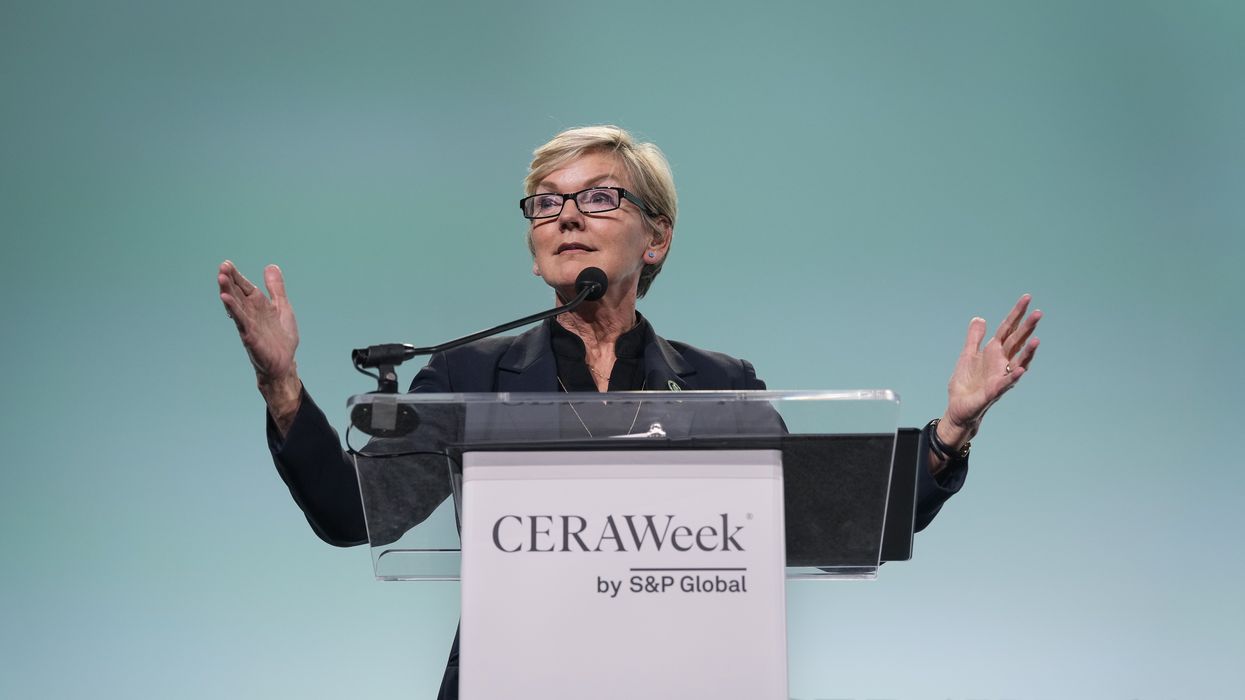
High-level government participation in an oil and gas industry conference shows official disdain for the public interest; it’s time to make fossil fuels politically toxic.
From March 18 to 22, 2024, the oil and gas industry held its major annual conference, CERAWeek, in Houston, Texas.
The conference speakers included the usual rogues’ gallery of fossil fuel CEOs from the U.S. and worldwide, including the heads of Exxon Mobil, Chevron, Shell, Occidental, ConocoPhillips, Saudi Aramco, and Total. These corporations have covered up their responsibility for climate change, poisoned communities, and violated human rights in collusion with repressive governments, from the U.S. to Ecuador to Uganda and beyond.
But the egregious social, environmental, and human rights record of Big Oil did not deter high-level officials from the federal government and some state governments, from both major political parties, from attending and speaking at this event, giving it a stamp of official approval and legitimacy it didn’t deserve.
Our public officials need to get the message that the fossil fuel industry is politically toxic as well as literally toxic—and that they will pay a price for associating with the industry, taking its money, and serving its agenda.
CERAWeek 2024 speakers from the federal executive branch included U.S. Secretary of Energy Jennifer Granholm, who heads the lead energy policy agency of the U.S. government; John Podesta, senior adviser to the president for international climate policy, who will be the public face of the U.S. in international climate negotiations; and John Kerry, who held Podesta’s position until recently.
Speakers also included Sen. Joe Manchin (D-W.Va.), who chairs the Senate Energy and Natural Resources Committee, and Sen. Dan Sullivan (R-Alaska). At least one governor, Mike Dunleavy of Alaska, was a speaker as well, as were other senior officials with the White House and the Department of Energy.
It’s bad enough that they went, but the content of some of their speeches was even worse. Senators Manchin and Sullivan criticized the modest recent step by the Biden administration to pause new export licenses for liquefied natural gas (LNG) in order to complete a new set of criteria for determining public interest.
Meanwhile, Secretary Granholm appeared to undermine her own agency’s review of the public interest test for LNG exports, by characterizing the review as a routine study (instead of an extraordinary study necessitated by the climate crisis), and saying the pause would be “in the rearview mirror” within a year. If the study has any integrity, an outcome that would end the pause and resume exports (implied by Granholm’s phrasing) should be far from assured.
On the contrary, a study aligned with the global scientific consensus, shared by the Intergovernmental Panel on Climate Change (IPCC), the International Energy Agency, the United Nations Environment Program, and others, would conclude that there should be no more expansion of fossil fuel infrastructure, period, and that the pause should be permanent. Granholm’s statements raise serious questions about whether the Department of Energy can be trusted to do this study.
If the U.S. were really concerned about the long-term energy security of lower income countries who import U.S. LNG, such as Bangladesh, Colombia, and Jamaica, we would be paying our fair share for climate mitigation and a just transition from fossil fuels in these countries instead of selling them our poisons.
The only real beneficiaries of LNG exports are the oil and gas industry. LNG exports are the main driver of growth in U.S. natural gas production, since domestic demand is growing only very slowly. According to government data, U.S. gas production grew about 96% between 2008 (the approximate start year of the shale gas, or “fracking,” boom) and 2023. Over the same period, U.S. gas exports grew by a whopping 690% while consumption grew by less than 40%. Clearly, the gas industry is looking at exports as their growth engine.
While industry makes its profits, communities are left to face serious climate change impacts, such as the recent Texas wildfires. Communities in the vicinity of the gas production supply chain, from fracking to pipelines to export terminals—disproportionately Indigenous, Black, brown, or low-income white communities—pay the price for industry’s profits with serious air and water pollution, as well as fire and explosion risks.
Another group harmed by LNG exports are U.S. utility consumers writ large, who face higher gas bills and become more vulnerable to price volatility as a consequence of increased exports.
What of the destination countries for U.S. LNG exports? Many of the leading importers of U.S. LNG, such as the Netherlands, U.K., France, Japan, and Germany, are affluent countries who can very well afford to transition their electric generation, home heating, and other sectors to renewables and electrification.
If the U.S. were really concerned about the long-term energy security of lower income countries who import U.S. LNG, such as Bangladesh, Colombia, and Jamaica, we would be paying our fair share for climate mitigation and a just transition from fossil fuels in these countries instead of selling them our poisons. Concern for “global energy security,” often cited as a justification for LNG exports, is a smokescreen for facilitating fossil fuel profits.
Since LNG exports benefit no one but an irresponsible, polluting industry, why are public officials so eager to cozy up to them?
For some, the answer is obvious. Sen. Manchin (who isn’t running for reelection) received more campaign money from the fossil fuel industry in the previous election cycle than any other candidate for federal office, and owns a coal company himself. Sen. Sullivan has also received sizable campaign contributions from the oil and gas industry.
In other words, they have been bribed and have obvious conflicts of interest that motivate them to side with polluters over people.
In her comments at CERAWeek, Granholm said that “the world will need secure supplies of both traditional and new energy for the foreseeable future,” underscoring the administration’s outdated thinking on energy policy.
With executive branch officials such as Secretary Granholm and John Podesta, the motive is a little less obvious, but can be discerned regardless. Their participation in CERAWeek is certainly consistent with the Biden administration’s record, which is likely being driven by a number of powerful appointees with industry ties in key positions.
Under Biden, the Department of the Interior has issued more oil and gas drilling permits on public lands than under former President Donald Trump, including a deeply unpopular “carbon bomb” oil drilling project in Alaska. The Department of Energy has issued export licenses to a number of controversial LNG terminals in Alaska and on the Gulf Coast.
These backwards actions are being driven by flawed thinking. In her comments at CERAWeek, Granholm said that “the world will need secure supplies of both traditional and new energy for the foreseeable future,” underscoring the administration’s outdated thinking on energy policy. This is merely a restatement of the Obama administration’s infamous “all of the above” energy policy, and is in direct conflict with the global scientific consensus that we need a rapid phaseout of fossil fuels.
Our public officials need to get the message that the fossil fuel industry is politically toxic as well as literally toxic—and that they will pay a price for associating with the industry, taking its money, and serving its agenda.
To do that successfully, our movements need to deepen popular understanding of the malfeasance of this industry, escalate our messaging against it, and make it clear to public officials that we are monitoring their ties with the industry closely. Cutting the ties between fossil fuels and the government will be immensely helpful in shifting U.S. government policy on climate and energy in a positive direction.
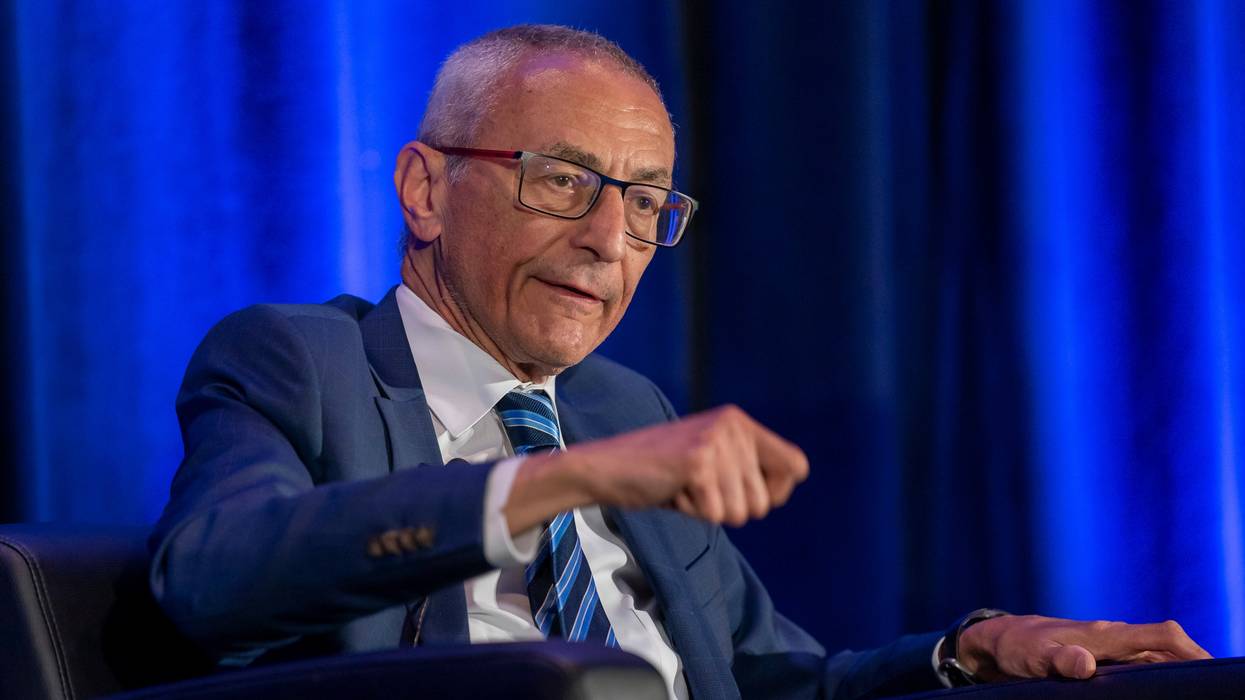
"Podesta needs to take the baton from Kerry and lead the U.S. on a furious sprint to end oil and gas expansion while we still have time to prevent the worst climate catastrophes," said one campaigner.
Senior White House adviser John Podesta has been tapped to replace outgoing U.S. climate envoy John Kerry, The Washington Post reported Wednesday.
According to the Post, Podesta—who is currently in charge of implementing the climate provisions of the Inflation Reduction Act—will have the title of "senior adviser to the president for international climate policy" and will work out of the White House instead of the State Department, where Kerry was based.
"We need to keep meeting the gravity of this moment, and there is no one better than John Podesta to make sure we do," White House chief of staff Jeff Zients said in a statement. "John has—and will continue to be—at the helm of driving the implementation of the most significant climate law in history."
NBC News reported that Kerry—a former secretary of state and the 2004 Democratic nominee for president—will shift to supporting President Joe Biden's reelection campaign.
In a statement, Center for Biological Diversity’s Energy Justice program director Jean Su underscored the imperative of building on the limited yet important climate progress achieved by the Biden administration.
"The recent pause on gas exports has positioned Podesta to lead the fossil fuel phaseout and the clean energy expansion we desperately need," Su said. "In his final act as climate envoy, John Kerry agreed to a global transition away from fossil fuels and urged a far more ambitious scale and timeline."
"Podesta needs to take the baton from Kerry and lead the U.S. on a furious sprint to end oil and gas expansion while we still have time to prevent the worst climate catastrophes," she added.
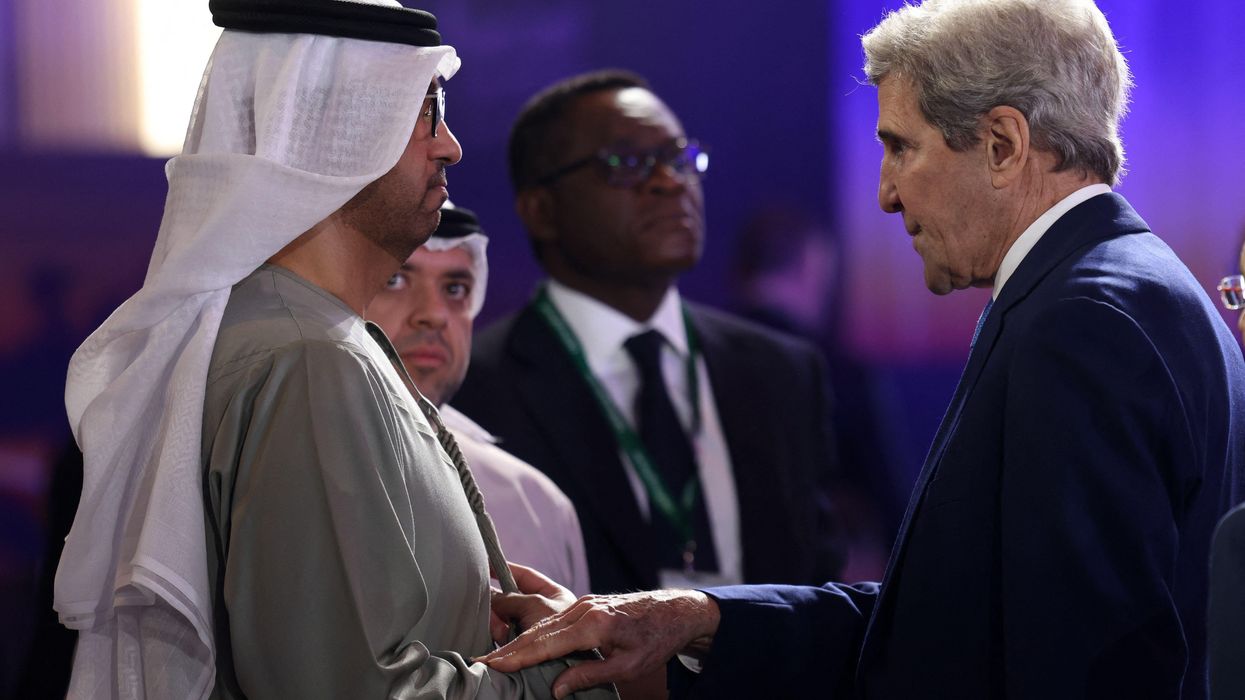
Every day Big Oil resists investing their obscene profits in truly innovative green energy technology is a day they come closer to future financial ruin.
A recent opinion poll rocked the world of the Big Oil lobbyists in their proverbial thousand-dollar suits and alligator shoes. The Pew Research Center found that 37% of Americans now feel that fighting the climate crisis should be the number one priority of President Joe Biden and Congress, and another 34% put it among their highest priorities, even if they didn’t rank it first. Companies like ExxonMobil and countries like Saudi Arabia have tried since the 1990s to gaslight the public into thinking climate change was either a total fantasy or that the burning of coal, natural gas, and petroleum wasn’t causing it. Having lost that battle, the fossil-fuel lobbyists have now fallen back on Plan B. They want to convince you that Big Oil is itself swinging into action in a major way to transition to — yes! — green energy.
The hosting of the recent COP28 climate summit by the United Arab Emirates, one of the world’s leading petroleum exporters, exemplified exactly this puffery and, sadly enough, it’s just one instance of this greenwashing world of ours. Everywhere you look, you’ll note other versions, but it certainly was a classic example. Emirati businessman Sultan Ahmed al-Jaber served as president of the Dubai-based 28th Conference of Parties — countries that had signed onto the United Nations Framework Convention on Climate Change (UNFCCC) in Rio de Janeiro in 1992. While his green bona fides include his role as chairman of the board of the UAE’s green energy firm Masdar, controversy swirled around him because he’s also the CEO of ADNOC, the UAE’s national petroleum company. Worse yet, he’s committed to expanding the oil and gas production of his postage-stamp-sized nation of one million citizens (and eight million guest workers) in a big-time fashion. He wants ADNOC to increase its daily oil production from its present four million barrels a day to five million by 2027, even though climate scientists stress that global fossil-fuel production must be reduced by 3% annually through 2050 if the world is to avoid the most devastating consequences of climate change.
Meanwhile, since COP28 was held in the heart of the petroleum-producing Middle East, it also platformed bad actors like Saudi Arabia, which led the charge to stop the conference from committing to ending the use of fossil fuels by a specific date. The awarding of COP28 to the Emirates by the UNFCCC Secretariat allowed a whole country, perhaps a whole region, to be greenwashed, a genuinely shocking decision that ought to be investigated by the U.N.’s Office of Internal Oversight Services. (And next year, it looks like COP29 will be hosted by another significant oil producer. In other words, the oil countries seem to be on a hot streak!)
Imaginary Algae
Mind you, those Gulf oil states are anything but the only major greenwashers on this planet. After all, the private sector has outdone itself in this arena. A congressional investigation into the major oil companies produced a long report and an appendix that came out last year, including internal corporate emails showing repeated and systemic bad faith on the subject of climate change. ExxonMobil executives, for instance, had publicly committed their company to the goals of the 2015 Paris Agreement to keep the increase in the average surface temperature of the earth to no more than 1.5° Centigrade (2.7° Fahrenheit) above the pre-industrial era. Although a 1.5-degree increase might sound small, keep in mind that, as a global average, it includes the cold oceans of the higher latitudes, the North and South Poles, and the Himalayas. In already hot climates like South Asia and the Middle East, that means over time it might translate into a stunning 10- to 15-degree increase that could make some places literally unlivable.
Scientists worry that exceeding that level could throw the world’s climate system into full-scale chaos, producing mega-storms, substantial sea level rise, ravaging wildfires, and deadly heat and drought over large parts of the earth’s surface. Still, despite his public commitment to it in 2019, the CEO of ExxonMobil, Darren Woods, asked an oil industry lobbying group to delete a reference to the 2015 Paris climate agreement from the draft of a statement on sustainability it had prepared. That mention, Woods said, “could create a potential commitment to advocate on the Paris agreement goals.” So much for oil company pledges!
In a similar fashion, in 2020, executives of the London-based Shell PLC asked public relations employees to highlight that the company’s vow to reach zero net carbon emissions by 2050 was “a collective ambition for the world,” rather than a “Shell goal or target.” As a company executive admitted all too bluntly, “Shell has no immediate plans to move to a net-zero emissions portfolio over our investment horizon of 10-20 years.” (Oh, and in case you missed this, the profits of the major fossil-fuel outfits have in recent years gone through the roof.)
Nor is corporate greenwashing simply a matter of public pronouncements by oil company executives. ExxonMobil has run a multi-million-dollar campaign of television and streaming advertising attempting to pull the wool over people’s eyes about what it’s doing. In one instance, it paid the New York Times to run an extended commercial gussied up as if it were a news article, a shameful procedure to which the Times acquiesced. Studies show that most readers miss disclaimers about such pieces actually being paid advertisements. It was entitled, “grand plant waste to fuel a sustainable energy future.” The advertisement was extremely misleading. As Chris Wells, an associate professor of emerging media studies at Boston University’s College of Communication, told BU Today last February, “Exxon is doing a lot of advertising around its investments in algae-based biofuels. But these technologies are not yet viable, and there is a lot of skepticism that they ever will be.”
In fact, about a month after Wells gave that interview, ExxonMobil admitted publicly that it had pulled out of algae biofuels research entirely at the end of 2022, having invested about $29 million a year over 12 years. It spent more millions, however, in advertising to give the public the impression that this paltry investment outweighed the company’s multi-billion-dollar efforts to bring ever more petroleum online.
The environmentalist group Client Earth notes that ExxonMobil spends between $20 billion and $25 billion annually looking for — yes, of course! — new oil fields and is committed to doing so through at least 2025. The company had a net profit of $55.7 billion in 2022. In other words, it’s still devoting nearly half of its annual profits to looking for more petroleum when, of course, it could be using them to launch its transition to sustainable forms of energy. Such — to put it politely — inertia is clearly unwise. New electric vehicle sales in the U.S. soared to about a million this year alone, and EVs will have avoided using 1.8 million barrels of oil in 2023. Better yet, the cost of battery packs for the vehicles fell 14% and is expected to keep heading down, guaranteeing that EVs will be ever more affordable over time. Moreover, in significant parts of the rest of the world, as the New York Times reported recently, electric-powered two- and three-wheeled vehicles are beginning to give the giant oil companies a run for their money. In the decades to come, ExxonMobil’s inflexibility and refusal to innovate will undoubtedly doom the company, but the question remains: In the process, will it doom the rest of us, too?
A Deceptive Greenwashing Marketing Campaign
In another, better world, the courts could punish the oil majors for their greenwashing. That misleading paid ad in the New York Times forms but one cornerstone of a wide-ranging lawsuit against ExxonMobil by the state of Massachusetts, initiated in 2019, which has so far survived that company’s legal challenges. As the office of Attorney General, Andrea Campbell explains, it is “alleging that the company violates Massachusetts law through a deceptive ‘greenwashing’ marketing campaign that misleadingly presents Exxon as a leader in cutting-edge clean energy research and climate action… and… its products as ‘green’ while the company is massively ramping up fossil fuel production and spending only about one-half of 1% of revenues on developing clean energy.” Campbell, an African-American born in Boston, is keenly aware that climate change is an equity issue, since its deleterious effects will initially be felt most strongly among the less privileged. (Of course, given our present Supreme Court, don’t hold your breath on this one.)
In its complaint, the state points to marketing campaigns like those featured on ExxonMobil’s YouTube channel, which still shows an ad produced eight years ago, “Making the World’s Energy go Further,” that, in just 30 seconds, presents a medley of greenwashing’s greatest early hits — algae biofuel, “new technology for capturing CO2 emissions,” and cars twice as efficient in their gas mileage. Algae biofuels, however, have by now bitten the dust; there is no affordable and safe method of capturing and storing carbon dioxide; and electric cars are between “2.6 to 4.8 times more efficient at traveling a mile compared to a gasoline internal combustion engine,” according to the Natural Resources Defense Council.
The biggest fault in such commercials, however, is that the oil company’s ad makers were trying to convince the public that ExxonMobil was putting major resources into sustainable alternatives. As the state of Massachusetts points out, in reality “ExxonMobil has ramped up production and reportedly is now the most active driller in the Permian Basin, the shale oil field located in western Texas and southeastern New Mexico that yields low-cost oil in months, rather than the years required for larger offshore projects to begin producing crude… ExxonMobil has invested billions of dollars into the development of massive Canadian oil sands projects, which are among the costliest and most polluting oil extraction projects in the world.”
Carbon Capture and Lake Nyos
An even more dangerous scam than algae biofuels (implausible but not life-threatening) is the idea of carbon capture and storage (CCS). Remind me: Why would we try to store billions of tons of a poisonous gas? On August 21, 1986, subterranean carbon dioxide deposits bubbled up through Lake Nyos in Cameroon, killing nearly 2,000 people, thousands of cattle and other animals, and in the process turned four local villages into graveyards. Some scientists fear similar underground carbon dioxide storage elsewhere could set off earthquakes. And what if such quakes in turn release the gas? Honestly, since I still remember the 1989 Exxon Valdez disaster where 11 million gallons of oil, spilled into the waters off Alaska, wrecked hundreds of miles of shoreline and killed unknown numbers of sea creatures and birds, I’d just as soon not have ExxonMobil store carbon dioxide in my neighborhood.
Worse yet, most of the CO2 harvested by oil companies so far has been injected into drill sites to help bring in — yes, you guessed it! — more petroleum. Worse yet, studies have shown that carbon-capture technology itself emits a lot of carbon dioxide, that it can only capture a fraction of the CO2 emitted by fossil fuels, and that just shutting down coal, fossil gas, and petroleum production and substituting wind, solar, hydro, and batteries is far safer, cheaper, and better for the environment.
Carbon capture is, however, a favorite greenwashing tool of Big Oil, since company executives can pretend that a technological breakthrough somewhere on the horizon justifies continuing to spew out record quantities of CO2 in the present moment. Senator Joe Manchin (D-WV) wasted billions of taxpayer dollars by including provisions for CCS research and development in Joe Biden’s otherwise admirable Inflation Reduction Act. In the process, he managed to insert a key greenwashing technique into even the most progressive climate legislation ever passed by an industrialized hydrocarbon state.
As for Sultan Al-Jaber, the head of COP28, he let his mask slip in November in a testy exchange with former Irish President Mary Robinson, who had invited him to an online discussion of how women’s lives could be improved if the climate crisis were effectively addressed. When she urged him to act as president of COP28, he exploded: “I’m not in any way signing up to any discussion that is alarmist. There is no science out there, or no scenario out there, that says that the phase-out of fossil fuel is what’s going to achieve 1.5C.” He was pushing back against the goal advocated by scientists and many diplomats of quickly phasing hydrocarbons out. He claims to advocate phasing them down, not presumably eliminating them. He added, “Please help me, show me the roadmap for a phase-out of fossil fuel that will allow for sustainable socioeconomic development, unless you want to take the world back into caves.” Al-Jaber was posturing, since he surely knows that the International Energy Agency has issued just such a roadmap, which does indeed require rapid reductions in fossil fuel use. Oh, and if he has his way, it’s quite conceivable that, somewhere down the road, the capital city of the United Arab Emirates, Dubai, could become too hot to be livable.
Given the plummeting cost of green energy, it’s clear that moving quickly and completely away from fossil fuels will improve the quality of life for people globally while making energy cheaper. In the end, COP28 could only issue an anodyne call for “transitioning away” from fossil fuels. Despite al-Jaber’s globe-straddling greenwashing at the climate summit, however, there is no realistic alternative to phasing fossil fuels not just down but out, and on an accelerated timeline, if our planet’s climate isn’t to turn into a Frankenstein’s monster. After all, 2023 has already proved a unique year for heat — with month after month of record-setting warmth across the globe. And sadly, as fossil-fuel production only continues to increase, that’s just the beginning, not the end, when it comes to potentially broiling this planet.
Admittedly, under the best of circumstances, this transition would be challenging and, according to the United Nations, will certainly require more investments than the countries of the world are now making, but it still appears eminently achievable. As for ExxonMobil and other oil majors, every day they resist investing their obscene profits in truly innovative green energy technology is a day they come closer to future financial ruin. In the meantime, they are, of course, wreaking historically unprecedented harm on the planet, as was all too apparent with the serial climate disasters of 2023, now believed to be the hottest of the last 125,000 years.
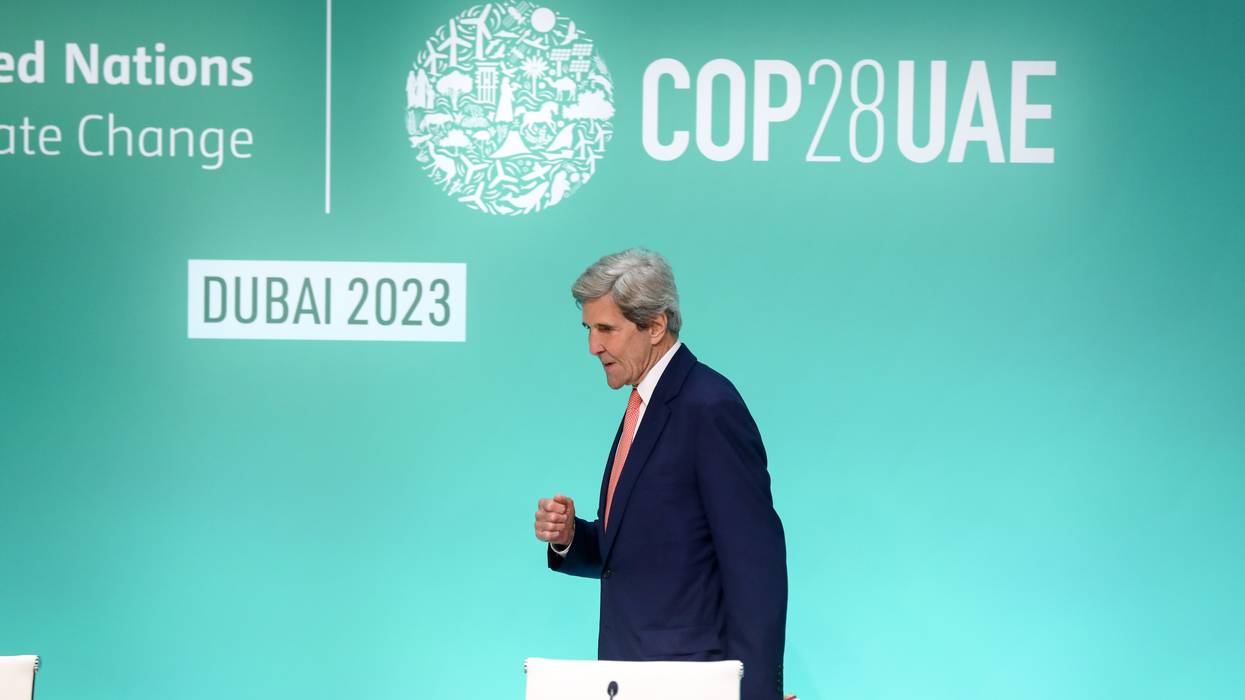
"Kerry's job isn't done," Bill McKibben wrote. "He needs to return home and convince the White House to pause the granting of new export licenses for the ongoing LNG buildout."
If it wants to honor the deal it helped negotiate at the United Nations Climate Change Conference in Dubai, the U.S. must stop the planned expansion of liquefied natural gas infrastructure, climate campaigners say.
COP28 concluded Tuesday with a final document calling on nations to "contribute" to the goal of "transitioning away from fossil fuels in energy systems, in a just, orderly, and equitable manner." While this falls short of the global phaseout of fossil fuels sought by civil society and climate-vulnerable countries, it does give activists a "tool" in their efforts to stop fossil fuel expansion in their home countries, 350.org and Third Act co-founder Bill McKibben wrote Wednesday.
"If the language means anything at all," McKibben said, "it means no opening no more new oil fields, no more new pipeline[s]. No more new LNG export terminals."
"Concrete actions mean a lot more than words at a climate summit."
U.S. climate campaigners and frontline communities have already been pushing back against the expansion of LNG. More than 300 groups from more than 40 countries submitted a letter to U.S. President Joe Biden during COP28, calling on him to stop permitting new LNG infrastructure and to stop supporting LNG projects overseas. Within the U.S., which is already the world's leading LNG exporter, both existing and planned terminals would have the combined emissions of 675 coal plants. One in particular, Venture Global's Calcasieu Pass 2 (CP2), would spew 20 times the climate pollution into the atmosphere as the controversial Willow oil drilling project in Alaska.
"The United States is doling out permits for new gas export terminals like there's no tomorrow," said Ben Goloff of the Center for Biological Diversity, one of the letter's signatories. "Our new analysis shows that the Inflation Reduction Act's emissions benefits are more than canceled out by the Biden administration's support for new fossil fuel projects, and new LNG export facilities are the engine of this disastrous machine."
Activists and journalists have also criticized the U.S. for hypocrisy as it advocated for strong language around fossil fuels at COP28 while being responsible for more than a third of new planned oil and gas extraction through 2050. As Secretary of State Antony Blinken spoke at the climate talks, the State Department approved a fracked gas pipeline in Mexico without reviewing its emissions.
In his COP post-mortem, McKibben argued that U.S. climate envoy John Kerry should follow up his diplomacy abroad with domestic persuasion.
"Kerry's job isn't done," McKibben wrote. "He needs to return home and convince the White House to pause the granting of new export licenses for the ongoing LNG buildout, a project so enormous that by itself it could produce more greenhouse gas emissions than all of Europe."
If he succeeds, McKibben continued, "we will know there was something real in all this endless talk."
Fossil Free Media director Jamie Henn also argued that the COP28 deal should be used to push the U.S. away from its gas plans.
"Concrete actions mean a lot more than words at a climate summit," Henn tweeted in response to a statement against CP2 from Rep. Ro Khanna (D-Calif.). "In the U.S., the clearest test of our commitment to move away from fossil fuels is stopping these massive new LNG export terminals."
McKibben said it was up to civil society to give the new commitment to "transitioning away" from fossil fuels the same power as the Intergovernmental Panel on Climate Change's 1995 acknowledgement that human activity was having a "discernible influence" on the climate and the Paris agreement commitment to "pursue efforts to limit [warming] to 1.5°C above preindustrial levels."
McKibben concluded: "Today's agreement is literally meaningless—and potentially meaningful. But the diplomats are done now—the rest of us are going to have to supply that meaning."

One critic noted that the United States is "insisting that a fossil fuel phaseout is the moral litmus test for climate leadership at COP28 while reaching record levels crude oil production—with no plans to stop!"
As the current United Nations Climate Change Conference draws to a close, campaigners and journalists say U.S. hypocrisy is making it harder to negotiate a just and equitable phaseout of fossil fuels.
U.S. Special Envoy for Climate John Kerry said at the talks that he supported a phaseout, as The New York Times reported, and the U.S. State Department said Monday that a draft that excluded it "needs to be substantially strengthened," according to the Financial Times. Yet U.S. projects make up more than a third of all new oil and gas extraction planned worldwide through 2050, prompting Oil Change International to dub it the "planet-wrecker-in-chief."
"The U.S. insisting that a fossil fuel phaseout is the moral litmus test for climate leadership at COP28 while reaching record levels crude oil production—with no plans to stop!—feels like a strategy designed in a lab to drive people insane," journalist Kate Aronoff tweeted Monday.
"It's easy to point the finger at some of the Gulf states here, but we should not ignore the fact that the United States has the single largest oil and gas expansion plans of any country in the world by far."
When a draft text of the Global Stocktake was published Monday with no mention of the fossil fuel phaseout called for by civil society and many climate vulnerable nations, much of the outrage focused on the Organization of the Petroleum Exporting Countries (OPEC), including COP28 host country the United Arab Emirates. The conference already faced scrutiny because its president, Sultan Ahmed Al Jaber, is also the CEO of the Abu Dhabi National Oil Company (ADNOC), and a whistleblower account ahead of the conference revealed he had been using COP28 negotiations to push oil and gas deals.
Former U.S. Vice President Al Gore, for example, said the draft text read "as if OPEC dictated it word for word," adding it was "'of the Petrostates, by the Petrostates, and for the Petrostates.'"
Yet even before the draft, climate advocates had pointed out that the so-called petrostates weren't the only ones obstructing progress: While not a member of OPEC, the U.S. has been the leading producer of oil and gas for the last five years, overtaking Saudi Arabia and Russia by 44%, according to Inside Climate News.
"It's easy to point the finger at some of the Gulf states here, but we should not ignore the fact that the United States has the single largest oil and gas expansion plans of any country in the world by far," Brandon Wu, director of policy and campaigns with ActionAid USA, told Inside Climate News.
At the same time, the U.S. is pushing untested solutions like carbon capture and storage (CCS) and treating Indigenous, minority, and low-income communities within its own borders as sacrifice zones.
"They want to ship captured carbon from their land to my homelands and sequester it there," Panganga Pungowiyi, an Indigenous mother from Sivungaq, on Dena ina lands near Anchorage, Alaska, told Inside Climate News. "What we're observing is the violation of Indigenous people's rights and the violation of the sacredness of Mother Earth by continued commodification, whether by the extraction of fossil fuels or by the designation of her body and surface as a storage facility for carbon."
"The U.S., in other words, would like the rest of the world to agree to do something it cannot possibly do itself."
When it comes to fossil fuel expansion in particular, the U.S. Gulf Coast sits on the frontlines of drilling, petrochemical manufacturing, and the buildout of liquefied natural gas export facilities.
"To us in the Gulf South, what they say is not matched by their actions," John Beard, founder and executive director of the Port Arthur Community Action Network in Texas, told Inside Climate News of the U.S. government. "They continue to do more of what created the problem by allowing more liquid fossil gas facilities to be sited and by expediting more crude oil exports."
Overall, President Joe Biden approved more oil and gas drilling permits on public lands in the first two years of his administration than did former President Donald Trump in the first two years of his, despite a campaign promise to end the practice.
What's true of government plans is also true of U.S.-based fossil fuel companies, Aronoff pointed out for The New Republic: ExxonMobil plans to increase production by 11% next year and even further to 4.2 million barrels of oil a day by 2027 while Chevron said it would increase its spending from $17 billion this year to $18.5-19.5 billion in 2024. Current U.S. law does not limit fossil fuel production; the Inflation Reduction Act only provides carrots for renewable energy, not sticks for oil, gas, and coal. And the makeup of Congress means that Democrats would have a difficult time passing laws to restrict fossil fuels even if they wanted to.
By calling for a fossil fuel phaseout at COP28, Aronoff wrote, "the U.S., in other words, would like the rest of the world to agree to do something it cannot possibly do itself. It is by all accounts planning to speed in the opposite direction, with no plans to place any limits on the companies leading that charge. You'd be forgiven for thinking this situation doesn't make any sense because it doesn't."
Another factor that undermines the U.S. and other wealthy nations during climate negotiations is their lack of commitment to funding the renewable energy transition in developing countries.
"Where is the money? Where's the money?"
While the U.S. and E.U. call for a phaseout, Sara Shaw of Friends of the Earth International said, "they are seeking to water down the climate finance provisions (one of the elements of the text which is better than expected) so urgently needed to enable the energy transition in the Global South."
The U.S. has already successfully weakened the framework document for the new Loss and Damage Fund to help developing nations with the inevitable costs of climate change, Wu wrote in Context. Instead of stipulating that developed nations contribute, it now reads, "The fund is able to receive contributions from a wide variety of sources.
Wu added on social media that some developing countries are satisfied with the COP28 stocktake draft text as is because they do not think it would be possible to phase out fossil fuels without funding, and they do not trust wealthy nations to provide it.
"No phaseout/no finance leads to climate chaos. Phaseout/no finance ALSO leads to climate disaster, because a phaseout isn't possible in the majority world without finance and tech," Wu tweeted. "We need phaseout WITH finance."
"Only developed countries have the ability to deliver the missing ingredient to make this whole process work," Wu continued. "Not only are they not doing it, they're signaling that they never want to do it, by watering all new text recalling their obligations. It's never been clearer that providing finance is not only an ethical imperative, it's also a climate imperative. If we must play a blame game, let's point the finger at the developed countries that have been consistently failing this imperative."
Romain Ioualalen, the global policy campaign manager at Oil Change International, added: "Where is the money? Where's the money? We've been hearing from the African group in particular that they're not opposed to transitioning from fossil fuels to renewable energy but they're going to need support."
"If developed countries had met their financial obligations in this process, and were sending a clear signal that these countries would be financially supported through the transition, maybe the deal would be more secure at this stage," Ioualalen said.

Language doesn’t translate into action; it just gives activists one more weapon to use when they return from Dubai to the nations, states, cities, and towns where actual change does or does not get made.
For two weeks every December, the giant global climate meeting—this year with at least 70,000 delegates, lobbyists, activists, and journalists enjoying the tacky spaceport that is Dubai—provides a cascade of feelings. This year that intensity is concentrated on a sentence in the “global stocktake” section: There’s much drama around whether it will include the phrase “phaseout of fossil fuels.” Friday morning’s update: Canada, gentle giant of the north, has been drafted to draft the relevant sentence.
“We have been asked by the UAE presidency to help find common language that will be acceptable to all parties,” its environment minister Steven Guilbeault told The Guardian. “This is what we will be doing in the coming days with many of our allies both north and south,” he said.
“I am confident we have to leave Dubai and COP28 with some language on fossil fuels. Will it be everything we want it to be? We’ll have to see. Even if it’s not as ambitious as some would want, it would still be a historic moment. I’ve been coming to COP since COP1 in 1995 in Berlin. It would be the first time in almost 30 years of international negotiations that we can agree on language regarding fossil fuels.”
I hope every American fighting the good fight in Dubai is ready to come home and fight the real fight here.
Which should tell you something about the climate negotiations, by the way: That it’s taken 28 annual sessions to maybe include some language about the thing that is, you know, the source of the problem is a reminder of the fundamental flaw in the whole process. It is designed less to solve a crisis than to guard the interests of the world’s powers (both political and economic) as they relate to that crisis. This week it’s the head of the Saudi delegation and the conference chair, from host UAE, who are playing the villain, but it’s always somebody. What that means is, the outcomes at COP are just a reflection of the current state of the world’s zeitgeist; if we’ve done enough work to mobilize enough people, then that political pressure is reflected in progress in negotiations.This doesn’t mean the COPs are absurd—given the realities of power, you have to have some forum that lets the world talk things out and pressure each other, and most of the people in attendance are doing useful work. But the COP gives the appearance that it is somehow legislating, which it is not. Let’s say, for instance, that Guilbeault manages to convince everyone to include some phrase about phasing out fossil fuels into the text. It will be vague, ambiguous, unconnected to any particular time—and it will have no authority.
That doesn’t mean it’s useless—the decision, at the behest of small island nations, to include the 1.5°C target in the Paris text arguably reoriented the way the world thought about the climate challenge, and produced real change. But it does mean that language doesn’t translate into action; it just gives activists one more weapon to use when they return from Dubai to the nations, states, cities, and towns (and stock markets) where actual change does or does not get made. Canada, for instance, is currently building big new pipelines to increase its production of tarsands oil and natural gas; if Guilbeault produces good language in the draft he’ll have handed Canadian activists a cudgel with which to beat him around the head and shoulders (and its possible that that’s what he wants; he was, after all, the longtime director of Greenpeace Quebec). But it won’t produce change by itself: Alberta, for instance, continues to threaten to break up the country if any kind of cap is imposed on its oil business.
An even better example is the world’s largest hydrocarbon producer and exporter, the US of A. Our representatives to the COP—which so far have included the vice-president (Kamala Harris), the former secretary of state and now climate envoy (John Kerry), and the former chief of staff to Obama and now a senior adviser to the president (John Podesta)—may or may not sign off on “phaseout” (as I explained last week, Kerry is plumping for ‘phaseout of unabated fossil fuels.’) But even if they do, it won’t necessarily mean much—so far this same constellation of worthies has approved every single proposed new LNG export facility that now threaten a final destabilization of the planet’s climate.
And even if they did the right thing, well—one Donald Trump, currently leading in presidential polls, said last week that he would happily come to work as a ‘dictator’ on the very first day of his presidency, in order to ‘drill drill drill.’ If anyone thinks he will be slowed by the language of an agreement initialed by a bunch of functionaries in Dubai, I’d like to sell you the deed to the world’s tallest building, which as it happens is in Dubai.
So the most important thing that happened this week at the COP may have been the attack on those LNG export plans by 250 environmental groups, an attack voiced eloquently as always by Louisiana activist Roishietta Ozane, who said “there’s nothing natural about natural gas.” Say, for argument’s sake, that those groups won (and stay tuned—by next week I’ll have info on how you can help; for the moment, save up some bail money). If they did, and the Biden administration decided to halt this biggest of all fossil fuel buildouts, then the phaseout of fossil fuels would have taken an actual step. I hope every American fighting the good fight in Dubai is ready to come home and fight the real fight here.
And even if we win that fight on LNG, we still need to defeat Trump come November, or else the effort to rein in coal, oil, and gas will take at least a four-year hiatus, and not just in America. Our political dysfunction is at the root of the failures of the COP negotiations (the rest of the world long since figured out that the U.S. senate would never have 66 votes for an actual treaty, so instead we have this jury-rigged system of voluntary pledges). But we can, as President Joe Biden showed with the IRA, overcome that dysfunction from time to time; the better we do, the better the planet does.
A new poll released Friday morning by CNN should give us heart—it shows three quarters of Americans want government policies that would slash emissions in half this decade; I mean, damn, half of Republicans think so. That’s the result of past activism, and it shows we can win this fight. But the action is right here, and in all the right heres around the planet, as much as it is in Dubai.

"Nobody will ever hold the government to account publicly," said one climate campaigner. "We do not have the privilege of speaking out against the government."
Despite greenwashing efforts like hosting the ongoing United Nations Climate Change Conference, the United Arab Emirates—the world's seventh-biggest oil producer and sixth-largest exporter—is contributing heavily to toxic air pollution, creating a "devastating impact on human health."
That's according to a Monday report from Human Rights Watch (HRW) report—entitled 'You Can Smell Petrol in the Air': UAE Fossil Fuels Feed Toxic Pollution—which "documents alarmingly high air pollution levels in the UAE" and how toxic air caused by oil and gas production creates "major health risks" for the country's 9.4 million people.
As the report details:
The UAE government says that the country has poor air quality but mainly ascribes this to natural dust from sandstorms. However, academic studies have shown that natural causes are not the single, or in some cases even the major, factor in air pollution. A 2022 academic study found that, in addition to the dust, emissions including from fossil fuels contribute significantly to the problem in the UAE. Air pollution and climate change are directly linked, as the extraction and use of fossil fuels are the sources of air pollution and greenhouse gas emissions.
The report's researchers analyzed levels of PM2.5—fine particulate matter measuring 2.5 micrometers or smaller that can penetrate human lungs and blood—at 30 UAE government monitoring stations and found that they were, on average, three times higher than the World Health Organization's (WHO) daily recommended exposure.
According to the latest available data from the World Bank, the UAE's mean annual PM2.5 exposure is over eight times higher than what the WHO says is safe.
The WHO estimates that approximately 1,870 people die each year from outdoor air pollution in the UAE.
"Fossil fuels pollute the air people breathe in the UAE," HRW environment director Richard Pearshouse said in a statement. "But the obliteration of civil society by UAE's government means that no one can publicly express concerns, let alone criticize the government's failure to prevent this harm."
The report explains:
Those in the UAE wanting to report on, or speak out about, the risks of fossil fuel expansion and its links to air pollution face risks of unlawful surveillance, arrest, detention, and ill-treatment. Over the last decade, authorities in the UAE have embarked on a sustained assault on human rights and freedoms, including targeting human rights activists, enacting repressive laws, and using the criminal justice system as a tool to eliminate the human rights movement. These policies have led to the complete closure of civic space, severe restrictions on freedom of expression, both online and offline, and the criminalization of peaceful dissent.
"Nobody will ever hold the government to account publicly," said one climate activist interviewed by HRW. "We do not have the privilege of speaking out against the government."
Pearshouse argued: "Air pollution is a dirty secret in the UAE. If the government doesn't allow civil society to scrutinize and speak freely about the connection between air pollution and its fossil fuel industry, people will keep experiencing health conditions that are entirely preventable."
Most of those affected by air pollution in the UAE are migrant workers, who make up nearly 90% of the country's population. In addition to enduring widespread serious labor abuses, these workers—many of whom hail from some of the world's most climate-vulnerable countries—face deadly dangers from air pollution.
Migrant workers interviewed by HRW said they breathe air that burns their lungs, are often short of breath at work, and suffer from skin and other ailments they believe could be caused by pollution. However, migrant workers told HRW that they were given no information about the risks of air pollution or how to protect themselves.
One migrant worker told HRW: "Sometimes, the environment becomes dark and murky. We discuss among friends why it is that way... The conversation ends there. During such times friends also fall sick."
While the UAE government has submitted a recently revised domestic climate action plan as required by the 2015 Paris agreement, the plan has been criticized for its continued reliance upon fossil fuel production.
"Sometimes, the environment becomes dark and murky. We discuss among friends why it is that way."
The choice of the UAE and the CEO of its national oil company—Sultan Ahmed Al Jaber—as host and president of the U.N. Climate Change Conference also stunned and angered many climate campaigners around the world. In the United States, climate activists were also outraged after U.S. climate envoy John Kerry glowingly endorsed Al Jaber as "a terrific choice" for the COP28 presidency.
Late last month, internal records leaked by a whistleblower showed that Al Jaber used meetings about COP28 to push foreign governments for fossil fuel deals. In response to the allegation, former Marshallese President Hilda Heine resigned from COP28's advisory board.
Al Jaber stoked further controversy over the weekend when he insisted there is "no science" supporting the effort to rapidly phase out planet-heating fossil fuels.
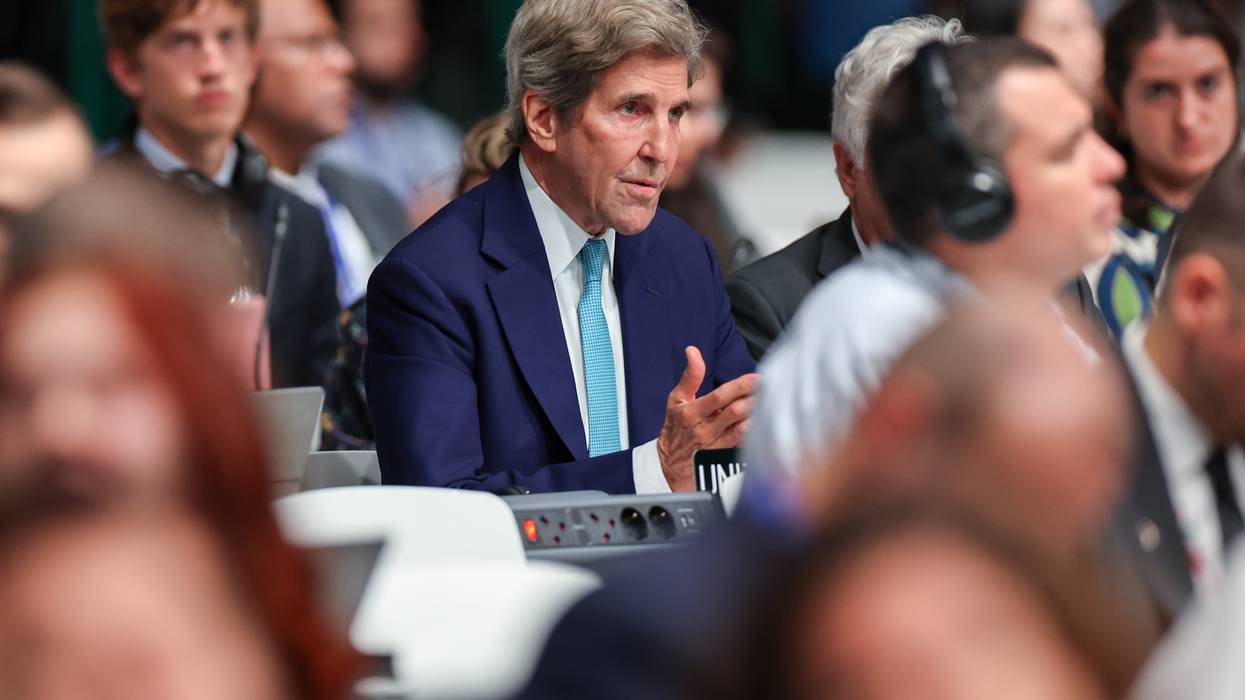
"The United States refuses to acknowledge historic responsibility for the decades of damage that has been done to communities bearing the brunt of climate change and the fossil fuel industry," said one advocate.
Climate justice advocates, outraged over the inadequate funding that was pledged to the "loss and damage" fund as the United Nations Climate Change Conference opened this week, reserved particular disdain on Friday for the United States delegation and its refusal to contribute a meaningful amount to the fund.
The Climate Justice Alliance said the U.S. contribution of just $17.5 million for the loss and damage fund—a tiny fraction of the nearly $900 billion President Joe Biden requested for his military budget earlier this year and the annual fossil fuel subsidies distributed by the U.S. government—sent a clear message to the Global South: that "the U.S. is completely uninterested in prioritizing or being accountable to the climate impacts frontline communities are facing."
"The amount pledged by the United States is insulting," said Bineshi Albert, co-executive director of the organization. "It is a paltry, shameful amount of money... By comparison, island nations have requested at least $100 billion over the first four years."
The sum also made clear that the Biden administration is following through on Special Presidential Climate Envoy John Kerry's remarks at a hearing in July, in which he said that "under no circumstances" would the U.S. provide funding to countries in the Global South that are increasingly facing prolonged droughts, rising sea levels, and severe storms, among other climate impacts as a result of planetary heating.
"The United States refuses to acknowledge historic responsibility for the decades of damage that has been done to communities bearing the brunt of climate change and the fossil fuel industry," said Albert.
The U.S. is by far the largest historic emitter of planet-heating emissions, while many countries that are already facing the worst impacts of the climate emergency, such as small Pacific island nations, shoulder the least blame for the crisis.
Albert called the $17.5 million pledged by the U.S. "a drop in the bucket compared to the annual $20.5 billion in fossil fuel subsidies handed out by the US government, which recently surged to $7 trillion in 2022."
To help governments in the Global South rebuild damaged communities, prevent further destruction, and relocate displaced people, developing countries have said they will ultimately need about $400 billion annually.
$17.5 million "is not only ineffective to address these harms and injustices but it is minuscule compared to the hundreds of billions in loan, grants, and tax breaks available from the Inflation Reduction Act to corporations to further build out or prolong the life of fossil fuel infrastructure and energy intensive fuels like hydrogen," said Albert.
She added that it is not lost on advocates that the U.S. government pushed for contributions to the loss and damage fund to be voluntary: "another clear sign that the United States does not take responsibility for its harmful past actions nor does it consider the needs of the most impacted and marginalized communities seriously."
With contributions from other wealthy governments ranging from just $10 million (Japan) to $245 million (the European Union), Amnesty International climate adviser Ann Harrison said wealthy countries committed "barely enough to get the fund running, and little more."
"Billions of dollars are needed to make a substantive difference to communities in desperate need of help to rebuild homes after storms, or to support farmers when their crops are destroyed, or those permanently displaced by the climate crisis," said Harrison. "Considering the vast and excess profits accrued by fossil fuel companies last year while they continue to trash the climate, and that some the donor states today were responsible for a large proportion of historical greenhouse gas emissions, this is a disappointingly small initial sum."
High-income countries that continue to produce fossil fuels despite clear warnings from energy and climate experts, said Harrison, must "make new and additional commitments to the fund on a scale which reflects the global nature of climate crisis, and the threat it presents to billions of people."

Progressive members of Congress, including Sen. Ed Markey and Rep. Alexandria Ocasio-Cortez, urged the president to support a complete phaseout of fossil fuels.
Sen. Ed Markey and Rep. Alexandria Ocasio-Cortez on Thursday led a group of more than 30 U.S. lawmakers in calling on President Joe Biden to embrace a complete phaseout of fossil fuels and an immediate end to public financing of new overseas oil and gas projects as world leaders gathered for the first day of the COP28 summit in Dubai.
In a letter to the president, who decided to skip the talks, Markey (D-Mass.), Ocasio-Cortez (D-N.Y.), and 32 other members of Congress wrote that the U.S. has a "duty" to pursue more ambitious climate goals and "support other countries in adopting the principles of environmental justice that we should also prioritize here at home."
"In order to remain on target for a livable future, we urge the administration to support the move toward an extensive, expedient, and equitable phaseout of fossil fuel production and consumption," the lawmakers wrote. "A full phaseout should be inclusive of coal, oil, and fossil gas, and led by the wealthiest and highest-emitting countries, including short-term phase-down goals and climate financing to assist developing countries in executing a clean energy transition."
The letter, spearheaded by the leaders of the congressional Green New Deal Resolution, was released after the COP28 talks opened with a deal to operationalize a loss and damage fund geared toward helping low-income nations recover from the increasingly devastating climate impacts they've faced in recent years, despite doing the least to cause the planetary crisis.
The Biden administration, representing the country that is the largest historical emitter of planet-warming carbon dioxide, pledged just $17.5 million to the loss and damage fund, a sum that one campaigner called "embarrassing."
As Common Dreams reported, the administration also drew outrage by launching an oil and gas drilling auction just days before the start of the United Nations climate summit.
In a social media post Thursday, Markey called on the Biden administration to "lead by example and take bold action to end this climate emergency."
The Biden administration has thus far rejected calls to support a full phaseout of fossil fuels, allowing U.S. oil and gas extraction to surge to record levels despite increasingly dire warnings from the scientific community.
The administration has also repeatedly broken its commitment to end direct public financing for international fossil fuel projects.
In a briefing on the eve of COP28, Special Presidential Climate Envoy John Kerry told reporters that the administration supports "requiring the phaseout of unabated fossil fuel."
As Bloomberg's Lara Williams recently warned, the ambiguity of "unabated"—expected to be a hot-button term during the COP28 talks—"leaves an enormous loophole for the continued expansion of fossil fuel production under the vague promise that all will be abated in the future."

The United States' contribution of $17.5 million, in particular, was denounced as "embarrassing" for the wealthiest country in the world.
International campaigners who for years have demanded a global "loss and damage" fund to help developing countries confront the climate emergency were encouraged on Thursday as the 28th United Nations Climate Change Conference began with an agreement to make the fund operational—but said the details of the deal made clear that wealthy countries are still largely abandoning communities that have contributed the least fossil fuel emissions, only to suffer the worst climate injustices.
A recent study from the University of Delaware showed that "the unweighted percentage of global GDP lost" due to climate impacts such as long-lasting drought, catastrophic flooding, and wildfires is estimated at 1.8%, or about $1.5 trillion, and low- and middle-income countries "have experienced $2.1 trillion in produced capital losses due to climate change."
To meet the need, developing countries have said they already require about $400 billion annually in a loss and damage fund that could help governments rebuild communities, restore crucial wildlife habitats, or relocate people who have been displaced by the climate emergency—so advocates on Thursday were left wondering why the fund agreed upon at COP28 was expected to provide only about $100 billion per year by 2030.
The shortfall threatened to ensure the loss and damage fund will remain "an empty promise," said Fanny Petitbon, head of advocacy for Care France.
"We hope the agreement will result in rapid delivery of support for communities on the frontlines of the climate crisis," said Petitbon. "However, it has many shortcomings. It enables historical emitters to evade their responsibility. It also fails to establish the scale of finance needed and ensure that the fund is anchored in human rights principles."
"We urgently call on all governments who are most responsible for the climate emergency and have the capacity to contribute to announce significant pledges in the form of grants," she added. "Historical emitters must lead the way."
The United States, the largest historical contributor of the planet-heating emissions that scientists agree are fueling the climate crisis, has objected to tying loss and damage funding to each wealthy nation's emissions—perhaps partially explaining why the Biden administration pledged only $17.5 million to the fund.
Such contributions are "a drop in the ocean compared to the scale of the need they are to address," said Mohamed Adow, director of Power Shift Africa.
"In particular, the amount announced by the U.S. is embarrassing for President [Joe] Biden and [Special Presidential Climate Envoy] John Kerry," said Adow. "It just shows how this must be just the start."
Campaigners also objected to the agreement's stipulation that the World Bank will host the fund for the first four years—a demand that had been made by the U.S. and other wealthy countries—with voluntary payments from powerful governments that will be "invited," not required, to contribute.
"Although rules have been agreed regarding how the fund will operate there are no hard deadlines, no targets, and countries are not obligated to pay into it, despite the whole point being for rich, high-polluting nations to support vulnerable communities who have suffered from climate impacts," said Adow.
"The most pressing issue now is to get money flowing into the fund and to the people that need it," he added. "The pledged funds must not just be repackaged commitments. We need new money, in the form of grants, not loans, otherwise it will just pile more debt onto some of the poorest countries in the world, defeating the point of a fund designed to improve lives."
The United Arab Emirates, which is hosting COP28, pledged $100 million to the fund, a sum that was matched by Germany. The United Kingdom committed to contributing 60 million British pounds, or about $75 million, while Japan pledged $10 billion. The U.S. also said it would provide $4.5 million to the Pacific Resilience Facility, which will offer loss and damage funding to Pacific Island nations, and $2.5 million for the Santiago Network, which will provide technical support to developing countries.
Izzie McIntosh, climate campaign manager at U.K.-based Global Justice Now, called the creation of the global loss and damage fund was called a "welcome, yet long overdue, step forward for our climate," and one that "reflects the utter devastation caused by climate change in the global south, and the need for rich countries to pay what they owe for their role in it."
Rich countries, however, "have weakened the commitment they made to climate justice by insisting on the World Bank as interim host," added McIntosh. "This decision risks both excluding countries due to its outdated rules and deepening the debt crisis if support is provided through loans, not grants. If loss and damage funding is to be truly impactful, it must be funded and designed adequately, or risk being all talk and no action."
At COP27 in Egypt one year ago, noted Christian Aid global advocacy lead Mariana Paoli, policymakers did not even place the loss and damage fund on the agenda.
"It's a testament to the determination of developing country negotiators that we now already have the fund agreed and established," she said. "It's now vital we see the fund filled. People who have contributed the least to the climate crisis are already suffering climate losses and damages. The longer they are forced to wait for financial support to cover these costs, the greater the injustice."
Before COP28 wraps up on December 12, Paoli added, campaigners are hoping they will "see significant new and additional pledges of money to the loss and damage fund, and not just repackaged climate finance that has already been committed."
A fully funded, impactful loss and damage fund must be paired with a commitment by countries to end fossil fuel expansion, added Romain Ioualalen, global policy manager at Oil Change International, with rich countries "redirecting trillions in fossil industry handouts to triple renewable energy and double energy efficiency."
"We have had enough delays," said Ioualalen, "and this must happen now to secure a livable future."