

SUBSCRIBE TO OUR FREE NEWSLETTER
Daily news & progressive opinion—funded by the people, not the corporations—delivered straight to your inbox.
5
#000000
#FFFFFF
To donate by check, phone, or other method, see our More Ways to Give page.
Daily news & progressive opinion—funded by the people, not the corporations—delivered straight to your inbox.

"While Americans suffer from high prices and the Iran war imposes tens of billions of dollars of new costs on the American public, the oil industry wins big."
ExxonMobil and Chevron repeated $26.5 billion in combined profits in the second quarter of 2026 as US President Donald Trump's illegal war on Iran drove up gas prices around the world, punishing consumers at the pump while boosting oil companies' bottom lines.
Chevron on Friday announced $12 billion in profits for the second quarter—its highest quarterly profit in six years—while Exxon posted $14.5 billion. Exxon touted its "industry-leading shareholder distributions," which "totaled $9.4 billion, including $4.3 billion of dividends and $5.1 billion of share repurchases."
Reuters noted that the two companies' results "mirrored those of European oil majors TotalEnergies and Shell, which also posted banner second-quarter profits buoyed by higher oil prices."
The oil giants' earnings came weeks after a Harris survey found that 95% of Americans believe the US is facing an affordability crisis, with gas and groceries at the top of the list of "unaffordable goods and services." The current national average price for a gallon of gas is $4.1.
"The pattern is consistent: While Americans suffer from high prices and the Iran war imposes tens of billions of dollars of new costs on the American public, the oil industry wins big," a group of Democratic senators wrote in a recent letter. "President Trump has made the calculus explicit in his own words. When it comes to families facing increasing prices in the context of the Iran war, he said: ‘I don’t think about Americans’ financial situation.'"
Sierra Club said Thursday that Big Oil's wartime profits are "paid by you," and called for a "windfall profits tax to recover a portion of the excess profits oil companies rake in during a global crisis and return that money to the people who paid higher prices."
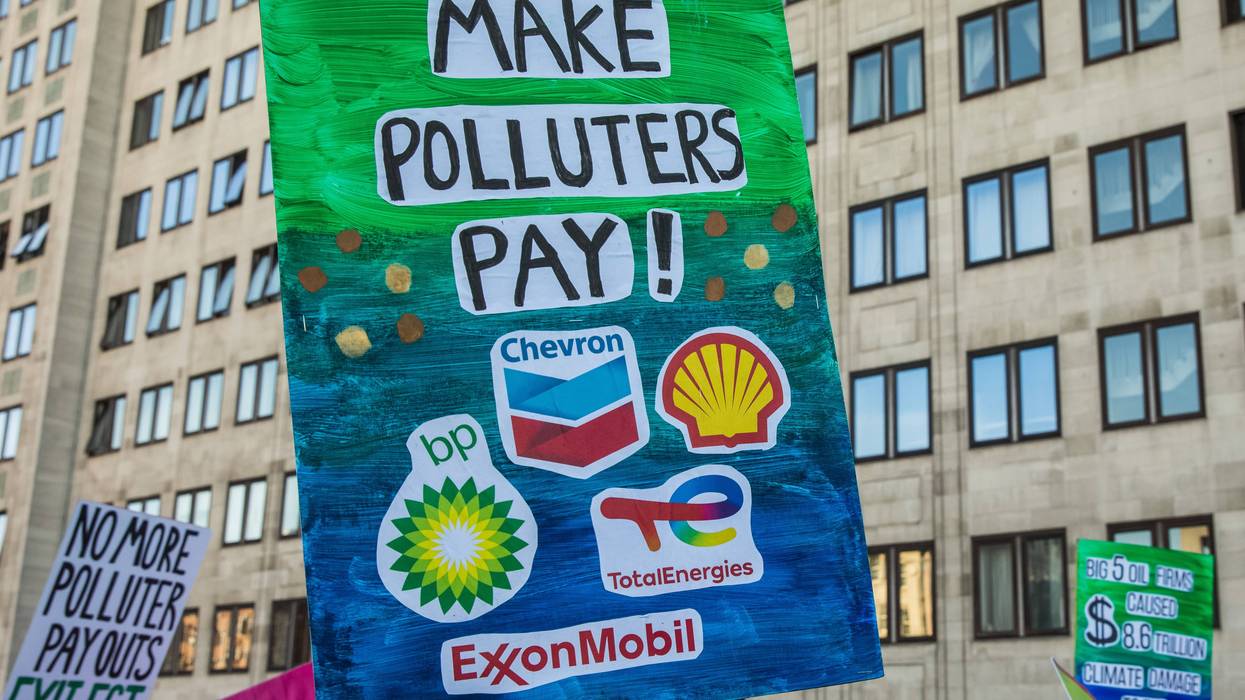
"At the same time as oil and gas companies are preparing for a multibillion-dollar payday, they are working with the Trump administration to block investment in clean energy sources that would make American families more energy independent," the group added. "It's time to make polluters pay."
Allies of fossil fuel companies are celebrating the development as a step toward "stopping the endless wave" of lawsuits against the climate-wrecking industry.
US fossil fuel giants have long sought to shift litigation over industry harms from state to friendly federal courts, and the country's top court unanimously handed polluters a big win on Friday, allowing such a move in a case centered on environmental damage in coastal Louisiana.
Cases can be removed from state court when they are against federal officers or persons "acting under" them, "for or relating to any act under color of such office." Although the US Supreme Court has previously rejected multiple removals requested by Big Oil, the justices sided with the industry in Chevron USA v. Plaquemines Parish.
The company argued that its challenged production was sufficiently related to its contractual duties to refine crude oil into aviation gasoline, or avgas, for the US military during World War II. A federal district judge and the US Court of Appeals for the 5th Circuit rejected Chevron's argument, but the high court bought it.
"Chevron has plausibly alleged a close relationship between its challenged conduct and the performance of its federal duties—not a tenuous, remote, or peripheral one," Justice Clarence Thomas wrote for the majority. Justice Ketanji Brown Jackson penned a concurring opinion.
Justice Samuel Alito recused himself shortly before arguments. As with some other cases involving Big Oil, he bowed out due to his stock in ConocoPhillips, whose subsidiary Burlington Resources Oil and Gas Company is involved in the case at the district court level.
This fight before the high court stemmed from dozens of cases filed over a decade ago. As NOLA.com detailed Friday:
In 2013, a group of local parishes and the state filed 42 lawsuits against energy companies whose predecessors sought and produced crude during World War II. They argued that the oil and gas companies damaged wetlands and failed to get or comply with the proper permits.
After a three-week trial, a Plaquemines Parish jury sided with the state in one of those cases and awarded a $745 million verdict against Chevron and two other companies.
But the companies challenged the verdict, saying the lawsuit should have been heard in federal court, not state court.
Thanks to the Supreme Court, the Plaquemines Parish case may now be retried in a US district court. Company spokesperson Bill Turenne said in a statement that "Chevron looks forward to litigating these cases in federal court, where they belong."
There are also potential implications for other legal battles involving the industry that is fueling the global climate emergency—as American Energy Institute CEO Jason Isaac, a former Republican state representative in Texas, celebrated in a Friday statement. He described the decision as "a critical step toward restoring sanity to our legal system and stopping the endless wave of politically motivated lawsuits designed to punish the very industry that powers our economy and national security."
The Supreme Court's decision notably came as the justices prepare to hear ExxonMobil and Suncor's request to move a 2018 lawsuit filed by the city of Boulder, Colorado—seeking financial damages for the companies' role in creating the climate crisis—from state to federal court. Alito has not yet recused himself from that case.
Fossil fuel companies largely have support from the Republican Party, which controls the White House and both chambers of Congress. President Donald Trump returned to power last year with help from the industry's campaign cash, and his administration has supported the companies being challenged in Louisiana.
As The New York Times noted Friday, the local communities' lawsuits "have gained support from Louisiana Republican leaders, including those who have otherwise endorsed President Trump's 'energy dominance' agenda. Gov. Jeff Landry and Attorney General Liz Murrill, both Republicans, have supported the legal challenges."
However, ahead of the November midterm elections, Republicans in Congress are working on shielding oil and gas companies from what they call "abusive state climate lawsuits." As Common Dreams reported Friday, US Sen. Ted Cruz (R-Texas) and Congresswoman Harriet Hageman (R-Wyo.) introduced the Stop Climate Shakedowns Act this week.
"Big Oil companies have raked in massive profits at the pump while lying to the American people about the catastrophic harm of their products, and now they want to deny Americans their rightful day in court and stick taxpayers with the bill for the mess they made," said Center for Climate Integrity president Richard Wiles. "If fossil fuel companies have done nothing wrong, why do they need immunity?"
There are related legislative efforts at the state level. As the Times detailed earlier this month, Utah recently "became the first state to enact a law that shields companies from climate-related claims." Tennessee swiftly followed suit, and Republican lawmakers in states including Iowa, Louisiana, and Oklahoma are working on similar legislation.
Cassidy DiPaola, communications director for the Make Polluters Pay campaign, warned earlier this year that "a federal liability shield for fossil fuel companies would not lower energy prices or ease the cost of living. It would simply shift more of the financial burden onto working families and local governments while insulating one of the most profitable industries in history from accountability."
"Congress should not close the courthouse doors to communities seeking redress," said DiPaola. "Big Oil is not entitled to special immunity from the consequences of its conduct."
This article has been updated to include developments with state legislation and Common Dreams' reporting on a bill that would shield the fossil fuel industry from liability.
"They have spoken openly about controlling Venezuela’s oil reserves, the largest in the world," said US Sen. Bernie Sanders. "It recalls the darkest chapters of US interventions in Latin America."
US President Donald Trump left no doubt on Saturday that a—or perhaps the—primary driver of his decision to illegally attack Venezuela, abduct its president, and pledge to indefinitely run its government was his desire to control and exploit the country's oil reserves, which are believed to be the largest in the world.
Over the course of Trump's lengthy press conference following Saturday's assault, the word "oil" was mentioned dozens of times as the president vowed to unleash powerful fossil fuel giants on the South American nation and begin "taking a tremendous amount of wealth out of the ground"—with a healthy cut of it going to the US "in the form of reimbursement" for the supposed "damages caused us" by Venezuela.
"We're going to have our very large United States oil companies, the biggest anywhere in the world, go in, spend billions of dollars, fix the badly broken infrastructure, and start making money for the country," Trump said, suggesting American troops could be deployed, without congressional authorization, to bolster such efforts.
"We're going to get the oil flowing the way it should be," he added.
Currently, Chevron is the only US-based oil giant operating in Venezuela, whose oil industry and broader economy have been badly hampered by US sanctions. In a statement on Saturday, a Chevron spokesperson said the company is "prepared to work constructively with the US government during this period, leveraging our experience and presence to strengthen US energy security."
Other oil behemoths, some of which helped bankroll Trump's presidential campaign, are likely licking their chops—even if they've been mostly quiet in the wake of the US attack, which was widely condemned as unlawful and potentially catastrophic for the region. Amnesty International said Saturday that "the stated US intention to run Venezuela and control its oil resources" likely "constitutes a violation of international law."
"The most powerful multinational fossil fuel corporations stand to benefit from these aggressions, and US oil and gas companies are poised to exploit the chaos."
Thomas O'Donnell, an energy and geopolitical strategist, told Reuters that "the company that probably will be very interested in going back [to Venezuela] is Conoco," noting that an international arbitration tribunal has ordered Caracas to pay the company around $10 billion for alleged "unlawful expropriation" of oil investments.
The Houston Chronicle reported that "Exxon, America’s largest oil company, which has for years grown its presence in South America, would be among the most likely US oil companies to tap Venezuela’s deep oil reserves. The company, along with fellow Houston giant ConocoPhillips, had a number of failed contract attempts with Venezuela under Maduro and former President Hugo Chavez."
Elizabeth Bast, executive director of the advocacy group Oil Change International, said in a statement Saturday that the Trump administration's escalation in Venezuela "follows a historic playbook: undermine leftist governments, create instability, and clear the path for extractive companies to profit."
"The most powerful multinational fossil fuel corporations stand to benefit from these aggressions, and US oil and gas companies are poised to exploit the chaos and carve up one of the world's most oil-rich territories," said Bast. "The US must stop treating Latin America as a resource colony. The Venezuelan people, not US oil executives, must shape their country’s future."
US Sen. Chris Van Hollen (D-Md.) said that the president's own words make plain that his attack on Venezuela and attempt to impose his will there are "about trying to grab Venezuela's oil for Trump's billionaire buddies."
In a statement, US Sen. Bernie Sanders (I-Vt.) echoed that sentiment, calling Trump's assault on Venezuela "rank imperialism."
"They have spoken openly about controlling Venezuela’s oil reserves, the largest in the world," said Sanders. "It recalls the darkest chapters of US interventions in Latin America, which have left a terrible legacy. It will and should be condemned by the democratic world."
"Big Oil's climate deception has evolved from lying about the problem to lying about solutions," said the head of the Center for Climate Integrity.
A group that supports communities' efforts to hold Big Oil accountable for decades of deception related to the climate emergency released a report on Thursday after reviewing more than 300 advertisements from four fossil fuel giants since 2000.
Over the past decade, people across academia, civil society, Congress, and journalism have examined the evolving lies of oil and gas giants, which have long been accused of using Big Tobacco's playbook.
"Using evidence from congressional investigations, advertising, and public relations documents, independent journalism, and watchdog reports," the new analysis states, "Big Oil's Deceptive Climate Ads explains how the pervasive and misleading messaging in BP, Chevron, ExxonMobil, and Shell’s advertisements has not only misrepresented the companies' business practices, but, over the span of two and a half decades, effectively cultivated a larger, deceptive narrative that oil and gas companies are leaders in the fight against climate change, when in fact they are actively fueling climate catastrophe around the globe."
The Center for Climate Integrity (CCI) report notes that "while oil and gas companies and their trade associations publicly denied the risks and realities of climate change for decades, growing public understanding of climate science around the turn of the 21st century eventually meant that outright denial was no longer sufficient to protect their bottom line."
NEW: For 25 years, four oil giants sold false climate promises through deceptive ad campaigns.Our report examined 300+ ads from BP, Chevron, Exxon, and Shell from 2000-2025. Together they push a false narrative that Big Oil is leading climate solutions. In reality, they're fueling catastrophe.
[image or embed]
— Center for Climate Integrity (@climateintegrity.org) December 11, 2025 at 8:54 AM
"During this period, major oil and gas companies began to reposition themselves publicly as active partners in the fight against climate change, even while they continued to increase fossil fuel production, invest minimally in clean energy, oppose energy efficiency initiatives, and promote technically or economically infeasible solutions," the document details.
"To convey this misleading image to the public," the publication continues, "Big Oil companies carried out extensive advertising campaigns, inundating the public with messaging that creates an overall deceptive portrait of their true role in the climate crisis."
CCI sorted the ads across seven categories of deception: emissions reductions, renewables investments, individual action, natural gas, carbon capture and storage, hydrogen, and algae biofuels. The group found that "these skillfully crafted advertisements often include partially truthful statements but omit relevant contextual information to create an inaccurate or incomplete representation of the initiative, product, or technology they promote."
"For instance, advertisements that portray natural gas as beneficial for the climate because it 'lowers emissions' are misleading by omission, because although gas produces less CO2 and other pollutants than coal when burned, it still emits significant quantities of greenhouse gases, including CO2 and methane, that pose a serious threat to the climate," the publication points out. "This tactic, known as paltering, has been at the core of Big Oil companies' climate advertisements for the past 25 years."
 (Image: Big Oil's Deceptive Climate Ads)
The report also acknowledges the public response: "Market research shows BP's 'Beyond Petroleum' campaign increased brand favorability among US and UK audiences, leading viewers to associate the oil giant with efforts to reduce carbon emissions at a time when it was the largest producer of fossil fuels in the UK and North America. Chevron's 'Real Issues' campaign, which promoted its energy conservation initiatives and renewables investments, improved the company's reputation among ad-exposed audiences."
The publication comes as the climate emergency continues to worsen, with deadly impacts, and world leaders fail to take adequate steps toward "a just, equitable, fossil-free future." Meanwhile, communities continue to call for not only action to limit future global warming but also consequences for the big polluters that created the global crisis.
The report similarly concludes that "oil and gas companies—including BP, Chevron, ExxonMobil, and Shell—must be held accountable for the damages their deception has caused. As climate accountability lawsuits filed by communities across the US make their way through the courts, ongoing advertising deception by the four oil majors' in this report demands further scrutiny and investigation."
CCI president Richard Wiles echoed that demand in a Thursday statement: "Big Oil's climate deception has evolved from lying about the problem to lying about solutions. For two-and-a-half decades now, these companies have sold the public a false and misleading image of their industry as working to solve the climate crisis, all while doubling down on fossil fuels and making the problem worse."
According to Wiles, "Any business that floods consumers with such brazenly deceptive advertising must be held accountable."
"A debt is not owed to Chevron. A debt is owed to the Amazonian families still waiting for truth, justice, and full reparation."
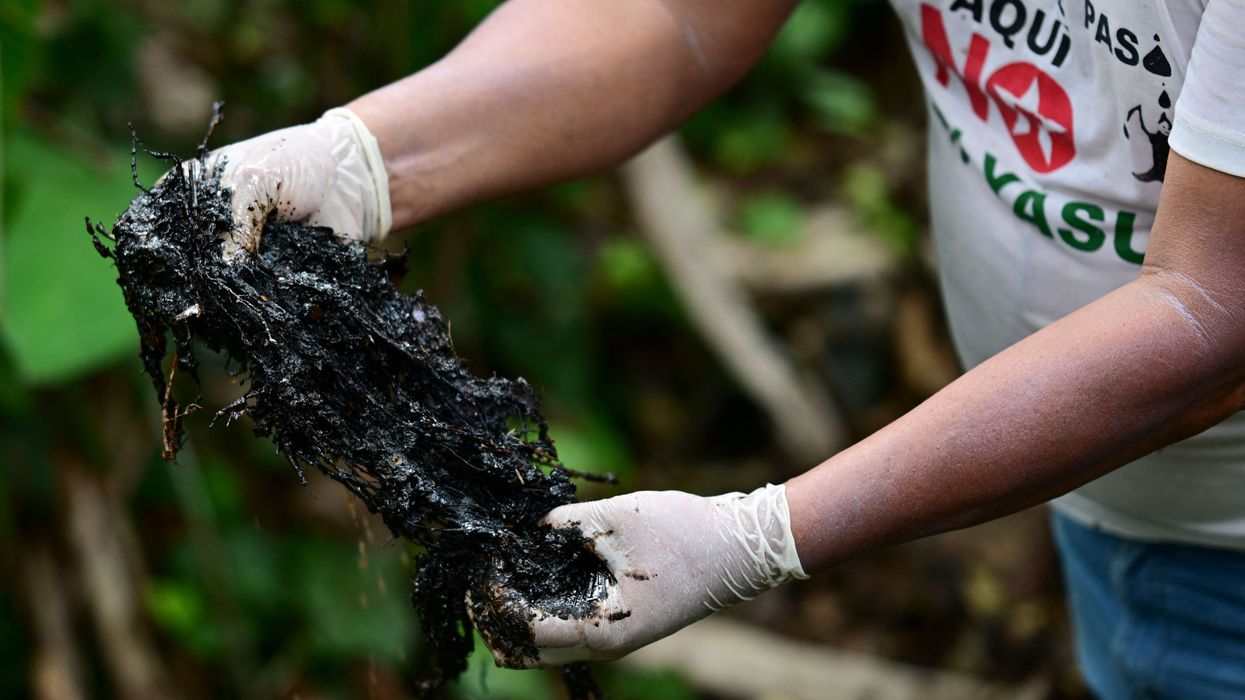
A US advocacy group, American human rights lawyer Steven Donziger, and the group in Ecuador behind a historic legal battle against Chevron over its dumping of toxic waste in the Amazon rainforest are condemning the Ecuadorian government's plans to pay the oil giant hundreds of millions of dollars due to an arbitration ruling.
In response to the legal fight in Ecuador that led to a $9.5 billion judgment against Chevron—which bought Texaco—the fossil fuel company turned to the investor-state dispute settlement (ISDS) system, suing the South American country in the Hague-based Permanent Court of Arbitration. As part of the latter case, Ecuadorian Attorney General Diana Salazar Méndez's office announced Monday that the government would pay the US company only around $220 million, rather than the over $3 billion Chevron sought.
While Chevron said in a statement that it was "pleased with the resolution of this matter" and claimed the decision "strengthened the rule of law globally," and Salazar Méndez's office celebrated the dramatically lower figure, and the Union of Peoples Affected by Chevron-Texaco (UDAPT)—the group that began the case against oil company in 1993—pushed back against the government's framing of the reduction "as if it was a success and an economic achievement."
"The reality is it is a defeat for justice," UDAPT argued in a Tuesday statement. "For 32 years, UDAPT has documented pollution, environmental crime, and lives broken by Chevron, proving what should be obvious: Communities have not recovered, health has not been restored, clean water has not returned, and the territories that sustain life remain contaminated. A debt is not owed to Chevron. A debt is owed to the Amazonian families still waiting for truth, justice, and full reparation."
Amazon Watch deputy director Paul Paz y Miño similarly said Tuesday that "this illegitimate arbitration process is nothing more than Chevron abusing the law to escape accountability for one of the worst oil disasters in history."
"Ecuador's courts ruled correctly and based largely on Chevron's own evidence, that Chevron deliberately poisoned Indigenous and rural communities, leaving behind a mass cancer zone in the Amazon," the campaigner continued. "Adding insult to injury, the idea that Ecuador's people should now pay a US oil company that admitted to deliberate pollution is the epitome of environmental racism."
Ecuadorian President Daniel Noboa "must not honor this ISDS award, and the international community must stand behind the victims of Chevron's crimes and demand that the company clean up Ecuador once and for all," Paz y Miño added. "Amazon Watch stands with the affected Indigenous peoples and communities of the Ecuadorian Amazon. We urge President Noboa to reject this illegitimate award, disclose any negotiations with Chevron, and enforce Ecuadorian law by ensuring Chevron pays its debt to those it poisoned."
Donziger—who was detained in the United States for nearly 1,000 days after Chevron went after him in the American legal system for representing Big Oil's victims in Ecuador—was also sharply critical, saying Tuesday that "the decision by a so-called private corporate arbitration panel that claims to absolve Chevron of its massive pollution liability in Ecuador has no legitimacy and does not affect the historic $9.5 billion damages judgment won by Amazonian communities."
"That judgment still stands as the definitive public court ruling in the case," he said. "The private arbitral panel has no authority over the six public appellate courts, including the Supreme Courts of Ecuador and Canada, that issued unanimous decisions against Chevron and confirmed the extensive evidence that the company devastated local communities by deliberately dumping billions of gallons of cancer-causing oil waste into rivers and streams used by thousands of people for drinking, bathing, and fishing."
"I also strongly condemn President Daniel Noboa for his plans to betray his own people by agreeing to send $220 million from the public treasury to Chevron, a company that owes Ecuador billions under multiple court orders for poisoning vulnerable Indigenous peoples with toxic oil waste," Donziger added. "Noboa would effectively grant Chevron a taxpayer-funded bailout financed by the same citizens who remain victims of the company's pollution. This would be an outrageous dereliction of duty and a violation of his oath of office, warranting removal."
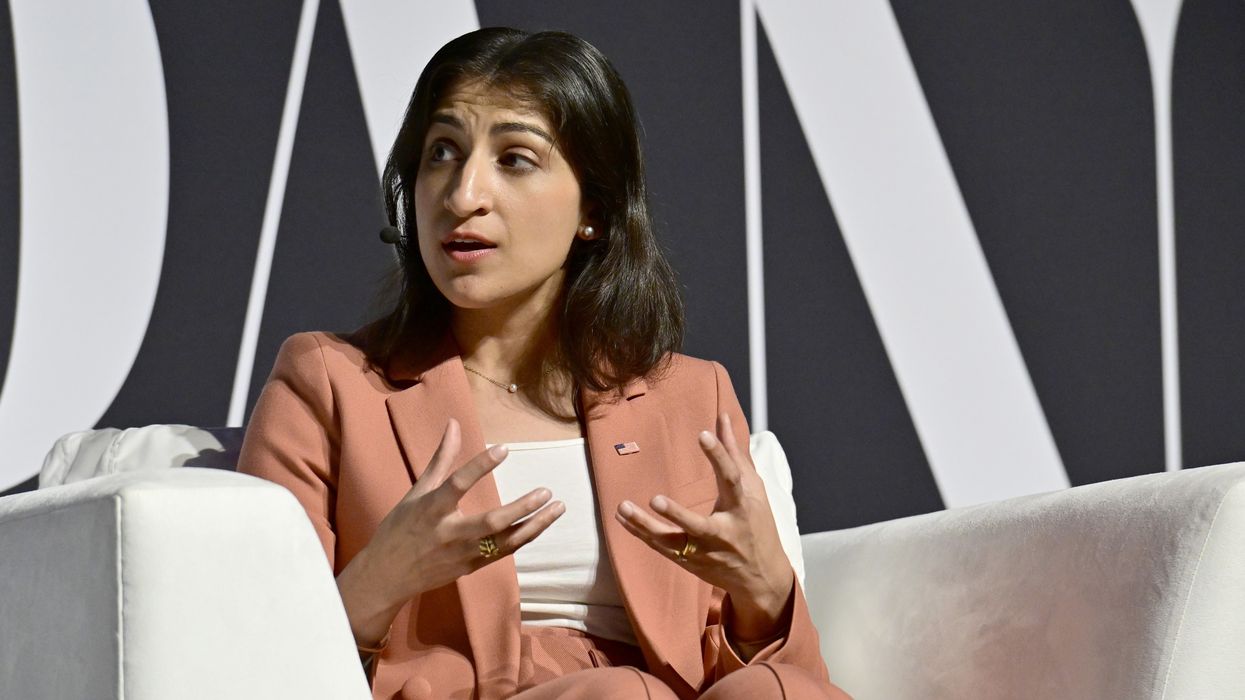
Khan accused the administration of "letting off the hook oil executives caught trying to collude with foreign countries to inflate how much people pay at the pump."
A ban imposed last year by top antitrust enforcer Lina Khan under the Biden administration had stopped two fossil fuel CEOs accused of colluding on oil prices from serving on powerful corporate boards, with the Federal Trade Commission saying at the time that the order would "help ensure American consumers benefit from lower prices at the pump."
But the Trump administration on Thursday signaled no interest in ensuring oil companies won't engage in price-fixing and collusion to boost profits at the expense of working families as the FTC overturned the order that prevented former Pioneer Natural Resources CEO Scott Sheffield and Hess CEO John Hess from serving on the boards of ExxonMobil and Chevron, respectively.
Exxon bought Pioneer for $59.5 billion last year, while Chevron's purchase of Hess was announced Friday after months of arbitration proceedings.
The FTC, now led by pro-corporate Republican Andrew Ferguson, said the commission's complaints about Sheffield's and Hess's communications with the Organization of the Petroleum Exporting Countries (OPEC) did not "plead any antitrust law violation" or show that the acquisitions of the smaller companies and the CEO's positions on the boards "would be anticompetitive."
The decision, said Elyse Schupak, a policy advocate with Public Citizen's Climate Program, "undermines accountability for the CEOs accused of illegally colluding with OPEC to increase profits by driving up energy prices for American families and businesses."
Khan's investigation last year found the Sheffield had communicated with OPEC about slashing oil production and driving up consumer prices while claiming Biden administration policies were to blame, prompting U.S. Rep. Mark Pocan (D-Wis.) to say "jail time should seriously be considered" for the CEO.
"The FTC needs to be doing more to fully rout out Big Oil's anticompetitive behavior. But Ferguson has moved the FTC in the complete opposite direction."
The FTC also found that Hess "stressed the importance of oil market stability and inventory management and encouraged [OPEC] officials to take actions on these issues and speak about them at different events."
One analysis by Matt Stoller of the American Economic Liberties Project found that price-fixing schemes by corporations—not inflation—were to blame for 27% of the higher prices American families faced in 2021.
Khan on Thursday accused President Donald Trump's FTC of "letting off the hook oil executives caught trying to collude with foreign countries to inflate how much people pay at the pump."
The commission's three Republican members voted to allow Sheffield and Hess to serve on the boards—even as one of them, Commissioner Mark Meador, said that OPEC operates "as a de facto cartel" and warned the FTC "should not hesitate to bring enforcement actions against actual collusion."
Ferguson, meanwhile, claimed that banning Sheffield and Hess from the company boards "would damage the FTC's credibility and undermine its mission"—a statement that was denounced by the government watchdog Revolving Door Project.
"Banning a C-suite executive who tried to inflate oil prices isn't the move that 'damages' the FTC's credibility. It's Andrew Ferguson's willingness to absolve such actions that undermines the agency's mission to promote competition," said the group.
"The FTC needs to be doing more to fully rout out Big Oil's anticompetitive behavior," added Revolving Door Project. "But Ferguson has moved the FTC in the complete opposite direction—signaling to corporate America that they won't be held accountable for fleecing the public."
Schupak said that "while the Trump administration feigns interest in bringing energy prices down, its policies—fast-tracking export projects, rolling back regulatory safeguards, and halting enforcement actions for corporate wrongdoing—reveal the administration is far more interested in boosting the profitability of the oil and gas industry than providing Americans any relief or safeguarding them against corruption."
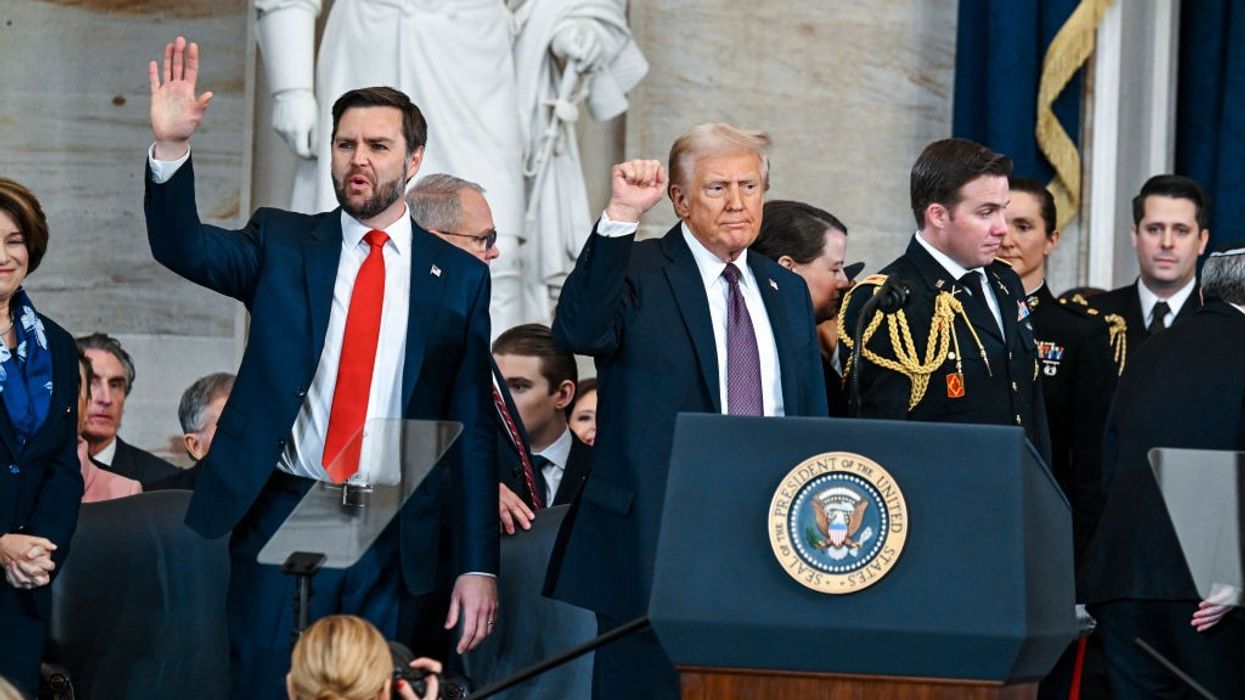
"Every month that Donald Trump has been in power, we've seen a raft of anti-climate measures come out which are music to the fossil fuel industry's ears," said one investigator.
Oil, gas, and coal companies and individuals linked to the climate-wrecking fossil fuel industry contributed more than $19 million to U.S. President Donald Trump's second inaugural fund, an analysis by a leading international environmental and human rights group revealed Wednesday.
Scouring itemized U.S Federal Election Commission data, Global Witness identified 47 individual donations to the Trump-Vance Inaugural Committee between November 2024 and January 2025 totaling $19,151,933. Using an artificial intelligence tool developed by Global Witness to identify corporate lobbyists, the group's researchers were able to automatically determine each donor's ties to the fossil fuel industry.
Global Witness said the $19.15 million figure "is likely an underestimate, as we did not count donations from diversified investors and businesses who couldn't be said to primarily represent the fossil fuel industry," and individuals with common names that couldn't be identified were not included in the final report.
According to the analysis:
The list of donors includes individuals who were given ambassadorships or key positions in the Trump Cabinet.
For example, billionaire Warren Stephens donated $4 million on December 2, 2024, the same day Trump nominated him to be U.S. ambassador to the U.K. Stephens has extensive links to the oil and gas industry but also invests in other sectors and wasn't included in our calculations of fossil fuel industry donors.
Trump also nominated Melinda Hildebrand—who donated $500,000 to the president's inaugural fund—to be U.S. ambassador to Costa Rica.
Hildebrand is the vice president of Hilcorp Ventures, which claims to be of the largest privately owned oil and gas producers in the U.S. Her husband, founder and chairman of Hilcorp, donated another $500,000.
Among fossil fuel corporations, Chevron was by far the largest contributor to Trump's inauguration fund, giving $2 million. Other companies including ExxonMobil, ConocoPhillips, and Occidental Petroleum each donated $1 million.
Overall, Big Oil gave $445 million to Trump and other Republican candidates during the 2024 election cycle.
Trump, who ran on a "drill, baby, drill" energy policy, has signed a series of executive orders aimed at boosting fossil fuel production, including by declaring a fake "energy emergency" in a push to fast-track permit approvals. He also tapped former fossil fuel executives to head the Department of Energy and Interior Department, which have pursued a policy of opening up more public lands and waters for fossil fuel development.
At the same time, the Trump administration dropped out of the Paris climate agreement for the second time and moved to roll back the modest climate progress achieved under former President Joe Biden.
"It's no surprise the oil and gas industry handed millions to Donald Trump for his inauguration, and they seem to have reaped a huge return on their investment," Global Witness senior data investigator Nicu Calcea said in a statement Wednesday.
"Every month that Donald Trump has been in power, we've seen a raft of anti-climate measures come out which are music to the fossil fuel industry's ears," Calcea continued. "From plans to steamroll through dirty new coal plants, to the attempted quashing of 'polluter pays' laws that would hold oil giants accountable, it's clear where his political priorities lie."
"While Trump sides with his friends in oil and gas, we must keep up the fight for a fair, green future—that means pushing for wind and solar where we live, backing polluters pay bills, and resisting the development of oil, gas and coal projects across the country," he added.
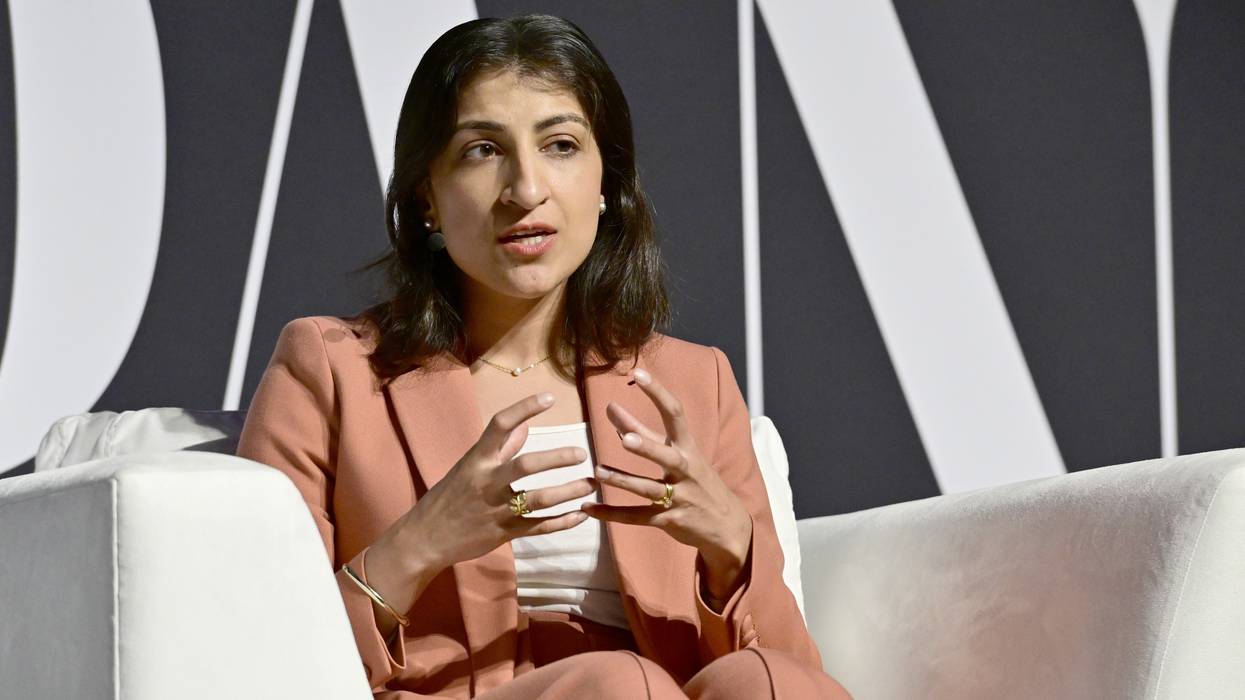
As FTC chair, Khan stopped a fossil fuel CEO from "cashing in and joining Exxon's board," said one lawmaker. "Now, with Trump bending to the whims of Big Oil, he's considering overturning that punishment."
"So much for America First," said one progressive lawmaker on Monday regarding the Federal Trade Commission's new push to reverse a ban on two fossil fuel CEOs from serving on the boards of ExxonMobil and Chevron—the oil giants that were acquiring their companies.
The FTC is accepting public comments until May 12 on a petition filed by former Pioneer National Resources CEO Scott Sheffield, which would set aside the Biden administration's consent order; finalized days before President Donald Trump took office, that barred Sheffield from serving on Exxon's board.
The order also applied to John Hess, CEO of Hess Corp., which was being acquired by Chevron.
Then-FTC Chair Lina Khan barred the CEOs from becoming board members over concerns that they would collude with representatives of the Organization of Petroleum Exporting Countries (OPEC) to ensure Americans continued paying high oil prices.
Sheffield and Hess both communicated with OPEC officials, including "the past and current secretaries general" of the organization "and an official from Saudi Arabia," according to an FTC probe under the Biden administration.
The two executives and their companies denied the allegations. Republican members of the FTC at the time voted against Khan's ban on the board positions, claiming it overstepped the agency's authority.
But on Monday, Khan urged those who oppose oil price fixing by energy giants to submit public comments on the Trump administration's "proposal to release Sheffield from accountability."
"The FTC is now trying to let this oil executive off the hook," said Khan, a law professor at Columbia University.
Exxon, the largest U.S. oil company, bought Pioneer in a $59.5 billion deal last year. Chevron's purchase of Hess for $53 billion is currently pending during arbitration proceedings.
The FTC's investigation last year found that Sheffield communicated with OPEC about cutting oil production and driving up consumer prices while publicly blaming government policies. One analysis found such price fixing schemes by corporations were to blame for 27% of the inflation spike that American families faced in 2021.
Sheffield pushed to "keep gas prices high so his shareholders could make even more money," said Rep. Mark Pocan (D-Wis.) on Monday. "Lina Khan's FTC prevented him from cashing in and joining Exxon's board. Now, with Trump bending to the whims of Big Oil, he's considering overturning that punishment."
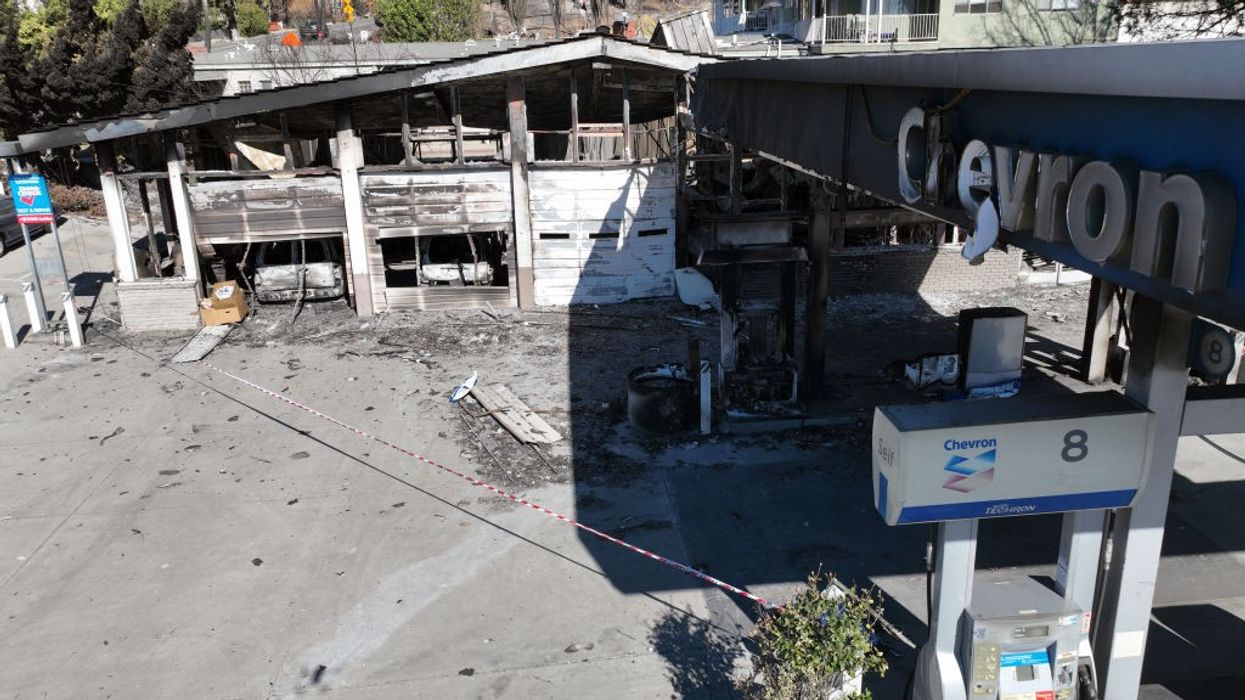
"Megarich oil firms like Chevron and Exxon are knowingly driving and profiting from the climate crisis," said a Global Witness leader. "It's time they picked up the costs of repair."
As Chevron and ExxonMobil on Friday reported tens of billions in 2024 profits, campaigners intensified their demand for Big Oil to pay for the catastrophic levels of destruction caused by recent fires around Los Angeles, California, which were made more likely by the fossil fuel-driven climate emergency.
"As LA residents reel from the damage done to their city, it's important we point out who has been driving the fossil fuel pollution that is turbo-charging climate disasters," said Lela Stanley, head of Fossil Fuel Investigations at Global Witness, in a statement. "Big Oil bosses have worked with their friends in politics to bake dirty fossil fuels into our energy systems, block climate action, and spread lies about climate change to divide and distract us."
"Instead of accounting for our safety or the health of the planet, megarich oil firms like Chevron and Exxon are knowingly driving and profiting from the climate crisis," she continued. "It's time they picked up the costs of repair."
Texas-based ExxonMobil's net income for last quarter was $7.6 billion, bringing its full-year total to $33.7 billion, the company said Friday. Chevron—which last August relocated its headquarters from San Ramon, California, to Houston—had profits of $3.2 billion during the fourth quarter and $17.7 billion throughout 2024, the hottest year on record.
"Just a quarter of these U.S. oil giants' annual profits could pay for $1 million payouts to each LA household that has lost a home."
Responding to the two companies' more than $51 billion in combined earnings, Stanley said that "just a quarter of these U.S. oil giants' annual profits could pay for $1 million payouts to each LA household that has lost a home. What's small change to Big Oil could have a transformative effect on ordinary people's lives."
Chevron earlier this month announced it would donate $1 million total to the American National Red Cross, California Fire Foundation, and Los Angeles Chamber of Commerce Small Business Disaster Recovery Fund to aid recovery from what could be the costliest fire disaster in U.S. history.
Global Witness highlighted the World Weather Attribution's
finding that global heating—primarily caused by humanity's continued extraction and use of fossil fuels—made the weather conditions that caused the Los Angeles fires 35% more probable.
"Despite alarm from climate scientists over global heating and a surge in fossil fuel-driven disasters," the organization noted, "Exxon and Chevron have continued to expand their oil production, with the firms producing +4% and +3% more in 2024 than they did in 2023, respectively."
Chevron, the group added, "has actively sought to avoid paying out in the wake of climate disasters like the LA wildfires, spending $30 million with the Western States Petroleum Association—one of the U.S.'s largest fossil fuel trade groups—lobbying against a polluters pay-style bill."
During California's last legislative session, lawmakers introduced, but did not pass, a "climate superfund bill" that would make polluters pay into a fund for disaster prevention and cleanup. The fires have sparked a fresh push for such legislation.
Californians are fleeing wildfires while Exxon & Chevron rake in $36B+ in profits. Polluters profit, taxpayers foot the bill. California can’t wait, we must pass a #ClimateSuperfund bill so companies driving the climate crisis pay for the damage 💰 #MakePollutersPay
[image or embed]
— Stop the Money Pipeline ( @stopmoneypipeline.bsky.social) January 11, 2025 at 3:43 PM
On Monday, California state Sen. Scott Wiener (D-11) introduced a bill that would allow homeowners, businesses, and insurance companies impacted by climate disasters to recover losses by taking legal action against oil and gas companies, which have not only fueled the global climate emergency but also spent decades misleading the public about the harms of their products.
There are also renewed calls for accountability via the courts. California is among the U.S. states and municipalities suing fossil fuel companies—including Chevron and Exxon—for their decades of deception. The Center for Climate Integrity said earlier this month that the latest fires "underscore the importance of California's effort to hold Big Oil accountable in court for its climate lies."
At least 29 deaths are
connected to this month's fires in the state. Attorney and Public Citizen Climate Program Accountability Project director Aaron Regunberg last year co-authored a legal memo about bringing criminal charges against fossil fuel companies. During a January 16 press conference, he said that "it's involuntary manslaughter to recklessly cause a death. Local prosecutors should consider whether Big Oil's conduct here amounts to violations of these kind of criminal laws."

"It would send a signal that President Biden, who claims to be a climate president and a rule of law president, can walk the walk, not just do the talk," said human rights attorney Steven Donziger.
With Joe Biden's White House term ending in less than two weeks, human rights attorney Steven Donziger on Tuesday urged the outgoing president to send a message to Chevron and other oil giants around the world by granting him a pardon.
"I think it would bring enormous recognition that this is just fundamentally wrong and a violation of the Constitution," Donziger said of a pardon in an interview with Amnesty International, one of many advocacy organizations backing his petition to the president. "But more importantly, it would send a signal that President Biden, who claims to be a climate president and a rule of law president, can walk the walk, not just do the talk. And it would be a really important opportunity for him to stand up for the principles that he purports."
Donziger faced a yearslong legal assault from Chevron after he helped win a $9.5 billion settlement against the company in 2011 over oil dumped on Indigenous lands in the Amazon rainforest in Ecuador.
Donziger has spent more than 1,000 days in prison or under house arrest since 2019, when he was charged with six counts of criminal contempt of court—charges for which he was found guilty in 2021 by Loretta Preska, a judge who has served on the advisory board of the Chevron-funded Federalist Society.
The United Nations condemned Donziger's prosecution and prolonged detention as violations of international law.
Donziger, who walked free in 2022, has said he is "the only person in U.S. history to be privately prosecuted by a corporation."
"More specifically," he wrote in a blog post last year, "the government (via a pro-corporate judge) gave a giant oil company (Chevron) the power to prosecute and lock up its leading critic."
In his interview with Amnesty volunteer Elizabeth Haight, Donziger argued that "there was no basis to charge me with contempt, either civil or criminal."
"But even if there was, this was handled in an extremely irregular, and I would argue, questionable, if not outright corrupt, way," he continued. "In my case, the prosecutor looked at the evidence and refused to take the case forward. That should have been the end of it. Instead, this judge appointed a private corporate law firm to step into the shoes of the U.S. government and prosecute me directly."
Donziger said that while "the case in Ecuador does not depend on me getting a pardon... a pardon would make it clear, or even more clear, to any judge in any country who might consider enforcing the judgment against Chevron, that Chevron's entire theory that somehow they were the ones victimized by the people of Ecuador rather than the other way around, is a completely false and manufactured narrative."
With time running out, Donziger urged people to sign his petition to the Biden White House calling for a pardon—a demand backed by dozens of U.S. lawmakers.
"Sign the petition to the White House, donate—as I can't work and am reliant on the goodwill of people all over the world to help pay my legal fees and keep me and this work moving—and call the White House at +1-202-456-1111," Donziger said. "What that means is, when the operator at the White House answers, you simply say, 'I'm calling to urge President Biden to pardon Steven Donziger, this is a grave injustice, this is a stain on the reputation of our country, and it must be corrected.'"