

SUBSCRIBE TO OUR FREE NEWSLETTER
Daily news & progressive opinion—funded by the people, not the corporations—delivered straight to your inbox.
5
#000000
#FFFFFF
To donate by check, phone, or other method, see our More Ways to Give page.
Daily news & progressive opinion—funded by the people, not the corporations—delivered straight to your inbox.

"Iraqis who were tortured by U.S. personnel still have no clear path for filing a claim or receiving any kind of redress or recognition from the U.S. government."
Iraqis tortured by American forces two decades ago during the disastrous U.S. occupation of their country have yet to receive any sort of compensation from the U.S. government as they suffer lasting physical and psychological trauma, according to a report released Monday by Human Rights Watch.
The group interviewed an Iraqi who was detained at Abu Ghraib prison—which U.S. forces used as a detention facility—between November 2003 and March 2005.
Taleb al-Majli, who was released without charge after 16 months, told HRW that he was one of the detainees in the infamous photo of naked, hooded Iraqi prisoners whom U.S. forces piled on top of each other to form a human pyramid. In the photo, two U.S. soldiers are behind the prisoners smiling, and one of them is flashing a thumbs-up.
"This one year and four months changed my entire being for the worse," said al-Majli, who told the human rights group that he started biting his hands and wrists as a coping mechanism while he was imprisoned—something he still does to this day.
"It destroyed me and destroyed my family," al-Majli said of his detention. "It's the reason for my son's health problems and the reasons my daughters dropped out of school. They stole our future from us."
HRW noted that al-Majli has spent the nearly two decades since his release pursuing redress for the abuse he endured at the hands of U.S. soldiers, to no avail. When the group wrote to the Pentagon earlier this year detailing al-Majli's case and asking for any information on plans to compensate Iraqis who were tortured by U.S. forces, it did not get a response.
"Twenty years on, Iraqis who were tortured by U.S. personnel still have no clear path for filing a claim or receiving any kind of redress or recognition from the U.S. government," Sarah Yager, HRW's Washington director, said in a statement. "U.S. officials have indicated that they prefer to leave torture in the past, but the long-term effects of torture are still a daily reality for many Iraqis and their families."
"The U.S. should provide compensation, recognition, and official apologies to survivors of abuse and their families."
During a 2004 congressional hearing convened days after reporting by veteran investigative journalist Seymour Hersh and others uncovered the grotesque torture that U.S. forces were perpetrating at Abu Ghraib, then-U.S. Secretary of Defense Donald Rumsfeld—a key architect of the Iraq invasion—said he was "seeking a way to provide appropriate compensation to those detainees who suffered such grievous and brutal abuse and cruelty at the hands of a few members of the U.S. military."
"It's the right thing to do," Rumsfeld added.
But HRW said Monday that it has "found no evidence that the U.S. government has paid any compensation or other redress to victims of detainee abuse in Iraq, nor has the United States issued any individual apologies or other amends."
"Some victims have attempted to apply for compensation using the U.S. Foreign Claims Act (FCA)," the group observed. "Human Rights Watch was unable to find public evidence that payments have been made under this law as compensation for detainee abuse, including torture. In 2007, the American Civil Liberties Union obtained documents detailing 506 claims made under the Foreign Claims Act: 488 in Iraq and 18 in Afghanistan. The majority of claims relate to harm or deaths caused by shootings, convoys, and vehicle accidents."
"The only case of a Foreign Claims Act payment relating to detention in those documents was for a claimant who was paid US$1,000 for being unlawfully detained in Iraq, with no mention of other abuse," HRW added. "Five other claims were for abuse in detention, but they are among eleven claims that do not contain the outcome, including whether payment was made."
Attempts by some Iraqis to pursue redress through the U.S. court system have also failed. According to HRW, "the U.S. Justice Department has repeatedly dismissed such cases using a 1946 law that preserves U.S. forces' immunity for 'any claim arising out of the combatant activities of the military or naval forces, or the Coast Guard, during time of war.'"
Yager argued that the heads of the Pentagon and Justice Department "should investigate allegations of torture and other abuse of people detained by the U.S. abroad during counterinsurgency operations linked to its 'Global War on Terrorism.'"
"U.S. authorities should initiate appropriate prosecutions against anyone implicated, whatever their rank or position," said Yager. "The U.S. should provide compensation, recognition, and official apologies to survivors of abuse and their families."

Remembering the day that a war designed never to end started.
The following piece is adapted from the introduction to Norman Solomon’s book War Made Invisible: How America Hides the Human Toll of Its Military Machine (The New Press, 2023)
The day after the U.S. government began routinely bombing faraway places, the lead editorial in the New York Times expressed some gratification. Nearly four weeks had passed since 9/11, the newspaper noted, and America had finally stepped up its “counterattack against terrorism” by launching airstrikes on al-Qaeda training camps and Taliban military targets in Afghanistan. “It was a moment we have expected ever since September 11,” the editorial said. “The American people, despite their grief and anger, have been patient as they waited for action. Now that it has begun, they will support whatever efforts it takes to carry out this mission properly.”
As the United States continued to drop bombs in Afghanistan, Defense Secretary Donald Rumsfeld’s daily briefings catapulted him into a stratosphere of national adulation. As the Washington Post’s media reporter put it: “Everyone is genuflecting before the Pentagon powerhouse… America’s new rock star.” That winter, the host of NBC’s Meet the Press, Tim Russert, told Rumsfeld: “Sixty-nine years old and you’re America’s stud.”
The televised briefings that brought such adoration included claims of deep-seated decency in what was by then already known as the Global War on Terror. “The targeting capabilities, and the care that goes into targeting, to see that the precise targets are struck, and that other targets are not struck, is as impressive as anything anyone could see,” Rumsfeld asserted. And he added, “The weapons that are being used today have a degree of precision that no one ever dreamt of.”
Whatever their degree of precision, American weapons were, in fact, killing a lot of Afghan civilians. The Project on Defense Alternatives concluded that American air strikes had killed more than 1,000 civilians during the last three months of 2001. By mid-spring 2002, the Guardian reported, “as many as 20,000 Afghans may have lost their lives as an indirect consequence of the U.S. intervention.”
Eight weeks after the intensive bombing had begun, however, Rumsfeld dismissed any concerns about casualties: “We did not start this war. So understand, responsibility for every single casualty in this war, whether they’re innocent Afghans or innocent Americans, rests at the feet of al-Qaeda and the Taliban.” In the aftermath of 9/11, the process was fueling a kind of perpetual emotion machine without an off switch.
Under the “war on terror” rubric, open-ended warfare was well underway — “as if terror were a state and not a technique,” as Joan Didion wrote in 2003 (two months before the U.S. invasion of Iraq). “We had seen, most importantly, the insistent use of September 11 to justify the reconception of America’s correct role in the world as one of initiating and waging virtually perpetual war.”
In a single sentence, Didion had captured the essence of a quickly calcified set of assumptions that few mainstream journalists were willing to question. Those assumptions were catnip for the lions of the military-industrial-intelligence complex. After all, the budgets at “national security” agencies (both long-standing and newly created) had begun to soar with similar vast outlays going to military contractors. Worse yet, there was no end in sight as mission creep accelerated into a dash for cash.
For the White House, the Pentagon, and Congress, the war on terror offered a political license to kill and displace people on a large scale in at least eight countries. The resulting carnage often included civilians. The dead and maimed had no names or faces that reached those who signed the orders and appropriated the funds. And as the years went by, the point seemed to be not winning that multicontinental war but continuing to wage it, a means with no plausible end. Stopping, in fact, became essentially unthinkable. No wonder Americans couldn’t be heard wondering aloud when the “war on terror” would end. It wasn’t supposed to.
“I Mourn the Death of My Uncle…”
The first days after 9/11 foreshadowed what was to come. Media outlets kept amplifying rationales for an aggressive military response, while the traumatic events of September 11th were assumed to be just cause. When the voices of shock and anguish from those who had lost loved ones endorsed going to war, the message could be moving and motivating.
Meanwhile, President George W. Bush — with only a single congressional negative vote — fervently drove that war train, using religious symbolism to grease its wheels. On September 14th, declaring that “we come before God to pray for the missing and the dead, and for those who love them,” Bush delivered a speech at the Washington National Cathedral, claiming that “our responsibility to history is already clear: to answer these attacks and rid the world of evil. War has been waged against us by stealth and deceit and murder. This nation is peaceful, but fierce when stirred to anger. This conflict was begun on the timing and terms of others. It will end in a way, and at an hour, of our choosing.”
President Bush cited a story exemplifying “our national character”: “Inside the World Trade Center, one man who could have saved himself stayed until the end at the side of his quadriplegic friend.”
That man was Abe Zelmanowitz. Later that month, his nephew, Matthew Lasar, responded to the president’s tribute in a prophetic way:
“I mourn the death of my uncle, and I want his murderers brought to justice. But I am not making this statement to demand bloody vengeance… Afghanistan has more than a million homeless refugees. A U.S. military intervention could result in the starvation of tens of thousands of people. What I see coming are actions and policies that will cost many more innocent lives, and breed more terrorism, not less. I do not feel that my uncle’s compassionate, heroic sacrifice will be honored by what the U.S. appears poised to do.”
The president’s announced grandiose objectives were overwhelmingly backed by the media, elected officials, and the bulk of the public. Typical was this pledge Bush made to a joint session of Congress six days after his sermon at the National Cathedral: “Our war on terror begins with al-Qaeda, but it does not end there. It will not end until every terrorist group of global reach has been found, stopped, and defeated.”
Yet by late September, as the Pentagon’s assault plans became public knowledge, a few bereaved Americans began speaking out in opposition. Phyllis and Orlando Rodriguez, whose son Greg had died in the World Trade Center, offered this public appeal:
“We read enough of the news to sense that our government is heading in the direction of violent revenge, with the prospect of sons, daughters, parents, friends in distant lands dying, suffering, and nursing further grievances against us. It is not the way to go. It will not avenge our son’s death. Not in our son’s name. Our son died a victim of an inhuman ideology. Our actions should not serve the same purpose.”
Judy Keane, who lost her husband Richard at the World Trade Center, similarly told an interviewer: “Bombing Afghanistan is just going to create more widows, more homeless, fatherless children.”
And Iraq Came Next
While indescribable pain, rage, and fear set the U.S. cauldron to boil, national leaders promised that their alchemy would bring unalloyed security via a global war effort. It would become unceasing, one in which the deaths and bereavement of equally innocent people, thanks to U.S. military actions, would be utterly devalued.
In tandem with Washington’s top political leaders, the fourth estate was integral to sustaining the grief-fueled adrenaline rush that made launching a global war against terrorism seem like the only decent option, with Afghanistan initially in the country’s gunsights and news outlets filled with calls for retribution. Bush administration officials, however, didn’t encourage any focus whatsoever on U.S. petro-ally Saudi Arabia, the country from which 15 of the 19 September 11th hijackers came. (None were Afghans.)
By the time the United States began its invasion of Afghanistan, 26 days after 9/11, the assault could easily appear to be a fitting response to popular demand. Hours after the Pentagon’s missiles began to explode in that country, a Gallup poll found that “90 percent of Americans approve of the United States taking such military action, while just 5 percent are opposed, and another 5 percent are unsure.”
Such lopsided approval was a testament to how thoroughly the messaging for a “war on terror” had taken hold. It would have then been little short of heretical to predict that such retribution would cause many more innocent people to die than in the 9/11 mass murder. During the years to come, the foreseeable deaths of Afghan civilians would be downplayed, discounted, or simply ignored as incidental “collateral damage” (a term that Time magazine defined as “meaning dead or wounded civilians who should have picked a safer neighborhood”).
What had occurred on September 11th remained front and center. What began happening to Afghans that October 7th would be relegated to, at most, peripheral vision. Amid the righteous grief that had swallowed up the United States, few words would have been less welcome or more relevant than these from a poem by W.H. Auden: “Those to whom evil is done / Do evil in return.”
Even then, Saddam Hussein’s Iraq was already in the Pentagon’s crosshairs. Testifying before the Senate Armed Services Committee in September 2002, Defense Secretary Rumsfeld didn’t miss a beat when Senator Mark Dayton questioned the need to attack Iraq, asking, “What is compelling us to now make a precipitous decision and take precipitous actions?”
Rumsfeld replied: “What’s different? What’s different is 3,000 people were killed.”
In other words, the humanity of those who died on 9/11 would loom so large that the fate of Iraqis would be rendered invisible.
In reality, Iraq had nothing to do with 9/11. Official claims about Iraqi weapons of mass destruction would similarly prove to be fabrications, part of a post-9/11 pattern of falsehoods used to justify aggression that made those who actually lived in Iraq distinctly beside the point. As I shuttled between San Francisco and Baghdad three times in the four months that preceded the March 2003 invasion, I felt I was traveling between two far-flung planets, one increasingly abuzz with debates about a coming war and the other just hoping to survive.
When the Bush administration and the American military machine finally launched that war, it would cause the deaths of perhaps 200,000 Iraqi civilians, while “several times as many more have been killed as a reverberating effect” of that conflict, according to the meticulous estimates of the Costs of War Project at Brown University. Unlike those killed on 9/11, the Iraqi dead were routinely off the American media radar screen, as were the psychological traumas suffered by Iraqis and the decimation of their country’s infrastructure. For U.S. soldiers and civilians on contractor payrolls, that war’s death toll would climb to 8,250, while back home, media attention to the ordeals of combat veterans and their families would turn out to be fleeting at best.
Still, for the industrial part of the military-industrial-congressional complex, the Iraq War would prove all too successful. That long conflagration gave huge boosts to profits for Pentagon contractors while, propelled by the normalization of endless war, Defense Department budgets kept spiking upward. And Iraq’s vast oil reserves, nationalized and off-limits to Western companies before the invasion, would end up in mega-corporate hands like those of Shell, BP, Chevron, and ExxonMobil. Several years after the invasion, some prominent Americans acknowledged that the war in Iraq was largely for oil, including the former head of U.S. Central Command in Iraq, General John Abizaid, former Federal Reserve Chairman Alan Greenspan, and then-senator and future Defense Secretary Chuck Hagel.
The Never-Ending War on Terror
The “war on terror” spread to far corners of the globe. In September 2021, when President Biden told the U.N. General Assembly, “I stand here today, for the first time in 20 years, with the United States not at war,” the Costs of War Project reported that U.S. “counterterrorism operations” were still underway in 85 countries — including “air and drone strikes” and “on-the-ground combat,” as well as “so-called ‘Section 127e’ programs in which U.S. special operations forces plan and control partner force missions, military exercises in preparation for or as part of counterterrorism missions, and operations to train and assist foreign forces.”
Many of those expansive activities have been in Africa. As early as 2014, pathbreaking journalist Nick Turse reported for TomDispatch that the U.S. military was already averaging “far more than a mission a day on the continent, conducting operations with almost every African military force, in almost every African country, while building or building up camps, compounds, and ‘contingency security locations.’”
Since then, the U.S. government has expanded its often-secretive interventions on that continent. In late August 2023, Turse wrote that “at least 15 U.S.-supported officers have been involved in 12 coups in West Africa and the greater Sahel during the war on terror.” Despite claiming that it seeks to “promote regional security, stability, and prosperity,” the U.S. Africa Command is often focused on such destabilizing missions.
With far fewer troops on the ground in combat and more reliance on air power, the “war on terror” has evolved and diversified while rarely sparking discord in American media echo chambers or on Capitol Hill. What remains is the standard Manichean autopilot of American thought, operating in sync with the structural affinity for war that’s built into the military-industrial complex.
A pattern of regret — distinct from remorse — for the venture militarism that failed to triumph in Afghanistan and Iraq does exist, but there is little evidence that the underlying repetition-compulsion disorder has been exorcised from the country’s foreign-policy leadership or mass media, let alone its political economy. On the contrary, 22 years after 9/11, the forces that have dragged the United States into war in so many countries still retain enormous sway over foreign and military affairs. The warfare state continues to rule.
Repealing the AUMF recognizes the error of the Iraq War that began in 2003, but to acknowledge its true nature, we must go further.
The U.S. Senate repealing the 2002 Authorization for Military Force in Iraq was necessary and just. Still, that action should be viewed only as a first step in a national process of reckoning with and accounting for the consequences of the 2003 invasion and occupation of Iraq.
Often identified as the worst foreign policy decision in United States history, the Iraq War was catastrophic for millions of Americans and Iraqis and cataclysmic for Iraqi society, regional stability and international law. The invasion and occupation are correctly acknowledged as a crime: a war commissioned on lies and a violation of the Nuremberg Principles. As men and women in military or federal government service at the time of the invasion, we’re compelled to remind others of the devastation this war has wrought to ensure that the US does not re-commit this sin.
The costs of the Iraq War are staggering. As veterans we know this all too well. Over 4,500 US servicemembers were killed and more than 30,000 wounded. At least 3,600 contractors lost their lives, all men and women who would have been wearing military uniforms in previous wars. Hundreds of thousands of veterans returned from Iraq and Afghanistan (for those who fought the war it is difficult to untie the two, as so many of us participated in both) physically and mentally destroyed. Suicide, as in all wars, looms large. Limited data by the Veterans Administration states that the suicide rates for Iraq veterans are four to 10 times higher than that of their civilian peers. This grim figure supports the age-old adage that only the dead have seen the end of war.
In the U.S., many Iraq veterans will tell you that they know more dead from suicide now than from combat.
The horrific cost to the Iraqi people is as hard to grasp as it is shameful to face. Credible estimates of the number of Iraqis killed since 2003 total one million. There is no known number of wounded; it must also total in the millions. The psychological scars run deep: More than half of the Iraqi population is believed to be living with PTSD and depression, while in 2021, nearly one in four Iraqis were refugees. For those of us who were there, these are some of the hardest memories to face.
As members of the military, our expectations of entering Iraq to help the people, or at least doing them no harm, as promised in the thankfully discredited doctrine of Counter Insurgency, were replaced with the visceral understanding that we were nothing more than agents of the war’s immoral and catastrophic provenance. While our experiences of the Iraq War vary, when taken together, the joint agreement that our willingness to serve our country was being used to conduct such unaccounted for and unjust harm to the Iraqi people defines our shared sense of betrayal.
A sentiment shared widely, as almost two-thirds of Iraq veterans believe the war was not worth fighting.
The signatories of this letter do not all share political or economic philosophies, but we are united in our astonishment at this war’s massive price tag. Invading Iraq cost the US $2 trillion directly. That’s nearly $9,000 for each taxpayer in the US. However, the Iraq War cannot be divorced from the Afghan War, the larger Global War on Terror or this century's militarism, which has seen Pentagon spending balloon from $331 billion in 2001 to $858 billion today. Including future veterans' care and interest payments, the long-term cost of these conflicts will total $8 trillion by 2050.
Dozens still perish every month in militant violence in Iraq in a seemingly unending war. VA hospitals in the US strain to keep up with a generation of shattered veterans. The war succeeded only in traumatizing millions; creating terror groups where there had been none; and instigating chaos and continual hostilities, while providing hundreds of billions of dollars to weapons manufacturers.
The Iraq War was based on lies that have brought unimaginable suffering to an entire nation and ongoing loss, grief and hardship to hundreds of thousands of American families. It was and is a great crime. And in our view, as men and women who participated in the war in one way or another, the greatest crime of all may be our nation’s inability to hold accountable those responsible for authorizing such atrocities and continuing to watch our government repeat its wars over and over again.
Repealing the AUMF recognizes the error of the war, but to acknowledge its true nature, we must go further. As veterans and former national security officials we call for criminal investigations of the authors of the Iraq War as the next steps in a national reckoning.

U.S. Supreme Court nominee Ketanji Brown Jackson on Tuesday deflected attacks from Republican senators who questioned her work as a defense attorney for Guantanamo Bay detainees, as well as a false allegation that she called former Bush administration officials "war criminals."
"It's horrific to see Sen. Graham create twisted knots of logic to justify indefinite detention without due process."
Sen. Lindsey Graham (R-S.C.) implied that Jackson's assigned work defending detainees held indefinitely without charge or trial in the U.S. military prison at Guantanamo Bay, Cuba imperiled U.S. national security, telling her that "if you tried to do this in World War II, they'd run you out of town."
Author and journalist Sonali Kolhatkar told Common Dreams that "it's horrific to see Sen. Graham create twisted knots of logic to justify indefinite detention without due process."
Kolhatkar accused Graham and other Republican senators of "trying to punish Jackson as a sort of payback to Democrats" for their questioning of Supreme Court Justices Brett Kavanaugh and Amy Coney Barrett--who were appointed by former President Donald Trump--during their confirmation hearings.
"Graham was also childishly petulant that his favorite nominee hadn't been picked and it was cringeworthy to watch him demand that Jackson respond to what other people had said about a completely different potential pick, Michelle Childs, as if it had any bearing on Jackson's qualifications," she added. "The GOP is intent on subjecting her to abuse just to whip up political points."
Noting Jackson made clear that "representing Guantanamo detainees was entirely about the limits of executive power, not exoneration of terrorists," Zack Ford of Alliance for Justice tweeted that "it's work she should be applauded for, unless you're, you know, anti-democracy."
During his allotted time for questioning, Sen. John Cornyn (R-Texas) wondered "why in the world" Jackson--who he called "gracious and charming"--would call former U.S. Defense Secretary Donald Rumsfeld and former President George W. Bush "war criminals."
"I don't remember that particular reference," Jackson replied. "I did not intend to disparage the president or the secretary of defense."
MSNBC's Mehdi Hasan wrote: "I get it. She has to say that. But let's be clear: No one should ever have to apologize for disparaging Bush or Rumsfeld."
As Senate Judiciary Committee Chair Dick Durbin (D-Ill.) subsequently noted, Jackson never called Rumsfeld or Bush war criminals. What she actually did was file a habeas corpus petition on behalf of individuals subjected to torture--a war crime--during the Bush administration.
"For the record," tweeted progressive Ohio congressional candidate Nina Turner, "Donald Rumsfeld is a war criminal."
In the wake of the September 11, 2001 attacks on the United States, Bush administration lawyers drafted memos in an attempt to legalize the torture--officially called "enhanced interrogation"--that was occurring at Guantanamo and at CIA "black sites," U.S. military prisons, and elsewhere. Rumsfeld approved the torture techniques.
Related Content

The Bush administration's allegedly pre-meditated 2003 invasion of Iraq under false pretenses--a war that destroyed a nation and claimed hundreds of thousands of lives--was called illegal by then-United Nations Secretary-General Kofi Annan and numerous governments and human rights groups.
Benjamin Ferencz, a chief U.S. prosecutor at the post-World War II Nuremberg trials of leading Nazi officials, declared at the time that "a prima facie case can be made that the United States is guilty of the supreme crime against humanity, that being an illegal war of aggression against a sovereign nation."
Referring to Cornyn's false allegation, Philadelphia Inquirer columnist Will Bunch tweeted: "Two things can be true at the same time... Ketanji Brown Jackson never referred to George W. Bush and Donald Rumsfeld as 'war criminals.' Also, George W. Bush and Donald Rumsfeld were war criminals."

The anniversary of the 9/11 attacks was marked by days of remembrances -- for the courageous rescue workers of that moment, for the thousands murdered as the Twin Towers collapsed, for those who died in the Pentagon, or in Shanksville, Pennsylvania, fighting off the hijackers of the commercial jet they were in, as well as for those who fought in the forever wars that were America's response to those al-Qaeda attacks.
For some, the memory of that horrific day included headshaking over the mistakes this country made in responding to it, mistakes we live with to this moment.
"Just ask yourself: When have any of the public officials who ensured the excesses of the war on terror reflected publicly on their mistakes or expressed the least sense of regret about them?"
Among the more prominent heads being shaken over the wrongdoing that followed 9/11, and the failure to correct any of it, was that of Jane Harman, a Democrat from California, who was then in the House of Representatives. She would join all but one member of Congress -- fellow California representative Barbara Lee -- in voting for the remarkably vague Authorization for the Use of Force, or AUMF, which paved the way for the invasion of Afghanistan and so much else. It would, in fact, put Congress in cold storage from then on, allowing the president to bypass it in deciding for years to come whom to attack and where, as long as he justified whatever he did by alluding to a distinctly imprecise term: terrorism. So, too, Harman would vote for the Patriot Act, which would later be used to put in place massive warrantless surveillance policies, and then, a year later, for the Bush administration's invasion of Iraq (based on the lie that Iraqi ruler Saddam Hussein possessed weapons of mass destruction).
But on the occasion of the 20th anniversary of the attacks, Harman offered a different message, one that couldn't have been more appropriate or, generally speaking, rarer in this country -- a message laced through and through with regret. "[W]e went beyond the carefully tailored use of military force authorized by Congress," she wrote remorsefully, referring to that 2001 authorization to use force against al-Qaeda and Osama bin Laden. So, too, Harman railed against the decision, based on "cherry-picked intelligence," to go to war in Iraq; the eternal use of drone strikes in the forever wars; as well as the creation of an offshore prison of injustice at Guantanamo Bay, Cuba, and of CIA black sites around the world meant for the torture of prisoners from the war on terror. The upshot, she concluded, was to create "more enemies than we destroyed."
Such regrets and even apologies, while scarce, have not been utterly unknown in post-9/11-era Washington. In March 2004, for example, Richard Clarke, the counterterrorism chief for the Bush White House, would publicly apologize to the American people for the administration's failure to stop the 9/11 attacks. "Your government failed you," the former official told Congress and then proceeded to criticize the decision to go to war in Iraq as well. Similarly, after years of staunchly defending the Iraq War, Senator John McCain would, in 2018, finally term it "a mistake, a very serious one," adding, "I have to accept my share of the blame for it." A year later, a PEW poll would find that a majority of veterans regretted their service in Afghanistan and Iraq, feeling that both wars were "not worth fighting."
Recently, some more minor players in the post-9/11 era have apologized in unique ways for the roles they played. For instance, Terry Albury, an FBI agent, would be convicted under the Espionage Act for leaking documents to the media, exposing the bureau's policies of racial and religious profiling, as well as the staggering range of surveillance measures it conducted in the name of the war on terror. Sent to prison for four years, Albury recently completed his sentence. As Janet Reitman reported in the New York Times Magazine, feelings of guilt over the "human cost" of what he was involved in led to his act of revelation. It was, in other words, an apology in action.
As was the similar act of Daniel Hale, a former National Security Agency analyst who had worked at Bagram Air Base in Afghanistan helping to identify human targets for drone attacks. He would receive a 45-month sentence under the Espionage Act for his leaks -- documents he had obtained on such strikes while working as a private contractor after his government service.
As Hale would explain, he acted out of a feeling of intense remorse. In his sentencing statement, he described watching "through a computer monitor when a sudden, terrifying flurry of Hellfire missiles came crashing down, splattering purple-colored crystal guts." His version of an apology-in-action came from his regret that he had continued on at his post even after witnessing the horrors of those endless killings, often of civilians. "Nevertheless, in spite of my better instinct, I continued to follow orders." Eventually, a drone attack on a woman and her two daughters led him over the brink. "How could I possibly continue to believe that I am a good person, deserving of my life and the right to pursue happiness" was the way he put it and so he leaked his apology and is now serving his time.
"We Were Wrong, Plain and Simple"
Outside of government and the national security state, there have been others who struck a chord of atonement as well. On the 20th anniversary of 9/11, for instance, Jameel Jaffer, once Deputy Legal Director of the ACLU and now head of the Knight First Amendment Institute, took "the opportunity to look inward." With some remorse, he reflected on the choices human-rights organizations had made in campaigning against the abuse and torture of war-on-terror prisoners.
Jaffer argued that their emphasis should have been less on the degradation of American "traditions and values" and more on the costs in terms of human suffering, on the "experience of the individuals harmed." In taking up the cases of individuals whose civil liberties had often been egregiously violated in the name of the war on terror, the ACLU revealed much about the damage to their clients. Still, the desire to have done even more clearly haunts Jaffer. Concluding that we "substituted a debate about abstractions for a debate about prisoners' specific experiences," Jaffer asks, "[I]s it possible" that the chosen course of the NGOs "did something more than just bracket prisoners' human rights -- that it might have, even if only in a small way, contributed to their dehumanization as well?"
Jonathan Greenblatt, now head of the Anti-Defamation League (ADL), spoke in a similarly rueful fashion about that organization's decision to oppose plans for a Muslim community center in lower Manhattan, near Ground Zero -- a plan that became known popularly as the "Ground Zero Mosque." As the 20th anniversary approached, he said bluntly, "We owe the Muslim community an apology." The intended center fell apart under intense public pressure that Greenblatt feels the ADL contributed to. "[T]hrough deep reflection and conversation with many friends within the Muslim community," he adds, "the real lesson is a simple one: we were wrong, plain and simple." The ADL had recommended that the center be built in a different location. Now, as Greenblatt sees it, an institution that "could have helped to heal our country as we nursed the wounds from the horror of 9/11" never came into being.
The irony here is that while a number of those Americans least responsible for the horrors of the last two decades have directly or indirectly placed a critical lens on their own actions (or lack thereof), the figures truly responsible said not an apologetic word. Instead, there was what Jaffer has called an utter lack of "critical self-reflection" among those who launched, oversaw, commanded, or supported America's forever wars.
Just ask yourself: When have any of the public officials who ensured the excesses of the war on terror reflected publicly on their mistakes or expressed the least sense of regret about them (no less offering actual apologies for them)? Where are the generals whose reflections could help forestall future failed attempts at "nation-building" in countries like Afghanistan, Iraq, Libya, or Somalia? Where are the military contractors whose remorse led them to forsake profits for humanity? Where are any voices of reflection or apology from the military-industrial complex including from the CEOs of the giant weapons makers who raked in fortunes off those two decades of war? Have any of them joined the small chorus of voices reflecting on the wrongs that we've done to ourselves as a nation and to others globally? Not on the recent 9/11 anniversary, that's for sure.
Looking Over Your Shoulder or Into Your Heart?
What we still normally continue to hear instead is little short of a full-throated defense of their actions in overseeing those disastrous wars and other conflicts. To this day, for instance, former Afghan and Iraq War commander David Petraeus speaks of this country's "enormous accomplishments" in Afghanistan and continues to double down on the notion of nation-building. He still insists that, globally speaking, Washington "generally has to lead" due to its "enormous preponderance of military capabilities," including its skill in "advising, assisting, and enabling host nations' forces with the armada of drones we now have, and an unequal[ed] ability to fuse intelligence."
"Over the course of these 20 years, this country has had to face the hard lesson that accountability for the mistakes, miscalculations, and lawless policies of the war on terror has proven not just elusive, but inconceivable."
Similarly, Lieutenant General H.R. McMaster, national security advisor to Donald Trump, had a virtual melt down on MSNBC days before the anniversary, railing against what he considered President Biden's mistaken decision to actually withdraw all American forces from Afghanistan. "After we left Iraq," he complained, "al-Qaeda morphed into ISIS, and we had to return." But it didn't seem to cross his mind to question the initial ill-advised and falsely justified decision to invade and occupy that country in the first place.
And none of this is atypical. We have repeatedly seen those who created the disastrous post-9/11 policies defend them no matter what the facts tell us. As a lawyer in the Department of Justice's Office of Legal Counsel, John Yoo, who wrote the infamous memos authorizing the torture of war-on-terror detainees under interrogation, followed up the 2011 killing of Osama bin Laden in Pakistan with a call for President Obama to "restart the interrogation program that helped lead us to bin Laden." As the Senate Torture Report on Interrogation would conclude several years later, the use of such brutal techniques of torture did not in fact lead the U.S. to bin Laden. On the contrary, as NPR has summed it up, "The Senate Intelligence Committee came to the conclusion that those claims are overblown or downright lies."
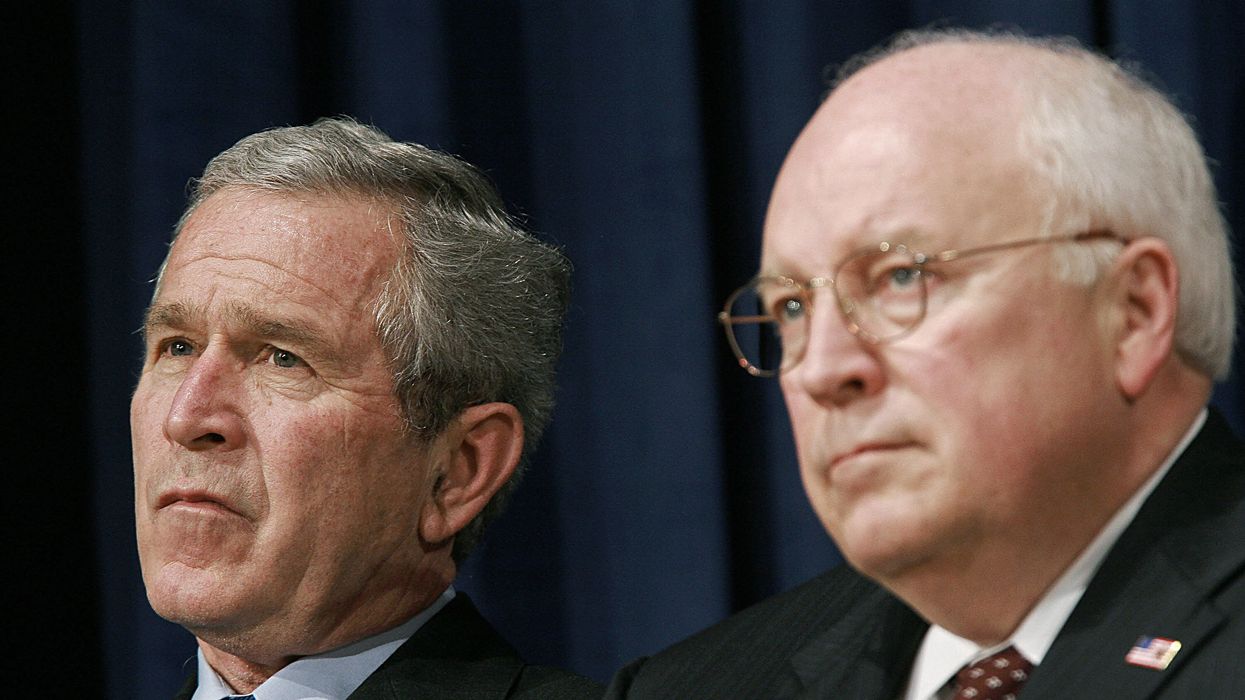
Among the unrepentant, of course, is George W. Bush, the man in the White House on 9/11 and the president who oversaw the invasions of Afghanistan and Iraq, as well as the securitization of key American institutions and policies. Bush proved defiant on the 20th anniversary. The optics told it all. Speaking to a crowd at Shanksville, Pennsylvania, where that hijacked plane with 40 passengers and four terrorists crashed on 9/11, the former president was flanked by former Vice President Dick Cheney. His Machiavellian oversight of the worst excesses of the war on terror had, in fact, led directly to era-defining abrogations of laws and norms. But no apologies were forthcoming.
Instead, in his speech that day, Bush highlighted in a purely positive fashion the very policies his partnership with Cheney had spawned. "The security measures incorporated into our lives are both sources of comfort and reminders of our vulnerability," he said, giving a quiet nod of approval to policies that, if they were "comforting" in his estimation, also defied the rule of law, constitutional protections, and previously sacrosanct norms limiting presidential power.
Over the course of these 20 years, this country has had to face the hard lesson that accountability for the mistakes, miscalculations, and lawless policies of the war on terror has proven not just elusive, but inconceivable. Typically, for instance, the Senate Torture Report, which documented in 6,000 mostly still-classified pages the brutal treatment of detainees at CIA black sites, did not lead to any officials involved being held accountable. Nor has there been any accountability for going to war based upon that lie about Iraq's supposed weapons of mass destruction.
Instead, for the most part, Washington has decided all these years later to continue in the direction outlined by President Obama during the week leading up to his 2009 inauguration. "I don't believe that anybody is above the law," he said. "On the other hand, I also have a belief that we need to look forward as opposed to looking backwards... I don't want [CIA personnel and others to] suddenly feel like they've got to spend all their time looking over their shoulders and lawyering."
Looking over their shoulders is one thing, looking into their own hearts quite another.
The recent deaths of former Secretary of Defense Donald Rumsfeld, who, among other horrors, supervised the building of Guantanamo and the use of brutal interrogation techniques there and elsewhere and of former CIA General Counsel John Rizzo, who accepted the reasoning of Department of Justice lawyers when it came to authorizing torture for his agency, should remind us of one thing: America's leaders, civilian and military, are unlikely to rethink their actions that were so very wrong in the war on terror. Apologies are seemingly out of the question.
So, we should be thankful for the few figures who courageously breached the divide between self-righteous defensiveness when it came to the erosion of once-hallowed laws and norms and the kind of healing that the passage of time and the opportunity to reflect can yield. Perhaps history, through the stories left behind, will prove more competent when it comes to acknowledging wrongdoing as the best way of looking forward.
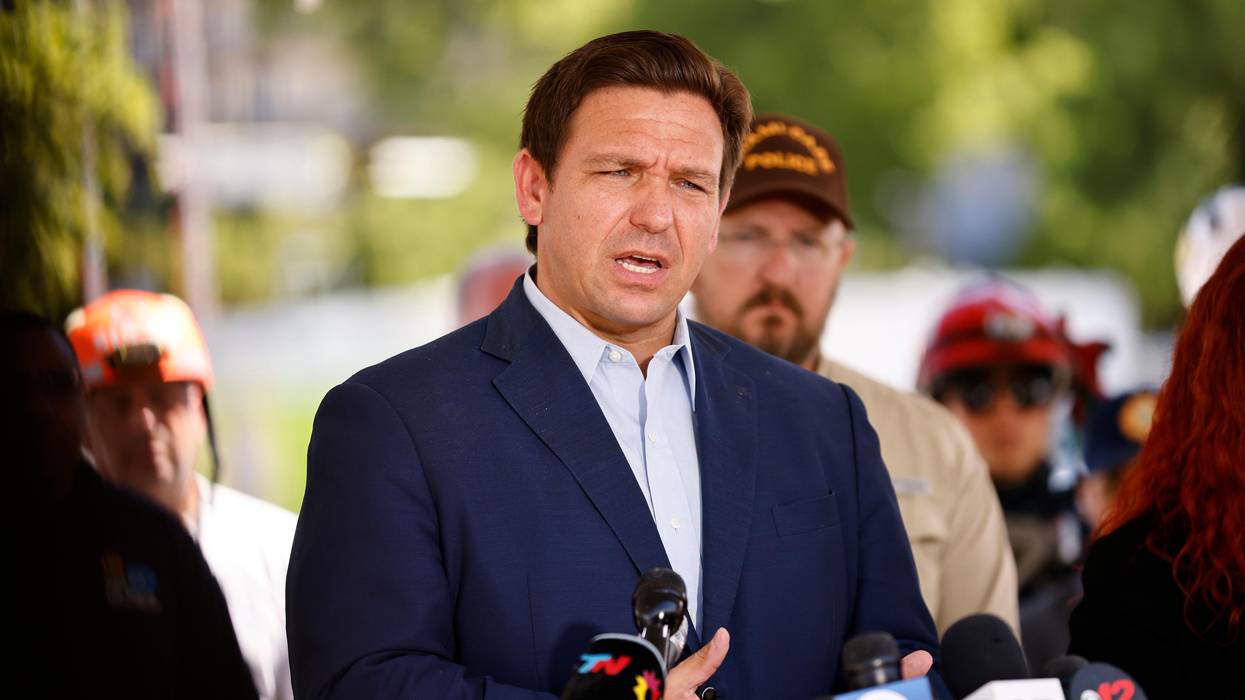
Given the horrific toll of the Iraq War, that disastrous misadventure hardly seems like a good template for combating COVID-19. Yet in key ways, recent pronouncements from Florida Governor Ron DeSantis--whose state is experiencing an overwhelming surge in cases and hospitalizations amid his prohibition on mask requirements--should remind us of the propaganda we once heard from Donald Rumsfeld, the late former Secretary of Defense. The deadly consequences are reminiscent too.
Thousands upon thousands of lives have been and will be diminished or destroyed by their manipulative, self-serving mind games.
In particular, three "political mind games" stand out. Each takes advantage of a core psychological concern that influences how we make sense of the world. First, "It's a False Alarm": when others raise doubts about your plan, offer overconfident assurances of success. Second, "Don't Blame Us": when your rosy predictions are proven wrong, deny that anything could have been done to prevent the setbacks. And third, "They're Misguided and Misinformed": when you're questioned about falling short, attack the media for purportedly misrepresenting events. Tragically, this trio of manipulative appeals has spanned time and space, from Iraq almost twenty years ago to the Sunshine State today. Let's briefly examine each component in turn.
The "It's a False Alarm" mind game targets our psychological concerns about vulnerability. It's regularly used by officials to argue that the dangers others have identified are either imaginary or greatly exaggerated. This is a message that fits well with the public's preference to see the world as a predominantly safe place. When we're told that our worries are overblown and there's no cause for alarm, we're eager to embrace the good news--especially when the "all clear" signal comes from an authoritative source. Unfortunately, such unwarranted guarantees provide opportunities for the continuation of foolhardy and destructive policies.
Consider that in 2002, just months before the invasion of Iraq, Rumsfeld confidently assured a radio audience, "I can't tell you if the use of force in Iraq today would last five days or five weeks or five months, but it certainly isn't going to last any longer than that." He also boasted, "I don't do quagmires." And three weeks into the war, Rumsfeld triumphantly declared, "the Iraqi people are well on their way to freedom." As for concerns raised about lawlessness in Baghdad, he responded, "Stuff happens...freedom's untidy."
So too, DeSantis has taken to promoting a deceptive and dangerous upbeat message, one that ignores dire warnings from public health experts. For instance, at a news conference this past February he explained, "I don't get bent out of shape about these positive tests because if you test 200,000 people, you're gonna get a lot of positive tests, so that's never been the barometer we've used." More recently, he offered this unfounded assurance about the school year ahead: "I think kids are very low risk...I'm confident that things will go well." The governor is even selling campaign merchandise with mottos like "How the hell am I going to be able to drink a beer with a mask on?"
Turning to the "Don't Blame Us" mind game, this appeal exploits our psychological concerns about issues of helplessness. It's routinely used by officials who want to cover their tracks when anything with their fingerprints on it blows up--literally or figuratively. In these situations, they claim that the responsibility lies elsewhere, or the bad outcomes couldn't possibly have been anticipated, or the resulting harm could never have been prevented anyway. Convincing evidence to support their innocence is rarely provided, but these excuses can still lead the public to underestimate their culpability.
For example, as the U.S death toll in Iraq mounted and the war effort stalled, Rumsfeld refused to admit to any mistakes. During a town hall meeting with troops in late 2004, he dismissed their concerns about inadequate protective equipment this way: "You go to war with the army you have, not the army you might want or wish to have at a later time." He then added, "You can have all the armor in the world on a tank and a tank can be blown up." Six months later, when questioned about his possible strategic errors, Rumsfeld offered this exculpatory analysis: "You have to remember that in every war, a battle plan doesn't survive first contact with the enemy. This is in history. Why? Because the enemy has a brain and they're constantly adapting...It isn't a mistake. It's just reality."
Rejecting any personal responsibility for the ravages of COVID-19 in Florida, DeSantis has once again found his muse in Rumsfeld. Last week, for instance, the governor dismissed the idea that imposing restrictions could have reduced or prevented the current spike in cases. He insisted, against evidence, that "These interventions have failed time and time again throughout this pandemic...They have not stopped the spread." At the same time, DeSantis downplayed the worrisome trajectory of COVID variants, writing it off as a temporary and inescapable phenomenon: "It's a seasonal virus and this is the seasonal pattern it follows in the Sun Belt states."
Finally, the third mind game--"They're Misguided and Misinformed"--preys upon our psychological concerns about who should and shouldn't be trusted. It's frequently used by officials to undermine the credibility of those who raise serious but unwelcome questions. Asking such questions, of course, is precisely the role that a free press is meant to play. Yet rather than responding directly to these inquiries, those in positions of power often try to cast doubt on the honesty or the expertise of their critics, portraying them as unfairly biased or insufficiently knowledgeable. When this ploy works, it leaves the public confused as to who and what to believe.
During the Iraq War, Rumsfeld repeatedly insisted that press coverage was slanted against him and was misleading the American people. Amid early reports of detainee abuse at Guantanamo, he offered this disingenuous response at a news briefing: "I haven't found a single scrap of any kind of information that suggests that anyone has been treated anything other than humanely--notwithstanding everything we have read and heard." A few years later, he issued a much broader condemnatory critique: "The worst about America and our military seems to so quickly be taken as truth by the press, and reported and spread around the world, often with little context and little scrutiny, let alone correction or accountability after the fact."
As for DeSantis, a year ago he lashed out at the media's COVID coverage this way: "We've succeeded and I think that people just don't want to recognize it because it challenges their narrative, it challenges their assumption, so they've got to try and find a boogeyman." Last week he was still blaming the press, this time for warning people about hospital shortages: "I think it's important to point out because obviously media does hysteria, you try to fearmonger, you try to do this stuff. And when they'll talk about hospitalizations, our hospitals are open for business."
All of these parallels are a stark warning. History is likely to remember both Rumsfeld and DeSantis as arrogant and reckless "public servants" who bore significant responsibility for unnecessary and unmitigated disasters. Thousands upon thousands of lives have been and will be diminished or destroyed by their manipulative, self-serving mind games. It isn't complicated. Successful crisis management requires leadership and integrity. When those qualities are replaced by unbridled personal ambition, devastation follows. We saw it in Iraq. Now we're seeing it in Florida.
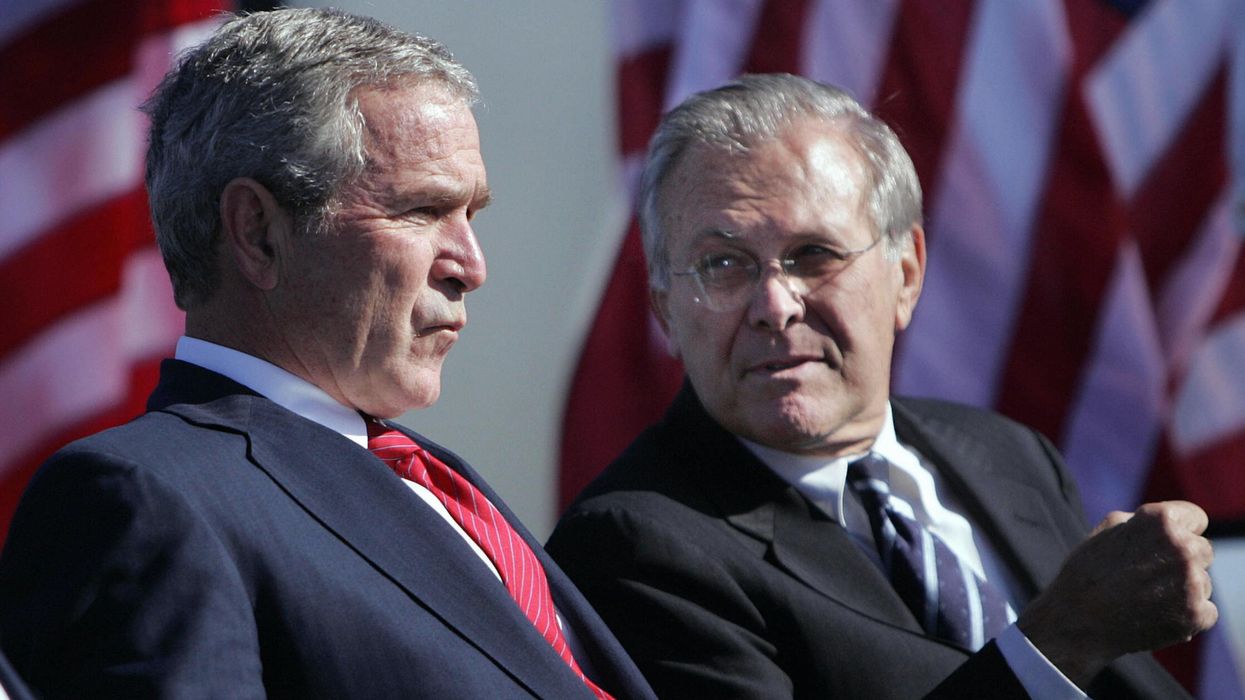
One thing you won't find in corporate media obituaries of Donald Rumsfeld is any estimate of how many people died in the wars he was in charge of launching.
You do see occasional references to the US troops he sent to their deaths--as in the AP's obit (6/30/21):
Defiant to the end, Rumsfeld expressed no regrets in his farewell ceremony, at which point the US death toll in Iraq had surpassed 2,900. The count would eventually exceed 4,400.
And in the New York Times (6/30/21):
Mr. Rumsfeld, more than four years out of office, still expressed no regrets over the decision to invade Iraq, which had cost the United States $700 billion and 4,400 American lives.
But the Afghan and Iraqi lives lost as the result of the wars Rumsfeld managed--which by the most careful estimates outnumbered the US dead by a factor of a hundred or more (PLOS Medicine, 10/15/13; Lancet, 10/12/06)--simply go unmentioned. This, of course, greatly facilitates the job of the obituary writer, who is required to present every deceased member of the Washington establishment as a complicated, ultimately lovable character, regardless of the scale of their crimes.
Or as the Washington Post (6/30/21) put it: "Mr. Rumsfeld was more complex and paradoxical than the public caricature of him as a pugnacious, inflexible villain would suggest."
Of course, a catastrophe on the scale of the Iraq War can't be presented as an unvarnished success for Rumsfeld. But neither can it be presented as a criminal act of aggression, because that would indict Rumsfeld's co-conspirators, many of whom are still alive and plenty of whom still have jobs either in the federal government or the nation's premier media outlets. (During that war, many professional journalists covered Rumsfeld with an enthusiasm that approached idol worship, referring to him as "America's new rock star," a "father figure," a "sex symbol" and "America's stud"--Extra!, 3-4/02).
So you need a strategy for criticizing Rumsfeld without directly addressing the fact that he supervised wars of aggression that killed multitudes of people. Perhaps it was his management style, as the Post suggested when it reported that "his handling of the Iraq War eventually led to his downfall."
Rumsfeld "failed to set a clear policy for the treatment of prisoners," the Post's Bradley Graham wrote, which is a peculiar way of saying that Rumsfeld specifically approved most of the forms of torture used at Guantanamo and Abu Ghraib, including the use of stress positions, sleep deprivation, sensory deprivation, isolation, sexual humiliation and threats from dogs--along with "mild, non-injurious" beatings.
He could have been more of a people person, the Post intimated:
While capable of great charm and generosity, he often seemed to undercut himself with a confrontational, gruff and belittling manner that many found offensive.
Or, perhaps, Rumsfeld was really the victim and not the perpetrator of the Iraq War--as the AP suggested with its original headline, "Donald Rumsfeld, a Cunning Leader Undermined by the Iraq War." AP later switched that to "...Who Oversaw a Ruinous Iraq War," but the attempt to evoke pity for Rumsfeld is still there is reporter Robert Burns' lead:
Calling Donald H. Rumsfeld energetic was like calling the Pacific wide. When others would rest, he would run. While others sat, he stood. But try as he might, at the pinnacle of his career as Defense secretary he could not outmaneuver the ruinous politics of the Iraq War.
Another tactic employed by AP was to "balance" the problematic Iraq experience with the supposed bright spots of Rumsfeld's career--notably the invasion of Afghanistan:
US forces invaded Afghanistan on October 7, and with Rumsfeld at the Pentagon helm the Taliban regime was toppled within weeks.... Within months of that success, President George W. Bush's attention shifted to Iraq, which played no role in the September 11 attacks.
The Washington Post likewise presented Afghanistan as an example of Rumsfeld's characteristic brilliance:
Mr. Rumsfeld was initially hailed for leading the US military to war in the wake of the September 11, 2001, terrorist attacks.... In the wake of the Afghan invasion, Mr. Rumsfeld hoped to devise a similarly innovative war plan for toppling Saddam Hussein's regime in Iraq.
Reading these tributes, you could almost forget that in Afghanistan Rumsfeld launched the US's longest overseas war, one that has killed nearly a quarter of a million people (including 70,000 civilians) without achieving any of the democracy-building, rights-protecting goals that were used to sell the occupation--or even completing its original task of capturing Al Qaeda's Osama bin Laden. (He was instead assassinated years later in Pakistan.)
Describing Rumsfeld's arrival in Washington, the Times' Robert McFadden wrote:
He seemed like an All-American who had stepped off the Wheaties box--a strikingly handsome Midwesterner radiating confidence, taking on big tasks and doing everything well.
Could any war criminal ask to be remembered more fondly?

Donald Rumsfeld's death is a good occasion to reflect on the Iraq War of which he was a major architect. The War was the highpoint of the U.S. pursuit of global hegemony. That means it's been downhill since then. Its failures echo far beyond the calamity of the War itself. The collateral impacts--before, during, and after--have grievously damaged American interests and substantially diminished its power in the world. It's the exact opposite of what was promised going in.
The War grew out of one fiscal problem and two strategic opportunities. The problem was that after the fall of the Soviet Union in 1991, the U.S. didn't have any meaningful military challengers. None. So, there was no rationale for the kind of military budgets the weapons makers had been accustomed to. People were demanding a "peace dividend." It would never come.
Over the course of the Cold War, Defense Department budgets averaged $458 billion a year. But in the Clinton years, funding dropped to an average of $394 billion a year. If the weapons makers, one of the most powerful lobbies in the country, were to continue with the kind of gilded glutting they had enjoyed during the Cold War, they needed a major new kinetic event--a big war--that would require hundreds of billions--eventually trillions--of dollars of spending. They got it.
"The elites and the insiders wanted their war and they were going to have it, truth and the interests of the nation and the world be damned."
As for the opportunities, the first was the chance to control the world by controlling its supply of oil. In 1945, a State Department memorandum stated, that "Arab oil resources constitute a stupendous source of strategic power, and one of the greatest material prizes in world history." This was a stunning insight into motive and necessarily true in an industrial civilization based on oil. Who controls the oil controls the world.
A simple thought experiment confirms this thesis: would the U.S. have invaded Iraq if, instead of possessing the world's second largest supply of oil, it was the second largest producer of, say, figs? Just asking the question mocks itself. Of course, it wouldn't have. The war was a naked violation of international law but Iraq could be had because it was broken, so it was taken.
The second opportunity was that a war with Iraq would take out Israel's greatest threat, with the U.S. doing the dirty work. The War was invented and pushed by a hawkish cabal of neo-conservatives with deep ties to Israel. They included Donald Rumsfeld, Paul Wolfowitz, Dick Cheney, Richard Perle, William Kristol, Elliott Abrams, Lewis "Scooter" Libby, Norman Podhoretz, John Bolton, and others.
In 1996, these neo-conservatives advised Benjamin Netanyahu to make a "clean break" with the past. That included abandoning the Oslo Peace Accords, and invading and destroying Iraq. Arch neo-con Paul Wolfowitz wrote at the time, "The road to peace in the Middle East goes through Baghdad." David Wurmser, one of the founders of the neo-con Project for a New American Century and an aide to Dick Cheney, wrote, "Whoever inherits Iraq dominates the entire Levant strategically."
So, the rationales for the War were in place: gain control of the world's oil supply; open a gusher of spending to weapons makers; and destroy Israel's preeminent enemy.
The problem was that Iraq posed no threat to the U.S. It had been under constant bombardment since the First Gulf War, in 1991. So, a Big Lie was manufactured and crammed down the throat of the American public to frog march it into war. It is sickening to see how many centers of American power were marshalled behind this Big Lie, and how ferociously it was forced on the American public.
Saddam Hussein was ritually made into the obligatory Hitler who posed an existential threat to the U.S. Lies were mass produced and laundered through complicit stenographers, like Judith Miller at the New York Times and all the major news networks. They warned that Saddam was close to acquiring a nuclear weapon, had sought yellow-cake uranium in Niger, had covertly bought aluminum tubes that could only be used in nuclear centrifuges, and so forth. All lies.
And they were known to be lies at the time they were tendered. The people who knew best whether Iraq had Weapons of Mass Destruction, were the weapons inspectors who had worked in the country for over a decade. They included Egypt's Mohamed el Baradei, Sweden' Hans Blix, and the U.S.'s Scott Ritter. All proclaimed publicly that Iraq did not possess WMDs and was not pursuing them It didn't matter.
The elites and the insiders wanted their war and they were going to have it, truth and the interests of the nation and the world be damned. This included the media which benefits from higher ratings during war and which is owned by same wealthy elite who own the weapons makers and wanted the War. Its job, in the phrase of Noam Chomsky, was to "manufacture consent" for the War. It did so with thuggish abandon.
George W. Bush constantly conflated Saddam Hussein with Osama bin Laden, suggesting that Saddam had something to do with 9/11. Saddam and bin Laden were mortal enemies and Saddam had nothing to do with 9/11. The media studiously did not correct the lies. Dick Cheney proclaimed he had "absolute certainty" Saddam was on the path to acquiring a nuclear weapon. It, too, was a lie, but, like the Saddam/bin Laden lie, it went unchallenged. Colin Powell, Secretary of State, humiliated himself, destroying his reputation for life, by peddling the lies at the U.N., knowing they were lies.
No lie was too salacious, no threat too brazen to proffer. Condoleesa Rice summed up the drummed up dumbed up hysteria of the lies with her cutesy warning: "We don't want the smoking gun to be a mushroom cloud." Rumsfeld prophesied, "It could last six days, six weeks. I doubt six months." The U.S. is still there more than 18 years later. Richard Perle, neo-con head of the Pentagon's Defense Policy Board, declared that the War would pay for itself. It has consumed more than $6 trillion, paid for by the American taxpayer. That's three times Joe Biden's opening gambit for a national Infrastructure bill.
Vice President Cheney said on the eve of the War, "We will be welcomed as liberators." The U.S. had to kill more than 300,000 Iraqis, most of them civilians, to suppress the swelling resistance. It's use of depleted uranium in its ammunition left Iraq the most radioactive geography on earth. Acknowledging the War's failure in its parallel with another U.S. military fiasco, Rumsfeld prohibited the use of the word "quagmire" in the Pentagon to describe the morass.
Former head of the National Security Agency, General William Odom, called the War "The greatest strategic disaster in the history of the country." It was a calamity, a debacle, a notorious advertisement of the epic failure of the U.S. military which delusionally, robotically advertises itself as "the finest fighting force in the world." It has not won a major war since World War II, not Korea, Vietnam, Iraq, or now, Afghanistan. The War produced a substantial spike in global terror, including the creation of ISIS under the watchful, nurturing eyes of the U.S. military occupation.
The real tragedy of the War is that virtually none of its lessons have been learned. It's easy to understand why. None of its perpetrators have ever suffered any consequences for the damage they inflicted on the country and the world.
The weapons makers and militarists got their boatloads of gravy. DoD spending jumped from an average of $394 billion a year under Clinton to $601 billion per year under Bush II. That's a $207 billion average spending increase per year. And the gusher keeps giving. Biden just approved a military budget request for $753 billion. When it's military spending, nothing succeeds like failure.
Israel got its biggest threat in the region destroyed, and didn't have to put a single Israeli soldier at risk to do it. Indeed, it was given an effective immunity to continue its expropriation of Palestinian lands and a $3 billion per year stipend to expand the apartheid policies that are now its defining character.
The Bush II administration refused to raise taxes to pay for the War. Rather, it lowered them for the rich, twice. So, the national debt that stood at $6.8 trillion when Bush took office, had almost doubled, to $11.9 trillion when he left. This was a massive boon to the wealthy as the increased demand for borrowed money raised interest rates in the economy as a whole.
The wealthy are net lenders and benefit from higher interest rates. They received a multi-trillion increment to their wealth as a result of the increased borrowing needed to fund the War. It has been a major factor in the dramatic increase in economic inequality in the country and world.
The oil companies got theirs, too. The risk premium to global oil supplies occasioned by a decade-plus war in the middle of the Middle East raised global prices far above what would have obtained absent the War. The result was trillions of dollars of global wealth transferred from oil consumers to oil producers. This, too, is a major factor in skyrocketing inequality.
All of the above were intended consequences of the War, purposeful benefits to the wealthy private forces that pushed it. The negative consequences of the War, which largely fell on the public, should be noted, as well.
There is a straight line that runs from the Big Lie about Iraq to the "Big Lie" Donald Trump tells about the 2020 election. Trump's "Big Lie" is actually a Little White Lie compared to the ravages inflicted on the country by the Big Lie of Iraq. The difference is that the media were prime peddlers--and beneficiaries--of the earlier Big Lie, so never mention it. But it was they who normalized Big Lying.
The American people know they were lied to, and that the Lying was carried out by the whole of the Elite Institution of American Governance. The Iraq War made Big Lying a legitimate tactic to achieve otherwise unacceptable ends and now there are no effective prohibitions against it. It's like the broom in The Sorcerer's Apprentice, manically spawning a profusion of new, ever-more-insidious lying. But the method has jumped the medium, from mainstream media to social media, and cannot be gotten back into the bottle.
There is a similarly straight line running from the economics of the Iraq War to the cesspool that is Trumpism. In the recovery from the Great Recession of 2008, Barack Obama believed that fiscal constraints prevented him from enacting a stimulus package equal to the needs of the crisis. His own chief economic adviser, Christina Romer, said he needed three- to four-times the $787 billion package he ultimately got. The consequence was an anemic economic recovery that played into the resentment of the MAGAts against another Democratic administration.
The unashamed ethic of grift that is the oozing essence of Republican identity today got a major boost from the grifting surrounding the Iraq War. Billions of dollars on dozens of palettes meant for reconstruction went missing. Billions more were wasted on grossly substandard buildings that were never intended to be used, except as conduits to sluice money to military contractors, like Dick Cheney's Halliburton. It was a feeding frenzy of epic proportions, and everyone was in on it.
Today, grift is the literal raison d'etre of the Republican party. No lie is too vile, no conspiracy too looney, no deceit too damaging but that some slimeball moves to make money off of it. Donald Trump, Margorie Taylor Green, Lauren Boebert, Matt Gaetz, Paul Gosar, Steve Bannon, Roger Stone, Fox News, and many others exist as little more than lying machines, ladling out non-stop bilge to monetize the clicks that follow from the ensuing outrage. Digital grift is their art form. The damage it is inflicting on the country is incalculable, eroding trust in democracy and degrading the public's collective capacity to affirm common truths.
Tragically, our society is not capable of holding great crimes against the public to account. Those who pushed the War and profited from it have not only not been punished, they have prospered. And because of that, their hold over the country has increased.
The oil companies have eviscerated Biden's Infrastructure plan, denuding it of anything that might boost renewable energy. The weapons makers have just been granted a $753 billion budget by the Biden administration, despite now losing Afghanistan, in addition to Iraq. It is supposedly to combat China, which has exactly one foreign military outpost in the world, to the U.S.'s 800. But if the U.S. military cannot win wars against fourth-world countries like Iraq and Afghanistan, how is it going to win one against China, which has nukes and has just surpassed the U.S. as the largest economy in the world? It's psychotic.
While the U.S. wastes money on trillion-dollar boondoggles, China is investing prodigious sums in robotics, artificial intelligence, quantum computing, and biotechnology, the technologies of the next Industrial Revolution. While the U.S. tries to buttress its hold on the last century's energy platform, oil, China leads the world in the next century's platform: renewable energy. And while the U.S. writhes in the disintegration of its social capital, literally cannibalizing itself from within, China gains ever more coherence and support from its people as it blows by the U.S. and its savage Nineteenth Century grand strategy of neo-colonialism with Iraq as the archetypal model.
In Greek legend, the Lydian king, Croesus, wanted to go to war with the Persians. To cover his bets, he asked the Oracle of Delphi what it thought of the idea. The Oracle replied enigmatically: "If you go to war, a great empire will be destroyed." Croesus fancied that this meant the Persians. In fact, it was his own empire that was destroyed, at the Battle of Sardis. Too late, he understood his folly, ruing, "In peacetime, sons bury their fathers; but in war, fathers bury their sons."
Fathers in the U.S. are burying their sons, literally and metaphorically. They are destroying their sons' prospects for a better world, a better life, a more vibrant future because we cannot, will not, free ourselves from the grip of internal predators, those who have captured the government to enrich themselves at the expense of all others, including to the extent of destroying the country itself. As the Oracle prophesized, the U.S. went to War, and a great empire is being destroyed. That is the true legacy of Iraq.
Donald Rumsfeld, the former U.S. congressman, aide to several Republican presidents, and two-time defense secretary whose torture-laden tenure and ruinous legacy were defined by his lies in service of an unending war that's killed at least hundreds of thousands of people, died Tuesday at age 88.
"Donald Rumsfeld is responsible for thousands and thousands of deaths and enriching himself in the process. The least we can do is to forever link his name with 'war criminal.'"
--Veterans for Peace
By the time he was chosen as then-President George W. Bush's secretary of defense, Rumsfeld had already been a Navy veteran, four-term Republican U.S. congressman, and adviser to former Presidents Richard Nixon and Gerald Ford--for whom he had served as defense secretary.
In the early 1980s, President Ronald Reagan repeatedly dispatched Rumsfeld as a special envoy to Iraq, whose brutal dictator Saddam Hussein was at the time an important U.S. ally. An infamous handshake between Rumsfeld and Hussein led to the transfer of deadly chemical and biological materials from the U.S. and allies to Iraq. Hussein subsequently weaponized the components and unleashed weapons of mass destruction on both Iranian troops--with the assistance of the Reagan administration--and Iraqi Kurds during the genocidal (pdf) Anfal campaign.
As Bush's defense secretary, Rumsfeld--who served as CEO or chairman of companies including General Instrument and Gilead Sciences--recruited an inner circle of former corporate executives to oversee Pentagon operations, including Air Force Secretary James G. Roche (Northrop Grumman), Navy Secretary Gordon England (General Dynamics), and Army Secretary Thomas E. White (Enron). So great was the influence of the arms industry in the department during Rumsfeld's tenure that one commentator described it as "Department of Defense, Inc."
An ardent imperialist, Rumsfeld was a leading luminary of the neoconservative movement and a prominent leader of the Project for the New American Century (PNAC), whose other members included Bush administration officials such as Dick Cheney, John Bolton, Elliott Abrams, and Paul Wolfowitz.
PNAC hawks--who envisioned and strategized regime change in Iraq and elsewhere even before 9/11--lobbied vigorously for the 2003 invasion of Iraq, even though they knew the country had no connection with the September 11, 2001 attacks on the U.S. or weapons of mass destruction. When pressed on this last point, Rumsfeld offered perhaps his most infamous explanation:
As we know, there are known knowns; there are things we know we know. We also know there are known unknowns; that is to say we know there are some things we do not know. But there are also unknown unknowns--the ones we don't know we don't know.
In the rushed run-up to invade Iraq, Rumsfeld dutifully disseminated Bush administration lies about Hussein's nonexistent nuclear program, while laughably asserting that the Iraq invasion had "literally nothing to do with oil."
The invasion of Iraq, at first called Operation Iraqi Liberation (OIL) began in the dark of night with a Navy SEAL raid on two offshore Iraqi oil platforms. The New York Times--which parroted many of the administration's Iraq lies--hailed this as the first "victory in the battle for Iraq's vast oil empire."
"Five days or five weeks or five months, but it certainly isn't going to last any longer than that."
--Donald Rumsfeld, on how long the Iraq War would last
Rumsfeld predicted a quick and easy war in Iraq. "Five days or five weeks or five months, but it certainly isn't going to last any longer than that," he declared in November 2002 with cocksure miscalculation. Although former President Barack Obama officially ended the Iraq War in December 2011, U.S. troops are still stationed there today--and President Joe Biden bombed the country earlier this week.
When U.S. forces conquered Baghdad, one of the first sites they secured was the Oil Ministry headquarters. Meanwhile, the Iraqi National Museum, which housed priceless ancient artifacts spanning Mesopotamia's 5,000-year history, was being looted. Thousands of statues, manuscripts, and countless other treasures, some of them among the oldest objects created by civilized humans, were stolen while nearby U.S. troops did nothing.
"Stuff happens," Rumsfeld flippantly replied when faced with images of the looting. "The images you are seeing on television you are seeing over and over, and it's the same picture of some person walking out of some building with a vase, and you see it 20 times, and you think, 'My goodness, were there that many vases? Is it possible that there were that many vases in the whole country?'"
Thousands of U.S. troops would die during the course of the U.S.-led invasion and occupation of the country, along with hundreds of thousands of Iraqis. The latter were practically ignored by Bush officials. When Rumsfeld was asked why the public only hears about the number of American war dead and not about Iraqi casualties, he cooly replied that "we don't do body counts on other people."
Rumsfeld was also an instrumental figure in the Bush administration's torture program. He signed off on torture techniques used by U.S. troops at Guantanamo Bay, Abu Ghraib, and elsewhere--places where prisoners were sometimes tortured to death. He also issued a directive allowing torturers to withhold medical care to prisoners under interrogation who had injuries as serious as gunshot wounds. Later, Rumsfeld would require doctors to certify that detainees slated for torture were certified "medically and operationally" fit for abuse.
When the Abu Ghraib torture photo scandal broke, Rumsfeld--after outing the courageous soldier who exposed the abuse--lied about what he knew.
Gen. Antonio Taguba, author of an Army report (pdf) on U.S. torture at Abu Ghraib, said he met with Rumsfeld and other Pentagon brass just before the defense secretary testified to the Senate about abuse at the notorious prison. Taguba, who had seen thousands of photos of detainee abuse, says Rumsfeld asked him if what was happening in the Iraqi prison was abuse or torture.
"I described a naked detainee lying on the wet floor, handcuffed, with an interrogator shoving things up his rectum and said: 'That's not abuse. That's torture.' There was quiet,'" the general recalled.
Yet Rumsfeld testified before the Senate that nobody in the Pentagon had seen the Abu Ghraib torture photos.
However, a Senate Armed Services Committee investigation concluded that "Rumsfeld's authorization of interrogation techniques... was a direct cause of detainee abuse."
The senators additionally asserted that it was "unconscionable and false" for leading Bush officials to blame a "few bad apples" in the military for detainee abuse in order to avoid accountability.
While fighting a war purportedly meant to defeat terrorism in some parts of the world, Rumsfeld supported terror elsewhere. Pursuing allies in the so-called War on Terror, Rumsfeld courted dictators including Uzbekistan's Islam Karimov--who boiled political opponents alive--and the Iranian exile militants Mujahedin-e Khalq (MEK), a State Department-designated terrorist organization.
"On the bright side, Donald Rumsfeld gets to shake hands once again with Saddam Hussein AND Nixon."
--John Fugelsang, comedian
Meanwhile, a Senate Foreign Relations Committee report concluded that Rumsfeld let bin Laden escape in December 2001. The report also said Rumsfeld's failures ultimately left Americans more vulnerable to terrorism.
It wasn't as if Rumsfeld did not understand the real root causes of anti-U.S. terrorism. In 2004, he commissioned a task force to study the subject. It concluded that "Muslims do not 'hate our freedom,' but rather, they hate our policies." The task force report cited "American direct intervention in the Muslim world," U.S. support for dictators in countries including Saudi Arabia and Egypt, and, most of all, "the American occupation of Iraq and Afghanistan."
Yet Rumsfeld remained an unrepentant cheerleader for war and empire until the end. Medea Benjamin, the co-founder of the women-led peace group CodePink who famously confronted the former defense secretary over his war crimes, tweeted that "his legacy of wars in Iraq and Afghanistan lives on."
"Donald Rumsfeld was a merciless war criminal who presided over systemic torture, massacres of civilians, [and] illegal wars," tweeted journalist and The Intercept co-founder Jeremy Scahill. "That's his legacy and how he should forever be remembered."
Daily Beast senior national security correspondent Spencer Ackerman wrote, "The only thing tragic about the death of Donald Rumsfeld is that it didn't occur in an Iraqi prison."
"Do not mourn the defense secretary," said Ackerman. "Mourn his victims. There were nearly too many to tally, but his Pentagon refused to count anyway."
Let me be blunt. This wasn't the world I imagined for my denouement. Not faintly. Of course, I can't claim I ever really imagined such a place. Who, in their youth, considers their death and the world that might accompany it, the one you might leave behind for younger generations? I'm 76 now. True, if I were lucky (or perhaps unlucky), I could live another 20 years and see yet a newer world born. But for the moment at least, it seems logical enough to consider this pandemic nightmare of a place as the country of my old age, the one that I and my generation (including a guy named Donald J. Trump) will pass on to our children and grandchildren.
Back in 2001, after the 9/11 attacks, I knew it was going to be bad. I felt it deep in my gut almost immediately and, because of that, stumbled into creating TomDispatch.com, the website I still run. But did I ever think it would be this bad? Not a chance.
I focused back then on what already looked to me like a nightmarish American imperial adventure to come, the response to the 9/11 attacks that the administration of President George W. Bush quickly launched under the rubric of "the Global War on Terror." And that name (though the word "global" would soon be dropped for the more anodyne "war on terror") would prove anything but inaccurate. After all, in those first post-9/11 moments, the top officials of that administration were thinking as globally as possible when it came to war. At the damaged Pentagon, Secretary of Defense Donald Rumsfeld almost immediately turned to an aide and told him, "Go massive -- sweep it all up, things related and not." From then on, the emphasis would always be on the more the merrier.
Bush's top officials were eager to take out not just Osama bin Laden's al-Qaeda, whose 19 mostly Saudi hijackers had indeed attacked this country in the most provocative manner possible (at a cost of only $400,000-$500,000), but the Taliban, too, which then controlled much of Afghanistan. And an invasion of that country was seen as but the initial step in a larger, deeply desired project reportedly meant to target more than 60 countries! Above all, George W. Bush and his top officials dreamed of taking down Iraqi autocrat Saddam Hussein, occupying his oil-rich land, and making the United States, already the unipolar power of the twenty-first century, the overseer of the Greater Middle East and, in the end, perhaps even of a global Pax Americana. Such was the oil-fueled imperial dreamscape of George W. Bush, Dick Cheney, Donald Rumsfeld, and crew (including that charmer and now bestselling anti-Trump author John Bolton).
Who Woulda Guessed?
In the years that followed, I would post endless TomDispatch pieces, often by ex-military men, focused on the ongoing nightmare of our country's soon-to-become forever wars (without a "pax" in sight) and the dangers such spreading conflicts posed to our world and even to us. Still, did I imagine those wars coming home in quite this way? Police forces in American cities and towns thoroughly militarized right down to bayonets, MRAPs, night-vision goggles, and helicopters, thanks to a Pentagon program delivering equipment to police departments nationwide more or less directly off the battlefields of Washington's never-ending wars? Not for a moment.
Who doesn't remember those 2014 photos of what looked like an occupying army on the streets of Ferguson, Missouri, after the police killing of a Black teenager and the protests that followed? And keep in mind that, to this day, the Republican Senate and the Trump administration have shown not the slightest desire to rein in that Pentagon program to militarize police departments nationwide. Such equipment (and the mentality that goes with it) showed up strikingly on the streets of American cities and towns during the recent Black Lives Matter protests.
Even in 2014, however, I couldn't have imagined federal agents by the hundreds, dressed as if for a forever-war battlefield, flooding onto those same streets (at least in cities run by Democratic mayors), ready to treat protesters as if they were indeed al-Qaeda ("VIOLENT ANTIFA ANARCHISTS"), or that it would all be part of an election ploy by a needy president. Not a chance.
Or put another way, a president with his own "goon squad" or "stormtroopers" outfitted to look as if they were shipping out for Afghanistan or Iraq but heading for Portland, Albuquerque, Chicago, Seattle, and other American cities? Give me a break! How un-American could you get? A military surveillance drone overhead in at least one of those cities as if this were someone else's war zone? Give me a break again. Never in my wildest dreams did I think I'd live to witness anything quite like it or a president -- and we've had a few doozies -- even faintly like the man a minority of deeply disgruntled Americans but a majority of electors put in the White House in 2016 to preside over a failing empire.
How about an American president in the year 2020 as a straightforward, no-punches-pulled racist, the sort of guy a newspaper could compare to former segregationist Alabama governor and presidential candidate George Wallace without even blinking? Admittedly, in itself, presidential racism has hardly been unique to this moment in America, despite Joe Biden's initial claim to the contrary. That couldn't be the case in the country in which Woodrow Wilson made D.W. Griffith's Birth of a Nation, the infamous silent movie in which the Ku Klux Klan rides to the rescue, the first film ever to be shown in the White House; nor the one in which Richard Nixon used his "Southern strategy" -- Republican presidential candidate Barry Goldwater had earlier labeled it even more redolently "Operation Dixie" -- to appeal to the racist fears of Southern whites and so begin to turn that region from a Democratic stronghold into a Republican bastion; nor in the land where Ronald Reagan launched his election campaign of 1980 with a "states' rights" speech (then still a code phrase for segregation) near Philadelphia, Mississippi, just miles from the earthen dam where three murdered civil rights workers had been found buried in 1964.
Still, an openly racist president (don't take that knee!) as an autocrat-in-the-making (or at least in-the-dreaming), one who first descended that Trump Tower escalator in 2015 denouncing Mexican "rapists," ran for president rabidly on a Muslim ban, and for whom Black lives, including John Lewis's, have always been immaterial, a president now defending every Confederate monument and military base named after a slave-owning general in sight, while trying to launch a Nixon-style "law and (dis)order" campaign? I mean, who woulda thunk it?
And add to that the once unimaginable: a man without an ounce of empathy in the White House, a figure focused only on himself and his electoral and pecuniary fate (and perhaps those of his billionaire confederates); a man filling his hated "deep state" with congressionally unapproved lackies, flacks, and ass-kissers, many of them previously flacks (aka lobbyists) for major corporations. (Note, by the way, that while The Donald has a distinctly autocratic urge, I don't describe him as an incipient fascist because, as far as I can see, his sole desire -- as in those now-disappeared rallies of his -- is to have fans, not lead an actual social movement of any sort. Think of him as Mussolini right down to the look and style with a "base" of cheering MAGA chumps but no urge for an actual fascist movement to lead.)
And who ever imagined that an American president might actually bring up the possibility of delaying an election he fears losing, while denouncing mail-in ballots ("the scandal of our time") as electoral fraud and doing his damnedest to undermine the Post Office which would deliver them amid an economic downturn that rivals the Great Depression? Who, before this moment, ever imagined that a president might consider refusing to leave the White House even if he did lose his reelection bid? Tell me this doesn't qualify as something new under the American sun. True, it wasn't Donald Trump who turned this country's elections into 1% affairs or made contributions by the staggeringly wealthy and corporations a matter of free speech (thank you, Supreme Court!), but it is Donald Trump who is threatening, in his own unique way, to make elections themselves a thing of the past. And that, believe me, I didn't count on.
Nor did I conceive of an all-American world of inequality almost beyond imagining. A country in which only the truly wealthy (think tax cuts) and the national security state (think budgets eternally in the stratosphere) are assured of generous funding in the worst of times.
The World to Come?
Oh, and I haven't even mentioned the pandemic yet, have I? The one that should bring to mind the Black Death of the fourteenth century and the devastating Spanish Flu of a century ago, the one that's killing Americans in remarkable numbers daily and going wild in this country, aided and abetted in every imaginable way (and some previously unimaginable ones) by the federal government and the president. Who could have dreamed of such a disease running riot, month after month, in the wealthiest, most powerful country on the planet without a national plan for dealing with it? Who could have dreamed of the planet's most exceptional, indispensable country (as its leaders once loved to call it) being unable to take even the most modest steps to rein in Covid-19, thanks to a president, Republican governors, and Republican congressional representatives who consider science the equivalent of alien DNA? Honestly, who ever imagined such an American world? Think of it not as The Decameron, that fourteenth century tale of 10 people in flight from a pandemic, but the Trumpcameron or perhaps simply Trumpmageddon.
And keep in mind, when assessing this world I'm going to leave behind to those I hold near and dear, that Covid-19 is hardly the worst of it. Behind that pandemic, possibly even linked to it in complex ways, is something so much worse. Yes, the coronavirus and the president's response to it may seem like the worst of all news as American deaths crest 160,000 with no end in sight, but it isn't. Not faintly on a planet that's being heated to the boiling point and whose most powerful country is now run by a crew of pyromaniacs.
It's hard even to fully conceptualize climate change since it operates on a time scale that's anything but human. Still, one way to think of it is as a slow-burn planetary version of the atomic bombings of Hiroshima and Nagasaki. And by the way, if you'll excuse a brief digression, in these years, our president and his men have been intent on ripping up every Cold War nuclear pact in sight, while the tensions between two nuclear-armed powers, the U.S. and China, only intensify and Washington invests staggering sums in "modernizing" its nuclear arsenal. (I mean, how exactly do you "modernize" the already-achieved ability to put an almost instant end to the world as we've known it?)
But to return to climate change, remember that 2020 is already threatening to be the warmest year in recorded history, while the five hottest years so far occurred from 2015 to 2019. That should tell you something, no?
The never-ending release of greenhouse gases into the atmosphere has been transforming this planet in ways that have now become obvious. My own hometown, New York City, for instance, has officially become part of the humid subtropical climate zone and that's only a beginning. Everywhere temperatures are rising. They hit 100 degrees this June in, of all places, Siberia. (The Arctic is warming at twice the rate of much of the rest of the planet.) Sea ice is melting fast, while floods and mega-droughts intensify and forests burn in a previously unknown fashion.
And as a recent heat wave across the Middle East -- Baghdad hit a record 125 degrees -- showed, it's only going to get hotter. Much hotter and, given how humanity has handled the latest pandemic, how will it handle the chaos that goes with rising sea levels drowning coastlines but also affecting inland populations, ever fiercer storms, and flooding (in recent weeks, the summer monsoon has, for instance, put one third of Bangladesh underwater), not to speak of the migration of refugees from the hardest-hit areas? The answer is likely to be: not well.
And I could go on, but you get the point. This is not the world I either imagined or would ever have dreamed of leaving to those far younger than me. That the men (and they are largely men) who are essentially promoting the pandemicizing and over-heating of this planet will be the greatest criminals in history matters little.
Let's just hope that, when it comes to creating a better world out of such a god-awful mess, the generations that follow us prove better at it than mine did. If I were a religious man, those would be my prayers.
And here's my odd hope. As should be obvious from this piece, the recent past, when still the future, was surprisingly unimaginable. There's no reason to believe that the future -- the coming decades -- will prove any easier to imagine. No matter the bad news of this moment, who knows what our world might really look like 20 years from now? I only hope, for the sake of my children and grandchildren, that it surprises us all.