

SUBSCRIBE TO OUR FREE NEWSLETTER
Daily news & progressive opinion—funded by the people, not the corporations—delivered straight to your inbox.
5
#000000
#FFFFFF
To donate by check, phone, or other method, see our More Ways to Give page.
Daily news & progressive opinion—funded by the people, not the corporations—delivered straight to your inbox.

Two decades ago, Congress failed to fully do its constitutional duty to not just vote but fully debate going to war. The good news is that in the weeks ahead, Congress will have the best chance in years to finally get it right.
Like so many, we vividly remember where we were 22 years ago this week as the horrific attacks of Sept. 11 unfolded. We still mourn the 3,000 lives lost that day and will never forget the irreparable damage the attacks on 9/11 had on our community. We remember the people taken too soon and pray for the families and communities forever changed.
In the days after 9/11, the president requested and Congress authorized a 60-word blank check for a war that continues to this day. In the weeks and months ahead of us, Congress is preparing to embark on its biggest reassessment of that war authorization, and in doing so, we must ask the hard questions and do the difficult work that we did not do all those years ago.
Twenty-two years ago this week, one of us cast the lone vote against that 2001 war authorization and agonized over the vote, but came to grips with it during the very painful yet very beautiful memorial service. As a member of the clergy so eloquently said, “As we act, let us not become the evil that we deplore.” Yet, that is exactly what we did. The last thing the country needed was to rush into war after 9/11, or ever, without proper deliberation by the people — represented by Congress — as the Constitution intended.
The other of us co-leads an organization founded in opposition to the invasion of Iraq, authorized just one year after 9/11. While more members of Congress voted against that war, the debate was similarly rushed, and did not ask the necessary tough, hard questions.
Part of the genius of our Constitution is its system of checks and balances. One of the most essential is the separation between the president as commander in chief and Congress as the body that decides where and when our nation goes to war. Unfortunately, in 2001 and 2002, those checks and balances did not work as they should have. Instead of putting constraints on presidential war-making, Congress passed war authorizations that amounted to a blank check, enabling four successive presidents to wage a global war at a cost of trillions of dollars and countless human lives.
Two decades ago, Congress failed to fully do its constitutional duty to not just vote but fully debate going to war. The good news is that in the weeks ahead, Congress will have the best chance in years to finally get it right.
Congress is on the cusp of repealing the 2002 Iraq War authorization (and an earlier authorization for the 1991 Gulf War). Earlier this year, a large bipartisan majority passed its repeal in the Senate, and there is clearly a similarly large bipartisan majority in the House to do the same. Speaker Kevin McCarthy (R-Calif.) should put the Senate-passed bill on the floor immediately, where it will pass and go on to President Biden, who has pledged to sign it into law.
The harder work will come on the 2001 war authorization. Congress hasn’t made up its mind about how to handle the 2001 authorization for use of military force (AUMF) — and that’s OK. Publicly debating issues of war and peace is what Congress is meant to do. What is unacceptable is that we have allowed this debate to go on endlessly while an absurdly broad war authorization remains in place indefinitely, waiting to be abused and further stretched beyond its original purpose. The Constitution intends that our nation’s default stance be peace, and that to change that requires an act of Congress. Yet today, the situation is the complete opposite, and it’s time to fix that.
If Congress cannot agree we should be at war, then we ought not to go to war.
These questions are not academic. Twenty-two years ago, Congress voted to go to war without asking how long this war would go on, where it would be fought, how it would end and if there were other means to bring the perpetrators of the 9/11 attacks to justice that risked fewer unintended consequences. Before Congress gives this or any president such awesome power again, it must ask the questions we failed to ask then and weigh the hard lessons of what has and has not worked since 2001 to genuinely increase our, and others, security.
What remains then, is how we ensure that happens. Unfortunately, Congress has shown time and time again that while some may genuinely want to debate and do the hard work of deciding what, if any, war authorizations may be necessary, far too many are happier instead to live with the status quo of our endless wars. Thankfully, there is a ready-made option to finally force Congress to do its job: repealing the 2001 war authorization with a time-limited sunset.
Without the forcing mechanism of repeal, there is no powerful incentive to ensure Congress has the debates and asks the hard questions it has so long avoided. It also gives Congress time to demand the president, as commander in chief, make clear where we are already at war, against whom, and exactly what specific authorities he would like moving forward. It can be forgiven that the president lacked this specificity in the hours after 9/11, but there is absolutely no excuse for not having it now, 22 years later.
Some will say that you cannot repeal the 2001 AUMF without already having passed a replacement. But the last two decades have shown that without first repealing the 2001 AUMF, there is no urgency to force a decision on what comes next. And while there is a possibility that, after careful consideration and thorough debate over many months, Congress may not come to agreement on a new war authorization. But we should remember that such a possibility is exactly why the Constitution gives Congress this power. If Congress cannot agree we should be at war, then we ought not to go to war. And of course, in case of any truly imminent attack, the president would retain the right to defend the country. Failing to pass a new war authorization would not be the system failing. It would be our nation’s most fundamental system of checks and balances working exactly as it was designed.
There’s also a tremendous opportunity in turning the page on decades of endless war. We could reorient our national security to confronting the threats of today and tomorrow, not yesterday. From climate change to infectious diseases to the global rise of autocracy, few of these threats are served with a military-first war footing. We could also redirect some of the trillions being spent at the Pentagon towards a more balanced federal budget that invests in our communities and secures them against all threats, not just those that can be bombed.
Twenty-two years ago, our country endured a terrible attack, and Congress responded by going to war. Now, all these years later, it is time for Congress to finally restore our basic checks and balances and do its constitutional duty.
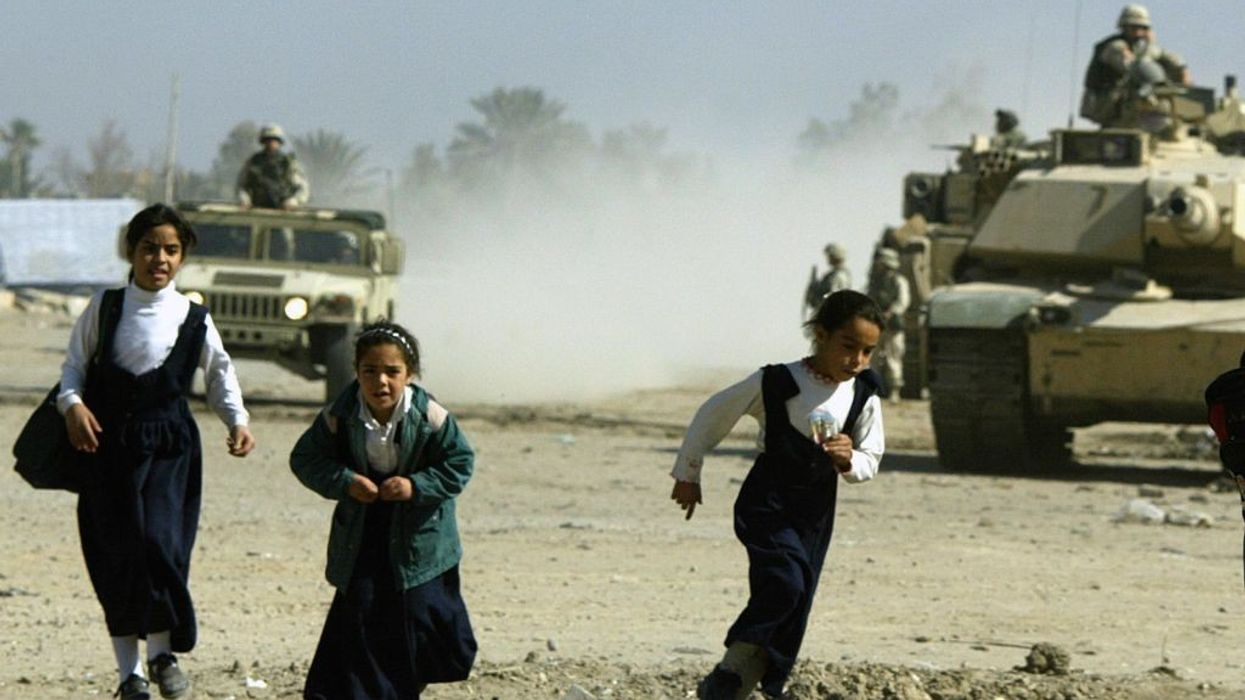
Wars of choice in Vietnam and Iraq have not led to peaceful American-style democracies, as those can never be imposed from the outside.
Recently, the US Senate voted on a bipartisan basis to rescind the Authorization for the Use of Military Force (AUMF) in Iraq. President Biden, who voted for that AUMF in 2003, has said he will sign it if it gets to his desk.
At this writing, it is unclear if the U.S. House will post the rescission for a vote and, if so, whether it will pass in that chamber. I fervently hope that it will, so one of the most notorious episodes in U.S. history can be peacefully laid to rest.
If that does happen, it would be a strong parallel to the rescission of the Gulf of Tonkin resolution by the U.S. Senate in 2009. That AUMF in 1964 was also based on deception and authorized the U.S. military intervention in Vietnam, which became the greatest American debacle of that era.
But far more important, rescinding the Iraq AUMF would repudiate deception and manipulation by any Presidential Administration as happened with the George W. Bush Administration in getting Congress to support it. It would also discourage open-ended Congressional AUMFs with no expiration date, which so far has allowed the one in Iraq to continue for two decades. In short, it would re-establish the Constitutional principle that only Congress can declare war, and repudiate the decades-long trend toward an imperial US presidency.
In the lead-up to the U.S. attack on Iraq 20 years ago, as the executive director of the Princeton-based Coalition for Peace Action, I helped lead intensive organizing to try to prevent it.
We organized numerous demonstrations opposing the Bush administration's campaign to start a war with Iraq, including joining a demonstration of over 1 million in New York City shortly before the March 19, 2003 invasion. With demonstrations worldwide attended by tens of millions, it was the largest anti-war mobilization in history to try to prevent a war.
We also did intensive lobbying in opposition to the Bush Administration’s AUMF to authorize the war. I remember being in a delegation that met with the late Sen. Frank Lautenberg shortly before the vote, at which he shared that he couldn’t justify sending his own son to that war so had decided to vote against it.
Starting in August 2002, there was an intense mobilization by the Bush Administration with neoconservatives like Vice President Dick Cheney, Defense Secretary Donald Rumsfeld, and National Security Advisor Condoleezza Rice to promote the war based on the deception that it was needed to prevent Iraq from using Weapons of Mass Destruction (WMD).
That culminated with a presentation by Secretary of State Colin Powell to the UN Security Council in February 2003 asserting the same supposed danger. The Council didn’t vote to support it. We put forward compelling evidence that the Bush Administration was deceiving the American people into supporting the war, but it began anyway.
Years later, I had an in-person conversation with the Chief UN Weapons Inspector in Iraq, Dr. Hans Blix. He told me he had met in person with President Bush before he launched the war, and certified to him that Iraq had no nuclear weapons. He said he told him that if he were given just a few more months, he could certify that it also didn’t have Chemical or Biological Weapons. But Blix said Bush simply retorted that he had made the decision, and the US invasion happened shortly after.
Peace-loving citizens in the U.S. and across the world organized intensively to end the war. I’m proud that the Coalition for Peace Action played a leading role in that effort in our region. But it wasn’t ended until 2011 when the US finally withdrew its last remaining troops as part of an agreement in 2008, before Bush finished his second term. Over 5,000 U.S. Servicemembers were killed, and tens of thousands wounded—including countless returning US Servicemembers who suffer from PTSD to this day. And up to one million Iraqis died.
The U.S. House needs to complete rescission of this deceptive and extremely damaging AUMF. In January 2020, the Trump Administration invoked it to conduct a drone assassination of a top Iranian military leader who was in Bagdad, creating a grave danger of major war with Iran. Iran did a retaliatory strike against a U.S. base in Iraq. But thankfully, no U.S. troops were killed—though a considerable number were injured.
Wars of choice in Vietnam and Iraq have not led to peaceful American-style democracies, as those can never be imposed from the outside. We need to rescind the AUMF for the Iraq War, as we did with the Tonkin Gulf AUMF that green-lighted the Vietnam War. Readers wanting to support that goal can visit peacecoalition.org.
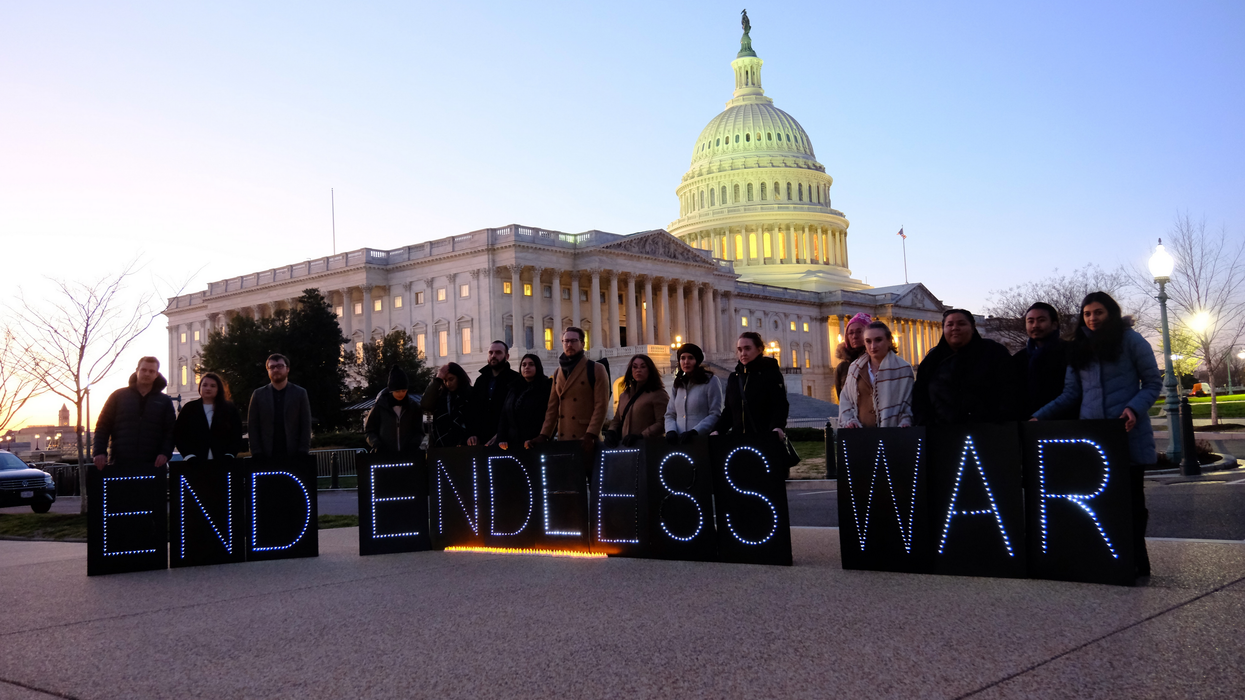
"A larger and far more consequential challenge remains: repealing the 2001 AUMF which authorized the global war on terror," said one activist.
Peace campaigners cheered Wednesday's vote by the U.S. Senate to repeal the authorizations for the 1991 and 2003 invasions of Iraq, while calling on the House of Representatives to follow suit.
The Senate voted 66-30 in favor of a bill to rescind the 1991 and 2002 authorizations for the use of military force (AUMF), with 18 Republican senators crossing the aisle to support the legislation, which now heads to the House. An amendment by Sen. Ted Cruz (R-Texas) that would have empowered the president to attack Iran was defeated on Tuesday.
It is uncertain if the lower chamber's GOP leadership will take up the measure. In 2021, the Democrat-led House passed a repeal of the 2002 AUMF, with the support of 49 Republican lawmakers. The Biden administration supports the repeal.
"The people of the United States deserve elected leaders that will end our endless wars."
The more sweeping 2001 AUMF greenlighting then-President George W. Bush's global war against terrorism—which has been waged in at least eight countries at the cost of hundreds of thousands of lives—remains in place and unendangered. Rep. Barbara Lee (D-Calif.), the author of the 2021 repeal bill, was the only member of Congress to vote against the 2001 AUMF.
"Today, the Senate made the belated but critical decision to repeal the 2002 and 1991 AUMFs," Win Without War government relations director Eric Eikenberry said in a statement. "This appropriately comes days after the 20-year anniversary of the Iraq War—the horrific end result of Congress handing then-President Bush a blank check to wage war at the expense of the people of Iraq and the United States."
"The Trump administration amply demonstrated the risks of leaving outdated military authorization on the books," Eikenberry continued, likely referring to the January 2020 drone assassination of Iranian general Qasem Soleimani, which was carried out under the AUMF.
Former presidents Barack Obama and Donald Trump both invoked the AUMF when the former launched, and the latter escalated, the U.S.-led coalition campaign against Islamic State in Iraq and Syria.
"We cannot gamble again by allowing the next irresponsible and short-sighted president to abuse their executive power to destroy lives around the world," Eikenberry added. "We now call on the House of Representatives... to immediately take up repeal and send it to the president's desk. The Iraq War deserves justice and accountability, and the people of the United States deserve elected leaders that will end our endless wars."
Common Defense political director Naveen Shah related that "as a veteran of the War in Iraq, I saw firsthand the utter devastation the war had on ordinary Iraqis, and the ordinary troops who were sent there."
"Keeping these war authorizations open after all these years is a sad reminder of our country's mistake," Shah argued. "We need to ensure it never happens again, and that begins with this repeal and continues by requiring congressional authorization, after a full public debate, before America ever sends our troops into harm's way again."
Bridget Moix, general secretary of the Friends Committee on National Legislation, said that "Quakers know that war is not and never has been the answer. Not today. Not tomorrow. And certainly not 20 years ago."
"The 2002 Iraq AUMF, as we stated at the time, should have never been passed and signed into law," Moix continued. "A congressional repeal of the law is a vital step to help heal our country's addiction to war and end endless wars. What we can invest more in to build a safer world is peacebuilding and global cooperation."
"True peace is more than the absence of fighting. It is addressing the root causes of war and managing conflict nonviolently," she added. "As long as the U.S. can still attack and kill with impunity in Iraq, neither its people nor ours will know true peace."
Roughly 2,500 U.S. troops—over 4,000 of whom died during the invasion and occupation of Iraq—remain in the country today.
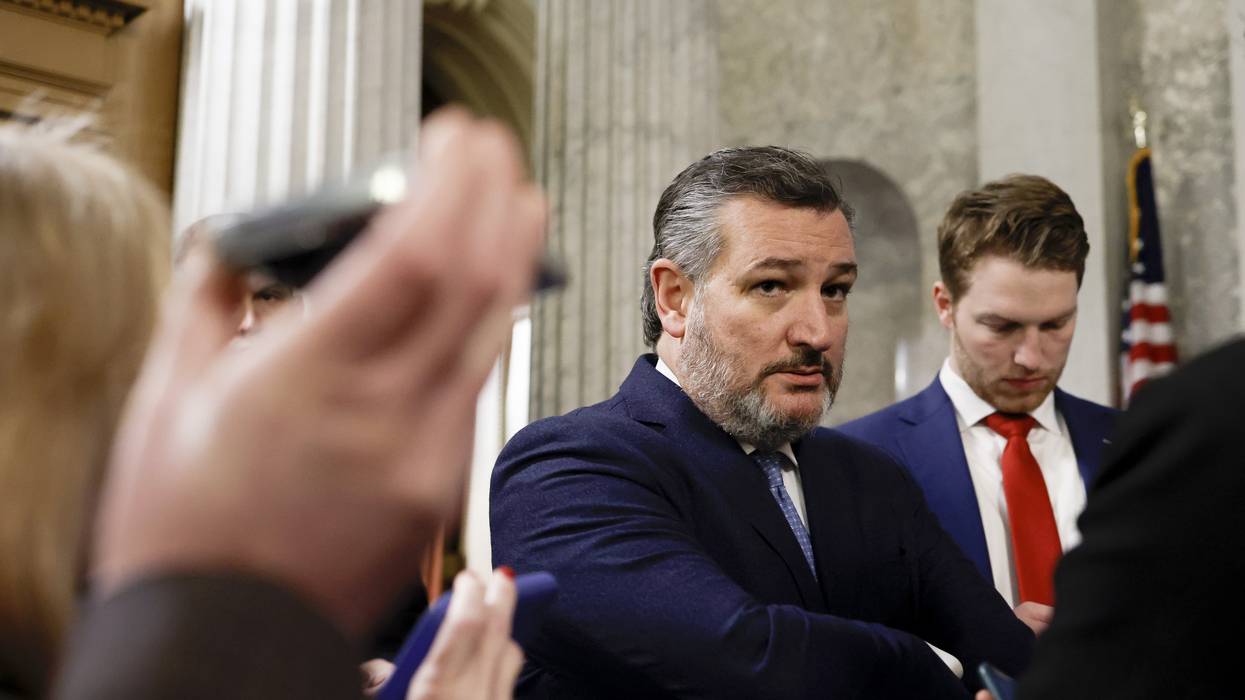
One observer called the Texas Republican's proposal "pernicious."
Update:
The U.S. Senate on Tuesday voted 55-41 to reject an amendment from Sen. Ted Cruz, a Texas Republican, that would have empowered the president to wage war against Iran.
Democratic Sens. Joe Manchin (W.Va.) and Jacky Rosen (Nev.) along with Democrat-turned-Independent Sen. Kyrsten Sinema (Ariz.) supported the amendment while 10 Republicans opposed it.
Earlier:
The U.S. Senate is set to vote Tuesday afternoon on a Republican amendment that would explicitly authorize the president to take military action against Iranian forces.
Sen. Ted Cruz (R-Texas), the amendment's author, is looking to attach the measure to a resolution that—if passed—would repeal the 1991 and 2002 authorizations for use of military force in Iraq.
The amendment's text contends that Article 2 of the U.S. Constitution "empowers the president to use force against forces of Iran, a state responsible for conducting and directing attacks against United States forces in the Middle East and to take actions for the purpose of ending Iran's escalation of attacks on, and threats to, United States interests."
Brian Finucane, a senior adviser for the Crisis Group's U.S. program, called the Cruz amendment "pernicious" and warned that it would "have Congress endorse broad Article II authority for POTUS to use force against Iran, [without] even a caveat about actions amounting to 'war' in the constitutional sense."
The amendment's prospects for passage are unclear, but the Senate is chock-full of Iran hawks—including some on the Democratic side. The amendment needs 60 votes to pass.
Senate Minority Leader Mitch McConnell (R-Ky.) issued a statement on Tuesday voicing opposition to "sunsetting any military force authorizations in the Middle East."
"Our terrorist enemies aren't sunsetting their war against us," McConnell said. "Tehran wants to push us out of Iraq and Syria. Why should Congress make that easier?"
Cruz has introduced virtually identical amendments in the recent past. In 2021, the Texas Republican unsuccessfully pushed an amendment that would have empowered the president to "use force against forces of Iran."
Ryan Costello, policy director of the National Iranian American Council, warned at the time that the Cruz amendment would "pre-authorize war with Iran."
The vote on Cruz's new amendment will come just days after President Joe Biden authorized—without congressional approval—airstrikes targeting groups in Syria that the Pentagon said were "affiliated with Iran's Islamic Revolutionary Guards Corps," heightening concerns over what's become a dangerous proxy war.
Following the airstrikes, which were launched in response to an attack in northeast Syria that killed an American contractor, Biden said that "the United States does not, does not, I emphasize, seek conflict with Iran."
"But be prepared for us to act forcefully to protect our people," the president added.

"We are at war in Syria, but American lawmakers haven't debated it and the public barely knows," said one foreign policy writer.
The U.S. launched airstrikes in Syria on Thursday after one American contractor was killed and five service members were injured in an attack by a drone that the Pentagon claims was of "Iranian origin."
The drone attack on a maintenance facility in northeast Syria and the U.S. response came two weeks after the House of Representatives voted down a bipartisan resolution that would have required President Joe Biden to withdraw all American troops from Syria within 180 days.
Around 900 U.S. troops and hundreds of contractors are currently stationed in Syria under a legal rationale that experts say is highly dubious at best.
Biden has approved a number of airstrikes in Syria without congressional authorization since taking office in 2021. According to Airwars, the U.S. carried out at least 20 airstrikes in Syria in 2022.
In a statement, U.S. Defense Secretary Lloyd Austin said that "at the direction of President Biden," the Pentagon "authorized U.S. Central Command forces to conduct precision airstrikes tonight in eastern Syria against facilities used by groups affiliated with Iran's Islamic Revolutionary Guards Corps (IRGC)."
"The airstrikes were conducted in response to today's attack as well as a series of recent attacks against coalition forces in Syria by groups affiliated with the IRGC," Austin added.
The strikes, which reportedly killed at least eight people described as "pro-Iran fighters," spurred another flurry of questions about the legal authority that the Biden administration is using to maintain the presence of U.S. troops and carry out military operations in Syria.
While Austin did not specifically invoke any legal authority in his statement, he did say the U.S. airstrikes were "intended to protect and defend U.S. personnel"—an apparent reference to Article II of the Constitution.
"We are at war in Syria, but American lawmakers haven't debated it and the public barely knows," Vox foreign policy writer Jonathan Guyer tweeted late Thursday. "One of the most significant and least discussed legacies of George W. Bush's 20-year-old invasion of Iraq is the way it's led to unauthorized forever wars we scarcely discuss."
Members of Congress have previously voiced alarm over the Biden administration's reliance on Article II to carry out military operations without congressional approval, something that was also done by previous administrations.
In 2021, following two rounds of U.S. airstrikes in Syria, more than 30 House lawmakers led by Reps. Peter Defazio (D-Ore.), Nancy Mace (R-S.C.), and Jamaal Bowman (D-N.Y.) sent a letter criticizing the Biden administration's "dangerous claim that Article II of the Constitution permits you to bypass congressional authorization to perform strikes inside Syria."
The lawmakers also rebuked the administration's insistence that "the wide range of activities" it has "undertaken as part of the ongoing U.S. occupation of a large swath of Syrian territory is justified by the Authorization for Use of Military Force (AUMF) of 2001," the measure Congress passed in the wake of the September 11 attacks.
That AUMF has been used by several administrations to justify military operations in Afghanistan, Iraq, Libya, Yemen, Somalia, Syria, and other countries. Opponents of the war powers resolution aimed at withdrawing U.S. forces from Syria invoked the 2001 AUMF to justify the continued occupation.
Congress has never specifically authorized the U.S. military to combat "Iran-backed forces" in Syria.
Earlier this week, as Congress moved to repeal the separate 2002 Iraq War AUMF, Sen. Lindsey Graham (R-S.C.) attempted to pass an amendment to change the language of the authorization to greenlight operations "against Iranian-backed militias operating in Iraq."
The Graham amendment was soundly defeated, with 60 senators voting no.
This story has been updated to include data from Airwars.

"It's far past time to put decisions of military action back in the hands of the people, as the constitution intended," said Rep. Barbara Lee.
Six U.S. lawmakers introduced legislation Thursday to terminate a pair of longstanding authorizations for past wars on Iraq, reviving an ongoing effort to reaffirm Congress' role in deciding whether to approve the use of military force.
Sens. Tim Kaine (D-Va.) and Todd Young (R-Ind.) and Reps. Barbara Lee (D-Calif.), Abigail Spanberger (D-Va.), Tom Cole (R-Okla.), and Chip Roy (R-Texas) led the latest campaign to rescind the 1991 and 2002 Authorizations for the Use of Military Force (AUMFs).
"Three presidents have come and gone since Congress last voted to authorize a U.S. invasion of Iraq over twenty years ago; a fourth is now in office," Lee said in a statement. "Yet the legacy of these horrific forever wars lives on in the form of the now-obsolete 2002 and 1991 AUMFs."
"It's far past time to put decisions of military action back in the hands of the people, as the constitution intended," she declared.
Kaine added that "the 1991 and 2002 AUMFs are no longer necessary, serve no operational purpose, and run the risk of potential misuse."
"Congress owes it to our servicemembers, veterans, and families to pass our bill repealing these outdated AUMFs and formally ending the Gulf and Iraq wars," he said.
"The 1991 and 2002 AUMFs are no longer necessary, serve no operational purpose, and run the risk of potential misuse."
The U.S. Constitution grants Congress, not the president, the right to declare war.
Many members of Congress have long warned that by passing and then failing to repeal open-ended AUMFs, the legislative branch has ceded too much decision-making power to the White House over whether to send troops into combat.
Although the House voted to repeal the 1991 and 2002 AUMFs in June 2021 and Kaine and Young's bill has garnered strong bipartisan support since it was first unveiled in the Senate in 2019, lawmakers have so far failed to rescind the bygone war authorizations, with some arguing in favor of keeping them intact to give Pentagon officials more flexibility.
Lee, for her part, was the only federal lawmaker to vote against the 2001 AUMF that greenlit the U.S. invasion of Afghanistan and remains in effect more than a year after American soldiers withdrew from the war-torn country.
A recent analysis by the Costs of War project warned that while necessary, repealing the 2001 AUMF would be insufficient to end the so-called "War on Terror" that has killed nearly one million people and cost more than $21 trillion since it was launched in the immediate aftermath of the September 11, 2001 attacks.
The report explained that as the executive branch's power to authorize military activities has metastasized under four administrations since 9/11, so-called "counterterrorism operations" have exploded across the globe with little to no oversight, necessitating further congressional action to rein in Pentagon aggression.
Kevin Snow, program assistant for militarism and human rights with the Friends Committee on National Legislation, wrote Thursday that the 2002 AUMF is "outdated" and "ripe for abuse."
"In 2020, Trump administration lawyers argued that the 2002 Iraq AUMF provided a legal basis for the drone strike that killed Iranian general Qassem Soleimani," Snow observed. "The Biden administration has confirmed its obsolescence and publicly supported repeal, but that is no guarantee that a future administration won't abuse it again."
Stephen Miles, president of Win Without War, echoed Snow.
"Our endless wars are underpinned by the absurdity of endless military authorizations," Miles said in a statement. "Already, these authorizations risked catastrophic war when former President Trump used the 2002 authorization to assassinate an Iranian general. We cannot roll the dice with innocent lives, whether here or abroad, ever again."
"The last time Congress repealed a war authorization was 1971," Miles continued. "Clearly, giving the executive branch complete power to wage war has backfired and led to mass suffering under the baseless talking point of national security."
"Next month will mark the 20-year anniversary of the Iraq War, a war launched on false pretenses and the consequences of which we are still experiencing today," he added. "By passing this new bill, Congress can use this anniversary to start the long path towards justice by stopping the next war of choice."
This article has been updated to include a statement from Stephen Miles, president of Win Without War.

A new analysis published Tuesday by the Costs of War Project details how the power of U.S. presidents to greenlight military activities has grown since the 2001 Authorization for the Use of Military Force was first enacted, demonstrating why simply repealing the measure now won't be enough to end so-called "counterterrorism operations" across the globe.
"The AUMF... is the beginning of the story, not the end."
Drawing on Congressional Research Service data updated through August 6, the report documents where and how the 2001 AUMF has been used--and also highlights how counterterrorism operations have taken place in dozens of additional nations without the aid of the law that launched the so-called "War on Terror" just one week after the September 11, 2001 attacks.
"In light of our previous research showing how widespread U.S. counterterrorism activities are globally, this analysis shows where the 2001 AUMF has been used and when and where counterterrorism operations have happened outside the umbrella of the AUMF," report author Stephanie Savell, co-director of the Costs of War Project at Brown University's Watson Institute, said in a statement.
"There are several cases of combat and airstrikes since 2001 that various presidents have not reported to Congress," added Savell.
Earlier this year, Savell found that the U.S. engaged in counterterrorism activities--which range from airstrikes to "training" foreign troops to full-blown occupations--in a whopping 85 countries from 2018 to 2020 alone.
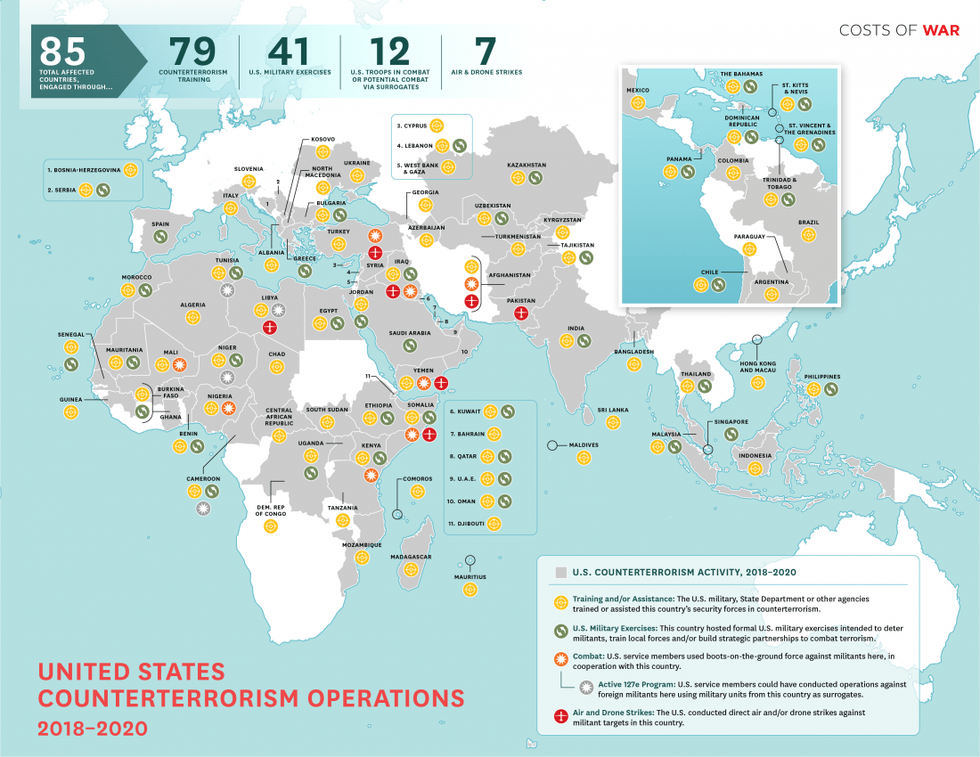
Over the course of two decades, however, former Presidents George W. Bush, Barack Obama, and Donald Trump, as well as current President Joe Biden, have collectively cited the 2001 AUMF to justify counterterrorism operations in 22 countries.
Notably, the precise number of military activities that have occurred within those 22 countries is "unknown" because "in many cases the executive branch inadequately described the full scope of U.S. actions," wrote Savell.
Furthermore, "much of the executive branch's reporting lacks geographic specificity," she pointed out. "The 2001 AUMF has often been used to justify operations in regions rather than countries."
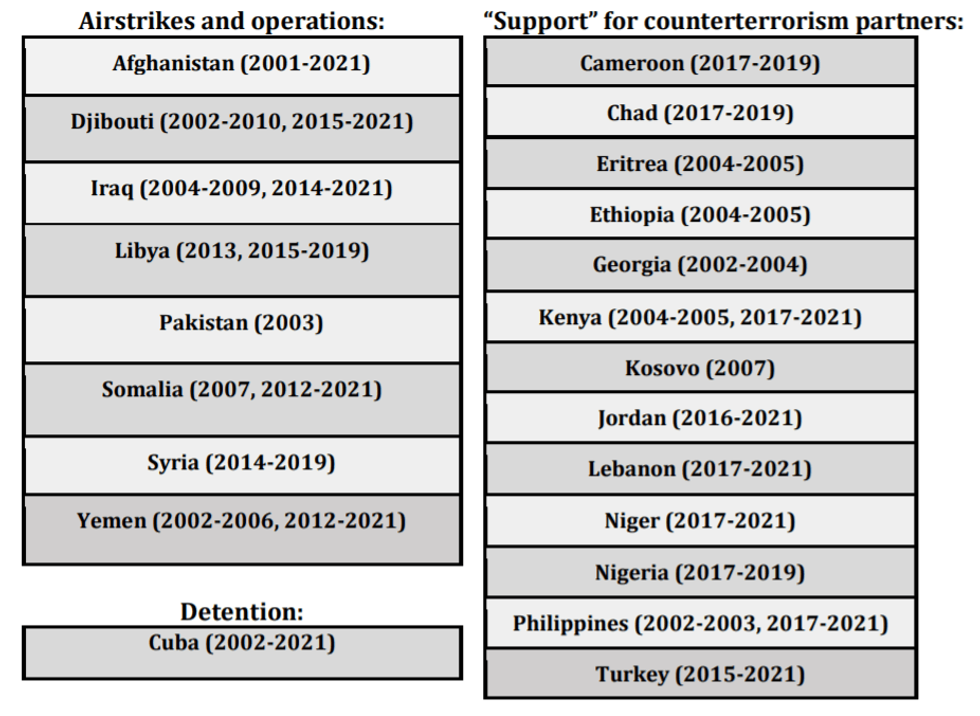
The report notes that under the 2001 AUMF, which remains in effect today, "Congress relinquished its constitutionally assigned war powers in the fight against 'terrorism,' ceding to the president its responsibility to decide whether, when, and where the United States chooses war."
"There are a large number of U.S. counterterrorism operations, occurring under different legal umbrellas, which makes it difficult to track these activities."
Although the president is required by the 1973 War Powers Resolution to inform Congress within 48 hours whenever U.S. troops are involved in "hostilities" or "imminent hostilities," Savell wrote that "the executive branch has consistently used vague language to describe the locations of operations, failed to accurately describe the full scope of activities in many places, and in some cases simply failed to report on counterterrorism hostilities."
The White House has failed to invoke the 2001 AUMF in multiple instances where evidence of hostilities--including U.S. airstrikes and involvement in combat--are evident, the new report shows, revealing the extent to which such nefarious activities are being carried out under other forms of legal authority that have emerged during the War on Terror.
"There are a large number of U.S. counterterrorism operations, occurring under different legal umbrellas, which makes it difficult to track these activities and assure that there is adequate congressional oversight," said Savell.
The report takes a specific look at operations in Mail and Tunisia, where "the U.S. has conducted airstrikes and/or been involved in combat with militants, but the executive branch has not reported on these actions to Congress and failed to cite the 2001 AUMF." Instead, U.S. military involvement there has been authorized under 127(e) programs.
Savell explained:
Mali and Tunisia, along with other countries, are locations of authorized 127(e) programs. The executive branch has consistently failed to report on the introduction of U.S. service members into imminent hostilities in countries with active programs under 127(e), a U.S. legal authority that allows special operations forces to plan and control missions, remaining in charge of rather than at the side of the African counterparts they are ostensibly advising and assisting. In other words, rather than U.S. forces assisting these foreign military units with their own counterterror objectives, U.S. service members use them as surrogates: they lead these units, determine their goals, and participate in their raids against people they suspect of terrorist activity. Unofficially, U.S. officials have admitted that 'If you're deployed under this combating terrorism authority, 127(e), that's probably combat.'"
In addition to Mali and Tunisia, investigative journalists have also documented 127(e) programs in Cameroon, Kenya, Libya, Niger, Nigeria, and Mauritania. Of these, Mauritania, like Mali and Tunisia, has never been cited in reference to the 2001 AUMF. While it is unclear when the 127(e) program began in Mauritania, that country has since ended its partnership in the program, which was "longstanding." According to retired Brig. Gen. Donald Bolduc, commander of numerous U.S. special operations forces in Africa through June 2017, "The host country has to understand what they signed up for, and Mauritania was never comfortable with what they signed up for. It just didn't fit how they saw themselves, giving up authority over one of their units."
Even when the executive branch reported on "support for counterterrorism (CT) operations," Savell pointed out, there were several cases in which the president "did not acknowledge that troops were or could be involved in hostilities with militants."
For example, in Niger in 2017, four U.S. service members were killed in an ambush as they attempted to carry out a raid on a militant compound, but President Trump cited the AUMF only after this incident came to light. Another example is the citation of "support" for CT operations in Kenya but failure to acknowledge a combat incident in January 2020, when Al Shabaab militants attacked a U.S. military base in Manda Bay and killed three Americans, including one Army soldier and two Pentagon contractors. U.S. forces engaged in counterfire and killed five Al Shabaab attackers
"Some experts have argued that the executive branch's failure to adequately warn Congress that the U.S. could be 'sliding towards conflict in a number of African countries' is a failure of the executive branch to comply with the War Powers Resolution," Savell added.
"Repealing the 2001 AUMF, as arduous and necessary a political task as that is, will not be enough to kill the War on Terror."
Journalist Spencer Ackerman, who first reported on the new Costs of War analysis, wrote Tuesday that "one of the legacies of the ongoing War on Terror is it that it provided the U.S. military with its first enduring footprint on the African continent."
"As an aside," he added, drawing attention to countries in and beyond Africa, "look at the commencement dates of those operations in Chad, Kenya, Lebanon, Niger, Nigeria, Cameroon, and the Philippines and remember the bullshit that MAGA is trying to sell you about Donald Trump not starting any new wars."
Praising the new report, Ackerman wrote that critical "observers have long understood the AUMF as an open-ended grant of lethal, carceral, surveillance, and other military authorities stemming from 9/11. It functions as an Emergency Law, and the U.S. immediately understands such things when, say, Egypt undertakes them."
"But the AUMF, Savell's research underscores, is the beginning of the story, not the end," Ackerman stressed. "For the War on Terror has lasted sufficiently long for the AUMF to have bastard children."
According to Savell, other authorities that presidents have cited to justify military operations include Joint Combined Exchange Trainings, 127(e), Article II of the U.S. Constitution, the 2002 AUMF, and Section 1202.
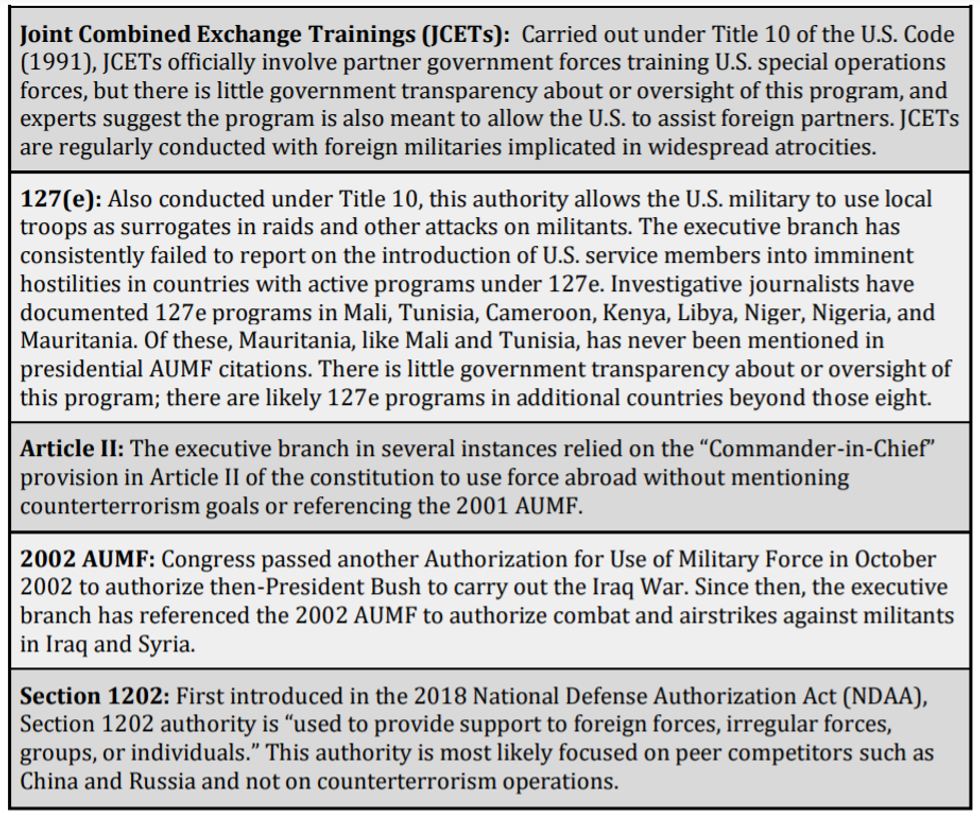
In the words of Ackerman, "Savell's research reminds us how little we will know about what unfolds after the AUMF blesses a conflict, when it blesses a conflict at all."
Furthermore, he added, the new analysis "underscores that repealing the 2001 AUMF, as arduous and necessary a political task as that is, will not be enough to kill the War on Terror."

As August ended, American troops completed their withdrawal from Afghanistan almost 20 years after they first arrived. On the formal date of withdrawal, however, President Biden insisted that "over-the-horizon capabilities" (airpower and Special Operations forces, for example) would remain available for use anytime. "[W]e can strike terrorists and targets without American boots on the ground, very few if needed," he explained, dispensing immediately with any notion of a true peace. But beyond expectations of continued violence in Afghanistan, there was an even greater obstacle to officially ending the war there: the fact that it was part of a never-ending, far larger conflict originally called the Global War on Terror (in caps), then the plain-old lower-cased war on terror, and finally--as public opinion here soured on it--America's "forever wars."
It's time to acknowledge in the most concrete ways imaginable that the post-9/11 war on terror, of which the bombing and invasion of Afghanistan was the opening salvo, warrants a final sunset.
As we face the future, it's time to finally focus on ending, formally and in every other way, that disastrous larger war. It's time to acknowledge in the most concrete ways imaginable that the post-9/11 war on terror, of which the bombing and invasion of Afghanistan was the opening salvo, warrants a final sunset.
True, security experts like to point out that the threat of global Islamist terrorism is still of pressing--and in many areas, increasing--concern. ISIS and al-Qaeda are reportedly again on the rise in the Middle East, South Asia, and Africa.
Nonetheless, the place where the war on terror truly needs to end is right here in this country. From the beginning, its scope, as defined in Washington, was arguably limitless and the extralegal institutions it helped create, as well as its numerous departures from the rule of law, would prove disastrous for this country. In other words, it's time for America to withdraw not just from Afghanistan (or Iraq or Syria or Somalia) but, metaphorically speaking at least, from this country, too. It's time for the war on terror to truly come to an end.
With that goal in mind, three developments could signal that its time has possibly come, even if no formal declaration of such an end is ever made. In all three areas, there have recently been signs of progress (though, sadly, regress as well).
Repeal of the 2001 AUMF
First and foremost, Congress needs to repeal its disastrous 2001 Authorization for the Use of Force (AUMF) passed--with Representative Barbara Lee's single "no" vote--after the attacks of 9/11. Over the last 20 years, it would prove foundational in allowing the U.S. military to be used globally in essentially any way a president wanted.
That AUMF was written without mention of a specific enemy or geographical specificity of any kind when it came to possible theaters of operation and without the slightest reference to what the end of such hostilities might look like. As a result, it bestowed on the president the power to use force when, where, and however he wanted in fighting the war on terror without the need to further consult Congress. Employed initially to root out al-Qaeda and defeat the Taliban in Afghanistan, it has been used over the last two decades to fight in at least 19 countries in the Greater Middle East, Africa, and Asia. Its repeal is almost unimaginably overdue.
In fact, in the early months of the Biden presidency, Congress began to make some efforts to do just that. The goal, in the words of White House Press Secretary Jen Psaki, was to "to ensure that the authorizations for the use of military force currently on the books are replaced with a narrow and specific framework that will ensure we can protect Americans from terrorist threats while ending the forever wars."
The momentum for repealing and replacing that AUMF was soon stalled, however, by the messy, chaotic and dangerous exit from Afghanistan. Those in Congress and elsewhere in Washington opposed to its repeal began to argue vociferously that the very way America's Afghan campaign had collapsed and the Biden policy of over-the-horizon strikes mandated its continuance.
At the moment, some efforts towards repeal again seem to be gaining momentum, with the focus now on the more modest goal of simply reducing the blanket authority the authorization still allows a president to make war as he pleases, while ensuring that Congress has a say in any future decisions on using force abroad. As Senator Chris Murphy (D-CT), an advocate for rethinking presidential war powers generally, has put the matter, "If you're taking strikes in Somalia, come to Congress and get an authorization for it. If you want to be involved in hostilities in Somalia for the next five years, come and explain why that's necessary and come and get an explicit authorization."
One thing is guaranteed, even two decades after the disastrous war on terror began, it will be an uphill battle in Congress to alter or repeal that initial forever AUMF that has endlessly validated our forever wars. But if the end of the war on terror as we've known it is ever to occur, it's an imperative act.
Closing Gitmo
A second essential act to signal the end of the war on terror would, of course, be the closing of that offshore essence of injustice, the prison at Guantanamo Bay, Cuba (aka Gitmo) that the Bush administration set up so long ago. That war on terror detention facility on the island of Cuba was opened in January 2002. As it approaches its 20-year anniversary, the approximately 780 detainees it once held, under the grimmest of circumstances, have been whittled down to 39.
Closing Guantanamo would remove a central symbol of America's war-on-terror policies when it came to detention, interrogation, and torture. Today, that facility holds two main groups of detainees--12 whose cases belong to the military commissions (2 have been convicted and sentenced, 10 await trial) and 27 who, after all these years, are still being held without charge--the truest "forever prisoners" of the war on terror, so labelled by Miami Herald (now New York Times) reporter Carol Rosenberg nearly a decade ago.
Through diplomacy--by promising safety to the detainees and security to the United States should signs of recidivist behavior appear--the Biden administration could arrange the release of the prisoners in that second group to other countries and radically reduce the forever-prison population. They could be transferred abroad, including even Abu Zubaydah, the first prisoner tortured under the CIA's auspices, a detainee whom the Agency insisted, "should remain incommunicado for the remainder of his life."
The military commissions responsible for the other group of detainees, including the five charged with the 9/11 attacks, pose a different kind of problem. In the 15 years since the start of those congressionally created commissions, there have been a total of eight convictions, six through guilty pleas, four of them later overturned. Trying such cases, even offshore of the American justice system, has proven remarkably problematic. The prosecutions have been plagued by the fact those defendants were tortured at CIA black sites and that confessions or witness testimony produced under torture is forbidden in the military commissions process.
The inadmissibility of such material, along with numerous examples of the government's mishandling of evidence, its violations of correct court procedure, and even its spying on the meetings of defense attorneys with their clients, has turned those commissions into a virtual mobius loop of litigation and so a judicial nightmare. As Senator Dick Durbin (D-IL) put it in a recent impassioned plea for Gitmo's closure, "Military commissions are not the answer... We need to trust our system of justice," he said. "America's failures in Guantanamo must not be passed on to another administration or to another Congress."
As Durbin's comments and the scheduling of a Senate Judiciary Committee hearing on closure set for December 7th indicate, some headway has perhaps been made toward that end. Early in his presidency, Joe Biden (mindful certainly of Barack Obama's unrealized executive order on Day One of his presidency calling for the closure of Gitmo within a year) expressed his intention to shut down that prison by the end of his first term in office. He then commissioned the National Security Council to study just how to do it.
In addition, the Biden administration has more than doubled the number of detainees cleared to be released and transferred to other countries, while the military tribunals for all four pending cases have restarted after a hiatus imposed by Covid-19 restrictions. So, too, the long-delayed sentencing hearing of Pakistani detainee Majid Kahn, who pleaded guilty more than nine years ago, finally took place in October.
So, once again, some progress is being made, but as long as Gitmo remains open, our own homemade version of the war on terror will live on.
Redefining the Threat
Another admittedly grim sign that the post-9/11 war on terror could finally fade away is the pivot of attention in this country to other far more pressing threats on a planet in danger and in the midst of a desperate and devastating pandemic. Notably, on the 20th anniversary of those attacks, even former President George W. Bush, whose administration launched the war on terror and its ills, acknowledged a shift in the country's threat matrix: "[W]e have seen growing evidence that the dangers to our country can come not only across borders, but from violence that gathers within."
He then made it clear that he wasn't referring to homegrown jihadists, but to those who, on January 6th, so notoriously busted into the Capitol building, threatening the vice president and other politicians of both parties, as well as other American extremists. "There is," he asserted, "little cultural overlap between violent extremists abroad and violent extremists at home."
As the former president's remarks suggested, even as the war on terror straggles on, in this country the application of the word "terrorism" has decidedly turned elsewhere--namely, to violent domestic extremists who espouse a white nationalist ideology. By the end of January 6th, the news media were already beginning to refer to the assault on lawmakers in the Capitol as "terrorism" and the attackers as "terrorists." In the months since, law enforcement has ramped up its efforts against such white-supremacist terrorists.
As FBI Director Chris Wray testified to Congress in September, "There is no doubt about it, today's threat is different from what it was 20 years ago... That's why, over the last year and a half, the FBI has pushed even more resources to our domestic terrorism investigations." He then added, "Now, 9/11 was 20 years ago. But for us at the FBI, as I know it does for my colleagues here with me, it represents a danger we focus on every day. And make no mistake, the danger is real." Nonetheless, his remarks suggested that a page was indeed being turned, with global terrorism no longer being the ultimate threat to American national security.
The Director of National Intelligence's 2021 Annual Threat Analysis noted no less bluntly that other dangers warrant more attention than global terrorism. Her report emphasized the far larger threats posed by climate change, the pandemic, and potential great-power rivalries.
Each of these potential pivots suggest the possible end of a war on terror whose casualties include essential aspects of democracy and on which this country squandered almost inconceivable sums of money while constantly widening the theater for the use of force. It's time to withdraw the ever-expansive war powers Congress gave the president, end indefinite detention at Gitmo, and acknowledge that a shift in priorities is already occurring right under our noses on an ever more imperiled planet. Perhaps then Americans could turn to short-term and long-term priorities that might truly improve the health and sustainability of this nation.

Facing unrelenting criticism over the U.S. withdrawal from Afghanistan, the Biden Administration is insisting that the United States will maintain a capability to launch airstrikes in Afghanistan, regardless of the legal limitations and possibility of perpetuating the war.
The Biden Administration vows to keep in place an "over-the-horizon capability," meaning that the United States will still be able to strike targets in Afghanistan from its military positions outside of the country.
"This war has no legitimacy anymore. It's just a struggle for a balance of power, dispensation of power between various factions, and no Afghan, especially civilian Afghans, should die because of that."
"There isn't a scrap of Earth that we can't reach out and touch when we need to," Secretary of Defense Lloyd Austin remarked in comments to the press last week.
As part of the twenty-year U.S. global war on terror, the United States developed the capability to quickly launch airstrikes against many countries around the world. Officials say the U.S. military is currently exercising an over-the-horizon capability in several countries, including Libya, Yemen, Syria, and Somalia.
"We run effective counterterrorism operations around the world where we know terrorism is more of a threat than it is today in Afghanistan, without any permanent military presence on the ground," President Joe Biden acknowledged in a speech last month. "We can and will do the same thing in Afghanistan with our over-the-horizon counterterrorism capability."
Now that the Taliban has taken control of Afghanistan, it is unclear whether the United States can legally exercise an over-the-horizon capability in Afghanistan, and it's unlikely that the Taliban would permit the United States to launch airstrikes in the country, as the previous Afghan government had done.
Upon entering office, President Biden placed limits on counterterrorism drone strikes outside of conventional war zones. With the war in Afghanistan ending, the same restrictions could apply to Afghanistan, leading administration officials to rethink their plans.
For years, U.S. officials have justified airstrikes by citing the 2001 Authorization for Use of Military Force, which permits the President to use military force against the perpetrators of the 9/11 terrorist attacks.
Some officials have grown increasingly critical of the resolution, especially over the manner in which U.S. Presidents have used it as a dubious legal basis for the "forever wars" of the post-9/11 era. In a Congressional hearing last month, some members of Congress called for the use of force authorization to be repealed and replaced.
"The '01 [authorization] has been stretched beyond all recognition, in terms of its scope and reach, from what was contemplated when it was initially adopted," said U.S. Senator Chris Coons, Democrat of Delaware, in the hearing.
Periodically, the United States has set aside issues of legality to conduct airstrikes that have violated international law. A notable example is the cruise missile attack that the Clinton Administration launched against targets in Sudan and Afghanistan in 1998.
Critics warn that airstrikes can cause tremendous harm, especially to civilians. Whistleblower Daniel Hale, who leaked classified information about the U.S. drone wars to The Intercept and is now serving a nearly four-year prison sentence, has repeatedly warned about the risks to civilians.
"When I finally left the military, still processing what I'd been a part of, I began to speak out, believing my participation in the drone program to have been deeply wrong," Hale reflected in a letter that he wrote about his decision to blow the whistle.
In the twenty-year war in Afghanistan, thousands of civilians have been killed in airstrikes, with 700 killed in 2019 alone. Yet, no high-level U.S. officials have ever been held accountable for their role in directing attacks that have killed Afghan civilians.
Amid the chaos of the withdrawal from Afghanistan, the U.S. military exercised its over-the-horizon capability in a way that demonstrated the dangers of the approach. Following the terrorist attack at the Kabul airport on August 26 that killed an estimated 200 people, the United States initiated drone strikes against targets without fully knowing who it was targeting.
On August 29, a U.S. drone strike killed ten civilians, including seven children. U.S. military leaders claimed to have targeted terrorists, with U.S. Chairman of the Joint Chiefs of Staff General Mark Milley calling it a "righteous strike," but an investigation by The New York Times found no evidence to support these claims.
The man targeted in the strike was Zemari Ahmadi, an employee of a U.S.-based aid group that provides food and assistance to poor Afghans. Ahmadi was seeking refugee resettlement in the United States for himself and his family.
President Biden has said that it is time to end the "forever war" in Afghanistan, and after the drone strike that killed Ahmadi, he insisted that "the war in Afghanistan is now over."
Some officials have quietly supported the President's decision, despite the widespread criticism that he has faced from the U.S. foreign policy establishment.
"This war has no legitimacy anymore," U.S. Special Representative Zalmay Khalilzad commented last month at the Aspen Security Forum. "It's just a struggle for a balance of power, dispensation of power between various factions, and no Afghan, especially civilian Afghans, should die because of that."
By maintaining an over-the-horizon capability, however, the Biden Administration is bowing to its pro-war critics and continuing one of the cruelest aspects of the war, the deadly air campaign, which has already devastated the lives of so many Afghans.

The vast majority of the people killed, maimed or displaced in these operations had nothing to do with the crimes of September 11.
Serious, rational debates over war, peace and military spending would jeopardize some of the most powerful and corrupt vested interests that dominate and control U.S. politics on a bipartisan basis.