
SUBSCRIBE TO OUR FREE NEWSLETTER
Daily news & progressive opinion—funded by the people, not the corporations—delivered straight to your inbox.
5
#000000
#FFFFFF
To donate by check, phone, or other method, see our More Ways to Give page.


Daily news & progressive opinion—funded by the people, not the corporations—delivered straight to your inbox.
Why the current stalemate in the Persian Gulf could very well spell the official beginning of the multipolar world we've heard so much about.
The war launched by Israel and the United States on Iran on February 28 has already proven a turning point in world history. So many elements of geopolitics have coalesced in it that we won’t understand its full significance for some time to come. A ceasefire, especially one as chaotic and fragile as this one, is not the end of war, so the new realities may soon be replaced by others. But safe to say that none of the countries of the regions directly impacted by this war so far—from the Levant and the Persian Gulf all the way to South Asia, and of course the United States and Israel—will be able to return to the status quo antebellum. The abrupt withdrawal of the United Arab Emirates (UAE) from OPEC in late April has already destabilized the Saudi-led oil cartel, and with Emiratis doubling down on their alliance with Israel, the future of the Gulf Cooperation Council (GCC) itself is now uncertain. No one can reliably predict whether the glitzy global lifestyles of the Gulf countries, those of the UAE in particular, will survive long-term the shock they have received via Iranian missiles and drones. It is likely that the economic impact of the closure of the Strait of Hormuz and the damage to energy infrastructure throughout the Gulf will be felt in far corners of the world for years in unpredictable ways. Already, crisis conditions exist in many countries, especially in the Global South—power and food shortages and higher prices across the board.
Marine traffic may start to flow safely again through the strait at some point, but on whose terms will that be? Certainly not those of the United States, whose leaders are only starting to realize that they cannot conclude the hostilities as and when they see fit. Iran has used the hiatus in active fighting to begin to develop, in consultation with Russia, China, and Oman, a new framework for governance over the strait. No one should doubt that China and Russia have sided with Iran in the war, though each did so “without showing its hand,” to put it in war-gaming language. Aside from openly condemning what it called unprovoked aggression, Russia maintained a balanced posture. China has kept an even lower profile, leading to many supporters of Iran asking why it was not coming to the latter’s aid as it was battered by two of the most powerful militaries. But a few days into the war, The New York Times reported on concrete US intelligence that Russia was providing Iran with actionable information on US targets across the Gulf. In early May, the Times reported that the Caspian Sea has become a route for Russian supplies for Iran’s drone production.
And China’s involvement, however concealed, could be sensed even before the war in the fact that in January Iran moved from the US-owned GPS to the more advanced Chinese BeiDou satellite constellation. It has also been reported by The Financial Times that in late 2024, Iran’s Islamic Revolutionary Guard Corps (IRGC) took possession of a high-resolution Earth-observation satellite from a Chinese company, delivered to it mid-orbit and hence fully functional. This report was denied by the Chinese government. But if true, it would mean that the US is facing in war for the first time ever an adversary that has access to satellite imagery as precise as its own. So, it is likely that China has aided Iran in the same way it helped Pakistan in May last year in its conflict with India, assistance that was confirmed at the time by the latter’s military: quietly sharing its space-, cyber- and electromagnetic-spectrum capabilities. It cannot be denied that Iran has deployed its missiles and drones with unexpected accuracy.
The closure of the Strait of Hormuz and the damage to energy infrastructure throughout the Gulf will be felt in far corners of the world for years in unpredictable ways.
The confrontations in South Asia and the Gulf over the last year are in fact linked in one other way: its performance in the war with its much larger neighbor and traditional adversary raised Pakistan’s geopolitical stature in the region to the point that it could present itself as a mediator in the Iran war when the need arose for one, a surprising turnaround for what has often been considered in the West something akin to a rogue nation. But the Pakistani military establishment has long experience of ingratiating US administrations without surrendering its own interests, and in Trump, his family, and allies seems to have met an equal partner in corruption. China and Russia did finally “show their hand” on April 7 but on a diplomatic battleground in Manhattan, far from the kinetic battlespace of the Gulf. They both vetoed Bahrain’s Security Council resolution, which called for Iran to unilaterally relinquish its control over the Strait of Hormuz but made no mention of the launching of the war against it during ongoing nuclear negotiations. Obviously, just one country’s veto would have sufficed. A point had been made.
A movement of the geopolitical tectonic plates is perceptible in these developments, and it doesn’t appear to be favorable to the powers that launched this war. Whatever the agreements, if any, that materialize from the Islamabad process, Iran has demonstrated its capacity for closing and opening the strait at will and may emerge from the war as a major regional power which can control 20 percent of the world’s oil and LNG production and other vital supply chains. If this happens, Israel’s war on Iran, intended to give it the ability to act at will throughout the region, will have resulted in failure. Given his own domestic political and legal vulnerabilities as an election approaches, can Prime Minister Benjamin Netanyahu afford to let that happen? And can US President Donald Trump prevent Netanyahu from scuttling any agreement he might be willing to sign with the Iranians to evade his own political reckoning in the fall mid-terms? The peace of the world depends on how these questions are answered. Israel itself appears very unimpressive relative to Iran at this moment, busy killing civilians and bulldozing villages north of its border in Lebanon while Iran strengthens its geopolitical position.
By successfully backing Pakistan without showing its hand last May, China had already staked a claim to being a preeminent power in South Asia. And repeating that strategy now with Iran, it has made a bid for a similar position in the Persian Gulf and Middle East. Observers have argued for some time, and we have all vaguely sensed, that we now live in a multipolar world, not the unipolar one of the Post-Cold War years, with the US as singular global hegemon. But when exactly did this passage take place? Some date the end of US unipolarity to Xi Jinping’s speech to the 19th National Congress of the Communist Party in 2017; others, to the beginning of China’s Road and Belt Initiative in 2013, which now includes more than 140 countries worldwide. Regardless of which hypothesis turns out to be the more convincing one, the “rise” of China and its alliance with Russia are obviously at the core of this ongoing geopolitical transition.
Soon after Donald Trump’s “Liberation Day” last year, which tore up the global trade regime, China had already calmly forced a retreat, decisively weaponizing its unassailable position in global supply chains. But some in Washington still act as if geopolitics today are the way they were described by Zbigniew Brzezinsky in 1997, in The Grand Chessboard: American Primacy and Its Geostrategic Imperatives, a semiofficial encomium to the unipolar world that was then emerging: he seemed to envision a geopolitical game of chess with effectively one player moving all the pieces. Brzezinski believed (or hoped) that no US administration would be careless enough to allow the formation of an alliance between Russia, China, and Iran to challenge American power in Eurasia, which he considered central to its newfound global “supremacy.” Much the same point had been made in January 1993, by outgoing Secretary of State, Lawrence Eagleburger, in his parting memorandum to his incoming successor, Warren Christopher. That dreaded alliance of the future identified by Eagleburger and Brzezinski is now a reality.
During this war, Iran has suffered enormous physical damage, from which it will take decades to recover, even under the best of postwar conditions. And for the regime in Tehran, even if it looks at mere survival, not unreasonably, as a triumph, this might eventually turn out to be a pyrrhic victory, as the basic problem of legitimacy that it faces with respect to portions of its own citizenry still remains, although it has been temporarily suspended during the war. Nevertheless, it seems to be the case that, quietly backed by Russia and China, Iran has succeeded for now in bringing its powerful foreign foes to a stalemate, a standoff that formally announces the end of the unipolar world. Calls from some “America-firsters” for the US to shrink its global footprint and focus on its own hemisphere are in line with the larger geopolitical changes it is now living through.
During the so-called ceasefire, senior officials from across Europe and the Middle East have been making their way to Moscow and Beijing. We should expect an increase of interest across the Global South in BRICS and the linked Shanghai Security Organization (SCO)—Iran is a full member of both—and their vision of an alternative multipolar world order, which calls for strengthening multilateral institutions, above all the United Nations, while the US acts more and more unilaterally, even when this clearly undermines its own interests. It may turn out that Trump is the last American president to proceed under the presumption of a unipolar world, a vision that has now had a brutal collision with multipolar reality.
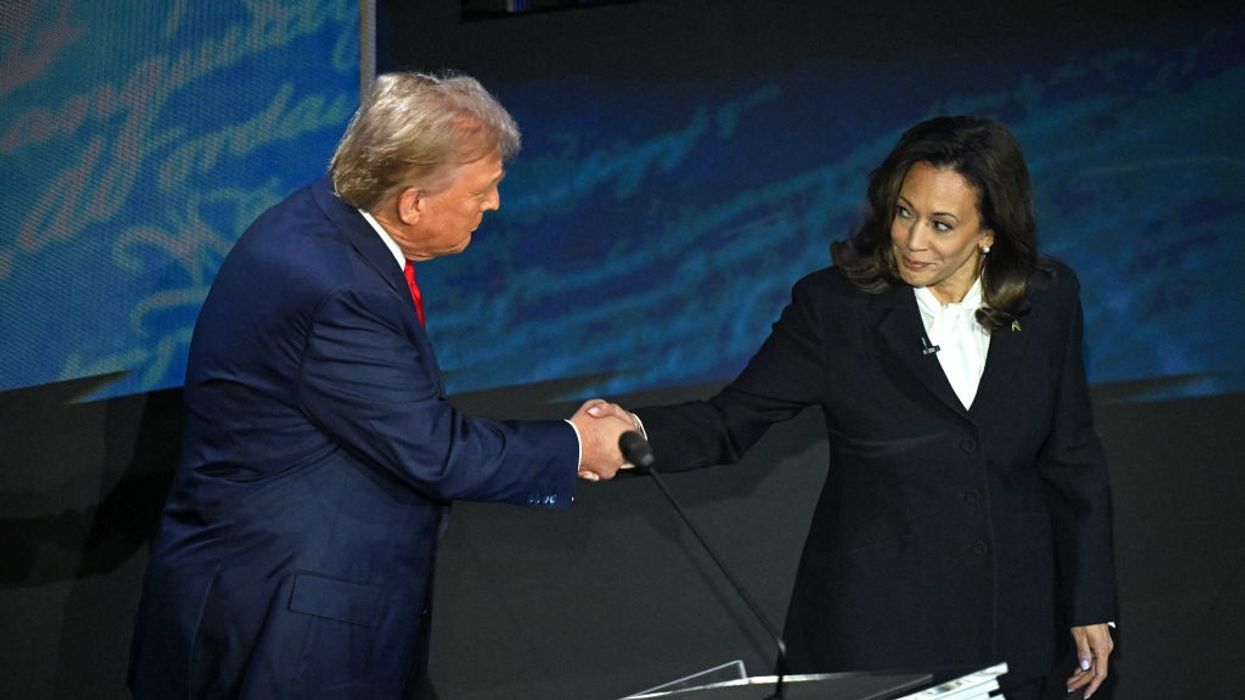
Imperialism and hegemony still rule in the United States. But while Kamala Harris and the Democrats may have their flaws, the alternative of four years of Donald Trump is much worse.
As the U.S. elections come closer, there is growing pressure on many progressives in the Global South to make our voices heard in support of the candidacy of Kamala Harris. No act on your part is insignificant in these elections, we are told. The votes of your relatives in the United States could spell the difference in a very tight race.
The argument is fairly straightforward. Donald Trump is a threat to democracy in the United States and to the interests of the Global South as well. Harris and the Democrats may have their flaws, but the alternative, four years of Donald Trump, is worse.
Past Democratic administrations, the argument continues, may have failed to bring about a more equal society, rein in Wall Street and Big Tech, and make more progress in promoting the rights of minorities. But under the Democrats, there is at least the space to debate these failures and correct them, racism will not be given a free pass, the climate crisis will be given the urgent attention it requires, and fundamental democratic norms like majority rule in electoral contests will not be brazenly violated. Trump in power is very likely to push hard to bring the United States to the brink of authoritarian rule, if not fascism, and informally his administration’s ruling ideology will be unbridled White supremacy.
I have no quarrel with this assessment that a Harris victory would be in the interest of the majority of people in the United States. It is the claim that a Harris presidency would be better for the Global South than a Trump regime that I find questionable and worth an extended discussion.
Both the Democratic Party and the Republican Party have favored an expansive imperialism that has extended US corporate hegemony by force of arms. Both have mobilized the ideology of missionary democracy, or spreading the gospel of western democracy in what they consider the benighted non-Western world, to legitimize imperial expansion. And at certain historical moments, like during the debate to invade Afghanistan in 2001, both have manipulated democratic hysteria to advance the ends of empire.
The record speaks for itself. To take just the most recent examples, only one Democratic member of Congress, Barbara Lee, voted against the resolution authorizing the invasion of Afghanistan. Despite the absence of evidence that Saddam Hussein possessed nuclear weapons, the majority of Democratic senators voted to commit U.S. troops to the invasion of Iraq in 2002. And it was a Democratic president, Barack Obama, that led the campaign that, in brazen violation of the principle of national sovereignty, overthrew the Qaddafi government in Libya in 2011, leading eventually to the state of anarchy that has prevailed since then in that country.
Both the Democratic Party and the Republican Party have favored an expansive imperialism that has extended US corporate hegemony by force of arms.
Of course, there have been some variations in the ways Democrats and Republicans have conducted their empire-building or empire-maintaining activities. Democrats have tended to be more “multilateral” in their approach. They have, in other words, invested more effort in marshalling the United Nations and NATO behind Washington’s imperial adventures than have the Republicans. They have also pushed the International Monetary Fund and the World Bank to take the lead in economically disciplining countries of the global South. But the aim is simply to provide the U.S. moves with more legitimacy than would a unilateral exercise of U.S. power, that is, to clothe the iron fist with a velvet glove. These are differences of style that are minor and marginal in terms of their consequences.
Critics from the Global South have rightly pointed out that Obama’s elimination of Qaddafi with the approval of the UN Security Council may have had more “legitimacy” than Bush’s overthrowing of Saddam Hussein via his much denigrated “coalition of the willing,” but the results have been the same: the overthrow via the exercise largely of U.S. power of a legitimate government and the consequent disintegration of a society.
Over the last few months, however, there has been an interesting phenomenon. More and more people who played key foreign policy roles in previous Republican administrations have declared their support for the Democratic candidate, first Joe Biden, now Kamala Harris. The most notable recent addition to the Democratic bandwagon is former Vice President Dick Cheney, who was one of the key architects of Bush Jr’s interventionist wars in the Middle East, who recently signed up to support Harris along with daughter Liz. More are expected to defect in the less than two months remaining before the elections.
There are two reasons why former foreign policy hardliners have been leaving the Republican fold. The first is that they can no longer trust Trump, who now has total control of the Republican base. In their view, Trump during his first term weakened the Western alliance that Washington created over the last 78 years by speaking badly of allies and demanding they pay for U.S. protection, declaring the Republican-sponsored invasion of Iraq a mistake, and crossing red lines that the U.S. Cold War elite put in place, the most famous being his stepping across the Demilitarized Zone (DMZ) in Korea to talk to Kim Jong Un. More recently, he has repeatedly suggested disapproval of U.S. and NATO support for Ukraine in its war with Russia, while his running mate JD Vance, wants to eliminate aid to Kyiv altogether.
Trump, these Republican deserters feel, is not interested in sticking to the cornerstone of the bipartisan consensus that the U.S. elite, despite their sometimes rancorous quarrels, have adhered to: expanding and maintaining a “liberal” empire via free trade and the free flow of capital—an order promoted under the political canopy of multilateralism, legitimized via an economic ideology of globalization and a political ideology of liberal democracy, and defended by a Western military alliance at the center of which is American power. They worry that Trump is playing to the not insignificant part of his base, pesonified by Vance, that is tired of bearing the costs of empire and see this as one of the key causes of America’s economic decline. They know that what makes “Make America Great Again” (MAGA) attractive to many people is its promise to build a Fortress America that is much, much less engaged with the world and focused on rebuilding the imperial heartland. They are apprehensive that under Trump, the multilateral institutions through which the United States has exercised its power, NATO and the Bretton Woods institutions, would be allowed to wither away. They fear that selective, pragmatic deal-making, like the one Trump tried with Kim Jong-Un, Xi Jinping, and Vladimir Putin, would, instead, become the norm in U.S. diplomacy and unilateral military action rather than allied initiatives via NATO would be the principal means to coerce and discipline the Global South.
The other reason hardline Republicans are engaging in the once-despised practice of crossing party lines is that the Biden administration is now carrying out the kind of aggressive militarized foreign policy once associated with the Bush Jr administration in the Middle East in the 2000s. Biden has given full-throated support to Israel, which the hardline Republicans have sanctified as the only reliable ally in the Middle East, followed Bush Jr’s policy of isolating Russia by supporting Ukraine, reinvigorated NATO after Trump’s morale-sapping bad-mouthing of U.S. allies and expanded the alliance’s reach to the Pacific, and mounted the full-blown containment of China that Bush Jr and Cheney wanted to carry out but had to shelve owing to their need to win Beijing’s participation in their administration’s “war on terror.”
Biden has, in fact, taken the containment of Beijing beyond Trump’s approach of curtailing trade and technology transfers by carrying out the aggressive military encirclement of China. He has done what no other American president had done since the historic 1979 Joint Communique articulating Washington’s “One China Policy,” which is to explicitly commit Washington to a military defense of Taiwan. He has ordered the U.S. Navy to send ships through the 110-mile-wide Taiwan Strait to bait Beijing and deployed five of the 11 U.S. carrier task forces to the Western Pacific. Not surprisingly, his gestures have given the green light to worrisome bellicose rhetoric from the top military brass, like the statement of General Mike Minihan, chief of the U.S. Air Mobility Command, that, “My gut tells me we will fight in 2025.”
That the Democratic party elite now has a monopoly of promoting expansive imperialism was in full display during Kamala Harris’s acceptance speech during the Democratic National Convention on August 23, when she accused Trump of abdicating American gobal leadership, seeking to abandon NATO, and encouraging “Putin to invade our allies” and “do whatever the hell they want.” Republican defectors like Cheney and daughter Liz could only cheer when Harris promised to make sure the U.S. armed forces would be “the most lethal fighting force in the world” and committed herself to making sure “that America, not China, wins the competition for the 21st century.”
In sum, what we have in contention on November 5 are two paradigms of empire. One is the old Democratic/Republican expansionist vision of empire that seeks to make the world safe for American capital and American hegemony. The opposing view, that of Trump and JD Vance, his vice presidential pick, considers the empire overextended and proposes an “aggressive defensive” posture appropriate to a superpower in decline. The MAGA approach would disengage from what Trump has called “shithole countries”—meaning most of us in the Global South—and focus more on walling off the core of the empire, North America, from the outside world by radically restricting migration and trade, bringing prodigal American capital back, dispensing with what Trump considers the hypocritical exercise of extending foreign aid and exporting democracy, and abandoning with a vengeance all efforts to address the accelerating global climate crisis (preoccupation with which he considers a fetish of effete liberalism).
As far as the exercise of force is concerned, the MAGA approach would most likely be in the Israeli style of periodic unilateral strikes against selected enemies outside the wall to keep them off balance, without consulting any allies or giving a damn for whatever havoc they cause.
If these are what are on offer in the November 5 elections, then it would be foolish for us in the Global South to take sides since both paradigms are detrimental to our interests.
Still, some say, you have to cut the Democrats some slack. In terms of their composition, Democrats and the Republicans are not, strictly speaking, twin sides of the same imperial coin. Owing to the constraints of the U.S. electoral system, there is a large contingent of progressives whose only political home is the Democratic Party. In terms of values, these folks are our allies. They have more in common with us than with their party’s elite, and they have been, for the most part, ignored and taken for granted by the latter, whose attitude towards them can be summed up as: “You have no choice but to support us.”
This view has merit. But the problem is that, so far, most of these progressive Democratic supporters have passively accepted Harris’ and the party elite’s imperial rhetoric and gestures, like Harris’ refusal to grant the rather modest request of giving a pro-Palestinian Democrat a speaking slot at the Democratic National Convention
My sense is that the progressive bloc in the Democratic Party probably underestimates its strength. In the circumstances surrounding these elections in particular, they can transform themselves from helpless hostages to awful policies to significant actors that can force Harris and the party elite to think twice or thrice about embracing the rabidly imperialist platform that Harris enunciated at the convention—but only if they’re bold enough to act on their convictions, like Rep. Barbara Lee did in casting the sole dissenting vote against the war in Afghanistan, an act of great courage that history has vindicated.
Progressive Democrats should realize that the only way to get the party elite to listen and change tack is to organize themselves and like-minded voters to abstain from voting if Harris does not retreat from her imperial platform—which, in a tight race, could effectively throw the elections to Trump. If I understand it correctly, this was the approach that the Uncommitted Movement from Michigan originally planned to follow to force Biden to reverse his pro-genocide policy in Gaza. This strategy is risky, but it can work if the party elite gets the message that the progressives are determined to carry out their threat. Fortune has never rewarded the timid. This is the only way to get the party elite to begin to change course. Otherwise they will act like they’ve always acted, from Clinton to Obama to Biden, which is to take your support for granted and run over you.
Democratic Party progressives have less than two months to go until election day to organize and prove that a Harris presidency would represent less of a threat to the interests of the Global South than a Trump-Vance regime. Unless we get clear proof that Harris has backtracked from her rabid and bellicose imperial posture, we in the Global South would be well advised not to take sides in this dogfight between rival parties of empire.
For the sake of America's security and world peace, the U.S. should immediately abandon the neocon quest for hegemony in favor of diplomacy and peaceful co-existence.
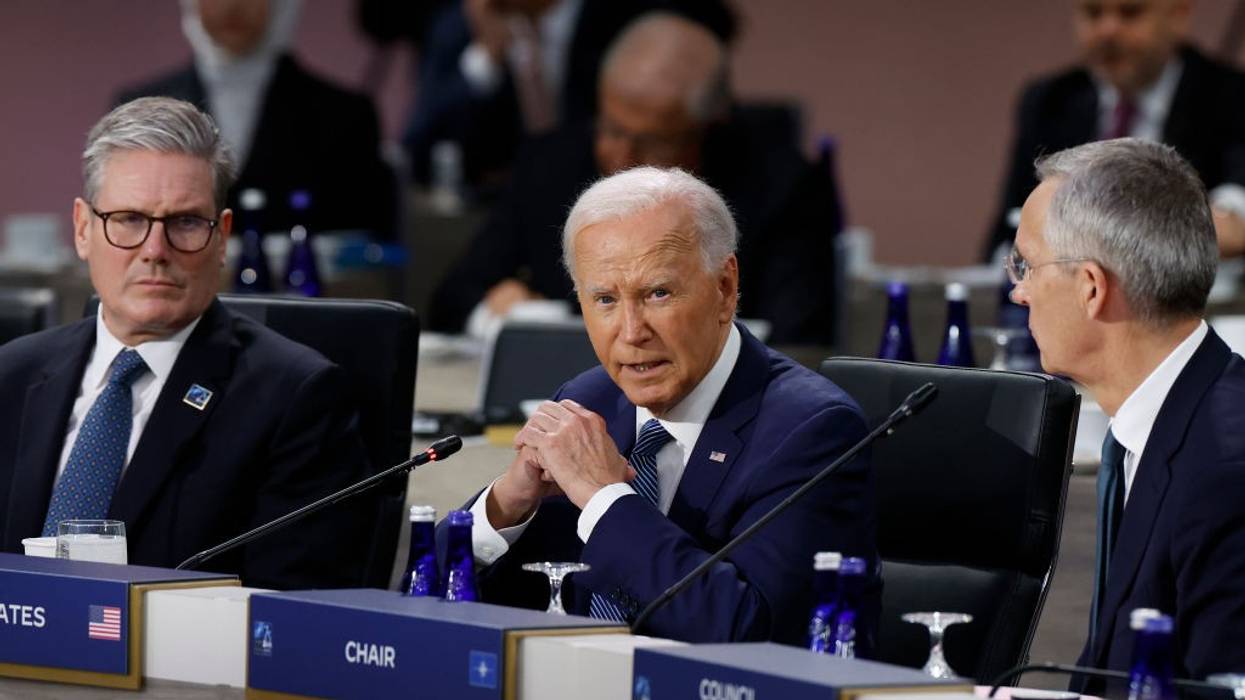
In 1992, U.S. foreign-policy exceptionalism went into overdrive. The U.S. has always viewed itself as an exceptional nation destined for leadership, and the demise of the Soviet Union in December 1991 convinced a group of committed ideologues—who came to be known as neoconservatives—that the U.S. should now rule the world as the unchallenged sole superpower. Despite countless foreign policy disasters at neocon hands, the 2024 NATO Declaration continues to push the neocon agenda, driving the world closer to nuclear war.
The neoconservatives were originally led by Richard Cheney, the Defense Secretary in 1992. Every President since then—Clinton, Bush, Obama, Trump, and Biden—has pursued the neocon agenda of U.S. hegemony, leading theU.S. into perpetual wars of choice, including Serbia, Afghanistan, Iraq, Syria, Libya, and Ukraine, as well as relentless eastward expansion of NATO, despite a clear U.S. and German promise in 1990 to Soviet President Mikhail Gorbachev that NATO would not move one inch eastward.
The core neocon idea is that the U.S. should have military, financial, economic, and political dominance over any potential rival in any part of the world. It is targeted especially at rival powers such as China and Russia, and therefore brings the U.S. into direct confrontation with them. The American hubris is stunning: most of the world does not want to be led by the U.S., much less led by a U.S. state clearly driven by militarism, elitism and greed.
The neocon plan for U.S. military dominance was spelled out in the Project for a New American Century. The plan includes relentless NATO expansion eastward, and the transformation of NATO from a defensive alliance against a now-defunct Soviet Union to an offensive alliance used to promote U.S. hegemony. The U.S. arms industry is the major financial and political backer of the neocons. The arms industry spearheaded the lobbying for NATO's eastward enlargement starting in the 1990s. Joe Biden has been a staunch neocon from the start, first as Senator, then as Vice President, and now as President.
To achieve hegemony, the neocon plans rely on CIA regime-change operations; U.S.-led wars of choice; U.S. overseas military bases (now numbering around 750 overseas bases in at least 80 countries); the militarization of advanced technologies (biowarfare, artificial intelligence, quantum computing, etc.); and relentless use of information warfare.
The quest for U.S. hegemony has pushed the world to open warfare in Ukraine between the world’s two leading nuclear powers, Russia and the United States. The war in Ukraine was provoked by the relentless determination of the U.S. to expand NATO to Ukraine despite Russia’s fervent opposition, as well as the U.S. participation in the violent Maidan coup (February 2014) that overthrew a neutral government, and the U.S. undermining of the Minsk II agreement that called for autonomy for the ethnically Russian regions of eastern Ukraine.
The NATO Declaration calls NATO a defensive alliance, but the facts say otherwise. NATO repeatedly engages in offensive operations, including regime-change operations. NATO led the bombing of Serbia in order to break that nation in two parts, with NATO placing a major military base in the breakaway region of Kosovo. NATO has played a major role in many U.S. wars of choice. NATO bombing of Libya was used to overthrow the government of Moammar Qaddafi.
The U.S. quest for hegemony, which was arrogant and unwise in 1992, is absolutely delusional today, since the U.S. clearly faces formidable rivals that are able to compete with the U.S. on the battlefield, in nuclear arms deployments, and in the production and deployment of advanced technologies. China’s GDP is now around 30% larger than the U.S. when measured at international prices, and China is the world’s low-cost producer and supplier of many critical green technologies, including EVs, 5G, photovoltaics, wind power, modular nuclear power, and others. China’s productivity is now so great that the U.S. complains of China’s “over-capacity.”
Sadly, and alarmingly, the NATO declaration repeats the neoconservative delusions.
The Declaration falsely declares that “Russia bears sole responsibility for its war of aggression against Ukraine,” despite the U.S. provocations that led to the outbreak of the war in 2014.
The NATO Declaration reaffirms Article 10 of the NATO Washington Treaty, according to which NATO’s eastward expansion is none of Russia’s business. Yet the U.S. would never accept Russia or China establishing a military base on the US border (say in Mexico), as the U.S. first declared in the Monroe Doctrine in 1823 and has reaffirmed ever since.
The NATO Declaration reaffirms NATO’s commitment to biodefense technologies, despite growing evidence that U.S. biodefense spending by NIH financed the laboratory creation of the virus that may have caused the Covid-19 pandemic.
The NATO Declaration proclaims NATO’s intention to continue to deploy anti-ballistic Aegis missiles (as it has already done in Poland, Romania, and Turkey), despite the fact that the U.S. withdrawal from the ABM Treaty and placement of Aegis missiles in Poland and Romania has profoundly destabilized the nuclear arms control architecture.
The NATO Declaration expresses no interest whatsoever in a negotiated peace for Ukraine.
The NATO Declaration doubles-down on Ukraine’s “irreversible path to full Euro-Atlantic integration, including NATO membership.” Yet Russia will never accept Ukraine’s NATO membership, so the “irreversible” commitment is an irreversible commitment to war.
The Washington Post reports that in the lead-up to the NATO summit, Biden had serious qualms about pledging an “irreversible path” to Ukraine’s NATO membership, yet Biden’s advisors brushed aside these concerns.
The neoconservatives have created countless disasters for the U.S. and the world, including several failed wars, a massive buildup of U.S. public debt driven by trillions of dollars of wasteful war-driven military outlays, and the increasingly dangerous confrontation of the U.S. with China, Russia, Iran, and others. The neocons have brought the Doomsday Clock to just 90 seconds to midnight (nuclear war), compared with 17 minutes in 1992.
For the sake of America's security and world peace, the U.S. should immediately abandon the neocon quest for hegemony in favor of diplomacy and peaceful co-existence.
Alas, NATO has just done the opposite.