
SUBSCRIBE TO OUR FREE NEWSLETTER
Daily news & progressive opinion—funded by the people, not the corporations—delivered straight to your inbox.
5
#000000
#FFFFFF
To donate by check, phone, or other method, see our More Ways to Give page.


Daily news & progressive opinion—funded by the people, not the corporations—delivered straight to your inbox.
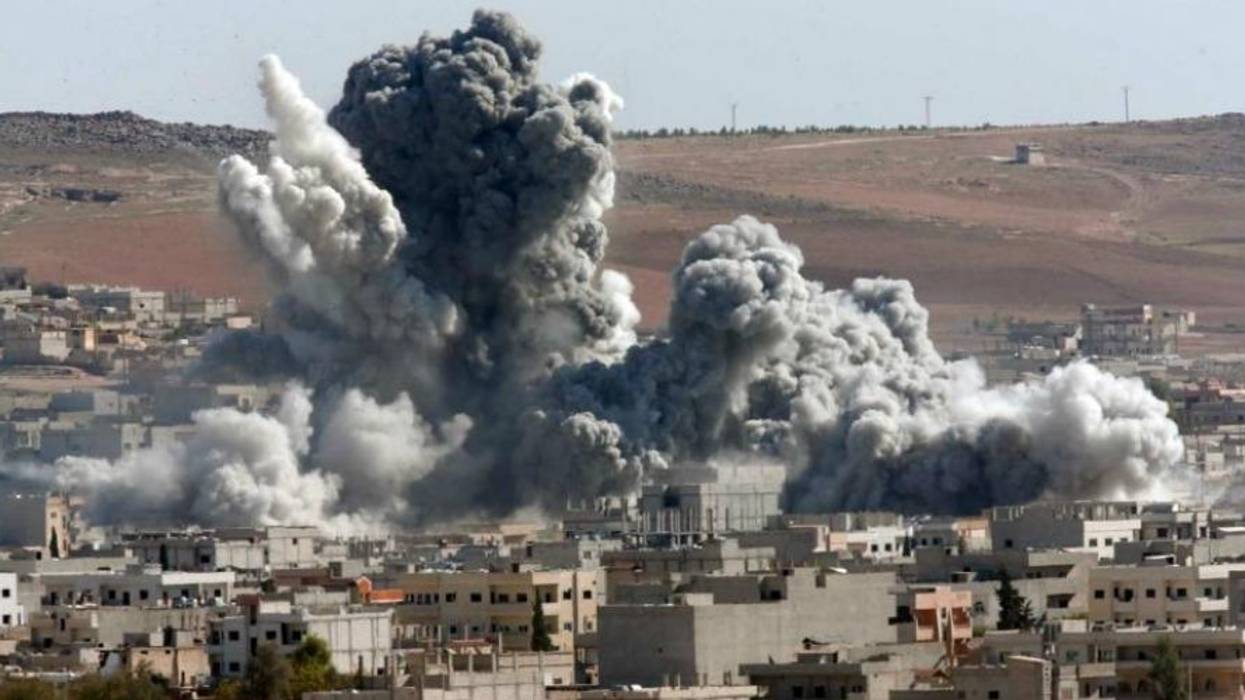
The assassination of Tehran's top nuclear scientist is a ploy by Israel to compel the likely US president-elect to reject diplomacy and choose military action to deal with Iran's nuclear ambition. Which option will he choose?
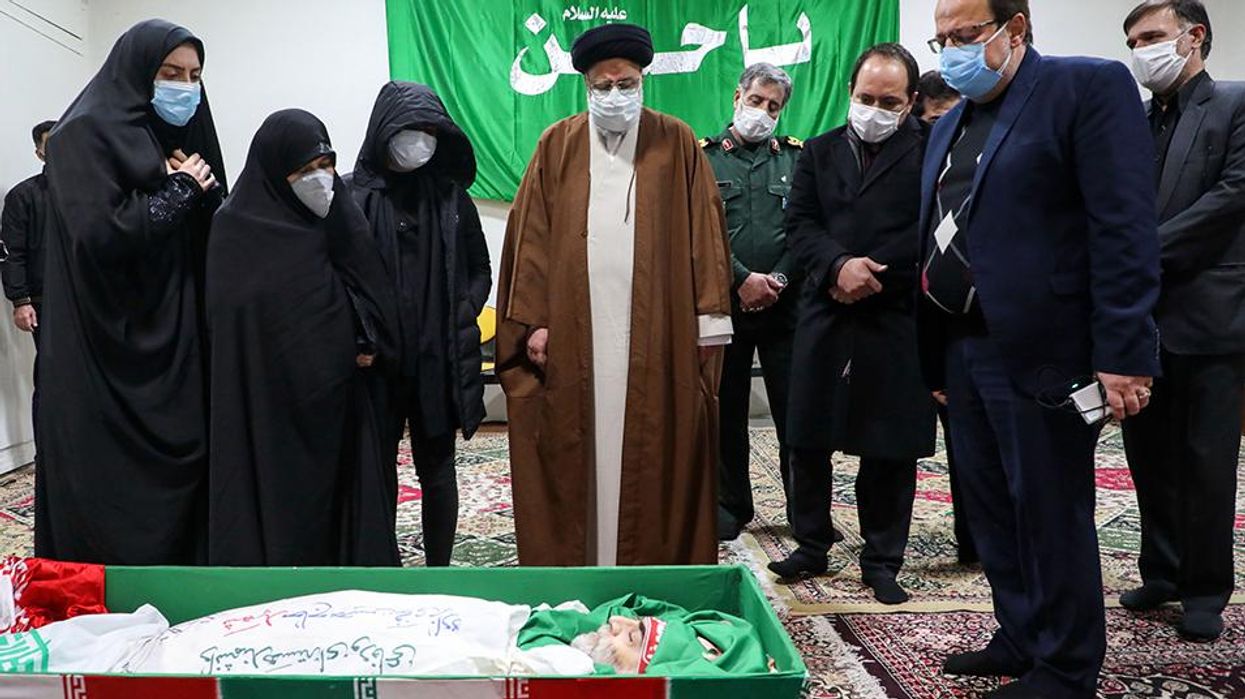
Mohsen Fakhrizadeh was the shadowy father of Iran's nuclear program; his existence, let alone his work, was barely acknowledged by Iran. A brigadier general with the Islamic Revolutionary Guard Command, Fakhrizadeh was involved in the academic aspects of Iranian national security, eventually heading up the Physics Research Center, where he masterminded the design and material acquisition in support of Iran's uranium enrichment effort.
In April 2018, Israeli Prime Minister Benjamin Netanyahu named Fakhrizadeh as the head of a covert military dimension to Iran's nuclear program, something Iran has vociferously denied. On Friday, November 28, 2020, the 62-year-old scientist was assassinated just outside the Iranian capital of Tehran. While no one has taken credit for his murder, Iran has placed the blame for his death squarely on Israel.
At the time of his death, Fakhrizadeh was the head of the Research and Innovation Organization (RIO), part of the Iranian Defense Ministry. A June 2020 report on nonproliferation published by the US Department of State alleged that Fakhrizadeh used the RIO "to keep former weapons program scientists employed ... on [nuclear] weaponization-relevant dual-use technical activities ... to aid in any future nuclear weapons development work in the event that a decision were made to resume such work."
This belief, when combined with Iran's decision to cease abiding by the provisions of the landmark 2015 Joint Comprehensive Plan of Action (JCPOA, better known as the Iran nuclear agreement) regarding the stockpiling of low-enriched uranium and the use of advanced centrifuges to enrich uranium, had the de facto effect of signing Fakhrizadeh's death warrant.
The JCPOA-imposed restrictions were designed with a one-year 'breakout' scenario in mind - in short, the time it would take Iran to produce enough highly enriched uranium to create a single nuclear device once the decision was made to cease adhering to restrictions on the numbers and types of centrifuges it could operate, the level of enrichment permitted, and the amount of low-enriched uranium allowed to be stockpiled.
In May 2019 - one year after President Donald Trump withdrew the US from the JCPOA - Iran began pulling back from its commitments under the agreement, citing its right to do so under Articles 26 and 36 of the deal, which allow a party to the agreement to cease its obligations if another party is found to be in noncompliance; Iran maintains that the failure of Europe to live up to its economic commitments under the JCPOA constituted demonstrable noncompliance. The end result is that today the 'breakout' period has shrunk to a few weeks.
For the Trump administration, Iran's noncompliance with the JCPOA had placed it in a quandary; the policy of sanctions-based 'maximum pressure' which had been instituted since 2018 was clearly not working when it came to the goal of compelling Iran to return to the negotiation table and hammer out a new, more restrictive nuclear deal.
Having gone on record regarding its belief that Iran continued to maintain covert nuclear weapons ambitions, the Trump administration was confronted with the reality that it had, according to its own beliefs, empowered Iran to produce a nuclear weapon in a time frame that posed a direct threat to the US and its regional allies, in particular Israel and Saudi Arabia. This concern was behind recent press reports that President Trump was considering military options against Iran's nuclear program.
For Israel, the issues are even more acute; whereas Iran's potential acquisition of a nuclear weapons capability would pose a policy conundrum for the US, for Israel an Iranian nuclear weapon would represent an existential threat. For this reason, Israel has historically pulled few punches when it comes to confronting even the possibility of an Iranian nuclear weapons capability.
While much of the intelligence underpinning the US and Israeli assessments regarding the existence of a nuclear weapons program are derived from sources of questionable provenance and are not conclusive, Israel has taken an absolutist posture; it's given credence to sources that otherwise might be consigned to the bottom drawer.
In its effort to win support for this position, Israel has exaggerated - even fabricated - intelligence on Iran, undermining its credibility to such an extent that, when Israel reported that its intelligence stole a nuclear archive from Iran in early 2018, the veracity of this claim was called into question after documents previously held to have been forged were claimed to be part of the document trove.
Israel's actions against Iran's nuclear program have been anything but passive; in 2009-2010, Israel worked with US intelligence to launch a cyberattack using the Stuxnet virus to infect Iranian centrifuge operations at Natanz. This was followed by a program of targeted assassinations which killed four Iranian nuclear scientists between 2010-2012 (a fifth attack narrowly missed killing the head of the Iranian Atomic Energy Organization).
Israeli intelligence is also said to be behind a series of mysterious explosions at Iranian nuclear-related facilities earlier this year which caused significant damage and disruption to Iran's centrifuge program. While Israel has not taken responsibility for the assassination of Mohsen Fakhrizadeh, his murder can logically be viewed as a continuation of Israel's efforts to degrade Iran's nuclear capabilities.
Joe Biden is no stranger to the active measures taken by Israel in this regard. As vice president, he sat in on critical meetings regarding the deployment of the Stuxnet virus. He was fully cognizant of the pressure being placed on President Obama regarding military action against Iran, and understood the role played by the assassination of Iranian nuclear scientists in ratcheting this pressure up.
Jake Sullivan, who served as Biden's national security advisor while he was vice president, played a critical role in the early negotiations with Iran that made the JCPOA possible. Biden knew full well that the JCPOA was a diplomatic off-ramp for a policy path that otherwise would have led to war. Biden is intimately familiar with the calculations behind the 'breakout' timelines, and the decision that was made to de-emphasize the concern over Iran's alleged military interest in nuclear weapons.
The assassination of Fakhrizadeh is a calculated act on the part of Israel. His death has no real impact on Iran's nuclear activities - a new generation of Iranian scientists has long since been educated, trained and employed in a program that is far more advanced and mature than the one Fakhrizadeh started more than 20 years ago. Psychologically, however, his murder - carried out in broad daylight in the heart of Iran - has dealt a psychological blow to Tehran's leadership, once again proving that the long arm of Israeli intelligence can get to just about anyone.
But its most critical impact is the effect it will have on the national security team surrounding presumed President-elect Joe Biden. Biden and his team have been paying lip service to the notion of rejoining the JCPOA. However, the preconditions they have attached to such an action - Iran would have to return to full compliance first, and commit to immediate follow-on negotiations on a deal that would be more restrictive - were widely seen as a deal-breaker. The fact is, many of Biden's closest advisers - including Secretary of State-designee Antony Blinken and National Security Advisor-designee Jake Sullivan - have indicated that Biden may have no choice but to continue the Trump policy of sanctions-based 'maximum pressure'.
For Israel, such a policy - while an improvement over rejoining the JCPOA - is not acceptable. From its perspective, 'maximum pressure' has not only failed to compel Iran to the negotiation table, but has also positioned Iran to be on the cusp of developing a nuclear weapons capability.
The assassination of Fakhrizadeh serves two main purposes. First, it hardens the resolve of Iran when it comes to any potential flexibility it might have been prepared to have with Biden regarding a resolution to the nuclear standoff, with Iranian Supreme Leader Ali Khamenei directing Iranian scientists "[t]o follow up Martyr Fakhrizadeh's scientific and technical activities in all fields in which he was active." The idea that Iran would seek to compromise with the US in the aftermath of Fakhrizadeh's murder is, to put it bluntly, absurd.
But the most important purpose behind the killing of Fakhrizadeh is to create a fait accompli when it comes to policy options being considered by a future Biden administration. Rejoining the JCPOA is likely a non-starter - Iran will never agree to the many preconditions sought by Biden and his advisers.
Likewise, continuing Trump's program of 'maximum pressure' is not a politically viable option, given the advanced state of the Iranian nuclear program and the impact this has on the all-important 'breakout window' that underpinned, from the US perspective, the legitimacy of the JCPOA. The same contingencies being confronted by the Trump administration regarding the possibility of US forces attacking Iran's nuclear infrastructure will be confronted by President Biden on his first day in office. By killing Fakhrizadeh, Israel is doing its best to ensure that, for Biden, that military action is the only viable option available.
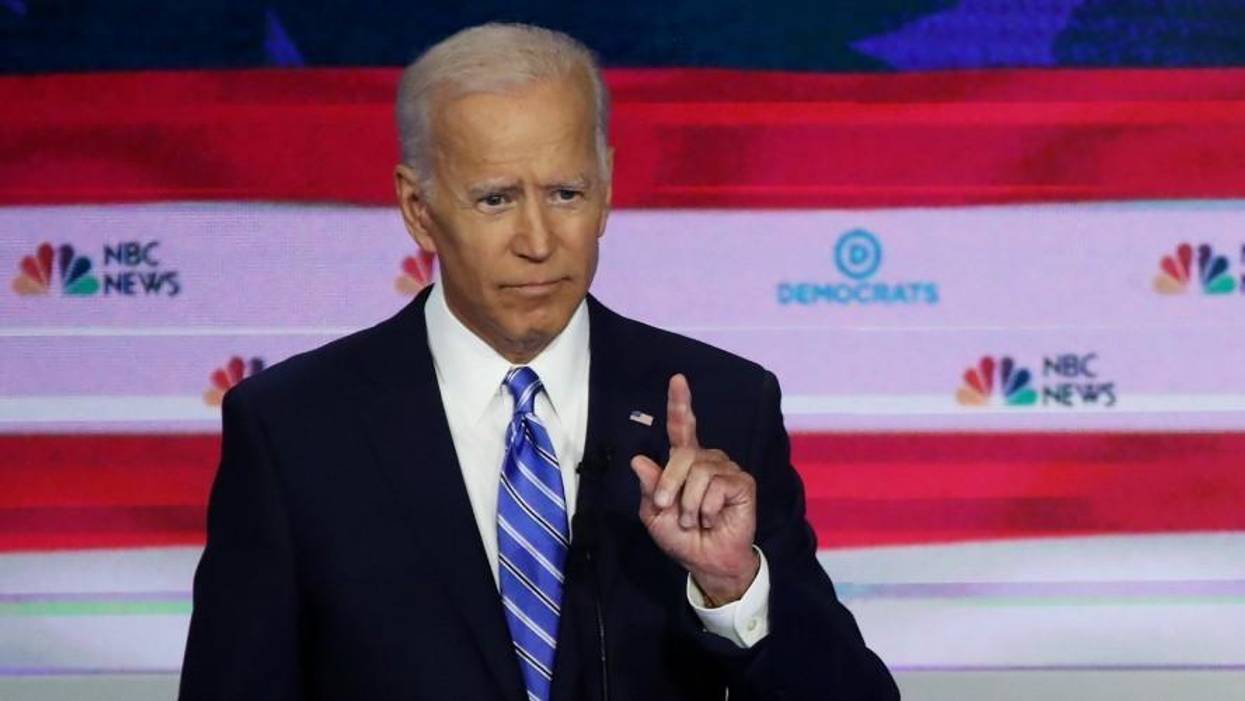
For pundits, what makes a politician strong on foreign policy? Apparently doing something for a long time matters more than honesty and good judgment--and it helps if the bad choices made are the same ones corporate media have cheered.
With Donald Trump's recent assassination of Iranian Gen. Qassem Soleimani, foreign policy has taken the spotlight in the presidential race. But despite Democratic candidate Joe Biden's prominent role in leading the US into the disastrous Iraq War, and his recent stream of lies and equivocations about why he supported it and when he began to reverse his position, many pundits continue to uncritically paint Biden as "mature" or a "steady hand" on foreign policy.
It shouldn't exactly come as a surprise: When Barack Obama tapped Biden as his running mate in 2008, pundits lauded the choice as "shoring up" Obama's "weakness" on foreign policy. It was precisely because of Biden's initial support for the Iraq War (which Obama had opposed) that media observers saw him as a serious foreign policy thinker, given that those same media observers likewise initially supported the war (FAIR.org, 8/27/08).
In recent days on the campaign trail, Biden has touted his years on the Senate Foreign Relations Committee, while Bernie Sanders has hammered Biden on his Iraq vote. (Sanders voted against the war authorization.) On NBC's Meet the Press (1/5/20), Chuck Todd contrasted Biden and Sanders, wondering if
voters are going to look at this on the Democratic side of the aisle and say, "Steady hand, Joe Biden," or, how about the guy who was always against the interventions here? I don't think we know how Democratic voters are going to react.
Perhaps not--though more Democratic voters are troubled by Biden's past support for the Iraq War than reassured by it. But by uncritically labeling Biden--who changed both his position on the Iraq War and his story about that position--as a "steady hand" on foreign policy, Todd certainly boosts the narrative Biden is hoping for.
That same sort of uncritical framing of experience as strength came out on the PBS NewsHour (1/6/20), where the New York Times' Lisa Lerer opined:
But I do think this could strengthen the hand of two men that have been leading the polls for a while, that have been rising in the limited data we have since the holidays, which is Joe Biden, who can run very strongly on his experience in foreign policy, and Sen. Bernie Sanders, who's really staked out ground as the liberal messenger, sort of the anti-interventionist face of the party.
Later in the show, when Judy Woodruff asked David Brooks and Mark Shields which candidates benefit from the escalation with Iran, both named Biden; Shields argued that Biden "offers stability and maturity and knowledge."
On MSNBC (1/3/20), Steve Kornacki asked Mieke Eoyang of the centrist think tank Third Way:
Is there an advantage, perhaps, for Joe Biden, just given his depth of experience in the United States Senate and as vice president, compared to, say, Pete Buttigieg, who's only been the mayor of South Bend, which hasn't necessarily dealt with these many foreign policy issues?
Teed up nicely, Eoyang took the shot for Biden:
He's actually been very thoughtful about how American national security policy can target people who are bad while not trying to get us dragged into full-on wars. I don't think there are other candidates who have that kind of experience. And so if the American electorate is really concerned about the president's reckless moves, and are looking for someone who's a steadying, grown-up hand on foreign policy, that's Joe Biden. That's, frankly, why Barack Obama picked him as his vice president.
How Iraq--arguably the biggest foreign policy issue of his career--fits into Biden's thoughtfulness about not getting us "dragged into full-on wars" is far from clear.
The problem with the media coverage of Biden on foreign policy isn't limited to thoughtless boosting; since at least July, Biden has been trying to rewrite his Iraq War history, with only sporadic and halfhearted media pushback. In the July debate, Biden was asked about his October 2002 vote authorizing the use of force in Iraq; he responded with an outlandish claim: "From the moment 'shock and awe' started, from that moment, I was opposed to the effort, and I was outspoken as much as anyone at all in the Congress."
It was an obvious falsehood; Biden continued to defend his vote until more than three years later (Meet the Press, 11/27/05), when he first called it a "mistake"--and even then, not because the war itself was wrong, but because "we went too soon. We went without sufficient force. And we went without a plan." (At that point, support for the war had tanked to the point where people who believed the Iraq War wasn't worth it outnumbered those who thought it was by 2-to-1.)

But the media silence was remarkable. In one of the few post-debate references to the Iraq discussion, the Washington Post's Anne Applebaum (8/4/19) complained that Iraq was old news:
The glancing references to the Middle East mostly involved posturing about the past--specifically about how the candidates did or didn't support the Iraq War more than 16 years ago.
Biden upped the ante on his tall tales in interviews in early September (e.g., RealClearPolitics, 9/11/19; NPR, 9/3/19), and brought the even more brazen revision to the national stage in the September debate, claiming he only voted for the war authorization "to allow inspectors to go in to determine whether or not anything was being done with chemical weapons or nuclear weapons."
That finally prompted a few media factchecks (e.g., Washington Post, 9/9/19; Slate, 9/4/19) that challenged Biden's blatant fabrication (though the Post generously suggested that Biden "would be on more solid ground if he simply called himself a war critic.") In fact, Iraq had announced in September 2002 its willingness to allow in inspectors without conditions--almost a month before Biden cast his vote. Inspections began in November, and the inspectors were not pulled out until March, when Bush announced he was about to launch his war.
But Biden was also never interested in letting inspectors do their work; when former chief UN inspector Scott Ritter testified before the Senate Foreign Relations Committee in 1998 about his work--telling the committee that the US was undermining inspections--Biden scoffed:
I think you and I believe, and many of us believe here, as long as Saddam's at the helm, there is no reasonable prospect you or any other inspector is ever going to be able to guarantee that we have rooted out, root and branch, the entirety of Saddam's program relative to weapons of mass destruction. And you and I both know, and all of us here really know, and it's a thing we have to face, that the only way, the only way we're going to get rid of Saddam Hussein, is we're going to end up having to start it alone.
It's difficult, of course, for corporate media to scrutinize Biden too carefully on the inspectors issue--with a long record of garbling the inspection story (Extra! Update, 10/02), of letting politicians lie about inspections (FAIR.org, 12/2/08) and of hiding behind the inspectors to excuse their own role in leading the country into war (Extra! Update, 10/06).

The occasional media factchecks fail to substantially shift the coverage, as media outlets seem to view factchecking as relieving journalists of the obligation to routinely test the veracity of sources' statements (Extra!, 11-12/04). To the New York Times (1/6/19), Biden's changing stories don't get in the way of their judgment that he "is perhaps at his most fluent and comfortable when discussing international affairs"; near the very end, the paper allowed that Biden's "remarks about when his opposition to the [Iraq] war began" were found by CNN to "be misleading."
In a piece headlined "Biden Touts His Foreign Policy Credentials, but Faces Doubts," the Washington Post (1/6/20) only meekly challenged Biden's claim to have opposed the Iraq War "from the very moment" it started, noting that "the record suggests he supported it initially." The article went on to take at face value Biden's recent claim about Bush promising Biden he only wanted to get authority to send in inspectors, though labeling it an answer that "seemed to undercut his argument about how savvy he is on the international stage."
The Post was not alone: the Associated Press (1/7/20) and LA Times (1/8/20) also repeated that recent Biden claim without challenge.
If journalists were consistently calling out Biden's Iraq War lies--not to mention reminding viewers and readers that the war cost hundreds of thousands of human lives, aside from a financial cost in the trillions of dollars--their worn-out tropes about Biden's foreign policy "steadiness" would be incredibly difficult to sustain.
As the Trump administration's saber-rattling toward Iran threatens another disastrous war in the Middle East, foreign policy has gained newfound focus in the 2020 presidential race. And former Vice President Joe Biden's 2002 vote in favor of the Iraq War leaves him with a particularly glaring vulnerability.
Biden's vote had already become a sticking point in the race before President Trump began his provocations toward Iran in earnest. Bernie Sanders has used Biden's record to draw a contrast with his own opposition to the Iraq War. Rep. Seth Moulton, another 2020 candidate, has called for Biden to admit he was wrong for casting the vote. And a recent POLITICO/Morning Consult poll showed more than 40 percent of respondents between 18 and 29 were less likely to back Biden because of it.
But to say the now-Democratic frontrunner voted for the Iraq War doesn't fully describe his role in what has come to be widely acknowledged as the most disastrous foreign policy decision of the 21st century. A review of the historical record shows Biden didn't just vote for the war--he was a leading Democratic voice in its favor, and played an important role in persuading the public of its necessity and, more broadly, laying the groundwork for Bush's invasion.
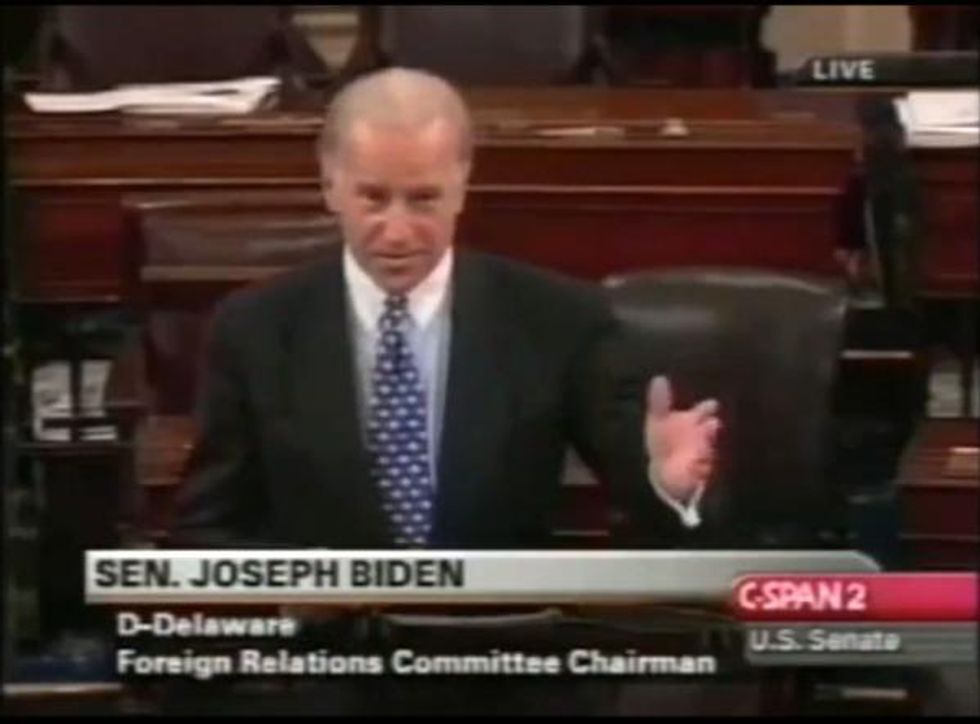
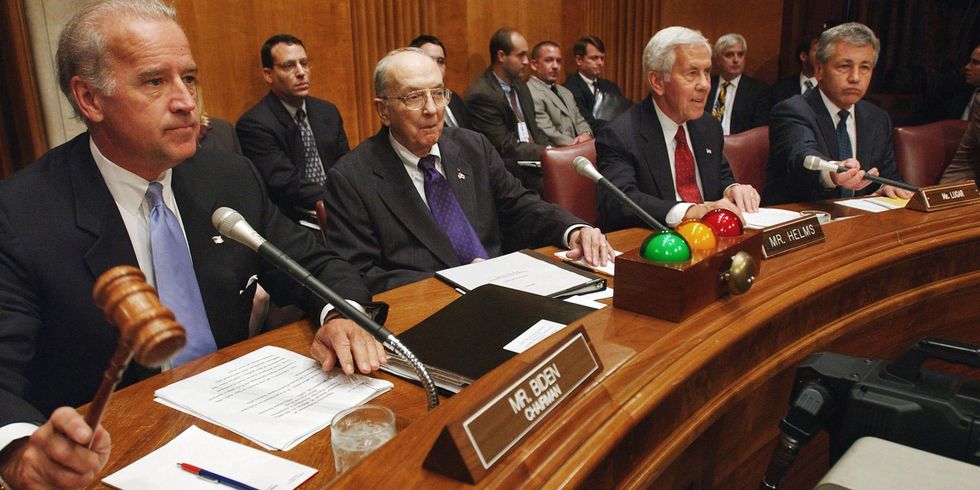
In the wake of September 11th, Biden stood as a leading Democratic voice on foreign policy, chairing the powerful Senate Foreign Relations Committee. As President Bush attempted to sell the U.S. public on the war, Biden became one of the administration's steadfast allies in this cause, backing claims about the supposed threat posed by Iraqi leader Saddam Hussein and insisting on the necessity of removing him from power.
Biden did attempt to placate Democrats by criticizing Bush on procedural grounds while largely affirming his case for war, even as he painted himself as an opponent of Bush and the war in front of liberal audiences. In the months leading up to and following the invasion, Biden would make repeated, contradictory statements about his position on the issue, eventually casting himself as an unrepentant backer of the war effort just as the public and his own party began to sour on it.

From dove to hawk
Biden hadn't always been a hawk on Iraq. He had voted against the first Gulf War in 1991, though even his opposition to that war had been tepid at best, focused mainly on badgering George H.W. Bush into having Congress rubber stamp a war Bush had already made clear he was intent on waging with or without its approval.
In 1996 Biden criticized Republican claims that then-President Bill Clinton wasn't being tough enough on Iraq amid calls to remove Saddam Hussein from power, labeling an ouster "not a doable policy." Before the War on Terror drove U.S. foreign policy, Biden criticized Bush during his first year in office for the then-president's hawkish position on missile defense.
September 11th changed all this. Only one day before the attacks, at a speech in front of the National Press Club, Biden had called Bush's foreign policy ideas "absolute lunacy" and charged that his missile defense system proposal would "begin a news arms race." But the nearly 3,000 Americans who were killed on U.S. soil that day upended the political consensus. Bush's approval rating shot up to a historic 90 percent, and any elected officials who failed to match the president's zeal for military retribution became vulnerable to accusations of being "soft on terror."
"Count me in the 90 percent," Biden said in the weeks after the attack. There was "total cohesion," he said, between Democrats and Republicans in the challenges ahead. "There is no daylight between us."
In November 2002, just a little over a year following the World Trade Center attacks, Biden faced re-election amidst a political climate in which the Bush administration had incited nationalist sentiment over the issue of terrorism. In October 2001, Biden had been criticized in Delaware newspapers for comments that were perceived as potentially weak, warning that the United States could be seen as a "high-tech bully" if it failed to put boots on the ground in Afghanistan and instead relied on a protracted bombing campaign to oust the Taliban.
Consequently, Biden, then deemed by the New Republic to be the Democratic Party's "de facto spokesman on the war against terrorism," quickly became a close ally of the Bush administration in its prosecution of that war. The White House installed a special secure phone line to Biden's home, and he and three other members of Congress met privately with Bush in October 2001 to come up with a positive public relations message for the war in Afghanistan.
Biden's stance on Iraq soon began to change, too. In November 2001, Biden had batted away suggestions of regime change, saying the United States should defeat al-Qaeda and Osama bin Laden before thinking about other targets. By February 2002, he appeared to have creaked opened the door to the possibility of an invasion.
"If Saddam Hussein is still there five years from now, we are in big trouble," he told a crowd of 400 Delaware National Guard officers that month at the annual Officers Call event.
"It would be unrealistic, if not downright foolish, to believe we can claim victory in the war on terrorism if Saddam is still in power," he said around the same time, echoing the language of hawks like Connecticut Sen. Joe Lieberman.
Biden soon developed the position he would hold for the following 13 months leading into Bush's March 2003 invasion of Iraq: While the Bush administration was entirely justified in its plans to remove Hussein from power in Iraq, it had to do a better job of selling the inevitable war to the U.S. public and the international community.
"There is overwhelming support for the proposition that Saddam Hussein should be removed from power," he said in March 2002, while noting that divisions remained about how exactly that would be done. If the administration wanted his support, Biden continued, they would have to make "a complete and thorough case" that Iraq possessed weapons of mass destruction (WMDs) and to outline what they envisioned a post-Hussein Iraq would look like.
It was a stance well-calibrated for the political climate. Biden could continue to point to disagreements with the administration for liberal audiences, even if they were merely procedural, while putting his weight behind the ultimate goal of war with Iraq. At the same time, Biden's apparent criticisms doubled as advice for the administration: If you want buy-in from liberals for your war, this is what you'll have to do.
"I don't know a single informed person who is suggesting you can take down Saddam and not be prepared to stay for two, four, five years to give the country a chance to be held together," Biden recounted telling Bush privately in June 2002. It was a talking point he would repeat often over the next year, that regime change in Iraq was the correct thing to do, but would require a long-term commitment from the United States after Hussein's removal.
Setting the ground rules
During frequent television appearances, Biden didn't just insist on the necessity of removing Hussein from power, but appeared to signal to the Bush administration on what grounds it could safely seek military action against Iraq.
When Bush's directive to the CIA to step up support for Iraqi opposition groups and even possibly capture and kill Hussein was leaked to the Washington Post in June, Biden gave it his approval. Asked on CBS's "Face the Nation" if the plan gave him any pause, Biden replied: "Only if it doesn't work."
"If the covert action doesn't work, we'd better be prepared to move forward with another action, an overt action, and it seems to me that we can't afford to miss," he added.
"Prominent Democrats endorse administration plan to remove Iraqi leader from power," ran the subsequent Associated Press headline.
A month later in July, Biden affirmed that Congress would back Bush in a pre-emptive strike on Iraq in the event of a "clear and present danger" and if "the president can make the case that we're about to be attacked."
Asked on "Fox News Sunday" the same month if a discovery that Hussein was in league with al-Qaeda would justify an invasion, Biden replied: "If he can prove that, yes, he would have the authority in my view."
"And this will be the first time ever in the history of the United States of America that we have essentially invaded another country preemptively to take out a leadership, I think justifiably given the case being made."
These themes would be used by the Bush administration in the months ahead to sell the war to the American public. The non-existent ties between Hussein and al-Qaeda became one of the most high-profile talking points for the war's proponents. And the Bush administration would publicize the supposedly imminent threat Hussein posed to the United States, including then-National Security Advisor Condoleezza Rice's infamous September declaration that "we don't want the smoking gun to be a mushroom cloud."
By July Biden appeared to rule out a diplomatic solution to the conflict. "Dialogue with Saddam is useless," he said.

Not a skeptic to be heard
It was also in July 2002 that Biden carried out one of his most consequential actions in the lead-up to the Iraq War, when he held several days of congressional hearings about the then-potential invasion.
Biden stressed the hearings weren't meant to antagonize the White House. Rather, as he explained, they would inform the American people about the stakes of the conflict and the logistical issues involved in waging it.
At the time, the pro-war stance shared by the administration, much of the press, and Democrats like Biden was by no means unanimous. Many of the United States' closest allies in Europe (apart from Tony Blair's British government) were wary of the war drums beating from Washington, as were many Arab states. In July, King Abdullah II of Jordan, a U.S. ally in the Middle East, called the idea of an invasion "somewhat ludicrous."
The same month, the Houston Chronicle reported, based on interviews with anonymous officials, that a number of senior military officials, including members of the joint chiefs of staff, were in disagreement with the White House's drive for war with Iraq, and believed that Hussein posed no immediate threat to the United States. The day before the hearings, Scott Ritter, the former chief weapons inspector at the UN, cautioned that it was far from "inevitable" that Iraq had restarted its weapons program, and warned that "Biden's open embrace of regime removal in Baghdad" threatened to make the hearings "devolve into a political cover" for Congress to authorize Bush's war.
Yet as Stephen Zunes reported for The Progressive in April 2019, none of these views were aired at Biden's hearings, which opened with Biden stating that WMDs "must be dislodged from Saddam, or Saddam must be dislodged from power," and that "if we wait for the danger from Saddam to become clear, it could be too late." Ritter himself was never invited to testify.
Neither were other experts critical of the Bush narrative on Iraq, including Rolf Ekeus, the former executive chairman of the United Nations Special Commission, the inspection regime set up after the Gulf War to deal with WMDs, and former UN Assistant Secretary General Hans Von Sponeck, who complained that he was "very agitated by the deliberate distortions and misrepresentations" that made it "look to the average person in the U.S. as if Iraq is a threat to their security." According to Biden, Bush later thanked him for the hearings.
By Zunes' count, none of the 18 witnesses who were called objected to the idea that Hussein had WMDs, and all three witnesses who testified on the subject of al-Qaeda claimed the organization received direct support from Iraq--the very red line Biden had said would give Bush the authority to invade the country. Out of the 12 witnesses who discussed an invasion, half were in favor and only two opposed. Biden himself said throughout the hearings that Iraq was a national security threat.
It was largely up to Republicans on the committee--namely Lincoln Chafee and Chuck Hagel--to voice skepticism about a war effort. Ritter accused Biden and other members of congress of having "preordained a conclusion that seeks to remove Saddam Hussein from power regardless of the facts." Indeed, on the day of the hearings, Biden had co-authored a New York Times op-ed suggesting that continued "containment" of Hussein "raises the risk that Mr. Hussein will play cat-and-mouse with inspectors while building more weapons," and that "if we wait for the danger to become clear and present, it may be too late."
Having given a platform to pro-war talking points, Biden then hit the talk show circuit to cite the lopsided testimony he himself had arranged in order to argue for war. Determining Hussein's intentions was "like reading the entrails of goats," Biden told NBC's "Meet the Press," and what mattered more was Hussein's ability to use WMDs, whatever those intentions might be. He pointed to testimony in the July hearings to argue it was clear that Iraq had such weapons.
"We have no choice but to eliminate the threat," he said. "This is a guy who's an extreme danger to the world."
While the mainstream press featured few skeptical and anti-war voices at the time, a number of them assailed Biden for going along with the Bush administration.
"Biden apparently believes that he fulfills the constitutional function of advise and consent by merely being the cheerleader for the administration's rising chorus demanding war with Iraq," wrote Stanley Kutler in the Milwaukee Journal Sentinel. "When and how are the only questions in his repertoire."

"A course of moderation and deliberation"
By fall 2002, Bush appeared to have heeded Biden's frequent exhortations for how to sell the war.
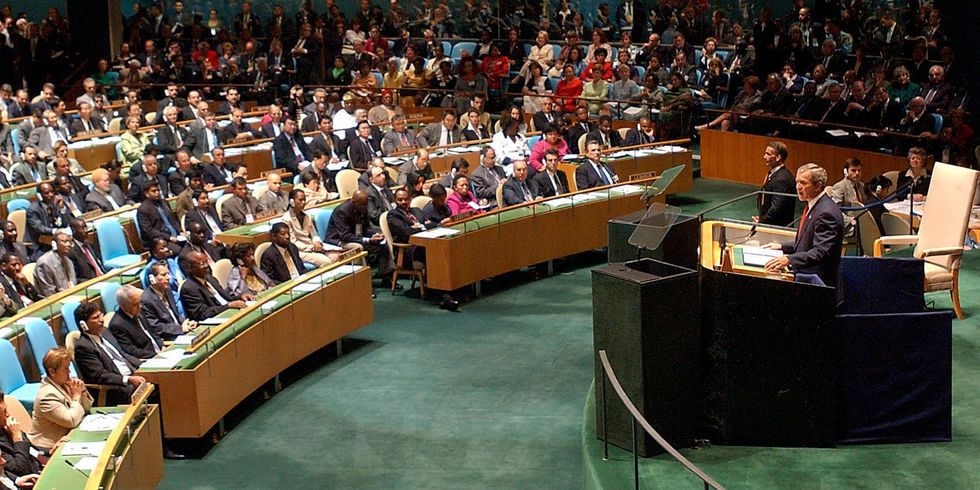
On September 12, almost a year to the day of the terrorist attacks that had sparked the march to war, Bush went before the UN to make a case for an invasion directly to the international community. Biden praised him for doing "a very good job" in making that case with a "brilliant" speech, and again stressed that "this is the world's fight," though cautioning that "the worst option is going it alone, but it is an option."
That September, Bush also finally asked Congress for a war authorization. While the president backed an expansive resolution in the House, Biden and fellow Foreign Relations Committee member Richard Lugar (R-Ind.) put forward their own rival resolution in the Senate that scaled back some of the House version's more alarming language and stressed the themes Biden had been articulating for the better part of a year. The Senate resolution limited the use of force to Iraq, made dismantling WMDs the primary justification for war, and stressed the importance of international support (though reserving the right to act unilaterally if the UN Security Council moved too slowly).
"We are trying to give the president the power that he needs and get a large vote," Biden explained.
Bush quickly routed Biden by making a compromise with Democratic House Minority Leader Dick Gephardt that swung momentum behind the House resolution. Deciding it was too late, and that there was no way of stopping its passage, Biden simply resigned himself to the compromise House resolution.
"In this place, everybody's pretty practical at the end of the day," he said.
Bush ultimately won over Biden by incorporating several of his suggestions into the final resolution and a speech he gave on October 7, 2002, in which he painted Iraq as a "grave threat to peace" creating an "arsenal of terror." He had "made a compelling case," said Biden, who was "very pleased with his rationale that he laid out."
While Biden reportedly wavered at the last moment on his promise to cast his vote, he ultimately fell in line, arguing the resolution would "give the president the kind of momentum he needs" to get Security Council backing. On October 11, Biden was one of 77 senators who voted to give Bush the authorization to wage war on Iraq, joining fellow Democrats such as Hillary Clinton, Chuck Schumer, Harry Reid and Dianne Feinstein. Twenty-one Democratic senators, including Dick Durbin, Ron Wyden and Patrick Leahy, voted against it.
"At each pivotal moment, [President Bush] has chosen a course of moderation and deliberation," Biden said on the Senate floor. "I believe he will continue to do so ... the president has made it clear that war is neither imminent nor inevitable."
A month later, Biden sailed to a sixth term to the Senate with 58 percent of the vote.
"Powerful and irrefutable"
Biden wasn't as eager to tout his leading role in the lead-up to the Iraq War in front of all audiences.
On November 11, 2002, Biden gave a speech at a meeting of the Trotter Group, an organization of African-American columnists. Perhaps owing to strong black opposition to the war, including the NAACP board's October 28, 2002, adoption of a resolution opposing the invasion, Biden sounded very different notes in front of the audience. He denied there was a direct link between Hussein and al-Qaeda ("I don't consider the war on Iraq the war on terror") and struck a less hawkish note ("My hope is that we don't need to go into Iraq").
After chairing hearings filled with pro-war testimony, Biden told the Trotter Group crowd that "the guys who have to fight this war don't think it's a good idea," and that doing so would be "the dumbest thing in the world." Discussing the war authorization he had voted for, he claimed that Republicans had taken "something that nobody, including the president, believes is an imminent danger and moved it up in the election cycle," and that he reluctantly supported the final resolution in order to give then-Secretary of State Colin Powell leverage to get a resolution out of the UN that would slow the administration's march to war.
Yet even as he painted himself as a war opponent, Biden's role in making the war happen wasn't finished.
In December 2002, Biden embarked on a trip to Germany and the Middle East with Republican Sen. Chuck Hagel to cobble together a coalition for the impending war. He first flew to Germany to meet with an Iraqi resistance leader, then headed to Jordan to meet with its monarch, before stopping in Israel and Qatar. The Delaware Republican Party sent him its best wishes.
"We wish the senator good luck and hope he continues to support the president on foreign-policy matters," its chairman said.
At one point, Biden spoke to the Kurd Parliament in Kurdish-controlled northern Iraq, carved out in the wake of the first Gulf War. Biden made clear to the Kurds, longtime opponents of Hussein's regime, that the United States had their back.
"We will stand with you in your effort to build a united Iraq," he told them, adding that "the mountains are not your only friends," playing off a local saying.
As Colin Powell prepared to present supposed evidence of Iraq's WMD program to the UN in February--a factually flawed address that Powell two years later would call a "blot" on his record--Biden hyped the presentation to the press, saying the administration "has evidence now that can change people's minds."
"I know there's enough circumstantial evidence that if this were a jury trial, I could convict you," he said. After Powell's address, Biden called his case "very powerful and I think irrefutable," and told him, "I am proud to be associated with you."
At the same time, Biden spent much of the rest of the month leading up to invasion painting himself as its opponent. He criticized Bush for everything but the actual decision to remove Hussein: for failing to make a sufficiently strong case to the public, for not securing more international buy-in for the invasion, for keeping Congress out of the loop and for grossly lackluster planning for postwar Iraq.
"As every hour goes by, I think the chance of war is increasing," he said in early March, five months after voting to give Bush the power to invade Iraq. "I was hoping it wasn't, hoping there was a shot at doing this peacefully, but that looks slimmer and slimmer."
Yet even after Bush failed to secure the international cooperation Biden had spent months insisting was necessary, the lack of support wasn't enough to convince Biden to abandon his support. As Bush issued an ultimatum to Hussein on March 17--leave or be invaded--Biden was behind him.
"I support the president," he said after meeting with Bush and other officials before the ultimatum. "Diplomacy over avoiding war is dead. ... I do not see any alternative. It is not as if we can back away now."
Biden portrayed himself as someone who had been powerless to stop the conflict.
"A lot of Americans, myself included, are really concerned about how we got to this stage and about all the lost opportunities for diplomacy," he said. "But we are where we are. ... Let loose the dogs of war. I'm confident we will win." He and the rest of the Democrats voted to pass a Senate resolution 99-0 supporting Bush and commending the troops.
Months after the war was launched and Hussein was deposed, any reservations Biden claimed to have had about the war appeared to melt away.
"I, for one, thought we should have gone in Iraq," he told CNN in June 2003, while noting that not all Democrats had been as enthusiastic about invading the country.
With the much-ballyhooed WMDs failing to materialize, Biden cast himself as a skeptic about the administration's claims about their existence.
"I also said at the time, as far back as August, that I thought the administration was exaggerating the threat of weapons of mass destruction," he told CNN
During an appearance on "Fox News Sunday" later that month, he told host Tony Snow that he had never believed the Bush administration's rhetoric on the issue, and that it had erred in exaggerating the threat, as there was sufficient grounds to invade Iraq based on the weapons it was reported to have in 1998.
"So you think, looking back on it, still, that it was a just war, in your opinion?" asked Snow.
"Oh, I do think it was a just war," said Biden.
After playing a clip of then-presidential candidate Howard Dean boasting of his opposition to the war even at the height of its popularity, Snow asked Biden if Dean's position should be the consensus view of the Democratic Party.
"No," Biden flatly replied.
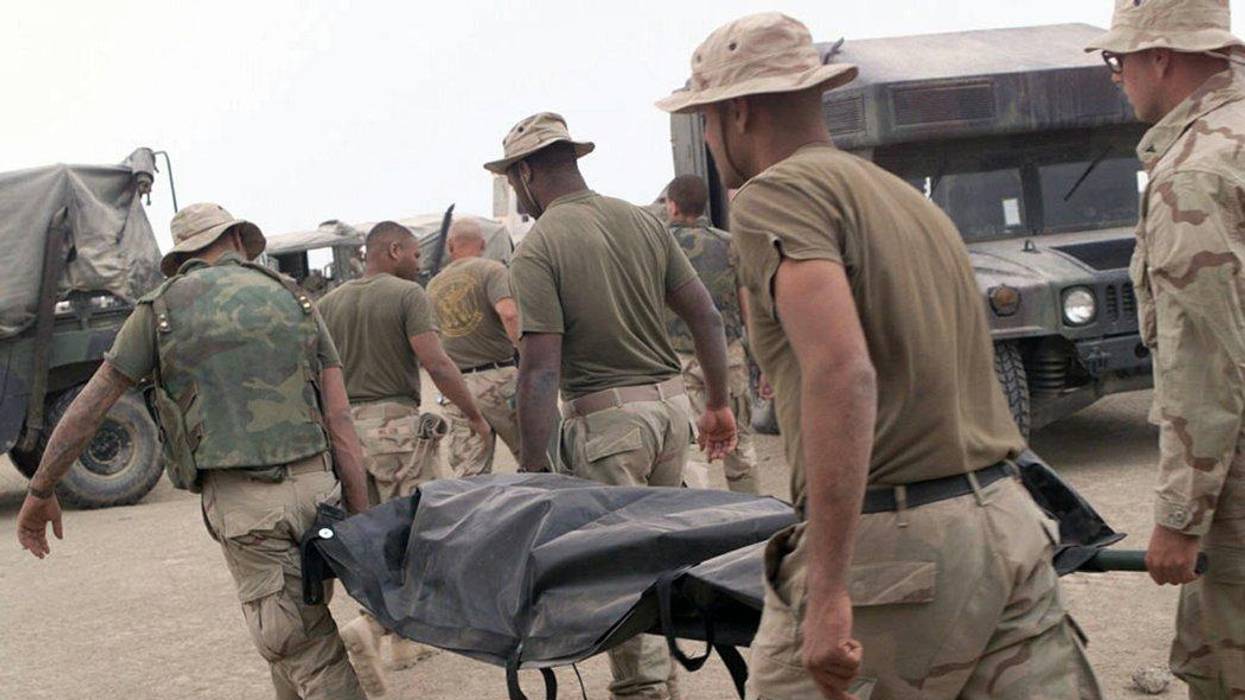
Even as the war effort rapidly went awry in the months that followed, with U.S. soldier deaths continuing to climb after major combat operations were declared over on May 1 and terrorist attacks becoming a regular feature of Iraqi life, Biden continued to insist that war had been the right course of action.
"I voted to go into Iraq, and I'd vote to do it again," he said at a July 2003 hearing.
As growing numbers of Democrats, and even members of the general public, turned against the war, Biden rebuked them, implicitly and explicitly.
"In my view, anyone who can't acknowledge that the world is better off without [Hussein] is out of touch," he said two days later.
"Contrary to what some in my party might think, Iraq was a problem that had to be dealt with sooner rather than later," he insisted.
An increasingly lonely voice in a party that would soon make common cause with the growing anti-war movement, Biden continued to back Bush.
"The president made [the case against Saddam] well," he concluded on July 31. "I commend the president."
No regrets
In the eyes of the public, a vote for the resolution that gave Bush the authority to wage war on Iraq is enough to cast serious doubt on a candidate's judgment, as Hillary Clinton learned in 2016. But the fact is, Joe Biden did a lot more than cast a vote.
As an experienced and respected voice on foreign policy, a powerful Democrat, and someone widely perceived as a dove due to his opposition to the Vietnam war, Biden's backing of regime change in Iraq was crucial to Bush's effort of selling the public on the war. Biden's insistence that Hussein posed a serious threat to the United States, possessed WMDs and needed to be removed from power helped create momentum for the rising pro-war campaign. And as chair of the Senate Foreign Relations Committee, rather than question the prominent voices of doubt, including senior members of the U.S. military, Biden stacked his Iraq hearings with voices in agreement with Bush's fallacious case for war.
Hillary Clinton's hawkishness--including her vote for the Iraq war--was one of several factors that likely contributed to her 2016 loss to Donald Trump in key traditional Democratic states. But beyond arguments about electability, the next president will inherit a volatile world on the brink of several different conflicts, including a possible showdown with Iran. When voters choose the next Democratic nominee, they'll have to decide whether someone who helped lead the march to war in Iraq is really the best person to take on Trump--and guide U.S. foreign policy as president.
Anyone wondering about former Vice-President Joe Biden's fitness for the presidency ought to be concerned about the recent allegations of inappropriate touching. But there is another issue that deserves consideration: his key role in making possible an inappropriate and utterly disastrous war.
As chair of the Senate Foreign Relations Committee in 2002, Biden stated that Saddam Hussein had a sizable arsenal of chemical weapons as well as biological weapons, including anthrax, and that "he may have a strain" of smallpox, despite UN inspectors reporting that Iraq no longer appeared to have any weaponized chemical or biological agents. And even though the International Atomic Energy Agency had reported as far back as 1997 that there was no evidence whatsoever that Iraq had any ongoing nuclear program, Biden insisted that Saddam was "seeking nuclear weapons."
At the start of hearings before his committee on July 31, 2002, Biden stated, "One thing is clear: These weapons must be dislodged from Saddam, or Saddam must be dislodged from power. If we wait for the danger from Saddam to become clear, it could be too late."
"I do not believe this is a rush to war. I believe it is a march to peace and security."
In an Orwellian twist of language designed to justify the war resolution, Biden claimed in Senate session in October 2002, "I do not believe this is a rush to war. I believe it is a march to peace and security." This gave President Bush the unprecedented authority to invade a country on the far side of the world that was no threat to the United States.
During the summer of 2002, as the Bush Administration was pushing for war, the Senate Foreign Relations Committee, under Biden, had the opportunity to hear from any number of academics, former foreign service officials, United Nations personnel, and others specializing in Iraq. Public statements and leaks from the administration in the preceding months had been filled with false claims regarding Iraq's military capabilities and links to terrorist groups while insisting a U.S. invasion and occupation of that country would go smoothly, with minimal casualties or other negative consequences.
When the hearings commenced on July 31, eighteen witnesses were called, none of whom challenged the administration's claims that Iraq was in possession of chemical and biological weapons and a nuclear weapons program. All three witnesses who addressed the question of Al-Qaeda claimed that Iraq directly supported the Islamist terrorist group.
Despite overwhelming opposition among academics and foreign service officers familiar with the region, among the twelve witnesses who addressed whether the United States should invade, six were supportive, four were ambivalent, and only two opposed it. Among the witnesses was former Secretary of Defense Caspar Weinberger, whom Biden insisted was credible despite multiple perjury indictments for lying before Congress and his history of grossly exaggerating the military capabilities of Nicaragua, Cuba, the Soviet Union, and other designated enemies of the United States.
Throughout the hearings, Biden insisted that Iraq was a threat to U.S. national security and that "regime change" was a legitimate U.S. policy. And he expressed skepticism that renewed inspections would work.
Scott Ritter, the former chief U.N. weapons inspector, noted just prior to the hearings, "For Senator Biden's Iraq hearings to be anything more than a political sham used to invoke a modern-day Gulf of Tonkin resolution-equivalent for Iraq, his committee will need to ask hard questions--and demand hard facts--concerning the real nature of the weapons threat posed by Iraq."
Biden insisted that Iraq was a threat to U.S. national security and that "regime change" was a legitimate U.S. policy.
But Biden had no intention of doing so, refusing to even allow Ritter--who knew more about Iraq's WMD capabilities than anyone and would have testified that Iraq had achieved at least qualitative disarmament--to testify. (Ironically, on Meet the Press in 2007, Biden defended his false claims about Iraqi WMDs by insisting that "everyone in the world thought he had them. The weapons inspectors said he had them.")
Biden also refused to honor requests by some of his Democratic colleagues to include in the hearings some of the leading anti-war scholars familiar with Iraq and Middle East. Nor did Biden call some of the dissenting officials in the Pentagon or State Department who were willing to challenge the alarmist claims.
Ritter accused Biden of having "preordained a conclusion that seeks to remove Saddam Hussein from power regardless of the facts and . . . using these hearings to provide political cover for a massive military attack on Iraq."
Had Biden allowed for additional hearings with a witness list more representative of the widespread opposition by those actually familiar with Iraq, it is possible the vote in the Democrat-controlled Senate authorizing the war could have turned out differently, and tragedy would have been averted.
Biden has claimed that his support for the war resolution was largely an effort to pressure Iraq to allow for the return of United Nations inspectors. Ironically, Biden supported President Bill Clinton's decision to remove the inspectors in 1998 in order to launch a four-day bombing campaign that December despite being warned that it would likely end Saddam's cooperation, and then subsequently insisted that "Saddam kicked them out."
More significantly, even after the U.N. weapons inspectors had been engaged in months of unfettered inspections in early 2003, Biden expressed no objections when Bush decided to invade anyway. And a full year after it became apparent that Iraq didn't actually have these weapons or weapons systems, Biden insisted that he still didn't regret voting "to give the President the authority to use force in Iraq. I still believe my vote was just."
Indeed, Biden supported the subsequent bloody counter-insurgency war for the rest of his Senate career, speaking out against bringing the troops home or even setting a timetable for withdrawal. He even became a major advocate of splitting Iraq along ethnic and sectarian lines, seen my most people familiar with the region as very dangerous and irresponsible.
Despite arms control analysts and former U.N. inspectors informing Biden that Iraq had achieved at least qualitative disarmament, and articles in newspapers, arms-control journals, and online think tanks challenged the Bush Administration's claims regarding Iraqi possession of "weapons of mass destruction," Biden continued to falsely claim "everyone in the world thought he had them."
Was Biden's support for the war simply a "mistake" as he claims, or is indicative of a broader disdain for the United Nations Charter and Nuremberg Principles' prohibition against such invasions by one country of another? Indeed, as far back as 1998, Biden was openly questioning the efficacy of the then-ongoing UN inspections and calling for an invasion to remove Saddam.
Despite Biden's role in making possible the 2003 invasion of Iraq, it is not necessarily a reflection of what his foreign policy would be like if he became President. Along with many hawkish positions, Biden has taken relatively moderate ones as well. For example, he opposed U.S. intervention in Central America in the 1980s, opposed the 1991 Gulf War and, as vice-president, supported negotiations with Iran, opposed the troop surge in Afghanistan and questioned U.S. intervention in Libya.
Along with many hawkish positions, Biden has taken relatively moderate ones as well.
Biden has never been consistently allied with neoconservative intellectuals, or the unreconstructed militarists who so heavily influenced the foreign policies of the Bush Administration. Nor was he as hawkish as former Secretary of State and 2016 Democratic nominee Hillary Clinton.
Given the imperative of stopping Trump from being re-elected, it may be necessary to support Biden should be become the 2020 Democratic nominee. Still, an examination of the four presidential elections since the Iraq War resolution is instructive. The anti-Iraq War nominee Barack Obama coasted to two decisive victories while John Kerry and Hillary Clinton--burdened by their support for the Iraq War, which lowered turnout and overall enthusiasm among the party's anti-war base--ended up losing close elections.
In the meantime, in what will likely be a competitive primary season among a large number of candidates, none of whom supported the war and some of whom will likely contrast his reluctance to support Medicare-for-all and the Green New Deal with his support for a war which will likely end up costing American taxpayers two trillion dollars.
Biden's role in making possible the invasion and occupation of Iraq, and the carnage and destabilization that resulted, is something for which he needs to be held accountable. It should be a central issue in the upcoming campaign.
When it comes to the ruling elite's corporate plunder and crimes against humanity, the U.S. national memory's short and no one, not even its political henchmen, assume blame or suffer real consequences: take Halliburton and former chief executive and U.S. Vice President Dick Cheney for example. Not only did Cheney plan and justify the invasion, occupation and pilferage of Iraq's oil, gold bars and national museum treasures under treasonous false pretenses, but its subsidiary, Kellogg Brown & Root (KBR Inc.), overcharged the U.S. taxpayer to a tune of more than $2 billion due to collusion engendered by sole source contracting methods and shoddy accounting procedures. It's even forgotten that Cheney received a $34 million payout from Halliburton when he joined the Vice President ticket in 2000, in advance of his unscrupulous maneuvers, according to news commentator, Chris Matthews; because on November 5th 2018, in celebration of its 100-year anniversary, its chief executives rang the New York Stock Exchange's (NYSE) opening bell.
Sadly, as a nation, the U.S. doesn't recall Cheney's lies, or his role in planning the contemptible "Shock and Awe" saturation bombing campaign that destroyed a sovereign nation, which posed no threat to the United States, and left the world's cradle of civilization in ruins. Conveniently, it doesn't recall the over 500,000 deaths from war related causes, as reported by the Huffington Post in its 2017 updated article; nor does it recall that obliterating Iraq's government created a sociopolitical vacuum that enabled the exponential growth of the CIA's unique brand of Islamofascism and its resulting terrorism, which has culminated in war-torn Syria and Yemen.
Iraq's only "crime" against the United States, if you want to call it that, was being hogtied by Washington's sanctions and embargo against it - in what can only be called a Catch 22 situation. Iraq couldn't do business with U.S. corporations not because Saddam Hussein was unwilling to, but because the U.S. government effectively barred Iraq from doing so. This Catch 22 situation is presently being repeated in Venezuela and Iran in advance of its planned invasion and occupation.
Then there is the cost of war itself: according to The Costs of War project at the Watson Institute for International and Public Affairs at Brown University, "The wars in Afghanistan, Pakistan, and Iraq (the war in Pakistan refers to U.S. counterterrorism efforts there, such as drone strikes and other efforts against al Qaeda) cost $4.4 trillion. Included in the cost are: direct Congressional war appropriations; war-related increases to the Pentagon base budget; veterans care and disability; increases in the homeland security budget; interest payments on direct war borrowing; foreign assistance spending; and estimated future obligations for veterans' care. By 2053, interest payments on the debt alone could reach over $7 trillion."
Keep in mind that the U.S. taxpayer directly subsidizes the profits of the military industrial complex, and oil & gas industries. Yet, no U.S. protests against Halliburton are found in the media later than 2007. And, there are no organized disinvestment campaigns of record.
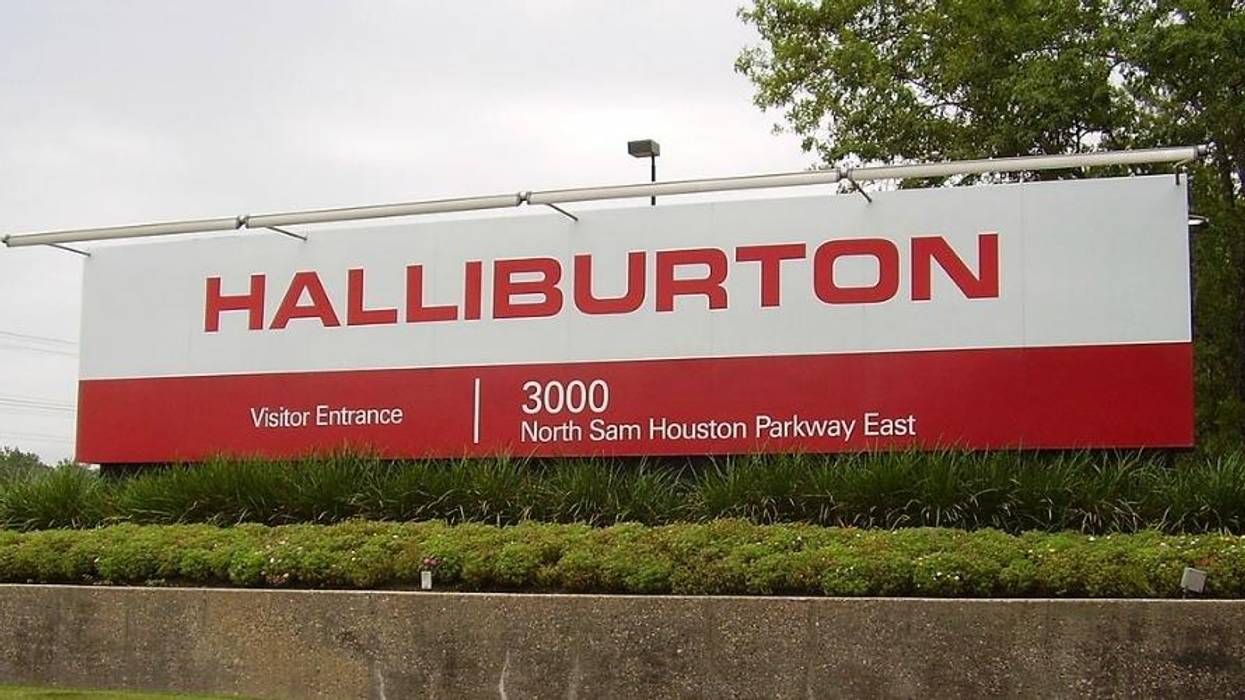
So Wall Street celebrates Halliburton's 100-year anniversary with a clear conscience, because no one has graffitied it's large four column wide sign or is disinvested from its stock. The nation only recalls, according to IBTimes, in their 2013 article on Iraq war contracts, that Halliburton's subsidiary, KBR, had the most: KBR's war contracts totaled $39.5 billion in just a decade.
Other than the Kuala Lumpur War Crimes Commission, which found Cheney and President Bush et al guilty of war crimes in absentia for the illegal invasion of Iraq, there remains no lasting acknowledgement in the U.S. consciousness of Cheney's evil doings. Cheney had recent book deals and continues to ramble on with speaking engagements. He was scheduled by Cornell University to issue a keynote address as recent as May 2018. In short, the ruling elite protects those engaged in their dirty work until they prove unnecessary. In this regard, consider the fact that Saddam Hussein was a former CIA asset and a good corporate customer - as the weapons of mass destruction (WMD), he once possessed, were sold to him by the U.S. and Britain. However, according to the former United Nations (UN) chief weapon inspector, Scott Ritter, the UN destroyed Iraq's stockpiles after the Persian Gulf War (1990-1991)--well before the 2003 invasion. This report was ignored because it contradicted the prevailing narrative that justified the invasion, occupation and looting of Iraq.
Just as the ruling elite engineered Saddam Hussein rise to power when he was useful, they ensured Cheney's political ascent, and the success of his campaign against Iraq. To illustrate the persuasive power of the oil & gas industry in politics, note that according to Open Secrets.org, oil & gas lobbyists spent over $175M in 2009 (Obama's first year in office). Of that amount, ExxonMobil spent the most at $27.4M and Chevron Corp., in second place, spent $20.8M. For the record, ExxonMobil and Chevron are successors of Rockefeller's Standard Oil Company. Prior to President Obama & Vice President Biden, the Oil & Gas Industry lobbyists spent approximately half that amount at $86.5M in 2007. Thus, Bush & Cheney represented a 50% savings for oil & gas lobbyists.
When seeking to "out" the elite, keep in mind that the Rockefeller clan describe themselves "as ExxonMobil's longest continuous shareholders". In Iraq, ExxonMobil has a 60% share of a $50 billion market contract developing the 9-billion-barrels southern West Qurna Phase I field, and ExxonMobil is expanding its oil & gas holdings into the semiautonomous Kurdish region in the country's north.
Within this context, the enemy is not a corporate office, an oilrig, pipeline or refinery; it's the ruling elite that own and control the means of production. If people of conscience don't hold them accountable for their crimes, they will continue to commit them in countries such as Venezuela and Iran, which are presently locked in their sights. While henchmen change, the ruling elite remains. Why should the U.S. allow its military and secret service to be pimped out as corporate stooges and glorified security guards?
Imperialism is insatiable and fascism expedient. The time to hold the ruling elite accountable is now before another invasion and occupation is executed against a fake enemy that just so happens to coincidentally have a large desirable oil reserve. Let's follow Iceland's lead and seek the prosecution of white-collar criminals that hide behind a facade of corporate stock holdings now, before its too late and they strike again in Venezuela and Iran.
So for Halliburton's 100-year anniversary wish, let's wish its stock tanks and that its guilty are remembered, held accountable, and that justice is ultimately served.
The U.S. Constitution and international law suffered a stinging blow Friday night at the hands of an odd coalition that might be called Goldilocks and two moral dwarfs posing as Marine generals, together with a "Right Dishonorable" harridan and a young French poodle.
As was the case 15 years ago when the U.S. and UK launched a war of aggression against Iraq, the pretext was so-called "weapons of mass destruction" (WMD) -- this time the claimed use on April 7 of chlorine (and maybe the nerve agent sarin -- who knows?) in Duma a suburb of Damascus. And this time French President Emmanuel Macron was allowed to join, as junior partner, the gang that can't lie straight.
The attacks by the Gang of Three came hours before specialists from the UN Organization for the Prohibition of Chemical Weapons were to arrive in Syria to study soil and other samples in Duma. The question leaps out: Why could the Gang not wait until the OPCW had a chance to find out whether there was such an attack and, if so, what chemical(s) were used?
Sentence First, Verdict Later
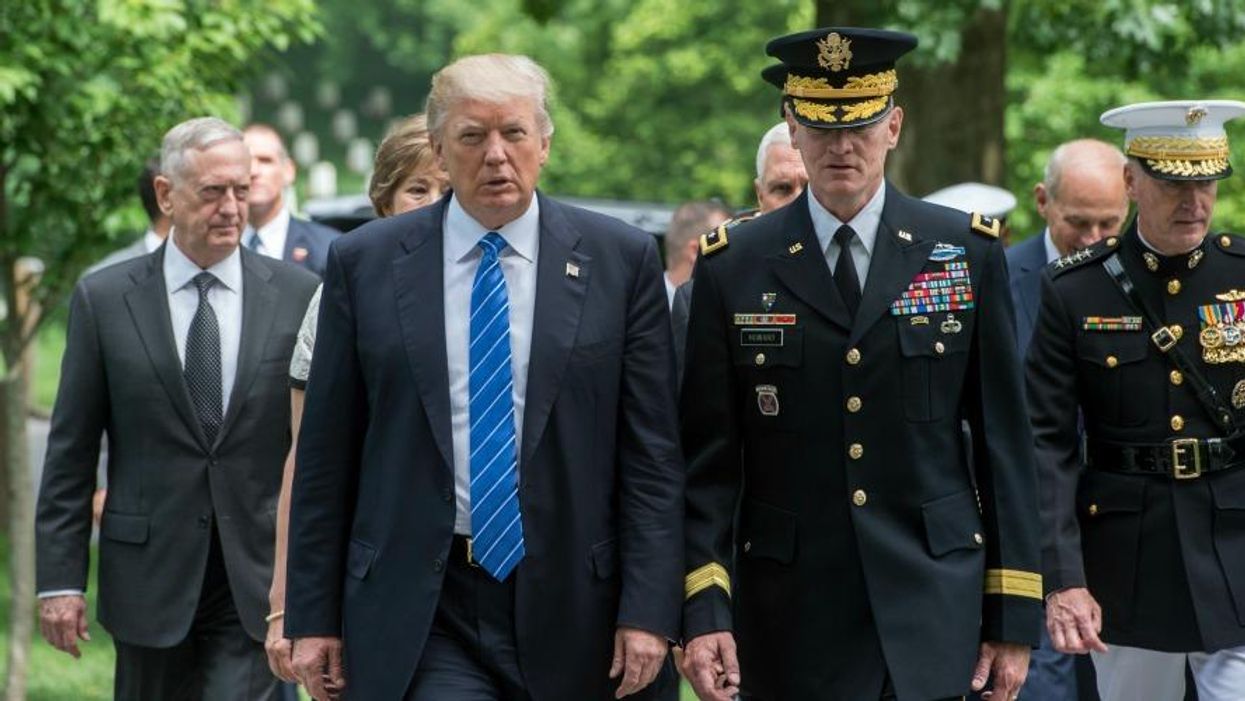
U.S. Defense Secretary James Mattis could only say that he believes there was a chemical attack and that perhaps sarin, in addition to chlorine, was involved. Serving until now as the only available "evidence" are highly dubious reports from agenda-laden "social media." What is clear is that the U.S./UK/French Gang wanted to strike before the OPCW investigators had a chance to ascertain what happened. Hmm. All the earmarks of "Sentence first; verdict afterwards."
Former Secretary of State John Kerry made a habit of advertising how "extraordinarily useful" social media can be. He got that right. Of the main alleged "chemical attacks" by Syria -- on August 21, 2013; April 4, 2017; and April 7, 2018 -- the primary, if not exclusive -- source of information was the "extraordinarily useful," but notoriously unreliable, "social media."
Marine Martinets
Briefing the media Friday night, after Goldilocks had set the stage announcing "retaliation" for the (unproven) use of chemicals by the Syrian government, were two four-star Marine generals, one of them (Mattis) retired, who seem to have mistakenly thought that the Marine motto had been changed to "Semper Lie." It was a very sad spectacle.
In 1961, when I was commissioned a 2nd Lieutenant in the U.S. Army, I took a solemn oath to support and defend the Constitution of the United States against all enemies foreign and domestic. Also drummed into the heads of us newly minted officers was the obligation to tell the truth -- always.
I had assumed -- apparently naively -- that Marines took the same oath and obligation. The attack on Iraq 15 years ago destroyed that assumption. I will cite just two examples that scandalized me.
Hear No Evil, Speak No Truth, Get Rich Quick
Marine Gen. Zinni was receiving an award at the Veterans for Foreign War convention on August 26, 2002, and decided to play Brer' Rabbit as he listened to the main speaker, Vice President Dick Cheney, set the meretricious terms of reference for war with Iraq.
Zinni had been commander of CENTCOM and had retired two years before, but his continued role as fully cleared consultant had enabled him to stay up to date on key intelligence findings for Iraq. Zinni later said he was shocked to hear Cheney's depiction of intelligence (Iraq has WMD and is amassing them to use against us) that did not square with what he knew the accurate intelligence to be. "There was no solid proof that Saddam had WMD. ... I heard a case being made to go to war," Zinni told "Meet the Press" three and a half years later. (Emphasis mine.)
Earlier, Zinni enjoyed a reputation as a relatively straight shooter with a good bit of courage. And so, the question lingers: why did he not go public when he first heard Cheney's lie? THAT might have stopped the war. What seems operative here, I fear, is an all-too-familiar conundrum at senior levels where people have been conditioned not to rock the boat, not to risk their standing within the Washington Establishment or their prospects for lucrative spots on the corporate boards of arms manufacturers.
Semper Fraud
Without the full cooperation of former Marine, Senator Pat Roberts (R, Kansas), who was Chairman of the Senate Intelligence Committee before, during, and after the attack on Iraq, Bush and Cheney would have had far more difficulty perpetrating that crime. Because of Roberts's participation in what easily qualifies as a criminal conspiracy, Bush and Cheney were able to run amok -- until, finally, the Senate changed hands in 2006.
On June 5, 2008 Roberts's successor, Sen. Jay Rockefeller announced the completion of a five-year Senate Intelligence Committee investigation -- a study that had been continually sidetracked by Roberts. Rockefeller introduced the study's bipartisan findings with these words: "In making the case for war, the Administration repeatedly presented intelligence as fact when in reality it was unsubstantiated, contradicted, or even non-existent."
Fellow Marine and UN weapons inspector Scott Ritter found Roberts's behavior shameful. Ritter was unable to resist writing: "Semper Fraud, Senator Roberts."
Against that background, it was particularly painful Friday evening to watch two Marine four-star generals peddling at the Pentagon a bogus casus belli for another unprovoked armed attack -- this time on Syria.
Media people favored with a Pentagon pass were too timid to ask pointed questions about the evidence that Syrian President Bashar al-Assad, for some strange reason known only to him, picked a time of near victory to "use chemical weapons against his own people" on April 7. No one asked why the rush to judgment; why the gang of three (the U.S., its aging British cousin, and its young French poodle) could not have waited just a day or two for UN inspectors to arrive and discover whether the so-called "chemical attack" amounted to a true casus belli, or a casus belly-laugh.
Following Orders
Defense Secretary James Mattis and Joint Chiefs of Staff Chairman Joseph Dunford remind me of the generals of the Third Reich in "just following orders," lying through their teeth about the pretext for attacking Poland -- er, I mean Syria -- as though the solemn oath they took was to the Fuehrer -- er, I mean President -- not the Constitution. It seemed, at first, that President George W. Bush's dictum still reigned at the Pentagon; i. e., "The Constitution is just a goddamned piece of paper."But President Donald Trump and Secretary Mattis did not go as far as Bush. No doubt under White House orders, Mattis dutifully recited the key tenet of constitutional scholar Dick Cheney's dubious "unitary executive" theory; that is, that the President is somehow not bound by Article I (Section 8) of the Constitution. That Article I section may have been in mothballs since the attack on Pearl Harbor, but remains a very important part of the Constitution. And the U.S. has gotten into a peck of trouble by those --administrations and members of congress, alike -- who have chosen to circumvent this key provision, which reserves to Congress the power to declare war. Our Founders wanted this to apply, if a King -- er, I mean President -- got it into his head to attack another country. Syria, for example.
At the beginning of his speech, Mattis employed this dubious variant, without the slightest demurral from those wishing to retain their Pentagon passes: "As our commander in chief, our President has the authority under Article II of the Constitution to use military force overseas to defend important U.S. national interests." Those interested should re-read Article II. They will look in vain for anything like the Cheney/Mattis variant. All that part of Article II says is: "The President shall be Commander in Chief of the Army and Navy of the United States."
A Common Error With Budding Officers Too
An experience I had teaching a class at the Naval Academy in Annapolis 12 years ago suggests that students at U.S. military academies are led to think that Article II supersedes Article I. Lecturing to a third-year class of about 50 students about political/military events, I referred innocently to the solemn oath required of military personnel and asked what that oath was all about. "Well, it is an oath to the President, of course," said the first student who threw up his hand, with several others nodding assent. I said that was quite wrong. And it turned out to be like pulling teeth to find one student who knew that the oath was to defend the Constitution.
Friday evening I found myself wondering what Attorney General Jeff Sessions thought of Mattis's messing with Article I, Section 8. For, not too long ago, there was one shining moment when Sen. Jeff Sessions did his best to challenge then-Defense Secretary Leon Panetta, who pretended to be unfamiliar with the bedrock fact that the Constitution reserved to Congress the right to declare war.
Libya: Precedent for Syria
At a hearing of the Senate Armed Services Committee on March 7, 2012, then-Sen. Jeff Sessions, R-Alabama, pursued this key issue with Panetta. Chafing ex post facto at the unauthorized nature of the war in Libya, Sessions asked repeatedly what "legal basis" would the Obama administration rely on to do in Syria what it did in Libya.
Watching that part of the testimony, it seemed to me that Sessions, a conservative Southern lawyer, was not at all faking when he pronounced himself "almost breathless," as Panetta stonewalled time after time. Panetta made it explicitly clear that the administration does not believe it needs to seek congressional approval for wars like Libya. At times he seemed to be quoting verses from the Book of Cheney.
Sessions: "I am really baffled ... The only legal authority that's required to deploy the U.S. military [in combat] is the Congress and the President and the law and the Constitution."
Panetta: "Let me just for the record be clear again, Senator, so there is no misunderstanding. When it comes to national defense, the President has the authority under the Constitution to act to defend this country, and we will, Sir."
If you readers care about the Constitution and the rule of law, I strongly recommend that you view the entire 7-minute video clip.
Constitutionally, the craven Congress is a huge part of the problem. Only a few members of the House and Senate seem to care very much when presidents act like kings and send off troops drawn largely by a poverty draft to wars not authorized (or simply rubber-stamped) by Congress.
A Chill on the First Amendment
Secretary Mattis devoted his last minute Friday evening to a careful reading of the following warning:
"Based on recent experience, we fully expect a significant disinformation campaign over the coming days by those who have aligned themselves with the Assad regime. And, in an effort to maintain transparency and accuracy, my assistant for public affairs, Ms. Dana White, and Lt. Gen. McKenzie, Director General of the Joint Staff here in Washington, will provide a brief of known details tomorrow morning -- we are anticipating at about 9:00 in this same location."A warning not so sotto voce: Criticize the craven behavior of Mattis, Dunford, or the Gang of Three, and you will be "aligning" yourself "with the Assad regime."
MEMORANDUM FOR: The President
FROM: Veteran Intelligence Professionals for Sanity
SUBJECT: Evidence Required for Military Decision on Syria
Mr. President,
We the undersigned Veteran Intelligence Professionals for Sanity join a number of other credible experts including former UK Ambassador to Syria, Peter Ford (this recent interview on BBC Radio Scotland), former UN weapons inspectors and former military officers who are strongly recommending that you obtain and review actual evidence from the site of the alleged chemical attack in Douma, Syria, before ordering any military action. VIPS has previously reported credible evidence indicating that anti-government forces in Syria have themselves produced and used toxic chemical agents.
Contradictory indications exist given that the video and images of victims in the locations purportedly affected by chemical weapons came from rebel-affiliated entities known as the "Douma Revolution" and the "White Helmets" while Russian military units which later got physical access to the supposed sites and Syrian Red Crescent personnel working in the area reportedly found no indication of a chemical weapon attack.
A major question for us, as former intelligence officers with some knowledge of the operational use of misinformation and false flag actions, is what motive would the Syrian government have for making a chemical weapons attack on its own civilian population, especially at a time when it has growing popular support and is having increased military success. Why would it risk Western ire?
Rebel fighters and their families were already being evacuated to Turkish occupied Jarabulus by air-conditioned bus. As described in more detail by Scott Ritter (here), only Salafist fighters from the "Army of Islam" (Jaish al-Islam) had refused to surrender at the time of the supposed attacks.
One must therefore consider the possibility that the supposed chlorine gas attack at Douma may have been a carefully constructed propaganda fraud. Such a fraud would have as its purpose the elicitation of precisely the kind of political pressure that now has you contemplating military action. In other words, Mr. President, this may be a bid to mousetrap you into a war that neither you nor your fellow Americans want nor need.
More expert opinion and investigation needs to be applied like that voiced by former U.N. weapons inspector in Syria, Ake Sellstrom, (translated from original Swedish):
The attack may have come from Assad's regime, but you may as well have other explanations. Toxic substances can be dispersed in many ways, for example through explosions or smoke.
- There are many poisonous substances in circulation during the battle.
If the UN were to investigate the attack, it is not enough to see recordings or hear testimony, says Sellstrom.
It is essential that the United States have complete and compelling evidence before taking any decisive action. We therefore strongly recommend that you await the findings of the OPCW team which is now on its way to Douma to investigate at the actual site of the alleged attack. A competent, objective group of experts needs to conduct a thorough on-the-ground investigation and collect evidence that will either implicate the Government of Syria or exonerate it.
We have, as you have noted, been down this road before with the Iraq WMD debacle in 2003. Let us not repeat this mistake. By launching a war in Syria, we will be entering a military and political morass involving Iran and Russia that could have fatal consequences for the entire planet, especially if any of the parties feel compelled to resort to nuclear weapons.
The American people neither want nor need another military intervention in the Middle East. History tells us that any initiative centered on the use of armed force to compel acceptable behavior will not be containable and will only propagate more violence. Please do not drain the US Treasury for a war that could lead to catastrophic and unprecedented loss of life and endanger the security of Americans everywhere.
For the Steering Group, Veteran Intelligence Professionals for Sanity (VIPS)
William Binney, former NSA Technical Director for World Geopolitical & Military Analysis; Co-founder of NSA's Signals Intelligence Automation Research Center (ret.)
Marshall Carter-Tripp, Foreign Service Officer (ret.) and Division Director, State Department Bureau of Intelligence and Research
Kathleen Christison, Senior Analyst on Middle East, CIA (ret.)
Bogdan Dzakovic, former Team Leader of Federal Air Marshals and Red Team, FAA Security (ret.) (associate VIPS)
Philip Giraldi, CIA, Operations Officer (ret.)
Matthew Hoh, former Capt., USMC, Iraq & Foreign Service Officer, Afghanistan (associate VIPS)
Larry C. Johnson, former CIA and State Department Counter Terrorism officer
Michael S. Kearns, Captain,Wing Commander, RAAF (ret.); Intelligence Officer & ex-Master SERE Instructor
John Kiriakou, former CIA Counterterrorism Officer and former senior investigator, Senate Foreign Relations Committee
Karen Kwiatkowski, former Lt. Col., US Air Force (ret.), at Office of Secretary of Defense watching the manufacture of lies on Iraq, 2001-2003
Clement J. Laniewski, LTC, USA (ret) (associate VIPS)
Linda Lewis, WMD preparedness policy analyst, USDA (ret.) (associate VIPS)
Edward Loomis, NSA Cryptologic Computer Scientist (ret.)
David MacMichael, Ph.D., former senior estimates officer, National Intelligence Council (ret.)
Ray McGovern, former US Army infantry/intelligence officer & CIA analyst; CIA Presidential briefer (ret.)
Elizabeth Murray, former Deputy National Intelligence Officer for the Near East, National Intelligence Council & CIA political analyst (ret.)
Todd E. Pierce, MAJ, US Army Judge Advocate (ret.)
Scott Ritter, former MAJ., USMC, former UN Weapon Inspector, Iraq
Coleen Rowley, FBI Special Agent and former Minneapolis Division Legal Counsel (ret.)
Peter Van Buren, US Department of State, Foreign Service Officer (ret.) (associate VIPS)
Lawrence Wilkerson, Colonel, US Army (ret.), former Chief of Staff for Secretary of State; Distinguished Visiting Professor, College of William and Mary (associate VIPS)
Sarah G. Wilton, CDR, USNR, (ret.); Defense Intelligence Agency (ret.)
Robert Wing, former Foreign Service Officer (associate VIPS)
Ann Wright, Colonel, US Army (ret.); also Foreign Service Officer who resigned in opposition to the US war on Iraq
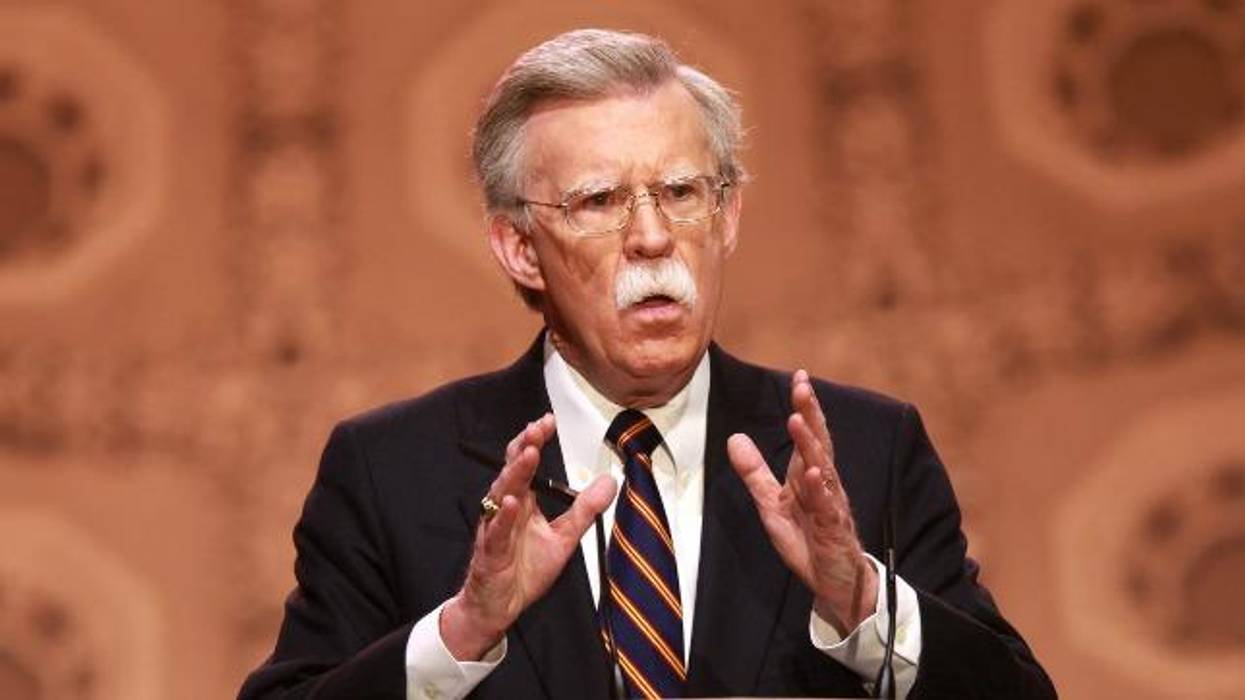
Nothing Donald Trump has done since his inauguration 14 months ago is more dangerous - to the United States, and indeed, to the world - than his selection of John Bolton for National Security Adviser. It is not surprising the president would feel most comfortable receiving advice from a fellow bully.
Trump bullies people on a nearly daily basis, directing his ire at immigrants, Muslims, women, LBGTQ people, the poor and the environment. He hurls Twitter attacks at those who disagree with him.
The president has encouraged police brutality, suggesting in a Long Island speech that law enforcement officers bang suspects' heads against police car doors. "Please don't be too nice" when arresting people, Trump advised. "Like when you guys put somebody in the car, and you're protecting their head, you know, the way you put your hand over" their head, "I said, 'You can take the hand away, OK?'"
After being told someone might throw tomatoes at him at a campaign rally, Trump urged his supporters to "knock the crap out of them ... I promise you, I will pay for the legal fees." He stated on Fox News that a Black Lives Matter activist who was attacked at a Trump rally "should have been roughed up."
Trump's fellow bully Bolton also engages in abusive behavior. Melody Townsel, working on a USAID project in Kyrgyzstan, became the object of Bolton's wrath in 1994. Townsel had complained about incompetence, poor contract performance and inadequate funding of the project by a contractor Bolton represented. In a letter to the Senate Foreign Relations Committee, Townsel wrote that Bolton "proceeded to chase me through the halls of a Russian hotel throwing things at me, shoving threatening letters under my door, and generally behaving like a madman." Townsel claimed Bolton threatened employees and contractors who refused to cooperate with him. She maintained Bolton's behavior "wasn't just unforgivable, it was pathological."
Carl W. Ford, former Assistant Secretary for Intelligence and Research, and a conservative Republican, called Bolton a "kiss-up, kick-down sort of guy" who "abuses his authority with little people," characterizing him as a "serial abuser." Bolton chairs the Gatestone Institute, which publishes hateful, racist anti-Muslim rhetoric, calling refugees rapists and hosts of infectious diseases.
Bolton was such a lightning rod that in 2005, even the GOP-controlled Senate refused to confirm him as US ambassador to the United Nations. To avoid the need for Senate confirmation, George W. Bush named Bolton to the post in a recess appointment.
But Bolton doesn't just bully individuals. He pushed for the 2003 invasion of Iraq, advocates military attacks on North Korea and Iran, favors Israel's annexation of the Palestinian West Bank, and falsely claimed that Cuba had biological weapons.
As undersecretary of state for Arms Control and International Security in the Bush administration, Bolton was instrumental in withdrawing the United States from the 1972 Anti-Ballistic Missile Treaty, which heightened the risk of nuclear war with Russia.
Anthony J. Blinken, deputy secretary of state in the Obama administration, wrote in The New York Times, "Mr. Bolton had a habit of twisting intelligence to back his bellicosity and sought to remove anyone who objected."
Colin Kahl and Jon Wolf, writing in Foreign Policy, described Bolton's "pattern of warping and misusing intelligence to build the case for war with rogue states; a disdain for allies and multilateral institutions; a blind faith in US military power and the benefits of regime change; and a tendency to see the ends as justifying the means, however horrific."
When he left his position at USAID in the late 1980s, Bolton's colleagues presented him with a bronzed hand grenade.
Bolton Eschews Diplomacy and Slams the UN
Bolton sees every international situation as an opportunity to make war, notwithstanding the United Nations Charter that mandates the peaceful resolution of disputes and forbids military force except in self-defense.
After two world wars claimed millions of lives, countries around the globe - including the United States - came together and established the United Nations system, "to save succeeding generations from the scourge of war."
Yet in 1994, Bolton famously claimed, "there is no such thing as the United Nations." He stated caustically, "If the UN Secretariat building in New York lost 10 stories, it wouldn't make a bit of difference."
When Bolton officially withdrew the US signature from the International Criminal Court treaty, he declared it "the happiest moment of my government service."
Bolton Led the Charge to Invade Iraq
Bolton led the charge to invade Iraq and forcibly change its regime in 2003, falsely claiming that President Saddam Hussein had weapons of mass destruction (WMD). In 2002, former UN weapons inspector Scott Ritter affirmed that Hussein had destroyed 90-95% of its WMD; the remaining 5%, Ritter said, "doesn't even constitute a weapons program . . . just because we can't account for it doesn't mean Iraq retains it. There's no evidence Iraq retains this material."
To bolster the case for war, Bolton pushed Bush to include in his State of the Union address the false statement that Iraq was seeking uranium from Niger, over the objection of the State Department.
Before the US invaded Iraq, Mohamed ElBaradei, director of the International Atomic Energy Agency, said there was no evidence Hussein had any viable nuclear program. Hans Blix, chief inspector of the UN Monitoring, Verification and Inspection Commission, verified that weapons inspectors had found no evidence of WMD.
In 2002, Bolton orchestrated the ouster of Jose Bustani, head of the Organization for the Prohibition of Chemical Weapons, to prevent him from inspecting and revealing that Hussein had no chemical weapons. When Bustani argued he should stay in the post, Bolton threatened, "You have to be ready to face the consequences, because we know where your kids live."
No WMD were found after the US invasion of Iraq. Nearly one million Iraqis were killed and the US-led regime change led to a vacuum of leadership that was filled by ISIS.
A 2006 report prepared under the direction of former Rep. John Conyers (D-Michigan) concluded that "members of the Bush Administration misstated, overstated, and manipulated intelligence with regards to linkages between Iraq and Al Qaeda; the acquisition of nuclear weapons by Iraq; the acquisition of aluminum tubes to be used as uranium centrifuges; and the acquisition of uranium from Niger." Those "misstatements were in contradiction of known countervailing intelligence information, and were the result of political pressure and manipulation." A key source of that pressure and manipulation was Bolton.
In spite of the horror the US military unleashed on Iraq 15 years ago, Bolton wrote in 2016 that the removal of Hussein was "a military success of stunning scope and effectiveness, achieved in just three weeks."
After the disastrous US invasion of Iraq, Bolton tried to get the Iran file removed from ElBaradei in order to lay the groundwork for an unjustified attack on Iran.
Bolton Wants to Rip Up the Iran Nuclear Agreement
Bolton favors bombing Iran and changing its regime and he opposes the Iran Nuclear Agreement. He has advocated an Israeli strike on Iran's nuclear facilities and encouraged the United States to support it.
In the 2015 Joint Comprehensive Plan of Action (JCPOA), Iran agreed to cut back its nuclear program and in return, received billions of dollars of relief from punishing sanctions. Iran has complied with its obligations under the deal, says a bipartisan group of over 100 national security veterans called the National Coalition to Prevent Nuclear Weapons.
Under the US Iran Nuclear Agreement Review Act, the president must decide every 90 days whether Iran remains in compliance with the JCPOA and whether the agreement continues to serve US interests. Trump reluctantly certified Iran's compliance in April and July 2017. But in October, to the consternation of his secretary of state, secretary of defense, and the chairman of the Joint Chiefs of Staff, Trump refused to certify Iran's compliance with the agreement. He did not, however, pull out of the deal at that time.
On May 12, Trump will decide whether or not to end US participation in the agreement. Bolton and CIA director Mike Pompeo, Trump's nominee for Secretary of State, both favor renouncing the deal. If the US breaches the agreement, Iran may well resume the unlimited production of nuclear fuel.
"Bolton is an unhinged advocate for waging World War III," according to Trita Parsi, president of the National Iranian American Council. "Bolton now represents the greatest threat to the United States," he added, stating, "Trump may have just effectively declared war on Iran."
Bolton Wants to Attack North Korea
In February, contrary to the overwhelming weight of legal authority, Bolton argued in a Wall Street Journal op-ed that mounting a first strike on North Korea would comply with international law.
Bolton stated on Fox News, "I think the only diplomatic option left is to end the regime in North Korea by effectively having the South take it over." During another Fox appearance, Bolton declared, "the way you eliminate the North Korean nuclear program is to eliminate North Korea." He maintained that North Korea having nuclear weapons was worse than the "millions" of North and South Koreans who would be killed if the US attacked North Korea.
If Trump destroys the Iran deal, that will send a dangerous message to Pyongyang that his word cannot be trusted. North and South Korea are slated to meet in April and Trump has indicated he will meet with North Korean President Kim Jong-Un. Diplomacy at this moment is critical.
Bolton has provocatively suggested a linkage between Iran and North Korea on nuclear weapons. In January, he wrote in the Wall Street Journal, "Little is known, at least publicly, about longstanding Iranian-North Korean cooperation on nuclear and ballistic-missile technology. It is foolish to play down Tehran's threat because of Pyongyang's provocations. They are two sides of the same coin."
The dangers inherent in following Bolton's favored policies in Iran and North Korea cannot be overestimated.
Bolton Falsely Claimed Cuba Had Biological Weapons
Bolton argued unsuccessfully for the inclusion of Cuba in Bush's "axis of evil" (which consisted of Iraq, Iran and North Korea). Bolton advocated a military attack on Cuba one year before Bush invaded Iraq. After Bolton falsely claimed Cuba was developing a bio-warfare capacity, a congressional investigation found no evidence to support such an allegation.
As Nicole Deller and John Burroughs from the Lawyers' Committee on Nuclear Policy have documented, Bolton is widely credited with the defeat of the Protocol to the Biological Weapons Convention, which would have created an inspection system to protect us against those deadly weapons.
Bolton Wants to Give "Pieces" of Palestine to Jordan and Egypt
Bolton's solution to the Israeli-Palestinian conflict is to give "pieces" of Gaza to Egypt and "pieces" of the West Bank to Jordan since, he thinks, Palestine is composed of "bits and pieces" of the former Ottoman Empire.
In January, Bolton wrote in The Hill:
Once it becomes clear the two-state solution is finally dead, Jordan should
again be asked to exercise control over suitably delineated portions of the
West Bank and have the monarchy's religious role for holy sites like the
Temple Mount reaffirmed. Accepting Jordan's sovereignty would actually
benefit Palestinians, as would Egyptian sovereignty over Gaza, by tying
these areas into viable, functioning states, not to the illusion of "Palestine."
Neither Jordan nor Egypt supports this proposal, and Palestinians are vehemently opposed to it. Jewish Voice for Peace stated, "The appointment of Bolton is a complete disaster for the Middle East, the US, and the entire world."
Bolton's Appointment Is "a Disaster for Our Country"
The National Security Adviser's job is to inform the president of the different options that affect national security, briefing him on the National Security Council's findings. Bolton is such an ideologue, he will invariably slant his advice toward waging war. Bolton is so extreme, he reportedly promised Trump he "wouldn't start any wars" if appointed, according to CNN. In light of Trump's aversion to reading daily intelligence reports, Bolton will play an even greater role in the formulation of policy.
Unfortunately, National Security Adviser is not a cabinet position, so Bolton doesn't need Senate confirmation.
Former President Jimmy Carter said in an interview with USA Today that Bolton's appointment is "a disaster for our country," adding it may be "one of the worst mistakes" of the Trump presidency.
But as Stormy Daniels and Robert Mueller close in on Trump, the president will seek to create a major distraction. With bully Bolton egging him on, that may well be a military attack on North Korea or Iran. The consequences would prove disastrous.
With 59 Tomahawk cruise missiles, each armed with over 1,000 pounds of explosives, Donald Trump went from scoundrel-in-chief to national hero, virtually overnight. The corporate media, the neoconservatives and most of Congress hailed Trump as strong and presidential for lobbing bombs into Syria, reportedly killing seven civilians and wounding nine.
"The instant elevation of Trump into a serious and respected war leader was palpable," wrote Glenn Greenwald. This sends Trump a frightening message: bombing makes you popular.
Two wrongs don't make a right. The use of chemical weapons is illegal, immoral and intolerable. If it was an intentional attack, it constitutes a war crime. Anyone responsible for the horrific April 4 events in the Syrian town of Khan Sheikhoun, which killed over 80 people, including at least 20 women and 30 children, should be brought to justice. But Trump's bombing of Syria, a sovereign nation, was illegal, under both U.S. and international law.
Trump and the prevailing U.S. national discourse rushed to judgment about who was responsible for the chemical attack - the Syrian government. An investigation by the Organization for the Prohibition of Chemical Weapons (OPCW), the implementing body for the Chemical Weapons Convention, was ongoing when Trump launched his missiles into Syria two days after the incident. The OPCW's Fact-Finding Mission was already "in the process of gathering and analysing information from all available sources."
As former U.N. weapons inspector Scott Ritter pointed out, "chemical attacks had been occurring inside Syria on a regular basis . . . with some being attributed to the Syrian government (something the Syrian government vehemently denies), and the majority being attributed to the anti-regime fighters, in particular those affiliated with Al Nusra Front, an Al Qaeda affiliate."
The Assad government has denied responsibility for the Khan Sheikhoun chemical attack, and some U.S. experts are also skeptical of the Trump administration's supposed certainty that the Syrian military was responsible.
Philip Giraldi, former CIA officer and director of the Council for the National Interest, stated on the Scott Horton show that "military and intelligence personnel" in the Middle East, who are "intimately familiar" with the intelligence, call the allegation that Assad or Russia carried out the attack a "sham."
Giraldi said the intelligence confirms the Russian account, "which is that they [attacking aircraft] hit a warehouse where al-Qaeda rebels were storing chemicals of their own and it basically caused an explosion that resulted in the casualties." Moreover, Giraldi noted, "Assad had no motive for doing this."
Journalist Robert Parry concurs: "Assad's military had gained a decisive advantage over the rebels and he had just scored a major diplomatic victory with the Trump administration's announcement that the U.S. was no longer seeking 'regime change' in Syria. The savvy Assad would know that a chemical weapon attack now would likely result in U.S. retaliation and jeopardize the gains that his military had achieved with Russian and Iranian help."
Regardless of who is responsible for the Khan Sheikhoun chemical deaths, however, Trump's response violated both U.S. and international law.
Trump's Missile Attack Was Illegal
Two days after Trump's bombing occurred, the President sent a letter to congressional leaders informing them of his attack on Syria. The War Powers Resolution, passed in the wake of the Vietnam War, requires that the President report to Congress within 60 days of initiating the use of military force.
The resolution, however, allows the President to introduce U.S. Armed Forces into hostilities or imminent hostilities in only three situations: First, after Congress has declared war, which has not happened in this case; second, in "a national emergency created by attack upon the United States, its territories or possessions, or its armed forces," which has not occurred; third, when there is "specific statutory authorization," which there is not.
The 2001 Authorization for the Use of Military Force (AUMF) authorized the President to use force only against those groups and countries that had supported the 9/11 attacks. The bombing in Syria was not authorized by any other act of Congress. Thus, Trump's missile attack violated the War Powers Resolution.
Regarding international law, the United Nations Charter prohibits the "use of force against the territorial integrity or political independence of any state." There are only two exceptions: when conducted in self-defense after an armed attack, or with the approval of the Security Council.
Syria had not attacked the United States or any other country before Trump ordered the missile strike. "The use of chemical weapons within Syria is not an armed attack on the United States," said Notre Dame law professor Mary Ellen O'Connell. And the Security Council had not approved Trump's attack. It therefore violated the Charter. In fact, under the U.N. Charter, Syrian President Bashar al-Assad would have a valid self-defense claim since the U.S. initiated an armed attack on Syria.
So, Trump committed an illegal act of aggression against Syria when he lobbed his missiles. According to U.N. General Assembly Resolution 3314, an "act of aggression" is the use of armed force by a state against the sovereignty, territorial integrity, or political independence of another state, or in any other manner inconsistent with the Charter. As stated above, Trump's attack constituted an unlawful use of force under the Charter.
Moreover, treaties the United States has ratified, including the Charter, are part of domestic U.S. law under the Supremacy Clause of the Constitution. That means a violation of the Charter also violates U.S. law.
In his report to Congress, Trump wrote that he directed the attack to avert "a worsening of the region's current humanitarian crisis." So-called "humanitarian intervention" is not a settled norm of international law. As stated above, to be lawful, military force can only be conducted in self-defense or with the blessing of the Security Council. Neither was present in this case.
Trump's humanitarian claim also does not pass the straight face test, in light of his Muslim Ban excluding all Syrian refugees from entry into the United States (halted by the courts, for now). Since the conflict in Syria began in 2011, more than 400,000 Syrians have been killed. Five million people are refugees. If Trump were indeed motivated by humanitarian concerns, he would embrace those seeking to escape the carnage in Syria, which he has emphatically not done.
The 1980 Refugee Act grants the President authority to determine how many refugees may be admitted to the United States. The President must consider whether "the admission of certain refugees in response to the emergency refugee situation is justified by grave humanitarian concerns or is otherwise in the national interest."
When, during the presidential campaign, Trump said he wanted to ban all Syrian refugees from entering the U.S., he was asked if he could then "look children aged five, eight, ten, in the face and tell them they can't go to school here." Without skipping a beat, Trump replied, "I can look in their faces and say, 'You can't come'. I'll look them in the face." Spoken like a true humanitarian.
Trump's new-found humanitarian concerns, including his lament about the terrible fate of Khan Sheikhoun's "small children and even beautiful little babies," also stand in contrast to the horrific death toll from other U.S.-allied bombings in recent weeks. The U.S.-led coalition in Iraq and Syria killed nearly 1,000 non-combatants in March alone, "a record claim," according to Airwars.org, a non-profit organization that monitors civilian casualties from airstrikes in the Middle East. "These reported casualty levels are comparable with some of the worst periods of Russian activity in Syria," the group said.
The coalition forces' use of white phosphorous, a chemical weapon that burns to the bone, has been documented in Mosul, Iraq. And the U.S. Central Command confirmed that it has used depleted uranium, arguably a war crime, against ISIS in Syria.
Encouraging Trump to Use Military Force
Trump is obsessed with being liked. So, smarting from the healthcare loss and attacked by the media, the GOP's right-wing and Democrats, Trump turned the tables. Now that he's become Bomber-in-Chief, Trump is liked by nearly everybody - or so it seems. And what lesson will he learn from his missile attack? That being a strong, forceful leader makes people like you. And blowing things up makes you a "strong, forceful leader."
Members of the Trump administration are sending mixed signals about whether they seek to forcibly change the Assad regime in Syria. That would violate the International Covenant on Civil and Political Rights, which the United States has also ratified.
During the U.N. Security Council meeting following Trump's missile attack, the ambassador from Bolivia declared, "The United States has not only unilaterally attacked . . . [it] has become that investigator, has become the prosecutor, has become the judge, has become the jury. Whereas the investigation would have allowed us to establish in an objective manner who is responsible for the attacks, this is an extreme violation of international law."
Trump's missile attack also has put a dangerous strain on U.S. relations with nuclear-armed Russia, which supports the Assad regime in the conflict with various opposition groups, including Al Qaeda's affiliate and its spinoff, Islamic State or ISIS.
Following the April 6 missile strike, Russia suspended a memorandum of understanding designed to minimize collisions between U.S. and Russian aircraft over Syrian airspace. A statement issued by Russia, Iran and Assad's forces said, "What America waged in an aggression on Syria is a crossing of red lines. From now on we will respond with force to any aggressor or any breach of red lines from whoever it is and America knows our ability to respond well."
With his missile attack, Trump has made the world a much more dangerous place. "Make no mistake," Norman Solomon wrote. "With 90 percent of the world's nuclear weapons at the ready in the United States and Russia, pushing to heighten tensions between the two countries is playing with thermonuclear fire."
Where Will Trump Bomb Next?
Meanwhile, Trump is taking provocative measures against nuclear-armed North Korea, deploying an aircraft carrier and several warships to the Korean Peninsula. Trump's show of force is a response to North Korea's recent ballistic missile test.
The Trump administration has indicated it may use pre-emptive strikes to prevent North Korea from developing a missile that could carry a nuclear warhead to the United States. Pre-emptive strikes violate the U.N. Charter, which specifies several non-forceful measures, including diplomacy, to maintain or restore international peace and security. But diplomacy doesn't seem to be in Trump's toolkit.
North Korea warned of "catastrophic consequences of [the United States'] outrageous actions." Pyongyang said, "We will take the toughest counteraction against the provocateurs in order to defend ourselves by powerful force of arms." A foreign ministry spokesman said North Korea "is ready to react to any mode of war desired by the US."
When Secretary of State Rex Tillerson appeared on ABC's "This Week," he cited the U.S. strike on Syria as a not-so-veiled warning to North Korea: "The message that any nation can take is if you violate international norms, if you violate international agreements, if you fail to live up to commitments, if you become a threat to others, at some point, a response is likely to be undertaken."
By logical extension, Trump's missile attack on Syria makes the United States vulnerable to retaliation from other countries that see the U.S. violating international law and committing acts of aggression.
What can be done to stop the Trump administration's illegal use of military force in Syria and its dangerous provocation of Russia and North Korea?
Medea Benjamin, co-founder of CodePink, suggests doing things that will be "positive for the Syrian people." She advocates immediately lifting the ban on Syrian refugees, providing the U.N. with its requested $5 billion to deal with the humanitarian crisis, and demanding that the Trump administration work with Russia toward a ceasefire and a political solution.
"Chaos," "dismay," "radically inept" -- those are just a few of the recent headlines analyzing Donald Trump's foreign policy.
In truth, disorder would seem to be the strategy of the day. Picking up the morning newspaper or tuning on the national news sometimes feels akin to opening up a basket filled with spitting cobras and Gabon Vipers.
But the bombast emerging for the White House hasn't always matched what the Trump administration does in the real world. The threat to dump the "one-China" policy and blockade Beijing's bases in the South China Sea has been dialed back. The pledge to overturn the Iran nuclear agreement has been shelved. And NATO's "obsolesce" has morphed into a pledge of support.
Is common sense setting in, as a New York Times headline suggests: "Foreign Policy Loses Its Sharp Edge as Trump Adjusts to Office"?
Don't bet on it.
Obsessed with Iran
First, this is an administration that thrives on turmoil, always an easier place to rule from than order. What it says and does one day may be, or may not be, what it says or does another. And because there are a number of foreign policy crises that have stepped up to the plate, we should all find out fairly soon whether the berserkers or the calmer heads are running things.
The most dangerous of these looming crises is Iran, which the White House says is "playing with fire" and has been "put on notice" for launching a Khorramshahr medium-range ballistic missile. The missile traveled 630 miles and exploded in what looks like a failed attempt to test a re-entry vehicle. Exactly what "on notice" means has yet to be explained, but Trump has already applied sanctions for what it describes as a violation of the 2015 Joint Comprehensive Program of Action -- UN Security Council Resolution 2231 -- in which Iran agreed to dismantle much of its nuclear energy program.
A 2010 UN resolution did indeed state that Iran "shall not undertake activity related to ballistic missiles." But that resolution was replaced by UNSCR 2231, which only "calls upon Iran not to test missiles," wording that "falls short of an outright prohibition on missile testing," according to former UN weapons inspector Scott Ritter.
The Iranians say their ballistic missile program is defensive, and given the state of their obsolete air force, that is likely true.
The Trump administration also charges that Iran is a "state sponsor of terror," an accusation that bears little resemblance to reality. Iran is currently fighting the Islamic State and al-Qaeda in Syria and Iraq, and, through its Houthi allies, al-Qaeda in Yemen. It has also aided the fight against al-Qaeda in Afghanistan.
As Ritter points out, "Iran is more ally than foe," especially compared to Saudi Arabia, "whose citizens constituted the majority of the 9/11 attackers and which is responsible for underwriting the financial support of Islamic extremists around the world, including Islamic State and al-Qaeda."
In an interview last year, leading White House strategist Steve Bannon predicted, "We're clearly going into, I think, a major shooting war in the Middle East again." Since the U.S. has pretty much devastated its former foes in the region -- Iraq, Syria, and Libya -- he could only be referring to Iran.
The administration's initial actions vis-a-vis Tehran are indeed worrisome. U.S. Secretary of Defense Jim Mattis recently considered boarding an Iranian ship in international waters to search it for weapons destined for the Houthis in Yemen. Such an action would be a clear violation of international law and might have ended in a shoot-out.
The Houthi practice a variation of Shiism, the dominant Islamic school in Iran. They do get some money and weapons from Tehran, but even U.S. intelligence says that the group is not under Tehran's command.
The White House also condemned a Houthi attack on a Saudi warship -- which Trump Press Secretary Sean Spicer initially called an "American" ship -- even though the Saudis and their Persian Gulf allies are bombing the Houthis, and the Saudi Navy -- along with the U.S. Navy -- is blockading the country. According to the UN, more than 16,000 people have died in the three-year war, 10,000 of them civilians.
Apparently the Trump administration is considering sending American soldiers into Yemen, which would put the U.S troops in the middle of a war involving the Saudis and their allies, the Houthis, Iran, al-Qaeda, the Islamic State, and various separatist groups in southern Yemen.
Putting U.S. ground forces into Yemen is a "dangerous idea," according to Jon Finer, chief of staff for former U.S. Secretary of State John Kerry. But a U.S. war with Iran would be as catastrophic for the Middle East as the invasion of Iraq. It would also be unwinnable unless the U.S. resorted to nuclear weapons, and probably not even then. For all its flaws, Iran's democracy is light years ahead of most other U.S. allies in the region and Iranians would strongly rally behind the government in the advent of a conflict.
Nuclear Escalation
The other foreign policy crisis is the recent missile launch by North Korea, although so far the Trump administration has let the right-wing prime minister of Japan, Shinzo Abe, carry the ball on the issue. Meeting with Trump in Florida, Abe called the Feb. 12 launch "absolutely intolerable." Two days earlier Trump had defined halting North Korean missile launches as a "very, very high priority."
The tensions with North Korea's nuclear weapons and missile program are long standing, and this particular launch was hardly threatening. The missile was a mid-range weapon and only traveled 310 miles before breaking up. The North Koreans have yet to launch a long-range ICBM, although they continue to threaten that one is in the works.
According to a number of Washington sources, Barack Obama told Trump that North Korea posed the greatest threat to U.S. military forces, though how he reached that conclusion is puzzling. It is estimated North Korea has around one dozen nuclear weapons with the explosive power of the Hiroshima and Nagasaki bombs, about 20 kilotons. The average U.S. warhead packs an explosive force of from 100 to 475 kilotons, with some ranging up to 1.2 megatons. The U.S. has more than 4,000 nuclear weapons.
While the North Koreans share the Trump administration's love of hyperbole, the country has never demonstrated a suicidal streak. A conventional attack by the U.S., South Korea, or Japan would be a logistical nightmare and might touch off a nuclear war, inflicting enormous damage on other countries in the region. Any attack would probably draw in China.
What the North Koreans want is to talk to someone, a tactic that the Obama administration never really tried. Nor did it consider trying to look at the world from Pyongyang's point of view. "North Korea has taken note of what happened in Iraq and Libya after they renounced nuclear weapons," says Norman Dombey, an expert on nuclear weapons and a professor of theoretical physics at Sussex University. "The U.S. took action against both, and both countries' leaders were killed amid violence and chaos."
The North Koreans know they have enemies -- the U.S. and South Korea hold annual war games centered on a military intervention in their country -- and not many friends. Beijing tolerates Pyongyang largely because it worries about what would happen if the North Korean government fell. Not only would it be swamped with refugees, it would have a U.S. ally on its border.
Obama's approach to North Korea was to isolate it, using sanctions to paralyze to the country. It has not worked, though it has inflicted terrible hardships on the North Korean people. What might work is a plan that goes back to 2000 in the closing months of the Clinton administration.
That plan proposed a non-aggression pact between the U.S., Japan, South Korea, and North Korea, and the re-establishment of diplomatic relations. North Korea would have been recognized as a nuclear weapons state, but would agree to forgo any further tests and announce all missile launches in advance. In return, the sanctions would be removed and North Korea would receive economic aid. The plan died when the Clinton administration got distracted by the Middle East.
Since then the U.S. has insisted that North Korea give up its nuclear weapons, but that's not going to happen -- see Iraq and Libya. In any case, the demand is the height of hypocrisy. When the U.S. signed the Nuclear Non-Proliferation Treaty, it agreed to Article VI that calls for "negotiations in good faith" to end "the nuclear arms race at an early date and to nuclear disarmament."
All eight nuclear powers -- the U.S., Russia, China, France, Britain, India, Pakistan, and Israel -- have not only not discussed eliminating their weapons. All are in the process of modernizing them. The NPT was never meant to enforce nuclear apartheid, but in practice that is what has happened.
A non-aggression pact is essential. Article VI also calls for "general and complete disarmament," reflecting a fear by smaller nations that countries like the U.S. have such powerful conventional forces that they don't need nukes to get their way. Many countries -- China in particular -- were stunned by how quickly and efficiently the U.S. destroyed Iraq's military.
During the presidential campaign, Trump said he would "have no problem" speaking with North Korean leader Kim Jung Un. That pledge has not been repeated, however, and there is ominous talk in Washington about a "preemptive strike" on North Korea, which would likely set most of north Asia aflame.
Dangerous Flashpoints
There are a number of other dangerous flashpoints out there besides Iran and North Korea.
How much of the White House tweets are provocation and grandiose rhetoric is not clear. The president and the people around him are lens lice who constantly romance the spotlight. They have, however, succeeded in alarming a lot of people. As the old saying goes, "Boys throw rocks at frogs in fun. The frogs die in earnest."
Except in the real world, "fun" can quickly translate into disaster, and some of the frogs are perfectly capable of tossing a few of their own rocks.