SUBSCRIBE TO OUR FREE NEWSLETTER
Daily news & progressive opinion—funded by the people, not the corporations—delivered straight to your inbox.
5
#000000
#FFFFFF
To donate by check, phone, or other method, see our More Ways to Give page.
Daily news & progressive opinion—funded by the people, not the corporations—delivered straight to your inbox.
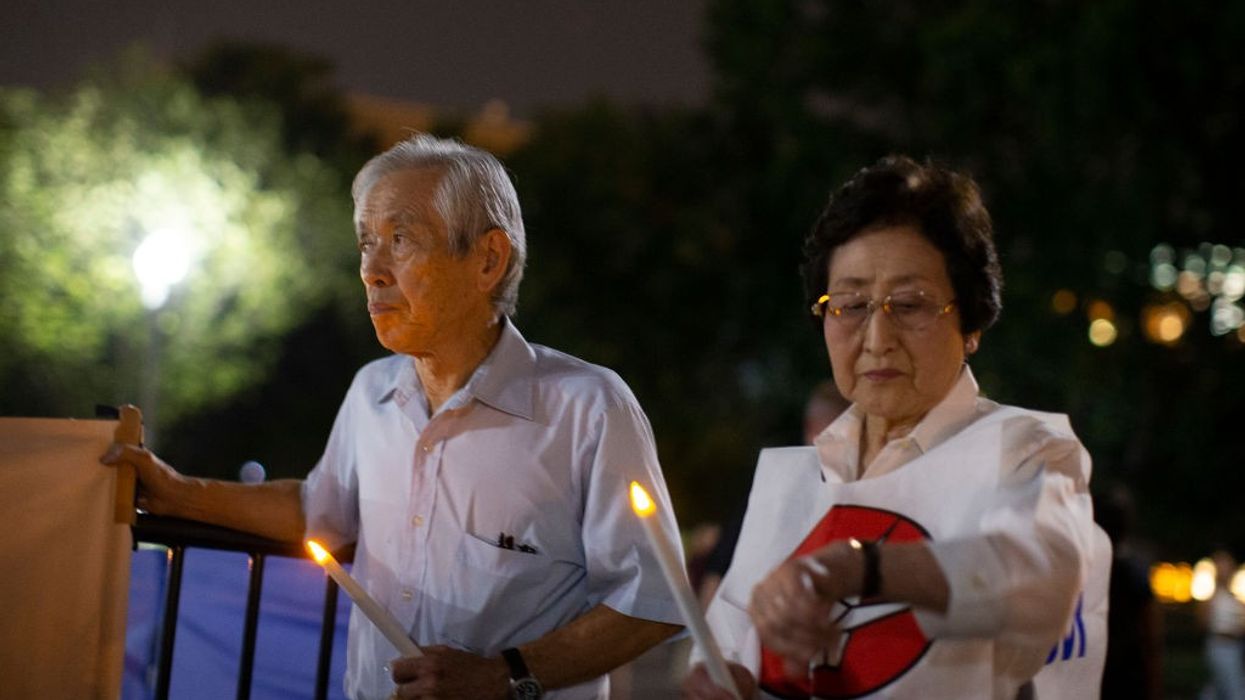
Eighty years have passed since the bombing of Hiroshima, when Kodama’s life and the world changed dramatically. She has not forgotten that day, but she said looking at today’s conflicts, it seems like the world has.
Michiko Kodama was only seven years old when the world’s first nuclear weapon was dropped on her hometown of Hiroshima. Since then, she has dedicated her life to ensuring that her generation remains the only victims of a nuclear holocaust.
“When you witness something like this, you think how can I live? Am I allowed to live? But, I’m glad I’m alive,” Kodama said. “I’m glad I had the life I wanted, and I think it’s because I can tell the stories of those who have passed away.”
Kodama is the assistant secretary general of Nihon Hidankyo, an organization composed of Hibakusha, the Japanese word that refers to the survivors of the Hiroshima and Nagasaki bombings. In 2024, Nihon Hidankyo was awarded the Nobel Peace Prize for their advocacy work on nuclear nonproliferation.
“To fight against nuclear weapons is to preserve life because it is the weapon that is capable of completely destroying the entire Earth. It’s the weapon that’s capable of stopping time,” Kodama, 87, said.
“The atomic bombs that I experienced 80 years ago were like babies compared to today’s nuclear weapons,” said Kodama.
Eighty years have passed since the bombing of Hiroshima, when Kodama’s life and the world changed dramatically. She has not forgotten that day, but she said looking at today’s conflicts, it seems like the world has. And she’s determined to continue reminding the world of the terrors of nuclear weapons.
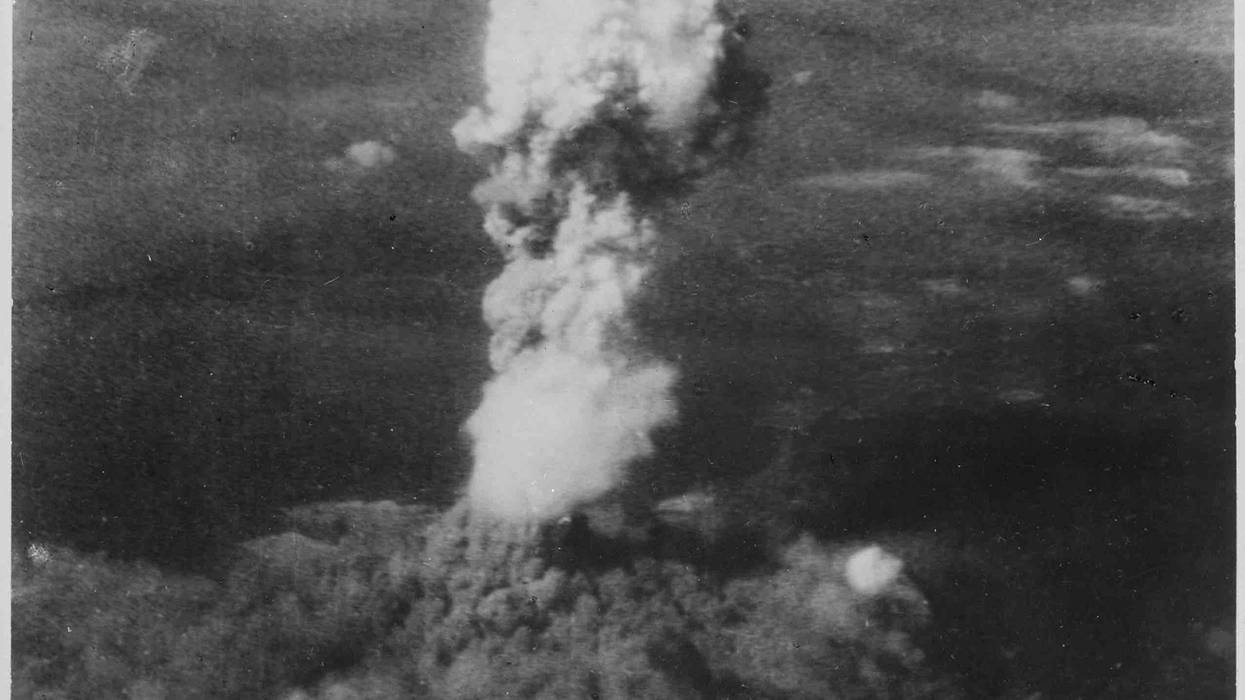
She remembers being under her desk as the bomb hit. She saw a flash of light followed by an extreme wave of heat. Somehow she survived along with her classmates. She recalled the horrific sight of people who had come to her families’ suburb to try and get relief from the epicenter. People who had been so badly burnt that their skin was coming off their flesh.
“These sorts of images show the differences between conventional weapons and nuclear weapons. It’s just a weapon that is so inhumane, so indiscriminate that we just should not have it,” Kodama said.
The Doomsday Clock, which the Bulletin of the Atomic Scientists created in 1947 to measure how close the world is to man-made catastrophe, signals that the world has moved closer to nuclear catastrophe than it ever has been. In January 2025, the clock was moved one second closer to midnight, sending a stark signal to the global community that we are moving closer toward the brink of nuclear holocaust. The clock currently looms at a mere 89 seconds to midnight.
“I fear that World War III will turn into a nuclear war,” she said.
Nine countries currently have nuclear weapons, and many more are seeking to get it as a deterrent.
“I think it’s a huge mistake,” Kodama said. “Nuclear weapons and humans, and of course the Earth, cannot coexist. I know this from personal experience.”
In June 2025, the US bombed Iran’s nuclear sites out of fear they were getting closer and closer to developing a nuclear weapon. Experts said that Iran’s aspirations will not stop and that other countries could follow its example
“In the span of two weeks, Iran was bombed by two nuclear powers, the US and Israel. That could lead to a perverted logic in which developing the nuclear bomb is seen as their only way to be safe from further attacks,” said Thomas Countryman, president of the board at the Arms Control Association.
Kodama warned that more countries with nuclear weapons would only increase the likelihood that a nuclear holocaust would take place.
Kodama described apocalyptic scenes from when the bomb first hit in the center of Hiroshima. People riding on Hiroshima’s famous tram instantly turned to charcoal; those that didn’t die instantly had their skin stripped off from the heat of the ground, and many ended up jumping in the river for relief where they also died.
Although she was one of the fortunate ones to survive the bombing, the consequences of the bomb continued well after August 6 for Kodama.
“I’ll be a victim of the atomic bomb until I die. Yes, I can’t escape the fact that I was a victim of the atomic bomb” Kodama said.
For example, Kodama recalled how she faced discrimination within Japan as a survivor and was told that would have to live alone without getting married because people at the time did not want their future generations “mixed” with those that survived an atomic bomb. Moreover, even after she married and had kids, her daughter suddenly died at 45 after contracting cancer, which Kodama believes was passed down from herself.
Her mother, father, and two brothers, one of whom was born after the bombing Hiroshima, also died of cancer which she attributed to the effects of radiation exposure.
However, even with the devastating effects of Hiroshima, Kodama warned that the bomb dropped 80 years ago would only cause a fraction of the damage that today’s weapons could inflict.
“The atomic bombs that I experienced 80 years ago were like babies compared to today’s nuclear weapons,” said Kodama.
In fact, just 20 days before the bomb exploded she moved from the center of Hiroshima to a suburb. Everyone in her former school was killed. Kodama noted that in some ways she was lucky because the Hiroshima bomb didn’t completely destroy life.
“When the atomic bomb fell on Hiroshima, it was said that no plants would grow for 80 years, but the following year, those trees in the garden sprouted young shoots,” Kodama said. “If something like that were to happen again, no plants would really grow. They wouldn’t grow for 80 years, or even a hundred years. It would be impossible to survive.”
There is no true way to meaningfully honor its memory while so many countries, including the one that dropped the first bomb, actively prepare for future nuclear war.
On August 6, 2025, the world marked the 80th anniversary of the American destruction of Hiroshima. As in decades past, Hiroshima Day served to honor the first victims of atomic warfare and to reaffirm the enduring promise that their suffering would not be in vain, that they and the residents of Nagasaki, devastated three days later in 1945, would be the last places to endure such a fate.
Within that commemorative framework, Hiroshima has been effectively rendered an abstraction and reduced to a cautionary tale. With the involuntary sacrifice of that city and its inhabitants, humanity was offered a profound lesson. In the ruins of Hiroshima, the world confronted a vision of nothing less than its own potential end. And awareness of that apocalyptic possibility emerged almost immediately. The very next day, in fact, the American newspaper PM, based in New York, ran an article speculating on the catastrophic consequences of an atomic bomb detonating in the heart of that very city.
For the first time, thanks to Hiroshima, human beings became an endangered species. People everywhere were presented with an existential choice between the quick and the dead, between one world and none. Humanity could recover its moral bearings and pursue the abolition of nuclear weapons and the renunciation of war, or accept the inevitability that such man-made forces would ultimately abolish most or all of us. (Think “nuclear winter.”) Only through the former could we hope for collective redemption rather than collective suicide.
In our annual ritual of remembrance, Hiroshima is recalled not so much as a site of mass slaughter, but as a symbol of peace, hope, and resilience, a testament to our professed commitment to “never again.” Yet this year, such sanitized appeals of official memory rang increasingly hollow. After all, eight decades later, humanity (or at least its leadership) continues to demonstrate that it learned remarkably little from the horrors of Hiroshima.
At this moment, the history of the bomb needs to be reconsidered, not as an isolated development in an increasingly distant past but as inextricably linked to broader questions of mass violence now, including in Gaza.
What, after all, could it mean to commemorate such a moment in a world where today not one, but nine nuclear-armed states hold humanity hostage to the threat of sudden, total annihilation? Worse yet, today’s arsenals contain thousands of thermonuclear weapons, some of them up to 1,000 times more powerful than those dropped on Hiroshima and Nagasaki. Worse yet, those arsenals are being “modernized” regularly, the American one to the tune of $1.5 trillion or more as a significant portion of our national resources continues to be siphoned away from meeting human needs and redirected toward preparations for (in)human destruction.
Worse yet, all too many of those weapons remain on hair-trigger alert, poised to extinguish life on Earth in what Daniel Ellsberg, the man who long ago released the top-secret Pentagon Papers, once described as a “single, immense hammer-blow to be executed with the automaticity of a mousetrap at almost any provocation.”
Under this country’s current launch-on-warning posture, President Donald Trump (and any president who follows him) holds sole, unquestioned authority to initiate a retaliatory nuclear strike, with as little as six minutes to decide following an alert about a possible nuclear attack (despite a well-documented history of false alarms). This scenario also presumes that the U.S. would only be acting in “self-defense” in response to a nuclear strike by another nation, although mutually assured destruction renders such concepts obsolete. In reality, that assumption is far from certain. Washington (unlike, for example, Beijing) has never adopted a no-first-use policy and continues to reserve the right to initiate a nuclear strike preemptively.
Moreover, what does it mean to remember Hiroshima in a world where, while no atomic bomb has been dropped on Gaza, the tonnage of “conventional” explosives unleashed there is already equivalent to six Hiroshima bombings? As the nuclear abolitionist organization Nihon Hidankyo, composed of Japanese atomic bomb survivors, warned in the lead-up to being awarded the Nobel Peace Prize in 2024, the suffering of Gaza’s children all too eerily mirrors their own experiences in Hiroshima.
That city is therefore not merely a past atrocity but an open wound, not simply a lesson of history but an ongoing nightmare. There is, in short, no true way to meaningfully honor its memory while so many countries (my own included) actively prepare for future nuclear war.
At this moment, the history of the bomb needs to be reconsidered, not as an isolated development in an increasingly distant past but as inextricably linked to broader questions of mass violence now, including in Gaza. Such an approach, in fact, would reflect the way the bomb was originally understood by many of the scientists who built it, sensing that it would prove to be what some of them would soon describe as “a weapon of genocide.”
After those two atomic bombs leveled Hiroshima and Nagasaki, slaughtering up to 210,000 people, the vast majority of them civilians by deliberate design, most Americans responded with relief. Echoing the official narrative, they celebrated the bomb as a triumph of scientific ingenuity and a “winning weapon” associated with bringing a swift and decisive end to World War II, the bloodiest conflict in human history.
Decades of historical scholarship have demonstrated that such a narrative is largely a myth. In the aftermath of those two bombings, a carefully constructed postwar consensus quickly emerged, bolstered by inflated claims that those two bombs were used only as a last resort, that they saved half a million American lives, and, perversely enough, that they constituted a form of “mercy killing” that spared many Japanese civilians. In reality, clear alternatives were then available, rendering the use of nuclear weapons unnecessary and immoral as well as, given the future nuclearization of the planet, strategically self-defeating.
Nonetheless, a war-weary American public overwhelmingly endorsed the bombings. Postwar polls indicated that 85% of them supported a decision made without their knowledge, input, or any form of democratic oversight. Notably, nearly a quarter of respondents expressed a further vengeful, even genocidal disappointment that Japan had surrendered so quickly, denying the United States the opportunity to drop “many more” atomic bombs (although no additional atomic weapons were then available).
It remains unclear whether, had they been ready, Washington would have used them. Despite President Harry Truman’s public posture of steely resolve, his private reflections suggest a deep unease, even horror over their use. As Secretary of Commerce Henry Wallace recorded in his diary, Truman had “given orders to stop atomic bombing. He said the thought of wiping out another 100,000 people was too horrible. He didn’t like the idea of killing, as he said, all those kids.”
Why, then, were most Americans not similarly horrified? As historians John Dower and Ronald Takaki have shown, such exterminationist sentiments were fueled by anti-Asian racism, which framed the Pacific War in the American imagination as a race war. But perhaps more important, the way had been paved for them by the normalization of the practice of devastating area bombing, or more accurately, the terror bombing of both Nazi Germany and Japan.
Over the course of the war, the United States and Great Britain had “perfected” that indiscriminate method of destruction, targeting civilian morale and the collective will and capacity of a nation to sustain its war effort. This came despite the fact that President Franklin D. Roosevelt publicly condemned the aerial bombardment of civilian infrastructure before the U.S. entry into the war as “inhuman barbarism.”
As Daniel Ellsberg observed, when it came to the rapid erosion of ethical restraints under the exigencies of an existential war, “liberal democracies… in fighting an evil enemy, picked up the methods of that enemy and made them into a private ethic that was indistinguishable really from Hitler’s ethic.” That moral collapse would be evident in the devastation wrought upon the German cities of Hamburg and Dresden, as well as in the similar destruction inflicted by the firebombing of Tokyo and other Japanese cities.
That descent into “barbarism” was not lost on contemporary observers. Reflecting on the 1943 Allied bombing of Hamburg, outspoken pacifist Vera Brittain described the destruction as a scene from “the evil nightmare of a homicidal maniac” and as “irrefutable evidence of the moral and spiritual abyss into which Britain and her rulers have descended.” She warned that such actions stemmed from a selective and hypocritical blindness, observing that, “in the Nazis and the Japanese we recognize cruelty when we see it, yet that same cruelty is being created, unperceived, amongst ourselves.”
And such a recognition wasn’t confined to pacifists but extended to policymakers. In response to the devastation caused by the “conventional” bombing campaign against Japan, including the burning to death of as many as 130,000 people in Tokyo in a single night in March 1945, Secretary of War Henry Stimson warned that, if such attacks continued, “we might get the reputation of outdoing Hitler in atrocities.” (The New York Times reported that the bombing of Tokyo may have killed as many as 1-2 million people. While not necessarily accurate, such reporting reflected a broader desensitization to mass death that had come to define the logic of total war, as well as a growing public tolerance among Americans for urbicide, the city-scale slaughter of civilians.)
Not everyone in the Allied nations shared in the prevailing atmosphere of apathy or even jubilation over those nuclear bombings. Before the second bomb struck Nagasaki, French philosopher Albert Camus expressed his horror that even in a war defined by unprecedented, industrialized slaughter, Hiroshima stood apart. The destruction of that city, he observed, marked the moment when “mechanistic civilization has come to its final stage of savagery.” Soon after, American cultural critic Dwight Macdonald condemned the bombings in Politics, arguing that they placed Americans “on the same moral plane” as the Nazis, rendering the American people as complicit in the crimes of their government as the German people had been in theirs.
American scholar Lewis Mumford likewise regarded that moment as a profound moral collapse. It marked, he argued in 1959, the point at which the U.S. decided to commit the better part of its national energies to preparation for wholesale human extermination. With the advent of the bomb, Americans accepted their role as “moral monsters,” legitimizing technological slaughter as a permissible instrument of state power. “In principle,” he wrote, “the extermination camps where the Nazis incinerated over 6 million helpless Jews were no different from the urban crematoriums our air force improvised in its attacks by napalm bombs on Tokyo,” laying the groundwork for the destruction of Hiroshima and Nagasaki.
If we don’t dedicate ourselves to building a world without war and without nuclear weapons, sooner or later we will undoubtedly witness just such devastation on a global and irreversible scale.
The specter of Nazism has always loomed large over the atomic bomb. It was, after all, the fear of a Nazi bomb that first catalyzed the Manhattan Project that would create the American bombs. While the fall of the Nazi regime preceded the use of atomic weapons on Japan by nearly three months, as soft-spoken astronomer Carl Sagan once observed, the ideological imprint of Nazism was etched into the littered landscape of charred bodies and scorched earth of Hiroshima and Nagasaki. It endured in the brutal logic of total war carried forward through the ensuing Cold War arms race with the Soviet Union and culminated in the grotesque accumulation of nuclear arsenals with tens of thousands of world-destroying weapons poised to obliterate humanity.
In a 1986 keynote address before the World Jewish Congress in Jerusalem, “The Final Solution to the Human Problem,” Sagan argued that Hitler “haunts our century… [as] he has shattered our confidence that civilized societies can impose limits on human destructiveness.” In their mutually reinforcing preparations to annihilate one another, erase the past, and foreclose the possibility of future generations, he concluded, “the superpowers have dutifully embraced this legacy… Adolf Hitler lives on.”
Lacking Hitler, Sagan suggested, Washington and Moscow imposed his image on each other. This was necessary because “nuclear weapons represent such a surpassing evil that they can be justified only by an equally evil adversary.” Humanity, he warned, was then locked in a downward spiral into a moral abyss reminiscent of a Greek tragedy. “When we engage in a death struggle with a monster, there is a real danger that we ourselves will, by slow and imperceptible changes, become transmogrified into monsters. We may be the last to notice what is happening to us.”
This influence was evident in the fact that fear of a Nazi bomb had served as the initial impetus for the Manhattan Project and that the future nuclear state would share certain characteristics of the Nazi regime. As psychiatrist Robert Jay Lifton described it, such a state would rely on “the genocidal mentality,” a psychological willingness, combined with the technological capacity and institutional planning necessary to, under certain circumstances, deliberately destroy entire human populations.
In concluding his 1986 address, Carl Sagan warned that World War II had never truly ended. And in a sense, it hasn’t ended even today, given that nine countries now possess such world-destroying weaponry. After all, were a nuclear war to happen in the years to come, a scenario the most powerful states have spent the past 80 years preparing for and making ever more likely, the Allies will have retroactively lost the war. In the radioactive ruins of what was once Washington and New York, Leningrad, Moscow, and Beijing, New Delhi, and Islamabad, no less potentially across much of the rest of this planet, we would witness “the fulfillment of Hitler’s last and maddest vision.”
Such a future is anything but hypothetical. It may, in some sense, already be unfolding around us. It takes no great imagination to envision Hiroshima in the wreckage of Gaza or in the increasingly bombed-out cities of Ukraine. And that’s just a hint of the future, were nuclear weapons ever to be used. If we don’t dedicate ourselves to building a world without war and without nuclear weapons, sooner or later we will undoubtedly witness just such devastation on a global and irreversible scale.
To survive as a species and preserve our humanity, we must, as Dwight Macdonald urged us in August 1945, begin to think “dangerous” thoughts “of sabotage, resistance, rebellion, and the fraternity of all [people] everywhere.” Only then could we commemorate Hiroshima Day without the hypocrisy of talking peace while endlessly preparing for a world-ending war. Only then could we begin to fulfill the enduring promise of never again, no more Hiroshimas.
My acute focus on the danger of nuclear war may stem in part from the accident of my birthday on August 9, 1945.
I was born on August 9, 1945, the day the United States dropped an atomic bomb on Nagasaki, Japan, three days after dropping an atomic bomb on Hiroshima. Fear of nuclear war was widespread among children of my generation. There were air raid drills where we hid under our desks or crouched alongside the wall in the hall. There were debates about the construction of fallout shelters. Fallout from nuclear testing caused the radioactive element strontium 90 to appear in the milk supply, we were told. When I visited the Oceanside public library when I was 12 or so, I read the Bulletin of Atomic Scientists. Each issue included a picture of a nuclear clock showing how close political and military tension was pushing us to midnight and the risks of a nuclear war, which the scientists viewed as unthinkable.
For my 76th birthday, my older brother Ron gave me a puzzle of The New York Times front page on the day of my birth. The three-line banner headline for the day read: “Soviet Declares War on Japan; Attacks Manchuria, Tokyo Says; Atom Bomb Loosed on Japan.” The importance of the Soviet Union joining in their allies’ war against Japan was rightly emphasized by the Times. Unfortunately, the alliance came apart soon after the end of the war, and the Cold War between two nuclear-armed powers shaped global and domestic politics for over 40 years. Although several arms control agreements were reached between 1963 and 2010, in the last 15 years, the cancellation and suspension of these agreements and increasing political and military tension have put the Bulletin’s clock closer than ever to midnight.
We grew up with the fear that the Cold War could become a nuclear war, and each of us had to decide what attitude to take to both the Cold War and the nuclear danger. My parents shaped my attitudes, raised my brother and me to support unions, working people, and civil rights and to oppose the Cold War and McCarthyism. When playing touch football and other games with three other boys when I was about 12, we debated the U.S.-Soviet conflict. We usually played in a field near the Ocean Lea complex where the three of them lived. Touch football is a pretty easy, fun game to play when it’s two against two, at least when the four players are similar sizes, ages, and skill levels. We took breaks from throwing, running, and catching to debate politics, especially international affairs. In these discussions, I was critical of Cold War confrontation and favored negotiations to reduce the dangers of nuclear war and achieve eventual nuclear disarmament.
My acute focus on the danger of nuclear war may stem in part from the accident of my birthday. I’ve been writing about the dangers presented by nuclear weapons for over 60 years. I hope the reader will forgive me for quoting some of my previous writings.
When I was a senior in high school, I wrote some political essays for the Oceanside High School newspaper, Sider Press. I wrote an essay about the nuclear danger just before the Cuban missile crisis erupted. I commented:
On a recent television program, Howard K. Smith made the extraordinary statement that President Kennedy was experiencing a decline in popularity because there was no great crisis for him to overcome. Mr. Smith overlooked one extremely important crisis—that of the threatened nuclear holocaust.
If President Kennedy were to effect a decrease in world tension during the next two years, he would undoubtedly be returned to office. The stage would then be set for the president to work toward a successful disarmament agreement during the next four years. If the president accomplished this task, he would become one of the most popular presidents in the nation’s history.
The essay went on to recommend cultural exchanges and a compromise to achieve an end to nuclear testing. “What we need most is for both sides to make a sincere effort to bring about a decrease in world tension. President Kennedy and Premier Khrushchev should acknowledge the fact that nuclear war would result in the destruction of mankind. There would be no winner in the event of a nuclear catastrophe.” Before my essay appeared in print, Cold War tensions and the danger of nuclear war reached a peak with the Cuban missile crisis. Eight months after the confrontation over Cuba was resolved by diplomacy, the U.S. and the Soviet Union agreed on the Limited Test Ban Treaty.
I explored the significance of the events of 1962 and 1963 in an essay published in The Japan Times in 1999:
...the experience of the missile crisis led Kennedy to move away from seeing foreign policy as a tough competitive game. He came to appreciate the human stakes involved. He was, after all, a parent of young children as well as a president.
In a speech at American University on June 10, 1963, Kennedy indicated the changes in his thinking. He said that the U.S. should seek a “genuine peace“ so that nations can “build a better life for their children” rather than a “Pax Americana enforced on the world by American weapons of war.“
Casting a critical eye on cold war attitudes, Kennedy sought to “make the world safe for diversity.” He stressed that “we all inhabit this small planet. We all breathe the same air. We all cherish our children’s future. And we are all mortal.”
Members of Massachusetts Peace Action, an organization to which I belong, have also been highlighting Kennedy’s American University speech. It’s possible for individuals and presidents to think anew, and it’s dearly needed at a time of the genocide in Gaza and the ongoing and dangerous war in Ukraine.
Shortly after he was inaugurated president, I wrote to Ronald Reagan asking him to accept Leonid Brezhnev’s suggestion that they meet in a summit conference:
I am very concerned about the escalation in anti-Soviet rhetoric that has characterized your first weeks in office. A return to 1950s rhetoric can only lead to increasing tensions between our country and the Soviet Union. Such tensions can bring us to the brink of nuclear war again. And who knows if once at the brink, you will be able to stop from falling over into a nuclear holocaust that would destroy us all... Are you afraid that if peace breaks out, you will find it more difficult to line the pockets of the defense contractors with still more billions of taxpayers’ dollars? Whatever your... fears, I believe you should fear nuclear war more. The overwhelming desire of the peoples of the world is to see an end to the nuclear arms race which threatens us all.
Reagan’s initial aggressive posture led to the development of a massive nuclear freeze movement in the U.S. and a movement in Europe against accepting new U.S. intermediate range nuclear weapons. I was among over 1 million people in New York City on June 12 ,1982 demanding that all sides add no new weapons to their nuclear arsenals. It was the nuclear freeze movement, which the Soviet Union supported, and the Reagan administration attacked, that eventually led to a reversal in Reagan’s policy and the adoption of the Intermediate-Range Nuclear Forces Treaty in 1987. Initiatives by a new Soviet leader, Mikhail Gorbachev, also played a part in Reagan’s change.
About a decade after Reagan left the White House, I was a Fulbright scholar at Tohoku University in Japan. When I arrived in Japan, I mentioned at the initial Fulbright scholar gathering my birth date, my opposition to nuclear weapons, and my experience as part of a generation involved in peace and civil rights activism. Two others around the table, Lois Helmbold, a historian who became a close friend, and Sam Sheppard, the director of the Fulbright program in Japan, mentioned they were also born in 1945. In interviews I’ve conducted with members of my birth cohort, it seemed clear that most of us were influenced by Kennedy’s idea that “the world is very different now.” As San Antonio playwright Sterling Houston put it in my interview with him: “Coming of age in the 60s when there was this ferment [and] the possibilities of change and all this stuff was happening... It seemed like it really could happen... we really could make it better.”
The most memorable experience of my stay in Japan was the visit my younger daughter Leah and I took to the Hiroshima Peace Memorial Museum and the Children’s Peace Monument in Peace Memorial Park. We were already aware of the story of Sadako Sasaki and the folding of paper cranes. Seeing the exhibits in the museum, the monuments, the film Hiroshima: A Mother’s Prayer, and the thousands of cranes in the park brought both of us to tears.
With the danger of nuclear war, greater than ever, we need a renewed grassroots movement to support the eradication of nuclear weapons from the planet.
In an essay published in The Japan Times after I returned home, I commented on the impact of the visit to the Hiroshima Peace Memorial Museum and my concern that Japan was sending 600 soldiers to join the U.S. occupation of Iraq. I mentioned my fear that the government of Japan was undermining the country’s peace constitution. The New York Times article on Japan’s military mission emphasized that the U.S. “imposed” the peace constitution on Japan, but I pointed out the Times failed to note “the strong desire of the Japanese people after the war to break with the militarism and aggression that had brought enormous harm and suffering to Japan’s neighbors and disaster to Japan itself.” I added that “I learned from my time in Japan that strong sentiments for peace and opposition against nuclear arms persist to this day.”
I learned a great deal from the peace museum’s “documentation of the many times my government has threatened to use nuclear weapons and of the continuing advocacy of nuclear disarmament by the citizens and leaders of Hiroshima and Nagasaki.” I argued, that “at a time when a neoconservative clique seeking world hegemony plays a leading role in U.S. foreign policy formation... Japan’s antinuclear advocacy is needed now more than ever.”
Commemorations of the atomic bombing of Hiroshima and Nagasaki are taking place throughout the world this week. On August 6, 2025, United Nations Under-Secretary-General Izumi Nakamitsu issued a statement to the Hiroshima Peace Memorial on behalf of United Nations Secretary General António Guterres:
...today the risk of nuclear conflict is growing. Trust is eroding. Geopolitical divisions are widening. And the very weapons that brought such devastation to Hiroshima and Nagasaki are once again being treated as tools of coercion.
Yet, there are signs of hope.
Last year, the Japanese organization Nihon Hidankyo—which represents the survivors of the Nagasaki and Hiroshima bombings—was awarded the 2024 Nobel Peace Prize for its tireless work in raising awareness about this critical issue.
We must focus our attention on the genocide in Gaza and the “escalating violence” and “forced displacement” in the West Bank, the continuing war in Ukraine, and the humanitarian crisis in Sudan. With the danger of nuclear war, greater than ever, we need a renewed grassroots movement to support the eradication of nuclear weapons from the planet.
Nuclear arms agreements among the nuclear powers are nearly defunct. The people who live in the nuclear armed states need to pressure their governments to eliminate their nuclear stockpiles and instead pursue diplomacy with all the other nations of the world rather than nuclear intimidation.
The United Nations notes that September 26 “The International Day for the Total Elimination of Nuclear Weapons has been observed annually since 2014.” The Treaty on the Prohibition of Nuclear Weapons adopted by the United Nations entered into force on January 22, 2021. We the people of the states possessing nuclear weapons must do all in our power to persuade our governments to ratify the treaty and implement its provisions that will lead to a world without nuclear weapons. The survival of humanity is at stake.
This piece was originally published on Martin Halpern’s Substack, A Marxist Writing and Making History.
They have been telling their stories for nearly 80 years. It’s about time more of us listen.
CONTENT WARNING: This article contains descriptions of nuclear weapons effects, including disturbing accounts of the victims.
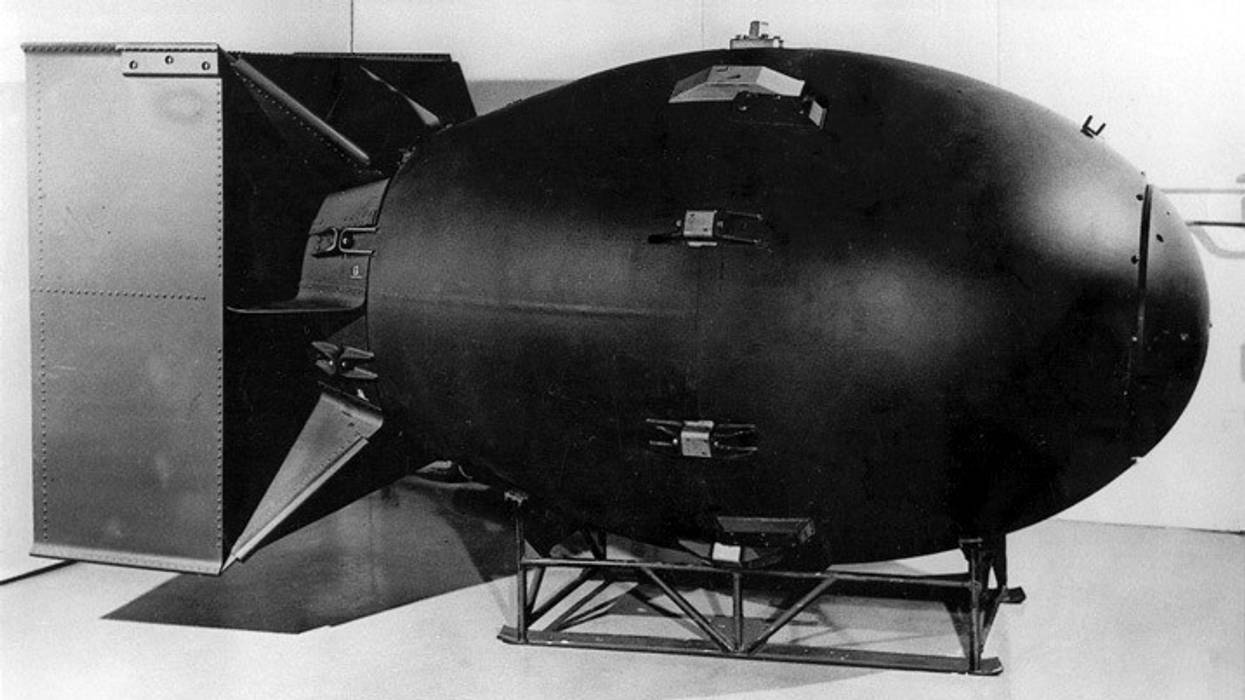
On August 6, 1945, the United States dropped the first atomic bomb ever used in warfare on the city of Hiroshima, Japan. Three days later, on August 9, the second was dropped on Nagasaki. Both cities were totally destroyed by the bombs, a new type of weapon developed by the United States, infamously through the Manhattan Project. In Hiroshima, over 140,000 were killed. In Nagasaki, over 70,000. In the blink of an eye, humanity witnessed two of the darkest days in history.
This year marks the 80th commemoration of the bombings of Hiroshima and Nagasaki. Each year, scores of Japanese peace organizations, and those from other nations, hold events in the two cities to remember the tragedies and renew passions for continuing the fight for peace.
This year, I had the privilege of being invited to attend one such event: the World Conference Against Atomic and Hydrogen Bombs, organized by Gensuikyo. It has been a tremendous honor to join as part of a delegation from the United States and as a representative of the Campaign for Peace, Disarmament, and Common Security, an organization whose board I sit on.
What I have experienced has moved me powerfully. I learned from testimony from nuclear bomb survivors (Hibakusha), technical descriptions of the events of those days, diplomatic arguments from around the world, and demonstrations of peace movements from Japan and beyond. In the aftermath of such powerful testimony, the natural conclusion is inescapable: Nuclear weapons should be made illegal, never used again, and dismantled. The wealth of resources going toward their production should instead be dedicated to programs that actually create security like education, diplomacy, material security, and cooperative institutions.
I’d like to report back what I experienced and learned for the benefit of those unfamiliar with the details of nuclear weapons control—especially those in the United States. As someone who grew up through U.S. public schools and engages with students in higher education, I can say that we are woefully ignorant of the truth. Let this correct the record and help open more eyes to the truth.
I want to share both the technical details of what happened during nuclear bomb detonation as well as testimony from those who survived the blasts, the Hibakusha. Both are difficult to read. I urge readers to open their minds and hearts and imagine to their greatest ability what those who experienced the bombings felt like as horror unfolded before their very eyes.
At the World Conference, Professor Oya Masato of the Nagasaki Institute of Applied Science shared a scientific account of the bombing of Nagasaki. This second bomb exploded at 11:02 am on August 9, 1945, 503 meters above the town of Matsuyama, about three kilometers north of Nagasaki city center. Instantly, the bomb turned into a fireball of tens of millions of degrees. The surface of the fireball cooled to approximately 7,000°C in 0.1 seconds. The ground temperature at the hypocenter (point of detonation) rose as high as 3,000-4,000°C, and humans in the area were instantly carbonized. The bomb generated a shock wave and blast which traveled at 440 meters per second at the hypocenter and 60 meters per second two kilometers away from the hypocenter. Those shock waves destroyed most of the city, an area of 405 square kilometers, within 10 seconds. Fires emerged and burned an area of 6.7 square kilometers. Thousands were instantly killed, and by the end of 1945, the death toll rose to 74,000.
This scientific description begins to describe the horrors of the bomb. But it can be hard to imagine. What stands out is the sheer power and devastation: a whole city leveled and engulfed in flames within seconds. Devastation on a scale never before seen. Callous destruction, indiscriminate murder.
What truly rends the heart is the testimony of Hibakusha, those who survived the bomb and tell their stories. The Hiroshima Peace Memorial Museum depicts many such stories. It’s nearly unbearable to take in and try to imagine even a sliver of what these horrors would feel like. The stories make clear that the atomic bombs created a literal hell on Earth.
A device that can cause this amount of suffering has no place in human society.
One story, shared by a Hibakusha of Hiroshima, Park Jung-soon, 11 years old at the time, describes her experience. On the morning of the bombing, she and her six family members living together were surprised by a flash like lightning and thunder. The sky lit up. Suddenly, a blast and tremendous sound shook the whole house, lifting the entire structure upward. The house fell back down, collapsed, and crushed the family beneath it. It all happened in seconds. They could not move their bodies and thought they would die.
Imagine the sheer terror of suddenly being launched into the air only to plummet down and be crushed by your home. Imagine your home, something that we hold deep attachment to and a place of safety, comfort, and love, collapsing down on you and your whole family. In moments your safe haven becomes the source of incredible pain. Imagine those you love looking at you with the fear of death in their eyes for a split second before having your gaze ripped away by the force of crushing weight.
Jung-soon opened her eyes and found herself trapped under a thick beam. Her mother desperately pulled her out and helped her crawl out of the collapsed walls. Her head was bleeding heavily, but she rose to her feet and looked around: The house next door had fallen down as well, people were running away, crying, shouting. The village as she knew it was falling apart.
While the family fled, they saw people dead on the ground, or alive but in agony crying or shouting. People were pulling carts carrying wounded or dead neighbors. People were covered in burns and suffering in pain. She describes it as like the hell of a cartoon but in reality.
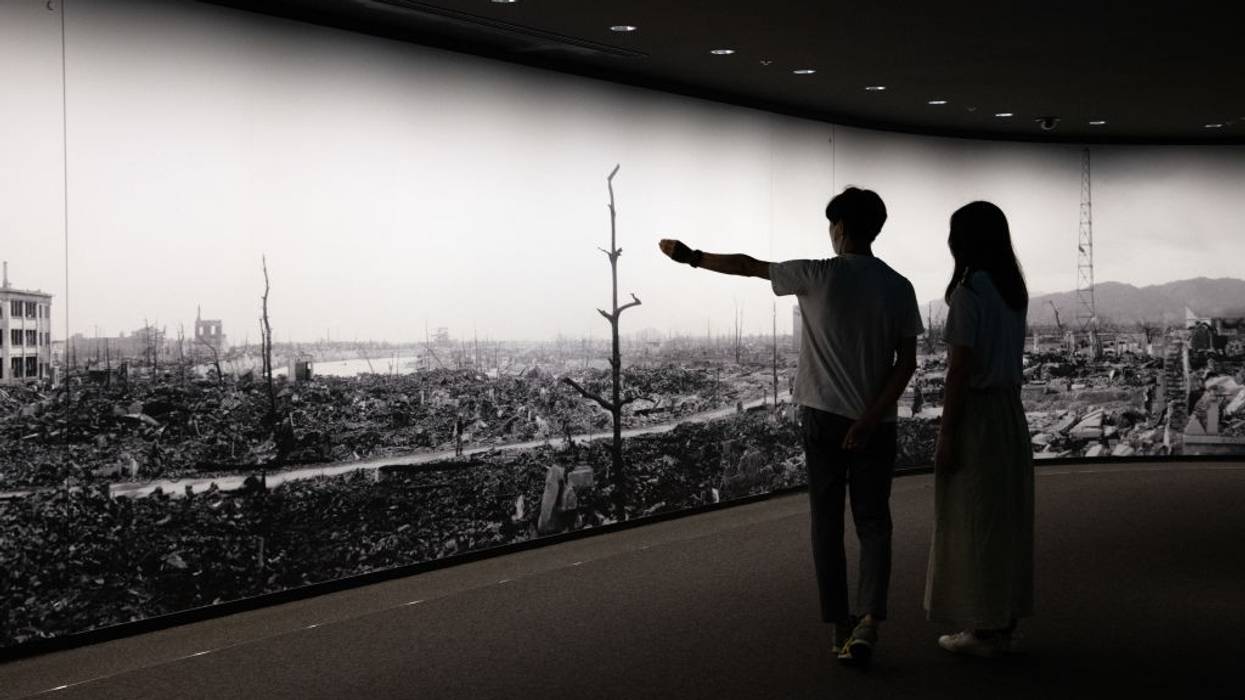
At the Hiroshima Peace Memorial Museum, there were many such stories and testimonies, as well as photographs and artwork created by Hibakusha attempting to visually depict what they experienced. Details like those in Jung-soon’s story were common. People burned beyond recognition. Structures flattened. The dead littering the city. People walking around with flesh peeling from their bodies, literally melting off, begging and screaming for water. It was, indeed, hell on Earth.
It may be difficult, but I implore you to try to deeply imagine what these words convey. In a world where many of us are constantly exposed to language of indiscriminate violence through news media, it may be easy to simply read this and register it as fact. But try to register it as feeling. What would it feel like to feel your own broken body throb with pain while simultaneously witnessing mass death all around you? Can you imagine a human being burnt beyond recognition? Someone with their flesh melting off? The sounds of screams, crying, wailing, and pure fear were profoundly traumatizing.
The effects of nuclear weapons, the scenes described by the Hibakusha, are things that should never be visited upon this Earth. A device that can cause this amount of suffering has no place in human society.
This does not even describe the effects of the bombing that persisted long after the initial devastation. Hibakusha faced severe effects from radiation poisoning and the physical damage—burns, breakages, disfigurations—they sustained. They were also subject to discrimination for decades, as people feared contamination if they came in contact with Hibakusha. Many kept their stories secret.
These are tragic tales that the Japanese peace movement describes and uplifts for all to learn from. They have been telling their stories for nearly 80 years. It’s about time more of us listen.
In the United States, there is a profound culture of ignorance surrounding nuclear weapons. I experienced this firsthand growing up in U.S. public schools and then in collegiate engineering studies.
When I was in high school, I elected to take the upper-level U.S. history class—one which gives college credit if you do well enough. The course is infamous in American high schools: AP U.S. History, or APUSH for short. Our teacher taught out of a book used in many classrooms across the country, titled The American Pageant: A History of the Republic by Kennedy, Cohen, and Bailey. This book, like many others used in the U.S., describes the atomic bombing as the key to ending the second World War, a tough but necessary decision by President Harry Truman. The argument goes that dropping the bombs eliminated the need for a U.S. ground invasion, which would have cost half a million lives (which Howard Zinn notes in A People’s History of the United States seemed to have “been pulled out of the air to justify the bombings”). It becomes a trolly problem of sorts: Would you end 200,000 lives to save half a million?
That’s as far as we typically get in U.S. depictions of the bombings. We are stuck thinking at a high school level about nuclear weapons—in a country whose high schools are not known for their rigor or nuanced teaching of U.S. history. Now, when I teach at universities and talk with students in engineering, their understanding of the bombings is the same: an unfortunate necessity or political blunder. Even the faculty teaching the course, presumably sharp thinkers with PhDs, repeat the same lines.
Students should not be indoctrinated into a version of the story favorable to the U.S. perspective.
In popular media, the story is no different. 2023’s blockbuster Oppenheimer—which broke box office expectations and was given seven awards at the Oscars—was a shallow depiction of the events. As it told a dramatized version of Dr. J. Robert Oppenheimer’s work on the Manhattan Project, it attempted to depict his inner turmoil as he grappled with visions of what must have become of victims. However, the screen time dedicated to his haunting visions does not exceed five minutes in a three-hour film.
Accurate depictions of the horrors of nuclear bombings are nowhere to be found in dominant U.S. education and media. Textbooks do not describe the detailed suffering of victims, the social discrimination they experienced afterward, or the stories of their deeply difficult lives. Films choose not to center the victims of Hiroshima and Nagasaki, but rather the perpetrators. It is tragic and laughable to consider the fact that a film like Oppenheimer is praised for its critique of nuclear weapons while it entirely centers the life of the man who was instrumental in their creation rather than the lives of his victims.
Peace organizations across the U.S. are pushing against these narratives, trying to spread the truth, and fighting for nonproliferation. But without countering the widespread ignorance of our own population, we will not get far. In a world increasingly plagued by misinformation and falsehood, we have our work cut out when it comes to effectively spreading the truth about nuclear weapons. We need to dispel the veil of ignorance covering our communities if we are to build a large enough movement to push the U.S. to disarm, re-engage in treaties, and work toward peace under cooperation rather than precarious stability based on fear and threats.
One of the first steps can be to simply tell the truth. Stories matter, and how we tell the history of our own nation matters. Students should not be indoctrinated into a version of the story favorable to the U.S. perspective. Media should accurately describe the horrors. The stories of the Hibakusha should be known by everyone.
The hibakusha, or survivors, "deserve to see their work vindicated and to witness the end of these inhumane, indiscriminate weapons of total destruction in their lifetime," said ICAN's leader.
Survivors of the U.S. atomic bombing of Hiroshima and other nuclear abolitionists renewed calls for ridding the world of nukes on Wednesday, the 80th anniversary of the American attack on the Japanese city.
During the annual Peace Memorial Ceremony in Japan, Hiroshima Mayor Kazumi Matsui pointed to Israel's assault on the Gaza Strip and the Russian invasion of Ukraine, which have contributed to the narrative that nuclear weapons are necessary for national defense and elevated global fears of their use.
"These developments flagrantly disregard the lessons the international community should have learned from the tragedies of history," he said. Russia and the United States—which is arming Ukraine and Israel—have the largest nuclear arsenals. The other nuclear-armed nations are China, France, India, Israel, North Korea, Pakistan, and the United Kingdom.
"Despite the current turmoil at the nation-state level, we, the people, must never give up," Matsui added. "Instead, we must work even harder to build civil society consensus that nuclear weapons must be abolished for a genuinely peaceful world."
Silent prayers were held in the Japanese city of Hiroshima, marking 80 years since the atomic bombing of the city by the US on August 6, 1945.
[image or embed]
— Al Jazeera English (@aljazeera.com) August 6, 2025 at 6:35 AM
The mayor also urged the Japanese government to respect the wishes of hibakusha, or survivors, and join the United Nations Treaty on the Prohibition of Nuclear Weapons (TPNW), which was adopted in 2017 and took effect in 2021.
"The treaty not only bans nuclear weapons and all activities related to their production, deployment, and use, but also mandates that countries that joined the treaty provide support for people harmed by nuclear weapons in the past and for the cleanup of areas that were used for nuclear testing," survivor Terumi Tanaka noted Wednesday in a New York Times opinion piece.
Tanaka was 13 years old at the time of the bombing—an experience he recounted last year, while accepting the Nobel Peace Prize on behalf of a group he co-chairs: Nihon Hidankyo, also known as the Japan Confederation of A- and H-Bomb Sufferers.
"Our Nobel Peace Prize sends a message to younger people that they need to be aware that we are facing an emergency—and the need to see a larger movement of young activists working to address the nuclear threat," 93-year-old Tanaka wrote Wednesday. "Even here in Japan, not enough people see this as a pressing issue."
The International Campaign to Abolish Nuclear Weapons (ICAN)—which won the Nobel Peace Prize after playing a significant role in building support for the TPNW in 2017—also used the anniversary to advocate for abolishing nuclear weapons.
ICAN executive Melissa Parke, who joined the ceremony in Japan, said in a statement that "it is not possible to come to Hiroshima and attend these solemn commemorations without being moved as well as convinced of the urgent need for nuclear weapons to be eliminated."
"The hibakusha, who were awarded last year's Nobel Peace Prize for their tenacious campaigning for the elimination of nuclear weapons, deserve to see their work vindicated and to witness the end of these inhumane, indiscriminate weapons of total destruction in their lifetime," Parke argued. "That means the nine nuclear-armed countries, most of which were represented here today, must heed their call to join the U.N. Treaty on the Prohibition of Nuclear Weapons and get rid of their arsenals."
As we mark 80 years since the atomic bombings of Japan, CND Vice-President Caroline Lucas writes from Hiroshima and asks why are nuclear powers ditching disarmament for a new nuclear arms race? Read more: www.independent.co.uk/voices/hiros...
[image or embed]
— Campaign for Nuclear Disarmament (@cnduk.bsky.social) August 6, 2025 at 8:03 AM
In a Common Dreams opinion piece about the youth impacted by the 1945 bombings, ICAN treaty coordinator Tim Wright wrote: "The fact that children would suffer the greatest harm of all in the event of a nuclear attack against a city today should have profound implications for policymaking in nuclear-armed states and spur action for disarmament. Yet, all nine such states continue to act contrary to that objective. And the risk of a nuclear weapon being used again appears to be at an all-time high."
Common Dreams also published related opinions from Gerry Condon, a Vietnam-era veteran and former president of Veterans for Peace; Austin Headrick, public education and advocacy coordinator for Asia at American Friends Service Committee; and Ann Wright, a U.S. Army veteran who resigned from the U.S. State Department in opposition to the 2003 invasion of Iraq.
Speaking at the ongoing 2025 World Conference Against Atomic and Hydrogen Bombs, Wright noted that "there are a multitude of organizations in the United States and around the world that are working for the elimination of nuclear weapons."
"As we commemorate the lives lost and damaged by nuclear weapons 80 years ago," she said, "we commit ourselves to work harder for the elimination of these weapons, taking on our governments and the industries that make money from the construction and testing of these weapons of mass destruction."
ICAN in June released a report showing that the world's nine nuclear-armed nations spent more than $100 billion on their arsenals last year, up 11% from 2023. A few days later, the Stockholm International Peace Research Institute's annual yearbook warned that "a dangerous new nuclear arms race is emerging at a time when arms control regimes are severely weakened."
Those reports followed similar warnings from the experts behind the Doomsday Clock, who in January set the symbol of how close the world is to apocalypse at "89 seconds to midnight—the closest it has ever been to catastrophe."
Fueling fears of such a catastrophe, U.S. President Donald Trump said last Friday that he "ordered two Nuclear Submarines to be positioned in the appropriate regions" in response to "highly provocative statements" by former Russian President Dmitry Medvedev, who is now the deputy chairman of Russia's Security Council.
During Trump's first term, he withdrew the United States from the 1987 Intermediate-range Nuclear Forces Treaty with Russia—after which the Kremlin declared a self-imposed moratorium on the deployment of those missiles. The Russian Foreign Ministry announced Monday that it will no longer abide by its rules, citing recent moves by the U.S. and its allies.
With escalating military confrontations today—even the possibility of a World War—how long can “deterrence” work?
Eighty years ago, the U.S. dropped nuclear bombs on the civilian populations of Hiroshima and Nagasaki. There are now nine nuclear-armed nations, many in military confrontation with one another. It is quite remarkable that there has not been another nuclear war. How can this be explained?
Some say the absence of another nuclear war proves that nuclear “deterrence” is working, and to some extent that is true. These nations are rightfully afraid of a nuclear conflagration, which could obliterate their societies, and even destroy all life on planet Earth. With escalating military confrontations today—even the possibility of a World War—how long can “deterrence” work?
“So far so good” is probably the faintly hopeful refrain heard from many who feel helpless to undo the nuclear danger. This is reminiscent of the cartoon of the man falling from the top of a building. As he passes each descending floor, he proclaims, “So far, so good…”
In reality, a fair amount of luck has helped humanity avert nuclear catastrophe until now. We came very close during the “Cuban Missile Crisis.” A political officer on a Russian submarine that was out of communication and uncertain if a nuclear war had already begun called off a missile launch at the last minute. Another Russian military technician, suspicious of an errant radar reading that appeared to show incoming U.S. missiles, called off another imminent nuclear strike. It could just as easily have gone the other way.
Many experts worry that it will be an accidental nuclear launch that ends us. This is all the more concerning as Artificial Intelligence is applied to nuclear weapons on hair-trigger alert, decreasing the decision-making time to split seconds, and removing human oversight. What could go wrong?
2025 also marks 80 years from the end of World War II and the defeat of the German fascists by Russia, the United States, and the European Allies. Eighty years since Russian and U.S. troops liberated thousands of skeletal prisoners from German concentration camps, much to the horror of the world, which reacted with calls of “Never Again!”
But wait, don’t we have concentration camps now in the U.S.? Isn’t that why Immigration and Customs Enforcement (ICE) now has a larger budget than many national militaries, and larger than the entire current federal prison system? They are building concentration camps for undocumented workers, whom they demonize as “murderers,” “rapists,” “gang members,” and “terrorists.” The vast majority of immigrants who have already been violently taken from their jobs and families, imprisoned, and deported have no criminal records whatsoever, and are productive, respected members of their communities.
If you think I am pointing the finger at the U.S. as the “bad guy” who is mostly responsible for the prospect of a civilization-ending nuclear war, then you are reading correctly.
Authoritarianism with distinct overtones of white supremacy is on the rise once again, while craven European politicians clamor for war with Russia and more military spending. What could go wrong?
Israel, purportedly a safe haven for the persecuted Jewish people—a “land without people for a people without land”—is escalating its blatant genocide in Gaza. The images of intentionally starved Palestinian men, women, and children conjure images of emaciated prisoners—mostly Jews—in World War II concentration camps.
Israel is also a nuclear power, although it has long been considered impolite to say so. The United States helped Israel gain nuclear technology and has helped to shield Israel from any nuclear accountability. Israel has not signed the Nuclear Non-Proliferation Treaty (NPT). Its nuclear arsenal is not inspected by the International Atomic Energy Agency (IAEA), which the U.S. weaponized to support its rationale for war against Iraq, Syria, and Iran. The IAEA announced a resolution critical of Iran’s nuclear program on Thursday, June 12, the day before Israel’s attack on Iran. Coincidence? Probably not. Like so many other international bodies, the IAEA has been subverted to serve U.S. and Israeli war aims.
Unlike Iran, Israel actually has nuclear weapons. Will they use them against Iran? The Israeli government of right-wing extremists has already shown us the depths of depravity they are willing to go. Furthermore, all their Arab neighbors know Israel is the only nuclear-armed nation in the Middle East.
Daniel Ellsberg, author of The Doomsday Machine: Confessions of a Nuclear War Planner, reminded us that “nuclear weapons are used every day. They are like a gun you point at somebody’s head.”
Aside from “luck,” it has been nuclear arms treaties that have held nuclear war in check. In recent years, however, the U.S. has shredded most of these treaties and missed many opportunities for peace:
Taken in their totality, these U.S. moves constitute an attempt to gain nuclear superiority, including the possibility of launching a First Strike nuclear attack. Pulling out of the ABM and INF treaties, in particular, indicate U.S. intentions to threaten Russia with nuclear war.
Is it any wonder that Russia, faced with the prospect of the U.S.-North Atlantic Treaty Organization troops and nuclear weapons systems stationed on its border with Ukraine, felt compelled to take military action? Now Russia is stuck in a bloody war that has been constantly escalated by the U.S., which has rejected multiple opportunities for peace talks since the war began. Russia asked for neutrality for Ukraine and respect for the rights of Ukraine’s Russian-speaking populations. Over 1 million casualties later (both sides), the bloody trench-and-drone war drags on, not because of Russian intransigence, but because of the aggressive U.S. policy of “full-spectrum dominance” in every corner of the globe.
On June 1 of this year, a U.S.-supported Ukrainian drone attack on nuclear bombers in Russia almost triggered a nuclear war. According to a Russian general who spoke with former Central Intelligence Agency (CIA) geopolitical analyst Larry Johnson, the world was even closer to nuclear war than during the Cuban Missile Crisis. The Russian bombers were openly visible on the tarmac, in accordance with the New START Treaty, which is designed to prevent a nuclear-first strike by either Russia or the U.S. This last remaining nuclear arms control treaty between the U.S. and Russia is due to expire this coming February. But it already has been drone bombed.
News Flash! President Trump just posted on his Truth Social account that he is sending two nuclear-armed submarines closer to Russia. Why? Because he didn’t like something that Russia’s Dmitri Medvedev said on social media. What? Trump is scoring pissing points by playing with nuclear weapons? A narcissistic psychopath has his hand on the nuclear button. This is all the more reason to push for an end to the president’s sole authority to launch a nuclear war.
To round out this bleak report, we must at least mention that the U.S. is planning for war against China. The United States is openly planning to wage a war against China—some say as soon as 2027. Why? Because China’s remarkable revolution from extreme poverty to becoming a prosperous global powerhouse is something that the U.S. ruling class (or “deep state”) will not accept. So China will not be attacked because of its military aggression. Even as the U.S. wages perpetual war on multiple countries, China has not been at war with anybody in this century. U.S. complaints about Taiwan are nothing more than an excuse, a trigger for the war that U.S. leaders are determined to wage, at all costs.
The Pentagon has figured out that it cannot win a conventional war against China, however. It is planning to use nuclear weapons—an overwhelming first strike or possibly only “tactical nuclear weapons,” those cute little guys that are several times more powerful than what was dropped on Hiroshima.
U.S. war planners recently asked Australia and Japan to declare what military resources they will bring to bear in a war against China. And get this… the U.S. held talks with Japan, of all nations, to discuss how they will coordinate their efforts after a nuclear strike on China. Among the issues they discussed were how they could best manage public opinion after a nuclear war.
It is mostly by dumb luck, however, that we have not all perished in a nuclear Armageddon already.
So if you think I am pointing the finger at the U.S. as the “bad guy” who is mostly responsible for the prospect of a civilization-ending nuclear war, then you are reading correctly. To put it bluntly, the problem is U.S. imperialism. The waning U.S. empire, desperate to maintain its hegemony and expand it, is the elephant in the room. It is buttressed by a very large and powerful military-industrial complex (MIC), the one that former President Dwight Eisenhower warned us about—now on steroids. Ray McGovern of Veterans Intelligence Professionals for Sanity (VIPS), a former CIA analyst himself, has expanded the MIC acronym to MICIMATT (Military Industrial Congressional Intelligence Media Academia Think Tanks). Yes, they are all complicit, not just with genocide in Palestine, but with militarizing and destroying the world. We peace-loving people have our work cut out for us. We are up against a lot.
There is a lot of money to be made from war and militarism. And politicians learn the advantages of justifying war and funding the war machine. The ever-growing Pentagon budget has ballooned to over $1 trillion under Trump, money that will be redirected from the social security net that is being systematically shredded. Spending on nuclear weapons “modernization” alone will cost $100 billion in just the next year (from the budgets of the Pentagon and the Department of Energy).
For decades, peace activists, scientists, and others have been warning us about the “growing danger of nuclear war.” Those sounding the nuclear alarm have been treated like the proverbial fanatic with the sign, “The End Is Near,” or like Chicken Little—“The sky is falling.” It is mostly by dumb luck, however, that we have not all perished in a nuclear Armageddon already. The guard rails have been removed, with the U.S. abrogation of nuclear arms deals. There are very few “adults in the room,” certainly not in the U.S., where neocons who love Israel but hate Iran and Russia have seized the helm. It will take a miracle and a lot of activism to avoid utter disaster in the relatively near future.
Many peoples are already experiencing disaster, what with wars, genocide, extreme poverty, starvation, and the climate crisis—the fruits of corporate greed and militarism. Many people also suffer from the poison of the entire nuclear cycle. There are 15,000 abandoned uranium mines in the Western U.S., many of them on First Nations lands. Radiation contaminates the water, the air, the land, and the people, who suffer from many cancers and radiation-related diseases.
Then there are the “downwinders” who suffer from the radiation of nuclear bomb testing. Or worse. The Marshall Islands were devastated by nuclear bomb testing. From 1946 to 1958, the U.S. detonated 67 nuclear bombs on this island nation in the middle of the Pacific Ocean. To add insult to injury, their islands are now “sinking” from global warming and rising seas. Many Marshallese, unable to grow food on radiated land and unable to eat the fish from radiated waters, have been allowed to live in the U.S., without citizenship or security, and denied healthcare by many states. There is no cancer treatment facility in the Marshall Islands, and no Veterans Affairs facility for its many veterans of the U.S. military.
We will end this disturbing nuclear tour on a positive note. It has to do with the Marshall Islands. In 1958, four Quaker peace activists bought a sailboat and announced to the world their intention to sail from Los Angeles 4,000 miles into the nuclear test zone in the Marshall Islands to stop U.S. nuclear testing. They were led by Albert Bigelow, a World War II Navy commander who resigned his commission in protest of the U.S. nuclear bombings in Hiroshima and Nagasaki.
Halfway through the voyage, when Bigelow and his intrepid crew pulled into Honolulu, they were arrested and thrown in jail and the Coast Guard seized their boat, named Golden Rule. They never made it to the Marshall Islands, but they succeeded in bringing worldwide attention to the danger of radiation that was floating all over the globe, even getting into mothers’ milk. Opposition to nuclear testing led to the Limited Test Ban Treaty of 1962, signed by then-President John F. Kennedy and the leaders of Russia and the United Kingdom. The treaty banned nuclear testing in the atmosphere, in the water, and in space. Only underground tests were permitted. These days most nuclear testing is done using computer simulations.
The remarkable saga of the Golden Rule continued. The 34-foot ketch was sold and sailed as a pleasure boat by several families to the South Pacific and the Caribbean. Somehow, in 2010 it was found in Humboldt Bay in northern California—a derelict boat that had sunk in a gale and had a big hole in its side. Some locals dragged the beat-up boat onto the beach and planned to make a bonfire of it. When a someone discovered the boat’s legacy, however, local members of Veterans For Peace rescued it and decided to restore it to its original glory.
In June of 2015, after five years of dedicated volunteer labor by veterans, Quakers, and boat lovers, the Golden Rule splashed back into the waters of Humboldt Bay and began sailing up and down the West Coast from British Columbia to Mexico (Ensenada), then to Hawai’i and all around the Hawai’ian islands. Back to California, trucked to Minneapolis, sailed down the Mississippi to the Gulf of Mexico, to Cuba and up the East Coast to Toronto and back to Chicago, a 12-month voyage with a total of 102 port stops. At every stop the Golden Rule and its crew were welcomed excitedly by local peace and environmental activists as well as by state and local officials. Nobody wants a nuclear war!
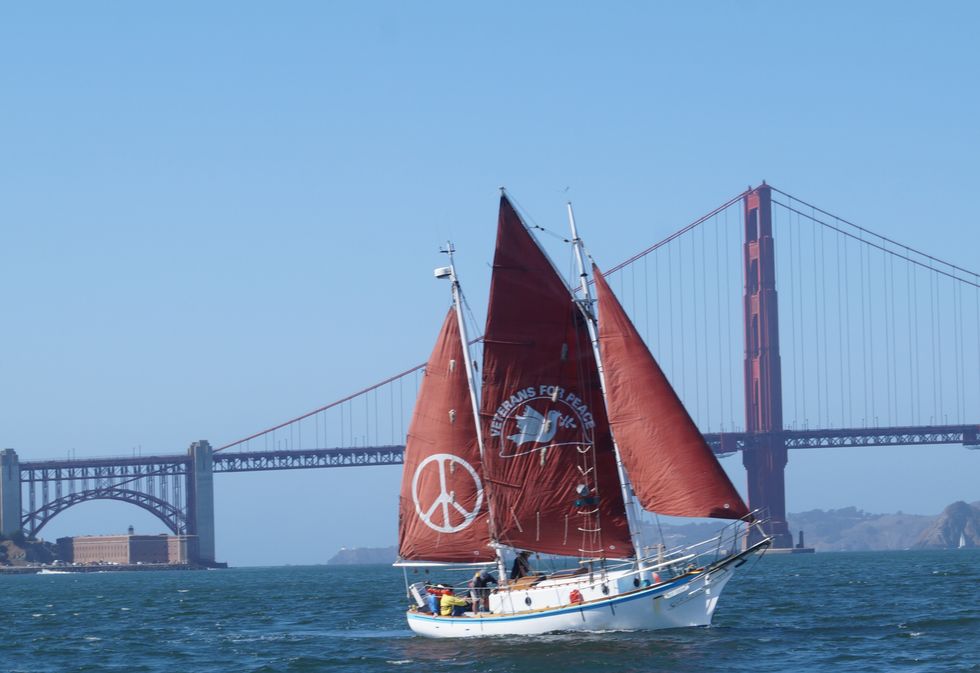
The historic Golden Rule peace boat sailed last week from its homeport in Humboldt Bay to San Francisco Bay, where it will spend the month of August educating the public about the “growing danger of nuclear war,” and the importance of supporting the U.N. Treaty on the Prohibition of Nuclear Weapons (TPNW). The treaty, supported by an overwhelming majority of countries, went into force in January 2021. It prohibits nations from developing, testing, producing, manufacturing, transferring, possessing, stockpiling, using, or threatening to use nuclear weapons, or allowing nuclear weapons to be stationed on their territory. It also prohibits them from assisting, encouraging, or inducing anyone to engage in any of these activities
The Golden Rule is a national project of Veterans For Peace, a 40-year-old organization dedicated to exposing the true costs of war; to restraining our government from intervening, overtly and covertly, in the internal affairs of other nations; and to ridding the world of nuclear weapons. At its recent national convention, veterans from U.S. wars in Vietnam, Iraq, Afghanistan, and recent deployments made a united call for opposition to the U.S.-backed Israeli genocide in Gaza and for resistance to racist ICE attacks in our own communities. While calling for the abolition of nuclear weapons, the Golden Rule will be echoing these urgent cries for “Peace at Home, Peace Abroad.”
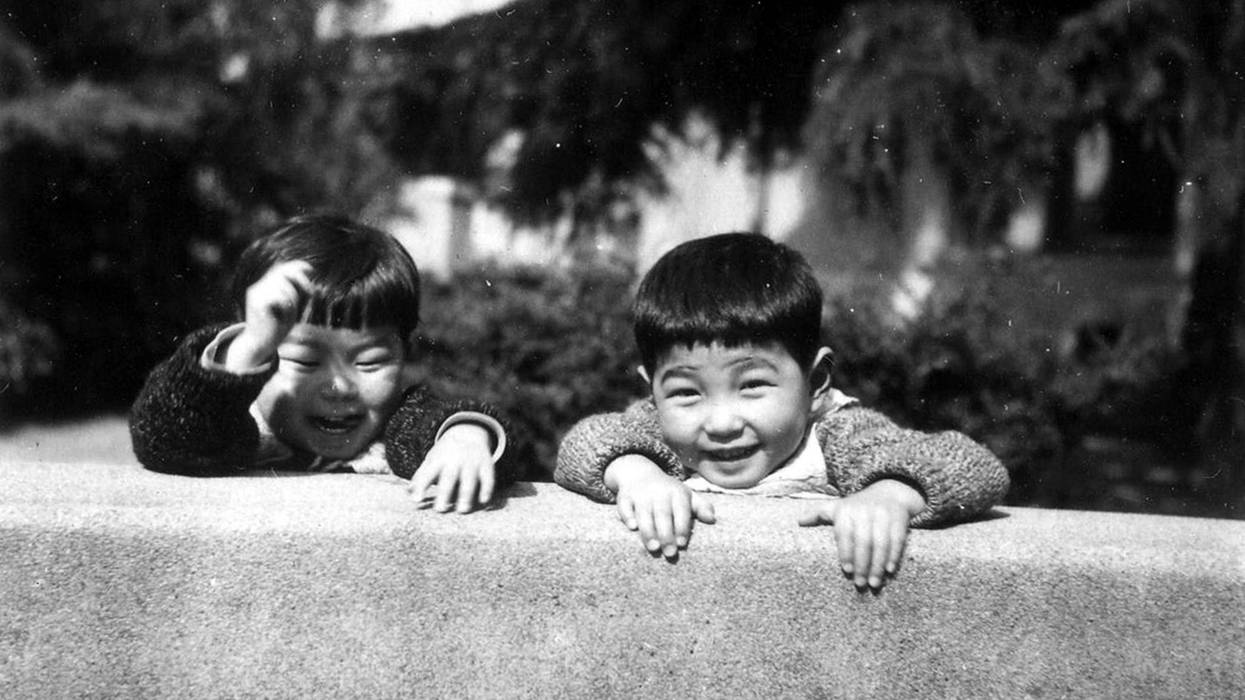
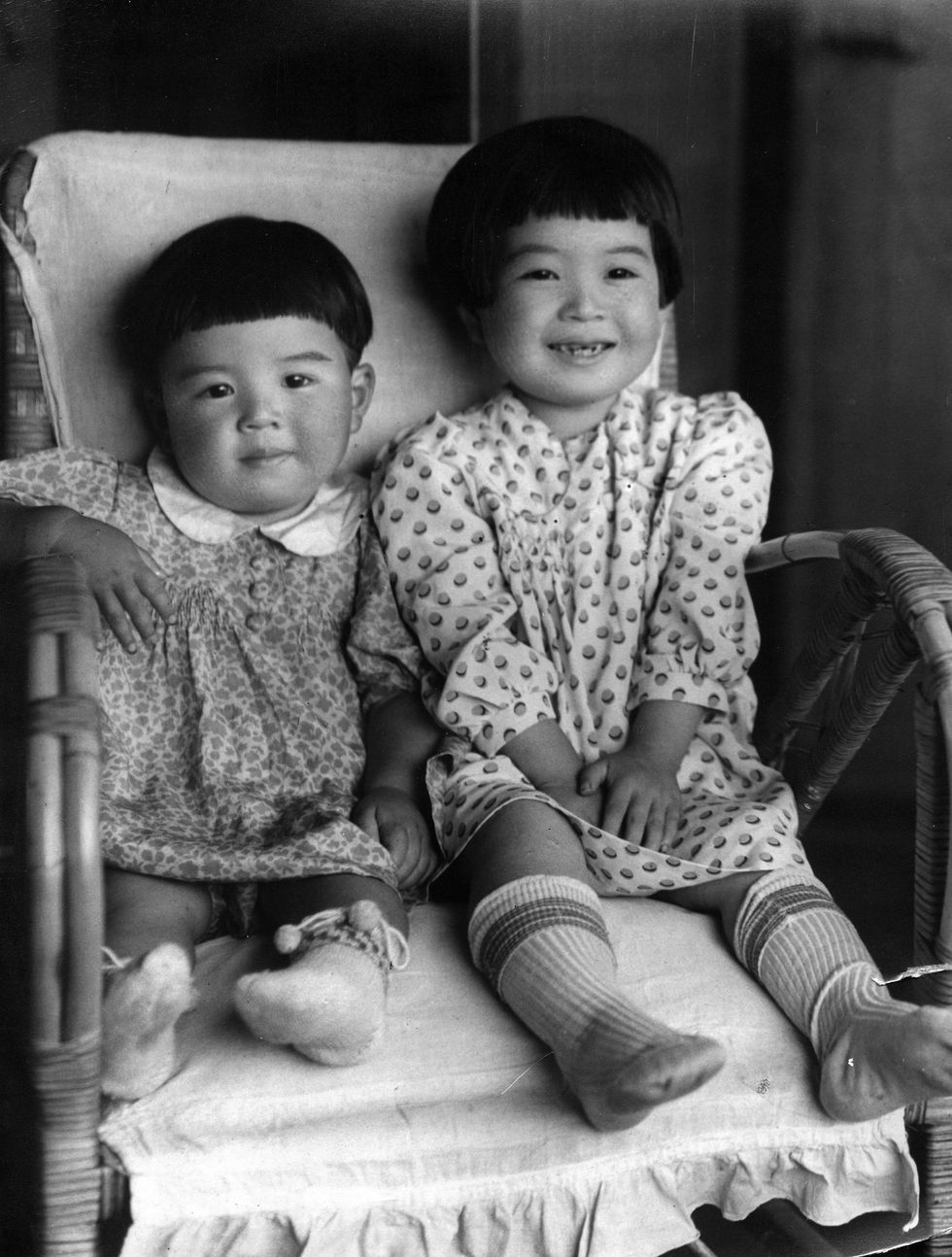
The fact that children would suffer the greatest harm of all in the event of a nuclear attack against a city today should have profound implications for policy-making in nuclear-armed states and spur action for disarmament. And yet the world's nuclear-armed states continue to withhold their support for abolition.
Before dawn on August 6, 1945, Tsuyako Kubota gave birth to her second daughter at her home in Hiroshima’s Nishikanon neighborhood. A few hours later, in a blinding flash, much of the city was reduced to smoldering ruins by a single atomic bomb.
The young mother, her newborn baby and her two-year-old daughter, Sumie, became trapped in the wreckage of their home. The girls’ father, Minoru, a Japanese-American from Hawaii, tried desperately to free them.
“Sumie was crying,” he recalled. “She said to me, ‘Daddy, it’s hot! The fire is coming! My hands are burning!’ There was a final scream, and then I couldn’t hear her voice anymore.”
Sumie and her hours-old sister—who was never given a name—were among the estimated 23,000 children killed in the U.S. atomic bombing of Hiroshima 80 years ago this week. A further 15,000 perished in the attack on Nagasaki three days later.
“She said to me, ‘Daddy, it’s hot! The fire is coming! My hands are burning!’ There was a final scream, and then I couldn’t hear her voice anymore.”
Their deaths, and those of tens of thousands of other civilians, challenge official narratives in the West that the use of nuclear weapons against the two Japanese cities in the final days of World War II was morally justified.
A new poll by the Pew Research Center shows that U.S. public support for the attacks is declining. In 1945, it was as high as 85 percent. Today, only around 35 percent of Americans believe their government’s actions were justified, with 31 percent believing they weren’t. The other third are unsure.
…
With few exceptions, those who survived the atomic bombings and are still alive were children at the time. Through their young eyes, they witnessed unimaginable horror. Known in Japanese as hibakusha, many have devoted their lives to the cause of nuclear disarmament, sharing their first-hand testimonies time and again in the hope of avoiding a recurrence of such tragedies. Their warning is stark: humanity and nuclear weapons cannot coexist.
Last December, their efforts were recognized with the Nobel Peace Prize awarded to Nihon Hidankyo, or the Japan Confederation of A- and H-Bomb Sufferers Organizations.
Their warning is stark: humanity and nuclear weapons cannot coexist.
Many of the survivors lost their parents, siblings, and friends. They have suffered lifelong physical and psychological trauma. Some have endured multiple surgeries to treat painful keloid scars, extract glass fragments embedded deep in their bodies, or remove cancers caused by their exposure to the bombs’ radiation.
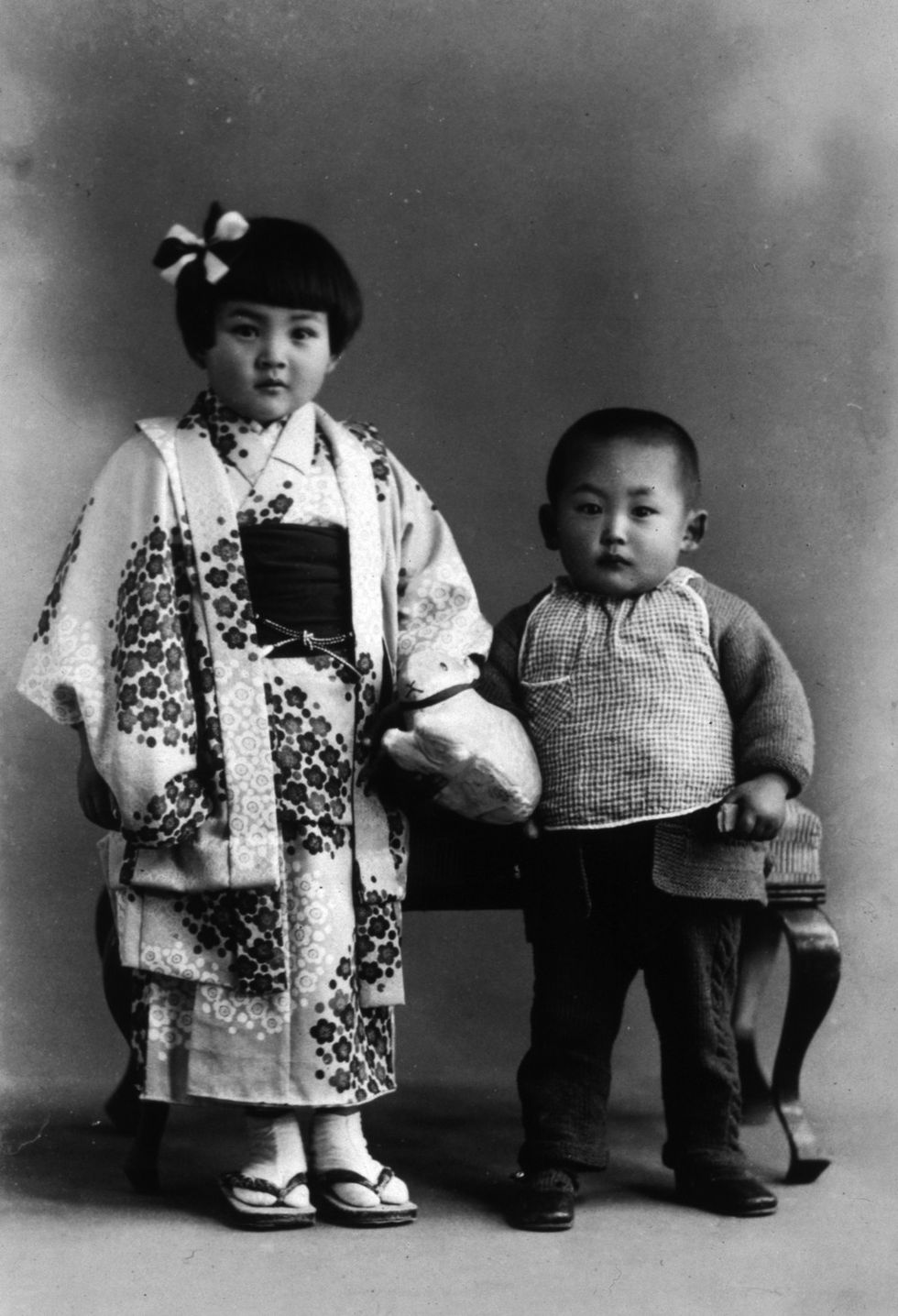
In a nuclear attack, children are especially vulnerable, as their skin is more delicate and their bodies frailer, and they have more cells that are growing and dividing rapidly and thus more susceptible to radiation effects. They are significantly more likely than adults to die from burns, blast injuries, and acute radiation sickness.
As the late paediatric endocrinologist Michael S. Kappy explained in a 1984 paper, “Children and adults do not share equally the dreadful short-term effects of ‘the bomb’, and it is clear from all available data that children are also most susceptible to the long-term effects that appear after varying latency periods.”
The disproportionate impact of nuclear weapons on infants and children was underscored in a declaration adopted this March by the 73 countries that have so far ratified or acceded to the landmark 2017 Treaty on the Prohibition of Nuclear Weapons.
In a nuclear attack, children are especially vulnerable, as their skin is more delicate and their bodies frailer, and they have more cells that are growing and dividing rapidly and thus more susceptible to radiation effects.
The fact that children would suffer the greatest harm of all in the event of a nuclear attack against a city today should have profound implications for policy-making in nuclear-armed states and spur action for disarmament. Yet, all nine such states continue to act contrary to that objective. And the risk of a nuclear weapon being used again appears to be at an all-time high.
…
In Hiroshima, thousands of school students were outdoors creating firebreaks on the morning of the atomic bombing. Completely unshielded from the bomb’s effects, they stood little chance of survival. The mortality rate for those within one kilometre of the hypocentre was around 94 percent. Approximately 6,300 of them died.
Many parents spent days or weeks searching for their missing children in the aftermath. For some, not knowing their children’s fate became unbearable. One mother in Hiroshima, refusing to accept her daughter’s death, kept a door or window open for the rest of her life in case she one day returned home.
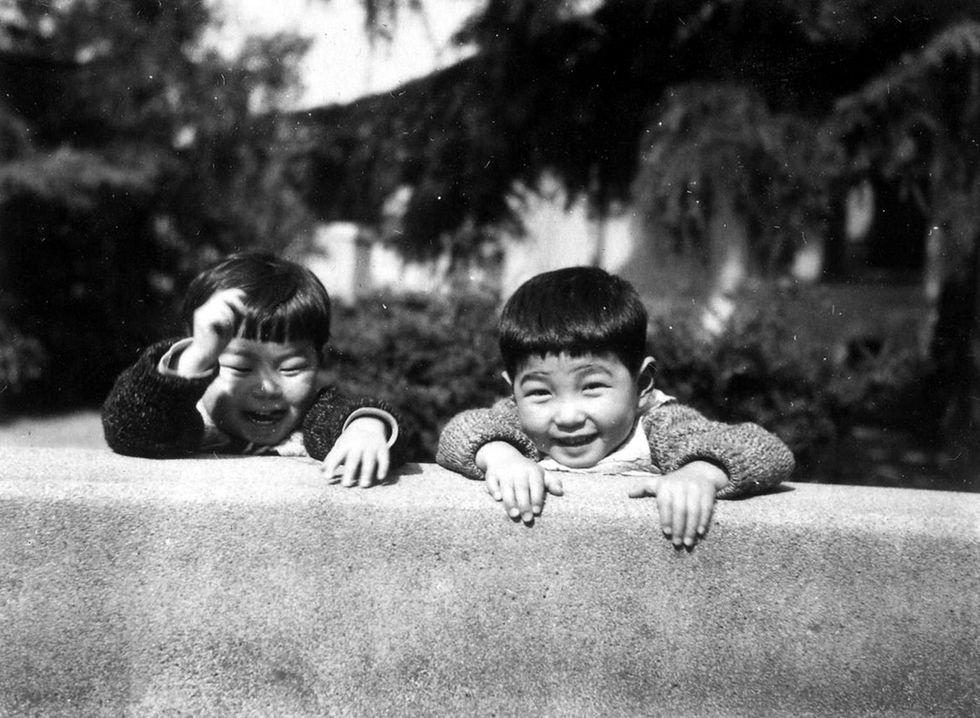
Some parents managed to identify the charred, swollen bodies of their children among scores of corpses only by the name tags on their clothes. Others found their children alive and nursed them for days, weeks or months until they took their final breaths. More than a few expressed guilt at the inadequacy of their care amid extreme shortages of medicines and food.
In Nagasaki, one mother watched as four of her children succumbed to acute radiation poisoning one after another. “I kept thinking that human beings shouldn’t die so easily,” she reflected.
Another Nagasaki mother’s face was so badly burnt and disfigured in the attack that her grievously injured two-year-old son couldn’t recognize her as she cared for him in his dying moments.
Some children appeared unharmed at first, having sustained no burns or other visible injuries, but developed fatal diseases years later, as ionizing radiation had entered their bodies and altered their cells.
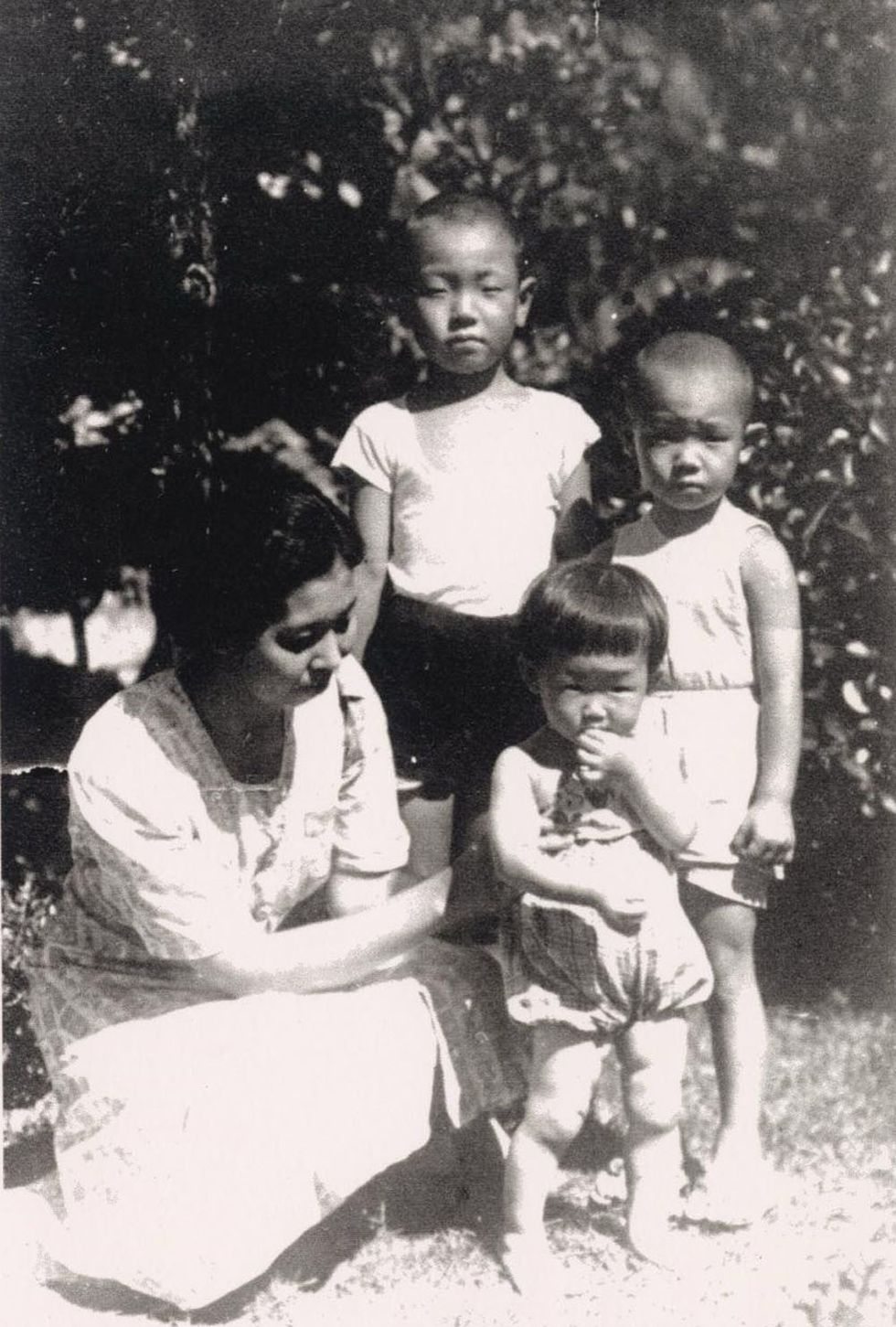
One such child was Sadako Sasaki, a toddler at the time of the Hiroshima bombing. She died a decade later from acute malignant lymph gland leukemia. During her hospitalization, she folded over a thousand paper cranes with her weak and skinny arms in the hope it would bring her good health.
“Until her very last moment, she held onto her wish and made a great effort to survive,” her father remembered. “I loved her so much that I couldn’t come to terms with her death for a long time.”
Sadako’s tragic story continues to inspire children in Japan and throughout the world to work for the abolition of nuclear weapons—an increasingly urgent task given deteriorating relations among nuclear-armed states and the enhancement and expansion of their arsenals.
It is estimated there are more than 12,000 nuclear weapons in the world today, most of them vastly more powerful than the atomic bombs dropped eight decades ago. In the words of the UN Secretary-General, António Guterres, “They offer no security—just carnage and chaos. Their elimination would be the greatest gift we could bestow on future generations.”
As we commemorate the lives lost and damaged by nuclear weapons 80 years ago, we commit ourselves to work harder for the elimination of these weapons.
Thank you for the opportunity to speak at the 2025 World Conference Against Atomic and Hydrogen Bombs.
I bring you greetings and solidarity from civil society movements in the U.S. who have been working diligently for a nuclear-free world against a U.S. government that is intent on spending huge amounts of money on “modernizing” its nuclear weapons.
As this is the commemoration of horrific deaths and wounding of hundreds of thousands of people in Hiroshima and Nagasaki 80 years ago in 1945, as an American citizen, I offer my profound apologies to the families of those killed in Japan—Japanese, Koreans, and other nationalities including the U.S. prisoners of war who were there. And to Marshallese and U.S. “downwinders” who suffered from U.S. testing of atomic and nuclear weapons, for the criminal actions of my government in using these weapons of mass destruction. I also apologize to the Vietnamese delegation at the conference for the U.S. dropping millions of gallons of Agent Orange and leaving tons of unexploded ordnance in Vietnam.
The knowledge that the horrific weapons would be used to kill and maim innocent civilians as a strategy to end the war was brutal, reckless, and without any sense of humanity.
80 years later, we are battling our governments as they continue to spend trillions of dollars to “improve, upgrade, modernize” these weapons.
80 years later, we now know the bombings of Hiroshima and Nagasaki and the testing of these terrible weapons in Nevada in the United States, the Marshall Islands, the Russian Federation, Mururoa, French Polynesia, Australia, and Algeria have resulted in the legacy of genetic medical conditions for the generations that have followed those who were initially exposed to the radiation emanating from the testing of nuclear bombs.
Most of the test sites were on the lands of Indigenous peoples and far from the capitals of the testing governments. Large swathes of land remain radioactive and unsafe for habitation, even decades after test sites were closed.
And yet, 80 years later, we are battling our governments as they continue to spend trillions of dollars to “improve, upgrade, modernize” these weapons that have now been banned by the Treaty on the Prohibition of Nuclear Weapons (TPNW), which opened for signature at the United Nations on September 20, 2017 and entered into force on January 22, 2021.
We know the statistics. By the end of 2024, a total of 94 nations have signed the TPNW, but only 73 have signed and ratified the treaty. There are currently 21 signatory countries that have signed but NOT ratified the TPNW, countries in which their citizens must put pressure on their governments.
Citizen pressure must be put on the 44 nations that, incredibly, OPPOSE the treaty including the nine nuclear weapons countries: the U.S., Russian Federation, France, United Kingdom, China, India, Israel, North Korea, and Pakistan. Fifteen other nations are undecided on whether to accept or reject the treaty.
The state legislatures of 5 out of 50 states in the United States—California, Oregon, New Jersey, Maine, and Rhode Island—have passed resolutions in support of the TPNW. Five large counties in the U.S. have passed resolutions in support of the TPNW, including the city and county where I live, Honolulu, Hawaii, as well as the city and county of San Francisco, and two counties in Maryland next to Washington, D.C.
Dozens of cities across the country, including Boston, Los Angeles, New York City, Philadelphia, and Washington, D.C., have also appealed to the U.S. government to sign and ratify the TPNW. In 2021, New York City resolved to pursue the divestment of public funds from nuclear weapons makers in response to the TPNW’s entry into force.
In 2025, in the House of Representatives of the U.S. Congress, Reps. Jim McGovern (D-Mass.) and Jill Tokuda (D-Hawaii) introduced House Resolution 317 “Urging the United States to lead the world back from the brink of nuclear war and halt and reverse the nuclear arms race.”
Unfortunately, the resolution has only 28 sponsors or cosponsors out of 435 members of the House of Representatives, all from the Democratic Party, none from the Republican Party, meaning we have much work to do in the U.S. Congress.
About House Resolution 317, Jill Tokuda, my congressional representative in Hawaii who is a cosponsor of the resolution and who is Japanese American, one of only four Japanese Americans in the U.S. Congress, stated:
As a Japanese American, my heritage is deeply tied to the devastating impact of nuclear weapons and the atrocities of war. This resolution is about our moral imperative to achieve nuclear nonproliferation and disarmament. It is not only a call for peace, but a commitment to ensuring that such tragedies are never repeated. This resolution represents a vital step toward a safer, more just world.
The resolution urges the United States to:
There are a multitude of organizations in the United States and around the world that are working for the elimination of nuclear weapons.
They send their greetings to colleagues here in Japan and around the world as they continue their work in the U.S. Congress, in the states and cities and counties of the United States.
From June 8-11, 2025, Alliance for Nuclear Accountability’s (ANA) held its 38th annual D.C. Days to advocate in the U.S. Congress for safer nuclear weapons and waste policies.
ANA includes 30 organizations concerned with the local and national consequences of nuclear weapons and waste policy decisions. During the week of advocacy in the U.S. Congress, meetings were held with 80 members of Congress or their staff.
Referencing the Trump administration’s goal of eliminating waste in the federal government through the draconian measures taken by the Department of Government Efficiency, ANA published a new resource, “What about WASTE? 80 Years of Nuclear Waste” as a part of this year’s effort in the U.S. Congress.
The Nevada Desert Experience continues its annual spring Sacred Peace Walk from the Atomic Tests Museum in Las Vegas, Nevada, 60 miles out to the Nuclear Test site on Western Shoshone land. The site was the primary testing location of American nuclear devices from 1951 to 1992. Around 928 announced nuclear tests occurred there; 828 tests were underground and 100 were atmospheric tests.
In another initiative for public awareness of the bloated U.S. military budget and nuclear weapons program, Ben Cohen of Ben and Jerry’s Ice Cream in June 2025 initiated a $2.3 million, 2-year advocacy project called “Up in Arms.” The campaign is to reduce U.S. military spending, particularly on nuclear weapons; to make cutting the Pentagon budget a debate in the 2026 elections; and to bring a national focus onto nuclear dangers and the necessity of disarmament.
The International People’s Tribunal on the 1945 U.S. Atomic Bombings continues to bring international attention, and hopefully justice, to the Japanese and Korean victims and survivors of the effects of the horrific U.S. atomic bombs used in 1945.
The Lakenheath Peace Camp held in May 2025 at the U.S. Air Base in Lakenheath, U.K. focused on stopping nuclear weapons being sent again by the U.S. to be housed on U.K. soil.
NO to NATO events were held in June in The Hague, Netherlands to protest the 5% increase for NATO countries in national spending for military at the expense of social programs for the people and to alert the world to the dangers of the use of nuclear weapons in any conflict.
The International Peace Forum in Brussels, Belgium also in June 2025 focused on the increased militarization in Europe and the necessity of eliminating nuclear weapons.
The annual STOPP RAMSTEIN camp and demonstration, held in June at the largest U.S. air base in Europe, underscored the need to challenge the continuing U.S. dominance in European security issues and the U.S. nuclear arsenal.
The Gaza Freedom Flotilla attempted to sail two ships in May and June to break the Israeli genocide and the illegal Israeli naval blockade of Gaza, the complicity of the U.S. and other countries in the genocide, and the refusal of Israel to acknowledge its nuclear weapons.
In 2024-2025, 81-year-old U.S. citizen Susan Crane spent 230 days in prison in Germany for cutting a fence into Büchel Air Force Base, climbing atop earthen bunkers used to store both nuclear weapons and German Tornado fighter jets to protest the stationing of American nuclear weapons in Germany, and for refusing to pay a fine. For three decades, Crane protested nuclear weapons in the U.S. and in Europe. She’s poured her own blood on a nuclear destroyer and taken a hammer to warplanes. In total, she said she’s served around seven years in prison.
Büchel Air Force Base trains German soldiers to drop hydrogen bombs on behalf of the United States as part of NATO's nuclear sharing arrangements.
Susan van der Hijden from the Netherlands and Gerd Buntzly from Germany were both in prison in Germany starting in June 2024 for similar actions at the Büchel Air Force Base.
Four U.S. peace activist have been incarcerated in Germany over protests at the Büchel Air Base: John LaForge; Dennis DuVall; Susan Crane; and Brian Terrell, a long-time Catholic Worker and human rights activist from Maloy, Iowa who works with the Nevada Desert Experience and served 15 days in the Wittlich Prison south of Cologne, from February 26 to March 12, 2025.
In June 2025, Veterans For Peace members held a 40-day fast at the United Nation and the U.S. and Israeli missions to the U.N. in New York City to stop the Israeli genocide of Palestinians in Gaza as well as for a nuclear free world.
As we commemorate the lives lost and damaged by nuclear weapons 80 years ago, we commit ourselves to work harder for the elimination of these weapons, taking on our governments and the industries that make money from the construction and testing of these weapons of mass destruction.
The anniversary of the A-bombings must serve not only as a reminder of past devastation, but also as a call for a world free from the existential threat of nuclear war. Instead, we are headed in the opposite direction.
This year marks 80 years since the U.S. dropped nuclear bombs on Hiroshima and Nagasaki, killing between 110,000 and 210,000 people. Yet, despite the lessons of this dark chapter of history, more countries are investing in expanding their nuclear arsenals as we face the threat of a renewed nuclear arms race.
The Bulletin of Atomic Scientists’ Doomsday Clock, a symbol that represents the estimated likelihood of a human-made global catastrophe, is now only 89 seconds to midnight—unacceptably close to disaster. Global military spending approaches $3 trillion, fueling violence across the world. This spending pays for the Russian bombs dropped on Ukraine, the U.S.-backed genocide in Gaza, and the escalation of militarized violence across the world. Meanwhile, nuclear development and expansion continue in all nine nuclear-armed states alongside growing fears of nuclear war in Ukraine, Taiwan, India, Pakistan, or the Korean Peninsula. We’re adding fuel to the fire.
U.S. President Donald Trump recently called the bombing of Iran’s Fordow nuclear site “essentially the same thing” as the bombings of Hiroshima and Nagasaki on August 6 and 9, 1945. This comparison is unfounded and disrespectful. Stories from the A-bomb survivors all share a common theme: In one instant, the bombs turned an average summer day into a nearly incomprehensible hellscape. Even the B-29 bomber pilots who turned back to see the inferno they had unleashed looked down in shock at the burning city. The scale and destruction of these attacks are unlike any bombing the world has seen since.
The anniversary of the bombings must serve not only as a reminder of past devastation, but also as a call for a world free from the existential threat of nuclear war. Instead, we are headed in the opposite direction.
To expand the U.S. nuclear arsenal, the Trump administration has requested an $87 billion budget in FY26 for nuclear weapons alone—up 26% from the nuclear weapons spending in 2025. The budget request will drastically increase spending on nuclear weapons, while cutting spending on nuclear nonproliferation, cleanup, and renewable energy programs. This is a continuation of the bipartisan trend in the U.S. to continue expanding our nuclear arsenal. For 80 years, A-Bomb survivors have been warning that nuclear weapons can never again be used to destroy lives, yet we are closer today than ever before.
The only world safe from nuclear war is one where nuclear weapons no longer exist. That world is possible—if we choose it.
As the only country to ever use nuclear weapons in war, the U.S. has a unique responsibility to lead the world back from the brink of nuclear catastrophe. Rather than increasing an already unprecedented military budget, the U.S. should instead lead the world as a model for investing in healthcare, education, infrastructure, and social welfare. People around the world are calling for a shift from spending on weapons and war to investing in meeting people’s basic needs. The 10% for All campaign envisions moving just one‑tenth of global military spending into human needs.
Diplomatic efforts are also crucial to stopping a nuclear arms race. Washington and Moscow must also come to the table to discuss the New Strategic Arms Reduction Treaty (New START)—the last nuclear arms control treaty between the two countries which will expire in February 2026. Currently there is little sign of discussion between the U.S. and Russia to find a meaningful proposal to address nuclear proliferation concerns.
To prevent the horrors of Hiroshima and Nagasaki from ever happening again, and to realize the full aspirations of the Treaty on the Non-Proliferation of Nuclear Weapons (NPT), leaders must actively pursue a world free of nuclear weapons. The only world safe from nuclear war is one where nuclear weapons no longer exist. That world is possible—if we choose it. Join advocates across the U.S. urging Congress to take a meaningful step toward a world safe from nuclear war.
Let us listen to those who have suffered the most. Let us hear the cry of their throbbing souls and begin to understand that the time has come for us to create a world beyond dominance and war.
When the powerful speak, mushroom clouds emerge—oh so easily. Power is about conquest; winning the war, getting what you want no matter the cost.
For instance, Israel should nuke Gaza. “Do whatever you have to do.” Thus declared Sen. Lindsey Graham (R-S.C.) last year in a “Meet the Press” interview, comparing the current genocide in Palestine to the U.S. decision to end World War II by A-bombing Hiroshima and Nagasaki. “That was the right decision,” he said, spewing out the historical abstraction that still rules the world.
Nothing is more sacred than self-defense! And nothing is more necessary for that than nuclear weapons, at least for the countries that possess them. To think beyond this abstraction—to cry out against the pain of the victims and declare their use is potential human suicide—violates the political norm of the powerful and is easily categorized by the media, often sarcastically, as naïve.
“I realized my pain was not only my pain but other people’s pain.”
And thus we’re stuck in a MAD world, apparently: a world under unending threat of mutually assured destruction. If you have a problem with that, you’re probably a weakling singing “Kumbaya.”
Or so the global war machine wants us to believe, reducing humanity’s anti-nuke—antiwar—sanity to a hollow hope.
It is in this context that I heard Sim Jintae and Han Jeong-Soon speak at a small event the other day in suburban Chicago, sponsored by an organization called—brace yourself—The International People’s Tribunal to hold the U.S. accountable for dropping A-bombs. The two speakers (via translator) are Korean victims of the bombs the U.S. dropped on Hiroshima nearly eight decades ago. Sim Jintae is a first-generation survivor: He was two-years-old when the bomb was dropped. Han Jeong-Soon is a second-generation survivor—the child of survivors of the inferno, who has suffered throughout her life from the aftereffects of the bombing. Their message: Nuclear war lasts forever!
Well, that’s part of their message. Note: The movement they represent is Korean. A little known fact about the bombings of Hiroshima and Nagasaki is that thousands of Koreans were what you might call doubly victimized by the horror. This was during an era when Japan had colonial control over Korea, and some 100,000 Koreans had been forcibly moved to Japan to do wartime labor. Many of them, including Sim Jintae’s parents, had been working in a munitions factory in Hiroshima.
About 40,000 Koreans died in the bombings. Those who survived suffered the aftereffects in silence... until they reclaimed one another and found a collective voice. This is the voice I heard last week at the event I attended, and it resonated as loud as—perhaps louder than—the pro-nuke media and their supplicants. Their collective voice emerges from reality, not abstraction. My God, I hope it’s louder than that of Lindsey Graham, and so many other politicians.
Here is the voice of Han Jeong-Soon. Born in Korea 14 years after the destruction of Hiroshima—her parents had also been forced laborers there, living a few kilometers from the epicenter of the bomb blast—she suffered all her life from birth defects: heart problems, chest pain, lung issues. She had multiple surgeries. She suffered on her own... until she saw a film about the bombing in 2004. Then:
“I realized my pain was not only my pain but other people’s pain,” she told us. She began organizing other second-generation survivors, and began telling the world: “My war has not ended. No war should be allowed or tolerated. No to all war.”
Is this the voice that will drown out the military-industrial complex? The People’s Tribunal is demanding, as the starting point of the human journey beyond war, for the United States to apologize for dropping atomic bombs on Hiroshima and Nagasaki. This was an action that instantly expanded the scope of hell the human race could inflict on itself.
When I heard that word, “apologize,” in the context of first- and second-generation Korean A-bomb victims—victims who were denied necessary healthcare, by both Japan and the United States—what I heard was a soul scream: a demand that the perpetrator grasp and acknowledge the full extent of the harm it caused, and in so grasping, vow never to use such a monstrous weapon again... and, indeed, vow to transcend war itself.
The International People’s Tribunal put it this way:
The A-Bomb Tribunal aims to establish the illegality of the U.S. atomic bombings in 1945 to secure the basis for condemning all nuclear threats and use as illegal today. The fact that the atomic bombings of Hiroshima and Nagasaki were illegal under the international laws in 1945 means that the use and threat of nuclear weapons today are also illegal.
The A-Bomb Tribunal aims to overcome the nuclear deterrence theory that justifies the use and threat of nuclear weapons by nuclear-weapon states, and contribute to the realization of denuclearization of the Korean Peninsula and a nuclear-free world.
Let us listen to those who have suffered the most. Let us hear the cry of their throbbing souls and begin to understand that the time has come for us to create a world beyond dominance and war. Indeed, let us begin listening to one another and, in so doing, learn that we all matter. This is the true nature of power.