

SUBSCRIBE TO OUR FREE NEWSLETTER
Daily news & progressive opinion—funded by the people, not the corporations—delivered straight to your inbox.
5
#000000
#FFFFFF
To donate by check, phone, or other method, see our More Ways to Give page.
Daily news & progressive opinion—funded by the people, not the corporations—delivered straight to your inbox.
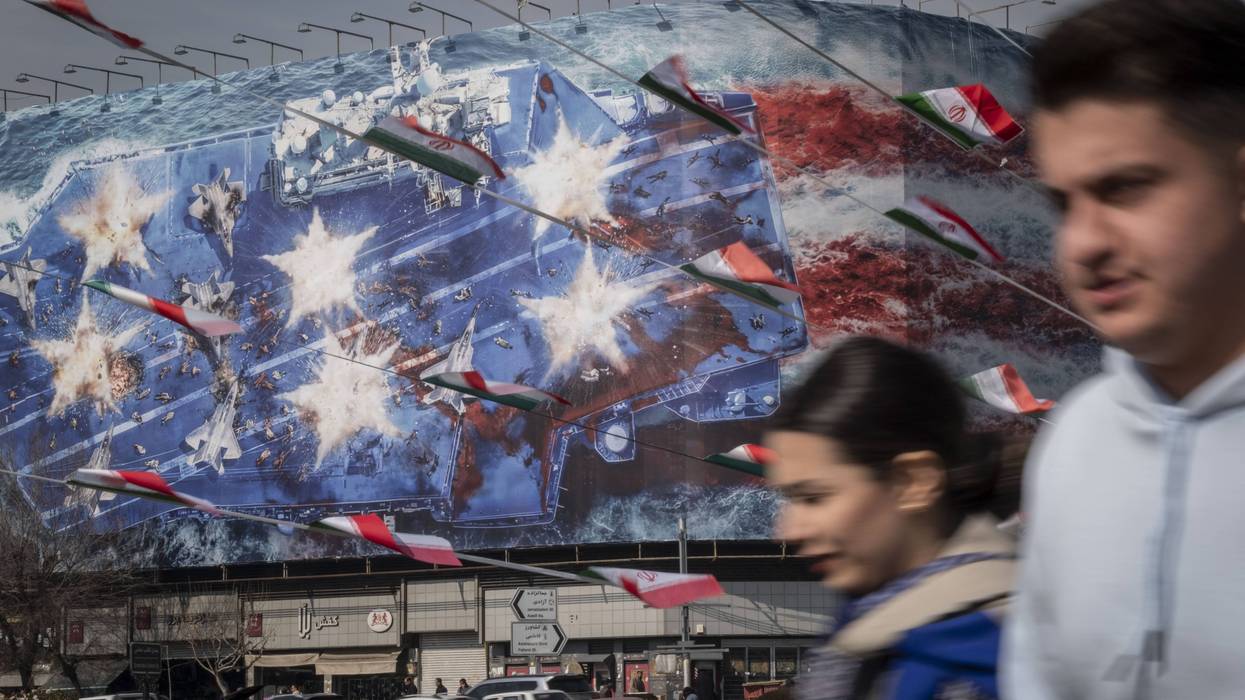
Tehran's admonition came after Trump said that a "massive armada" is heading to Iran—similar language he used before invading Venezuela and kidnapping its president.
As President Donald Trump escalated his renewed military aggression against Iran, Tehran warned Wednesday that any US attack would trigger unprecedented retaliation.
"Last time the US blundered into wars in Afghanistan and Iraq, it squandered over $7 trillion and lost more than 7,000 American lives," Iran's Permanent Mission to the United Nations said on X Wednesday. "Iran stands ready for dialogue based on mutual respect and interests—BUT IF PUSHED, IT WILL DEFEND ITSELF AND RESPOND LIKE NEVER BEFORE!"
This, after Trump said on his Truth Social network that "a massive armada is headed to Iran" with "great power, enthusiasm, and purpose."
Trump said nearly the same thing before invading Venezuela and kidnapping Venezuelan President Nicolás Maduro and his wife earlier this month.
"It is a larger fleet, headed by the great Aircraft Carrier Abraham Lincoln, than that sent to Venezuela," Trump continued. "Like with Venezuela, it is, ready, willing, and able to rapidly fulfill its mission, with speed and violence, if necessary. Hopefully Iran will quickly 'Come to the Table' and negotiate a fair and equitable deal—NO NUCLEAR WEAPONS—one that is good for all parties."
"Time is running out, it is truly of the essence!" the president added. "As I told Iran once before, MAKE A DEAL! They didn’t, and there was 'Operation Midnight Hammer,' a major destruction of Iran. The next attack will be far worse! Don’t make that happen again."
Allies of both the United States and Iran added to mounting tensions.
Alluding to the recent street protests that were brutally crushed by the Iranian government at the cost of at least hundreds and possibly thousands of lives, German Chancellor Friedrich Merz said Wednesday: "A regime that can only hold onto power through sheer violence and terror against its own population; its days are numbered. It could be a matter of weeks, but this regime has no legitimacy to govern the country.”
Meanwhile, the Iran-aligned militia Kataib Hezbollah in Iraq said it is ready for "total war" if the US attacks. There are still thousands of US troops in Iraq nearly 23 years after the second American invasion of the country; Iranian forces have attacked US military assets in the Middle East following past American strikes on Iran or its officials.
After a joint phone call, the foreign ministers of Iran and its regional rival, Saudi Arabia, said any attack on Iran would have "dangerous consquences."
Their call followed a Tuesday phone conversation between Iranian President Masoud Pezeshkian and Saudi Crown Prince Mohammed bin Salman.
"The threats and psychological operations of the Americans are aimed at disrupting the security of the region and will achieve nothing other than instability," Pezeshkian told the crown prince, according to Iranian media.
Bin Salman told Pezeshkian that Saudi Arabia "will not allow the use of its airspace or territory in any military actions against the Islamic Republic of Iran or any attacks from any side, regardless of its destination," a transcript of the call said.
Last June, Israel launched a large-scale attack on Iran's nuclear and military infrastructure, killing hundreds of people. Later that month, Trump ordered US strikes on Iranian nuclear facilities. Iran retaliated with a massive but limited missile attack on Israel, killing around two dozen people and injuring hundreds more.
Responding to Trump's renewed threats, Lebanese-British journalist Hala Jaber said on X Wednesday that "this is not diplomacy. It is coercion by force, publicly framed as negotiation. The language leaves little room for de-escalation."
Sniping at Trump's claim that Iran's nuclear sites were destroyed by last year's strikes, Palestinian-American writer and political analyst Yousef Munayyer said, "I thought Trump told us his strikes last summer obliterated Iran's nuclear program? Also, threatening to bomb a country unless it abandons pursuit of a nuclear deterrent is a pretty counter-productive line of argument."
US investigative journalist and Drop Site News co-founder Jeremy Scahill took aim at Trump's claim that US intervention in Iran is about protecting the lives of Iranian protesters—a dubious assertion given his administration's deadly repression in Minneapolis—saying Wednesday that "at the end of the day... this is about US imperial aims. It’s about oil. It’s about gas. It’s about geopolitical war.'
Donald Trump claimed today that “a massive Armada is heading to Iran,” warning that the US is “ready, willing, and able to rapidly fulfill its mission, with speed and violence, if necessary.”
On the Drop Site News livestream, @jeremyscahill noted that Iran is signalling a shift… pic.twitter.com/FyDcTbGTAN
— Drop Site (@DropSiteNews) January 28, 2026
"This is what it's been about in terms of US policy toward Iran for decades," Scahill said. "It was what it was about in 1953 when the CIA and British intelligence orchestrated the overthrow of the democratically elected government of Mohammad Mosaddegh. It was what it was about when the US was supporting the brutal regime of the Shah of Iran, all the way up until the dying days of his regime. This has been what the US sanctions policy against Iran has been about."
"And in June, when the US and Israel launched 12 days of heavy bombing of Iran in the name of degrading and destroying potential Iranian nuclear capacity, those bombings killed more than 1,000 people," he continued. "And remember that Donald Trump used the veneer... of negotiations with Iran... to provide cover to do a surprise 12-day bombing of Iran."
"Nothing the US is doing right now—and I mean absolutely nothing—is about supporting any Iranians," Scahill added, "except those that the US and Israel believe will be pliable."
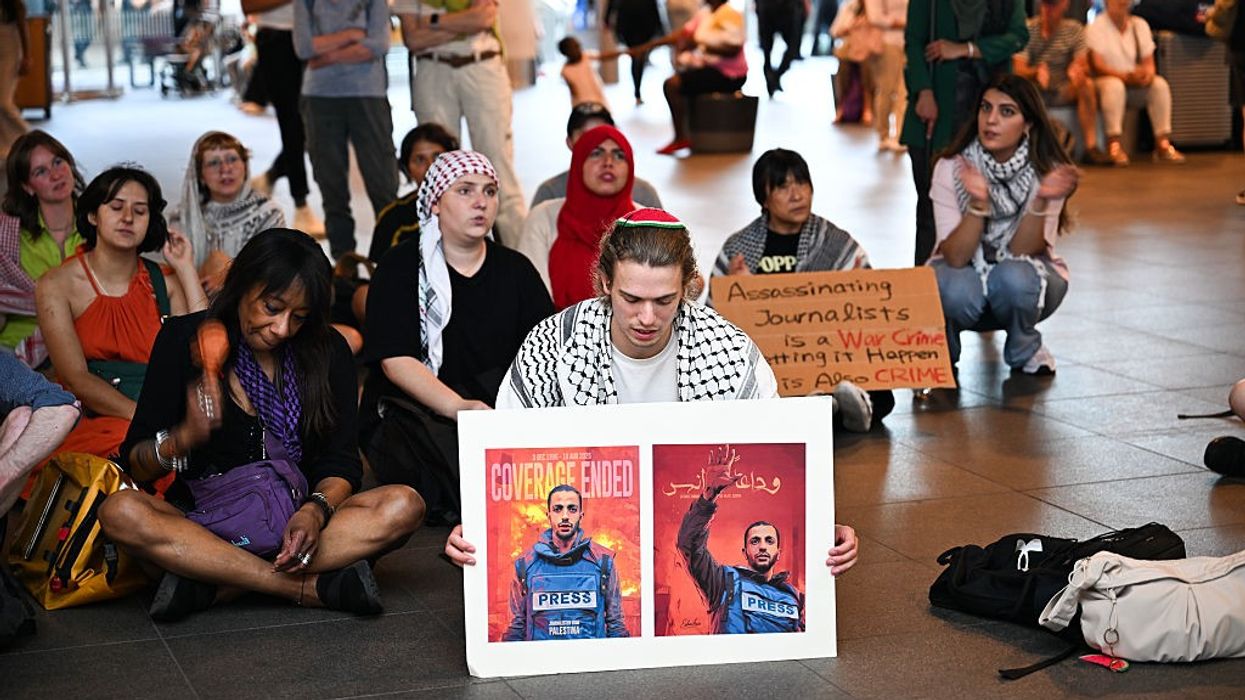
"This massacre and Israel's media blackout strategy, designed to conceal the crimes committed by its army for more than 21 months in the besieged and starving Palestinian enclave, must be stopped immediately."
The international advocacy group Reporters Without Borders on Monday called on the United Nations Security Council to convene an emergency meeting following the massacre of six Palestinian media professionals in an Israeli strike on the Gaza Strip.
Al Jazeera reporters Anas al-Sharif and Mohammed Qreiqeh, camera operators Ibrahim Zaher, Mohammed Noufal, and Moamen Aliwa, and independent journalist Mohammed al-Khaldi were killed Sunday in a targeted Israel Defense Forces (IDF) strike on their tent outside al-Shifa Hospital in Gaza City.
The IDF claimed that al-Sharif—one of the most prominent Palestinian journalists—"was the head of a Hamas terrorist cell," repeating an allegation first made last year. However, independent assessments by United Nations experts, the New York-based Committee to Protect Journalists, and Reporters Without Borders (RSF) concluded that Israel's allegations were unsubstantiated.
Investigative journalist Jeremy Scahill warned last year that the IDF's portrayal of al-Sharif and other Palestinian journalists as Hamas members was "an assassination threat and an attempt to preemptively justify their murder" for showing the world the genocidal realities of Israel's U.S.-backed war.
"Tonight Israel murdered the bravest journalistic hero in Gaza, Anas al-Sharif," Scahill said Sunday on social media. "For nearly two straight years, he documented the genocide of his people with courage and principle. Israel put him on a hit list because of his voice. Shame on this world and all who were silent."
Al Jazeera condemned Sunday's massacre as "a desperate attempt to silence the voices exposing the impending seizure and occupation of Gaza."
RSF issued a statement accusing the IDF of killing the six men "without providing solid evidence" of Hamas affiliation, a "disgraceful tactic" that is "repeatedly used against journalists to cover up war crimes."
The Paris-based nonprofit noted that Israeli forces have "already killed more than 200 media professionals"—including at least 19 Al Jazeera workers and freelancers—since the IDF began its annihilation and siege of Gaza in retaliation for the October 7, 2023 attack led by Hamas.
These include Al Jazeera reporter Ismail al-Ghoul and photographer Rami al-Rifi, who were killed in a targeted strike on the al-Shati refugee camp in July 2024 following an IDF smear campaign alleging without proof that al-Ghoul took part in the October 7 attack. The IDF claimed that al-Ghoul received Hamas military training at a time when he would have been just 10 years old.
"RSF strongly condemns the killing of six media professionals by the Israeli army, once again carried out under the guise of terrorism charges against a journalist," RSF director general Thibaut Bruttin said in a statement. "One of the most famous journalists in the Gaza Strip, Anas al-Sharif, was among those killed."
"This massacre and Israel's media blackout strategy, designed to conceal the crimes committed by its army for more than 21 months in the besieged and starving Palestinian enclave, must be stopped immediately," Bruttin continued. "The international community can no longer turn a blind eye and must react and put an end to this impunity."
"RSF calls on the U.N. Security Council to meet urgently on the basis of Resolution 2222 of 2015 on the protection of journalists in times of armed conflict in order to stop this carnage," he added.
Israel's latest killing of media professionals sparked international condemnation. On Monday, Stéphane Dujarric, a spokesperson for U.N. Secretary-General António Guterres, called for an investigation into the massacre, saying that "journalists and media workers must be respected, they must be protected and they must be allowed to carry out their work freely, free from fear and free from harassment."
Recognizing the possibility that he would become one of the more than 61,500 Palestinians killed by Israeli forces in Gaza since October 2023, al-Sharif, like many Palestinian journalists, prepared a statement to be published in the event of his death.
"This is my will and my final message. If these words reach you, know that Israel has succeeded in killing me and silencing my voice," he wrote. "I urge you not to let chains silence you, nor borders restrain you. Be bridges toward the liberation of the land and its people, until the sun of dignity and freedom rises over our stolen homeland."
"Make my blood a light that illuminates the path of freedom for my people and my family," al-Sharif added.
Since October 2023, RSF has filed four complaints with the International Criminal Court—which last year issued arrest warrants for Israeli Prime Minister Benjamin Netanyahu and former Defense Minister Yoav Gallant for alleged crimes against humanity and war crimes—requesting investigations into IDF killings of journalists in Gaza and accusing Israel of a deliberate "eradication of the Palestinian media."
The six journalists' killings came as Israeli forces prepared to ramp up the Gaza invasion with the stated goal of occupying the entire coastal enclave and ethnically cleansing much of its Palestinian population.
The Gaza Health Ministry said Monday afternoon that at least 69 Palestinians, including at least 10 children and 29 aid-seekers, were killed in the past 24 hours. An IDF strike on Gaza City reportedly killed nine people, including six children. Five more Palestinians also reportedly died of starvation in a burgeoning famine that officials say has claimed at least 222 lives, including 101 children.
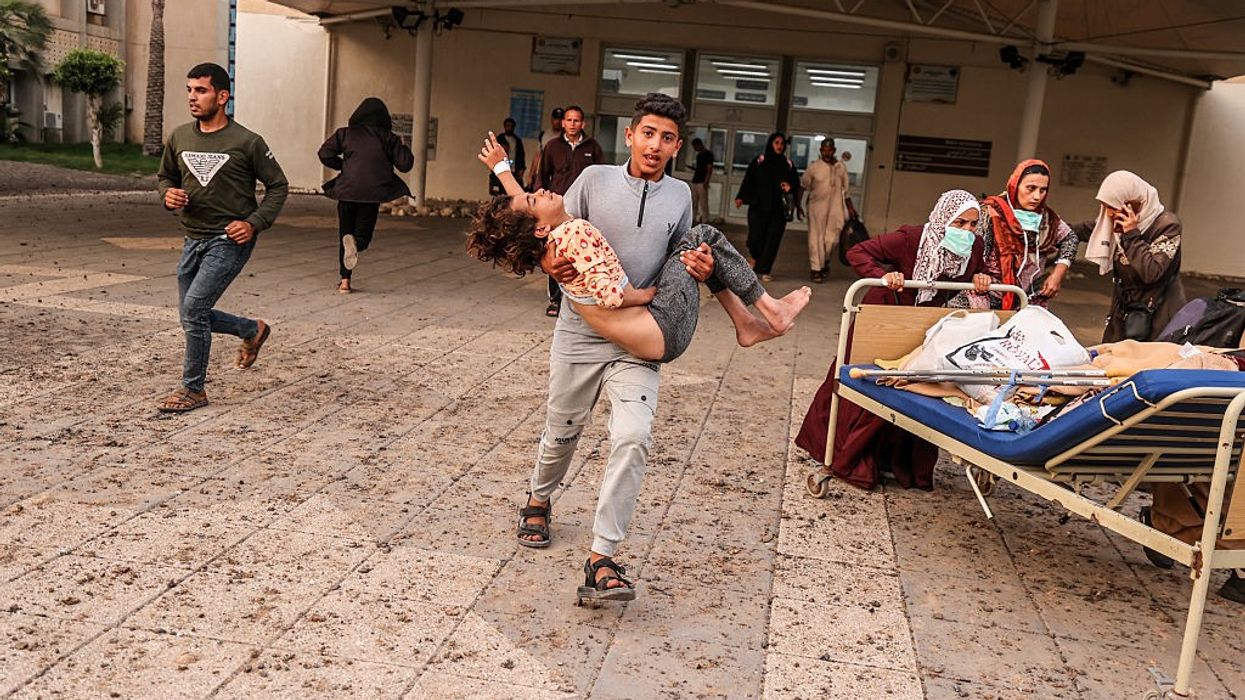
"Attacks on hospitals must stop," said the head of the World Health Organization. "The aid blockade must end to allow immediate entry of food, medicines, and equipment."
U.S.-backed Israeli forces bombed two hospitals in the Gaza Strip on Tuesday, killing and wounding at least dozens of Palestinians including patients, forcibly displaced people, medical staff, rescue workers, and a well-known journalist.
Early Tuesday, Israel bombed the Nasser Medical Complex in Khan Younis, killing at least two people including photojournalist Hasan Eslaih, who was receiving treatment after surviving a previous Israeli attempt to assassinate him last month.
Gaza officials said Eslaih, who was the director of the Alam24 News Agency, is at least the 215th media worker killed by Israel since October 2023. Eslaih lost a finger and was badly injured in an April 7 Israeli strike on a tent outside the same hospital in which numerous people were burned alive. More than a dozen patients were reportedly injured in Tuesday's attack.
"The burn unit was struck, 18 hospital beds in the surgical department, eight beds in the intensive care unit, and 10 inpatient beds were destroyed," World Health Organization Director-General Tedros Adhanom Ghebreyesus said after the attack. "This is huge blow to the already overwhelmed health system."
"We repeat our call: Attacks on hospitals must stop," Tedros added. "The aid blockade must end to allow immediate entry of food, medicines, and equipment to support patients and the rehabilitation of hospitals. The best medicine is peace."
Investigative reporter Jeremy Scahill said following the attack that "the U.S. is facilitating these war crimes and most Western journalists remain totally silent."
Later on Tuesday, Israel bombed a courtyard and surrounding areas of the European Hospital, also in Khan Younis, killing at least 28 people and injuring scores more. The Israel Defense Forces (IDF) acknowledged the attack, claiming it targeted "Hamas operatives who were inside a command and control complex built within an infrastructure under the hospital."
British surgeon Tom Potokar was inside European Hospital when it was bombed. He said that "this is where kids with cancer are waiting to be evacuated and supposed to be 'deconflicted."
According to the Gaza Government Media Office, 38 hospitals, 81 health centers, and 164 medical facilities have been destroyed, damaged, or rendered inoperable since Israel launched its assault on the coastal enclave after the Hamas-led October 7, 2023 attack.
The United Nations Office for the Coordination of Humanitarian Affairs condemned the strikes,
saying on social media that "these attacks are unacceptable and must end. Healthcare is not a target."
Attacks on medical facilities are war crimes under the 1949 Geneva Conventions.
The Gaza Health Ministry decried "the repeated targeting of hospitals and the pursuit and killing of wounded patients inside treatment rooms," adding that such attacks confirm "Israel's deliberate intent to inflict greater damage to the healthcare system."
In the United States, the advocacy group Council on American-Islamic Relations (CAIR) said in a statement that fugitive Israeli Prime Minister Benjamin Netanyahu "bombs hospitals, slaughters Palestinian civilians, destroys homes, and seeks to starve and ethnically cleanse the population of Gaza, all in a brutal campaign to continue Israel's genocide and stay in office indefinitely."
CAIR added that U.S. President Donald Trump "must act to stop these crimes against humanity, which our nation has unfortunately enabled for decades, and finally allow the Palestinian people to live in peace and freedom."
IDF strikes have obliterated Gaza's medical infrastructure along with the rest of the densely populated strip. Last year, an independent United Nations commission found that "Israel has perpetrated a concerted policy to destroy Gaza's healthcare system as part of a broader assault on Gaza, committing war crimes and the crime against humanity of extermination with relentless and deliberate attacks on medical personnel and facilities."
The commission's report detailed hundreds of IDF attacks on Gaza healthcare facilities and the killing or wounding of around 1,700 medical workers, calling such killings "widespread and systematic."
Israel's 585-day onslaught and siege—which officials say has left more than 186,000 Palestinians dead, wounded, or missing and millions more forcibly displaced, starved, or sickened—is the subject of an ongoing genocide case brought before the International Court of Justice in The Hague by South Africa.
Netanyahu and former Israeli Defense Minister Yoav Gallant are wanted by the International Criminal Court, also in The Hague, for alleged war crimes and crimes against humanity in Gaza, including extermination and starvation as a weapon of war.
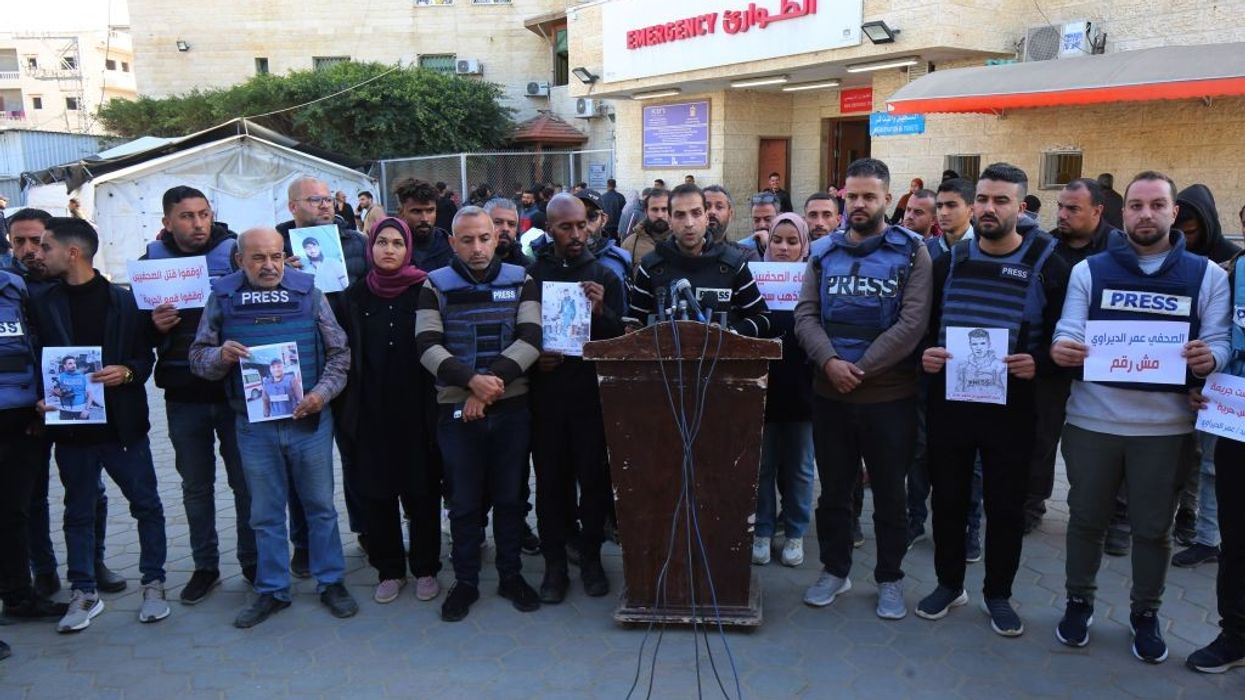
"We have been let down by the international community, particularly the international media organizations," said Abubaker Abed, sharing a message from Palestinian journalists.
Palestinian journalists gathered outside al-Aqsa Martyrs Hospital in Deir al-Balah this week to call attention to Israeli forces' genocidal assault on the Gaza Strip, their slaughter of those reporting on the ground, and the global community's failure to hold Israel accountable for the bloodshed.
On Thursday, the day after the event, Abubaker Abed, a Palestinian sports journalist now covering Israel's war on Gaza, shared on social media a short video of his remarks in English, which he said were delivered on behalf of all the reporters in blue vests who surrounded him and the podium.
Since the Hamas-led October 7, 2023 attack on Israel, Palestinian reporters across Gaza have covered what Abed called "the most well-documented and first livestreamed genocide in history," as Israel—armed by the United States—has launched airstrikes and ground raids, and stopped humanitarian aid and international media from entering the coastal enclave.
Abed said that "we've been reporting tirelessly, extensively, and thoroughly on this genocide. It's indeed a genocide against us, which we've been documenting in makeshift tented camps and workplaces... You've seen us shedding tears over our loved ones, colleagues, friends, and family members. You've seen us killed in every possible way. We've been immolated, incinerated, dismembered, and disemboweled—and recently, we've been freezing to death."
"What more ways should you be seeing us killed, then, so that you can move and act and stop the hell inflicted upon us? There are no words to describe what we've been going through, because you've seen our bodies, how they've become fragile, skinny, and fatigued, but we never stopped," he continued, highlighting how Palestinian journalists have worked "to help the population that has seen every sort of torture and tasted every type of death," while the world has refused to "stop Israel's impunity against us."
"Our message is very clear: We are journalists, and we are Palestinian journalists. We have been let down by the international community, particularly the international media organizations," Abed declared. "We haven't seen any sort of support—a single word of support. Even the press vests we're wearing right now mark us as a target. They do not protect us at all, because we are Palestinians. Maybe if we were Ukrainians or of any other citizenship, with blond hair and blue eyes, the world would rage and rant for us. But because we are Palestinians, we have only one right, which is to die and be maimed."
"We are just documenting a genocide against us," he concluded. "After almost a year and a half, we want you to stand foot-by-foot with us, because we are like any other journalists, reporters, and media workers all across the globe—no matter the origin, the color, or the race. Journalism is not a crime. We are not a target."
Some journalists around the world reposted Abed's video and called out their colleagues for ignoring Israel's decimation of Gaza or reporting on it in ways favorable to the far-right Israeli government and its supporters, including the United States.
"The past 15+ months have been one of the most shameful periods in the history of Western journalism,"
said Jeremy Scahill, co-founder of Drop Site News, which has published Abed's reporting from Gaza. "The refusal of so many journalists to speak out in defense of our Palestinian colleagues in Gaza as they and their families have been hunted down and killed is a bloody stain."
The New Yorker editor Erin Overbey similarly said that "the staggering silence of Western journalists this past year as their Palestinian colleagues have been targeted, intimidated, and killed by Israeli forces during the genocide in Gaza will go down as one of the most shameful periods in media/journalism and human rights history."
British writer Owen Jones
said: "How to describe the refusal of Western journalists to speak out about the biggest slaughter of journalists in the history of human civilization? Damning. Racist. Nauseating. You will never be forgiven. History will damn those who stayed silent—every last fucking one."
Hamza Yusuf, a London-based British Palestinian writer, said that "we will never forget that whilst Palestinian journalists in Gaza were being systematically slaughtered by Israel, their industry peers at best looked on with indifference and at worst used their positions and their coverage to whitewash Israel's crimes. Blood on their hands."
As of Thursday, health officials in Gaza put the death toll from Israel's 15-month assault at 46,006, with at least 109,378 other Palestinians wounded, the vast majority of the enclave's population displaced, and civilian infrastructure in ruins. Israel faces global accusations of genocide, including in a case at the International Court of Justice.
Figures for press deaths have varied. The International Federation of Journalists—which works with its affiliate, the Palestinian Journalists' Syndicate, to verify information—has documented the killings of 148 Palestinian media workers while the Committee to Protect Journalists has a list of 152 confirmed fatalities, at least 13 of which the group classifies as murders by Israeli forces.
At the end of last year, Al Jazeera published a long-form article titled "Know Their Names" and reported that "from October 7, 2023, to December 25, 2024, at least 217 journalists and media workers had been killed in Gaza. Five more were killed on December 26 when an Israeli airstrike targeted a news van near al-Awda Hospital."
"Eighty percent of the journalists and media workers killed were between the ages of 20 and 40, a stark statistic that captures the young age of those who risk their lives to document the conflict," according to
Al Jazeera. "They were reporters and writers, photographers and video directors, analysts and editors, sound engineers and voiceover artists, and even founders of media outlets. Their stories remind us of the heavy price paid by those who strive to document humanity's darkest moments."
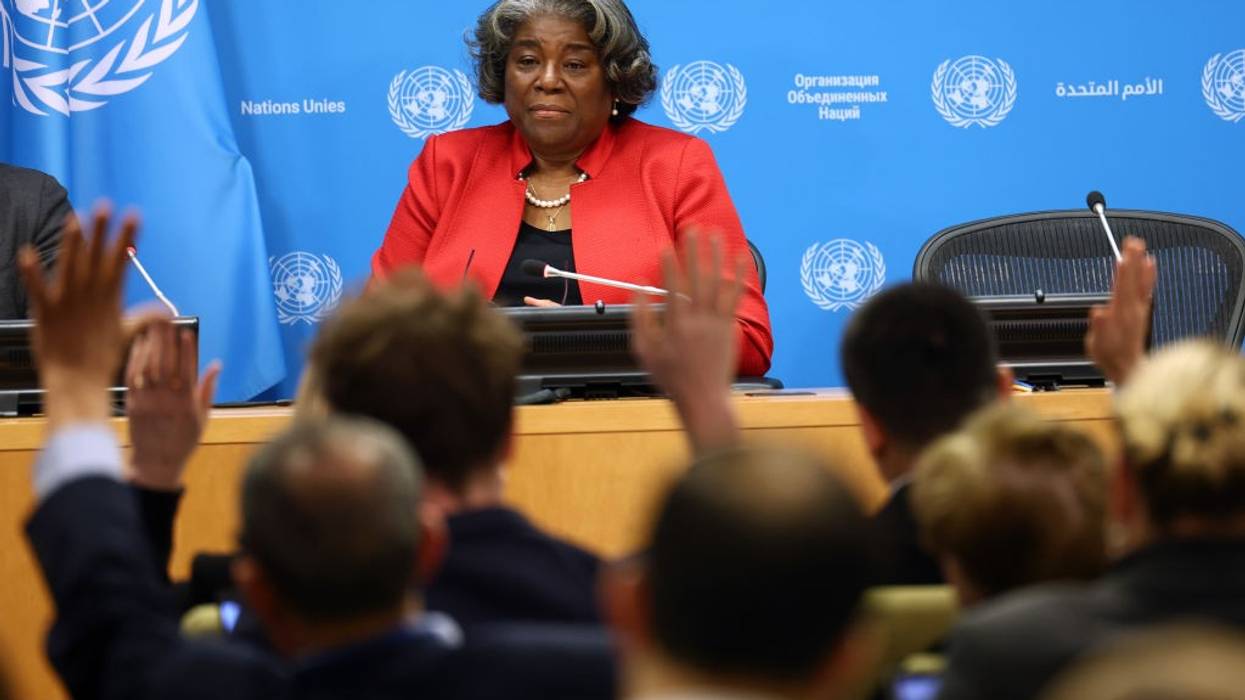
"She is on a shamelessness tour," journalist Jeremy Scahill said of American diplomat Linda Thomas-Greenfield.
The U.S. ambassador to the United Nations is facing backlash after delivering a speech earlier this week touting the universal "right to food" as the Israeli military—armed to the teeth with American weaponry—fuels widespread and increasingly deadly hunger in the Gaza Strip.
In remarks Monday at a gathering of U.N. and civil society leaders focused on global food insecurity, Thomas-Greenfield called hunger, starvation, and famine "man-made tragedies" that "can be stopped by us."
"Let me be clear: Every human being, everywhere, has the right to food," she continued. "For the United States, this is a moral issue. And it's an economic and national security issue."
Thomas-Greenfield's speech sparked derision given the Biden administration's continued military support for an Israeli government that has been accused of wielding starvation as a weapon of war in Gaza, where—according to the latest U.N. Food and Agriculture Organization assessment—food aid has reached an all-time low under Israel's suffocating blockade.
"Hunger is a man-made tragedy that you helped make in Gaza."
Oxfam and other human rights groups have said that by arming the Israeli military as it obstructs humanitarian aid, the Biden administration is complicit in the starvation of Palestinians in Gaza and Israel's repeated attacks on aid workers attempting to feed the enclave's hungry.
"She is on a shamelessness tour in her final weeks as U.S. ambassador to the U.N.," journalist Jeremy Scahill wrote Wednesday in response to Thomas-Greenfield's speech. "She presided over numerous cease-fire vetoes as part of an administration that facilitated Israel's starvation policy against the Palestinians of Gaza. Listen to her remarks on 'hunger' in that context."
Yesterday, @USUN brought together humanitarian leaders to discuss solutions to the global food insecurity crisis.
Hunger is a man-made tragedy. But if it caused by man, that means it can be stopped by us, too.
Every human being, everywhere, has the right to food. pic.twitter.com/zczlerRHEc
— Ambassador Linda Thomas-Greenfield (@USAmbUN) December 10, 2024
Middle East scholar and analyst Assal Rad, wrote that Thomas-Greenfield's vetoes at the U.N. "have helped Israel continue its genocide and deliberately starving people."
"Hunger is a man-made tragedy that you helped make in Gaza," Rad added.
Despite Thomas-Greenfield's insistence that addressing global food insecurity has long been a priority for the world's wealthiest and most powerful nation, the U.S. and Israel were the only two countries to vote against a U.N. committee draft on the right to food in 2021.
On Tuesday, the Biden administration welcomed to the White House former Israeli Defense Minister Yoav Gallant, who—along with Prime Minister Benjamin Netanyahu—is facing an arrest warrant from the International Criminal Court for "the war crime of starvation as a method of warfare," among other crimes.
"Today is Human Rights Day—a date chosen to honor the UN’s adoption of the Universal Declaration of Human Rights in 1948," the Institute for Middle East Understanding Policy Project wrote Tuesday. "Biden's White House is dishonoring this day by hosting a confirmed war criminal who conducted a genocide, and starved and targeted Palestinian civilians."

The cease-fire deal prohibits all military operations by Hezbollah but only "offensive" action by Israel.
Experts on the Middle East warned this week that a cease-fire between Israel and Hezbollah could be temporary, and reports out of southern Lebanon on Thursday indicated they were correct as security sources said two people were injured in Israeli strikes on the village of Markaba.
The truce went into effect early Wednesday after being brokered by the United States and France, with Israeli forces given 60 days to withdraw from southern Lebanon.
But one day after the deal went into effect, an Associated Press correspondent in northern Israel reported that they heard artillery strikes across the border in Lebanon as well as Israeli drones.
On Thursday morning, Israeli tanks hit the southern Lebanese towns of Markaba, Wazzani and Kfarchouba, Khiyam, and Taybe, according to Lebanese state media and security sources, injuring at least two people.
All the areas lie within two kilometers (1.24 miles) of the Lebanon-Israel border.
Hassan Fadlallah, a member of Lebanese Parliament who is part of the Hezbollah March 8 alliance, said Israel had attacked civilians who were "returning to the border villages."
"There are violations today by Israel, even in this form," he told reporters.
Thousands of Lebanese people began returning to their homes in the southern part of the country after the cease-fire deal went into effect, but Israeli Prime Minister Benjamin Netanyahu said the Israel Defense Forces (IDF) should not allow civilians back into southern villages. His order contradicted a statement by Nabih Berri, the speaker of the Lebanese Parliament, who led cease-fire negotiations and said Wednesday that residents could return home.
Israel imposed a last-minute curfew on Wednesday night, prohibiting Lebanese citizens from crossing into the south overnight.
The IDF then accused Hezbollah of violating the cease-fire, announcing on Thursday: "Over the past hour, several suspects were identified arriving with vehicles to a number of areas in southern Lebanon, breaching the conditions of the cease-fire. The IDF opened fire toward them."
Drop Site News noted that the deal bars Hezbollah from carrying out "any operations" against Israel but only prohibits Israel from conducting "offensive" attacks in Lebanon.
"It's kind of a bit insidious where they say 'offensive,' meaning somehow there's this little kind of wiggle room for what they will interpret as defensive, which in Israeli logic and discourse and action means anything," Karim Makdisi, a professor of international politics at the American University in Beirut, told Drop Site News. "Anything can happen. They can say, 'Well, this is defense.' Even the genocide in Gaza, as far as they're saying, is defensive."
Jeremy Scahill of Drop Site News said the Biden administration has attempted to "rig the deal" and allow Israel to strike in Lebanon as it sees fit, providing Israel with a "letter of guarantee" that recognizes "Israeli freedom of action on Lebanese soil" if any attempts are made to strengthen Hezbollah.
The U.S. State Department refused to comment on the letter when asked about it by Scahill.
Since October 2023, Israeli strikes on Lebanon have killed at least 3,823 people and injured at least 15,859.
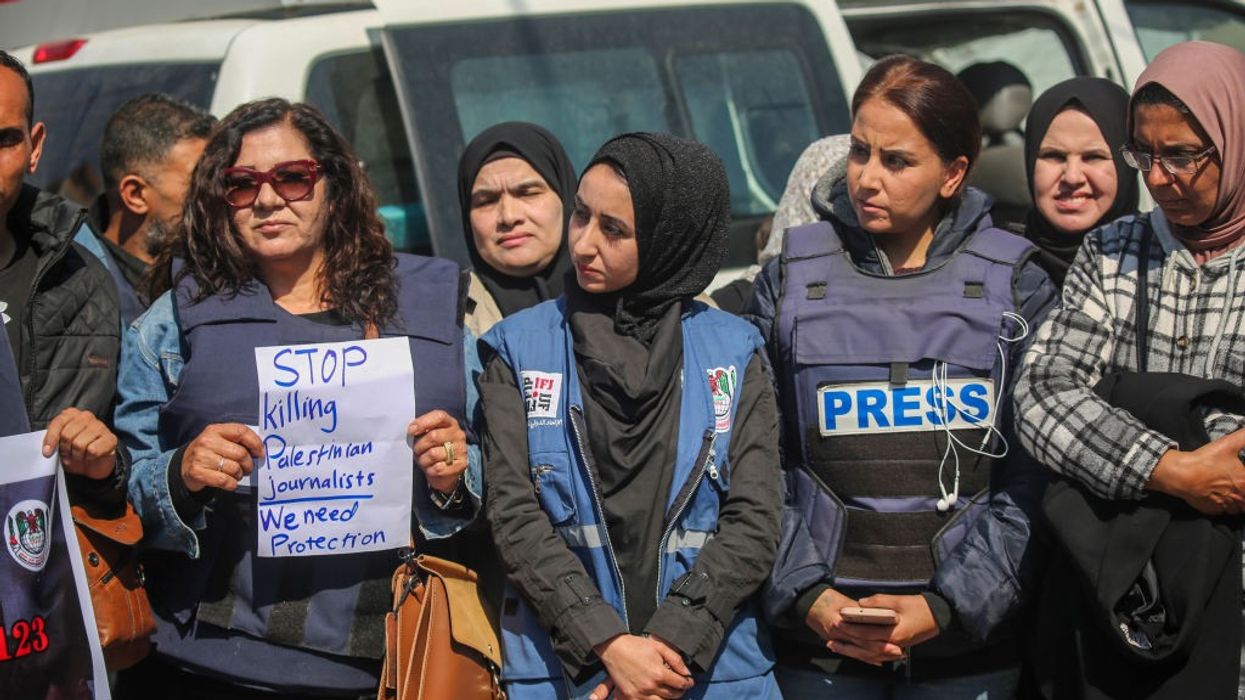
"Israel has repeatedly made similar unproven claims without producing credible evidence," said the Committee to Protect Journalists.
Seasoned observers of Israeli disinformation campaigns on Wednesday responded with pointed skepticism to a claim by the country's military that half a dozen Al Jazeera journalists are linked to militant Palestinian resistance groups.
The Israel Defense Forces (IDF) claimed Wednesday that intelligence recovered during the ongoing invasion of Gaza revealed that Al Jazeera journalists Anas Al-Sharif, Alaa Salama, Hossam Shabat, Ashraf Saraj, Ismail Abu Amr, and Talal Aruki are affiliated with either Hamas—which governs Palestine's coastal enclave and led the October 7, 2023 attack on Israel—or Palestinian Islamic Jihad (PIJ).
This, the IDF said, "unequivocally proves that they function as military terrorist operatives of the terrorist organizations in the Gaza Strip."
However, critics accused Israel of targeting the six journalists for exposing Israeli war crimes to the world.
"There's a very clear reason why Israel has been killing journalists," asserted U.S. investigative journalist Jeremy Scahill:
As the Washington, D.C.-based Institute for Public Accuracy noted:
Shabat... wrote Tuesday: "I'm a reporter on the ground in North Gaza, and I'm here to tell you that no aid has entered the besieged area for the past 21 days. The Israeli and American governments are spreading inaccurate information.
Al-Sharif yesterday posted a video of children killed, one with their head literally blown off. He just posted a video of civil defense crews working five hours to rescue a child.
University of Edinburgh professor Nicola Perugini noted that some of the six journalists "are covering the new phase of the genocide, the complete depopulation of northern Gaza."
"The aim is to transform the last witnesses into killable targets," he said.
Al Jazeera —which is banned from operating in Israel but is the only major international media network on the ground in Gaza, as Israeli authorities prohibit foreign reporters from entering the besieged strip—denies the IDF's claim.
Others noted that Israeli forces have killed numerous Al Jazeera workers as part of a war on journalists in which at least 128 media professionals have been killed, according to the New York-based Committee to Protect Journalists (CPJ). The United Nations says more than 170 media workers have been killed by Israeli forces.
"This is an assassination threat and an attempt to preemptively justify their murder," Scahill said of Israel's claim against the six Al Jazeera journalists.
"Anyone claiming Israel has offered 'irrefutable' proof to back up these allegations is either ignorant of the systematic campaign of lies, propaganda, and fake news unleashed by Israel or is trying to aid and abet the murder of more journalists," he added. "That is what is irrefutable."
CPJ said on social media that it "is aware of accusations made by the Israel Defense Forces against several journalists in Gaza accusing them of being members of militant groups."
"Israel has repeatedly made similar unproven claims without producing credible evidence," the group noted. "After killing Al Jazeera correspondent Ismail Al Ghoul in July, the IDF previously produced a similar document, which contained contradictory information, showing that Al Ghoul, born in 1997, received a Hamas military ranking in 2007—when he would have been 10 years old."
The Paris-based international press freedom group Reporters Without Borders (RSF) has filed multiple complaints at the International Criminal Court alleging "war crimes against journalists in Gaza," including the apparently intentional targeting of media professionals.
In one filing, RSF said it "has reasonable grounds for thinking that some of these journalists were deliberately killed and that the others were the victims of deliberate IDF attacks against civilians" and accused Israel of "an eradication of the Palestinian media."
"You don't shut down the media unless you have something to hide."
In June, the Gaza Project—an investigative journalism initiative led by the Paris-based nonprofit Forbidden Stories—"analyzed nearly 100 cases of journalists and media workers killed in Gaza, as well as other cases in which members of the press have been allegedly targeted, threatened, or injured."
The project found "a chilling pattern" of journalists who "may have been targeted even though they were identifiable as press."
In one case that enraged journalists and others around the world, at least one IDF member sent 19-year-old Palestinian reporter Hassan Hamad text messages threatening him and his family if he did not stop documenting Israel's assault on Gaza, which has left more than 152,000 Palestinians dead, maimed, or missing, millions more starved or sickened, and much of the territory in ruins.
Hamad refused. Earlier this month, Israeli forces assassinated him in a drone strike on his home in the Jabalia refugee camp.
U.S. citizens working in media have also been harmed by Israeli forces while on the job in Gaza and Lebanon, where IDF bombardment and invasion have killed and wounded thousands of people.
On Tuesday, a dozen members of U.S. Congress led by Sen. Bernie Sanders (I-Vt.) urged the Biden administration—which supports Israeli with billions of dollars in military aid and diplomatic cover—to investigate Israeli attacks on journalists including Dylan Collins, who was with a group of six other reporters covering cross-border clashes between Israel and Hezbollah in southern Lebanon when an IDF tank opened fire on their position despite their clear identification as press. Collins and five others were injured, and Lebanese Reuters journalist Issam Abdallah was killed.
Israel's targeting of American journalists predates the current war and includes the 2022 killing of renowned Palestinian American Al Jazeera reporter Shireen Abu Akleh. Multiple probes have concluded Abu Akleh was deliberately targeted by an IDF sniper as she was covering a raid on the Jenin refugee camp in the illegally occupied West Bank.
"Why would Israel shut Al Jazeera's bureau in Ramallah?" asked one human rights defender. "Because it has been the center of Al Jazeera's reporting on Israeli repression—the apartheid—in the occupied West Bank."
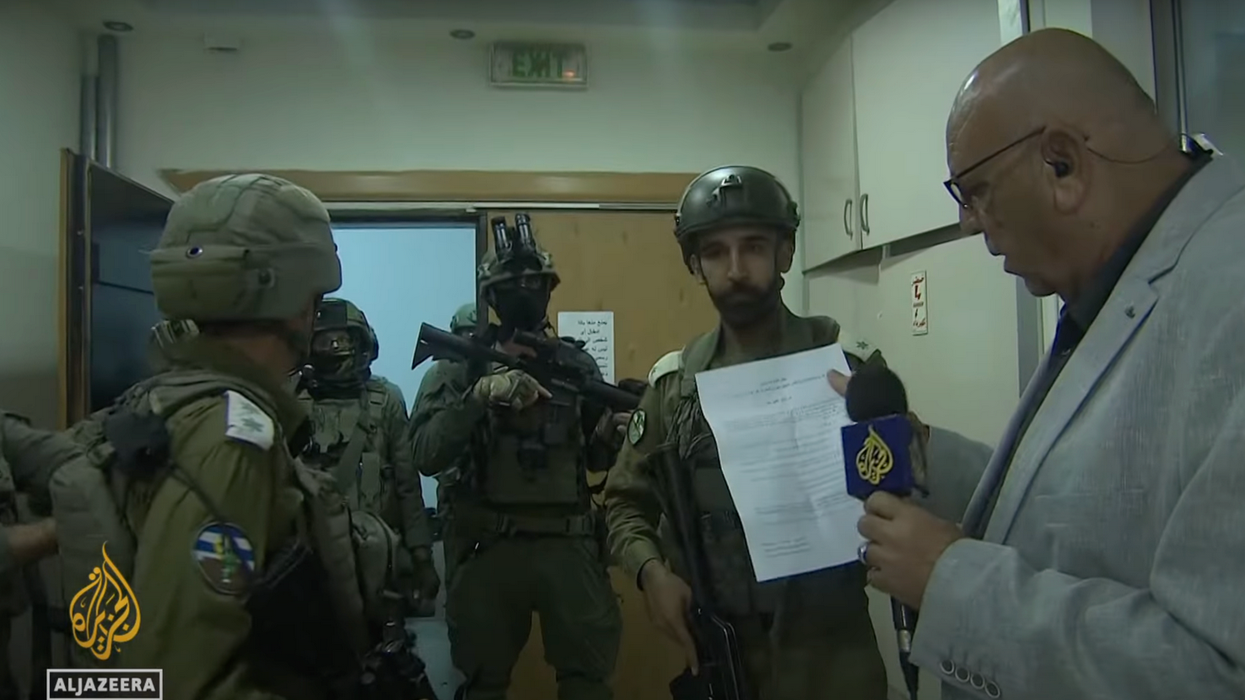
Press freedom advocates accused Israel of "trying to erase the truth" after heavily armed soldiers raided Al Jazeera's bureau in the West Bank of Palestine early Sunday morning and ordered the outlet—which has been the world's sole media window on the Gaza genocide—to shut down for 45 days.
Al Jazeera—which is owned by the Qatari government—said Israel Defense Forces troops stormed its bureau in Ramallah, the capital of the illegally occupied West Bank, at 3:00 am Sunday during a live broadcast. IDF troops confiscated documents and equipment and took the microphone from the hand of bureau chief Walid al-Omari as he reported on the raid.
The network—which was ordered to cease operations for 45 days—said the soldiers tore down a poster of Shireen Abu Akleh, the renowned Palestinian-American Al Jazeera correspondent who was shot dead by Israeli troops in May 2022 while covering an IDF raid on the Jenin refugee camp.
"This is part of a larger campaign against the Palestinian outlets and media in general aimed at erasing the truth," al-Omari said in an interview with Al Araby Al Jadeed. "We've been under increasing incitement since the beginning of the war."
The Palestinian Journalists Syndicate condemned the shutdown as an "arbitrary military decision" and "a new aggression against journalistic work and media outlets."
Israel's Foreign Press Association said it is "deeply troubled by this escalation, which threatens press freedom, and urges the Israeli government to reconsider these actions," adding that "restricting foreign reporters and closing news channels signals a shift away from democratic values."
The IDF acknowledged the raid later Sunday, claiming without evidence that Al Jazeera's Ramallah bureau was "being used to incite terror [and] to support terrorist activities."
Sunday's raid followed a May raid and shutdown of Al Jazeera's Jerusalem bureau, which is believed to be the first such action against a foreign media outlet operating in Israel.
Responding to the raid, Carlos Martínez de la Serna, program director of the New York-based Committee to Protect Journalists (CPJ), said that the group "is deeply alarmed by Israel's closure of Al Jazeera's office in the occupied West Bank, just months after it shuttered Al Jazeera's operations in Israel after deeming it a threat to national security."
Al Jazeera is the only international news network providing nonstop on-the-ground coverage of Israel's war on Gaza. Its reporters work under constant risk to life and limb, as more than 100 media professionals, the vast majority of them Palestinians, have been killed by Israeli forces since October 7. CPJ and others say have decried what they say are deliberate attacks on media workers and their families.
In December, Israeli troops killed Al Jazeera cameraman Samer Abudaqa as he reported on the war in southern Gaza, an attack that also injured the network's Gaza bureau chief, Wael Dahdouh, whose wife, son, daughter, and grandson were killed in a separate IDF strike.
Previous independent probes—including investigations of Abu Akleh's killing—have confirmed that Israel has deliberately targeted journalists.
Last May, CPJ published Deadly Pattern, an investigation that found the IDF killed at least 20 journalists over the past 22 years with impunity. While some of the slain journalists have been foreigners—including Italian Associated Press reporter Simone Camilli and British cameraman and filmmaker James Miller—the vast majority of victims have been Palestinian.
Israeli forces have also attacked newsrooms in every major assault on Gaza, including in May 2021 when the 11-story al-Jalaa Tower, which housed offices of Al Jazeera, The Associated Press, and other media outlets, was destroyed in an airstrike.
U.S. investigative journalist Jeremy Scahill pointed out Sunday that Al Jazeera has also been targeted by American forces during the so-called War on Terror. He noted that U.S. forces "bombed its facilities, killed its Baghdad correspondent, and locked a cameraman in Guantánamo."
"Israel has repeated this pattern," Scahill added. "All journalists must condemn these violent assaults on freedom of the press."

"This is the predictable culmination of the actions of an Israeli regime that has been fully empowered, armed, supported, and encouraged by the Biden-Harris administration in its genocidal war," Jeremy Scahill said.
Israeli forces on Wednesday conducted a series of deadly raids in the West Bank, killing at least 10 Palestinians in the largest assault on the occupied territory in over two decades.
In coordinated raids on four cities in the northern West Bank, Israel employed hundreds of ground troops as well as fighter aircraft, drones, and bulldozers. Israel Katz, Israel's foreign minister, indicated that this was a planned escalation, saying the military was operating in "full force." He called for evacuations in the West Bank, as in Gaza, and "whatever steps are required," explaining that "this is a war for everything and we must win it."
The incursion follows a recent uptick in Israeli violence in the West Bank—5 Palestinians, including two children, were killed in an airstrike there on Monday—and came on the same day that the United Nations Human Rights Office released a statement condemning it.
Humanitarian and pro-Palestinian voices denounced Wednesday's offensive. Aida Touma-Suleiman, an Israeli-Arab member of the Knesset, called it the "Gazafication of all Palestinian land" and part of a plan to "ethnically cleanse the West Bank."
Dr. Mustafa Barghouti, a Palestinian physician and politician, told Democracy Now! that Israeli leaders, some of whom he named as "fascist," are "trying to repeat the Nakba."
"They are trying to repeat the same ethnic cleansing, the same genocide that is committed in Gaza," he added.
Progressives in the U.S., Israel's primary diplomatic ally and arms supplier, argued that Wednesday's incursion was the direct result of American foreign policy choices.
"This is the predictable culmination of the actions of an Israeli regime that has been fully empowered, armed, supported, and encouraged by the Biden-Harris administration in its genocidal war," Jeremy Scahill, a co-founder of The Intercept who recently formed a new investigative outlet called Drop Site News, wrote on social media.
"Israel has received the message from Biden and Harris loud and clear for almost 11 months: There is no scale of war crimes too great for the administration to take any meaningful steps to stop Israel’s mass slaughter operations," Scahill added, referring to U.S. President Joe Biden and Vice President Kamala Harris, who is the Democratic presidential nominee.
🚑Since dawn today, Palestine Red Crescent crews have transported 10 martyrs and 22 injured due to the Israeli occupation's raids in the #WestBank governorates. pic.twitter.com/AJ3VzHy29E
— PRCS (@PalestineRCS) August 28, 2024
Israeli raids on the cities of Jenin, Nablus, Tubas, and Tulkarem began early Wednesday. Al Jazeera reported that it was the largest Israeli incursion into the West Bank since 2002.
The Israeli military said that the Palestinians who were killed in the West Bank were "armed terrorists who posed a threat to security forces." Israeli media reports indicated that the raids are expected to continue for several days.
The Palestine Red Crescent Society said in a statement relayed to Al Jazeera on Wednesday that Israeli forces had disrupted medical and emergency services at several locations in the West Bank. Israeli forces stormed the Al-Far'a refugee camp, detained the PRCS team there, and cut off their communications, according to PRCS.
Israel has occupied the West Bank, including East Jerusalem, and Gaza since 1967. The International Court of Justice issued an advisory opinion last month declaring the occupation of these Palestinian territories unlawful, saying it must end "as rapidly as possible."
Most of the world's nations have long declared Israeli settlements in the West Bank to be illegal under international law, a position that Israel disputes. Settler violence has increased markedly since October 7 under cover of the even greater carnage in Gaza, where Israeli forces have killed more than 40,000 Palestinians. Hamas and allied militant groups killed more than 1,100 Israelis in a brutal massacre on October 7.
In the West Bank, where nightly raids have become commonplace, Israeli forces and settlers have killed 646 people over the last 11 months, including 148 children, according to Palestinian health officials.
In addition to the military raid that killed five on Monday, an Israeli settler or reservist attack in Wadi Rahal village reportedly led to a Palestinian man being shot in the back, according to the United Nations' news service.
Omar Baddar, a Middle East political analyst, argued that Wednesday's incursion was part of a longstanding Israeli plan.
"I think the context of it is worth noting, which is the fact that Israel has been intending to annex and ethnically cleanse huge parts of the West Bank for a very, very long time," Baddar told Al Jazeera.
In its condemnation of Israeli aggression in the West Bank, the U.N. Human Rights Office wrote that the situation "could worsen dramatically if [Israeli security forces] continue to systematically use unlawful lethal force and ignore violence perpetrated by settlers."
The agency warned of "extrajudicial executions and other unlawful killings and destruction of Palestinian homes and infrastructure," and said that the settler violence was made possible by political support from Israel's leadership.
"The U.N. Human Rights Office has reported for years on settlers attacking Palestinian communities in their land in the West Bank with impunity," the statement says. "This longstanding trend has dramatically escalated since October 7, as the settler movement, with political backing at the highest levels of Israeli government, has seized the opportunity to escalate attacks against Palestinians, forcing them to leave their lands, and expand settlements and Israel's control over the West Bank."
The assault on the West Bank has not stopped Israel from continuing its assault on Gaza. Israeli forces killed eight Gazans in a strike on a school-turned-shelter in eastern Deir el-Balah, Al Jazeera reported.
"It's completely absurd," said one humanitarian worker. "The solution to the problem here is obvious."
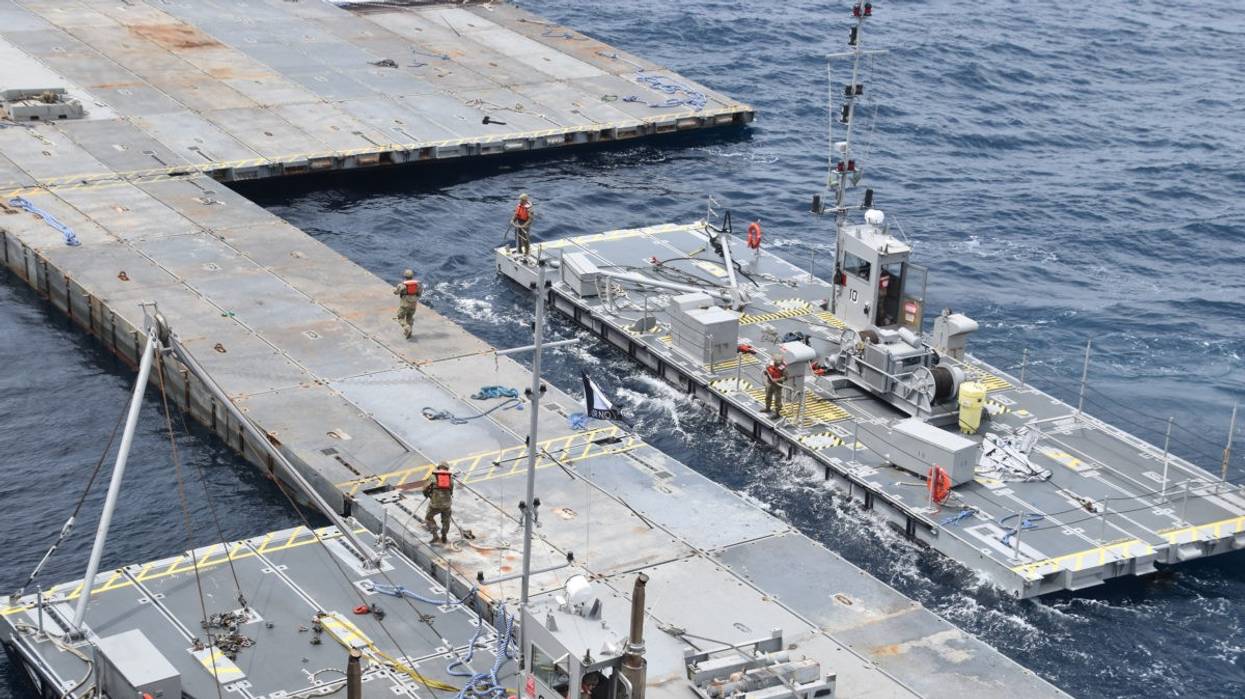
As humanitarian shipments began trickling into Gaza via a U.S.-built temporary floating pier, Palestinians and aid workers on Friday renewed criticism of what they called an expensive and largely ineffectual publicity stunt that is no substitute for a cease-fire and opening of more land crossings into the besieged coastal enclave.
U.S. Army Central Command said that "trucks carrying humanitarian assistance began moving ashore" at around 9:00 am local time Friday as part of "an ongoing, multinational effort to deliver additional aid to Palestinian civilians in Gaza via a maritime corridor."
The $320 million Trident Pier—which consists of a floating offshore barge and 1,800-foot causeway to the shore—is expected to eventually accommodate up to 150 trucks per day. According to United Nations agencies, an average of 200 trucks entered Gaza each day last month, far fewer than the prewar daily mean of more than 500 truckloads that U.S. and U.N. officials say are required to meet the needs of a population facing critical shortages of food, water, medicine, and other lifesaving supplies.
"We don't want ships. We want the border crossing to open for people to come and go. We want safety."
However, as faminegrips northern Gaza—with malnutrition and dehydration killing dozens of people, mostly children—and at least hundreds of thousands of other Palestinians starve, Israel has been accused of blocking aid from those who desperately need it and using starvation as a weapon of war.
"We don't want ships. We want the border crossing to open for people to come and go. We want safety. We want official borders," Hassan Abu Al-Kass, a forcibly displaced Palestinian man, told The New York Times on Thursday.
Al-Kass compared the pier to the humanitarian aid airdropped by U.S. and other troops over Gaza, whose officials
say that more than 20 people have been killed by the parachuting parcels, either by crushing or drowning while trying to reach offshore drops.
"Those planes, as well, that they bring here with the parachutes, and they throw food at us like dogs, like beggars, that does not work," he said. "It falls on houses. It falls on people. It brings us problems."
One unnamed humanitarian aid worker
told U.S. investigative reporter Jeremy Scahill: "It's completely absurd. The solution to the problem here is obvious and we need to end the occupation... Once the siege is lifted, humanitarian aid can roll in. A pier is a PR move."
Farhan Haq, deputy spokesperson for U.N. Secretary-General António Guterres, said Thursday that "to stave off the horrors of famine, we must use the fastest and most obvious route to reach the people of Gaza—and for that, we need access by land now."
Washington Post columnist Ishaan Tharoor noted on social media Thursday that "no major humanitarian organization has asked for this pier, and most see it as a costly distraction that will do little to make a dent in meeting Gaza's overwhelming humanitarian needs."
"For that," he added, "you need a cease-fire and open border crossings and less military obstruction."
According to a report published last month, officials at the United States Agency for International Development concluded in a confidential memo to Secretary of State Antony Blinken that Israel is violating a White House directive by blocking humanitarian aid from entering Gaza. Critics pointed to the leaked memo as more evidence that the Biden administration is breaking the law by supporting Israel's assault on Gaza—which Palestinian and international officials say has killed, wounded, or left missing more than 125,000 people—with arms and diplomatic cover.
Parties to the South African-led genocide case against Israel at the International Court of Justice, as well as human rights groups, accuse Israel of flouting the ICJ's January 26 preliminary ruling ordering the Israeli government to prevent genocidal acts in Gaza and ensure immediate delivery of humanitarian aid. Israel rejects charges of genocide and blocking aid.
Hundreds of U.N. and other aid workers—overwhelmingly Palestinians—have also been killed or wounded by Israeli forces in Gaza since October 7. Israeli troops have been accused of deliberately attacking both humanitarian workers and Palestinians trying to receive aid, including in the February 29 "Flour Massacre," in which nearly 900 starving Gazans were killed or wounded while waiting for food distribution south of Gaza City.
Critics have slammed U.S. President Joe Biden for offering token aid to Gazans with one hand while lavishing Israel with billions of dollars of weaponry used to kill Palestinians with the other.
Earlier this month, Biden said he would stop sending bombs, artillery shells, and other arms to Israel in the event of a major invasion of Rafah, where more than a million Palestinians forcibly displaced from other parts of the embattled Gaza Strip are sheltering alongside around 280,000 local residents.
However, as Israeli air and ground attacks pound the southern city, killing civilians including 22 members of one family in a single strike, Biden—who previously implored Israel to stop its "indiscriminate bombing" of Palestinian noncombatants—informed Congress this week that his administration will soon send another $1 billion in arms and ammunition, including tank and mortar rounds, to the Israel Defense Forces.
This, despite the Biden administration last week
acknowledging "reasonable" evidence that Israel is using U.S.-supplied weapons in the commission of war crimes in Gaza, with the caveat that "we are not able to reach definitive conclusions" on the matter.