

SUBSCRIBE TO OUR FREE NEWSLETTER
Daily news & progressive opinion—funded by the people, not the corporations—delivered straight to your inbox.
5
#000000
#FFFFFF
To donate by check, phone, or other method, see our More Ways to Give page.
Daily news & progressive opinion—funded by the people, not the corporations—delivered straight to your inbox.
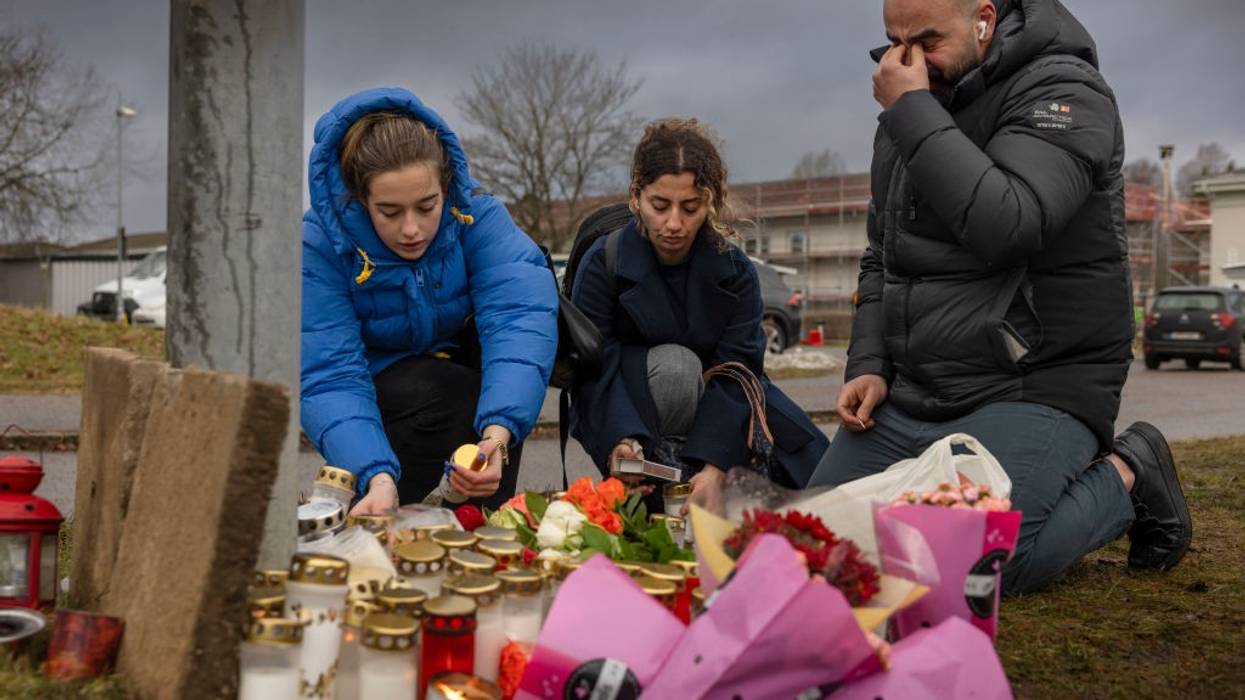
The majority of those who died were immigrants to Sweden, and the debt is simple: telling their stories in a way that counters common stereotypes about immigrants and refugees in Sweden, and across Europe.
As the mass murder that took the lives of 10 innocent people in Sweden disappears from the international news map, there remains a debt to the dead that will likely go unpaid.
The majority of those who died were immigrants to Sweden, and the debt is simple: telling their stories and placing their lives in a context that pushes back against the common stereotypes about immigrants and refugees in Sweden, and across Europe.
Details are now beginning to emerge about the victims in Örebro. Of the 10 who died in Örebro, seven were women and three were men. Eight were born outside the country. But there is so much more. There are details that speak to the mundane, everyday lives of immigrants and refugees—stories that are largely ignored by the media in favor of more sensational topics such as crime, terrorism, and failed integration. Topics that do not reflect the overwhelming majority of people who have immigrated to Sweden and Europe. People who have often fled violence and persecution in search of a quiet, ordinary, and anonymous life.
To not recognize their everyday lives or to refuse to acknowledge their efforts to integrate into their new societies is to subject them to a second form of violence: the symbolic murder of their humanity.
Let’s be honest. The decision to present immigrants and refugees in one way rather than another is both deliberate and conscious. And let’s not deny the cruel irony that immigrants, routinely smeared as “lazy,” “violent,” and “incapable of integrating,” were murdered by an "ethnic Swede" who himself lived an unintegrated life as a “loner.”
Immigrants like Bassam, a father of two who came to Sweden from Syria. He worked making bread and preparing food, and on days when he had Swedish language classes, he would start work at 4:00 or 5:00 am, attend his language class, then return to work and stay late.
Immigrants like Salim, a refugee from Syria who had become a Swedish citizen and was studying to become a healthcare worker. He was engaged and had just bought a house. His last act, as he lay dying after being shot, was to call his mother and ask her to take care of his fiancée.
Immigrants like Elsa, who arrived in Sweden in 2015 from Eritrea and was also studying to become an assistant nurse. She was already employed at a nursing home and worked as a contact person for disabled residents in the municipality. She wanted to have two jobs to earn enough money for her husband to get a residence permit. They had four children.
These were victims of an act of violence that ended their physical presence in this world. To not recognize their everyday lives or to refuse to acknowledge their efforts to integrate into their new societies is to subject them to a second form of violence: the symbolic murder of their humanity. We are regularly told that immigrants to Europe from “other” parts of the world do not share our “values.” Yet, in the case of the mass murder in Sweden, we see victims who worked—often with multiple jobs—to integrate and create a better life. In short, they shattered the stereotype of the isolated, lazy immigrant unwilling to engage with Swedish society.
In the days (and now weeks) after the mass murder in Örebro, media in Sweden have been telling the stories of some of these immigrants and their families. About their lives and their losses. This is important progress in Sweden… while media outside of the country have overwhelmingly ignored the dead. But it also raises the question: Should it really take being killed in a mass murder to have your story told?
There are parts of the world that receive media coverage in Europe and the U.S. almost exclusively when there is war, famine, or natural disasters. This links these regions with crisis in the minds of news consumers, and it is a connection that is hard to break. The very idea that people in these regions have everyday concerns, worries, and joys like we do at home is very rarely addressed. Similarly, in domestic media, there are segments of society that are covered primarily when something negative or terrible happens. This creates a similar mental map for news consumers, overshadowing all other perspectives.
In journalism and media research, the concept of “framing” suggests that how an issue or group is presented (rhetorically or visually) in news affects how that issue or group is perceived and understood. But what is not shown is also part of “framing.” What is omitted in the presentation and analysis of society is also an editorial decision.
This should also be seen as part of the debt owed to many of those killed in Örebro. To recognize the power of media to shape not only what people think about but also how they think about it, and to present the everyday lives of those who come to Sweden and Europe not only when linked to tragedy and violence.

"The Swedish government since 2010 has been blatantly disregarding the wolf's special protection status, allowing a yearly licensed quota hunt and thereby breaking E.U. law," one campaigner said.
Sweden is set to start a controversial wolf hunt on Thursday that could see its declining wolf population fall by another 8%.
The country has authorized the killing of 30 of the nation's 375 wolves—or five entire families—in a move that conservationists say is illegal under European Union law. Ultimately, the Swedish government wants to nearly halve the minimum number of wolves for "favorable conservation status" from 300 to 170.
'Imagine... the outcry if this were Sri Lanka killing leopards, or Botswana lions, both much trickier animals to live with," U.K. environmentalist Ben Goldsmith wrote on social media. "Shame, shame on Sweden."
"If Sweden, one of the richest countries in the world with a population of 10.5 million people, can't accept a population of 375 wolves, what hope is there for the planet's biodiversity?"
Under the Council of Europe's Convention on the Conservation of European Wildlife and Natural Habitats, or Bern Convention, countries must preserve the populations of protected species so that they remain above a sustainable level. However, Magnus Orrebrant, the chair of the Swedish Carnivore Association, told The Guardian that E.U. law has not meant much for Sweden's wolves.
"The Swedish government since 2010 has been blatantly disregarding the wolf's special protection status, allowing a yearly licensed quota hunt and thereby breaking E.U. law," Orrebrant said. "We filed a formal complaint to the E.U. commission, leading to an infringement procedure against Sweden, as yet to no avail."
Excessive wolf hunting has been a problem in Sweden for decades, and was part of the reason that the country had no breeding population at all between 1966 and 1983. In addition, increased hunting slashed the population by nearly 20% between 2022 and 2023.
Beyond licensed hunts, Sweden's wolf population also faces pressure from poachers, according to conservation group Revolution Rov, with DNA evidence suggesting that up to 80 wolves are killed illegally each year.
"In many license hunting decisions on wolves in recent years, it has been argued that if legal hunting is allowed, illegal hunting will disappear, but that has not happened at all... Instead, even more wolves have had to die," the group wrote in a petition against 2024's hunt.
The group also wrote that Sweden's wolf population is genetically vulnerable, with many mating pairs being closely related. For the population to remain healthy, it needs an influx of new genes from wolves migrating from Finland or Russia, but these wolves are often killed before they can pair off.
Wildlife advocates outside of Sweden also criticized the 2025 hunt.
"I believe that one of the hallmarks of human progress is learning to coexist with other species that our ancestors once feared," wrote Wildlife Trusts CEO Craig Bennett on social media. "And sadly, it often feels like we still live in the Dark Ages."
Ecologist and conservationist Alan Watson Featherstone wrote: "I really do despair about humanity—we are such a selfish species. If Sweden, one of the richest countries in the world with a population of 10.5 million people, can't accept a population of 375 wolves, what hope is there for the planet's biodiversity?"
However, Sweden is not alone in Europe in its hostility to wolves. The Bern Convention in December accepted an E.U. proposal to lower the wolf's status from "strictly protected" to "protected." The decision followed complaints from farmers that the continent's rebounding wolf population was harming livestock, but conservationists say that allowing the killing of wolves will threaten the species in a vulnerable moment and is not the solution to livestock killings.
"The wolf is still endangered in many parts of Europe, and weakening its protection will only lead to further conflict and threaten its recovery," Ilaria Di Silvestre, regional director of policy at the International Fund for Animal Welfare, told The Associated Press in December.
The Bern Convention's decision, which will go into effect on March 7, will clear the way for the European Commission to alter its habitats directive for wolves to reflect their higher numbers in the mountains and forests of Scandinavia and Western Europe, which will then make it easier to approve more wolf killings.
"We are very critical to the path that the E.U. is now taking, downgrading the protection status of the wolf," Orrebrant told The Guardian. "If the E.U. follows up the latest Bern Convention decision by changing the wolf's protection status in the habitat directive, the result will be very negative not only for the wolves, but for all wildlife in Europe."
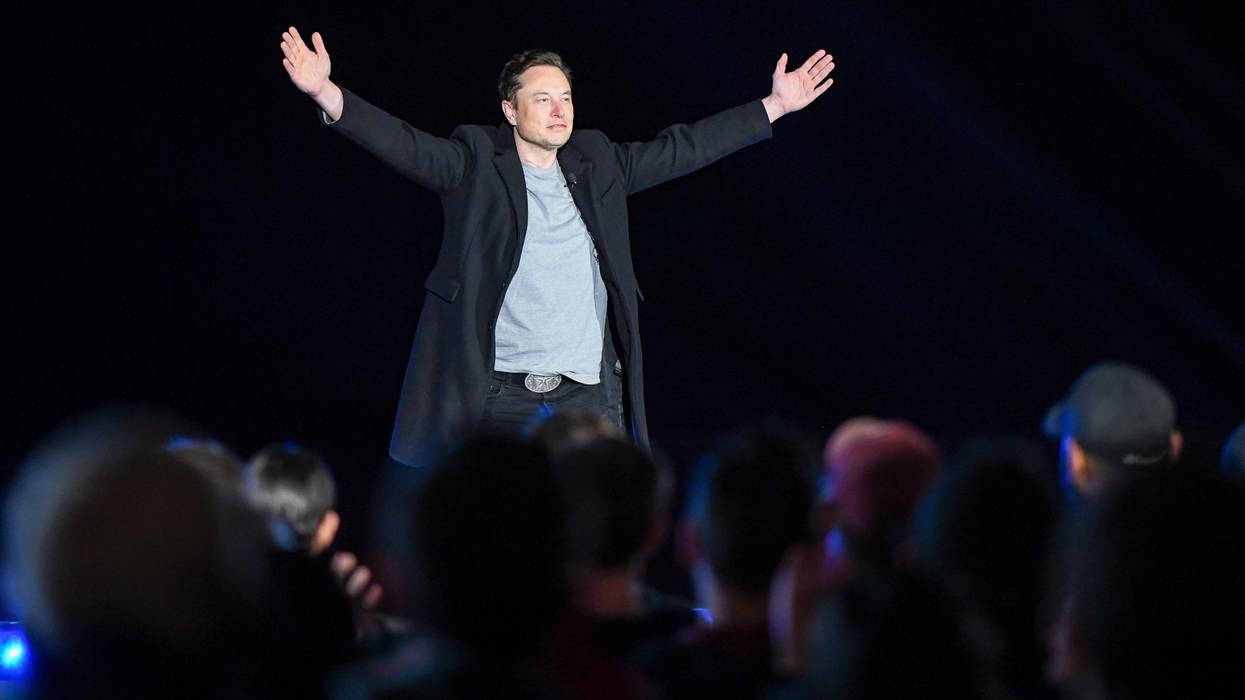
"It's an order of magnitude more egregious than the most egregious ever dared to ask for," an expert said of the pay package. The vote comes after Tesla fired thousands of workers.
Tesla shareholders on Thursday approved a pay package for CEO Elon Musk worth more than $45 billion while rejecting a pro-union measure that sought to prevent the company from interfering with worker organizing.
The shareholder vote on Musk's pay package, the exact value of which fluctuates with the company's share price, was a response to a January court ruling that voided the package because the Tesla board that had issued it had too many personal and financial ties to Musk. The CEO's supporters expect the vote to strengthen his legal case for the money.
The unsuccessful pro-union proposal, which would have required the company to respect workers' right to assemble, had been brought by Scandinavian investors acting in solidarity with Tesla mechanics in Sweden who've been on strike since October. Tesla pays less than other carmakers and Musk has been openly anti-union, even saying that he disagrees with the idea of unions.
The shareholder votes came after the company fired 14,000 workers—more than 10% of its global staff—in April and then made further cuts shortly thereafter. More Perfect Union, a nonprofit newsroom, drew attention to the layoffs in reacting to news of the shareholder votes.
Calling the pay package "outrageous," the newsroom wrote on social media that "the vote allows Musk to further enrich himself, even as Tesla falters as a company and fires thousands of workers."
BREAKING: Tesla shareholders just voted to give Elon Musk $56 billion.
This outrageous pay package is over $55 billion more than the CEO of Google gets.
The vote allows Musk to further enrich himself, even as Tesla falters as a company and fires thousands of workers.
— More Perfect Union (@MorePerfectUS) June 13, 2024
Other organizations also voiced their disapproval at the size of Musk's pay package.
"It's an order of magnitude more egregious than the most egregious ever dared to ask for," Andrew Behar, CEO of As You Sow, a shareholder advocacy nonprofit, said of the pay package, The Christian Science Monitor reported on Thursday.
The $45 billion pay package would come in the form of Tesla stock, taking Musk's ownership stake in the company from about 13% to roughly 20.5%, The New York Times reported.
"Working class people with pensions invested in Tesla could pay for the richest man on Earth to get even richer," More Perfect Union wrote on social media last week.
Musk's contempt for unions is not just rhetorical: He is making a push in the courts to defang the National Labor Relations Board (NLRB), an effort that would "gut" fundamental New Deal workers' rights legislation, according to The Nation.
At a plant in Buffalo, Tesla management fired dozens of workers last year after one of them informed Musk of plans to organize a union. Last month, the NLRB filed a complaint against Tesla for interfering with union organizing at the Buffalo plant.
There's a strong union tradition in Scandinavia, where many workers from other sectors have acted in solidarity with the striking mechanics. "Postal workers refused to deliver license plates for Tesla cars, dockers to unload Teslas from ships, and cleaners to scrub the firm’s showrooms," The Economist reported.
Union leaders see the strike as a way of preserving the "Swedish Model" that has undergirded the country's relative high quality of life and shared prosperity for decades. But organized labor is not yet as strong in emerging green industries, leading to concerns about low wages and meager benefits, the Times reported.
Thursday's shareholder votes for the pay package and against the pro-union proposal were both lopsided, a U.S. Securities and Exchange Commission filing showed, indicating strong support for Musk's agenda.
In another Musk-influenced vote, shareholders agreed to move the Tesla's corporate registration to from Delaware to Texas—an effort to avoid the Delaware court system, which Musk believes has treated the company unfairly. The pay package case will remain in Delaware courts.

"Sweden is unfortunately not unique in completely ignoring the climate crisis," Thunberg said.
Greta Thunberg and over 40 other activists blocked the entrance to the Swedish parliament on Monday, demanding action on the climate crisis.
The activists held signs that said "Climate Justice Now," and Thunberg expressed her dissatisfaction with how the Swedish government is handling the global emergency.
" Sweden is unfortunately not unique in completely ignoring the climate crisis, not treating it as an emergency at all. But actively trying to greenwash, deceive, and lie in order to make it seem like they are doing enough and that they are moving in the right direction, when in fact the exact opposite is happening," Thunberg said.
Right now young people are blocking the Swedish parliament to draw attention to that the climate crisis and underlying social injustices are killing people, and the situation is only getting worse.
We've had enough of those in power not listening to the science and our voices 1/6
— Greta Thunberg (@GretaThunberg) March 11, 2024
Thunberg went on to say that Sweden is "very good at greenwashing," even though the country has "very high emissions per capita." She said the country cannot claim to be a climate leader.
“The climate justice movement has for decades tried to get our message across, and scientists and the most affected people have been sounding the alarm for even longer than that,” she said. “But the people in power have not been listening. They have been actively ignoring and silence those speaking out.”
Thunberg has faced the risk of going to jail over her climate protests repeatedly in recent years, and she has continued to sound the alarm that countries are not doing enough to fight the climate crisis.
The Swedish government has been facing intense criticism recently for enacting policies that will likely increase its carbon emissions. Thunberg vowed to continue her resistance to such policies.
"The climate crisis is only going to get worse and so it is all our responsibilities, all of those who have an opportunity to act must do so. We encourage everyone who can to join us and to join the climate justice movement," Thunberg said.

"The work that UNWRA does cannot be overstated," said Canadian lawmaker Salma Zahid. "It will save lives as we have seen the visuals of children dying of hunger in Gaza. The need for immediate aid is non-negotiable."
The governments of Canada and Sweden have announced they will resume funding for the United Nation's agency that provides humanitarian aide and protection to Palestinians living in Gaza and elsewhere—a move that other powerful nations, including Israel's most powerful ally the United States, continue to refuse.
Calling the lack of humanitarian relief inside Gaza "catastrophic," Canadian Minister of International Development Ahmed Hussen said Friday his nation would restore funding for the United Nations Relief and Works Agency for Palestine Refugees in the Near East (UNRWA) in order to help address the "dire" situation on the ground living.
Sweden made its announcement Saturday and said a $20 million disbursement would be made to help UNRWA regain its financial footing.
The restoration of funds follows weeks of global criticism and protest for the decision by many Western nations to withhold UNRWA funds after Israel claimed, without presenting evidence, that a few members of the agency—the largest employer in the Gaza Strip—had participated in the Hamas-led attacks of October 7.
As a result, UNRWA has said it's ability to provide aid and services to Gaza—where over 100,000 people have been killed or wounded in five months of constant bombardment and blockade by the Israeli military—has been pushed to the "breaking point" as malnutrition and starvation has been documented among the displaced population of over 2 million people.
"Canada is resuming its funding to UNRWA so more can be done to respond to the urgent needs of Palestinian civilians," Hussen said. "Canada will continue to take the allegations against some of UNRWA's staff extremely seriously and we will remain closely engaged with UNRWA and the UN to pursue accountability and reforms."
"I welcome Canada lifting the pause on funding for UNWRA," said Canadian MP Salma Zahid, a member of the Liberal party representing Scarborough Centre in the House of Commons. "The work that UNWRA does cannot be overstated. It will save lives as we have seen the visuals of children dying of hunger in Gaza. The need for immediate aid is non-negotiable."
Earlier this week, UNRWA Commissioner-General Philippe Lazzarini told a special meeting of the U.N. General Assembly the agency was "facing a deliberate and concerted campaign" by Israel "to undermine its operations, and ultimately end them."
On Friday, Reuters reported on an internal UNRWA report that included testimony of employees who said they were tortured by Israeli officers while in detention to make false admissions about involvement in the October 7 attack.
According to the reporting:
UNRWA communications director Juliette Touma said the agency planned to hand the information in the 11-page, unpublished report to agencies inside and outside the U.N. specialised in documenting potential human rights abuses.
"When the war comes to an end there needs to be a series of inquiries to look into all violations of human rights," she said.
The document said several UNRWA Palestinian staffers had been detained by the Israeli army, and added that the ill-treatment and abuse they said they had experienced included severe physical beatings, waterboarding, and threats of harm to family members.
Michael Bueckert vice president of Canadians for Justice and Peace in the Middle East, said the new report was "more evidence that Canada's political decision to suspend UNRWA funding was based on false allegations obtained through torture."
"While the resumption of UNRWA aid is certainly welcome," said Bueckert, "there needs to be accountability for the harm that Canada's actions have caused."

The country is the second U.S. ally in the past month to end an investigation into the pipeline explosions.
Denmark became the latest country to close its investigation into the underwater explosions that caused leaks in two pipelines that were built to carry gas from Russia to Germany, with authorities saying they had found that "there was deliberate sabotage" of the infrastructure but would not go further in their probe to confirm who was behind the blasts.
"The assessment is that there are not sufficient grounds to pursue a criminal case," said the Danish police, prompting criticism from Russian officials and other critics.
Since the gas leaks were discovered in September 2022, seven months after Russia invaded Ukraine, various observers have accused the two countries as well as the United States of being at fault.
The leaks—which experts said led to the single largest release of methane gas due to human activity—were discovered beneath the Baltic Sea, off the coast of the Danish island of Bornholm. Seismic institutes found that two explosions had occurred underwater just before the leaks were recorded.
Russian energy giant Gazprom owns a majority stake in the pipelines, with German, Dutch, and French companies also owning interests. Weeks before the leaks were discovered, Russia had intensified tensions in Europe by cutting gas supplies in suspected retaliation for sanctions against Moscow.
The U.S. was a longtime critic of the Nord Stream pipelines, arguing they would increase European dependence on Russia for energy.
Just before Russia invaded Ukraine in February 2022, U.S. President Joe Biden said in a joint news conference with German Chancellor Olaf Scholz that a Russia offensive would push the U.S. to "bring an end to" the Nord Stream 2 pipeline.
But the U.S. has denied involvement in the explosions, saying in February 2023 that one report alleging U.S. sabotage published by veteran journalist Seymour Hersh was "false and complete fiction."
Hersh reported, based on a single anonymous source who had "direct knowledge of the operational planning," that Biden had authorized U.S. Navy divers to plant remotely triggered explosives that destroyed the Nord Stream pipelines, enlisting the help of the Norwegian Navy and secret service.
In March 2023, weeks after Hersh's report was released, the U.S. and several Western allies opposed a United Nations Security Council resolution that aimed to launch an international probe into the Nord Stream explosions.
Earlier this month, Sweden concluded its own investigation, saying the case did not fall under its jurisdiction and noting that they had given "material that can be used as evidence" to German authorities for their probe. Swedish prosecutor Mats Ljungqvist said that the "primary assumption is that a state is behind it."
The German federal prosecutor's investigation is ongoing.
Journalist Thomas Fazi suggested U.S. allies have dropped their probes because they are "terrified of actually finding the culprit."
The question of who caused the Nord Stream gas leaks, said author Tony Norfield, "has troubled Swedish and Danish investigators so much, they have closed their inquiries. Just in case they uncover something embarrassing."
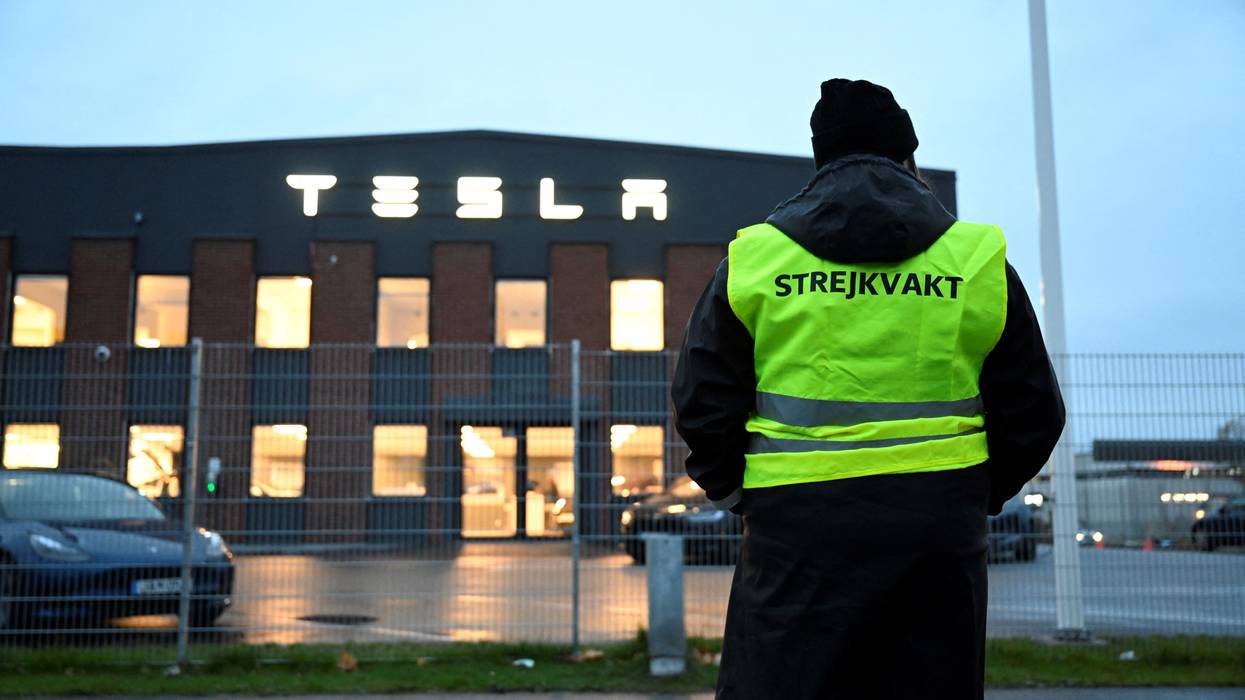
"The mistake Tesla made was challenging the collective agreements that set sector-specific minimum wages in Sweden, a country where 70% of the population is unionized," said one political scientist.
Tesla CEO Elon Musk's tough lesson in labor rights continued in Scandinavia Thursday, as one Danish progressive politician offered some advice to the electric vehicle executive: "Don't mess with Nordic unions."
Musk's refusal to sign a collective bargaining agreement for just 130 mechanics in Sweden has proven to be a significant miscalculation about the power of unions in Nordic countries, as more than a dozen collective bargaining units across Sweden have made Tesla's operations increasingly difficult in the country in solidarity with the mechanics and their demand for a minimum wage.
As Common Dreams reported earlier this month, Musk—the world's richest person—has appeared flat-footed in recent weeks as unionized postal workers, delivery drivers, and electricians have refused to work with Tesla to help pressure the company to sign the mechanics' contract.
France 24 reported last week that "garbage is piling up outside Tesla centers as refuse collectors refuse to pick it up" and cleaning staff are also declining to work in Tesla showrooms.
"I cannot get enough of this story," said Sarah Anderson of the U.S. economic justice think tank Institute for Policy Studies last week.
"The mistake Tesla made was challenging the collective agreements that set sector-specific minimum wages in Sweden, a country where 70% of the population is unionized," political scientist Yohann Aucante told France 24.
Beyond Sweden, powerful unions representing dockworkers in Denmark and transit workers in Norway and Finland have made clear their members won't help Tesla circumvent the Swedish work stoppage that was started in October by the mechanics at the company's service centers.
The unions have pledged in recent weeks to block the transit of Tesla's EVs unless the company could reach an agreement, giving Musk a deadline that expired on Wednesday.
"Swedish workers have [the Transport Workers' Union]'s full support," said Ismo Kokko, president of the Finnish union AKT. "It is a crucial part of the Nordic labor market model that we have collective agreements and unions support each other... The Nordic transport unions stand united in this matter."
Musk has demonstrated little understanding of the display of solidarity that has spread from Sweden to its neighboring countries—calling the postal workers' solidarity strike "insane" and attempting to compel the Swedish postal authority to continue crucial deliveries to Tesla, an effort that was rejected on December 7 by a Swedish court.
Pelle Dragsted, a member of Danish Parliament and a democratic socialist, posted a video on social media telling Musk to accept the lesson he's been given since October: "Get unionized or get out" of Nordic countries.
"In the Nordics, we love our unions, because they make our lives so much better," said Dragsted. "Here in Denmark, our unions have secured a decent living wage for all workers, a workweek of 37 hours, the right to at least five weeks of vacation, paid sick leave, and the right to one year of parental leave... So dear Elon, respect your workers."
In addition to angering unionized workers across Scandinavia, Musk's refusal to abide by the region's strong protections for workers has been trying the patience of powerful investors.
The pension fund PensionDanmark sold more than $70 million in Tesla stock earlier this month, telling Reuters, "In the light of the conflict now spreading to Denmark as well as Tesla's recent very categorical refusal to enter a labor union agreement in any country, we have come to the conclusion that we as investors at present hardly can influence the company."
A coalition of investors that manages $1 trillion in assets—including KLP in Norway, Folksam in Sweden, and PFA in Denmark—also demanded a meeting with Musk to discuss the matter after the new year.
"We as Nordic investors acknowledge the decade-old tradition of collective bargaining, and therefore urge Tesla to reconsider your current approach to unions," said the group.
As Aucante pointed out to France 24, Musk has risked his company's reputation in a region where Teslas are more popular than anywhere else in Europe, suggesting that Tesla will ultimately have to concede to the workers.
"The company has no interest in prolonging a conflict that will severely damage its image," Aucante told the outlet.

For the first time in his life, the man who opposes any "lords and peasants sort of thing" may be learning a lesson in labor solidarity.
“I disagree with the idea of unions… I just don’t like anything which creates a lords and peasants sort of thing.” — Elon Musk, November 30, 2023
Unfortunately for Elon Musk, the lord and master of the Tesla electric automobile company, the Swedish peasants have grabbed their pitchforks. One hundred twenty Tesla mechanics in seven service centers are demanding a collective agreement with the company, one that aligns with all other labor-management agreements in this heavily unionized country. Approximately 90% of the Swedish workforce falls under such agreements.
Musk isn’t having any of it. How dare a union tell him what he can and cannot do with his workers! For the first time in his life, however, he may be learning a lesson in labor solidarity. The 120 peasant-mechanics are not alone.
The Nordic countries are extremely proud of their labor-management system. Strikes are very rare as agreements are formed, sector by sector, to find equitable ways to share the bounty they’ve produced. After decades of mediating the workplace using this system, Nordic workers—and most managers as well—believe it is the backbone of their countries’ high standards of living.
To Musk it’s a violation of natural law, as defined by him, to concede any power to labor unions. He created Tesla and, therefore, he gets to run it. The unions be damned.
Nordic labor unions are understandably highly protective of their collective labor-management system. They want every employer to participate in it, including Tesla, which has a small but robust Nordic market because the region fully embraces electric vehicles. To protect what they have achieved, unions are more than willing to engage in sympathy strikes and boycotts to force recalcitrant employers to accept the system.
Their strength depends on a simple but powerful working-class idea—solidarity: an injury to one is an injury to all. As a result, these 120 mechanics have gained an enormous amount of support.
To be sure, the richest man in the world, will not be easily cowed. Musk certainly has the resources to hold out and test the union’s resolve. As witnessed with Twitter, he’s even willing to harm his own enterprises to put his personal stamp on them. (It was Musk’s idea to push the risky autopilot system on Tesla cars, and to mislead buyers about its abilities. Two million cars are now being recalled.)
If Musk doesn’t settle the strike soon, his worries could quickly grow, especially if the heady spirit of solidarity spreads southward to Germany and the 11,000 Tesla workers at the company’s Berlin Gigafactory.
If Musk doesn’t settle the strike soon, his worries could quickly grow, especially if the heady spirit of solidarity spreads southward to Germany and the 11,000 Tesla workers at the company’s Berlin Gigafactory. To head off an organizing effort by IG Metall, the largest union in Germany, Musk announced a four percent raise in November for German Tesla workers, along with a bonus to make up for inflation. Nevertheless, union organizers claim workers are signing up in droves. It’s unclear how long Musk can keep the union at bay.
Musk’s biggest worry is not the 120 Swedish mechanics. It’s the organizing efforts of the United Automobile Workers union (UAW) in the U.S. that poses the biggest threat. Buoyed by its enormous victories over the Big Three US automakers (GM, Ford and Stellantis), the UAW, led by Shawn Fain, has Tesla in its sights. As Fain colorfully put it:
“It’s gonna come down to the people that work for him deciding if they want their fair share... or if they want him to fly himself to outer space at their expense.”
Tesla is using the usual toolbox of anti-union techniques to keep the UAW out, many of which the National Labor Relations Board has ruled are illegal. But that battle is just beginning, and Musk is no doubt thinking that he can’t afford to show weakness by caving in to a handful of workers in Sweden. Weakness abroad might further embolden workers here to join up with the UAW.
Musk also should be worrying about what the ILWU could do to his cars. It’s possible that this militant labor union will soon refuse to handle any and all Teslas in a show of support for the Swedish mechanics.
While labor law in the United States makes sympathy strikes much more difficult than in Scandinavia, conducting them here is not impossible. The ILWU, which represents 22,000 dockworkers on the West Coast, has a long history of striking on behalf of others. On May Day 2008, the union launched a one-day strike at 29 ports to protest the wars in Iraq and Afghanistan. In 2010, 2014 and 2021 it refused to handle cargo on Israeli ships in honor of community protests against Israel’s repression of the Palestinians. It shut down the ports for eight minutes and 46 seconds in 2020 to show solidarity with George Floyd, Breonna Taylor and other victims of police violence. And when apartheid ruled in South Africa, it conducted numerous job actions intended to punish the institutional practice of discrimination.
If union solidarity holds in Scandinavia, Musk will have no choice but to accept the Nordic model
The ILWU has yet to say whether they will join in the Scandinavian struggle. But if these dockworkers do, it will be precisely because solidarity has always been the essence of union power. Standing together is the only way labor organizations can successfully challenge corporate power. Unfortunately, only six percent of workers in the U.S. business sector belong to unions, down from nearly 35 percent in the mid-1950s, and a far cry from the 90 percent covered by union agreements in Sweden.
Nevertheless, in the U.S., positive perceptions of unions are rapidly rising as a new generation of workers take on companies like Amazon and Starbucks. After hitting their lowest approval rating in 2010 (48 percent according to Gallop) union approval climbed to 71 percent in 2021, the highest since the 1960s.
Musk, of course, could care less about union approval ratings. Like every other multi-billionaire, he believes he knows best about nearly everything, or how else could he have become so rich? To Musk it’s a violation of natural law, as defined by him, to concede any power to labor unions. He created Tesla and, therefore, he gets to run it. The unions be damned.
But if union solidarity holds in Scandinavia, Musk will have no choice but to accept the Nordic model, at least in those countries (or scuttle his market as he seems to be doing with Twitter in Europe.) Whether the power of solidarity spreads elsewhere will depend on the courage of unions like the ILWU and the UAW.
In this era of rising autocratic power, wouldn’t it auger a good New Year if the 120 Swedish mechanics bested Musk?

Could the United States actually be home to an organized movement to deliver its people a happier, healthier, and more egalitarian future?
In the first half of the 20th century the descendants of the Vikings did what we Americans have been hesitant to do. They waged a nonviolent revolution to take away the dominance of the economic elite.
In the U.S., even though the economic elite is okay with bringing climate emergencies to an increasing number of Americans, it maintains its control of both major parties. For the Nordics, overcoming elite control was a very big reach, but the Danes broke through in the 1920s and then the Swedes and Norwegians matched them in the 1930s. (Finns and Icelanders followed in the ‘50s.)
I personally experienced the payoff of a nonviolent revolution when as a young man I studied at a typically free Nordic university, in Oslo. Of my eleven books, the most pleasurable to write was Viking Economics, published in 2016 and still in use. When the book came out, an international association of Nordic economists invited me to keynote their conference, and I learned still more.
Few Americans seem to know that the 2023 World Happiness Report rates the people of Finland, Denmark, and Iceland as the top three countries in the world, with Sweden as sixth. The U.S. is fifteenth. The World Economic Forum’s measure of the gender gap among the nations puts Nordic countries in the top five, while the U.S. is 43rd. Racial Equity Rankings by US News and World Report puts the Nordics in the top ten. The United States? The U.S. comes in 73rd.
Yale University has created an Environmental Performance Index for rating national accomplishments. Four of the Nordics are in the top 10 while Norway follows at 20th. The U.S. is 43rd.
When an oligarchy is in charge, misery is widespread no matter how small and homogeneous you are!
In the 2022 Democracy Index rating, on a 10-point scale Nordics exceed 9.0. The U.S. is 7.85. In the 2019 rating of “best countries to raise a child,” the Nordics took the first four places, while the U.S. came in at 22nd.
Still, that was considerably better for the U.S. than the 2023 Global Peace Index: Nordic countries got the top two places while Sweden scored 28th. The U.S. scored 131st -- down ten places since the Democracy Index of three years ago!
I could continue with rankings but you get the idea. For Americans, the full potential of our energy, smarts, creativity, and yearning for justice remain hobbled by the power of the economic elite and its political culture maintained through mainstream mass media and the two major political parties.
If such ratings existed before the 1920s, the Nordics also would have been caught under-performing. In fact, they were in such trouble that their people were emigrating to the U.S. in large numbers.
Some people believe the Nordics do well these days because they are small and relatively homogeneous. But in the Nordic “bad old days” they were smaller, and much more homogeneous. They performed poorly because their economic elites were running things. When an oligarchy is in charge, misery is widespread no matter how small and homogeneous you are!
What changed among the Nordics to generate today’s high ratings? Their people who didn’t leave figured out how to use nonviolent direct action campaigns to force their oligarchies to give up control.
To many Finns in 1918, armed struggle seemed the obvious choice. Their violent insurgency turned into civil war. The capitalists and conservatives crushed the socialist uprising: the result in that small population was at least 35,000 dead.
The Finnish people’s defeat delayed their movement’s eventual victory over the economic elite, which they finally achieved through nonviolent struggle. (Another of the many cases in history where violence failed to reach an objective, then nonviolent struggle succeeded.)
The Finnish direct action climaxed in the 1950s: a nationwide 10-day metalworkers’ strike was followed by a general strike of half a million workers, and at last the Finns could put themselves in the same league with their Scandinavian comrades.
While many Danes in the early 1920s were also tempted by violence, sufficient activists noted the failure of the Finnish violence and also became disillusioned with how their “next door leftists” in Germany were handling their struggle for revolution.
Danish radicals chose first to build on the credibility of the co-op movement and on their common-sense vision of what Denmark could look like if Danes took away the dominance of the economic elite. They then plunged into nonviolent campaigning. By 1924 the Danes obtained their first social democratic prime minister.
Impressed, Swedish workers and others followed this Danish recipe: create a clear vision of a new society, escalate community organizing (via co-ops + unions, in their case), and launch campaign after campaign of nonviolent struggle, through which the movement grows more massive.
By 1931 the Swedish economic elite was desperate to hold onto power. They used their government’s military and killed workers in a local but important strike. The labor movement responded to the killings by calling a national general strike, supported by middle-class progressives, and took power.
Norwegian workers and farmers, eager to learn from both Danes and Swedes, then upped their level of struggle. The Norwegians had a more radical vision than did the Swedes—Lenin even invited Norwegian Labor Party leaders to join Russian revolutionary meetings in Moscow. The labor movement increased the level of strike activity, aiming to end the elite’s ownership of the means of production.
By then, however, Norway was caught by the 1930s’ Great Depression. Norwegians in poverty were starving while still trying to maintain their strikes. Given the pain and hardship, the Labor Party decided not to continue the struggle to make a full-scale victory and instead to settle for social democracy, which was less expansive than their version of a new society.
The coalition of workers and farmers agreed to let the capitalists continue to own and manage their means of production, but required them to accept complete unionization, a high degree of regulation, huge taxes on large incomes and capital, and accept a large sector of co-ops as well as many municipally-owned and nationally-owned enterprises.
Most importantly, the Norwegian economic elite would have to give up their power to run the economy as a whole: big-picture decisions would be made by the working class and family farmers, through their dominance in parliament.
A growing number of mass strikes forced the Norwegian economic elite to surrender. The Labor Party—the most socialist of the Nordic workers parties—then basically ran the country for half a century.
An observer might guess—since today’s Vikings have it so good—that their capacity for nonviolent struggle would have vanished through disuse. Wrong.
After decades of basic Icelander contentment with their social democracy, in 2008 Icelanders found most of the bankers—in league with the government—had become so corrupt that the country’s economy collapsed. Even the ATM’s no longer worked!
Icelanders quickly built a nonviolent direct action campaign powerful enough to oust the bankers and major party politicians alike. The media called it “the pots and pans revolution” because people massing outside parliament banged their kitchen pots so loud that the parliamentarians couldn’t debate!
The movement refused to allow Iceland to cooperate with the capitalist International Monetary Fund, whose job is to aid countries in bankruptcy. Instead, the movement itself rebuilt political and economic structures on a sound basis. (The women’s banks were uncorrupted and didn’t need to start over.)
When I later interviewed the rebellion’s leader at the key site of the struggle, I learned that 3% of Iceland’s population actively engaged in the direct action. I began to fantasize what ten million Americans (3 percent of the U.S. population) might do given a crisis—a climate disaster, for example—PLUS strategic nonviolent leadership.
The Icelanders’ story raises this question: Will Americans and other activists prepare our vision and strategy now, for large-scale nonviolent struggle when a climate emergency or other crisis arrives that makes it possible?
"We have some labor market agreements in the Nordic region, and you have to comply with them if you want to run a business here," said the head of Denmark's largest union.
With Swedish mechanics nearly six weeks into a strike aimed at pressuring U.S. electric car manufacturer Tesla into signing a collective bargaining agreement, the firm's staunchly anti-worker CEO, billionaire Elon Musk, was running out of ways to continue operations in the country on Tuesday as Danish workers launched a solidarity action.
Denmark's United Federation of Workers (3F), the largest labor union in the country, announced that unionized dockworkers and delivery drivers will not comply with a Tesla plan to circumvent the Swedish strike by delivering cars to Danish ports and trucking them to Sweden.
Jan Villadsen, chair of 3F Transport, told The Guardian that IF Metall, the Swedish union that represents 130 mechanics at Tesla service centers in the Scandinavian country, called on the Danish workers to support the strike.
"IF Metall and the Swedish workers are fighting an incredibly important battle right now," said Villadsen. "When they ask for our support, we are of course behind them. Just like companies, the trade union movement is global in the fight to protect workers."
The mechanics began the work stoppage on October 27, after five years of trying to reach a collective bargaining agreement with Tesla. The employees work at seven service centers owned by the EV manufacturer.
About 9 in 10 workers in Sweden are covered by collective bargaining agreements, but Musk recently said he disagrees "with the idea of unions" because they create "a lords and peasants sort of thing" and "try to create negativity in a company."
IF Metall says Tesla pays mechanics who service its cars less than the industry average in Sweden, and the workers aim to secure better pensions and insurance plans.
In recent weeks, Musk—the world's richest person, with an estimated net worth of $245 billion—has appeared mystified by the solidarity that other workers in Sweden, and now Denmark, are showing the mechanics.
Postal workers, electricians, and dockworkers in Sweden have all refused to continue operations with Tesla in support of the strike.
Musk said unionized postal workers' refusal to deliver license plates for new Tesla vehicles was "insane" and filed a lawsuit last month against the Swedish Transport Agency over the growing work stoppage.
"Wait until he finds out about global labor solidarity," said Ruwan Subasinghe, legal director of the International Transport Workers' Federation.
The Danish dockworkers' action, said Villadsen, will provide another lesson for Musk about how workers in Nordic countries build collective power.
"Even if you are one of the richest in the world, you can't just make your own rules," Villadsen told The Guardian. "We have some labor market agreements in the Nordic region, and you have to comply with them if you want to run a business here."
Jacob Lykke, head of a 3F Transport local union in the Danish port city of Esbjerg, told Jydske Vestkysten that "as of December 20, we will not drive [Tesla's] cars off board, as we usually do."
Dockworkers and delivery drivers "will not receive and transport Tesla's cars going to Sweden," 3F said in a statement. "With the sympathy action, that model is no longer possible."