SUBSCRIBE TO OUR FREE NEWSLETTER
Daily news & progressive opinion—funded by the people, not the corporations—delivered straight to your inbox.
5
#000000
#FFFFFF
To donate by check, phone, or other method, see our More Ways to Give page.
Daily news & progressive opinion—funded by the people, not the corporations—delivered straight to your inbox.
"I think that changes like this will lead to more unnecessary deaths," said one doctor.
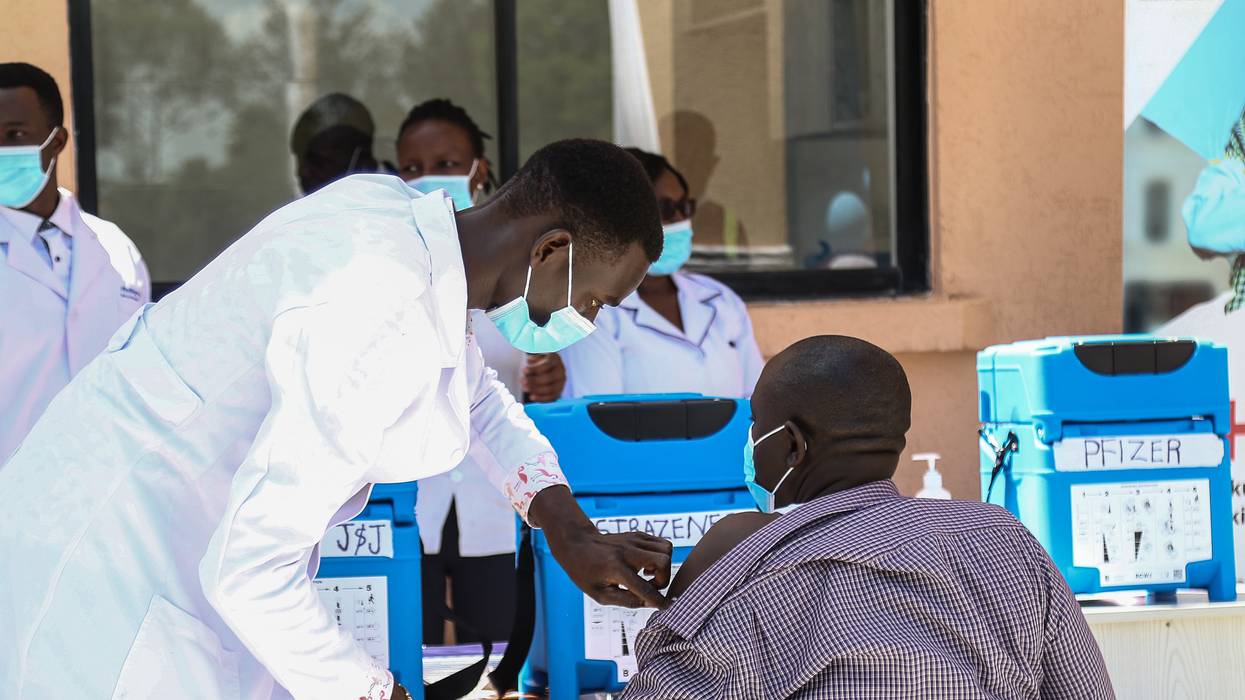
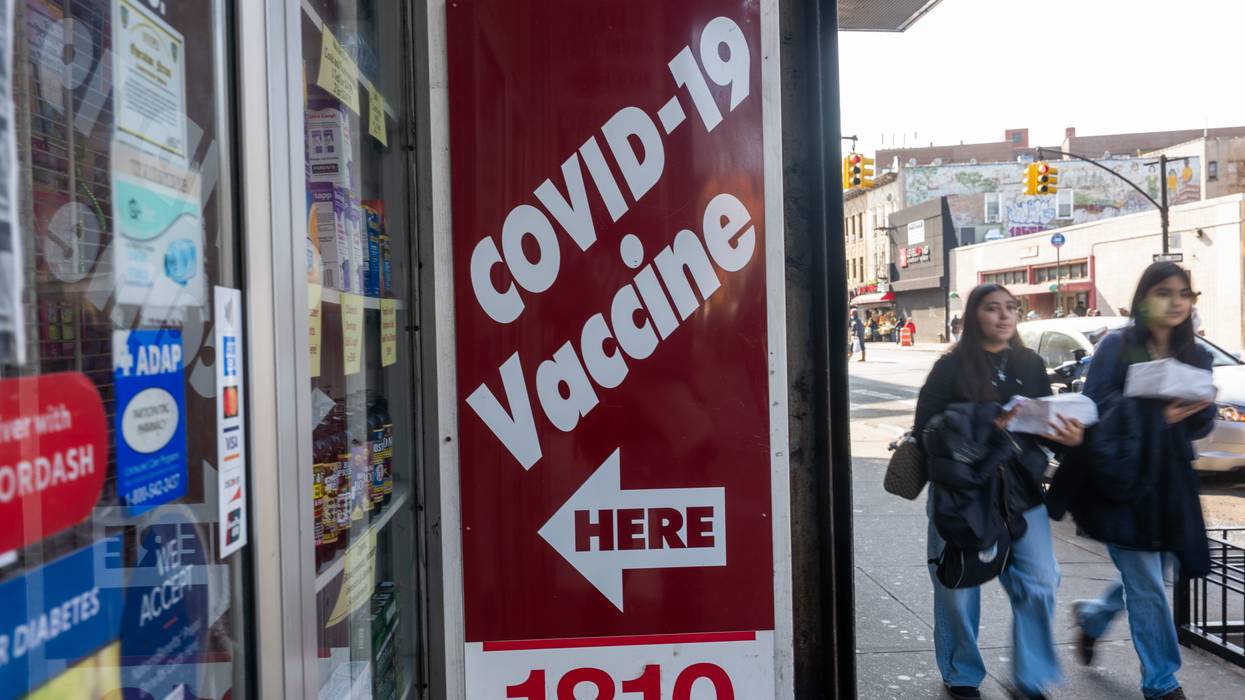
Public health experts on Tuesday warned Tuesday that forthcoming Food and Drug Administration guidance on the Covid-19 vaccine would "cause confusion" and result in fewer people getting inoculated against the virus that killed 350,000 people in the U.S. before the shots became available.
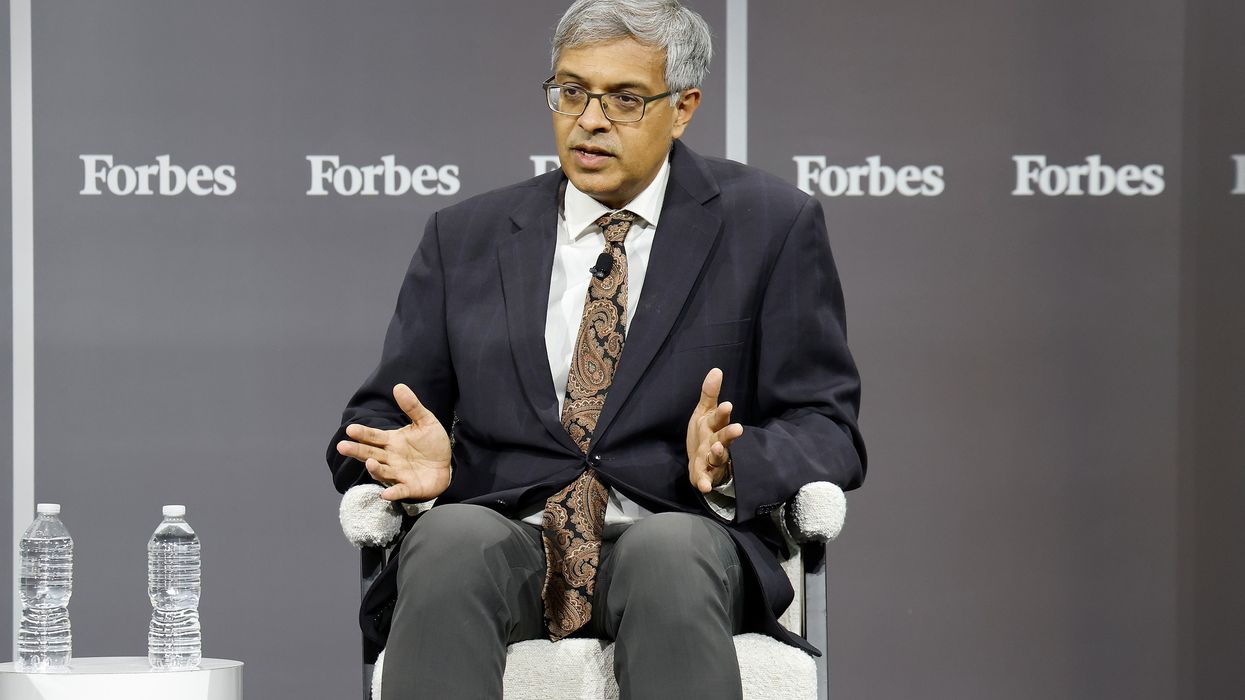
Dr. Vinay Prasad, head of the agency's vaccine division, and Dr. Martin Makary, the FDA commissioner, wrote in the New England Journal of Medicine that the vaccine "booster" doses that have been available for the last several years to anyone aged six months and older carry "uncertain" benefits for much of the population.
The officials said the next round of shots will be available only for adults over 65 and those with certain medical conditions.
They said that before a new round of updated vaccines are made available in the fall, the FDA "anticipates the need" for new clinical trials for many patients under 65. Participants in the trial would be given either the new shots or a placebo and followed by vaccine manufacturers for at least six months to determine if the vaccines continued to provide them with protection from Covid.
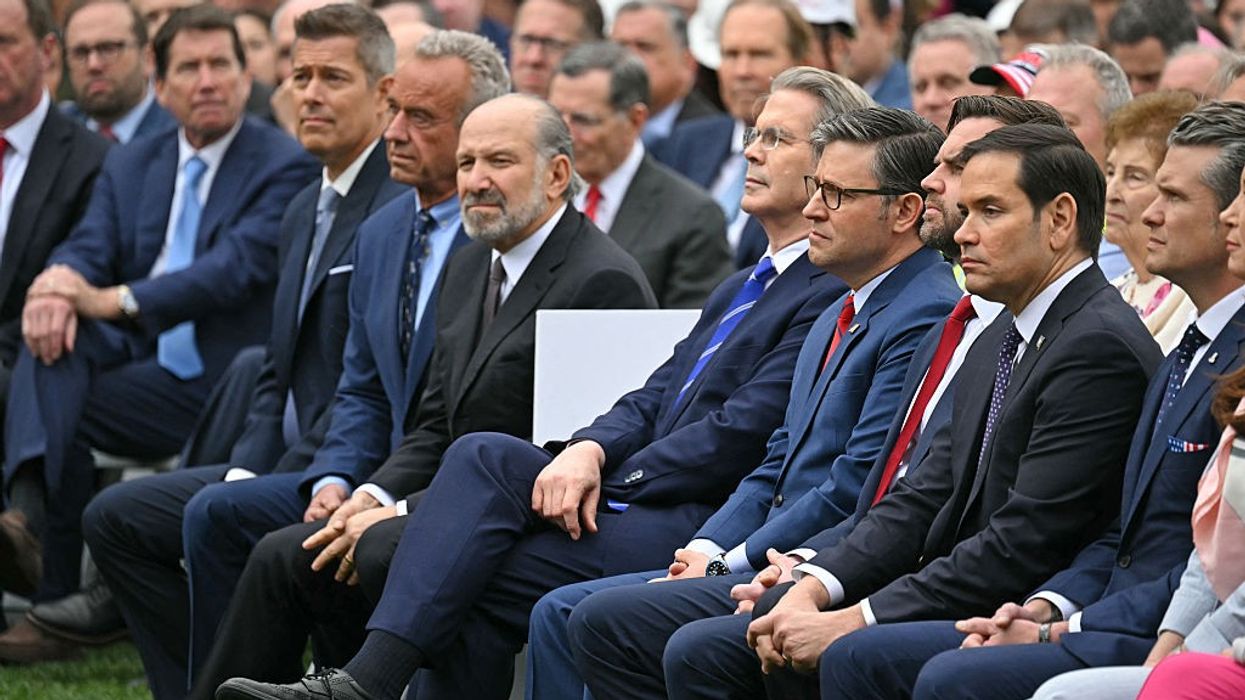
Both Prasad and Makary were vocal skeptics of vaccine mandates and other public health measures during the coronavirus pandemic, and Health and Human Services Secretary Robert F. Kennedy, Jr.—who oversees the FDA—has spread baseless misinformation about the Covid shots and other vaccines.
Kennedy said in 2021 that the shots were the "deadliest ever made"; the Centers for Disease Control and Prevention (CDC) has found the vaccines reduce people's risk of developing serious illness, long-term symptoms, and hospitalization.
Dr. Daniel Griffin, a physician in New York, told The New York Times that the FDA's plan will ultimately "very slowly [reduce] vaccination in the country."
"I think that changes like this will lead to more unnecessary deaths," said Griffin.
Makary and Prasad made their announcement days before scientific advisers to the FDA are set to decide on the composition of the Covid vaccines that will be offered this fall.
Dr. Lucky Tran, director of science communication and media relations at Columbia University Irving Medical Center, emphasized that many Americans have conditions that raise the risk of severe illness when they get Covid—including asthma, pregnancy, diabetes, obesity, and some mental health conditions.
"However, limiting Covid vaccines to people with specific conditions only causes confusions and decreases uptake," said Tran. "Most are unaware they have a condition that puts them at risk, so many who would want to get vaccinated may not try because they think they don't qualify."
About 74% of people in the U.S. have at least one condition that puts them at higher risk for severe disease, according to the CDC.
For people without medical conditions who are under age 65, it was unclear Wednesday whether they will be able to get vaccinated in the fall—and if shots are available to them, whether insurers will cover the costs.
William Schaffner, an infectious disease physician who is on the CDC's vaccine advisory panel—which recommends who should get FDA-approved vaccines—told The Washington Post that the panel could include in this year's recommendations that healthy people under 65 can still get a shot to protect themselves.
"They could add that line... and it would allow those people very focused on prevention who would like to get the vaccine and have it paid for by their insurance," Schaffner told the Post.
But Prasad said the FDA could still limit access because the agency "can only approve products if it concludes, based on the available scientific evidence, the benefit-to-harm balance is favorable."
Pediatricians expressed concern for children's safety if vaccines become unavailable to them; the CDC reported 150 pediatric deaths from Covid over the 12-month period that ended last August.
"I think there is strong data to suggest Covid should be part of routine childhood vaccinations," Amesh Adalja, an infectious disease physician, told STAT News. "We vaccinate kids for things that have less morbidity and mortality than Covid, like chickenpox for example."
Tran denounced the anticipated guidance as "an anti-science move that will kill more Americans."
"The FDA is being led by people who have consistently spread misinformation about Covid and vaccines," said Tran. "Their record indicates that they cannot be trusted to implement evidence-based guidance for vaccines, and their policies will kill people and make them sicker."
Don't believe it? Just look at their record.
Let’s suppose someone decides it would be a good idea to drive 80 miles per hour through a school zone while the amber lights are flashing. If something bad happens, as it would be likely to, and he kills one or more children, how would the law treat it?
He could tell the court that he sincerely didn’t “mean” to kill anyone, but that wouldn’t exonerate him. The court would consider the case at minimum as vehicular homicide, and more likely, given the aggravating circumstance of lethal speed in a school zone, it might well result in conviction for aggravated murder.
Absent a miraculous development of telepathic powers, we can’t read people’s minds and determine their “real” mental state; we can only infer intent from their behavior. If someone commits a reckless act whose adverse consequences are clearly foreseeable, then for all practical purposes, that person willed the consequences. This principle—who wills the means wills the ends—is applicable in law, but should also be valid in everyday life. It should particularly apply to the behavior of public officials who wield power over the rest of us.
With that in mind, let’s look at President Donald Trump’s first-term record. His handling of the COVID-19 pandemic plainly indicated an unconcern for the consequences of his ignoring the outbreak in its early stages during the winter and spring of 2020. As he told Bob Woodward, he wanted to downplay the disease so as not to spook the stock market, evidence of his preference for Wall Street over human life. His refusal to recommend masking and social distancing, and encouragement of crackpot Covid deniers, took a heavy toll.
Trump’s behavior during the pandemic alone should have disqualified him from ever holding elective office again.
According to Scientific American, “In the final year of Donald Trump’s presidency, more than 450,000 Americans died from COVID-19, and life expectancy fell by 1.13 years, the biggest decrease since World War II. Many of the deaths were avoidable; COVID-19 mortality in the U.S. was 40 percent higher than the average of the other wealthy nations in the Group of Seven (G7).” That equates to 140,000 excess deaths from his contempt for human life in a crisis whose outcome was predictable.
Trump’s behavior during the pandemic alone should have disqualified him from ever holding elective office again. Alas, the American people’s memory, knowledge, and judgment being what they are, we are now being forced, like hostages at gunpoint, to endure another four years of criminal behavior, carried out with our tax money.
We have already seen enough to expect the Trump regime’s second term to be like the first on steroids. Thus, gutting the Department of Health and Human Services’ infectious disease research and forcing out the FDA’s chief vaccine expert is exactly what it looks like: an effort to see that more Americans die prematurely. This same result will certainly come as well from cutting $12 billion from state health service grants.
The secretary of HHS, Robert F. Kennedy, Jr., wants to implement placebo testing of vaccines, even though this methodology had been eliminated long ago because of ethical concerns: subjects administered a placebo could be placed at considerable health risk when the overall efficacy of vaccines has been demonstrated worldwide for the many decades. So why is Kennedy doing this?
The most benign explanation is that he is a paranoid crackpot who believes in his quack medical theories (in which case, why did the Republican Senate confirm him in the face of abundant evidence of his lack of qualification and risk to public well-being?). A harsher explanation might be that Kennedy, in line with his various crank theories, sees too many human beings as pestilential, and wouldn’t mind if there were fewer of them. In either case, every senator who voted to confirm him will be just as responsible for any excess deaths occurring as he would.
The same applies to veterans’ health programs. The VA under Trump has slashed personnel, cut programs, and halted clinical trials. In recent testimony, the department’s secretary, Doug Collins, succeeded in matching his own bumbling incompetence with arrogance and nastiness. Yet the Republican senators who pretended to be critical of him in the hearing for the benefit of their veteran constituents had voted to confirm him, so if any veterans die from lack of health care, it will be their responsibility as well as that of Collins.
Why did the Trump cabal eliminate the terrorist data base at the Department of Homeland Security? Given that most domestic terrorism cases have a right-wing motivation, they must want to see more terrorism: it is useful in cowing the rest of the population. As for terrorist incidents in general, they can serve as an excuse for martial law. We can similarly conclude that wiped-out towns and lives ruined by natural disasters is the intended result of slashing FEMA.
The Centers for Disease Control and Prevention (CDC) estimates that approximately 420 Americans die from Salmonella each year. The CDC also estimates that about 1.35 million people get sick from salmonellosis, and 26,500 are hospitalized. So why did Trump’s Agriculture Department withdraw a proposed rule that would have limited salmonella content in raw poultry and required producers to test their products before sale?
You might say it was lobbying by the poultry interests. In that case, it reflects the same attitude of willful contempt for human life on the part of Trump and his minions: that the profits of corporate contributors are more important than the safety of the American people.
Where does this contempt for human life come from? Any rational person who observed Trump over the past decade would conclude that he is a pathological narcissist who is indifferent to others. But that only leads to another question: why do so many Americans not only support him, but treat him as a near-deity?
At the core of Trump’s base are tens of millions of religious fundamentalists who believe in the Apocalypse. If the end is at hand, if in fact it could come at any moment, why worry too scrupulously over a life or two, or, for that matter, over the functioning of society at a level above that of the bronze age? The behavior of Trump’s supporters, particularly their “Covid parties” and “measles parties,” suggests an actual courting of disease and death. Their relation to Trump is like that of the ancient Carthaginians, sacrificing their children to the destroyer-god Baal.
Where does this contempt for human life come from? Any rational person who observed Trump over the past decade would conclude that he is a pathological narcissist who is indifferent to others.
There is another, more secular, source of this willingness to let people die: survivalists whose rabid fear of economic collapse, social breakdown, and anarchic violence ironically leads them to hope for the very chaos they supposedly abhor, because it would prove them to have been right all along.
Right-wing media have long egged on the paranoid with ads prophesying imminent economic or social collapse. Since the 1970s oil shock, an abiding feature on the American scene has been the right-wing survivalist, hoping for the national Götterdämmerung that will vindicate his having stockpiled 10,000 rounds of ammunition and a horde of Krugerrands.
Religious lunatics and bunkered-in survivalists have been a feature of society for decades, but what gives their vision the potential for fulfilment is a newer, third element: the neo-reactionary tech bros. What the apocalyptics and survivalists supply in numbers, the Silicon Valley billionaires provide in money: they are already a mainstay of funding for Trump’s political operations.
According to Naomi Klein and Astra Taylor, tech bros like Elon Musk, Peter Thiel, and Marc Andreessen believe they have the money and means to carry out what the two authors call End Times Fascism. Musk’s effort through DOGE to destroy the government’s health and safety infrastructure is precisely what will bring a societal collapse nearer—and that’s a good thing in the eyes of these neo-reactionaries, because it makes survivalist prepping all the more critical while culling the unwanted.
Their goal is like something foretold in Neal Stephenson’s novel "Snow Crash" over three decades ago: the destruction of the traditional nation-state and the creation of city-states ruled by tech moguls and serviced by AI robots and whatever number of the lower orders of humanity are deemed necessary.
This nightmarish vision is now the de facto program of the Republican Party, regardless of what its official platform contains. The deaths that will occur from the cutting or elimination of the programs I have mentioned are not an accident or unforeseen consequence.
No, on the contrary: Republicans want you to die.
"He will set American health, innovation, and science back for a generation," said one virologist of Dr. Jay Bhattacharya.
Dr. Jay Bhattacharya, a physician and Stanford University professor who shot to prominence during the pandemic due to his heterodox views around Covid lockdowns, is President-elect Donald Trump's pick to lead the National Institutes of Health.
In announcing his selection, Trump wrote that Bhattacharya and Robert F. Kennedy Jr., who has been tapped to lead the Department of Health and Human Services, will work together to "Make America Healthy Again."
However, Bhattacharya's nomination was met by alarm from some health professionals who warned that the views he expressed during the pandemic make him a poor choice to run the globe's premier medical research agency.
"Despite his mild manners, Bhattacharya is a self-interested extremist who gives cover to anti-vaxxers and promotes policies that will kill people. He will set American health, innovation, and science back for a generation. He's not here to reform NIH. He's here to destroy it," wrote the virologist Dr. Angela Rasmussen on X.
Biomedical scientist and public health communicator Dr. Lucky Tran wrote: "Please google Great Barrington Declaration. If it had been implemented, millions more people would have died at the start of the pandemic. Now, one of its architects will lead the NIH (if confirmed), the largest funder of biomedical research in the world," wrote biomedical scientist and public health communicator Dr. Lucky Tran.
Another doctor, Alastair McAlpine, echoed these sentiments, writing that Bhattacharya is a "terrible" choice for head of NIH.
Bhattacharya is known for co-authoring the Great Barrington Declaration, a treatise published in October 2020 that advocated for a "focused protection" approach to the pandemic.
"The most compassionate approach that balances the risks and benefits of reaching herd immunity, is to allow those who are at minimal risk of death to live their lives normally to build up immunity to the virus through natural infection, while better protecting those who are at highest risk," Bhattacharya and his co-authors wrote.
The document was named after the Massachusetts town where the three authored and signed the proposal. That work took place on the campus of a libertarian think tank, the American Institute for Economic Research.
The proposal caught the attention of Trump's White House in 2020. Trump, for his part, minimized the threat of the virus, chafed against lockdowns during the pandemic.
Public health groups criticized Bhattacharya and his co-authors, arguing that the proposal would threaten vulnerable individuals, according to reporting a the time. Then-NIH director Dr. Francis Collins, also denounced the approach in an October 2020 interview with The Washington Post: "This is a fringe component of epidemiology. This is not mainstream science. It's dangerous. It fits into the political views of certain parts of our confused political establishment."
"What I worry about with this is it's being presented as if it’s a major alternative view that's held by large numbers of experts in the scientific community. That is not true," he said.
Now, four years later, Bhattacharya has been tapped to fill Collins' former seat.
Bhattacharya has also expressed an interest in shaking up NIH itself. "I would restructure the NIH to allow there to be many more centers of power, so that you couldn't have a small number of scientific bureaucrats, dominating a field for a very long time," Bhattacharya said in a January 2024 interview with the Post.
Nobody should die in the richest country on Earth because they can’t afford health care. But this what happens day after day after day, whether we're experiencing a pandemic or not.
In 2002, the American economist Victor R. Fuchs wrote that “national health insurance will probably come to the United States in the wake of a major change in the political climate, the kind of change that often accompanies a war, a depression, or large-scale civil unrest.”
You couldn’t have designed a crisis much better suited to deliver us this outcome than Covid-19. In 2020, the U.S. faced the largest public health emergency in its history, at a time when 28 million Americans did not have health insurance and millions more were underinsured.
The faulty, patchwork nature of our health care system greatly compounded the effects of the pandemic. In fact, a study by the Proceedings of the National Academy of Sciences (PNAS) found that the U.S. could have seen around 338,000 fewer deaths from Covid-19 if we’d had universal coverage and we could have saved billions in health care costs associated with hospitalizations from the disease.
Nobody should die in the richest country on Earth because they can’t afford health care. The Covid-19 pandemic should have made clear once and for all how irrational and cruel our system is. We are the only developed nation that doesn’t guarantee health care to all citizens. As a result, tens of millions of Americans every year suffer without access to basic medical care, while insurance companies are allowed to make record profits. There are people in America who have to ration prescription drugs, while a few miles over the border in Canada, they could get these same pills at a fraction of the cost. There are people who have to forgo life-saving surgeries, because they can’t afford the procedures. Roughly a third of all GoFundMe campaigns in the U.S. go to people raising money for medical treatments.
In April, 2020, a nurse in the intensive care unit of a New York City hospital named Derrick Smith, wrote on Facebook that one of his patients asked “who’s going to pay for this?” before being intubated and placed on a ventilator, seemingly more concerned about the cost of the procedure than what the outcome would be. These would end up being his last words.
Meanwhile, the CEOs of 300 health care companies collectively made more than $4.5 billion in 2021, according to Stat News. The obvious conclusion is scathing.
Lockdown orders during the pandemic led to a massive spike in unemployment, yet despite significant job losses, the number of insured Americans actually increased, primarily due to emergency Medicaid eligibility policies. This amounted to the government (at least, partially) performing the function of a national health care system – i.e. filling gaps in coverage left by the private insurance industry. Unfortunately, as pandemic-era emergency measures ended, millions of Americans lost this coverage and private insurance returned to business as usual.
A number of factors contributed to America’s poor pandemic performance relative to other countries; a slow government response in terms of travel and testing, PPE shortages and delays in testing rollout. But it’s almost certain that addressing Covid-19 would have been easier if everyone had health insurance. According to the consumer health advocacy organization Families USA, roughly 40% of Covid-19 infections were associated with lack of health insurance.
In general, gaps in insurance coverage tend to accelerate the spread of diseases. People are less likely to get tested if they don't have insurance for fear of large medical bills. The more people who have insurance and a relationship with a primary care physician, the more cases can be diagnosed and treated quicker, thus reducing the likelihood of serious infection. Slowing the spread also reduces the strain on hospitals, making it easier to treat all patients.
There were some countries with single-payer that fared poorly during the pandemic. Italy, for instance, was hit very hard, in part because they had a lot of people in the vulnerable age range. However, many of the best-performing countries, particularly outside of Europe (New Zealand, South Korea), were those with single-payer systems. Taiwan, which transitioned to a single-payer system in the 1990s, achieved Covid-19 zero without a lockdown.
There were other factors which should have made Covid-19 uniquely suited to deliver us major health care reform. Unlike a number of other public health crises (the opioid epidemic, homelessness), Covid-19 received near-constant media coverage. It was front-and-center in everybody’s mind for three years. It also came on the heels of two back-to-back election cycles in which Medicare For All was a key issue in both debates and public policy discussions.
Public support for Medicare For All was at an all-time high in 2020. And in 2021, when Rep. Pramila Jayapal introduced the legislation, it was co-sponsored by a majority of Democrats in the House. Nothing like that had ever happened before. Even according to right-wing outlets like the Pacific Research Institute (PRI), Covid-19 led to a significant spike in support for single-payer.
Why, then, did nothing happen? One major problem was that the pandemic kept people inactive. The public was too atomized and immobile for any effective, coordinated response to cohere. The pandemic created a lot of pent-up anger, much of which got unleashed in the summer of 2020 via the Black Lives Matter protests, coming at a time when many people had been stuck in lockdown for months, many without jobs. When the spark was lit, it quickly became a lightning rod for solidarity and popular discontent.
The biggest problem is that single-payer health care is opposed by some of the most powerful special-interest groups in the country; the private insurance industry, pharmaceutical companies, and the for-profit hospitals. Health care is a massive sector of our market economy, a multi-trillion-dollar a year industry, so despite widespread popular support for the program, there is currently no mechanism strong enough to bring this public pressure to bear on politicians.
If we are to rise to the level of the rest of the developed world and guarantee health care to all citizens, we need to constitute an organized popular opposition which can participate in shaping public policy. Ideally, this will mean grass-roots initiatives backed by a strong labor sector—unions in the nursing, trades, and service sectors working in conjunction with local advocacy groups. We must capitalize on the momentum built up in 2020 and continue to push single-payer forward. If we organize and act to exercise our power, this is hardly a utopian goal.
A US-funded laboratory origin of Covid-19 would certainly constitute the most significant case of governmental gross negligence in history. The people of the world deserve transparency and factual answers on vital questions.
The US government (USG) funded and supported a program of dangerous laboratory research that may have resulted in the creation and accidental laboratory release of SARS-CoV-2, the virus that caused the Covid-19 pandemic. Following the outbreak, the USG lied in order to cover up its possible role. The US Government should correct the lies, find the facts, and make amends with the rest of the world.
A group of intrepid truth-seekers—journalists, scientists, whistleblowers—have uncovered a vast amount of information pointing to the likely laboratory origin of SARS-CoV-2. Most important has been the intrepid work of the The Intercept and US Right to Know (USRTK), especially investigative reporter Emily Kopp at USRTK.
Based on this investigative work, the Republican-led House Committee on Oversight and Accountability is now carrying out an important investigation in a Select Subcommittee on the Coronavirus Pandemic. In the Senate, the leading voice for transparency, honesty, and reason in investigating the origin of SARS-Cov-2 has been Republican Senator Rand Paul.
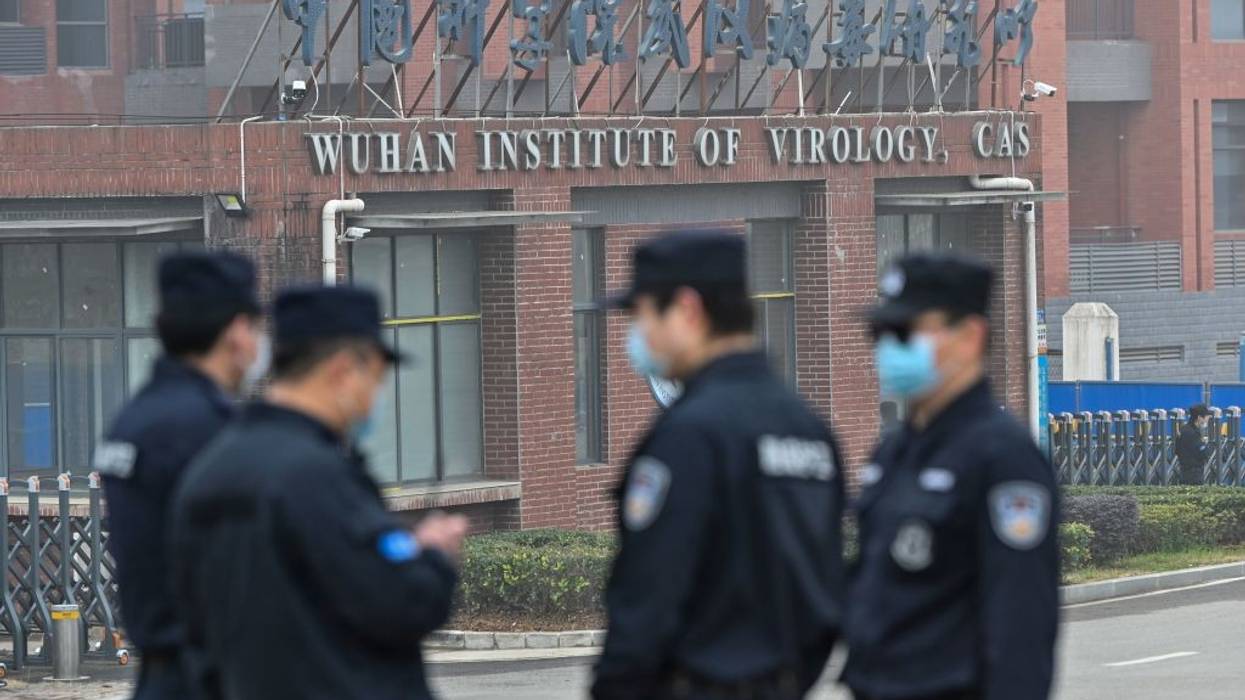
The evidence of a possible laboratory creation revolves around a multi-year US-led research program that involved US and Chinese scientists. The research was designed by US scientists, funded mainly by the National Institutes of Health (NIH) and the Department of Defense, and administered by a US organization, the EcoHealth Alliance (EHA), with much of the work taking place at the Wuhan Institute of Virology (WIV).
The US owes the full truth, and perhaps ample financial compensation, to the rest of the world, depending on what the facts ultimately reveal.
Here are facts that we know as of today.
First, the NIH became the home for biodefense research starting in 2001. In other words, the NIH became a research arm of the military and intelligence communities. Biodefense funding from the Defense Department budget went to Dr. Anthony Fauci’s division, the National Institute for Allergies and Infectious Diseases (NIAID).
Second, NIAID and DARPA (in the Defense Department) supported extensive research on potential pathogens for biowarfare and biodefense, and for the design of vaccines to protect against biowarfare or accidental laboratory releases of natural or manipulated pathogens. Some of the work was carried out at the Rocky Mountain Laboratories of the NIH, which manipulated and tested viruses using its in-house bat colony.
Third, NIAID became a large-scale financial supporter of Gain of Function (GoF) research, meaning laboratory experiments designed to genetically alter pathogens to make them even more pathogenic, such as viruses that are easier to transmit and/or more likely to kill infected individuals. This kind of research is inherently dangerous, both because it aims to create more dangerous pathogens and because those new pathogens can escape from the laboratory, either accidentally or deliberately (e.g., as an act of biowarfare or terrorism).
Fourth, many leading US scientists opposed GoF research. One of the leading opponents inside the government was Dr. Robert Redfield, an Army virologist who would later be the Director of the Centers for Disease Control (CDC) at the start of the pandemic. Redfield suspected from the start that the pandemic resulted from NIH-supported research, but says that he was sidelined by Fauci.
Fifth, because of the very high risks associated with GoF research, the US Government added additional biosafety regulations in 2017. GoF research would have to be carried out in highly secure laboratories, meaning at Biosafety Level 3 (BSL-3) or Biosafety Level 4 (BSL-4). Work in a BSL-3 or 4 facility is more expensive and time-consuming than work in a BSL-2 facility because of the added controls against an escape of the pathogen from the facility.
Sixth, one NIH-backed research group, EcoHealth Alliance (EHA), proposed to move some of its GoF research to the Wuhan Institute of Virology (WIV). In 2017, EHA submitted a proposal to the US Government’s Defense Advanced Research Projects (DARPA) for GoF work at WIV. The proposal, named DEFUSE, was a veritable “cookbook” for making viruses like SARS-CoV-2 in the laboratory. The DEFUSE plan was to investigate more than 180 previously unreported strains of Betacoronavirus that had been collected by WIV, and to use GoF techniques to make these viruses more dangerous. Specifically, the project proposed to add protease sites like the furin cleavage site (FCS) to natural viruses in order to enhance the infectivity and transmissibility of the virus.
Seventh, in the draft proposal, the EHA director boasted that “the BSL2 nature of work on SARSr-CoVs makes our system highly cost effective relative to other bat-virus systems,” prompting the lead scientist on the EHA proposal to comment that US scientists would “freak out” if they learned of US government support for GoF research at WIV in a BSL2 facility.
Eighth, the Defense Department rejected the DEFUSE proposal in 2018, yet NIAID funding for EHA covered the key scientists of the DEFUSE project. EHA therefore had ongoing NIH funding to carry out the DEFUSE research program.
Ninth, when the outbreak was first noted in Wuhan in late 2019 and January 2020, key US virologists associated with NIH believed that the SARS-CoV-2 had most likely emerged from GoF research, and said so on a phone call with Fauci on February 1, 2020. The most striking clue for these scientists was the presence of the FCS in SARS-CoV-2, with the FCS appearing at exactly the location in the virus (the S1/S2 junction) that had been proposed in the DEFUSE program.
Tenth, the top NIH officials, including Director Francis Collins and NIAID Director Fauci, tried to hide the NIH-supported GoF research, and promoted the publication of a scientific paper (“The Proximal Origin of SARS-CoV-2”) in March 2020 declaring a natural origin of the virus. The paper completely ignored the DEFUSE proposal.
Eleventh, some US officials began to point their fingers at WIV as the source of the laboratory leak while hiding the NIH-funding and EHA-led research program that may have led to the virus.
Twelfth, the above facts have come to light only as a result of intrepid investigative reporting, whistleblowers, and leaks from inside the US Government, including the leak of the DEFUSE proposal. The Inspector General of the Department of Health and Human Services determined in 2023 that NIH did not adequately oversee the EHA grants.
Thirteenth, investigators have also realized in retrospect that researchers at Rocky Mountain Labs, together with key scientists associated with EHA, were infecting the RML Egyptian fruit bats with SARS-like viruses in experiments closely linked to those proposed in DEFUSE.
Fourteenth, the FBI and Department of Energy have reported their assessments that the laboratory escape of SARS-CoV-2 is the most likely explanation of the virus.
Fifteenth, a whistleblower from inside the CIA has recently charged that the CIA team investigating the outbreak concluded that SARS-CoV-2 most likely emerged from the laboratory, but that senior CIA officials bribed the team to report a natural origin of the virus.
The sum of the evidence – and the absence of reliable evidence pointing to a natural origin (see here and here) – adds up to the possibility that the US funded and implemented a dangerous GoF research program that led to the creation of SARS-CoV-2 and then to a worldwide pandemic. A powerful recent assessment by mathematical biologist Alex Washburne reaches the conclusion “beyond reasonable doubt that SARS-CoV-2 emerged from a lab…” He also notes that the collaborators “proceeded to mount what can legitimately be called a disinformation campaign” to hide the laboratory origin.
A US-funded laboratory origin of Covid-19 would certainly constitute the most significant case of governmental gross negligence in world history. Moreover, there is a high likelihood that the US Government continues to this day to fund dangerous GoF work as part of its biodefense program. The US owes the full truth, and perhaps ample financial compensation, to the rest of the world, depending on what the facts ultimately reveal.
We need three urgent actions. The first is an independent scientific investigation in which all laboratories involved in the EHA research program in the US and China fully open their books and records to the independent investigators. The second is a worldwide halt on GoF research until an independent global scientific body sets grounds rules for biosafety. The third is for the UN General Assembly to establish rigorous legal and financial accountability for governments that violate international safety norms through dangerous research activities that threaten the health and security of the rest of the world.
After a stunning experiment in reducing poverty through pandemic relief programs, we’re seeing a return to pre-pandemic conditions.
This fall, the Census Bureau released new poverty data showing a stunning reversal in economic security over the course of last year. The findings included a record jump in the Supplemental Poverty Measure just one year after hitting a record low. Child poverty doubled.
Some 12.4% of Americans were poor last year, according to that measure. But when you crunch the numbers fully, the number of poor and low-income people in this country rose to more than 135 million. That’s over 40% of the nation’s population.
If this sounds like a bigger number than we usually hear about, that’s because it is.
Only when we appreciate the breadth and depth of this insecurity can we develop the appropriate social and policy response.
The 135 million figure includes everyone living below the poverty line and everyone living precariously right above it. We need to pay attention to this bigger number for two reasons: First, it shows that poverty is more widespread than the official numbers reflect. And second, it shows what measures can be taken to address poverty once and for all.
To be counted as “poor,” a household’s income must fall below a certain threshold. For an adult under the age of 65, that’s just over $15,000. For a two-adult, two-child household, it’s just under $30,000.
These numbers are absurdly low. They mean that someone earning $20,000 wouldn’t be considered poor, nor would a family with an income of $40,000—even though just one medical emergency, car accident, climate disaster, or lay-off would push those households into financial ruin.
To get a better sense of economic insecurity in the nation, researchers often look at everyone whose incomes fall both below those thresholds and right above them. This broadens the count from 40 million people who are “poor” to 135 million people who are “poor or low-income,” just one emergency away from economic despair.
That number includes Americans of every color. But the racial disparities are stark.
While nearly half (61.8 million) of those 135 million were white, other groups faced much higher rates of hardship. Under this definition, some 60% of Latinos (38 million), 54% of Black non-Latinos (22.5 million), and 58% of American Indian or Alaskan Natives (2.3 million) were poor or low-income.
Being poor can have life-threatening consequences. According to research from the University of California, Riverside, poverty was the fourth leading cause of death in 2019, accounting for between 500 and 800 deaths a day. This was before the pandemic wrought even greater havoc on poor communities.
Only when we appreciate the breadth and depth of this insecurity can we develop the appropriate social and policy response. As Rev. Dr. Martin Luther King, Jr. wrote in 1967, “the prescription for the cure rests on an accurate diagnosis of the disease.”
Here too, the Census Bureau’s SPM report is illuminating.
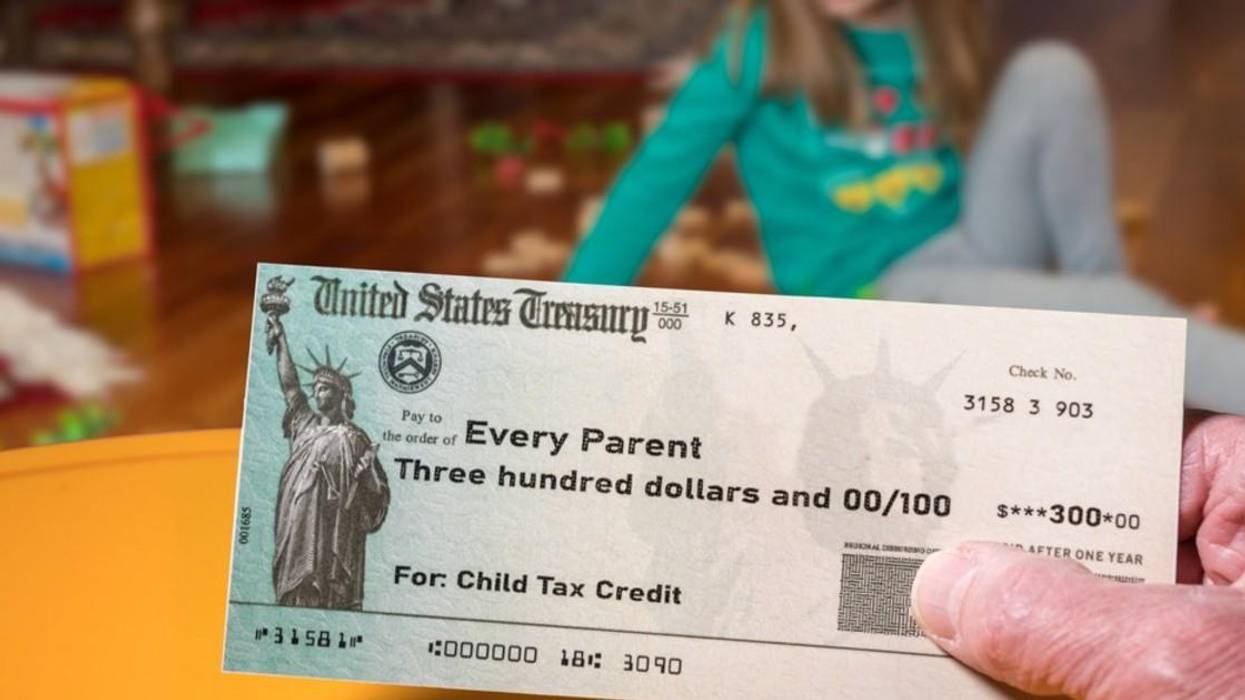
It shows the impact of government programs like Social Security, stimulus payments, unemployment insurance, and the expanded Child Tax Credit on poverty and economic hardship. In 2021, those programs brought the poor and low-income population down from 139 million to 112 million.
As many of those programs expired in 2021, those numbers increased by 20% in 2022 to 135 million.
In short, after a stunning experiment in reducing poverty through pandemic relief programs, we’re seeing a return to pre-pandemic conditions—when millions of people were facing eviction, hunger, low-wages, and health crises, and when wealth inequality was at historic highs.
For poor and low-income people, this isn’t new news. It’s a reminder that the nation’s return to “normal” comes at the expense of their lives and well-being.
For policymakers, this should be a wake-up call. We know what works—now let’s do it.
We need to curb the wildlife and exotic pet trades, better protect tropical forests, and markedly improve practices in intensive poultry and pig farming.
For most of us, it almost seems like the Covid-19 pandemic never happened. It’s like a bad dream that we woke up from and desperately want to forget—so much so that most governments stopped tracking current caseloads. In the U.S., hospitalizations and deaths are increasing, but obtaining an actual count of infections is not a priority.
Three years ago, much of the world was in a different place, grappling with lockdowns amid deep uncertainty about the Covid-19 pandemic. Governments had set up teams to hunt down supplies of face masks, oxygen, and ventilators—the wealthy nations were more successful than low- and middle-income nations. Anthony Fauci predicted that 100,000 Americans could die, and people thought he was crazy. We now know that over 1 million died from Covid-19 in the United States alone with global estimates now reaching 25 million people.
The virus has also found a home in many other species, including dogs, cats, white-tailed deer, mink, and bats. It will continue to evolve and could later spill back into humans in new and unpredictable forms.
The greatest risk may be from the crowded conditions the poultry and pig industries have “perfected” to grow meat as fast and cheaply as possible in factory farms—especially in the U.S.
Most pandemics and countless other local outbreaks of new diseases, in fact, are the result of viruses that live “out there” in wildlife and then somehow find their way into people. This can happen when people come into contact or consume wildlife directly and deliberately, such as through the exotic pet trade or in wild meat markets. Inadvertent contact also happens when people move into forested regions, especially in the tropics, to clear vegetation to grow food or for logging and mining.
The next pandemic could start closer to home. The greatest risk may be from the crowded conditions the poultry and pig industries have “perfected” to grow meat as fast and cheaply as possible in factory farms—especially in the U.S. Tens of thousands of highly stressed animals with potentially weakened immunity living in very close contact with each other make the perfect environment for new diseases to spread and evolve.
The next deadly flu pandemic could start with one of these unfortunate creatures being infected by a new virus that then quickly spreads, mutates, and finds its way into farm laborers—most of whom wear biohazard suits when working inside the barns.
Most people assume it is the job of government to protect us all from these dangers. However, with their uncanny abilities to focus only on what people want to hear, politicians seem to be studiously avoiding any talk of pandemics.
The next attempt from those government officials committed to keeping pandemics high on the political agenda will be at the U.N. General Assembly in New York City on September 20, where we hope at least some heads of state will gather with ministers to issue a high-level declaration on pandemics. Months of negotiations have produced a 16-page document filled with good yet toothless intentions, with the only specific proposed follow-up action being–drum roll–another meeting in 2026.
Meanwhile, in Geneva, the home of the World Health Organization, negotiations are grinding along as governments work to develop a global accord, with potentially important binding commitments and provisions to help prevent and prepare for future pandemics. This process began with much enthusiasm and energy at the height of the pandemic but has now descended into the usual acrimony of disagreement between rich and poor countries. Some of the former refuse to relax patents on vaccines and medicines and the latter refuse to commit to actions for which they say additional funding and resources are needed first.
It gets even worse when considering where the pandemics come from. Big meat producers like the United States, Brazil, and China are concerned about provisions that might affect this industry even though it is a major source of risk of new diseases. China seems keen to avoid any language on wildlife trade and markets.
In Washington D.C., the World Bank, home of The Pandemic Fund, is struggling to raise meaningful resources to help governments tackle future pandemics. The fund, propelled initially by the White House and Brussels, had aimed to disburse about $10 billion annually. So far it has commitments of $2 billion, and this year will get only about $300 million out the door, at best, spreading funds thinly to dozens of countries. At least half these funds will likely end up covering the administration costs and salaries of international civil servants as they pass through the hands of various agencies on their way to the ground globally.
Even worse, these processes largely ignore the underlying causes of pandemics, the human actions and behaviors that heighten the risk of spillover of viruses from wildlife to humans and our livestock in the first place.
We need to curb the wildlife and exotic pet trades, better protect tropical forests, and markedly improve practices in intensive poultry and pig farming. Vested interests, siloed policymaking and funding, and narrow views of what constitutes prevention and public health have stymied progress on these underlying drivers of new disease emergence.
Covid-19 cannot be forgotten. It will happen again. And like a bad night’s sleep, the next time could be more nightmarish, especially if governments, funders, and the public health establishment do not redouble efforts to address the underlying causes of viral spillover.
Once the disgraced former president realized who was dying most from Covid-19 things began to change as the federal government stopped trying to save lives and started promoting policies that would eventually kill — unnecessarily — a half-million Americans.
Kentucky MAGA Republican James Comer, Chair of the House Oversight Committee, has been exposed as basically a con man with his phony Hunter Biden bribe witness. Now he is trying to rewrite the history of Trump and Covid.
Comer’s latest stunt to try to whitewash Trump’s role in the unnecessary death of at least a half-million Americans is to argue — nonsensically — that the virus came out of the Wuhan virology lab and therefore something, something, something Trump is not responsible. He’s doing this with House Oversight Committee hearings this week.
The reason Comer and other MAGA Republicans are working so hard to push this perennial theory (which may be true, but so what?) is that they think directing the nation’s attention to the Wuhan lab — which got collaboration and minor funding from Anthony Fauci’s realm of the government — will point us at Fauci and thus distract us all from how many Americans Trump let die and why.
And it’s the “why” Trump intentionally let a half million Americans die unnecessarily where our media, and the Democrats, are really missing the story.
April 7, 2020 was the day everything changed in America. And hardly anybody realizes it.
It was the day that caused Jared Kushner to decide that letting Black and Hispanic Americans in Blue states die of Covid — yes, intentionally using the force of law and social pressure to push people into death’s jaws — could become part of what he called “an effective political strategy” to help them win the 2020 election, and Donald Trump signed off on it.
The most unreported story of the pandemic, the one that seems destined to be overlooked as histories are being written, is what Trump did when he learned the Covid coronavirus was largely killing Black and Hispanic people and mostly sparing whites.
The moment he came to that realization he completely altered the US response to the pandemic, leading to the unnecessary death of 300,000 to 500,000 Americans.
Deaths that he and his advisors apparently believed (correctly) would be, outside of nursing home residents, disproportionately Black and Hispanic people.
It’s an amazing story and the evidence is easily found. But even Congressman Jamie Raskin missed an opportunity to point it out when he corrected Comer during yesterday’s hearing to say:
”[E]ven if the virus came from a lab, as indeed it could have, we don't know that yet, that would only deepen Donald Trump’s culpability because he was the one who repeatedly and enthusiastically praised China’s early handling of the pandemic and assured us that he was working closely with President Xi on the response to it.”
But when you line up the timeline and events of 2020, a much more sinister picture of Trump’s willingness to let Americans die — and the reason why he was willing to let particular Americans die — emerges that is pretty damn compelling.
Here’s how it played out. It’s the story of the crime of mass death done entirely for political purposes.
Through January of 2020, Covid was limited to a few clusters in the US.
Trump — who’d privately told Bob Woodward the disease was a “killer” that “rips you apart” — kept downplaying its severity and assuring Americans there was nothing to worry about.
On January 30th the World Health Organization declared the outbreak “a public health emergency of international concern.”
Louise and I joined two of my brothers and several of their and our kids on a family cruise the next day; when we left the ship and flew home on February 8th most of us were sick (we still don’t know if it was Covid) and the 3,700 passengers and crew of a different ship, the Diamond Princess, were getting headlines around the world, quarantined off the coast of Japan for two long weeks with hundreds of cases of Covid.
March 2020 was the month when things went to hell here in the United States. On March 5th there were 129 known cases and only 11 deaths in the US: just 33 days later, hospitals were using refrigerated trucks as morgues and over 10,000 Americans were dead of Covid.
Fear ran through communities and stalked our homes. We were washing our groceries with bleach after picking them up at the store’s parking lot from people wearing masks, goggles, and gloves. We bought up all the air filters in the country. We worked from home when we could. We isolated ourselves from other people as much as was humanly possible.
Within those few weeks in March and early April, serious Covid outbreaks were showing up across the Northeast and Trump — who had two years earlier shut down both of the two federal pandemic task forces Obama had put into place after the Ebola scare — charged Jared Kushner with responding to the crisis.
Trump put medical doctors on TV daily, the media was freaking out about refrigerated trucks carrying bodies away from New York hospitals, and doctors and nurses were our new national heroes.
By March 7th, US deaths had risen from 4 to only 22, but that was enough to spur federal action. Trump’s official emergency declaration came on March 11th, and most of the country shut down during the following week.
The skies and highways fell silent, the Dow collapsed, and millions of Americans were laid off but saving lives was, after all, the number one consideration.
Jared Kushner put together a task force of preppie 30-something white men he knew from college to coordinate getting Personal Protective Equipment (PPE) from Trump buddies and companies close to Republican members of Congress into hospitals.
They even had a plan for the Post Office to distribute 650 million masks — 5 to every American household — to slow the pandemic.
But then came April 7th, just one month later, when the New York Times ran a front-page story with the headline: Black Americans Face Alarming Rates of Coronavirus Infection in Some States. It was followed the day later with the all-caps headline across the top of the front page: BLACK AMERICANS BEAR THE BRUNT AS DEATHS CLIMB.
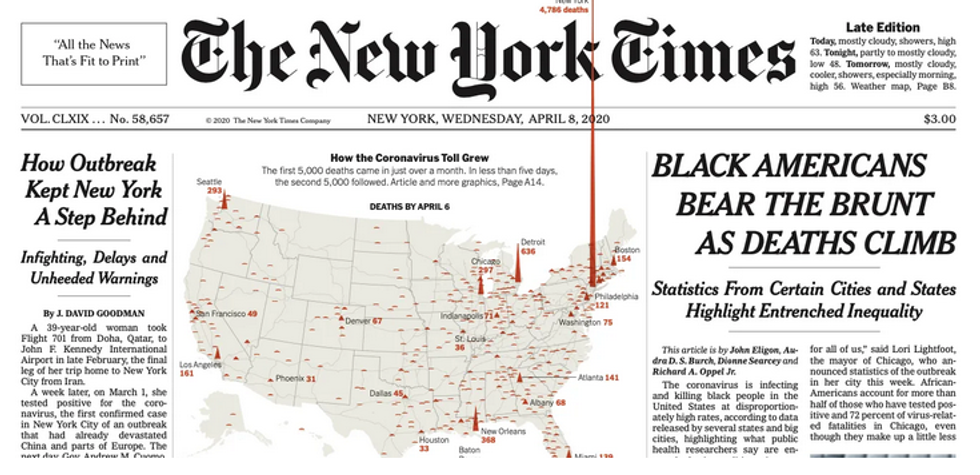
It hit conservative media, Donald Trump, and Jared Kushner like a lightning bolt.
Most of the non-elderly people dying from Covid, the report found, were Black or Hispanic, not White people.
As The New York Times reported on April 7th:
“The coronavirus is infecting and killing black people in the United States at disproportionately high rates…
“In Illinois, 43 percent of people who have died from the disease and 28 percent of those who have tested positive are African-Americans, a group that makes up just 15 percent of the state’s population. African-Americans, who account for a third of positive tests in Michigan, represent 40 percent of deaths in that state even though they make up 14 percent of the population. In Louisiana, about 70 percent of the people who have died are black, though only a third of that state’s population is.”
Republicans responded with a collective, “What the hell?!?”
Limbaugh declared solemnly that afternoon:
“With the coronavirus, I have been waiting for the racial component.”
And here it was:
“The coronavirus now hits African Americans harder,” Limbaugh intoned, “harder than illegal aliens, harder than women. It hits African Americans harder than anybody: disproportionate representation.”
It didn’t take a medical savant, of course, to figure out why, and it had nothing to do with the biology of race or Covid: it was purely systemic racism. African Americans die disproportionately from everything, from heart disease to strokes to cancer to childbirth, and are also over-represented in low-paid public-facing service jobs where they would more easily catch Covid.
It’s a symptom of a racially rigged economy and a healthcare system that only responds to money, which America has conspired to keep from African Americans for over 400 years. Of course Black people are going to die more frequently from coronavirus.
But the New York Times and the Washington Post simultaneously publishing April 7th front-page articles about that disparity — followed by it leading or making the news that night on ABC, CBS, NBC, CNN, MSNBC, and Fox — echoed across the rightwing media landscape like a Fourth of July fireworks display.
Tucker Carlson, the only prime-time Fox “News” host who’d previously expressed serious concerns about the dangers of the virus, changed his tune the same day, as documented by Media Matters for America.
“[W]e can begin to consider how to improve the lives of the rest, the countless Americans who have been grievously hurt by this, by our response to this. How do we get 17 million of our most vulnerable citizens back to work? That’s our task.”
“The rest” are white people. Those “vulnerable citizens” Tucker wanted to get back to work appear to be disproportionately minorities. As a report from the House Select Subcommittee on the Coronavirus noted:
“Essential workers who needed to work in person, and their family members, were significantly more likely to contract the coronavirus early in the crisis. These essential workers disproportionately earned low wages and were more likely to be people of color.
“Black and Latina women were particularly ‘overrepresented as essential workers’ at greater risk of coronavirus infection ‘with Latina women making up 22% of women grocery store workers and Black women making up 27% of women home health aide workers’…”
On the other hand, salaried workers — overwhelmingly white — were telecommuting. For over a year I did my show from home, for example, as did all my peers at SiriusXM, Free Speech TV, and in most media operations around the country. Everywhere people could work from home, most employers were making accommodations.
But Trump wanted the rest of the economy to recover from the election-year shutdown shock because he knew presidents running for reelection during economic bad times almost always lose. He knew that if he wanted to win in 2020, that meant getting “essential” workers like transit drivers, store clerks, and people in slaughterhouses back to their jobs.
Particularly if they were Black or Brown.
Brit Hume joined Tucker’s show and, using his gravitas as a “real news guy,” intoned:
“The disease turned out not to be quite as dangerous as we thought.”
Left unsaid was the issue of for whom it was “not quite as dangerous,” but Limbaugh listeners and Fox “News” viewers are anything but unsophisticated when it comes to hearing dog-whistles on behalf of white supremacy.
Only 12,677 Americans were dead by that April day, but now that Trump and his rightwing media believed most of the non-elderly dying people were and would be Black and Hispanic, things were suddenly very, very different.
Now it was time to quit talking about people dying and start talking about getting those Black and Brown people back to work, even if it meant exposing them to a deadly disease!
On April 12th, Trump retweeted a call to fire Dr. Anthony Fauci and declared, in another tweet, that he had the sole authority to open the US back up and would announce a specific plan to do that “shortly.”
On April 13th, the ultra-rightwing, nearly-entirely-white-managed US Chamber of Commerce published a policy paper titled Implementing A National Return to Work Plan.
The next day, Freedomworks, the billionaire-founded and -funded group that animated the Tea Party against Obamacare a decade earlier, published an op-ed on their website calling for an “economic recovery” program including an end to the capital gains tax and a new law to “shield” businesses from Covid-deaths and -injuries lawsuits.
Three days after that, Freedomworks and the House Freedom Caucus issued a joint statement declaring that “[I]t’s time to re-open the economy.”
Freedomworks published their “#ReopenAmerica Rally Planning Guide” encouraging conservatives to show up “in person” at their state capitols and governor’s mansions, and, for signage, to “Keep it short: ‘I’m essential,’ ‘Let me work,’ ‘Let Me Feed My Family’” and to “Keep [the signs looking] homemade.”
One of the first #OpenTheCountry rallies to get widespread national attention was April 19th in mostly-white New Hampshire. Over the next several weeks, rallies filled with angry white people had metastasized across the nation, from Oregon to Arizona, Delaware, North Carolina, Virginia, Illinois and elsewhere.
One that drew particularly high levels of media attention — complete with swastikas, confederate flags, and assault rifles — was directed against the governor of Michigan, rising Democratic star Gretchen Whitmer.
This was around the time long-standing rightwing networks began to awaken and coordinate with each other. They reached out to members of Congress and the Senate and found allies. Trump explicitly encouraged them to require low-wage essential workers to return to their jobs.
Suddenly things began to change as the federal government stopped trying to save lives and started promoting policies that would eventually kill — unnecessarily — a half-million Americans.
NBC News, when they’d gotten hold of April emails from within the White House, ran the headline:
“Trump Administration Scrapped Plan to Send Every American a Mask in April, Email Shows.”
When Rachel Maddow reported on meat-packing plants that were epicenters of mass infection, the conservative Chief Justice of the Wisconsin Supreme Court pointed out that the virus flare wasn’t coming from the “regular folks” of the surrounding white community: the sick people were mostly Hispanic and Black.
He essentially said, “No big deal.”
The Republican meme was now well-established and was being repeated virtually daily on Fox “News” and rightwing talk radio. Working-age white people were far, far less likely to get less sick, more likely to be asymptomatic, or — even if they were unlucky and got sick — most likely to survive a trip to the hospital.
Then came news that bigger outbreaks than we realized were now happening in meat packing plants, places with few white people (and the few whites in them were largely poor and thus disposable).
Trump’s response was to issue an executive order using the Defense Production Act (which he had refused to use to order production of testing or PPE equipment) to order the largely Hispanic and Black workforce back into the slaughterhouses and meat processing plants.
African Americans were dying in our cities, Hispanics were dying in meat packing plants, the elderly of all races were dying in nursing homes.
But the death toll among working age affluent white people (who could telecommute and/or were less likely to be obese, have hypertension, or struggle with diabetes) was relatively low.
It took a lot of pressure off Trump and his Republicans. They could now politicize the virus, and, if they did it right, they could do so publicly with a “wink” to their white supremacist base. And if they could get the economy back to cranking along within the next few months, they might be able to pull the 2020 election out of the bag.
As an “expert” member of Jared Kushner’s team of young, unqualified volunteers supervising the administration’s PPE response noted to Vanity Fair’s Katherine Eban:
“The political folks believed that because it was going to be relegated to Democratic states, that they could blame those governors, and that would be an effective political strategy.”
It was, after all, exclusively Blue States that were then hit hard by the virus: Washington, New York, New Jersey, and Connecticut. And there was an election coming in just a few months.
At year’s end, the United States was ranked 5th worst in the world in our response (behind Brazil, Mexico, Colombia and Iran); we had about 20% of the world’s Covid deaths, but only 4.5% of the world’s population.
The lasting legacy of Trump’s changes in policy and encouraging Covid skepticism is that today we’re the world’s worst in terms of death and sickness, period. He’d thrown his unqualified slumlord son-in-law Jared Kushner at something even a professional would’ve found the challenge of a lifetime. And then manipulated it to help him in the upcoming 2020 election.
More people have died of Covid in America, as a percentage or in absolute terms, than any other developed country in the world.
Why? Because Trump and his Republican enablers and co-conspirators were just fine with getting the economy back on track to win an election over the bodies of dead Black and Hispanic people, particularly when they could blame it on Democratic Blue-state governors.
Former Attorney General Kennedy’s grandson Max Kennedy Jr, 26, was one of the administration’s volunteers, who blew the whistle to Congress on Kushner and Trump. As Jane Mayer wrote for The New Yorker:
“Kennedy was disgusted to see that the political appointees who supervised him were hailing Trump as ‘a marketing genius,’ because, Kennedy said they’d told him, ‘he personally came up with the strategy of blaming the [Blue] states.’”
As that report released from the House Select Subcommittee on the Coronavirus reported just a few months ago:
“In the first half of 2020, African Americans and Latinos had death rates from coronavirus that far outweighed those of whites. While 62% of the population age 45-54 in 2020 was white, this population accounted for only 22% of coronavirus deaths in that age range. …
“Disparities were even more pronounced in some states such as Louisiana, where where in April 2020, African Americans represented 70% of coronavirus deaths despite being only one third of the state’s population.”
And once Trump and Kushner put that death-based reelection strategy into place in April, it became politically impossible to back away from it, even as more and more Red state white people became infected.
As Trump told Dr. Deborah Birx in mid-April and she reported in her book Silent Invasion: The Untold Story…:
“‘We will never shut down the country again. Never.’ His pupils hardened into points of anger… I felt the blood drain from my face, and I shivered slightly.”
Trump’s change — from a policy of prevention to a policy of “herd immunity” once he realized on April 7, 2020 that healthy white people were largely immune from death by the coronavirus — put the US on-course to have the worst Covid death rate in the world.
That was the day everything changed because Trump and Kushner were willing to let Black and Hispanic people die on a gamble they could still put the economy back together fast enough to win the 2020 election.
Over a million Americans have died so far, more than any other nation. Multiple studies show that up to 500,000 of those deaths wouldn’t have happened if Trump had just promoted masks and lock-downs through the year before the vaccine was available and, since then, if he had condemned the anti-vax movement that emerged in the last months of his presidency.
But he didn’t do either. All because he knew the virus disproportionately killed Black and Brown people and he was willing to do anything to win the election.
And sure enough, as Congress reported last December, a massive number of those deaths were — as a clear result of Trump’s policy — among Black and Hispanic people.
If that’s not racial mass slaughter, aka genocide at a Serbian war crimes level, then the phrase has lost much of its meaning.
Jack Smith: are you listening?
"We can return to the path of progress. We can realize our ambitions for health and well-being for all," said António Guterres. "But only if the world works together... despite the tensions straining relations between nations."
"Progress is in peril."
That was United Nations Secretary-General António Guterres' warning Sunday to the 76th World Health Assembly.
Over seven decades ago, he noted, "countries came together and affirmed some fundamental truths: that peace depends on health; that disease in one nation endangers all; and that achieving the greatest possible health for everyone, everywhere relies on cooperation."
Since the creation of the World Health Organization (WHO), Guterres continued, "human health has advanced dramatically: global life expectancy—up over 50%; infant mortality—down 60% in 30 years; smallpox—eradicated; and polio on the verge of extinction."
But now, "war and conflict threaten millions. The health of billions is endangered by the climate crisis. And the Covid-19 pandemic has stalled, and even reversed, progress in public health," the U.N. leader said in a video address kicking off the assembly.
"We can return to the path of progress. We can realize our ambitions for health and well-being for all. But only if the world works together. If we cooperate, despite the tensions straining relations between nations," he stressed.
Guterres called for "strengthening the independence, authority, and financing of the World Health Organization," and said that "it is vital to prepare for the health threats to come—from new pandemics to climate dangers—so that we prevent where we can, and respond fast and effectively where we cannot."
WHO Director-General Tedros Adhanom Ghebreyesus—who earlier this month declared Covid-19 over as a global health emergency—similarly urged international coordination during his welcome speech to the assembly. The agency leader said that "in 2020, I described Covid-19 as a long, dark tunnel. We have now come out the end of that tunnel."
"To be clear, Covid-19 is still with us, it still kills, it's still changing, and it still demands our attention," Tedros continued. The end of the emergency "is not just the end of a bad dream from which we have woken. We cannot simply carry on as we did before."
"This is a moment to look behind us and remember the darkness of the tunnel, and then to look forward, and to move forward in the light of the many painful lessons it has taught us. Chief among those lessons is that we can only face shared threats with a shared response," Tedros added. He stressed that the pandemic accord now being negotiated "must be a historic agreement to make a paradigm shift in global health security, recognizing that our fates are interwoven."
As the assembly—scheduled through May 30—got underway in Geneva, Switzerland, Guterres was in Hiroshima, Japan, for the Group of Seven (G7) summit, where he also underscored the importance of global cooperation while speaking to the press on Sunday.
"My message to G7 leaders is clear: While the economic picture is uncertain everywhere, rich countries cannot ignore the fact that more than half the world—the vast majority of countries—are suffering through a deep financial crisis," Guterres said. "The crushing economic impact of the Covid-19 pandemic, the climate crisis, Russia's invasion of Ukraine, unsustainable levels of debt, rising interest rates, and inflation are devastating developing and emerging economies."
"There is a systemic and unjust bias in global economic and financial frameworks in favor of rich countries," he declared, highlighting that "access to Covid-19 vaccines was deeply unfair" and "the recovery has been extremely unbalanced."
While the U.N. chief argued that "it's time to reform both the Security Council and the Bretton Woods institutions," referring to the International Monetary Fund and World Bank, he also said that "even within the present unfair global rules, more can and must be done to support developing economies."
G7 countries are "central to climate action," Guterres said, noting the need for "faster timelines to phase out fossil fuels and ramp up renewables," an end to dirty energy subsidies, and financial support for developing nations that are disproportionately bearing the brunt of a crisis largely created by the Global North.
As Common Dreams reported earlier Sunday, since G7 leaders on Saturday put out a communiqué addressing a wide range of topics, campaigners around the world have decried the statement's support for further investments in planet-heating gas, calling it "a blunt denial of the climate emergency."
"The global response to Covid-19 failed the world's most vulnerable, prioritizing windfall profits ahead of public health," said one expert, calling on world leaders to "make structural changes in global health."
The World Health Organization's declaration Friday that Covid-19 is no longer a global health emergency elicited fresh calls for learning from the pandemic and dramatically expanding access to prevention and treatment for diseases in the future.
"Covid-19 may no longer be classified as the highest level of international emergency, but the virus has not gone away," said Dr. Mohga Kamal-Yanni, policy co-lead of the People's Vaccine Alliance, a global coalition working toward equitable access to medical technologies that help to prevent and respond to Covid-19 and future pandemics.
"There are billions of people in developing countries who still cannot access affordable Covid-19 tests and treatments," Kamal-Yanni stressed. "They need action from governments to remove the intellectual property barriers that prevent the widespread production of generic medicines."
"Rich countries behaved shamefully in this pandemic, upholding pharmaceutical monopolies and grabbing vaccines, tests, and medicines for their people, pushing developing countries to the back in the line."
WHO Director-General Tedros Adhanom Ghebreyesus said Friday that while the agency has documented almost 7 million deaths from the virus, "we know the toll is several times higher—at least 20 million." A study published last year in Nature and cited by the People's Vaccine Alliance estimates that 1.3 million fewer people would have died by the end of 2021 if Covid-19 vaccines were equitably distributed.
"Rich countries behaved shamefully in this pandemic, upholding pharmaceutical monopolies and grabbing vaccines, tests, and medicines for their people, pushing developing countries to the back in the line," said Kamal-Yanni. "And pharmaceutical companies are the biggest winners, achieving the biggest profit from a single medical product in history, while people died without access."
Ahead of the WHO announcement but in the wake of the annual general meetings of Johnson & Johnson, Merck, Moderna, and Pfizer, Amnesty International health adviser Tamaryn Nelson on Thursday lamented that the pharmaceutical giants declined to "right their wrongs" by passing resolutions to facilitate the universal distribution of Covid-19 vaccines.
"For the past three years, those at the helm of Big Pharma companies have seen earnings soar, while people in low- and lower-middle-income countries are still struggling to access lifesaving medicines," Nelson noted. "While their efforts to speedily develop Covid-19 vaccines should be recognized, it's clear pharmaceutical companies have failed in their human rights responsibilities when it comes to ensuring equal access—and continue to do so. Why aren't investors holding them to account?"
"With reports that Pfizer and Moderna are considering quadrupling the price of each Covid-19 vaccine in some countries, only 25% of people in low-income countries are now fully vaccinated and millions are still waiting for the first dose," she continued, calling the allocation of the shots "one of the worst examples of global inequality to date."
According to Nelson, "It's time for investors to ensure these companies are making structural changes with immediate effect to ensure the world can withstand future pandemics collectively, without leaving anyone behind."
Kamal-Yanni argued that tackling future crises will require more actively involving people from lower-income nations.
"The institutions set up to support developing countries, like COVAX and ACT-A, failed to involve developing countries in their creation or decision-making, and failed to deliver an equitable response," she said. "For future pandemics, preparation and response must be led by the Global South, instead of creating more global platforms dominated by donors."
"People in developing countries should never again wait for the 'good will' of rich countries, nor charitable actions of pharmaceutical companies," she asserted. "The world needs transformative commitments in the Pandemic Treaty and International Health Regulations to ensure knowledge and technology are shared, remove intellectual property barriers, and to support medical research and manufacturing in developing countries."
Negotiators aim to finalize a draft of the Pandemic Treaty for consideration by the 77th World Health Assembly in 2024.
"Just as with HIV, the global response to Covid-19 failed the world's most vulnerable, prioritizing windfall profits ahead of public health," said Kamal-Yanni. "World leaders must now learn from the last three years, and make structural changes in global health. Or else, we are doomed to repeat the mistakes of this pandemic in the next."
Dr. Uché Blackstock, a former emergency medicine professor who works to end bias and racism in healthcare, tweeted Friday that "it's truly unfortunate that both domestically and globally, other than vaccines—which I'm truly grateful to science for—there have been no significant improvement/investments in our public health infrastructure to keep people and their communities safe."
The Covid-19 crisis could have led to massive investments in health workers, workplace protections, and paid leave, Blackstock said in response to the WHO announcement. The United States could have shifted to universal healthcare and joined other nations of the Global North in promoting vaccine equity.
"It felt like THIS was our opportunity to do better!!" she added, also circulating a graphic shared by Dr. Madhu Pai showing that the 2.3 billion people who remain unvaccinated against Covid-19 are largely concentrated in low- and middle-income countries.
Pai also pointed to an "important" piece published Thursday in Science titled "Cascading Failures in Covid-19 Vaccine Equity."
Noting that "the proliferation of equity rhetoric does not appear to be matched by corresponding rates of progress in reducing global disparities," a trio of U.S.-based experts wrote for Science that "the stark gap between the pervasive rhetoric about equity and the dismal reality of the global vaccine distribution" the past three years "demands a collective reckoning."
"Expansive rhetoric and empty promises have surprising staying power," they added. "If we wish equity to have anything more than allegorical value, we must take the concept more seriously, beginning with a disciplined and deliberate examination of the equity-deficit cascade."
As Common Dreams reported throughout the Covid-19 crisis, experts have warned that preventing future pandemics requires not only improvements in healthcare systems but also global land use reforms—from conservation efforts to changes in agricultural practices—to stop the spillover of diseases from animals to humans.