

SUBSCRIBE TO OUR FREE NEWSLETTER
Daily news & progressive opinion—funded by the people, not the corporations—delivered straight to your inbox.
5
#000000
#FFFFFF
To donate by check, phone, or other method, see our More Ways to Give page.
Daily news & progressive opinion—funded by the people, not the corporations—delivered straight to your inbox.

"We are running out of road, and the latest text shows just how far governments have allowed fossil fuel interests to steer the negotiations off course," said one campaigner.
As the United Nations Climate Change Conference in Antalya, Türkiye entered overtime on Friday, advocates of heeding scientists' calls to rapidly phase out planet-heating fossil fuels intensified pressure on governments to end the trend of previous summits and wrap up COP31 with a truly ambitious agreement.
Reuters reported from the summit that Ralph Regenvanu—climate minister of Vanuatu, a South Pacific island nation that faces rising seas and worsening storms—warned, "We can see where it's going, and it's not going to be a high-ambition text."
The latest cover decision draft, released Thursday, the eve of when the conference was supposed to conclude, cut language on the "transition away from fossil fuels," and instead calls for a "transition towards low greenhouse gas emissions and climate-resilient development." It also eliminated a reference to the $120 billion needed for climate finance for the Global South by 2035.
"I'm struggling to find the words for the sadness, heartbreak, and disbelief I feel watching what is unfolding at COP31. How is this possible?" said Kumi Naidoo, president of the Fossil Fuel Non-Proliferation Treaty Initiative and founding chair of Africans Rising for Justice, Peace, and Dignity.
"What breaks my heart is that we know what is at stake," he stressed. "People are losing their homes, their livelihoods, and their lives. Communities are struggling to hold on to places that have sustained their cultures for generations. Entire countries are fighting for their survival."
Naidoo declared: "Imagine Alcoholics Anonymous spending 30 years negotiating and producing a statement that never mentions alcohol. Now imagine the alcohol industry turning up as the largest delegation and helping shape the outcome."
Texas Tech University professor Katharine Hayhoe similarly said, "A climate deal that leaves out fossil fuels is like a plan to quit smoking that never mentions cigarettes."
Some government representatives at the summit are also frustrated. UN News reported Friday that "led by France and Panama, ministers and representatives from across the world including Belgium, Côte d'Ivoire, Finland, Greece, Guatemala, Spain, Sweden and Vanuatu, joined forces to demand stronger climate action."
That coalition of countries' six priorities for a COP31 agreement are:
Separately, in a letter obtained by Politico, the European Union warned that COP31 is at risk of turning into a "fossil fuel summit," and the latest draft text would be "perceived as a retreat from previous commitments, and as disproportionately accommodating the interests of continued fossil fuel production and consumption."
The 27-member bloc's climate commissioner, Wopke Hoekstra, and Ireland's climate minister, Darragh O'Brien, wrote that "the EU must be clear that it cannot join consensus on a package that would represent a substantive step backwards for global climate action."
Laurie van der Burg, global public finance lead at the advocacy group Oil Change International, responded that "the EU is trying to shift blame onto others and it is deeply hypocritical. While we welcome calls to reaffirm the commitment to transition away from fossil fuels, the EU did not show the leadership needed to deliver it. At the beginning of COP31, it signaled it was prepared to drop the renewables ask from the electrification target and it has failed to put forward an EU fossil fuel transition roadmap."
"Even worse, the EU blocked progress on the public finance, adaptation, and just transition that developing countries urgently need," she noted. "These are not side issues. They are essential to making a fair fossil fuel phaseout possible and protecting communities from climate disasters. The EU came to COP31 with a hardline position on finance showing no willingness to be constructive. The EU is cowardly trying to deceive and frame the outcome of this COP, but it's obvious: the EU is pointing fingers at others while refusing to show any leadership itself."
Oil Change has also sounded the alarm about the inclusion of language on carbon capture and storage (CCS) and carbon removal in the draft, with global policy lead Romain Ioualalen declaring that "governments must stop treating the cover decision text like a fossil fuel executive's wish list. We are running out of road, and the latest text shows just how far governments have allowed fossil fuel interests to steer the negotiations off course."
"An outcome that should fast-track a fair and funded transition away from fossil fuels instead opens the door to more fossil gas, and gives dangerous credibility to disproven technologies like CCS that will trap us in our dependence on the volatile fossil fuel economy," he added. "These CCS paragraphs are a real and immediate danger to the energy transition and need to be removed. This isn't a pathway out of the crisis. It's a license to prolong it. Governments have a last chance to turn this around."
Fanny Petitbon, policy analyst at the group 350.org, similarly said that "carbon capture is the biggest scam in the era of overshoot, and our leaders could be very much falling for it. Taken together, these paragraphs would lock in decades more fossil fuel use and pull money and attention away from the solutions that already work: renewables, efficiency and a just transition away from fossil fuels. We cannot let unproven technologies distract from what science demands: a fast, fair and full phaseout of fossil fuels."
Recent studies have found that temporarily surpassing the Paris Agreement's 1.5°C threshold for temperature rise this century, relative to preindustrial levels, is now inevitable, and the world is headed for "an irrecoverable overshoot" of that target unless governments "rapidly reduce emissions to limit both the magnitude and duration."
There have been various positive developments at the summit in Antalya, from the Ministerial Declaration on Accelerating Action on Super Pollutants and the launch of the Global SF6 Pledge, to $30 million in new investments in the Global Fund for Coral Reefs, but activists like Fenton Lutunatabua, 350.org's Pacific and Caribbean lead, remain worried about the final deal.
"For the Pacific, 1.5°C is the last line of defense," Lutunatabua said. "The latest COP31 cover decision has eliminated all mention of the transition away from fossil fuels. These may just be words to you, but to us they represent the line between survival and extinction. The Pacific cannot be remembered as what the world allowed to disappear. This is a final call on world leaders to save their COP31 legacy: Secure an outcome aligned with 1.5°C, set the roadmaps for a fossil fuel phaseout, and fund our futures. For us, this is nonnegotiable."
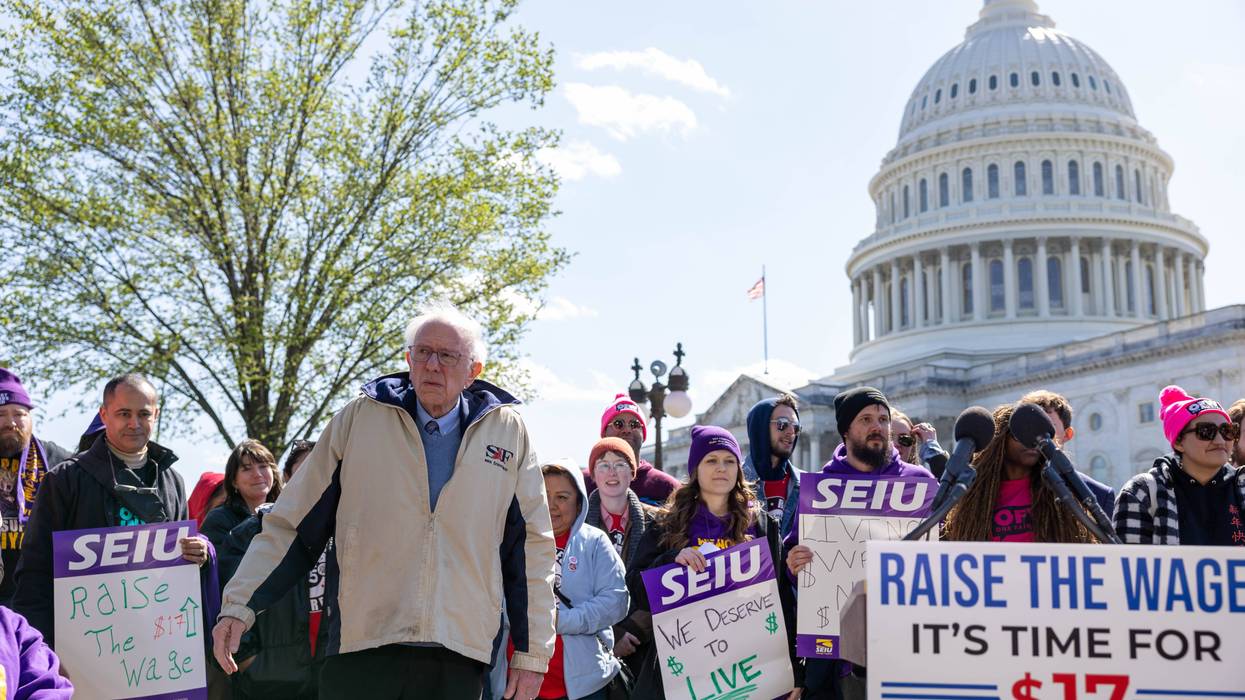
"Raising the minimum wage is the single quickest policy to improve affordability for the greatest number of workers."
A group of economic policy experts argued Thursday that raising the federal minimum wage—which lawmakers haven't increased in nearly two decades—must be an integral part of the incoming Democratic Congress' affordability agenda.
Celine McNicholas, Samantha Sanders, and Ben Zipperer of the Economic Policy Institute (EPI) noted that the federal minimum wage, $7.25 an hour, is at "its lowest real value in 77 years" and "is a major driver of the affordability crisis facing low-wage workers."
While many states—thanks to massive grassroots pressure—have moved to raise their wage floors to at least $15 in the coming years, the EPI experts stressed that 55 million US workers still live in states where the federal minimum prevails.
"Earlier this year, EPI released a report calling on Congress to raise the federal minimum wage to two-thirds of the national median wage—equivalent to roughly $17.50 today, and a projected $20 in 2030," the experts noted. "Our proposed benchmark would lift pay for nearly 40 million workers, about a quarter of the workforce. It would also eliminate poverty wages and move the federal floor toward a living wage in much of the country, so that a single adult working full-time could cover modest expenses in half of US counties."
"Raising the minimum wage is the single quickest policy to improve affordability for the greatest number of workers," wrote McNicholas, Sanders, and Zipperer. "Time and time again, minimum wage increases have raised wages with little-to-no effect on the number of jobs. The income increases they generate are transformative for low-income families and far outweigh the small effects they have on prices."
"The 120th Congress has the chance to advance a true affordability agenda that raises wages for US workers," they added. "A core element of that agenda must be raising the federal minimum wage. This should be achievable, considering that more than a third of the newly elected members of Congress called for raising the minimum wage in their campaign platforms."
The EPI experts' analysis came a day after Sen. Bernie Sanders (I-Vt.) listed a federal minimum wage hike as one of his top legislative priorities in the new Congress, in which he is set to lead the Senate Health, Education, Labor, and Pensions Committee.
Sanders said Wednesday that the current $7.25 federal minimum wage is "totally absurd." The senator said he would propose incrementally raising the federal wage floor to $20 an hour "over a period of years."
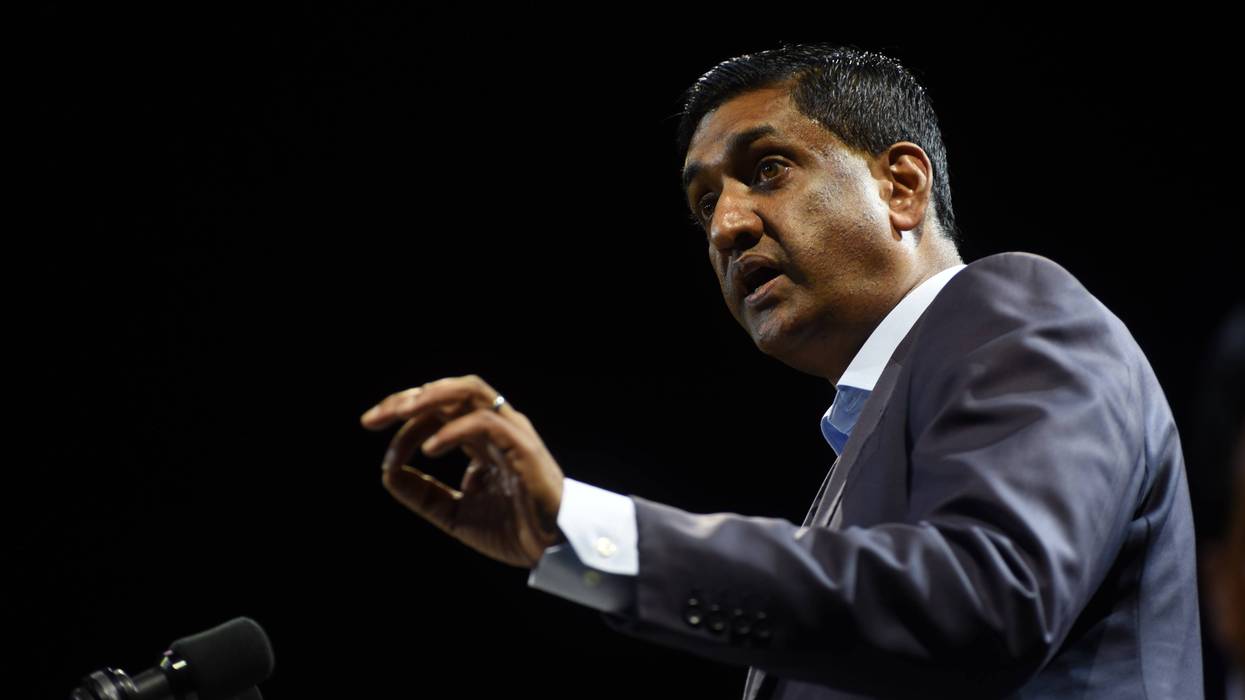
Rep. Ro Khanna pointed fingers at President Donald Trump's administration for being caught flat-footed by the outages and not explaining their cause to voters.
With a number of outages hitting American aviation systems and banks over the last week, Rep. Ro Khanna took to social media to explain what's been going on.
In a video posted on Thursday, the California Democrat pointed to the recent release of a Chinese open-source artificial intelligence model called GLM 5.3, which he noted "does not have safeguards and can be used to have cyberattacks," which has led to many institutions rushing to upgrade their systems.
"The rate of patching... has increased dramatically since GLM 5.3 was released," he said. "When you have this increasing in patching, you have many more chances for outages. That's why we're seeing all of these outages across the country."
There is a cloud of confusion about the tech outages.Here is what’s really going on: https://t.co/vH8is7o3oT
— Ro Khanna (@RoKhanna) November 19, 2026
Khanna pointed fingers at President Donald Trump's administration for being caught flat-footed by the outages and not explaining their cause to voters.
"The president of the United States needs to direct... [the Cyber Infrastructure Agency] to take charge," Khanna said. "That agency has been totally cut. They need to restaff it, they need to have a director... and that director needs to coordinate with all of the companies and agencies to have a plan for how we increase our patching."
Khanna then said either the president or one of his deputies should give daily briefings updating the country about cybersecurity threats, while also gathering a broad coalition of government, business, and technology leaders to "upgrade our patching system against the increased AI threat."
"This is not a time for slogans," Khanna said. "This is not a time for politics. It's a time that we actually understand the issue and provide leadership."
Khanna's claims about GLM 5.3 being the primary driver of system upgrades mirrored an analysis published earlier in the week by investment firm Bridgewater Associates.
As reported by MarketWatch on Thursday, Bridgewater's analysis found that a surge in cyberattacks coincided with the release of GLM 5.3, which is far cheaper to use compared to AI models developed by OpenAI and Anthropic.
"We are in the middle of an arms race where malicious actors are using agents to find exploitable bugs and defenders are using agents to preemptively find and patch vulnerabilities," the firm explained. "While models have significantly accelerated work on both sides of the ledger, the defenders have the much heavier burden of patching all bugs before they can be exploited."
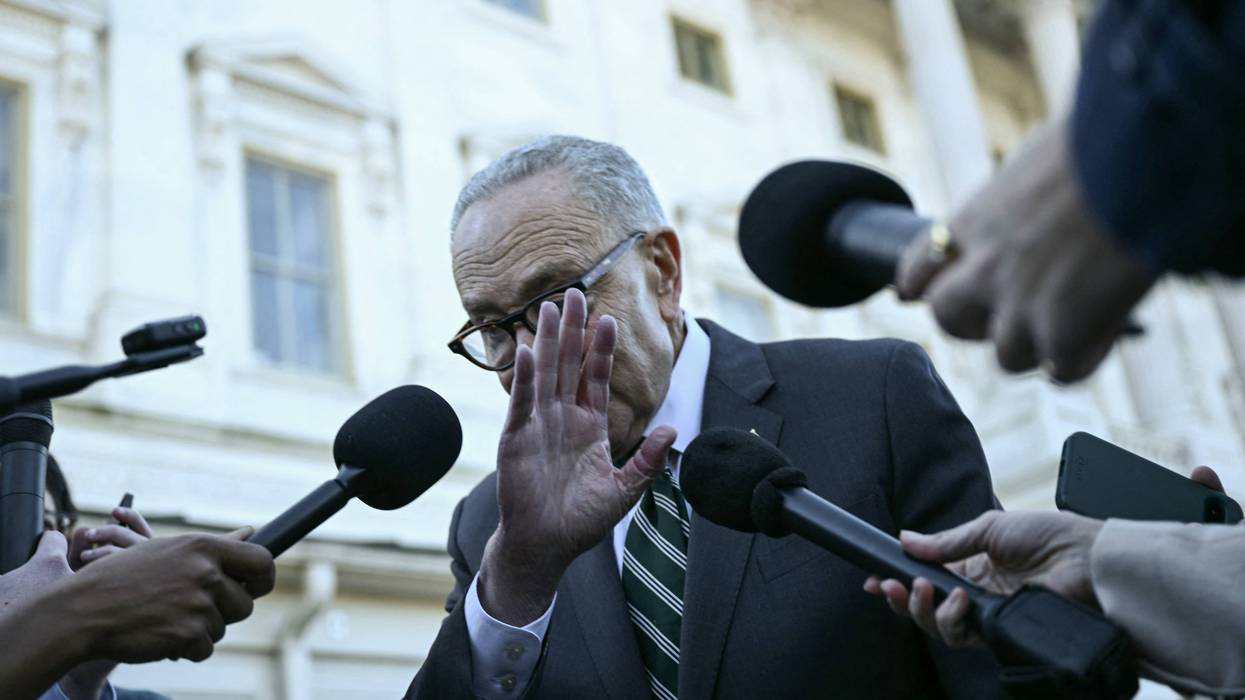
"An outright majority wants another Senate leader, and Van Hollen gets more support when named as an alternative."
Only around 1 in 6 Democratic voters want Senate Minority Leader Chuck Schumer to remain their party’s leader in the upper chamber of Congress, according to a new poll released Friday, as the longtime incumbent faces a leadership challenge from progressive Sen. Chris Van Hollen following the midterm elections.
The survey of 800 Democrats and Democratic-leaning adults, conducted by Verasight for Labyrinth Insights from November 11-16, found that 17% supported Schumer (D-NY) for majority leader, while 57% wanted someone else, and 26% were unsure who they preferred to lead the upper chamber.
The findings reflect widespread dissatisfaction with the party’s leadership, even after Democrats' midterm "blue tsunami." And it isn't just progressives who want change: Among respondents who voted for former Vice President Kamala Harris in 2024, 61% said they favor a different Senate leader.
Opposition to Schumer—who was first elected to Congress when Jimmy Carter was still president—was particularly strong among younger Democrats, with 57% of respondents ages 18-29 saying they wanted to replace him, compared with just 10% who wanted him to stay.
The poll also affirmed voters' frustration with corporate Democrats. Asked whether party leaders have been too friendly toward big corporations, 42% said they were, compared with 33% who said the party's approach was about right, and just 6% who thought Democrats were not friendly enough.
Van Hollen (D-Md.) has won the support of voters seeking change—especially progressives—with positions like backing Medicare for All, restricting US military aid to Israel, and ending congressional funding for President Donald Trump's illegal war of choice against Iran.
In a head-to-head matchup, the survey found that Van Hollen led Schumer 36% to 19%, although 45% of respondents said they were undecided.
"For Schumer, these findings go beyond weak enthusiasm: An outright majority wants another Senate leader, and Van Hollen gets more support when named as an alternative," Labyrinth Insights said, adding that "lack of affirmative support demonstrates that the party’s supporters want meaningful change."
The poll's findings follow a separate survey by Data for Progress, which found that 53% of Democrats and Democratic-leaning independent voters wanted a new Senate leader, compared with 42% who wanted Schumer to remain.

"Israel has a long record of deceiving Washington," said one foreign policy analyst. "Yet American officials and media still treat Israeli intelligence as gospel... The American people have paid for that credulity in blood."
CNN’s disputed report on Monday that Iran could be plotting a chemical attack or a “dirty bomb” attack in Washington, DC, came amid a broader effort by Israeli intelligence officials to persuade President Donald Trump to escalate his unpopular war with Iran, according to The New York Times.
Iranian officials condemned CNN’s reporting that Iran was developing plans for a possible attack on members of the Trump administration, calling it a “fabricated narrative” and part of a “calculated disinformation campaign” by a pro-Israel media outlet.
As the Times reported on Wednesday, Israel shared intelligence alleging that Iran had plotted to use chemical agents against senior US officials as Israeli Prime Minister Benjamin Netanyahu pressed Trump to join him in launching a “four- to seven-day campaign of airstrikes against Iran.”
Near the end of the article, the Times reported:
In seeking to convince the United States to join in another round of major attacks, Israel has highlighted what it contends are a variety of threats from Tehran. Israeli officials have been asserting that Iran continues to possess significant chemical and biological weapon capabilities that pose a regional threat—and that could be used in terrorist attacks against the US and Europe…
The Israelis have shared intelligence claiming that Iranians have plotted to use chemical agents against senior US officials. One person briefed on the intelligence, who was not authorized to speak publicly, said that type of threat was related to the decision in recent weeks to move Treasury Secretary Scott Bessent from his home.
The detail about Bessent suggests the two outlets may have been describing the same chemical threat. CNN reported that “threats from Iran also prompted the Secret Service to move Treasury Secretary Scott Bessent into military housing last week.” The Times passage did not explicitly identify the source of the dirty bomb allegation.
*President Trump is weighing plans for another round of extensive military strikes on Iran, taking into account new intelligence about Iranian capabilities and intensifying pressure from Israel to move quickly and aggressively, U.S. and Israeli officials briefed on the discussions said.*Trump has yet to make a decision, they said. But he has been considering warnings from Israel about Iran’s success in rebuilding its missile and drone arsenals and advancing its chemical and biological weapons programs.And he is taking into account that the United States now has a window in which it has significant military firepower in the region.W\ @julianbarnes @EricSchmittNYT @maggieNYT @jonathanvswan via @nytimes https://t.co/ztvId1lX6h
— Ronen Bergman (@ronenbergman) November 19, 2026
CNN treated the purported threat with grave seriousness, writing that US officials had characterized it as “a signal of an alarming willingness to escalate by Iran” and saying it “shows that Tehran is now actively planning for potential attacks inside US territory.”
Trump responded to CNN’s report with yet another threat of mass destruction against Iran, warning that if the country attacked Washington, it would “pay a price the likes of which no country has ever paid before.”
CNN acknowledged that some US officials, including Homeland Security Secretary Markwayne Mullin, viewed the alleged Iranian planning as “aspirational” rather than a “new threat.”
But the network quoted no weapons experts by name. In the wake of the report, many have questioned how effective a dirty bomb would be as an assassination weapon and what Iran would gain by using one. A dirty bomb uses conventional explosives to disperse radioactive material. Such devices are often called “weapons of mass disruption,” rather than destruction.
"A dirty bomb is not typically what you would use to assassinate someone," David Albright, a physicist and president of the Institute for Science and International Security, told Iran International. "In terms of an assassination method, I wouldn't consider it very effective."
Tallha Abdulrazaq, an independent defense and security consultant, told Al Jazeera that Iran has little incentive to use such a weapon. Doing so, he said, “would instantly destroy Iran’s remaining diplomatic credit” and would likely lead to an invasion that would topple its government. “I highly doubt Iranian strategists are unaware of this reality, so the likelihood of a dirty bomb remains infinitesimally remote,” he said.
That utterly preposterous CNN story on chemical weapons and dirty bombs, which scared Scott Bessent into a bunker, is revealed by the NYT to have been fed to us by Israel. CNN must have known that but clearly left that detail out because it would have completely undermined the story. Everyone assumed it anyway.
— Ryan Grim (@ryangrim) November 20, 2026
Investigative journalist and Drop Site News co-founder Ryan Grim argued that the Times’ reporting showed that CNN’s “utterly preposterous” story had been “fed to us by Israel.”
Israeli intelligence officials have repeatedly tried to influence Trump with warnings about Iran that US officials could not independently corroborate or later found had been exaggerated.
Grim said “CNN must have known” that Israel was behind the warnings “but clearly left that detail out because it would have completely undermined the story. Everyone assumed it anyway.”
Despite its well-documented role in pushing this sort of intelligence to US officials to further foment tension between the US and Iran, CNN's chemical weapons report this week includes no mention of Israel at all.
CNN's report even cited what it called "another stream of intelligence" reported earlier this month by The New York Times about possible chemical weapons attacks against US troops in the Middle East, mentioning that military personnel lacked "adequate protective equipment or training to guard against such an attack."
What it did not mention was that this intelligence also came from Israel and that US allies in the Persian Gulf found the claims to be "unserious." Many US officials also doubted the warnings, with some comparing them to the false intelligence about “weapons of mass destruction” (WMD) that the George W. Bush administration used to justify invading Iraq in 2003.
“Israel has a long record of deceiving Washington and feeding it false intelligence that pulls America toward war,” said Reza Nasri, an Iranian international lawyer and foreign policy analyst. “Its latest Iranian WMD alarm must be read against that record.”
“There is a clear pattern here…” Nasri said. “Yet American officials and media still treat Israeli intelligence as gospel, repeating it before verifying it. The American people have paid for that credulity in blood. They should not pay again.”

“We are protesting to claim our right to a better and dignified future, and we are aware that if we stand united, no one will be able to stop us from taking it."
The students organizing school walkouts, marches, and rallies across Europe on Friday "refuse to be cogs in the war machine," said the UK-based Stop the War Coalition as it urged supporters to join young people as they build on massive recent protests in France, Spain, Brazil, Chile, and other countries—all centered on a rejection of authoritarianism and militarization and demands for government leaders to invest in robust social services.
Organizers of the International Youth Strike said hundreds of thousands of people were taking part in direct actions in about 400 cities across 25 countries in Europe, united by one slogan: "Fight for Our Future, Not Their Wars."
“With this historic mobilization, we are showing to the world the strength and the power of our generation,” said Alessandro Di Miceli of Rete della Conoscenza, a network of high school and college students in Italy. “We are protesting to claim our right to a better and dignified future, and we are aware that if we stand united, no one will be able to stop us from taking it."
In London, demonstrators were seen holding signs that read, "Books Not Bombs," and "Follow France: Fight the System"—a reference to protests that broke out across Paris and the rest of France last month over conditions at the country's dilapidated, underfunded schools and austerity policies as the public struggles with affordability.
Brilliant student strike march to Downing Street just now. Thousands have hit the street against war and militarism around the country... https://t.co/SgFWL8Wkbs
— Chris Nineham (@ChrisNineham) November 20, 2026
A general strike in Spain earlier this month was sparked by widespread anger over housing costs, and Di Miceli emphasized that while organizers in different countries on Friday may be highlighting a range of issues, the mass mobilization is centered on anger over massive investments in militarization while the needs of the public go unmet.
"From the right to education to the right to housing, from the struggle against the rising cost of living and the climate crises, to the fight against militarization and rearmament, specific demands may differ from country to country, but are all deeply connected between each other," said Di Miceli.
According to the International Youth Strike's manifesto, five common demands include:
Organizers say the European Union's ReArm Europe plan, also known as Readiness 2030, is a "clear example" of how governments are prioritizing war over housing, education, and ensuring working people can afford necessities.
The plan "creates the conditions for the massive defense investment surge in Europe, with up to €800 billion ($878 billion) of additional defense expenditures expected in the upcoming years," according to the European Commission.
More footage from the march and chanting during the local event of international youth strike against war and rearmament in Budapest, Hungary. The crowd seems big enough on Váci utca. https://t.co/DDXeqxwX7D
— Csaba Tóth 🇸🇴 (@tothcsabatibor) November 20, 2026
The manifesto also points to "Western imperialism, spearheaded by the Trump administration in the US," and says it is "imposing rearmament plans that are fanatically applauded by the European ruling class and supported by conservative and far-right governments in Europe and around the world."
The organizers suggested that their governments are complicit in or are active participants in the violent subjugation of people who "continue to suffer imperial attacks... from Palestine to Sudan, from Lebanon to Iran, from Venezuela to Cuba."
The mobilization comes nine months into US President Donald Trump's war on Iran, which has sent energy prices skyrocketing across the globe as Trump has demanded control of the Strait of Hormuz, which 20% of the world's oil supply passes through. The organizers emphasized that "the struggle against militarization is inseparable from the struggle against the economic system that sustains it."
"The struggle for oil, gas, and strategic resources continues to drive wars, occupations, and colonial violence, while fossil corporations, arms companies, and financial institutions profit from destruction and displacement," reads the manifesto. "These priorities are not accidental; they are choices being made in international forums where political and economic elites protect military and fossil interests while presenting them as inevitable."
Meanwhile, "militarization is entering our schools and universities through military recruitment, arms-funded research, and partnerships with institutions complicit in war and genocide," the manifesto says. "We reject that future."
"We fight for education free from military interests," it continues. "We fight for public investment in schools, healthcare, housing, and climate justice instead of weapons and war. We fight for a rapid and just transition beyond fossil fuels, led by the workers, where no one is left behind; for international solidarity instead of imperial domination, and the right of every people to determine their own future free from occupation and colonialism."
About 1,000 protesters rallied in Berlin on Friday, condemning a possible return to compulsory military service, and tens of thousands of people joined Italy's largest trade union, over the economic policies of right-wing Prime Minister Giorgia Meloni, which have included education cuts and underfunding of the public health system.
People are protesting across Italy, with the largest trade union calling a general strike as well as students demanding a reduction in military spending and more investment in education. https://t.co/IL88UR2gqC
— Channel 4 News (@Channel4News) November 20, 2026
“The ruling classes across our countries show us every day that the needs of our generation are not their priority. Instead, they put profits and power first," said Leonor Chicó of the student-led climate justice movement Estudantes pelo Fim ao Fóssill in Portugal.
Shabbir Lakha of Stop the War Coalition said the strike alone, "no matter how large, will not be enough to achieve the changes we need."
"But this mobilization is a crucial step," said Lakha, "towards building a lasting international movement capable of bringing together young people, students, and workers around common demands."

"If Democrats fully control the government in a couple years, they could not only reverse the GOP’s food-stamp cuts but expand the program."
When Democrats take control of the US Congress in January, they will be tasked with confronting a rapidly worsening nationwide hunger disaster fueled by President Donald Trump and the Republican Party's unprecedented assault on federal nutrition assistance.
That assault has contributed to the steepest decline in Supplemental Nutrition Assistance Program (SNAP) enrollment in decades, with more than 5.5 million people—including around 2 million children—losing aid since the Trump-GOP budget package, the One Big Beautiful Bill Act (OBBBA), was enacted in the summer of 2025. The aid cuts, combined with high grocery prices, are driving massive demand at food banks across the country.
"It's time for lawmakers to treat this like the emergency it is," Katie Bergh, a senior policy analyst at the Center on Budget and Policy Priorities, wrote in a social media post on Thursday, stressing that "even short periods of food insecurity can have lasting consequences for children."
Bergh's warning came in response to new reporting by Vox's Dylan Scott, who noted that Democrats are currently pushing to delay implementation of new state cost-sharing mandates approved under the Trump-GOP budget law. Beginning in October 2027, states will be required to cover a share of SNAP benefit costs for the first time in the program's history—which could lead cash-strapped states to cut benefits even further.
"The idea is that the two-year delay could, in theory, turn into a permanent one if Democrats can win the White House in the 2028 election and keep control of Congress," Scott wrote. "Even if the two parties agreed on a two-year delay in the lame duck, Democrats could still include a full repeal of the OBBBA’s SNAP cuts as part of their budget reconciliation bill next year."
"Trump won’t sign that bill even if the Democratic-controlled Congress passes it," Scott added, "but Dems could take the opportunity to show voters they are following through on their campaign promises and do a dry run for a bill that could actually become law in 2029... If Democrats fully control the government in a couple years, they could not only reverse the GOP’s food-stamp cuts but expand the program."
In a letter to Senate Minority Leader Chuck Schumer (D-NY) and House Minority Leader Hakeem Jeffries (D-NY) last week, more than 130 mayors representing cities across New York implored the Democratic leaders to fight for a delay to the cost-sharing requirements for all states, warning of disastrous consequences if the mandates take effect on schedule.
"This unprecedented state obligation jeopardizes necessary funding for local infrastructure, programs, and services that New Yorkers depend on," the mayors wrote. "Congress must ensure that the cost-shift delay is extended to all states... Urgently needed relief for states and low-income families cannot be postponed."
Meanwhile, Democrats in both the US House and Senate are pressing the Trump administration to immediately rescind a proposed rule that would strip SNAP benefits from more than 6 million people. The rule, which targets a provision that lets states automatically qualify people for SNAP if they're receiving other federal benefits, "threatens free school meals for nearly 2 million children," The Washington Post reported on Thursday.
"Since Donald Trump took office, more than 5 million people have been cut off from SNAP—while he and Republicans handed out tax cuts to billionaires," Sen. Elizabeth Warren (D-Mass.) wrote in response to the Post's story. "Now, the Trump administration is trying to take away school meals from 2 million more kids."
More than 200 House Democrats signed a letter to US Agriculture Secretary on Wednesday calling for withdrawal of the proposed rule, which is open for public comment until December 10.
"Implementing this rule and cutting millions more people off from vital food assistance in the middle of an affordability crisis is both illegal and cruel," the House Democrats wrote.

Rep. Jamie Raskin reminded officials that they are "legally required to preserve all records related to its official functions, policies, decisions, and procedures, and to safeguard such records against destruction."
Rep. Jamie Raskin on Thursday demanded that Trump administration officials preserve all their internal communications, while citing "significant evidence" of "widespread destruction" of government records.
In a set of letters sent to federal law enforcement agencies, Raskin (D-Md.) reminded officials that they are "legally required to preserve all records related to its official functions, policies, decisions, and procedures, and to safeguard such records against destruction."
Raskin, who is in line to become chair of the House Judiciary Committee next year when Democrats take control of Congress, emphasized this mandate "extends to communications made through non-government messaging applications, including but not limited to: Discord, Facebook Messenger, Instagram Direct Messages, LinkedIn, Signal, Snapchat, Telegram, Truth Social, WeChat, WhatsApp, and X (formerly Twitter)."
The Maryland Democrat then accused members of the Trump adminstration of engaging in "widespread destruction, mutilation, and concealment of government records, seemingly with the express purpose of circumventing federal record preservation laws."
"This attempt to evade transparency," Raskin added, "extends to the highest levels of federal agencies, including top-ranking law enforcement officials."
Raskin cited a Signal chat he obtained between FBI General Counsel Samuel Ramer and an associate of Donald Trump Jr., which was "deliberately configured... to automatically delete messages after one week."
"This incident, just one of many that have already been reported to our Committee, raises significant concerns that Department of Justice and FBI officials are openly flouting federal law when it comes to the preservation of official government records," Raskin wrote. "It is a felony to unlawfully conceal, remove, alter, or destroy federal records, as Mr. Ramer appears to have done here."
Raskin sent letters warning against the destruction of records to the US Department of Justice and the Department of Homeland Security, as well as to subagencies including the FBI, the Bureau of Prisons, and US Immigration and Customs Enforcement.

"It's bad enough that Republicans wanted to gut our environmental laws. It's unconscionable that Democrats helped them do it."
The Republican-controlled US Senate, with the support of more than a dozen Democrats, passed a hotly contested bill that would weaken the Clean Water Act, the Endangered Species Act, and other key environmental laws to accelerate approval and development of energy projects, including climate-wrecking gas pipelines and data centers.
The final vote on the Bipartisan American Affordability and Jobs Act (BAAJA) was 62-33, with nearly every Republican and 15 Democrats supporting passage. The 15 members of the Senate Democratic caucus who voted for the bill were Chris Coons (Del.), John Fetterman (Pa.), Ruben Gallego (Ariz.), Martin Heinrich (NM), John Hickenlooper (Colo.), Angus King (Maine), Amy Klobuchar (Minn.), Gary Peters (Mich.), Jack Reed (RI), Jacky Rosen (Nev.), Brian Schatz (Hawaii), Chuck Schumer (NY), Elissa Slotkin (Mich.), Mark Warner (Va.), and Sheldon Whitehouse (RI).
The legislation passed without ever facing a hearing in the Senate, a fact that Sen. Jeff Merkley (D-Ore.)—an outspoken opponent of the bill—called "pretty damn outrageous and offensive."
If passed by the House and signed into law by President Donald Trump—whose White House has backed the measure—BAAJA would limit the authority of federal courts to block energy projects due to violations of environmental protection laws. The measure would also exempt pipeline expansions from National Environmental Policy Act (NEPA) review, potentially bar future administrations from rolling back previously approved projects, and restrict states' and tribes' ability to block projects under the Clean Water Act.
The legislation was endorsed by the American Petroleum Institute, the largest fossil fuel industry lobbying organization in the US. The group applauded Thursday's vote as "a major breakthrough on historic permitting reforms" and praised the legislation's lead sponsors, including Whitehouse and Sen. Mike Lee (R-Utah).
Environmental organizations expressed support for some elements of the legislation, such as provisions that would speed up transmission and grid modernization. But the good provisions don't outweigh the destructive ones, green groups said, arguing the bill's benefits are heavily tilted toward fossil fuel projects—and would likely be further tilted in that direction by the Big Oil-friendly Trump administration.
"Senators who voted for this bill should be ashamed," said Erich Pica, president of Friends of the Earth US. "Just weeks after Americans made clear they are tired of politicians putting corporate profits ahead of people, the Senate approved a giant giveaway to Big Tech and polluters. Calling this a bipartisan compromise doesn't change what it is: a reckless attack on our clean air, clean water, wildlife, public lands, oceans, and communities."
"It's bad enough that Republicans wanted to gut our environmental laws," Pica added. "It's unconscionable that Democrats helped them do it."
Some Democrats who supported advancing the bill in previous procedural votes switched their votes to no on final passage, including Sen. Andy Kim (NJ). In a statement posted to social media, Kim said he "voted earlier in the process to allow a debate and amendment process that could improve the bill before final passage."
"Unfortunately those improvements, which would rein in the worst impulses of the Trump administration, were not made, and the potential consequences for New Jersey are unacceptable," said Kim.
BAAJA's opponents called on the House, which will be narrowly controlled by Republicans until January, to reject the legislation.
"This bill identified the wrong problems and has therefore arrived at the wrong solutions," said David Watkins, director of federal government relations for the Climate and Energy Programs at the Union of Concerned Scientists. "The Clean Water Act isn’t the problem—the fossil fuel industry and their enablers in the Trump administration are responsible for throttling renewable energy deployment across the United States."
“The Senate’s bill is totally out of step with the message of the midterm elections. Policymakers must move on from the status quo driving high energy bills and record fossil fuel profits," Watkins added. "The House should reject BAAJA and negotiate a better bill in the new Congress in January, one that protects our environment, includes meaningful input from communities burdened by fossil fuel pollution, and makes cheaper and cleaner renewable energy more accessible to everyone."

"It's OK," one observer said sardonically, "trickle-down economics will save the day."
A prominent private investment firm CEO and former White House adviser said the founders and employees of the artificial intelligence company Anthropic are collectively worth more than the bottom third of US households following Thursday's initial public offering, an eye-popping example of the country's widening wealth inequality amid the AI boom.
In a social media post, Willett Advisors chair and CEO Steven Rattner highlighted figures claiming that approximately 5,300 Anthropic founders and employees collectively hold an estimated $433 billion in wealth, slightly exceeding the $432 billion he said is held by more than 45 million least wealthy US households.
Rattner's figures are drawn from Anthropic's initial public offering (IPO) documents and the US Federal Reserve's 2025 Survey of Consumer Finances.
The numbers from Rattner—who served as lead adviser to the Presidential Task Force on the Auto Industry during the Obama administration—reflect the value of company equity, not necessarily cash or other wealth that employees can immediately access.
San Francisco-based Anthropic, which developed the Claude chatbot, went public Thursday in what is being called the largest IPO in US history. Shares closed at $97.17, more than 17% above their $83 offering price, giving the company a market capitalization of approximately $1.75 trillion.
Earlier Thursday, CBS News estimated that Anthropic’s seven co-founders were each worth approximately $20 billion, while CNBC said Anthropic's blockbuster IPO will also make thousands of current and former Anthropic employees instant multimillionaires.
Progressive commentator Matt Stoller called the IPO "a giant payoff to a set of stakeholders for allowing them to steal the copyrights of millions of people" and "a huge theft of wealth."
Gaby Del Valle, a policy reporter at The Verge, said, "If you're a newly minted Anthropic multimillionaire, may I suggest building a library or perhaps becoming a patron of the arts."
"Do NOT talk to me about shrimp welfare, I don't wanna hear it," she added, referring to the humane seafood initiative largely funded by billionaire Facebook co-founder Dustin Moskovitz and his wife, Cari Tuna.
Del Valle wasn't the only one who turned to humor in the face of such a staggering statistic.
Responding to Rattner's post, Bland Labs founder Joshua Collin sardonically quipped on social media, "It's OK, trickle-down economics will save the day."

One tracker estimates US families have paid an extra $89 billion for gasoline and over $73 billion for diesel—or $1,237.98 per household.
While experts have warned that US President Donald Trump's illegal war on Iran "will cost hundreds of billions of dollars, and very possibly trillions," as one economist put it in May, a Pentagon official on Thursday shared an estimate of just $48.3 billion—a figure that doesn't account for various impacts, including the global surge in fuel prices.
Authur Miller is deputy comptroller for budget and appropriations affairs at the US Department of Defense, but Trump has nominated him to be assistant secretary of the Navy for financial management and comptroller. During a Senate Armed Services Committee hearing on his nomination and others, Sen. Richard Blumenthal (D-Conn.) inquired about the cost of the war.
"As of November 13, it was $48.3 billion," Miller told Blumenthal, who then asked for clarification about what that includes. The deputy comptroller said the figure accounts for "munitions, equipment replacement costs, and operational cost," but not damage to US bases—for which the Pentagon official said he did not have an estimate, but said he would seek one from the department.
That figure also does not include the cost of providing healthcare to members of the US military injured in the conflict—which Trump and Israeli Prime Minister Benjamin Netanyahu launched in late February—or the impact on consumers around the world, who are paying the price for Iran's retaliatory restrictions on the Strait of Hormuz, a key shipping route, including for fuel.
The Climate Solutions Lab at Brown University estimates that in the United States alone, consumers have paid an extra $162.2 billion for fuel, including nearly $89 billion for gasoline and over $73 billion for diesel—or $1,237.98 per household. The deeply unpopular war is also driving up grocery prices, as Americans also struggle to afford healthcare, housing, and more.
While consumers have paid more at the pump, fossil fuel giants have recorded record profits, benefiting those invested in them—including Trump.
The new war cost estimate came just days after the Pentagon failed its ninth straight audit, and as a new Government Accountability Office report sounded the alarm about department leadership not ensuring the United States has "a reliable supply of munitions, including bombs, missiles, and torpedoes."
As The Washington Post reported:
Trump, Defense Secretary Pete Hegseth, and other senior US officials have repeatedly disputed media reports detailing how the Iran War—initiated by the Trump administration in concert with Israel—has depleted the US military's stockpile of Tomahawk cruise missiles, Patriot interceptors, and other advanced munitions.
The GAO's director, Diana Moldafsky, said in an email to The Washington Post that her office's research found that the Iran War exacerbated munitions shortfalls. She called them "persistent" in recent years. The Pentagon did not dispute the GAO's findings when presented with them, she said.
A White House spokeswoman, Anna Kelly, downplayed the findings, saying in a statement that the US military "has more than enough munitions, ammo, and stockpiles to serve all of President Trump's strategic goals and beyond."
The war helped fuel the "blue tsunami" in the midterm elections earlier this month, but Democrats won't retake control of both chambers of Congress until early January. In the meantime, Trump's Republicans refuse to force an end to the unauthorized assault, including by blocking a war powers resolution in a Thursday Senate vote.
All Republicans but Sens. Susan Collins (Maine), Lisa Murkowski (Alaska), and Rand Paul (Ky.) voted with pro-Israel Democratic Sen. John Fetterman (Pa.) to block H.Con.Res.93, which passed the US House of Representatives in September. The vote was 48-51, with Sen. Chris Murphy (D-Conn.) not voting, as he is still recovering from a stroke.
The Hill noted that retiring Sen. Thom Tillis (R-NC), who voted for a war powers resolution in September, voted against the measure on Thursday.
"I've supported some. I mean, you do know resolutions differ from each one. This one doesn't go to the president, so it's just a statement from Congress," Tillis said. "I've made that statement. I don't need to vote on a Democrat resolution to make that statement."
With a potential government shutdown looming, some Democrats on Capitol Hill have called for defunding the war effort.
"Ahead of the December 11 government funding deadline, Congress faces the task of approving a funding package to maintain government operations," Reps. Ro Khanna (D-Calif.) and Yassamin Ansari (D-Ariz.) said in a joint statement Wednesday. "Congress must use its constitutional power of the purse to ensure that not another cent of taxpayer money goes toward prolonging this war.”