SUBSCRIBE TO OUR FREE NEWSLETTER
Daily news & progressive opinion—funded by the people, not the corporations—delivered straight to your inbox.
5
#000000
#FFFFFF
To donate by check, phone, or other method, see our More Ways to Give page.


Daily news & progressive opinion—funded by the people, not the corporations—delivered straight to your inbox.
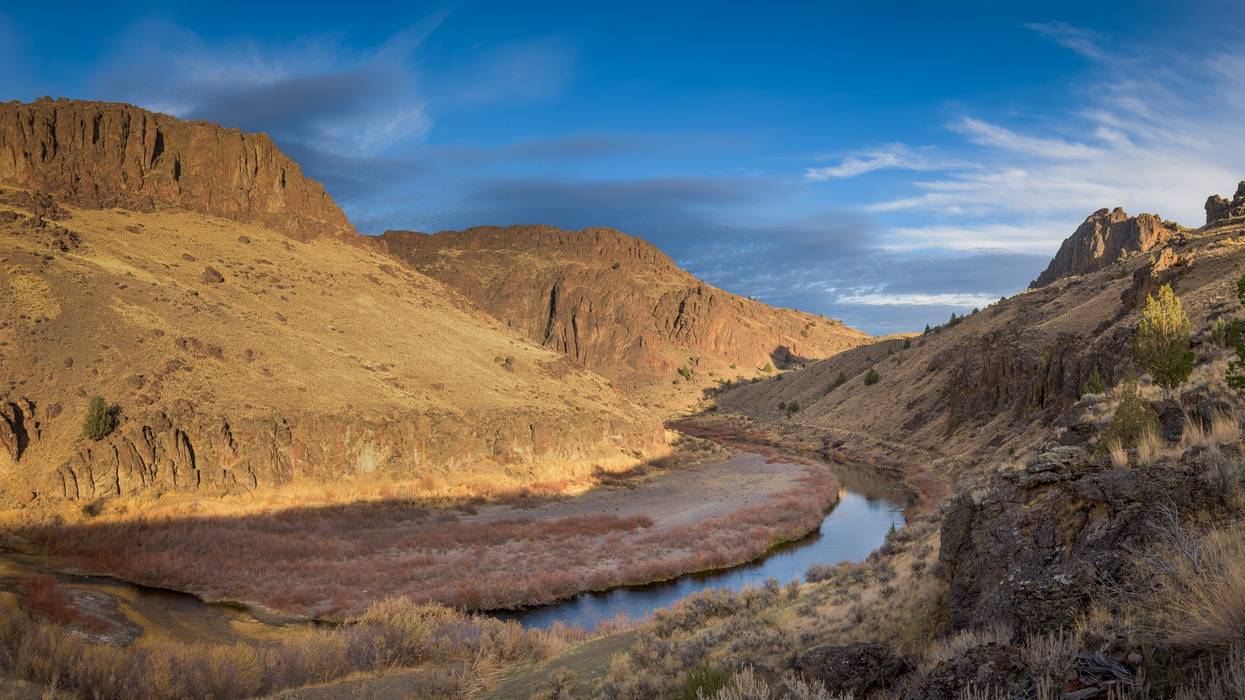
"This wild landscape is quintessential southern Utah redrock country with its stunning geology, irreplaceable cultural resources, unique fossils, and wide-open spaces. All of that is at risk if this attack succeeds."
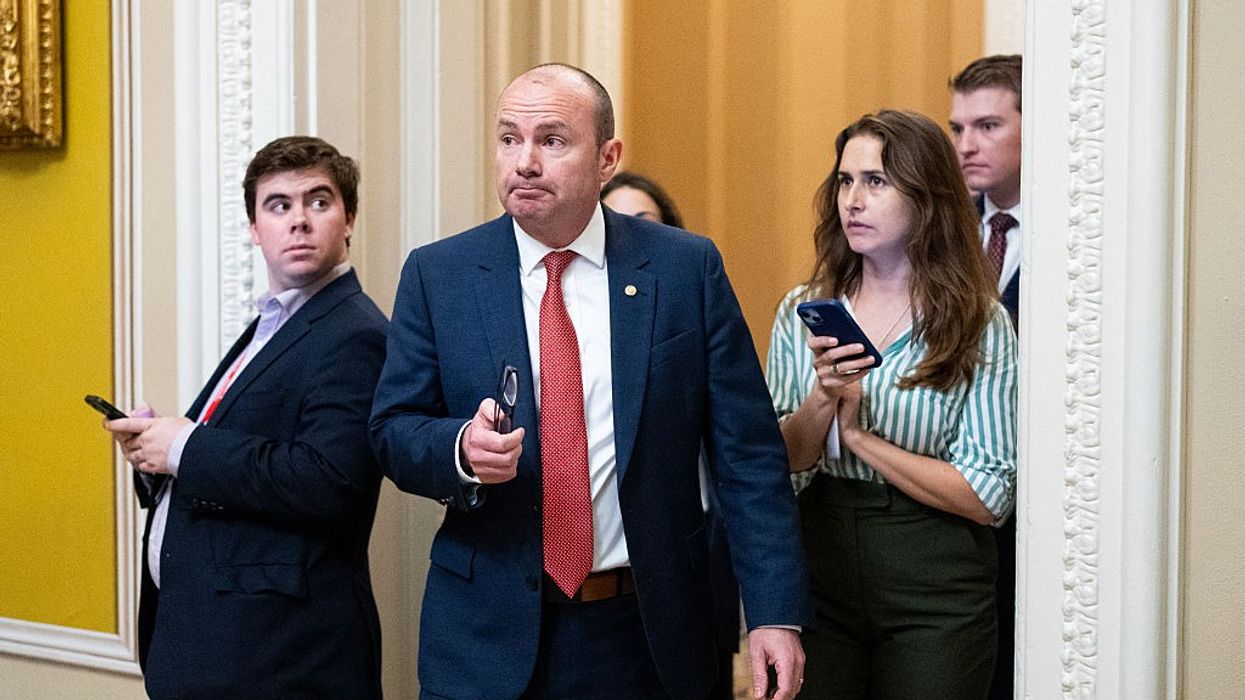
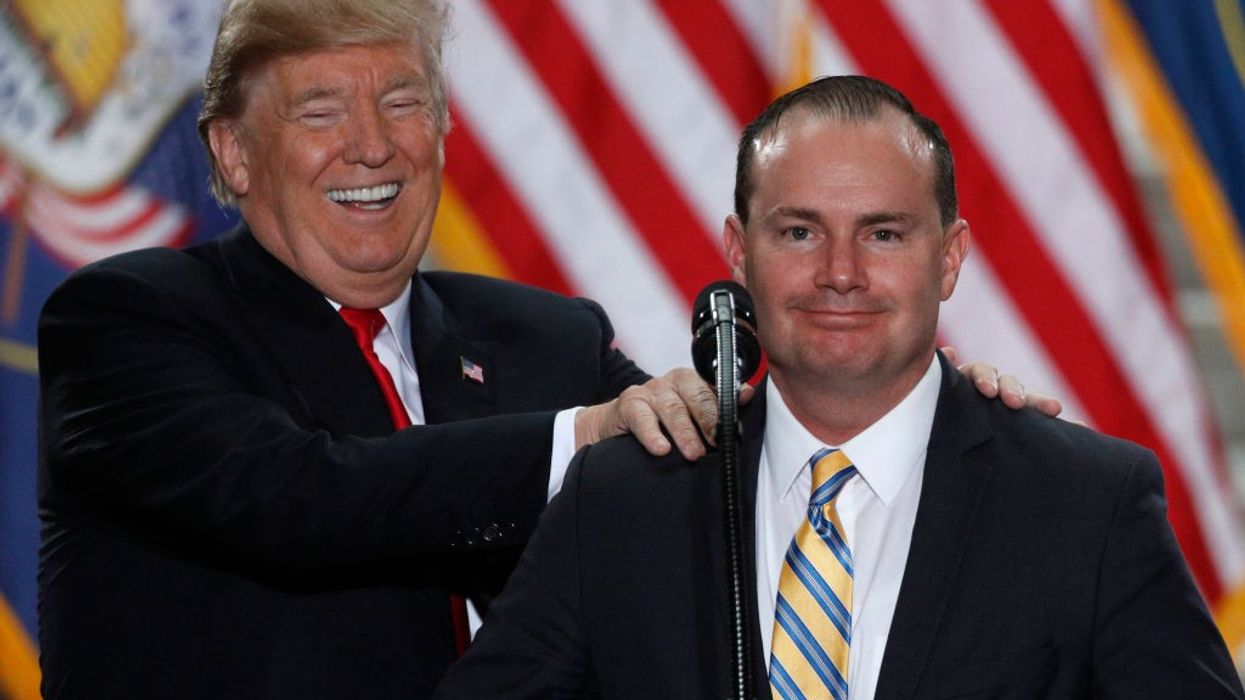
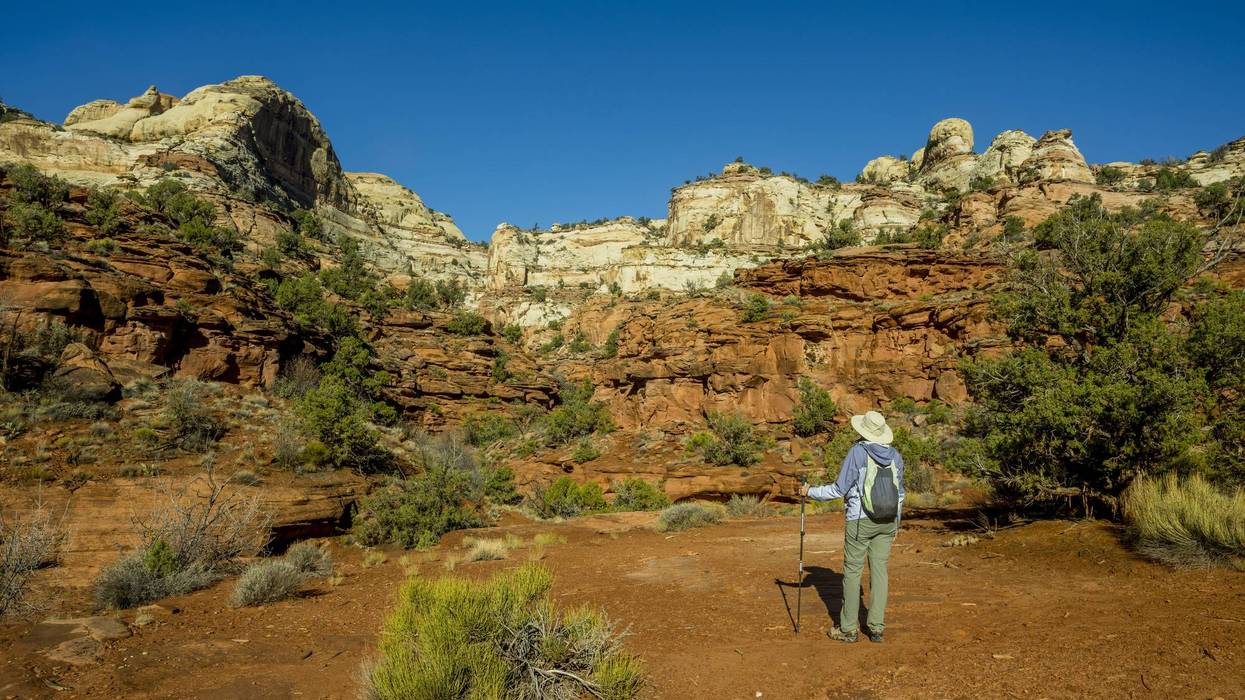
Republican US Sen. Mike Lee, a leading proponent of selling off the country's public lands, moved Wednesday to begin the process expediting an attack on the Grand Staircase-Escalante National Monument in his home state of Utah, drawing outrage from conservationists who vowed to pull out all the stops to protect the national treasure.
Lee kick-started the process by entering a recent Government Accountability Office (GAO) opinion into the congressional record. Last month, the GAO determined that a Biden-era management plan aimed at shielding Grand Staircase-Escalante constitutes a rule under the Congressional Review Act (CRA), which gives lawmakers a limited time to undo federal rules after they are finalized.
In the coming days, Lee and his allies are expected to introduce a resolution of disapproval under the CRA in an effort to roll back the monument management plan. CRA resolutions are privileged and not subject to the Senate's 60-vote filibuster, meaning Republicans could pass the measure without any Democratic support.
Rep. Celeste Maloy (R-Utah), who requested the GAO opinion, is leading the House effort to repeal the Grand Staircase-Escalante management plan.
Tom Delehanty, senior attorney with Earthjustice’s Rocky Mountain office, said in a statement Thursday that "the fate of our public lands, including our precious national monuments, should not be left to a handful of politicians who want to turn them over to industry."
"While this may be the first CRA attack on a national monument, it will not be the last if members of Congress on both sides of the aisle don’t stand up to oppose it," Delehanty warned. "Sen. Lee’s use of this arcane law would throw out years of planning by local officials, Tribes, and communities, setting a dangerous precedent on public land protection. Anyone who values our public lands and national monuments should take note.”
The legal director of the Southern Utah Wilderness Alliance, Steve Bloch, said the GOP's escalating attack on Grand Staircase-Escalante "is a call to action for Americans from across the nation."
"This wild landscape is quintessential southern Utah redrock country with its stunning geology, irreplaceable cultural resources, unique fossils, and wide-open spaces," said Bloch. "All of that is at risk if this attack succeeds and the monument management plan is undone. We intend to move heaven and earth to stop that from happening.”
During his first term in the White House, President Donald Trump launched a massive assault on Grand Staircase-Escalante, shrinking it by nearly 50%—a move that former President Joe Biden reversed.
But the Washington Post reported last year that the Trump administration has considered assailing the national monument yet again as part of a broader push to open the nation's public lands to commercial activity and industry exploitation.
Dan Ritzman, Sierra Club’s director of conservation, said Thursday that congressional Republicans' use of the CRA to gut protections for Grand Staircase-Escalante is "unprecedented" and "unlawful."
"Grand Staircase-Escalante National Monument is one of this country’s most treasured public landscapes, and the public has been involved from advocating for its protection to organizing its long-term management," said Ritzman. "Overturning this plan erases years of public engagement and Tribal consultation, and threatens certainty for everyone who uses and enjoys this iconic landscape.”
"It's going to harm them," boasted Sen. Mike Lee, a top Trump cheerleader. "Russ Vought, the OMB director, has been dreaming about this moment... since puberty."
President Donald Trump is using the government shutdown to carry out an unprecedented attack on his enemies through more layoffs of federal workers and cuts to grants aimed at blue states.
In the Oval Office Tuesday, hours before the shutdown began, Trump told reporters that “when you shut it down, you have to do layoffs. So, we’d be laying off a lot of people that are going to be very affected, and they’re Democrats. They’re gonna be Democrats.”
In the days leading up to the shutdown, congressional Democrats attempted to force Republicans to roll back cuts to Medicaid and Affordable Care Act subsidies—cuts that are expected to result in as many as 15 million Americans losing their health insurance while raising premiums for tens of millions more. Trump and the GOP have blamed Democrats for the shutdown, falsely claiming that theyare pushing to fund free healthcare for "illegal aliens."
However, they've struggled to make this story land with the American public. A Washington Post poll released Thursday found that 47% of US adults blame Trump and Republicans for the shutdown, while just 30% blame Democrats and 23% say they are unsure. The sample was divided roughly equally between those who voted for Trump and those who voted for former Vice President Kamala Harris (D) in 2024.
In what Rep. Pramila Jayapal (D-Wash.) called an effort to use "taxpayer dollars to try and shift blame," the websites for numerous government agencies—including the US departments of Housing and Urban Development (HUD), as well as Justice, Agriculture, and several others—were updated with banners that blamed "Democrats" and the "Radical Left" for the shutdown.
Meanwhile, government employees, including those at the Small Business Administration (SBA) were directed to include similar partisan language in their out-of-office auto-reply emails.
Experts have told Politico that the use of taxpayer money for such explicit partisan messaging likely violates multiple ethics laws, including the Anti-Lobbying Act, which forbids the use of appropriated funds for lobbying activities designed to “support or defeat legislation pending before Congress.” It also pushes the boundaries of the Hatch Act, which requires federal programs to be used in a nonpartisan fashion.
The progressive consumer watchdog group Public Citizen said it has filed complaints against HUD and the SBA for what it said was an "obvious Hatch Act violation."
"The SBA and other agencies increasingly adopting this illegal, partisan tactic think they can get away with it because Trump has gutted any and all ethics oversight of the federal government," said Craig Holman, a government ethics expert with Public Citizen.
After being asked about Trump's promise to lay off "Democrats" at a press conference on Wednesday, Vice President JD Vance told reporters, "We are not targeting federal agencies based on politics."
But in a Truth Social post early Thursday morning Trump struck a somewhat different tone. He spoke of plans to meet with Russell Vought, the director of the White House's Office of Management and Budget (OMB), "to determine which of the many Democrat Agencies, most of which are a political SCAM, he recommends to be cut. I can’t believe the Radical Left Democrats gave me this unprecedented opportunity."
Trump also proudly described Vought as "he of PROJECT 2025 fame," referencing his leading role in crafting the Heritage Foundation's infamous blueprint for a far-right takeover of government—a takeover carried out in part through the purging of civil servants disloyal to Trump. During the 2024 election, Trump repeatedly insisted that he had "nothing to do with" Project 2025.
Vought has already begun to unilaterally withhold congressionally appropriated dollars for projects specifically for blue cities and states.
On Wednesday, he said that $18 billion in subway and tunnel funding for New York City had been “put on hold to ensure funding is not flowing based on unconstitutional [diversity, equity, and inclusion (DEI)] principles.” Not long before that, Trump had threatened to entirely cut off federal funding to the city if its voters elect the democratic socialist Zohran Mamdani, the Democratic nominee and current frontrunner, as its next mayor in November.
Vought then announced Thursday that he was also stripping away another nearly $8 billion worth of funding for climate-related projects, referring to it as "Green New SCAM funding to fuel the Left's climate agenda." Vought said that the funding was being withheld exclusively from projects in states led by Democrats: California, Colorado, Connecticut, Delaware, Hawaii, Illinois, Maryland, Massachusetts, Minnesota, New Hampshire, New Jersey, New Mexico, New York, Oregon, Vermont, and Washington state.
House Republicans were reportedly told by Vought on Wednesday that mass firings would also begin in "one to two" days, though he did not outline specifics about who would be fired. However, a memo Vought issued last week instructed agencies to prepare to eliminate employees “not consistent with the president’s priorities," triggering a lawsuit from federal workers' unions.
House Speaker Mike Johnson (R-La.) told the press Thursday that Vought was carrying out these cuts "reluctantly" and is "not enjoying the responsibility" of deciding which programs and employees get the axe.
But in an interview on Fox News, Sen. Mike Lee (R-Utah), a top Trump cheerleader, was a bit more candid, proudly declaring that Trump and Vought are using the shutdown specifically to hurt Democrats.
"They're doing it deliberately. It's going to harm them," Lee said. "Because Russ Vought, the OMB director, has been dreaming about this moment, preparing for this moment, since puberty."
Rep. Mike Levin (D-Calif.) said that "Vought is pushing a scheme to turn a government shutdown into a weapon to fire career civil servants and dismantle programs Congress has already passed into law. That is not only reckless. It is flatly illegal and unconstitutional."
"Have we ever had a president work so hard to hurt the people he represents?" asked Sen. Patty Murray (D-Wash.). "I'm not going to be intimidated by these crooks."
Many anti-war figures actually welcomed the news, with one professor calling the Department of Defense name "a euphemism for an institution that is mostly focused on wars of imperial aggression."
In his latest attempt to project an image of strength for an empire in a state of decline, US President Donald Trump on Friday signed an executive order to rename the Department of Defense the Department of War, a move that would ultimately require congressional authorization.
"I think it's a much more appropriate name, especially in light of where the world is right now," Trump explained during a signing ceremony for the move.
When floating the name change idea last month, Trump said that "I'm sure Congress will go along if we need that."
Indeed, on Friday Sens. Rick Scott (R-Fla.) and Mike Lee (R-Utah) introduced a bill meant to coincide with Trump's decree. The Department of War name dates back to the 18th century but hasn't been used since the National Security Act of 1947, which created the National Military Establishment (NME)—a name that was changed to Department of Defense because the acronym NME sounded too much like the word "enemy."
"The United States military is not a purely defensive force," Scott said in a statement. "We are the most lethal fighting force on the face of the planet—ready to defeat any enemy when called upon. Restoring the name to Department of War reflects our true purpose: to dominate wars, not merely respond after being provoked."
The move faces considerable opposition from lawmakers, including Sen. Mark Kelly (D-Ariz.), a former Navy combat pilot who, in a dig at Trump, quipped that "only someone who avoided the draft would want to rename the Department of Defense to the Department of War," and Sen. Andy Kim (D-NJ), who argued that "Americans want to prevent wars, not tout them."
However, others noted that "War Department" is a moniker befitting a nation that has attacked, invaded, or occupied others in all but a handful of the Defense Department's 78-year history, and which has a global military footprint of hundreds of overseas bases.
well, it’s truth in advertising and it’s honest, which is rare for Trump
[image or embed]
— David Sirota (@davidsirota.com) September 4, 2025 at 4:54 PM
Many "non-interventionists and foreign policy realists" concur that the name change "is just more honest," as Jack Hunter wrote for Responsible Statecraft.
Pointing to this week's deadly US strike on an alleged drug-running boat in the Caribbean and Secretary of State Marco Rubio's threat of more such attacks to come, former Human Rights Watch director Kenneth Roth said Friday on social media that if Trump "keeps sending US forces to blow up alleged (but unproven) drug traffickers, he should call it the Department of Summary Executions."
Keeping with that theme, photojournalist Joshua Collins said on social media that "I actually think calling it 'the Department of War' is infinitely more honest. Because that's exactly what it does."
"Maybe while they're at it though, they can rename ICE 'the Department of kidnappings, extortion, forced disappearances, and human trafficking," Collins added, referring to Trump's Immigration and Customs Enforcement anti-immigrant blitz.
Jason Hickel, a professor at the Autonomous University of Barcelona's Institute for Environmental Science and Technology, said on social media that "this is wonderful news."
"The US 'Department of Defense' has never been primarily about defense; it is a euphemism for an institution that is mostly focused on wars of imperial aggression," he wrote. "At least now there is no pretending otherwise."
Medea Benjamin, co-founder of the peace group CodePink, wrote: "I'm glad Trump is changing the name of the Defense Department to the War Dept because it has never been about defense. And calling it the 'Department-to-make-the-merchants-of-death-rich' is kind of long."
Former Congressman Adam Kinzinger (R-Ill.) remarked: "Department of War? More like Department of Distraction... Epstein."
Matt Duss, executive vice president at the Center for International Policy and a former foreign policy adviser to Sen. Bernie Sanders (I-Vt.), said Friday that no matter what the president calls the Pentagon, "Trump is really good at renaming things, but bad at keeping Americans safe and prosperous."
"He ran as the supposed anti-war candidate but has proven to be just the opposite," Duss noted. "This stunt underscores that Trump is more interested in belligerent chest thumping than genuine peacemaking—with dangerous consequences for American security, global standing, and the safety of our armed services."
"It's a job killer, a planet killer, and an economy killer," Sen. Ed Markey said of Republicans' so-called Big Beautiful Bill.
While welcoming that U.S. Senate Republicans are removing a provision that would have forced the sale of public lands from their budget reconciliation package, Democratic lawmakers and environmentalists this weekend condemned other attacks on the planet that are part of the megabill making its way through the upper chamber.
After Senate Parliamentarian Elizabeth MacDonough blocked Sen. Mike Lee's (R-Utah) initial public land sale policy earlier this week, the Committee on Energy and Natural Resources chair tried to sneak in an amended version late Friday. However, as the chamber's Republicans scrambled to generate enough support for a procedural vote Saturday night, Lee announced the withdrawal of his provision from the package.
"This is a momentous win for conservation and a powerful reminder that Americans deeply value our public lands and waters. That was made crystal clear by the remarkable, bipartisan outcry opposing the liquidation of our natural heritage," said Tom Kiernan, president and CEO of American Rivers. "Future generations should be able to continue to use these lands for fishing, rafting, hiking, and swimming, and to enjoy the clean water that begins in these priceless places. It is our responsibility to protect that legacy."
Athan Manuel, director of the Sierra Club's Lands Protection Program, said that "from the moment Mike Lee first introduced this proposal, Americans across the political spectrum have made it clear they oppose selling off the natural heritage of our public lands to fund tax cuts for billionaires—not now, not ever. This is a victory for everyone who hikes, hunts, explores, and cherishes these places, but it's not the end of the threats to our public lands."
U.S. President Donald Trump "and his allies in Congress have made it clear they will use every tool at their disposal to give away our public lands to billionaires and corporate polluters, whether it's Mike Lee's fire sale, leasing them to Big Oil CEOs for pennies on the dollar, or gutting the permitting and oversight process for industrial development," Manuel warned. "This fight isn't over, and we are going to keep working to keep the 'public' in public lands."
We won this battle, but no doubt Republicans are going to keep trying to sell off your public lands any chance they get. Our public lands are worth fighting for, and as long as I have the honor of representing Oregon in the Senate that's what I'll be doing.
— Senator Ron Wyden (@wyden.senate.gov) June 28, 2025 at 11:08 PM
Anna Peterson, executive director of the Mountain Pact, which works with over 100 communities on climate, outdoor recreation, and public lands policy, said that "as millions of Americans and western communities have reminded people again and again over the past few weeks, public lands are bipartisan, deeply revered, sustain our communities, power our economies, and serve as the cornerstone of our outdoor way of life. We must remain steadfast in our commitment to defending public lands, and continue to fight to make sure they remain where they belong forever: in public hands."
The Natural Resources Defense Council had criticized both the axed public land sale provision and attacks on renewable energy, which remain in the megabill. NRDC executive director Christy Goldfuss said that "the new budget reconciliation bill text is a shocking fossil fuels industry fever dream come to life. The corruption on display is galling."
"The bill has gone from fossil fuels boosterism to an active effort from Congress to kill wind and solar energy in the United States. This cannot be viewed as anything other than a 'Trump energy tax,'" Goldfuss said, blasting Republican plans to not only end incentives for renewable energy, but also impose new taxes on wind and solar generation.
"This bill was already going to force the biggest utility bill increase in history, but the new language can only be interpreted as a corrupt effort to advance oil, gas, and coal on the backs of everyday Americans," she continued. "This is a shocking effort to manipulate energy markets, siphon money from every household in the country, kill jobs, and shut down the fastest growing segment of the energy economy--all to enrich the barons at the helm of the most profitable enterprise in history."
Referencing one of Trump's early executive orders, Goldfuss added that "the administration claims that we are in an energy emergency, making it the wrong time to choke off the cheapest and fastest-to-deploy sources of energy."
Adrian Deveny, founder and president of policy advisory firm Climate Vision and a former policy director to Senate Minority Leader Chuck Schumer (D-N.Y.), told Politico: "It's a kill shot. This new excise tax on wind and solar is designed to fully kill the industry."
Costa Samaras, a clean energy leader in former Democratic President Joe Biden's White House, also warned on the social media network Bluesky on Saturday that the policy would kill Americans.
"The new bill in Congress puts a new tax on wind and solar. They're taxing clean energy to give your money to billionaires," Samaras said. "Taxing clean energy and making it harder for new clean energy to be built in the U.S. at a time when the grid is under increasing stress from extreme weather, will lead to people dying in heatwaves."
"They are taxing wind and solar power. Not just taking away the credits in Biden's climate law. But actively taxing wind and solar. My god this bill is terrible," he continued. "If you have a [Republican] representative, call and leave a message saying you don't want to raise taxes on clean energy... If you're a reporter, there's a story here. Why is the Senate putting the grid and Americans' lives at risk?"
Senate Democrats are also speaking out about the GOP assault on renewable energy. Sens. Michael Bennet (D-Colo.), Ed Markey (D-Mass.), and Brian Schatz (D-Hawaii) are among those sounding the alarm.
"Big Oil has been getting tax breaks for more than a century," noted Markey. "Trump's big billionaire bill doesn't just cut clean energy incentives, it RAISES TAXES on wind and solar. It's a job killer, a planet killer, and an economy killer."
"Republicans are STILL trying to sell off public lands in their budget bill," said Sen. Ron Wyden. "If you care about keeping your public lands please make your voice heard."
Ahead of a vote on Republicans' budget reconciliation package expected as soon as noon Saturday, U.S. Senate Committee on Energy and Natural Resources Chair Mike Lee revived his effort to sell off public lands.
Senate Parliamentarian Elizabeth MacDonough has blocked multiple provisions of the GOP megabill, including several under the jurisdiction of the Utah Republican's panel. Among them is his attack on public lands.
"Here we go again," Sen. Ron Wyden (D-Ore.) said on social media after Lee released new text for his committee late Friday.
"Republicans are STILL trying to sell off public lands in their budget bill," Wyden continued. "Republicans are trying to get this over the finish line by the end of the weekend. If you care about keeping your public lands please make your voice heard."
"Americans left, right, and center have come together with one voice to say these landscapes shouldn't be sold off to fund tax cuts for the uberwealthy—not now, not ever."
Athan Manuel, director of Sierra Club's Lands Protection Program, said in a Saturday morning statement that "the new version of Mike Lee's public lands sell-off is like cutting 'most' of the mercury out of your diet. The fact of the matter is that Mike Lee has spent the better part of a decade trying to privatize our public lands, and with his new power in the Senate, he's trying to push that agenda even further without public input, without transparency, and shame."
"Americans left, right, and center have come together with one voice to say these landscapes shouldn't be sold off to fund tax cuts for the uberwealthy—not now, not ever," Manuel added. "Congress needs to listen to their constituents, not billionaires and private developers, and keep the 'public' in public lands.”
A document from Lee states that his "amended proposal dramatically narrows the scope of lands to be sold for housing... in communities where it is desperately needed" in the U.S. West. The new version would exclude all Forest Service land and reduce the amount of Bureau of Land Management acres to be sold by half.
"It's still bullshit," responded Noelle Porter, government affairs director at the National Housing Law Project.
Sen. Martin Heinrich (D-N.M.), the ranking member of the Senate Energy and Natural Resources Committee, has recently said: "This isn't about building more housing or energy dominance. It's about giving their billionaire buddies YOUR land and YOUR money."
"From the Sierra Club to Joe Rogan, everybody is pissed off about Republicans' public lands sell-off," he wrote on social media Friday. "This is the broadest coalition I've seen around public lands in my lifetime, so keep making sure your voices are heard because we're winning."
Jane Fonda's climate-focused political action committee similarly stressed on social media Friday that "Lee is committed to including a massive public land sale provision in the Big Beautiful Bill. We need you to keep up the pressure and reach out to your senators today and demand they reject any new sales of public lands in this legislation."
And it's not just the land sales in the Friday night text of what critics call the "big, ugly bill." It also "creates new fees for renewable energy projects on public lands, and cuts royalty rates for oil, gas, and coal production on public lands," noted Sam Ricketts, co-founder of S2 Strategies, which is working to build a clean energy economy. "Make it make sense."
As Manuel and Heinrich pointed out, some right-wingers are also outraged by Lee's push to sell off public lands. Benji Backer, founder of Nature Is Nonpartisan and the American Conservation Coalition, took aim at the committee chair on social media Friday night.
"Mike Lee just quietly doubled down on his mass public lands sel-loff by releasing new text," Backer said. "The Senate could consider it as soon as tomorrow. The secrecy is gross—and intentional. Lee knows it's his only path. America, we NEED to stand strong.
Tagging the Senate GOP account and Majority Leader John Thune (R-S.D.), Backer added that "Americans are entirely UNITED in opposition against this. Please ask Sen. Lee to let this provision... stand on its own—at the very least."
Even if the Senate somehow advances Lee's legislation, it could face trouble in the House of Representatives, which is also narrowly controlled by the GOP. On Thursday, Republican Reps. Ryan Zinke (Mont.), David Valadao (Calif.), Mike Simpson (Idaho), Dan Newhouse (Wash.), and Cliff Bentz (Ore.) warned that "we cannot accept the sale of federal lands that Sen. Lee seeks."
"If a provision to sell public lands is in the bill that reaches the House floor, we will be forced to vote no," warned the lawmakers, led by Zinke, who was the interior secretary during President Donald Trump's first term. Lee's provision, they wrote, would be a "grave mistake, unforced error, and poison pill that will cause the bill to fail should it come to the House floor."
While calling the public lands decision "an important victory," one campaigner also warned that "this threat is far from over."
Critics of Republican efforts to continue wrecking the planet celebrated some small victories after the U.S. Senate parliamentarian on Monday advised that multiple provisions cannot be passed as part of a megabill that only requires a simple majority.
Senate Parliamentarian Elizabeth MacDonough found that some GOP legislative proposals about offshore drilling and mandatory public land sales could not be included in the package due to the so-called Byrd Rule, which bars provisions considered "extraneous to the purpose of implementing budget resolution policies."
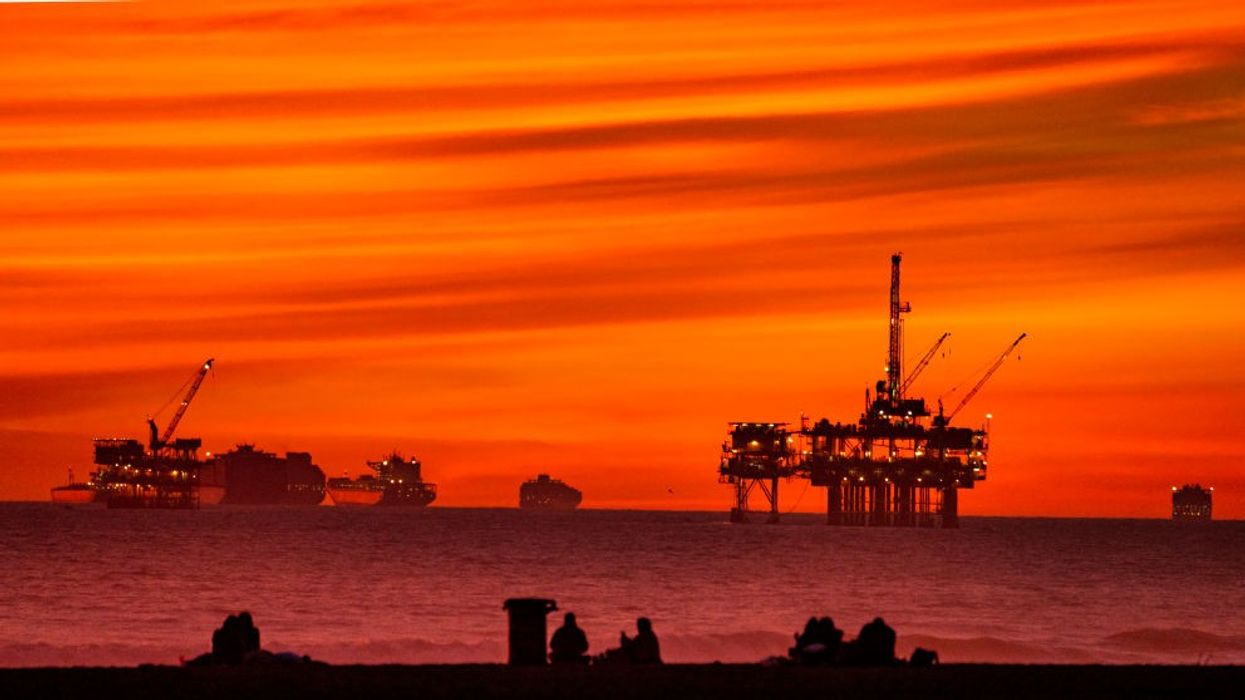
Specifically, MacDonough axed a provision that deems offshore oil and gas projects as automatically compliant with the National Environmental Policy Act (NEPA), nullifying their environmental review processes. She also ruled against a proposal requiring offshore fossil fuel leases to be issued to successful bidders within 90 days after the sale, and a separate mandate for the sale of millions of acres of public land.
"This wasn't just an obscure and damaging policy—it was an assault on the places where generations of Americans have hiked, hunted, fished, camped, and connected with the natural beauty of our country."
MacDonough also blocked provisions allowing natural gas exporters to pay to have their project deemed in the public interest; requiring a permit for the construction of Ambler Road, a controversial mining route in Alaska; directing the interior secretary to hold yearly geothermal lease sales; and revoking the secretary's discretion to reduce fees for solar and wind projects on Bureau of Land Management land.
Other provisions under the Senate Energy and Natural Resources Committee's jurisdiction that are still being reviewed include policies that would require that 90% of the revenue from lease sales in the Cook Inlet go to the state of Alaska, starting in 2035; mandate fossil fuel lease sales in the National Petroleum Reserve in Alaska; and force the interior secretary to approve new coal lease applications.
Senate Majority Leader Chuck Schumer (D-N.Y.) on Tuesday applauded MacDonough's decision on the "cruel" GOP policy that "would have gutted America's public lands and auctioned them off to the highest bidder, in yet another bid to benefit the wealthy."
"This wasn't just an obscure and damaging policy—it was an assault on the places where generations of Americans have hiked, hunted, fished, camped, and connected with the natural beauty of our country," Schumer said. "Republicans tried to rip away hundreds of millions of acres of public land—not to help families, not to solve real problems—but to hand yet another gift to the wealthy and well-connected. It was outrageous, it was shameless, and it would have forever changed the character of the country."
"Senate Democrats fought tooth and nail to keep public lands in public hands because these lands belong to everyone—not just the privileged few," Schumer said of Sen. Mike Lee's (R-Utah) proposal that put those lands at risk.
Senate Energy and Natural Resources Committee Ranking Member Jeff Merkley (D-Ore.) also put out a statement welcoming MacDonough's latest moves against what critics are calling the "Big, Ugly Bill" and highlighting his party's opposition.
"Democrats continue to show up and fight every provision of this Big, Beautiful Betrayal of a bill, because this bill is an attack on workers and families everywhere," Merkley said Monday. "Democrats will not stand idly by while Republicans attempt to circumvent the rules of reconciliation in order to sell off public lands to fund tax breaks for billionaires. We will make sure the Byrd Rule is followed and review any changes Republicans attempt to make to the bill."
Like the Democratic leaders, Trust for Public Land CEO and president Carrie Besnette Hauser on Tuesday called MacDonough's latest decisions "an important victory in the fight to protect America's public lands from short-sighted proposals that would have undermined decades of bipartisan work to protect, steward, and expand access to the places we all share."
"Across the country and across party lines, Americans have made it overwhelmingly clear: They do not want to see their public lands sold off to the highest bidder. Land sell-off proposals are deeply out of step with the will of a vast majority of Americans," she noted. "But make no mistake—this threat is far from over. Efforts to dismantle our public lands continue, and we must remain vigilant as proposals now under consideration including a proposal to roll back the landmark, bipartisan Great American Outdoors Act and threaten full, dedicated funding for conservation through the Land and Water Conservation Fund (LWCF)."
"Public lands are not political bargaining chips, but national treasures that power local economies, strengthen public health, and connect millions of people to the outdoors every day," she added. "Trust for Public Land will continue to stand with communities, tribal nations, and bipartisan champions in Congress to defend public lands and ensure they remain protected, accessible, and thriving—for all people, for all future generations."
Senate Majority Leader John Thune (R-S.D.) has suggested that Republicans will not overrule the parliamentarian. According to Reuters, he told reporters on Monday that the review process is "something we have to go through," and "they're working through it. And in some cases, as things are flagged, we're making counteroffers."
Although MacDonough dealt a blow to the GOP agenda, the Trump administration on Monday continued its assault on the planet, announcing plans to end a rule that protects tens of millions of acres in the National Forest System, which would enable road development and timber production on those lands.
A buried budget clause could force the largest public land sell-off in modern history, without a vote, a hearing, or a warning.
The Owyhee Canyonlands still wake to the hush of sage wind and canyon light, where bighorns navigate basalt ledges and silence is a kind of song. That song, and many others, may soon be gated.
Buried in the Senate reconciliation package lies a directive to the Interior and Agriculture secretaries. They are ordered to sell off up to 3.3 million acres of Bureau of Land Management and Forest Service land across 11 Western states within five years.
This is no minor bureaucratic maneuver. It is a mass land transfer on a scale most Americans cannot imagine. We are talking about 227 Manhattans, nearly as large as Connecticut, six times the size of Great Smoky Mountains National Park. Every acre could vanish behind a fence, a lease, or a luxury gate, permanently removed from public access.
What they see as inventory for extraction or speculation, we know as wildlife corridors, ancestral sites, and living ecosystems.
And the damage may not stop there. In addition to this directive, an amendment advanced by Sens. Mike Lee (R-Utah) and Steve Daines (R-Mont.) dramatically expands the scope of what land can be targeted next. That amendment opens up as much as 258 million acres, more than half of all public land managed by the BLM and Forest Service, as eligible for future sale. The amendment does not raise the total acreage that must be sold now, but it vastly expands the pool of land that could be nominated for disposal, setting the stage for further mass privatizations.
The sheer scale of the amendment, expanding eligibility to 258 million acres, raises questions about intent. While the bill still caps mandated sales at 3.3 million acres, the broadened eligibility pool may serve several strategic purposes. It positions the smaller number as a “reasonable compromise,” creating the illusion of moderation while setting the legal stage for far greater disposals in future bills. It also appeases private-sector interests by offering a vast catalog of public land to lobby over, speculate on, and nominate for sale. For lawmakers like Sens. Lee and Daines, long committed to shrinking federal land ownership, it advances a deeper ideological goal: redefining public land as provisional and disposable. Even if not all of it is sold now, marking it as eligible redraws the line between what belongs to the people and what can be taken.
Even national monument lands, while currently excluded, may be at risk. The Trump administration’s Department of Justice has argued that a president has the authority to revoke monument protections unilaterally. If that view prevails, another 13.5 million acres of previously protected lands could be opened for sale with the stroke of a pen. That is nearly as much land as the entire state of West Virginia. It is the equivalent of more than 10 Grand Canyon National Parks or over 15,000 Central Parks. All of it currently protected for future generations. All of it just one legal argument away from the auction block.
Behind closed doors, agency and congressional staff, working closely with industry allies, are drawing lines around timber-rich slopes, mineral-heavy ridges, and land primed for private development. What they see as inventory for extraction or speculation, we know as wildlife corridors, ancestral sites, and living ecosystems. These are not forgotten or idle lands. They are part of a shared inheritance now being marked for liquidation.
The bill does not define these parcels as protected, but instead excludes only national parks and formally designated wilderness areas as essential for continued public stewardship. This opens the door to the disposal of millions of acres that remain critical for wildlife, water, and people. At risk are places like:
These are only the best-known examples. Many more have already been, and are likely still being, quietly marked by developers, oil and gas firms, and mining consortia.
The provision does not merely authorize these sales. It mandates them. Each agency must sell between 0.5-0.75% of its total land base through competitive auction within five years. That adds up to between 2.3 and 3.3 million acres. That so-called small fraction still equals more than 3 million acres, roughly the size of Connecticut or nearly one-and-a-half of the area of Yellowstone National Park.
States are granted a “right of first refusal,” but it is a hollow gesture. There is no requirement that land be offered at fair value, no obligation to preserve public access, and no mandate for consultation with Indigenous nations. There are no environmental reviews or affordability conditions. The public has no voice in what is sold or to whom.
These are our lands. Yet we are being shut out of the decision entirely.
The provision’s primary backers include Sen. Mike Lee of Utah, several Republican members of the Senate Energy and Natural Resources Committee, large residential developers, fossil fuel and mining companies, and private equity firms that see public land as cheap inventory.
But opposition is accelerating. Sens. Martin Heinrich of New Mexico and Ron Wyden of Oregon, both senior Democrats on the Senate Energy and Natural Resources Committee, have pledged to fight the inclusion of the land-sale mandate in the reconciliation bill. Even some Republicans from traditionally pro‑development states, such as Sen. James Risch of Idaho and Sen. Steve Daines of Montana—who cosponsored the amendment enabling large‑scale land sales, but later sought to distance himself by emphasizing narrow scope and expressing opposition—have acknowledged public concern over the lack of transparency and long‑term risks.
It is worth asking whether this land policy is a public act or a private arrangement with public consequences.
Tribal governments, conservation groups, small recreation businesses, and national advocacy organizations like the Theodore Roosevelt Conservation Partnership, Backcountry Hunters & Anglers, and Outdoor Alliance have publicly opposed the public land sell-off provision. They warn that the measure bypasses hearings and public input, threatens access to public lands, and endangers sacred sites, wildlife corridors, and rural economies. The Southern Utah Wilderness Alliance called it a direct threat to Utah’s redrock country, and multiple Indigenous groups have condemned the lack of tribal consultation.
And the land grab is happening in a political context where the Trump family, once again in the White House, is expanding its business empire, including foreign real estate deals. According to Eliot Brown of The Wall Street Journal, India’s richest man, Mukesh Ambani, is one of many international investors pouring money into Trump Organization developments. These include projects in real estate, cryptocurrency, and other sectors that stand to benefit from relaxed land-use and ownership rules. It is worth asking whether this land policy is a public act or a private arrangement with public consequences.
Public lands do more than store carbon. They store stories. They teach children the sound of a free-running stream. They preserve the last unbroken skies. They support a $1.2 trillion outdoor recreation economy that sustains 5 million jobs and helps recharge watersheds that irrigate crops across the American West.
The land they’re targeting is not empty. It is not surplus. It is alive. It is where the land still speaks in the languages of those who came before. Where every ridge holds a name, every stream a story. It’s where people go to breathe again. To walk without noise. To teach a child how water sounds. It’s where we remember we are small, and that smallness is sacred.
What’s being auctioned is not just land. It is access. It is silence. It is memory, future, belonging, and the last wild chance some people have to feel whole again.
Privatizing these lands is not only an economic and environmental betrayal. It is a moral one. This is not about housing. This is about extraction. This is about raw power, inherited greed, and the open theft of the commons. To do so is to erase the covenant between people and place, to sell the inheritance that binds generations.
And when it’s gone, it’s gone. You don’t replant a thousand-year-old forest. You don’t buy back a clean river. You don’t resurrect what you sold to a bulldozer.
Congress is moving fast, and the window to stop this is closing. The provision to force the sale of public lands is buried deep in a massive budget bill, shielded from public debate and poised to pass quietly behind a smokescreen of competing headlines. This is the moment to act. Delay means disappearance. Once these lands are gone, they do not come back.
Rep. John D. Dingell, America’s longest-serving member of Congress, often reminded us that public lands are more than state assets. He believed they are held in trust, stating plainly, “In democratic government, elected officials do not have power. They hold power in trust for the people who elected them.”
We were never meant to sell the sacred. But if we stay silent now, the lines on the map will be redrawn without us. The land will forget we were ever part of it.
Senate Republicans unveiled legislation Wednesday that would require the sale of millions of acres of U.S. public land in Western states, a proposal that conservation groups slammed as a giveaway to corporate interests and the rich disguised as an attempt to alleviate the housing crisis.
The bill released by the Senate Committee on Energy and Natural Resources is a piece of the GOP's sprawling budget reconciliation package, which the party hopes to send to President Donald Trump's desk in a matter of weeks.
The measure directs the Bureau of Land Management (BLM) to "dispose of 0.5-0.75% of certain BLM land and the Forest Service to dispose of 0.5-0.75% of certain National Forest System Land," and would give Trump administration officials wide latitude to determine whether public land sell-offs would "address local housing needs (including housing supply and affordability) or any associated community needs."
Analysts have rejected the notion that selling federal land to developers is a viable solution to the U.S. housing crisis, arguing that the proposal "is little more than a Trojan horse for a fringe, anti-public lands agenda."
"It's a travesty that Senate Republicans are putting more than 3 million acres of our beloved public lands on the chopping block to sell at fire-sale prices to build mega-mansions for the ultra-rich."
The Senate's proposal, spearheaded by Sen. Mike Lee (R-Utah), represents a more extreme version of a provision that was removed from the House version of the GOP reconciliation package last month amid widespread backlash.
"Senate Republicans have finally said the quiet part out loud: They want to put millions of acres of our public lands up in a fire sale, destroy the investments that have created thousands of manufacturing and clean energy jobs—including in their home states—and obliterate programs that lower energy costs for everyday Americans," said Sen. Martin Heinrich (D-N.M.), the ranking member of the Senate Energy and Natural Resources Committee.
“In the days ahead, you'll hear a lot of excuses from Republicans trying to cover for what they're doing. Do not believe it," Heinrich continued. "This isn't about building more housing or energy dominance. It's about giving their billionaire buddies YOUR land and YOUR money."
Patrick Donnelly, Great Basin director at the Center for Biological Diversity, warned that the Senate legislation "is just open season on public lands."
"It's a travesty that Senate Republicans are putting more than 3 million acres of our beloved public lands on the chopping block to sell at fire-sale prices to build mega-mansions for the ultra-rich," said Donnelly.
The legislation also instructs the U.S. Interior Department, currently led by Big Oil ally and drilling proponent Doug Burgum, to "immediately resume quarterly onshore oil and gas lease sales" and requires "a minimum of four oil and gas lease sales" each fiscal year in Wyoming, New Mexico, Colorado, Utah, Montana, North Dakota, Oklahoma, Nevada, Alaska, and "any other state in which there is land available for oil and gas leasing under the Mineral Leasing Act."
Burgum has described public land as "an incredible asset on America's balance sheet" that could be used "to solve our nation's affordable housing crisis."
In a statement on the legislation, the Sierra Club highlighted a provision that would enact "a harmful 'pay to pollute' scheme allowing a methane gas export company to pay a fee in exchange for LNG projects being automatically deemed in the public interest."
Athan Manuel, director of the Sierra Club's Lands Protection Program, said that Senate Republicans "are taking a second bite at a rotten apple."
"The American people made it clear last month that they will not tolerate selling off our public lands to billionaires and corporate polluters," said Manuel. "But Donald Trump and Mike Lee seem to have missed the memo. This bill would give billionaires and corporate polluters free rein to drill, mine, and log these treasured landscapes without oversight or accountability, and sell millions of acres of public lands to private developers, locking out American families forever."
"The American people will remind Trump and his congressional allies that our public lands shouldn't have a price tag on them," Manuel added.
We are demanding that every member of Congress, starting with the members of the DOGE Caucus, pledge to protect Social Security, Medicare, and Medicaid.
Donald Trump is about to return to the White House, but it's clear who's really running the show: Elon Musk, the wealthiest man in the world and the chair of the so-called Department of Government Efficiency, or DOGE.
Musk will do anything to avoid paying his fair share of taxes. That's why he wants to use DOGE to cut $2 trillion in government spending—which is mathematically impossible without slashing Social Security, Medicare, and Medicaid. Last month, Musk amplified a thread from Senator Mike Lee (R-Utah) that used zombie lies about Social Security to call for cutting and privatizing it.
Nobody voted to cut Social Security, Medicare, or Medicaid. Despite his past history of supporting cuts to these programs, Trump blanketed millions of households in swing states with flyers promising to protect them.
Our job is to remind voters of that promise, and demand that Republicans keep it. Trump won't be on the ballot again, but every member of the House of Representatives (and one-third of the U.S. Senate) is up for reelection in less than two years. That's why they want to slash our benefits behind closed doors.
I went to the first meeting of the DOGE Caucus, and stood outside those closed doors to confront members as they entered and exited the room. I handed them copies of Trump's campaign flyers promising to protect Social Security and Medicare, and asked if DOGE intended to keep that promise.
One Republican told me that "there will be some cuts" to Social Security and Medicare. Another said that "everything is on the table." Most of the rest refused to answer—except for DOGE Caucus co-chair Rep. Marjorie Taylor Greene (R-Ga.). When I handed her Trump's flyers, she said, "We don't care" and tossed them to the ground.
That's what Marjorie Taylor Greene thinks of Trump's campaign promise to protect earned benefits—and we're going to make sure her constituents know it. My organization, Social Security Works, just sent a billboard truck to drive to every large senior center in her district, reading "Marjorie Taylor Greene is helping the richest man in the world cut YOUR Social Security" and urging voters to call her office.
We are also planning to send a billboard truck to the district of Rep. Derrick Van Orden (R-Wis.). Van Orden is a member of the DOGE Caucus and refused to pledge to protect Social Security, Medicare, and Medicaid. He is one of the most vulnerable Republican incumbents, winning his most recent race by fewer than 11,256 votes.
These two billboard trucks are just the beginning. We are demanding that every member of Congress, starting with the members of the DOGE Caucus, pledge to protect Social Security, Medicare, and Medicaid. If they refuse, our trucks will be driving through their districts in the very near future.
Join our campaign to protect Social Security, Medicare, and Medicaid at https://socialsecurityworks.org/pledge.
Throughout history, Americans have recognized when Republican opponents of Social Security were lying. With Trump returning to power and Congress under right-wing control, we must be vigilant once again.
In addition to seeking to expand Social Security, those fighting for greater economic security must always continue to play defense. There have always been those who want to end Social Security. Republican President Dwight Eisenhower once described them as “a tiny splinter group” that seeks “to abolish Social Security.” He explained, “Their number is negligible and they are stupid.” Unfortunately, that tiny group now controls the Republican party.
Most of the time, they hide their true feelings, knowing how popular and important Social Security is, even with the Republican base. Sometimes, though, the veil drops and their true feelings are revealed. That happened most recently last month when Senator Mike Lee (R-UT) decided to share his true feelings about Social Security in a lengthy Twitter thread. Elon Musk, the soon-to-be shadow President of the United States, amplified the thread, calling it “interesting.”
That “interesting” thread was simply a rehash of lies first uttered by Alf Landon, the 1936 Republican nominee for President, who lost in a landslide. These lies are not just falsehoods but zombie lies, which are used to try to undermine support for Social Security, over and over again.
Every time, Americans have recognized that they were being told lies, and the opponents of Social Security failed. We must be vigilant and make sure that these current efforts fail, too.
Enemies of Social Security willfully refuse to see it as what it actually is: insurance against the loss of wages due to retirement, disability, or death of a family breadwinner.
Let’s review just a few of those zombie lies told by Alf Landon in 1936, Senator Lee last month, and numerous other opponents in the decades in between. They mischaracterize Social Security as individual savings and then claim people would be better off saving on their own. Indeed, they claim, in the words of Lee, that “the government routinely raids” our money. Some even slander our Social Security system by calling it a criminal Ponzi scheme.
These enemies of Social Security willfully refuse to see it as what it actually is: insurance against the loss of wages due to retirement, disability, or death of a family breadwinner. They ignore that Social Security is most working families’ only disability insurance, largest life insurance policy, and most secure, effective and efficient retirement income.
While you can outlive savings, you can never outlive Social Security. The liars refuse to acknowledge that Social Security is strikingly superior to its private sector counterparts—more efficient, secure, universal, and fair. Its one shortcoming is that benefits are too low.
President Franklin Roosevelt responded to Alf Landon’s lies eloquently, in words that are as true today as when he spoke them:
Never before in all our history have [the wealthy] been so united against one candidate as they stand today. They are unanimous in their hate for me—and I welcome their hatred…[They] are not happy. Some of them are desperate. […]
They tell the worker his wage will be reduced by a contribution to some vague form of old-age insurance. They carefully conceal from him the fact that for every dollar of premium he pays for that insurance, the employer pays another dollar. That omission is deceit…
They do not tell him that the insurance policy that is bought for him is far more favorable to him than any policy that any private insurance company could afford to issue. That omission is deceit…
But they are guilty of more than deceit. When they imply that the reserves thus created against both these policies will be stolen by some future Congress, diverted to some wholly foreign purpose, they attack the integrity and honor of American Government itself. Those who suggest that, are already aliens to the spirit of American democracy.
Everyone should save, if they possibly can. Everyone should also have adequate insurance. Savings are necessary for short-term emergencies and expenses; insurance, for large losses that are predictable for groups, but not individuals.
The liars refuse to acknowledge that Social Security is strikingly superior to its private sector counterparts—more efficient, secure, universal, and fair. Its one shortcoming is that benefits are too low.
To manage the risk of the financial loss associated with the loss of a home as the result of fire, homeowners purchase fire insurance; they do not simply save for the contingency. Similarly, car owners have car insurance, not car-accident savings accounts. And to manage the risk of lost income as the result of disability, death, old age, or unemployment, everyone who works for wages needs wage insurance in the form of Social Security and unemployment insurance.
In addition to the disinformation and the lies, Alf Landon, Mike Lee, and many other Social Security opponents claim that Social Security, in the words of Mike Lee, “is government dependency at its worst.” In truth, rather than undermining freedom, Social Security unlocks the freedom to change jobs, change careers, and change life circumstances while providing some measure of peace of mind that your earned Social Security benefits are there if misfortune strikes in the form of disability or death leaving dependents. They are also there if you have good fortune in the form of a very long life.
Perhaps Republican President Eisenhower said it best:
Retirement systems, by which individuals contribute to their own security…have become an essential part of our economic and social life. These systems are but a reflection of the American heritage of sturdy self-reliance which has made our country strong and kept it free; the self-reliance without which we would have had no Pilgrim Fathers, no hardship-defying pioneers, and no eagerness today to push to ever widening horizons in every aspect of our national life. The Social Security program furnishes, on a national scale, the opportunity for our citizens, through that same self-reliance, to build the foundation for their security.
Senator Lee’s zombie lies about Social Security may be appealing to Elon Musk, the world’s richest man, who will do whatever he can to avoid paying his fair share. But these lies will never convince the American people to abandon their overwhelming support for our Social Security system.
Lies about Social Security may be appealing to Elon Musk, the world’s richest man, who will do whatever he can to avoid paying his fair share. But these lies will never convince the American people to abandon their overwhelming support for our Social Security system.
Those lies have failed to change the narrative for 90 years, and they’re not going to work now.
It’s no surprise that Musk wants to undermine support for Social Security and is eager to amplify Mike Lee’s lies to do so. Musk’s so-called “Department of Government Efficiency” is designed to target our earned benefits, with Republicans already admitting that “there will be some cuts” to Social Security and Medicare.
We must not let that happen.