

SUBSCRIBE TO OUR FREE NEWSLETTER
Daily news & progressive opinion—funded by the people, not the corporations—delivered straight to your inbox.
5
#000000
#FFFFFF
To donate by check, phone, or other method, see our More Ways to Give page.
Daily news & progressive opinion—funded by the people, not the corporations—delivered straight to your inbox.
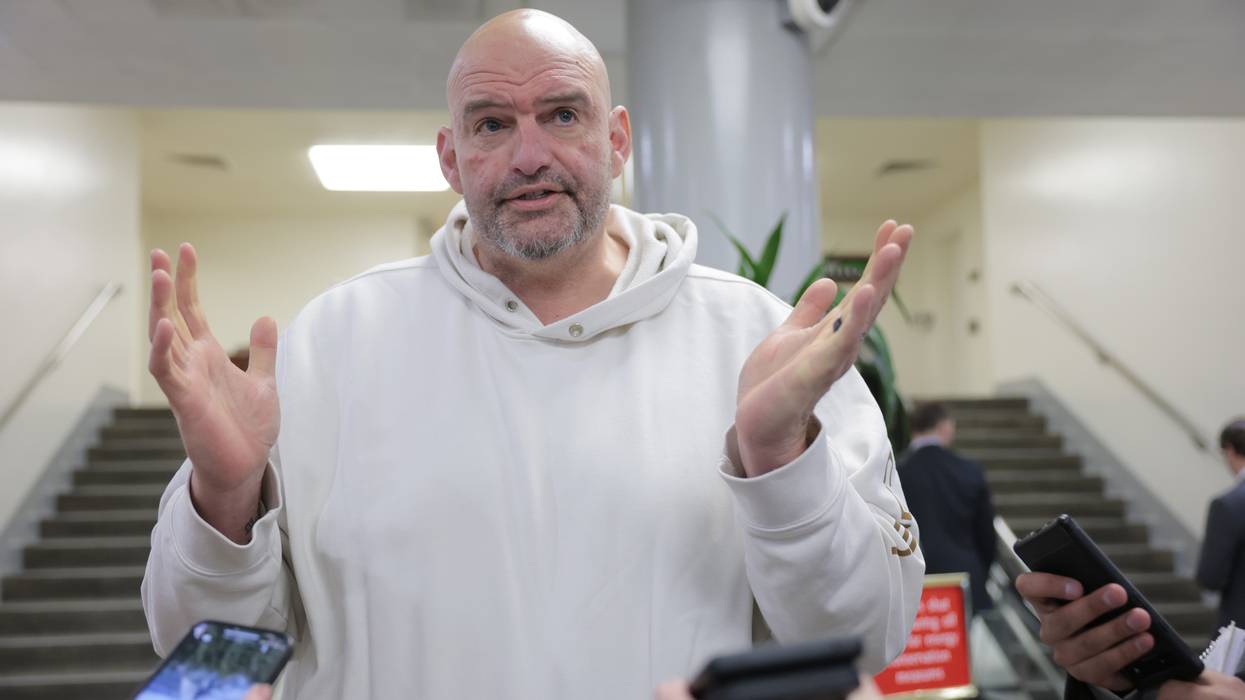
"This reckless war has cost American lives, innocent lives, tens of billions of dollars, and higher prices on nearly everything here at home. John and 49 Republican Senators voted in favor of all of that."
Democratic Sen. John Fetterman of Pennsylvania was the lone Democrat on Thursday to help Republicans in the US Senate vote down a resolution to end the "illegal" war of choice launched against Iran by President Donald Trump earlier this year.
In the 49-50 vote, the Republican majority blocked the latest resolution calling for an end to the war. While four Republicans—Susan Collins of Maine, Alaska's Lisa Murkowski, Rand Paul of Kentucky and Thom Tillis of North Carolina—joined Democrats by voting in favor, Fetterman became the deciding vote.
Rep. Chris Deluzio (D-Pa.) was among those expressing frustration with Fetterman, a lawmaker who has become a thorn in the side of his party since taking office and taking a hard right with his pro-war positions, accommodations to Trump, and determined support for pro-Israeli policies.
"John Fetterman just cast the deciding vote to keep the Iran War raging," said Deluzio. "This reckless war has cost American lives, innocent lives, tens of billions of dollars, and higher prices on nearly everything here at home. John and 49 Republican Senators voted in favor of all of that."
"Fetterman never fails to disappoint," said Susan Wild, a former Democratic member of the US House from Pennsylvania.
The vote came on the same day that an advocacy group representing American citizens with Iranian heritage sued the Trump administration for usurping the powers of Congress when it launched an "unconstitutional" war against Iran—a military conflict that has lasted nearly 7 months with no end in sight, causing misery across the Middle East and economic pain worldwide, including in the United States.
Filed in the US District Court for the District of Columbia on Thursday, the lawsuit, filed on behalf of the National Iranian American Council Action (NIAC Action), asks the court to declare that President Donald Trump's unprovoked attack on Iran violates the Constitution’s Declare War Clause.
In a statement, NIAC Action said the suit was brought "on behalf of its members whose families have been injured, displaced, economically devastated and are in continuing mortal danger as a result of a war that was never lawfully authorized."
Launched on Feb. 28, the US attack, in coordination with the Israeli government of Prime Minister Benjamin Netanyahu, was launched despite ongoing diplomatic efforts and active talks over US sanctions against Iran and questions about Iran's domestic nuclear program and its conventional missile capabilities. The war was initiated, according to the group,
without a declaration of war or other congressional authorization and that the war has continued, including repeated heavy bombardments and a naval blockade, despite this lack of authorization and the passage by both chambers of Congress of an explicit directive to terminate unauthorized hostilities against Iran.
“No President should have the power to take this country into an indefinite war by himself,” said NIAC Action president Jamal Abdi, in a statement. “Congress never authorized this war. Yet Iranian families are being bombed, American service members have been killed, and communities on both sides are being forced to bear the consequences. This lawsuit asks a fundamental question: can one person decide, on his own, to keep an entire nation at war?”
NIAC Action offered the example of one plaintiff, Nima Dilmaghani, whose cousin in Iran was injured when the company warehouse where she worked was bombed. Dilmaghani's cousin, the group explained, "suffered a broken leg, serious damage to their eardrums, and the loss of their index finger, which surgeons reattached but which has lost motion. Approximately ten of her coworkers were killed, and approximately ten more were injured. In a separate bombing, their apartment was destroyed while they were away at work. They are now working two jobs to survive." Other NIAC Action members have detailed similar stories.
Lawyers behind the lawsuit said that just because President Trump and other officials, including Secretary of Defense Pete Hegseth, have tried to argue that war against Iran is not a "war," that does not make it so.
“President Trump has spent months waging a war that Congress never authorized, while insisting that changing the terminology somehow changes the constitutional question,” said attorney Bruce Fein. “Calling a war a ‘military operation’ or an ‘excursion’ does not erase the Declare War Clause. The question before the Court is whether the President can continue these hostilities without the authorization the Constitution requires.”
While War Powers resolutions have been passed in the House to cease military operations in Iran, none of those have been binding on President Trump, and overall, Congress has stood aside in the face of what critics have described as criminal aggression and war crimes by Trump.
Sen. Bernie Sanders (I-Vt.) and other members of the Democratic Caucus in the US Senate, have continued to voice their opposition to Trump's war as poll after poll show that the US voting public—across the political spectrum—want the war, and the economic harm it has wrought—to end.
"The American people, overwhelmingly, want to end this horrific war in Iran," Sanders said after the failed vote. "Pathetically, today, nearly every Republican voted with Trump to keep the war going. When will Republicans represent their constituents and have the courage to oppose their mentally unstable leader?"
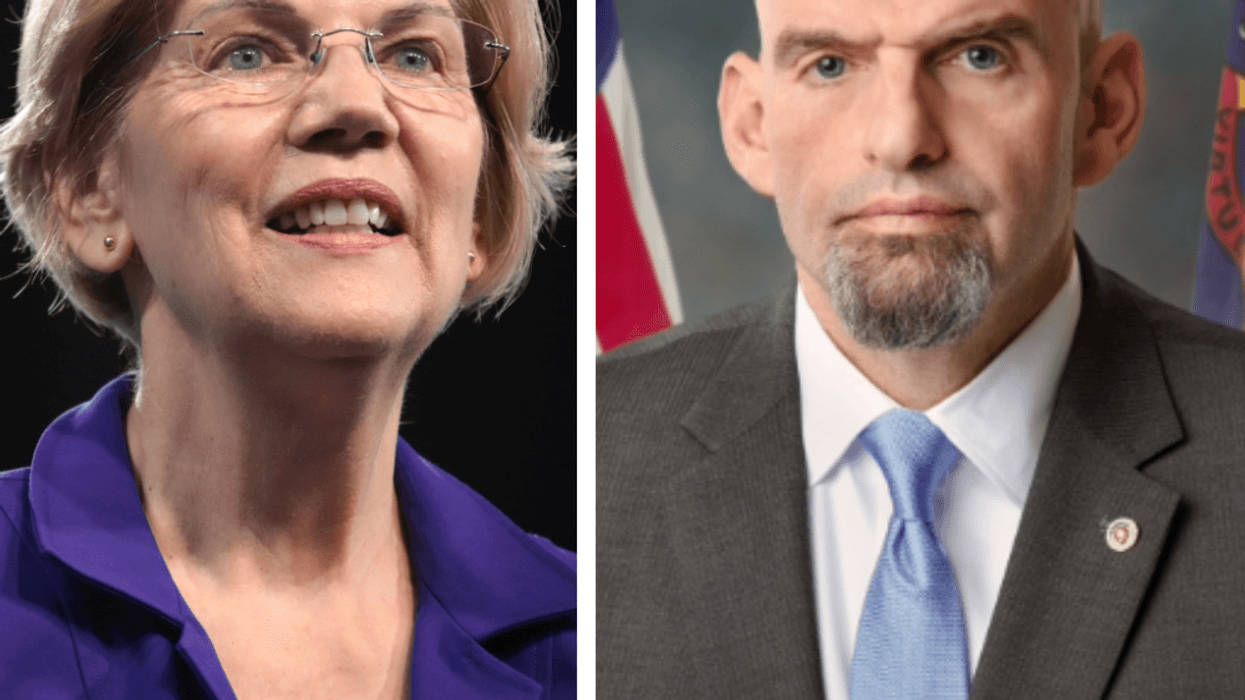
In contrast with Sen. John Fetterman's (D-Pa.) contrarian grandstanding, Sen. Elizabeth Warren (D-Mass.) has spent the last two years (and more) showing Democrats that it’s possible to reach across the aisle without losing your soul.
Democrats’ chances of taking back the Senate look better than ever, but even if November brings a blue wave, they will still not have control of the legislative and executive branches simultaneously until at least 2029.
The question facing Democratic lawmakers now is how they should conduct themselves during these wilderness years if they want to regain a trifecta in the next presidential election.
Voting down any idea the White House or GOP leadership propose without suggesting any alternative is a bad idea. More than three-quarters of Americans say they want more bipartisanship in Washington, and voters often punish opposition parties they view as do-nothing obstructionists.
Fetterman, take notes: When you vote with Republicans, do it to help working-class families buy homes, not to make sure gas prices keep going up.
But when we say Democrats should be more bipartisan, it’s important to specify what we mean. This moment has provided exemplars of two very different kinds of aisle crossing, which I’ll refer to as John Fetterman Bipartisanship and Elizabeth Warren Bipartisanship.
Sen. Fetterman’s (D-Pa.) bipartisanship is largely performative. He’s constantly appearing on Fox News to scold his fellow Democrats for calling President Donald Trump a fascist, denounce democratic socialism, defend Israel’s devastation of Gaza, or praise the giant monument to Trump’s ego that is the White House ballroom.
And when it’s not performative, it’s actively harmful. Fetterman voted to confirm disastrous Trump appointees like former Attorney General Pam Bondi and former Department of Homeland Security Secretary Kristi Noem—both of whom turned out to be too incompetent even for this administration. He voted against war powers resolutions that could have hastened the end of the costly and unnecessary conflict with Iran. He voted to end last year’s government shutdown, throwing away leverage Democrats could have used to keep healthcare affordable for millions of families. And he voted to keep funding Immigration and Customs Enforcement after agents murdered two Americans in the streets.
It’s a voting record defined by cruelty, contrarianism, and pettiness. In his home state of Pennsylvania, Republicans have rewarded him with a near 80% approval rating, and Trump is actively courting him to switch parties.
Whether he does or not, Fetterman has already betrayed the people who elected him and undermined the party whose donors and campaign arm spent over $100 million on his Senate race.
Thankfully, Fetterman Bipartisanship is not the only alternative to blind obstructionism. Sen. Elizabeth Warren (D-Mass.) has spent the last two years (and more) showing Democrats that it’s possible to reach across the aisle without losing your soul.
Last month, Warren signed a letter to the CEOs of Midwest Real Estate Data—a multiple listing service (MLS) that serves as a database for property listings in the Chicago area—and Compass, the country’s largest brokerage firm. The two had signed an agreement that hides certain listings from members of the public and makes them available only to brokers who pay a subscription fee. This practice, Warren warned, will create a “two-tiered housing market” that benefits insiders while driving up prices for regular people who have to compete for a smaller pool of homes.
Warren wasn’t the first to raise the alarm about this corrupt bargain. Rep. Scott Fitzgerald (R-Wis.) beat her to it by about two weeks. But instead of treating the MRED-Compass deal as a toxic GOP issue, Warren threw her weight behind the probe to stop corporate greed from making homeownership even more prohibitively expensive.
And speaking of affordable housing, she also co-sponsored the 21st Century ROAD to Housing Act—the most consequential federal housing legislation in 30 years. This bill cuts red tape to make home construction cheaper and easier, rewards jurisdictions that build more housing, and bans private equity from buying up homes that should go to families. And as an added bonus, Trump was too focused on disenfranchising minorities to be bothered to sign the thing. It became law without his signature, but his total lack of interest makes it easy for Democrats to claim the legislation as their win.
Fetterman, take notes: When you vote with Republicans, do it to help working-class families buy homes, not to make sure gas prices keep going up.
Warren also joined Sen. Josh Hawley (R-Mo.) to co-sponsor the Break Up Big Medicine Act and co-authored an op-ed with Sen. Bernie Moreno (R-Ohio) calling for a tax increase on the wealthy to save Social Security.
Even if these proposals never become law, they provide Democrats with a powerful argument for 2028: “We’ve been proposing solutions all along. We even tried to work with reasonable Republicans. It’s not our fault they failed, and if you vote for us, they won’t fail again.”
Calling Trump a Nazi or a threat to democracy is a great way to fire up the base, but independents are tired of hearing it. They want to know what Democrats will do to make their groceries, health insurance premiums, day care bills, mortgages, and gas station trips more affordable. We won’t win them over by parroting stale Fox News talking points, but if we can show that we care more about affordability than about partisan bickering, we might just pull it off.

"Saw a rat on the rails at Tasker-Morris and it has my vote."
Pennsylvanians aren't just sick of Sen. John Fetterman. Nearly 6 in 10 say that if he came up for reelection today, they'd sooner check the box for literally anybody else.
That's according to a PennLive/Bravo Group poll released Wednesday, in which just 40% of likely voters in Pennsylvania said they'd vote for their Democratic senator, compared with 58% who said they'd choose an unspecified "someone else."
While he was elected in 2022 as a progressive in the mold of Sen. Bernie Sanders (I-Vt.), Fetterman's transition into a left-punching Fox News talking head over the past four years has made him abysmally unpopular within his own party.
After watching Fetterman enthusiastically cheer Israel’s genocidal war in Gaza, block efforts to halt President Donald Trump’s illegal wars in Venezuela and Iran, defend the honor of US Immigration and Customs Enforcement (ICE) as agents killed several US citizens and immigrants, and mock the idea of lowering Americans’ healthcare costs, just 19% of Democrats in his home state said they approved of him compared to 69% who disapproved, according to a Quinnipiac poll released earlier this month.
Republicans, meanwhile, are loving him: 77% said they approve of how he's handling his job.
Fetterman is now publicly flirting with a party switch, citing the rising number of Democrats who have voted to restrict arms to Israel as the primary reason.
“If our party ever becomes, and just makes it official, the anti-Israel party, that’s when I would leave because that’s been a moral clarity for me,” Fetterman said earlier this month. “That’s our special ally, you know?”
But Fetterman's pariah status among Democrats doesn't mean he can be easily cast out.
With the strong possibility that Democrats could hold a narrow Senate majority after November's midterms, Fetterman is setting himself up to be de facto king of the Senate with the power to near-singlehandedly dictate policy in the vein of the conservative former Sens. Joe Manchin (D-WV) and Kyrsten Sinema (D-Ariz.) during the Biden years.
Fearing the party’s resident “ogre,” as US Senate candidate Abdul El-Sayed recently called him, may break ranks in the next Congress, Senate Minority Leader Chuck Schumer (D-NY) has spent the week trying to make nice. As Semafor reported on Friday:
Chuck Schumer showered John Fetterman with praise this week, declaring him a “very good member,” liked and respected by colleagues in Democrats’ “big tent party.”
Fetterman was grateful for the shoutout and has repeatedly shot down the idea he’d switch caucuses in the Senate. But he’s still not sure he fits with where his party is going.
“I truly appreciate the leader’s nice words,” Fetterman told Semafor on Thursday. He added that “I don’t know if the Democratic Party is ‘big tent’ enough for proud, pro-Israel supporters that also strongly reject the warped mutation of” democratic socialists now rising in their ranks.
Fetterman, who has long struggled with his mental and physical health and expressed apathy about fulfilling basic senatorial tasks like showing up to votes and committee hearings, has not yet committed to running for reelection in 2028.
Even if he did, it's hard to imagine him faring well in a Democratic primary where most voters would sooner vote for a rat they saw crawling through a SEPTA station, as one social media user put it.
An effort by progressive groups to "primary Fetterman" is already underway, and as the left swaggers from recent victories over the establishment, names like the Berniecrat Rep. Summer Lee (D-Pa.) are being bandied about as possible replacements.
And despite his current status as a GOP darling, it's unclear if they'd choose a turncoat over the genuine article. While his foreign policy record would make Dick Cheney blush, Fetterman has not yet gone full-MAGA on some load-bearing issues like LGBTQ+ rights and gutting social programs.
Having immolated any goodwill on the left, Fetterman appears to lack a clear constituency.
Meanwhile, according to the new poll, those who want him gone really want him gone: 30% of Pennsylvanians surveyed said they'd "definitely" vote for someone else and 29% said they'd "probably" vote for someone else. By comparison, just 12% said they'd "definitely" vote for Fetterman again, while 28% said they "probably" would.
Isi Breen, a former communications official for Rep. Ilhan Omar (D-Minn.), remarked on social media, "I literally have never seen an elected official losing so badly to 'literally anyone else.'"
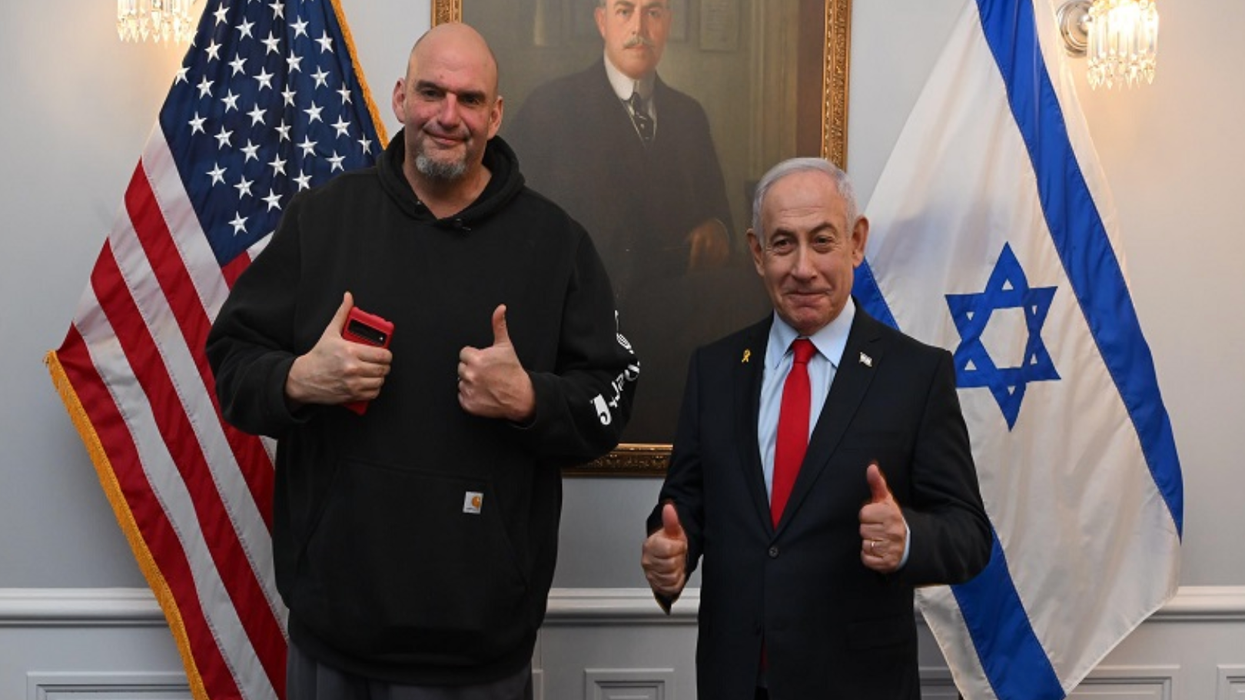
"If he’s willing to throw the entire control of the Senate to the other party over Israel, then he’s dismissing the interests of his own state and constituents," said one critic.
Sen. John Fetterman was mocked on Thursday following his threat to leave the Democratic Party as more than 100 House Democrats voted to cut off US military aid to Israel over its crimes against Palestine.
On Wednesday, 103 of the 212 Democrats in the House of Representatives voted for an amendment introduced by outgoing Republican Congressman Thomas Massie of Kentucky that would have eliminated the $3.3 billion in annual foreign military financing provided to Israel’s military.
While the amendment ultimately did not garner enough votes to pass, the record number of Democrats willing to put an end to more than half a century of practically unconditional US support for Israel was viewed by Palestine defenders as a sign of hope—and by Israel backers as a cause for alarm. Fetterman has clearly positioned himself among the latter.
“My long-term concern has been with the Democratic Party, as I am a member of that, is that our party is going to back away and turn their back to Israel,” he said during an interview at the Hill Nation Summit in Washington, DC, which he headlined along with Mehmet Oz, President Donald Trump's Centers for Medicare and Medicaid Services administrator.
“If our party ever becomes—and just makes it official—the anti-Israel party, that’s when I would leave because that’s been a moral clarity for me,” the senator vowed.
Responding to Fetterman's threat, journalist Zaid Jilani quipped on social media, "What region of Pennsylvania is Israel located in?"
"If he’s willing to throw the entire control of the Senate to the other party over Israel, then he’s dismissing the interests of his own state and constituents," Jilani added.
Fetterman said Wednesday that he “can’t understand why the Democratic Party” was becoming increasingly critical of Israel.
In addition to Israel facing an ongoing genocide case filed by South Africa at the International Court of Justice (ICJ) in The Hague over its conduct in Gaza, Israeli Prime Minister Benjamin Netanyahu and Yoav Gallant, his former defense minister, are wanted by the International Criminal Court for alleged crimes against humanity and war crimes in Gaza, including murder and forced starvation.
Fetterman joined Republicans in slamming the ICC move, saying, "Fuck that" to the warrants. He also warmly embraced Netanyahu and Israeli President Isaac Herzog—who is the subject of criminal complaints in Switzerland for allegedly inciting genocide and crimes against humanity—and reportedly urged in Herzog in private to pardon Netanyahu, who is on trial in his country for alleged bribery, fraud, and breach of trust.
United Nations experts, dozens of nations—either individually or as members of regional blocs—as well as Israeli and international scholars and human rights groups have accused Israel of genocide in Gaza, as have more than 20 of Fetterman's congressional colleagues. Israel's illegal occupation, settler colonization, and apartheid have been condemned by the ICJ and others. Israel also faces accusations of ethnic cleansing and de facto annexation in the illegally occupied West Bank, including East Jerusalem.
Yet for Fetterman, the problem for Democrats is "the kinds of individuals that are winning our recent primaries."
“It’s becoming more anti-Israel and hostile" to Israel supporters, he argued on Wednesday, singling out Abdul El-Sayed, a Michigan progressive seeking the Democratic nomination for US Senate who called Israel a "rogue state" that is committing "genocide and apartheid," while urging an end to "unilateral blank checks" for the key ally.
“If El-Sayed wins, then that puts Michigan much more in play for us and would require us to spend more money," Fetterman said. "What’s defined El-Sayed is the more anti-Israel and hostile-to-Israel thing."
In addition to his staunch support of Israel, Fetterman has been criticized for his backing of President Donald Trump's xenophobic immigration policies, his willingness to vote with Republicans on funding bills, his support for Trump nominees, and frequent criticism of progressive Democrats.
On Wednesday, The Intercept reported that Republican megadonor Harlan Crow "gave the maximum allowed contribution" to Fetterman's campaign during the current election cycle.
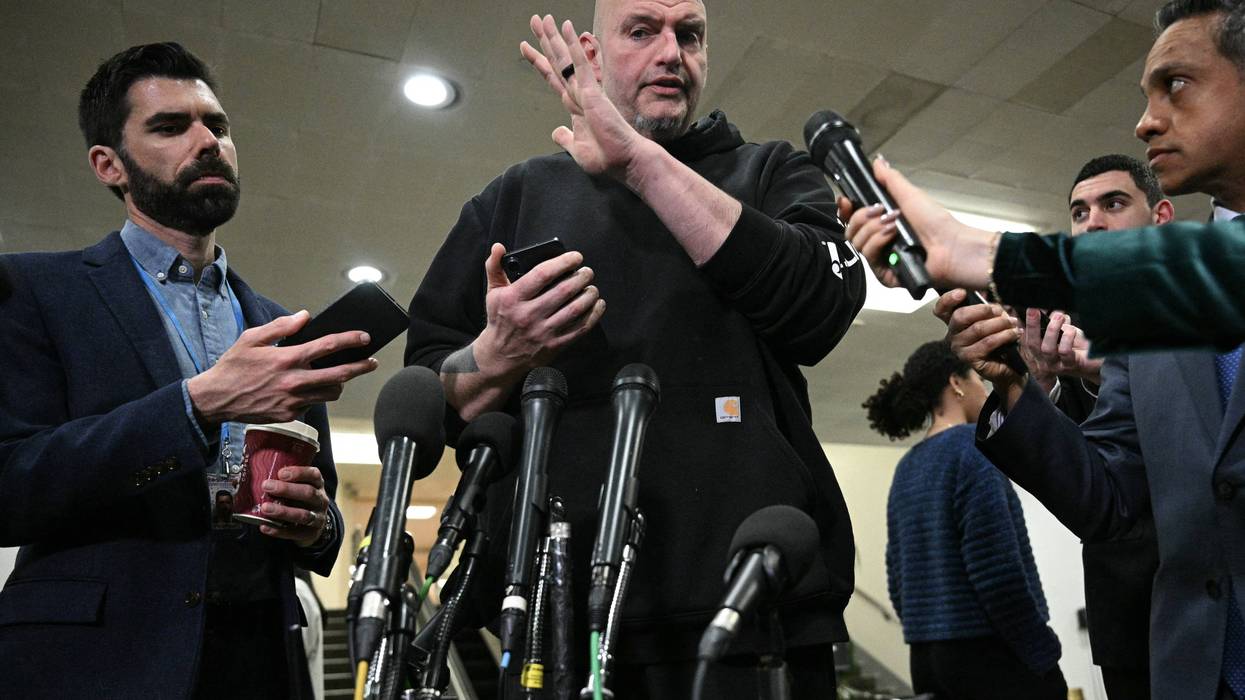
"At a time when Trump is corrupting the courts with crony judges who will rig our economy and attack our rights and freedoms for decades, Democrats cannot afford to treat these nominations like business as usual."
Democratic Sen. John Fetterman is coming under fire from progressives for allowing one of President Donald Trump’s judicial nominees from his home state of Pennsylvania to advance to a confirmation hearing.
As reported by Punchbowl News, Fetterman (D-Pa.) this week waived his right to block the nomination of former federal prosecutor Antonio Pozos for a lifetime appointment in the Eastern District of Pennsylvania. In doing this, Fetterman became the first Democratic senator to waive this right during Trump's second term.
Under the Senate's "blue slip courtesy" tradition, senators can opt not to return a blue slip—named for the color of the paper form—to the Judiciary Committee for a particular judicial nominee from their home state, if they don't believe the nomination should advance. A spokesperson for Fetterman confirmed he had turned in a blue slip for Pozos on Friday.
This drew the ire of Demand Justice, which vowed on Friday to take out a six-figure ad campaign against the Pennsylvania Democrat for letting a "crony Trump judge" move toward confirmation.
"At a time when Trump is corrupting the courts with crony judges who will rig our economy and attack our rights and freedoms for decades," the group said, "Democrats cannot afford to treat these nominations like business as usual."
In an interview with Punchbowl News, Demand Justice president Josh Orton called on all Democrats, not just Fetterman, "to stand up to Trump’s attacks on the rule of law," imploring them to "do so in every room—not just on Twitter and not just on TV."
Demand Justice has argued that all of Trump's judicial nominees have refused to contradict the president's false claim that he won the 2020 election or to denounce the January 6 attack on the US Capitol, and has called on Democrats to block everyone he's nominated to the federal bench.
Progressive organizing group Indivisible also criticized Fetterman for enabling Pozos' nomination to go through, while hinting at a future primary challenger for the first-term senator should he run for re-election in 2028.
"Alleged Democrat John Fetterman has decided to let one of Trump’s judicial nominees move forward for a lifetime appointment," wrote Indivisible. "Fetterman’s betrayal of his voters and everything he claimed to campaign for is why he will be a one-term senator."
Fetterman in 2025 tied with Sen. Jeanne Shaheen (D-NH) as the Senate Democrat who voted for the most Trump Cabinet nominations. Data published by VoteHub in February showed that Fetterman has voted on legislation with Trump more than any Democratic senator.
He is also the only Democrat in the Senate to consistently oppose war powers resolutions aimed at ending Trump's illegal war of choice with Iran.
Fetterman's vote comes as recent polling has shown the Iran war has grown more unpopular over time.
The US Senate on Wednesday once again voted down a resolution that would have restricted President Donald Trump's ability to use military force against Iran, and this time a Democratic senator was the deciding vote.
The resolution failed after Sen. John Fetterman (D-Pa.) voted with the majority of Republican senators against a war powers resolution introduced by Sen. Jeff Merkley (D-Ore.).
The resolution would would have passed had Fetterman supported it because Sens. Rand Paul (R-Ky.), Susan Collins (R-Maine), Lisa Murkowski (R-Alaska) all voted in favor.
This is now the seventh time the Senate has blocked a war powers resolution on Iran since Trump illegally began the conflict in late February.
As noted by Zeteo reporter Prem Thakker, a poll taken two months ago found that Pennsylvania voters disapproved of the Iran war by 16 percentage points, and more recent national polling shows that the war has grown more unpopular over time.
"Nonetheless," Thakker commented, "John Fetterman was just a deciding vote to keep it going."
Fetterman has frequently been at odds with his party on a number of issues, including the war with Iran and building Trump's proposed luxury ballroom at the White House.
Despite the motion's failure, Ryan Costello, policy director of the National Iranian American Council, optimistically pointed out that this war powers resolution came closer to passing than any others, with Murkowski crossing the aisle for the first time to register her support.
"Sen. Murkowski moved in line with the vast majority of Americans who want this war to end," said Costello, "and did so right after hearing Secretary of War Pete Hegseth claim that the Trump administration did not need authorization from Congress to resume the war, and as gas prices in Alaska hit $5.26."
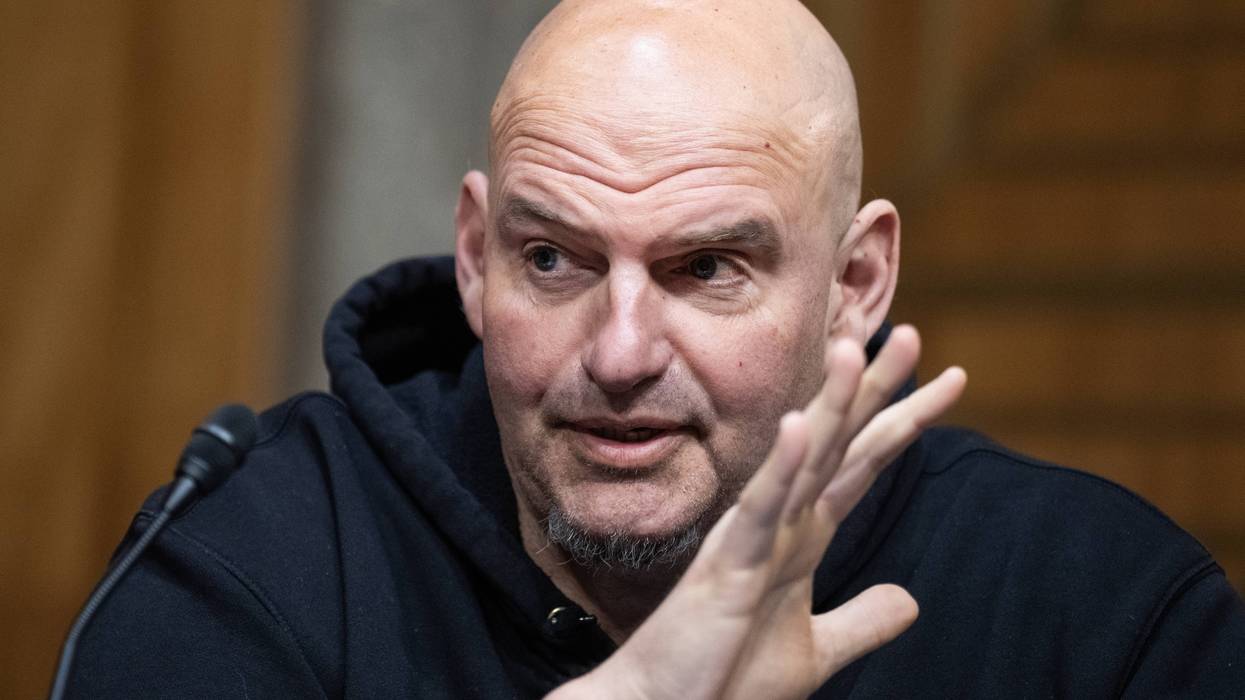
"The last thing working Americans need right now is another war," said the Senate's top Democrat.
The US Senate on Tuesday defeated a Democrat-led bid to stop President Donald Trump from following through on his threat to wage war on Cuba, whose long-suffering people are reeling from the American administration's tightened economic stranglehold.
Upper chamber lawmakers voted 51-47 on a procedural motion to block further debate Sen. Tim Kaine's (D-Va.) SJ Res. 124, "a joint resolution to direct the removal of United States armed forces from hostilities within or against the republic of Cuba that have not been authorized by Congress."
Republican Sens. Susan Collins of Maine and Rand Paul of Kentucky voted to advance the resolution, while John Fetterman of Pennsylvania joined his GOP colleagues in voting to sink the measure.
The vote effectively sidelines the measure, one of many failed attempts to curb Trump's ability to wage war on countries including Iran and Venezuela, as well as rein in his high seas boat bombing spree.
“The American people are not asking for another war," Sen. Ruben Gallego (D-Ariz.)—one of SJ Res. 124's dozen co-sponsors—said following Tuesday's vote. "They want us focused on building housing in Arizona, not bombing housing in Havana. They want us to lower the cost of healthcare not condemn a generation of veterans to a lifetime of hospital visits. They want us to make their lives more affordable, not spend their tax dollars on unnecessary wars."
Kaine called the GOP move "purely a regime change effort."
"Why do they want it? You'll have to ask them," he added. "What we're doing with respect to Cuba, if somebody was doing it to us, we would consider it an act of war. But because they don't pose a security threat to the United States, it's clearly an effort to change the regime."
Senate Minority Leader Chuck Schumer (D-NY), who also co-sponsored the resolution, said, "The last thing working Americans need right now is another war—let alone one that’s 90 miles south of the US."
Resolution co-sponsor Sen. Angela Alsobrooks (D-Md.) said on Bluesky after the vote, "A conflict with Cuba would cost hardworking Americans billions of dollars, deepen the humanitarian crisis in Cuba, and put American service members in harm’s way."
"The Constitution is clear: Only Congress has the authority to declare war," Alsobrooks added.
Trump has attacked seven countries since returning to office and 10 since the start of his first term—more than any other president.
The situation in Cuba is dire, as a result of both the 65-year US economic chokehold on the island and mismanaged central planning by its socialist rulers.
Trump has been ramping up military threats and economic pressure on Cuba, whose people were already suffering from generations of US sanctions. His administration's tightened embargo has severely restricted fuel imports, worsening an energy emergency in which blackouts have become the norm, threatening the lives of vulnerable Cubans—especially sick people and children.
The US president said that “we may stop by Cuba after we’re finished" with the illegal US-Israeli war of choice on Iran that’s killed thousands of people, including hundreds of children. Trump has also said that he believes he’ll “be having the honor of taking Cuba."
The United States already took Cuba once, during an 1898 war waged against Spain under highly dubious pretenses that ended with the US also acquiring Puerto Rico, the Philippines, and Guam—with Hawaii also annexed that year under the guise of security.
American presidents have been trying to force out Cuba's socialist government since shortly after the revolution that overthrew a US-backed dictatorship in 1959. US efforts have included carrying out or backing an armed invasion, terrorist attacks, assassination attempts, and other acts of aggression.
Cuba commits no such acts against the United States or anyone else, yet Trump added the country to the US State Sponsors of Terrorism list.
Following Tuesday's vote, Sen. Ed Markey (D-Mass.) said that "Trump should learn the law of holes: If you find yourself in one, stop digging."
"Instead of threatening that ‘Cuba is next,’ President Trump should remove his blockade against Cuba, which has devastated Havana’s economy and healthcare system, and has created a deepening humanitarian crisis," Markey added.
The United Nations General Assembly has overwhelmingly condemned the blockade 33 times since 1992.
“With its catastrophic Iran war of choice, the Trump administration has lost all credibility on issues of war and peace," Markey asserted. "The American people do not want yet another endless war that will only costs more lives and more taxpayer dollars, and undermine US security.”
Progressive International co-general coordinator David Adler warned Tuesday that "Trump is preparing military action against Cuba," calling the Senate vote possibly "the last chance for US Congress to stop it."
"If Donald Trump won’t dig us out of this hole, Congress must step into the breach and exercise its constitutional authority over matters of war and peace," the minority leader said.
For the fifth time since President Donald Trump launched the Iran War in February, US senators on Wednesday voted down a resolution that would have blocked Trump from continuing his joint assault with Israel on the Mideast nation.
Upper chamber lawmakers voted 51-46 against SJ Res. 114, Sen. Tammy Baldwin's (D-Wis.) war powers resolution. Kentucky Republican Rand Paul joined Democrats in voting for the resolution, while John Fetterman of Pennsylvania was the only Democrat to oppose it. Three senators—Chuck Grassley (R-Neb.), Dave McCormick (R-Pa.), and Mark Warner (D-Va.)—did not vote.
Wednesday's vote marked the fifth time that an Iran war powers resolution has failed to pass the Senate this year. On March 4, Fetterman helped upper chamber Republicans sink one such measure introduced by Paul and Sen. Tim Kaine (D-Va.). Two weeks later, senators came within three votes of passing a similar resolution introduced by Sen. Cory Booker (D-NJ), a rejection repeated days later in a follow-up vote. Last week, Fetterman again crossed the aisle to help defeat a fourth resolution introduced by disabled combat veteran Tammy Duckworth (D-Ill.).
In remarks delivered on the Senate floor before Wednesday's vote, Minority Leader Chuck Schumer (D-NY) said: "Every day, we hear new promises from the Trump administration that victory has been achieved, that peace is at hand, that costs are starting to come down. And every day, we see the opposite. Trump can talk all he wants, but nothing will change until he realizes that this war needs to end."
Donald Trump has been offering empty promises to end his war for weeks.At 5 PM, Senate Democrats will offer his Senate Republican puppets a FIFTH chance to do just that with a vote on our War Powers Resolution.
[image or embed]
— Chuck Schumer (@schumer.senate.gov) April 22, 2026 at 1:48 PM
"And if Donald Trump won’t dig us out of this hole, Congress must step into the breach and exercise its constitutional authority over matters of war and peace," Schumer added. "Democrats will continue to force votes on our resolutions every week until Senate Republicans see reason."
On Tuesday, Rep. Ro Khanna (D-Calif.) introduced a fresh Iran war powers resolution, reportedly in coordination with the Congressional Progressive Caucus. Khanna and Rep. Thomas Massie (R-Ky.) previously introduced the first of three failed Iran war powers resolutions in the lower chamber.
Responding to Wednesday's vote, Fetterman told Fox News host Sean Hannity that "Iran must be so excited by the American media and the Democratic Party," adding that Iranian leaders must be thinking, "as long as we can hang on... more and more people [will] continue to vote against the Trump administration."
As US and Israeli attacks on Iran—which have left more than 30,000 people dead or wounded, according to Iranian and international officials—are paused for a truce extension pending the outcome of negotiations, the Trump administration announced Wednesday that US Navy Secretary John Phelan is resigning "effective immediately." The administration gave no reason for the move.
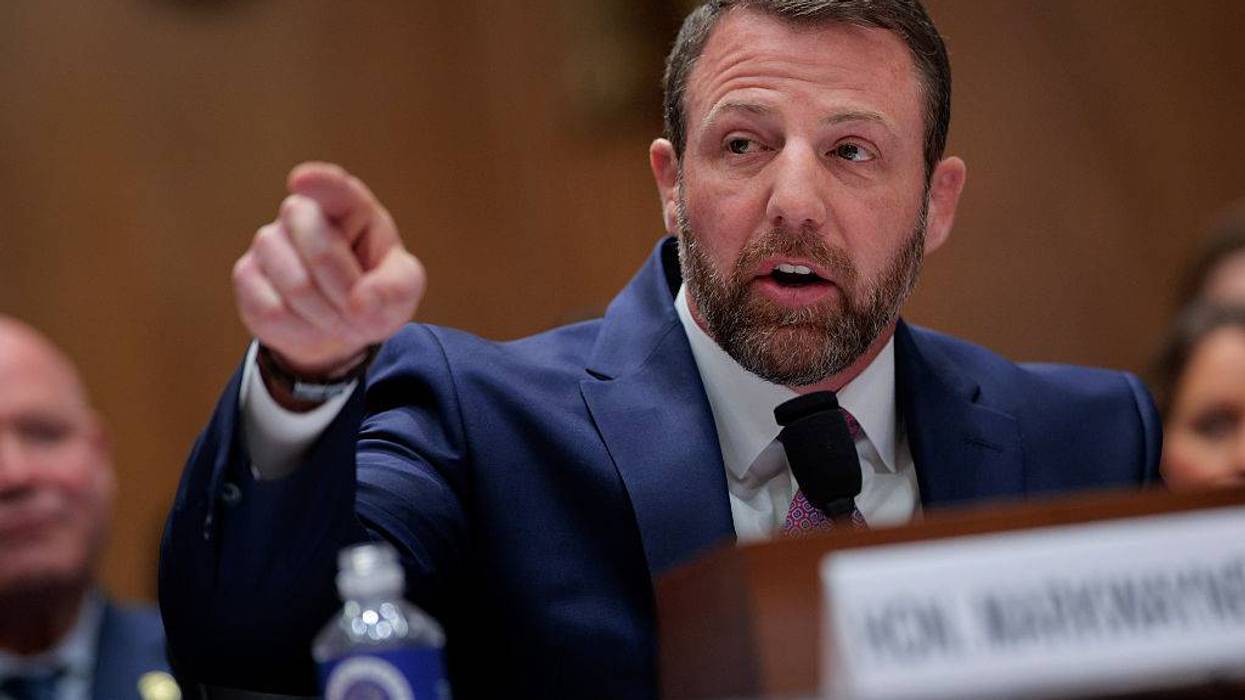
"Mullin’s long list of conflicts of interest even as he seeks this next level of public office is reprehensible."
Government watchdog Public Citizen on Thursday slammed the Senate Homeland Security and Governmental Affairs Committee for voting to advance the nomination of Republican Sen. Markwayne Mullin to be the next US homeland security secretary.
Shortly after the committee delivered an 8-to-7 vote to advance Mullin's (R-Okla.) nomination out of committee, Public Citizen co-president Lisa Gilbert described the move as "simply inappropriate."
"It is inappropriate because of his self-enrichment," Gilbert said. "Mullin’s long list of conflicts of interest even as he seeks this next level of public office is reprehensible."
The New York Times reported on Sunday that Mullin has grown significantly wealthier throughout his tenure first as a US congressman then as a US senator, in part because he is "one of the most prolific stock buyers in Congress."
According to financial disclosure forms cited by the Times, Mullin's net worth in 2024 was between $29 million and $97 million, a massive jump from the estimated net worth of $2.8 million to $9 million he reported in 2012.
In addition to citing Mullin's self-enrichment during his political career, Gilbert decried the senator's past statements defending actions taken by federal immigration enforcement officials, including the fatal shootings of Minneapolis residents Renee Good and Alex Pretti.
"It is inappropriate because Mullin has consistently defended ICE agents involved in fatal shootings," said Gilbert, "and justified the use of lethal force in enforcement operations, rather than calling for accountability or reform of use-of-force policies. It is inappropriate because he treats protest against ICE operations as a prosecutable offense rather than a legitimate exercise of First Amendment rights and an expression of community concern."
While Mullin on Wednesday walked back his past attack on Pretty as "deranged," he stood by his claim that the shooting of Good was entirely justified.
Mullin's nomination advanced to the Senate floor after Sen. John Fetterman (D-Pa.) broke with his party, canceling out the "no" vote on the committee delivered by Sen. Rand Paul (R-Ky.), who got into an angry spat with Mullin on Wednesday over past comments the Oklahoma Republican made justifying a 2017 assault on his colleague from Kentucky.
In a social media post defending his vote to advance Mullin, Fetterman argued that "we need a leader" at the US Department of Homeland Security and said his vote in favor of the nomination was "rooted in a strong committed, constructive working relationship with Senator Mullin for our nation’s security."

"Massive civilian casualty incidents like the attack in Minab are not only detrimental to the Iranian people," argued the rest of the Senate Democratic Caucus, "but they also undermine US national security interests."
Just a week after Sen. John Fetterman helped Republicans block a war powers resolution intended to halt President Donald Trump and Israel's assault on Iran, the Pennsylvania Democrat again bucked his own party on Wednesday by not signing on to a letter calling for a probe into an apparent US bombing of a girls' school in the Iranian city Minab that killed around 175 people, mostly young children.
As with the unsuccessful resolution from Sen. Tim Kaine (D-Va.), Fetterman was the only member of the Senate Democratic Caucus—which includes Sens. Bernie Sanders (I-Vt.) and Angus King (I-Maine)—who didn't endorse the letter to US Defense Secretary Pete Hegseth.
Fetterman has signaled support for Operation Epic Fury and promoted Trump's narrative that it's motivated by preventing Iran from developing a nuclear weapon. During a Tuesday appearance on Newsmax, he claimed that "negotiating treaties" and coordinating with regional allies "never worked," and wondered why Democrats can't "agree what's happened is a very, very positive development for world peace."
Asked for comment about Democrats' letter, Fetterman told Reuters that he supports the military operation and "the United States never intentionally targets civilians, including its own citizens, unlike Iran. Everyone agrees it was a tragedy. Everyone agrees on performing a full investigation."
A spokesperson for Fetterman added that "whether the senator is on a letter or not, he fully stands behind a comprehensive investigation into this tragedy."
Led by Kaine, Senate Minority Leader Chuck Schumer (D-NY), and Sens. Brian Schatz (D-Hawaii), Chris Van Hollen (D-Md.), and Elizabeth Warren (D-Mass.), the rest of the caucus began the letter by expressing "grave concern" about the bombing—which paramedics and victims' relatives have said was a so-called "double-tap" airstrike—and stressing that the 12-day assault "is a war of choice without congressional authorization."
"Nonetheless, as these military actions continue, the United States and Israel must abide by US and international law, including the law of armed conflict," they wrote. "There must be a swift investigation into the strikes on this school and any other potential US military actions causing civilian harm, and the findings must be released to the public as soon as possible, along with any measures to pursue accountability."
"Massive civilian casualty incidents like the attack in Minab are not only detrimental to the Iranian people, who have already suffered so much at the hands of its own government, but they also undermine US national security interests," the Democrats argued.
The letter cites a Tuesday update from the US-based Human Rights Activists News Agency that the war has killed more than 1,245 civilians and injured over 12,000. The Iranian government said earlier this week that the death toll is above 1,300.
The Senate Democrats didn't just focus on the school; they also sounded the alarm about US and Israeli "use of explosive weapons in major Iranian cities and populated areas," which has damaged "multiple hospitals, cultural heritage sites, and other critical civilian infrastructure."
"These civilian harm events are not taking place in a vacuum," the senators wrote, pointing to Hegseth's recent remarks that Operation Epic Fury would have "no stupid rules of engagement" and there will be "death and destruction from the sky all day long."
They warned that "this rhetoric only serves to endanger civilians, including American citizens, in the region and around the globe. The United States is a party to the Geneva Conventions and bound by international humanitarian law, including the principles of distinction, proportionality, and precaution. These are binding and non-negotiable standards designed to protect innocent human life, and it is unacceptable for the secretary of defense to suggest otherwise."
"Your comments reflect a broader pattern of policies abandoning the Defense Department's commitment to minimizing civilian harm in US military operations," the lawmakers noted, referencing budgetary and personnel cuts, including the removal of senior, nonpartisan judge advocate general officers. "These actions, combined with your comments and the horrific reports of civilian casualties stemming from the war against Iran, suggest the administration has abandoned its duty to protect civilians."
The senators demanded Hegseth's responses to a list of questions about the February 28 school strike, compliance with rules to prevent war crimes, the military's efforts to prevent and mitigate civilian harm, and the use of artificial intelligence no later than March 18.
The Wednesday letter came as the The New York Times reported on the preliminary findings of a Pentagon probe that found the strike on the school in Minab "was the result of a targeting mistake by the US military, which was conducting strikes on an adjacent Iranian base of which the school building was formerly a part."
It also came as a coalition of peace groups launched a national campaign calling on Schumer and House Minority Leader Hakeem Jeffries (D-NY) to resign from their leadership roles over their failure to sufficiently fight back "against a war-crazed Trump administration."
While Hegseth and Trump have so far declined to take responsibility for the school massacre, Sen. John Kennedy (R-La.)—who supports the US-Israeli war on Iran—has apologized for the bombing at least twice this week, saying: "We made a mistake... I'm just so sorry it happened."