

SUBSCRIBE TO OUR FREE NEWSLETTER
Daily news & progressive opinion—funded by the people, not the corporations—delivered straight to your inbox.
5
#000000
#FFFFFF
To donate by check, phone, or other method, see our More Ways to Give page.
Daily news & progressive opinion—funded by the people, not the corporations—delivered straight to your inbox.
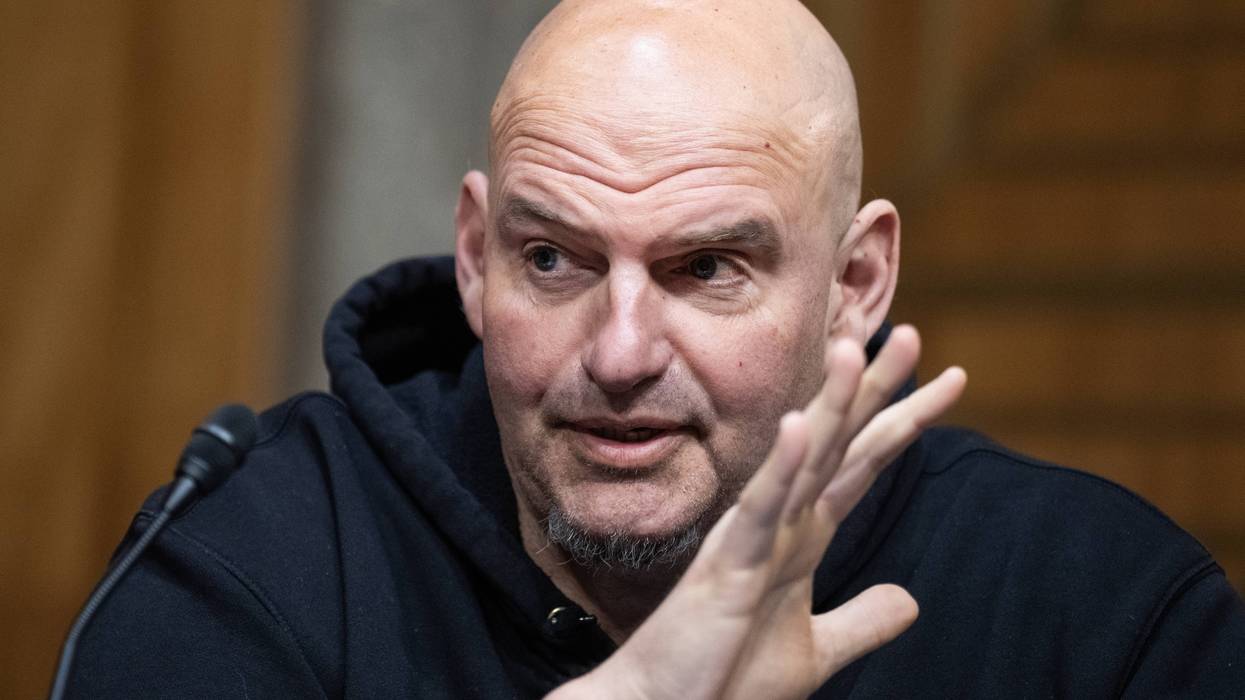
"The last thing working Americans need right now is another war," said the Senate's top Democrat.
The US Senate on Tuesday defeated a Democrat-led bid to stop President Donald Trump from following through on his threat to wage war on Cuba, whose long-suffering people are reeling from the American administration's tightened economic stranglehold.
Upper chamber lawmakers voted 51-47 on a procedural motion to block further debate Sen. Tim Kaine's (D-Va.) SJ Res. 124, "a joint resolution to direct the removal of United States armed forces from hostilities within or against the republic of Cuba that have not been authorized by Congress."
Republican Sens. Susan Collins of Maine and Rand Paul of Kentucky voted to advance the resolution, while John Fetterman of Pennsylvania joined his GOP colleagues in voting to sink the measure.
The vote effectively sidelines the measure, one of many failed attempts to curb Trump's ability to wage war on countries including Iran and Venezuela, as well as rein in his high seas boat bombing spree.
“The American people are not asking for another war," Sen. Ruben Gallego (D-Ariz.)—one of SJ Res. 124's dozen co-sponsors—said following Tuesday's vote. "They want us focused on building housing in Arizona, not bombing housing in Havana. They want us to lower the cost of healthcare not condemn a generation of veterans to a lifetime of hospital visits. They want us to make their lives more affordable, not spend their tax dollars on unnecessary wars."
Kaine called the GOP move "purely a regime change effort."
"Why do they want it? You'll have to ask them," he added. "What we're doing with respect to Cuba, if somebody was doing it to us, we would consider it an act of war. But because they don't pose a security threat to the United States, it's clearly an effort to change the regime."
Senate Minority Leader Chuck Schumer (D-NY), who also co-sponsored the resolution, said, "The last thing working Americans need right now is another war—let alone one that’s 90 miles south of the US."
Resolution co-sponsor Sen. Angela Alsobrooks (D-Md.) said on Bluesky after the vote, "A conflict with Cuba would cost hardworking Americans billions of dollars, deepen the humanitarian crisis in Cuba, and put American service members in harm’s way."
"The Constitution is clear: Only Congress has the authority to declare war," Alsobrooks added.
Trump has attacked seven countries since returning to office and 10 since the start of his first term—more than any other president.
The situation in Cuba is dire, as a result of both the 65-year US economic chokehold on the island and mismanaged central planning by its socialist rulers.
Trump has been ramping up military threats and economic pressure on Cuba, whose people were already suffering from generations of US sanctions. His administration's tightened embargo has severely restricted fuel imports, worsening an energy emergency in which blackouts have become the norm, threatening the lives of vulnerable Cubans—especially sick people and children.
The US president said that “we may stop by Cuba after we’re finished" with the illegal US-Israeli war of choice on Iran that’s killed thousands of people, including hundreds of children. Trump has also said that he believes he’ll “be having the honor of taking Cuba."
The United States already took Cuba once, during an 1898 war waged against Spain under highly dubious pretenses that ended with the US also acquiring Puerto Rico, the Philippines, and Guam—with Hawaii also annexed that year under the guise of security.
American presidents have been trying to force out Cuba's socialist government since shortly after the revolution that overthrew a US-backed dictatorship in 1959. US efforts have included carrying out or backing an armed invasion, terrorist attacks, assassination attempts, and other acts of aggression.
Cuba commits no such acts against the United States or anyone else, yet Trump added the country to the US State Sponsors of Terrorism list.
Following Tuesday's vote, Sen. Ed Markey (D-Mass.) said that "Trump should learn the law of holes: If you find yourself in one, stop digging."
"Instead of threatening that ‘Cuba is next,’ President Trump should remove his blockade against Cuba, which has devastated Havana’s economy and healthcare system, and has created a deepening humanitarian crisis," Markey added.
The United Nations General Assembly has overwhelmingly condemned the blockade 33 times since 1992.
“With its catastrophic Iran war of choice, the Trump administration has lost all credibility on issues of war and peace," Markey asserted. "The American people do not want yet another endless war that will only costs more lives and more taxpayer dollars, and undermine US security.”
Progressive International co-general coordinator David Adler warned Tuesday that "Trump is preparing military action against Cuba," calling the Senate vote possibly "the last chance for US Congress to stop it."
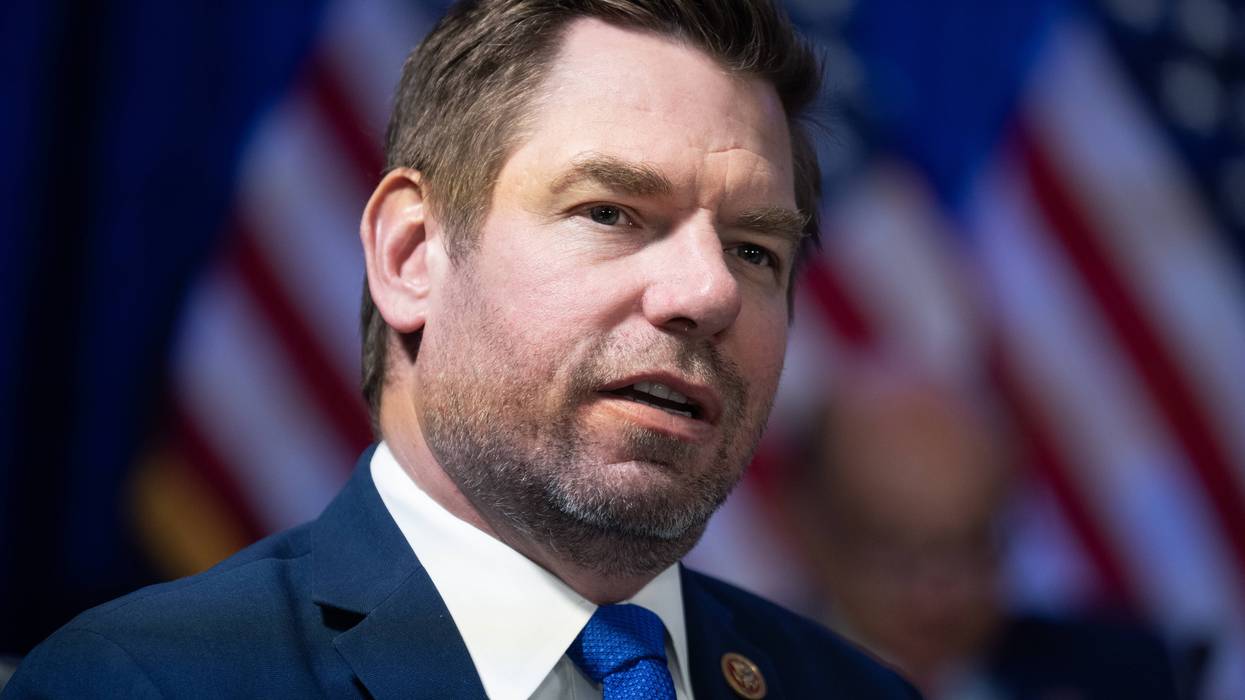
“He needs to withdrawal from the governor’s race and resign from Congress, immediately,” said one of Swalwell's Democratic opponents.
Calls for Democratic Congressman Eric Swalwell to drop out of the California gubernatorial race mounted Saturday as prominent supporters rescinded their endorsements and staffers fled his imploding campaign after more—and more serious—sexual misconduct allegations against him emerged.
Multiple women had already accused Swalwell, 45, of unwanted touching and kissing, and sending them unsolicited explicit images and messages. On Friday, the San Francisco Chronicle reported that a woman who had worked for the Swalwell said he sexually assault her twice while she was too intoxicated to consent. The woman's identity was concealed.
Hours later, CNN aired a report in which a former Swalwell staffer—who is apparently the same woman interviewed by the Chronicle—said the East Bay and Central Valley congressman raped her while she was drunk, leaving her bruised and bleeding. CNN also interviewed three other women who alleged various types of sexual misconduct they said was committed by Swalwell.
Swalwell categorically denied the claims, saying that “these allegations are false and come on the eve of an election against the frontrunner for governor."
Hear it directly from me. These allegations are flat false. And I will fight them. pic.twitter.com/bQSlCquD1U
— Rep. Eric Swalwell (@RepSwalwell) April 11, 2026
"For nearly 20 years, I have served the public—as a prosecutor and a congressman—and have always protected women," he added. "I will defend myself with the facts and where necessary bring legal action. My focus in the coming days is to be with my wife and children and defend our decades of service against these lies.”
Swalwell has claimed that Cheyenne Hunt—the activist and social media influencer who published the initial allegations against him earlier this week—has academic and political connections with former Congresswoman Katie Porter (D-Calif.), one of his rivals in the crowded gubernatorial race.
Porter campaign spokesperson Peter Opitz countered that Hunt and Porter "don't have a relationship to speak of," and that "in fact, Katie endorsed a different candidate when [Hunt] was running in a neighboring district."
Swalwell campaign staff and supporters are fleeing fast.
US Sens. Adam Schiff (D-Calif.), Alex Padilla (D-Calif.), and Ruben Gallego (D-Ariz.); House Minority Leader Hakeem Jeffries (D-NY); and Reps. Nancy Pelosi (D-Calif.), Ted Lieu (D-Calif.), Nanette Barragán (D-Calif.), Mike Thompson (D-Calif.), Doris Matsui (D-Calif.), and Jimmy Gomez (D-Calif.) are among the prominent erstwhile endorsers of Swalwell calling on him to quit.
“What is described is indefensible,” Gallego—who initially defended his friend Swalwell—said in a statement Friday. “Women who come forward with accounts like this deserve to be heard with respect, not questioned or dismissed. I regret having come to his defense on social media prior to knowing all the information. I am equally as shocked and upset about what has transpired.”
Groups ranging from the California Federation of Labor to the California Police Chiefs Association have rescinded their endorsements of Swalwell.
The California Federation of Labor Unions withdraws its endorsement of Rep. Eric Swalwell in the California Governor's race.
[image or embed]
— California Federation of Labor Unions (@californialabor.bsky.social) April 11, 2026 at 9:18 AM
“The allegations are incredibly disturbing and unacceptable against Rep. Swalwell. We are immediately suspending our support,” said California Teachers Association president David Goldberg. “Our elected board will be meeting as soon as possible to follow our union’s democratic process to determine next steps.”
Porter, billionaire Tom Steyer, former Los Angeles Mayor Antonio Villaraigosa, San Jose Mayor Matt Mahan, former state Comptroller Betty Yee, and State Superintendent of Public Instruction Tony Thurmond are among the gubernatorial candidates urging Swalwell to withdraw from the race—and, in some cases, from Congress.
“I want to acknowledge the courage of the women who have come forward and, as I stand here, call on Congressman Eric Swalwell to take responsibility for your actions,” Thurmond said during a press conference Friday. “I’m calling on you to resign from Congress and to step away from this race for governor.”
Porter said: “The allegations against Congressman Swalwell are horrifying. I’m thinking of the courageous women who have come forward to share their stories. We believe you and we stand with you.”
Yee called the allegations against Swalwell "sickening."
"He needs to withdrawal from the governor’s race and resign from Congress, immediately," she added. "Let the women speak.”
Republican gubernatorial candidate Steve Hilton, a supporter of President Donald Trump—who was found civilly liable for sexually abusing and defaming journalist E. Jean Carroll and who is accused of rape or other sex offenses against dozens of women and a child—also called on Swalwell to exit the race.
Other elected officials in California and beyond are urging Swalwell to quit the governor's race and Congress.
The accusations against Eric Swalwell are serious and deeply disturbing. There is no place for sexual assault in public life or anywhere else. He should undertake a swift, public and independent investigation into these allegations. He should resign from Congress and end his campaign for governor.
— Nithya Raman (@nithyaforthecity.bsky.social) April 10, 2026 at 10:03 PM
"His conduct is incompatible with elected office," said Democratic Los Angeles Mayor Karen Bass. "The women who came forward deserve to be heard and deserve justice."
Congresswoman Pramila Jayapal (D-Wash.) said, "Rep. Swalwell should immediately withdraw from the governor’s race and there must be a quick and thorough investigation."
California's so-called "jungle primary"—in which the two top performing candidates advance to the general election, regardless of party—is set for June 2.
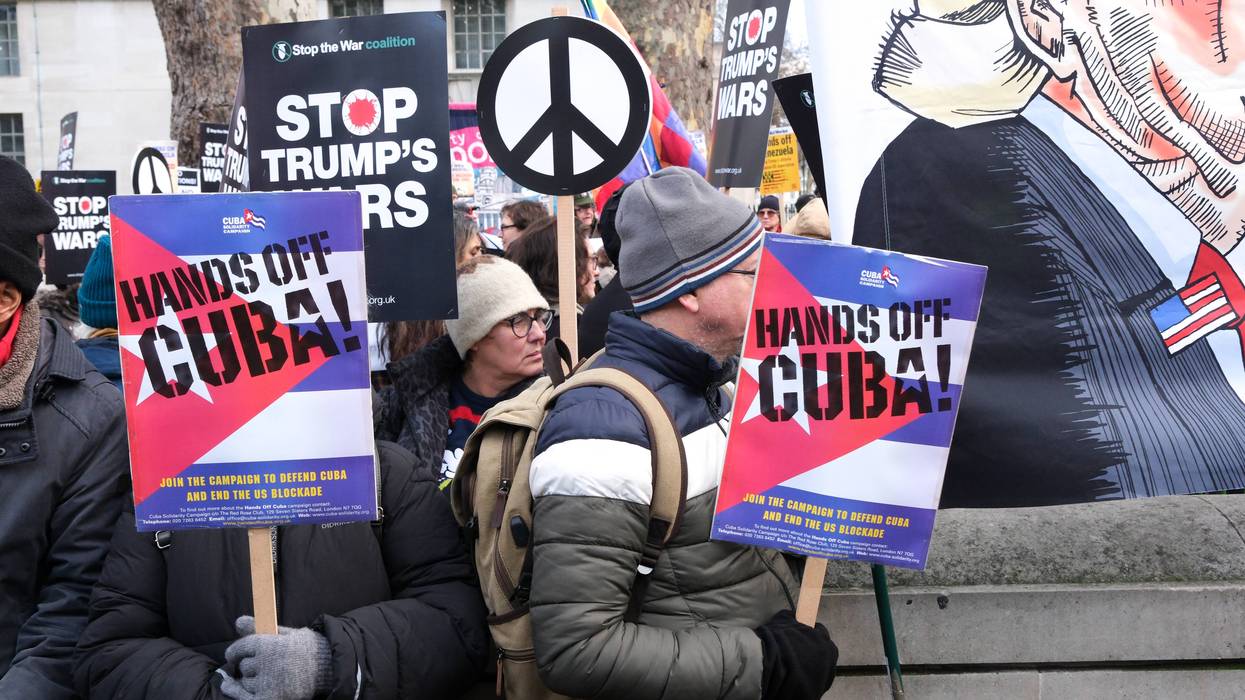
"When will President Trump understand that Americans want lower prices, not more unnecessary wars?"
As President Donald Trump continued to face global criticism for his and Israel's joint assault on Iran, a trio of US Senate Democrats on Friday introduced a war powers resolution intended to prevent him from also attacking Cuba without congressional authorization amid talks with the island's government.
Despite the US Constitution empowering Congress to declare war, Trump this year has not only launched Operation Epic Fury against Iran but also killed dozens of Venezuelans and Cubans in a military invasion to abduct President Nicolás Maduro, sent troops to Ecuador for a joint campaign to combat "narco-terrorism," and blown up over 150 people allegedly trafficking drugs in Caribbean Sea and Pacific Ocean in bombings that critics have called "war crimes, murder, or both."
"When will President Trump understand that Americans want lower prices, not more unnecessary wars?" asked Sen. Tim Kaine (D-Va.), who is spearheading the Cuba measure with Sens. Adam Schiff (D-Calif.) and Ruben Gallego (D-Ariz.). A member of the Senate Armed Services and Foreign Relations committees, Kaine also led the war powers resolution on Iran that Sen. John Fetterman (D-Pa.) and nearly all Republicans blocked last week.
Despite constitutional limits, Trump "operates with the belief that the US military is a palace guard, ordering military action in the Caribbean, Venezuela, and Iran without Congress' authorization or any explanation for his actions to the American people," said Kaine. "We shouldn't risk our sons and daughters' lives at the whims of any one person."
The Biden administration intended to cut Cuba from the State Sponsors of Terrorism list, but Trump reversed course after returning to office last year and revived a list of "restricted entities" established during his first term. US Secretary of State Marco Rubio, the son of Cuban immigrants and longtime supporter of regime change on the island, also expanded a visa policy targeting Cuba's international medical missions.
Since Trump's operation to abduct Maduro and seize control of his country's nationalized oil industry—which led to protests in Venezuela and Cuba—Trump has also ramped up the United States' decades-long economic blockade against the island, cutting off shipments of Venezuelan oil, with dire consequences for the Cuban people.
As Marta Hurtado, a spokesperson for United Nations High Commissioner for Human Rights Volker Türk, explained last month: "Given the dependence of health, food, and water systems on imported fossil fuels, the current oil scarcity has put the availability of essential services at risk nationwide. Intensive care units and emergency rooms are compromised, as are the production, delivery, and storage of vaccines, blood products, and other temperature-sensitive medications."
Meanwhile, Trump and his allies have signaled they're considering an attack on the island. Trump told reporters late last month that "the Cuban government is talking with us," but also said that "maybe we'll have a friendly takeover of Cuba."
Just days later, after Trump ditched nuclear negotiations with Iran and teamed up with Israel to bomb the Middle Eastern country, Sen. Lindsey Graham (R-SC) declared during a Fox News interview: "Cuba's next. They're gonna fall."
Noting the rising death toll for US service members involved in the war on Iran, Schiff said Friday that "the American people have spoken loud and clear that they do not want any more costly wars of choice that skyrocket prices at home."
"The president's saber-rattling toward Cuba makes clear where his sights are next," he continued. "Congress must make its voice heard, or we risk involvement in another risky war of choice and losing our constitutionally granted authorities forever."
Gallego also highlighted how Trump's misadventures abroad are impacting US citizens, as Americans contend with surging gasoline prices on top of high costs for groceries, housing, and health insurance, plus massive cuts to social safety net programs that congressional Republicans and the president imposed with their budget package last year to give more tax cuts to the rich.
"As if the disaster of the Iran War and the resulting spike in oil prices weren't enough, Trump is now threatening to intervene in Cuba as well," said Gallego, a former Marine who served in the Iraq War. "He ran on America First, but now it's clear he's become a puppet of the war hawks in his party. The American people want nothing to do with nation building—they want lower prices, good healthcare, and affordable homes, not a new war to satisfy neoconservatives in South Florida."
The senators announced their resolution as Cuban President Miguel Díaz-Canel publicly confirmed that his government recently held "sensitive" talks with the Trump administration "to determine the willingness of both parties to take concrete actions for the benefit of the people of both countries. And in addition, to identify areas of cooperation to confront threats and guarantee the security and peace of both nations, as well as in the region."
According to The Associated Press:
US Secretary of State Marco Rubio and top aides met late last month in the Caribbean with the grandson of retired Cuban leader Raul Castro, two US officials said Friday shortly after Díaz-Canel spoke.
The US officials, who spoke on condition of anonymity because of the sensitivity of the discussions, said that Rubio had met secretly with Raúl Guillermo Rodriguez Castro on the sidelines of a Caribbean Community leaders meeting in St. Kitts and Nevis.
Rubio's meeting coincided with a shootout involving men on a Florida speedboat and Cuban forces that left five suspects dead and five others detained in Cuba, facing terrorism charges. The AP noted that when asked about that case on Friday, Díaz-Canel "said that FBI officials would visit Cuba soon as both countries continue to share information on the incident."
During his remarks to reporters, Díaz-Canel also noted the "tremendous" impact of the oil blockade, which has affected communications, education, healthcare, and transportation.
Sharing a clip of the Cuban leader's comments on social media, Progressive International co-general coordinator David Adler said: "I am asking you to imagine how a civilian population of over 10 million people can survive without any access to imported energy for three whole months. In Cuba, the United States is committing the most barbaric war crimes known to man—and Washington simply shrugs it off."
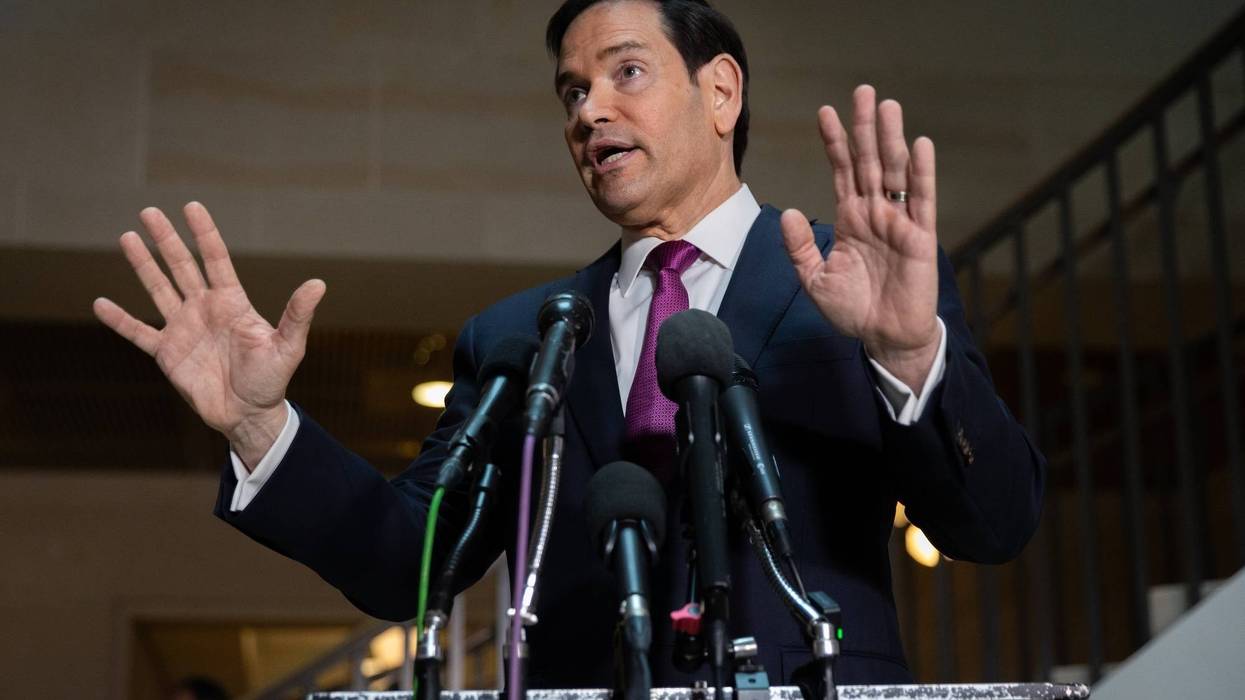
"This is the most insane and absurd definition of an 'imminent threat' I have ever heard in my life," said one journalist.
"What the fuck happened to America First?" US Sen. Ruben Gallego asked on social media Monday in response to a video of Secretary of State Marco Rubio attempting to justify President Donald Trump and Israeli Prime Minister Benjamin Netanyahu's war on Iran.
As the death toll climbed above 550 in Iran, with at least six US service members killed, Rubio told reporters on Capitol Hill that "there absolutely was an imminent threat, and the imminent threat was that we knew that if Iran was attacked, and we believed they would be attacked, that they would immediately come after us. And we were not gonna sit there and absorb a blow before we responded."
According to Rubio, the US Department of Defense assessed that "if we waited for them to hit us first after they were attacked... by someone else—Israel attacked them, they hit us first, and we waited for them to hit us—we would suffer more casualties and more deaths. We went proactively, in a defensive way, to prevent them from inflicting higher damage. Had we not done so, there would've been hearings on Capitol Hill about how we knew that this was gonna happen, and we didn't act preemptively to prevent more casualties and more loss of life."
In a follow-up post, Gallego (D-Ariz.), an Iraq War veteran, added: "So Netanyahu now decides when we go to war? So much for America First."
The senator wasn't alone in ripping Rubio's remarks. Congresswoman Sarah Jacobs (D-Calif.) said that "Secretary Rubio says the quiet part out loud: This is an unnecessary war of choice. Israel forced our hand—there was no imminent threat to the United States. And instead of talking Israel out of going to war, President Trump went along with it and put US lives at risk."
Stanford University political science professor Michael McFaul said: "Such strange logic. We had to go to war because Israel was going to attack Iran? So Bibi gets a say as to whether the US goes to war but the US Senate and the American people do not?"
Zeteo editor-in-chief Mehdi Hasan declared: "This is the most insane and absurd definition of an 'imminent threat' I have ever heard in my life. Our ally and proxy, Israel, that we arm and fund, was about to illegally attack Iran so we joined in the attack because that illegal attack would have led to an attack on us."
Progressive organizer and attorney Aaron Regunberg also weighed in on social media: "Quite literally—and I've used that word too freely in the past, but in this case I mean literally—Rubio is saying they've made America into Netanyahu's bitch. We go where Bibi points, regardless of the American blood it will cost. Trump is an absolute cuck. Pathetic."
While critics of Trump's "Operation Epic Fury" have slammed it as illegal and clearly motivated by regime change, Rubio claimed that the Trump administration would welcome a new government in Iran, but the war—which has taken out top Iranians, including the supreme leader, Ayatollan Ali Hosseini Khamenei—is about preventing the Middle Eastern nation from developing a nuclear weapon.
A year ago, a US intelligence report said that "we continue to assess Iran is not building a nuclear weapon and that Khamenei has not reauthorized the nuclear weapons program he suspended in 2003, though pressure has probably built on him to do so." Despite that conclusion, the Trump administration bombed the country's nuclear facilities a few months later—and, as CNN's Aaron Blake pointed out last week, Trump has repeatedly said that his June airstrikes "obliterated" Iran's program.
There are now mounting calls for the Republican-controlled Senate and House of Representatives to end Trump's assault on Iran by passing a war powers resolution. Despite the US Constitution giving Congress clear authority to declare war, several presidents have taken military action without any such declaration.
Discussing the administration's interaction with Congress about Iran, Rubio said Monday that "we notified the Gang of Eight," which is made up of the Senate and House leaders for both major parties, as well as the chairs and ranking members of each chamber's intelligence panel. Before taking on his current role, the secretary was the top Republican on the Senate Intelligence Committee.
"There's no law that requires us to do that. The law says we have to notify them 48 hours after beginning hostilities. We've done that," Rubio said, referring to a requirement in the War Powers Act of 1973. "But we can't notify 535 members of Congress."
"If they want to take a war powers vote, they can do that. They've done that. They’ve done that a bunch of times," he added. "There's no law that requires the president to have done anything with regards to this... No presidential administration has ever accepted the War Powers Act as constitutional—not Republican presidents, not Democratic presidents."
Congressman Ted Lieu (D-Calif.) responded: "Dear Secretary Rubio: There is a law. It's called the frickin' Constitution of the United States."
Separately on Monday, the State Department urged Americans to leave a list of Middle Eastern countries.
Lieu responded: "Dear Secretary Rubio: You told Americans to depart now via commercial means when you know many airports/airspace are closed. YOU MUST IMMEDIATELY SCHEDULE US GOVERNMENT EVACUATION FLIGHTS FOR THE STRANDED AMERICANS IN DANGER. Maybe you should have thought of a frickin' plan first."
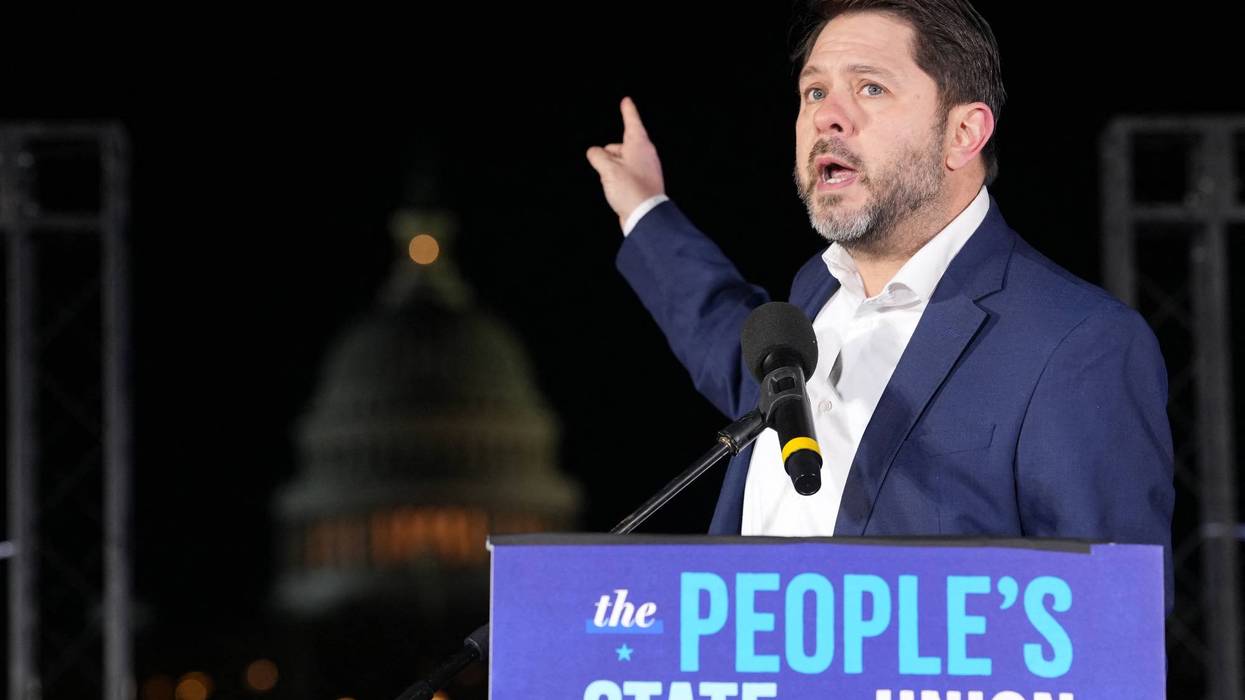
"This is the candidate that can win," the Arizona senator said.
Senate hopeful Graham Platner has picked up a critical endorsement in Maine's Democratic primary as he seeks to take down five-term Republican incumbent Susan Collins in November.
In a move challenging the party establishment, freshman Sen. Ruben Gallego (D-Ariz.) has endorsed the 41-year-old Marine veteran over the state's Democratic governor, Janet Mills, who has the backing of Senate Minority Leader Chuck Schumer (D-NY) and other leading centrists.
Platner, a proponent of progressive economic policies like Medicare for All and an extreme wealth tax, and an outspoken critic of US military interventionism, already has the endorsement of Sen. Bernie Sanders (I-Vt.).
Now, as a recent poll shows him comfortably in the lead for the nomination and more likely than Mills to win in the general, Gallego said he thinks Platner's approach is the best chance Democrats have to nab Maine in November, which will be essential in their bid to flip the Senate blue.
“I think right now what people need and want is authenticity and a certain level of populism that they’re not going to get from Gov. Mills and they’re certainly not going to get from Collins,” Gallego told the Washington Post. “This is the candidate that can win.”
In a post to social media, he elaborated that Platner, "is the kind of fighter Maine hasn’t seen in a long time, someone who tells you exactly what he thinks, doesn’t owe anything to the special interests, and wakes up every day thinking about working families."
Gallego, who is also a Marine veteran, noted Platner's similar background, saying he "reflects the grit and independence that defines Maine, and that’s exactly why I’m proud to endorse him."
Platner's unexpected ascendancy in Maine has been described as a challenge to the conventional wisdom held by some Democratic strategists that moderation is the key to mass appeal, especially in a purple state. Platner described Gallego's endorsement as a sign that this narrative is starting to fray.
“I’ve never heard the powers that be in Washington refer to Sen. Gallego as some kind of radical, and I think that he understands my actual politics and what we’re doing," Platner told the Post.
The Post noted that Gallego has endorsed other candidates favored by Senate Minority Leader Chuck Schumer (D-NY) in competitive primaries, including Reps. Angie Craig (D-Minn.) and Haley Stevens (D-Mich.).
Thanking Gallego in a post to social media, Platner said, "Together in the Senate we will break the power of the billionaire class and end forever wars."

"When Democrats win back power we are going to break up these anti-democratic information conglomerates," said Sen. Chris Murphy. "All of them."
Concerns are mounting about the state of the US media landscape now that it looks increasingly likely that Paramount Skydance—a company controlled by the son of billionaire Larry Ellison, a donor to President Donald Trump—will succeed in its bid to acquire Warner Bros. Discovery.
One day after Netflix announced that it was dropping its previously accepted bid to buy Warner, many critics demanded that antitrust laws be invoked to block the Paramount-Warner merger from going through.
Alvaro Bedoya, former commissioner at the Federal Trade Commission, warned that the Ellison family could soon use their control over vast swaths of US media properties to engage in mass censorship, and he pointed to their decisions to cancel Stephen Colbert's program and to refuse to air an interview with Democratic US Senate candidate James Talarico.
"One family is about to control CBS, CNN, HBO, and TikTok," he wrote in a social media post. "They’ll buy [Warner Bros. Discovery] with $24 billion in money from the Saudis, Qatar, and Abu Dhabi. To win over Trump, they canceled Colbert... and blocked Talarico. Much more will follow. Block this rotten deal."
Craig Aaron, co-CEO of Free Press, said the proposed Paramount-Warner merger was "even worse" than the proposed Netflix-Warner merger.
"This deal endangers our democracy by giving a family of pliant billionaires even more control of vast swaths of our news coverage, TV stations, and movie studios," Aaron said. "Allowing more mergers in the already highly concentrated movie business will harm filmmakers and industry workers when Paramount delivers on its promise to make deep cuts to please its Wall Street backers."
Writing in the American Prospect, David Dayen described the Paramount-Warner merger as the "worst-case scenario" that has "echoes of media-political consolidation as we see in dictatorships the world over."
Dayen argued that state governments still had time to block the merger, but warned that they were in a race against time given that Paramount's consultants "are trying to speed run the deal in a matter of weeks."
"The states could challenge the merger even after the feds bless it," Dayen continued, "but by then, Paramount and Warner Bros. would have likely commingled their assets, engaged in layoffs, and made it very difficult to untangle the merger, particularly for judges who are inherently conservative on these matters."
Some Democratic lawmakers are warning that they aren't going to stop fighting the Paramount-Warner merger even if it goes through.
In an interview with Semafor, Sen. Ruben Gallego (R-Ariz.) predicted that the Ellisons would come to regret aggressively buying up US media properties.
"Once we take power, whoever the president is, we’re going to break up your companies," said Gallego. "So all the investment you did to create these mergers are going to be for naught. Your investors are going to be pissed at you, and you’re likely going to end up getting fired as the CEO because you wasted so much money and corrupted yourself in the process."
Sen. Chris Murphy (D-Conn.) echoed Gallego's argument in a social media post.
"Paramount should enjoy its growing news monopoly while they have it," he wrote, "because when Democrats win back power we are going to break up these anti-democratic information conglomerates. All of them."

"If you take away our democratic stability, we will take away the economic stability."
A centrist Democratic US senator is now talking about taking drastic measures to protect democracy from President Donald Trump.
Speaking with the Court of History podcast on Thursday, Sen. Ruben Gallego (D-Ariz.) outlined a plan to stop Trump in case he tries to follow through on his threat to "nationalize the vote" ahead of the 2026 midterm elections or if he tried to enact ally Steve Bannon's proposal to "surround the polls" with US Immigration and Custom Enforcement (ICE) agents.
"We have to prepare for the outmost scenario, the worst scenario," said Gallego, "which is they try to either capture the ballot box as ballots are being counted, they try to stop the count, they try to surround polling places, whatever it is."
Getting more specific, Gallego said that something like a general strike along the lines of the one that took place in Minneapolis last month to protest ICE deployment in the city would be justified.
"We need to make sure that we have an ultimate response to that which, I believe, has to be a true national strike," he said, "in the sense that, if they do this, if they try to overthrow our democracy, if you are allied with democracy, do not go to work. If you’re a pilot, do not show up. If you drive a train, do not show up. If you’re a teacher, do not show up. We grind the country to a halt."
Gallego acknowledged the damage that this would do to the US economy, but said that "if we have to destroy the stock market to save democracy, we need to accept that."
He also said such an action would send an unmistakeable message to the billionaires who have given Trump their full-throated backing during his second term.
"The richest and the most powerful people in the world and in this country need to understand that that is a real possibility," he emphasized. "There is no economic stability without democratic stability. If you take away our democratic stability, we will take away the economic stability."
Gallego isn't alone in saying that concrete steps may have to be taken to protect US democracy from the president this year.
Elections expert Rick Hasen, a law professor at the University of California, said in an interview published by the New Republic on Friday that both state and city governments, as well as individual citizens, may be needed to ensure the integrity of the 2026 midterms.
"I think states and local governments need to be prepared for this," he said. "I would suggest trying to get injunctions against the federal government to keep them away. I would suggest that lawyers for voting rights groups and Democrats be prepared to go to court."
Failing that, he said that citizens must be prepared to get involved on the ground.
"I mean, it may take people in the streets protecting the offices where ballots are being tabulated," he said. "To take the Brooks Brothers riot—from the 2000 disputed election where some people were trying to storm an office where they were recounting ballots in Bush v. Gore—that would look very tame compared to what, you know, we might see in 2026."
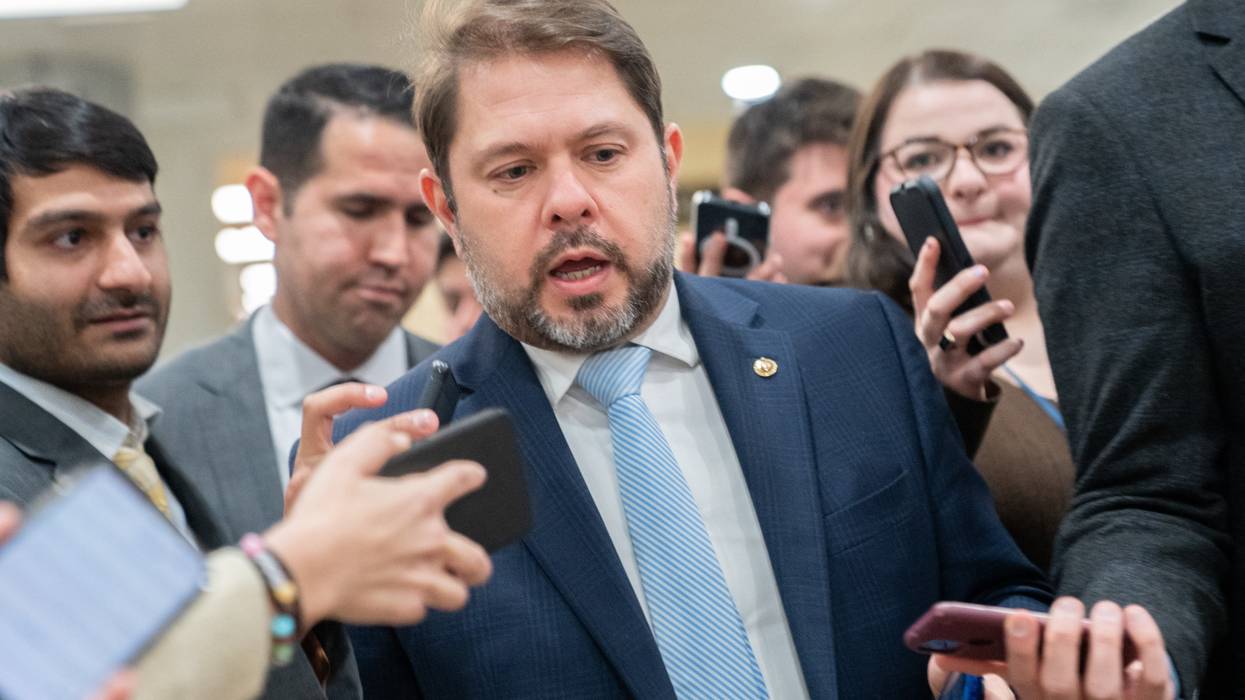
"Congress will not bankroll illegal, unnecessary military action in Greenland just to soothe the ego of a power-hungry wannabe dictator."
As leaders in Europe respond to once-unimaginable threats by the United States to take territory from a NATO ally, one US senator on Monday proposed legislation banning funding for any Trump administration military action against Greenland.
Sen. Ruben Gallego (D-Ariz.) put forth an amendment to the Senate Defense Appropriations bill "to prohibit the use of funds for military force, the conduct of hostilities, or the preparation for war against or with respect to Greenland," a self-governing territory of Denmark.
“Families are getting crushed by rising grocery and housing costs, inflation is up, and [President Donald] Trump’s name is all over the Epstein files," Gallego said in a statement. "Instead of doing anything to fix those problems, Trump is trying to distract people by threatening to start wars and invade countries—first in Venezuela, and now against our NATO ally Denmark."
“What’s happening in Venezuela shows us that we can’t just ignore Trump’s reckless threats," Gallego added. "His dangerous behavior puts American lives and our global credibility at risk. I’m introducing this amendment to make it clear that Congress will not bankroll illegal, unnecessary military action, and to force Republicans to choose whether they’re going to finally stand up or keep enabling Trump’s chaos.”
"This is not more complicated than the fact that Trump wants a giant island with his name on it. He wouldn’t think twice about putting our troops in danger if it makes him feel big and strong. The US military is not a toy," Gallego—a former Marine Corps infantryman—said on social media.
The illegal US invasion and bombing of Venezuela and kidnapping of Venezuelan President Nicolás Maduro and his wife—which came amid a high-seas airstrike campaign against alleged drug traffickers—spooked many Greenlanders, Danes, and Europeans, who say they have no choice but to take Trump's threats seriously.
“Threats, pressure, and talk of annexation have no place between friends,” Greenland Prime Minister Jens-Frederik Nielsen said Monday on social media. “That is not how you speak to a people who have shown responsibility, stability, and loyalty time and again. Enough is enough. No more pressure. No more innuendo. No more fantasies about annexation.”
Danish Prime Minister Mette Frederiksen warned during a Monday television interview that "if the United States decides to militarily attack another NATO country, then everything would stop—that includes NATO, and therefore the post-Second World War security."
Other European leaders have also rallied behind Greenland amid the mounting US threat.
"Greenland belongs to its people. It is for Denmark and Greenland, and them only, to decide on matters concerning Denmark and Greenland," the leaders of Britain, Denmark, France, Germany, Italy, Poland, and Spain asserted in a statement also backed by the Netherlands and Canada—which Trump has said he wants to make the "51st state."
The White House said Tuesday that Trump and members of his national security team are weighing a “range of options” to acquire Greenland, and that military action is “always an option” for seizing the mineral-rich and strategic island.
This, after White House Deputy Chief of Staff Stephen Miller brushed off criticism of a social media post by his wife, who posted an image showing a map of Greenland covered in the American flag with the caption, "SOON."
"You can talk all you want about international niceties and everything else," Miller told CNN on Monday. "But we live in a world, in the real world, that is governed by strength, that is governed by force, that is governed by power."
Sen. Tim Kaine (D-Va.), who has also unsuccessfully tried to get war powers resolutions passed, implied Tuesday that more measures aimed at preventing Trump from attacking Greenland may be forthcoming.
“He has repeatedly raised Greenland, Cuba, Mexico, Colombia. He’s waged military action within Nigeria,” Kaine said of Trump, who has bombed more countries than any president in history. “So I think members of the Senate should go on the record about all of it.”
In Greenland, only a handful of the island's 57,000 inhabitants want to join the United States. More than 8 in 10 favor independence amid often strained relations with their masters in Copenhagen and the legacy of a colonial history rife with abuses. Greenlanders enjoy a Nordic-style social welfare system that features universal healthcare; free higher education; and income, family, and employment benefits and protections unimaginable in today's United States.
Pro-independence figures say like-minded people must use the specter of a US takeover to wring concessions from Denmark.
"I am more nervous that we are potentially in a situation where only Denmark's wishes are taken into account and that we have not even been clarified about what we want," Aki-Matilda Tilia Ditte Høegh-Dam, a member of the pro-independence Naleraq party in Greenland's Inatsisartut, or Parliament, told Sermitsiaq on Tuesday.
"I'm in the Folketinget [Danish Parliament] right now, and I see that the Danish government is constantly making agreements with the United States," she added. "It’s not that they ask Greenland first."
US Sen. Chris Murphy (D-Conn.) was among observers who noted Tuesday that any US invasion of Greenland would oblige other NATO members to defend the island under the North Atlantic Treaty's collective defense requirement.
“That’s what Article 5 says. Article 5 did not anticipate that the invading country would be a member of NATO,” Murphy told reporters on Capitol Hill. “We’re laughing, but this is not actually something to laugh about now because I think he’s increasingly serious.”
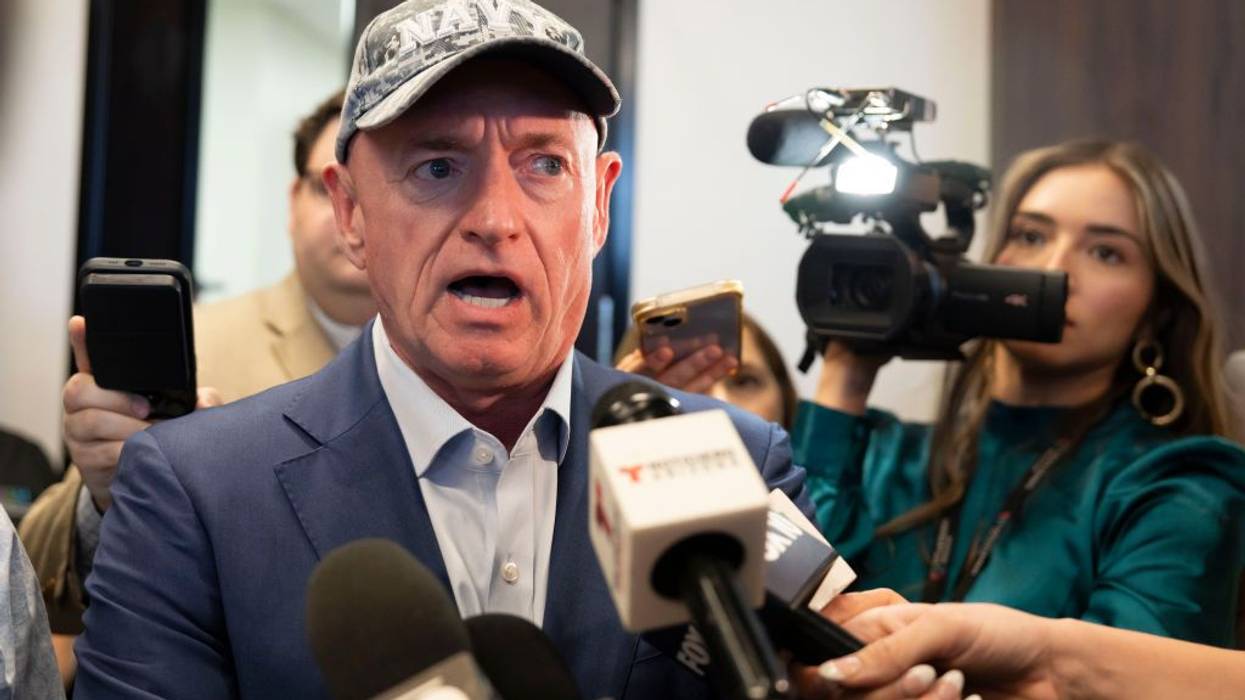
"Fuck you and your investigation," replied Sen. Ruben Gallego in defense of fellow Arizona Democratic Sen. Mark Kelly.
The US Department of Defense on Monday announced it was launching an investigation into a Democratic senator who had participating in a video warning active-duty troops to not follow illegal orders given by President Donald Trump.
In a social media post, the DoD said it had "received serious allegations of misconduct" against Sen. Mark Kelly (D-Ariz.), a retired US Navy captain who was one of several Democrats with backgrounds in national defense to speak out against the president potentially giving unlawful orders that pit the US military against American civilians.
As a result of the investigation, the DoD said that Kelly could be recalled to active duty to face potential court-martial proceedings for violating the Uniform Code of Military Justice (UCMJ).
"All servicemembers are reminded that they have a legal obligation under the UCMJ to obey lawful orders and that orders are presumed to be lawful," the DoD said. "A servicemember’s personal philosophy does not justify or excuse the disobedience of an otherwise lawful order."
In addition to Kelly, Sen. Elissa Slotkin (D-Mich.) and Reps. Chris Deluzio (D-Penn.), Maggie Goodlander (D-NH), Chrissy Houlahan (D-Md.), and Jason Crow (D-Colo.) appeared in the video.
We want to speak directly to members of the Military and the Intelligence Community.
The American people need you to stand up for our laws and our Constitution.
Don’t give up the ship. pic.twitter.com/N8lW0EpQ7r
— Sen. Elissa Slotkin (@SenatorSlotkin) November 18, 2025
In a follow-up social media post, Defense Secretary Pete Hegseth attacked the Democrats in the video as the "seditious six" and said that Kelly had been singled out for investigation because he was the only member who was still subject to UCMJ given his status as a retired Naval officer.
"As was announced, the Department is reviewing his statements and actions, which were addressed directly to all troops while explicitly using his rank and service affiliation—lending the appearance of authority to his words," wrote Hegseth. "Kelly’s conduct brings discredit upon the armed forces and will be addressed appropriately."
Trump has been calling for the prosecution of the six Democrats who appeared in the video for the last several days, and he even went so far as to say in one Truth Social post they deserve to be executed for "SEDITIOUS BEHAVIOR, punishable by DEATH!”
Shortly after the Pentagon announced its investigation into Kelly, he responded with a lengthy social media post in which he defended his service record and vowed not to back down despite threats from the Trump administration.
"If this is meant to intimidate me and other members of Congress from doing our jobs and holding this administration accountable, it won’t work," he said. "I’ve given too much to this country to be silenced by bullies who care more about their own power than protecting the Constitution."
Sen. Ruben Gallego (D-Ariz.) responded on X with a much shorter five-word post that read, "Fuck you and your investigation."
As long as Democrats keep putting their finger to the wind and trying to follow the right-wing narrative instead of reshaping the narrative to one that is better for the country, they are going to keep losing.
In a recent article published by NPR titled, “New to the Senate, Gallego Challenges Democrats’ Views on 'Working-Class Latinos’,” the newly elected Senator from Arizona, Ruben Gallego, defends his co-sponsoring of the Laken Riley Act.
Responding to his critics, Gallego stated, “They’re welcome to give me advice and everything else like that… but don’t come and try to lie to me and say that that’s where the Latino voter is… because that’s not the case.”
Gallego’s statement is very telling. It gives us critical insight into the way Democrats think, why they keep shifting to the right, and why they are doomed to keep losing in the face of a Republican Party that is becoming increasingly authoritarian and detached from reality.
In the quote above, Gallego is saying that Latino voters, like other voters, are also “concerned” about new immigrant arrivals at the border. He therefore reasons he has to speak to that concern by supporting militarized right-wing immigration policies, many of which are actually causing the crisis at the border. The Laken Riley Act is not only a due-process nightmare, allowing for detention of noncitizens who have merely been accused of minor crimes like shoplifting, but it will also allow red state attorneys general to sue future Democratic administrations for their immigration policies, effectively kneecapping any immigration policy change they may want to enact and thwarting the exclusive federal authority over immigration law. Gallego’s logic is that it’s OK to sponsor unconstitutional laws because the voters he has spoken to want “tougher” immigration laws.
This thinking perfectly encapsulates what is wrong with the Democratic Party. It is a failed political calculus that has led to decades of bad immigration policy outcomes and repeated electoral defeat. Democratic politicians look to where the polls are, look to the narratives in the public discourse (often planted there by bad faith right-wing propaganda outlets like Fox News), and then try to move their policy prescriptions toward what they perceive to be public sentiment. They should do the exact opposite, i.e. they should hold a core of strong policy beliefs and use those to drive a narrative on issues that addresses people’s concerns. Democratic, consultant-filtered thinking is completely backward because it fails to take into consideration that public sentiment is fluid and can be shifted with a compelling narrative. Instead, Democrats take the narratives blasted out by the right-wing propaganda machine and try to adjust their policies to fit them.
The “immigrants are dangerous” narrative is not only demonstrably false (immigrants, both documented and undocumented, commit crime at a lower rate than citizens do), but when Democrats concede this narrative, they are setting the stage for their own defeat. Instead of implicitly endorsing the “dangerous immigrant” framework, Democrats should counter it with a narrative about how immigration is good for the country, immigrants are less likely to commit crimes than citizens are, and that right-wing policy is the cause of illegal immigration. If the public buys into the “dangerous immigrant” narrative, they are always going to be more receptive to the Republican Party because the Republicans are always going to push further and further to the right. If you think immigrants are dangerous criminals, you are going to support the guy who is talking about walls and tough policies, instead of the party that is constantly giving mixed messages about how immigrants are good but also that they are the ones who are really “tough” on the border.
Instead of giving the Republicans the strength and uphill advantage of conceding their narratives, the Democrats need to flip the script by embracing immigration so that they are the ones attacking from an uphill position of strength.
The effectiveness of the Republican narrative on immigration, even though it is completely false, is reflected in several data points, such as the fact that immigration is a bigger priority to more Americans now than it was a year ago, as well as the reports showing that many Latinos have bought into the right-wing narrative and voted for Trump under the impression that he would only deport the “bad” undocumented immigrants. Of course, this has turned out to be completely false, as Donald Trump’s press secretary recently confirmed that they view all undocumented immigrants as criminals, even if they don’t have a criminal record.
In the NPR article cited at the beginning of my piece, Gallego says, “It’s usually white liberals that are talking to liberal Latinos, and they are essentially saying that’s what working-class Latinos feel and think about immigration… when in reality, they don’t.” I think Gallego is pointing to something that is true, but he’s got the wrong takeaway. For too long, the Democratic Party has assumed that barbaric right-wing immigration policy will inherently drive Latinos to vote for the Democrats. Gallego is essentially saying, “Working class Latinos are concerned about illegal immigration, so Democrats should move to the right on this issue.” I think the more accurate takeaway is that Latinos, just like anyone else, can be susceptible to the right-wing “dangerous immigrant” narrative. Even though right-wing immigration policy will disproportionately impact the Latino community, if the Democrats allow the “dangerous immigrant” narrative to take hold, more and more Latinos will vote Republican. I think the takeaway that Gallego is missing is that, instead of endorsing the right-wing immigration narrative, it is essential for the Democrats to offer a framing of the immigration issue that counters the one pushed by the Republicans.
When Republicans fearmonger about immigrant crime, Democrats need to push back with a factual narrative like this: “Immigration is good for the country and good for the economy. Study after study shows that immigrants commit crime at a lower rate than U.S. citizens. Republicans love to complain about illegal immigration, but their policies are actually the main cause of illegal immigration. The best way to reduce illegal immigration is to give people more legal pathways to come to the U.S. and stop the conservative policies that cause them to flee their home countries. Instead, Republicans want to cut off pathways for legal immigration, and pursue disruptive policies that make conditions worse in Latin America and the Caribbean.” If Democrats can convince the public that immigration is good, immigrants are not dangerous, and that Republicans are the cause of illegal immigration, it will lead the public to move away from the Republican party.
As long as Democrats keep putting their finger to the wind and trying to follow the right-wing narrative instead of reshaping the narrative to one that is better for the country, better for immigrants, and better for their political prospects, they are going to keep losing and the nation is going to experience increasingly worse immigration policy outcomes. In The Art of War, Sun-Tzu wrote, “So in war, the way is to avoid what is strong, and strike at what is weak,” as well as, “It is a military axiom not to advance uphill against the enemy, nor to oppose him when he comes downhill.” Instead of giving the Republicans the strength and uphill advantage of conceding their narratives, the Democrats need to flip the script by embracing immigration so that they are the ones attacking from an uphill position of strength. This is not limited to immigration. Indeed, it is applicable to all issues. The Democrats need to steer the carriage of public discourse and opinion in the direction they want it to go, instead of being tied to the back of it and getting dragged along.