

SUBSCRIBE TO OUR FREE NEWSLETTER
Daily news & progressive opinion—funded by the people, not the corporations—delivered straight to your inbox.
5
#000000
#FFFFFF
To donate by check, phone, or other method, see our More Ways to Give page.
Daily news & progressive opinion—funded by the people, not the corporations—delivered straight to your inbox.
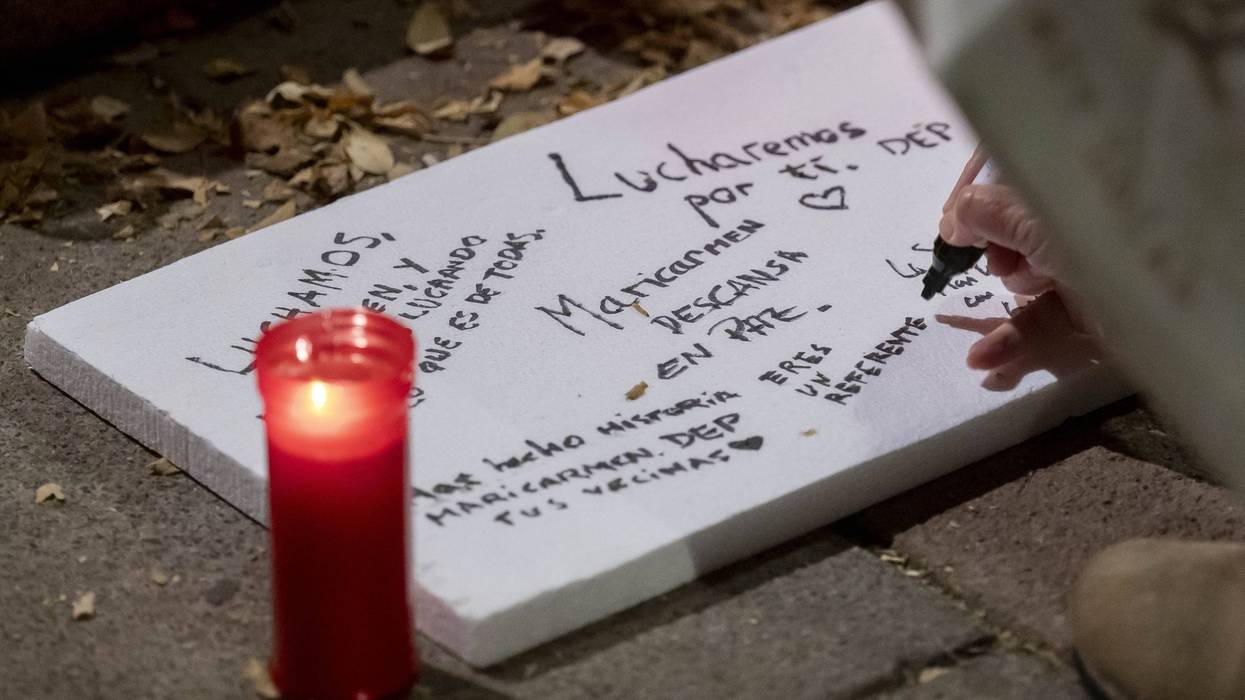
María del Carmen Abascal Martín, an 87-year-old Spanish woman known as Maricarmen whose eviction led to massive housing protests and Prime Minister Pedro Sánchez calling early elections, died this week, before she could return to her longtime home from the hospital.
In a joint statement cited by El País, the Madrid Tenants' Union, Abascal's family, and her lawyer announced that she died at Gregorio Marañón Hospital in Spain's capital city. They said that "although a historic agreement was reached that would have allowed her to return to her home, that solution came too late."
The 87-year-old was evicted on September 23, after the property where she'd lived since 1956 was acquired by the real estate firm Urbagestión, which raised her monthly rent. Abascal was carried out of her apartment in Madrid's Retiro district on a stretcher and taken to the hospital. As Common Dreams reported last month, under the deal, she was supposed to return home with an eight-year lease and pay no more than 30% of her income, approximately €500, or $560, per month.
The events that came after her eviction marked "a before and after in the history of this country," according to the joint statement about her death. Still, "the cost of getting here has been far too high," her representatives asserted, adding that Maricarmen asked them to share the message: "Keep fighting. Keep fighting for what belongs to you."
In response to the protests, Sánchez's Spanish Socialist Workers' Party (PSOE)-led Cabinet announced a pair of decrees with largely temporary policies. They would regulate short-term and room rentals, protect vulnerable tenants from evictions, prohibit "vulture funds" from buying homes, extend some existing rental contracts, and mandate automatic renewal of such contracts.
Spain's Parliament rejected the proposals last week, prompting Sánchez to dissolve the legislature and call a snap election, which was previously planned for next year. As Reuters reported Tuesday, "Calling the election, on November 29, has allowed Sánchez to bring in the new rules with the support of a smaller caretaker body."
The news agency explained:
The measures will come into effect temporarily when the decree is published in the official state gazette but must then be sent for approval by the caretaker lawmakers who remain in place after parliament was dissolved, Sánchez said.
The standing body of 69 members, when including lower house speaker Francina Armengol from Sanchez's Socialist Party, has a slim majority in favor of the measures, according to state broadcaster TVE.
A second decree proposing the automatic renewal of rental contracts would only come into effect if approved by the reduced legislature since the government did not have a majority to validate it, Sánchez said.
The prime minister also acknowledged Abascal's death, writing on social media Wednesday: "All my love to Maricarmen's family and loved ones. A hug also to everyone who today feels this loss as our own. Rest in peace."
As The Associated Press reported, "The emotions ran into anger on the street among the protesters gathered near Spain's Parliament who chanted 'Maricarmen lives, the fight goes on!'"
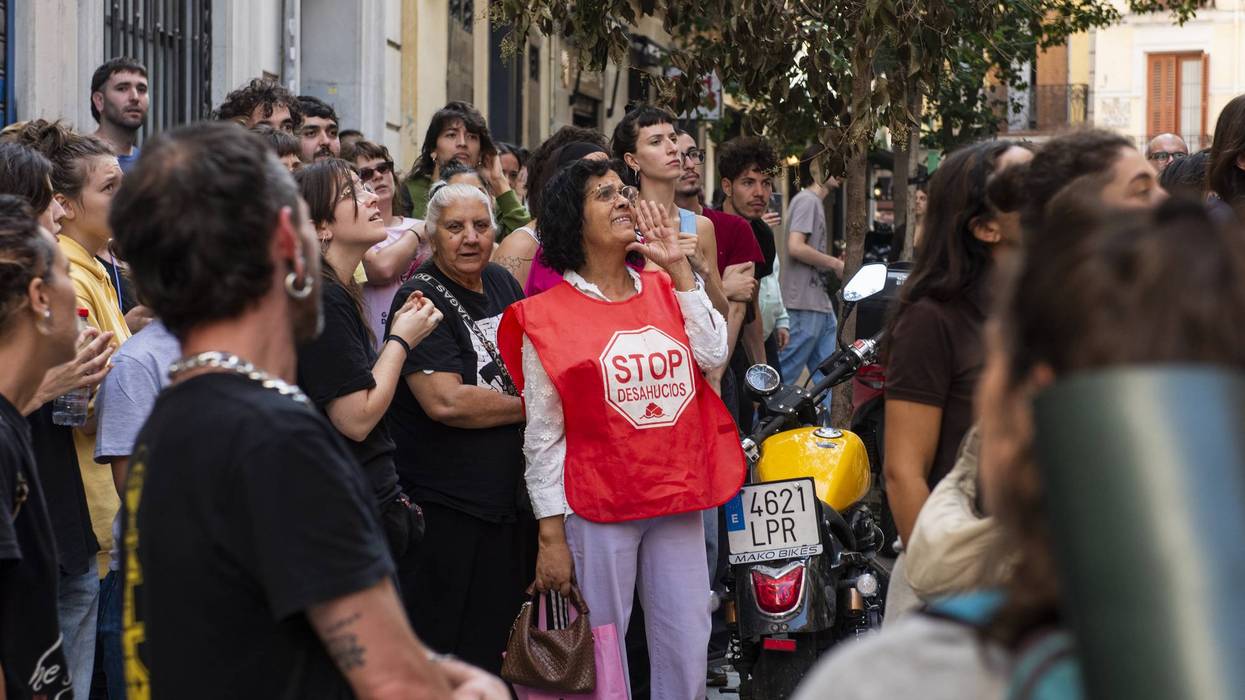
The Cabinet of Prime Minister Pedro Sánchez approved two decrees aimed at protecting tenants, but Spain's leftist social rights minister called the two-part strategy a "trap."
Spain's Cabinet on Tuesday agreed to take other measures meant to address a growing housing crisis amid nationwide protests triggered by an 87-year-old woman's temporary eviction—but some leftists warned that splitting the proposed reforms into two parts was an intentional ruse designed for one key demand to be rejected by lawmakers.
María del Carmen Abascal Martín's eviction on September 23 sparked demonstrations in Madrid and cities across Spain, including Barcelona, Sevilla, Málaga, Santiago, Murcia, Palma, and Zamora. On Saturday, around 30,000 people marched in Madrid, while hundreds of tents subsequently sprang up in the Puerta del Sol, where protesters have been camping out for days, demanding major reforms to Spain's housing system. On Tuesday, protesters in Madrid also successfully stopped a planned eviction on Calle Navas de Tolosa, with the expulsion postponed until October 14.
Prime Minister Pedro Sánchez's Spanish Socialist Workers' Party (PSOE)-led Cabinet announced two decrees on Tuesday, which must now be approved by lawmakers if they are to take effect. One of the measures would guarantee protections against evictions of economically or socially vulnerable tenants through 2030, extend certain existing rental contracts until the end of 2028, regulate short-term and room rentals, and bar so-called vulture funds from purchasing homes until 2028.
The second decree seeks automatic renewal of rental contracts—a key demand of tenant organizers—although that measure faces a more uncertain path to parliamentary passage.
Abascal's eviction had quickly become a symbol of a housing crisis driven by rising costs and a supply shortage that has priced many people out of the market in Europe's fourth-largest economy. The 87-year-old, who had lived in her Retiro apartment since 1956, was evicted after the property was acquired by the real estate firm Urbagestión, which reportedly jacked up her monthly rent from roughly €500 to €1,650.
Images of Abascal being removed from her home on a stretcher by police sparked global outrage and demands for Spain's socialist-led government to halt her eviction and protect vulnerable tenants from forced displacement.
Under an agreement reached with Urbagestión, Abascal will return after leaving the hospital under an eight-year lease, paying no more than 30% of her income—approximately €500 a month. The agreement was reached after more than four hours of negotiations involving her family, lawyer, the Madrid municipal housing agency, and the Madrid Tenants Union.
Activists attributed both Abascal's return home and the government's concessions to the power of mass mobilized people.
"Seeing that this has an outcome gives us hope," one protester, Laura, told Spanish public broadcaster RTVE. Another demonstrator, Gracia, declared, "Every night here is a victory."
Simón, a protester who spent the night at the encampment, told EFE: "We’re not camping out just for the sake of camping. We’re making a demand. It’s great that Maricarmen is getting her apartment back, but more measures are needed.”
Fina Parra, a spokesperson for the Madrid Tenants Union, called Abascal's eviction “the straw that broke the camel's back because it touched all of our hearts.”
Parra stressed that the protesters' objective is not “a half-measure law,” but legislation that “actually stops the bleeding of evictions.”
Sara Barros, a protester interviewed by Democracy Now!, said, “What we are demanding is that the rental market be regulated, because rents are unaffordable and people simply cannot afford them.”
Progressive politicians also welcomed the reversal of Abascal's eviction—which Sánchez called a "social tragedy"—and looked forward to implementing reforms.
"The street got Maricarmen to stay," said Gerardo Pisarello, the leftist first secretary of the Congress of Deputies, the lower chamber of Spain's Parliament. "If we have already achieved one victory, we can achieve another."
Some leftists are wary of the Sánchez government's decision to split the housing package in a way that makes the most important tenant protection easier to defeat in Parliament.
Minister of Social Rights Ione Belarra of the Podemos party called the decision "a trap" whose "only objective" is to "whitewash the government and contain social mobilization."
Belarra further contended that Sánchez's strategy is "the opposite of what should be done when you really want to solve the housing problem."
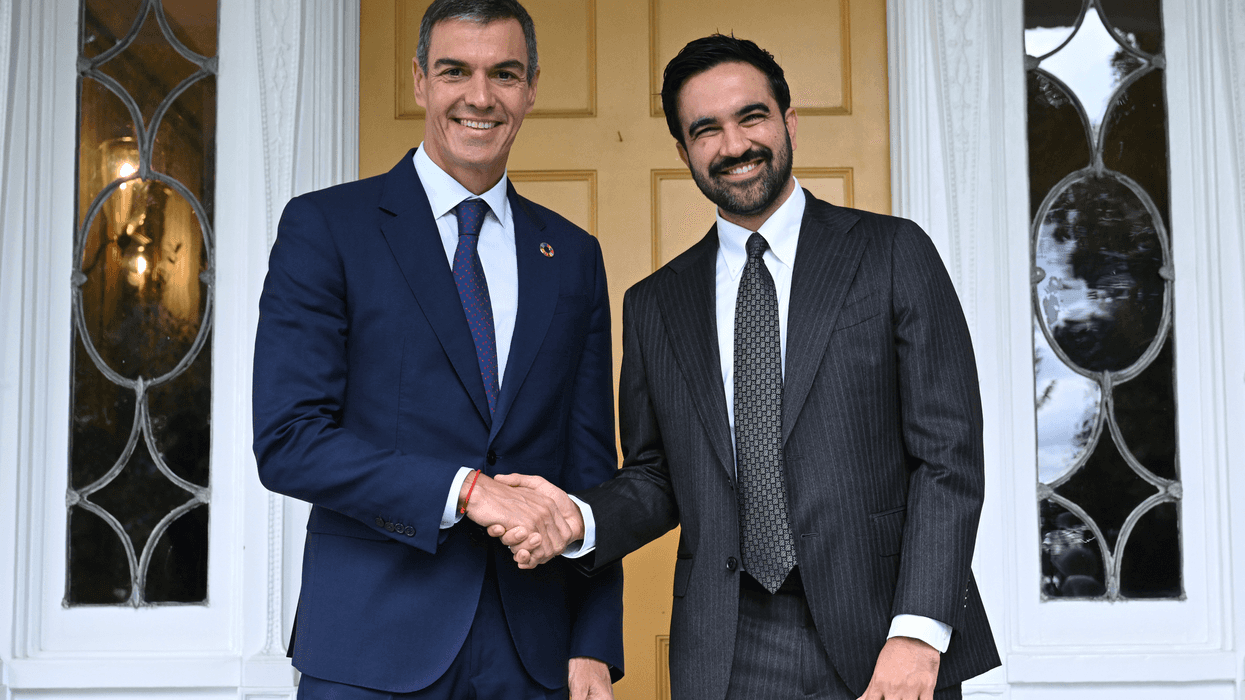
The two leaders spoke about policies to promote economic justice and immigrant rights at an event, as nearly 130 world leaders gather in New York for the United Nations General Assembly.
As New York City plays host to nearly 130 world leaders gathered for the United Nations General Assembly, progressive Mayor Zohran Mamdani is making a point of meeting with a number of international politicians who share his commitment to “building an economy for the many"—the official theme of a Wednesday morning breakfast he held at Gracie Mansion, where Spanish Prime Minister Pedro Sánchez was a key guest.
The event gave the two leaders an opportunity to discuss, as the prime minister said on social media, "more jobs, better wages, less inequality."
"Social justice is not the enemy of economic growth," he said.
Sánchez spoke to a group of assembled leaders—including Barbados Prime Minister Mia Mottley, a fierce critic of government inaction on the climate emergency and inequality, and socialist European Council President António Costa—about Spain's economic policies, such as a 66% increase in the national minimum wage over the past eight years.
“Spain is showing that another economic model is possible, and New York is demonstrating that the same ambition can transform our cities," said Sánchez, who represents the Spanish Socialist Workers' Party. "That is why the powerful fear us, because every day we show that there is another possible path and that it works."
“We were told that if you want growth, you have to accept inequality. That the workers have to make sacrifices. That if you want to be competitive, you have to have low wages and bad public services. I never believed it," Sánchez added. "Spain has shown that it was not true. We have raised the [Spanish minimum income] by 66%. We were told it would destroy jobs, but we have more workers than ever. One in every two jobs created in Europe are Spanish. We were told that with clean energy we would be less competitive. Now we have 60% and the cheapest energy. They always tell us that [these policies] are not going to work. The reality is that they do work for ordinary people."
The policies of Sánchez and Mamdani have angered right-wing leaders, including President Donald Trump. The president threatened Spain with a trade embargo earlier this year when Sánchez refused to allow US war planes to refuel at Spanish military bases as the US and Israel waged war on Iran.
Administration officials also condemned Sánchez's pro-immigration stance in July when migrants from Africa entered the self-governing Spanish city of Ceuta. The prime minister offered hundreds of thousands of migrants a chance at permanent legal residency in Spain earlier this year, contrasting with Trump's violent mass deportation campaign.
"Migration has made Spain stronger," said Sánchez on Wednesday. "Migration makes us a better country. No question."
Spanish PM Pedro Sánchez:
Migration has made Spain stronger. Economically, socially, culturally, migrants work in our companies, contribute to our public finances, sustain our welfare state and enrich our communities. Migration makes us a better country. No question.
This… pic.twitter.com/3GEIy7IWtR
— Clash Report (@clashreport) September 23, 2026
Without mentioning Trump by name, he added: "This matters because there are politicians on both sides of the Atlantic trying to convince working people that their problem is another working person—someone born somewhere else, someone who earns even less than they do. It is one of the oldest political tricks in history: Make people look sideways so they never look up."
While appearing to admire the charismatic and ultrapopular Mamdani—whose 69% approval rating among his constituents contrasts sharply with the 29% of Americans who currently support the president—Trump has railed against recent electoral victories of politicians who share Mamdani's commitment to universal, government-funded social services, raising taxes on billionaires, and ensuring life is affordable for working people.
In June, he called democratic socialists like Mamdani "the most serious threat to our country since its existence," and during Mamdani's mayoral campaign, the candidate confronted border czar Tom Homan over Trump's anti-immigration agenda.
At the Wednesday morning event, where Mamdani praised Sánchez for sending a message through his minimum wage policy that "work matters... dignity matters," the mayor said that working together, the two leaders and other progressives in power can build "a better world, bringing the movement for equality and justice to more distant horizons.”
Costa, who served as the prime minister of Portugal, added on social media that "in an interdependent world, we need coordinated solutions to global and local challenges."
"That is why we must defend international law and multilateral institutions like the UN," said Costa. "And that is why we must put the well-being of our citizens at the center of our policies."
“It is truly a privilege to be able to learn from one another, emulate each other's successes, and develop strategies that imitate the great progress those in this room have achieved," said Mamdani at the event.
The mayor has also met with progressive mayors from Barcelona, Paris, Rome, Mexico City, and other cities to discuss housing, migration, and climate policies. On Tuesday, he visited a New York City public school with Norwegian Prime Minister Jonas Gahr Støre, and the two leaders discussed limiting artificial intelligence in education.
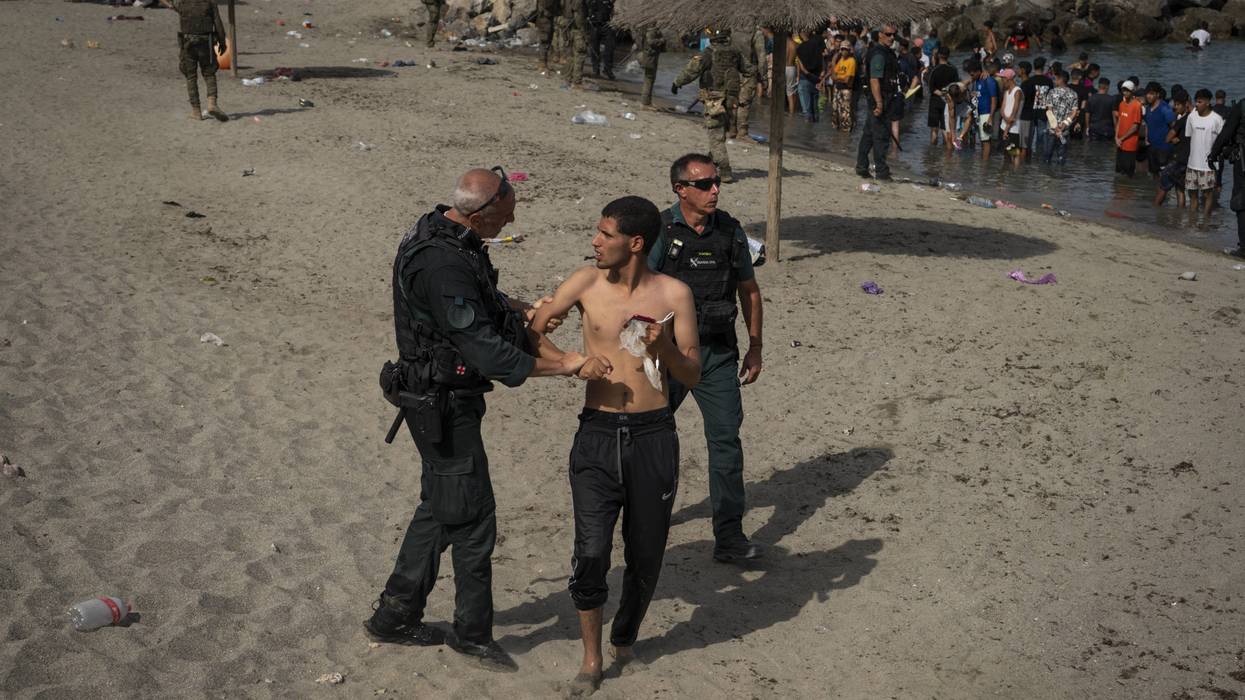
Last week, at least 72 people died while attempting to reach the Spanish exclave of Ceuta from Morocco. Around 60,000 people made it into Ceuta, many of them by sea, others by climbing over border fences. Within just a few days, however, most of them had already returned to Morocco.
Both Morocco and Ceuta are located in Africa. But politically, Ceuta, like Melilla, belongs to Spain and therefore to the European Union. Europe’s response to the unprecedented influx into the exclave has been almost unanimous. What happened has been described as a “threat to Europe’s security.” Some have even called it an “attack” or an “invasion.” Europe’s external borders, we are told, must be better protected.
Twenty-two of the European Union’s 27 member states have now signed an open letter initiated by Italy’s far-right government under Giorgia Meloni, criticizing Spain’s migration policy and calling for stricter security measures at Europe’s borders. Italy has further suspended its Schengen agreement with Spain. That this is little more than political posturing is evident from the fact that Ceuta is not part of the Schengen Area in the first place.
While Europe appears quick to agree on yet more repression, the 72 lives irreversibly lost have become an afterthought. Most of those who died had most of their lives still ahead of them and hoped for a better future. Instead, they found death on what they believed was the path toward that future. As right-leaning governments across Europe compete with one another in increasingly alarmist security rhetoric, the fundamental question is largely ignored: Why does a young person take such enormous risks in order to reach Europe?
People flee war, violence, persecution, poverty, and the hopelessness that arises when there is little prospect of a safe and dignified life. Border fences cannot deter those who see no viable future where they are, but merely make their journeys more dangerous and more deadly. One can debate at length the respective roles played by colonialism and other historical injustices on the one hand, and current political failures on the other, in creating global inequality. But this does not change the fact that a young person in Morocco, facing high youth unemployment and low wages, has every reason to perceive their situation as profoundly unjust when compared with life in much of Europe.
This inequality is not an abstract concept. In a world where everyone is connected to everyone else, and our planet, in many ways, has become a global village, it is experienced directly. People see how others live on their phone screens every day.
Nineteen-year-old Nok in Thailand can watch in real time as Moritz, her age and from Munich, spontaneously buys a flight ticket to Bangkok and spends six months travelling through Southeast Asia to “find himself.” A comparable journey to Europe is out of reach for Nok, given her limited financial means and the enormous difficulty of obtaining a Schengen visa, and it will remain an impossibility in the foreseeable future.
“Come through legal channels,” Europe tells migrants. Kwame in Ghana wants nothing more than to do exactly that. He successfully applies for a master’s program in Germany, spends months of his time and a considerable amount of money on language tests, certifications, translations, and other documents he needs for his visa application, and saves the required funds for his living expenses in Germany. Yet when he requests an appointment at the German Embassy in Accra, he learns that the waiting time is six to twelve months. He will miss the start of his program. Whether his admission will still be valid the following year remains uncertain.
Amina is eight years old and lives in Sudan. For months, there has been little to no schooling in her region. The healthcare system has largely collapsed. While her parents struggle every day to find enough food and clean water, many children in Europe take education, healthcare, and security for granted.
José is 24 years old and works twelve hours a day in a textile factory in Honduras for a wage that barely allows him to survive. The clothes he sews are later sold in Europe, often for more money than he earns in an entire week.
Nok, Kwame, Amina, and José had no control over where they were born. Neither did Moritz. Yet the consequences of this accident of birth could hardly be more different. It may be easier to demand higher fences, but as long as such extreme inequalities in security, prosperity, and future opportunities exist between different regions of the world, people will continue trying to overcome those fences.
The challenges of migration cannot be solved by sealing oneself off. They require an honest debate about how the global order can be made fairer. This is not simply a matter of extending humanitarian compassion as a voluntary gesture; it is a question of how much inequality can be morally justified when it is based largely on the accident of where someone happens to be born.
If Europe wants to prevent images like those from Ceuta in the future, it must address the root causes of migration more decisively — among other things through fairer trade relations, greater commitment to development cooperation, and the expansion of legal migration pathways. Paradoxically, the opposite trend can often be observed today. Many European countries, for example, have significantly reduced their development aid budgets in recent years — a sign of the growing influence of populism, which prioritizes short-term political gains over long-term solutions. Ultimately, such policies harm not only people in countries of origin, but Europe itself as well.
"Under international law, the principle of non-refoulement is absolute and collective expulsions are prohibited in all cases," said Esteban Beltrán of Amnesty International Spain.
The director of Amnesty International Spain on Friday said both Spanish and Moroccan officials must "put their human rights obligations at the center of their response" to an influx of about 60,000 migrants over 24 hours into the self-governing Spanish city of Ceuta, an exclave in North Africa that borders Morocco.
As the vast majority of people had reportedly returned to Morocco after facing aggression from Spanish police and armed forces who had been deployed to the territory, where a humanitarian crisis quickly unfolded following the migrants' arrival, the director of the group, Esteban Beltrán, issued a reminder of international law pertaining to migration.
"The large number of people arriving in Ceuta and the circumstances of crossings must not distract from the fact that under international law, the principle of non-refoulement is absolute and collective expulsions are prohibited in all cases," said Beltrán.
At least 57 people were killed while trying to cross into Ceuta, The Associated Press reported, with some drowning and others killed in a stampede as many of the migrants tried to cross a barrier near a border checkpoint.
"Spanish authorities must also ensure that adequate healthcare and social care resources are deployed to respond to the needs of the people, including to cater for the needs of children and others at increased risk of human rights violations," Beltrán said.
On Friday, even after about 48,000 people were reported to have crossed back over the border, reports still indicated that thousands of migrants were sleeping on the streets of Ceuta, with many reporting they had crossed into the territory in search of work.
“You ask why everyone came—because there’s no work in Morocco,” Ajoub el-Arrot, a 24-year-old Moroccan migrant, told The New York Times.
Abdulah Buji, 21, told the Times that he would "have to work 12-hour shifts for a meager wage."
“But I haven’t found any opportunities here either, so I have to go back," said Buji.
Italian and French authorities said they would tighten controls at their borders with Spain in light of the surge.
The arrival of the migrants drew the attention of the far right in Europe and the US, where conservatives have been critical of Spanish Prime Minister Pedro Sánchez's migration policy.
Earlier this year, contrasting with President Donald Trump's aggressive and violent crackdown on immigrants and mass deportation campaign in the US, Sánchez moved to grant up to 500,000 undocumented immigrants legal status in the country, with those who had arrived before January 2026 and had authorization to work made eligible.
Conservative Spanish politician Isabel Díaz Ayuso said Sánchez had allowed Spain "to be invaded through Ceuta,” while the US State Department said the sudden influx of migrants was "the direct result of the Spanish government’s deliberate efforts to enable and facilitate mass illegal migration into Europe.”
Sánchez's government countered that the situation in Ceuta had "nothing to do with the regularization of migrants," and the prime minister said human traffickers had misinterpreted a recent Spanish Supreme Court ruling which said that people who arrive in the country by sea could not be summarily deported.
Claims that people could easily cross from Morocco into Ceuta "spread like wildfire over the past few hours through the networks of human trafficking organizations,” Sánchez said.
Another Spanish self-governing city on the North African coast, Melilla, also saw migrants attempting to cross from Morocco on Friday. Many Moroccans consider both Ceuta and Melilla to be occupied Moroccan territory.
While many of the migrants said they had been hoping to find work, they also told reporters that Moroccan authorities had urged the massive group to attempt to cross into Ceuta, according to the Times.
“They just kept saying, ‘Go that way, go that way,’” Youssef Alaoui, 26, said of Moroccan police officers near the border.
Some analysts suggested Morocco could be trying to pressure Spain out of strengthening ties with Algeria, a rival nation. The Spanish foreign minister made a recent trip to Algeria and spoke about importing more gas from the country, and Sánchez also recently visited.
“It is impossible for nearly 50,000 people to cross the border between Morocco and Spain in a single day without Morocco having a hand in it,” Lorenzo Gabrielli, a senior researcher at Pompeu Fabra University in Barcelona, told the Times.
Meanwhile, Portuguese author and former Secretary of State for European Affairs Bruno Maçães pointed to calls made by pro-Israel think tanks in April for Israel to "help Morocco take over Ceuta in order to punish Spain" for its pro-Palestinian, anti-Israeli positions.
"Spain's refusal to allow the United States access to its Rota and Morón military bases during the Iran campaign, its consistent failure to meet NATO defense spending targets, and Prime Minister Pedro Sánchez's confrontational posture toward the Trump administration have collectively generated something rare in North African affairs: a genuine crack in Spain's strategic armor over Ceuta and Melilla," wrote Amine Ayoub, a fellow at the Middle East Forum in April. "Into that crack, Morocco's most consequential new partner, Israel, is uniquely positioned to press."
Ayoub continued:
Israel can advance Morocco's cause through three distinct channels. First, through direct diplomatic signaling. Israeli acknowledgment that Spain's continued occupation of African territory undermines the post-colonial credibility that normalization frameworks require would reframe Ceuta and Melilla as a regional governance issue, not merely a bilateral spat. Second, through Washington corridors where Israel's influence is considerable, Israeli officials can amplify the case that Morocco's strategic contribution, anchoring the western Mediterranean, controlling the southern approach to the Strait of Gibraltar, and serving as America's longest-standing treaty partner, warrants concrete American support on its most persistent territorial demand. Third, Israel can expose Spain's glaring hypocrisy. Madrid has been among the loudest European voices condemning Israeli territorial policies and settlements. Spain recognized a Palestinian state in 2024 while simultaneously maintaining European enclaves on African soil that predate modern Israel by four centuries.
Danny Danon, Israel's ambassador to the United Nations, said Thursday that Spain "never misses an opportunity to lecture Israel."
"Maybe before it continues lecturing us," he said, "it’s time it explained to the world why it still maintains colonial enclaves in Africa."
Maçães said it was unclear whether Israel had pushed to "advance Morocco's cause," as Ayoub wrote, but he added, "whether or not the US and Israel were involved before the fact, they were deeply involved and intensely active after the fact, especially trying to use [the crisis in Ceuta] against the current Spanish government."
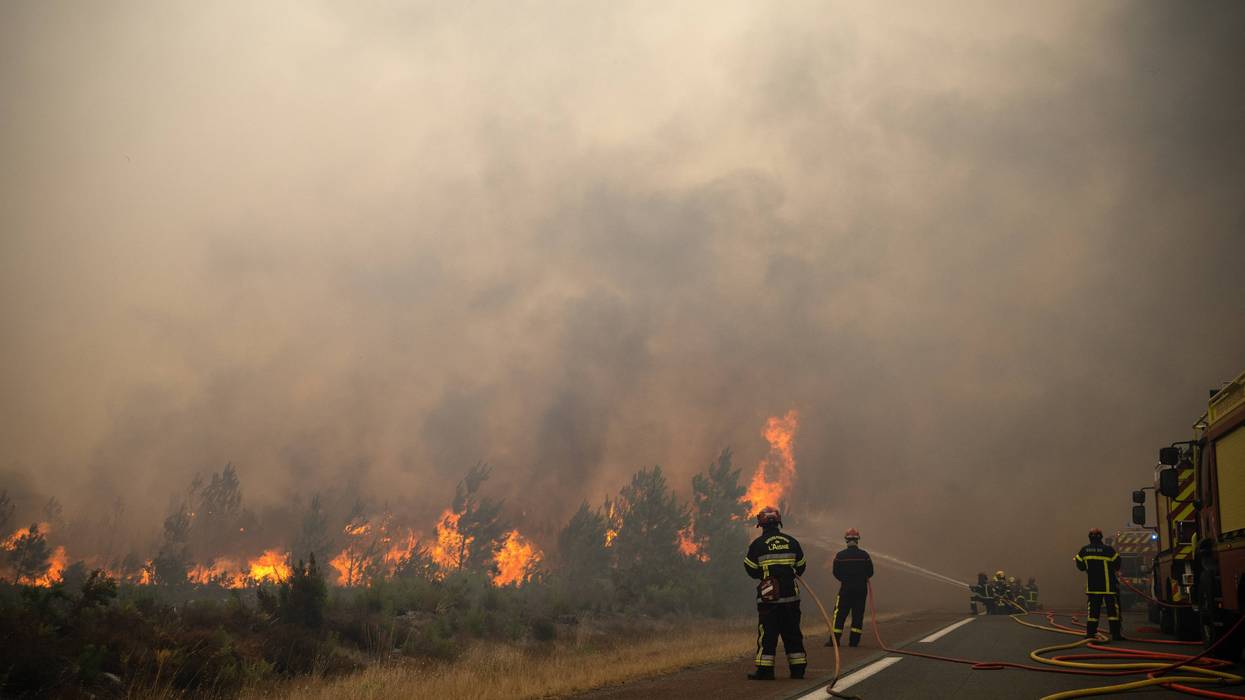
“It is the most painful manifestation of a climate emergency that is making… wildfires more voracious and heatwaves more frequent, and as a result our land more vulnerable," said Spanish Prime Minister Pedro Sánchez.
More than 300,000 people have been displaced as historic wildfires tear across France and Spain, presaging what some have called a climate-fueled "crisis of habitability" across Europe, which is heating faster than anywhere else on the globe.
Record heat and drought have fueled multiple record wildfires around the French wine-growing region of Bordeaux and in central Spain near Madrid. As the region expects to see temperatures above 95°F later this week, firefighters are racing to quell the blaze as it grows out of control.
Across the two countries, at least one person has been killed, and more than 100 have been sickened or injured. In France, 80 firefighters have been injured.
About 448 square miles of terrain have been scorched across France since the beginning of 2026, the highest annual total in modern history, even though it's only July.
The fires in France have grown so powerful and unwieldy that they've formed what the National Firefighters Federation of France described as a “pyrocumulonimbus”—an unprecedented fire-generated thunderstorm cloud that generates its own wind and lightning, which spreads the flames across the landscape.
In Spain, fires around Ávila burned about 193 square miles in five days—an area roughly five times the size of Barcelona—making it the largest wildfire in the nation's history. Civil protection chief Virginia Barcones said her country was facing a "monster."
Extreme wildfires are becoming more common around the world as global temperatures increase. Across Europe, where temperatures have soared twice as fast as the global average, the pattern has been even more intense.
Last year was the worst fire year on record in the European Union, with nearly 4,170 square miles of land burned—almost double the annual average from 2006-24.
Speaking at a climate conference, Spanish Prime Minister Pedro Sánchez emphasized that the fires should not be viewed as isolated incidents.
“It is the most painful manifestation of a climate emergency that is making… wildfires more voracious and heatwaves more frequent, and as a result our land more vulnerable,” Sánchez said. “It is no longer an exception. It is the rule.”
In an op-ed for Le Monde, philosopher Cynthia Fleury and the Socialist mayor of Saint-Médard-en-Jalles in southwestern France, Stéphane Delpeyrat-Vincent, wrote that where previous fires and heatwaves have posed threats to individuals, "the 2026 heatwave has been something else entirely."
"No longer are only individuals at risk, but entire regions," they wrote. "Extreme heat now goes hand in hand with megafires, the destruction of whole landscapes, the collapse of environments and the evacuation of entire towns. The health crisis has become a crisis of habitability."
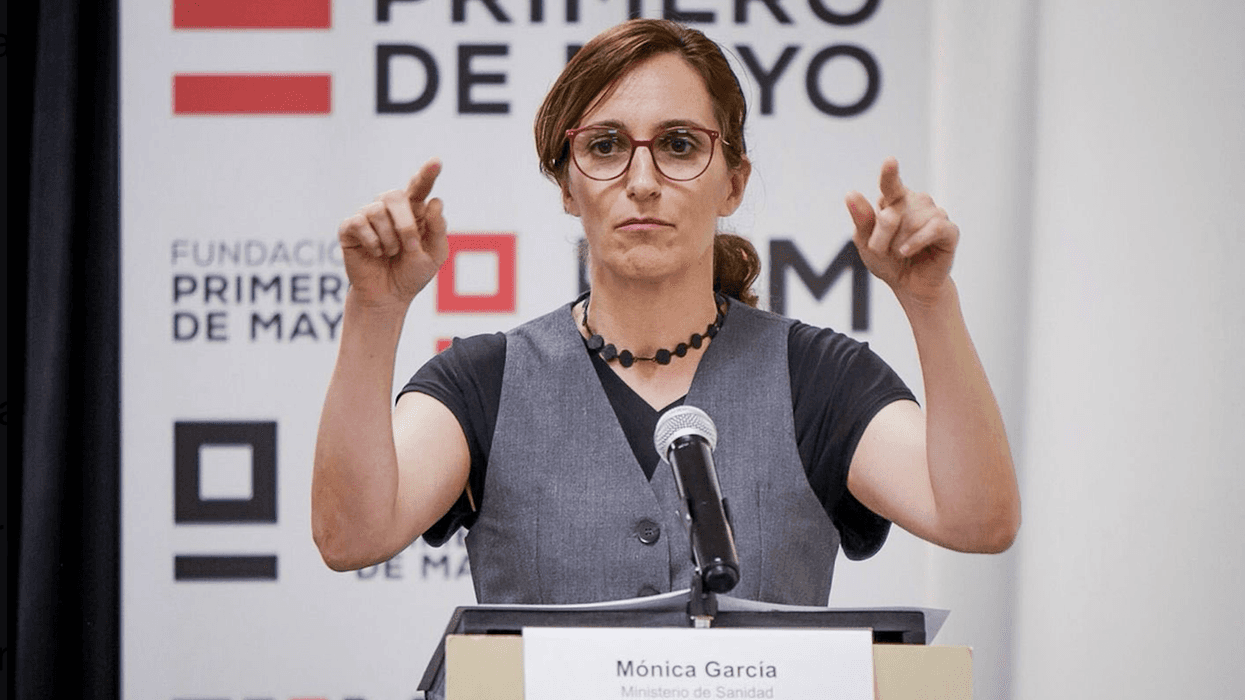
"Trump calls Spain a 'terrible partner' because it accepts neither blackmail nor threats. Because we are a sovereign, democratic country that defends multilateralism and peace."
US President Donald Trump's call on Wednesday to "cut off all trade with Spain" over what he said is the NATO ally's failure to pull its own weight in the alliance was shrugged off by Spanish Prime Minister Pedro Sánchez as "business as usual," but a member of the leftist leader's Cabinet responded to the largely infeasible threat by declaring that her government will not succumb to bullying.
Sitting alongside NATO Secretary-General Mark Rutte at the alliance's summit in the Turkish capital Ankara, Trump told reporters that “Spain is a wasted cause."
"We don’t want to do any trade business with Spain anymore, by the way,” the Republican president continued. “Spain is a terrible partner in NATO. They don’t participate. They don’t pay. I don’t want anything to do with Spain. Cut off all trade with Spain, please, including visits. Watch them come running back. Oh, they’ll come running back."
President Trump says he is "not happy" with NATO and demands to cut trade ties with Spain: "I don't want anything to do with Spain... cut off all trade with Spain please, including visits... watch them come running back." pic.twitter.com/3WCTAZU5mA
— CSPAN (@cspan) July 8, 2026
According to NATO's official estimates for 2025, Spain spends 2% of its gross domestic product (GDP) on defense, equivalent to about $35.7 billion, the seventh-highest amount in the alliance. Five other NATO members—Belgium, Czechia, Luxembourg, North Macedonia, and Portugal—also spend 2% of their GDP on their militaries, the lowest percentage in the alliance. NATO members have agreed to meet a defense spending goal of 3.5% of GDP by 2035, while Trump has repeatedly urged alliance nations to budget 5%.
Sánchez brushed off Trump's tirade as "business as usual" while touting Spain's "excellent" trade relations with the United States and vowing to respond "with calm and patience" to the president's threat.
"When you step back a bit from these kinds of actions, what you see is that relations between the United States and Spain are very, very positive socially, culturally, economically, and politically," he said.
"Spain is a country that strives to maintain the best possible relations with all countries, especially allied countries, with whom we have very consolidated ties that have transcended the ideological orientation of the administrations that have governed Spain or the United States over the decades," Sánchez added.
Spanish Health Minister Mónica García was more blunt in her response to Trump's remarks.
"Trump calls Spain a 'terrible partner' because it accepts neither blackmail nor threats," she said on social media. "Because we are a sovereign, democratic country that defends multilateralism and peace. What's terrible is confusing diplomacy with bullying."
Experts say that while the International Emergency Economic Powers Act grants US presidents broad authority to block or limit trade with countries, they must prove that targeted nations pose an "unusual or extraordinary threat" to national or economic security, which Spain clearly does not. Furthermore, as a European Union member, any trade negotiations must be conducted via Brussels, not Madrid.
This isn't the first time that Trump has floated cutting off commercial relations with Spain. Earlier this year, he threatened a full trade embargo on Spain over its refusal to allow use of its military bases to wage the illegal US-Israeli war on Iran. Spain's rejection of Trump's call for NATO members to spend 5% of their GDPs on defense, its formal support for South Africa's Gaza genocide case against Israel at the International Court of Justice, and its broader pro-Palestine stance have also angered the US leader.
Responding to Trump's renewed airstrikes on Iran and apparent abandonment of a frayed three-month ceasefire, Sánchez said Wednesday that "what we want is to avoid war."
"Wars are always bad news," the prime minister added, "especially for civilians, particularly children and women."
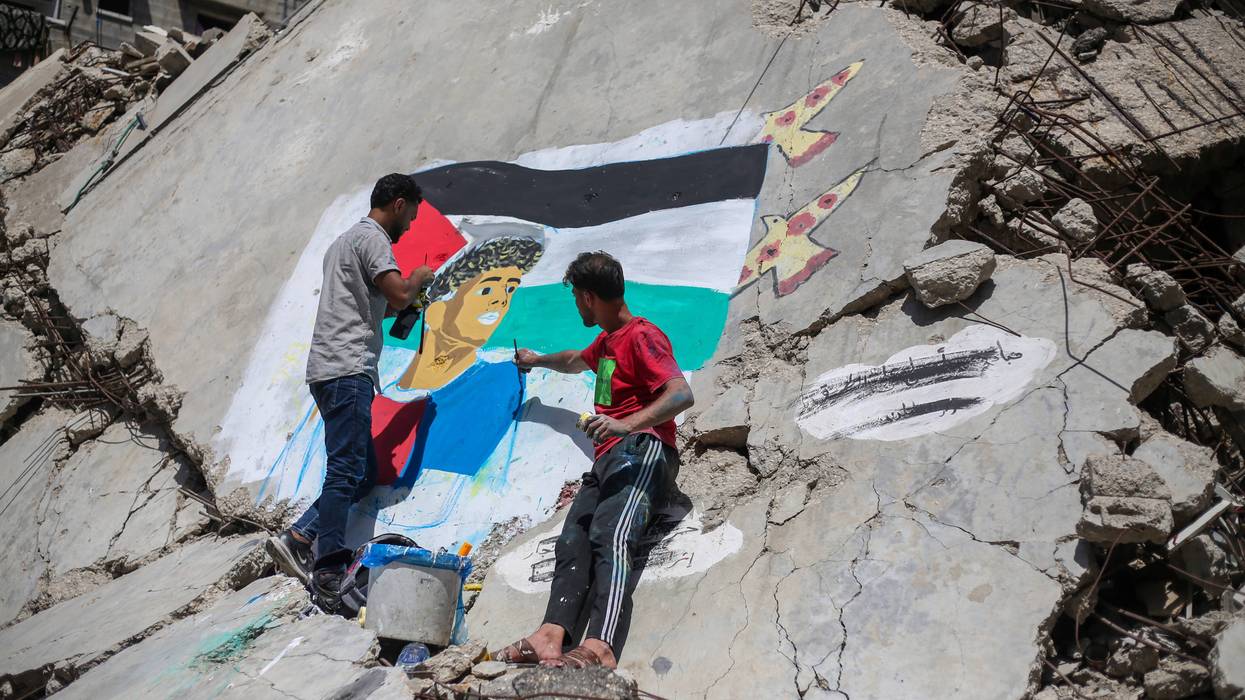
"Those who consider waving the flag of a state to be 'inciting hatred' have either lost their judgment or been blinded by their own ignominy."
Spanish Prime Minister Pedro Sánchez hit back Thursday after senior Israeli officials condemned FC Barcelona star Lamine Yamal for waving a Palestinian flag during a parade celebrating the soccer team's La Liga championship.
The 18-year-old winger—who has established himself as one of the world's best soccer players—waved the flag from atop an open team bus during Monday's celebration in Barcelona. Yamal also shared a photo of him holding the flag with his 42.5 million Instagram followers. The post had nearly 7 million "likes" as of Thursday afternoon.
The display of solidarity with Palestine—whose people have endured 31 months of genocide in Gaza and generations of illegal occupation, settler colonization, apartheid, and ethnic cleansing in the West Bank—drew predictably baseless claims of "antisemitism" and "supporting terrorism" from numerous Israelis, including Security Minister Itamar Ben-Gvir, who in 2007 was convicted of supporting a Jewish terror group.
"He is raising the flag of a nonexistent entity," Ben-Gvir said of Yamal in a Facebook post. Numerous Israeli officials including Ben-Gvir deny the existence of the Palestinian people and nation.
Israeli Defense Minister Israel Katz said on X Thursday that Yamal "chose to incite against Israel and foment hatred while our soldiers are fighting the terrorist organization Hamas, an organization that massacred, raped, burned, and murdered Jewish children, women, and elderly" during the October 7, 2023 attack.
"Whoever supports this type of message should ask themselves: Does he consider this humanitarian? Is this moral?" added Katz, who oversees military forces that have killed or wounded more than 250,000 Palestinians in Gaza in a war that United Nations experts and many others, including prominent Israeli Holocaust scholars, have called a genocide.
Responding to the criticism, Sánchez wrote on X: "Those who consider waving the flag of a state to be 'inciting hatred' have either lost their judgment or been blinded by their own ignominy. Lamine has only expressed the solidarity with Palestine felt by millions of Spaniards. Another reason to be proud of him."
The Spanish government's support for Palestine includes intervention in the International Court of Justice genocide case against Israel, backing the International Criminal Court's effort to bring Israeli Prime Minister Benjamin Netanyahu to justice for alleged crimes against humanity and war crimes in Gaza, promotion of United Nations Gaza ceasefire resolutions, an arms embargo against Israel, and formal recognition of Palestinian statehood.
Katz also said on X that he expects "a great and respected club like FC Barcelona to distance itself" from Yamal's display of solidarity "and make it unequivocally clear that there is no place for incitement or for support of terrorism."
FC Barcelona coach Hansi Flick said Tuesday that if Yamal wants to show support for Palestine, "it is his decision. He is old enough. He's 18 years old."
Yamal's display came just weeks before the Fédération Internationale de Football Association (FIFA) Men's World Cup kicks off in the United States, Canada, and Mexico. Yamal is a member of the Spanish national team. Some observers have voiced concerns about possible backlash from the Trump administration, which has revoked and denied visas for people who publicly support Palestine.
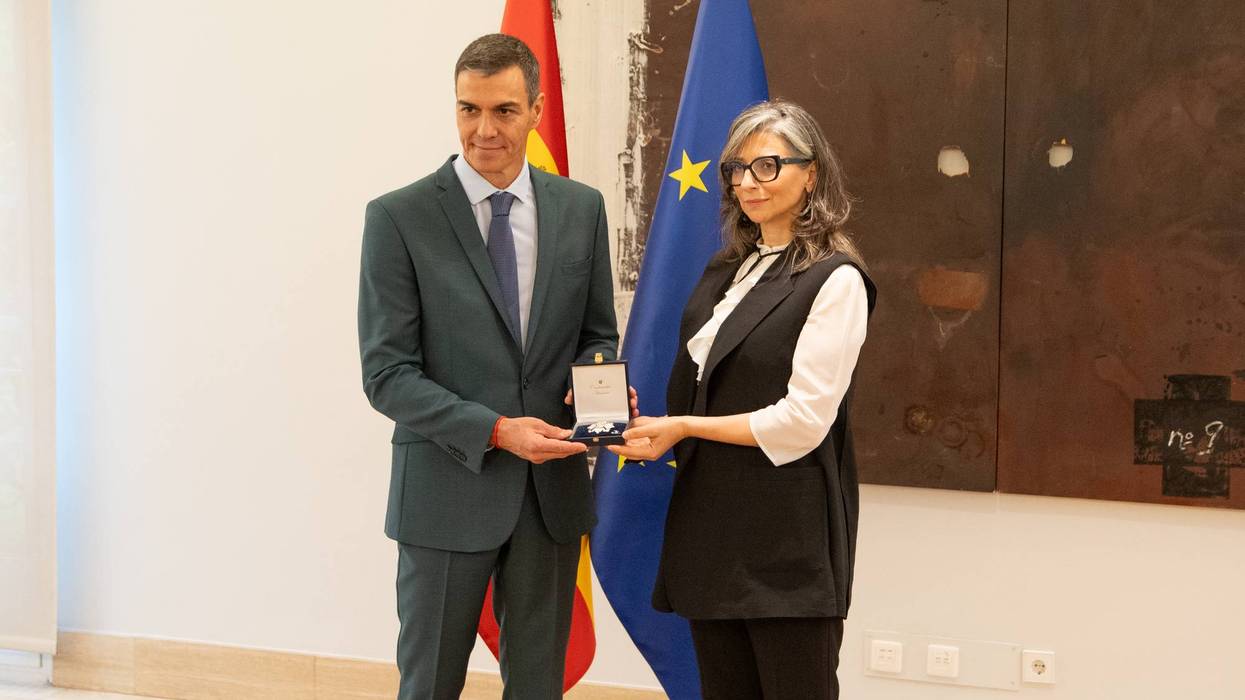
The UN’s special rapporteur on Palestine has said nations seeking to punish her for documenting atrocities committed by Israel “want to silence everyone who demands an end to genocide.”
Spanish Prime Minister Pedro Sánchez honored Francesca Albanese, the United Nations special rapporteur on Palestine, on Thursday, in a display of solidarity as she faces sanctions from the United States over her outspoken advocacy against Israel's genocide in Gaza.
Citing her work to document human rights violations over more than two years of conflict, Sánchez awarded Albanese the Order of Civil Merit, a knighthood granted to Spanish and foreign citizens for extraordinary services benefiting the state or society.
"Public responsibility... entails the moral obligation not to look the other way," Sánchez said in a social media post. "It is an honor to award the Order of Civil Merit to a voice that upholds the conscience of the world: Francesca Albanese."
Earlier this week, Sánchez petitioned the European Commission to intervene to stop compliance with the Trump administration's efforts to punish Albanese, as well as members of the International Criminal Court who have brought arrest warrants against Israeli Prime Minister Benjamin Netanyahu and former Defense Minister Yoav Gallant.
Albanese, an Italian legal scholar, has held the role of special rapporteur since 2022, a year before Israel launched a war in Gaza in response to a Hamas-led attack on October 7, 2023. Human rights organizations and UN experts have described Israel's assault as a genocide.
In March 2024, Albanese released the UN's first major public report, making the legal case that there are "reasonable grounds" to believe a genocide was being committed, referring to a litany of statements by Israeli officials establishing intent to destroy the Palestinian population.
In addition to documenting Israel's actions, she has published research demonstrating the "complicity" of nations that supply weapons and other support to Israel in what she has called a “collective crime" that they should also face responsibility for.
According to official estimates, at least 72,000 Palestinians have been killed since October 2023, many of them women and children, while independent analyses suggest the death toll is much higher, in part due to the near-total destruction of health and other public infrastructure.
Many of the buildings in Gaza have been destroyed by over two years of relentless bombings, leaving most of its 2.1 million people displaced and living in tent cities.
Albanese told a Spanish broadcaster that the US and other nations attempting to punish her and other international authorities for speaking out against atrocities in Gaza were "like an international mafia."
"They want to silence everyone who demands an end to genocide, an end to the crimes,” she said.
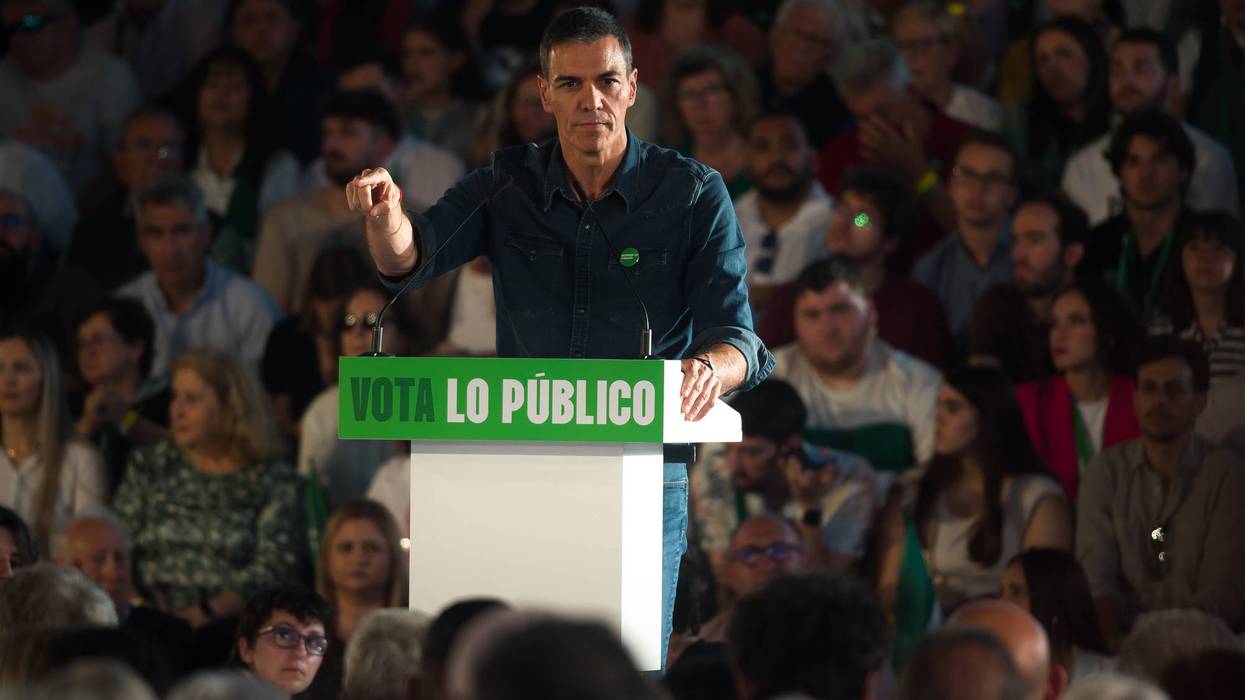
"Sanctioning those who defend international justice puts the entire human rights system at risk," said the Spanish prime minister.
Spanish Prime Minister Pedro Sánchez asked the European Commission on Wednesday to block compliance with US sanctions against the International Criminal Court over its arrest warrants against Israeli leaders accused of war crimes and crimes against humanity in Gaza.
Last February, US President Donald Trump signed an executive order sanctioning the ICC, citing its warrants in November 2024 for the arrest of Israeli Prime Minister Benjamin Netanyahu and his former defense minister, Yoav Gallant.
The ICC said at the time that the sanctions were meant to "harm its independent and impartial judicial work," potentially restricting officials’ access to US-linked property, services, travel, banking, and financial transactions, as they investigate widespread human rights violations and accusations of genocide during the more than two-year military campaign, which has resulted in the deaths of at least 72,000 Palestinians according to official estimates.
In a letter to European Commission President Ursula von der Leyen on Wednesday, Sánchez called for the immediate activation of the European Union's Blocking Statute, which is designed to protect European citizens from the effects of foreign sanctions.
"Spain does not look the other way," Sánchez said in a post to social media. "Sanctioning those who defend international justice puts the entire human rights system at risk."
"The EU cannot remain idle in the face of this persecution," he continued. "That is why, today, we ask the commission to activate the Blocking Statute, to protect the independence of the International Criminal Court and the United Nations, and their actions to end the genocide in Gaza."
In addition to the ICC, Sánchez said that the commission should also shield Francesca Albanese, the United Nations special rapporteur for the Palestinian territories, whom the Trump administration also sanctioned in July, claiming that her stark criticisms of Israel's actions in Gaza helped to "prompt" the ICC investigation.
Following the announcement, Albanese issued a message of thanks to Sánchez over social media.
"Gracias, Presidente Sánchez," she wrote. "For your words, for your principled stance, and for trying to steer Europe away from the abyss."