SUBSCRIBE TO OUR FREE NEWSLETTER
Daily news & progressive opinion—funded by the people, not the corporations—delivered straight to your inbox.
5
#000000
#FFFFFF
To donate by check, phone, or other method, see our More Ways to Give page.
Daily news & progressive opinion—funded by the people, not the corporations—delivered straight to your inbox.
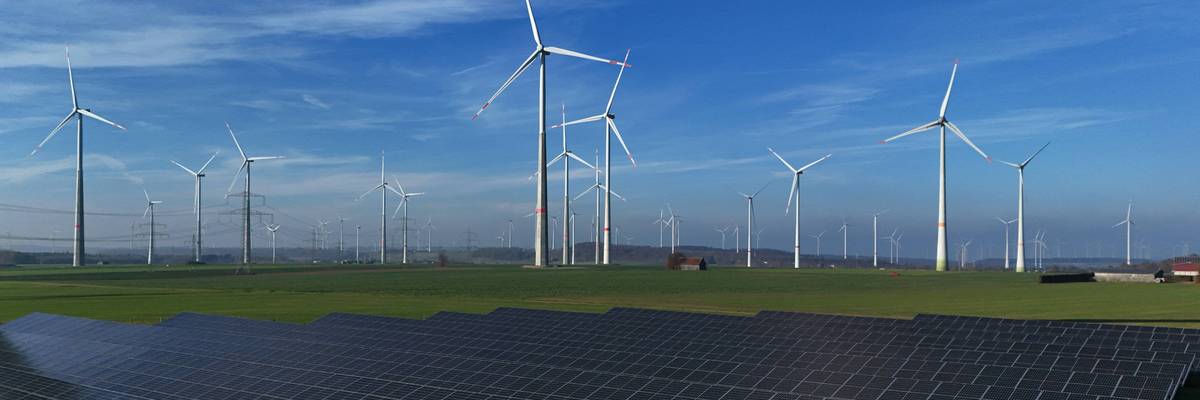
A photo shows solar panels in front of wind turbines near Lichtenau, western Germany on November 10, 2026.
One expert said the analysis makes clear that the war-related crisis "has irrevocably changed the global energy system, adding to the many reasons why countries would benefit from a rapid transition to clean energy."
High-polluting countries like the US are continuing to push for oil and gas extraction, but despite the unwavering commitment of leaders like President Donald Trump to fossil fuels, a report released Thursday by the International Energy Agency says that Trump's own war on Iran made "vulnerabilities in traditional fossil fuel supply systems" clearer than ever.
“I don’t see any credible pathway for the energy world to return to the way it was before,” said Fatih Birol, the IEA's executive director, as the Paris-based agency released its "World Energy Outlook 2026."
The vulnerability that is inherent in countries' fossil fuel dependence became impossible to ignore this year as Iran swiftly retaliated against Trump and Israeli President Benjamin Netanyahu after they launched the war. Iranian officials effectively closed the Strait of Hormuz, which about 20% of the world's oil supply passes through, and sent energy prices skyrocketing.
"The world has been through several major oil supply shocks since 1970," said the agency. "The current crisis is by far the largest."
The IEA coordinated the release of 400 million barrels of crude oil in an attempt to stabilize energy markets, but Birol said a "range of energy futures" are likely to emerge from the upheaval, which “delivered a huge shock to the system."
Mohamed Adow, director of Power Shift Africa, told The Associated Press that "this crisis has exposed the price of fossil fuel dependence. It’s crazy that a conflict thousands of miles away can send energy bills soaring at home.”
“With the world on the brink of breaching 1.5°C of global warming and climate impacts rapidly worsening, world leaders must drastically change course and help secure a healthier, safer world powered by clean, affordable energy for all.”
The war will likely ultimately lead to countries reducing their dependence on the Strait of Hormuz, the IEA forecast, estimating that the 20 million barrels of oil per day that passed through the waterway could be reduced to 8.5 million by 2030 and under 2 million by 2035.
Meanwhile, renewable energy sources, especially solar power, as well as nuclear power, are set to be the “biggest beneficiaries” as governments rethink their energy supply.
The IEA report emphasizes that consumers are already responding to the oil and gas shock of 2026 by turning to electric vehicles and solar panels.
The report was released as leaders assembled in Antalya, Türkiye head into their final days of negotiations at the United Nations Climate Change Conference (COP31), with the latest draft of an agreement leaving advocates dismayed by failing to include a call for a transition away from fossil fuels—even though both the economic realities described in the IEA report and the worsening climate emergency demand such a transition.
“The IEA’s latest report makes clear that the fossil energy crisis unleashed by the US-Israel war on Iran has irrevocably changed the global energy system, adding to the many reasons why countries would benefit from a rapid transition to clean energy and electrification," said Rachel Cleetus, climate program director at the Union of Concerned Scientists. “The future of the energy system and our climate are inextricably intertwined. World leaders at COP31 must stand up to fossil fuel enablers and commit to a fast, fair transition away from all fossil fuels to renewable energy, and ramping up energy efficiency."
“The Trump administration’s attacks on clean energy policies and boosting of fossil fuels is only serving the interests of large fossil fuel polluters who are raking in billions in profits while people struggle to afford basic necessities. It’s time for the newly elected Congress to reverse the harms, keep the administration in check, and hold fossil fuel companies accountable for the damages they are causing," added Cleetus. “With the world on the brink of breaching 1.5°C of global warming and climate impacts rapidly worsening, world leaders must drastically change course and help secure a healthier, safer world powered by clean, affordable energy for all.”
This country and this world are at a monumental crossroads. US voters have an opportunity to beat back the forces of fascism and confront the billionaires who are rigging the economy, our media system, and our democracy, making it increasingly impossible for ordinary people to get by. We’re not just talking about the election. We’re talking about what must be done once these fascist elements are vanquished from power. We need a bolder set of solutions than what either major party has so far been willing to offer and a working-class movement ready to fight like hell for it. Trump didn't emerge from nowhere. The conditions that fueled MAGA authoritarianism were created by decades of radical neoliberal economic policies and a corrupt political system dominated by corporate interests. They slashed taxes on the super-rich, promising that the benefits would trickle down. They said giveaways to the corporate titans would make life more affordable for the rest of us. It was all bullshit. And when a bitter, betrayed populace searches for someone to blame, right-wing demagogues have little trouble finding scapegoats. People know when they're being lied to, but you won't hear any of this from the corporate media. Only independent journalism—powered and funded by people who believe in building a better world—can deliver truly trustworthy daily news. If you share our vision, please contribute whatever you can to sustain our work. |
High-polluting countries like the US are continuing to push for oil and gas extraction, but despite the unwavering commitment of leaders like President Donald Trump to fossil fuels, a report released Thursday by the International Energy Agency says that Trump's own war on Iran made "vulnerabilities in traditional fossil fuel supply systems" clearer than ever.
“I don’t see any credible pathway for the energy world to return to the way it was before,” said Fatih Birol, the IEA's executive director, as the Paris-based agency released its "World Energy Outlook 2026."
The vulnerability that is inherent in countries' fossil fuel dependence became impossible to ignore this year as Iran swiftly retaliated against Trump and Israeli President Benjamin Netanyahu after they launched the war. Iranian officials effectively closed the Strait of Hormuz, which about 20% of the world's oil supply passes through, and sent energy prices skyrocketing.
"The world has been through several major oil supply shocks since 1970," said the agency. "The current crisis is by far the largest."
The IEA coordinated the release of 400 million barrels of crude oil in an attempt to stabilize energy markets, but Birol said a "range of energy futures" are likely to emerge from the upheaval, which “delivered a huge shock to the system."
Mohamed Adow, director of Power Shift Africa, told The Associated Press that "this crisis has exposed the price of fossil fuel dependence. It’s crazy that a conflict thousands of miles away can send energy bills soaring at home.”
“With the world on the brink of breaching 1.5°C of global warming and climate impacts rapidly worsening, world leaders must drastically change course and help secure a healthier, safer world powered by clean, affordable energy for all.”
The war will likely ultimately lead to countries reducing their dependence on the Strait of Hormuz, the IEA forecast, estimating that the 20 million barrels of oil per day that passed through the waterway could be reduced to 8.5 million by 2030 and under 2 million by 2035.
Meanwhile, renewable energy sources, especially solar power, as well as nuclear power, are set to be the “biggest beneficiaries” as governments rethink their energy supply.
The IEA report emphasizes that consumers are already responding to the oil and gas shock of 2026 by turning to electric vehicles and solar panels.
The report was released as leaders assembled in Antalya, Türkiye head into their final days of negotiations at the United Nations Climate Change Conference (COP31), with the latest draft of an agreement leaving advocates dismayed by failing to include a call for a transition away from fossil fuels—even though both the economic realities described in the IEA report and the worsening climate emergency demand such a transition.
“The IEA’s latest report makes clear that the fossil energy crisis unleashed by the US-Israel war on Iran has irrevocably changed the global energy system, adding to the many reasons why countries would benefit from a rapid transition to clean energy and electrification," said Rachel Cleetus, climate program director at the Union of Concerned Scientists. “The future of the energy system and our climate are inextricably intertwined. World leaders at COP31 must stand up to fossil fuel enablers and commit to a fast, fair transition away from all fossil fuels to renewable energy, and ramping up energy efficiency."
“The Trump administration’s attacks on clean energy policies and boosting of fossil fuels is only serving the interests of large fossil fuel polluters who are raking in billions in profits while people struggle to afford basic necessities. It’s time for the newly elected Congress to reverse the harms, keep the administration in check, and hold fossil fuel companies accountable for the damages they are causing," added Cleetus. “With the world on the brink of breaching 1.5°C of global warming and climate impacts rapidly worsening, world leaders must drastically change course and help secure a healthier, safer world powered by clean, affordable energy for all.”