

SUBSCRIBE TO OUR FREE NEWSLETTER
Daily news & progressive opinion—funded by the people, not the corporations—delivered straight to your inbox.
5
#000000
#FFFFFF
To donate by check, phone, or other method, see our More Ways to Give page.
Daily news & progressive opinion—funded by the people, not the corporations—delivered straight to your inbox.
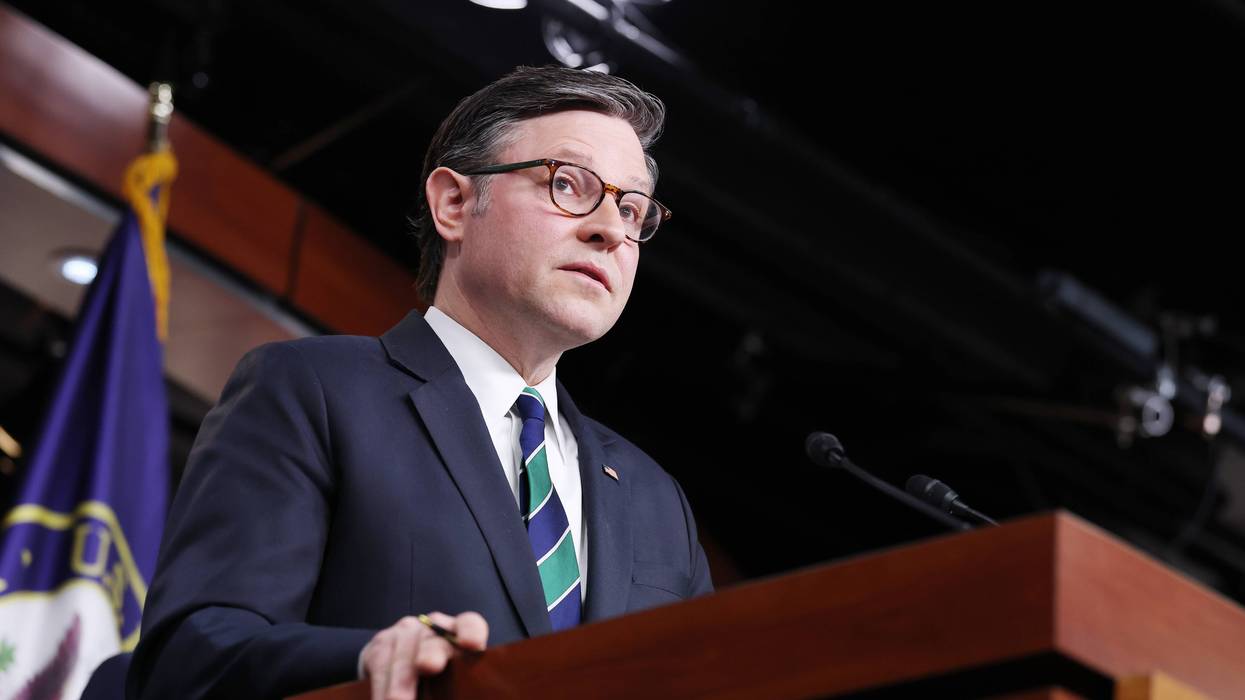
"These people are such incredible cowards," said Rep. Pramila Jayapal. "They know that what Pete Hegseth has done, his role in driving us into the war, is absolutely wrong."
US House Speaker Mike Johnson said Wednesday that with seven weeks to go until Election Day, it was time for lawmakers to "go home to their districts and make the case to the American people"—a day earlier than scheduled.
But with the US public overwhelmingly disapproving of President Donald Trump's war in Iran and demanding accountability for his bombing of boats in the Caribbean Sea, Republicans may be headed home hoping their constituents don't ask questions about those issues, particularly as Johnson (R-La.) faced accusations of ending the House session early in order to avoid a vote pertaining to them.
Johnson announced the early adjournment a day after Rep. Thomas Massie (R-Ky.) filed articles of impeachment against Defense Secretary Pete Hegseth, arguing in the resolution that Hegseth violated the War Powers Resolution of 1973 by initiating strikes against Iran without authorization from Congress and continuing to attack the country past the 60-day mark set by the law.
He also accused Hegseth of “ignoring laws that minimize civilian casualties," citing an attack that killed more than 150 children and teachers at a school in Minab, Iran, and of conducting an illegal campaign of extrajudicial killings by overseeing dozens of boat bombings in the Caribbean and eastern Pacific Ocean that have killed at least 230 people since last September.
Massie's resolution was privileged, meaning it had to be taken up by the House within two legislative days.
With House members now on their way back to their districts to campaign ahead of the midterm elections, lawmakers will be unable to pursue the impeachment effort until at least November. They are not set to return to Capitol Hill until after Americans vote on November 3.
"These people are such incredible cowards," said Rep. Pramila Jayapal (D-Wash.) of her Republican colleagues. "They know that what Pete Hegseth has done, his role in driving us into the war, is absolutely wrong."
Republicans just CANCELLED votes for tomorrow, the last legislative day before the midterms.
Why? Because they’re afraid we’ll impeach Pete Hegseth. What a bunch of cowards. pic.twitter.com/vTTfNNtpmP
— Rep. Pramila Jayapal (@RepJayapal) September 16, 2026
Johnson derided Massie's resolution as "ridiculous" and "a publicity stunt by someone who wants attention."
“It’s a publicity stunt by someone who wants attention," he said. "It will immediately be tabled, of course, but we probably won’t do that today. We’ll probably do it when we come back. But it’s a stunt. Secretary Hegseth has done an extraordinary job at the Department of War. We’re in the middle of international conflicts right now, and we should not be playing games with national security."
A motion to table a resolution immediately kills the measure without debate.
"We're calling off Congress," said Massie on the House floor Wednesday, "and we're in the majority... I would implore all of us to take it up with the leadership. Why are we going to be denied a debate on whether there should be an impeachment or not?"
Massie: We’re in the majority. Why are we whining about The Save Act? We won the elections. Why are we saying the elections were stolen if we won them all? pic.twitter.com/sab4GGViw3
— Acyn (@Acyn) September 16, 2026
Public polling suggests most Americans likely do not think Hegseth and other top officials are doing an "extraordinary job" regarding the war in Iran, as Johnson claimed.
A survey in late July showed that nearly two-thirds of Americans felt the war was not worth fighting, and an Associated Press poll in June found the same percentage of respondents disapproved of Trump's handling of issues concerning Iran. The war has sent oil and gas prices skyrocketing, and a majority of voters told Reuters/Ipsos in April that they blamed the Trump administration.
Massie noted that Johnson's maneuver would make it harder for supporters of a discharge petition to force a vote on the Epstein Files Transparency Act to gather the 218 signatures they need.
"I thought we’re supposed to be running a government here. Speaker Mike Johnson just sent the House home. Why? Because Rep. Thomas Massie filed articles of impeachment against Pete Hegseth," said Rep. Mike Levin (D-Calif.). "Speaker Johnson, the WEAKEST speaker of all time, was so scared that we had the votes to impeach Hegseth and hold him accountable that he’s sending us all home to make sure it doesn’t happen."
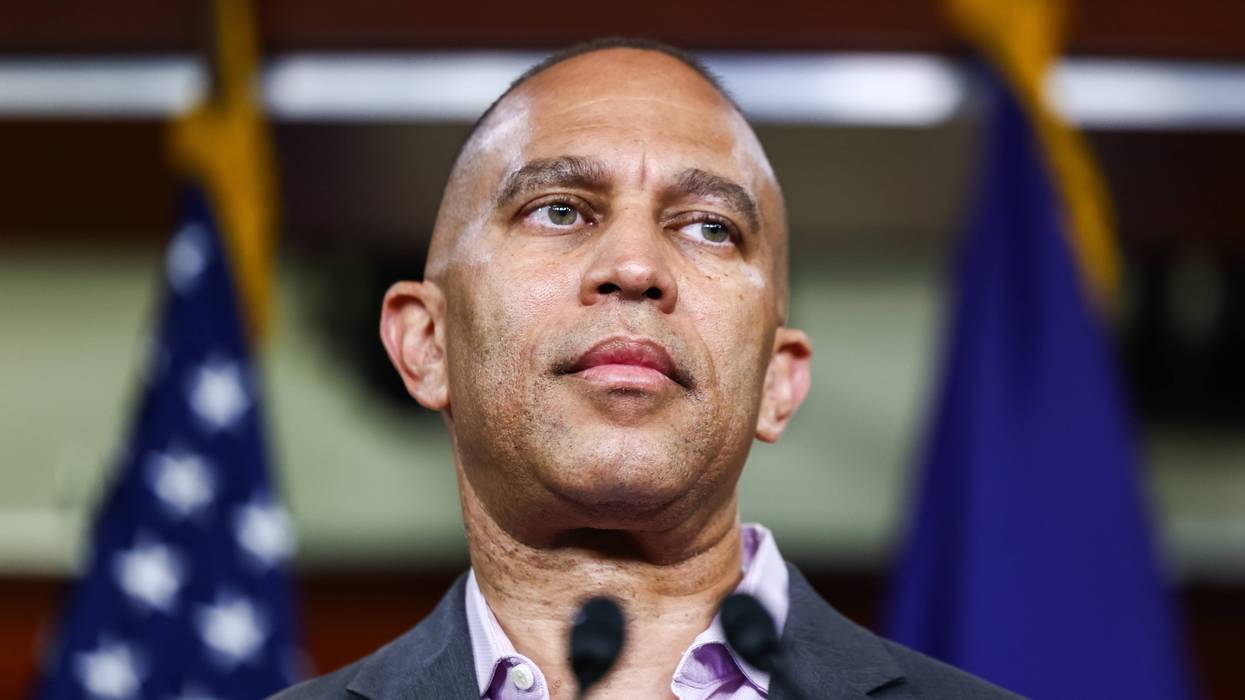
The only valid reason for such a meeting, said one critic, would be for the House Minority Leader to tell the president's son-in-law that he’ll be subpoenaed by "for a corruption investigation on day one of Democratic control of the House."
Persistent calls among progressive critics and Democratic voters that House Minority Leader Hakeem Jeffries and Senate Minority Leader Chuck Schumer should step aside from their leadership roles ticked up again on Sunday after it was reported that Jeffries met secretly in recent weeks with Jared Kushner, the far-right son-in-law of President Donald Trump, who has also served as a top White House advisor and envoy.
The New York Times reported Sunday that the two men "met privately in recent weeks" in order to discuss "potential areas of common ground" if the Democrats regain control of one or both chambers of Congress in the midterms.
According to the Times:
The rare engagement was held in a private space in New York City, offered up by a mutual friend of the two men, according to two people with knowledge of the meeting and a third who was briefed on it. They and others were granted anonymity to discuss a meeting about which they were not authorized to speak publicly.
Through aides, neither man would comment on the session, which was described by one person with knowledge of it as a broad conversation on a range of topics. Still, its timing underscored that those around Mr. Trump were well aware of the likelihood of a Democratic-led House, and trying to foster as much of a working relationship as possible before any change.
News of the meeting, later confirmed by other news outlets but which Kushner and Jeffries neither confirmed nor denied, landed poorly for progressive critics who make the case that Jeffries' political leanings and leadership tendencies are a roadblock to the kind of transformational change wanted by a majority faction of the Democratic Party and also needed to defeat Trump and his fascist allies once and for all.
"Jeffries and Schumer have to go if Democrats are even going to gain any ground," said David W. Pippy, a former school administrator and local union president, in response to the reporting. "They need fighters, not secret meetings."
Last Sunday, Jeffries went on a weekend news show and said he does not support Medicare for All legislation in the House, despite poll after poll showing Democratic voters overwhelmingly support it.
"The lack of political talent in New York is astounding," Gabe McKinley, an actor and director based in New York City, declared in a social media post. "Jeffries and Schumer are bad at their jobs."
The Times, citing its sources familiar with the meeting, reported that "the pair discussed housing, immigration and the high cost of living as potential areas of common ground." Kushner also suggested Jeffries connect with Trump's White House chief of staff, Susie Wiles, whom he reportedly described as the "most serious" person in the president's inner circle. It wasn't clear how Jeffries responded.
Journalist Mehdi Hasan responded by saying Sunday was "a good day to re-up my piece from almost exactly a year ago," in which he explained why Schumer and Jeffries, both of whom represent New York in Congress, are leaders that the party—which has now lost the White House to Trump twice—can no longer afford. In his op-ed, Hasan wrote:
Since Trump was inaugurated for a second time in January, Jeffries and Schumer have demonstrated time and again that they are not built for this particular moment. While Trump seeds the ground for an American dictatorship, these two top Dems pine for bipartisanship. While millions of rank-and-file Democrats across the country say they want leaders who will fight, Jeffries and Schumer fold. While younger Democrats like [NYC City Mayor Zohran] Mamdani and [Rep. Alexandria Ocasio-Cortez (D.NY)] offer energy and charisma, these two lackluster leaders in the House and Senate offer cringe chants and even cringier photo ops.
It is past time for both Jeffries and Schumer to step down and step aside. This fascist moment, this age of Trump, demands outspoken, unrelenting and fearless opposition. Whether you are a Democrat, or simply a democrat, we all deserve better.
On Sunday, Hasan argued that the only valid reason Jeffries should be meeting with Kushner is to "tell him he’ll be subpoenaed by the House for a corruption investigation on day one of Democratic control of the House."
Former Republican strategist Tim Miller, now with The Bulwark, agreed.
Otherwise, said Hasan, "This is just pathetic stuff from the House Dem leader."
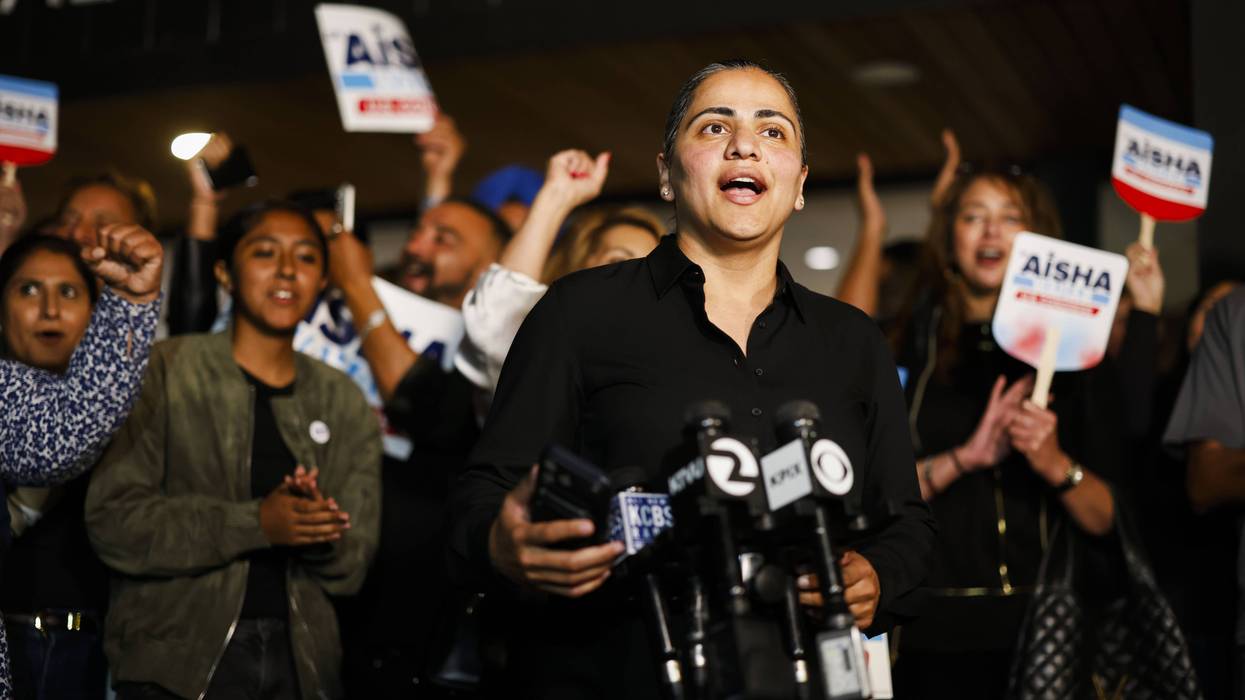
"This victory belongs to the voters who made clear that our district cannot be bought," said Wahab, who will serve out the remainder of former Rep. Eric Swalwell's term.
Progressive California state Sen. Aisha Wahab has won a special election to serve the remainder of disgraced former Rep. Eric Swalwell's term in the US Congress, defeating a centrist Democrat backed by millions of dollars in AIPAC spending.
“This victory belongs to the voters who made clear that our district cannot be bought,” Wahab said in response to news of her victory, which came some 48 hours after election day. "Through one of the ugliest, most expensive elections we’ve ever seen, we never took the bait or went negative. We stayed focused on the people, and I will fight for this district that raised me.”
Wahab, who ran on slashing prescription drug costs and ending forever wars, will represent California's 14th Congressional District until at least January. In November, Wahab will face Bay Area Rapid Transit board member Melissa Hernandez again in a race for a full two-year term in the US House. Tuesday's special election was significantly closer than earlier primary contests, signaling a highly competitive race later this year.
Our Revolution, a progressive advocacy organization that backed Wahab, called her win "a national model for how progressives can defeat big-money outside groups and build a Democratic Party rooted in working people." The United Democracy Project, AIPAC's super PAC, spent $2.5 million on the contest in an effort to boost Hernandez.
BOLD America, a separate super PAC that has received funding from AIPAC, also threw millions of dollars behind Hernandez. By contrast, The American Prospect reported that Wahab’s outside support came "from the state’s leading labor organization, from the leadership PAC of Rep. Pramila Jayapal (D-Wash.), and from the PAC for the Congressional Progressive Caucus."
“Aisha Wahab’s victory should be studied by every progressive running for office in America,” Joseph Geevarghese, executive director of Our Revolution, said in a statement late Thursday. “They had millions of dollars. We had organized people. And organized people won.”
“The lesson from CA-14 is simple: Democrats do not have to surrender to the biggest checkbook in the race,” said Geevarghese. “Big money can buy television ads, mailboxes and endless attacks. It cannot buy the trust built through thousands of conversations between neighbors. That is the model: unite the movement, organize everywhere, and make billionaire money fight us on our terrain.”
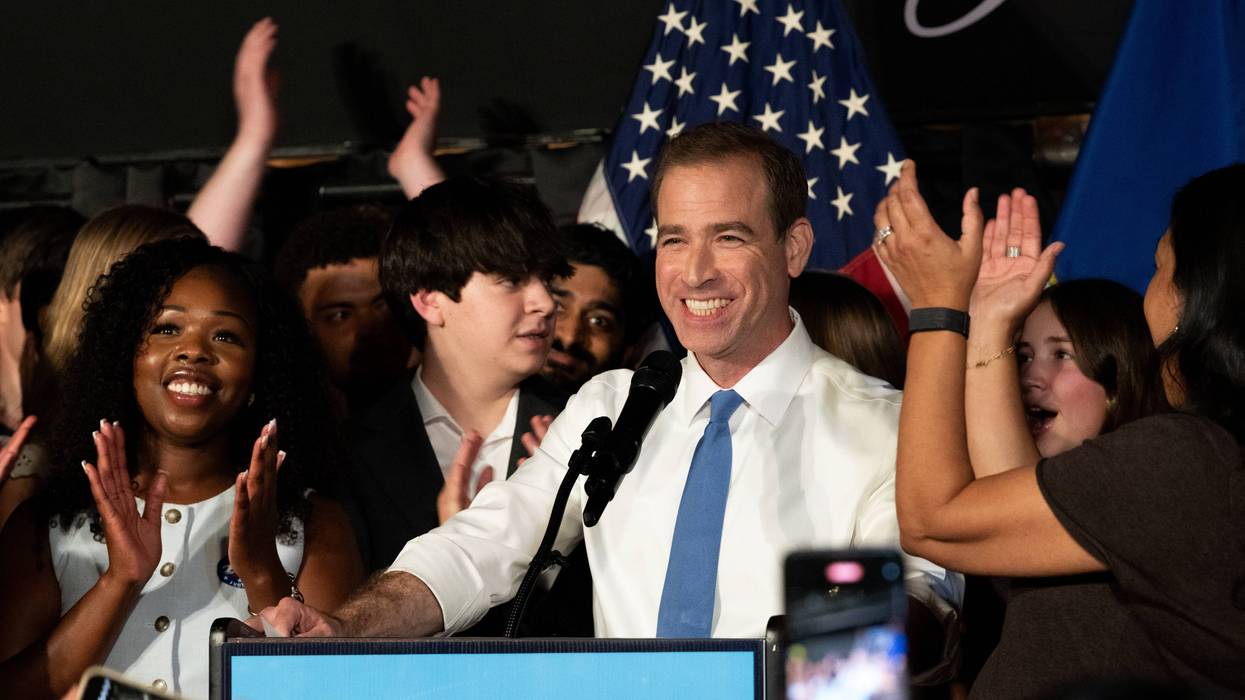
"The bittersweet truth is that when you successfully fight the monstrous power of the billionaires, they will do everything they can to silence you."
US Rep. John Larson, one of the most vocal champions of Social Security expansion in Congress, lost reelection on Tuesday to the former mayor of Hartford, Connecticut whose campaign was bankrolled in part by a billionaire hedge fund manager and his network of dark money groups.
Luke Bronin's landslide win over Larson, a 14-term incumbent, in Connecticut's 1st Congressional District unseats an ardent Social Security champion amid a renewed bipartisan push for legislation that progressives warn would result in benefit cuts. On his website, Bronin expresses support for "strengthening Social Security" and ensuring the program survives for current and future beneficiaries—but provides no details on how he would go about accomplishing those objectives.
By contrast, Larson—whose campaign was backed by prominent unions and Social Security defenders—has laid out his vision for strengthening the New Deal program and ensuring its solvency for the rest of the century.
The Social Security 2100 Act, Larson's bill, would increase benefits and bolster the program's finances by eliminating the payroll tax cap that currently exempts annual income above $184,500. Had he won Tuesday's primary, Larson would have been on track to chair the House Ways and Means Committee's Social Security panel under a possible Democratic majority next year.
"Larson’s Social Security 2100 Act would protect and expand Social Security by making billionaires pay in on all of their income, just like the rest of us," Alex Lawson, executive director of Social Security Works—whose PAC endorsed Larson—wrote in an op-ed for Common Dreams last week. "That’s why billionaires are so desperate to defeat him—and they’ve found just the empty suit to do it."
Billionaire hedge fund manager Stephen Mandel and his wife maxed out individual donations to Bronin's campaign, which also received support from Majority Democrats and the Bench—organizations funded by the Mandels.
"Bronin has amassed a sizable war chest, thanks to the Bench and other PACs that trace back to Mandel," The Lever reported on Tuesday. "As it turns out, Bronin used to be on the payroll of a nonprofit funded by the billionaire, and his campaign’s policy stances reflect the network’s influence."
"History will recognize the invaluable role Larson played in uniting the Democratic Party against even a single penny in cuts to Social Security's earned benefits."
Throughout the primary, Bronin repeatedly criticized Larson for "introducing the same bill every year"—referring to the Social Security 2100 Act—without making progress toward its passage.
But Larson's supporters said a narrow focus on Larson's bill obscures the congressman's broader efforts to preserve and bolster Social Security benefits throughout his career in the US House of Representatives.
"When faced with a political consensus that assumed it was necessary to cut Social Security’s hard-earned benefits, Larson worked to change the entire conversation about Social Security," a trio of retiree advocates—Nancy Altman of Social Security Works, Max Richtman of the National Committee to Preserve Social Security and Medicare, and Richard Fiesta of the Alliance for Retired Americans—wrote earlier this week.
"Thanks to his hard work, Democrats are now united around strengthening Social Security by making the wealthy pay their fair share, and even some Republicans are beginning to come on board," they continued. "Importantly, Larson has gone face to face with Elon Musk’s so-called 'Department of Government Efficiency' and has stood up to them, fighting for every inch when it comes to protecting Social Security from vicious DOGE attacks."
In a statement to Common Dreams on Wednesday, Lawson of Social Security Works said that "history will recognize the invaluable role Larson played in uniting the Democratic Party against even a single penny in cuts to Social Security's earned benefits."
"The bittersweet truth is that when you successfully fight the monstrous power of the billionaires," Lawson added, "they will do everything they can to silence you."
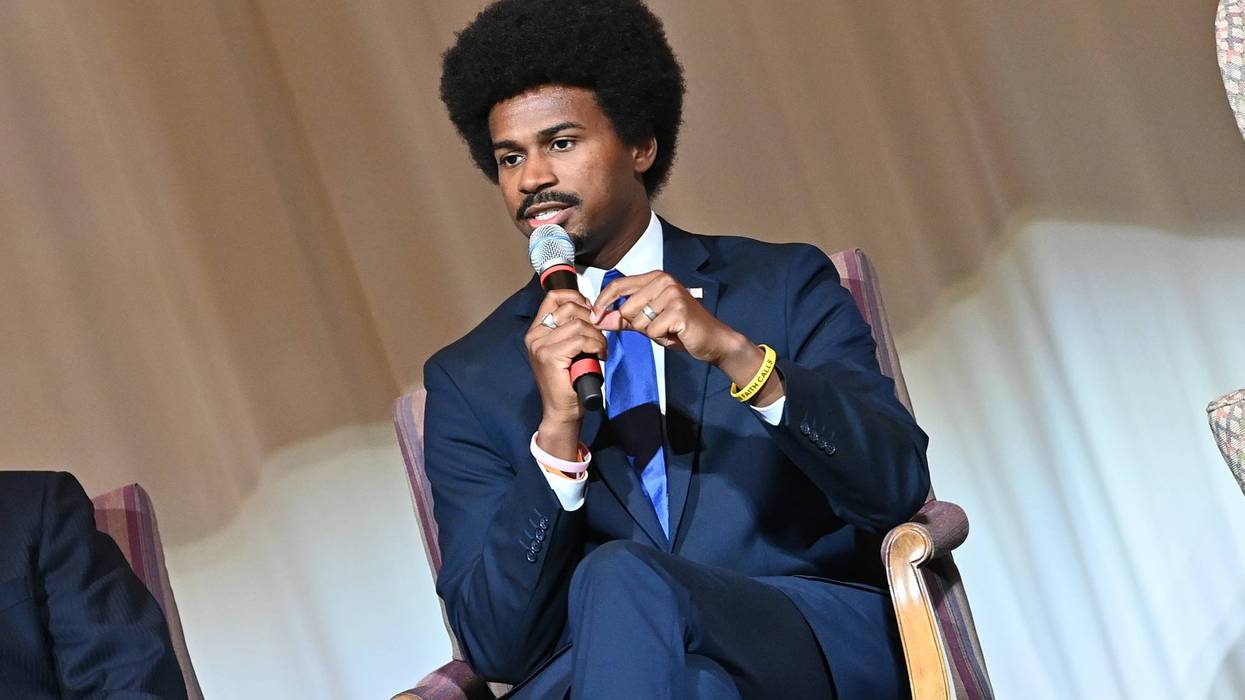
"Exactly 61 years from the signing of the Voting Rights Act, we won our primary despite a redistricting blow that cracked Memphis' representation in Congress."
Justin Pearson, a Tennessee state representative who rose to national prominence for his role in gun control and voting rights protests, won the Democratic primary on Thursday for a US House seat in Tennessee's 9th Congressional District, which Republican lawmakers dismantled earlier this year as part of a broader gerrymandering effort.
In his election night speech, Pearson called GOP redistricting—enabled by a recent US Supreme Court ruling that gutted the Voting Rights Act's protections against racial discrimination—an "attempt to keep people like us out of power." The 9th Congressional District was previously Tennessee's lone majority-Black district, but state Republicans broke it apart earlier this year following the Supreme Court's decision in Louisiana v. Callais.
"Exactly 61 years from the signing of the Voting Rights Act, we won our primary despite a redistricting blow that cracked Memphis' representation in Congress, attacks on our community from Elon Musk and his toxic data centers, and attempts to divide us," said Pearson, who ran on a platform that includes Medicare for All, a minimum wage increase, higher taxes on the rich, and universal rent caps. Pearson won nearly 66% of the vote in Thursday's primary.
Pearson will now face Tennessee state Sen. Brent Taylor, who was endorsed by President Donald Trump, in the general election. The 9th district "previously favored Democrats but now tilts Republican, with 71% of voters new to the district," according to The Associated Press.
“Tonight, on the 61st anniversary of the Voting Rights Act, tens of thousands of voters across Tennessee’s newly drawn 9th congressional district showed up in the face of racial gerrymandering to demand a better future and advance a real fighter: Justin J. Pearson," Britney Whaley, southeast regional director of the Working Families Party, said in a statement late Thursday.
"While Republicans and billionaires try to drag Tennessee and the South back into the past with regressive policies, wrongful power grabs, and inaction in the face of mass suffering, the Working Families Party is proud to fight forward alongside Justin J. Pearson to build a future that centers America’s growing multiracial working class," said Whaley. "A future where well-paying jobs are guaranteed and basic necessities are affordable. A future where our communities are safe from pollution and gun violence. A future where access to healthcare is a right for all, not a privilege for the fortunate few. A future where the needs of the people are prioritized over the interests of greedy corporations. A future where the promise of a fair democracy is finally fulfilled."
Pearson's primary victory came over three years after Tennessee Republicans expelled him from the state House of Representatives for leading protests in support of gun control following a deadly school shooting in Nashville. Pearson was later reinstated and subsequently won a special election by a huge margin.
Earlier this year, Pearson joined protests against Tennessee Republicans' adoption of an aggressively gerrymandered congressional map.
"This is what evil looks like," Pearson said at the time.
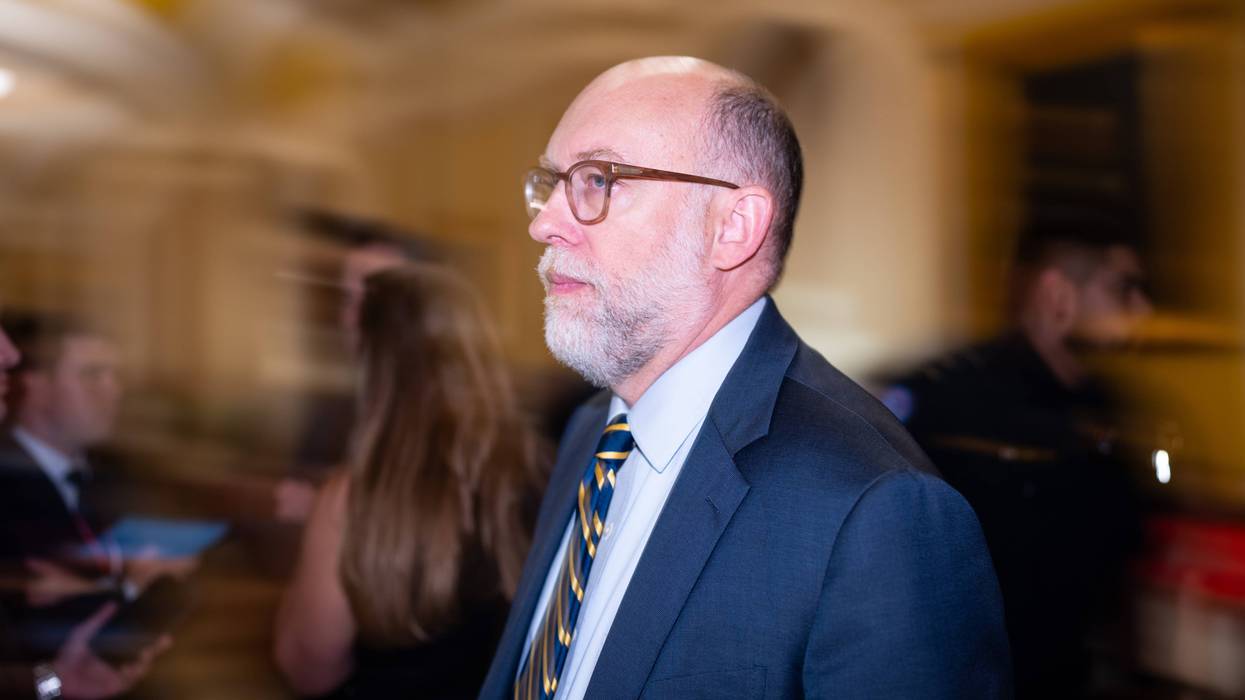
"Vought’s blatant abuse of power and complete disregard for the Constitution warrants immediate removal by Congress," said Democratic Rep. Sydney Kamlager-Dove.
A House Democrat on Thursday introduced articles of impeachment against White House budget chief Russell Vought, accusing the Project 2025 architect and far-right ideologue of unlawfully terminating federal funds appropriated by Congress and putting the Trump administration's political priorities over the law.
Rep. Sydney Kamlager-Dove (D-Calif.), who is leading the push to remove Vought, pointed to his partisan cancellation of federal funding for Democratic-led states as "just the latest example" of illegal and impeachable conduct.
"Vought has repeatedly and openly broken the law to stroke Trump's fragile ego," Kamlager-Dove said in a statement. "These nakedly partisan schemes to punish Democratic voters ultimately hurt families and workers of all political stripes. We cannot sit idly by while an unelected shadow president continues to weaponize the federal government and steal taxpayers’ hard-earned money. Russell Vought’s blatant abuse of power and complete disregard for the Constitution warrants immediate removal by Congress."
Kamlager-Dove filed two articles of impeachment against Vought, who has quietly become one of the most powerful and influential figures in the second Trump administration. One of the new articles accuses the White House budget director of "abuse of power through improper impoundment of congressionally appropriated funds," and the other alleges "failure to faithfully execute the laws of the United States."
Last month, Trump administration officials admitted in court filings that they terminated billions of dollars worth of Biden-era federal grants for clean energy projects in some states "based solely" on political considerations, including whether former Vice President Kamala Harris won the state in the 2024 election.
"Such conduct represents an unconstitutional interference with Congress’ exclusive authority over appropriations and an abuse of executive power," states Kamlager-Dove's first impeachment article against Vought.
The California Democrat launched her impeachment push as Vought worked to place billions of dollars in federal grant money under the control of political appointees, a change that scientists, environmental groups, and other critics say would leave funding for key research at the mercy of the Trump administration's political whims.
"The proposed rule would systematically politicize federal funding and allow Trump officials to cancel grants at any time for any reason," Sen. Patty Murray (D-Wash.) said this past weekend. "Enabling this rule would only give [President Donald] Trump the green light to take even more federal funding hostage."
"While Republicans rejected killing the proposed rule outright, I’m going to keep fighting to put a stop to it once and for all, and I will keep pressing my Republican colleagues to do exactly that," said Murray.
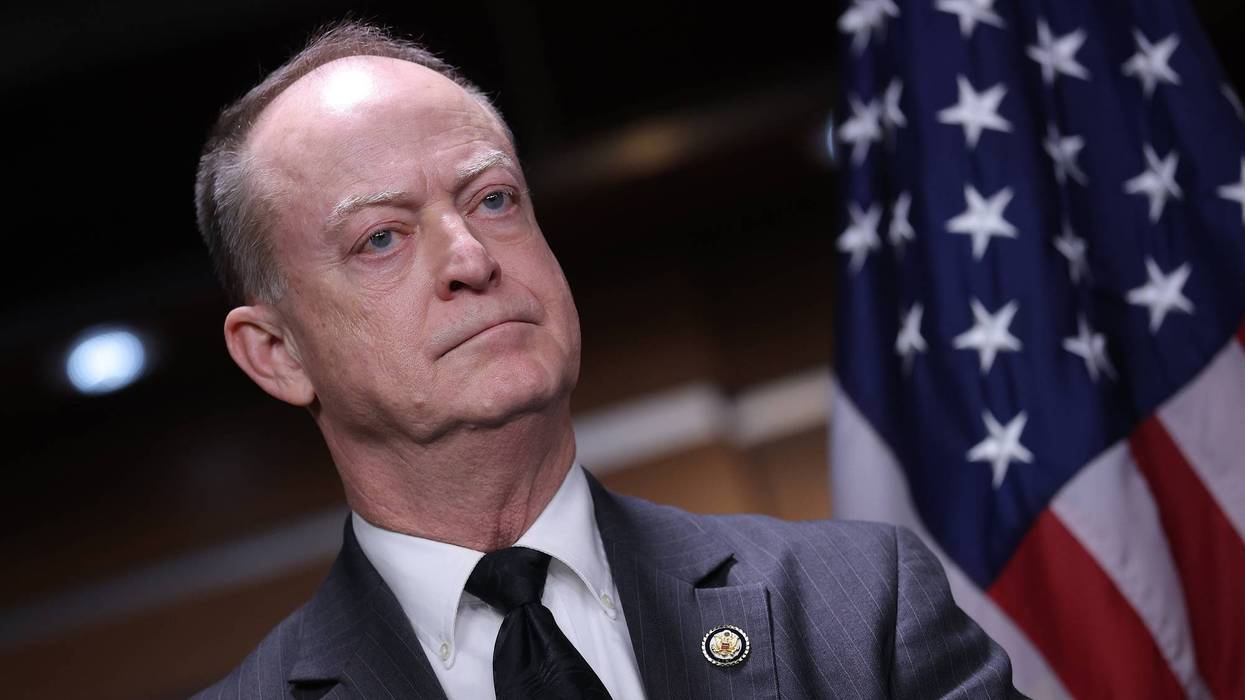
"Congress should not respond to an escalating occupational hazard by permanently removing the Department of Labor’s authority to address it."
A Republican-controlled House committee passed legislation earlier this week that would prevent the US Labor Department from enacting federal standards to protect workers from extreme heat, a move that came amid sweltering heat across the country.
The Heat Workforce Standards Act, led by Rep. Mark Messmer (R-Ind.), passed the House Education and Workforce Committee on Tuesday in a 18-15 vote along party lines. If enacted, the legislation would bar the Occupational Safety and Health Administration (OSHA) from implementing nationwide heat protections for workers—including those proposed by the Biden administration in 2024.
The Biden Labor Department estimated that its proposed rules would protect around 36 million workers. Trump's Labor Department has done nothing to move forward with the Biden-era proposal.
The AFL-CIO, the largest labor federation in the US, has condemned the GOP bill, noting that "extreme heat is one of the deadliest workplace hazards in America."
"House lawmakers are considering legislation that would block OSHA from issuing or enforcing a federal heat safety standard," the labor group said earlier this week. "That's the wrong direction when workers' lives are on the line."
Ahead of Tuesday's vote, a coalition of labor unions and advocacy groups wrote in a letter to members of Congress that the Republican legislation "would permanently remove the federal government’s authority to address a workplace hazard that is already resulting in worker fatalities."
"The Bureau of Labor Statistics recorded 55 worker deaths from heat exposure in 2023, a number that safety researchers widely consider to be an undercount due to frequent misclassification or underreporting of heat-related illnesses and fatalities," the coalition wrote. "More broadly, heat-related deaths in the United States have more than doubled since 1999, and extreme heat now claims more lives each year than any other weather-related hazard."
"Workers have no control over extreme heat, and many are unable to refuse hazardous assignments without jeopardizing their livelihoods," the groups added. "Congress should not respond to an escalating occupational hazard by permanently removing the Department of Labor’s authority to address it."
The Groundwork Collaborative, Workshop, and Harvard Law School’s Center for Labor and a Just Economy estimated in a report published earlier this year that basic, federal workplace heat protections could save up to 1,500 lives annually. The report observed that major industry groups, including the US Chamber of Commerce, have mobilized against proposed national heat protections.
"Companies like Amazon and the United Parcel Service (UPS) that employ hundreds of thousands of workers subjected to extreme workplace temperatures make public statements about their commitments to worker safety while actively lobbying to weaken or block heat regulations," the report noted. "As extreme heat intensifies, the cost of inaction will be measured in lives lost. The question facing policymakers is no longer whether effective protections exist, but whether they have the political will to stand up to those unscrupulous employers lobbying hard to block them."
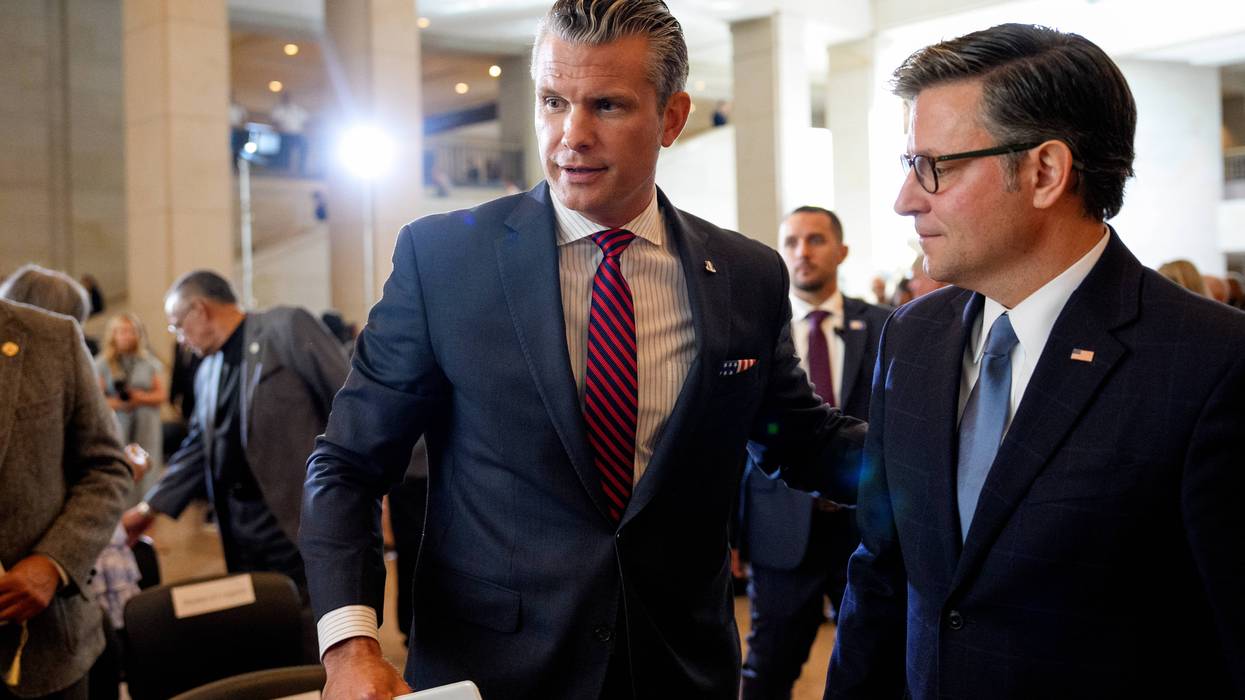
"By voting for this budget resolution, Republicans are saying that this war is more important than lowering Americans’ costs."
House Republicans on Wednesday approved a $95 billion budget framework that would pump more money into US President Donald Trump's illegal Iran war and push states to adopt restrictions on voting rights, all while Americans struggle to afford groceries and other necessities.
Every present House Democrat and just three members of the GOP caucus—Reps. Thomas Massie of Kentucky, Warren Davidson of Ohio, and Kevin Kiley of California—voted against the budget measure, which would yet again set in motion the filibuster-proof reconciliation process that the Republican majority has used to ram through tax cuts for the rich, attacks on safety net programs, and other unpopular agenda items.
The new budget blueprint, which is seen as facing tougher prospects in the narrowly Republican-controlled Senate, would provide up to $73 billion in additional funding for the US military, mostly for the Iran war. The measure also includes $10 billion to prod states to adopt voter ID requirements, a top priority of the Trump administration ahead of the 2026 midterms.
Leor Tal, campaign director at the Unrig Our Economy coalition, said in response to Wednesday's vote that "once again, Republicans in Congress chose to put their unnecessary war in Iran over the American people."
"It is unconscionable that any member of Congress would vote to put a cent of taxpayer money towards this war that is raising Americans’ costs and costing servicemembers their lives," said Tal. "By voting for this budget resolution, Republicans are saying that this war is more important than lowering Americans’ costs. It’s time for Republicans in Congress to put an end to this seemingly endless war."
Analysts have placed the financial cost of the Iran war at roughly $1,100 per American household so far, accounting for higher prices for energy, groceries, and other essentials. With families across the country reeling from federal food aid cuts implemented under an earlier Republican budget package, a recent poll found that two-thirds of Americans say they would describe the cost of groceries as unaffordable—up from 45% prior to the US assault on Iran.
The budget measure that House Republicans adopted on Wednesday would do nothing to alleviate the nation's worsening cost-of-living crisis, which Trump has repeatedly dismissed as a hoax perpetrated by his political opponents.
"With grocery bills on the rise and skyrocketing gas prices at the pump, working families are struggling to make ends meet, and Republicans have no plan for them," Rep. John Larson (D-Conn.) said Wednesday. "Taxpayer dollars should be used to support the American people, not double down on this president’s failed agenda and foreign wars. Congress needs to cut off funding for the war before more Americans are killed, not write a multi-billion-dollar blank check to the Pentagon."
In a separate vote on Wednesday, House Republicans voted to authorize an unprecedented $1.15 trillion military budget for the coming fiscal year. Reps. Ilhan Omar (D-Minn.) and Mark Pocan (D-Wis.), co-chairs of the Defense Spending Reduction Caucus, said in a joint statement that "while millions of Americans are struggling to afford basic necessities, Congress is choosing to authorize over $1 trillion for the Pentagon, once again funneling billions of taxpayer dollars to defense contractors instead of investing in the needs of working people."
"The American people are sick and tired of funding atrocities abroad and want this war with Iran to end," said Omar and Pocan. "Yet year after year, the Pentagon fails its audit with virtually no accountability, while Congress continues to increase military spending. We should be investing in affordable housing, healthcare, education, and good-paying jobs—not bankrolling defense contractors."
The Republican legislative package "would leave the financial system dramatically weaker and make future bank failures and publicly financed bailouts more likely," warned one advocacy group.
A broad coalition of advocacy organizations and labor unions warned Tuesday that Republican legislation currently moving through the US House of Representatives would deregulate Wall Street giants and increase the risk of another financial disaster under the guise of aiding community banks.
"This dangerous bank deregulation package would undermine core safeguards and supervision, push risk into the shadows, and make the next publicly financed bailout more likely," an alliance of 28 advocacy groups wrote in a letter to members of Congress. "Further deregulation is especially alarming at a time when financial regulatory agencies are under political attack, pursuing industry-friendly agendas, and starved of resources, and when there is effectively no oversight of financial markets."
Proponents of the GOP's Main Street Capital Access Act (HR 6955), which is backed by major bank lobbying organizations and some Democratic lawmakers, characterize the bill as an effort to bolster small financial institutions by reducing their regulatory burdens. Oscar Valdés Viera, senior policy analyst for private equity and capital markets at Americans for Financial Reform, said that's a ruse.
"Instead of providing meaningful relief from sky high credit card interest rates and late fees, this bill just lets big banks off the hook by weakening oversight, enacting carve-outs and exemptions from banking laws, and creating a pathway for banks to block commonsense regulatory safeguards that could reduce the likelihood and severity of financial crises," said Valdés Viera. "HR 6955 would automatically raise major regulatory thresholds, weaken bank examiners tools, create new avenues to contest supervisory and enforcement decisions, reduce meaningful competition review for many bank mergers, and expand merchant banking arrangements that blur the line between banking and commerce."
"The House majority is pushing a package of risky bank deregulation that is just another giveaway to Wall Street banks when the Congress should be laser focused on the affordability crisis," Valdés Viera said.
The advocacy coalition's letter urging lawmakers to block the legislative package—which could receive a vote in the House as early as Tuesday afternoon—points specifically to Sections 201-204 of the measure. The language in those sections, the coalition warned, "would raise statutory thresholds, extend 'tailoring' well beyond genuinely small and simple banks, and hard-wire automatic future threshold increases."
"As a result, fewer institutions, activities, and risks would remain within baseline guardrails even as the financial system grows more complex and interconnected," the coalition wrote. "The combined effect would be higher leverage and risk-taking, thinner cushions against losses, and weaker prudential standards. It would return the financial system to a pre-2008 pattern in which risk migrates out of view, problems build for years at midsize and large institutions, and the public is left holding the bag when those institutions fail."
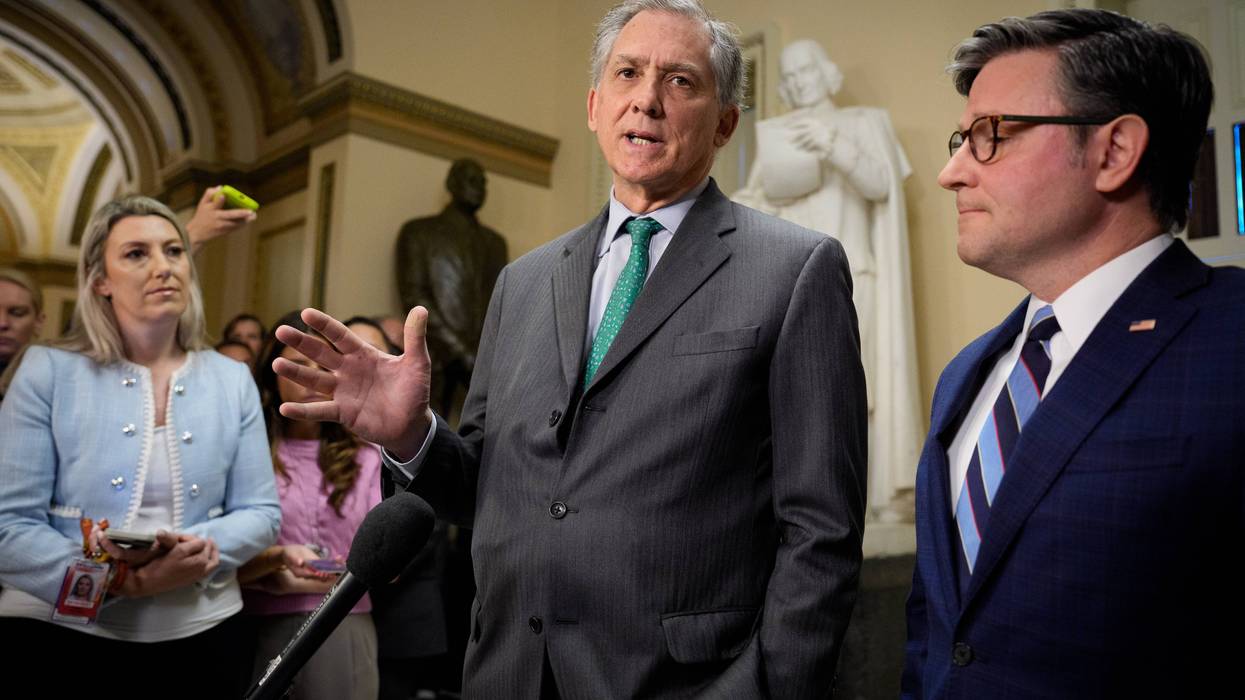
The Main Street Capital Access Act, sponsored by Rep. French Hill (R-Ark.)—a major beneficiary of finance industry campaign cash—cleared the House Rules Committee on Monday. Punchbowl reported that Rep. Bill Foster (D-Ill.), the ranking member of the House Financial Services Committee's subcommittee on financial institutions, is urging his Democratic colleagues to support the legislation, despite opposition from the top Democrat on the committee, Rep. Maxine Waters (D-Calif.).
"HR 6955 is Wall Street deregulation hiding as a community bank bill," Waters said in her testimony before the House Rules Committee on Monday. "This bill lets even more of these large banks escape critical safeguards risking more failures. In fact, the sponsors of this bill were so zealous to raise thresholds, they increased one threshold that will aid bad actors who commit fraud against a bank."
"Instead of letting Wall Street put Americans and our economy at risk again," said Waters, "we should be working together to address the affordability crisis caused by Trump’s failed economic policies and endless war with Iran."

"Republicans in Congress sold out many of their own constituents to help corporations get even richer," said the campaign director of Unrig Our Economy.
Major American corporations that benefited from tax cuts enacted last year by President Donald Trump and congressional Republicans are donating to the campaigns of GOP lawmakers who made the windfall possible.
A report published Friday by Unrig Our Economy spotlights seven House Republicans who voted for the sprawling and unpopular GOP budget package, which extended tax breaks for corporations and wealthy Americans while inflicting unprecedented cuts on Medicaid and federal nutrition assistance—with disastrous consequences for millions of low-income families across the country.
Rep. Mariannette Miller-Meeks (R-Iowa), one of the lawmakers featured in the new report, has received campaign donations from corporate PACs representing 3M, Amazon, Walmart, AT&T, and other companies that collectively received billions of dollars in tax breaks from the Republican law, which restored a provision allowing businesses to immediately write off new investments.
Amazon saw its US income taxes fall by more than half last year due to the GOP law, even as the company's profits grew. Unrig Our Economy noted that Amazon, whose PAC donated thousands to the Republicans spotlighted in the new report, has an effective federal tax rate of 1.37% following enactment of the budget law.
Miller-Meeks, who has received at least $57,000 in donations from the PACs of companies that benefited from the 2025 law, issued a statement Thursday bragging about supporting "the largest tax cuts in American history," not mentioning that the benefits will disproportionately flow to profitable corporations and the richest people in the country.
"Thanks to the Republican tax law, corporations are receiving tax breaks, House Republicans are getting campaign cash, and working families are getting stuck with the bill," the report states.
Another Republican lawmaker featured in the report, Rob Bresnahan of Pennsylvania, received $2,500 in campaign donations from the PAC of FirstEnergy, which reaped $500 million in depreciation deductions thanks to the GOP tax law.
"Bresnahan voted to give FirstEnergy hundreds of millions in tax breaks even after the company raised utility prices for his constituents," Unrig Our Economy's report observes.
The report also points out that Bresnahan "owned stock in every single one" of the companies who contributed PAC money to his campaign following passage of the Republican budget package last summer.
"This comes after Bresnahan has already faced scrutiny for dumping stock in Medicaid providers and selling off bonds in Pennsylvania hospitals before voting to slash Medicaid and put rural hospitals at risk," the report notes.
Leor Tal, Unrig Our Economy's campaign director, said in a statement that "one year ago, House Republicans ripped away healthcare and food assistance from millions of Americans, so that corporations could get massive tax breaks."
"Now, many of those companies are dishing out PAC money to the Republicans listed in this report," said Tal. "Republicans in Congress sold out many of their own constituents to help corporations get even richer. It’s time that House Republicans step up, do the right thing, and start fighting for working Americans—not giant corporations."