

SUBSCRIBE TO OUR FREE NEWSLETTER
Daily news & progressive opinion—funded by the people, not the corporations—delivered straight to your inbox.
5
#000000
#FFFFFF
To donate by check, phone, or other method, see our More Ways to Give page.
Daily news & progressive opinion—funded by the people, not the corporations—delivered straight to your inbox.
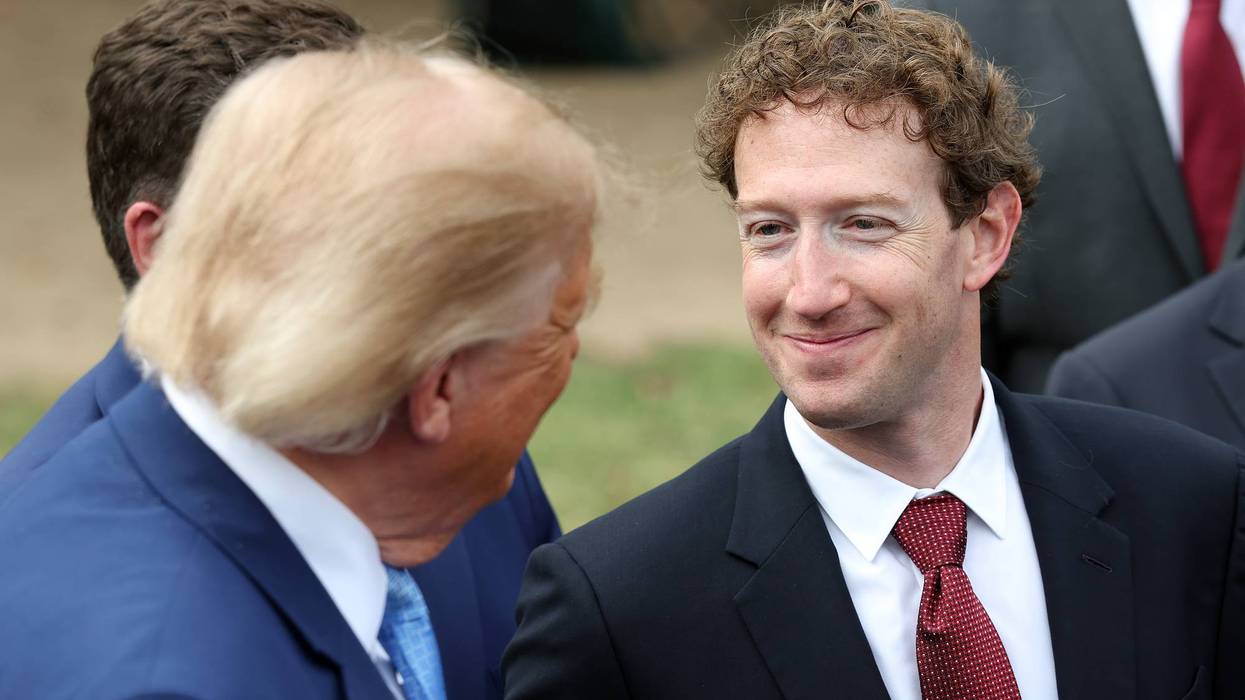
Billionaire Mark Zuckerberg's company was facing a criminal investigation for allegedly enabling and profiting from the sale of illegal drugs on its platforms.
Top officials at the US Department of Justice have reportedly halted a years-long criminal investigation into Facebook parent company Meta for allegedly facilitating—and profiting from—the illegal sale of drugs on its platforms, including to children.
Bloomberg Law reported Thursday that "senior leaders" at the Justice Department "ordered career prosecutors in the Western District of Virginia to cease the criminal investigation following advocacy from Meta‘s legal team." Meta is headed by Mark Zuckerberg, a billionaire who has worked to ingratiate himself with President Donald Trump by helping to bankroll his inauguration and ballroom project.
"This is what Meta's money is buying," Kyle Jacobs-Morse, deputy executive director of the Tech Oversight Project, wrote in response to reports of the halted probe.
The existence of the Meta investigation was first revealed in March 2024 by The Wall Street Journal, which reported at the time that US prosecutors were "sending subpoenas and asking questions as part of a criminal grand jury probe looking into whether the company’s social-media platforms are facilitating and profiting from the illegal sale of drugs."
According to Bloomberg Law, DOJ leaders' decision to sideline the probe came "just after company executives were subpoenaed to testify."
Acting Deputy Attorney General Trent McCotter and Associate Deputy Attorney General Aakash Singh "are considering a civil resolution with a fine or a non-prosecution agreement," Bloomberg Law reported.
"Such a deal would allow the social media giant to avoid charges for its role in creating a market for youth to purchase deadly fentanyl pills and other addictive drugs," the outlet added.
A Justice Department spokesperson declined to comment on the investigation but boasted in a statement to Bloomberg Law that the Trump DOJ has "ended the Biden-era days of aggressively and indiscriminately targeting corporations and businesses."
"Instead, we are focused on following the facts and the law to surgically address corporate wrongdoing," the spokesperson said.
Shelby Knox, tech campaign director with the advocacy group ParentsTogether Action, said in a statement Friday that "when the Justice Department says it wants to ‘surgically address corporate wrongdoing,’ a grand jury investigation into potential drug sales to children should be exactly the kind of case it pursues."
"A criminal investigation does not automatically establish guilt, but prosecutors must be allowed to follow the evidence without political interference," Knox added. "Meta is worth more than a trillion dollars; a fine alone is not meaningful accountability. If the evidence supports charges, file them. If it doesn’t, explain why. Children and families deserve more than apologies or a financial settlement. They deserve the truth, meaningful protections, and accountability under the law."
The Justice Department's reported decision to halt the Meta probe fits a broader pattern of lax corporate enforcement during Trump's second White House term.
The consumer advocacy group Public Citizen released a report earlier this month showing that the administration has cancelled hundreds of enforcement actions involving more than 200 corporations—many of which have donated to Trump's projects.
Rick Claypool, a research director at Public Citizen, wrote on Friday that Meta is "just one of the 200+ corporations benefiting from Trump's enforcement retreat."
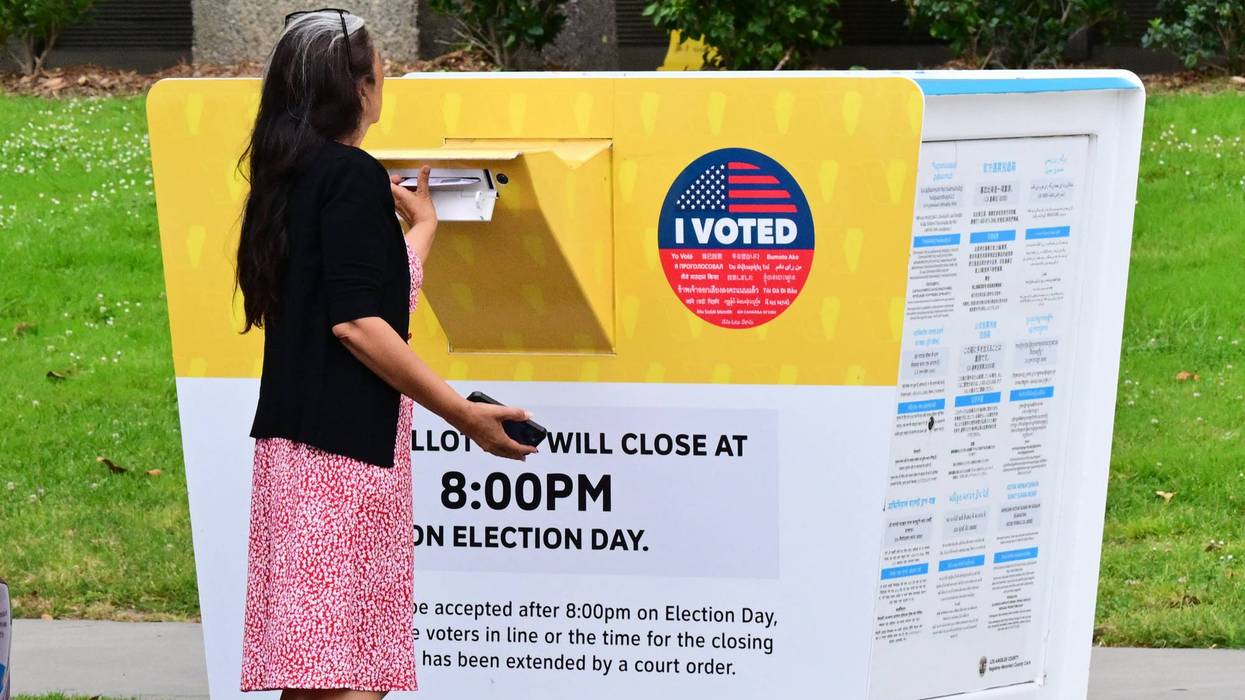
California Secretary of State Shirley Weber said DOJ was “demanding unprecedented measures that threaten thousands of Californians' right to vote, based on unverifiable information."
In what one former election official called a significant "escalation" of President Donald Trump's interference in the midterm elections, his Department of Justice sued California on Thursday for not disqualifying over 20,000 mail ballots from voters it claims could be noncitizens.
The suit comes two days after acting Deputy US Attorney General Trent McCotter sent a letter demanding that, within 48 hours, state election officials set aside ballots from a list of voters it determined were ineligible to vote using federal databases administered by the Department of Homeland Security (DHS)—systems that have previously been shown to regularly spit out errors.
When other states, like Nevada, Texas, and Missouri, have used the DHS system to vet their voter rolls for noncitizens, investigations have found that it incorrectly flagged hundreds of US citizens as ineligible to vote.
California officials have said the list of names was provided to them on a thumb drive, which came with a password written on a sticky note. They did not consider this to be a secure device and refused to open it. The letter was sent more than a week after California began sending mail ballots to 23 million registered voters.
The state refused to set the ballots aside, saying that the administration had not provided credible evidence that the voters were not citizens and that eligible voters could be disenfranchised. In its complaint Thursday, the DOJ called on the court to stop the ballots from being tallied until the citizenship status of each voter could be independently verified. It also requested that the state not send a ballot to anyone who has not yet received one.
The DOJ's batch of roughly 20,000 supposedly ineligible voters is a significant reduction from the 190,000 that Homeland Security Secretary Markwayne Mullin alleged were registered in the state back in July. When California asked for the underlying data and methodology for that figure, DHS declined to provide it.
"What happened to those 170,000?" said California Attorney General Rob Bonta at a press conference on Thursday. "They just got those wrong."
This highlights the concerns states have expressed about using the DHS system to purge their voter rolls. In refusing the DOJ's request, state officials have noted that in Nevada, the system flagged 185 voters as possible noncitizens only for state officials to determine that every single one of them was a US citizen.
California Secretary of State Shirley Weber responded to the DOJ's lawsuit with a sharply worded letter, accusing it of “demanding unprecedented measures that threaten thousands of Californians' right to vote, based on unverifiable information or methodology that you still fail to explain or provide.”
Weber described it as an effort to block “thousands of Californians’ right to vote” weeks before an election and said, “The extraordinary measures you demand are contrary to both federal and state law.” Federal law prohibits states from systematically purging voter rolls within 90 days of an election.
“We are not impressed with the federal government’s letter. We are not impressed with its lawsuit," Bonta said. “This is what the federal government does. They lie, they advance misinformation, disinformation, they advance conspiracy theories. They try to sow distrust with those lies."
“Their timing is rife with and smacks of and reeks of desperation and bad faith, to do this during an election,” he said.
Stephen Richer, the former Republican Maricopa County recorder in Arizona, described the government's lawsuit as "a real escalation by the federal government."
"I've mostly said 'Calm, calm. It's going to be OK' with respect to federal involvement in election administration," he wrote on social media. "This lawsuit—in October, in the middle of early voting—that asks election officials to disqualify certain voters based on suspect databases, not conclusive evidence, which definitely could have been alleged before early voting began... This does represent an escalation."
The University of California, Los Angeles (UCLA) Voting Rights Project filed an emergency brief on Thursday seeking to stop the DOJ from using its list to withhold ballots.
"With voting already underway, eligible citizens should not have their ballots withheld based on a federal list they have never seen and have had no opportunity to challenge," said its director, Chad Dunn. "We are asking the court to intervene before voters suffer harm that cannot be corrected after Election Day."
Sen. Alex Padilla (D-Calif.) said in a statement that the Trump DOJ "is now actively trying to interfere in the 2026 elections and strong-arm California into purging names from our voter rolls and blocking mail ballots based purely on vague allegations less than three weeks before Election Day."
He added, "This lawsuit has no legal basis or evidence behind it and is nothing more than a blatant abuse of power designed to sow distrust in our elections and threaten Americans’ right to vote."
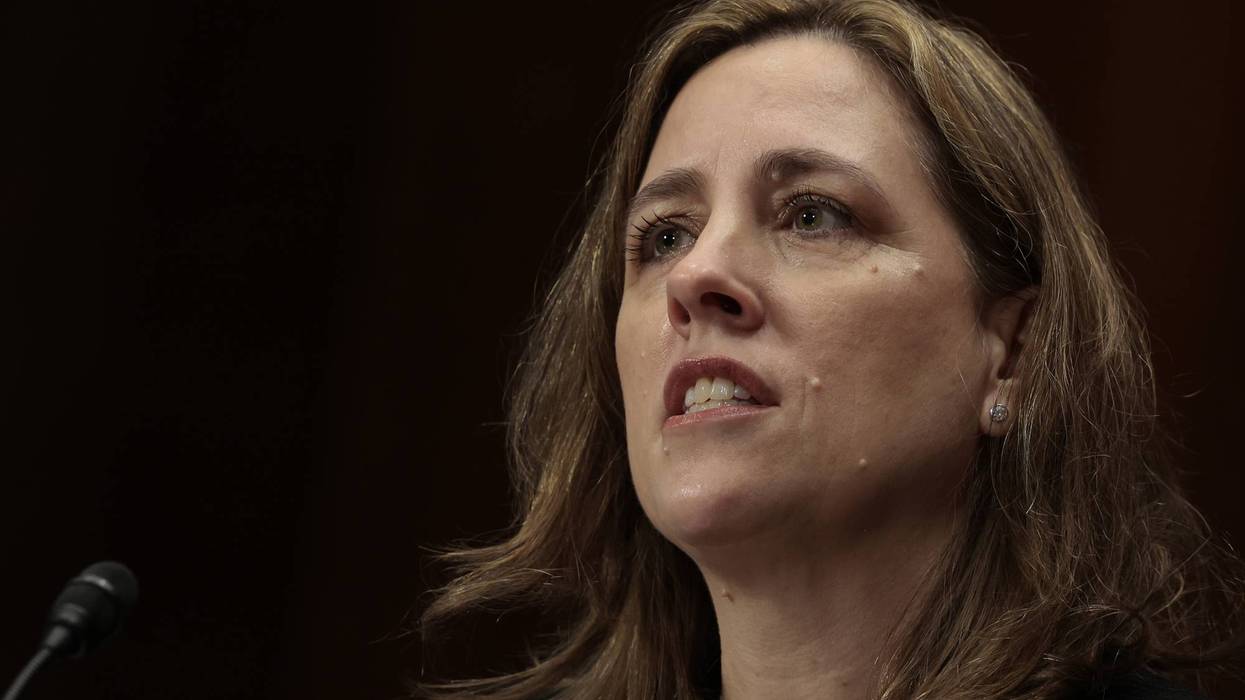
The Department of Justice admitted that the Trump administration kept running the ads after a federal judge issued a temporary restraining order, blaming the error on a missed email.
The US Department of Justice apologized Monday after the Trump administration continued airing taxpayer-funded political advertisements despite a court order requiring them to stop, blaming an internal email delay for the violation.
US District Judge Jennifer L. Rochon—an appointee of former President Joe Biden—issued a temporary restraining order Sunday in Common Cause et al. v. Department of Homeland Security et al., blocking the administration from airing the commercials and requiring officials to cancel previously scheduled runs.
However, The Washington Post and Democracy Docket reported Monday that two of the ads ran nearly 400 times after the order took effect. Plaintiffs in the case—the advocacy group Common Cause, Service Employees International Union Local 32BJ, Empire State 32BJ SEIU PAC, and Democratic Alabama state Legislature candidate Robert Hunter—filed a notice with the court informing it of the violations.
Citing the filing, Democracy Docket noted:
According to AdImpact data... the government’s ads aired in nearly 400 television spots on programs that began at 7 pm Eastern—after Rochon’s order was already in force. One of the ads aired in 193 spots during CBS’ "60 Minutes," while another aired in 198 spots during ABC’s "America’s Funniest Home Videos."
The ads continued airing Monday. As of 2:45 pm plaintiffs said an ad titled “Maduro” had aired another 20 times, one titled “Final Battle” 11 times, and another titled “The Country He Loves” once.
Rather than seeking contempt sanctions at this time, the plaintiffs are asking Rochon for a status conference to determine whether the Trump administration has complied with her order.
The Department of Justice admitted the error in a separate filing Monday, claiming that its lawyers "did not become aware of" the Rochon's emailed order "until this morning." The DOJ apologized to plaintiffs and the court, assuring Rochon that "the government is in compliance" with the temporary restraining order.
The White House said separately that the Department of Homeland Security (DHS) had not received notice in time to cancel the advertising purchases. The administration subsequently instructed its outside vendor to stop airing the commercials, froze future payments, and placed the $20 million funding allocation on hold.
The dispute stems from a $20 million advertising campaign financed via Office of Management and Budget (OMB) funds that were redirected to a Customs and Border Protection account designated for “commemorative events.”
The commercials featured President Donald Trump touting his political agenda, including one repurposed from his 2024 presidential campaign and another featuring Trump and Defense Secretary Pete Hegseth hyping the US war against Iran.
Critics have called the ads illegal under laws including the Administrative Procedure Act and the Hatch Act, and even grounds for impeaching Trump, who has already been impeached an unprecedented two times—but never convicted by the Senate—yet again.
The Democratic National Committee last week sued Trump, the White House, OMB, and DHS over the ads, alleging that the president "personally directed this illegal activity."
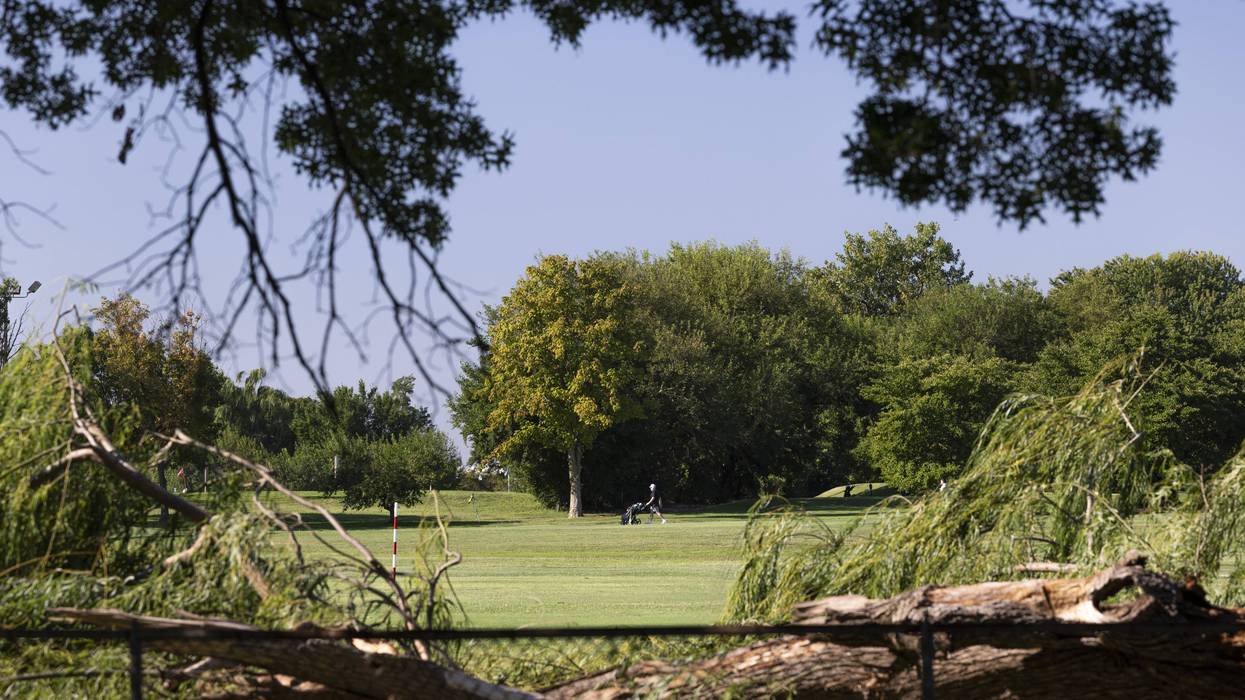
US District Judge Ana Reyes said the Trump administration's weekend removal of hundreds of trees at the East Potomac Golf Links "has cost the government all of its credibility."
A federal judge on Monday expressed outrage at the Trump administration for cutting down hundreds of trees at the East Potomac Golf Links in Washington, DC over the weekend.
As reported by journalist Scott MacFarlane in a Monday social media post, US District Judge Ana Reyes, who is overseeing a legal challenge to President Donald Trump's renovation plans for the golf course, slammed the administration for removing more than 400 trees on Saturday without providing any significant notice.
In addition to the roughly 430 trees that have already been cut down, attorneys from the US Department of Justice (DOJ) acknowledged in court that nearly 300 additional trees had also been marked for removal.
Reyes said that the trees' destruction "has cost the government all of its credibility" in the case. Later in the hearing, the judge called the administration's actions "totally beyond the pale," according to MacFarlane.
A CNN account of the Monday court hearing captured Reyes ripping into a DOJ attorney who said they were doing their "best" to keep the judge informed of tree removals.
"No," Reyes shot back, "you did your absolute worst."
Reyes ordered the total halt of all construction on the course, including the removal of any trees, until at least Tuesday at 2 pm. Reyes said that she hoped to learn more about the trees' removal from at least one other administration official involved in the project during a Tuesday hearing.
In a July ruling, Reyes had allowed construction on the golf course to continue so long as the administration notified the court ahead of time if it planned to remove more than 10 trees from the property at a time.
Per MacFarlane's account, the judge said on Monday that the administration gave the court notice that it was planning to cut down hundreds of trees at 4:55 pm on Friday afternoon, ahead of a holiday weekend.
A Monday report in The Washington Post noted that the trees at the golf course were chopped down even though the administration has only referred to Trump's renovation of the property as a "potential project" in court filings, and has not released any details about a timeline for construction or about its projected cost.
Over the last two years, Trump has developed several vanity projects throughout the nation's capital, including a luxury ballroom at the White House, a "Triumphal Arch," and botched renovations of the Lincoln Memorial Reflecting Pool and the John F. Kennedy Memorial Center for the Performing Arts.
Last month, Democrats on the congressional Joint Economic Committee released a report calculating that the projected cost to taxpayers for President Donald Trump’s vanity projects has soared to more than $1.8 billion.

"The investigation is nonsense," said one press freedom advocate. "Trump may view the presidency as a business venture, but news outlets’ standing up for their constitutional rights has nothing to do with antitrust law."
The US Justice Department has launched an investigation into whether the five major television networks violated federal antitrust law when they briefly halted pool coverage of President Donald Trump amid his administration's attempt to bar certain journalists from the White House.
The New York Times reported late Saturday that DOJ officials "contacted networks on Friday and demanded communications and materials related to the White House TV pool." ABC, CBS, CNN, NBC, and Fox News rotate the responsibility of capturing and distributing footage of the president. The networks paused pool coverage last month after the Trump administration dropped CNN from its scheduled pool assignment.
Emily Covington, a spokesperson for the Justice Department, confirmed the existence of the investigation in a statement on Saturday, saying that "group boycotts among commercial competitors can violate the Sherman Act."
Press freedom organizations and other critics condemned the probe as a politically motivated attack on journalism and questioned the administration's expressed concern about antitrust violations—particularly given that the DOJ has effectively abandoned antitrust enforcement during Trump's second term.
Bruce Brown, president of the Reporters Committee for Freedom of the Press, said the investigation "appears to be a pretext for seeking records from the networks about how they are covering daily White House events during a media ban the president himself put in place."
"The decisions news organizations make about coverage are protected by the First Amendment, and summoning antitrust authority, on top of the retaliatory actions the White House has already taken to bar certain outlets, is another and even more brazen attempt to try to intimidate journalists," said Brown.
Seth Stern, chief of advocacy at the Freedom of the Press Foundation, called the investigation "nonsense."
“The investigation is nonsense. Trump may view the presidency as a business venture, but news outlets’ standing up for their constitutional rights has nothing to do with antitrust law, no matter what Laura Loomer says," Stern added, pointing to the far-right activist's public call for an antitrust lawsuit against the major TV news networks. "Depriving Trump of the attention he craves is not a competitive harm, and in any case, antitrust law has long recognized First Amendment exceptions even when there is anticompetitive impact."
News of the DOJ investigation came after CNN, MS NOW, and Politico sued the president over his attempt to bar the outlets from the White House. Late last month, a Trump-appointed judge ordered the administration to restore White House access to the outlets as the lawsuit proceeds.
Jonathan Kanter, who headed the Justice Department's Antitrust Division under the Biden administration, told CNN on Saturday that the media networks' actions in the wake of the attempted White House ban are "not even in the same zip code of an antitrust violation."
"It’s literally freedom of speech," said Kanter. "It’s no more an antitrust violation than the reporters coming together to form the pool in the first place."
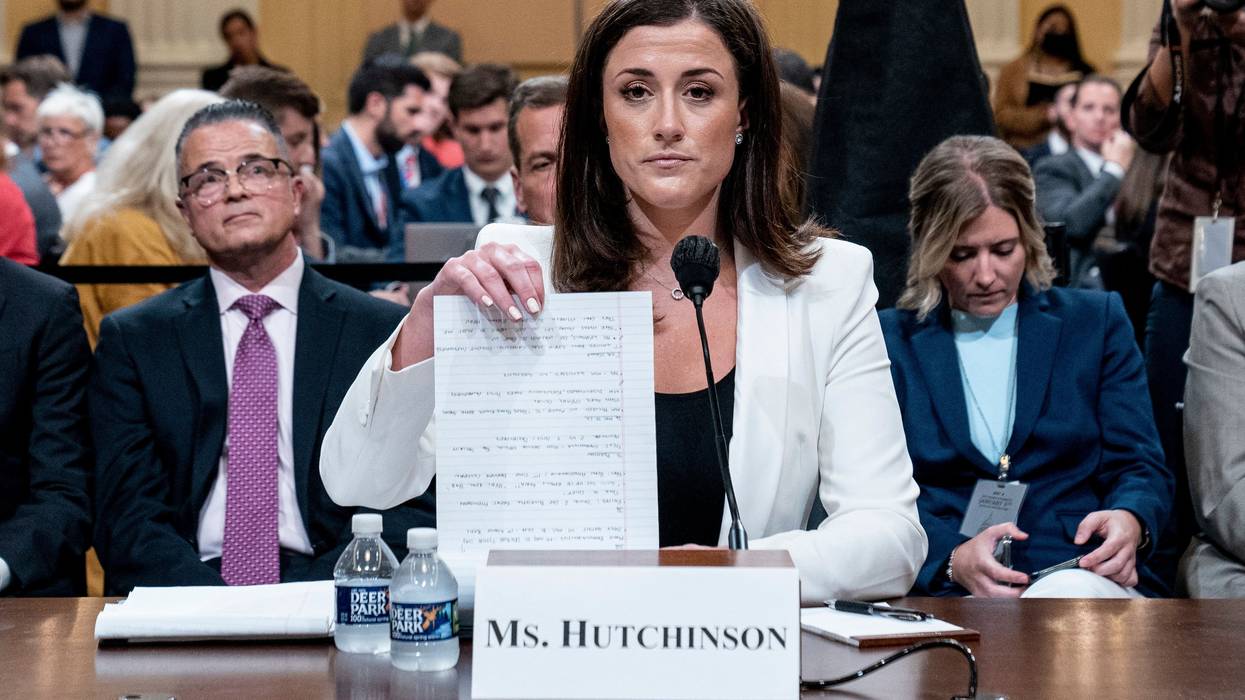
One lawyer called the targeting of ex-White House aide Cassidy Hutchinson "a chilling and corrupt indictment" but also "yet another opportunity for the Trump DOJ to shit its pants in court."
In what appears to be its latest effort to target President Donald Trump's political foes, the US Department of Justice is reportedly seeking criminal charges against former White House aide Cassidy Hutchinson, who served as a star witness in Congress' investigation of the January 6, 2021 Capitol insurrection.
Punchbowl News reported on Thursday that the DOJ is pursuing federal criminal charges against Hutchinson for allegedly making false statements during her bombshell testimony in June 2022, in which she claimed that Trump attempted to assist the rioters as they tried to violently overturn his loss in the 2020 election.
Hutchinson, who was an aide to then-White House chief of staff Mark Meadows, told Congress she overheard Trump demand the removal of metal detectors at his rally near the White House before the riot, despite knowing that some attendees were armed. She quoted him saying, "They're not here to hurt me."
She also relayed information she claimed to have learned secondhand from others in the Trump White House. She said that Anthony Ornato, the deputy White House chief of staff for operations, told her that Trump tried to grab the steering wheel of his SUV away from the Secret Service agent driving it so he could join supporters at the Capitol.
Ornato has since said he does not recall recounting this incident to Hutchinson, and the agents in the vehicle have denied that it took place, according to a subsequent investigation by Republicans in the House of Representatives. However, other witnesses have testified more broadly to Trump's anger that he could not join his supporters at the Capitol.
Hutchinson also said Meadows was reluctant to intervene as rioters threatened to hang then-Vice President Mike Pence. She claimed Meadows told her that Trump believed Pence—who'd refused to assist his efforts to overturn the election result—deserved the threats and that the rioters had done nothing wrong.
Trump has since pardoned every one of the more than 1,500 people convicted of offenses related to the Capitol attack, including those who committed violent felonies.
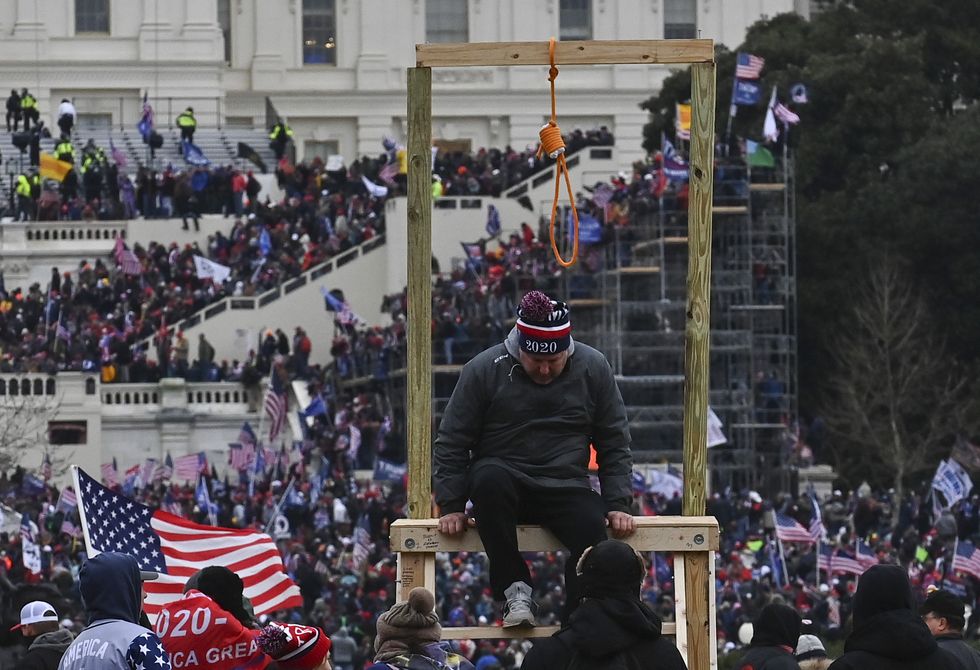 A man climbs down after being photographed with a noose during a protest calling for legislators to overturn the election results in President Donald Trump's favor at the US Capitol on January 6, 2021 in Washington, DC. (Photo by Ricky Carioti/The Washington Post via Getty Images)
Asked about plans to bring charges against Hutchinson, a DOJ spokesperson said, "The department does not confirm or deny the existence of investigations, or the lack thereof."
But the department's pursuit of Hutchinson has been public knowledge since at least April, when The New York Times reported that a criminal investigation into the former White House aide had been opened.
The Times noted that it was highly unusual for such a probe to be undertaken by the Civil Rights Division—which usually handles cases of discrimination—rather than the US attorney for the District of Columbia.
Efforts to prosecute Hutchinson follow attempts by the DOJ to bring charges against the president's other perceived enemies, including former FBI Director James Comey and New York Attorney General Letitia James, both of which have been thrown out of court.
In a post on social media, Andrew Fleischman, a Georgia-based trial and appeals lawyer, decried the targeting of Hutchinson as "a chilling and corrupt indictment of a woman who told the truth," but also "yet another opportunity for the Trump DOJ to shit its pants in court."
The president also met with election denier and former county clerk Tina Peters and discussed "plans" for the election on Monday.
International election observers who have monitored US federal elections since 2002, in line with the practices of the vast majority of countries across North America, Europe, and Asia, said Tuesday that President Donald Trump's refusal to invite the Organization for Security and Cooperation in Europe to observe the November midterms was "regrettable" and "not in line" with the United States' commitments.
The decision was announced as the US Department of Justice defended the administration's plans to send its own election monitors to the polls, with Attorney General Todd Blanche insisting in an interview with Fox News on Sunday that Trump "is doing the same thing that every single administration has done in our generation and in multiple generations."
In a letter to Blanche and Harmeet K. Dhillon, the assistant attorney general for civil rights, US Reps. Jamie Raskin (D-Md.) and Joe Morelle (D-NY) wrote last week that Congress authorized federal election observers in 1965 under the Voting Rights Act, with observers determining "whether persons who are entitled to vote are being permitted to vote” and “whether votes cast by persons entitled to vote are being properly tabulated."
The DOJ's Civil Rights Division also sends its attorneys to monitor elections, with observers required to remain outside polling places and notify local authorities of their presence.
But the DOJ deployed monitors to eight states over the summer to observe primary elections, and Wyoming Gov. Mark Gordon, a Republican, complained of "aggressive" and "disruptive" behavior, including demands to interview voters and attempts to access voting machines.
"In light of the DOJ’s announcement that it intends to deploy an unprecedented 1,000 monitors to polling places throughout the
country for the general election," wrote Raskin and Morelle, "the DOJ must demonstrate that it is not misusing its election monitoring program in any way and that its monitors are being used for appropriate purposes."
Some Republican officials have alluded to plans for US Immigration and Customs Enforcement (ICE) to go to polling places during the midterms. The Department of Homeland Security has denied there is such a plan, but Trump, who has persistently claimed US elections are rife with so-called "voter fraud," has said he would "do anything necessary to make sure we have honest elections."
The news that the OSCE is not being invited to observe the midterms only heightened concerns that the administration may try to intimidate people who go to vote in elections that Republicans are widely expected to lose, as Trump's approval rate plummets to 32% and Americans express disdain for his war on Iran, soaring prices of everyday goods, and the violent mass deportation agenda that has turned communities upside down.
“The Trump administration’s decision not to invite international observers to the United States is deeply antithetical to the spirit of freedom, democracy, and transparency that defines our elections," said Sen. Jeanne Shaheen, ranking member of the Senate Foreign Relations Committee. “I was an official election monitor in the country of Georgia in 2012 and most recently in Bosnia and Herzegovina in 2022, so I know firsthand the importance of showing up for Allies and partners to improve the public’s confidence in election integrity. The OSCE does just that."
"I urge the Trump administration to respect the role of independent election observers and ensure that the United States holds itself to the same standards that we would expect of any other democracy," said Shaheen.
The decision to keep the OSCE from observing the elections makes the US one of only three countries in the organization, along with Russia and Belarus, to do so.
“Refusing election observers is usually something that countries in a position of weakness do, when they know that they have corrupt or unfair elections,” said Dan Baer, a former US ambassador to the OSCE during the Obama administration, told MS NOW on Tuesday. “It’s very strange for the United States, which has been historically a standard setter in free and fair elections, to refuse observers.”
On Monday, Trump also met with former Mesa County, Colorado clerk Tina Peters, who was convicted on charges of trying to breach the state's voting machines in a search for evidence that election had been committed in the 2020 election Trump lost. Democratic Gov. Jared Polis granted Peters clemency after repeated calls from Trump.
Former acting US Attorney Ed Martin told Real America's Voice that Trump and Peters were "talking about the plans" for the elections, and claimed voting machines are "compromised" because parts of them are manufactured in China and Russia.
Ed Martin says that Tina Peters met with Trump in the Oval Office today to discuss election integrity and “the plans” for the upcoming midterms elections. https://t.co/NsGuZ4UNSO
— Anna Bower (@AnnaBower) October 6, 2026
"If she's meeting with Trump to talk about the midterms," said journalist Pedro L. Gonzalez, "then there is a real non-zero chance that Trump is going to try or wants to try to do something to upend them."
"It is no coincidence that this is taking place at exactly the same time that Donald Trump's poll numbers are sagging."
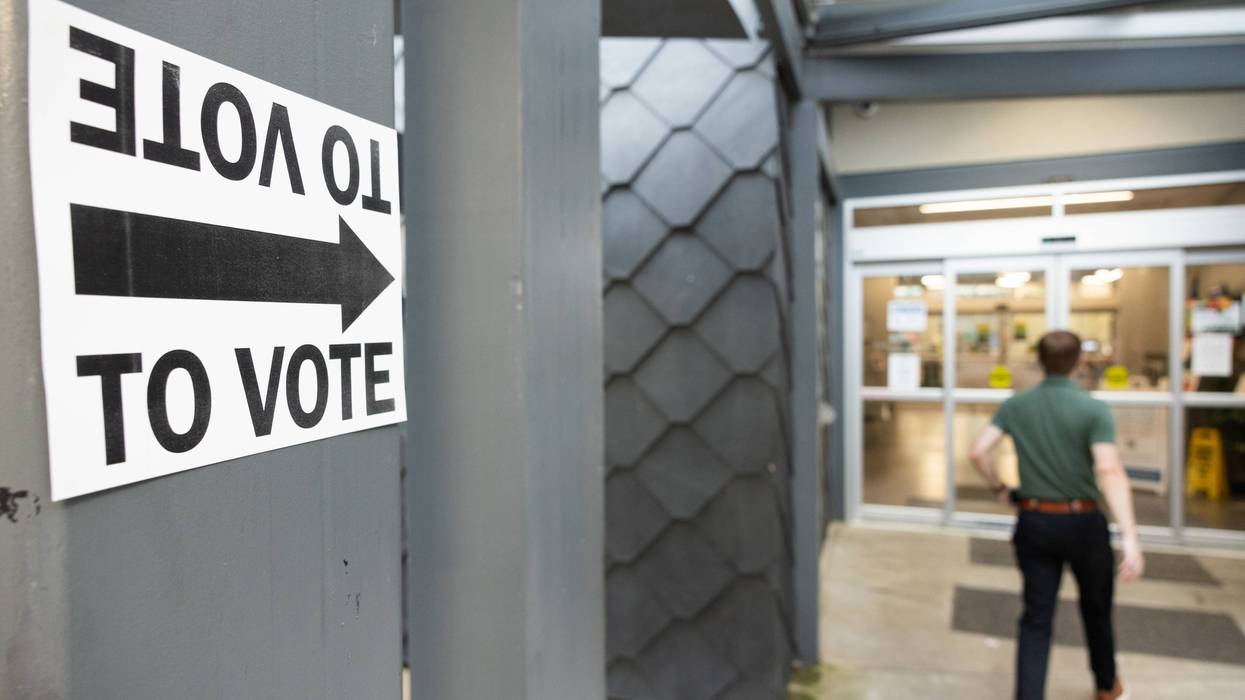
Experts are raising alarms after Georgia's Republican-led State Election Board requested that President Donald Trump's Department of Justice launch an investigation into state voting machines just over a month before the 2026 midterm elections.
As reported by the Atlanta Journal-Constitution on Thursday, James Mills, executive director of the State Election Board, sent a letter to US Attorney General Todd Blanche asking the DOJ "to put additional security measures in place before the midterm election and give the state a six-month deadline to eliminate the use of QR codes on ballots to tally votes."
The AJC noted that Georgia would need to "revamp its in-person voting process" to comply with this demand since it currently "relies on scanners reading QR codes on ballots to count votes."
In a Thursday analysis of Mills' letter, Democracy Docket reporter Jacob Knutson described it as "an extraordinary assault on Georgia’s voting system by unelected officials appointed to make and enforce the state’s election rules."
Knutson also questioned whether the Trump administration could even legally carry out Mills' request.
"The DOJ lacks the legal authority to declare voting machines unlawful or unilaterally seize voting equipment," Knutson wrote, "as the US Constitution gives state and local officials the power to administer elections."
In a video published Friday, election attorney and Democracy Docket founder Marc Elias said that Mills' request for DOJ interference in his own state's election process boils down to Republicans fearing that they're about to be swept out of power in the coming elections.
"It is no coincidence that this is taking place at exactly the same time that Donald Trump's poll numbers are sagging," Elias said, "at exactly the same time that it appears that his efforts in court are failing, and exactly the same time that [Democratic US Sen.] Jon Ossoff looks clear to win that Senate race in a walk."
Later in the video, Elias explained that Trump and his allies have been telegraphing for months that they will take extraordinary measures to maintain their full grip on all three branches of the federal government.
"This is all happening when you have a White House that is looking for excuses to take over voting," he said. "They are looking for excuses to seize ballots. They are looking for excuses, as Donald Trump said, to take control of the tabulation of votes."
Kristin Nabers, Georgia state director for voter rights advocacy group All Voting is Local, accused the State Election Board of "trying to sow chaos into the midterms before voting takes place."
"Certain members of this board continue to show that they do not serve Georgia voters, they serve the interests of the Trump administration," Nabers said. "The board has already advocated for the administration’s interference in elections many times in Trump’s second term, including when multiple board members served as witnesses in the FBI’s bogus investigation into Fulton County."
After losing the 2020 presidential election, Trump infamously waged an unsuccessful campaign to strong-arm Georgia Secretary of State Brad Raffensperger to "find" the votes necessary to overtake former President Joe Biden's lead in the Peach State.
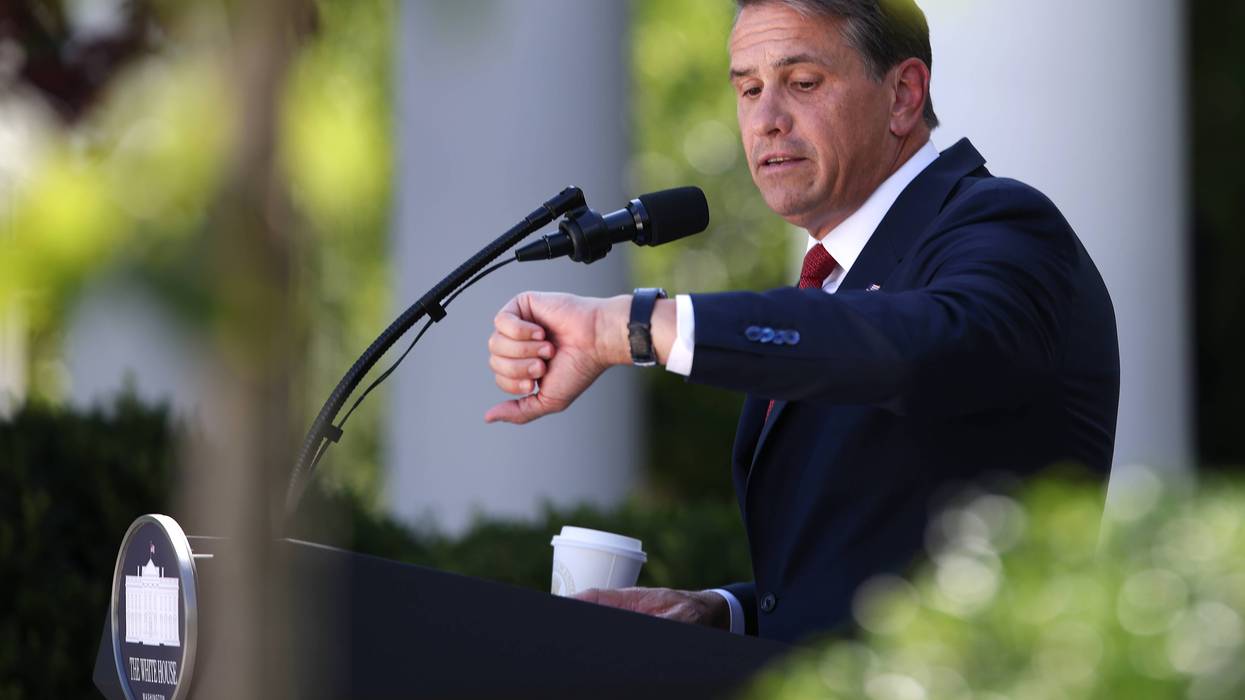
"They’re trying to pull one over on voters," said one reproductive rights advocate.
The Trump administration is intentionally slow-rolling efforts to restrict abortion pill access until after the midterms. Once they're over, "the gloves will be off," according to one anti-abortion advocate who spoke with The Washington Sun.
US Attorney General Todd Blanche said during his July confirmation hearing that rules allowing abortion pills to be shipped nationwide were "wrong" and that he'd seek to review them. He's also reportedly assured faith leaders he would work to ban abortion "in every single state."
But according to a Friday report from the Sun, White House Chief of Staff Susie Wiles has intervened to limit the potential political fallout of new sweeping restrictions on a method that accounts for nearly two-thirds of all abortions in the US.
Six in 10 Americans say abortion should be legal in all or most cases, and 68% say they oppose the banning of medication abortion nationwide. According to senior White House officials, Wiles warned Blanche that an aggressive effort to ban the drug would further alienate voters in November, when Republicans are already predicted to take heavy losses.
"No one wants us taking any real action before the midterms,” one senior administration official told the Sun, passing on the message apparently being pushed by White House staff to the Justice Department.
The White House has denied that the meetings took place, saying the report was "completely false."
But anti-abortion activists who have pressured the White House told the Sun they believe officials are just biding their time until, in their view, the opinion of voters no longer matters.
“Once the midterms are over and it’s truly lame-duck time, we’ve heard the gloves will be off,” one of them said. “We have heard we have friends [in the White House], and there are definitely people who are staunch pro-lifers.”
During President Donald Trump’s second term, the DOJ has asked federal courts to pause several state lawsuits challenging Food and Drug Administration (FDA) policies that allow mifepristone to be prescribed via telehealth and delivered by mail. But critically, it has not defended those FDA policies on the merits, but rather sought to slow litigation against them on procedural grounds.
But evidence also suggests the administration is laying the groundwork to restrict access once the political costs are neutralized. Despite multiple prior reviews reaffirming its safety and effectiveness, Health and Human Services Secretary Robert F. Kennedy Jr. has spearheaded an FDA "safety" review of mifepristone that could tighten prescription and delivery rules.
Blanche, meanwhile, has indicated openness to reviving the 1873 Comstock Act, which banned the shipment of “lewd” and “indecent” materials through the mail, including those related to abortion.
Amy Littlefield, The Nation's abortion access correspondent, has described Comstock as a “zombie law from the Victorian era," but said it could serve as a "nuclear option" for effectively banning abortion nationwide without any need for an act of Congress.
Since the 2022 Dobbs v. Jackson Women's Health Organization ruling overturned the national right to an abortion, anti-abortion groups have pushed for the act to be interpreted in the most expansive way possible.
"If abortion opponents are right in their reading of it, if the courts agree with their reading of it, it could essentially be revived as a de facto nationwide abortion ban that would apply even in blue states," Littlefield told Democracy Now! "Broadly interpreted, it could apply to latex gloves that might be used in an abortion, or syringes... It could be broadly interpreted to shut down not just mail-order abortions, but also clinic-based care, depending on how it’s read."
In 2022, the DOJ under the Biden administration published a legal opinion stating that Comstock does not prohibit the mailing of abortion drugs unless the sender intends to use them illegally. During his confirmation, Blanche said he would revisit that opinion and would use “every lawful action available” to enforce the law.
One unnamed anti-abortion activist told the Sun they've been assured that, under Blanche, the DOJ is "actively working on" plans to use Comstock to restrict abortion. Kristan Hawkins, president of Students for Life of America, has previously told the Sun that she's had "encouraging" meetings with a DOJ official and that plans to rescind the 2022 memo are in the works.
Kristi Hamrick, vice president of media and policy for Students for Life, however, said the DOJ had indicated that “everything but the election is pushed until after the elections.”
Trump has vowed to be the “most pro-life president in history" since returning to office. But while campaigning in 2024, he pledged explicitly that he would “not block” access to abortion drugs.
Katie O'Connor, the director of federal abortion policy at the National Women's Law Center, told Common Dreams that "asking the DOJ to wait until midterm votes are counted to take action on abortion is an intentionally deceptive move that keeps voters from making their voices heard."
"This isn't a surprise if you've been paying attention to how this administration operates when it comes to abortion," said Mini Timmaraju, the president and CEO of Reproductive Freedom for All, in a social media post.
"Abortion is extremely popular with voters. Trump knows that," she said. "But he's also under a ton of pressure from anti-abortion extremists to take away access to medication abortion, which is used in the majority of abortions in the US and has been a lifeline for access post-[Roe v. Wade]."
"They’re trying to pull one over on voters," she said. "We’re not going to let that happen."
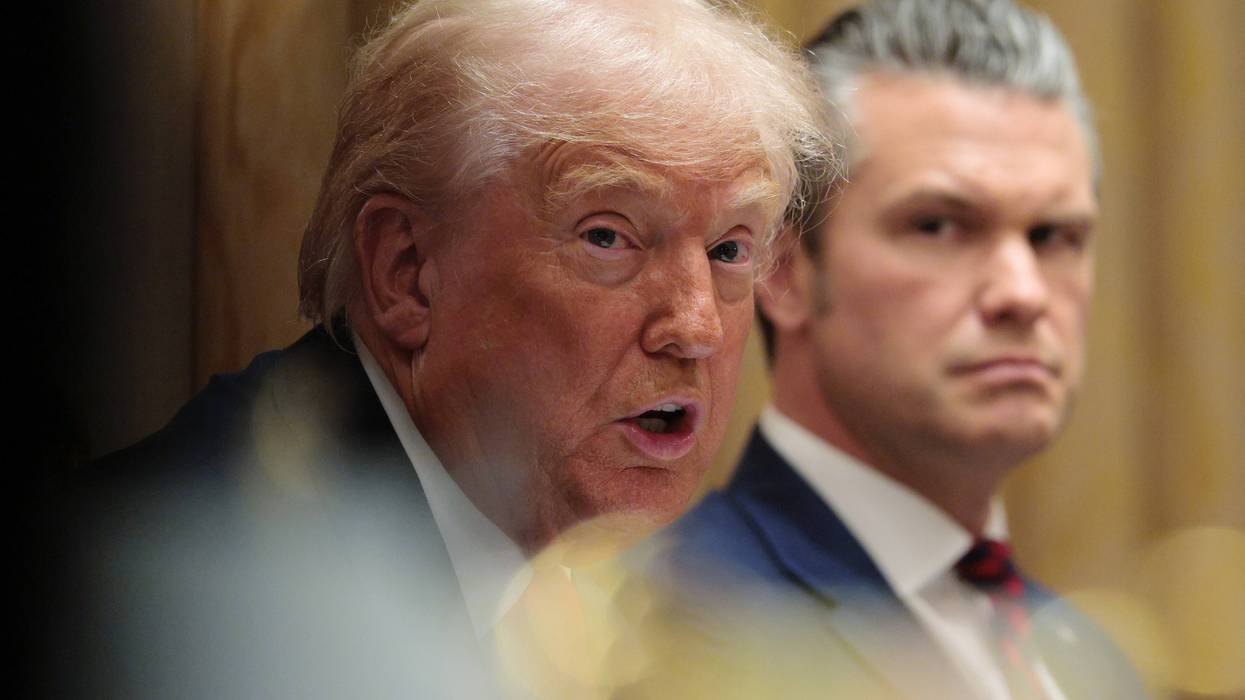
“No president can arbitrarily assassinate people from the sky based on their sole say-so,” said one legal expert.
A key memo from the Office of Legal Counsel at President Donald Trump's Department of Justice has underpinned the administration's yearlong campaign of bombing boats in the Caribbean Sea and eastern Pacific Ocean, and the White House has been adamant that the document should be kept secret.
But on Wednesday, Judge Paul Engelmayer in the US District Court for the Southern District of New York rejected the administration's rationale for keeping the memo hidden, saying that the Department of Defense and US Southern Command have adopted its contents as its "working law" while conducting 70 strikes on boats and killing at least 234 people who officials claimed, without evidence, were "narco-terrorists."
After the ACLU and the Center for Constitutional Rights (CCR) filed a Freedom of Information Act request calling for the release of the 40-page memo, the administration argued it needed to remain secret to protect confidential deliberations and attorney-client communications.
Engelmayer noted that administration officials have repeatedly cited the memo in public statements to explain why it was bombing dozens of boats that it claimed were operated by drug cartels—which experts and family members of some of the victims have called into question.
“The agency defendants cannot claim surprise from this consequence of the executive branch’s repeated public statements embracing the OLC memo—and it only—as setting out the legal parameters for the boat strikes,” Engelmayer wrote.
Jeffrey Stein, staff attorney with the ACLU's National Security Project, called the order "a huge step in the right direction of ensuring that the government does not get to summarily execute people based on secret law."
“The public deserves to know how our government is justifying the cold-blooded murder of hundreds of civilians," said Stein.
The judge ordered the administration to turn the memo over to him so he can determine whether it should be released to the public. He also ordered officials to provide information about who has seen the memo and how they have used it, and called on the administration to provide details on whether the memo could be protected from public view as a "closely held presidential advice document."
Engelmayer gave the administration until October 14 to comply with the order.
The boat strikes have been carried out as part of Trump's stated push to defeat drug cartels in Latin America. Sen. Tim Kaine (D-Va.) has pointed out that there is little evidence the administration is ensuring it is targeting drug boats, as the presence of drugs on a boat has not been identified as "targeting criteria" for the operation in congressional briefings. Some victims have been identified as fishermen and other people who had little, if any, involvement with drug trafficking.
Beyond that, legal experts say that even if the 234 victims were drug traffickers, the boat bombings constitute extrajudicial killings and violations of international law—something Trump himself appeared to brag about last week when he said at the United Nations General Assembly that "we don’t waste our time" addressing alleged drug crimes in the court system.
“No president can arbitrarily assassinate people from the sky based on their sole say-so,” said Baher Azmy, legal director for CCR. “If the OLC opinion seeks to dress up the obvious illegality of these serial murders in legalese to provide Trump cover, the public needs to see that analysis and ultimately hold accountable all those who facilitate murder in the United States’ name.”