

SUBSCRIBE TO OUR FREE NEWSLETTER
Daily news & progressive opinion—funded by the people, not the corporations—delivered straight to your inbox.
5
#000000
#FFFFFF
To donate by check, phone, or other method, see our More Ways to Give page.
Daily news & progressive opinion—funded by the people, not the corporations—delivered straight to your inbox.
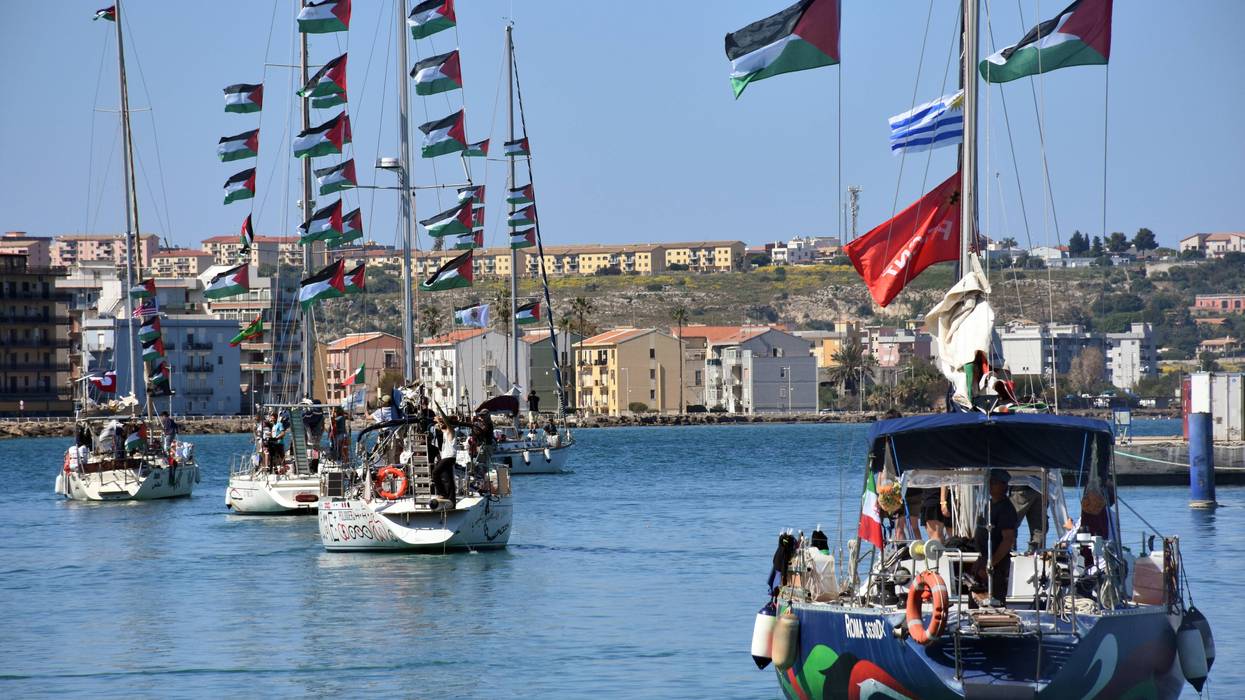
"How on Earth," asked the UN's top Palestine expert, "is possible that Israel is allowed to assault and seize vessels in international waters just off Greece/Europe?"
Palestine defenders on Thursday condemned Israeli forces' raid of the latest Global Sumud Flotilla—which was sailing off the Greek coast while attempting to deliver humanitarian aid to Gaza—and the arrest of more than 200 of its participants, with some prominent critics calling the seizure an act of piracy.
Greenpeace International—whose MY Arctic Sunrise is the flotilla's most prominent ship—said that the maritime convoy's 58 vessels were "boarded and harassed by Israeli forces in international waters 45 nautical miles west of the Greek island Kythira and 600 nautical miles from Gaza."
Flotilla organizers said on X: “Our boats were approached by military speedboats, self-identified as ‘Israel’, pointing lasers and semi-automatic weapons ordering participants to the front of the boats and to get on their hands and knees. The boat communications are being jammed and an SOS was issued."
The organizers said 211 flotilla participants were seized by Israeli forces. Flotilla activist Yasmine Scola said members were "kidnapped."
Global Sumud France spokesperson Helene Coron said that 10 French nationals, including communist Paris City Council Member Raphaelle Primet, were seized.
"We don't have the information for the other nationalities, but the boats were mixed in terms of nationality, so there were crew members from all 48 delegations," Coron added.
Israel's Foreign Ministry said that "approximately 175 activists from more than 20 boats... are now making their way peacefully to Israel."
Responding to Israel's interception, former Greek Finance Minister Yanis Varoufakis said on social media that his country's government "is either complicit or incapable of defending our seas from Israel."
"So much for freedom of navigation and international law," he added.
Independent British Member of Parliament Jeremy Corbyn said of the flotilla members: "They were not intercepted. They were abducted in international waters. This is piracy—and is a flagrant violation of international law."
Another British lawmaker, Labour MP Bell Ribeiro-Addy, wrote on X that "last night, Israel's navy committed an act of armed piracy in international waters, threatening unarmed civilians aboard."
"Our government must condemn this attack, extend diplomatic protection to British participants, and work to ensure safe passage," she added.
The migrant search and rescue group SOS Mediterranee France said on X that "attacking or threatening" Global Sumud Flotilla vessels "in international waters constitutes a violation of maritime law."
"Furthermore, the Geneva Conventions are clear: Any person engaged in a humanitarian mission must be protected. Solidarity is not a crime, Preventing aid, however, is," the group added.
In the United States, Council on American-Islamic Relations executive director Nihad Awad said in a statement that “Congress must demand that the Israeli apartheid government immediately release the American citizens and other humanitarian activists it kidnapped in international waters in a blatant violation of international law."
"Our nation would not tolerate, much less fund, the kidnapping of American citizens in international waters off the coast of Greece by any other state," Awad added. "It is long past time for the out-of-control Netanyahu regime to face consequences of its crimes, including American citizens.”
The United States supports Israel with tens of billions of dollars in armed aid, and diplomatic cover including repeated vetoes of United Nations Security Council cease-fire resolutions for Gaza.
Last year, dozens of boats carrying hundreds of activists from over 40 nations took part in the last Global Sumud Flotilla—sumud means “perseverance” in Arabic—as it attempted to break Israel’s naval blockade and deliver desperately needed humanitarian aid including food, medicines, and baby formula to starving Gazans amid a growing famine.
Israeli forces intercepted and seized the flotilla vessels in international waters in early October, arresting all aboard the boats and temporarily jailing them in Israel.
In 2010, Israeli forces raided one of the first convoys carrying humanitarian aid to Gaza by sea. The attackers killed nine volunteers aboard the MV Mavi Marmara, including Turkish-American teenager Furkan Doğan.
Members of past Gaza flotillas have reported abuse at the hands of their Israeli captors, although they have urged the world to focus not on them, but rather the people of Gaza, who have endured nearly 31 months of genocidal war and siege.
More than 250,000 Palestinians have been killed or wounded by Israeli forces since the Hamas-led attack of October 7, 2023, including thousands who are still missing and presumed dead and buried beneath rubble. Most victims are civilians. Around 2 million other Gazans have been forcibly displaced, starved, or sickened.
Israel—whose prime minister, Benjamin Netanyahu, is wanted by the International Criminal Court for alleged crimes against humanity and war crimes in Gaza—is facing an ongoing genocide case at the International Court of Justice in The Hague.
The Israeli government continues to blockade Gaza by land and sea, strictly limiting the entry of humanitarian aid into the besieged coastal strip.
“We renew our call on world leaders to take concrete and immediate action in the face of the genocide being inflicted by Israel on the people of Gaza," Pujarini Sen, project lead aboard the Arctic Sunrise, said Thursday. "The international community’s ongoing failure to enforce international law leaves it culpable for Israel’s actions."
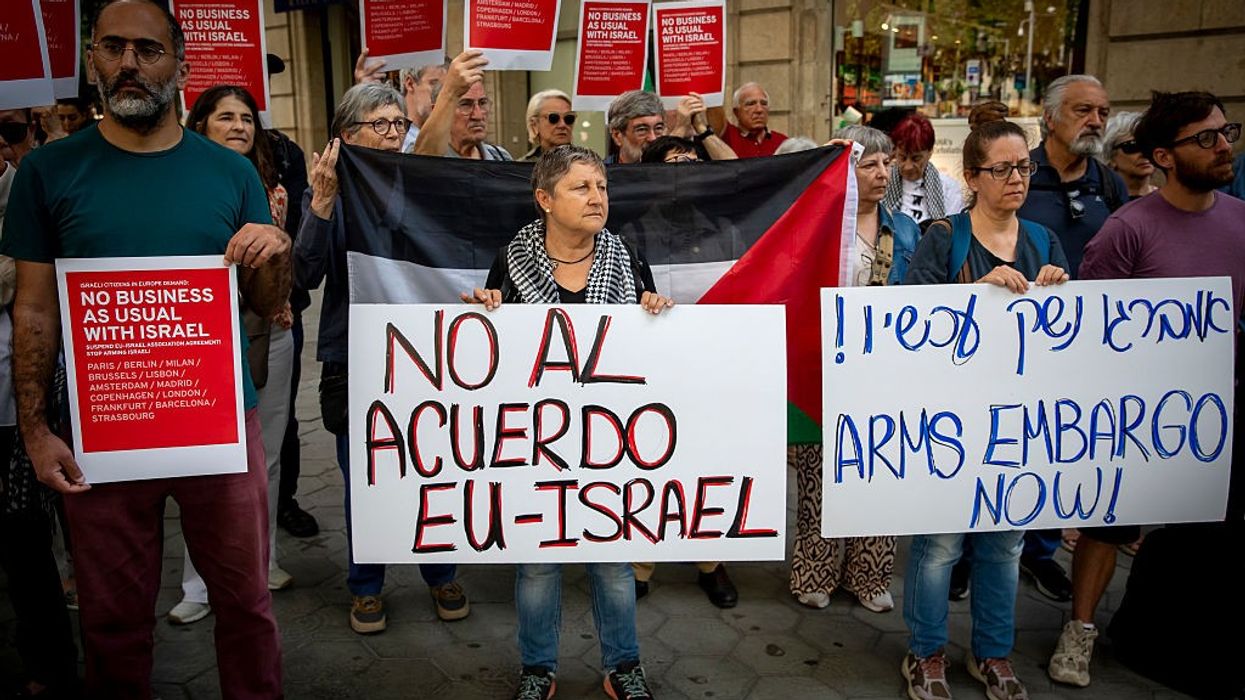
"The people have spoken and they refuse to be complicit," said one campaigner. "Across continents, ordinary citizens demand an end to the fuel that powers settler colonialism, apartheid, and genocide."
Large percentages of people in five nations want arms, fuel, and machinery embargoes on Israel in response to its obliteration and starvation of Gaza, a poll published Thursday revealed.
The survey—which was conducted last month by Pollfish for the Global Energy Embargo for Palestine and endorsed by Progressive International—queried people in Brazil, Colombia, Greece, South Africa, and Spain about whether their governments, fuel companies, weapons makers, and heavy machinery manufacturers should stop, reduce, continue, or increase business with Israel.
Nearly two-thirds of Spanish respondents said they strongly support or support their government taking action "to reduce trade in weapons, fuel, and other relevant goods to pressure Israel to end its military actions in Gaza." In Greece, 63% back an embargo, while 35% oppose it. Sixty percent of Colombians, 58% of South Africans, and 48% of Brazilians strongly or somewhat support punitive sanctions on Israel.
Conversely, 27% of Brazilians said they do not support or strongly oppose an embargo on Israel, while 20% of South Africans, 14% of Colombians and Greeks, and 12% of Spaniards feel the same.
Support for ending or reducing weapons transfers was strong in all five nations, with 76% of Colombian respondents, 75% of Spaniards and Greeks, 66% of South Africans, and 59% of Brazilians favoring such action.
A majority of respondents in all five countries also said that companies providing arms, fuel, or heavy machinery to Israel "should be held responsible for how those products are used in Gaza."
📊 New poll: People across the world say companies selling weapons, fuel, or heavy machinery to Israel should be held accountable for how those products are used in Gaza.🇪🇸 76%🇬🇷 71%🇨🇴 70%🇧🇷 62%🇿🇦 60%#EnergyEmbargoNow #NoFuelForGenocide@progintl.bsky.social
[image or embed]
— Global Energy Embargo For Palestine (@palenergyembargo.bsky.social) August 7, 2025 at 2:33 AM
"The people have spoken and they refuse to be complicit," Global Energy Embargo for Palestine campaigner Ana Sánchez said in a statement.
"Across continents, ordinary citizens demand an end to the fuel that powers settler colonialism, apartheid, and genocide," Sánchez added. "No state that claims to uphold democracy can justify maintaining energy, military, or economic ties with Israel while it commits a genocide in Palestine. This is not just about trade; it's about people's power to cut the supply lines of oppression."
The poll was published 670 days into Israel's U.S.-backed assault and siege on Gaza, which has left at least 226,600 Palestinians dead, maimed, or missing and hundreds of thousands more starving amid increasingly deadly famine as Israel blocks aid from entering the embattled enclave.
The far-right government of Israeli Prime Minister Benjamin Netanyahu—a fugitive from the International Criminal Court wanted for alleged crimes against humanity and war crimes in Gaza—is moving ahead with plans for the "full conquest," reoccupation, and ethnic cleansing of the strip, which U.S. President Donald Trump wants to transform into "the Riviera of the Middle East."
Israel's conduct in the war is the subject of an International Court of Justice genocide case brought by South Africa and supported by around two dozen nations. Among the countries in the survey, Colombia—which severed diplomatic ties with Israel in May 2024—Spain, and Brazil have formally joined or signaled their intent to join South Africa's case.
The ICJ also found last year that Israel's occupation of Palestine is an illegal form of apartheid.
"What the Israeli government is doing to the Palestinian people is not war, it is genocide," Brazilian President Luiz Inácio Lula da Silva said in February 2024 shortly after recalling his ambassador to Tel Aviv. "If this isn't genocide, I don't know what is."
On Thursday, European Commission Executive Vice President Teresa Ribera—who is Spanish—told Politico, "If it is not genocide, it looks very much like the definition used to express its meaning."
"What we are seeing is a concrete population being targeted, killed, and condemned to starve to death," Ribera said. "A concrete population is confined, with no homes—being destroyed—no food, water, or medicines—being forbidden to access—and subject to bombing and shooting even when they are trying to get humanitarian aid. Any humanity is absent, and no witness[es] are allowed."
Of the surveyed nations, all but Greece support an arms embargo on Israel. The other four countries took part in last month's Hague Group emergency ministerial conference in Colombia, which was organized by Progressive International and ended with the publication of a joint action plan for "coordinated diplomatic, legal, and economic measures to restrain Israel's assault on the occupied Palestinian territories and defend international law at large."
"The message from the peoples of the world is loud and clear: They want action to end the assault on Gaza—not just words," Progressive International co-general coordinator David Adler said in a statement accompanying the new survey's publication.
"Across continents, majorities are calling for their governments to halt arms sales and restrain Israel's occupation," Adler added. "That's why states are coming together through the Hague Group to take concrete measures toward accountability. It's time for others to follow their lead."
Meanwhile, a survey published Tuesday by the Israel Democracy Institute revealed that 8 in 10 Israeli Jews "are not so troubled or not at all troubled personally" by "the reports of famine and suffering among the Palestinian population in Gaza."
Eight people, including a child, starved to death in Gaza that day, on which local officials said that more than 80 Palestinians were killed by Israel's bombs, bullets, and blockade.
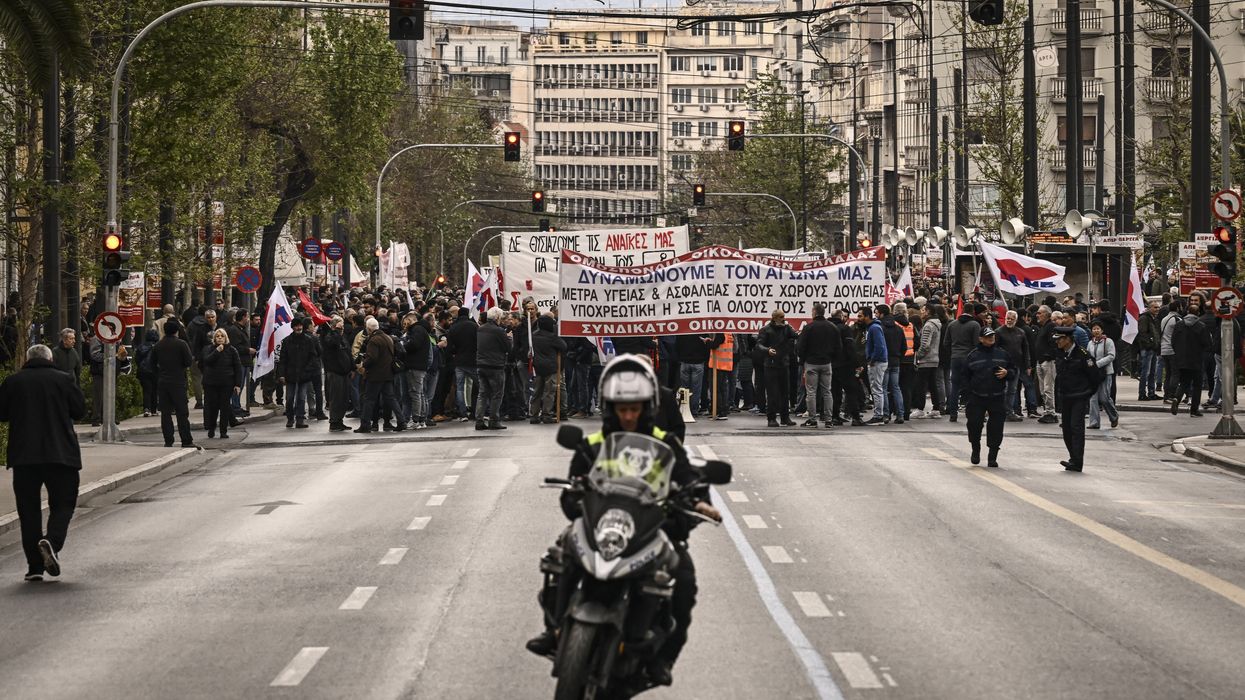
"Last week, the government committed €25 billion to defense spending," noted one observer. "Militarization is not just prepping for war, it is austerity."
A union that represents more than two million private sector workers in Greece said Wednesday that labor unions had "obvious" demands that pushed them to bring the country to a 24-hour standstill: "Pay rises and collective labor contracts now!"
The country's two main unions representing both the public and private sectors called the strike, which canceled all domestic and international flights for 24 hours starting at midnight Wednesday; left buses, trains, and other public transport operating for only part of the day; and eliminated ferry service and other public services for the day.
The unions are demanding a return to full collective bargaining rights, which were suspended in international bailout agreements during Greece's financial crisis from 2009-18.
"Before 2012, half of Greek workers had collective wage agreements," Yiorgos Christopoulos of the General Confederation of Workers (GSEE) told Al Jazeera. "But there was also a national wage agreement signed by employers and unions which meant more than 90% of workers enjoyed maternity leave."
Since the bailouts, Christopoulos said, "the government has put individual contracts at the heart of its policy. But individuals are powerless to bargain [with] their employers."
As the country relied on international bailouts worth about 290 billion euros ($319 billion) to stay afloat, wages and pensions were eroded.
Now, Kathimerini reported in January, three out of 10 Greeks in urban areas and more than 35% of people in the country as a whole are spending more than 40% of their income on housing and utilities.
Greece has the European Union's largest rate of people spending at least 40% on housing and essentials.
On top of that, said GSEE on Wednesday, "prices have gone so high that we're buying fewer goods by 10% compared to 2019."
"Workers' incomes are being devoured by rising costs, with no government response," said the union.
Author and political ecologist Patrick Bresnihan noted that the austerity policies remain even as the government approved 25 billion euros ($27 billion) for defense spending last week.
The government, controlled by the conservative New Democracy Party, recently increased the monthly minimum wage by 35% to 880 euros ($970). But Eurostat, the E.U.'s statistics agency, found earlier this year that the minimum salary in terms of purchasing power in Greece was still among the lowest in the bloc.
Officials have pledged to again raise the minimum wage to align more closely with the rest of the E.U., but the average salary is still 10% lower than in 2010.
The Civil Servants Confederation (ADEDY), is also demanding the return of holiday bonuses, which provided workers with two months' pay before the financial crisis.
One trade unionist, Alekos Perrakis, told Euronews that corporate profits are growing as working people continue to struggle.
"We demand that increases be given for all salaries, which aren't enough to last until even the 20th of the month," said Perrakis. "We demand immediate measures for health, for education, for all issues where the lives of workers are getting worse as the profits of large monopolies continue to grow."
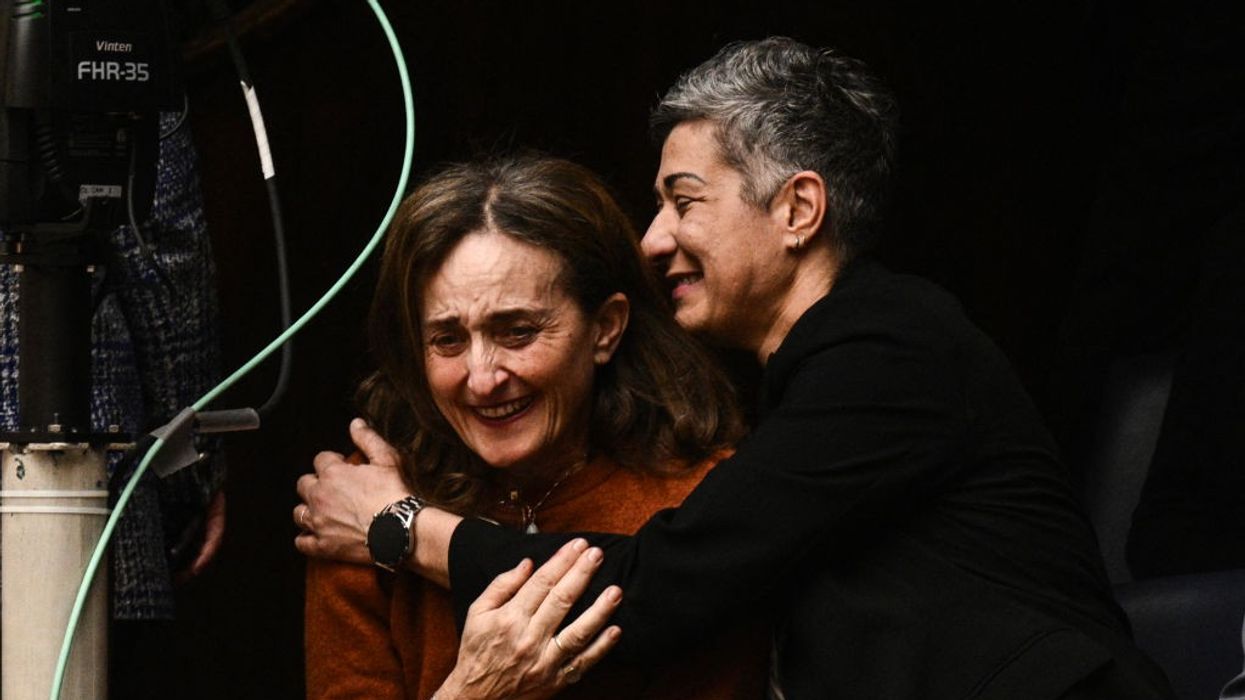
Greece on Thursday became the first Christian Orthodox, 16th European Union, and 37th overall nation to legalize same-sex marriage, a move one rights group called "a huge step forward for LGBTQ+ people" in the Balkan country.
Members of the Hellenic Parliament from across most of the political spectrum came together in a rare moment of consensus, defying opposition from the country's influential Orthodox Church and voting 176-76 with two abstentions to pass the landmark reform.
In addition to granting same-sex couples marriage rights, the measure also opens the door to adoptions and confers parental guardianship rights to both parents in same-sex partnerships.
"Greece is proud to become the 16th E.U. country to legislate marriage equality," Kyriakos Mitsotakis, Greece's center-right prime minister, said on social media after the vote. Mitsotakis had promised to approve marriage equality legislation after his reelection last year.
"This is a milestone for human rights, reflecting today's Greece—a progressive, and democratic country, passionately committed to European values," he added, drawing some scornful replies highlighting the nation's treatment of asylum-seeking migrants.
During Thursday's parliamentary debate, Mitsotakis said that "people who have been invisible will finally be made visible around us, and with them, many children will finally find their rightful place."
Stella Belia, the head of same-sex parents' group Rainbow Families, told Reuters that Thursday's vote was a "historic moment" on a "day of joy."
"It makes life much, much easier for many people, and it protects children that have been living in a state of precariousness," Belia said in a separate interview with The New York Times.
Historian Nikos Nikolaidis said the vote marked "a very important step for human rights, a very important step for equality, and a very important step for Greek society."
Meanwhile, Archbishop Ieronymos, who heads the Greek Orthodox Church, said legalization will "corrupt the homeland's social cohesion," a position shared by the far-right Elliniki Lysi party.
Outside the Hellenic Parliament in Athens, proponents of marriage equality celebrated the vote.
"I'm very proud as a Greek citizen because Greece is actually—now—one of the most progressive countries," Ermina Papadima, a member of the Greek Transgender Support Association, told Reuters.
"I think the mindset is going to change," Papadima added. "We have to wait, but I think the laws are going to help with that."
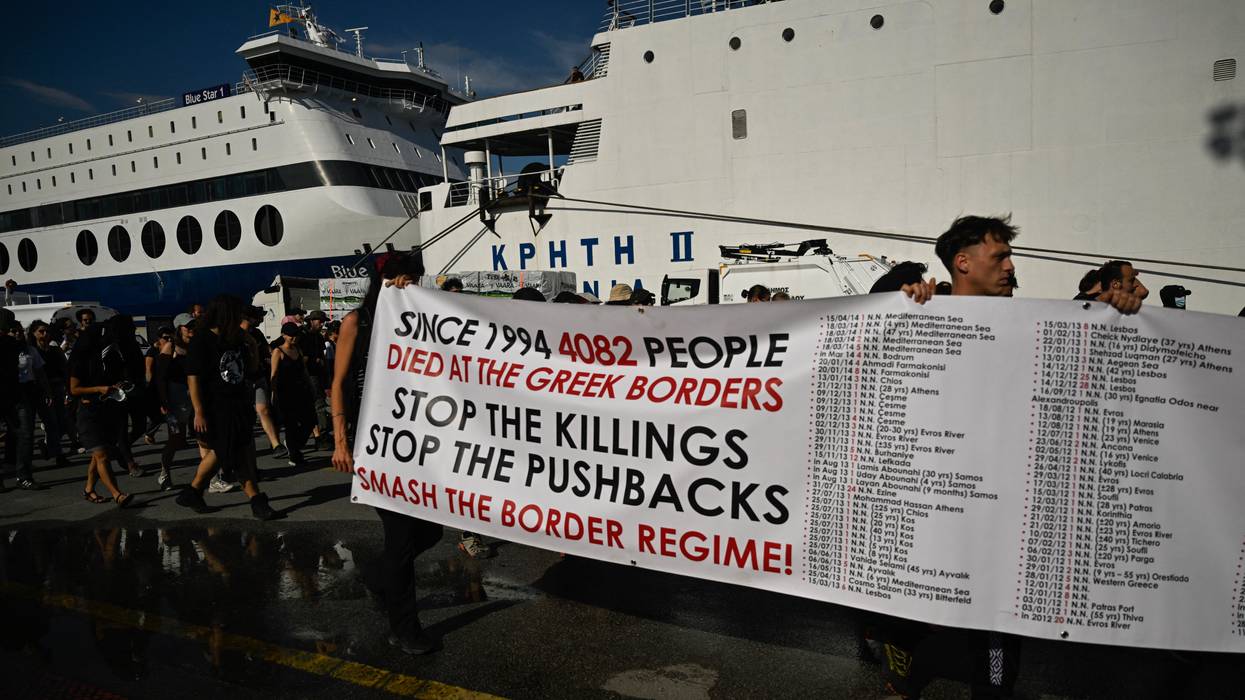
"The Greek authorities' response to the Pylos tragedy is a crucial test of their willingness to investigate human rights violations against racialized people on the move," said one researcher at Amnesty International.
Six months after a boat carrying 750 migrants and asylum-seekers capsized off the coast of Pylos, Greece, two international human rights organizations said Thursday that Greek authorities have failed to deliver justice and get to the bottom of how the shipwreck happened.
The boat sank on June 14, killing more than 600 people.
Amnesty International and Human Rights Watch (HRW) interviewed 21 of the 104 survivors as well as five relatives of victims who have not yet been found, representatives of the Hellenic Coast Guard, and international aid groups—and determined that Greek authorities failed to mobilize "appropriate resources for a rescue" as they "ignored or redirected" offers of help from the European Union as the boat approached Greece.
The fishing trawler was "severely overcrowded" with men, women, and children traveling from countries including Syria, Egypt, and Pakistan, when it set sail from Libya in June.
The boat was reportedly bound for Italy, but entered the Hellenic Coast Guard's search-and-rescue region in the Mediterranean Sea several days after leaving Libya. The marine authority was alerted to the Adriana's presence about 15 hours before it sank, but Amnesty and HRW found in its interviews that despite learning that the boat was in possible danger of sinking, the Coast Guard did not take action to avert disaster.
"At several points, the Coast Guard received information about conditions on the boat that Amnesty International and Human Rights Watch believe should have been interpreted as indicators of distress as set out in E.U. law and that trigger the duty to rescue under E.U. and international law of the sea," reads the groups' report. "At 12:47 EEST, [E.U. border agency] Frontex told the Greek authorities that the boat was heavily overcrowded and no one was wearing life jackets."
An activist who was in touch with people on the boat also reported on social media that at least six people had died aboard the Adriana, and the captain of another nearby tanker told the Hellenic Coast Guard the fishing trawler was "rocking dangerously."
But the groups found that the Coast Guard sent a rescue vessel equipped with just 43 life jackets, eight life preserver rings, two inflatable life boats with room for 39 people, and one auxiliary inflatable raft—supplies that would have left hundreds of people on the boat without any way of getting to safety if they'd been used.
Frontex confirmed to the two groups that it twice offered aerial support to the Greek authorities, and that its calls went unanswered.
Eleven of the survivors told Amnesty and HRW that the Coast Guard "attached a rope to the Adriana and accelerated, causing the boat to veer in various directions before capsizing."
A survivor named Gamal told the groups that as the Greek boat approached the Adriana, he was sitting on the roof.
"I was so excited, I wanted to see those people who came to rescue us," he said. "When they tied the rope... they pushed our boat to the left very fast... They go left, the boat sinks left, then they go right, the ship sinks more on the right."
Greek officials have denied making a failed rescue attempt, and have claimed that people aboard the Adriana "rejected assistance"—an allegation which, if true, "does not relieve competent authorities on the scene of their duty to protect lives at sea."
The groups' report comes weeks after official investigations were opened by the Greek ombudsman, the European ombudsman, and Frontex's fundamental rights officer. Greece began its probe due to the Coast Guard's "refusal to conduct an internal disciplinary investigation," said Amnesty. Only 13 survivors have been summoned to make statements to the Naval Court, which opened its own investigation in June.
"Greece must ensure that survivors and families' of the hundreds who lost their lives can safely and effectively participate in proceedings to the highest degree possible and ensure that investigations are carried out in a timely manner, guaranteeing the completeness and integrity of evidence admitted," said Adriana Tidona, migration researcher at Amnesty International.
Amnesty pointed out that there have been "historic failures in Greece's investigations of shipwrecks involving people on the move," including in its probe of the sinking of a boat near Farmakonisi in 2014, in which 11 people were killed. The European Court of Human Rights condemned Greek authorities for "the shortcomings in its rescue efforts and in its subsequent investigations" into that disaster.
"Almost 10 years since the deadly Farmakonisi shipwreck," said Tidona, "the Greek authorities' response to the Pylos tragedy is a crucial test of their willingness to investigate human rights violations against racialized people on the move at the country's border."
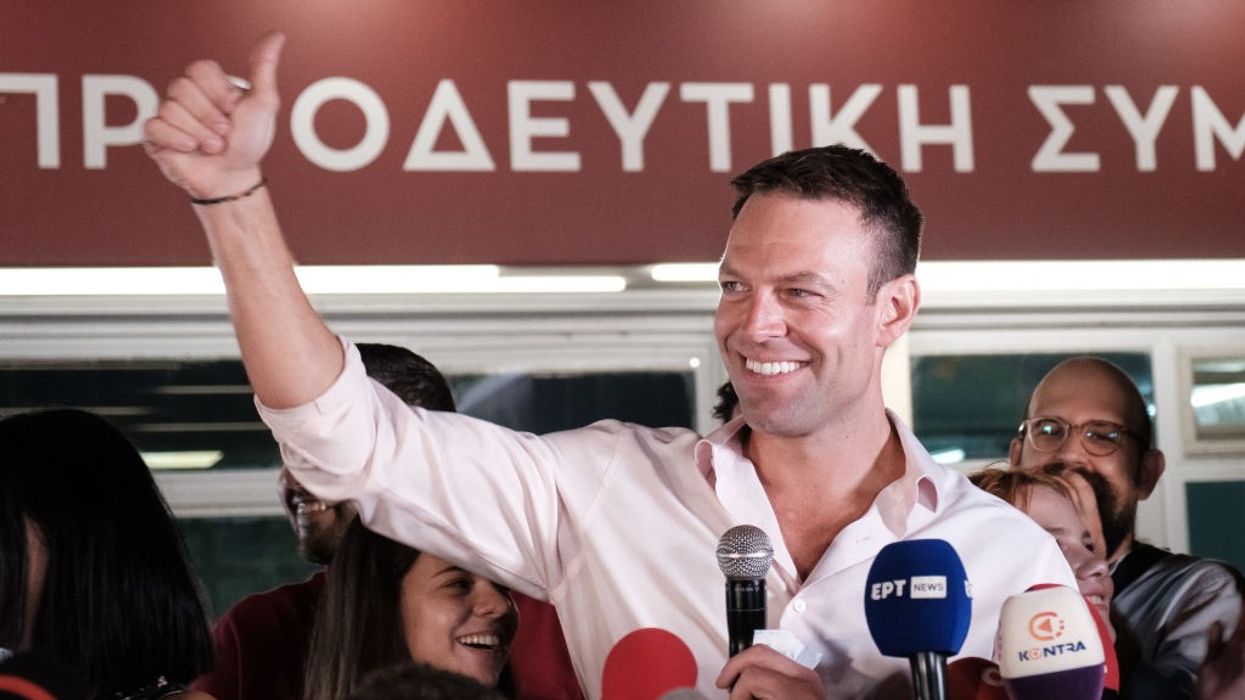
Perhaps those who voted for Kasselakis are unfamiliar with U.S. politics and the true color of the Democratic Party, but it is a vision that undoubtedly sends shivers down the spine of the members of the old guard.
The Third Way is a political term that gained currency in the late 1970s and early 1980s and is associated with the New Labour administration of Tony Blair, who served as UK’s prime minister from 1997 to 2007, but also with those of Bill Clinton in the US (1993-2001) and Gerhard Schroder in Germany (1998-2005), respectively. The term itself was developed by British sociologist Anthony Giddens and denotes a distinct political ideology that argues in favor of so-called “centrist” politics.
Essentially, Third Way proposals seek to reconcile right-wing and left-wing policies. More specifically, the “Third Way” aims to integrate center-right economic policies and center-left social policies. As such, the “Third Way” is really nothing short of a political stratagem whose underlying goal is to maintain the hegemony of capitalism by making the system sensitive to cultural and social sensibilities. Disregarding the left flank, embracing the “catch-all” thesis, and loosening the influence of labor in the economy and society at large while promoting at the same time the politics of multiculturalism define the politics and strategy of social-democratic parties that became part of the "Third Way" movement.
Make no mistake, Syriza is entering a new era with Kasselakis in charge of the party.
Indeed, by the late 1990s, virtually all the social-democratic parties in advanced capitalist societies had fallen prey to the fatal attraction of the Third Way mentality while the traditional values and beliefs of the old Left joined the dustbin of history. The only country in the western world with a radical leftwing party that did not fight for power on the ground laid by the Third Way was Greece.
Until very recently, that is.
Part of the explanation for the “delay” of Greek leftwing parties in adopting the approach of the "Third Way" is that social democracy was never established in Greece. Throughout the 20th century, the bulk of the country’s left had aligned with a Marxist-Leninist Communist Party, named KKE, but a major split occurred in 1968 following the Soviet invasion of Czechoslovakia. A big group broke from the KKE, forming KKE Interior, which eventually came to identify itself with Eurocommunism, a political movement that flourished in the late 1970s in several western European communist parties and sought to introduce socialism beyond the political and ideological orbit of Soviet communism.
The Coalition of the Radical Left (Syriza) traces its roots to the KKE Interior, although Eurocommunism disappeared as an international current shortly after its birth and, for all practical intents and purposes, the Syriza party that rose to power in Greece in 2015 was a political organization that had no discernible ideological traits whatsoever other than an expressed aversion to the fiscal austerity measures that had been imposed on the country by its international creditors -- namely, the European Commission, the European Central Bank, and the International Monetary Fund – as a condition to the bailout deals that had been crafted in 2010 and 2012, respectively.
The answer to that mystery was revealed during the leadership election that was held just this past Sunday when party members elected a gay, liberal, former Goldman Sachs trader, shipping investor, and political neophyte Stefanos Kasselakis to head the once radical left-wing Syriza party.
The ideal scenario for Syriza’s future that its new leader has envisioned is that it becomes the mirror image of the Democratic Party in the United States. Perhaps those who voted for Kasselakis are unfamiliar with U.S. politics and the true color of the Democratic Party, but it is a vision that undoubtedly sends shivers down the spine of the members of the old guard inside Syriza for they surely know that this is a recipe for the complete disappearance of the Left from the Greek political scene.
Most likely, then, what lies ahead for the party are divisions and conflict, rather than unity and peace. Eventually, an actual, formal split of the Syriza party also cannot be ruled out. Indeed, senior Syriza cadre and former education minister Nikos Filis said in a TV interview the other day that Kasselakis is “a cross between Beppe Grillo [an Italian comedian and co-founder of Italy’s Five Star Movement political party] and Trump.” In the same interview, Filis also blamed Tsipras for Syriza’s demise. And Effie Achtsioglou has already turned down every party post offered to her by Syriza’s new leader.
Make no mistake, Syriza is entering a new era with Kasselakis in charge of the party. Under Tsipras, Syriza abandoned any pretext of being a radical leftwing party. Under Kasselakis, Syriza will cease having affinity to leftist politics in any form or shape, which means that Greece will now be left with a Leninist-Stalinist Communist Party as the only large-scale organized political force fighting for the interest of the working class.
Oh, the unbearable lightness of the Greek left.

"This devastating disaster shows how climate change-fueled extreme weather events are combining with human factors to create even bigger impacts," said the head of the Red Cross Red Crescent Climate Center.
International scientists announced Tuesday that an event like the extreme rain that led to deadly flooding in Libya earlier this month "has become up to 50 times more likely and up to 50% more intense compared to a 1.2°C cooler climate," or the preindustrial world.
Those were among the findings of a World Weather Attribution (WWA) analysis of torrential rainfall in several countries across the Mediterranean during the first two weeks of September, conducted by researchers from Germany, Greece, the Netherlands, the United Kingdom, and the United States.
"The research is top notch and follows established... rapid attribution principles, grounded in peer-reviewed methods and data that pass highest quality standards," said Karsten Haustein, a climate scientist at the Leipzig University in Germany not involved with the analysis.
While the storm dubbed Daniel by Greek meteorologists impacted various countries, the African nation of Libya—which has been in chaos since 2011—was by far the worst affected, largely due to a pair of dams that failed and let floodwaters kill thousands in the city of Derna.
The United Nations Office for the Coordination of Humanitarian Affairs said Saturday that at least 3,958 people were killed and over 9,000 more were still missing. Some groups have reported higher figures, such as the Libyan Red Crescent, which previously put the death toll at 11,300.
Haustein noted that in terms of the death and destruction in Libya, the WWA researchers "discuss a host of confounding factors (long-lasting armed conflict, political instability, potential design flaws and poor maintenance of dams) that have led to an extreme level of vulnerability and exposure. All independent of climate change."
"Accordingly, they do not speculate about the role of climate change regarding damage and fatalities," the scientist explained. "Rather they highlight that the lack of early warning action and disaster relief has played a critical role in worsening the destructive outcome. The implications as far as adaptation is concerned are crucially important nonetheless, especially in light of the drastically increased risk for an event like this to happen again within the coming decades (rather than twice a millennium)."
Julie Arrighi, interim director at the Red Cross Red Crescent Climate Center, which had researchers working on the WWA report, said that
"this devastating disaster shows how climate change-fueled extreme weather events are combining with human factors to create even bigger impacts, as more people, assets, and infrastructure are exposed and vulnerable to flood risks."
"However, there are practical solutions that can help us prevent these disasters from becoming routine," Arrighi stressed, "such as strengthened emergency management, improved impact-based forecasts and warning systems, and infrastructure that is designed for the future climate."
The WWA team also found that for the region including Greece and parts of Bulgaria and Turkey, human-induced climate change made an extreme event up to 10 times more likely and up to 40% more intense. As the WWA report notes, the flooding led to at least 17 deaths in Greece, seven in Turkey, six in Spain, and four in Bulgaria.
"The worst-affected region in Greece, the Thessaly plain, accounts for over one-quarter of the country's agricultural production, the report says. "After more than 75,000 hectares were inundated, it is estimated that the agricultural sector in Thessaly will need five years to recover from the damages and for the lands to become fertile again."
Friederike Otto, a climatologist at the U.K.'s Imperial College London who worked on the WWA analysis, said Tuesday that "the Mediterranean is a hotspot of climate change-fueled hazards."
"After a summer of devastating heatwaves and wildfires with a very clear climate change fingerprint, quantifying the contribution of global warming to these floods proved more challenging," Otto added. "But there is absolutely no doubt that reducing vulnerability and increasing resilience to all types of extreme weather is paramount for saving lives in the future."
The analysis was released on the eve of the United Nations Climate Ambition Summit in New York City—which some world leaders, including U.S. President Joe Biden, have decided to skip despite demands for bold action, particularly from rich nations that are largely responsible for the planetary emergency.
Jagan Chapagain, secretary general of the International Federation of Red Cross and Red Crescent Societies, said Tuesday that "the disaster in Derna is yet another example of what climate change is already doing to our weather."
"Obviously multiple factors in Libya turned Storm Daniel into a human catastrophe; it wasn't climate change alone. But climate change did make the storm much more extreme and much more intense and that resulted in the loss of thousands of lives," Chapagain continued. "That should be a wake-up call for the world to fulfill the commitment on reducing emissions, to ensure climate adaptation funding, and tackle the issues of loss and damage."

"I am afraid that the careless summers, as we knew them… will cease to exist," the Greek prime minister said.
Historic flooding in Greece, Turkey, and Bulgaria has killed at least 11 people as rain followed heat and fire in a summer of extremes.
The storm knocked out bridges, swept cars out to sea, and made roads impassable, dumping more than two feet of rain on some parts of Greece within hours.
"This is the most extreme phenomenon in terms of the maximum amount of rain in a 24-hour period since records began in the country," Vassilis Kikilias, who acts as Greece's climate crisis and civil protection minister, said, as The Guardian reported.
The torrential rain follows deadly wildfires in the country that killed more than 20, including one megafire that scorched 81,000 hectares of forest, making it the largest in Europe since record-keeping began in 2000, as The Associated Press reported at the time.
Both fires and heavy rains are made more likely by the climate crisis caused primarily by the burning of fossil fuels. Hotter temperatures generate ideal fire conditions, and the atmosphere can hold around 7% more moisture per 1.8°F of warming. The floods come as the European Union's Copernicus Climate Change Service determined that summer 2023 was the hottest on record.
"I am afraid that the careless summers, as we knew them… will cease to exist and from now on the coming summers are likely to be ever more difficult," Greek Prime Minister Kyriakos Mitsotakis said Tuesday, as The Guardian reported.
"We almost couldn't believe the forecast."
"Correct," Just Stop Oil responded on social media. "It's not getting better. It gets worse until we stop oil and gas."
The immediate cause of the rain was a system called Storm Daniel, as The New York Times reported. In the 13 hours between 12 am and 3 pm Tuesday, it dumped more than 25 inches of rain on the town of Pelion and its surroundings.
"We almost couldn't believe the forecast," Konstantinos Lagouvardos, the research director at the National Observatory of Athens, told The New York Times. "This is a number we've never seen before. It's unreal."
Another town in the Pelion region, Zagora, saw 21 inches in 10 hours Tuesday, with more predicted to fall.
"A historic flooding event is underway!" European Synchrotron Radiation Facility researcher Nahel Belgherze wrote on the site formerly known as Twitter.
One Pelion resident, Iro Proia, shared a dramatic video on Facebook of cars being pushed out to sea by floodwaters.
Another hard-hit area was the city of Volos, which received approximately 10 times its monthly rainfall in less than 14 hours, as CNN reported. There, the River Krafsidonas overflowed, destroying a bridge, according to The New York Times. One man was also killed in the city when a wall collapsed on top of him, The Guardian reported. Another woman died close to Pelion.
One resident who lives near Volos described the toll of back-to-back extreme weather events.
"Everything saved from the fire we had in July has been destroyed by this bad weather," 49-year-old Christos Kleftakis told Agence France-Presse. "This is unprecedented—these severe weather events, the strength of the rain, the wind. I've never seen anything like that before."
The death toll was even higher in Turkey, where two people died in Istanbul and four died in the city of Kirklareli, while two remain missing.
In another example of weather whiplash, Istanbul's reservoirs had been at their lowest in nine years before the floods. The storm flooded streets and homes in the capital, closing some subway stations and trapping about 12 people in a library, who were eventually rescued, Al Jazeera reported.
In Bulgaria, the usually dry Black Sea Coast saw its heaviest rainfall since 1994, according to AFP, entirely cutting off the area south of the city of Burgas and killing at least three people.
"It's a disaster," Prime Minister Nikolay Denkov said, as AFP reported.
And it's predicted the situation could worsen in the coming days, as Storm Daniel potentially develops into a hurricane-like cyclone over the Mediterranean, also known as a "medicane," CBS News explained.
Such storms usually need sea temperatures of around 79°F to form, and meteorologists said that there was "more than enough warmth."
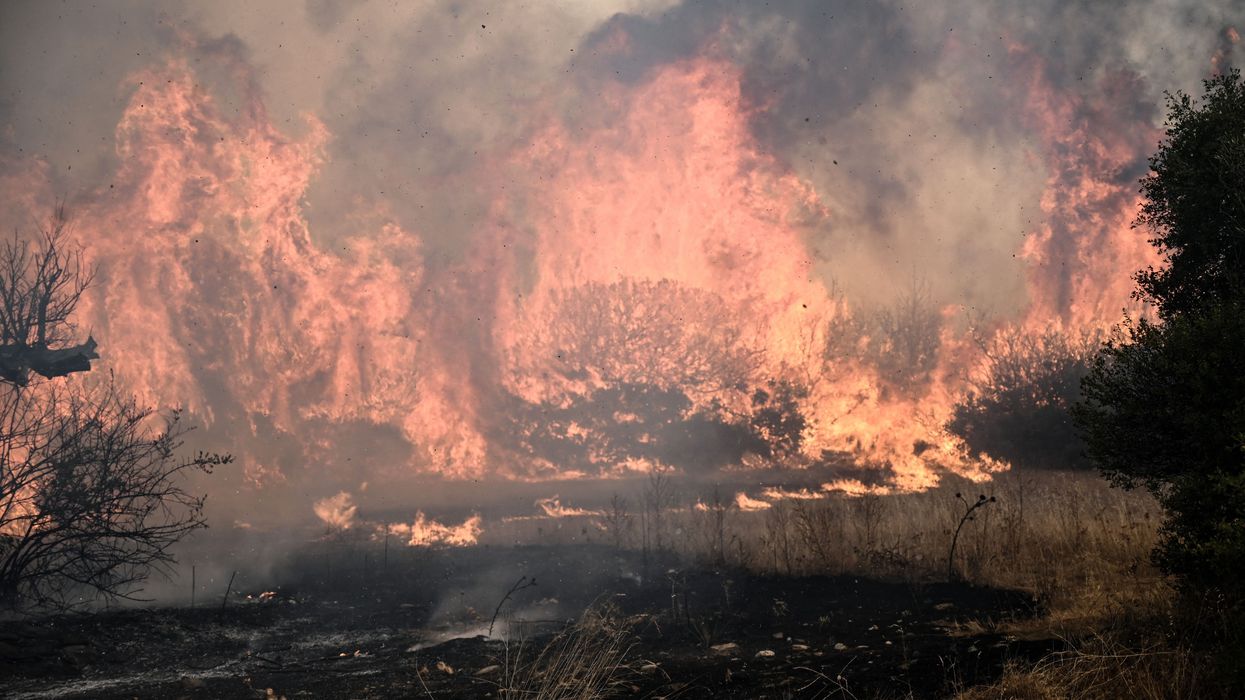
Greece's Supreme Court prosecutor accused the vigilantes of "inciting others to racist pogroms" as authorities arrested 13 migrants—who were first unlawfully detained—on suspicion of arson.
Greek authorities on Wednesday arrested three vigilantes after video was posted on social media showing them illegally detaining migrants in the northeastern region of Evros, where 18 migrants were found burned to death the previous day amid ongoing raging wildfires.
Two Greeks and a man of Albanian origin were arrested after the publication of a video showing one of the men holding 13 Syrian and Pakistani migrants in a box trailer being pulled by a four-wheel-drive vehicle near Alexandroupolis. The man filming the video boasts of how he "hunted them down" and caught 25 people and blames the migrants—whom he refers to as "pieces"—for the wildfires, urging others to "collect" more border-crossers before "they burn us."
Later on Wednesday, the 13 migrants were arrested on suspicion of arson. The arrested Albanian vigilante—whose name is not given—told Greek City Times that he "spotted a group of 13 people who were around an object and were trying to set it on fire while holding a balloon that smelled of gasoline."
"I am not a fascist or a racist," he insisted.
Greek Supreme Court Prosecutor Georgia Aldini on Wednesday ordered an investigation into whether the blaze—which has killed at least 20 people including 18 migrants who crossed over the border from Turkey—was an act of arson perpetrated as part of "an organized plan" by xenophobic agitators.
Aldini described the video of the illegal arrests as "a racist delirium of violence, accusing immigrants of 'burning us' and inciting others to racist pogroms, calling on them to organize and imitate him."
Another video posted Wednesday on social media shows the leader of a group of what the Greek news outlet The Press Project described as "headhunters" giving instructions on how to capture migrants.
Lefteris Papayannakis, director of the Greek Council for Refugees, told the Spanish newspaper El País Thursday that "part of the population thinks that the fires are the fault of the migrants and that's why they chase them."
"They function as a militia; they arrest them on their own account and use violence against them," he added.
Vassilis Kerasiotis, director of the NGO HIAS Greece and a lawyer specializing in migration, told the paper that there are numerous anti-migrant militias operating in Greece, and that "there is tolerance on the part of the authorities, that's why they feel they can freely publicize these criminal acts."
"The role of racism and systemic racism in the treatment of asylum-seekers must be confronted."
Far-right parties and politicians like Greek Solution parliamentarian Paris Papadakis—who accused migrants of starting the fire and "obstructing the work of firefighters"—also regularly issue inflammatory proclamations.
Greek Migration Minister Dimitris Kairides published a statement mourning the deaths of the 18 victims and also condemning "the murderous activity of criminal traffickers (and those who facilitate them) and the trade of illegal migration, which is what endangers the lives of many migrants both on land and at sea every day."
Euronews reported Thursday that firefighters—scores of whom have been injured—are battling at least 99 different fires in Greece, where temperatures have soared to over 105°F.
The Alexandroupolis arrests came on the same day that a group of United Nations experts including Ashwini K.P., the U.N. special rapporteur on special forms of racism, called on Greek authorities to investigate alleged incidents of racist violence against asylum-seekers and other migrants.
The eight experts said they were "particularly concerned" by Greek security forces' failure to provide "prompt and effective" aid to migrants in distress, including by ensuring their safe disembarkation and adequate reception. The experts noted the case of 12 African asylum-seekers—including a 6-month-old infant—who were rounded up by masked men, stripped of their belongings, and forcibly transported to the port of Mytilene on Lesbos earlier this year.
"The violence, which was captured on video—verified, and reported by the media—exposed the racist exclusion and cruelty of Europe's border protection practices," the experts said in a statement. "The past 12 months have been among the deadliest for asylum-seekers, refugees, and migrants of African descent and others on their journeys, particularly along sea and land routes in the Middle East and North Africa region, and in perilous Sahara and Mediterranean crossings."
"While the investigation is ongoing, there is growing evidence of a deliberate and coordinated policy of forcible return and other dehumanizing border control practices by Greece going far beyond deterrence and in contravention of its international obligations," the experts added. "The role of racism and systemic racism in the treatment of asylum-seekers must be confronted within any meaningful review of these practices."
Beatings, rapes, kidnappings, and illegal detentions are just some of the abuses migrants say they have endured in Greece.
Underscoring the experts' claim, a Greek state television broadcaster faced backlash Thursday after she said on air that "the only good news" about the Evros wildfires "is that there were no casualties, except for the poor 18 charred migrants."
Common Dreams reported last month that a joint analysis by media outlets and the Berlin-based research agency Forensis found that Greek Coast Guard officials lied when they claimed that distressed migrants aboard a vessel carrying hundreds of people that capsized in the Mediterranean Sea in June refused help. Instead, the investigation suggested the Coast Guard's efforts to tow the vessel destabilized it, causing it to capsize and killing an unknown number of migrants.
Amnesty International had previously condemned what it called the "inhumane" treatment of migrants in the wake of Turkish President Recep Tayyip Erdoğan's February 2020 decision to stop asylum-seekers from transiting through Turkey on their way into Greece and other European countries.
Turkey—which hosts more refugees than any other country in the world—has also been criticized for allegedly shooting and torturing asylum-seekers along the Syrian border, and other alleged abuses.
Turkish media reported Thursday that Turkey's Coast Guard rescued 138 migrants in the Aegean Sea after Greek authorities allegedly pushed them back into Turkish territorial waters. This, after scores of other migrants that Turkey said were repelled by Greece were rescued at sea earlier in the week.

At least nine nations in northern Africa and southern Europe are struggling to contain blazes. Meanwhile, policymakers are still allowing corporate interests to pour more fossil fuels onto the raging fire of climate chaos.
Algeria, Croatia, France, Greece, Italy, Portugal, Spain, Tunisia, and Turkey.
What do these nine countries have in common? All of them are currently battling deadly infernos made worse by the fossil fuel-driven climate emergency.
And yet, governments worldwide continue to greenlight new coal, oil, and gas production—exacerbating planet-heating pollution and ensuring that heatwaves, wildfires, and other extreme weather disasters will increase in frequency, duration, and intensity.
In Algeria, roughly 8,000 firefighters on Tuesday struggled to control conflagrations burning across 15 provinces in the country's drought-stricken north, where temperatures reached 122°F. The fires, which prompted the evacuation of more than 1,500 people, have killed at least 34 individuals so far.
"Witnesses described fleeing walls of flames that raged 'like a blowtorch,' destroying homes and coastal resorts and turning vast forest areas into blackened wastelands," The Guardian reported.
Amid heavy winds, two border crossings with neighboring Tunisia have been closed, as authorities there grapple with fires burning in the northwestern region of Tabarka.
In Croatia, firefighters on Tuesday worked to contain blazes spreading just south of Dubrovnik, a major tourist destination. The task has been made more difficult by fierce winds in the area, which are keeping firefighting aircraft grounded.
In France, hundreds of firefighters were mobilized Tuesday in an attempt to control wildfires near the Nice international airport and on the outskirts of Arles.
In Greece, more than 20,000 people have been evacuated in recent days from homes and hotels as wildfires rage on the island of Rhodes.
At least three people have died so far, including two pilots whose firefighting plane crashed on Tuesday.
Italy has been pummeled by a combination of storms in the north, which killed at least seven people on Tuesday, and wildfires in the south, which have also led to multiple deaths.
"While the north was drenched, the heatwave across the south persisted, with temperatures of 47.6°C (117°F) recorded in the eastern Sicilian city of Catania on Monday," The Guardian reported. "The bodies of two people in [their] 70s were found in a house destroyed by the flames, while an 88-year-old woman was found near the Sicilian city of Palermo."
"Italian firefighters said they tackled nearly 1,400 fires between Sunday and Tuesday, including 650 in Sicily and 390 in Calabria, the southern mainland region where a bedridden 98-year-old man was killed as fire consumed his home," the newspaper noted.
On social media, Sicily's civil protection minister Nello Musumeci wrote: "We are experiencing in Italy one of the most complicated days in recent decades—rainstorms, tornadoes, and giant hail in the north, and scorching heat and devastating fires in the center and south. The climate upheaval that has hit our country demands of us all... a change of attitude."
In Portugal, hundreds of firefighters scrambled Tuesday to extinguish blazes near Cascais, another popular tourist destination. The country is already hard-hit by drought, and wind gusts are accelerating the spread of flames.
A fast-moving wildfire in the heart of the Spanish island of Gran Canaria prompted authorities to order evacuations, close roads, and deploy dozens of firefighters and several helicopters on Tuesday.
In Turkey, officials on Tuesday evacuated a hospital and a dozen homes in the coastal town of Kemer, where firefighters continued to battle flames.
Europe is the fastest-warming continent on the planet, which has already endured 1.3°C of temperature rise since the late 1800s. July has seen the hottest day and week in recorded history and is on pace to be the hottest month ever. 2023 will likely go down as the hottest year ever, though the potential record is not expected to last long because newly arrived El Niño conditions are projected to make 2024 even hotter.
Last year's brutal heatwaves killed more than 61,000 people in Europe alone. Existing policies put the world on track for up to 2.9°C of temperature rise by the end of the century, prompting United Nations Secretary-General António Guterres to call business-as-usual a civilizational "death sentence."
"Most people still don't know what peril they are in," climate scientist Peter Kalmus tweeted last week. "This will be the coolest summer for the rest of your life, and that shouldn't be just a meme—it should be actually terrifying. The only path out of this heat nightmare is to end fossil fuels ASAP."
"Keep in mind that climate catastrophe is caused by those who run the fossil fuel industry, who have lied and blocked action for decades," he added. "It will get far, far worse until we stop them. We can stop them, but we need to get angry, take risks, and do it!"