SUBSCRIBE TO OUR FREE NEWSLETTER
Daily news & progressive opinion—funded by the people, not the corporations—delivered straight to your inbox.
5
#000000
#FFFFFF
To donate by check, phone, or other method, see our More Ways to Give page.
Daily news & progressive opinion—funded by the people, not the corporations—delivered straight to your inbox.
Another Memorial Day: boasts, insults, "self-defense strikes," cheap clichés from a "Secretary of War" prattling about dead boys "delivered from the battlefield into the arms of a loving Lord and savior." Spare us. And maybe revisit the war to end all wars, which didn't - its "infinity of waste" and trenches with skulls in the sides where "he who had a corpse to stand on was lucky." Pat Barker: “A society that devours its own young deserves (no) unquestioning allegiance.”
"Happy Memorial Day to all," babbled our ever-unseemly Idiot-In-Chief, "including the Dumocrats, who disrespect our Military and all of the tremendous success that it has had over the last year," because obviously the best way to honor the dead is to not acknowledge their sacrifice but to denigrate half the ravaged country they died defending. Also, at Arlington National Cemetery, the infinitely hollow, "Wherever the American soldier (falls), he does it for the destiny of a nation like no other - there’s never been anybody like you." Also, noted Private Bone Spurs, 18,000 Williams, over 20,000 Johns, and other names fell, but "not too many" Donalds. Huh.
Adding to the day's eloquence with a much-needed "monster truck rally vibe" was inexplicably non-veteran, Hegseth bestie, tawdry aging rock star Kid Rock. Because "Tokyo Rose wasn't available," he was chosen by the Pentagon to honor American service members' ultimate sacrifice in a hoodie, fedora, gold chain and sunglasses, looking like "a creature you’d expect to hiss at you from the dank depths of a garbage bin" and intoning, "We are remembering the sacrifice and service of so many who are not with us today...It’s a special day. We’re thinking of them... Keep on Kid Rocking in the free world."
Then there was bombastic, dime-store-cliché-spouting Christo-fascist Pete Hegseth urging we "remember our republic was forged and purchased with blood, American blood," evidently only male according to his pronouns. Ever a fatuous buffoon, he declaimed "the sacred names of bygone eras to the 13 souls of Epic Fury (who) answered the call when it mattered the most (and) gave the last full measure of devotion," even when he failed them in an Iranian strike in Yemen: "They stood against the darkness of the world wearing the breastplate of righteousness (and) raced to the brink so we could walk in freedom and prosperity (and) may almighty God bless our warriors." Jesus weeps.
It remains unclear how many of the up to 22 million dead, both military and civilian, and over 20 million wounded, "the butcher's bill" of World War One, came to be blessed by almighty God, especially in its Western Front's godforsaken trenches teeming with sludge, rats, mud, blood, water and disease. The war's "inconceivable loss" and "purposeless waste of a generation" is perhaps best exemplified by the Battle of Verdun, where the French, set upon by German forces, adopted a "They Shall Not Pass” mantra that in the end saw over 700,000 dead on both sides - ultimately, vast "heaps of bones."
For many, the horrors of "the greatest conflagration the world had seen" live on through the searing literature, both prose and poetry, that emerged from them. Wilfred Owen's Dulce et Decorum Est epitomizes the bitter, bloody tone that often prevailed amidst its "guttering, choking, drowning" victims - Hegseth's benighted "warriors." "Bent double, like old beggars under sacks/ Knock-kneed, coughing like hags," cursing, gargling, limping bootless through sludge, "blood-shod...deaf even to the hoots/Of gas-shells dropping softly behind," they reject, "The old Lie: Dulce et decorum est/Pro patria mori."
Siegfried Sassoon lived the privileged life of a British country gentleman, writing poetry and fox hunting, until the start of World War 1, when he served as an officer with the Royal Welch Fusiliers in France. He was awarded a Military Cross, was later wounded in action, and refused to fight any longer to protest "a senseless slaughter." On June 15, 1917, he wrote "A Soldier's Declaration" as "an act of wilful defiance of military authority, because I believe that the War is being deliberately prolonged by those how have the power to end it. I am a soldier, convinced that I am acting on behalf of soldiers."
"I have seen and endured the sufferings of the troops, and I can no longer be a party to prolonging those sufferings for ends which I believe to be evil and unjust," he wrote. He was protesting, he made clear, "against the political errors and insincerities for which the fighting men are being sacrificed...against the deception which is being practiced on them. Also I believe that it may help to destroy the callous complacence with which the majority of those at home regard the continuance of agonies which they do not share, and which they have not sufficient imagination to realise."
His letter was read before the House of Commons and printed in The London Times. He expected to be court-martialed; instead, he was declared "mentally unsound" and sent to Craiglockhart War Hospital, where Dr. William Rivers was charged with restoring Sassoon’s “sanity” and sending him back to the trenches. The story of their real-life encounter, wherein Rivers came to diagnose war's "shell-shock" and share Sassoon's view, is powerfully told in Pat Barker's historical novel Regeneration, the first in a trilogy about the psychological carnage of war. "It (was) the Great White God de-throned. We assumed we were the measure of all things," Rivers says. "(But) nothing justifies this. Nothing nothing nothing."
Siegfried Sassoon's 1918 Suicide in the Trenches mourns "a simple soldier boy/Who grinned at life in empty joy" until he goes to war: "In winter trenches, cowed and glum/With crumps and lice and lack of rum/He put a bullet through his brain./No one spoke of him again./ You smug-faced crowds with kindling eye/Who cheer when soldier lads march by,/Sneak home and pray you'll never know/The hell where youth and laughter go." Too many of those young lie in a cemetery near Ypres, where one Inscription stands out in a sea of "For King and Country" headstones. It was written on the grave of Arthur Young by his father, a diplomat wiser than any vacuous Hegseth: "Sacrificed to the fallacy that war can end war."
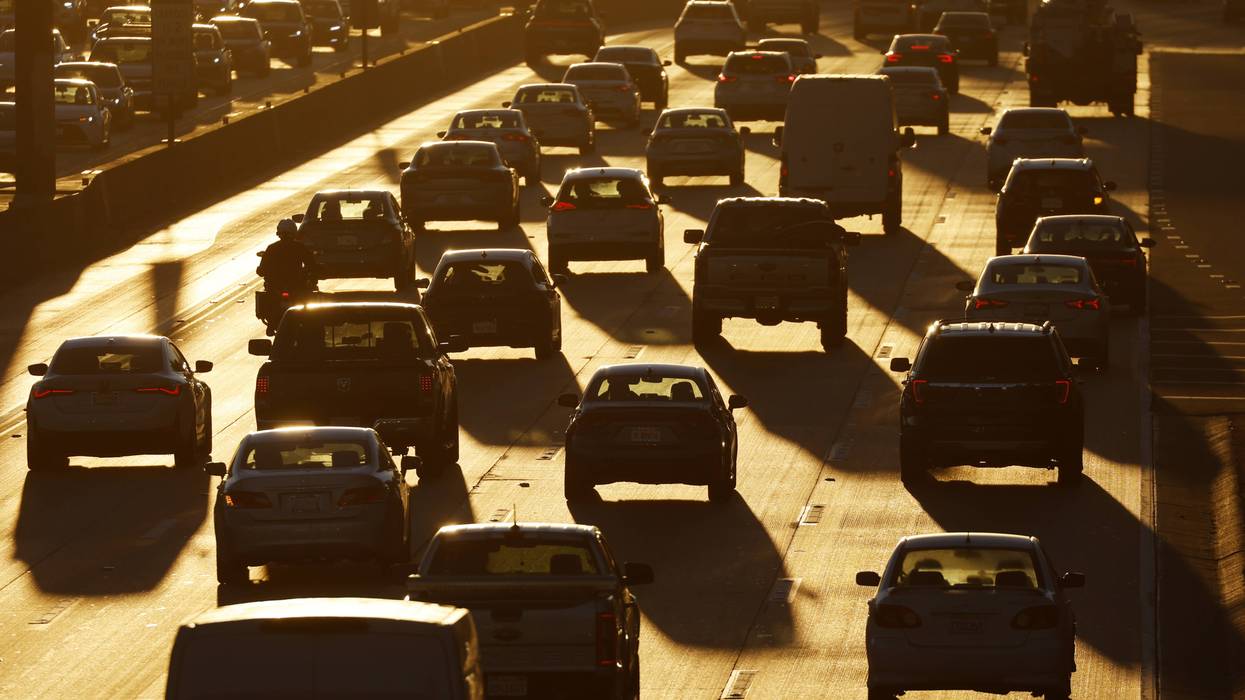
Average gas prices in the United States are quickly climbing toward $5 per gallon this week as US President Donald Trump's war with Iran shows little sign of resolution.
Where average prices were about $2.98 the day before the war's launch, they had shot up to $4.48 as of Tuesday, according to AAA's gas price tracker, as Iran's restriction of ships traveling through the Strait of Hormuz has squeezed global oil shipping and the shipping of other fuel sources like liquefied natural gas (LNG), causing global price hikes.
And while Trump has touted America’s supposed “energy independence” as an ace in the hole, achieved by ratcheting up fossil fuel production while canceling solar and wind power projects, data shows that the US has been hit harder by the price shocks than any other major economy in the world, with those that have embraced renewable energy being especially resilient.
Although the US leads the world in oil production by a large margin, data from JP Morgan Commodities research, analyzed Friday by MarketWatch, showed that between February 23 and April 27, the US experienced about a 42% increase in gas prices, the fifth-highest in the world.
"The spike in US gasoline prices over the past two months has outpaced everywhere except Southeast Asia, the region most dependent on oil from the Persian Gulf," explained Yahoo Finance geopolitics reporter Jake Conley.
Rebecca Babin, senior energy trader and managing director at CIBC Private Wealth, explained to MarketWatch last week that while increased fuel production gives the US a "buffer," oil is a global market and "it doesn’t operate in a vacuum." She said, "Global tightness and domestic bottlenecks still show up in gasoline prices."
Meanwhile, some of the countries that have best survived the price hikes include France and Spain, which derive large shares of their power from nuclear energy and renewables, respectively.
Craig Hanson and Jessica Isaacs, a pair of researchers at the World Resources Institute, explained last month that while a mix of factors is at play, countries less reliant on fossil fuels generally "find themselves in a better position to withstand the current crisis."
"Every country has homegrown access to at least two clean energy resources—the sun shines, and the wind blows just about everywhere at some point," they said. "The same cannot be said of oil and gas, where production is concentrated in a small number of countries and exposed to geopolitical disruption."
"Renewable resources like wind, solar, and geothermal have zero fuel costs, and the fuel cost of nuclear power is quite low. Again, the same cannot be said of fossil fuels, which have costs set by volatile global markets," they added. "These two advantages are why some of the world’s clean energy frontrunners are faring better than other countries amidst the Iranian energy crisis."
As Reuters reported in late April, the contrast between Europe's biggest gas guzzlers and green energy adopters is particularly stark.
While Albania has kept energy prices in check and even lowered them compared to last year by using its large system of hydroelectric dams, which supply much of its power, countries like Germany and Italy, which still rely heavily on gas, have seen electricity prices spike.
Hanson and Isaacs noted that while clean energy investments have helped soften the blow of global price shocks, the effects are not the same across the board. While price hikes for the electricity used to power factories, homes, and cars have been blunted by the availability of alternative energy sources, others, like heat—which are more reliant on natural gas—have still been affected.
Still, though, they said the crisis has shown that in addition to environmental sustainability, "clean energy systems’ greatest benefits today might actually be price stability and domestic energy resilience."
While Trump has continued his efforts to choke off any federal investment in renewable energy and double down on oil and gas production, other nations have taken the war’s price hikes as a sign to further accelerate their transition away from fossil fuels.
Germany and several other European Union members, for example, have announced expedited timelines to expand offshore wind and solar investments, explicitly citing the volatility in oil markets caused by the war.
Stephen Wertheim, a senior fellow in the American Statecraft Program at the Carnegie Endowment for International Peace, said the energy price shocks showed that "the only real energy independence from the Middle East is renewables."
With the US-Israeli war on Iran pushing gas prices up past $4.50 per gallon and American households already having spent nearly $300 that they wouldn't have otherwise on fuel, some families may opt to stay home this coming Memorial Day weekend—but a new analysis released Thursday shows that even without travel expenses, celebrations are likely to be more costly than they were last year thanks to President Donald Trump's policies.
Both Trump's assault on Iran—and the predictable result of the Iranians closing the Strait of Hormuz, a key trade waterway, in retaliation—and his tariff and trade policies are likely to make the holiday more expensive, with prices for barbecue classics up 13% on average since last year, more than four times the inflation rate, according to two think tanks, Groundwork Collaborative and The Century Foundation (TCF).
Ground beef for hamburgers is up 20%, while Johnsonville bratwursts are up 28%, Kraft hot dogs are up 12%, and Martin's rolls are 19% more expensive than they were in 2025.
Those shopping for produce won't fare much better, with the average price of a head of iceberg lettuce up 19% over last year, seedless watermelon costing 17% more, and six ears of yellow corn costing a whopping 98% more than it did in 2025.
"Higher fresh-produce prices in particular reflect Trump’s mishandling of the economy," reads the report. "Last year, the number of farmers filing for bankruptcy rose 46%, as Trump’s tariffs unleashed chaos and uncertainty in the industry. Fertilizer is an essential component for growing every item of produce and tariffs in place for much of 2025 drove fertilizer prices ever higher; these prices have remained elevated even after the Trump administration was forced to roll them back due to backlash."
"From the ticket counter to the cookout, consumers are scaling back and going without in the face of Trump’s summer sticker shock."
Janelle Jones, senior fellow at TCF, emphasized that both the tariffs and the war are "two decisions the president made and can undo whenever he wants but by his own admission he doesn’t spend any time thinking about Americans’ financial situation."
"Families are getting squeezed on the price of everything, and leaders in Washington don’t seem to be paying attention," said Jones.
Higher tomato costs—which are up 22% over last year—come after Trump ended the US-Mexico tomato trade agreement that had been in place for decades. Instead, he imposed a 17% tariff on tomatoes that come from the country's southern neighbor.
Even the act of serving food and packing it up as leftovers will be more expensive this year, with heavy-duty aluminum foil costing 18% more—also thanks to the tariffs—and disposable plasticware up 20%.
"The Middle East is a major producer of oil and petrochemicals, which is used to produce plastic," reads the report. "Increases in the price of plastic will ripple across grocery bills for months to come as packaging gets more expensive as well."
Less than two weeks after the president—who campaigned on reducing the cost of living—proudly stated that he doesn't "think about Americans’ financial situation" when it comes to the unprovoked Iran conflict, Groundwork and TCF also highlighted the impact the war of choice has had on jet fuel prices, and in turn, air travel.
"Jet fuel has soared to record highs and companies are passing these costs on to consumers," the report states. "The average domestic airfare ticket is now 31% more expensive than in January, according to industry data. For a family of four, this equates to an extra $360 on plane tickets for a typical flight."
Fuel prices contributed to Spirit Airlines' decision to shut down entirely, leaving larger carriers with no budget airline to compete with.
“Trump’s senseless tariffs and illegal war are robbing American families of their relaxing summer vacation," said Breyon Williams, chief economist for Groundwork. "From the ticket counter to the cookout, consumers are scaling back and going without in the face of Trump’s summer sticker shock.”
Maine Democratic US Senate candidate Graham Platner on Saturday said that a campaign ad that aired during a Boston Red Sox game was "taken down" after it took aim at the team's ownership.
The ad in question features Platner discussing the role that private equity firms play in the US economy, including sports teams.
"Private equity is destroying our favorite baseball team, stripping them for parts," Platner says at the start of the ad. "Private equity is buying up our homes, our sports, and our lives. I will reverse the private equity curse."
Private equity is taking our homes. It's taking our hospitals. It's taking beloved local businesses and stripping them for parts.
And now private equity is running the Red Sox into the ground.
Our new ad ⬇️ pic.twitter.com/w7LapElpdA
— Graham Platner for Senate (@grahamformaine) May 22, 2026
Platner concludes the ad by saying that he approves this message "because I miss Mookie Betts," the star player whom the Red Sox traded to the Los Angeles Dodgers in 2020 in a deal that was widely decried by local fans as a salary dump.
According to Platner, his campaign began airing the ad Friday on the New England Sports Network (NESN), the cable TV station owned partially by Fenway Sports Group, the conglomerate that owns the Red Sox.
However, he said that "midway through the game the ad was taken down" by NESN, after which the Red Sox proceeded to blow a 4-0 lead, losing to the Minnesota Twins by a final score of 8-6.
Platner, an oyster farmer and upstart candidate who has never before held political office, became the Democratic Party's presumptive nominee for the 2026 US Senate race in Maine last month after his top rival, Democratic Maine Gov. Janet Mills, dropped out of the race.
In recent weeks, Platner has pivoted to challenging incumbent Sen. Susan Collins (R-Maine), who has held the seat since 1996 and is now running for her sixth term in office.
The United Nations' emergency relief office on Thursday was mobilizing $60 million to fight the rapidly spreading Ebola outbreak in the Democratic Republic of Congo, with the body's under-secretary-general for humanitarian affairs saying relief teams are "fully mobilized" and "applying lessons from previous outbreaks," with a focus on building community trust and communicating with governments.
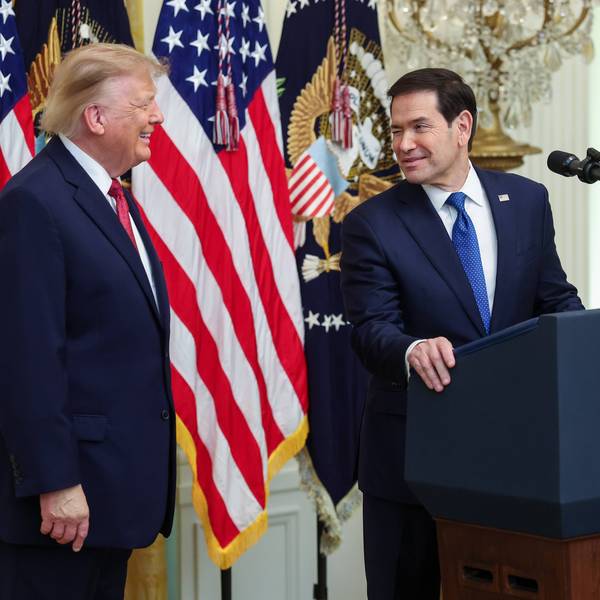
But with the Trump administration having dismantled the US Agency for International Development (USAID) and slashed funding and staffing for the Center for Disease Control and Prevention's (CDC) global efforts, the response is largely missing a key feature that helped with containment during the 2014 and 2019 outbreaks—the involvement of the US government and public health teams—and Secretary of State Marco Rubio signaled on Thursday that was unlikely to change.
In comments to the press, Rubio said the Trump administration's top priority is that Ebola doesn't reach the US—even if that means imposing travel restrictions against the guidance of the World Health Organization (WHO)—and described an approach that one disaster relief leader said was antithetical to the actions the US took in previous Ebola outbreaks.
"Our number-one objective on Ebola, before anything else, and we think it's terrible what's happening there to the people... Our number-one thing has to be, we can't have it affect the United States," said Rubio. "We can't have Ebola cases coming here."
Rubio: "We can't have ebola cases here. In fact, I think we had a flight last night headed to Detroit that was diverted." pic.twitter.com/S84FmWIq5b
— Aaron Rupar (@atrupar) May 21, 2026
The secretary of state noted that an Air France flight that had been headed for Detroit was diverted to Montreal on Wednesday after a passenger from Congo was found to have boarded the plane "in error."
The Department of Homeland Security announced new restrictions this week saying that all travelers who have been in the DRC, Uganda, and South Sudan in the past 21 days—including US citizens and permanent residents—can only enter the US through Washington Dulles International Airport.
When WHO declared the Ebola outbreak a public emergency of international concern last weekend, the agency noted that "no country should close its borders or place any restrictions on travel and trade."
"Such measures are usually implemented out of fear and have no basis in science," said WHO in its guidance, which also noted "state parties should be prepared to facilitate the evacuation and repatriation of nationals (e.g. health workers) who have been exposed" to Ebola.
Jeremy Konyndyk, president of Refugees International and a former USAID disaster relief official, said the message sent by Rubio was "insanely counterproductive."
By sending the message that the US is prioritizing that Ebola stays outside US borders above all, said Konyndyk, the Trump administration is telling "any US health workers that if they get infected trying to contain the outbreak, they won't be allowed home."
"In the 2014 outbreak we did the opposite, because we knew that posture would undermine the response and extend the outbreak," he said.
Dr. Krutika Kuppalli, who specializes in infectious diseases and deployed to West Africa in 2014 to help fight the Ebola outbreak that killed more than 11,000 people, said she did so "with the understanding that if something happened my government would take care of me."
"Unsure how any US citizen would feel comfortable deploying, knowing our government would not make sure they are okay if something happened," said Kuppalli.
The Trump administration's refusal to directly help US healthcare workers impacted by the outbreak has already resulted in two doctors being sent to European countries including Germany and the Czech Republic for treatment.
As he emphasized that Ebola cannot reach US shores, Rubio sent out messages of thanks to German and Czech officials for admitting the two medical workers to their hospitals.
With more than 170 deaths and about 750 infections suspected in the "rapidly" spreading Ebola outbreak and cases reported in Uganda as well as the DRC, public health experts are warning that the crisis is likely to "get worse before it gets better" and that its impact has likely already reached farther than initial numbers show due to a lack of surveillance on the ground.
Former CDC Director Robert Redfield told NewsNation on Thursday that "normally when we have these Ebola outbreaks, and I had three of them when I was CDC director, all of which were in the DRC, normally we recognize them when we have five, 10 cases, you know, at most."
"This one really wasn’t picked up until there was over 100 cases," he said.
WHO Director General Tedros Adhanom Ghebreyesus said Friday that the risk assessment for Ebola is "very high at the national level, high at the regional level and low at the global level."
As Common Dreams reported earlier this week, experts have pointed to President Donald Trump's cuts to foreign assistance and public health initiatives as reasons the outbreak had already spread as far as it did when the emergency was declared this week.
The State Department announced on Monday it was mobilizing $13 million in assistance to help contain the outbreak; the US spent more than $5 billion to fight to 2014 epidemic that hit several countries in West Africa.
"The United States cannot quickly reverse our abdication of leadership on the global health stage," wrote Dr. Craig Spencer, an emergency medicine physician who helped treat Ebola patients in 2014 and survived the disease himself. "But we can bolster our response to this crisis. There should be a steadfast commitment to working closely and coordinating with essential partners like the WHO. We need to mobilize funding and experts, speed up the development of new treatments, and increase resources for protective equipment and expanded testing."
The Palestinian ambassador to the United Nations withdrew his bid to become a vice president of the UN General Assembly on Thursday following threats from the Trump administration to strip the visas of the entire Palestinian delegation, according to NPR.
The Palestinian envoy, Riyad Mansour, has been an outspoken critic of Israel's actions toward Palestinians, particularly since the beginning of the genocidal war in Gaza, which he said has entailed "the collective punishment of over two million Palestinians."
He has been Palestine’s permanent UN observer for more than two decades and had earlier this year planned to run for president of the General Assembly, though he bowed out following US pressure.
The Guardian reported that on Tuesday, the US State Department sent a diplomatic cable to the US embassy in Jerusalem instructing it to pressure the Palestinian Authority (PA)—the governing body of the occupied West Bank—to withdraw its bid for one of the 21 vice presidencies of the General Assembly as well.
General Assembly vice presidents have a role in setting the body’s agenda and filling in when the president is absent. The UN is scheduled to hold elections amongst Assembly members on June 2.
The US cable said Mansour “has a history of accusing Israel of genocide"—as leading human rights groups and experts have—and that his presence would “undermine” the objectives of President Donald Trump’s so-called “Board of Peace” in Gaza, which a recent Human Rights Watch report said has fallen fall short of its promises to provide aid to Palestinians and has allowed Israeli forces to continue killing them with little pushback despite a ceasefire.
The cable said, “We will hold the PA responsible if the Palestinian delegation does not withdraw its [vice presidential] candidacy” by Friday, “and consequences will follow.”
The cable threatened to revoke the US visas of all Palestinian officials. The US already revoked most of them back in August, but rolled back the ban on those who were visiting as part of the annual UN summit. “It would be unfortunate to have to revisit any available options,” the cable said.
It also threatened that Israel would continue to withhold tax revenue that it owes to the Palestinian Authority, which was blocked by Israel's far-right finance minister, Bezalel Smotrich, at the beginning of the war in October 2023. The money being withheld by Israel accounts for 60% of the PA's revenue.
A person familiar with the matter told NPR that Mansour specifically would refrain from running for the position for the next two years, which was interpreted as a reference to the end of Trump's term as president.
The US is prohibited from blocking UN officials from visiting the body's New York headquarters under a 1947 agreement. However, the US has blocked visas for officials from enemy countries, including Russia and Iran, as well as the former leader of the Palestine Liberation Organization (PLO), Yasser Arafat.
Hady Amr, who served as a senior State Department official on Palestinian affairs under the Obama and Biden administrations, told NPR that expelling diplomats is extremely rare outside of "extreme situations like Russian espionage or election interference."
Amr said, "Generally, it's counterproductive because you need diplomats to work out problems between countries, and by expelling diplomats, you're undermining not only their ability to solve problems, but the abilities of the United States as well."
Tawfiq Al-Ghussein, a London-based researcher who specializes in modern Middle Eastern history and the displacement of Palestinians, said on social media that "the significance of this is not merely procedural."
"Washington is effectively trying to prevent even symbolic Palestinian institutional visibility within the UN system because it understands that international legitimacy matters politically, legally, and diplomatically," Al-Ghussein said. "A Palestinian vice presidency at the General Assembly would not change power realities on the ground, but it would normalize Palestinian statehood claims within the architecture of international governance itself. That is precisely what the United States is attempting to block."
“The irony is extraordinary: The same power that lectures the world endlessly about democracy and international order is reportedly threatening visas and diplomatic consequences to stop Palestinians from holding a largely ceremonial UN role,” he continued. "It reveals once again that the issue was never 'peace negotiations' as such, but control over who is permitted institutional legitimacy in the international system."
The lone intent of the new policy, said one watchdog, "would be to protect the administration from the leak of embarrassing, politically damaging, or unlawful information.”
The Trump administration—the self-styled “most transparent administration in history”—plans to require all federal government employees to sign nondisclosure agreements in what it claims is an effort to stop damaging information from leaking, but what critics warn is a cynical effort to subvert accountability and hide malfeasance.
The Washington Post reported Tuesday on a draft notice posted to the Federal Register by the US Office of Personnel Management (OPM), which is expected to be published on Wednesday.
Consistent with the Trump administration’s efforts to squash negative reporting on its endeavors, the new rule contains a sweeping order that would ban federal employees from going to the press with any information deemed “confidential.”
Notably, this is different from the typical designation of "classified" vs. "unclassified." It encompasses “non-public, confidential, or proprietary information” or “any sensitive, pre-decisional or deliberative material that is not currently publicly available and should not be disclosed under applicable law.”
Both current and former employees would need "written permission from an authorized agency official" to speak to the press about matters deemed "confidential" under the draft's terms, or they could be subject to civil and criminal penalties.
It will be up to individual agencies whether they require employees to sign the NDAs, but the document said doing so would "promote consistency across government, better protect confidential information, and better inform federal employees of their rights and obligations regarding confidential information."
Under Defense Secretary Pete Hegseth, the Pentagon has already enacted a strict NDA that “prohibits the release of non-public information without approval or through a defined process," which it enacted late last year along with random lie-detector testing aimed at finding leakers.
The draft notice reported on Tuesday suggests a similar requirement will become blanket policy across a wide swath of agencies. The notice gives an idea of what sorts of information the administration wants to shield from journalistic scrutiny.
The document cites the unauthorized leak in February 2025 of information about the Department of Homeland Security's mass deportation targets in Los Angeles and Aurora, Colorado, which led then-Secretary Kristi Noem to start subjecting employees to polygraph tests to root out leakers.
Another whistleblower in January published identifying information for about 4,500 Immigration and Customs Enforcement (ICE) and Border Patrol employees.
The draft also pointed to disclosures to the New York Times and Washington Post, giving the outlets advanced notice of the planned US raid on Venezuela to kidnap President Nicolás Maduro in January, which the outlets waited to publish until after the illegal operation was complete.
The NDA proposal is the latest attack on critical journalism by the Trump administration, part of a pattern to assert stricter control over the flow of information to the public.
The Pentagon has sought to strip credentials from outlets unless they agree to only publish approved information. Trump and Federal Communications Commission (FCC) Chair Brendan Carr have threatened the broadcast licenses of networks that give Trump negative coverage and opened investigations into them. Trump, meanwhile, has personally launched unprecedented multi-billion-dollar lawsuits against media outlets, many of which judges have thrown out of court due to lack of merit.
In a statement sent to Common Dreams on Tuesday, Lauren Harper, the Daniel Ellsberg Chair on Government Secrecy at the Freedom of the Press Foundation, called the proposed NDA requirement "not just absurd" but "unnecessary and dangerously secretive."
“This policy, from a president who has previously attempted to impose oppressive, corporate-style confidentiality and nondisclosure agreements on federal employees," Harper said, "would kneecap whistleblower protections, undermine the First Amendment, and wrongly inhibit the public’s right to know.”
OPM Director Scott Kupor defended the requirement. “In much of the private sector," he told the Post, "employees handling sensitive business or customer information are routinely required to sign confidentiality agreements, and the federal government should not be held to a lower standard.”
But critics argue that the federal government doing the same poses potential First Amendment violations. Although federal whistleblower laws protect employees’ ability to go to the press about waste, fraud, and abuse, experts told the Post that the NDA proposal could, in practice, be used as a “catchall gag order” that could lead employees to feel their jobs are in danger if they speak out.
“Trying to force the entire federal government to adopt the Trump organization’s aggressive use of NDAs won’t make anybody safer and won’t improve agency processes," Harper said. "Its sole intent would be to protect the administration from the leak of embarrassing, politically damaging, or unlawful information.”
Everett Kelley, president of the American Federation of Government Employees (AFGE), said the NDA proposal shows the Trump administration is continuing "its efforts to silence federal employees.”
“This proposed rule," said Kelley, "sweeps in an extraordinarily broad category of information, extending restrictions to the very material the public relies on to learn when an administration is causing harm. Federal employees do not surrender their First Amendment rights when they accept federal employment."
"OPM claims the form will be ‘optional’ for agencies to use and merely restates existing law," Kelley added. "We know that will not be true. OPM will pressure agencies to make the NDA mandatory and then fire employees who refuse to sign it."
He said the rule change was unnecessary because there are already "extensive policies and procedures" to prevent classified and privileged info from being leaked.
Kelley said, "This proposed rule sweeps in an extraordinarily broad category of information, extending restrictions to the very material the public relies on to learn when an administration is causing harm."
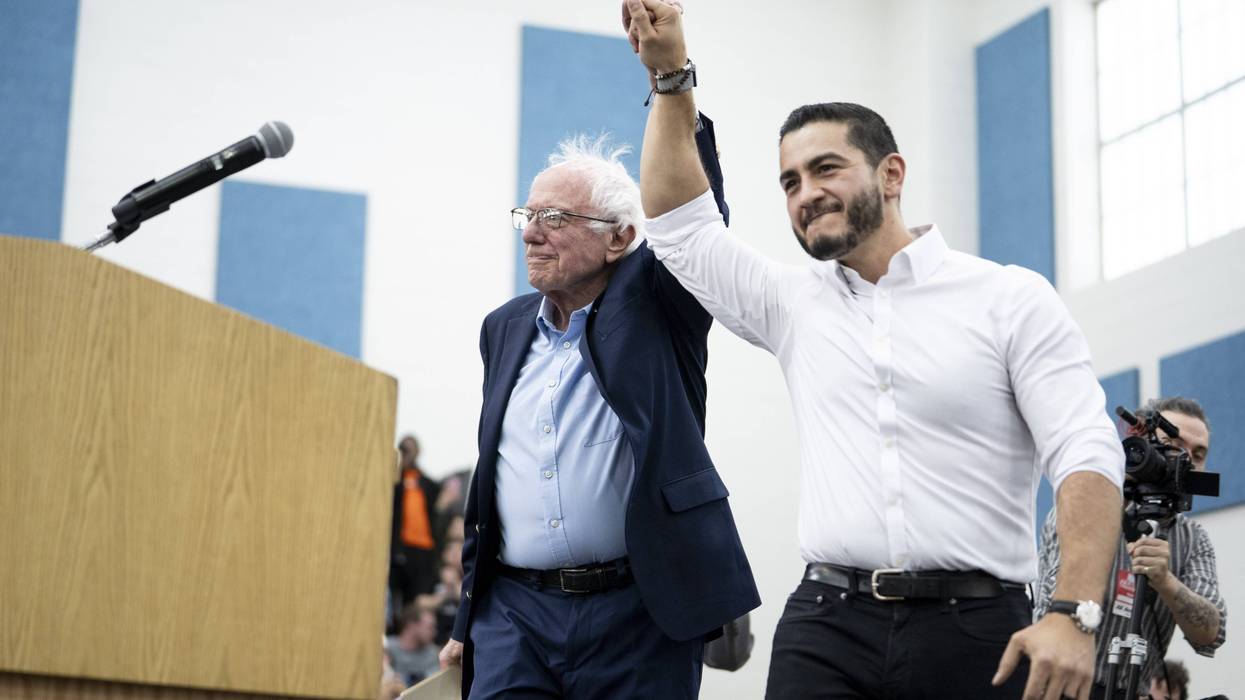
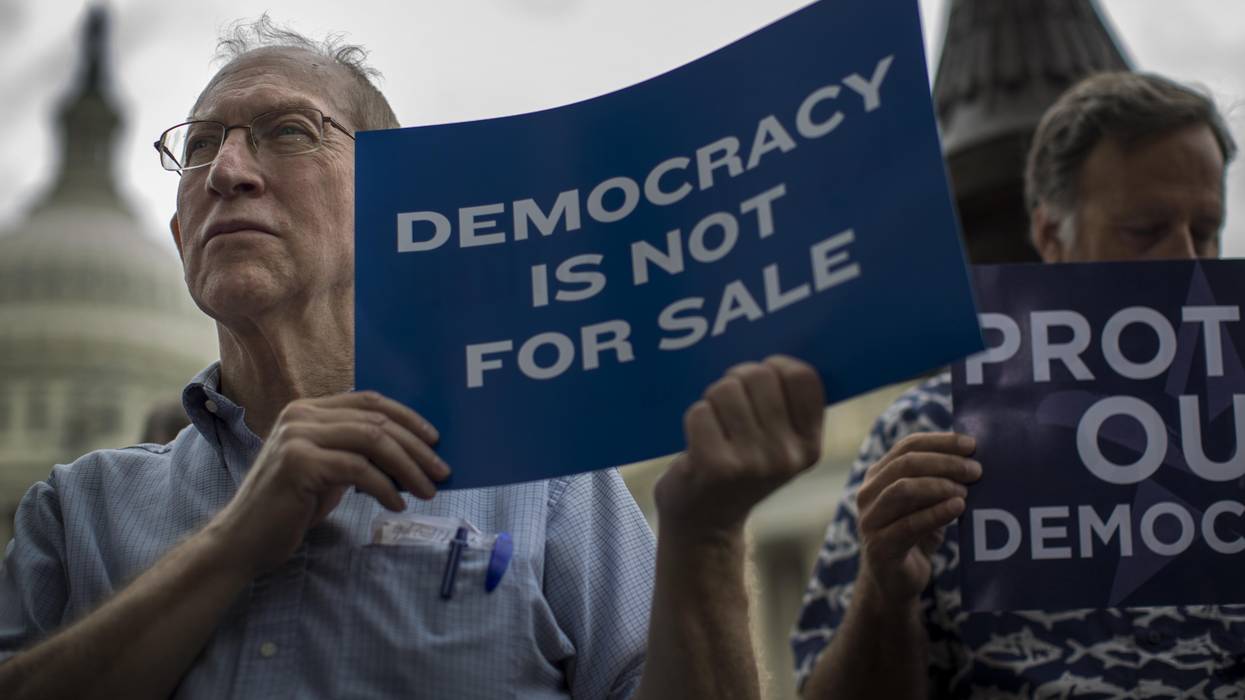
"We’re excited to work with Abdul to win Medicare for All, create good union jobs, and end the influence of big money in politics," said the progressive party.
Following the victories of Working Families Party-endorsed progressive candidates like Rep. Analilia Mejia in New Jersey and Pennsylvania state lawmaker Chris Rabb, who won a Democratic US House primary last week, the organization announced Tuesday that it is "all in" on former public health official Abdul El-Sayed's primary campaign in the key state of Michigan.
“Abdul has dedicated his career to making government work for regular people and fighting to improve our broken healthcare system,” Maurice Mitchell, WFP’s national director, said in a statement. “He’s not afraid to stand up to Donald Trump, Elon Musk, or any of the greedy billionaires screwing over our communities."
El-Sayed's race for the August 4 primary has been contentious, with his two opponents—Rep. Haley Stevens and state Sen. Mallory McMorrow (8) elevating attacks on their opponent's decision to campaign with left-wing streamer and commentator Hasan Piker, an outspoken critic of Israel and US military support for the country.
Following those attacks, El-Sayed was shown to gain momentum in polls; he was 10 points ahead of Stevens and 11 points ahead of McMorrow in a survey by Mitchell Research and Communications earlier this month, and 80% ahead among voters under the age of 45.
El-Sayed is a strong supporter of Palestinian rights—differentiating him from Stevens, who has received donations from the American Israel Public Affairs Committee, and McMorrow, who has criticized Israel's assault on Gaza but also reportedly wrote a position paper for the influential pro-Israel lobby group.
But the push for Medicare for All, which he published a book about, has been an even more central focus of his political career.
Stevens and McMorrow both reportedly support a public option, and the latter candidate asserted in a recent interview that "the support for a true single payer system isn't there yet"—despite the fact that Medicare for All had the support of 78% of Democrats and 65% of overall American voters in a Data for Progress poll late last year, and has been found to have broad support in other surveys in recent years.
"We’re excited to work with Abdul to win Medicare for All, create good union jobs, and end the influence of big money in politics," said Mitchell on Tuesday.
On social media, the group highlighted public health successes El-Sayed led while heading Detroit’s Health Department and the Wayne County’s Department of Health, Human, and Veterans Services in Wayne County, Michigan, which serves 1.8 million residents.
"He is the kind of candidate we need in office," said WFP.
Distill Social, a Michigan-based grassroots news organization, said the endorsement "says a lot" to voters weighing their options ahead of the August primary.
WFP's "lane is clear: workers, healthcare, clean water, corporate accountability, and a government that actually fights for people," said the group.
El-Sayed said the group "understands that finding and keeping a good job, guaranteed healthcare, being able to afford a home, and having the freedom to spend time with your family aren't radical ideas. They should be the baseline."
"I'm honored to earn their endorsement," said El-Sayed.
The Massachusett Democrat denied that his comments were an endorsement of the Republican, but critics said they did not appear aimed at "working for a Democratic congressional majority."
With Graham Platner set to become the official Democratic US Senate candidate in Maine following Gov. Janet Mills' suspension of her primary campaign, progressives on Tuesday were incensed by a Massachusetts congressman’s public opposition to the populist oyster farmer, which arrived with a tacit endorsement of five-term Republican Sen. Susan Collins instead.
Rep. Jake Auchincloss (D-Mass.), a former GOP organizer and the scion of an influential political family with Wall Street and Kennedy ties, told CNN Monday that he views a tattoo Platner got while serving in the US Marines as "disqualifying."
"I hope Maine voters agree with me," he said. "I think it would be a mistake for the Democratic Party to think that Graham Platner's brand of the Democratic Party is what wins us durable majorities throughout this country."
💥NEW: Dem Rep. Jake Auchincloss says Graham Platner’s Nazi tattoo should be “DISQUALIFYING”🤯
“I find that tattoo and his commentary about it to be personally disqualifying. I hope Maine voters agree with me.”
CNN’s Boris Sanchez: “Wow.” pic.twitter.com/tMzWkz9h88
— Jason Cohen 🇺🇸 (@JasonJournoDC) May 25, 2026
The tattoo, which Platner says he got after a night of drinking with fellow soldiers while on shore leave during a tour of duty, resembled a skull-and-crossbones symbol worn by some Nazi soldiers. A controversy broke out last October over the tattoo as well as old posts Platner wrote in online forums in the years after his military service. He has maintained he did not know the tattoo's origins and that the old posts don't represent his current views.
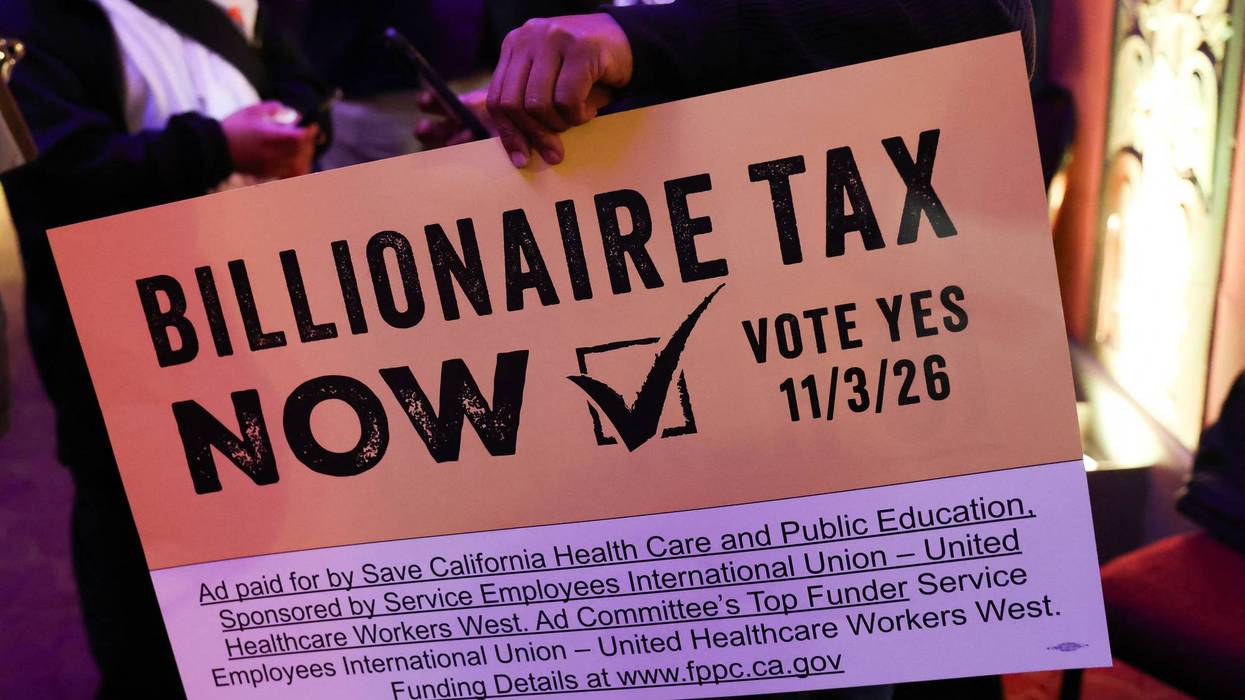
The controversy did not stop Platner from polling well ahead of Mills before her decision to drop out late last month, and ahead of his presumed Republican opponent in at least one recent poll. Several US senators have endorsed him and he has outpaced both Mills and Collins in fundraising as he's held standing-room-only town halls and rallies across the state, railing against oligarchy and President Donald Trump's attacks on immigrant communities and demanding a Medicare for All system and a tax on billionaires' wealth.
Auchincloss' comments suggested he hasn't noticed, or been moved by, the mounting evidence that Platner's campaign is resonating with Democratic voters—who numerous polls have shown are in agreement with the candidate on his demand for a government-funded universal healthcare system and his condemnation of the US government's unconditional support for Israel, as well as the pro-Israel lobby's massive influence on US politics in recent decades.
The Massachusetts lawmaker, meanwhile, appears increasingly out of step with the voters he hoped to sway with his comments.
In addition to opposing Medicare for All, in his state's delegation in the US House, Auchincloss is behind only one member—Rep. Katherine Clark (D)—in taking donations from the American Israel Public Affairs Committee (AIPAC), an organization that has long poured money into efforts to elect pro-Israel candidates on both sides of the aisle, but which is increasingly toxic among voters amid Israel's US-backed assault on Gaza and Palestinian communities across the West Bank.
Some critics noted that Auchincloss' position as chairman of a group called Majority Democrats—which promises to "win and sustain Democratic majorities"—was decidedly out of line with encouraging voters to oppose the presumptive winner of the Democratic primary—set for June 9—in a state that's crucial for the party to win in November if it is to wrest control of the Senate from the GOP.
Helen Brosnan, national political director of United Auto Workers, accused Auchincloss of "hating a pro-labor, anti-establishment candidate so much that you root for a Republican to win and ensure we lose the Senate."
Adam Carlson of Zenith Polls wondered whether Auchincloss "still supports his organization’s stated mission," "why he wants Trump to have a Republican Senate majority for his final two years in office," and "why he wants Trump to be able to appoint more MAGA justices to the Supreme Court and federal bench."
And Ryan Grim of Drop Site News noted that Democratic Party leaders would be unlikely to tolerate such behavior if the shoe were on the other ideological foot.
"If a Democrat endorses from the left against another Democrat in a primary, all hell comes down on them," said Grim. "Here’s Rep. Auchincloss coming out against the presumptive Democratic nominee in a crucial swing state. Probably actually helps Platner to have Dems like Auchincloss against him, but I still wonder if he’ll hear from Dem leadership or if they’re quietly ok with Collins.
Auchincloss on Tuesday denied the accusation that his remarks served as an endorsement of Platner's presumed opponent in the general election, pointing to his "track record supporting Democrats to take back both chambers."
But he repeated that "if it were me I'd vote for someone else in the Maine Democratic primary."
The latest poll conducted before Mills suspended her campaign found her 35 points behind Platner. A survey taken in March also asked Mainers about two other lesser-known candidates: organizer Andrea LaFlamme, who is running a write-in campaign and was polling at 2%, and former government worker David Costello, who was polling at 1%.
Grim and others drew attention to a "highly qualified" candidate who is challenging Auchincloss in Massachusetts' Fourth District in the September 1 primary: artificial intelligence and policy researcher Jason Poulos, who supports Medicare for All, protecting workers from AI displacement, strengthening unions, regulating AI data centers, and canceling student debt.
On his campaign website, Poulos, who supports ending military support for Israel, has condemned Auchincloss for counting the pro-Israel lobby as his "top campaign funder."
"When a congressman’s single largest source of campaign funds comes from a lobbying network whose top financiers have poured $230 million into electing Donald Trump," the website states, "voters deserve to ask: Whose interests does he represent?"